
Early Childhood Physical Development. How well is


Description: Early Childhood Physical Development. How well is Nurture doing? Presentation Summary 16th June 2020 Dr L Hennessy How well is Nurture doing in developing athleticism? Nature endows.. Nurture responds Nature interacting with Nurture:
Related Topics
Download Presentation
"Early Childhood Physical Development. How well is" is the property of its rightful owner. Permission is granted to download and print the materials on this website for personal, non-commercial use only, and to display it on your personal computer provided you do not modify the materials and that you retain all copyright notices contained in the materials. By downloading content from our website, you accept the terms of this agreement.
Presentation Transcript
slide1. Early Childhood Physical Development. How well is Nurture doing? Presentation Summary – 16th June 2020
Dr L Hennessy<br>
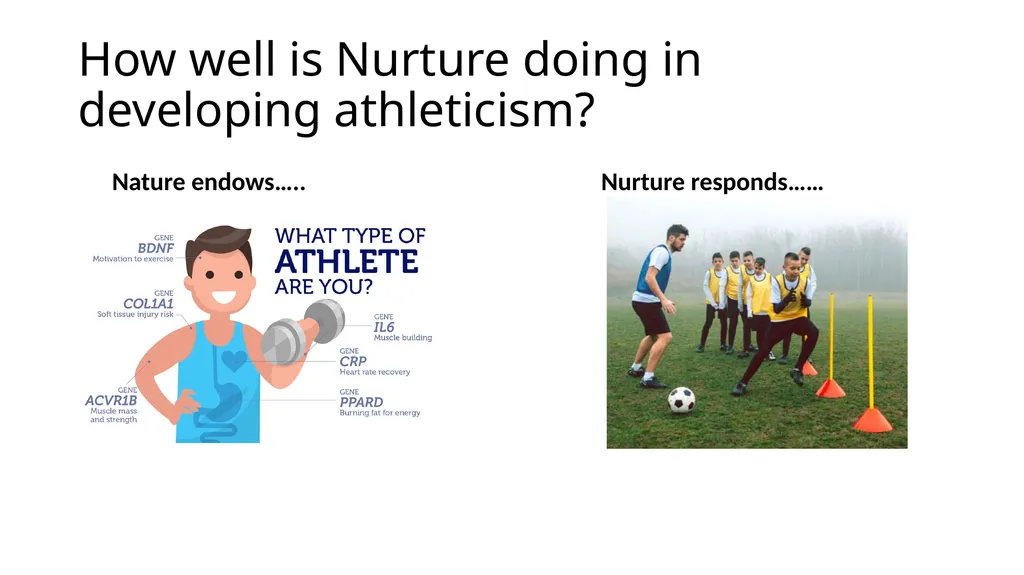
slide2. How well is Nurture doing in developing athleticism? Nature endows….. Nurture responds……<br>
slide3. Nature interacting with Nurture: Reflexive Phase: Year 1 Example ATNR
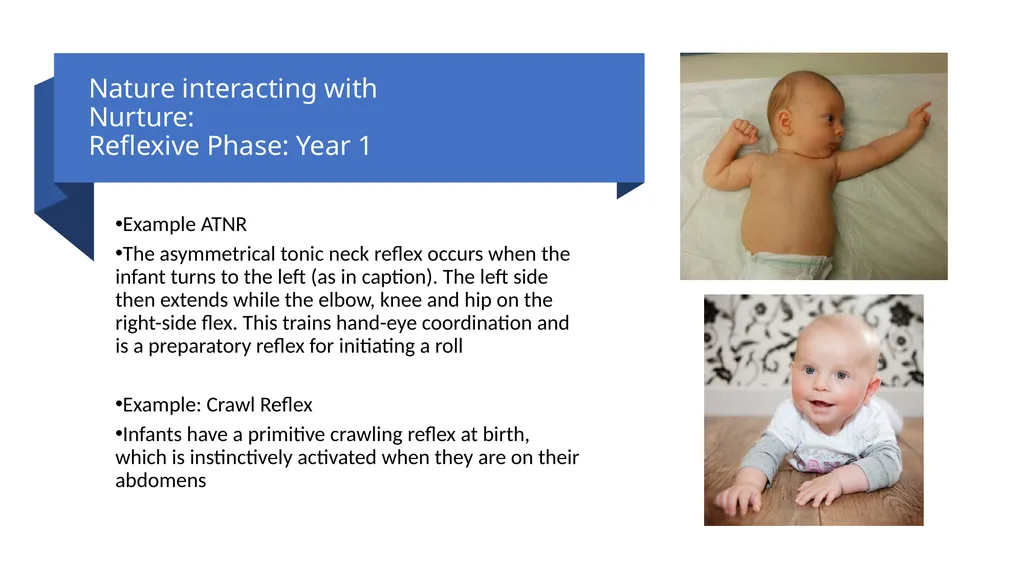
The asymmetrical tonic neck reflex occurs when the infant turns to the left (as in caption). The left side then extends while the elbow, knee and hip on the right-side flex. This trains hand-eye coordination and is a preparatory reflex for initiating a roll
Example: Crawl Reflex
Infants have a primitive crawling reflex at birth, which is instinctively activated when they are on their abdomens<br>
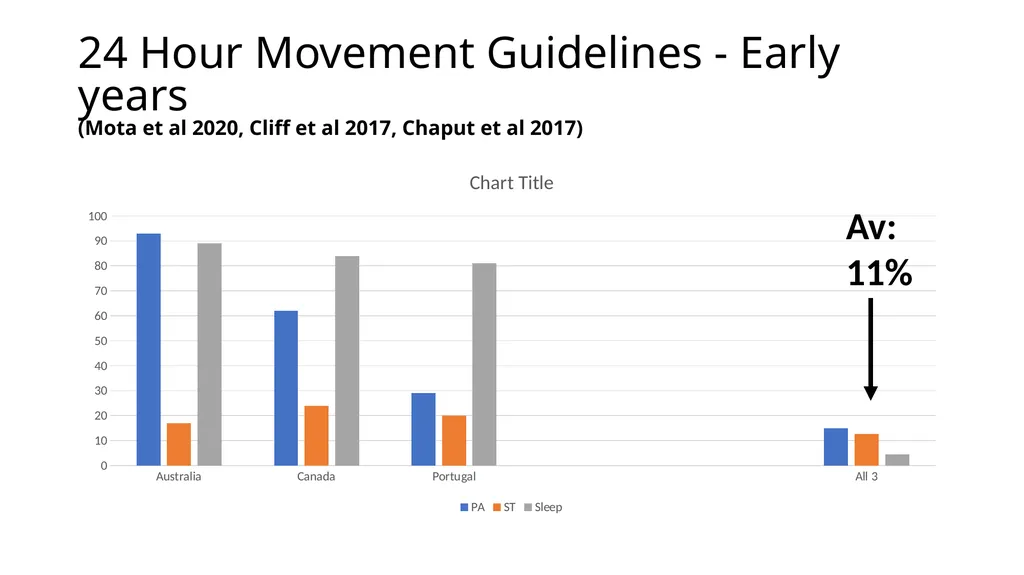
slide4. 24 Hour Movement Guidelines - Early years (Mota et al 2020, Cliff et al 2017, Chaput et al 2017) Av: 11%<br>
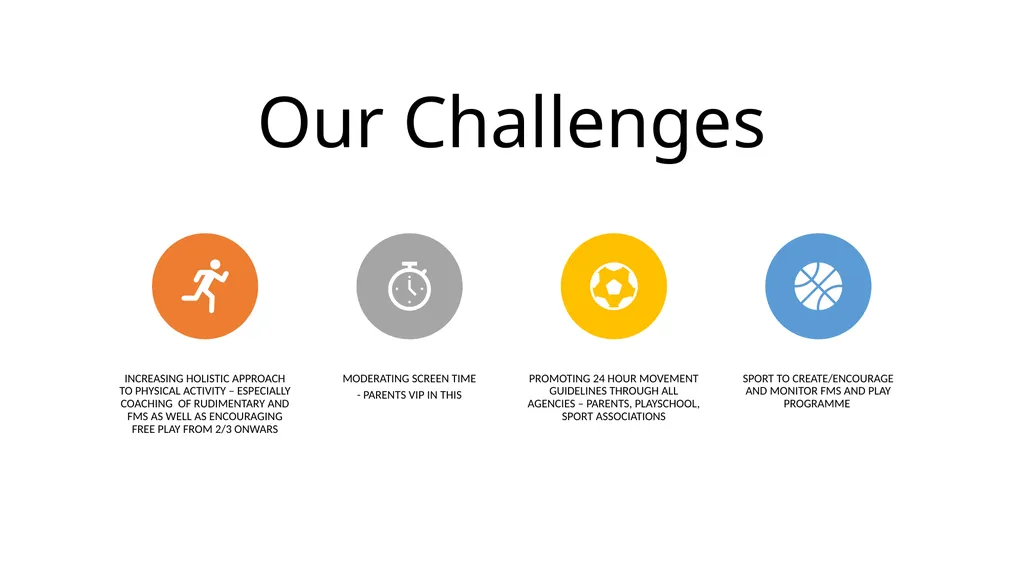
slide5. Our Challenges<br>
Dr L Hennessy<br>
slide2. How well is Nurture doing in developing athleticism? Nature endows….. Nurture responds……<br>
slide3. Nature interacting with Nurture: Reflexive Phase: Year 1 Example ATNR
The asymmetrical tonic neck reflex occurs when the infant turns to the left (as in caption). The left side then extends while the elbow, knee and hip on the right-side flex. This trains hand-eye coordination and is a preparatory reflex for initiating a roll
Example: Crawl Reflex
Infants have a primitive crawling reflex at birth, which is instinctively activated when they are on their abdomens<br>
slide4. 24 Hour Movement Guidelines - Early years (Mota et al 2020, Cliff et al 2017, Chaput et al 2017) Av: 11%<br>
slide5. Our Challenges<br>