
What Do Consumers Want in a Long Term Care
SN
Published · 40 slides · 0 views

1 / 1



Description
What Do Consumers Want in a Long Term Care Financing Product? Minnesota Forum on Long-Term Care Financing 7 January 2020 Do consumers want an insurance product covering long-term care costs? Do they know: If and why they need one? What
Related Topics
Share
Embed code
Download this presentation From Below
"What Do Consumers Want in a Long Term Care" is the property of its rightful owner. Permission is granted to download and print the materials on this website for personal, non-commercial use only, and to display it on your personal computer provided you do not modify the materials and that you retain all copyright notices contained in the materials. By downloading content from our website, you accept the terms of this agreement.
Presentation Transcript
01
What Do Consumers Want in a
Long Term Care Financing Product? Minnesota Forum on Long-Term Care Financing
7 January 2020<br>
7 January 2020<br>
02
Do consumers want an insurance product covering long-term care costs? Do they know:
If and why they need one?
What these are?
What value they provide?
Whether/which one is right for them?<br>
If and why they need one?
What these are?
What value they provide?
Whether/which one is right for them?<br>
03
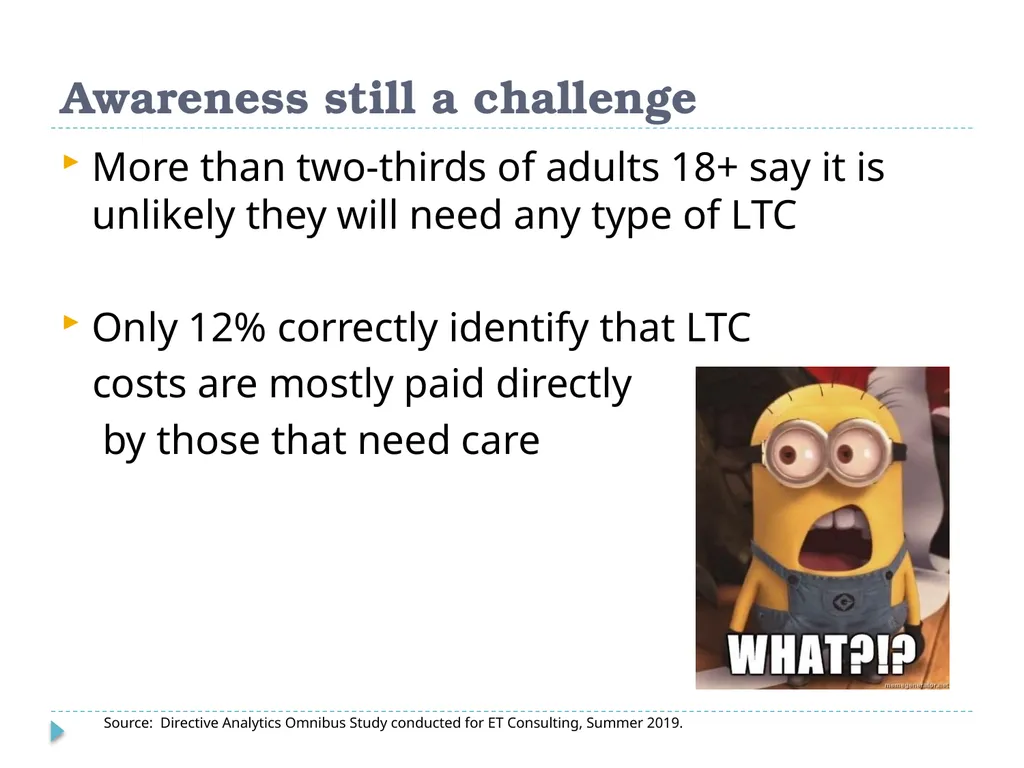
Awareness still a challenge More than two-thirds of adults 18+ say it is unlikely they will need any type of LTC
Only 12% correctly identify that LTC
costs are mostly paid directly
by those that need care Source: Directive Analytics Omnibus Study conducted for ET Consulting, Summer 2019.<br>
Only 12% correctly identify that LTC
costs are mostly paid directly
by those that need care Source: Directive Analytics Omnibus Study conducted for ET Consulting, Summer 2019.<br>
04
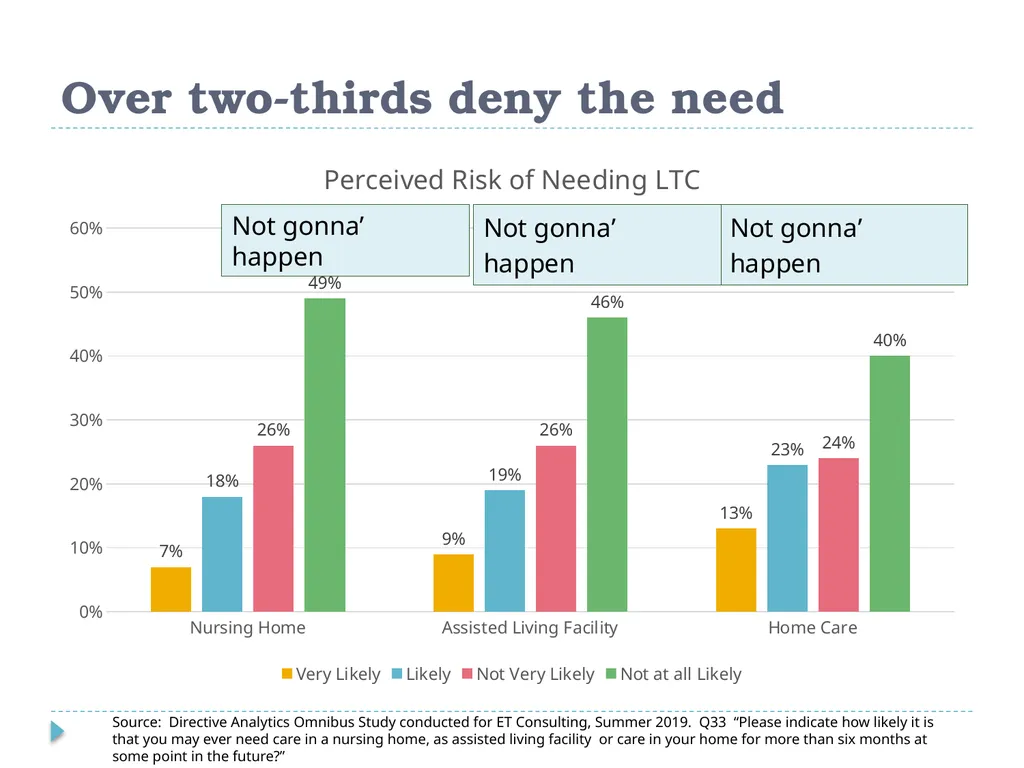
Over two-thirds deny the need Source: Directive Analytics Omnibus Study conducted for ET Consulting, Summer 2019. Q33 “Please indicate how likely it is that you may ever need care in a nursing home, as assisted living facility or care in your home for more than six months at some point in the future?” Not gonna’ happen<br>
05
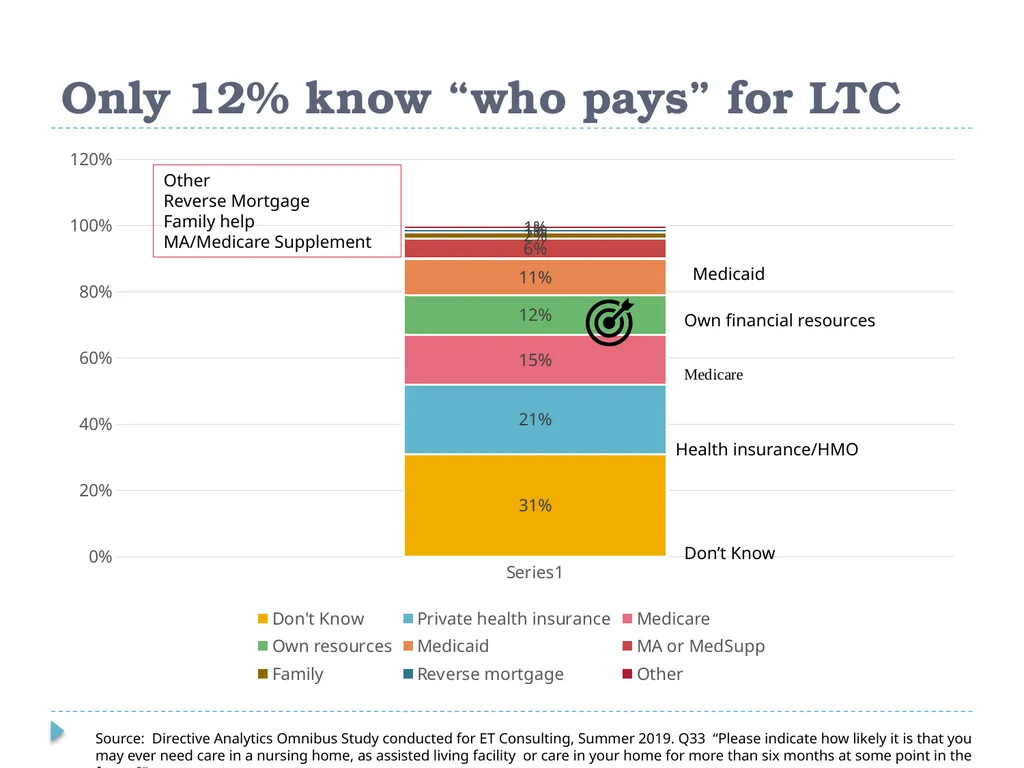
Only 12% know “who pays” for LTC Don’t Know Health insurance/HMO Own financial resources Medicaid Other
Reverse Mortgage
Family help
MA/Medicare Supplement Source: Directive Analytics Omnibus Study conducted for ET Consulting, Summer 2019. Q33 “Please indicate how likely it is that you may ever need care in a nursing home, as assisted living facility or care in your home for more than six months at some point in the future?”<br>
Reverse Mortgage
Family help
MA/Medicare Supplement Source: Directive Analytics Omnibus Study conducted for ET Consulting, Summer 2019. Q33 “Please indicate how likely it is that you may ever need care in a nursing home, as assisted living facility or care in your home for more than six months at some point in the future?”<br>
06
Older adults must be more aware? Good news and bad news
Good: Older respondents (55+) less likely to say “don’t know” who pays for LTC
Bad: They are much more likely to say that Medicare or Medicare supplemental coverage pays for LTC
Age does make a difference in both the perception of risk and “who pays”
Under age 35: Less likely to acknowledge need for LTC than other age groups
Age 55+: More likely to acknowledge possibly needing home care or care in a nursing home
However, even among 55+, between 56% to 75% say they are not likely to need LTC Source: Directive Analytics Omnibus Study conducted for ET Consulting, Summer 2019.<br>
Good: Older respondents (55+) less likely to say “don’t know” who pays for LTC
Bad: They are much more likely to say that Medicare or Medicare supplemental coverage pays for LTC
Age does make a difference in both the perception of risk and “who pays”
Under age 35: Less likely to acknowledge need for LTC than other age groups
Age 55+: More likely to acknowledge possibly needing home care or care in a nursing home
However, even among 55+, between 56% to 75% say they are not likely to need LTC Source: Directive Analytics Omnibus Study conducted for ET Consulting, Summer 2019.<br>
07
LTC Finance Products Looking at them through the Consumer’s Lens<br>
08
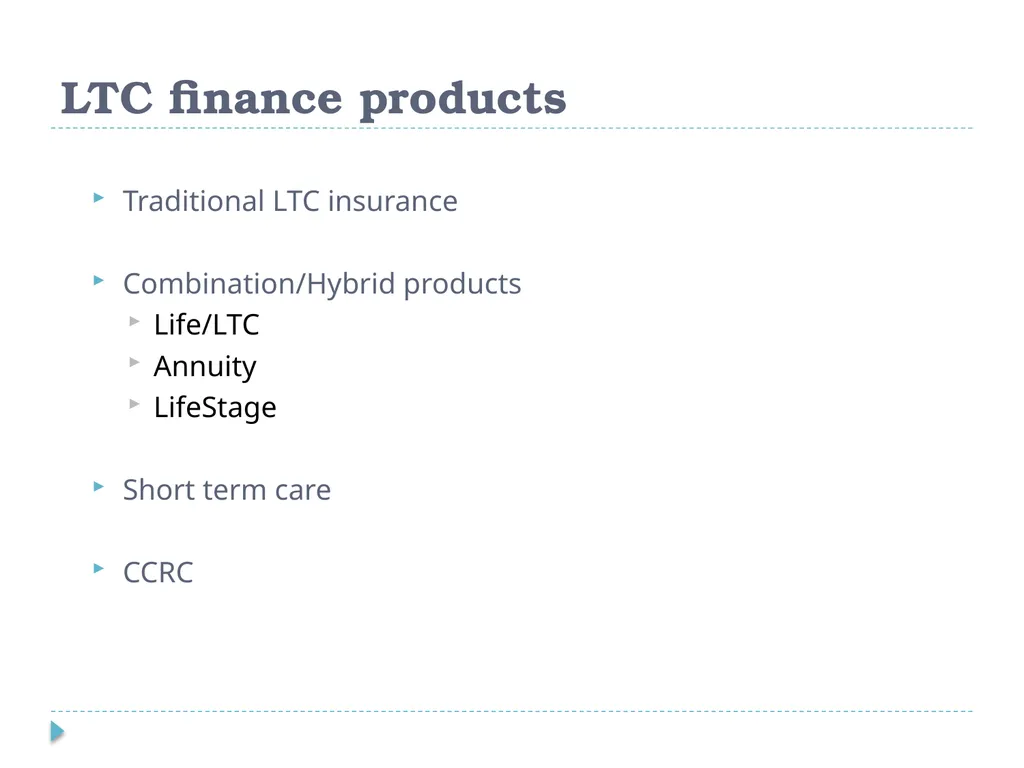
LTC finance products Traditional LTC insurance
Combination/Hybrid products
Life/LTC
Annuity
LifeStage
Short term care
CCRC<br>
Combination/Hybrid products
Life/LTC
Annuity
LifeStage
Short term care
CCRC<br>
09
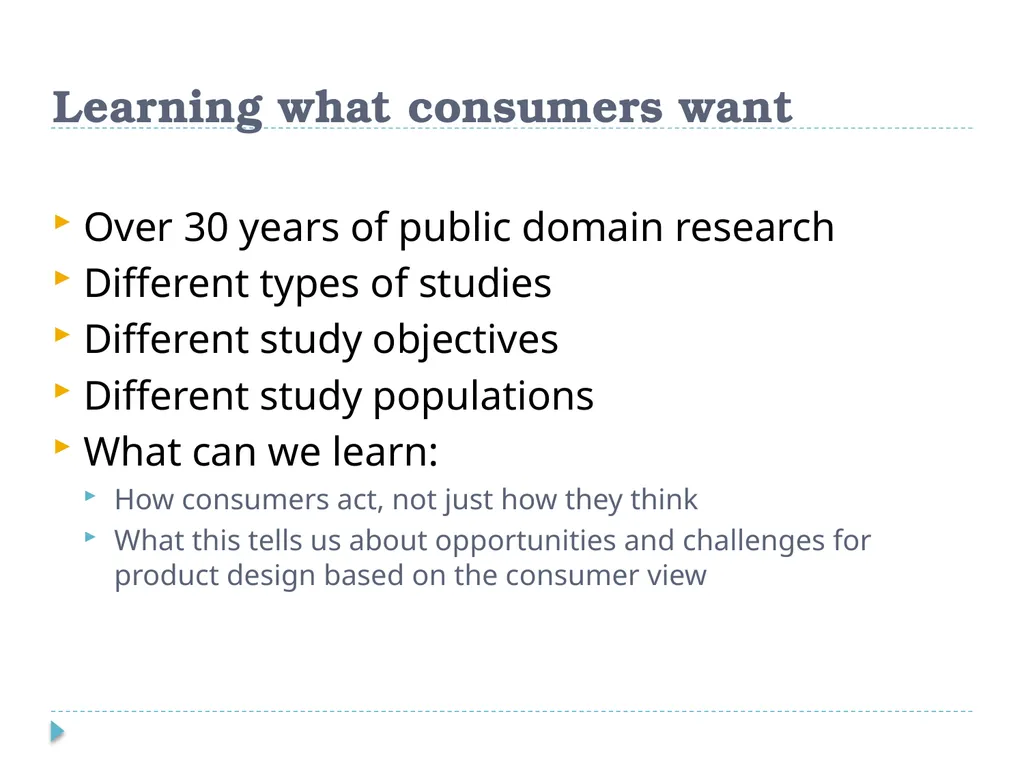
Learning what consumers want Over 30 years of public domain research
Different types of studies
Different study objectives
Different study populations
What can we learn:
How consumers act, not just how they think
What this tells us about opportunities and challenges for product design based on the consumer view<br>
Different types of studies
Different study objectives
Different study populations
What can we learn:
How consumers act, not just how they think
What this tells us about opportunities and challenges for product design based on the consumer view<br>
10
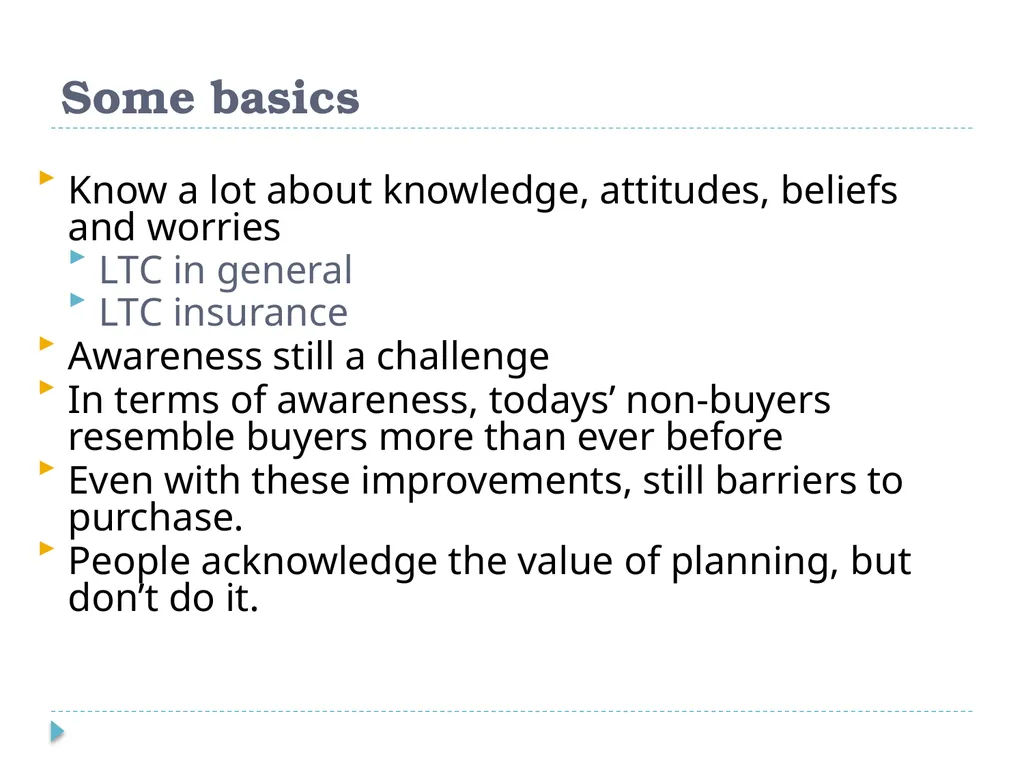
Some basics Know a lot about knowledge, attitudes, beliefs and worries
LTC in general
LTC insurance
Awareness still a challenge
In terms of awareness, todays’ non-buyers resemble buyers more than ever before
Even with these improvements, still barriers to purchase.
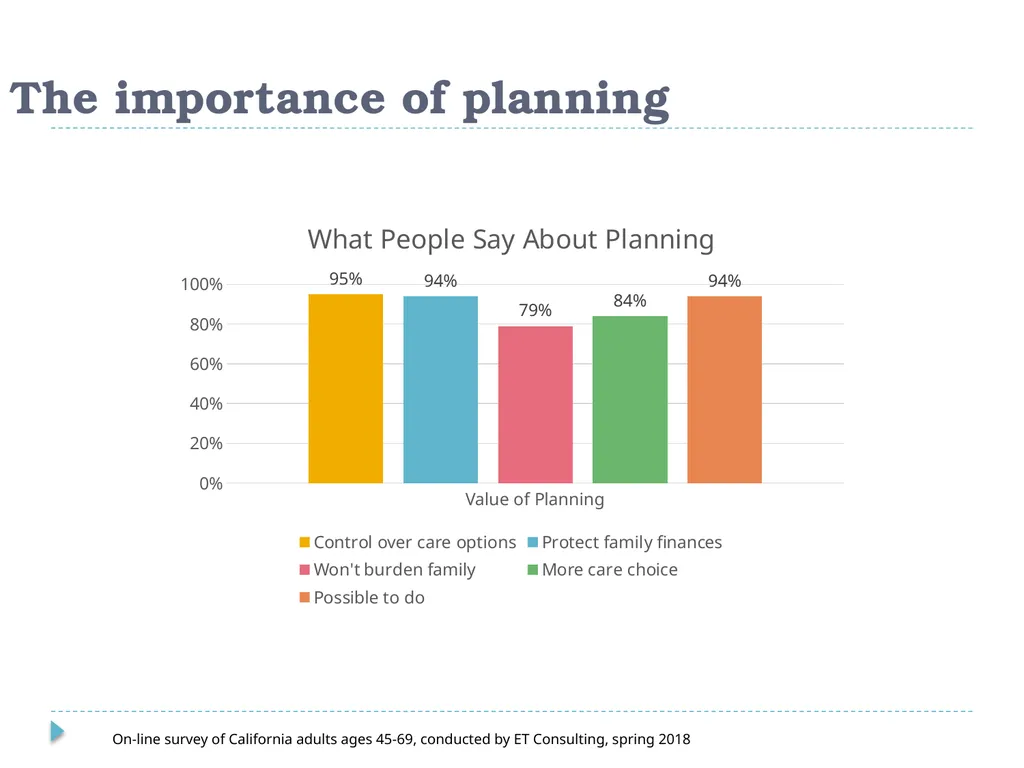
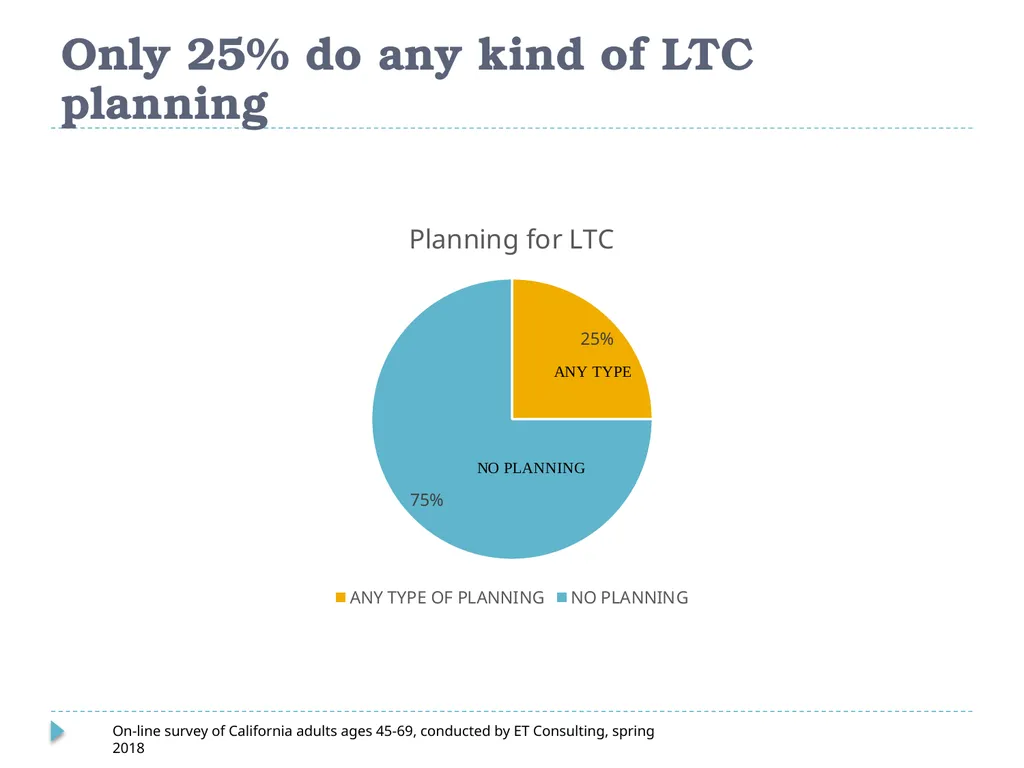
People acknowledge the value of planning, but don’t do it.<br>
LTC in general
LTC insurance
Awareness still a challenge
In terms of awareness, todays’ non-buyers resemble buyers more than ever before
Even with these improvements, still barriers to purchase.
People acknowledge the value of planning, but don’t do it.<br>
11
The importance of planning On-line survey of California adults ages 45-69, conducted by ET Consulting, spring 2018<br>
12
Only 25% do any kind of LTC planning On-line survey of California adults ages 45-69, conducted by ET Consulting, spring 2018<br>
13
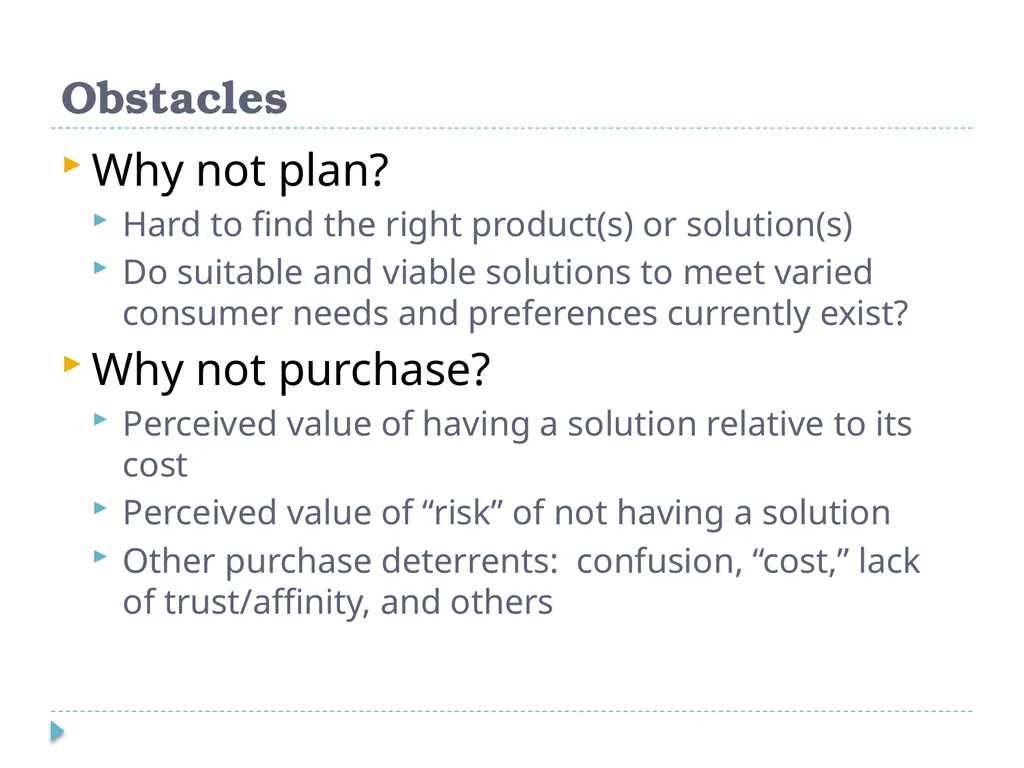
Obstacles Why not plan?
Hard to find the right product(s) or solution(s)
Do suitable and viable solutions to meet varied consumer needs and preferences currently exist?
Why not purchase?
Perceived value of having a solution relative to its cost
Perceived value of “risk” of not having a solution
Other purchase deterrents: confusion, “cost,” lack of trust/affinity, and others<br>
Hard to find the right product(s) or solution(s)
Do suitable and viable solutions to meet varied consumer needs and preferences currently exist?
Why not purchase?
Perceived value of having a solution relative to its cost
Perceived value of “risk” of not having a solution
Other purchase deterrents: confusion, “cost,” lack of trust/affinity, and others<br>
14
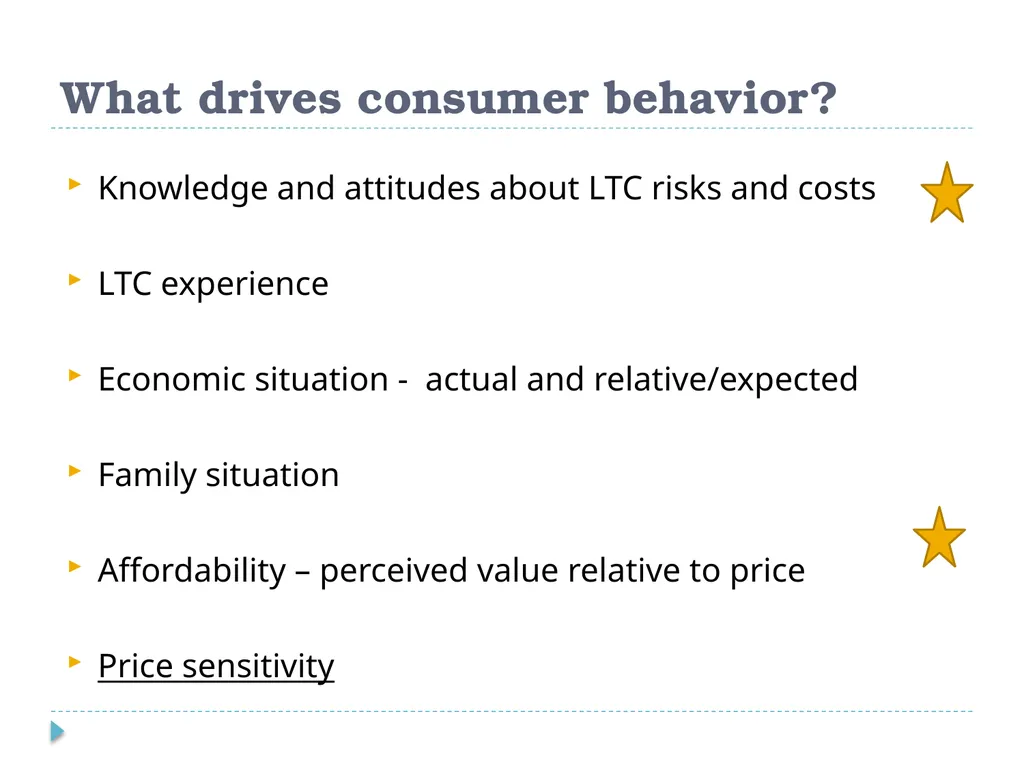
What drives consumer behavior? Knowledge and attitudes about LTC risks and costs
LTC experience
Economic situation - actual and relative/expected
Family situation
Affordability – perceived value relative to price
Price sensitivity<br>
LTC experience
Economic situation - actual and relative/expected
Family situation
Affordability – perceived value relative to price
Price sensitivity<br>
15
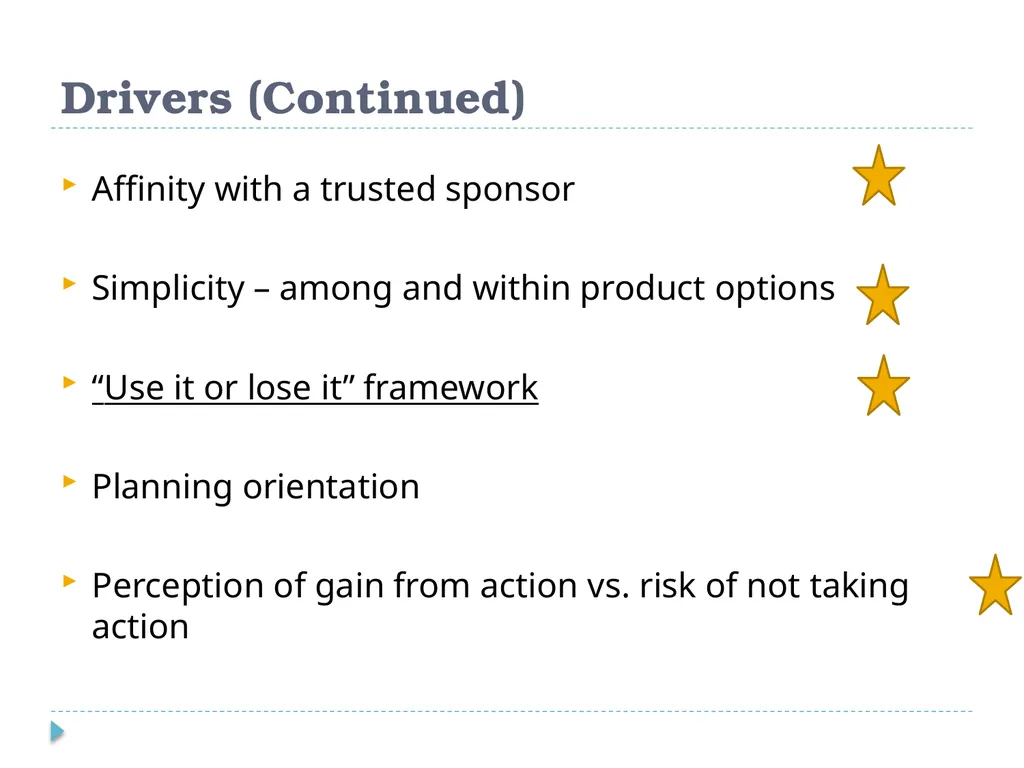
Drivers (Continued) Affinity with a trusted sponsor
Simplicity – among and within product options
“Use it or lose it” framework
Planning orientation
Perception of gain from action vs. risk of not taking action<br>
Simplicity – among and within product options
“Use it or lose it” framework
Planning orientation
Perception of gain from action vs. risk of not taking action<br>
16
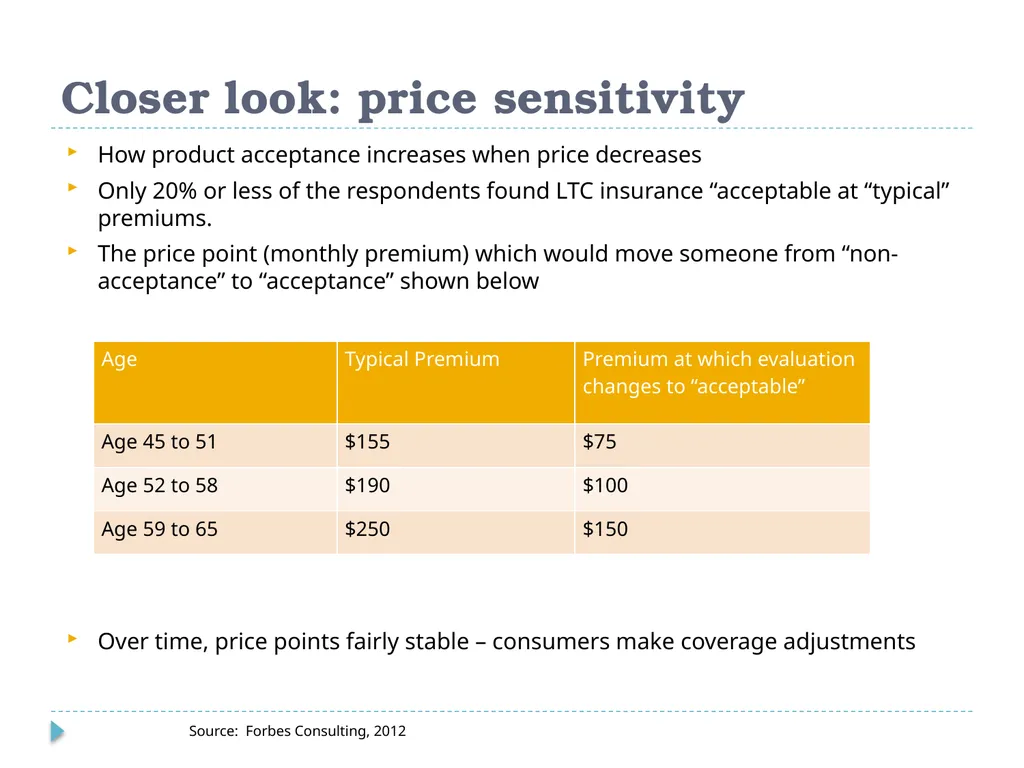
Closer look: price sensitivity How product acceptance increases when price decreases
Only 20% or less of the respondents found LTC insurance “acceptable at “typical” premiums.
The price point (monthly premium) which would move someone from “non-acceptance” to “acceptance” shown below
Over time, price points fairly stable – consumers make coverage adjustments Source: Forbes Consulting, 2012<br>
Only 20% or less of the respondents found LTC insurance “acceptable at “typical” premiums.
The price point (monthly premium) which would move someone from “non-acceptance” to “acceptance” shown below
Over time, price points fairly stable – consumers make coverage adjustments Source: Forbes Consulting, 2012<br>
17
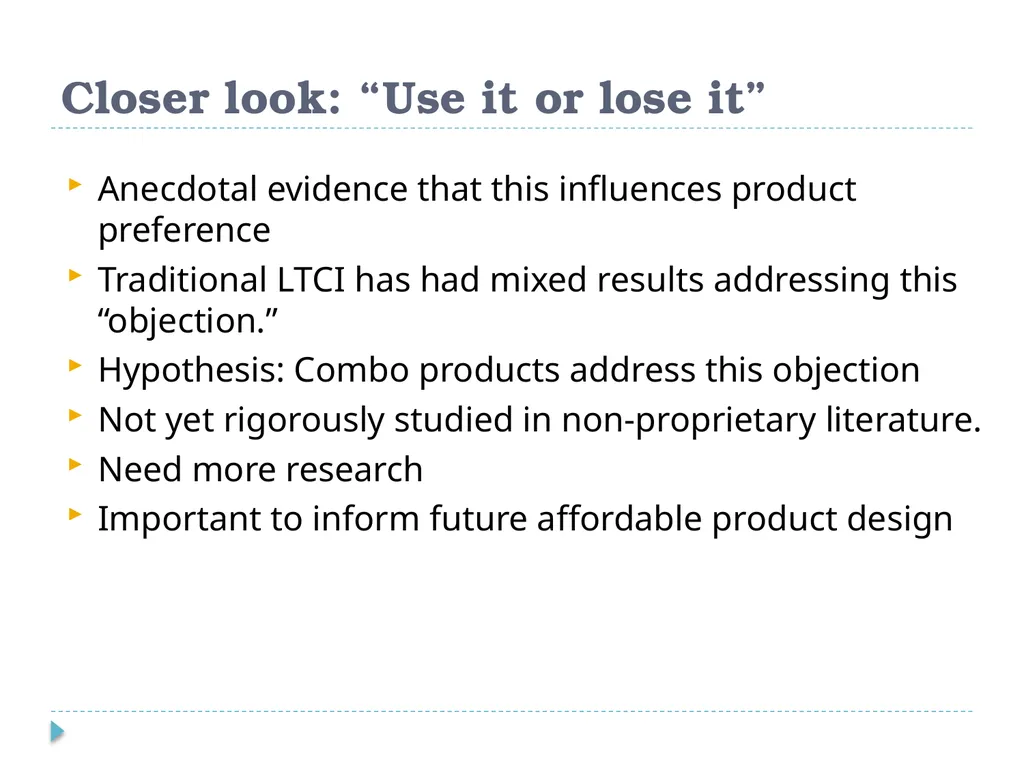
Closer look: “Use it or lose it” Anecdotal evidence that this influences product preference
Traditional LTCI has had mixed results addressing this “objection.”
Hypothesis: Combo products address this objection
Not yet rigorously studied in non-proprietary literature.
Need more research
Important to inform future affordable product design<br>
Traditional LTCI has had mixed results addressing this “objection.”
Hypothesis: Combo products address this objection
Not yet rigorously studied in non-proprietary literature.
Need more research
Important to inform future affordable product design<br>
18
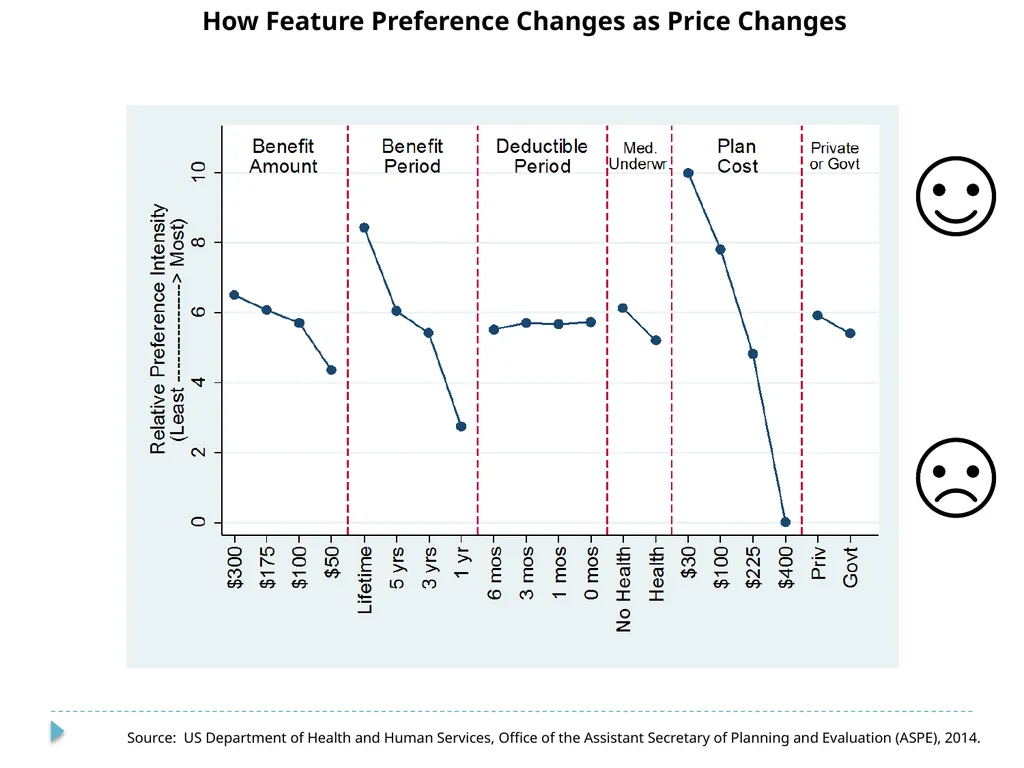
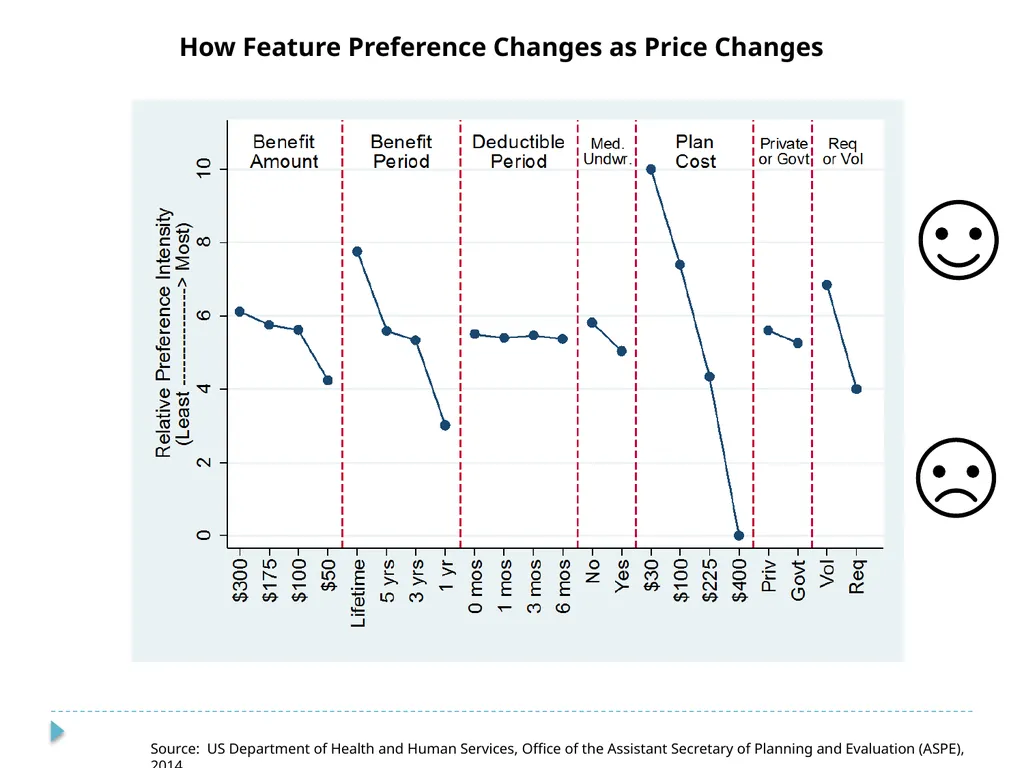
Insight into feature preferences 2014 Survey sponsored by the Office of the Assistant Secretary for Planning and Evaluation/ U.S. Department of Health and Human Services (DHHS), conducted by RTI International.
Help understand respondents’ preferences about LTC insurance features and how interest changes with price<br>
Help understand respondents’ preferences about LTC insurance features and how interest changes with price<br>
19
Source: US Department of Health and Human Services, Office of the Assistant Secretary of Planning and Evaluation (ASPE), 2014. How Feature Preference Changes as Price Changes<br>
20
Source: US Department of Health and Human Services, Office of the Assistant Secretary of Planning and Evaluation (ASPE), 2014. How Feature Preference Changes as Price Changes<br>
21
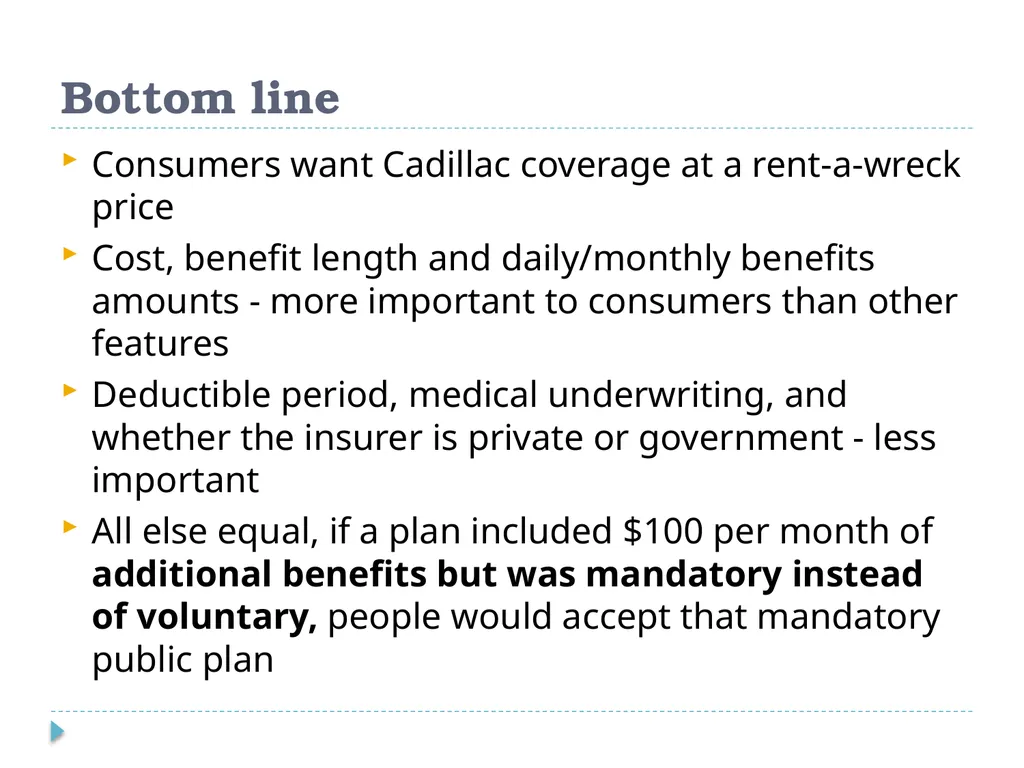
Bottom line Consumers want Cadillac coverage at a rent-a-wreck price
Cost, benefit length and daily/monthly benefits amounts - more important to consumers than other features
Deductible period, medical underwriting, and whether the insurer is private or government - less important
All else equal, if a plan included $100 per month of additional benefits but was mandatory instead of voluntary, people would accept that mandatory public plan<br>
Cost, benefit length and daily/monthly benefits amounts - more important to consumers than other features
Deductible period, medical underwriting, and whether the insurer is private or government - less important
All else equal, if a plan included $100 per month of additional benefits but was mandatory instead of voluntary, people would accept that mandatory public plan<br>
22
The Minnesota Strategy Using this Knowledge to
Address Consumer Needs<br>
Address Consumer Needs<br>
23
The Minnesota strategy Social Marketing 101
Don’t raise awareness of a problem for which you do not offer feasible and accessible solutions
Own Your Future – two critical components
Raise awareness of LTC risks, costs and a blueprint for how to plan
Have viable finance options to meet those needs
LifeStage is one of those<br>
Don’t raise awareness of a problem for which you do not offer feasible and accessible solutions
Own Your Future – two critical components
Raise awareness of LTC risks, costs and a blueprint for how to plan
Have viable finance options to meet those needs
LifeStage is one of those<br>
24
So we want to build a new product…. Will LifeStage appeal to consumers?
If we build it, will they come?<br>
If we build it, will they come?<br>
25
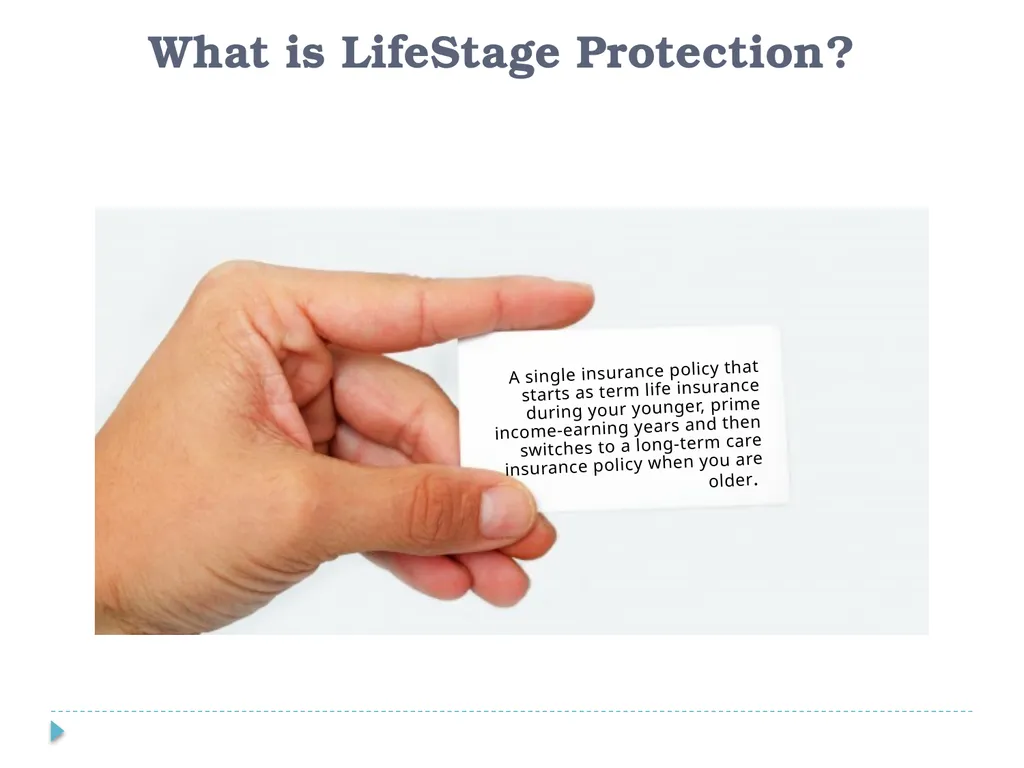
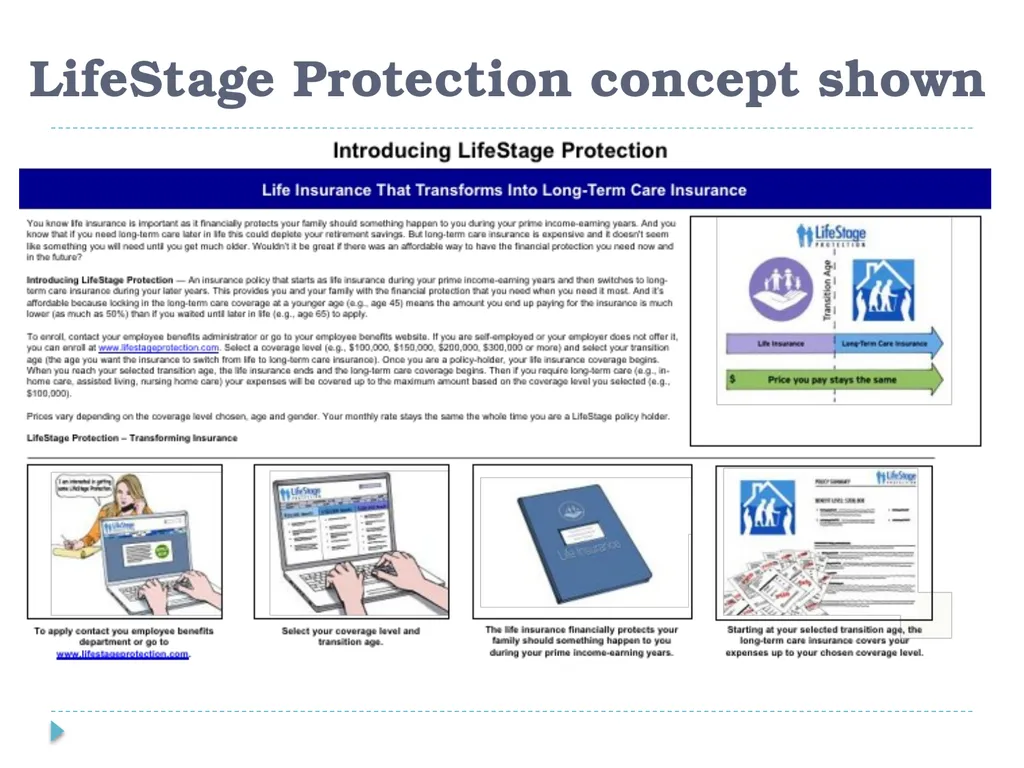
What is LifeStage Protection? 25 A single insurance policy that starts as term life insurance during your younger, prime income-earning years and then switches to a long-term care insurance policy when you are older.<br>
26
Why do consumer testing? “If you build it, they might not come!”
Test in advance and with strong research design
Use real product features with real prices in as close to real distribution style as possible
Know that actual behavior will differ research findings
Use sound methodologies to translate “interest” to “purchase.”<br>
Test in advance and with strong research design
Use real product features with real prices in as close to real distribution style as possible
Know that actual behavior will differ research findings
Use sound methodologies to translate “interest” to “purchase.”<br>
27
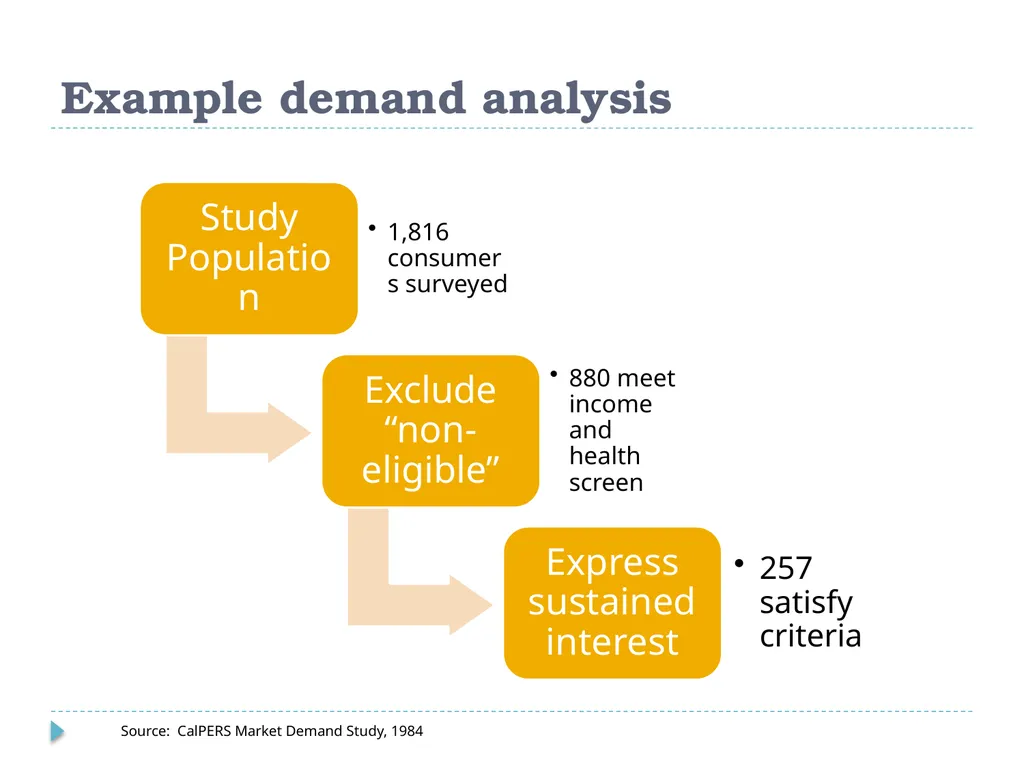
Example demand analysis Source: CalPERS Market Demand Study, 1984<br>
28
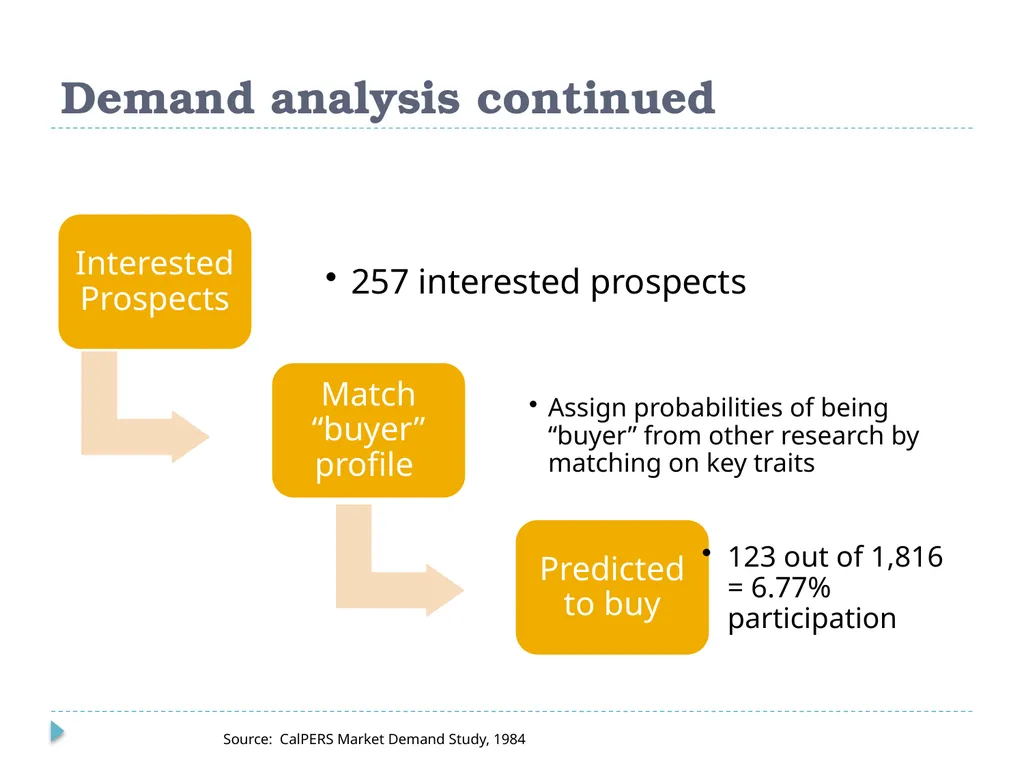
Demand analysis continued Source: CalPERS Market Demand Study, 1984<br>
29
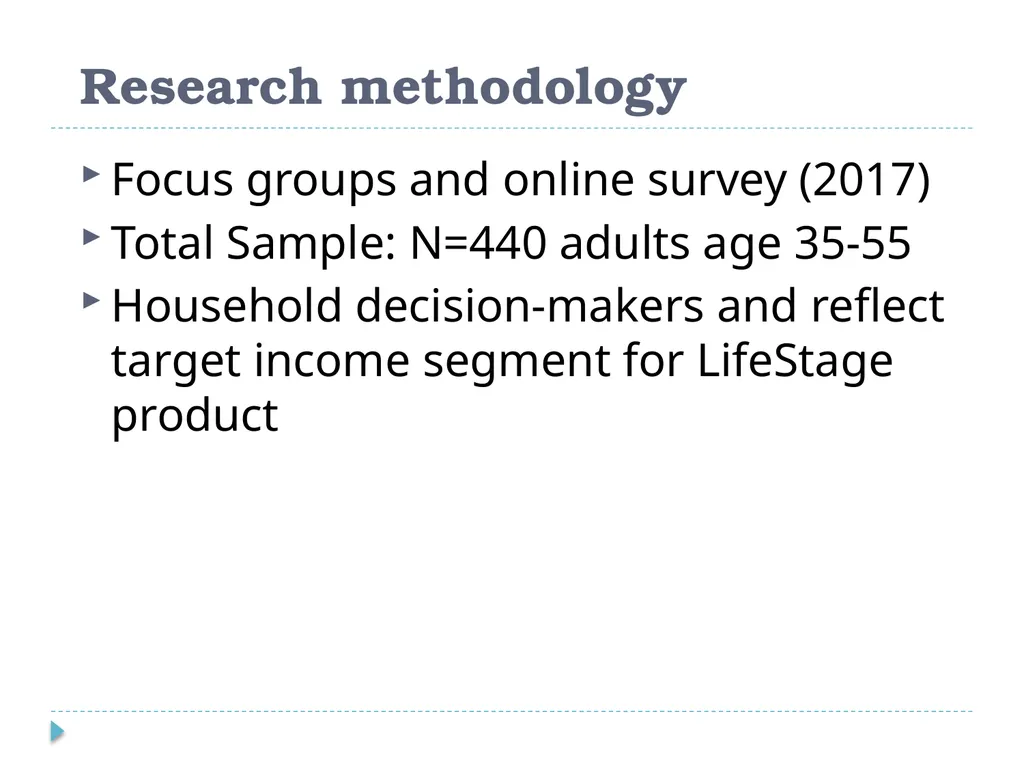
Research methodology Focus groups and online survey (2017)
Total Sample: N=440 adults age 35-55
Household decision-makers and reflect target income segment for LifeStage product 29<br>
Total Sample: N=440 adults age 35-55
Household decision-makers and reflect target income segment for LifeStage product 29<br>
30
LifeStage Protection concept shown 30<br>
31
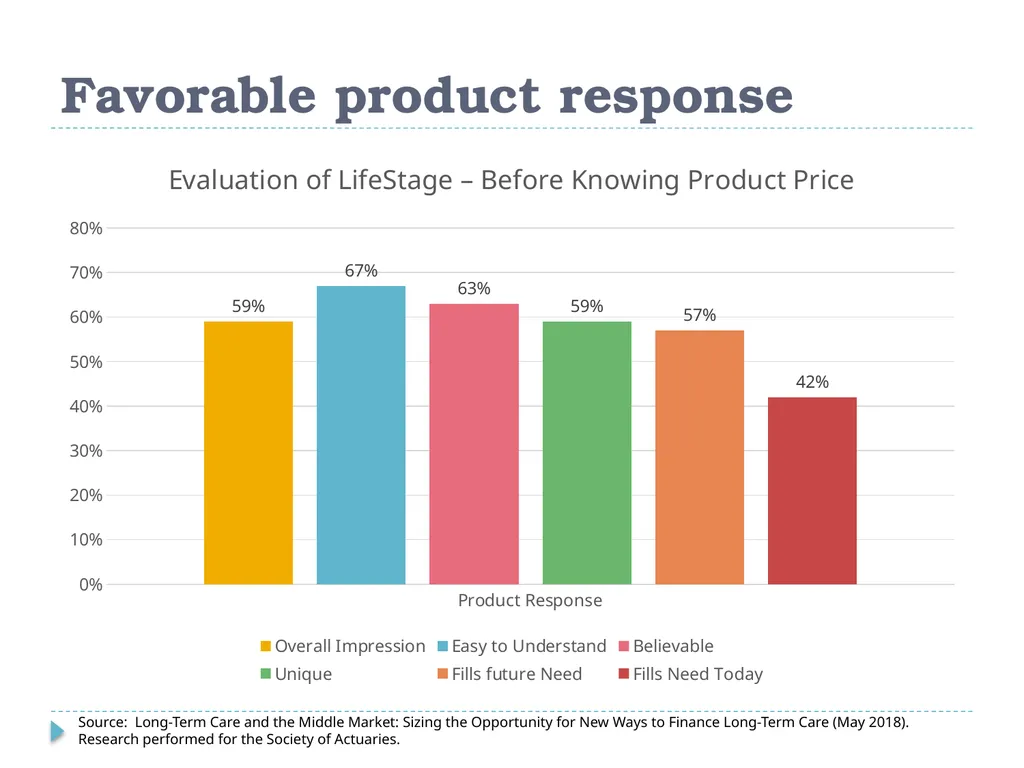
Favorable product response Source: Long-Term Care and the Middle Market: Sizing the Opportunity for New Ways to Finance Long-Term Care (May 2018). Research performed for the Society of Actuaries.<br>
32
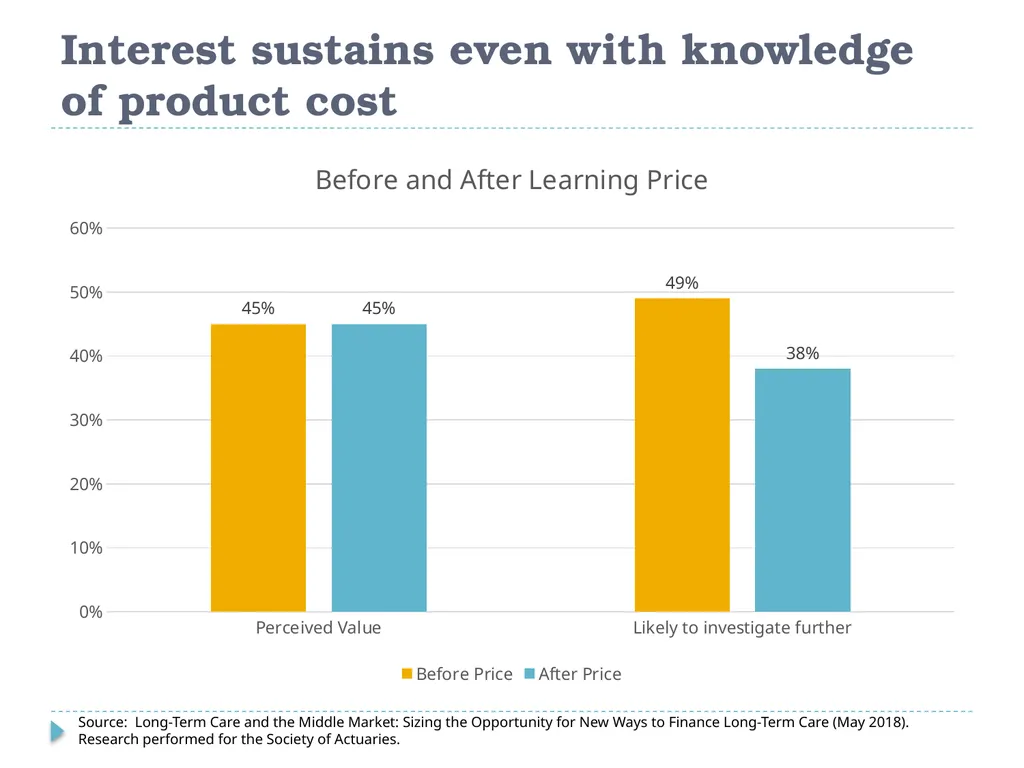
Interest sustains even with knowledge of product cost Source: Long-Term Care and the Middle Market: Sizing the Opportunity for New Ways to Finance Long-Term Care (May 2018). Research performed for the Society of Actuaries.<br>
33
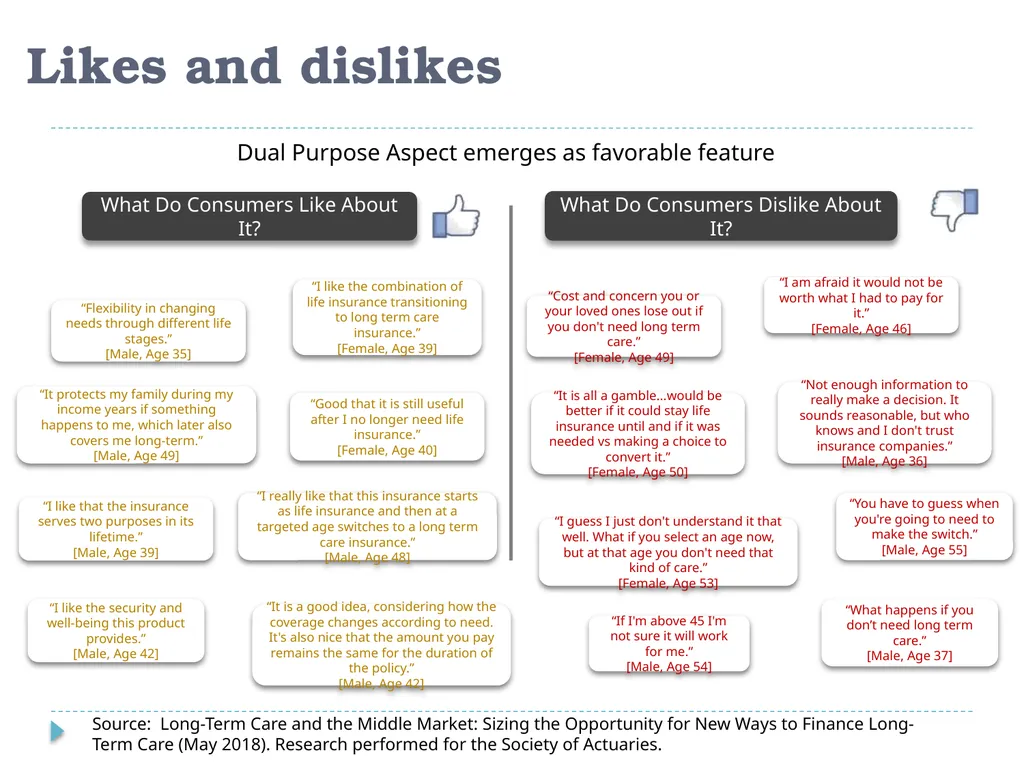
33 Dual Purpose Aspect emerges as favorable feature Source: Long-Term Care and the Middle Market: Sizing the Opportunity for New Ways to Finance Long-Term Care (May 2018). Research performed for the Society of Actuaries. “Flexibility in changing needs through different life stages.”
[Male, Age 35] “Good that it is still useful after I no longer need life insurance.”
[Female, Age 40] “I like the combination of life insurance transitioning to long term care insurance.”
[Female, Age 39] “I really like that this insurance starts as life insurance and then at a targeted age switches to a long term care insurance.”
[Male, Age 48] “I like that the insurance serves two purposes in its lifetime.”
[Male, Age 39] “I like the security and well-being this product provides.”
[Male, Age 42] “It protects my family during my income years if something happens to me, which later also covers me long-term.”
[Male, Age 49] “It is a good idea, considering how the coverage changes according to need. It's also nice that the amount you pay remains the same for the duration of the policy.”
[Male, Age 42] What Do Consumers Like About It? What Do Consumers Dislike About It? “Cost and concern you or your loved ones lose out if you don't need long term care.”
[Female, Age 49] “I am afraid it would not be worth what I had to pay for it.”
[Female, Age 46] “I guess I just don't understand it that well. What if you select an age now, but at that age you don't need that kind of care.”
[Female, Age 53] “Not enough information to really make a decision. It sounds reasonable, but who knows and I don't trust insurance companies.”
[Male, Age 36] “If I'm above 45 I'm not sure it will work for me.”
[Male, Age 54] “What happens if you don’t need long term care.”
[Male, Age 37] “It is all a gamble...would be better if it could stay life insurance until and if it was needed vs making a choice to convert it.”
[Female, Age 50] “You have to guess when you're going to need to make the switch.”
[Male, Age 55] Likes and dislikes<br>
[Male, Age 35] “Good that it is still useful after I no longer need life insurance.”
[Female, Age 40] “I like the combination of life insurance transitioning to long term care insurance.”
[Female, Age 39] “I really like that this insurance starts as life insurance and then at a targeted age switches to a long term care insurance.”
[Male, Age 48] “I like that the insurance serves two purposes in its lifetime.”
[Male, Age 39] “I like the security and well-being this product provides.”
[Male, Age 42] “It protects my family during my income years if something happens to me, which later also covers me long-term.”
[Male, Age 49] “It is a good idea, considering how the coverage changes according to need. It's also nice that the amount you pay remains the same for the duration of the policy.”
[Male, Age 42] What Do Consumers Like About It? What Do Consumers Dislike About It? “Cost and concern you or your loved ones lose out if you don't need long term care.”
[Female, Age 49] “I am afraid it would not be worth what I had to pay for it.”
[Female, Age 46] “I guess I just don't understand it that well. What if you select an age now, but at that age you don't need that kind of care.”
[Female, Age 53] “Not enough information to really make a decision. It sounds reasonable, but who knows and I don't trust insurance companies.”
[Male, Age 36] “If I'm above 45 I'm not sure it will work for me.”
[Male, Age 54] “What happens if you don’t need long term care.”
[Male, Age 37] “It is all a gamble...would be better if it could stay life insurance until and if it was needed vs making a choice to convert it.”
[Female, Age 50] “You have to guess when you're going to need to make the switch.”
[Male, Age 55] Likes and dislikes<br>
34
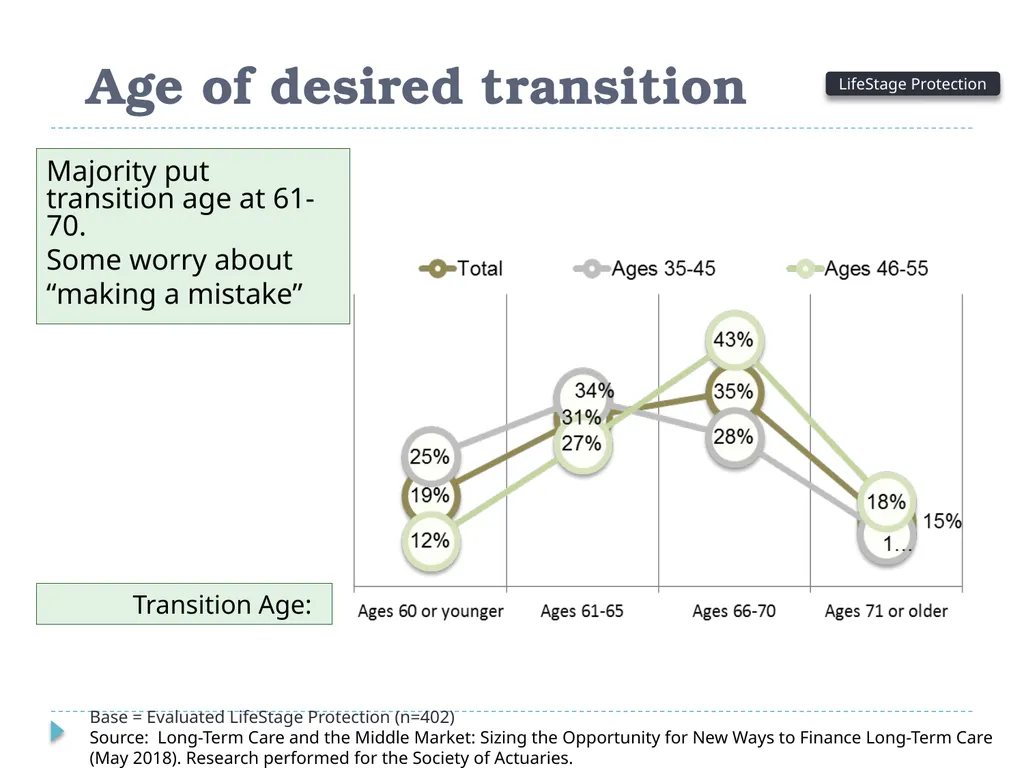
Age of desired transition Majority put transition age at 61-70.
Some worry about
“making a mistake” 34 LifeStage Protection Base = Evaluated LifeStage Protection (n=402)
Source: Long-Term Care and the Middle Market: Sizing the Opportunity for New Ways to Finance Long-Term Care (May 2018). Research performed for the Society of Actuaries. Transition Age:<br>
Some worry about
“making a mistake” 34 LifeStage Protection Base = Evaluated LifeStage Protection (n=402)
Source: Long-Term Care and the Middle Market: Sizing the Opportunity for New Ways to Finance Long-Term Care (May 2018). Research performed for the Society of Actuaries. Transition Age:<br>
35
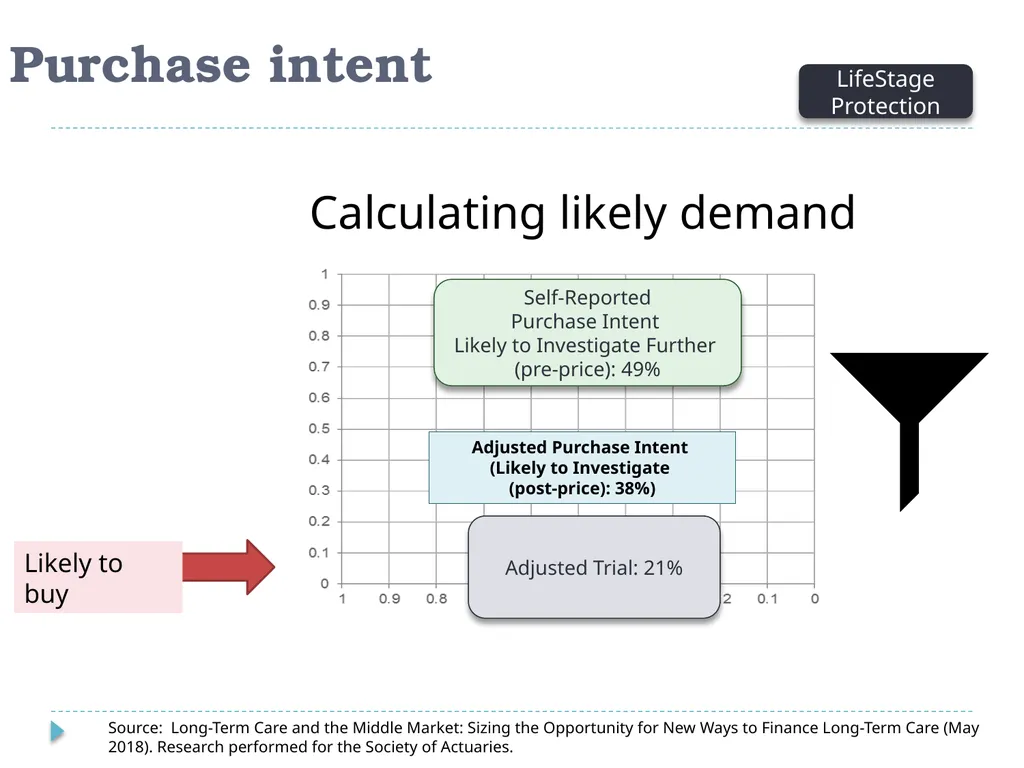
Purchase intent Calculating likely demand 35 Self-Reported
Purchase Intent
Likely to Investigate Further
(pre-price): 49% Adjusted Trial: 21% LifeStage Protection Source: Long-Term Care and the Middle Market: Sizing the Opportunity for New Ways to Finance Long-Term Care (May 2018). Research performed for the Society of Actuaries. Adjusted Purchase Intent
(Likely to Investigate
(post-price): 38%) Likely to buy<br>
Likely to Investigate Further
(pre-price): 49% Adjusted Trial: 21% LifeStage Protection Source: Long-Term Care and the Middle Market: Sizing the Opportunity for New Ways to Finance Long-Term Care (May 2018). Research performed for the Society of Actuaries. Adjusted Purchase Intent
(Likely to Investigate
(post-price): 38%) Likely to buy<br>
36
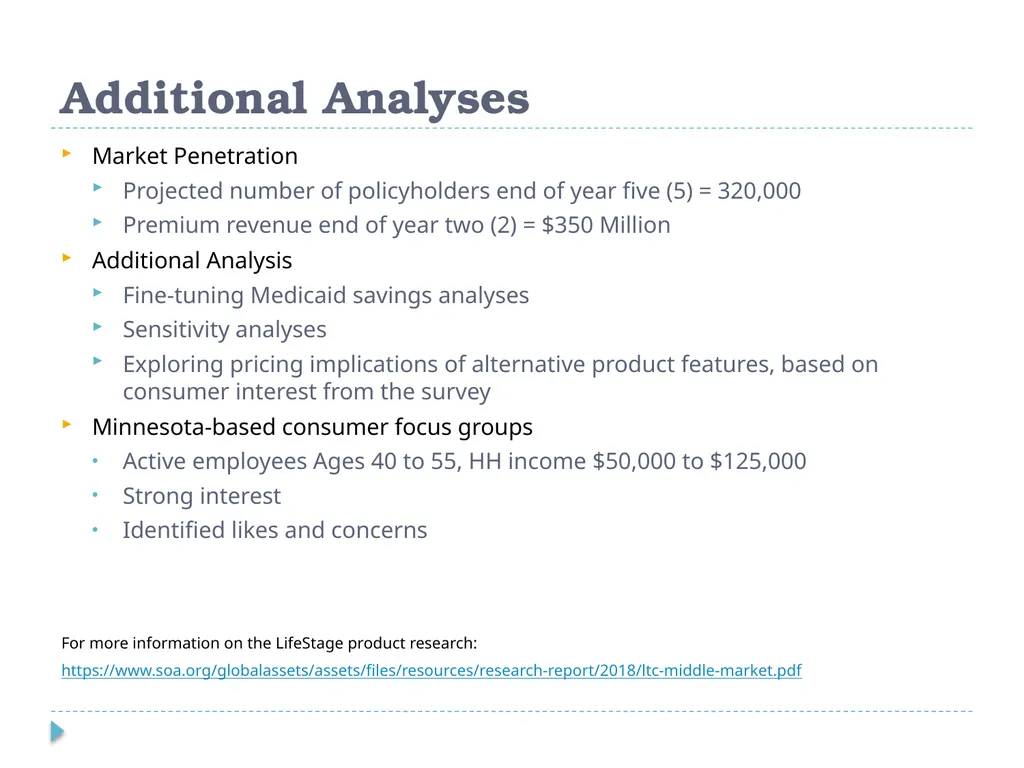
Additional Analyses Market Penetration
Projected number of policyholders end of year five (5) = 320,000
Premium revenue end of year two (2) = $350 Million
Additional Analysis
Fine-tuning Medicaid savings analyses
Sensitivity analyses
Exploring pricing implications of alternative product features, based on consumer interest from the survey
Minnesota-based consumer focus groups
Active employees Ages 40 to 55, HH income $50,000 to $125,000
Strong interest
Identified likes and concerns
For more information on the LifeStage product research:
https://www.soa.org/globalassets/assets/files/resources/research-report/2018/ltc-middle-market.pdf<br>
Projected number of policyholders end of year five (5) = 320,000
Premium revenue end of year two (2) = $350 Million
Additional Analysis
Fine-tuning Medicaid savings analyses
Sensitivity analyses
Exploring pricing implications of alternative product features, based on consumer interest from the survey
Minnesota-based consumer focus groups
Active employees Ages 40 to 55, HH income $50,000 to $125,000
Strong interest
Identified likes and concerns
For more information on the LifeStage product research:
https://www.soa.org/globalassets/assets/files/resources/research-report/2018/ltc-middle-market.pdf<br>
37
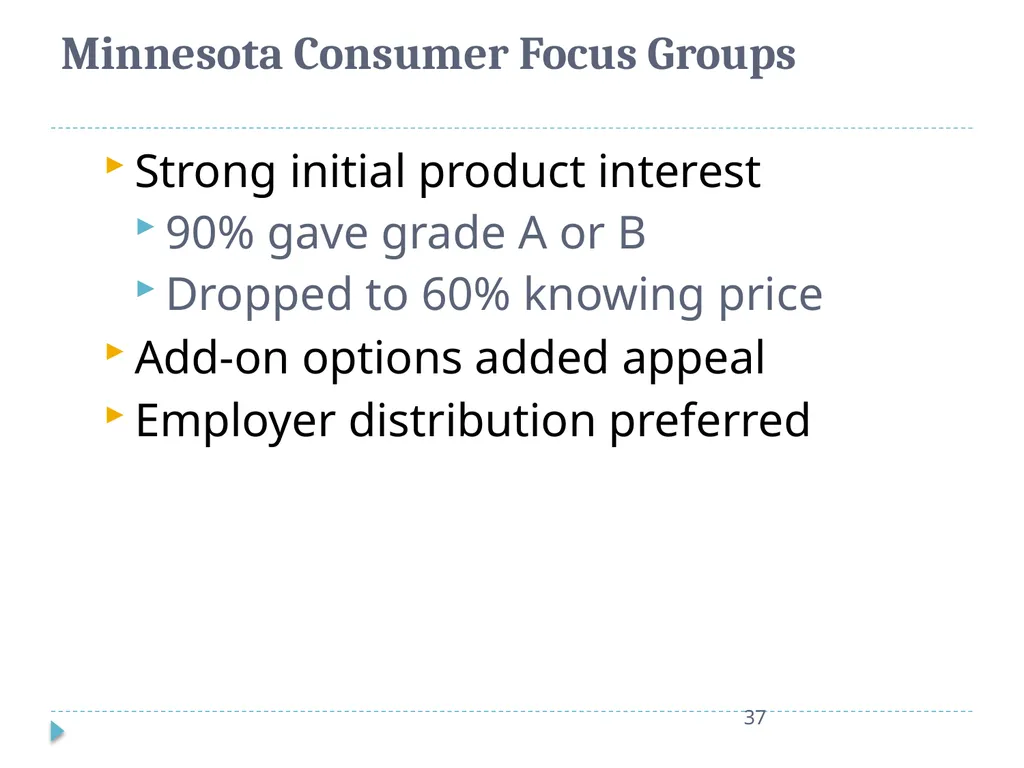
Minnesota Consumer Focus Groups Strong initial product interest
90% gave grade A or B
Dropped to 60% knowing price
Add-on options added appeal
Employer distribution preferred 37<br>
90% gave grade A or B
Dropped to 60% knowing price
Add-on options added appeal
Employer distribution preferred 37<br>
38
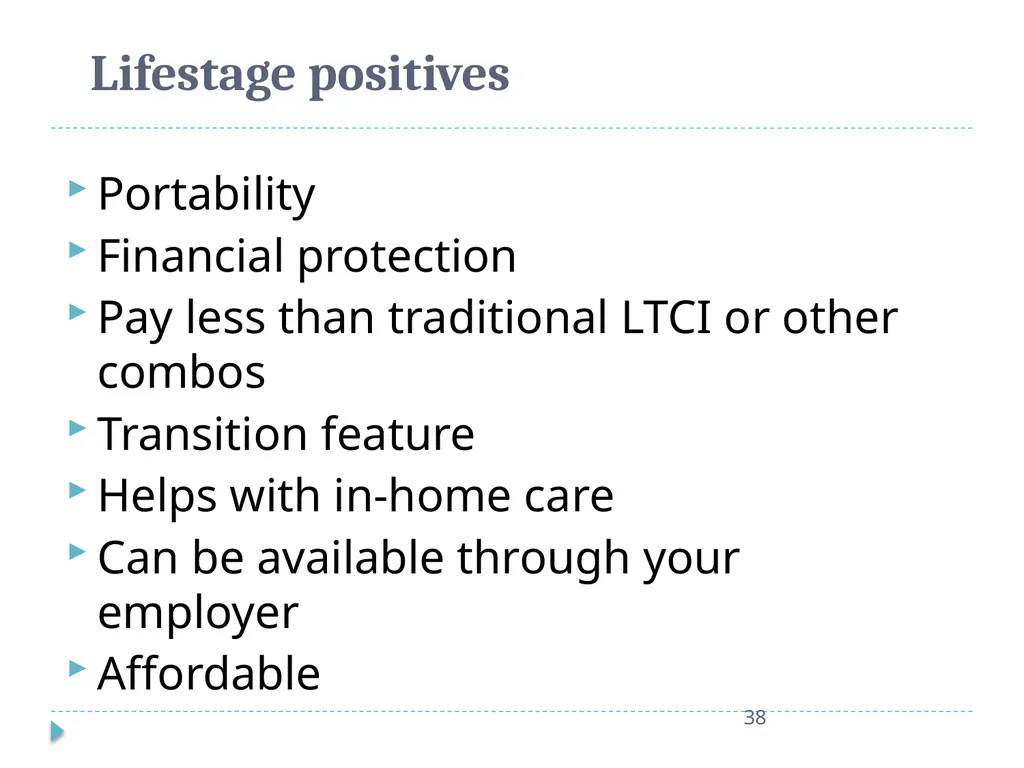
Lifestage positives Portability
Financial protection
Pay less than traditional LTCI or other combos
Transition feature
Helps with in-home care
Can be available through your employer
Affordable 38<br>
Financial protection
Pay less than traditional LTCI or other combos
Transition feature
Helps with in-home care
Can be available through your employer
Affordable 38<br>
39
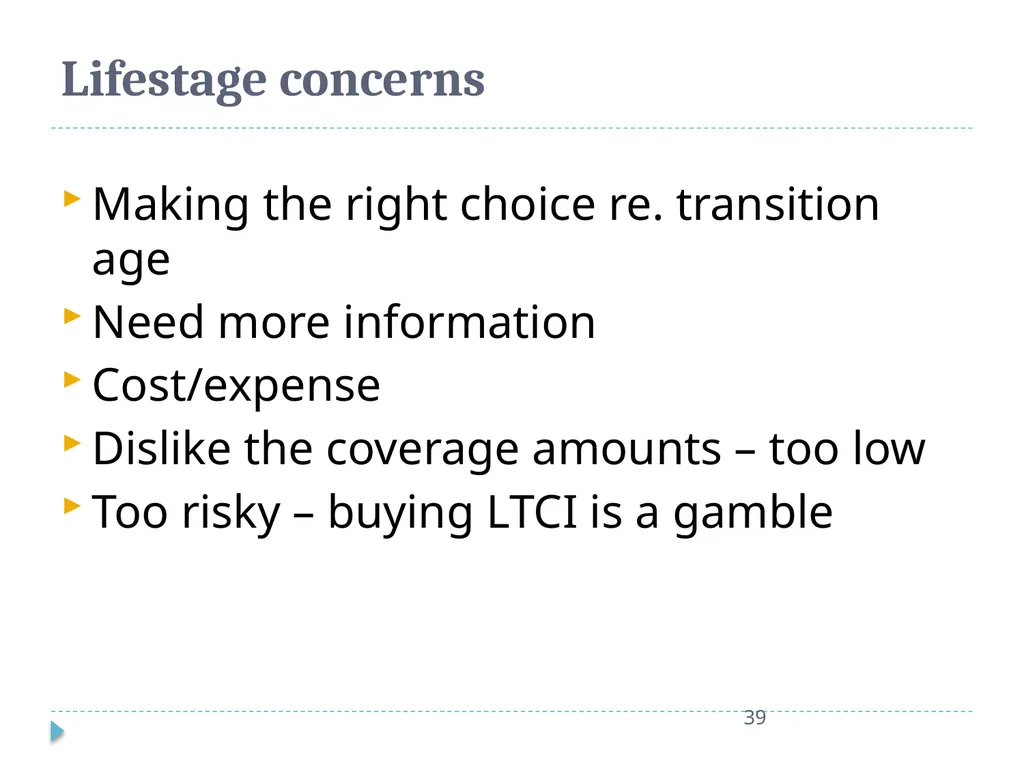
Lifestage concerns Making the right choice re. transition age
Need more information
Cost/expense
Dislike the coverage amounts – too low
Too risky – buying LTCI is a gamble 39<br>
Need more information
Cost/expense
Dislike the coverage amounts – too low
Too risky – buying LTCI is a gamble 39<br>
40
Eileen J. Tell
ET Consulting LLC
A Woman-Owned Business eileenjtell@gmail.com<br>