What is pH? pH A special name is given to
Description: What is pH? pH A special name is given to the acid or base characteristic that a substance has: It is called: pH p stands for potential and H stands for hydrogen; hence, the potential of a substance to attract hydrogen ions Acid Any
Related Topics
Download Presentation
"What is pH? pH A special name is given to" is the property of its rightful owner. Permission is granted to download and print the materials on this website for personal, non-commercial use only, and to display it on your personal computer provided you do not modify the materials and that you retain all copyright notices contained in the materials. By downloading content from our website, you accept the terms of this agreement.
Presentation Transcript
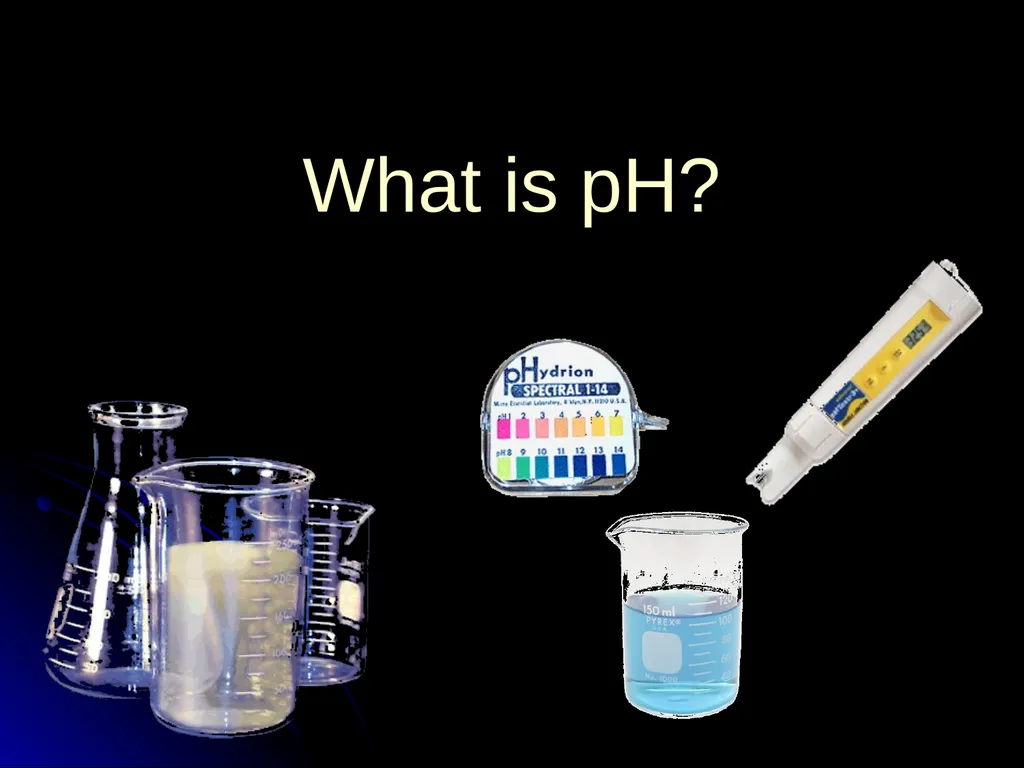
slide1. What is pH?<br>
slide2. pH A special name is given to the acid or base characteristic that a substance has:
It is called: pH
“p” stands for potential and “H” stands for hydrogen; hence, the potential of a substance to attract hydrogen ions<br>
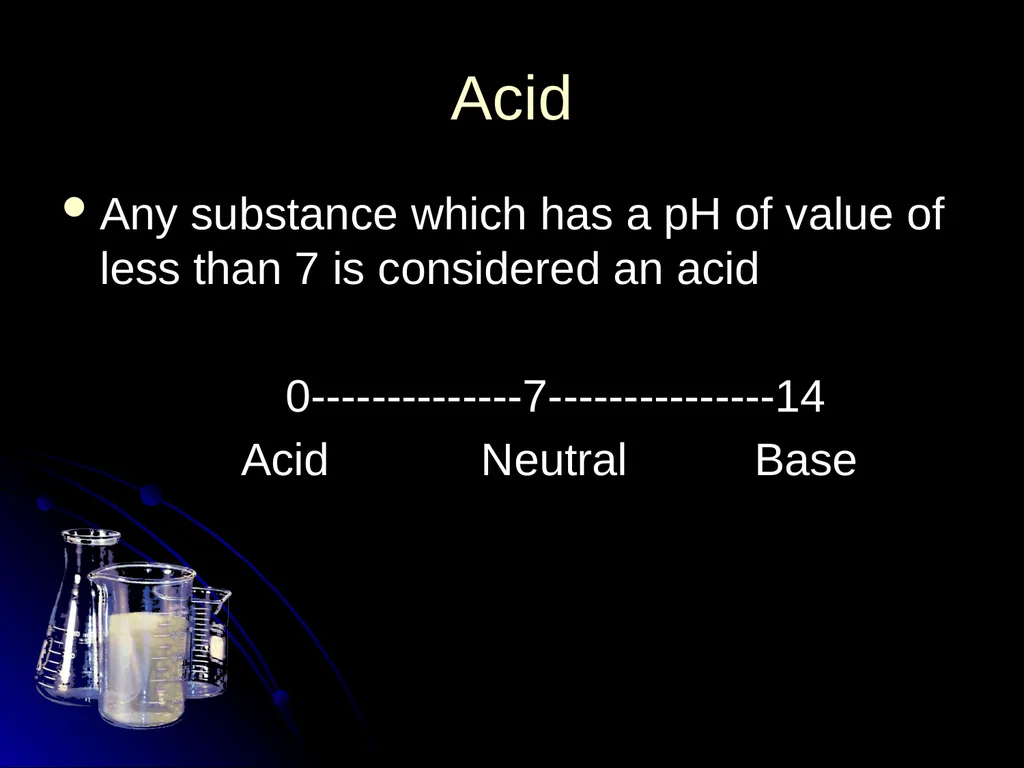
slide3. Acid Any substance which has a pH of value of less than 7 is considered an acid
0--------------7---------------14
Acid Neutral Base<br>
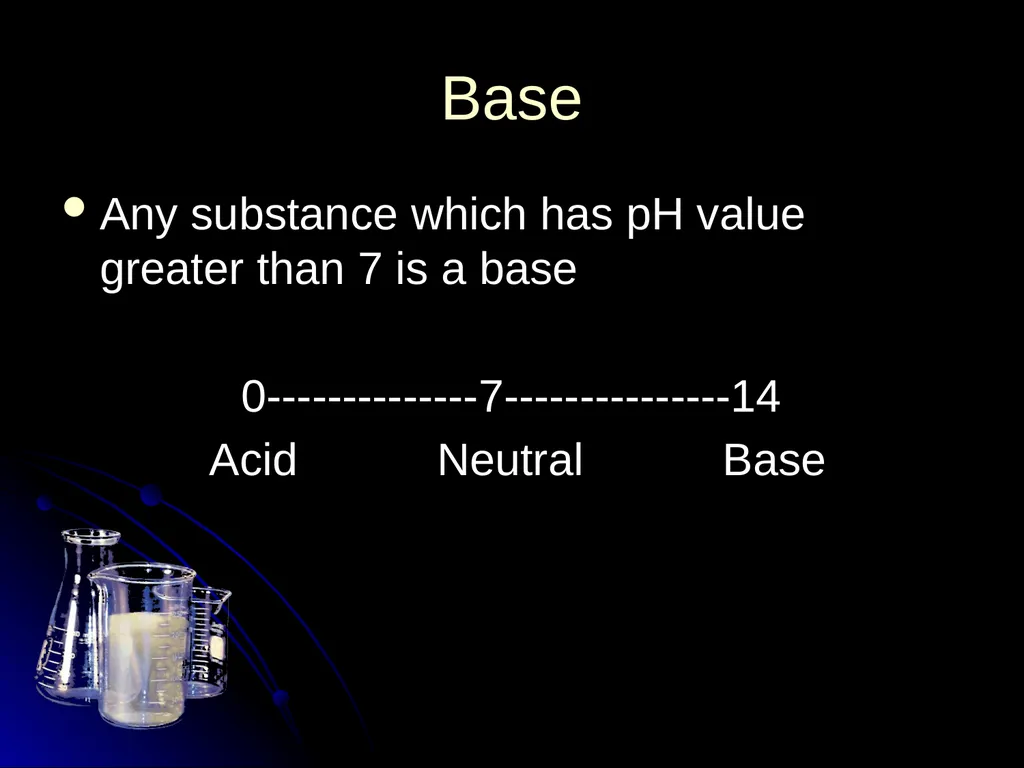
slide4. Base Any substance which has pH value greater than 7 is a base
0--------------7---------------14
Acid Neutral Base<br>
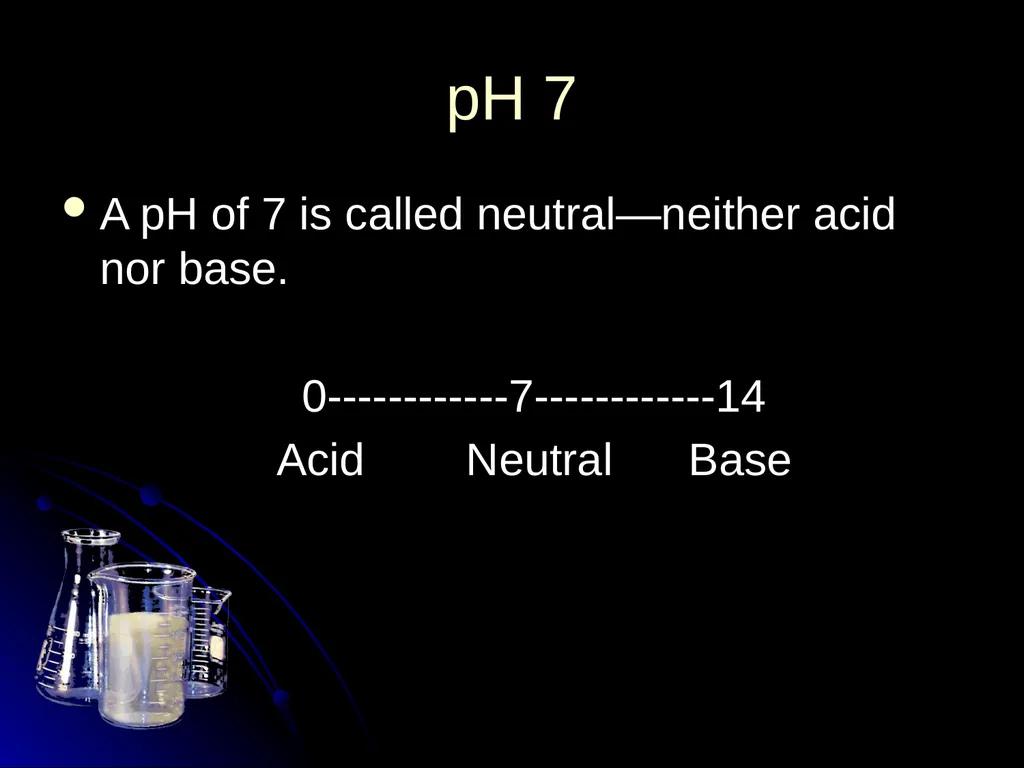
slide5. pH 7 A pH of 7 is called neutral—neither acid nor base.
0------------7------------14
Acid Neutral Base<br>
slide6. Why pH of water = 7 ? Because of Ionization of water<br>
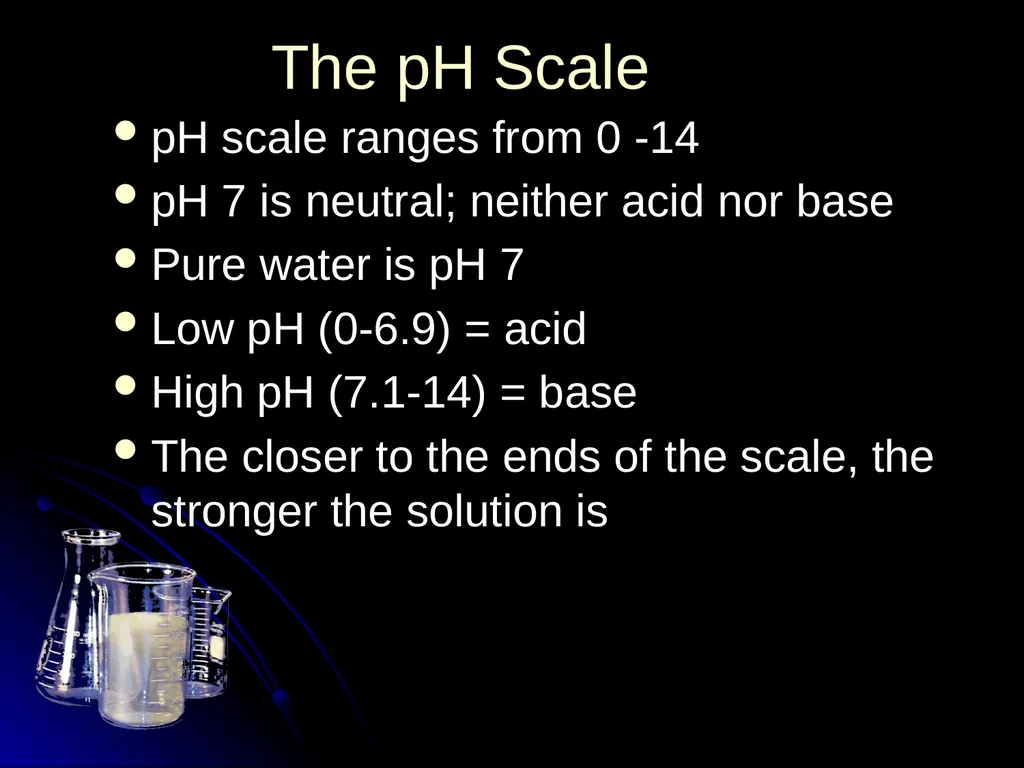
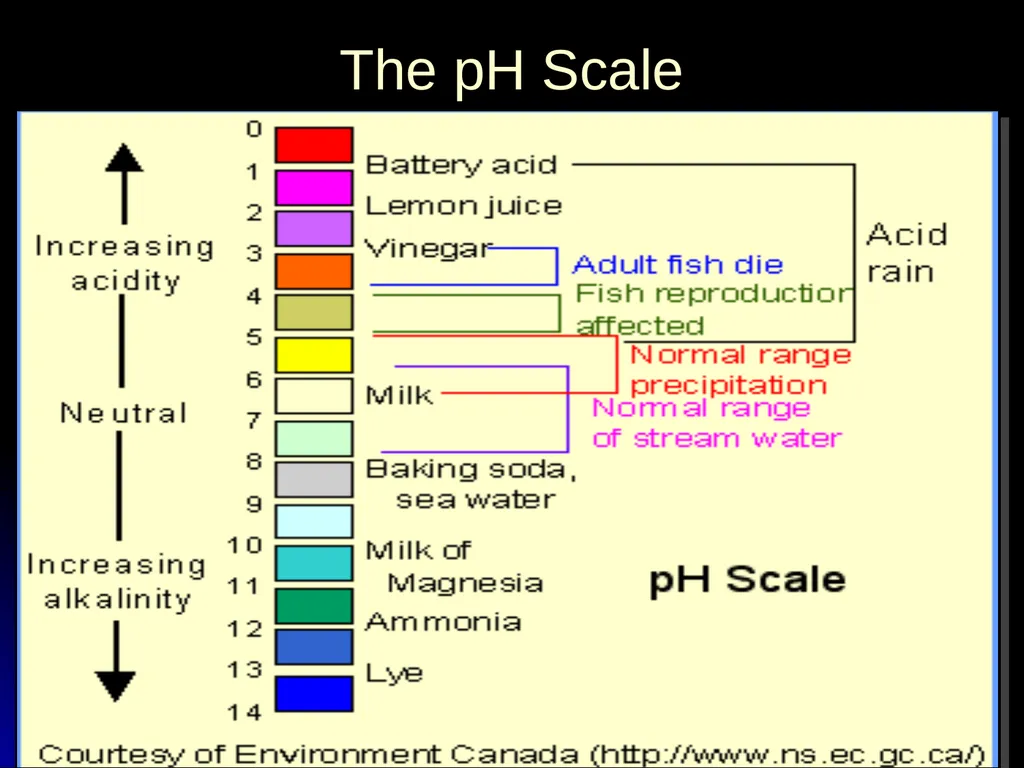
slide7. The pH Scale pH scale ranges from 0 -14
pH 7 is neutral; neither acid nor base
Pure water is pH 7
Low pH (0-6.9) = acid
High pH (7.1-14) = base
The closer to the ends of the scale, the stronger the solution is<br>
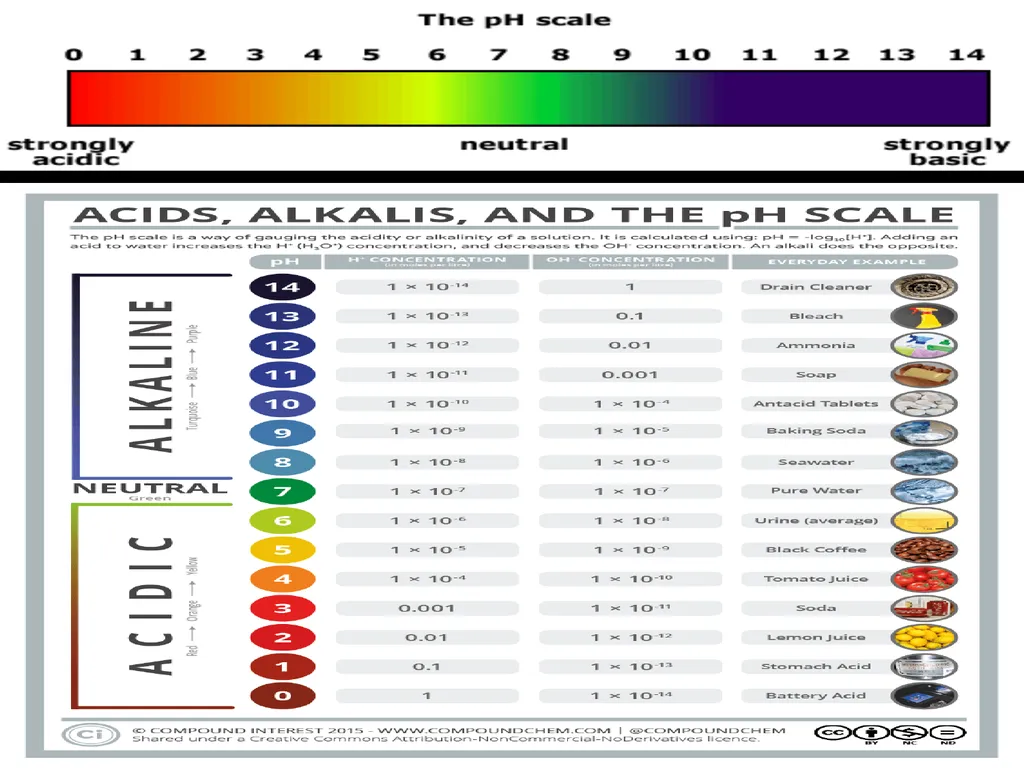
slide9. The pH Scale<br>
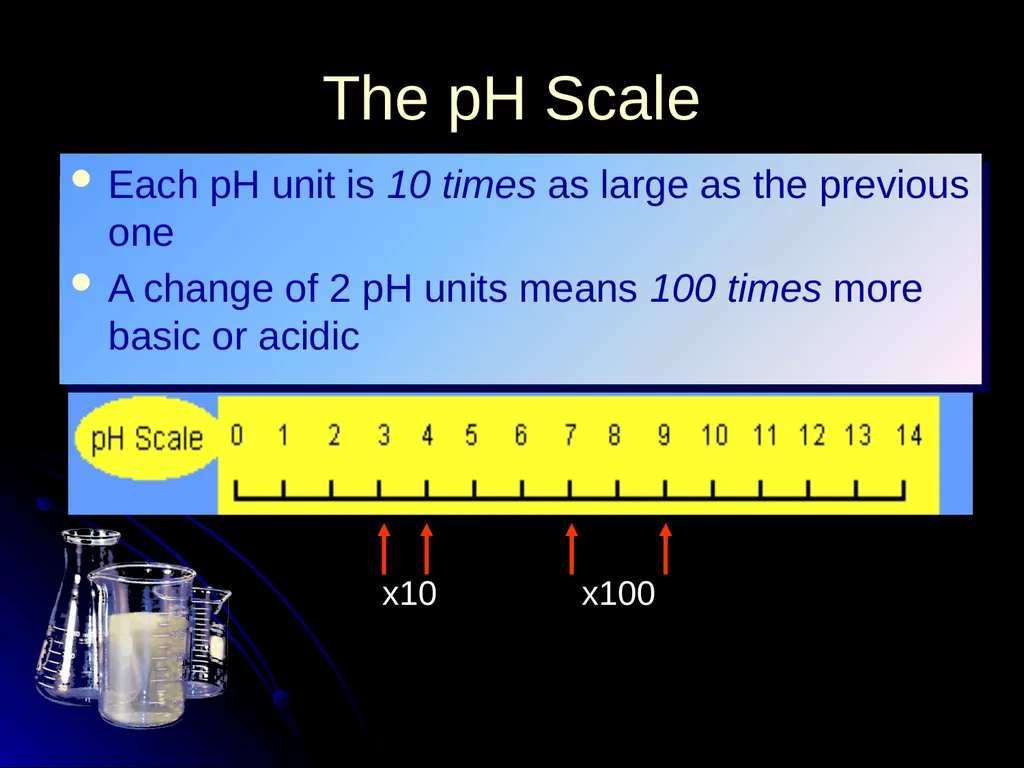
slide10. The pH Scale Each pH unit is 10 times as large as the previous one
A change of 2 pH units means 100 times more basic or acidic<br>
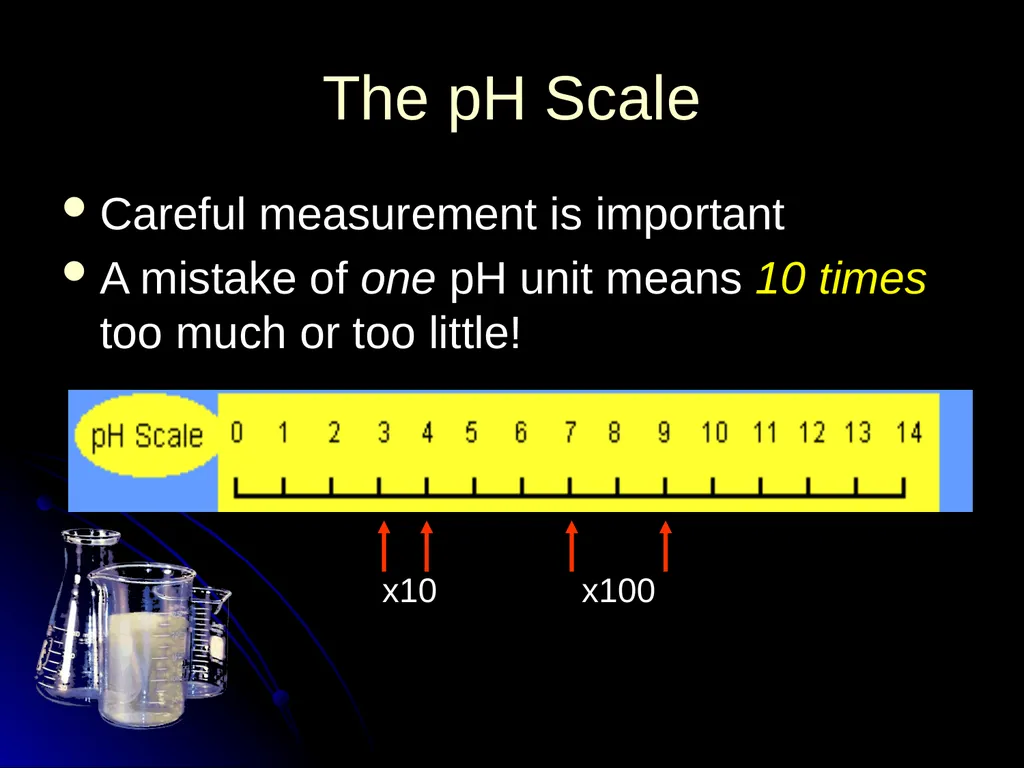
slide11. The pH Scale Careful measurement is important
A mistake of one pH unit means 10 times too much or too little!<br>
slide12. Acids and Bases Chemicals may be classed as acids or bases.
Things that are neither acids nor bases are neutral.
pH measures how acidic or basic a solution is.<br>
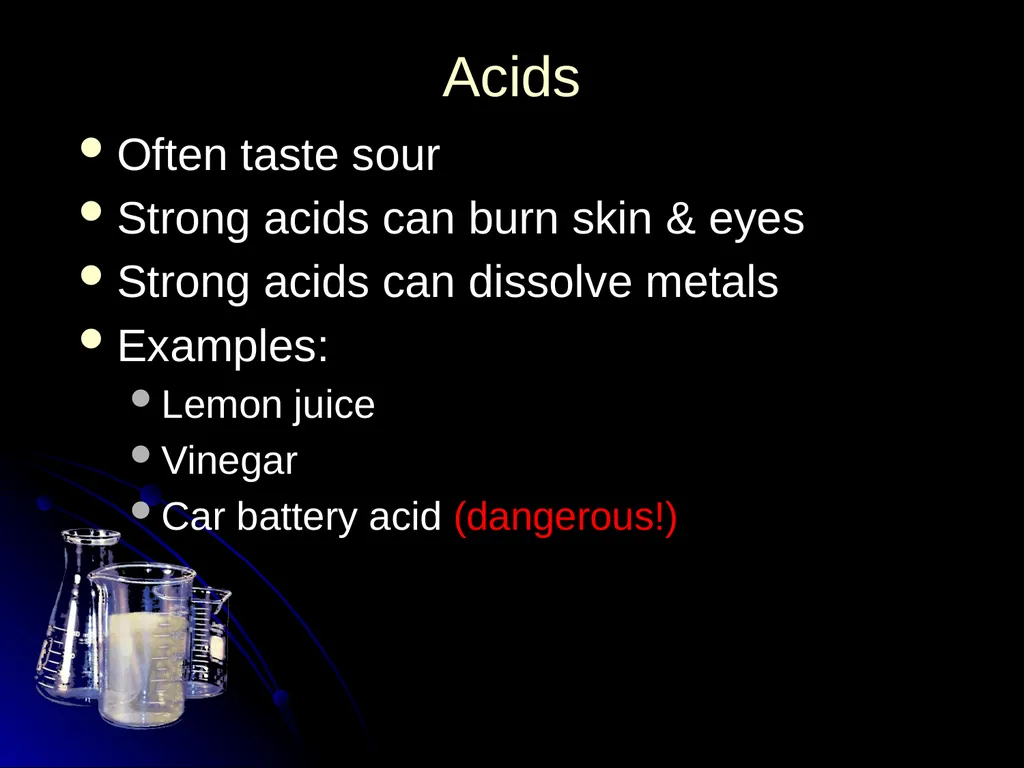
slide13. Acids Often taste sour
Strong acids can burn skin & eyes
Strong acids can dissolve metals
Examples:
Lemon juice
Vinegar
Car battery acid (dangerous!)<br>
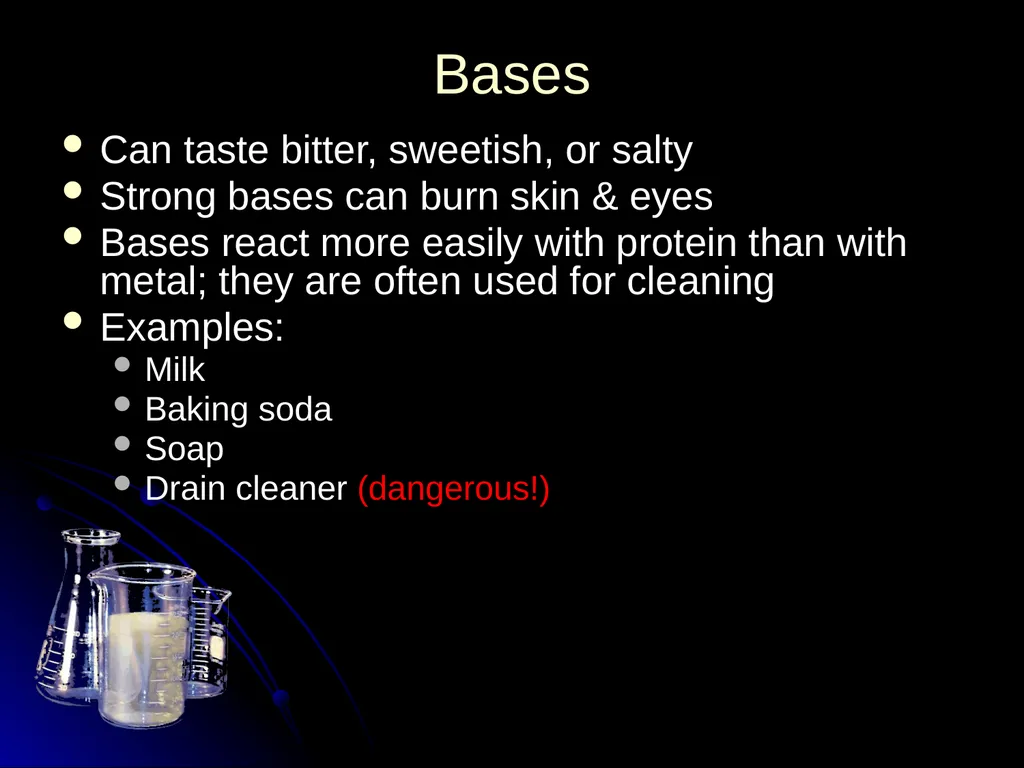
slide14. Bases Can taste bitter, sweetish, or salty
Strong bases can burn skin & eyes
Bases react more easily with protein than with metal; they are often used for cleaning
Examples:
Milk
Baking soda
Soap
Drain cleaner (dangerous!)<br>
slide15. Some of our favorite foods make our tongue curl up because they are SOUR. Acids and Bases<br>
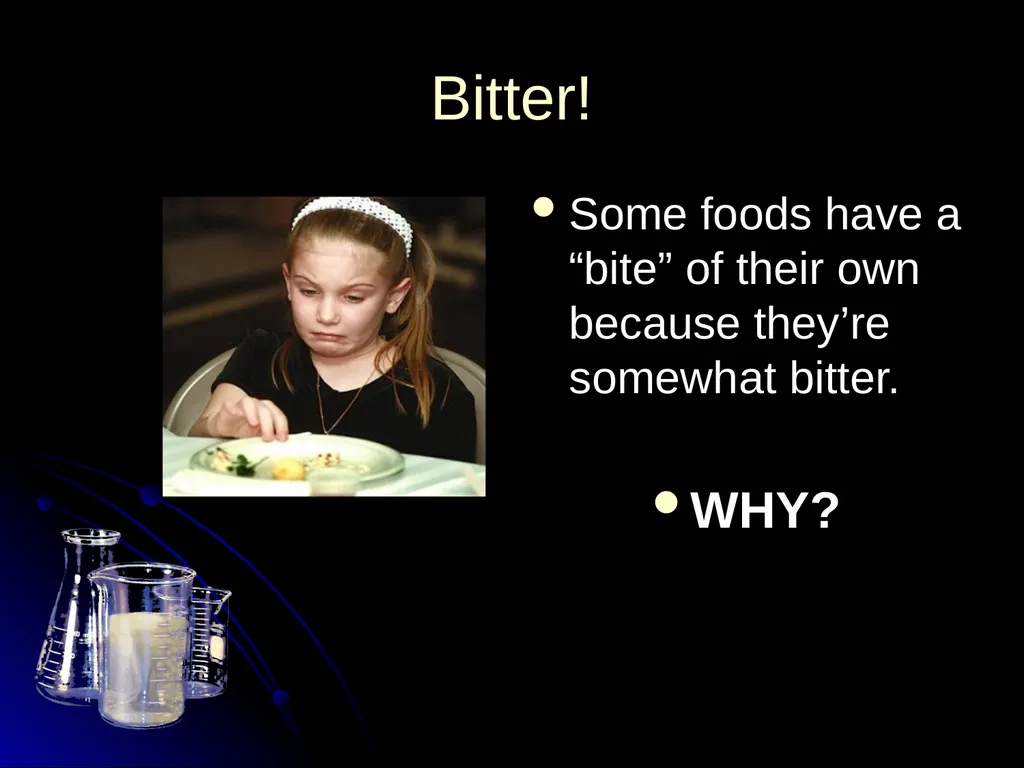
slide16. Bitter! Some foods have a “bite” of their own because they’re somewhat bitter.
WHY?<br>
slide17. Acidic/Basic There is a scientific reason for this:
These foods are either acidic or basic.
Other substances besides foods have these characteristics.<br>
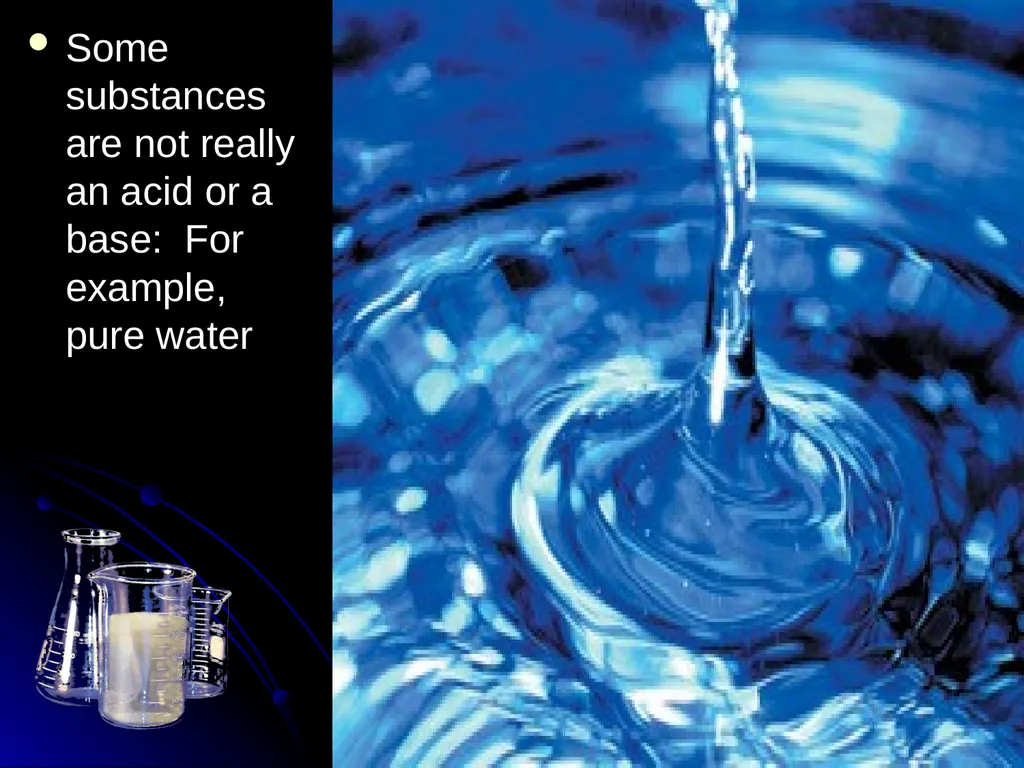
slide18. Some substances are not really an acid or a base: For example, pure water<br>
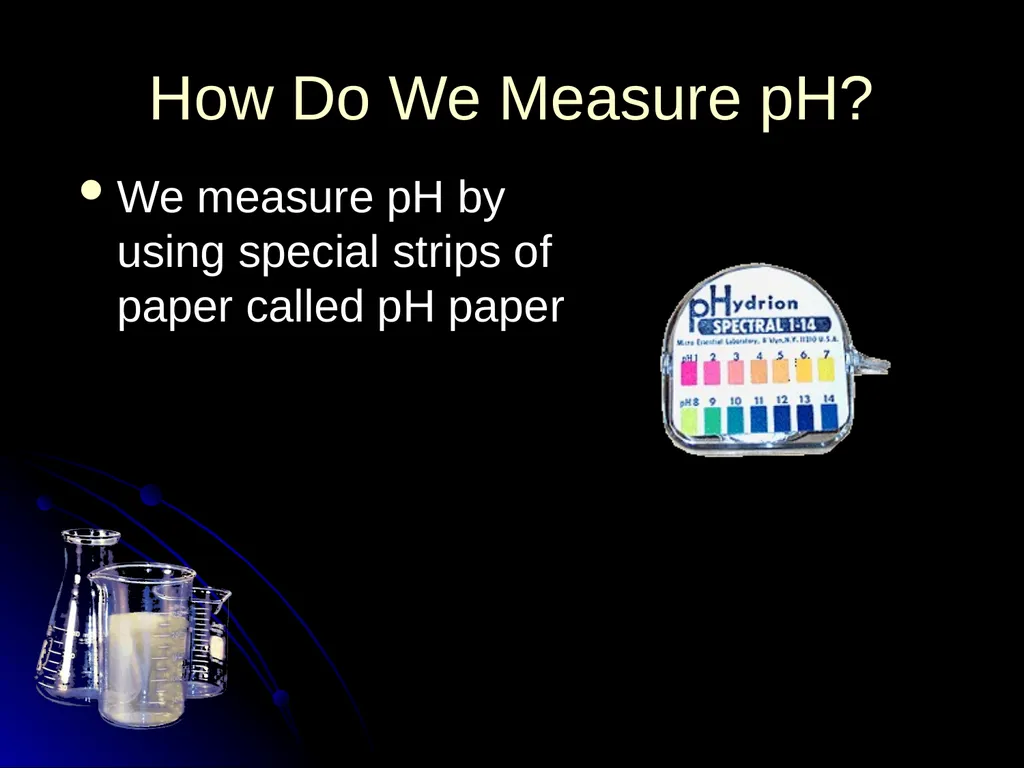
slide19. How Do We Measure pH? We measure pH by using special strips of paper called pH paper<br>
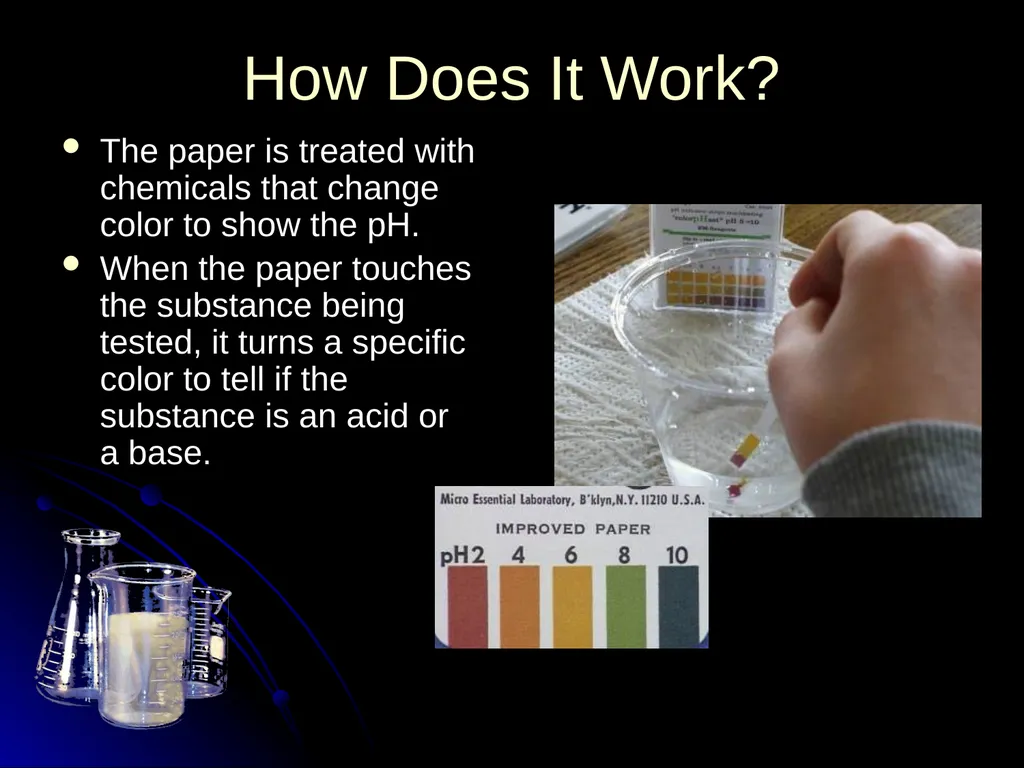
slide20. How Does It Work? The paper is treated with chemicals that change color to show the pH.
When the paper touches the substance being tested, it turns a specific color to tell if the substance is an acid or a base.<br>
slide21. To Use pH Paper Place the edge of the pH paper into the mixture.
Observe the color change of the pH paper
Match the resulting color to the colors listed on the outside of the pH paper package.
The colors match with a correlated pH number.
The number is the pH value of the sample.<br>
slide22. Acidic or Basic If the number is less than 7 the substance or water is acidic
If the number is more than 7 the substance or water is basic<br>
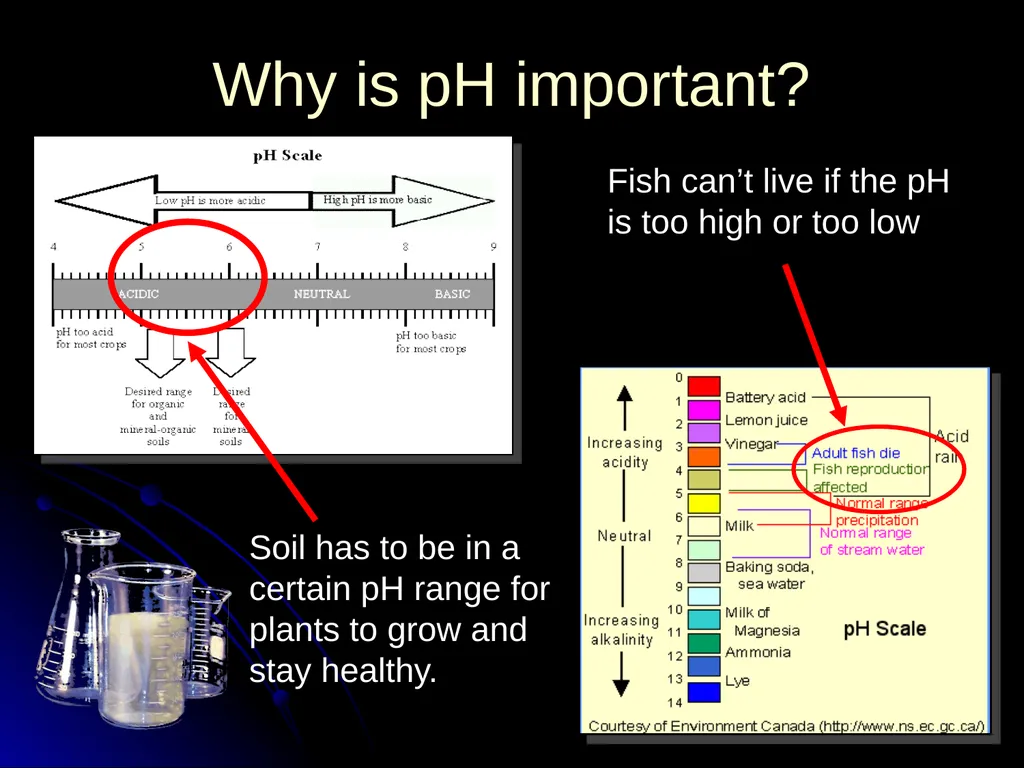
slide23. Why is pH important? Soil has to be in a certain pH range for plants to grow and stay healthy. Fish can’t live if the pH is too high or too low<br>
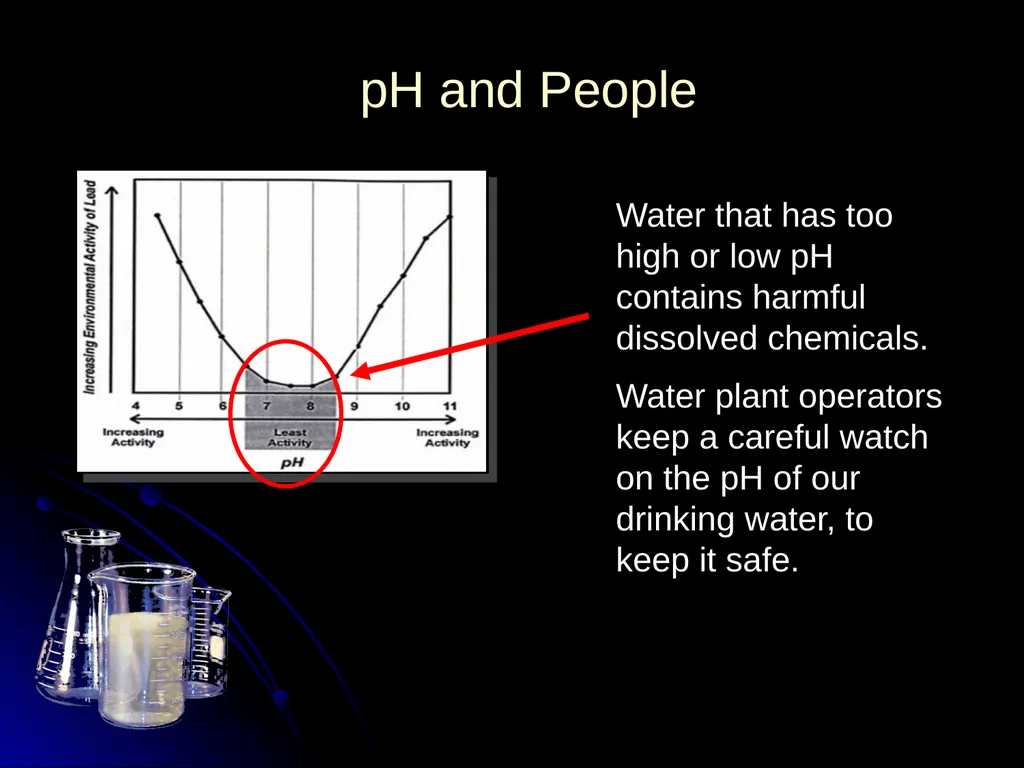
slide24. pH and People Water that has too high or low pH contains harmful dissolved chemicals.
Water plant operators keep a careful watch on the pH of our drinking water, to keep it safe.<br>
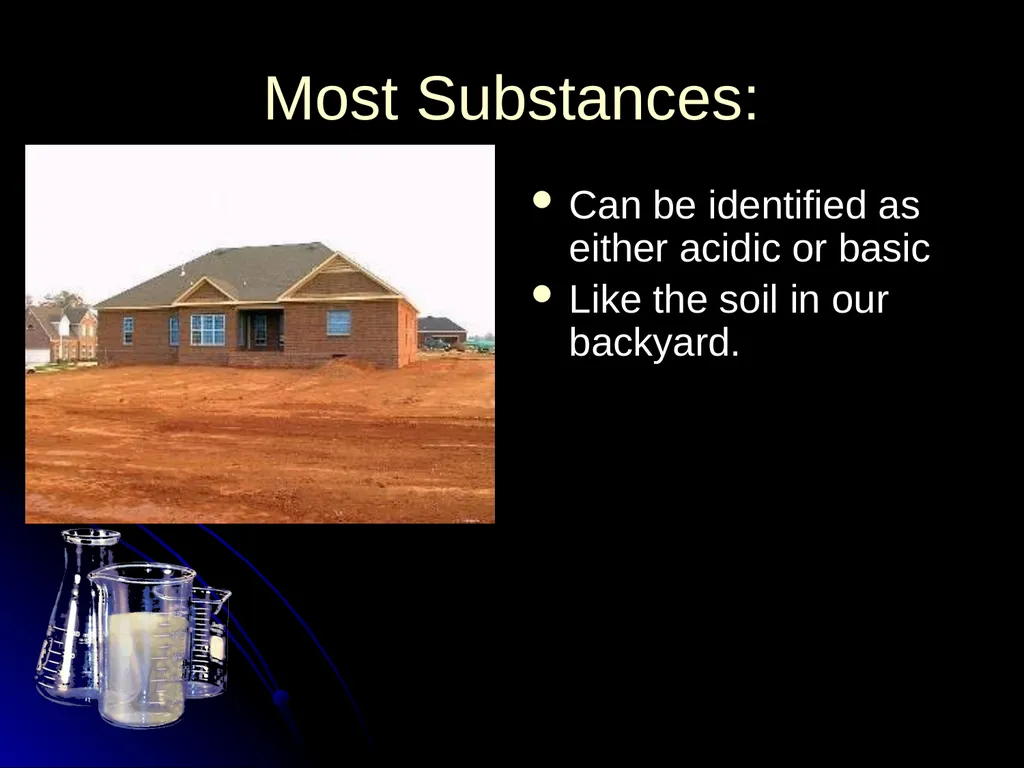
slide25. Most Substances: Can be identified as either acidic or basic
Like the soil in our backyard.<br>

slide2. pH A special name is given to the acid or base characteristic that a substance has:
It is called: pH
“p” stands for potential and “H” stands for hydrogen; hence, the potential of a substance to attract hydrogen ions<br>
slide3. Acid Any substance which has a pH of value of less than 7 is considered an acid
0--------------7---------------14
Acid Neutral Base<br>
slide4. Base Any substance which has pH value greater than 7 is a base
0--------------7---------------14
Acid Neutral Base<br>
slide5. pH 7 A pH of 7 is called neutral—neither acid nor base.
0------------7------------14
Acid Neutral Base<br>
slide6. Why pH of water = 7 ? Because of Ionization of water<br>
slide7. The pH Scale pH scale ranges from 0 -14
pH 7 is neutral; neither acid nor base
Pure water is pH 7
Low pH (0-6.9) = acid
High pH (7.1-14) = base
The closer to the ends of the scale, the stronger the solution is<br>
slide9. The pH Scale<br>
slide10. The pH Scale Each pH unit is 10 times as large as the previous one
A change of 2 pH units means 100 times more basic or acidic<br>
slide11. The pH Scale Careful measurement is important
A mistake of one pH unit means 10 times too much or too little!<br>
slide12. Acids and Bases Chemicals may be classed as acids or bases.
Things that are neither acids nor bases are neutral.
pH measures how acidic or basic a solution is.<br>
slide13. Acids Often taste sour
Strong acids can burn skin & eyes
Strong acids can dissolve metals
Examples:
Lemon juice
Vinegar
Car battery acid (dangerous!)<br>
slide14. Bases Can taste bitter, sweetish, or salty
Strong bases can burn skin & eyes
Bases react more easily with protein than with metal; they are often used for cleaning
Examples:
Milk
Baking soda
Soap
Drain cleaner (dangerous!)<br>
slide15. Some of our favorite foods make our tongue curl up because they are SOUR. Acids and Bases<br>
slide16. Bitter! Some foods have a “bite” of their own because they’re somewhat bitter.
WHY?<br>
slide17. Acidic/Basic There is a scientific reason for this:
These foods are either acidic or basic.
Other substances besides foods have these characteristics.<br>
slide18. Some substances are not really an acid or a base: For example, pure water<br>
slide19. How Do We Measure pH? We measure pH by using special strips of paper called pH paper<br>
slide20. How Does It Work? The paper is treated with chemicals that change color to show the pH.
When the paper touches the substance being tested, it turns a specific color to tell if the substance is an acid or a base.<br>
slide21. To Use pH Paper Place the edge of the pH paper into the mixture.
Observe the color change of the pH paper
Match the resulting color to the colors listed on the outside of the pH paper package.
The colors match with a correlated pH number.
The number is the pH value of the sample.<br>
slide22. Acidic or Basic If the number is less than 7 the substance or water is acidic
If the number is more than 7 the substance or water is basic<br>
slide23. Why is pH important? Soil has to be in a certain pH range for plants to grow and stay healthy. Fish can’t live if the pH is too high or too low<br>
slide24. pH and People Water that has too high or low pH contains harmful dissolved chemicals.
Water plant operators keep a careful watch on the pH of our drinking water, to keep it safe.<br>
slide25. Most Substances: Can be identified as either acidic or basic
Like the soil in our backyard.<br>