What is Soil-Biodegradable Mulch? Soil-Biodegradable Plastic Mulch Professional Training https:smallfruits.wsu.edu biodegradablemulch.org Carol Miles, Washington State University Shuresh Ghimire, University of Connecticut Alternative to
"What is Soil-Biodegradable Mulch?" is the property of its rightful owner. Permission is granted to
download and print the materials on this website for personal, non-commercial use only, and to display it
on your personal computer provided you do not modify the materials and that you retain all copyright
notices contained in the materials. By downloading content from our website, you accept the terms of this
agreement.
Presentation Transcript
01
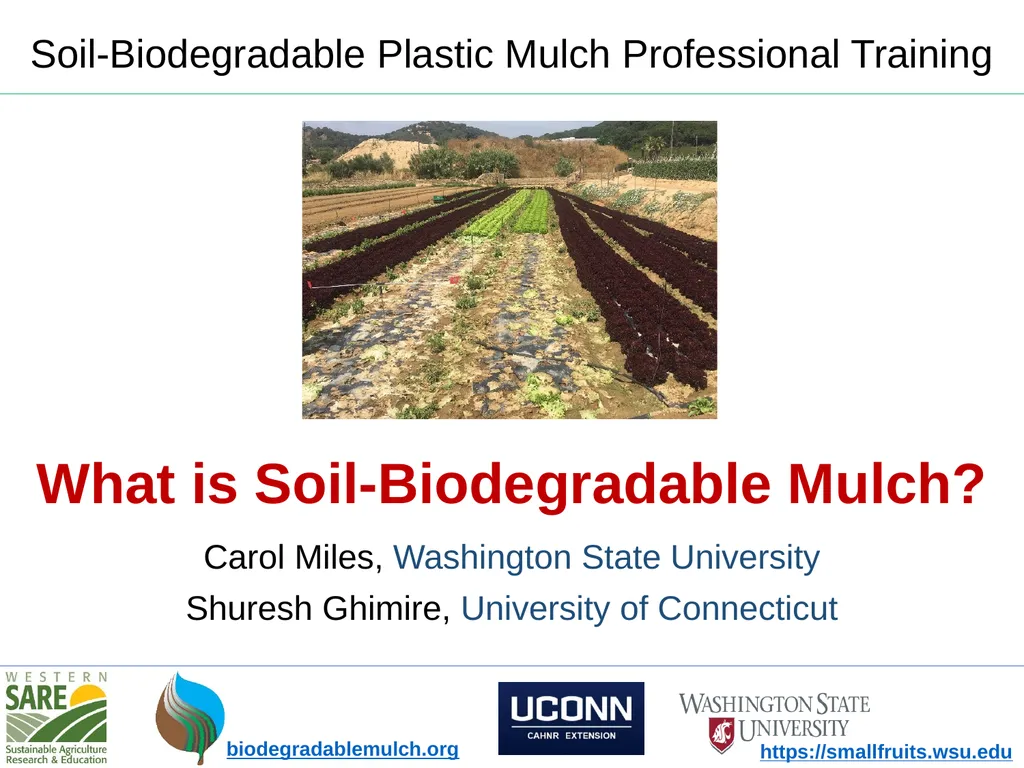
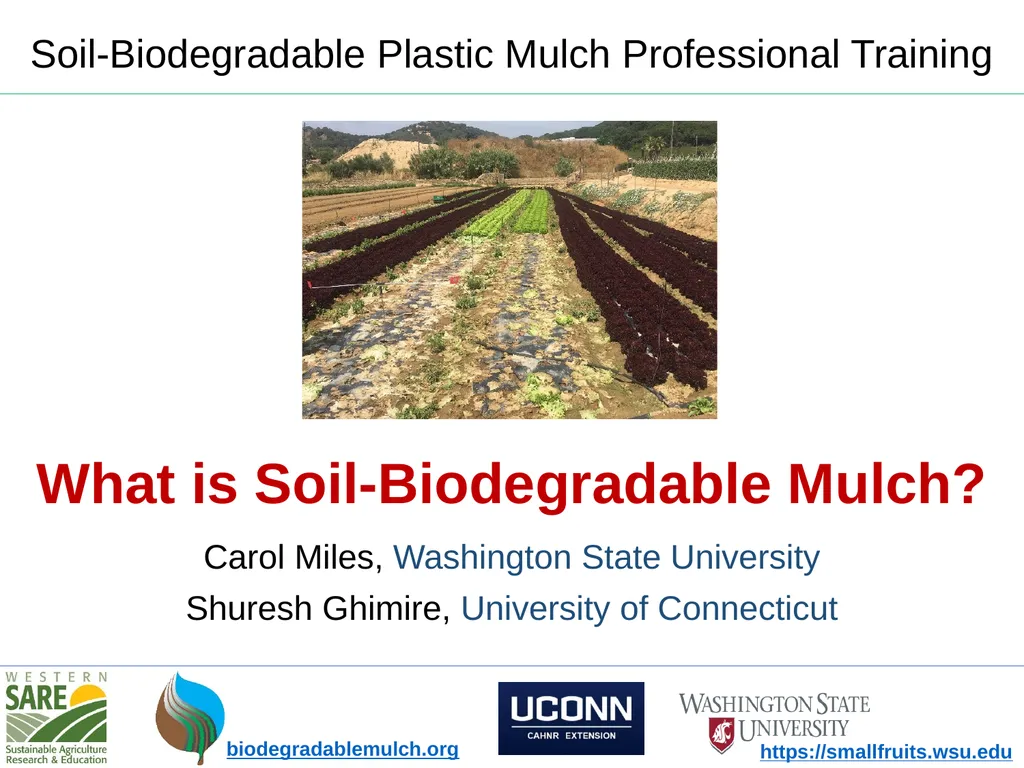
What is Soil-Biodegradable Mulch? Soil-Biodegradable Plastic Mulch Professional Training https://smallfruits.wsu.edu biodegradablemulch.org Carol Miles, Washington State University
Shuresh Ghimire, University of Connecticut<br>
02
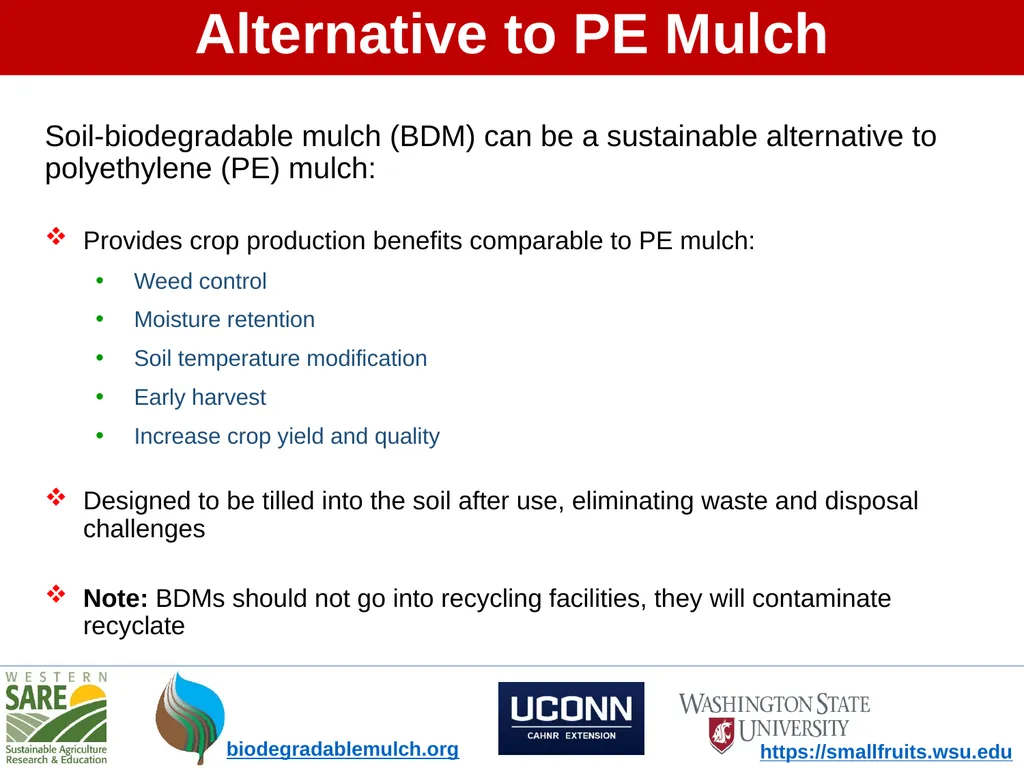
Alternative to PE Mulch Soil-biodegradable mulch (BDM) can be a sustainable alternative to polyethylene (PE) mulch:
Provides crop production benefits comparable to PE mulch:
Weed control
Moisture retention
Soil temperature modification
Early harvest
Increase crop yield and quality
Designed to be tilled into the soil after use, eliminating waste and disposal challenges
Note: BDMs should not go into recycling facilities, they will contaminate recyclate https://smallfruits.wsu.edu biodegradablemulch.org<br>
03
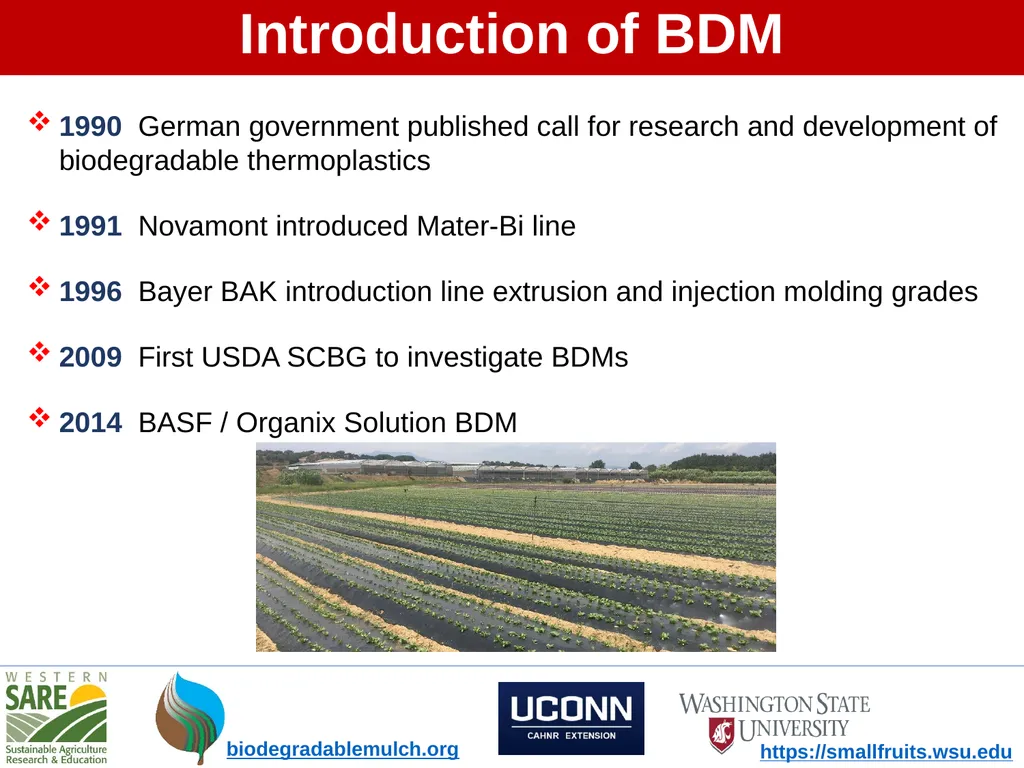
Introduction of BDM https://smallfruits.wsu.edu biodegradablemulch.org 1990 German government published call for research and development of biodegradable thermoplastics
1991 Novamont introduced Mater-Bi line
1996 Bayer BAK introduction line extrusion and injection molding grades
2009 First USDA SCBG to investigate BDMs
2014 BASF / Organix Solution BDM<br>
04
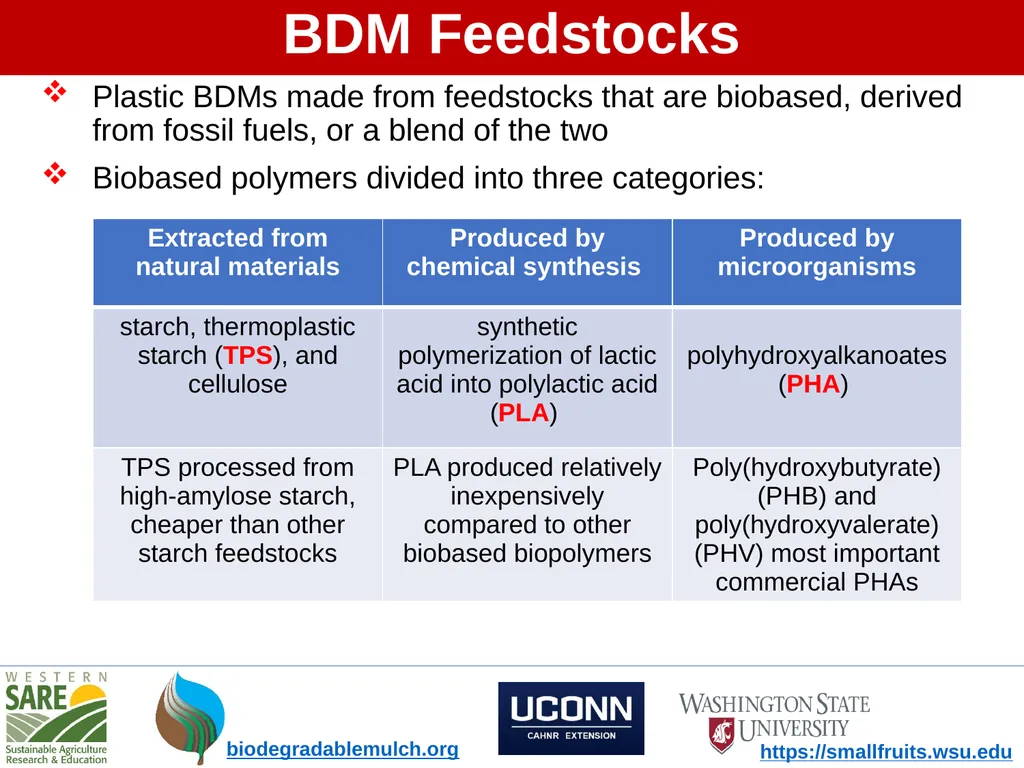
BDM Feedstocks Plastic BDMs made from feedstocks that are biobased, derived from fossil fuels, or a blend of the two
Biobased polymers divided into three categories: https://smallfruits.wsu.edu biodegradablemulch.org<br>
05
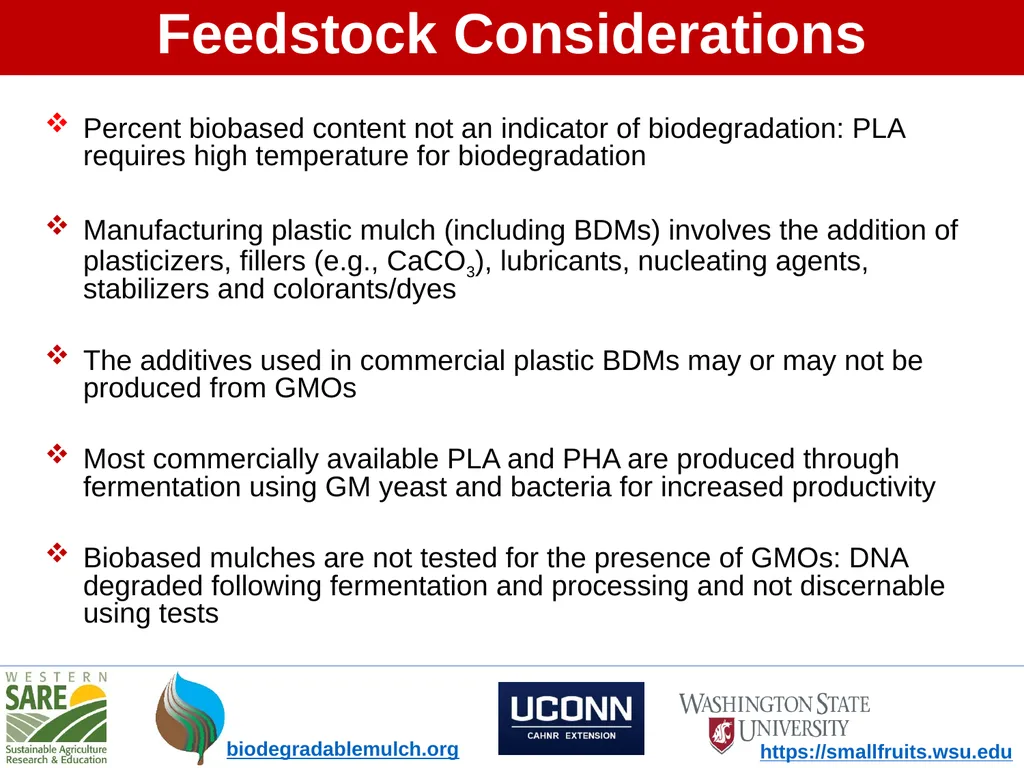
Feedstock Considerations Percent biobased content not an indicator of biodegradation: PLA requires high temperature for biodegradation
Manufacturing plastic mulch (including BDMs) involves the addition of plasticizers, fillers (e.g., CaCO3), lubricants, nucleating agents, stabilizers and colorants/dyes
The additives used in commercial plastic BDMs may or may not be produced from GMOs
Most commercially available PLA and PHA are produced through fermentation using GM yeast and bacteria for increased productivity
Biobased mulches are not tested for the presence of GMOs: DNA degraded following fermentation and processing and not discernable using tests https://smallfruits.wsu.edu biodegradablemulch.org<br>
06
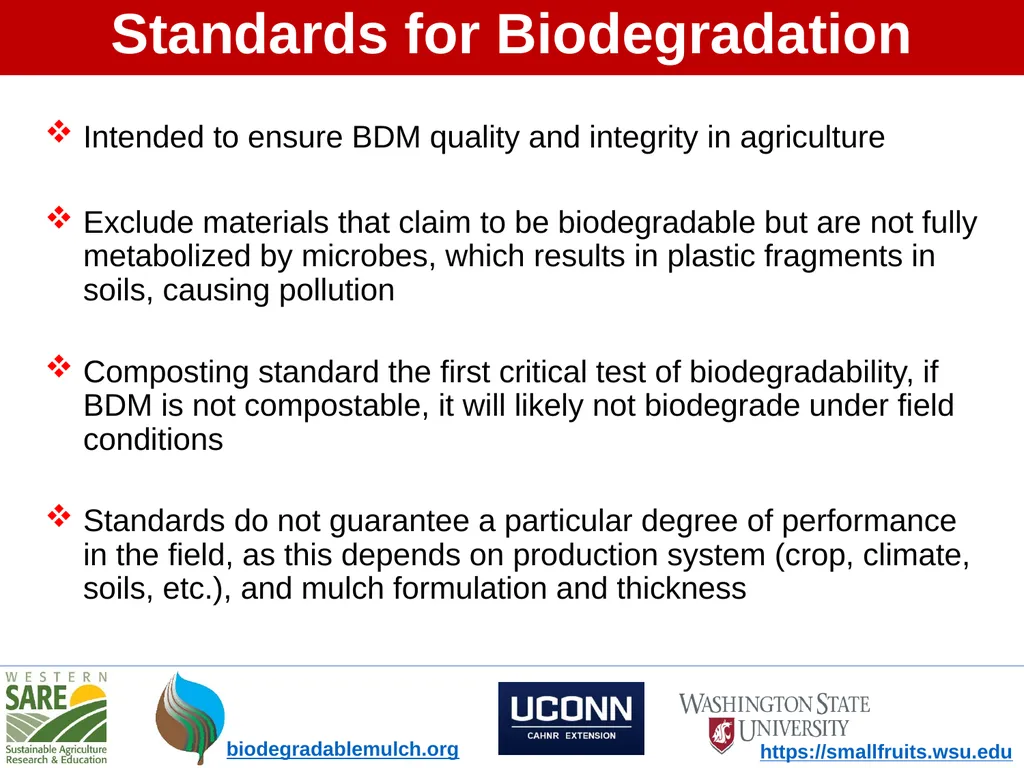
Standards for Biodegradation Intended to ensure BDM quality and integrity in agriculture
Exclude materials that claim to be biodegradable but are not fully metabolized by microbes, which results in plastic fragments in soils, causing pollution
Composting standard the first critical test of biodegradability, if BDM is not compostable, it will likely not biodegrade under field conditions
Standards do not guarantee a particular degree of performance in the field, as this depends on production system (crop, climate, soils, etc.), and mulch formulation and thickness https://smallfruits.wsu.edu biodegradablemulch.org<br>
07
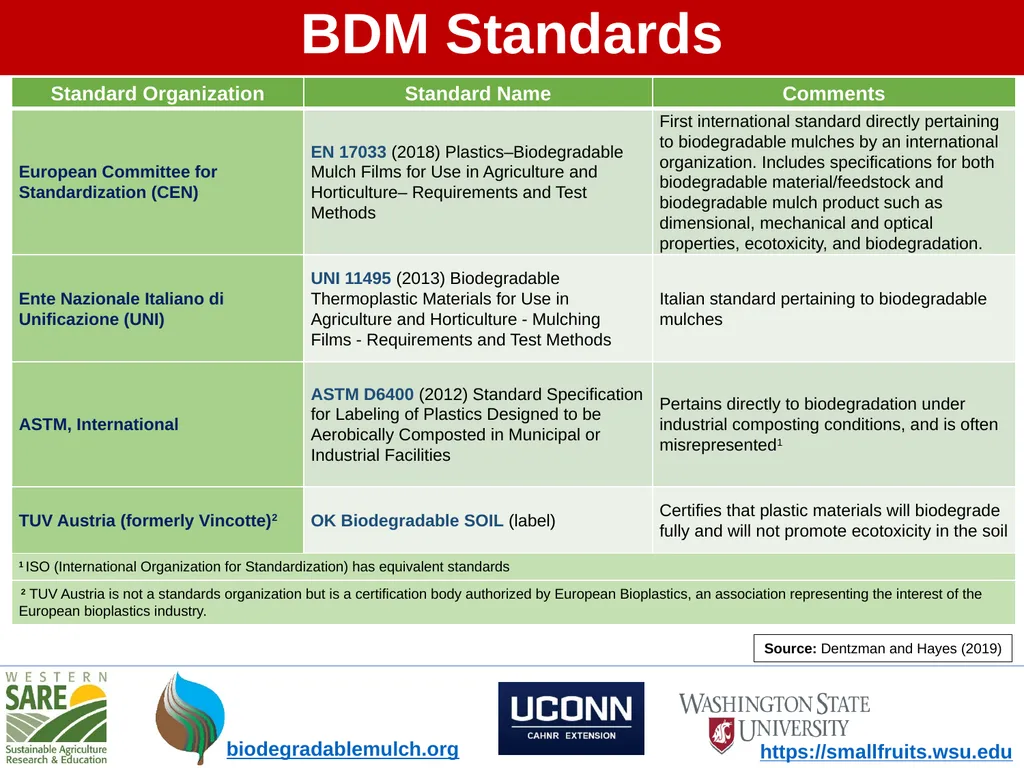
BDM Standards Source: Dentzman and Hayes (2019) https://smallfruits.wsu.edu biodegradablemulch.org<br>
08
BDM Standards https://smallfruits.wsu.edu biodegradablemulch.org ASTM D6400 tests biodegradation under industrial composting conditions (2012)
Most commonly cited standard for BDM
Employs standardized test method ASTM D5338:
Laboratory test that simulates industrial composting conditions: use of a compost-based medium, 58℃, etc.
≥ 90% conversion of C into CO2 and microbial biomass within 180 days
EN 17033 European Committee for Standardization (CEN) (Jan. 2018)
1st standard for certification of biodegradable plastic mulch films in soil
Requirements regulated: composition; biodegradability in soil; ecotoxicity, dimensional, mechanical and optical properties; and the test procedures for each
≥ 90% biodegradation under aerobic conditions in natural topsoil from agricultural field or forest at 20 to 28°C within 2 years using standardized test to measure CO2 evolution
Why 90% biodegradation and not 100%:
Difficult to measure portion of the plastic-derived C incorporated into microbial biomass
Limited precision of the biodegradability lab tests<br>
09
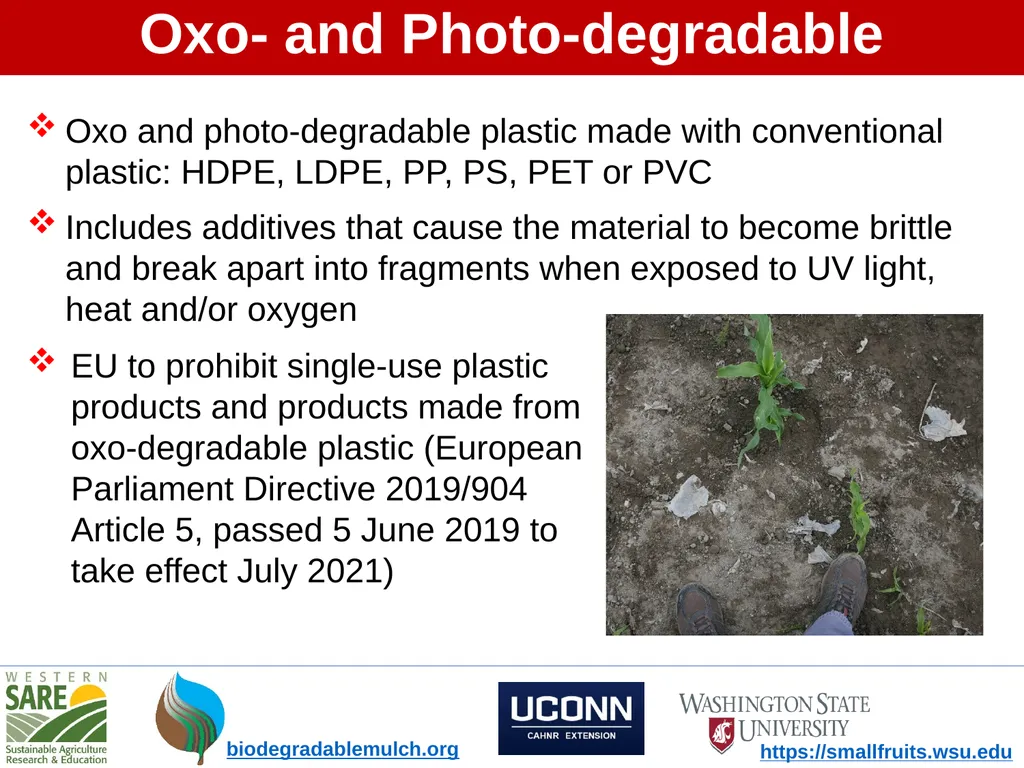
Oxo- and Photo-degradable Oxo and photo-degradable plastic made with conventional plastic: HDPE, LDPE, PP, PS, PET or PVC
Includes additives that cause the material to become brittle and break apart into fragments when exposed to UV light, heat and/or oxygen https://smallfruits.wsu.edu biodegradablemulch.org EU to prohibit single-use plastic products and products made from oxo-degradable plastic (European Parliament Directive 2019/904 Article 5, passed 5 June 2019 to take effect July 2021)<br>
10
Resources The Role of Standards for Use of Biodegradable Plastic Mulches: Truths and Myths
https://ag.tennessee.edu/biodegradablemulch/Documents/Standards%20Factsheet%20Formatted%20revised%2015Jan2019.pdf
Summary and Assessment of EN 17033:2018, a New Standard for Biodegradable Plastic Mulch Films
https://ag.tennessee.edu/biodegradablemulch/Documents/EU%20regs%20factsheet.pdf
Oxo-degradable Plastics Risk Environmental Pollution https://ag.tennessee.edu/biodegradablemulch/Documents/oxo%20plastics.pdf
Biodegradable Plastic Mulch and Suitability for Sustainable and Organic Agriculture
http://pubs.cahnrs.wsu.edu/publications/pubs/fs103e/
Video: Biodegradable Mulch Breakdown in Soil: Role of Microbiology: https://www.youtube.com/embed/-EqrF2y9lh0 https://smallfruits.wsu.edu biodegradablemulch.org<br>