What is the difference between exercise and
Description: What is the difference between exercise and physical activity and what does the evidence tell us? Sandy Jack Professor of Prehabilitation Medicine, Clinical Experimental Sciences, Faculty of Medicine, University of Southampton Physiological
Related Topics
Download Presentation
"What is the difference between exercise and" is the property of its rightful owner. Permission is granted to download and print the materials on this website for personal, non-commercial use only, and to display it on your personal computer provided you do not modify the materials and that you retain all copyright notices contained in the materials. By downloading content from our website, you accept the terms of this agreement.
Presentation Transcript
slide1. What is the difference between exercise and physical activity and what does the evidence tell us? Sandy Jack
Professor of Prehabilitation Medicine, Clinical Experimental Sciences, Faculty of Medicine, University of Southampton<br>
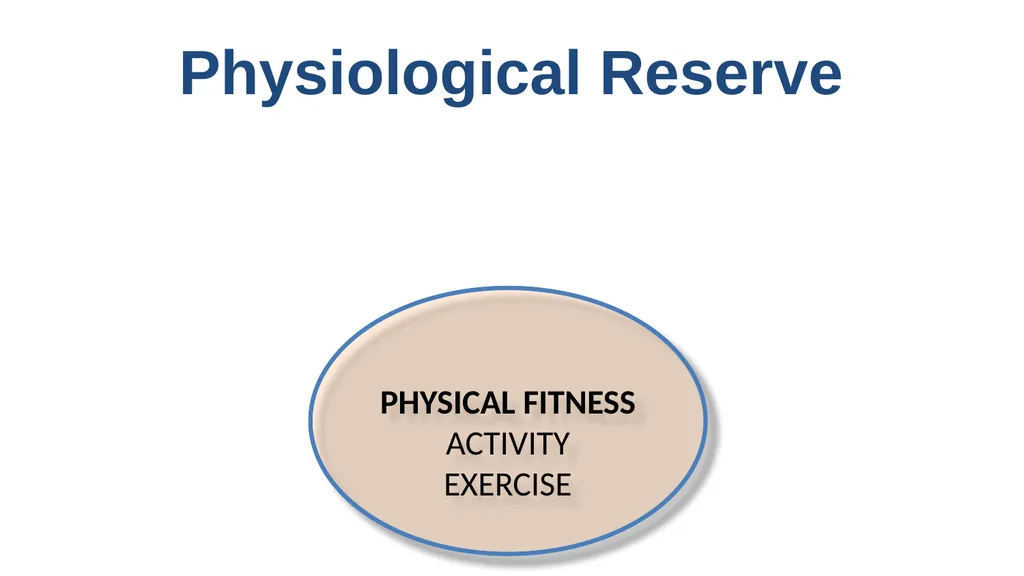
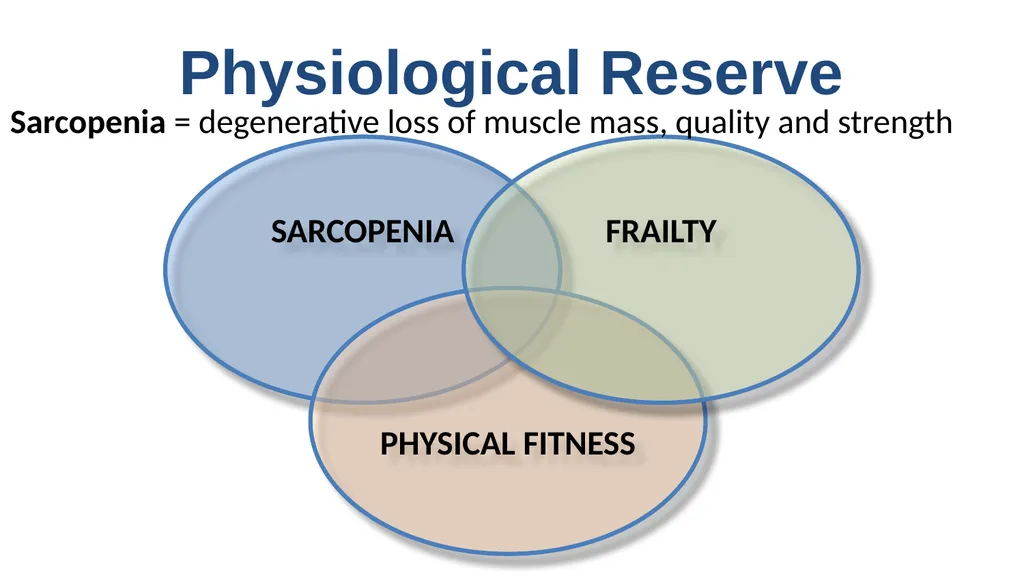
slide2. Physiological Reserve PHYSICAL FITNESS
ACTIVITY
EXERCISE<br>
slide3. Physiological Reserve PHYSICAL FITNESS
ACTIVITY
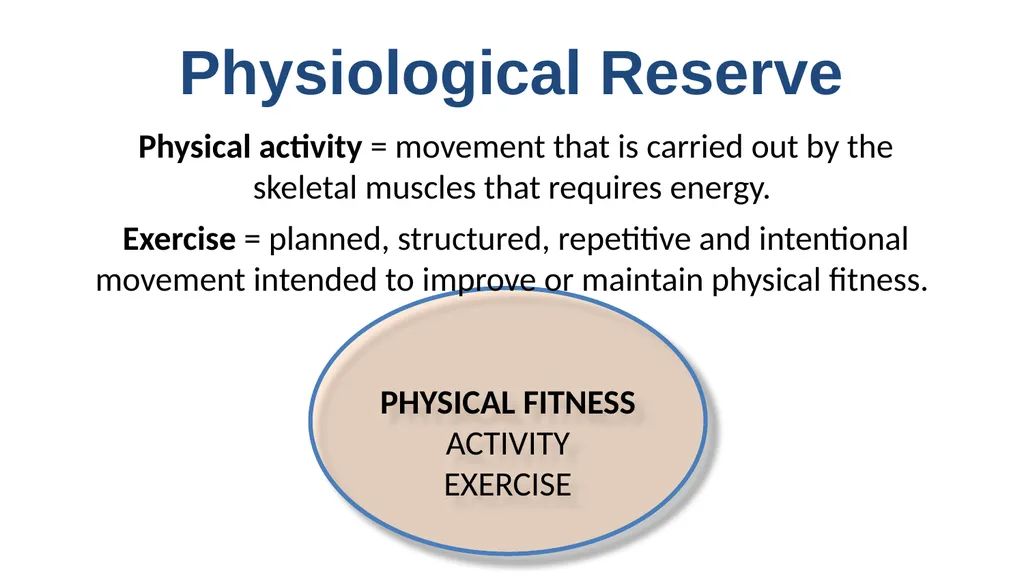
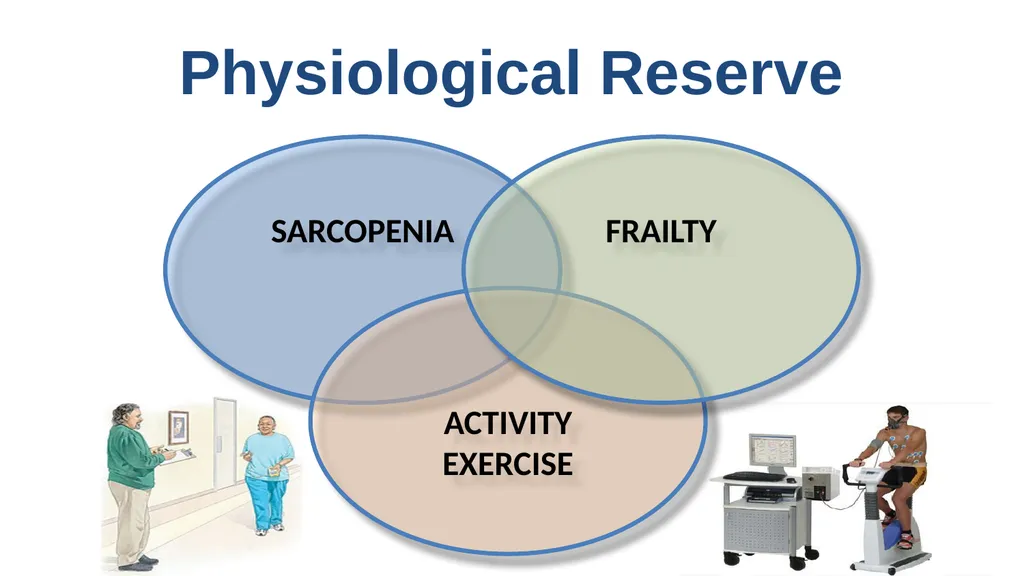
EXERCISE Physical activity = movement that is carried out by the skeletal muscles that requires energy.
Exercise = planned, structured, repetitive and intentional movement intended to improve or maintain physical fitness.<br>
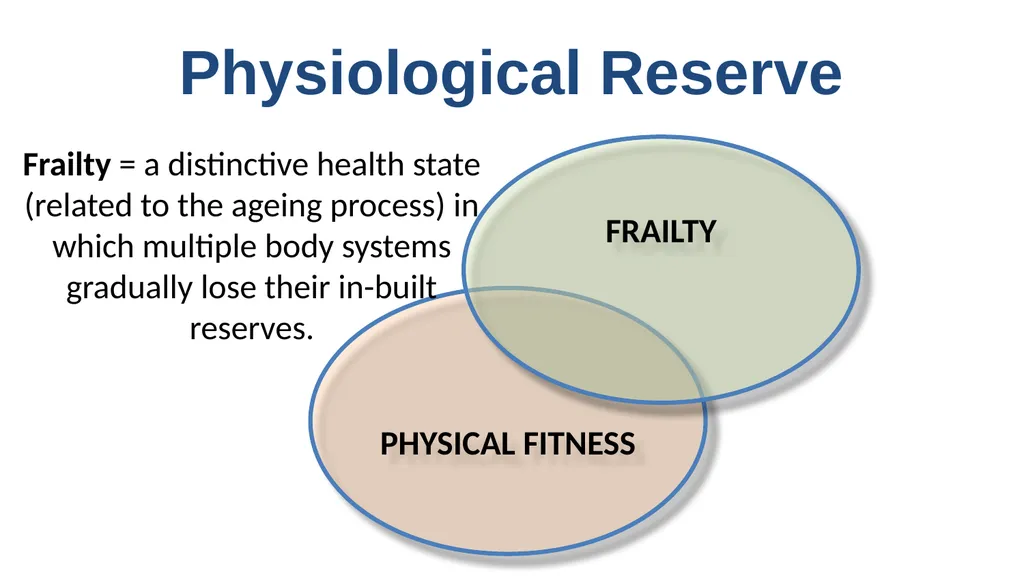
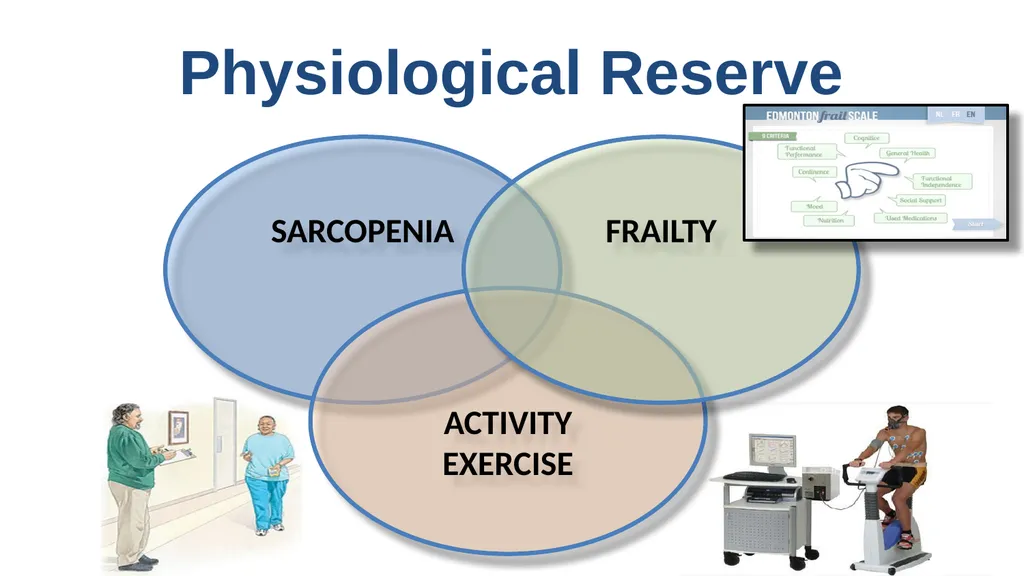
slide4. Physiological Reserve PHYSICAL FITNESS FRAILTY Frailty = a distinctive health state (related to the ageing process) in which multiple body systems gradually lose their in-built reserves.<br>
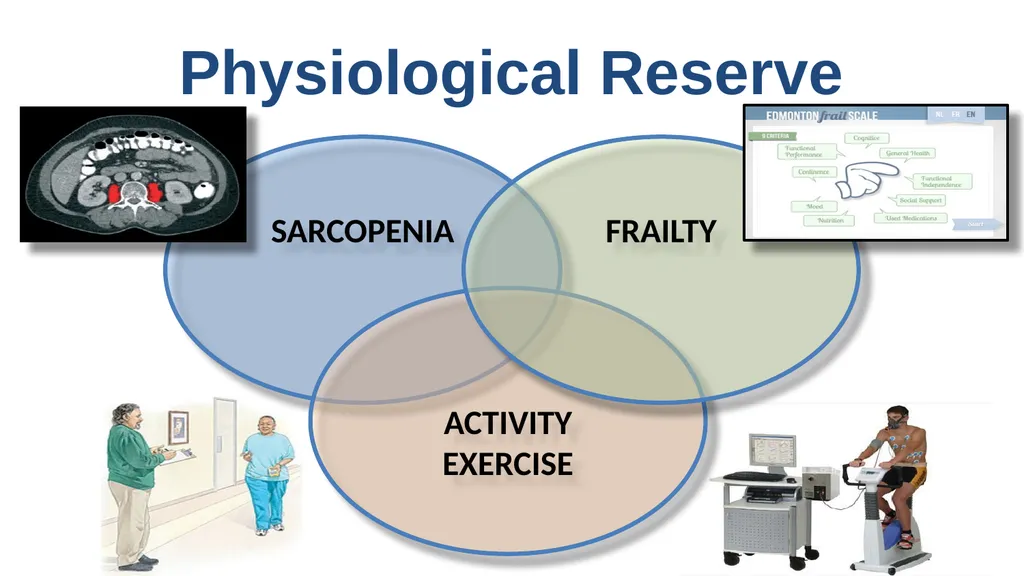
slide5. Physiological Reserve SARCOPENIA PHYSICAL FITNESS FRAILTY Sarcopenia = degenerative loss of muscle mass, quality and strength<br>
slide6. Physiological Reserve SARCOPENIA ACTIVITY
EXERCISE FRAILTY<br>
slide7. Physiological Reserve SARCOPENIA ACTIVITY
EXERCISE FRAILTY<br>
slide8. Physiological Reserve SARCOPENIA ACTIVITY
EXERCISE FRAILTY<br>
slide9. 9<br>
slide10. Macmillan/RCoA/NIHR Guidance on Exercise Interventions Statement 1: Health and care professionals should understand and communicate the important difference between physical activity and exercise.
Strength of Recommendation = Strong, Level of Supporting Evidence = A
Statement 2: Exercise should be integral to care for all people with a cancer diagnosis, starting as early as possible.
Strength of Recommendation = Strong, Level of Supporting Evidence = A
Statement 3: All people with a cancer diagnosis should have a validated physical fitness screen as early as possible in their treatment pathway
Strength of Recommendation = Weak, Level of Supporting Evidence = B
Statement 4: People with a cancer diagnosis who are less physically fit should undergo a comprehensive evaluation to inform the prescription of a supervised exercise programme as early as possible.
Strength of Recommendation = Strong, Level of Supporting Evidence = B 10<br>
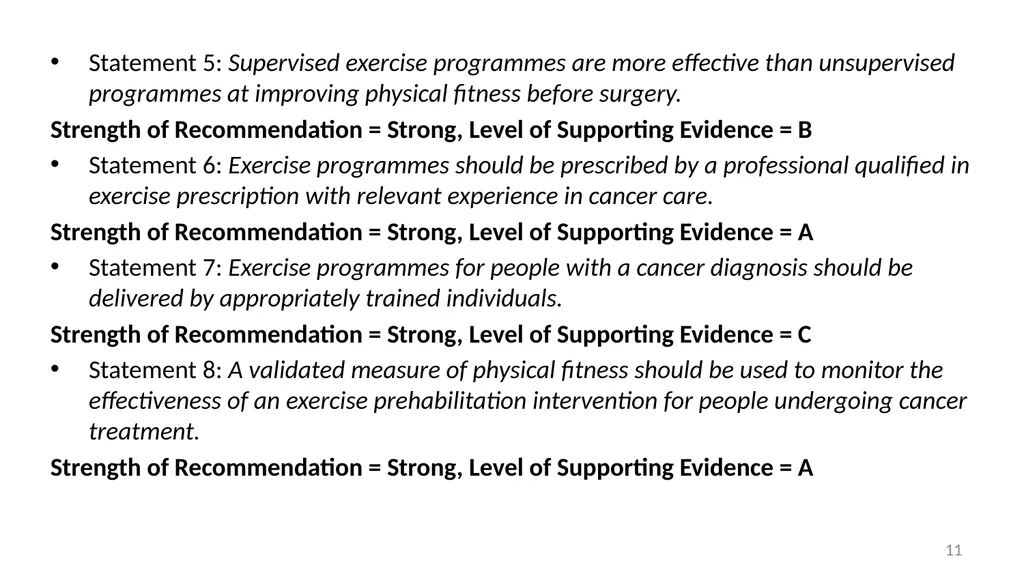
slide11. Statement 5: Supervised exercise programmes are more effective than unsupervised programmes at improving physical fitness before surgery.
Strength of Recommendation = Strong, Level of Supporting Evidence = B
Statement 6: Exercise programmes should be prescribed by a professional qualified in exercise prescription with relevant experience in cancer care.
Strength of Recommendation = Strong, Level of Supporting Evidence = A
Statement 7: Exercise programmes for people with a cancer diagnosis should be delivered by appropriately trained individuals.
Strength of Recommendation = Strong, Level of Supporting Evidence = C
Statement 8: A validated measure of physical fitness should be used to monitor the effectiveness of an exercise prehabilitation intervention for people undergoing cancer treatment.
Strength of Recommendation = Strong, Level of Supporting Evidence = A 11<br>

slide12. 12 s.jack@soton.ac.uk
wesfit.org.uk@WesFit_trial
SafeFit.nhs.uk
@SafeFit_Trial<br>
Professor of Prehabilitation Medicine, Clinical Experimental Sciences, Faculty of Medicine, University of Southampton<br>
slide2. Physiological Reserve PHYSICAL FITNESS
ACTIVITY
EXERCISE<br>
slide3. Physiological Reserve PHYSICAL FITNESS
ACTIVITY
EXERCISE Physical activity = movement that is carried out by the skeletal muscles that requires energy.
Exercise = planned, structured, repetitive and intentional movement intended to improve or maintain physical fitness.<br>
slide4. Physiological Reserve PHYSICAL FITNESS FRAILTY Frailty = a distinctive health state (related to the ageing process) in which multiple body systems gradually lose their in-built reserves.<br>
slide5. Physiological Reserve SARCOPENIA PHYSICAL FITNESS FRAILTY Sarcopenia = degenerative loss of muscle mass, quality and strength<br>
slide6. Physiological Reserve SARCOPENIA ACTIVITY
EXERCISE FRAILTY<br>
slide7. Physiological Reserve SARCOPENIA ACTIVITY
EXERCISE FRAILTY<br>
slide8. Physiological Reserve SARCOPENIA ACTIVITY
EXERCISE FRAILTY<br>
slide9. 9<br>
slide10. Macmillan/RCoA/NIHR Guidance on Exercise Interventions Statement 1: Health and care professionals should understand and communicate the important difference between physical activity and exercise.
Strength of Recommendation = Strong, Level of Supporting Evidence = A
Statement 2: Exercise should be integral to care for all people with a cancer diagnosis, starting as early as possible.
Strength of Recommendation = Strong, Level of Supporting Evidence = A
Statement 3: All people with a cancer diagnosis should have a validated physical fitness screen as early as possible in their treatment pathway
Strength of Recommendation = Weak, Level of Supporting Evidence = B
Statement 4: People with a cancer diagnosis who are less physically fit should undergo a comprehensive evaluation to inform the prescription of a supervised exercise programme as early as possible.
Strength of Recommendation = Strong, Level of Supporting Evidence = B 10<br>
slide11. Statement 5: Supervised exercise programmes are more effective than unsupervised programmes at improving physical fitness before surgery.
Strength of Recommendation = Strong, Level of Supporting Evidence = B
Statement 6: Exercise programmes should be prescribed by a professional qualified in exercise prescription with relevant experience in cancer care.
Strength of Recommendation = Strong, Level of Supporting Evidence = A
Statement 7: Exercise programmes for people with a cancer diagnosis should be delivered by appropriately trained individuals.
Strength of Recommendation = Strong, Level of Supporting Evidence = C
Statement 8: A validated measure of physical fitness should be used to monitor the effectiveness of an exercise prehabilitation intervention for people undergoing cancer treatment.
Strength of Recommendation = Strong, Level of Supporting Evidence = A 11<br>
slide12. 12 s.jack@soton.ac.uk
wesfit.org.uk@WesFit_trial
SafeFit.nhs.uk
@SafeFit_Trial<br>