
Which fabrics should cycling clothing be made

Description: Which fabrics should cycling clothing be made from? Clothing materials and their properties 2020, Chris Foster, all rights reserved Textiles, Fibres and Fabrics 12 July 2021 All fabrics are made from fibres Blended or mixed? Blending
Related Topics
Download Presentation
"Which fabrics should cycling clothing be made" is the property of its rightful owner. Permission is granted to download and print the materials on this website for personal, non-commercial use only, and to display it on your personal computer provided you do not modify the materials and that you retain all copyright notices contained in the materials. By downloading content from our website, you accept the terms of this agreement.
Presentation Transcript
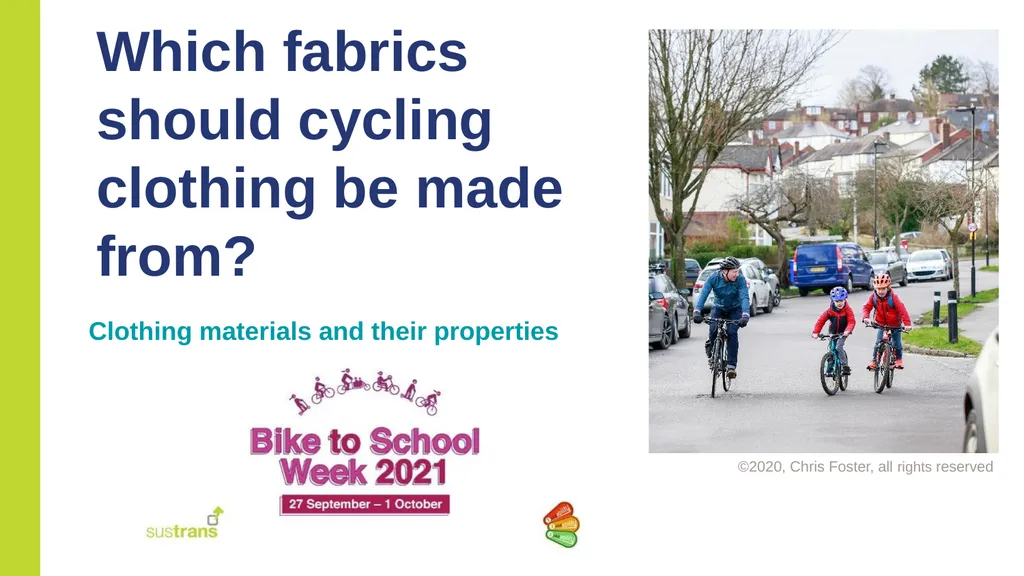
slide1. Which fabrics should cycling clothing be made from? Clothing materials and their properties ©2020, Chris Foster, all rights reserved<br>
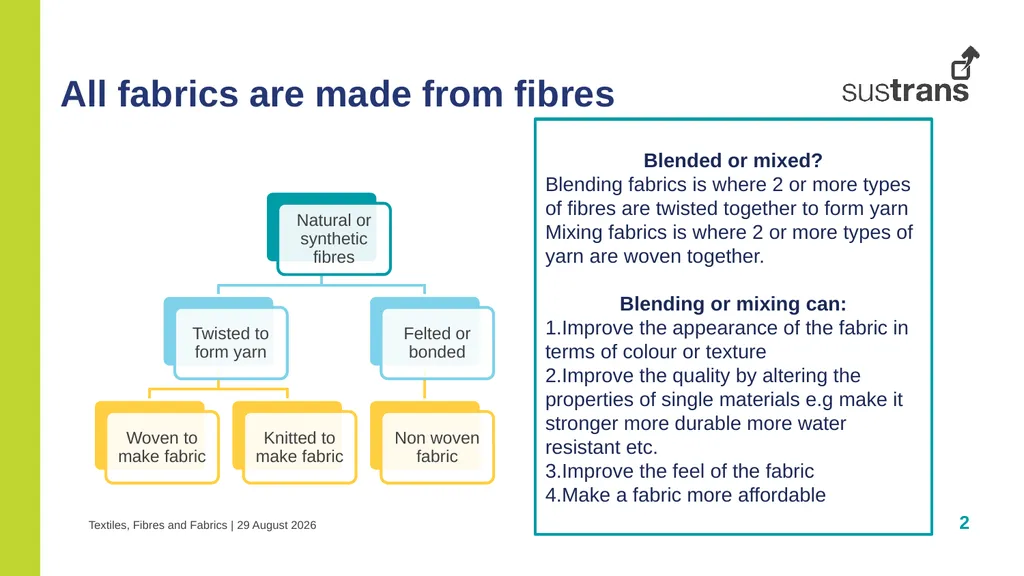
slide2. Textiles, Fibres and Fabrics | 12 July 2021 All fabrics are made from fibres Blended or mixed?
Blending fabrics is where 2 or more types of fibres are twisted together to form yarn
Mixing fabrics is where 2 or more types of yarn are woven together.
Blending or mixing can:
1.Improve the appearance of the fabric in terms of colour or texture
2.Improve the quality by altering the properties of single materials e.g make it stronger more durable more water resistant etc.
3.Improve the feel of the fabric
4.Make a fabric more affordable<br>
slide3. Textiles, Fibres and Fabrics | 12 July 2021 Polyester
Properties - Tough, strong and hard wearing. Holds it colour well and good for washing and can be blended with other fibres.
Uses- Fleeces, sportswear, rope, umbrellas and backpacks.
Nylon (Polyamide)
Properties - Hard wearing, easily blended, good strength, non-absorbent.
Uses - Sports material, parachutes and rope, used as a tough thread.
Lycra (Elastane)
Properties - Adds stretch and easy movements, fast drying and holds colour.
Uses - Sportswear, clothing for exercising, muscular supports and swimsuits Synthetic fibres<br>
slide4. Natural fibres – from plant or animals/sources Cotton (seed pod of a cotton plant)
Properties - Strong and soft, cool to wear, thermal properties and absorbent.
Uses - Shirts, underwear, towels and bedsheets, denim can be from cotton.
Wool (Sheep generally)
Properties - Absorbent, warm, natural water resilience, takes a while to dry if wet, can shrink when washed.
Uses - Coats, jumpers, suits – useful for warmth
Silk (Silk worms)
Properties - Soft finish, gentle and cool on the skin, strong, tricky to wash.
Uses - Luxury clothes such as underwear and nightwear, and soft furnishings e.g. wall hangings and silk paintings. Textiles, Fibres and Fabrics | 12 July 2021<br>
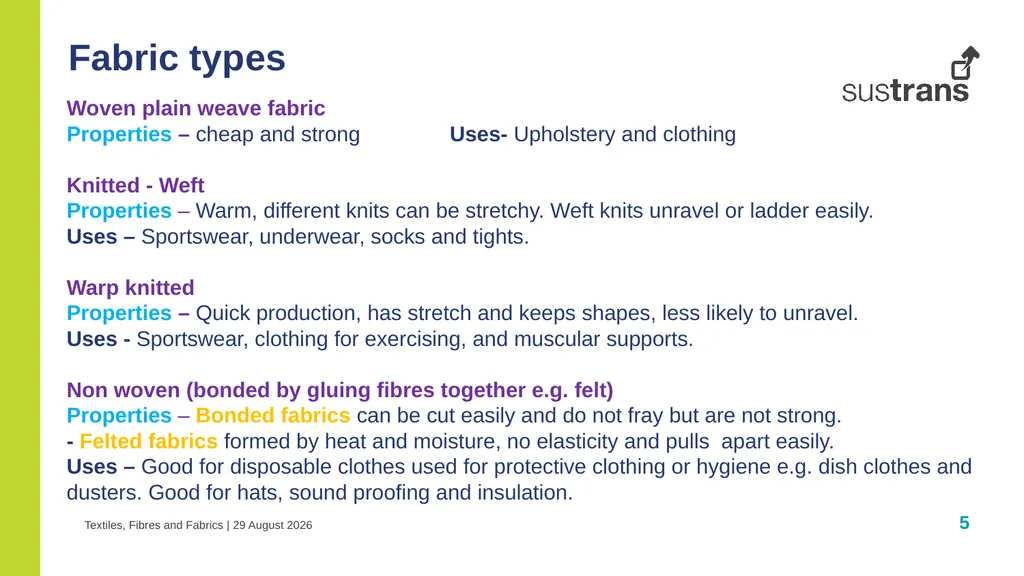
slide5. Textiles, Fibres and Fabrics | 12 July 2021 Woven plain weave fabric
Properties – cheap and strong Uses- Upholstery and clothing
Knitted - Weft
Properties – Warm, different knits can be stretchy. Weft knits unravel or ladder easily.
Uses – Sportswear, underwear, socks and tights.
Warp knitted
Properties – Quick production, has stretch and keeps shapes, less likely to unravel.
Uses - Sportswear, clothing for exercising, and muscular supports.
Non woven (bonded by gluing fibres together e.g. felt)
Properties – Bonded fabrics can be cut easily and do not fray but are not strong.
- Felted fabrics formed by heat and moisture, no elasticity and pulls apart easily.
Uses – Good for disposable clothes used for protective clothing or hygiene e.g. dish clothes and dusters. Good for hats, sound proofing and insulation. Fabric types<br>
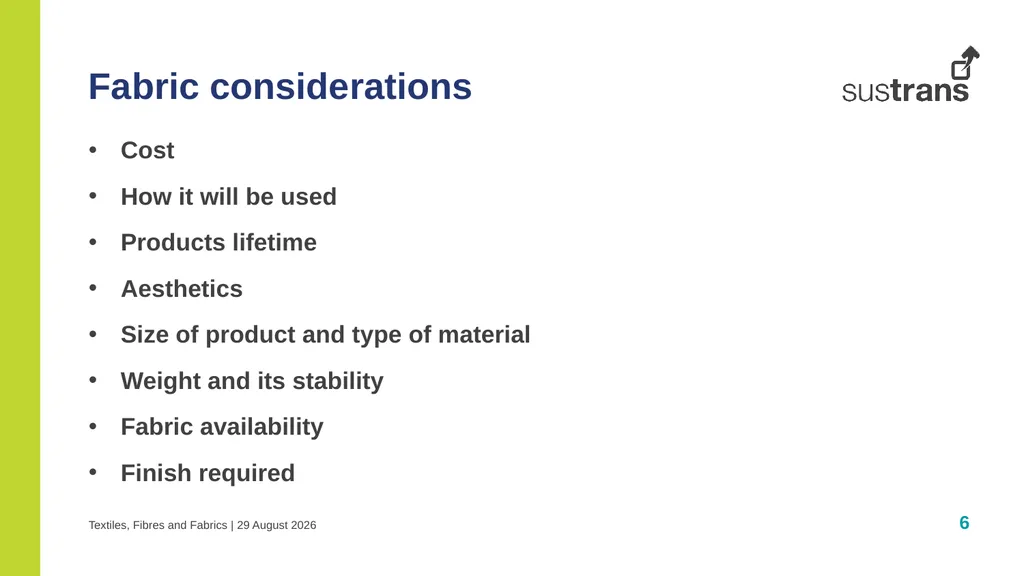
slide6. Textiles, Fibres and Fabrics | 12 July 2021 Cost
How it will be used
Products lifetime
Aesthetics
Size of product and type of material
Weight and its stability
Fabric availability
Finish required Fabric considerations<br>
slide2. Textiles, Fibres and Fabrics | 12 July 2021 All fabrics are made from fibres Blended or mixed?
Blending fabrics is where 2 or more types of fibres are twisted together to form yarn
Mixing fabrics is where 2 or more types of yarn are woven together.
Blending or mixing can:
1.Improve the appearance of the fabric in terms of colour or texture
2.Improve the quality by altering the properties of single materials e.g make it stronger more durable more water resistant etc.
3.Improve the feel of the fabric
4.Make a fabric more affordable<br>
slide3. Textiles, Fibres and Fabrics | 12 July 2021 Polyester
Properties - Tough, strong and hard wearing. Holds it colour well and good for washing and can be blended with other fibres.
Uses- Fleeces, sportswear, rope, umbrellas and backpacks.
Nylon (Polyamide)
Properties - Hard wearing, easily blended, good strength, non-absorbent.
Uses - Sports material, parachutes and rope, used as a tough thread.
Lycra (Elastane)
Properties - Adds stretch and easy movements, fast drying and holds colour.
Uses - Sportswear, clothing for exercising, muscular supports and swimsuits Synthetic fibres<br>
slide4. Natural fibres – from plant or animals/sources Cotton (seed pod of a cotton plant)
Properties - Strong and soft, cool to wear, thermal properties and absorbent.
Uses - Shirts, underwear, towels and bedsheets, denim can be from cotton.
Wool (Sheep generally)
Properties - Absorbent, warm, natural water resilience, takes a while to dry if wet, can shrink when washed.
Uses - Coats, jumpers, suits – useful for warmth
Silk (Silk worms)
Properties - Soft finish, gentle and cool on the skin, strong, tricky to wash.
Uses - Luxury clothes such as underwear and nightwear, and soft furnishings e.g. wall hangings and silk paintings. Textiles, Fibres and Fabrics | 12 July 2021<br>
slide5. Textiles, Fibres and Fabrics | 12 July 2021 Woven plain weave fabric
Properties – cheap and strong Uses- Upholstery and clothing
Knitted - Weft
Properties – Warm, different knits can be stretchy. Weft knits unravel or ladder easily.
Uses – Sportswear, underwear, socks and tights.
Warp knitted
Properties – Quick production, has stretch and keeps shapes, less likely to unravel.
Uses - Sportswear, clothing for exercising, and muscular supports.
Non woven (bonded by gluing fibres together e.g. felt)
Properties – Bonded fabrics can be cut easily and do not fray but are not strong.
- Felted fabrics formed by heat and moisture, no elasticity and pulls apart easily.
Uses – Good for disposable clothes used for protective clothing or hygiene e.g. dish clothes and dusters. Good for hats, sound proofing and insulation. Fabric types<br>
slide6. Textiles, Fibres and Fabrics | 12 July 2021 Cost
How it will be used
Products lifetime
Aesthetics
Size of product and type of material
Weight and its stability
Fabric availability
Finish required Fabric considerations<br>