Who writes history? A brief description about the politics of history, and where you may fit into the grand narrative of history Lets discuss history A form of story telling created by humans Reflects cultural, social, economic conditions
"Who writes history? A brief description about the" is the property of its rightful owner. Permission is granted to
download and print the materials on this website for personal, non-commercial use only, and to display it
on your personal computer provided you do not modify the materials and that you retain all copyright
notices contained in the materials. By downloading content from our website, you accept the terms of this
agreement.
Presentation Transcript
01
Who writes history? A brief description about the politics of history, and where you may fit into the grand narrative of history<br>
02
Let’s discuss history… A form of story telling created by humans
Reflects cultural, social, economic conditions
A complex story that can illuminate or obscure, even obliterate events Everyday decisions are made in the vortex of competing demands
Life is a dynamic, conflict ridden, happy series of events
Power is a force that can be wielded for a wide range of purposes<br>
03
Let’s discuss power … Enact or rescind laws of the land
Protect (or harm) classes of living beings
Issue (or deny) authority Compel people into action
Confer legitimacy
Make decisions that effect people’s daily lives<br>
04
How might we define leadership? Communicate ideas
Articulate a vision
Organize individuals and groups
Identify problems and offer strategies Understand the complex qualities that comprise the human condition
and
Utilize that understanding to bring people together<br>
05
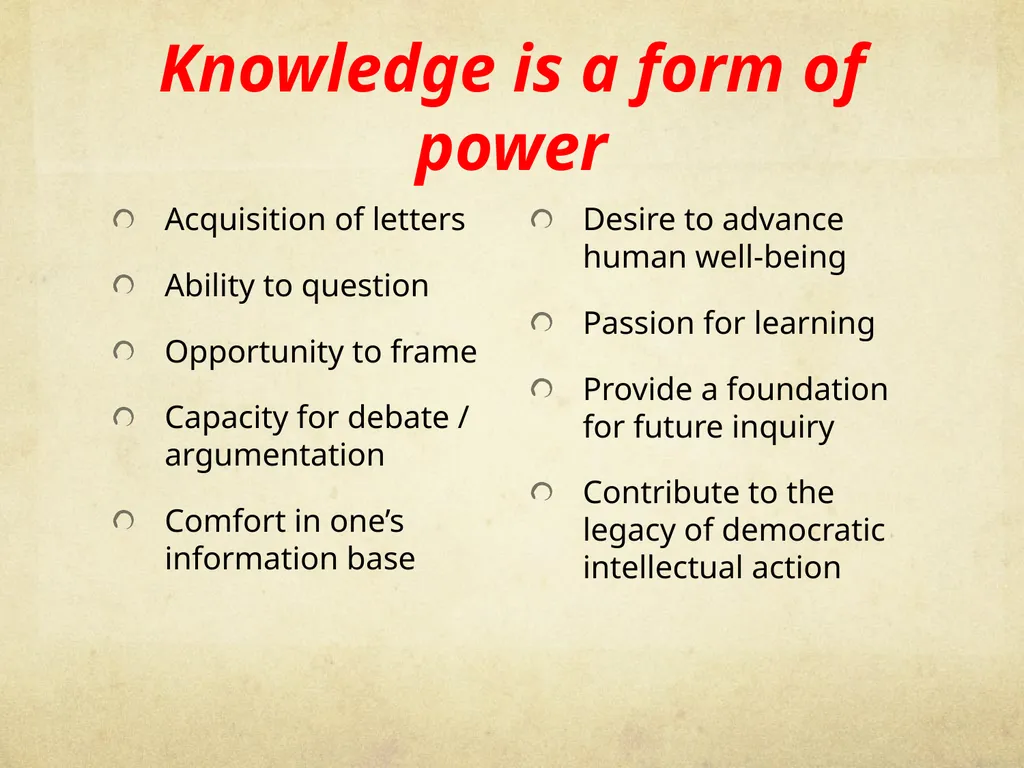
Knowledge is a form of power Acquisition of letters
Ability to question
Opportunity to frame
Capacity for debate / argumentation
Comfort in one’s information base Desire to advance human well-being
Passion for learning
Provide a foundation for future inquiry
Contribute to the legacy of democratic intellectual action<br>
06
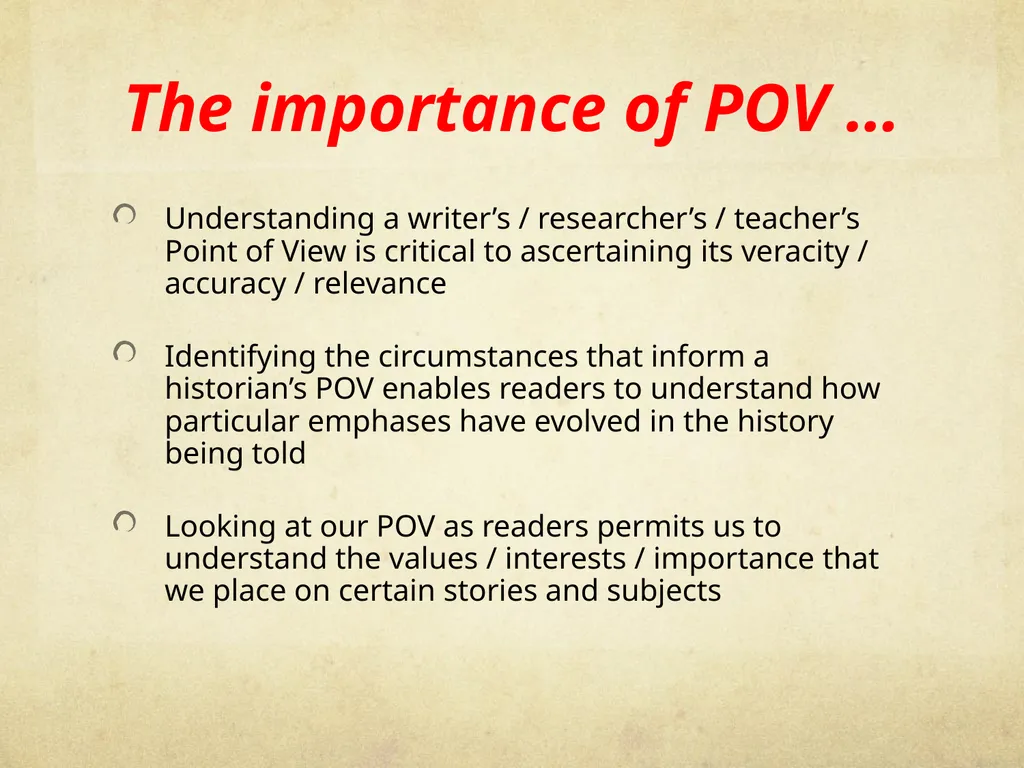
The importance of POV … Understanding a writer’s / researcher’s / teacher’s Point of View is critical to ascertaining its veracity / accuracy / relevance
Identifying the circumstances that inform a historian’s POV enables readers to understand how particular emphases have evolved in the history being told
Looking at our POV as readers permits us to understand the values / interests / importance that we place on certain stories and subjects<br>
07
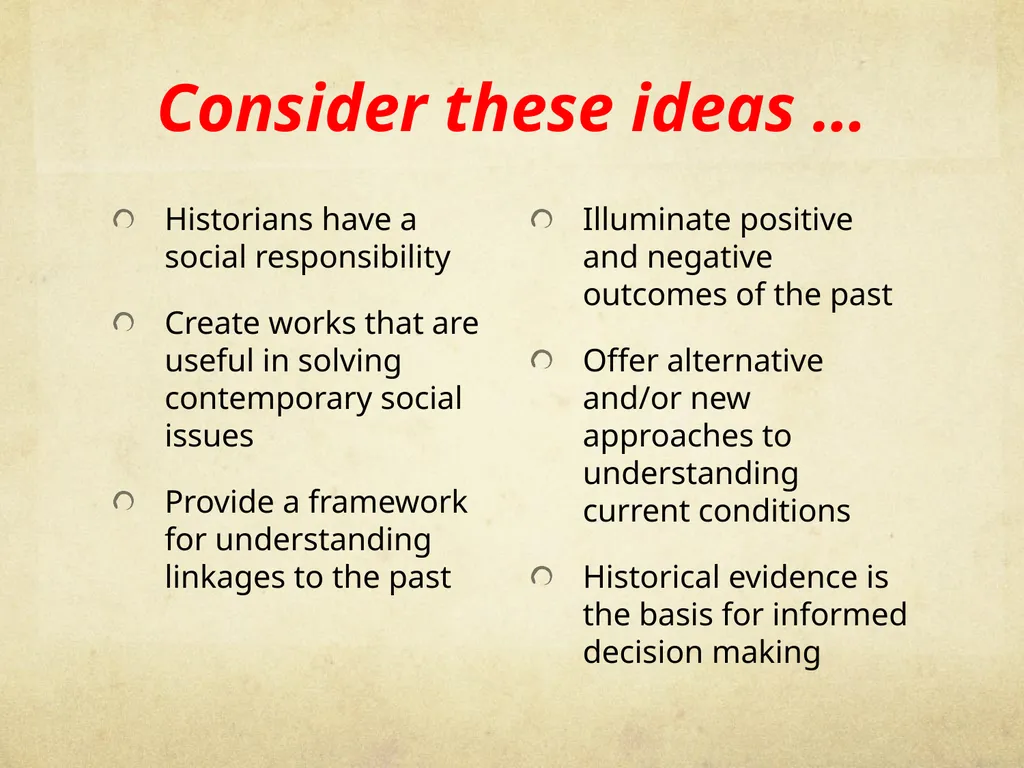
Consider these ideas … Historians have a social responsibility
Create works that are useful in solving contemporary social issues
Provide a framework for understanding linkages to the past Illuminate positive and negative outcomes of the past
Offer alternative and/or new approaches to understanding current conditions
Historical evidence is the basis for informed decision making<br>
08
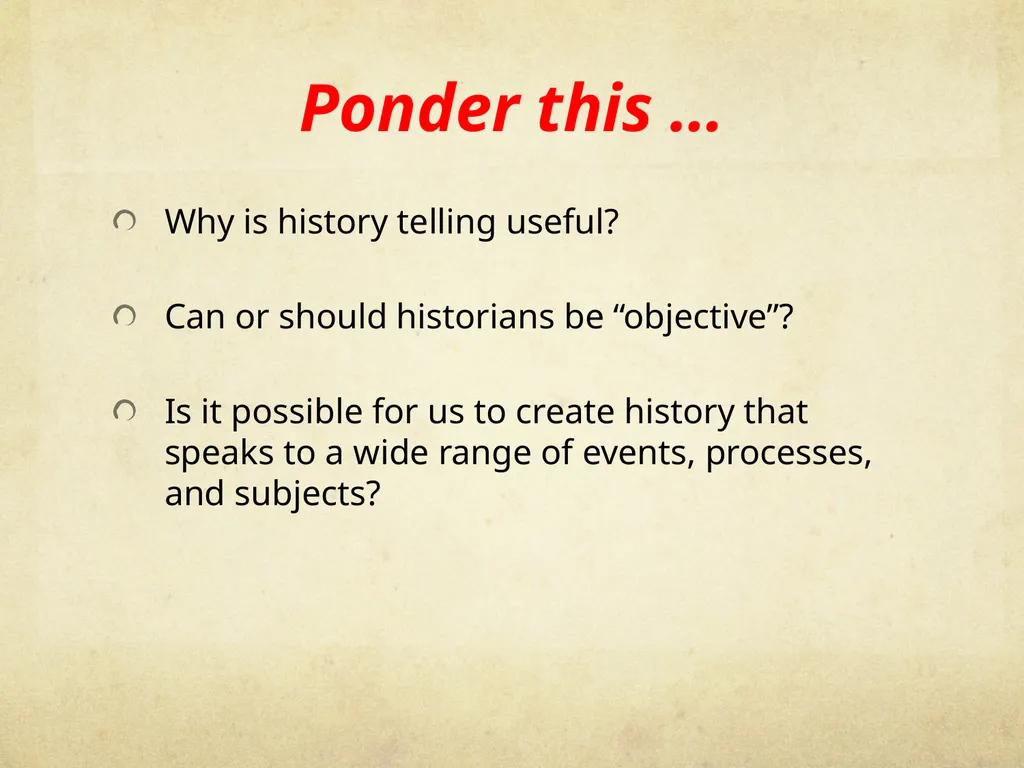
Ponder this … Why is history telling useful?
Can or should historians be “objective”?
Is it possible for us to create history that speaks to a wide range of events, processes, and subjects?<br>