Why Interest Should Interest You: Credit Cards Grade 11 A Special Note for Teachers Introduction Lets apply our knowledge of compound interest to a real-life situation: managing our credit card bill. Credit cards are a very convenient
Related Topics
Share
Embed code
Download this presentation From Below
"Why ‘Interest’ Should Interest You: Credit Cards" is the property of its rightful owner. Permission is granted to
download and print the materials on this website for personal, non-commercial use only, and to display it
on your personal computer provided you do not modify the materials and that you retain all copyright
notices contained in the materials. By downloading content from our website, you accept the terms of this
agreement.
Presentation Transcript
01
Why ‘Interest’ Should Interest You: Credit Cards Grade 11+<br>
02
A Special Note for Teachers<br>
03
Introduction Let’s apply our knowledge of compound interest to a real-life situation: managing our credit card bill.
Credit cards are a very convenient way to make purchases. Using them helps build our credit score.
But if we are not careful, we can easily slip into debt.<br>
04
In this lesson… We will learn:
How credit card debt grows.
The options you have to repay your credit card bills.
You have the power to control your finances!<br>
05
Credit Cards and Compound Interest When you make purchases on a credit card, you are borrowing money from the bank. You must pay the money back, plus interest.
What is the quickest way to pay back your credit card bill?
The best option: Pay the full amount (balance) each month! You will not incur any interest!<br>
06
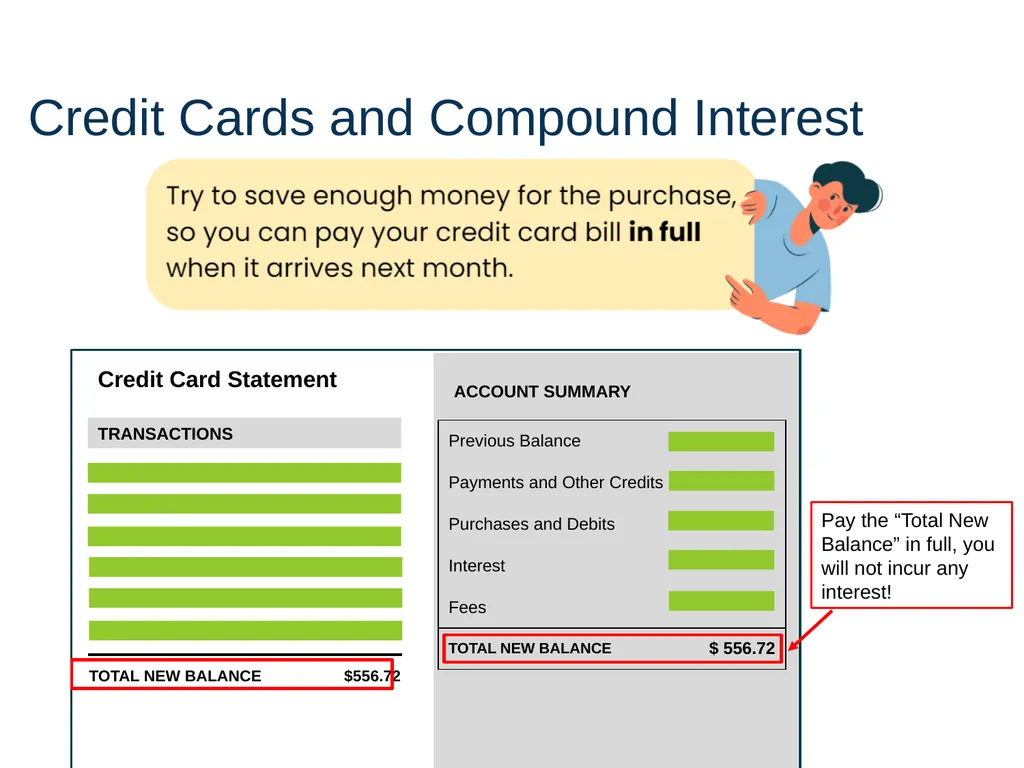
Credit Cards and Compound Interest Pay the “Total New Balance” in full, you will not incur any interest!<br>
07
Credit Cards and Compound Interest What if you cannot pay your credit card bill in full? There are two possible scenarios:
You cannot pay your credit card bill at all.
You make small monthly payments.
The purchases on your credit card will start incurring interest.
Because credit cards charge compound interest, the debt will grow exponentially.
In this activity, we will look at these two scenarios.<br>
08
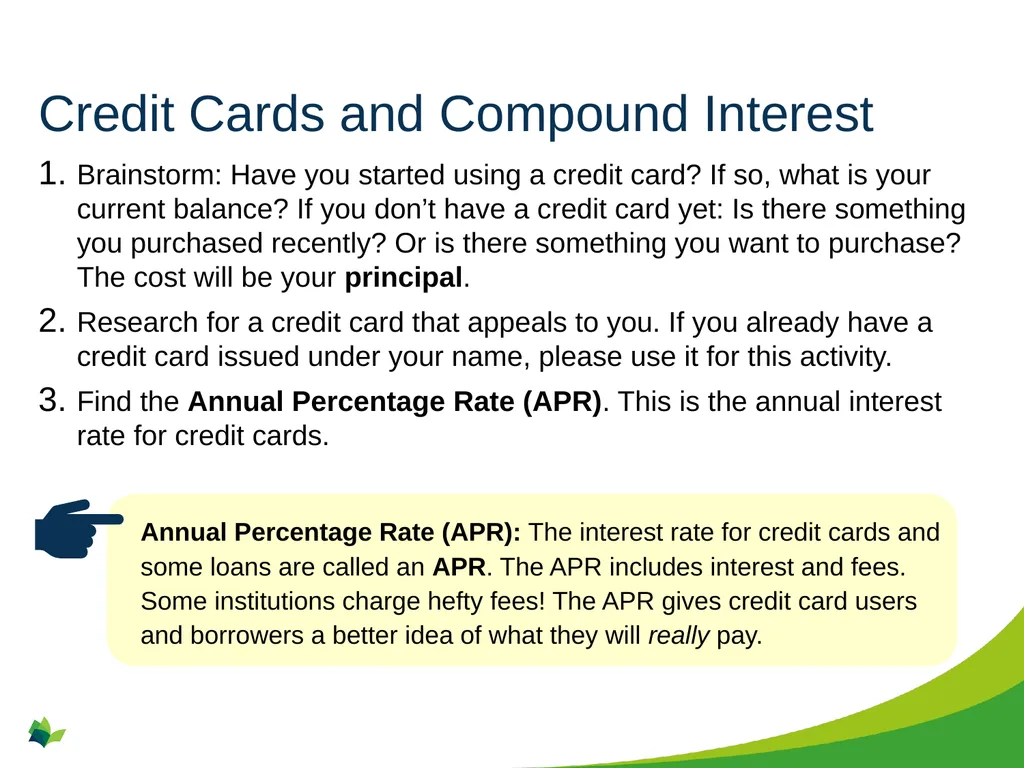
Credit Cards and Compound Interest Brainstorm: Have you started using a credit card? If so, what is your current balance? If you don’t have a credit card yet: Is there something you purchased recently? Or is there something you want to purchase? The cost will be your principal.
Research for a credit card that appeals to you. If you already have a credit card issued under your name, please use it for this activity.
Find the Annual Percentage Rate (APR). This is the annual interest rate for credit cards.<br>
09
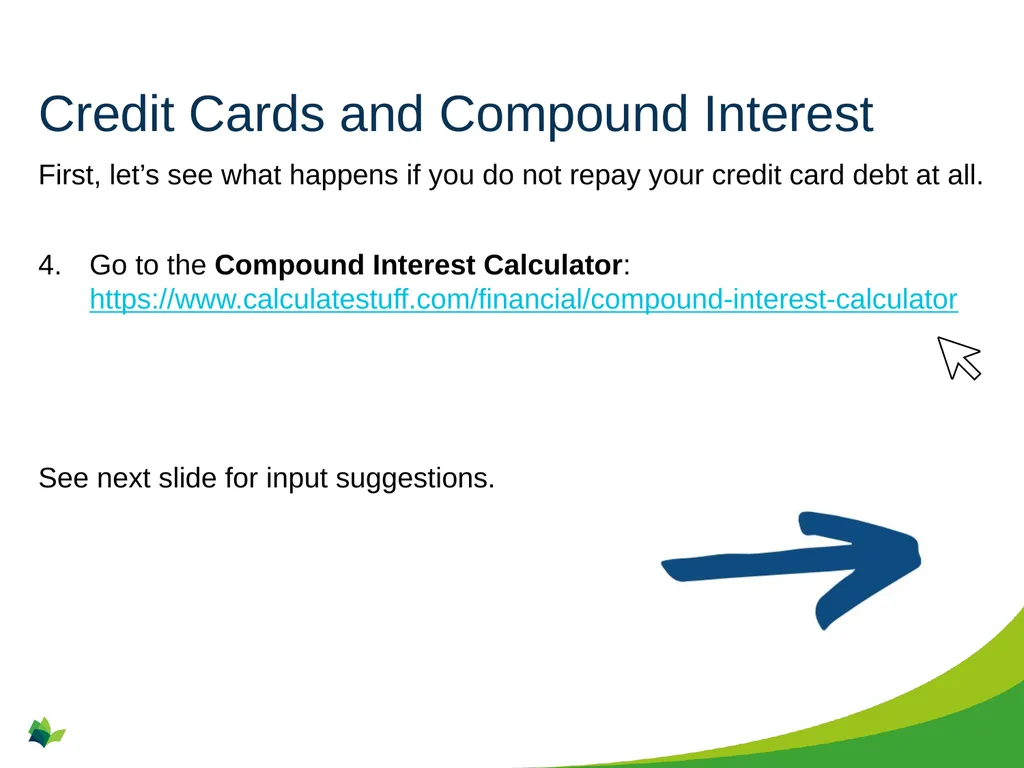
Credit Cards and Compound Interest First, let’s see what happens if you do not repay your credit card debt at all.
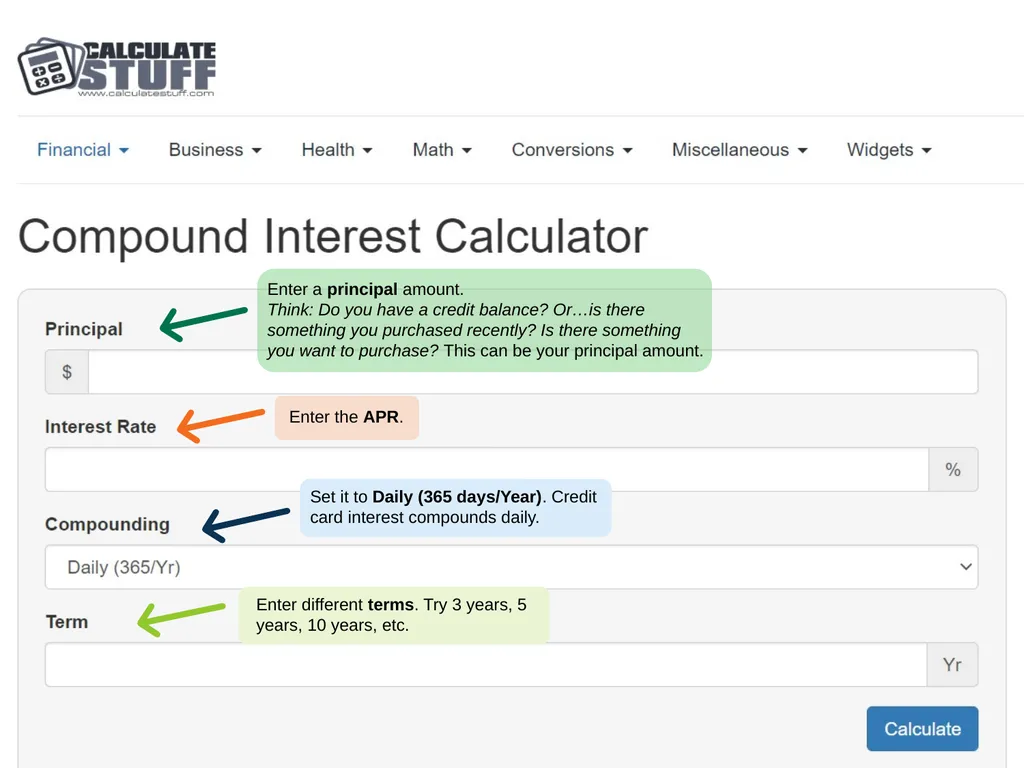
Go to the Compound Interest Calculator: https://www.calculatestuff.com/financial/compound-interest-calculator
See next slide for input suggestions.<br>
10
Student Reflection #1 The only variable you can adjust is the term. After you tested out different terms, complete “Student Reflection #1” on your activity sheet.<br>
11
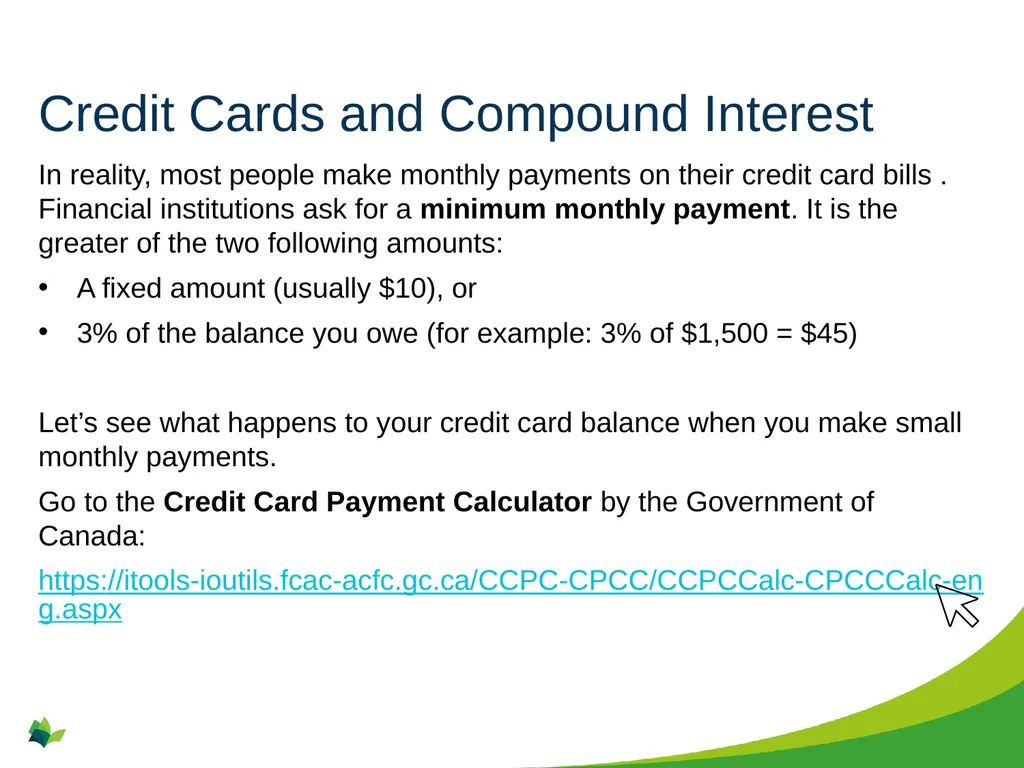
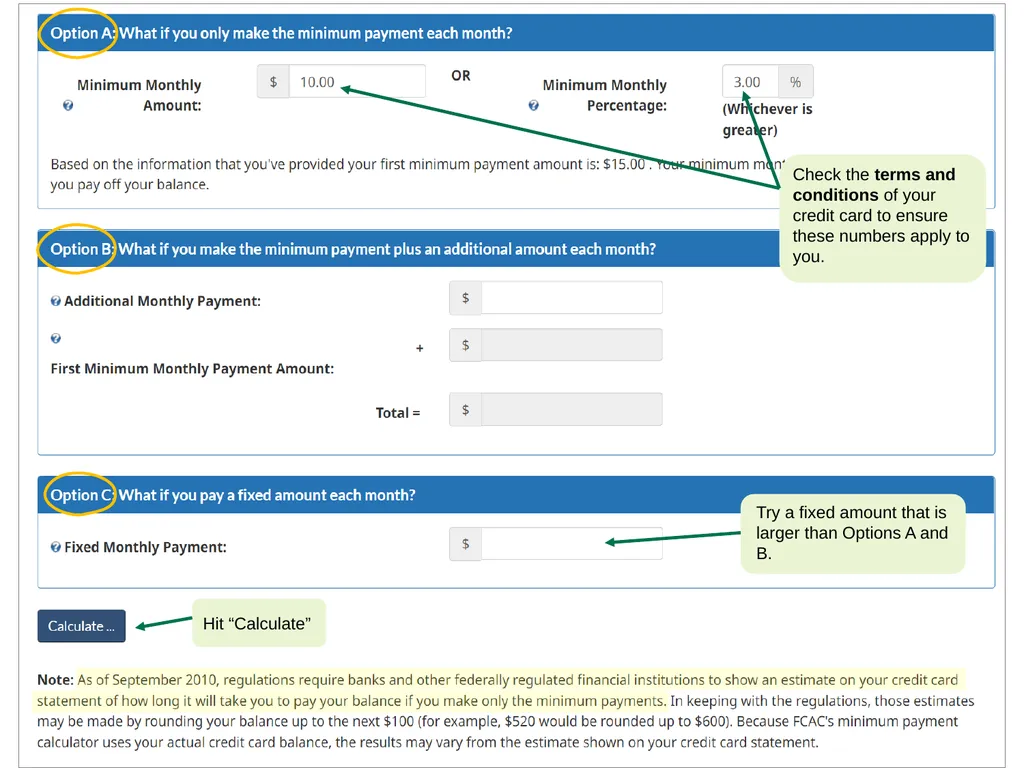
Credit Cards and Compound Interest In reality, most people make monthly payments on their credit card bills . Financial institutions ask for a minimum monthly payment. It is the greater of the two following amounts:
A fixed amount (usually $10), or
3% of the balance you owe (for example: 3% of $1,500 = $45)
Let’s see what happens to your credit card balance when you make small monthly payments.
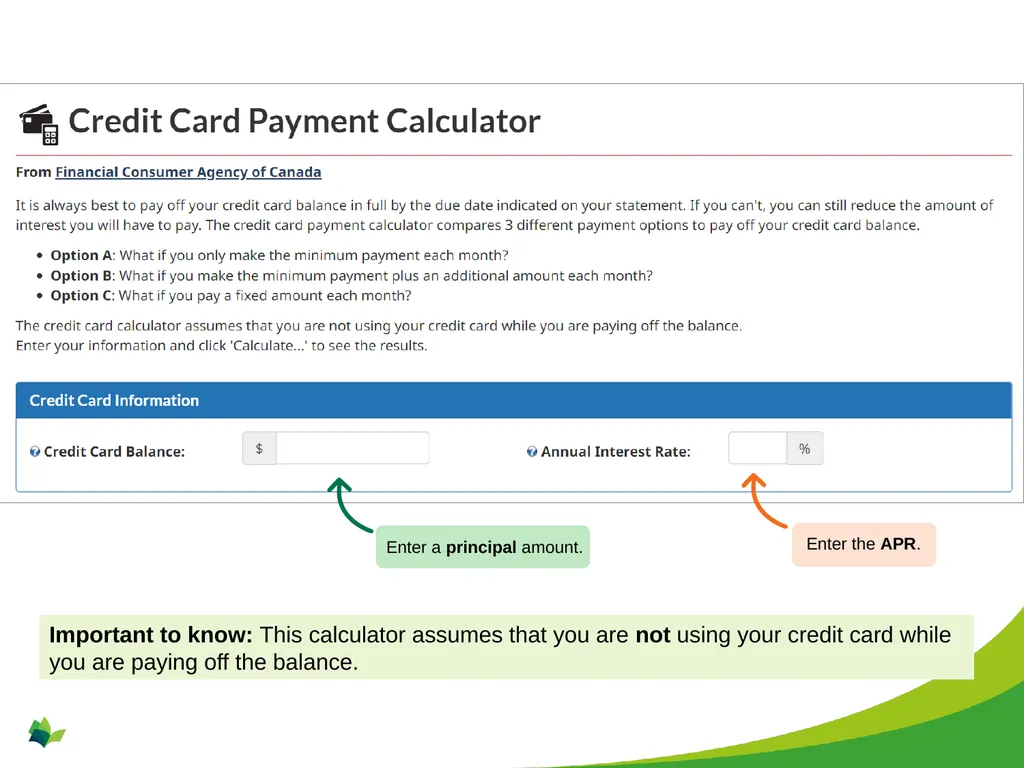
Go to the Credit Card Payment Calculator by the Government of Canada:
https://itools-ioutils.fcac-acfc.gc.ca/CCPC-CPCC/CCPCCalc-CPCCCalc-eng.aspx<br>
12
Enter a principal amount. Important to know: This calculator assumes that you are not using your credit card while you are paying off the balance.<br>
13
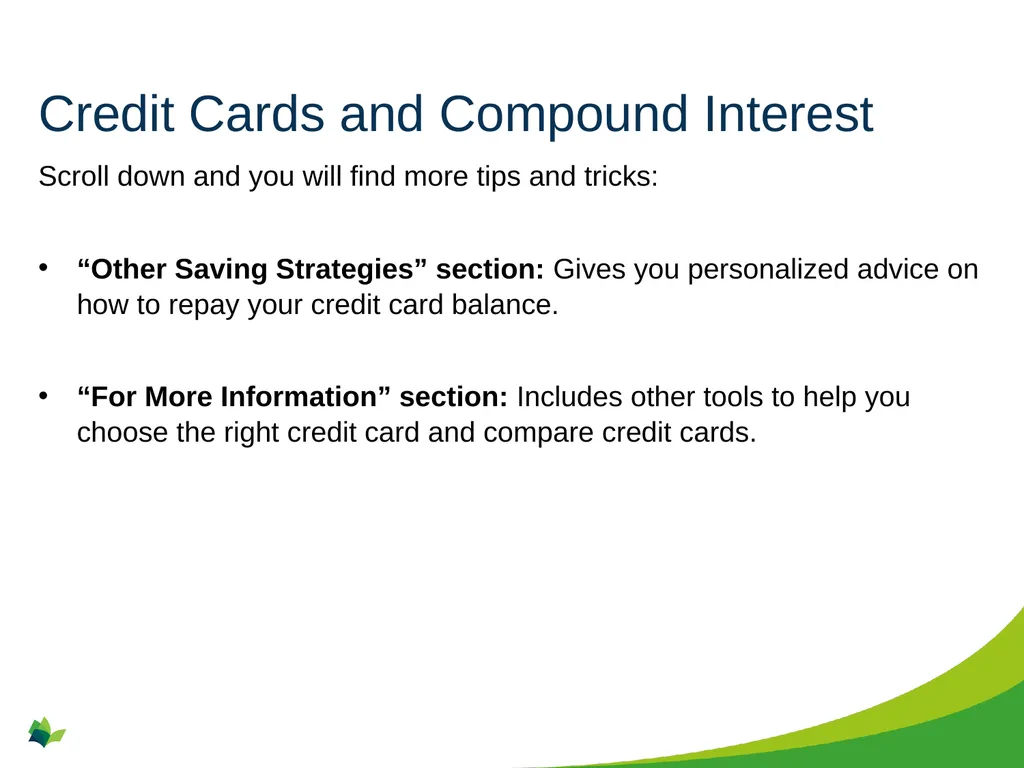
Credit Cards and Compound Interest Scroll down and you will find more tips and tricks:
“Other Saving Strategies” section: Gives you personalized advice on how to repay your credit card balance.
“For More Information” section: Includes other tools to help you choose the right credit card and compare credit cards.<br>
14
Credit Cards and Compound Interest Go back to the Credit Card Payment Calculator and test out different numbers:
Try changing Option B: Increase or decrease the “additional monthly amount”.
Try changing Option C: Increase or decrease the “fixed monthly payment”.
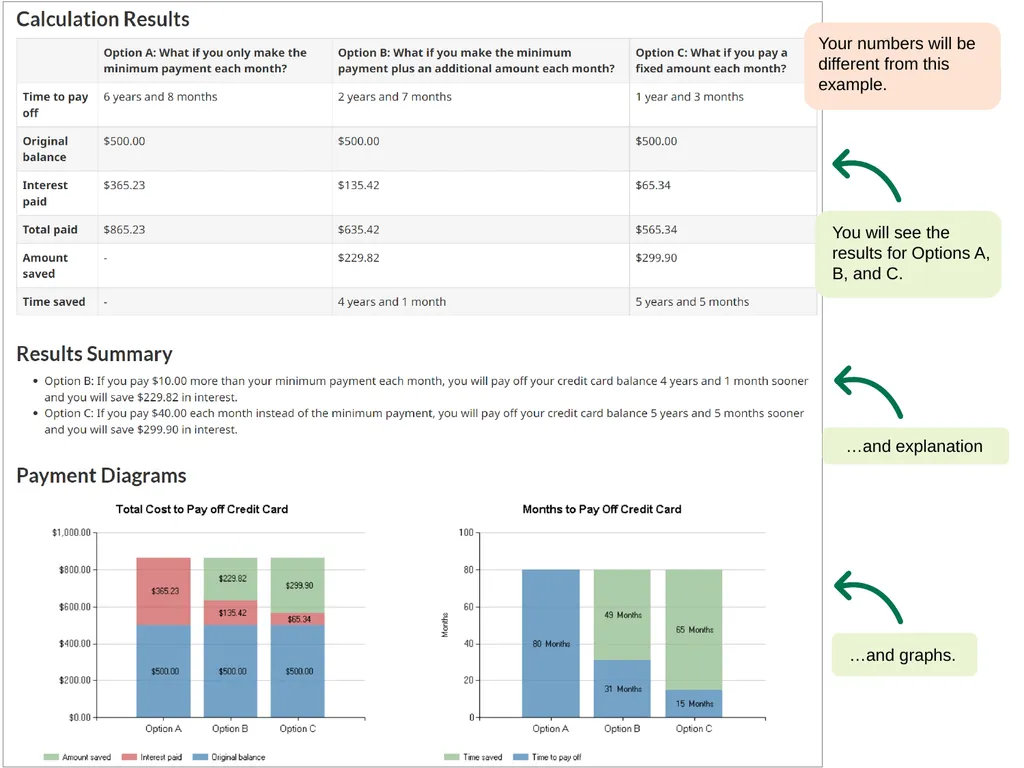
How does the change affect…
The time it takes to pay off the credit card balance?
The interest paid?
The amount saved?
The time saved?<br>
15
Student Reflection #2 After you tested out different numbers for Options B and C, input monthly payments that are realistic for you. Then, complete “Student Reflection #2” on your activity sheet.<br>
16
Wrap-Up When we understand our options, we can make informed decisions, and feel more in control of our finances!<br>