WIND Pressure Gradient Force (PGF) Causes air to move from high pressure toward low pressure Three characteristics of the PGF: directed from H to L perpendicular to isobars magnitude is proportional to isobar spacing (i.e., tight spacing
"WIND Pressure Gradient Force (PGF) Causes air to" is the property of its rightful owner. Permission is granted to
download and print the materials on this website for personal, non-commercial use only, and to display it
on your personal computer provided you do not modify the materials and that you retain all copyright
notices contained in the materials. By downloading content from our website, you accept the terms of this
agreement.
Presentation Transcript
01
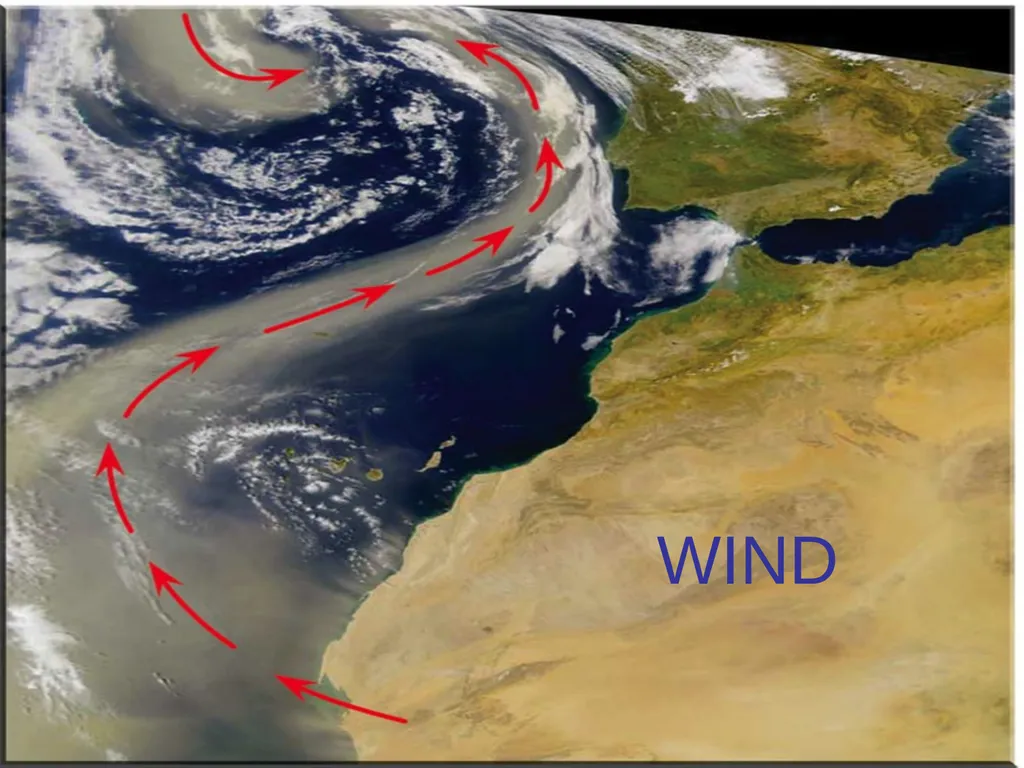
WIND<br>
02
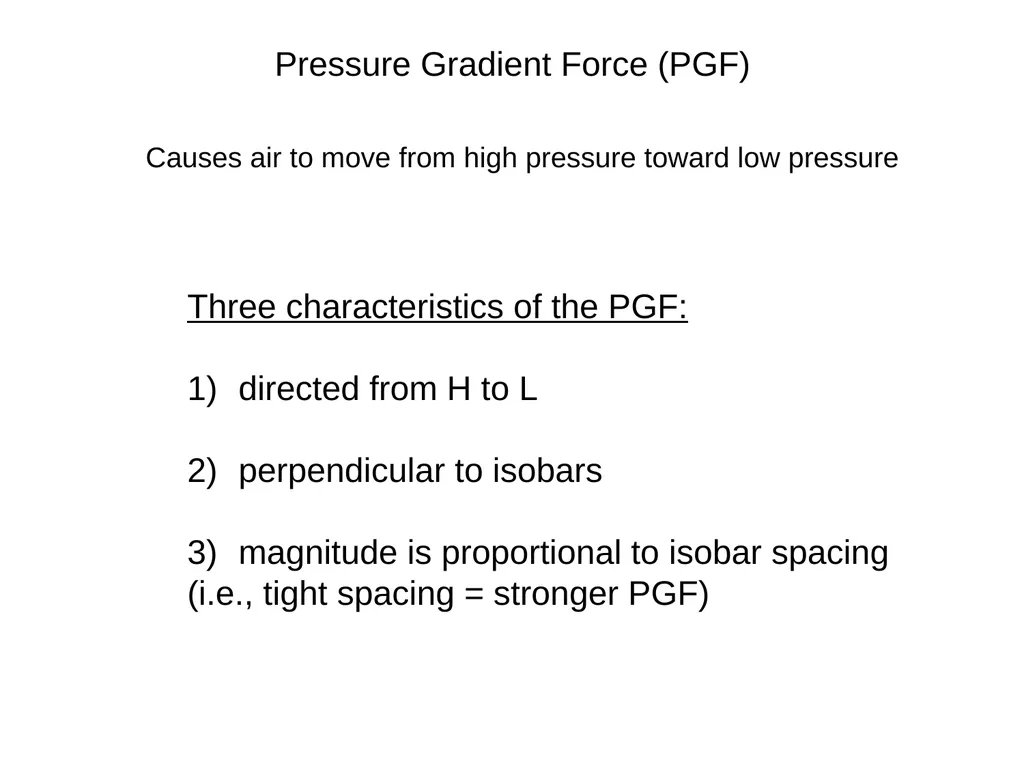
Pressure Gradient Force (PGF) Causes air to move from high pressure toward low pressure Three characteristics of the PGF:
directed from H to L
perpendicular to isobars
magnitude is proportional to isobar spacing
(i.e., tight spacing = stronger PGF)<br>
03
1) directed from H to L
2) perpendicular to isobars
3) magnitude is proportional to isobar spacing
(i.e., tight spacing = stronger pgf) Pressure Gradient Force (PGF) H L 16 12 12 08 04 00 04 08 In this example, isobars are
evenly spaced so PGF has the
same strength everywhere.<br>
04
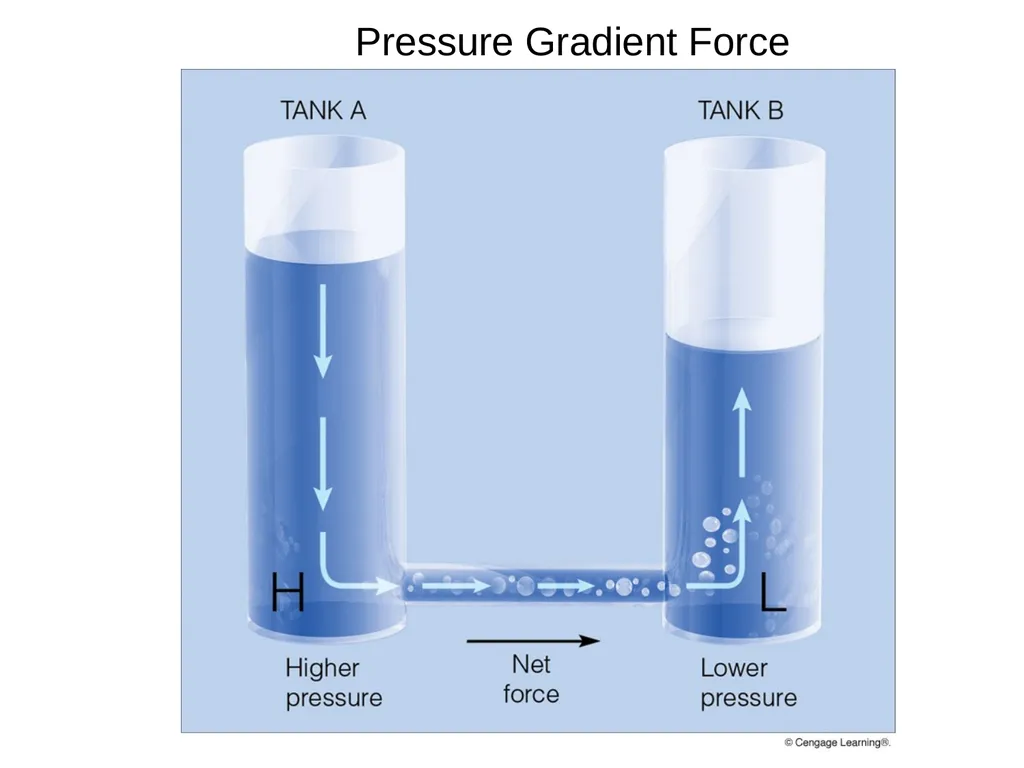
Pressure Gradient Force<br>
05
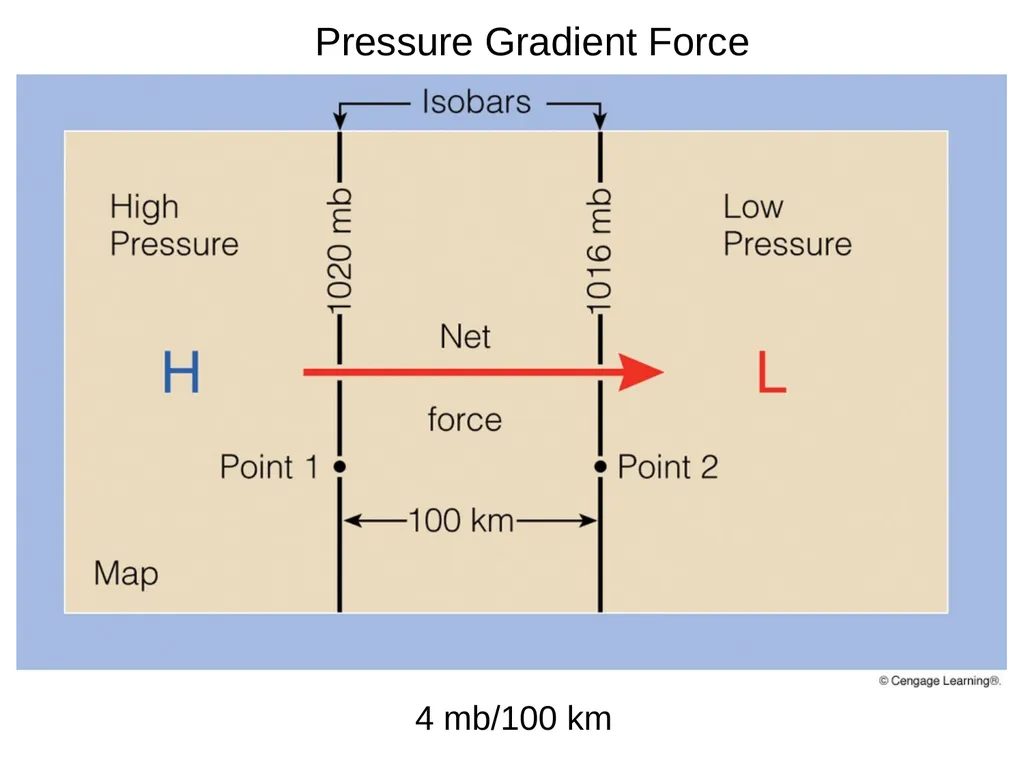
Pressure Gradient Force 4 mb/100 km<br>
06
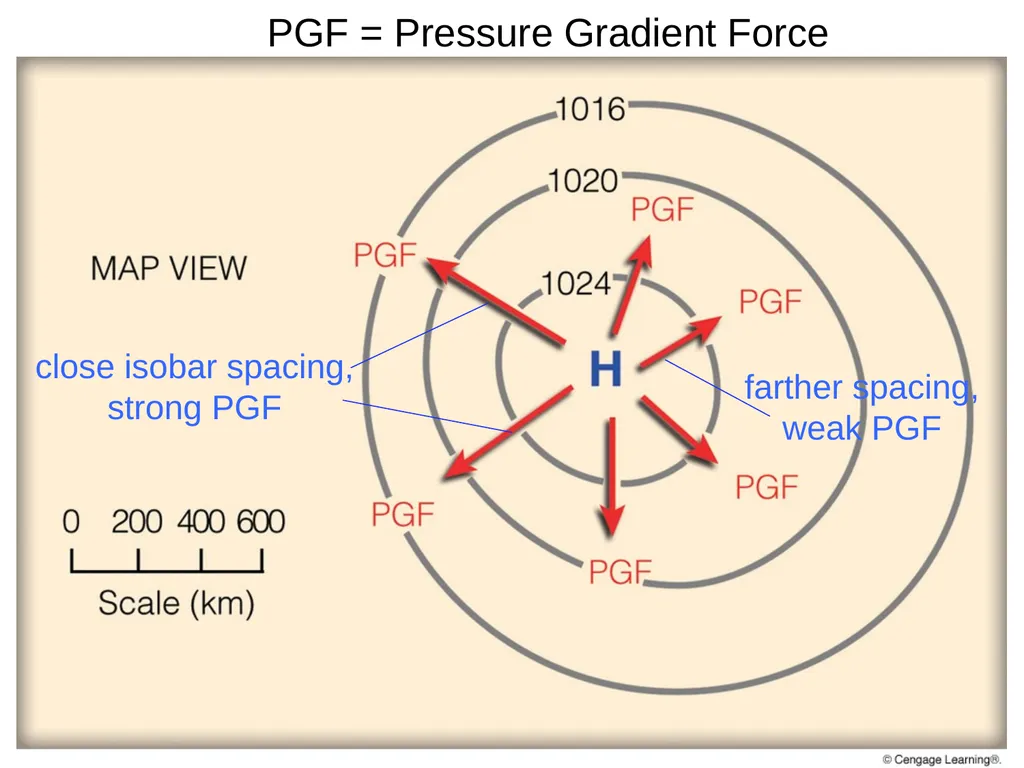
PGF = Pressure Gradient Force close isobar spacing,
strong PGF farther spacing,
weak PGF<br>
07
Change of Air Pressure and Density with Height<br>
08
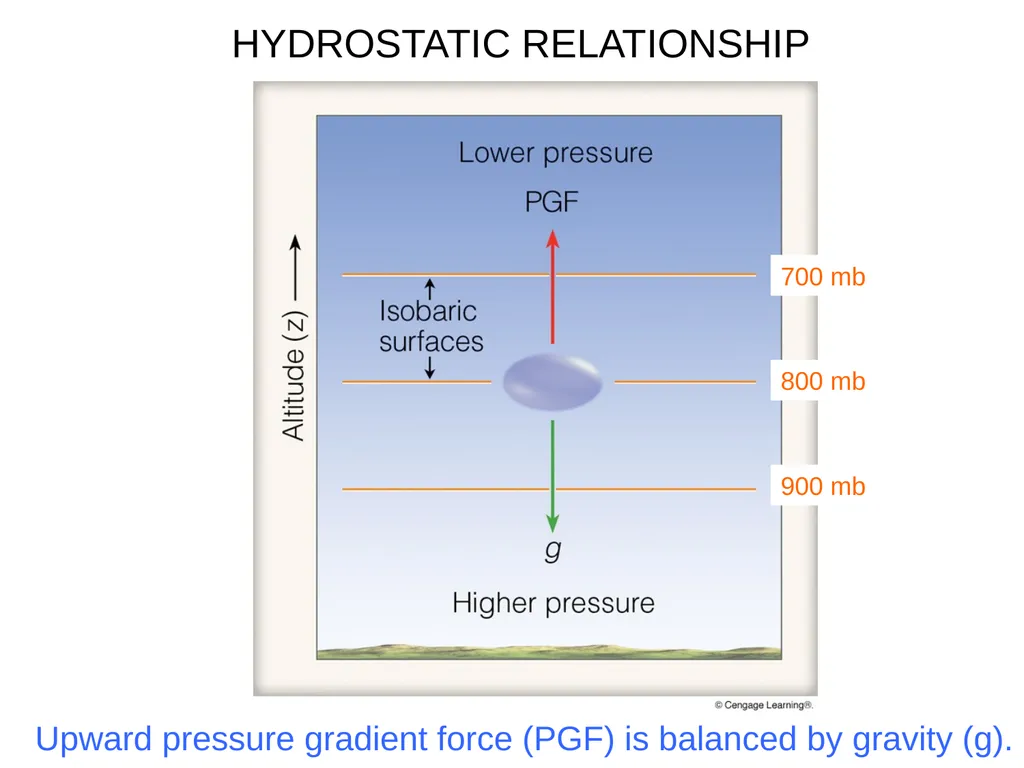
HYDROSTATIC RELATIONSHIP Upward pressure gradient force (PGF) is balanced by gravity (g). 900 mb 800 mb 700 mb<br>
09
HYDROSTATIC RELATIONSHIP Despite very strong vertical pressure gradients, vertical
winds (rising and sinking air) are generally weak. vertical
distance gravity The vertical PGF is NOT responsible for vertical winds.<br>
10
Coriolis Force (COR) (viewed from above) turntable target dart gun Time = 2 (15 sec. later) Dart misses target as target has
rotated out of position<br>
11
Coriolis Force (COR) (as viewed while riding on turntable) turntable target dart gun A mysterious force caused
the dart to veer to the right
of the target Definition: force applied
to a body in motion that
appears to cause it to
turn to its right in the
Northern Hemisphere
(or to its left in the Southern
Hemisphere).<br>
12
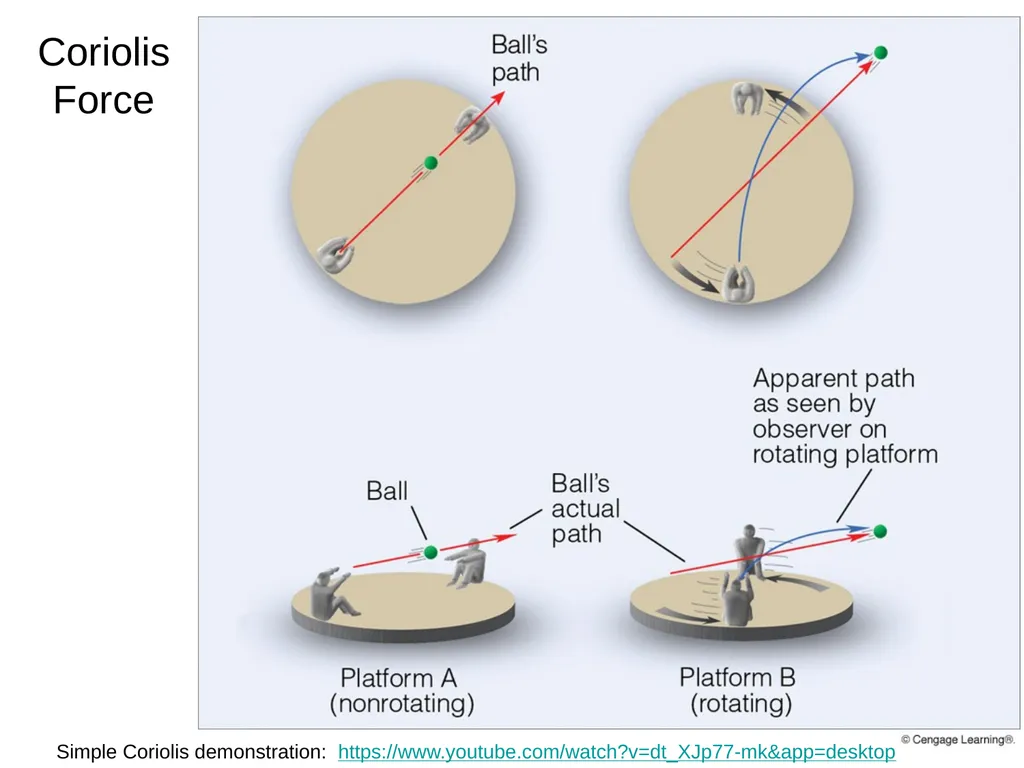
Coriolis
Force Simple Coriolis demonstration: https://www.youtube.com/watch?v=dt_XJp77-mk&app=desktop<br>
13
Coriolis Force (COR) Not a real force—arises from our frame of reference as we travel on a planet that is constantly rotating Deflection by COR (right or left) is greater for
a) faster rotation, and
b) greater distance travelled (higher speed) wind
speed latitude constants @ equator, sin 0°= 0, so COR = 0
@ poles, sin 90°= 1, so COR = maximum<br>
14
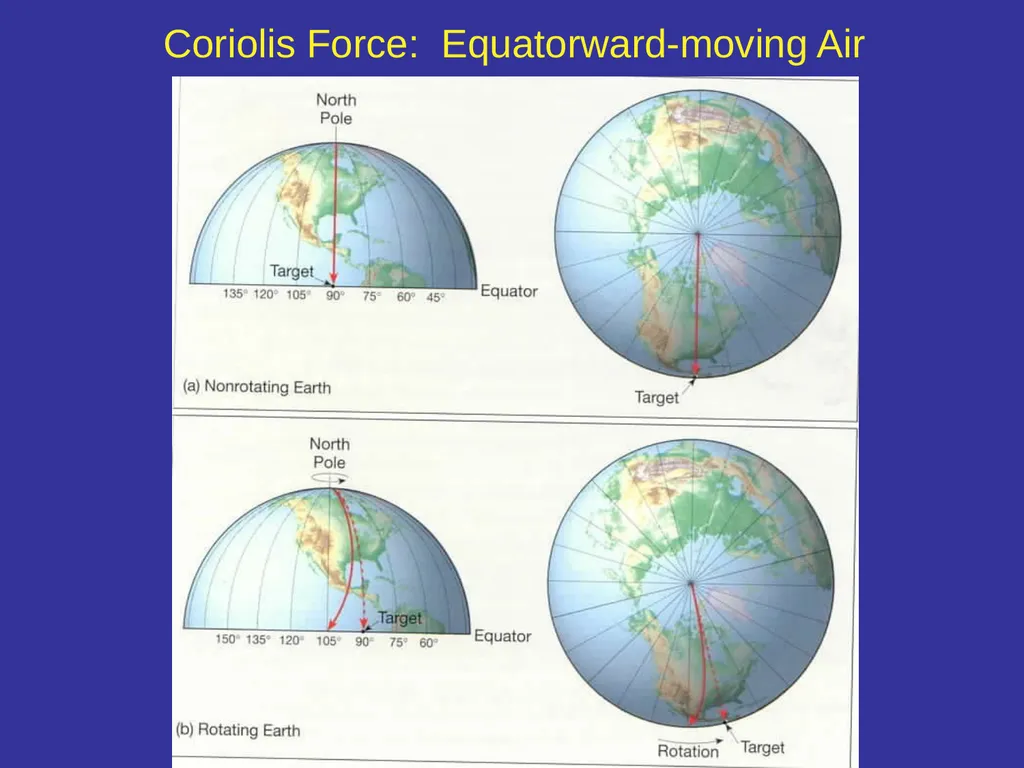
Coriolis Force: Equatorward-moving Air<br>
15
Coriolis Force: Eastward-moving Air<br>
16
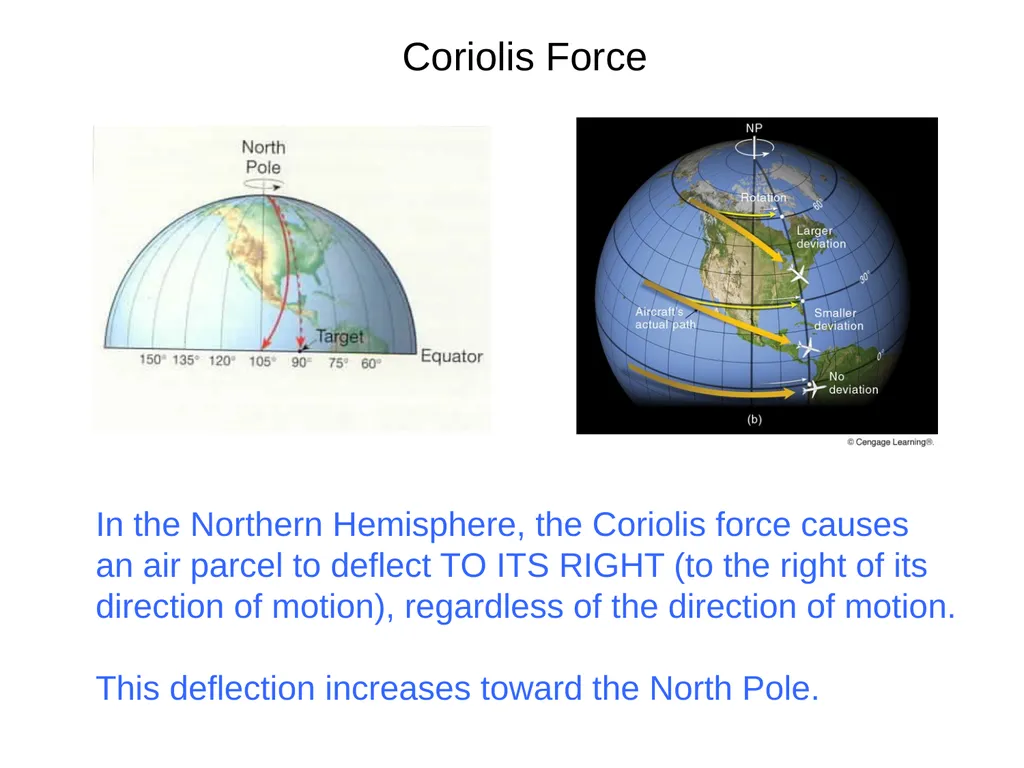
Coriolis Force In the Northern Hemisphere, the Coriolis force causes
an air parcel to deflect TO ITS RIGHT (to the right of its
direction of motion), regardless of the direction of motion.
This deflection increases toward the North Pole.<br>
17
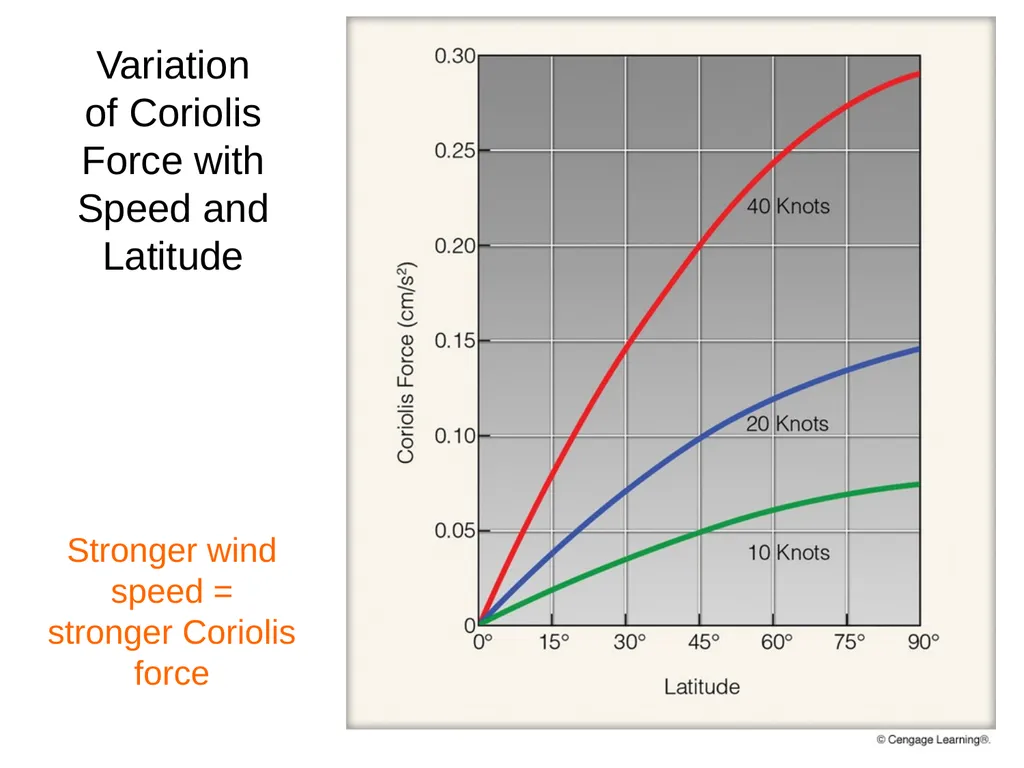
Variation
of Coriolis
Force with
Speed and
Latitude Stronger wind
speed =
stronger Coriolis
force<br>
18
Coriolis Force: Poleward-Moving Air<br>
19
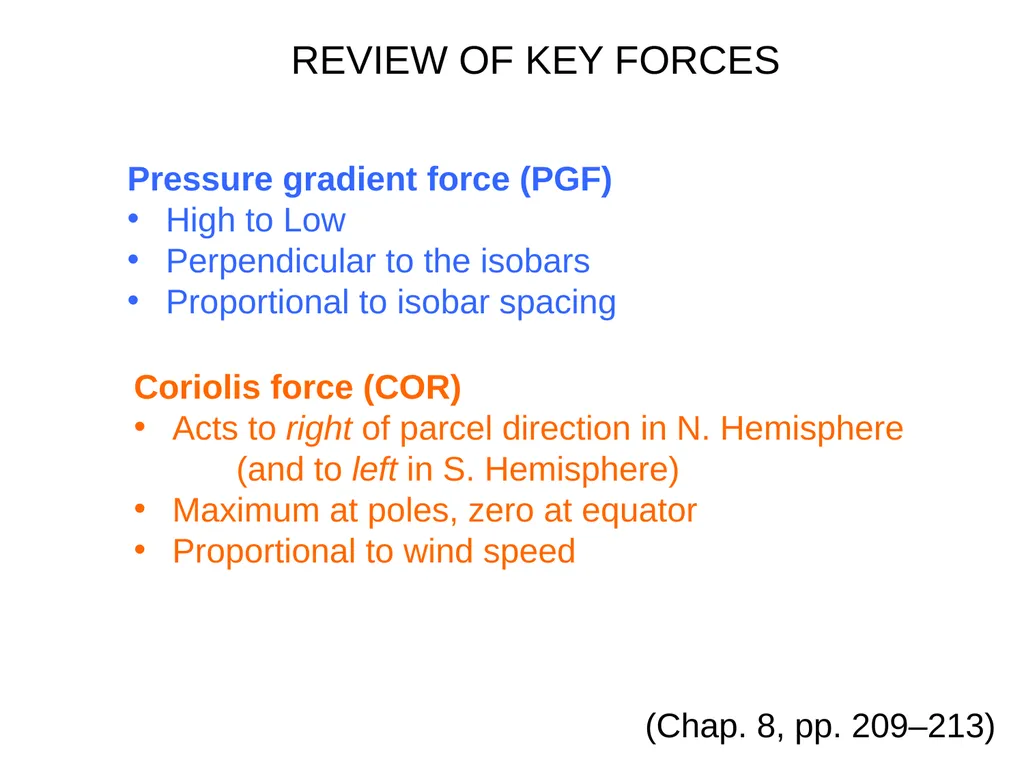
REVIEW OF KEY FORCES Pressure gradient force (PGF)
High to Low
Perpendicular to the isobars
Proportional to isobar spacing Coriolis force (COR)
Acts to right of parcel direction in N. Hemisphere
(and to left in S. Hemisphere)
Maximum at poles, zero at equator
Proportional to wind speed (Chap. 8, pp. 209–213)<br>