WJEC A LEVEL ENGLISH LITERATURE UNIT 5: PROSE STUDY CPD AUTUMN 2017 Important factors in success Text selection and pairing Teaching approaches Task setting and wording of titles Assessment procedures Reviewing Departmental Decisions When
"WJEC A LEVEL ENGLISH LITERATURE UNIT 5: PROSE" is the property of its rightful owner. Permission is granted to
download and print the materials on this website for personal, non-commercial use only, and to display it
on your personal computer provided you do not modify the materials and that you retain all copyright
notices contained in the materials. By downloading content from our website, you accept the terms of this
agreement.
Presentation Transcript
01
WJEC A LEVEL ENGLISH LITERATURE
UNIT 5: PROSE STUDY
CPD AUTUMN 2017<br>
02
Important factors in success Text selection and pairing
Teaching approaches
Task setting and wording of titles
Assessment procedures<br>
03
Reviewing Departmental Decisions When and how to start
How much independence to allow
How to instil study skills
How to support planning, drafting and redrafting<br>
04
Best Practice Choose texts for literary merit rather than accessibility or single linking theme/idea
Avoid pairing texts which are too similar or too different
Ensure combination allows for wide range of topics available
Keep possible pitfalls in mind in generic pairings: dystopian; gothic; reportage<br>
05
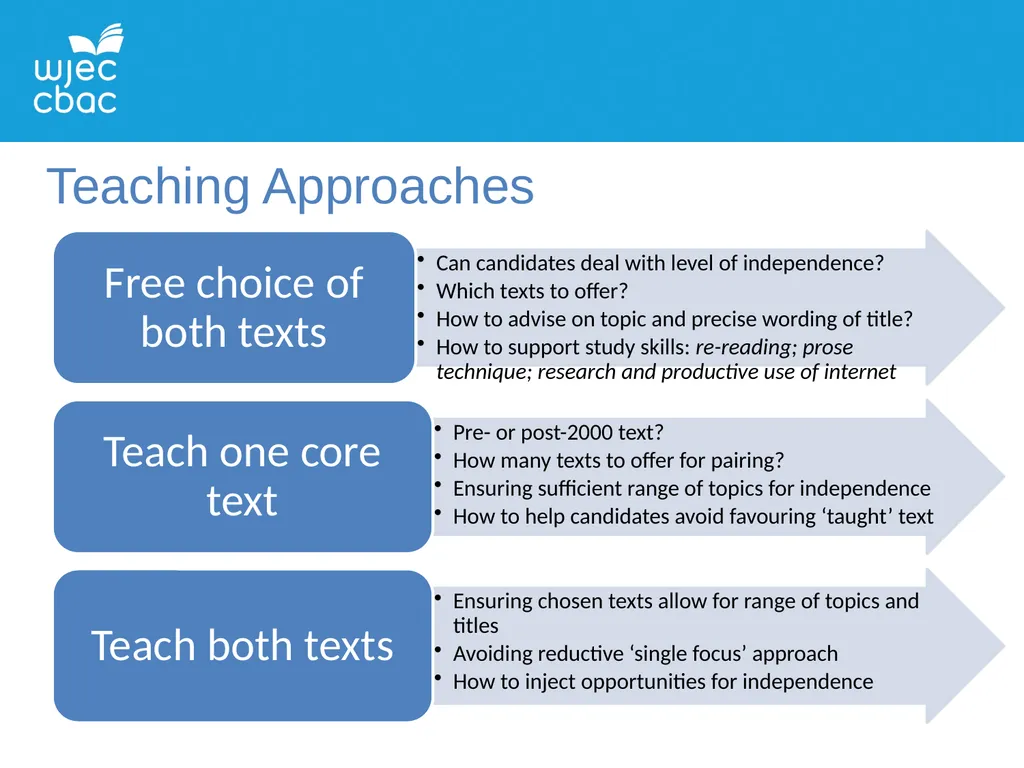
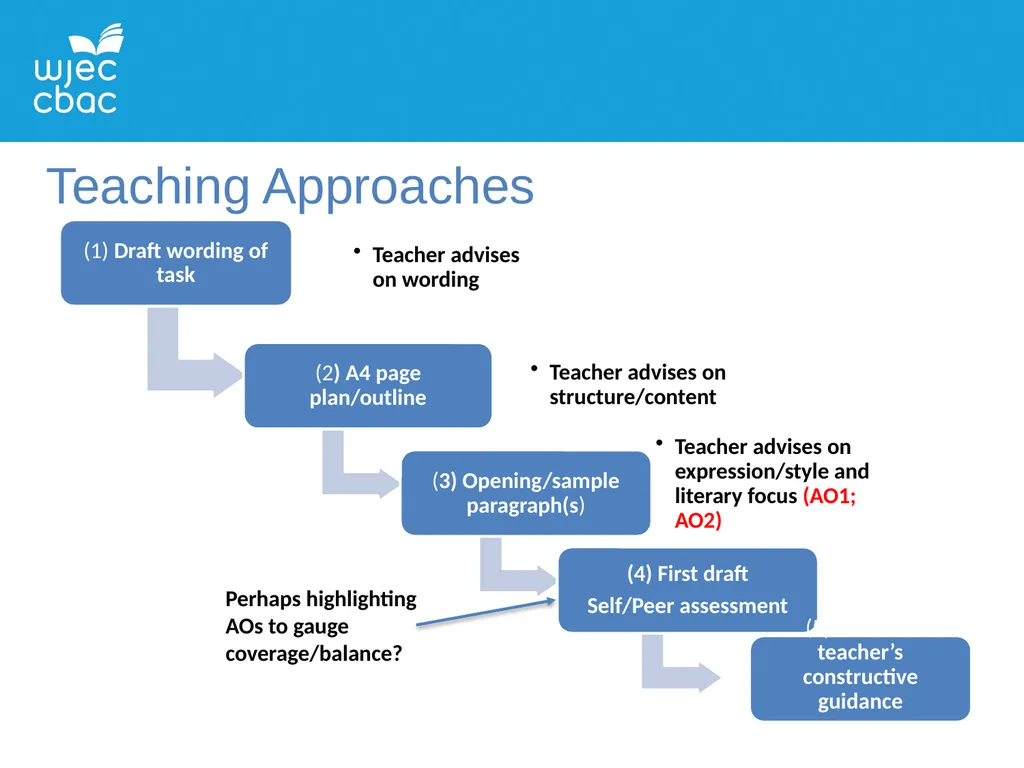
Teaching Approaches<br>
06
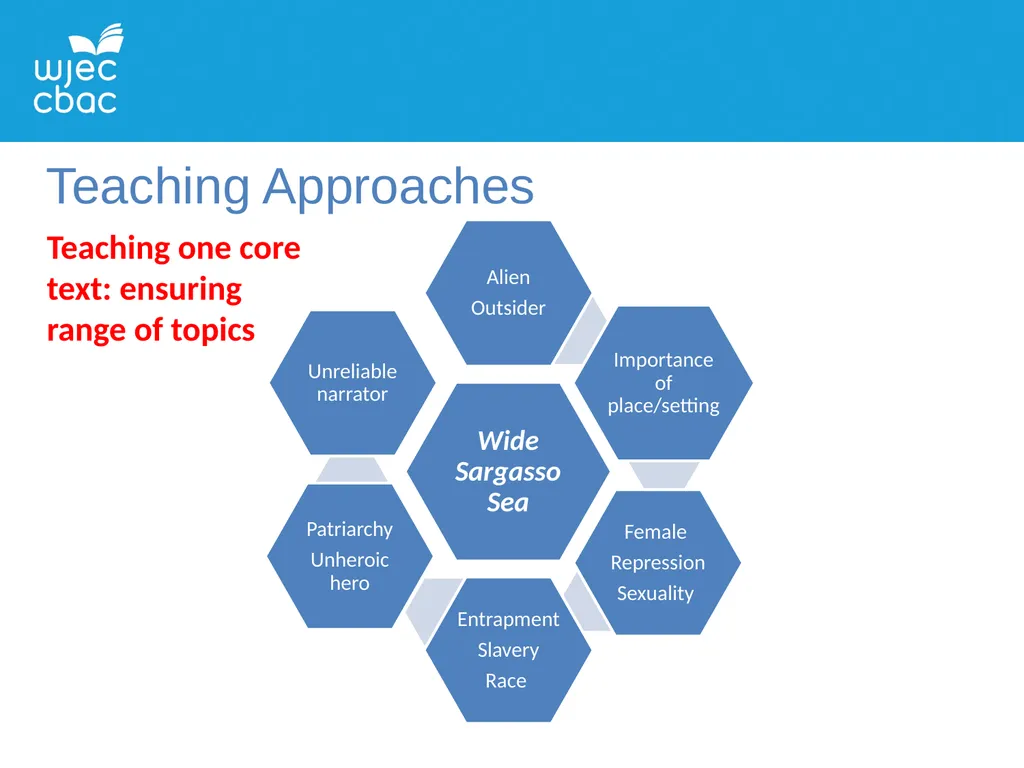
Teaching Approaches Teaching one core text: ensuring range of topics<br>
07
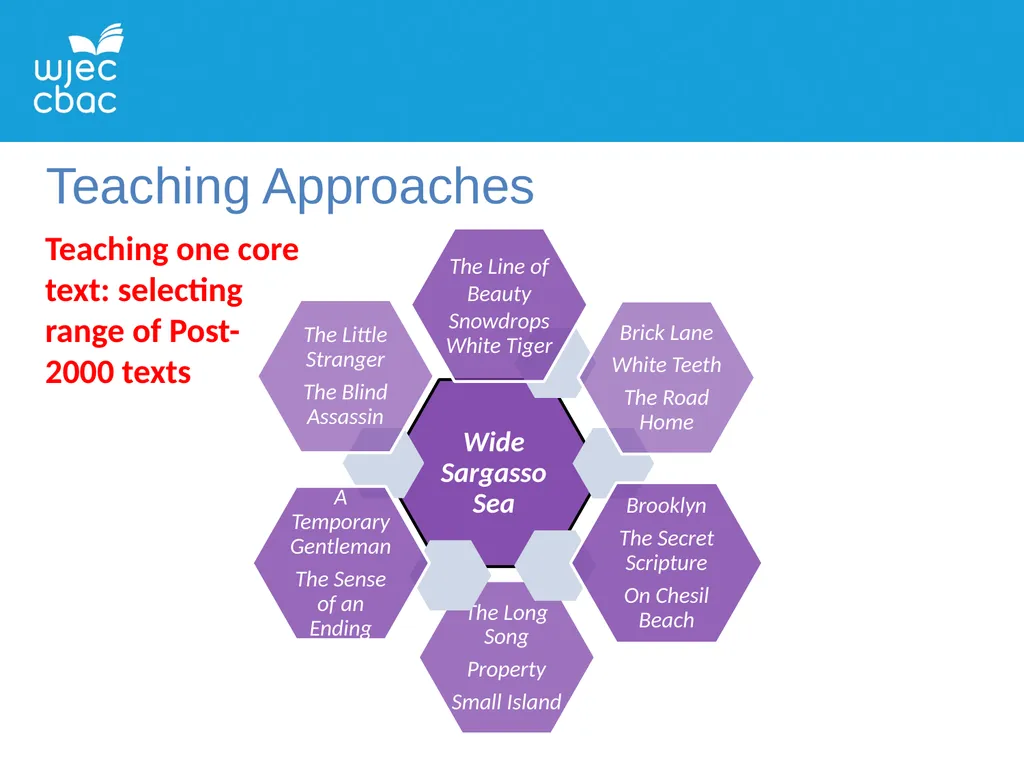
Teaching Approaches Teaching one core text: selecting range of Post-2000 texts<br>
08
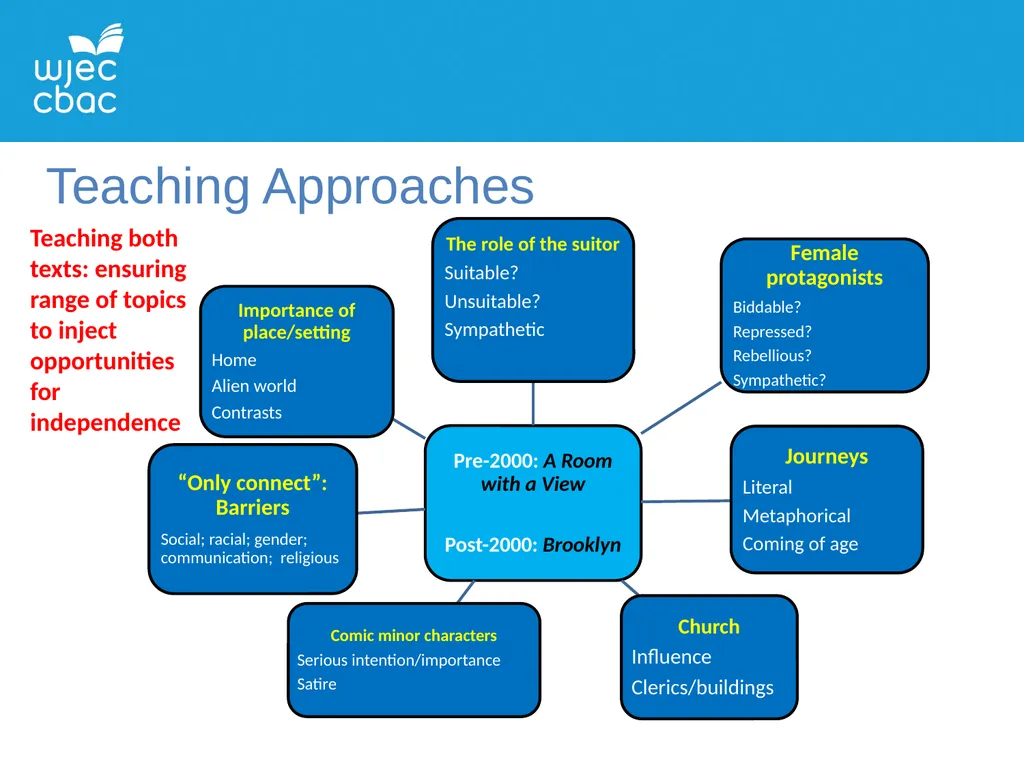
Teaching Approaches Teaching both texts: ensuring range of topics to inject opportunities for independence<br>
09
Teaching Approaches Perhaps highlighting AOs to gauge coverage/balance?<br>
10
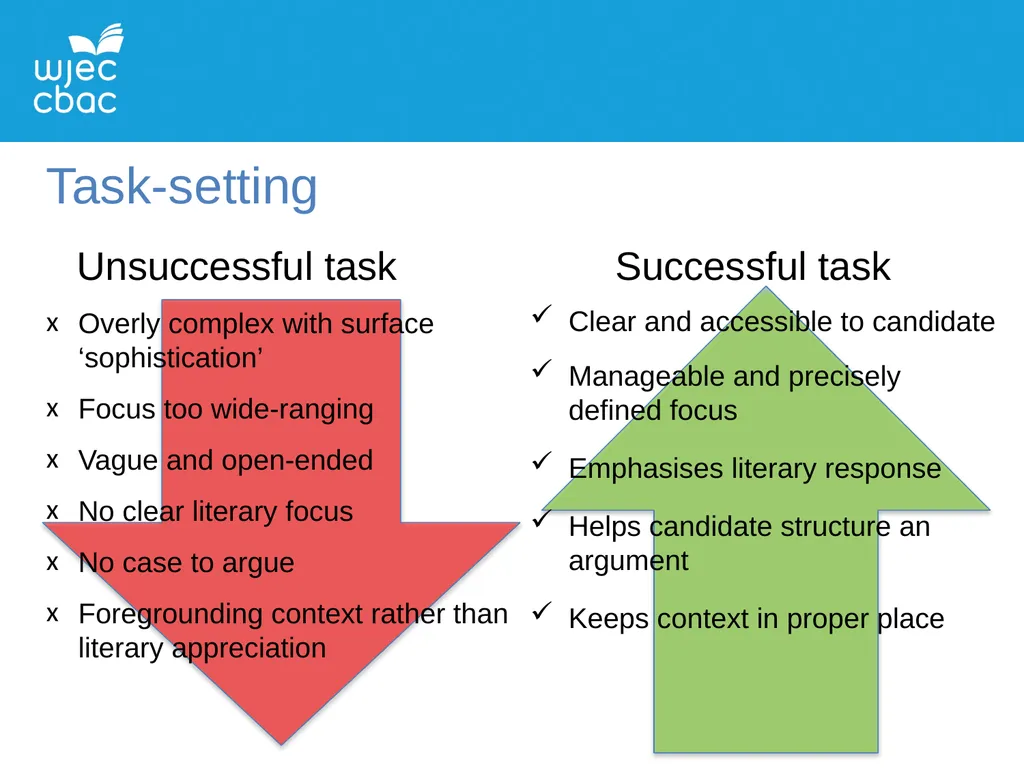
Task-setting Unsuccessful task Overly complex with surface ‘sophistication’
Focus too wide-ranging
Vague and open-ended
No clear literary focus
No case to argue
Foregrounding context rather than literary appreciation Successful task Clear and accessible to candidate
Manageable and precisely defined focus
Emphasises literary response
Helps candidate structure an argument
Keeps context in proper place<br>
11
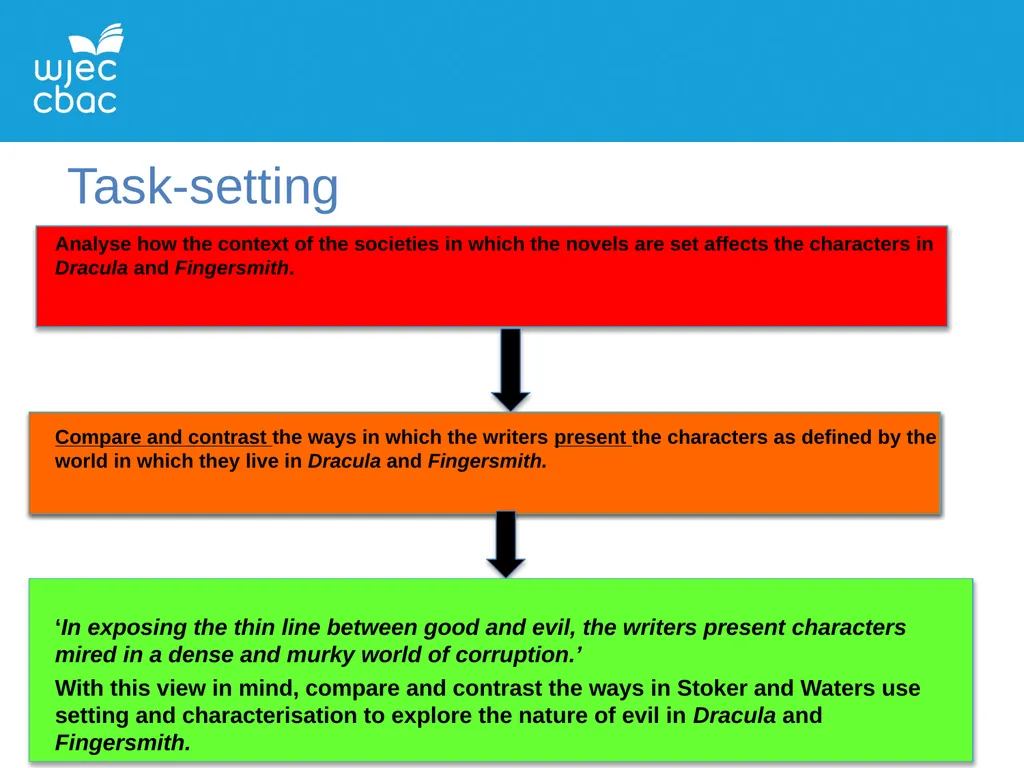
Task-setting Analyse how the context of the societies in which the novels are set affects the characters in Dracula and Fingersmith.
Compare and contrast the ways in which the writers present the characters as defined by the world in which they live in Dracula and Fingersmith.
‘In exposing the thin line between good and evil, the writers present characters mired in a dense and murky world of corruption.’
With this view in mind, compare and contrast the ways in Stoker and Waters use setting and characterisation to explore the nature of evil in Dracula and Fingersmith.<br>
12
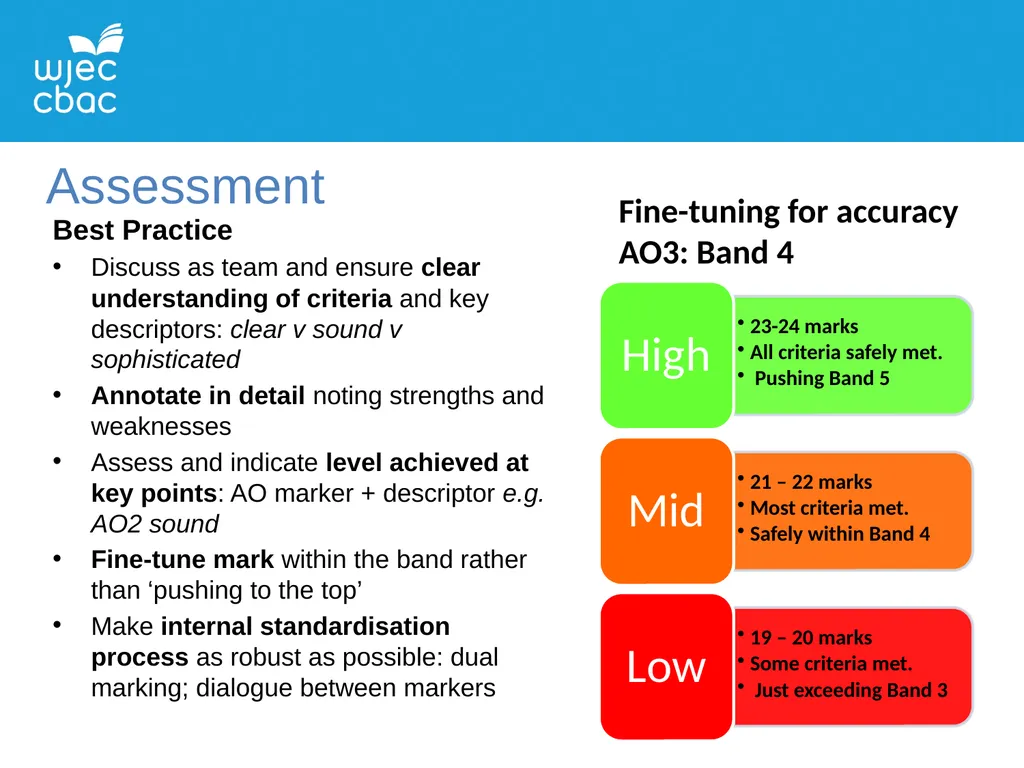
Assessment Fine-tuning for accuracy
AO3: Band 4 Best Practice
Discuss as team and ensure clear understanding of criteria and key descriptors: clear v sound v sophisticated
Annotate in detail noting strengths and weaknesses
Assess and indicate level achieved at key points: AO marker + descriptor e.g. AO2 sound
Fine-tune mark within the band rather than ‘pushing to the top’
Make internal standardisation process as robust as possible: dual marking; dialogue between markers<br>
13
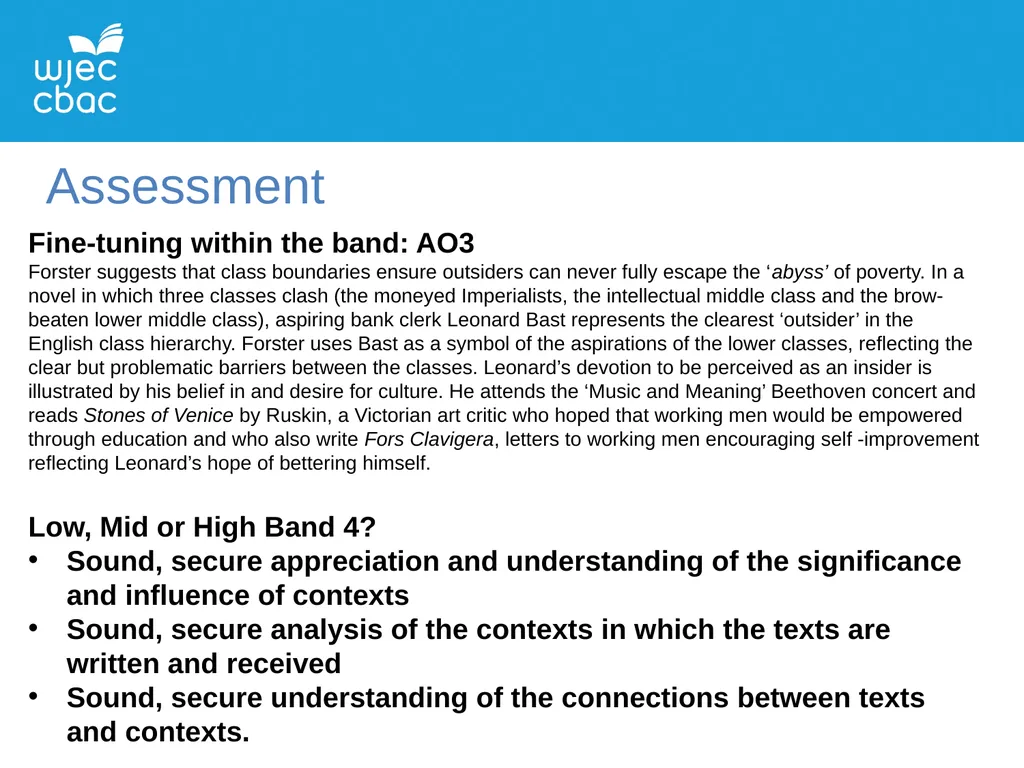
Assessment Fine-tuning within the band: AO3
Forster suggests that class boundaries ensure outsiders can never fully escape the ‘abyss’ of poverty. In a novel in which three classes clash (the moneyed Imperialists, the intellectual middle class and the brow-beaten lower middle class), aspiring bank clerk Leonard Bast represents the clearest ‘outsider’ in the English class hierarchy. Forster uses Bast as a symbol of the aspirations of the lower classes, reflecting the clear but problematic barriers between the classes. Leonard’s devotion to be perceived as an insider is illustrated by his belief in and desire for culture. He attends the ‘Music and Meaning’ Beethoven concert and reads Stones of Venice by Ruskin, a Victorian art critic who hoped that working men would be empowered through education and who also write Fors Clavigera, letters to working men encouraging self -improvement reflecting Leonard’s hope of bettering himself.
Low, Mid or High Band 4?
Sound, secure appreciation and understanding of the significance and influence of contexts
Sound, secure analysis of the contexts in which the texts are written and received
Sound, secure understanding of the connections between texts and contexts.<br>
14
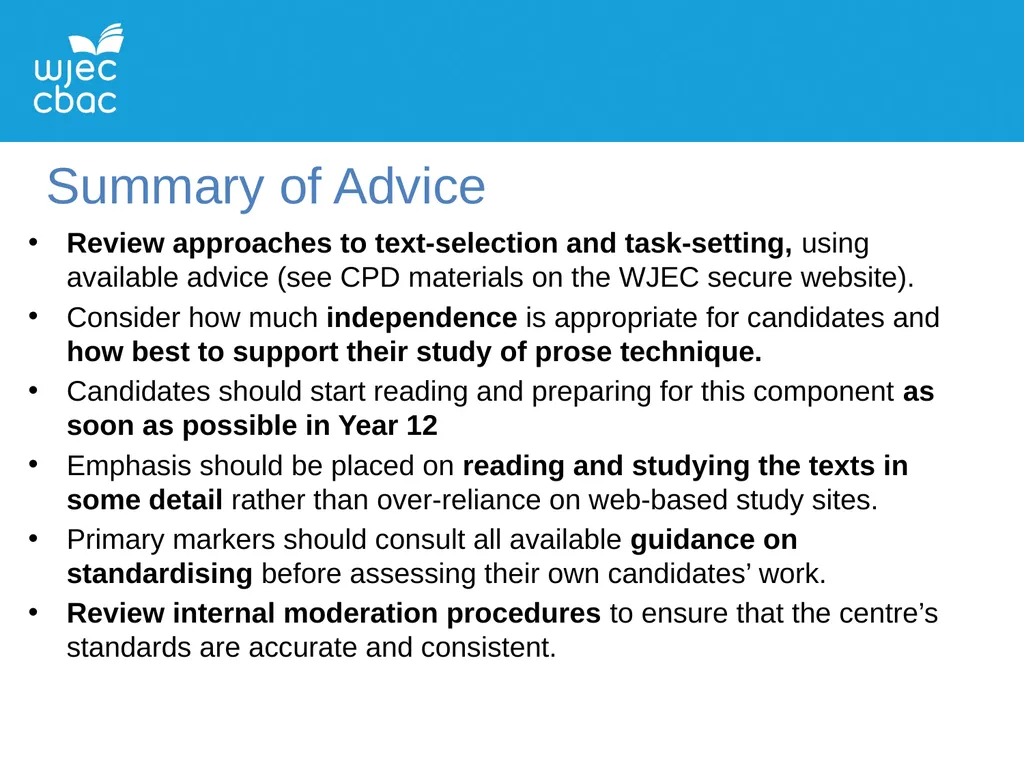
Summary of Advice Review approaches to text-selection and task-setting, using available advice (see CPD materials on the WJEC secure website).
Consider how much independence is appropriate for candidates and how best to support their study of prose technique.
Candidates should start reading and preparing for this component as soon as possible in Year 12
Emphasis should be placed on reading and studying the texts in some detail rather than over-reliance on web-based study sites.
Primary markers should consult all available guidance on standardising before assessing their own candidates’ work.
Review internal moderation procedures to ensure that the centre’s standards are accurate and consistent.<br>