
Workplace Heat Illness Prevention Office of
KB
Published · 28 slides · 0 views

1 / 1



Description
Workplace Heat Illness Prevention Office of Environmental Health Safety Occupational Health Safety Program x3-0448 Rev. 323 Outline Heat illness Risk factors How the body handles heat Types of heat illness Prevention of heat illness
Related Topics
Share
Embed code
Download this presentation From Below
"Workplace Heat Illness Prevention Office of" is the property of its rightful owner. Permission is granted to download and print the materials on this website for personal, non-commercial use only, and to display it on your personal computer provided you do not modify the materials and that you retain all copyright notices contained in the materials. By downloading content from our website, you accept the terms of this agreement.
Presentation Transcript
01
Workplace Heat Illness Prevention Office of Environmental Health & Safety
Occupational Health & Safety Program
x3-0448
Rev. 3/23<br>
02
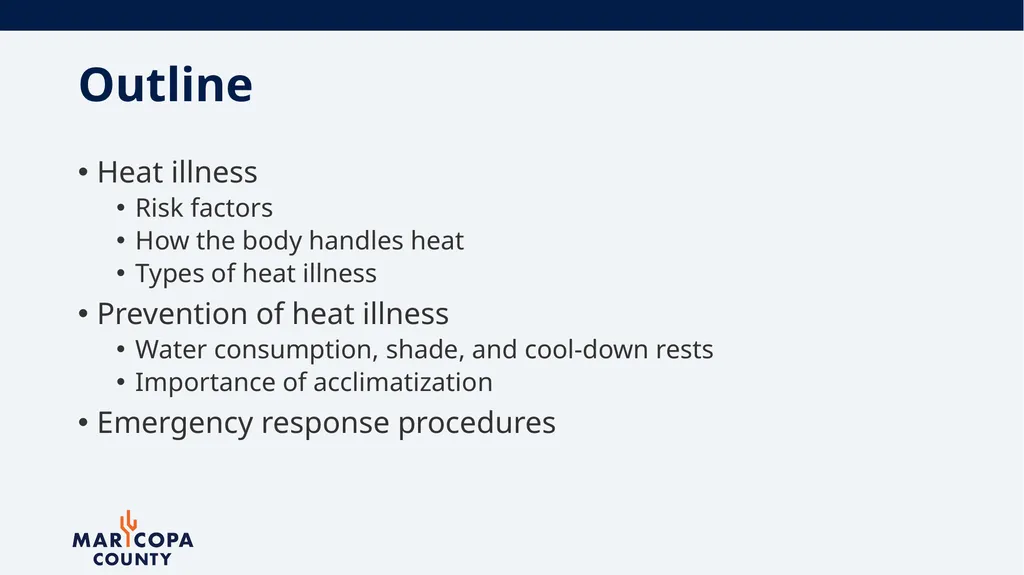
Outline Heat illness
Risk factors
How the body handles heat
Types of heat illness
Prevention of heat illness
Water consumption, shade, and cool-down rests
Importance of acclimatization
Emergency response procedures<br>
Risk factors
How the body handles heat
Types of heat illness
Prevention of heat illness
Water consumption, shade, and cool-down rests
Importance of acclimatization
Emergency response procedures<br>
03
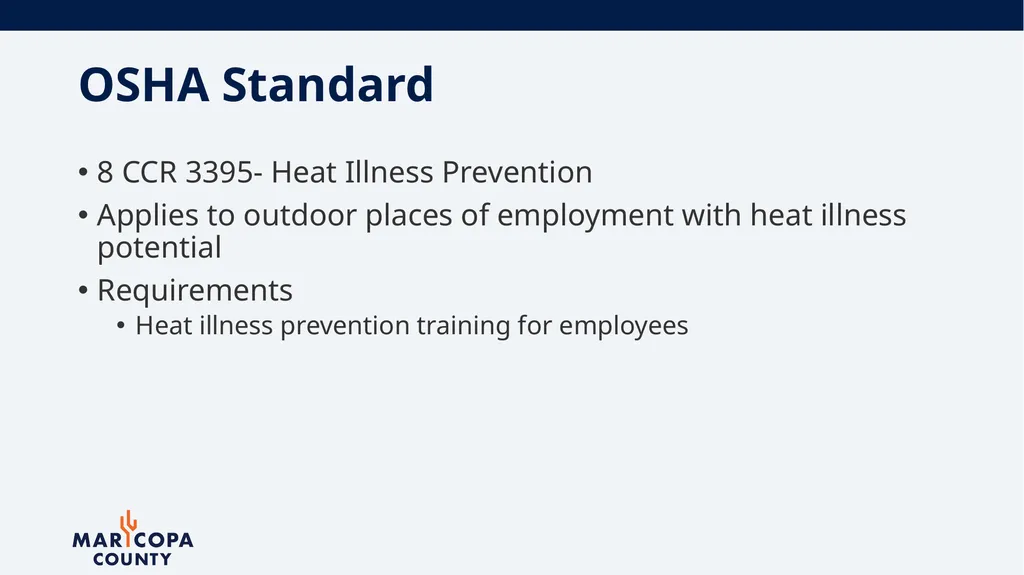
OSHA Standard 8 CCR 3395- Heat Illness Prevention
Applies to outdoor places of employment with heat illness potential
Requirements
Heat illness prevention training for employees<br>
Applies to outdoor places of employment with heat illness potential
Requirements
Heat illness prevention training for employees<br>
04
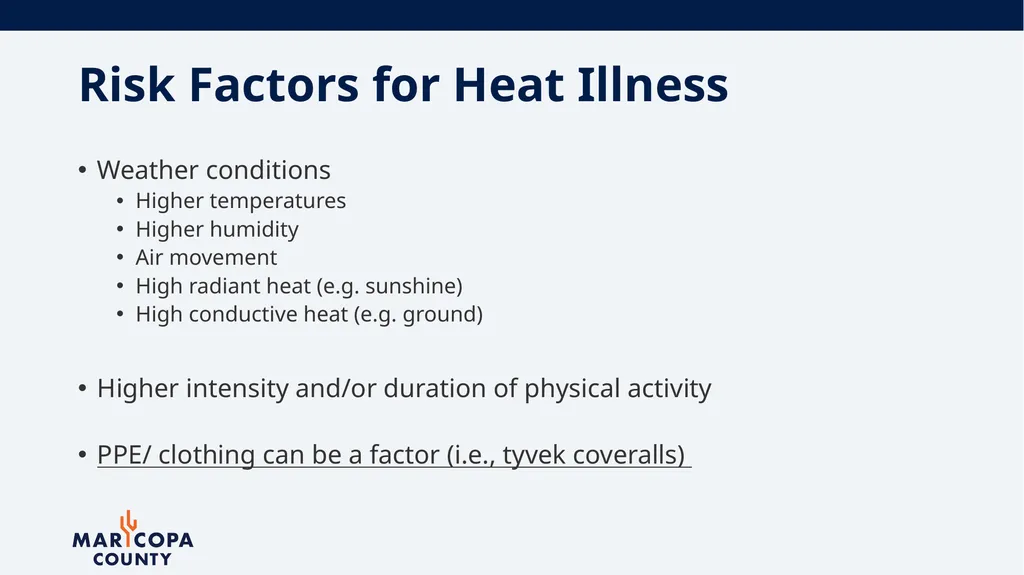
Risk Factors for Heat Illness Weather conditions
Higher temperatures
Higher humidity
Air movement
High radiant heat (e.g. sunshine)
High conductive heat (e.g. ground)
Higher intensity and/or duration of physical activity
PPE/ clothing can be a factor (i.e., tyvek coveralls)<br>
Higher temperatures
Higher humidity
Air movement
High radiant heat (e.g. sunshine)
High conductive heat (e.g. ground)
Higher intensity and/or duration of physical activity
PPE/ clothing can be a factor (i.e., tyvek coveralls)<br>
05
Job Risk Factors Work intensity
Work duration
Location (roof, road, enclosure)
Clothing (weight, impermeability)
Respiratory protection<br>
Work duration
Location (roof, road, enclosure)
Clothing (weight, impermeability)
Respiratory protection<br>
06
Personal Risk Factors Poor physical condition*
Older age
Degree of acclimatization
Low water consumption
Some medications*
Use of alcohol/drugs
* Recommend checking w/ personal physician about heat illness risk<br>
Older age
Degree of acclimatization
Low water consumption
Some medications*
Use of alcohol/drugs
* Recommend checking w/ personal physician about heat illness risk<br>
07
Management is to: Identify all employees who are required to work outdoors where heat illness could occur and identify the supervisor of the employees.
Ensure that adequate potable water, ice and shade are available when the environmental risk factors for heat illness are present.
Provide appropriate Personal Protective Equipment (PPE).
Ensure that all affected employees and supervisors have received proper training on heat illness prevention.
Provide or identify a location and supplies where water coolers can be adequately cleaned, sanitized and dried per the instructions
Request emergency medical services in the event assistance is required.
Periodically audit their department’s adherence to the Heat Illness Prevention Policy to ensure compliance.<br>
Ensure that adequate potable water, ice and shade are available when the environmental risk factors for heat illness are present.
Provide appropriate Personal Protective Equipment (PPE).
Ensure that all affected employees and supervisors have received proper training on heat illness prevention.
Provide or identify a location and supplies where water coolers can be adequately cleaned, sanitized and dried per the instructions
Request emergency medical services in the event assistance is required.
Periodically audit their department’s adherence to the Heat Illness Prevention Policy to ensure compliance.<br>
08
Affected Employees Are To Do The Following: Have drinking water and/or electrolyte replacement drinks available at all times when the environmental risk factors for heat illness are present.
Have access to a cool/shaded area to prevent or recover from heat related symptoms.
Know the signs and symptoms of heat illnesses and monitor their own physical condition and that of their co-workers.
Report any heat related illness symptoms to their supervisor.<br>
Have access to a cool/shaded area to prevent or recover from heat related symptoms.
Know the signs and symptoms of heat illnesses and monitor their own physical condition and that of their co-workers.
Report any heat related illness symptoms to their supervisor.<br>
09
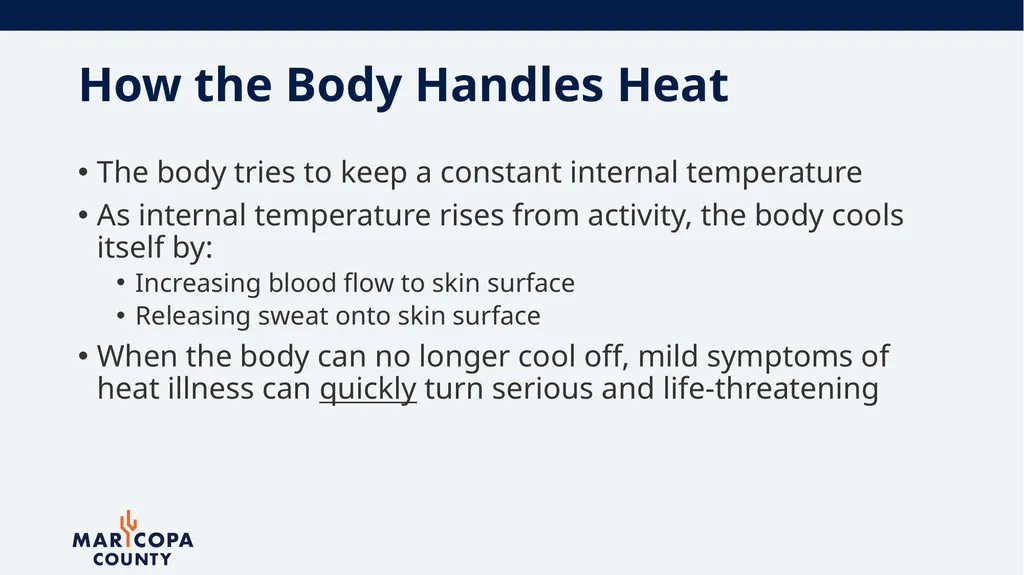
How the Body Handles Heat The body tries to keep a constant internal temperature
As internal temperature rises from activity, the body cools itself by:
Increasing blood flow to skin surface
Releasing sweat onto skin surface
When the body can no longer cool off, mild symptoms of heat illness can quickly turn serious and life-threatening<br>
As internal temperature rises from activity, the body cools itself by:
Increasing blood flow to skin surface
Releasing sweat onto skin surface
When the body can no longer cool off, mild symptoms of heat illness can quickly turn serious and life-threatening<br>
10
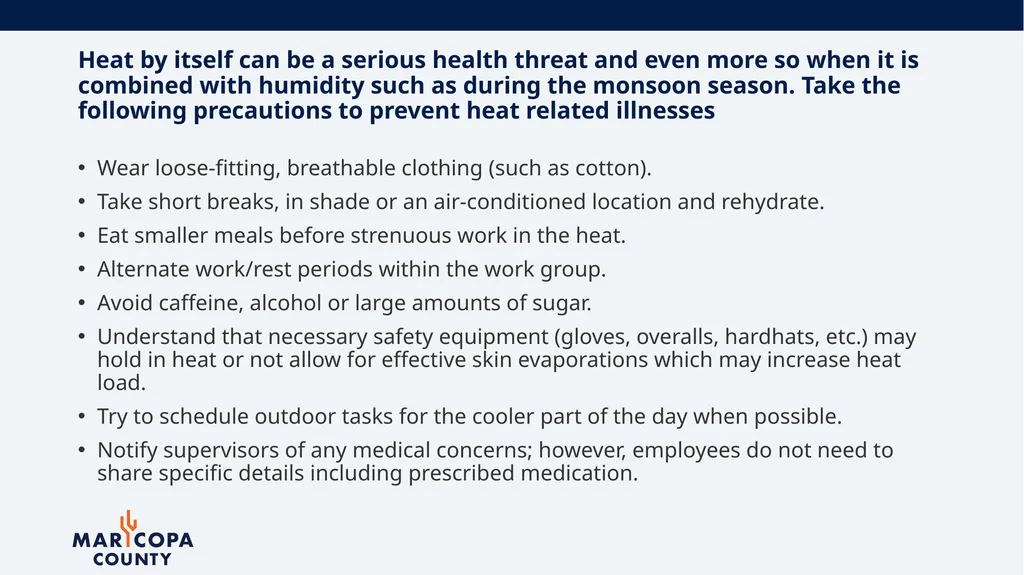
Heat by itself can be a serious health threat and even more so when it is combined with humidity such as during the monsoon season. Take the following precautions to prevent heat related illnesses Wear loose-fitting, breathable clothing (such as cotton).
Take short breaks, in shade or an air-conditioned location and rehydrate.
Eat smaller meals before strenuous work in the heat.
Alternate work/rest periods within the work group.
Avoid caffeine, alcohol or large amounts of sugar.
Understand that necessary safety equipment (gloves, overalls, hardhats, etc.) may hold in heat or not allow for effective skin evaporations which may increase heat load.
Try to schedule outdoor tasks for the cooler part of the day when possible.
Notify supervisors of any medical concerns; however, employees do not need to share specific details including prescribed medication.<br>
Take short breaks, in shade or an air-conditioned location and rehydrate.
Eat smaller meals before strenuous work in the heat.
Alternate work/rest periods within the work group.
Avoid caffeine, alcohol or large amounts of sugar.
Understand that necessary safety equipment (gloves, overalls, hardhats, etc.) may hold in heat or not allow for effective skin evaporations which may increase heat load.
Try to schedule outdoor tasks for the cooler part of the day when possible.
Notify supervisors of any medical concerns; however, employees do not need to share specific details including prescribed medication.<br>
11
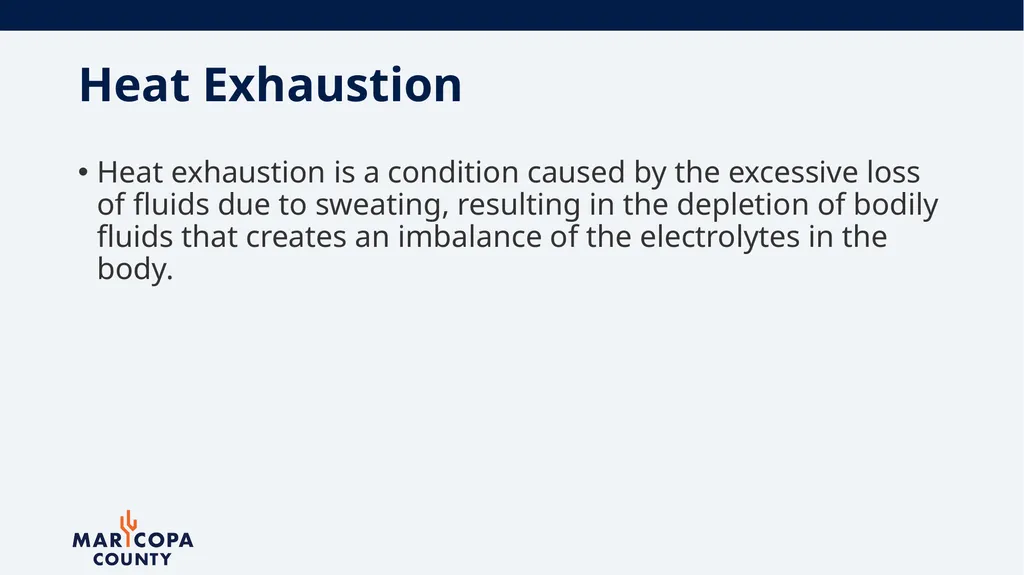
Heat Exhaustion Heat exhaustion is a condition caused by the excessive loss of fluids due to sweating, resulting in the depletion of bodily fluids that creates an imbalance of the electrolytes in the body.<br>
12
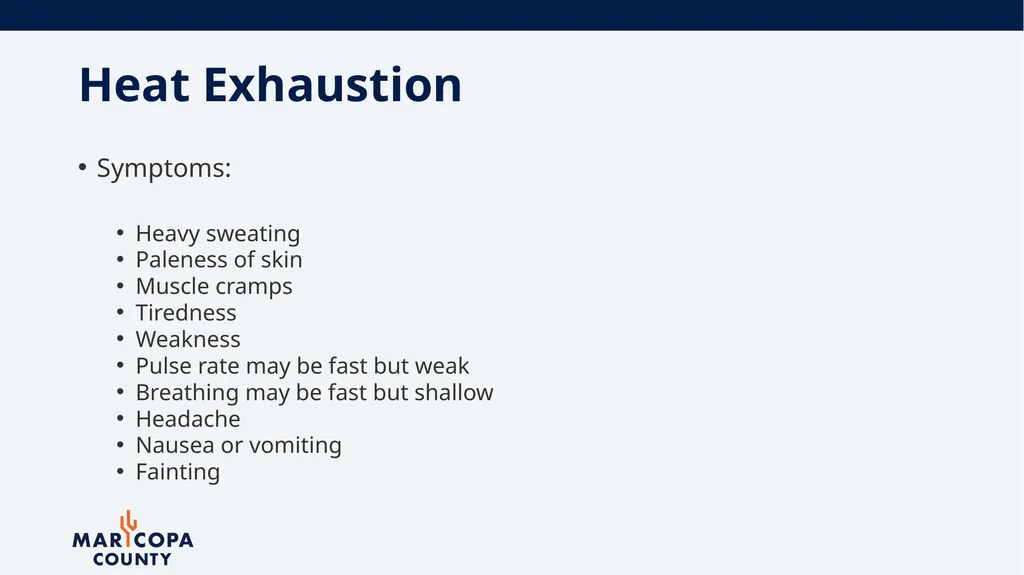
Heat Exhaustion Symptoms:
Heavy sweating
Paleness of skin
Muscle cramps
Tiredness
Weakness
Pulse rate may be fast but weak
Breathing may be fast but shallow
Headache
Nausea or vomiting
Fainting<br>
Heavy sweating
Paleness of skin
Muscle cramps
Tiredness
Weakness
Pulse rate may be fast but weak
Breathing may be fast but shallow
Headache
Nausea or vomiting
Fainting<br>
13
Heat Exhaustion Immediately call 911 for emergency medical assistance.
Move the person suffering from heat exhaustion to a cool and shady area. Do not leave the person alone.
Cool the person as quickly as possible with running water, applying cold compresses and/or fanning.
If they are alert, give them cool drinking water, or electrolyte replacement drinks. Avoid caffeine and alcohol.
Remove extra clothing when necessary and continue to cool their body until medical assistance arrives.<br>
Move the person suffering from heat exhaustion to a cool and shady area. Do not leave the person alone.
Cool the person as quickly as possible with running water, applying cold compresses and/or fanning.
If they are alert, give them cool drinking water, or electrolyte replacement drinks. Avoid caffeine and alcohol.
Remove extra clothing when necessary and continue to cool their body until medical assistance arrives.<br>
14
Heat Cramps Heat cramps are painful spasms of the muscles generally thought to be caused by an imbalance of electrolytes in the body. This may occur when a person carries out strenuous physical activity, drinks large quantities of water, but fails to replace salts and electrolytes lost through sweating. Cramps can occur during or after working hours and may be relieved by drinking saline/electrolyte solutions.
Symptoms include muscle pains or spasms usually in the abdomen, arms or legs.
Treatment
Stop all activity and sit in a cool and shady area.
Drink a liquid containing sodium (e.g. electrolyte replacement drinks).
Do not return to strenuous activity for at least a few hours after the cramps subside. Further exertion might lead to heat exhaustion or heat stroke.
Seek medical attention if heat cramps do not subside within 1 hour.<br>
Symptoms include muscle pains or spasms usually in the abdomen, arms or legs.
Treatment
Stop all activity and sit in a cool and shady area.
Drink a liquid containing sodium (e.g. electrolyte replacement drinks).
Do not return to strenuous activity for at least a few hours after the cramps subside. Further exertion might lead to heat exhaustion or heat stroke.
Seek medical attention if heat cramps do not subside within 1 hour.<br>
15
Heat Rash Heat rash, also known as prickly heat, may occur in hot and humid environments where sweat is not easily removed from the surface of the skin by evaporation. When extensive, or complicated by infection, heat rash can be so uncomfortable that it inhibits sleep and impedes a worker’s performance or even results in temporary disability. In most cases, heat rashes will disappear when the affected individual returns to a cooler environment<br>
16
Heat Stroke Heat stroke is the most serious heat related illness. It is a condition caused by prolonged exposure to high temperatures where the body can no longer control its temperature, and it can cause death or permanent disability. People with heat stroke experience headaches, hot dry skin and physical exhaustion. In extreme cases, a person may physically collapse and fall into a coma. When a person has heat stroke, emergency medical treatment must be sought immediately.
Symptoms:
Extremely high body temperature (106°F or higher)
Red, hot and dry skin (no sweating)
Rapid and strong pulse
Throbbing headache
Dizziness
Nausea
Confusion
Unconsciousness
Treat as a medical emergency! Can be life-threatening.<br>
Symptoms:
Extremely high body temperature (106°F or higher)
Red, hot and dry skin (no sweating)
Rapid and strong pulse
Throbbing headache
Dizziness
Nausea
Confusion
Unconsciousness
Treat as a medical emergency! Can be life-threatening.<br>
17
Emergency Response Procedures For any of the previously mentioned symptoms:
If first-aid trained personnel are not available on-site to provide assessment, immediately call 911
While waiting for help:
Move victim to cool area
Give small cup of water (if conscious and not nauseous)
Loosen and/or remove clothing
Fan and mist the person with water
Apply a water-soaked towel (or ice pack wrapped in towel) to head and ice pack to armpits
Contact supervisor immediately
Anyone with symptoms must never be sent home or left unattended without a medical evaluation<br>
If first-aid trained personnel are not available on-site to provide assessment, immediately call 911
While waiting for help:
Move victim to cool area
Give small cup of water (if conscious and not nauseous)
Loosen and/or remove clothing
Fan and mist the person with water
Apply a water-soaked towel (or ice pack wrapped in towel) to head and ice pack to armpits
Contact supervisor immediately
Anyone with symptoms must never be sent home or left unattended without a medical evaluation<br>
18
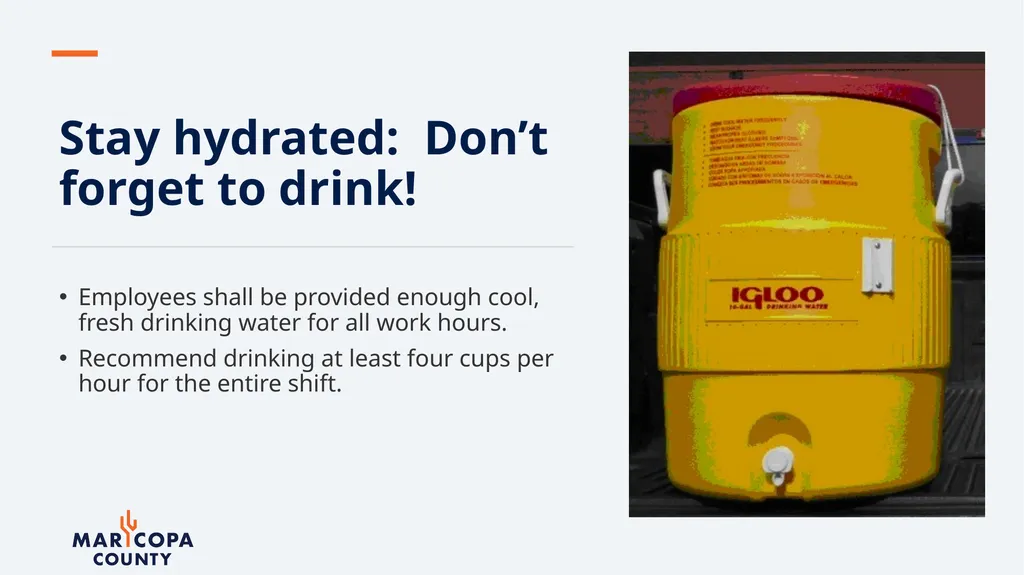
Stay hydrated: Don’t forget to drink! Employees shall be provided enough cool, fresh drinking water for all work hours.
Recommend drinking at least four cups per hour for the entire shift.<br>
Recommend drinking at least four cups per hour for the entire shift.<br>
19
Proper fluid intake is essential to preventing heat related illnesses. Hydrate the day before working outdoors.
Have cool drinking water available and close by the work area.
Drink fluids with electrolytes during the day, in a 1:2 ratio with plain water.
Limit fluid intake to no more than 1 ½ quarts per hour. Try to drink small amounts throughout the day rather than all at once.
Caffeinated drinks and alcohol should be avoided as they will cause the body to lose fluids rather than to retain them.<br>
Have cool drinking water available and close by the work area.
Drink fluids with electrolytes during the day, in a 1:2 ratio with plain water.
Limit fluid intake to no more than 1 ½ quarts per hour. Try to drink small amounts throughout the day rather than all at once.
Caffeinated drinks and alcohol should be avoided as they will cause the body to lose fluids rather than to retain them.<br>
20
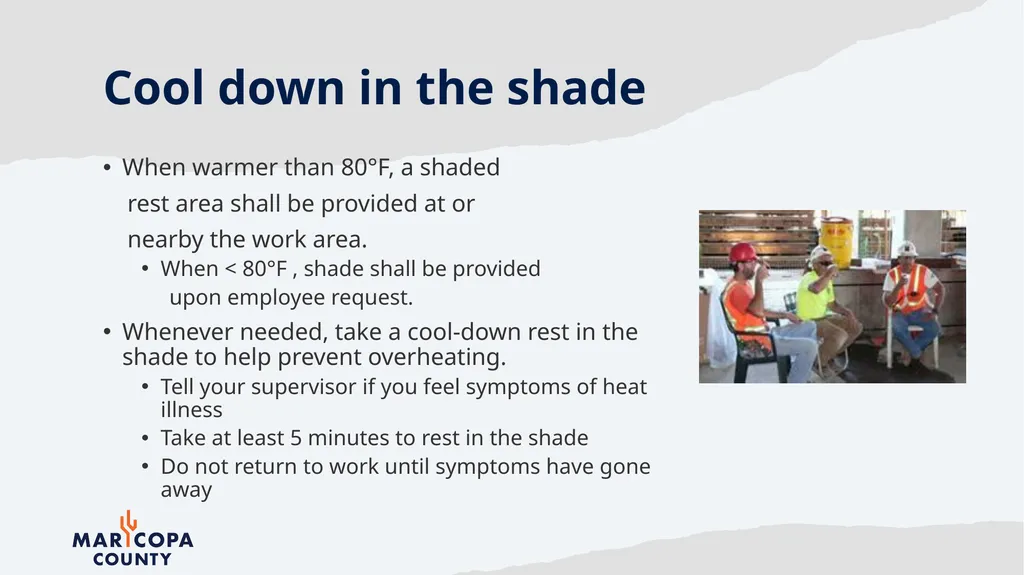
Cool down in the shade When warmer than 80°F, a shaded
rest area shall be provided at or
nearby the work area.
When < 80°F , shade shall be provided
upon employee request.
Whenever needed, take a cool-down rest in the shade to help prevent overheating.
Tell your supervisor if you feel symptoms of heat illness
Take at least 5 minutes to rest in the shade
Do not return to work until symptoms have gone away<br>
rest area shall be provided at or
nearby the work area.
When < 80°F , shade shall be provided
upon employee request.
Whenever needed, take a cool-down rest in the shade to help prevent overheating.
Tell your supervisor if you feel symptoms of heat illness
Take at least 5 minutes to rest in the shade
Do not return to work until symptoms have gone away<br>
21
The sun’s light contains ultraviolet (UV) light. It can cause injuries as mild as sunburn or as severe as skin cancer. It is important to prevent sunburn since this limits the ability of the skin to cool off the body by evaporation. To adequately block UV light, follow the instructions below: Wear loose-fitting, long-sleeved shirts and long pants.
For any exposed skin, apply sunscreen that has a sun protection factor (SPF) of at least 30.
Wear a hat with a sufficient brim to protect all areas of the face, ears and neck.
Wear UV-absorbent sunglasses to block UVA and UVB radiation. If safety glasses are required, ensure that the safety sunglasses meet these requirements.
Limit UV exposure between 10 a.m. and 4 p.m.<br>
For any exposed skin, apply sunscreen that has a sun protection factor (SPF) of at least 30.
Wear a hat with a sufficient brim to protect all areas of the face, ears and neck.
Wear UV-absorbent sunglasses to block UVA and UVB radiation. If safety glasses are required, ensure that the safety sunglasses meet these requirements.
Limit UV exposure between 10 a.m. and 4 p.m.<br>
22
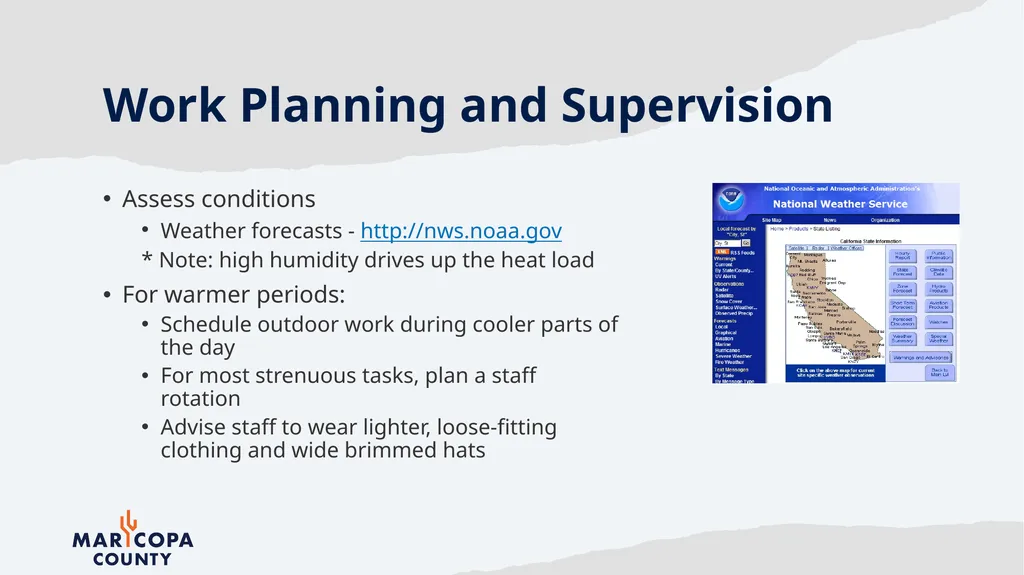
Work Planning and Supervision Assess conditions
Weather forecasts - http://nws.noaa.gov
* Note: high humidity drives up the heat load
For warmer periods:
Schedule outdoor work during cooler parts of the day
For most strenuous tasks, plan a staff rotation
Advise staff to wear lighter, loose-fitting clothing and wide brimmed hats<br>
Weather forecasts - http://nws.noaa.gov
* Note: high humidity drives up the heat load
For warmer periods:
Schedule outdoor work during cooler parts of the day
For most strenuous tasks, plan a staff rotation
Advise staff to wear lighter, loose-fitting clothing and wide brimmed hats<br>
23
Work Planning and Supervision For outdoor temperatures ≥ 80°F, supervisors shall:
Provide shade at/nearby worksite for employee rest breaks.
If not safe or feasible to provide shade, alternative cooling measures with equivalent protection are required.
Encourage staff to take cool-down rests in the shade as needed to avoid overheating
Provide effective means for employees to contact the supervisor and emergency services
Ensure close observation of:
All staff during a heatwave
New employees and employees returning from extended absence<br>
Provide shade at/nearby worksite for employee rest breaks.
If not safe or feasible to provide shade, alternative cooling measures with equivalent protection are required.
Encourage staff to take cool-down rests in the shade as needed to avoid overheating
Provide effective means for employees to contact the supervisor and emergency services
Ensure close observation of:
All staff during a heatwave
New employees and employees returning from extended absence<br>
24
Work Planning and Supervision High Heat Procedure -- when outdoor temperatures higher than 95°F, supervisors shall:
Ensure all of the previously noted actions
Regularly monitor employees for alertness and signs/symptoms of heat illness via:
Direct supervision, buddy system, phone/radio communication, and/or other means of observation
Reminder to drink plenty of water throughout the day
Allowing the employee to take cool down rests as needed<br>
Ensure all of the previously noted actions
Regularly monitor employees for alertness and signs/symptoms of heat illness via:
Direct supervision, buddy system, phone/radio communication, and/or other means of observation
Reminder to drink plenty of water throughout the day
Allowing the employee to take cool down rests as needed<br>
25
Training All employees and their supervisors working on job tasks where environmental risk factors for heat illness are present shall receive instruction in heat illness prevention before being assigned to work tasks that subjects them to heat stress.
Due to the nature of work in the County and the temperature extremes in Arizona, heat illness training shall be required annually for all field employees. Training topics shall include the following:<br>
Due to the nature of work in the County and the temperature extremes in Arizona, heat illness training shall be required annually for all field employees. Training topics shall include the following:<br>
26
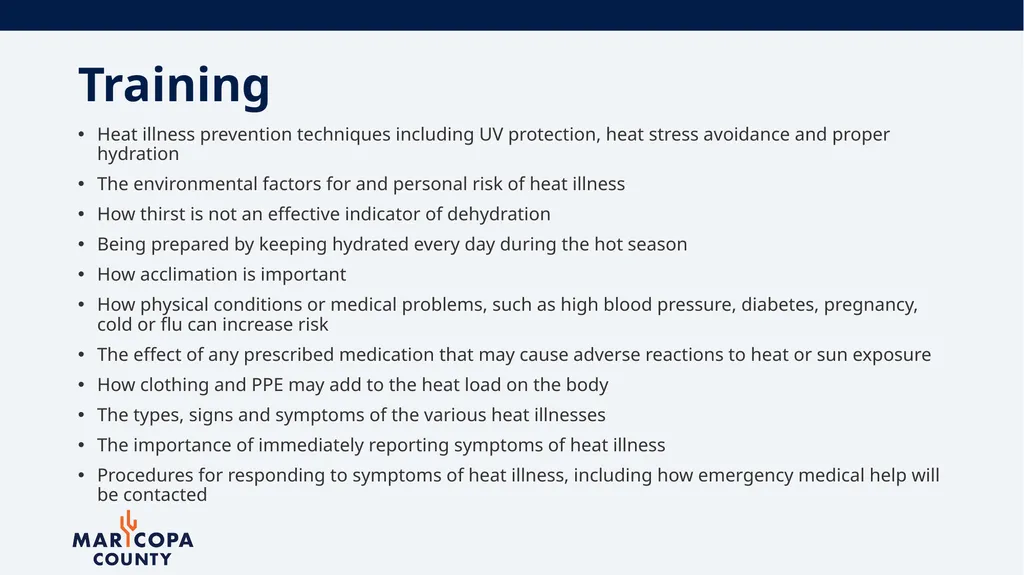
Training Heat illness prevention techniques including UV protection, heat stress avoidance and proper hydration
The environmental factors for and personal risk of heat illness
How thirst is not an effective indicator of dehydration
Being prepared by keeping hydrated every day during the hot season
How acclimation is important
How physical conditions or medical problems, such as high blood pressure, diabetes, pregnancy, cold or flu can increase risk
The effect of any prescribed medication that may cause adverse reactions to heat or sun exposure
How clothing and PPE may add to the heat load on the body
The types, signs and symptoms of the various heat illnesses
The importance of immediately reporting symptoms of heat illness
Procedures for responding to symptoms of heat illness, including how emergency medical help will be contacted<br>
The environmental factors for and personal risk of heat illness
How thirst is not an effective indicator of dehydration
Being prepared by keeping hydrated every day during the hot season
How acclimation is important
How physical conditions or medical problems, such as high blood pressure, diabetes, pregnancy, cold or flu can increase risk
The effect of any prescribed medication that may cause adverse reactions to heat or sun exposure
How clothing and PPE may add to the heat load on the body
The types, signs and symptoms of the various heat illnesses
The importance of immediately reporting symptoms of heat illness
Procedures for responding to symptoms of heat illness, including how emergency medical help will be contacted<br>
27
Thank You<br>