
Workshop on Strengthening Human Resource



Description: Workshop on Strengthening Human Resource Management of Civil Society Organizations By Jagath Karunathilaka (Through Virtual Meeting Zoom Technology) October 4 22 (20 Lesson Hours in 10 Days) Lesson Plans of HR Management of CSO HR the
Related Topics
Download Presentation
"Workshop on Strengthening Human Resource" is the property of its rightful owner. Permission is granted to download and print the materials on this website for personal, non-commercial use only, and to display it on your personal computer provided you do not modify the materials and that you retain all copyright notices contained in the materials. By downloading content from our website, you accept the terms of this agreement.
Presentation Transcript
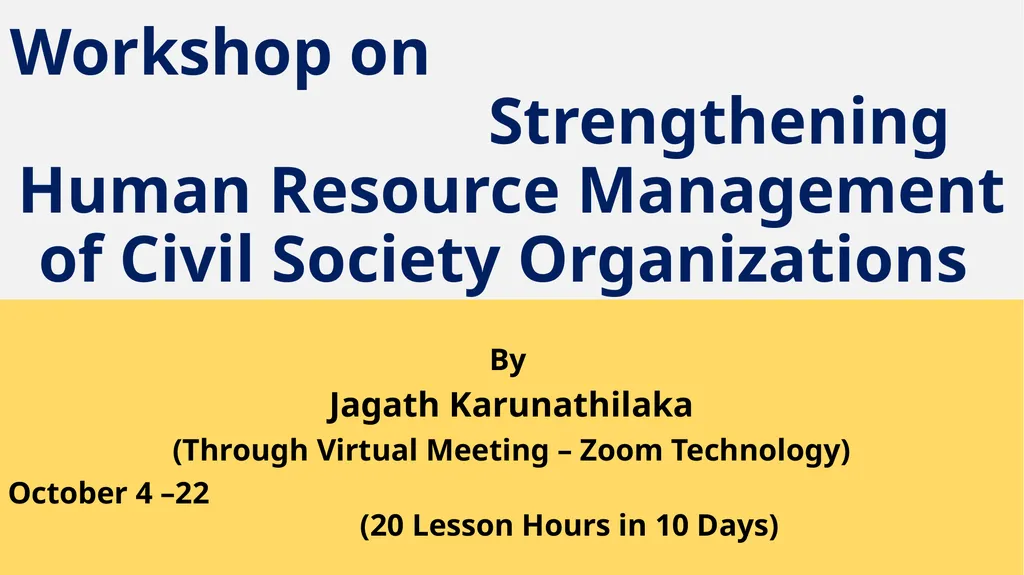
slide1. Workshop on Strengthening Human Resource Management of Civil Society Organizations By
Jagath Karunathilaka
(Through Virtual Meeting – Zoom Technology)
October 4 –22 (20 Lesson Hours in 10 Days)<br>
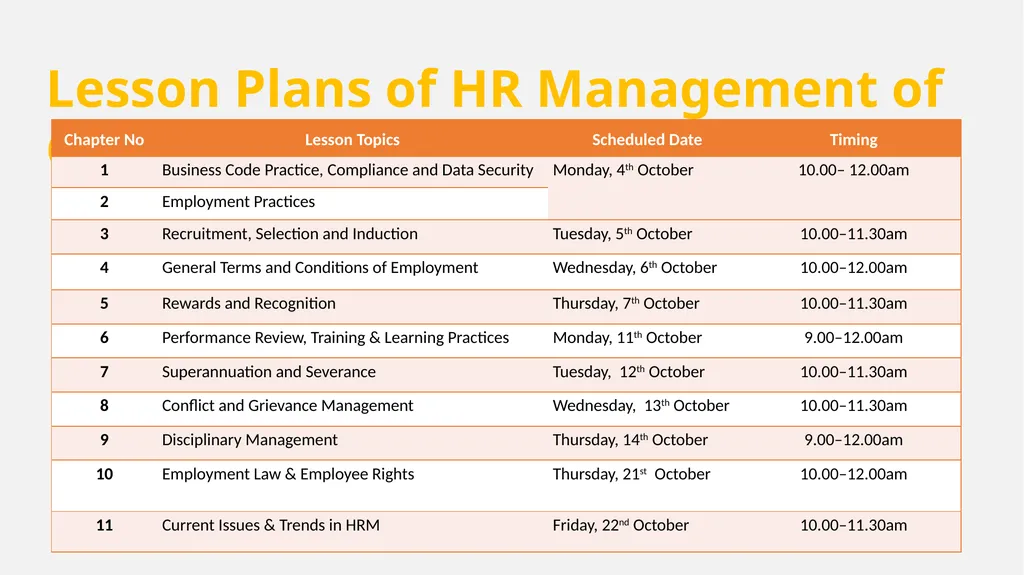
slide2. Lesson Plans of HR Management of CSO<br>
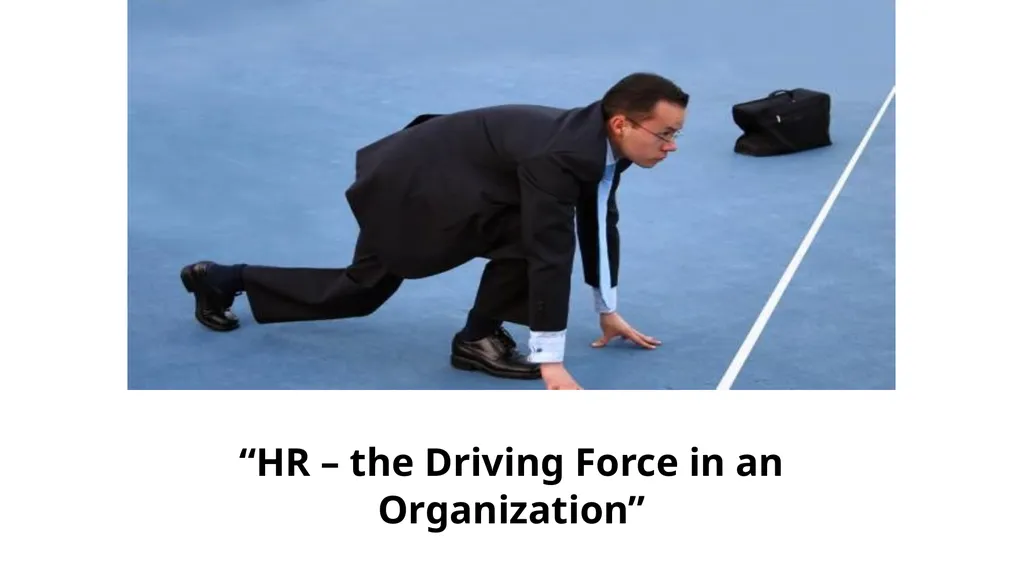
slide3. “HR – the Driving Force in an Organization”<br>
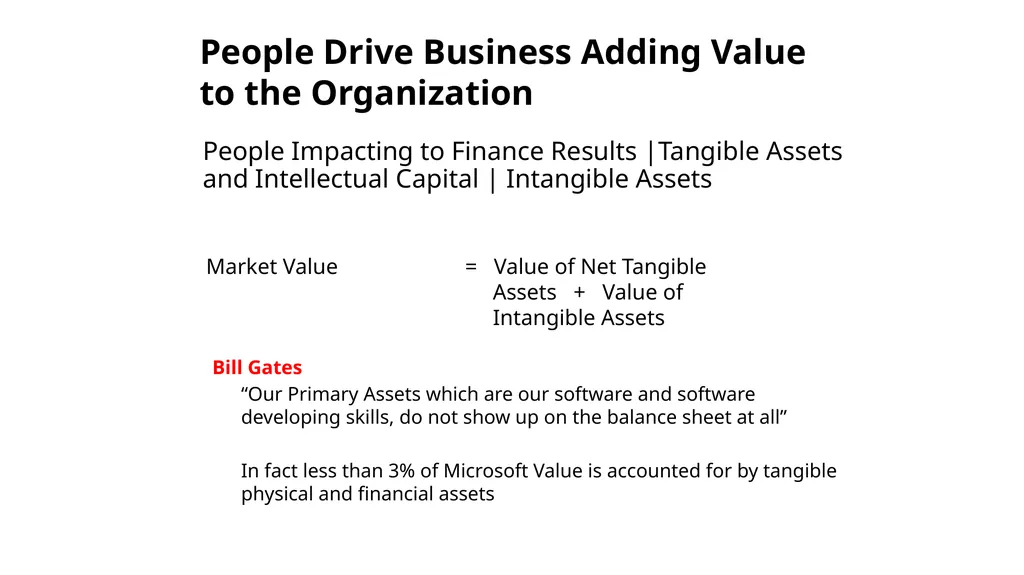
slide4. People Drive Business Adding Value to the Organization People Impacting to Finance Results |Tangible Assets and Intellectual Capital | Intangible Assets Market Value = Value of Net Tangible Assets + Value of Intangible Assets Bill Gates
“Our Primary Assets which are our software and software developing skills, do not show up on the balance sheet at all”
In fact less than 3% of Microsoft Value is accounted for by tangible physical and financial assets<br>
slide5. Value Creation in Today’s Marketplace Tangible Assets/Value
Measures are well established for modern Finance as a Decision Support Science
Easy to Measure
vs.
Hard to Measure
Intangible Capital Value
Market value driven by factors not on a balance sheet
“Intellectual or Human Capital”<br>
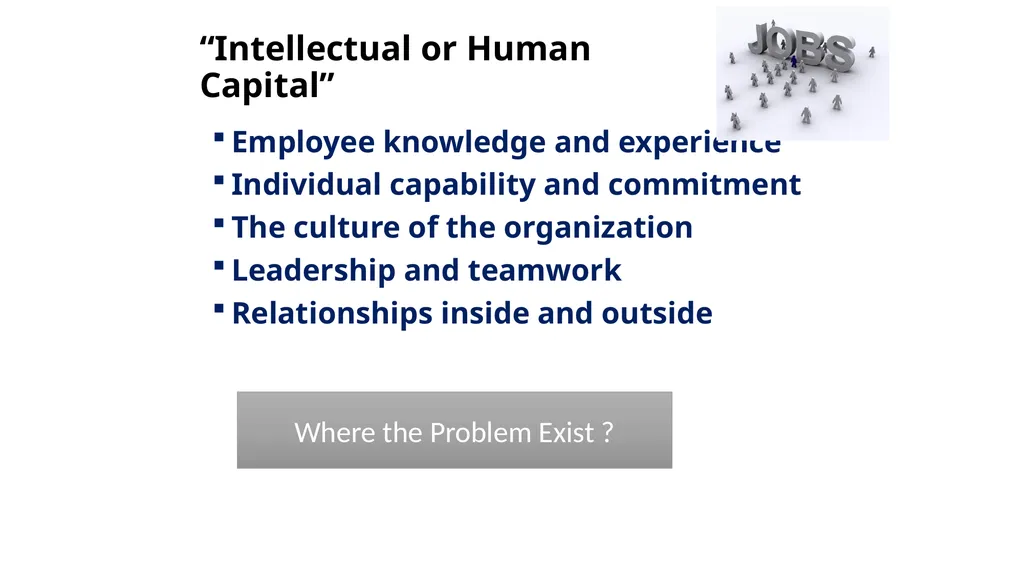
slide6. “Intellectual or Human Capital” Employee knowledge and experience
Individual capability and commitment
The culture of the organization
Leadership and teamwork
Relationships inside and outside Where the Problem Exist ?<br>
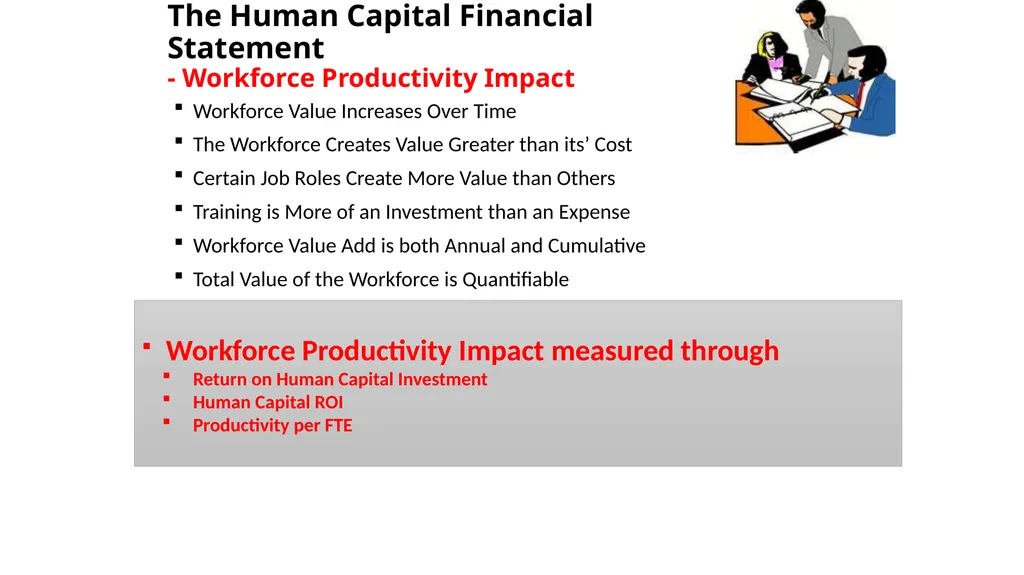
slide7. The Human Capital Financial Statement - Workforce Productivity Impact Workforce Value Increases Over Time
The Workforce Creates Value Greater than its’ Cost
Certain Job Roles Create More Value than Others
Training is More of an Investment than an Expense
Workforce Value Add is both Annual and Cumulative
Total Value of the Workforce is Quantifiable Workforce Productivity Impact measured through
Return on Human Capital Investment
Human Capital ROI
Productivity per FTE<br>
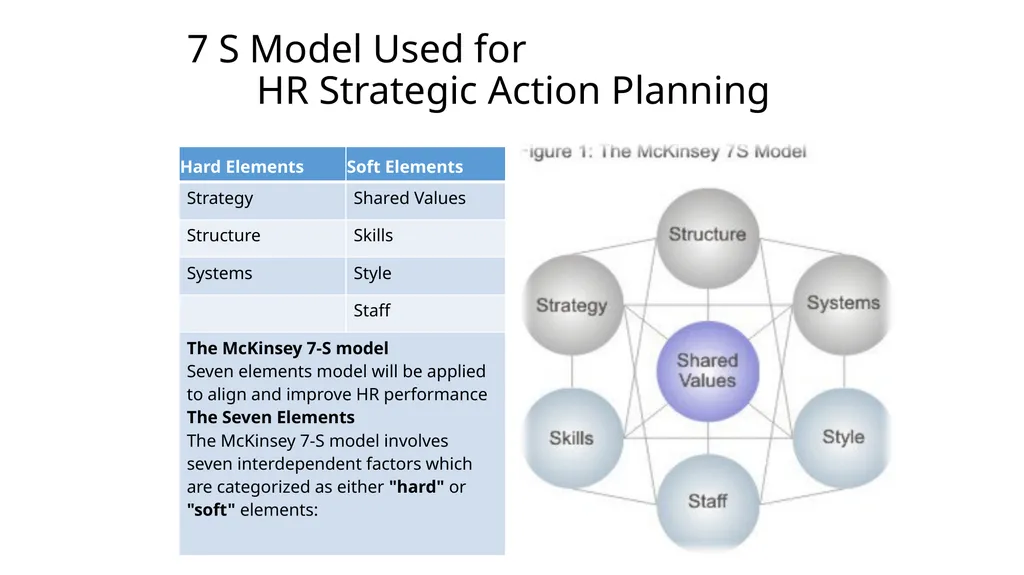
slide8. 7 S Model Used for HR Strategic Action Planning<br>
slide9. Human Resource Management
Human resource management is the strategic approach to the effective and efficient management of people in a company or organization such that they help their business gain a competitive advantage. It is designed to maximize employee performance in service of an employer's strategic objectives.<br>
slide10. What is HRM and Its Functions
HRM ensures the smooth functioning of an organization. ... Some of the primary functions of HRM include job design and job analysis, recruitment/ hiring and selection, training and development, compensation and benefits, performance management, managerial relations and labor relations.<br>
slide11. What is the main role of human resources?
In simplest terms, the HR (Human Resources) department
is a group who is responsible for managing the employee
life cycle (i.e., recruiting, hiring, onboarding, training, and
firing employees) and administering employee benefits.<br>
slide12. Why is HR so important?
HR plays a key role in developing, reinforcing and changing the culture of an organization. Pay, performance management, training and development, recruitment and onboarding and reinforcing the values of the business are all essential elements of business culture covered by HR.<br>
slide13. Chapter 1:Business Code Practice, Compliance and Data Security
About This Chapter
You must comply with any instructions in a code of practice, as well as train your staff to ensure they are aware of and know how to comply with relevant codes. Ideally, you would cover codes of practice as part of your staff induction program, and hold regular 'refresher' training to ensure everyone is aware of their responsibilities under a code of practice and compliance.
This chapter is designed, you to learn about business code practice & compliance practices including data security or privacy policy that can help you to set up, revise or realign existing practices in your organization<br>
slide14. Lesson Plan 1: Business Code Practice & Compliance
Organizational chart clearly delineating basic job roles
Conflict of interest, organizational communication like open door policy, rumors and blackmailers, issuing employee details, service letters and salary particulars, access to personnel files, mass media communication, communication channels, confidential information,
Dress code, attendance and punctuality, use of organizational property
Lesson Plan 2: Data security or Privacy policy
Protection of confidential information and trade secrets
Code of conduct and organizational ethics<br>
slide15. Business Code Practice & Compliance
HR policy Manual: This will provide a detailed guideline pertaining to the human resources policies, rules and regulations, procedures and practices. This is to be used as an awareness material on the related areas and shall be amended from time to time whilst keeping the employees notified of such amendments. The contents of this manual are binding on all employees and violation or breach of same amounts to disciplinary action.
This manual is being prepared to fit the Sri Lankan local context whilst adopting the global policies and principles required in achieving the CSOs’ corporate objectives in non -for- profit organizational segment.<br>
slide16. What is the important role of
organizational chart?
These charts clearly outline the hierarchy within an organization and indicate the relationships shared among each individual employee. These insights help employees understand who to report to and ensure that managers are properly delegating tasks and responsibilities amongst their team<br>
slide17. Key elements of organizational structure?
These elements are: departmentalization, chain of command, span of control, centralization or decentralization, work
specialization and the degree of formalization.
Each of these elements affects how workers engage
with each other, management and their jobs in order
to achieve the employer's goals.<br>
slide18. What is the most effective organizational structure?
A flat structure is often more effective in completing tasks and projects faster. Small companies are often in a rapid growth state. Company owners and employees must make quick decisions.<br>
slide19. What are the benefits of a good organizational structure?
Faster decision making.
Multiple business locations.
Improved operating efficiency.
Greater employee performance.
Eliminates duplication of work.
Reduced employee conflict.
Better communication.<br>
slide20. What are the objectives of an Organization?
Some of the multiple objectives of business organization are
economic objectives (profit maximization, high productivity,
optimum allocation of resources, customer creation, and
innovation), organic objectives (effective utilization of
manpower, development of human resource, participation
in management, training and …<br>
slide21. The Typical Non-Profit Organizational Structure
The exact structure of a nonprofit organization depends partly on
where it is incorporated – some states have their own requirements
for the number of directors or other officers of the nonprofit.
However, the basic structure of a nonprofit is generally the same
everywhere.
The structure is divided into three functional areas–governance,
programs and administration – and then further subdivided within
each area, depending on the purpose and goals of the nonprofit.<br>
slide22. Governance of Nonprofits
Nonprofits are governed by the board of directors. Board members of nonprofits are generally not paid, but they may receive any compensation that is allowed by the organization's bylaws. The board is accountable
for the policies of the organization and is given powers by the organizations' Articles of Incorporation. The board's work is coordinated by the chair
and the board may organize itself into various committees responsible
for carrying out different operations.<br>
slide23. Administration of Nonprofits
The administration is made up of the staff that oversee all programs. Nonprofit administration usually includes an executive director, or
president, and office personnel. The executive director is responsible
for liaising with the board and for carrying out their instructions,
as well as for overseeing the people who run the programs of
the nonprofit.<br>
slide24. Programs and Types of Work
Most nonprofits are founded to carry out certain specific types of work, for example, running a homeless shelter or raising money to provide clean drinking water in developing countries.
The organization is structured into various program areas to carry out this work and achieve its goals. Each program area may then have its own department head, or assistant director.
Typical program areas may include fund-raising, operations, development, human resources, volunteer coordinator, marketing, or publicity and planning. The program heads report to the executive director or chief executive and may have any number of staff members under them.<br>
slide25. Unique Management Areas
Nonprofits typically have several types of management areas that may not exist in for-profit companies.
These may include fundraising and grant writing, volunteer programs and public policy. Some of these areas, such as fundraising, may be handled by the executive director, or an entire department, headed by an assistant director.
Some nonprofit organizations may also have a program director, or assistant director, in charge of ensuring the organization is meeting ethical requirements set out in its bylaws and is liaising with the local community.<br>
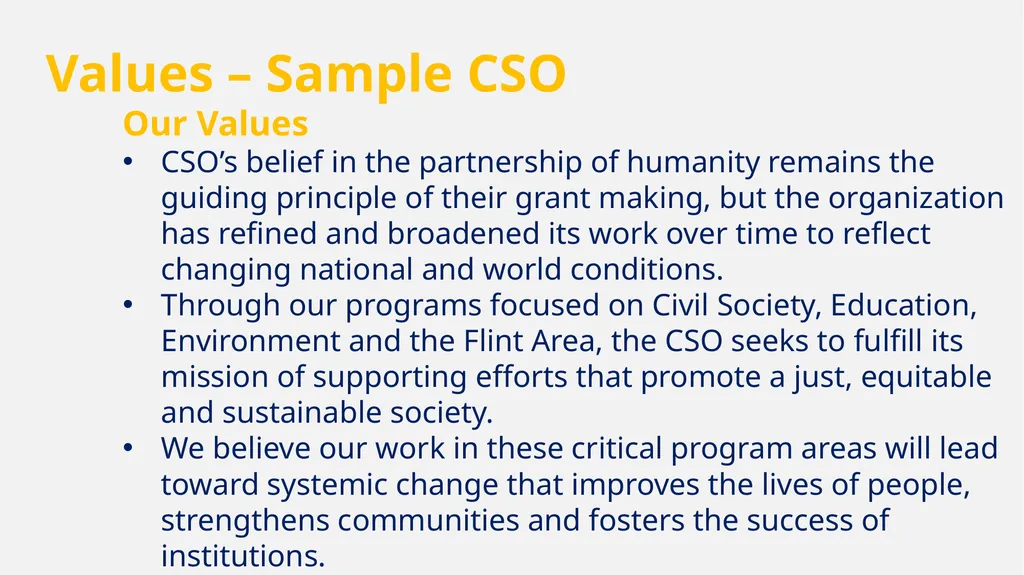
slide26. Values – Sample CSO
Our Values
CSO’s belief in the partnership of humanity remains the guiding principle of their grant making, but the organization has refined and broadened its work over time to reflect changing national and world conditions.
Through our programs focused on Civil Society, Education, Environment and the Flint Area, the CSO seeks to fulfill its mission of supporting efforts that promote a just, equitable and sustainable society.
We believe our work in these critical program areas will lead toward systemic change that improves the lives of people, strengthens communities and fosters the success of institutions.<br>
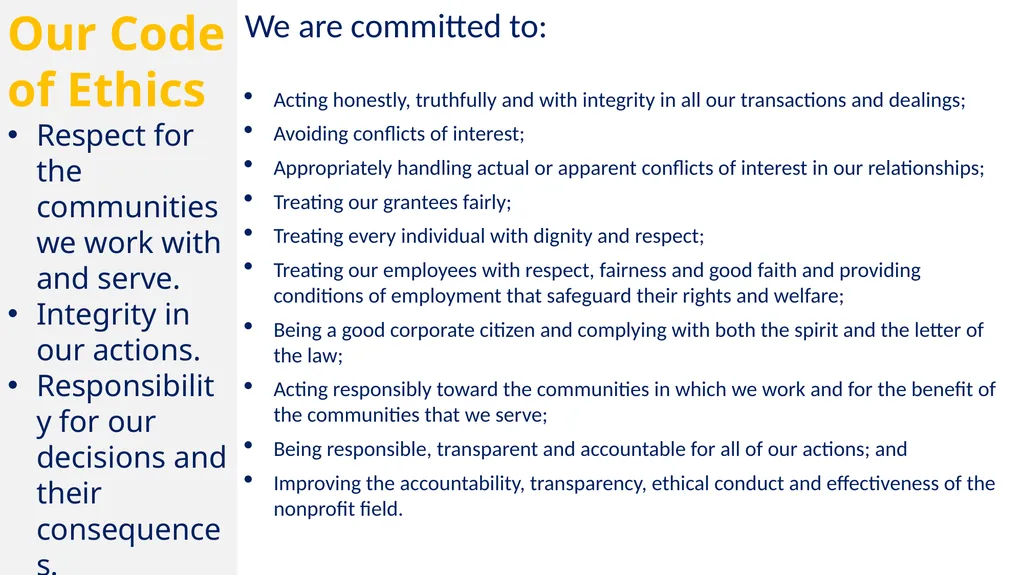
slide27. Our Code of Ethics
Respect for the communities we work with and serve.
Integrity in our actions.
Responsibility for our decisions and their consequences. We are committed to:
Acting honestly, truthfully and with integrity in all our transactions and dealings;
Avoiding conflicts of interest;
Appropriately handling actual or apparent conflicts of interest in our relationships;
Treating our grantees fairly;
Treating every individual with dignity and respect;
Treating our employees with respect, fairness and good faith and providing conditions of employment that safeguard their rights and welfare;
Being a good corporate citizen and complying with both the spirit and the letter of the law;
Acting responsibly toward the communities in which we work and for the benefit of the communities that we serve;
Being responsible, transparent and accountable for all of our actions; and
Improving the accountability, transparency, ethical conduct and effectiveness of the nonprofit field.<br>
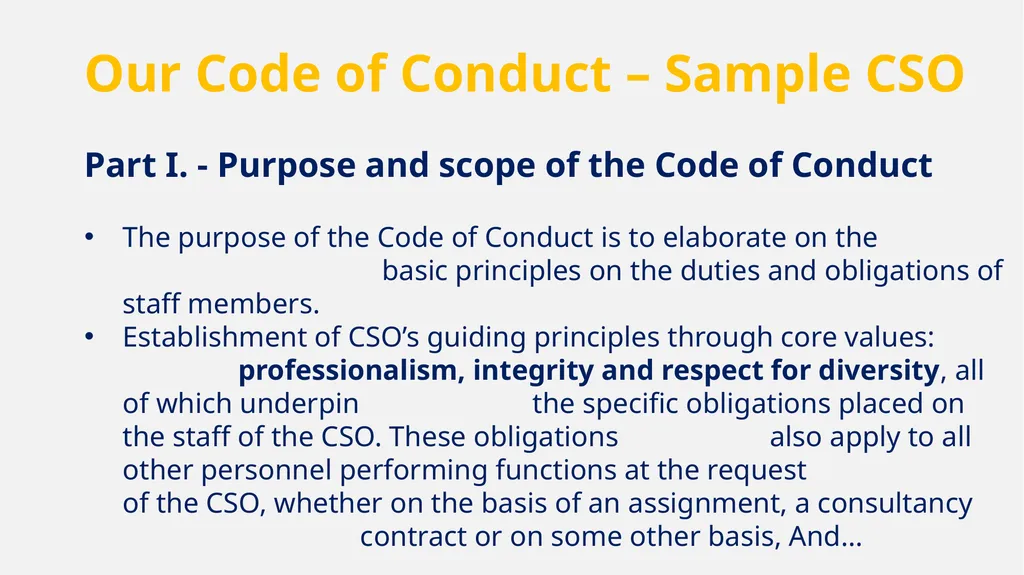
slide28. Our Code of Conduct – Sample CSO
Part I. - Purpose and scope of the Code of Conduct
The purpose of the Code of Conduct is to elaborate on the basic principles on the duties and obligations of staff members.
Establishment of CSO’s guiding principles through core values: professionalism, integrity and respect for diversity, all of which underpin the specific obligations placed on the staff of the CSO. These obligations also apply to all other personnel performing functions at the request of the CSO, whether on the basis of an assignment, a consultancy contract or on some other basis, And…<br>
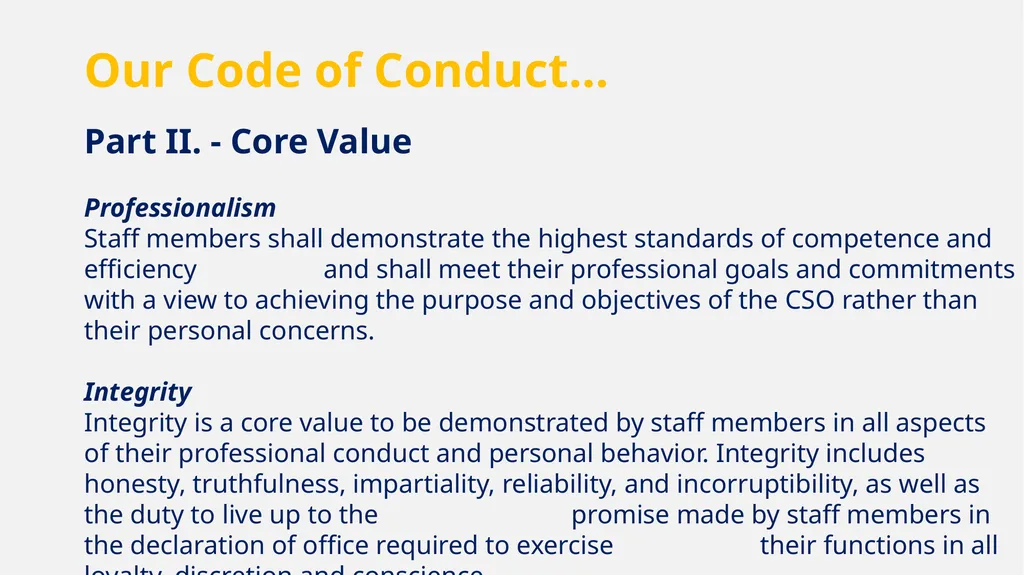
slide29. Our Code of Conduct…
Part II. - Core Value
Professionalism
Staff members shall demonstrate the highest standards of competence and efficiency and shall meet their professional goals and commitments with a view to achieving the purpose and objectives of the CSO rather than their personal concerns.
Integrity
Integrity is a core value to be demonstrated by staff members in all aspects of their professional conduct and personal behavior. Integrity includes honesty, truthfulness, impartiality, reliability, and incorruptibility, as well as the duty to live up to the promise made by staff members in the declaration of office required to exercise their functions in all loyalty, discretion and conscience.<br>
slide30. Our Code of Conduct…
Part II. - Core Value
Respect for diversity
Diversity of the workforce is an invaluable asset to the accomplishment of the
CSO’s mission, as it brings together individuals from different backgrounds,
cultures, genders and professional experience. Staff members are expected
to welcome and respect diversity of persons and points of view, and its
potential to enrich the work done by the CSO.<br>
slide31. Our Code of Conduct…
Part III. - Specific obligations
Professional obligations
Throughout their service with the CSO, staff members shall comply with their obligations under the CSO Legal Framework.
Staff members are subject to the authority of the Executive Director including his or her decisions on assignment of any staff member to any of the activities or offices of the CSO.
Staff members shall faithfully and diligently perform all aspects of their official duties in an efficient, competent and professional manner. In the exercise of their functions, they shall not act beyond the scope of their authority. They shall follow directions and instructions properly given by the Executive Director and/or their supervisors, And…<br>
slide32. Our Code of Conduct…
Part III. - Specific obligations…
Use of the CSO’s property and assets
Staff members are responsible for ensuring the appropriate use and protection of the CSO’s property and assets, and for avoiding waste and abuse. Property and assets include financial resources, material assets such as facilities, equipment and supplies, and other resources such as staff time. These resources should be used with care for purposes directly related to official objectives and duties.
Careless or improper use of resources, whether it involves abuse of the procurement process, theft of property, false claims for sick leave, false certification of information on the basis of which the CSO establishes entitlements, or waste of staff time on private business, is incompatible with personal integrity, And…<br>
slide33. Our Code of Conduct…
Part III. - Specific obligations…
Relations with work colleagues
Staff members must use the authority attached to their official functions with utmost respect for their work colleagues and shall not abuse the authority associated with their position in the CSO.
Every person working for the CSO has the right to an environment free of discrimination and harassment, including sexual harassment. No staff member shall engage in discrimination, harassment or sexual harassment against an individual or group of individuals on any basis or in any form, And…<br>
slide34. Our Code of Conduct…
Part III. - Specific obligations…
Relations with governments and their representatives
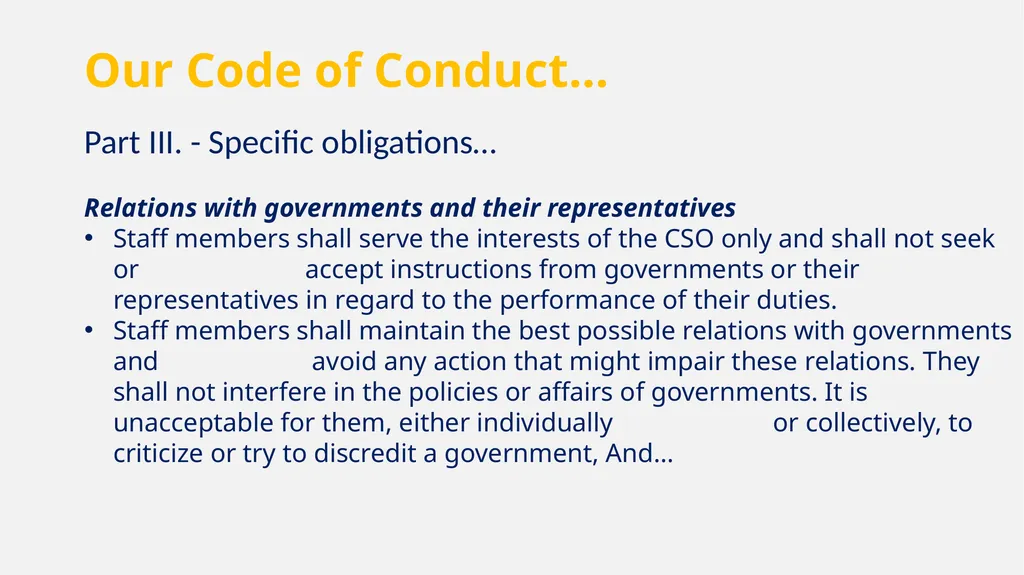
Staff members shall serve the interests of the CSO only and shall not seek or accept instructions from governments or their representatives in regard to the performance of their duties.
Staff members shall maintain the best possible relations with governments and avoid any action that might impair these relations. They shall not interfere in the policies or affairs of governments. It is unacceptable for them, either individually or collectively, to criticize or try to discredit a government, And…<br>
slide35. Our Code of Conduct…
Part III. - Specific obligations…
Relations with the media
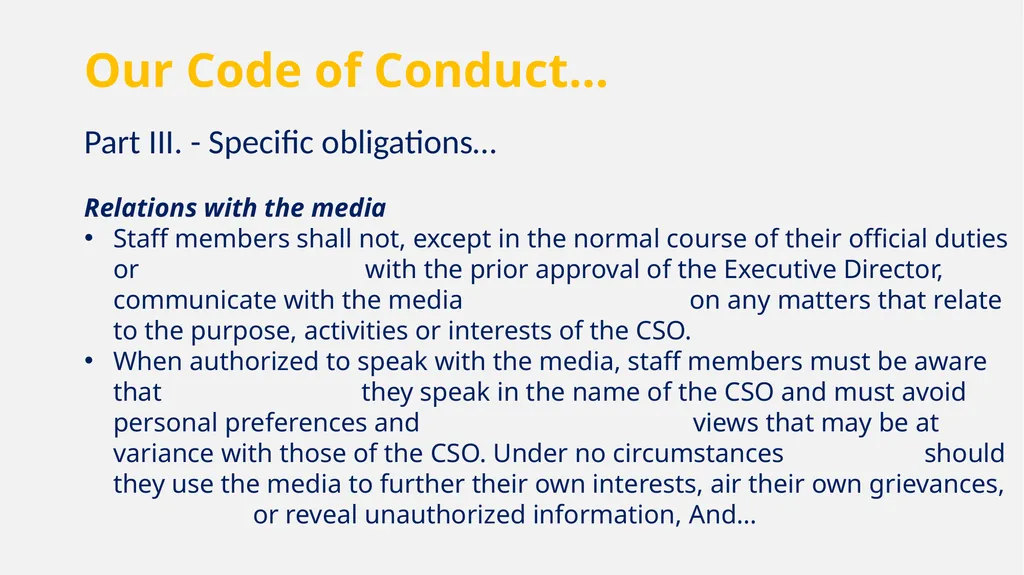
Staff members shall not, except in the normal course of their official duties or with the prior approval of the Executive Director, communicate with the media on any matters that relate to the purpose, activities or interests of the CSO.
When authorized to speak with the media, staff members must be aware that they speak in the name of the CSO and must avoid personal preferences and views that may be at variance with those of the CSO. Under no circumstances should they use the media to further their own interests, air their own grievances, or reveal unauthorized information, And…<br>
slide36. Our Code of Conduct…
Part III. - Specific obligations…
Relations with the public
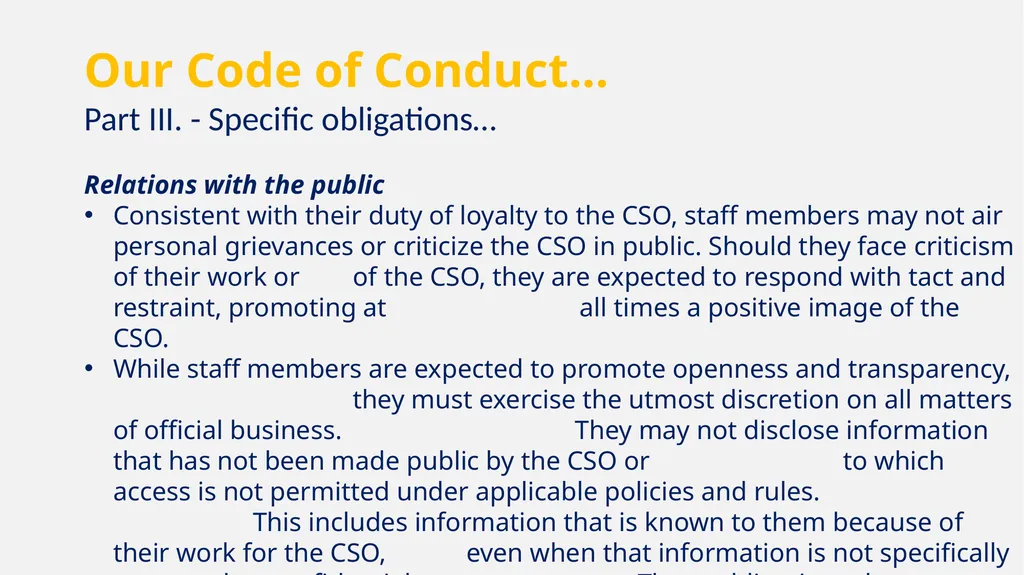
Consistent with their duty of loyalty to the CSO, staff members may not air personal grievances or criticize the CSO in public. Should they face criticism of their work or of the CSO, they are expected to respond with tact and restraint, promoting at all times a positive image of the CSO.
While staff members are expected to promote openness and transparency, they must exercise the utmost discretion on all matters of official business. They may not disclose information that has not been made public by the CSO or to which access is not permitted under applicable policies and rules. This includes information that is known to them because of their work for the CSO, even when that information is not specifically protected as confidential. These obligations do not cease upon separation from service, And…<br>
slide37. Our Code of Conduct…
Part III. - Specific obligations…
Private conduct
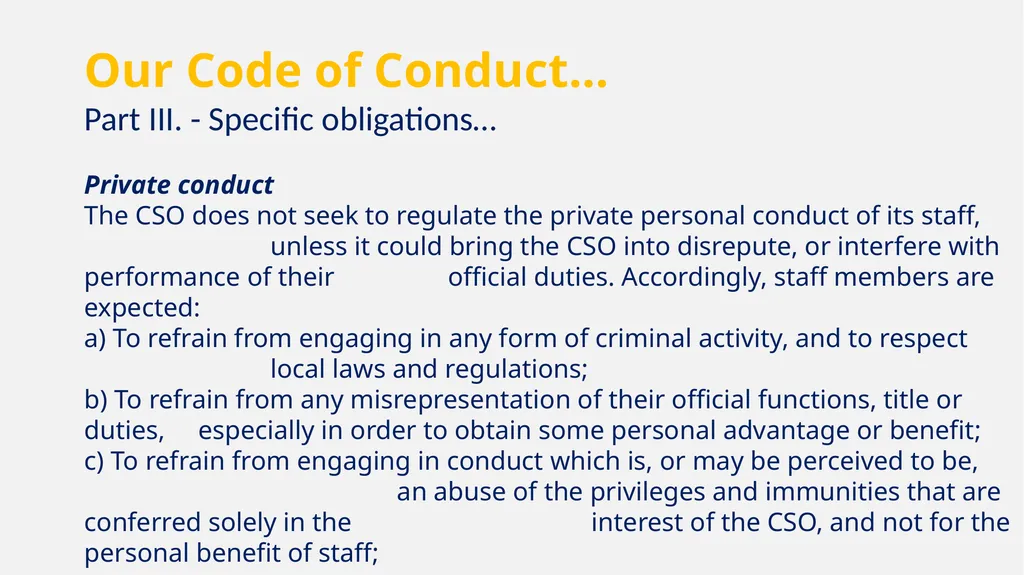
The CSO does not seek to regulate the private personal conduct of its staff, unless it could bring the CSO into disrepute, or interfere with performance of their official duties. Accordingly, staff members are expected:
a) To refrain from engaging in any form of criminal activity, and to respect local laws and regulations;
b) To refrain from any misrepresentation of their official functions, title or duties, especially in order to obtain some personal advantage or benefit;
c) To refrain from engaging in conduct which is, or may be perceived to be, an abuse of the privileges and immunities that are conferred solely in the interest of the CSO, and not for the personal benefit of staff;<br>
slide38. Our Code of Conduct…
Part III. - Specific obligations…
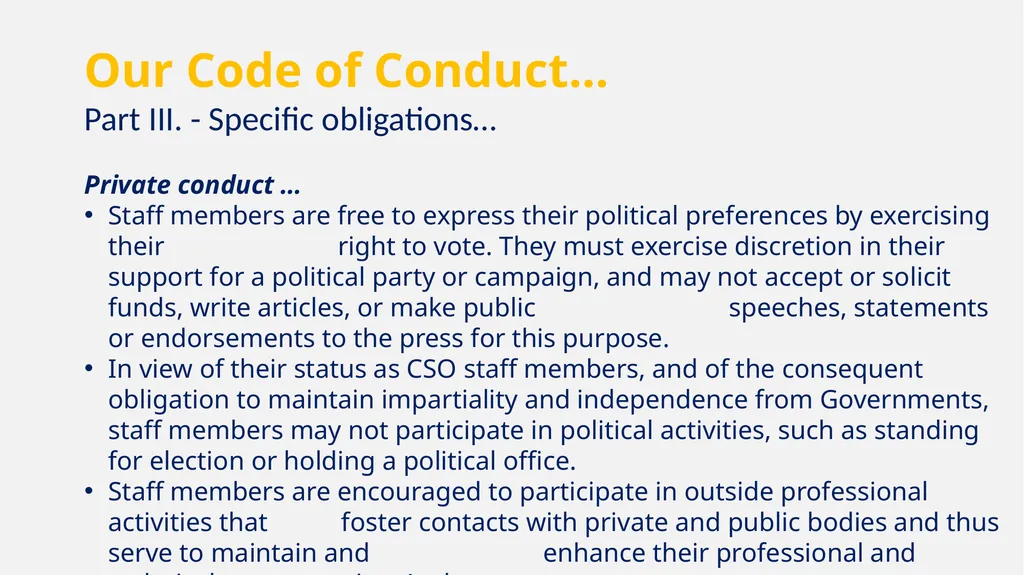
Private conduct …
Staff members are free to express their political preferences by exercising their right to vote. They must exercise discretion in their support for a political party or campaign, and may not accept or solicit funds, write articles, or make public speeches, statements or endorsements to the press for this purpose.
In view of their status as CSO staff members, and of the consequent obligation to maintain impartiality and independence from Governments, staff members may not participate in political activities, such as standing for election or holding a political office.
Staff members are encouraged to participate in outside professional activities that foster contacts with private and public bodies and thus serve to maintain and enhance their professional and technical competencies, And…<br>
slide39. Our Code of Conduct…
Part III. - Specific obligations…
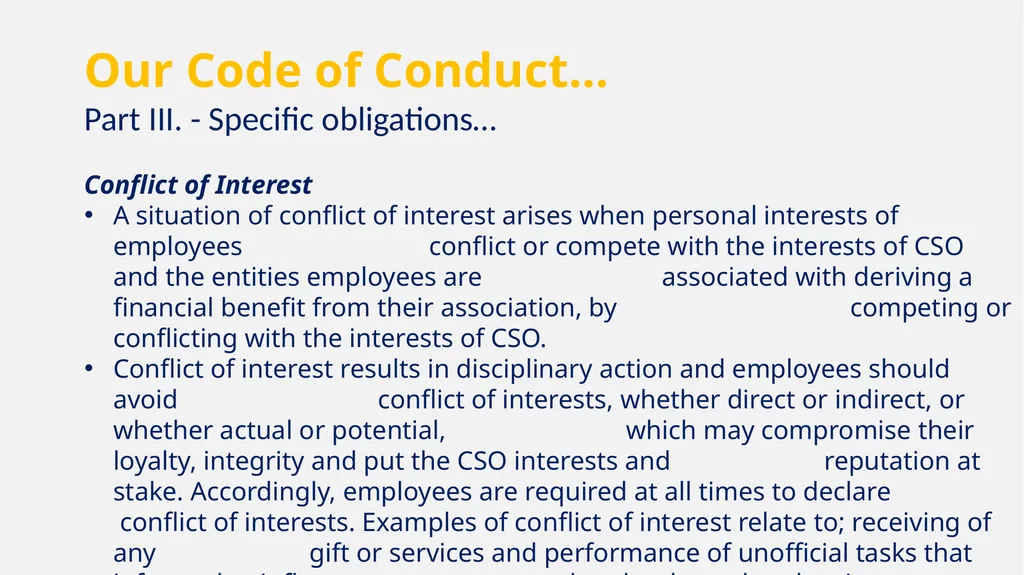
Conflict of Interest
A situation of conflict of interest arises when personal interests of employees conflict or compete with the interests of CSO and the entities employees are associated with deriving a financial benefit from their association, by competing or conflicting with the interests of CSO.
Conflict of interest results in disciplinary action and employees should avoid conflict of interests, whether direct or indirect, or whether actual or potential, which may compromise their loyalty, integrity and put the CSO interests and reputation at stake. Accordingly, employees are required at all times to declare conflict of interests. Examples of conflict of interest relate to; receiving of any gift or services and performance of unofficial tasks that infer undue influence and such other related actions.<br>
slide40. Our Code of Conduct…
Part III. - Specific obligations…
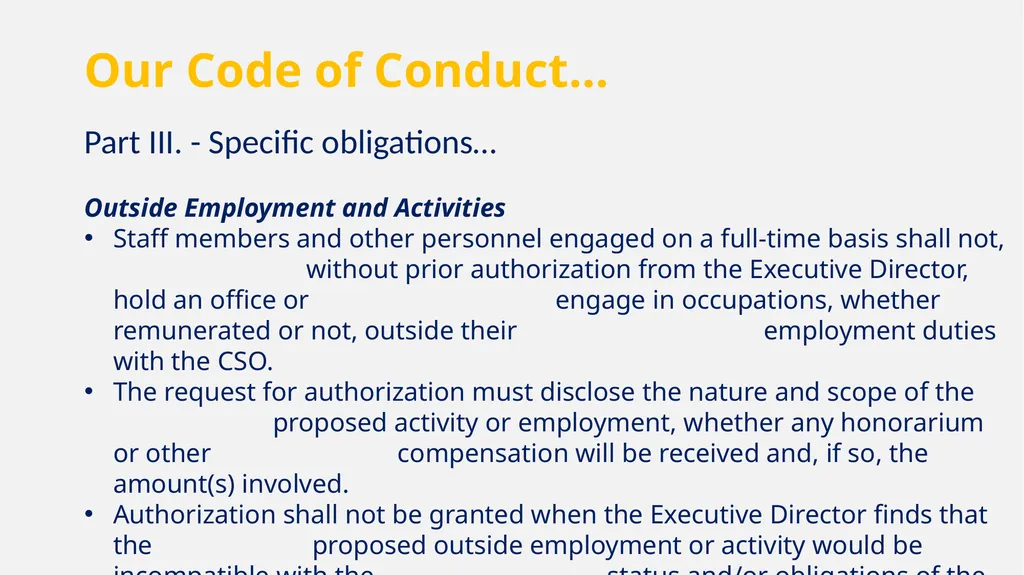
Outside Employment and Activities
Staff members and other personnel engaged on a full-time basis shall not, without prior authorization from the Executive Director, hold an office or engage in occupations, whether remunerated or not, outside their employment duties with the CSO.
The request for authorization must disclose the nature and scope of the proposed activity or employment, whether any honorarium or other compensation will be received and, if so, the amount(s) involved.
Authorization shall not be granted when the Executive Director finds that the proposed outside employment or activity would be incompatible with the status and/or obligations of the individual concerned, or with the interests or objectives of the CSO, And…<br>
slide41. Communication of General Information
The Human Resources Division is solely authorized
and is responsible for posting and distribution of notices
and information through Notice Boards and its clearance
and maintenance. In addition, the company shall
communicate its general information through email
as and when required.<br>
slide42. Confidential Information
All information relating to the business operations and employment is considered as confidential information, those other than available in the public domain. In the event of any doubt as to whether certain information
is confidential or not, requires clarification from the divisional head or
head of the HR division.
Employees shall maintain highest confidentiality pertaining to all
confidential information that takes the format of material, processors, procedures and strategies that they may become aware of or claim to
be part of its development during their employment, which
responsibility shall continue even after ceasing of their employment
with the company.<br>
slide43. Issuing Employee Details, Service Letters and Salary Particulars
Request for issuance of employee details, service letters and salary particulars shall be submitted by the employees to the head of the HR division having obtained the approval by the relevant divisional head.<br>
slide44. Mass Media Communication Policy
CSO is committed towards maintaining a trusting and positive
relationship with the news media through a formal procedure
on release of information on CSO position on public issues as
well as of CSO business operational activities.
Employees shall direct queries on all news media requests to the
Executive Director and shall not provide any information to the
media by themselves.<br>
slide45. Open Door Policy
The Open Door Policy relates to the provision provided by the management of CSO and the commitment towards open and honest discussion with the relevant person in authority pertaining to any employment, people, operational or workplace related concerns one may have in resolving any problem, conflict or misunderstanding promptly and effectively.
The Open Door Policy is operative through the ‘Employee Suggestion Box’ and the procedure of ‘Grievance Policy’. All matters discussed shall be held as confidential and shall not be held against the person who raised the concern<br>
slide46. Open Door Policy
The Open Door Policy relates to the provision provided by the management of LLA and the commitment towards open and honest discussion with the relevant person in authority pertaining to any employment, people, operational or workplace related concerns one may have in resolving any problem, conflict or misunderstanding promptly and effectively.
The Open Door Policy is operative through the ‘Employee Suggestion Box’ and the procedure of ‘Grievance Policy’. All matters discussed shall be held as confidential and shall not be held against the person who raised the concern<br>
slide47. Rumors and Blackmailers
The practice of starting or spreading rumors, sidewalk talking or encourage, advocate, contribute in such misdemeanor is considered a prohibited action resulting in disciplinary actions.
As rumors and blackmailers are destructive in nature; letters of
anonymity, petitions or blackmailers will be disregarded and discarded
even before it is read.<br>
slide48. Access to Personnel Files
All personnel files are maintained by the HR division and the
contents of same are considered confidential and access to
same will be restricted to the authorized officers only.<br>
slide49. Organizational Communication Channels
Phone Calls
The instances of making and receiving of personal phone calls requires
being limited to a minimum time in duration as per the emergencies.
Email
Email is a document with legal status accepted as evidence in a court of law
and should mainly be used for formal business correspondence, maintaining
the confidentiality of sensitive information. Formal memos, documents and letters for which signatures are important, should be made on company letterhead, scanned and emailed. These require to be preserved, printed
or otherwise.<br>
slide50. Organizational Communication Channels…
Email…
All mailboxes shall be kept cleared to avoid congestion. No materials is to be
sent as email that is defamatory, in breach of copyright or business confidentiality, or prejudiced to the good standing of LLA in the community
or among its stakeholders.
Email is not to contain material that amounts to gossip about colleagues or
that could be offensive, demeaning, persistently irritating, threatening, and discriminatory, involves the harassment of other or concerns personal relationships. Emails should only be sent by one’s individual account and not from another and unauthorized access to another person’s email is prohibited. Similarly, mass emailing unless officially required or authorized, is considered prohibited.<br>
slide51. Organizational Communication Channels…
Internet
The internet is a facility provided by CSO with access authorized as required
for business use. Limited private use may be permitted provided the private
use does not interfere with or distract from a person’s work and the management shall reserve the right to access in monitoring the system.
The employees shall comply with the data security and related ICT policies pertaining to the use of internet.<br>
slide52. Dress Code and Personal Appearance
All employees of CSO are required to be appropriately attired in business and maintain a good personal appearance suitable for the work environment.
Work Performance and Behaviour
All employees are expected to maintain a high level of work performance in the respective work functions allocated to each staff member and also to comply with company regulations and standards of acceptable behaviour.<br>
slide53. Attendance & Punctuality
All employees are required to maintain a very high level of attendance and punctuality adhering to the related company rules and regulations.
Use of Company Property
The employees of CSO are required to use company property with
utmost care and responsibility without causing any damage to the
property through negligence. Unauthorized use of property is strictly prohibited.<br>
slide54. Chapter 2: Employment Practices
About This Chapter
Employment practice is a term referring to the patterns that may be observed in an organization’s hiring and workplace conditions. Some of these issues, such as sexual harassment, discrimination and unfair wages, can become serious liabilities if they are not treated carefully.
This chapter is designed, you to learn about employment practices including pre-employment formalities and commencement of employment and induction that can help you to set up, revise or realign existing practices in your organization<br>
slide55. Lesson Plan 3: Employment Practices
Human rights and equal opportunities, prohibition of harassment, prohibition of forced or child labor,
Provision of occupational health and safety environment,
Disclosure of employee personal information
General formalities like pre-employment formalities and commencement of employment and induction<br>
slide56. Human Rights and Equal Opportunities
CSO is committed towards compliance of employment laws of Sri Lanka and supports fundamental human rights for all people and prohibits unjustified discrimination based on a person’s race, colour, gender, national origin, age, religion, disability, veteran status, marital status or other protected characteristics and believes that differences should be valued.
CSO is also firmly committed towards fair treatment and compensation of employees. All applicants and employees are judged by their qualifications, demonstrated skills and achievements, recognizing and rewarding good performance according to the reward policy of the company.<br>
slide57. Prohibition of Harassment
CSO’s employees have the right to work in an environment that is free from demoralizing effects of intimidation and harassment. Abuse or corporal punishment in any form and verbal or physical conduct by any employee that harasses another or disrupts another’s work performance or creates an intimidating, insulting, offensive, abusive, or hostile work environment is not tolerated.
Unwelcome sexual advances, requests for sexual favors, and other unwelcome verbal or physical conduct of a sexual or offensive nature are considered sexual harassment and are specifically prohibited.<br>
slide58. Prohibition of Harassment…
Examples of sexual harassment include: unwelcome verbal behavior such as derogatory, offensive comments, suggestions, jokes, or remarks; unwelcome and inappropriate physical behavior such as pats, squeezes, deliberately brushing against someone’s body, or impeding or blocking normal work or movement; unwanted sexual advances; unwelcome and inappropriate visual harassment such as displaying derogatory, sexually suggestive, or discriminatory messages, photos, graffiti, pictures, cartoons, or drawings, at one’s work station; unwanted or offensive e-mail or voicemail messages. The behavior need not be intentional in order to be considered sexual harassment.<br>
slide59. Prohibition of Harassment…
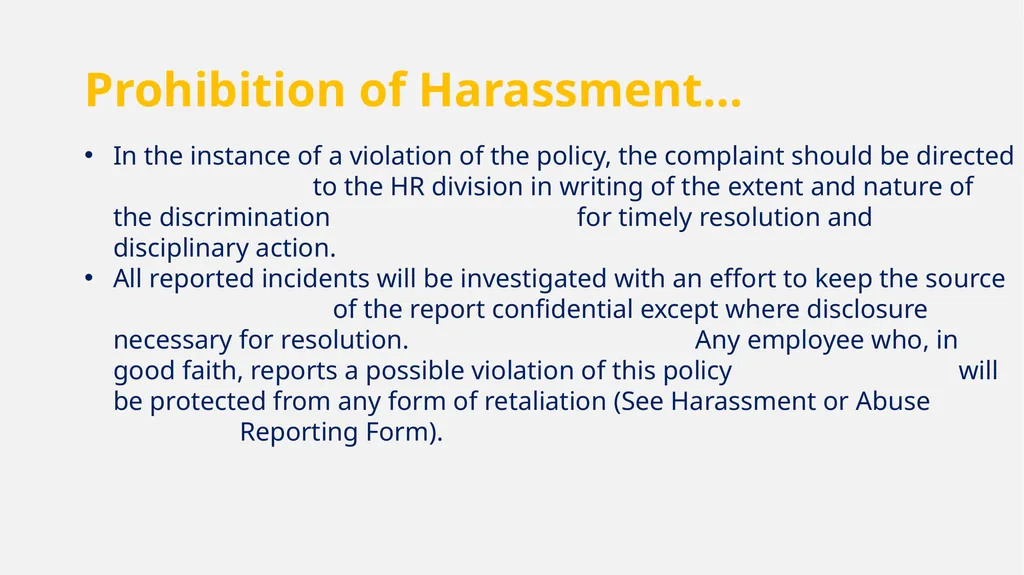
In the instance of a violation of the policy, the complaint should be directed to the HR division in writing of the extent and nature of the discrimination for timely resolution and disciplinary action.
All reported incidents will be investigated with an effort to keep the source of the report confidential except where disclosure necessary for resolution. Any employee who, in good faith, reports a possible violation of this policy will be protected from any form of retaliation (See Harassment or Abuse Reporting Form).<br>
slide60. Prohibition of Harassment…
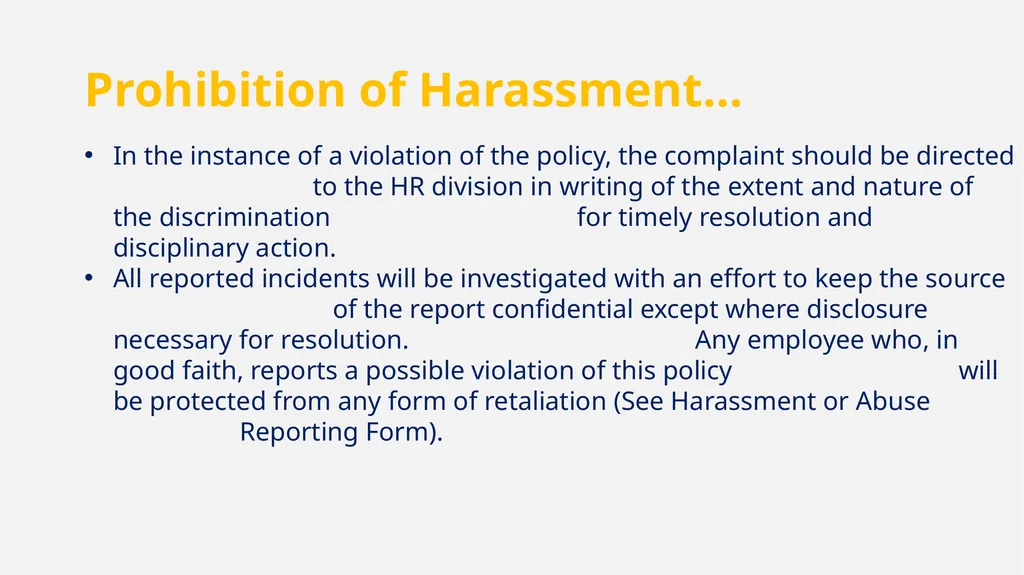
In the instance of a violation of the policy, the complaint should be directed to the HR division in writing of the extent and nature of the discrimination for timely resolution and disciplinary action.
All reported incidents will be investigated with an effort to keep the source of the report confidential except where disclosure necessary for resolution. Any employee who, in good faith, reports a possible violation of this policy will be protected from any form of retaliation (See Harassment or Abuse Reporting Form).<br>
slide61. Prohibition of Forced or Child Labour
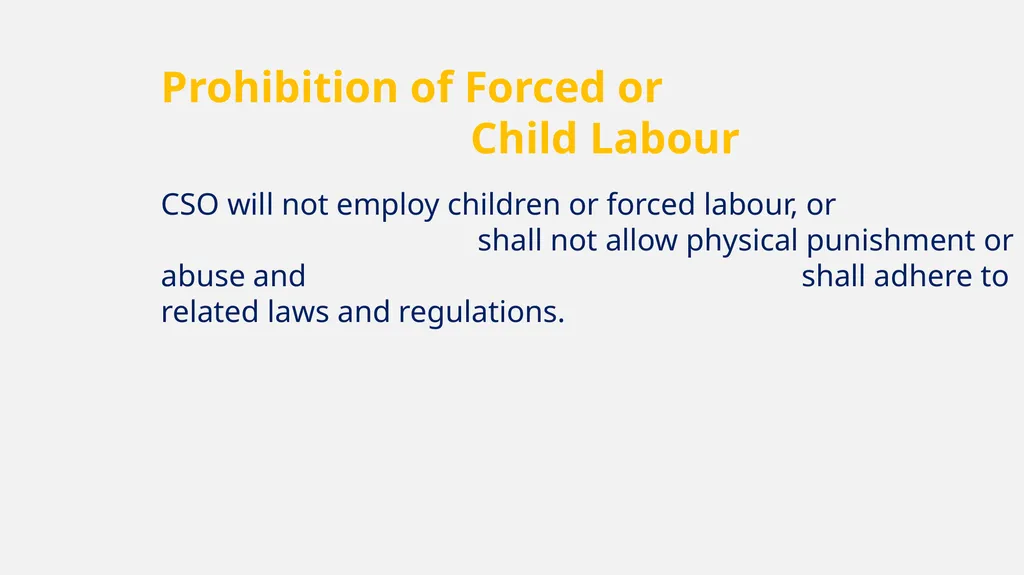
CSO will not employ children or forced labour, or shall not allow physical punishment or abuse and shall adhere to related laws and regulations.<br>
slide62. Provision of Health and Safety Environment
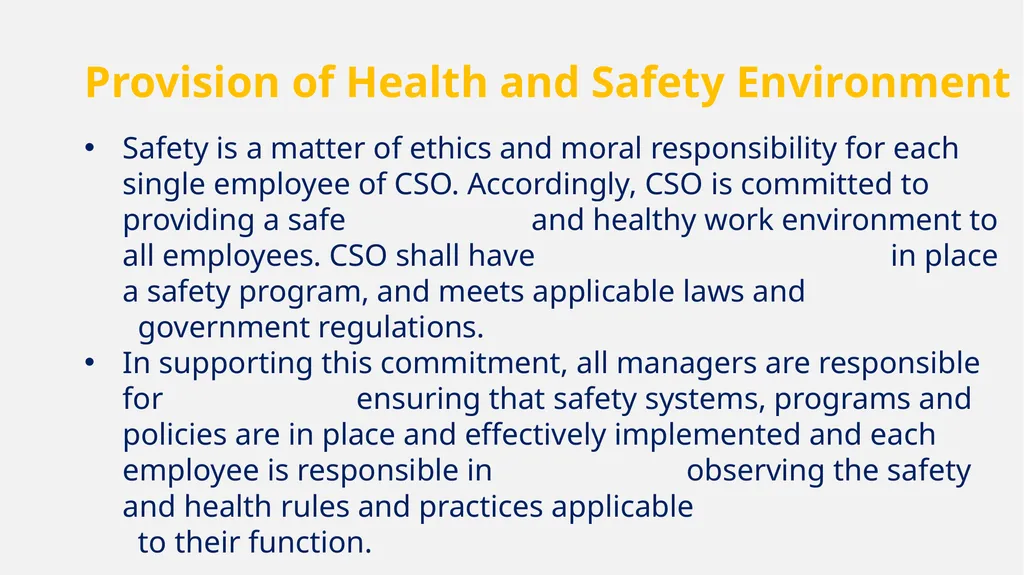
Safety is a matter of ethics and moral responsibility for each single employee of CSO. Accordingly, CSO is committed to providing a safe and healthy work environment to all employees. CSO shall have in place a safety program, and meets applicable laws and government regulations.
In supporting this commitment, all managers are responsible for ensuring that safety systems, programs and policies are in place and effectively implemented and each employee is responsible in observing the safety and health rules and practices applicable to their function.<br>
slide63. General Formalities
Pre-Employment Formalities
The pre-employment formalities relates to the verifications that are carried out by the HR division on the certifications and references submitted by the selected candidate to a position.<br>
slide64. General Formalities
Commencement of Employment and Induction
Employment shall commence with the issuance of appointment letters and the new recruit shall submit completed forms on ‘personal information’ and sign-off on other agreements such as confidentiality and undertakings on compliance of company policies and procedures.
All new recruits shall be provided with a formal induction program<br>
slide65. General Formalities…
Commencement of Employment and Induction…
The divisional head shall provide the new recruit with insight into the company’s expectations on individual contribution towards the organizational objectives with an emphasis on identifying and agreeing on the ‘Key Results Areas (KRAs)’ relating to the new recruit’s functions.
The new recruit shall be provided with temporary Identity Cards / Time Cards relating to the bio-enabled time and attendance recording terminals.<br>
Jagath Karunathilaka
(Through Virtual Meeting – Zoom Technology)
October 4 –22 (20 Lesson Hours in 10 Days)<br>
slide2. Lesson Plans of HR Management of CSO<br>
slide3. “HR – the Driving Force in an Organization”<br>
slide4. People Drive Business Adding Value to the Organization People Impacting to Finance Results |Tangible Assets and Intellectual Capital | Intangible Assets Market Value = Value of Net Tangible Assets + Value of Intangible Assets Bill Gates
“Our Primary Assets which are our software and software developing skills, do not show up on the balance sheet at all”
In fact less than 3% of Microsoft Value is accounted for by tangible physical and financial assets<br>
slide5. Value Creation in Today’s Marketplace Tangible Assets/Value
Measures are well established for modern Finance as a Decision Support Science
Easy to Measure
vs.
Hard to Measure
Intangible Capital Value
Market value driven by factors not on a balance sheet
“Intellectual or Human Capital”<br>
slide6. “Intellectual or Human Capital” Employee knowledge and experience
Individual capability and commitment
The culture of the organization
Leadership and teamwork
Relationships inside and outside Where the Problem Exist ?<br>
slide7. The Human Capital Financial Statement - Workforce Productivity Impact Workforce Value Increases Over Time
The Workforce Creates Value Greater than its’ Cost
Certain Job Roles Create More Value than Others
Training is More of an Investment than an Expense
Workforce Value Add is both Annual and Cumulative
Total Value of the Workforce is Quantifiable Workforce Productivity Impact measured through
Return on Human Capital Investment
Human Capital ROI
Productivity per FTE<br>
slide8. 7 S Model Used for HR Strategic Action Planning<br>
slide9. Human Resource Management
Human resource management is the strategic approach to the effective and efficient management of people in a company or organization such that they help their business gain a competitive advantage. It is designed to maximize employee performance in service of an employer's strategic objectives.<br>
slide10. What is HRM and Its Functions
HRM ensures the smooth functioning of an organization. ... Some of the primary functions of HRM include job design and job analysis, recruitment/ hiring and selection, training and development, compensation and benefits, performance management, managerial relations and labor relations.<br>
slide11. What is the main role of human resources?
In simplest terms, the HR (Human Resources) department
is a group who is responsible for managing the employee
life cycle (i.e., recruiting, hiring, onboarding, training, and
firing employees) and administering employee benefits.<br>
slide12. Why is HR so important?
HR plays a key role in developing, reinforcing and changing the culture of an organization. Pay, performance management, training and development, recruitment and onboarding and reinforcing the values of the business are all essential elements of business culture covered by HR.<br>
slide13. Chapter 1:Business Code Practice, Compliance and Data Security
About This Chapter
You must comply with any instructions in a code of practice, as well as train your staff to ensure they are aware of and know how to comply with relevant codes. Ideally, you would cover codes of practice as part of your staff induction program, and hold regular 'refresher' training to ensure everyone is aware of their responsibilities under a code of practice and compliance.
This chapter is designed, you to learn about business code practice & compliance practices including data security or privacy policy that can help you to set up, revise or realign existing practices in your organization<br>
slide14. Lesson Plan 1: Business Code Practice & Compliance
Organizational chart clearly delineating basic job roles
Conflict of interest, organizational communication like open door policy, rumors and blackmailers, issuing employee details, service letters and salary particulars, access to personnel files, mass media communication, communication channels, confidential information,
Dress code, attendance and punctuality, use of organizational property
Lesson Plan 2: Data security or Privacy policy
Protection of confidential information and trade secrets
Code of conduct and organizational ethics<br>
slide15. Business Code Practice & Compliance
HR policy Manual: This will provide a detailed guideline pertaining to the human resources policies, rules and regulations, procedures and practices. This is to be used as an awareness material on the related areas and shall be amended from time to time whilst keeping the employees notified of such amendments. The contents of this manual are binding on all employees and violation or breach of same amounts to disciplinary action.
This manual is being prepared to fit the Sri Lankan local context whilst adopting the global policies and principles required in achieving the CSOs’ corporate objectives in non -for- profit organizational segment.<br>
slide16. What is the important role of
organizational chart?
These charts clearly outline the hierarchy within an organization and indicate the relationships shared among each individual employee. These insights help employees understand who to report to and ensure that managers are properly delegating tasks and responsibilities amongst their team<br>
slide17. Key elements of organizational structure?
These elements are: departmentalization, chain of command, span of control, centralization or decentralization, work
specialization and the degree of formalization.
Each of these elements affects how workers engage
with each other, management and their jobs in order
to achieve the employer's goals.<br>
slide18. What is the most effective organizational structure?
A flat structure is often more effective in completing tasks and projects faster. Small companies are often in a rapid growth state. Company owners and employees must make quick decisions.<br>
slide19. What are the benefits of a good organizational structure?
Faster decision making.
Multiple business locations.
Improved operating efficiency.
Greater employee performance.
Eliminates duplication of work.
Reduced employee conflict.
Better communication.<br>
slide20. What are the objectives of an Organization?
Some of the multiple objectives of business organization are
economic objectives (profit maximization, high productivity,
optimum allocation of resources, customer creation, and
innovation), organic objectives (effective utilization of
manpower, development of human resource, participation
in management, training and …<br>
slide21. The Typical Non-Profit Organizational Structure
The exact structure of a nonprofit organization depends partly on
where it is incorporated – some states have their own requirements
for the number of directors or other officers of the nonprofit.
However, the basic structure of a nonprofit is generally the same
everywhere.
The structure is divided into three functional areas–governance,
programs and administration – and then further subdivided within
each area, depending on the purpose and goals of the nonprofit.<br>
slide22. Governance of Nonprofits
Nonprofits are governed by the board of directors. Board members of nonprofits are generally not paid, but they may receive any compensation that is allowed by the organization's bylaws. The board is accountable
for the policies of the organization and is given powers by the organizations' Articles of Incorporation. The board's work is coordinated by the chair
and the board may organize itself into various committees responsible
for carrying out different operations.<br>
slide23. Administration of Nonprofits
The administration is made up of the staff that oversee all programs. Nonprofit administration usually includes an executive director, or
president, and office personnel. The executive director is responsible
for liaising with the board and for carrying out their instructions,
as well as for overseeing the people who run the programs of
the nonprofit.<br>
slide24. Programs and Types of Work
Most nonprofits are founded to carry out certain specific types of work, for example, running a homeless shelter or raising money to provide clean drinking water in developing countries.
The organization is structured into various program areas to carry out this work and achieve its goals. Each program area may then have its own department head, or assistant director.
Typical program areas may include fund-raising, operations, development, human resources, volunteer coordinator, marketing, or publicity and planning. The program heads report to the executive director or chief executive and may have any number of staff members under them.<br>
slide25. Unique Management Areas
Nonprofits typically have several types of management areas that may not exist in for-profit companies.
These may include fundraising and grant writing, volunteer programs and public policy. Some of these areas, such as fundraising, may be handled by the executive director, or an entire department, headed by an assistant director.
Some nonprofit organizations may also have a program director, or assistant director, in charge of ensuring the organization is meeting ethical requirements set out in its bylaws and is liaising with the local community.<br>
slide26. Values – Sample CSO
Our Values
CSO’s belief in the partnership of humanity remains the guiding principle of their grant making, but the organization has refined and broadened its work over time to reflect changing national and world conditions.
Through our programs focused on Civil Society, Education, Environment and the Flint Area, the CSO seeks to fulfill its mission of supporting efforts that promote a just, equitable and sustainable society.
We believe our work in these critical program areas will lead toward systemic change that improves the lives of people, strengthens communities and fosters the success of institutions.<br>
slide27. Our Code of Ethics
Respect for the communities we work with and serve.
Integrity in our actions.
Responsibility for our decisions and their consequences. We are committed to:
Acting honestly, truthfully and with integrity in all our transactions and dealings;
Avoiding conflicts of interest;
Appropriately handling actual or apparent conflicts of interest in our relationships;
Treating our grantees fairly;
Treating every individual with dignity and respect;
Treating our employees with respect, fairness and good faith and providing conditions of employment that safeguard their rights and welfare;
Being a good corporate citizen and complying with both the spirit and the letter of the law;
Acting responsibly toward the communities in which we work and for the benefit of the communities that we serve;
Being responsible, transparent and accountable for all of our actions; and
Improving the accountability, transparency, ethical conduct and effectiveness of the nonprofit field.<br>
slide28. Our Code of Conduct – Sample CSO
Part I. - Purpose and scope of the Code of Conduct
The purpose of the Code of Conduct is to elaborate on the basic principles on the duties and obligations of staff members.
Establishment of CSO’s guiding principles through core values: professionalism, integrity and respect for diversity, all of which underpin the specific obligations placed on the staff of the CSO. These obligations also apply to all other personnel performing functions at the request of the CSO, whether on the basis of an assignment, a consultancy contract or on some other basis, And…<br>
slide29. Our Code of Conduct…
Part II. - Core Value
Professionalism
Staff members shall demonstrate the highest standards of competence and efficiency and shall meet their professional goals and commitments with a view to achieving the purpose and objectives of the CSO rather than their personal concerns.
Integrity
Integrity is a core value to be demonstrated by staff members in all aspects of their professional conduct and personal behavior. Integrity includes honesty, truthfulness, impartiality, reliability, and incorruptibility, as well as the duty to live up to the promise made by staff members in the declaration of office required to exercise their functions in all loyalty, discretion and conscience.<br>
slide30. Our Code of Conduct…
Part II. - Core Value
Respect for diversity
Diversity of the workforce is an invaluable asset to the accomplishment of the
CSO’s mission, as it brings together individuals from different backgrounds,
cultures, genders and professional experience. Staff members are expected
to welcome and respect diversity of persons and points of view, and its
potential to enrich the work done by the CSO.<br>
slide31. Our Code of Conduct…
Part III. - Specific obligations
Professional obligations
Throughout their service with the CSO, staff members shall comply with their obligations under the CSO Legal Framework.
Staff members are subject to the authority of the Executive Director including his or her decisions on assignment of any staff member to any of the activities or offices of the CSO.
Staff members shall faithfully and diligently perform all aspects of their official duties in an efficient, competent and professional manner. In the exercise of their functions, they shall not act beyond the scope of their authority. They shall follow directions and instructions properly given by the Executive Director and/or their supervisors, And…<br>
slide32. Our Code of Conduct…
Part III. - Specific obligations…
Use of the CSO’s property and assets
Staff members are responsible for ensuring the appropriate use and protection of the CSO’s property and assets, and for avoiding waste and abuse. Property and assets include financial resources, material assets such as facilities, equipment and supplies, and other resources such as staff time. These resources should be used with care for purposes directly related to official objectives and duties.
Careless or improper use of resources, whether it involves abuse of the procurement process, theft of property, false claims for sick leave, false certification of information on the basis of which the CSO establishes entitlements, or waste of staff time on private business, is incompatible with personal integrity, And…<br>
slide33. Our Code of Conduct…
Part III. - Specific obligations…
Relations with work colleagues
Staff members must use the authority attached to their official functions with utmost respect for their work colleagues and shall not abuse the authority associated with their position in the CSO.
Every person working for the CSO has the right to an environment free of discrimination and harassment, including sexual harassment. No staff member shall engage in discrimination, harassment or sexual harassment against an individual or group of individuals on any basis or in any form, And…<br>
slide34. Our Code of Conduct…
Part III. - Specific obligations…
Relations with governments and their representatives
Staff members shall serve the interests of the CSO only and shall not seek or accept instructions from governments or their representatives in regard to the performance of their duties.
Staff members shall maintain the best possible relations with governments and avoid any action that might impair these relations. They shall not interfere in the policies or affairs of governments. It is unacceptable for them, either individually or collectively, to criticize or try to discredit a government, And…<br>
slide35. Our Code of Conduct…
Part III. - Specific obligations…
Relations with the media
Staff members shall not, except in the normal course of their official duties or with the prior approval of the Executive Director, communicate with the media on any matters that relate to the purpose, activities or interests of the CSO.
When authorized to speak with the media, staff members must be aware that they speak in the name of the CSO and must avoid personal preferences and views that may be at variance with those of the CSO. Under no circumstances should they use the media to further their own interests, air their own grievances, or reveal unauthorized information, And…<br>
slide36. Our Code of Conduct…
Part III. - Specific obligations…
Relations with the public
Consistent with their duty of loyalty to the CSO, staff members may not air personal grievances or criticize the CSO in public. Should they face criticism of their work or of the CSO, they are expected to respond with tact and restraint, promoting at all times a positive image of the CSO.
While staff members are expected to promote openness and transparency, they must exercise the utmost discretion on all matters of official business. They may not disclose information that has not been made public by the CSO or to which access is not permitted under applicable policies and rules. This includes information that is known to them because of their work for the CSO, even when that information is not specifically protected as confidential. These obligations do not cease upon separation from service, And…<br>
slide37. Our Code of Conduct…
Part III. - Specific obligations…
Private conduct
The CSO does not seek to regulate the private personal conduct of its staff, unless it could bring the CSO into disrepute, or interfere with performance of their official duties. Accordingly, staff members are expected:
a) To refrain from engaging in any form of criminal activity, and to respect local laws and regulations;
b) To refrain from any misrepresentation of their official functions, title or duties, especially in order to obtain some personal advantage or benefit;
c) To refrain from engaging in conduct which is, or may be perceived to be, an abuse of the privileges and immunities that are conferred solely in the interest of the CSO, and not for the personal benefit of staff;<br>
slide38. Our Code of Conduct…
Part III. - Specific obligations…
Private conduct …
Staff members are free to express their political preferences by exercising their right to vote. They must exercise discretion in their support for a political party or campaign, and may not accept or solicit funds, write articles, or make public speeches, statements or endorsements to the press for this purpose.
In view of their status as CSO staff members, and of the consequent obligation to maintain impartiality and independence from Governments, staff members may not participate in political activities, such as standing for election or holding a political office.
Staff members are encouraged to participate in outside professional activities that foster contacts with private and public bodies and thus serve to maintain and enhance their professional and technical competencies, And…<br>
slide39. Our Code of Conduct…
Part III. - Specific obligations…
Conflict of Interest
A situation of conflict of interest arises when personal interests of employees conflict or compete with the interests of CSO and the entities employees are associated with deriving a financial benefit from their association, by competing or conflicting with the interests of CSO.
Conflict of interest results in disciplinary action and employees should avoid conflict of interests, whether direct or indirect, or whether actual or potential, which may compromise their loyalty, integrity and put the CSO interests and reputation at stake. Accordingly, employees are required at all times to declare conflict of interests. Examples of conflict of interest relate to; receiving of any gift or services and performance of unofficial tasks that infer undue influence and such other related actions.<br>
slide40. Our Code of Conduct…
Part III. - Specific obligations…
Outside Employment and Activities
Staff members and other personnel engaged on a full-time basis shall not, without prior authorization from the Executive Director, hold an office or engage in occupations, whether remunerated or not, outside their employment duties with the CSO.
The request for authorization must disclose the nature and scope of the proposed activity or employment, whether any honorarium or other compensation will be received and, if so, the amount(s) involved.
Authorization shall not be granted when the Executive Director finds that the proposed outside employment or activity would be incompatible with the status and/or obligations of the individual concerned, or with the interests or objectives of the CSO, And…<br>
slide41. Communication of General Information
The Human Resources Division is solely authorized
and is responsible for posting and distribution of notices
and information through Notice Boards and its clearance
and maintenance. In addition, the company shall
communicate its general information through email
as and when required.<br>
slide42. Confidential Information
All information relating to the business operations and employment is considered as confidential information, those other than available in the public domain. In the event of any doubt as to whether certain information
is confidential or not, requires clarification from the divisional head or
head of the HR division.
Employees shall maintain highest confidentiality pertaining to all
confidential information that takes the format of material, processors, procedures and strategies that they may become aware of or claim to
be part of its development during their employment, which
responsibility shall continue even after ceasing of their employment
with the company.<br>
slide43. Issuing Employee Details, Service Letters and Salary Particulars
Request for issuance of employee details, service letters and salary particulars shall be submitted by the employees to the head of the HR division having obtained the approval by the relevant divisional head.<br>
slide44. Mass Media Communication Policy
CSO is committed towards maintaining a trusting and positive
relationship with the news media through a formal procedure
on release of information on CSO position on public issues as
well as of CSO business operational activities.
Employees shall direct queries on all news media requests to the
Executive Director and shall not provide any information to the
media by themselves.<br>
slide45. Open Door Policy
The Open Door Policy relates to the provision provided by the management of CSO and the commitment towards open and honest discussion with the relevant person in authority pertaining to any employment, people, operational or workplace related concerns one may have in resolving any problem, conflict or misunderstanding promptly and effectively.
The Open Door Policy is operative through the ‘Employee Suggestion Box’ and the procedure of ‘Grievance Policy’. All matters discussed shall be held as confidential and shall not be held against the person who raised the concern<br>
slide46. Open Door Policy
The Open Door Policy relates to the provision provided by the management of LLA and the commitment towards open and honest discussion with the relevant person in authority pertaining to any employment, people, operational or workplace related concerns one may have in resolving any problem, conflict or misunderstanding promptly and effectively.
The Open Door Policy is operative through the ‘Employee Suggestion Box’ and the procedure of ‘Grievance Policy’. All matters discussed shall be held as confidential and shall not be held against the person who raised the concern<br>
slide47. Rumors and Blackmailers
The practice of starting or spreading rumors, sidewalk talking or encourage, advocate, contribute in such misdemeanor is considered a prohibited action resulting in disciplinary actions.
As rumors and blackmailers are destructive in nature; letters of
anonymity, petitions or blackmailers will be disregarded and discarded
even before it is read.<br>
slide48. Access to Personnel Files
All personnel files are maintained by the HR division and the
contents of same are considered confidential and access to
same will be restricted to the authorized officers only.<br>
slide49. Organizational Communication Channels
Phone Calls
The instances of making and receiving of personal phone calls requires
being limited to a minimum time in duration as per the emergencies.
Email is a document with legal status accepted as evidence in a court of law
and should mainly be used for formal business correspondence, maintaining
the confidentiality of sensitive information. Formal memos, documents and letters for which signatures are important, should be made on company letterhead, scanned and emailed. These require to be preserved, printed
or otherwise.<br>
slide50. Organizational Communication Channels…
Email…
All mailboxes shall be kept cleared to avoid congestion. No materials is to be
sent as email that is defamatory, in breach of copyright or business confidentiality, or prejudiced to the good standing of LLA in the community
or among its stakeholders.
Email is not to contain material that amounts to gossip about colleagues or
that could be offensive, demeaning, persistently irritating, threatening, and discriminatory, involves the harassment of other or concerns personal relationships. Emails should only be sent by one’s individual account and not from another and unauthorized access to another person’s email is prohibited. Similarly, mass emailing unless officially required or authorized, is considered prohibited.<br>
slide51. Organizational Communication Channels…
Internet
The internet is a facility provided by CSO with access authorized as required
for business use. Limited private use may be permitted provided the private
use does not interfere with or distract from a person’s work and the management shall reserve the right to access in monitoring the system.
The employees shall comply with the data security and related ICT policies pertaining to the use of internet.<br>
slide52. Dress Code and Personal Appearance
All employees of CSO are required to be appropriately attired in business and maintain a good personal appearance suitable for the work environment.
Work Performance and Behaviour
All employees are expected to maintain a high level of work performance in the respective work functions allocated to each staff member and also to comply with company regulations and standards of acceptable behaviour.<br>
slide53. Attendance & Punctuality
All employees are required to maintain a very high level of attendance and punctuality adhering to the related company rules and regulations.
Use of Company Property
The employees of CSO are required to use company property with
utmost care and responsibility without causing any damage to the
property through negligence. Unauthorized use of property is strictly prohibited.<br>
slide54. Chapter 2: Employment Practices
About This Chapter
Employment practice is a term referring to the patterns that may be observed in an organization’s hiring and workplace conditions. Some of these issues, such as sexual harassment, discrimination and unfair wages, can become serious liabilities if they are not treated carefully.
This chapter is designed, you to learn about employment practices including pre-employment formalities and commencement of employment and induction that can help you to set up, revise or realign existing practices in your organization<br>
slide55. Lesson Plan 3: Employment Practices
Human rights and equal opportunities, prohibition of harassment, prohibition of forced or child labor,
Provision of occupational health and safety environment,
Disclosure of employee personal information
General formalities like pre-employment formalities and commencement of employment and induction<br>
slide56. Human Rights and Equal Opportunities
CSO is committed towards compliance of employment laws of Sri Lanka and supports fundamental human rights for all people and prohibits unjustified discrimination based on a person’s race, colour, gender, national origin, age, religion, disability, veteran status, marital status or other protected characteristics and believes that differences should be valued.
CSO is also firmly committed towards fair treatment and compensation of employees. All applicants and employees are judged by their qualifications, demonstrated skills and achievements, recognizing and rewarding good performance according to the reward policy of the company.<br>
slide57. Prohibition of Harassment
CSO’s employees have the right to work in an environment that is free from demoralizing effects of intimidation and harassment. Abuse or corporal punishment in any form and verbal or physical conduct by any employee that harasses another or disrupts another’s work performance or creates an intimidating, insulting, offensive, abusive, or hostile work environment is not tolerated.
Unwelcome sexual advances, requests for sexual favors, and other unwelcome verbal or physical conduct of a sexual or offensive nature are considered sexual harassment and are specifically prohibited.<br>
slide58. Prohibition of Harassment…
Examples of sexual harassment include: unwelcome verbal behavior such as derogatory, offensive comments, suggestions, jokes, or remarks; unwelcome and inappropriate physical behavior such as pats, squeezes, deliberately brushing against someone’s body, or impeding or blocking normal work or movement; unwanted sexual advances; unwelcome and inappropriate visual harassment such as displaying derogatory, sexually suggestive, or discriminatory messages, photos, graffiti, pictures, cartoons, or drawings, at one’s work station; unwanted or offensive e-mail or voicemail messages. The behavior need not be intentional in order to be considered sexual harassment.<br>
slide59. Prohibition of Harassment…
In the instance of a violation of the policy, the complaint should be directed to the HR division in writing of the extent and nature of the discrimination for timely resolution and disciplinary action.
All reported incidents will be investigated with an effort to keep the source of the report confidential except where disclosure necessary for resolution. Any employee who, in good faith, reports a possible violation of this policy will be protected from any form of retaliation (See Harassment or Abuse Reporting Form).<br>
slide60. Prohibition of Harassment…
In the instance of a violation of the policy, the complaint should be directed to the HR division in writing of the extent and nature of the discrimination for timely resolution and disciplinary action.
All reported incidents will be investigated with an effort to keep the source of the report confidential except where disclosure necessary for resolution. Any employee who, in good faith, reports a possible violation of this policy will be protected from any form of retaliation (See Harassment or Abuse Reporting Form).<br>
slide61. Prohibition of Forced or Child Labour
CSO will not employ children or forced labour, or shall not allow physical punishment or abuse and shall adhere to related laws and regulations.<br>
slide62. Provision of Health and Safety Environment
Safety is a matter of ethics and moral responsibility for each single employee of CSO. Accordingly, CSO is committed to providing a safe and healthy work environment to all employees. CSO shall have in place a safety program, and meets applicable laws and government regulations.
In supporting this commitment, all managers are responsible for ensuring that safety systems, programs and policies are in place and effectively implemented and each employee is responsible in observing the safety and health rules and practices applicable to their function.<br>
slide63. General Formalities
Pre-Employment Formalities
The pre-employment formalities relates to the verifications that are carried out by the HR division on the certifications and references submitted by the selected candidate to a position.<br>
slide64. General Formalities
Commencement of Employment and Induction
Employment shall commence with the issuance of appointment letters and the new recruit shall submit completed forms on ‘personal information’ and sign-off on other agreements such as confidentiality and undertakings on compliance of company policies and procedures.
All new recruits shall be provided with a formal induction program<br>
slide65. General Formalities…
Commencement of Employment and Induction…
The divisional head shall provide the new recruit with insight into the company’s expectations on individual contribution towards the organizational objectives with an emphasis on identifying and agreeing on the ‘Key Results Areas (KRAs)’ relating to the new recruit’s functions.
The new recruit shall be provided with temporary Identity Cards / Time Cards relating to the bio-enabled time and attendance recording terminals.<br>