
© www.alexanderwild.com © Panya
Description: www.alexanderwild.com Panya KuanunShutterstock HawaiI Department of Agriculture www.alexanderwild.com www.alexanderwild.com www.alexanderwild.com LITTLE FIRE ANT STOP THIS INVADER IN THE PACIFIC These ants will cause harm to
Related Topics
Download Presentation
"© www.alexanderwild.com © Panya" is the property of its rightful owner. Permission is granted to download and print the materials on this website for personal, non-commercial use only, and to display it on your personal computer provided you do not modify the materials and that you retain all copyright notices contained in the materials. By downloading content from our website, you accept the terms of this agreement.
Presentation Transcript
slide1. © www.alexanderwild.com © Panya Kuanun/Shutterstock © Hawai’I Department of Agriculture © www.alexanderwild.com © www.alexanderwild.com © www.alexanderwild.com LITTLE FIRE ANT STOP THIS INVADER IN THE PACIFIC These ants will cause harm to you, your crops and your environment. If you find any of these ants, contact your local biosecurity/quarantine Wasmannia auropunctata
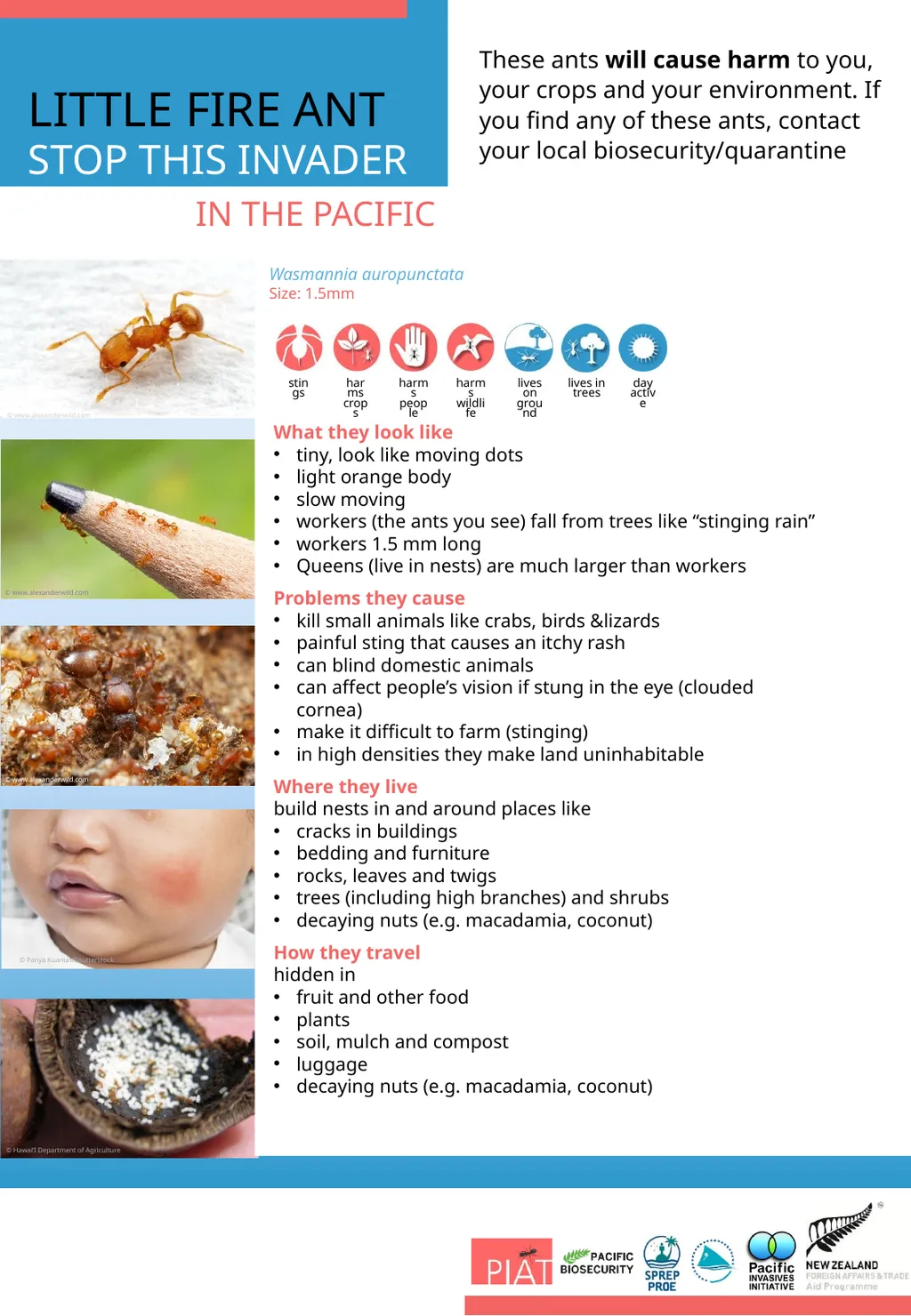
Size: 1.5mm What they look like
tiny, look like moving dots
light orange body
slow moving
workers (the ants you see) fall from trees like “stinging rain”
workers 1.5 mm long
Queens (live in nests) are much larger than workers
Problems they cause
kill small animals like crabs, birds &lizards
painful sting that causes an itchy rash
can blind domestic animals
can affect people’s vision if stung in the eye (clouded cornea)
make it difficult to farm (stinging)
in high densities they make land uninhabitable
Where they live
build nests in and around places like
cracks in buildings
bedding and furniture
rocks, leaves and twigs
trees (including high branches) and shrubs
decaying nuts (e.g. macadamia, coconut)
How they travel
hidden in
fruit and other food
plants
soil, mulch and compost
luggage
decaying nuts (e.g. macadamia, coconut) stings harms
crops harms
wildlife harms
people lives on
ground day
active lives in trees<br>
Size: 1.5mm What they look like
tiny, look like moving dots
light orange body
slow moving
workers (the ants you see) fall from trees like “stinging rain”
workers 1.5 mm long
Queens (live in nests) are much larger than workers
Problems they cause
kill small animals like crabs, birds &lizards
painful sting that causes an itchy rash
can blind domestic animals
can affect people’s vision if stung in the eye (clouded cornea)
make it difficult to farm (stinging)
in high densities they make land uninhabitable
Where they live
build nests in and around places like
cracks in buildings
bedding and furniture
rocks, leaves and twigs
trees (including high branches) and shrubs
decaying nuts (e.g. macadamia, coconut)
How they travel
hidden in
fruit and other food
plants
soil, mulch and compost
luggage
decaying nuts (e.g. macadamia, coconut) stings harms
crops harms
wildlife harms
people lives on
ground day
active lives in trees<br>