Year 7 Rounding Approximation Dr J Frost (jfrosttiffin.kingston.sch.uk) Last modified: 9th May 2016 Objectives: Round a number to a given number of decimal places or significant figures. Approximate the value to a multiplicationdivision
"Year 7 Rounding & Approximation Dr J Frost" is the property of its rightful owner. Permission is granted to
download and print the materials on this website for personal, non-commercial use only, and to display it
on your personal computer provided you do not modify the materials and that you retain all copyright
notices contained in the materials. By downloading content from our website, you accept the terms of this
agreement.
Presentation Transcript
01
Year 7 Rounding & Approximation Dr J Frost (jfrost@tiffin.kingston.sch.uk) Last modified: 9th May 2016 Objectives: Round a number to a given number of decimal places or significant figures.
Approximate the value to a multiplication/division by rounding each number to 1 significant figure.<br>
02
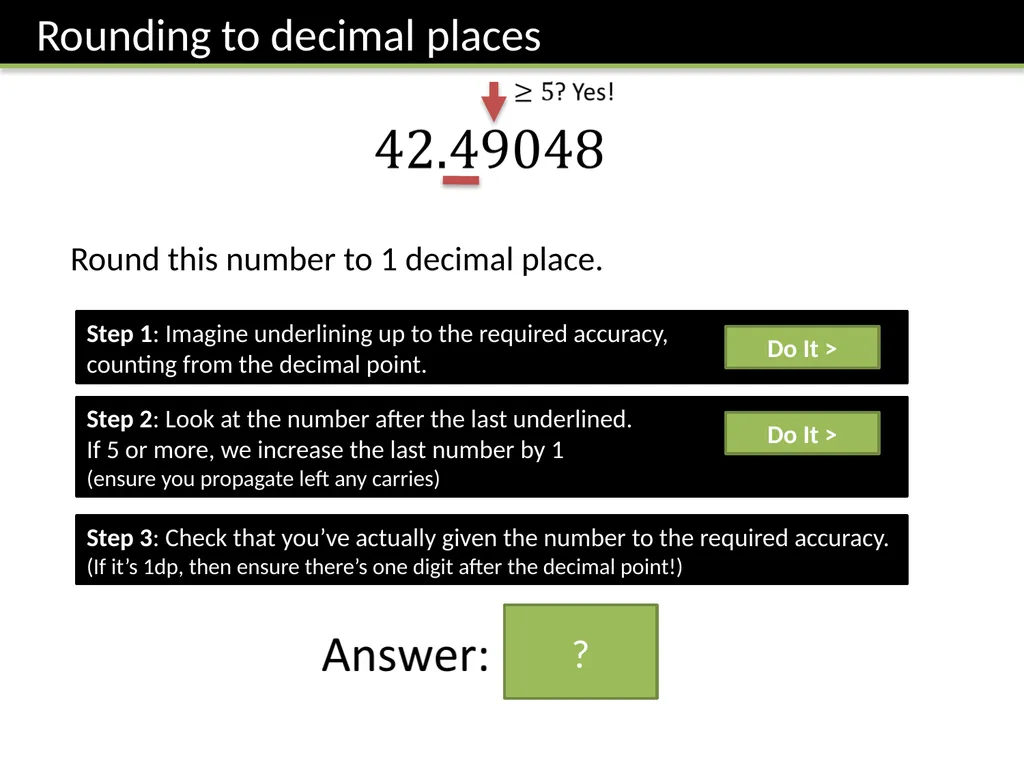
Round this number to 1 decimal place. Step 1: Imagine underlining up to the required accuracy,
counting from the decimal point. Do It > Step 2: Look at the number after the last underlined.
If 5 or more, we increase the last number by 1
(ensure you propagate left any carries) Do It > Step 3: Check that you’ve actually given the number to the required accuracy.
(If it’s 1dp, then ensure there’s one digit after the decimal point!) ?<br>
03
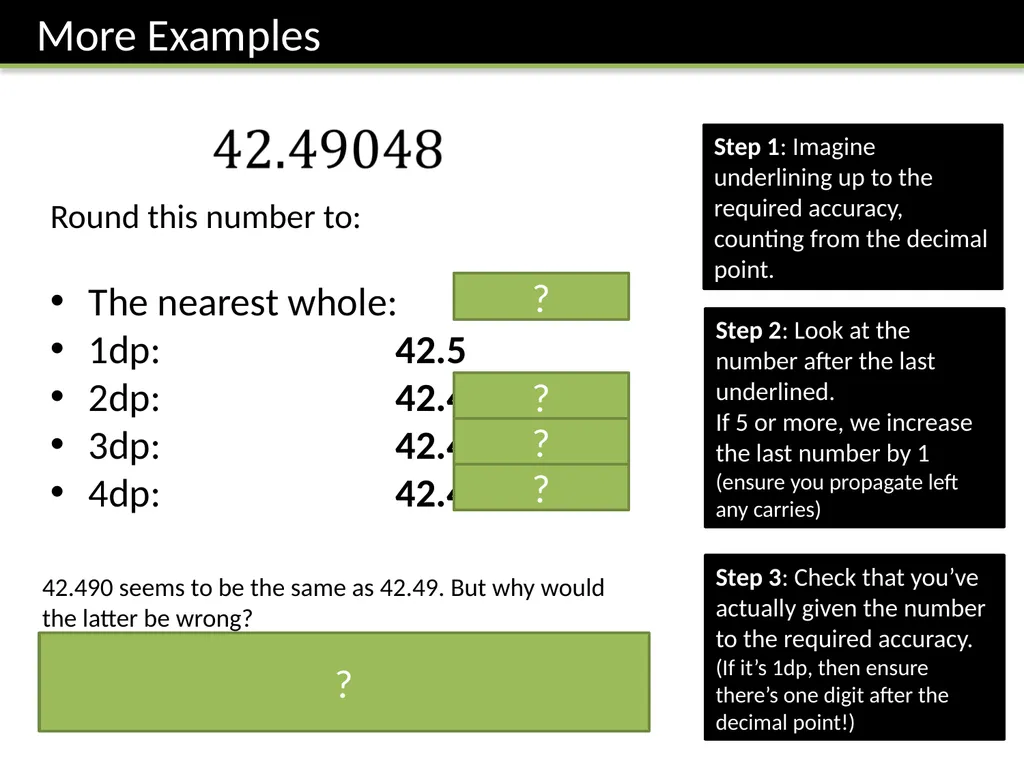
Round this number to:
The nearest whole: 42
1dp: 42.5
2dp: 42.49
3dp: 42.490
4dp: 42.4905 Step 1: Imagine underlining up to the required accuracy, counting from the decimal point. Step 2: Look at the number after the last underlined.
If 5 or more, we increase the last number by 1
(ensure you propagate left any carries) Step 3: Check that you’ve actually given the number to the required accuracy.
(If it’s 1dp, then ensure there’s one digit after the decimal point!) ? ? ? ? 42.490 seems to be the same as 42.49. But why would the latter be wrong?
The 0 at the end gives extra information. It’s telling us that the thousandth’s digit is 0, whereas if we put 42.49, we’re leaving the thousandths digit unspecified. ?<br>
04
Step 2: Look at the number after the last underlined.
If 5 or more, we increase the last number by 1
(ensure you propagate left any carries) Step 3: Check that you’ve actually given the number to the required accuracy.
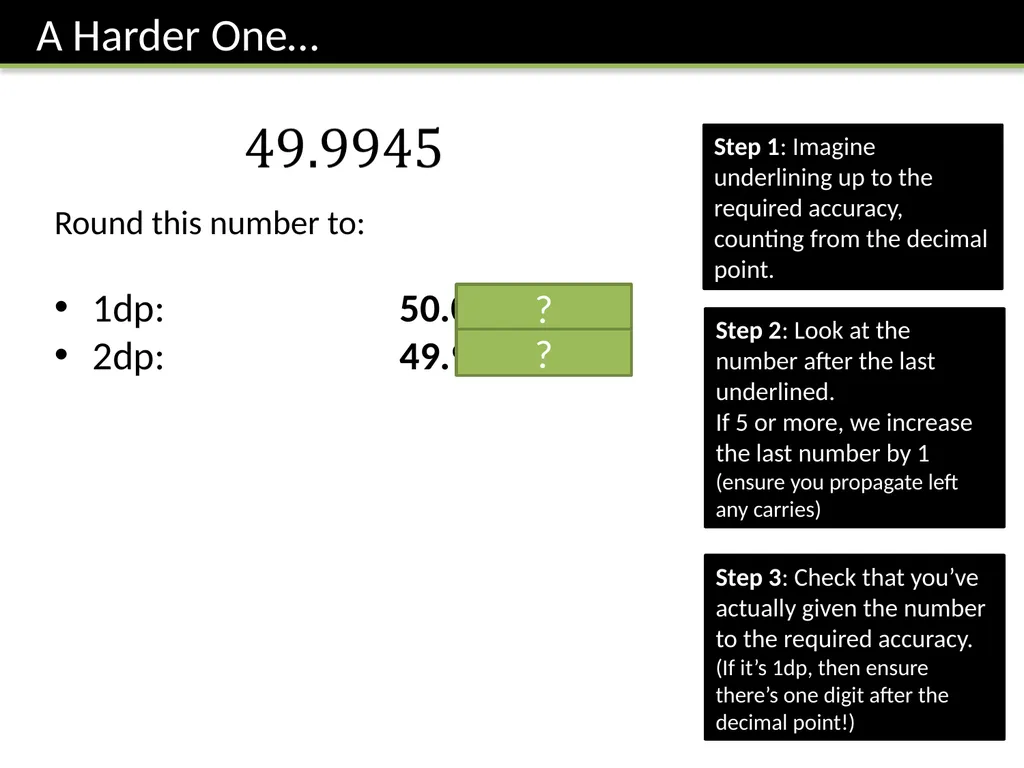
(If it’s 1dp, then ensure there’s one digit after the decimal point!) Round this number to:
1dp: 50.0
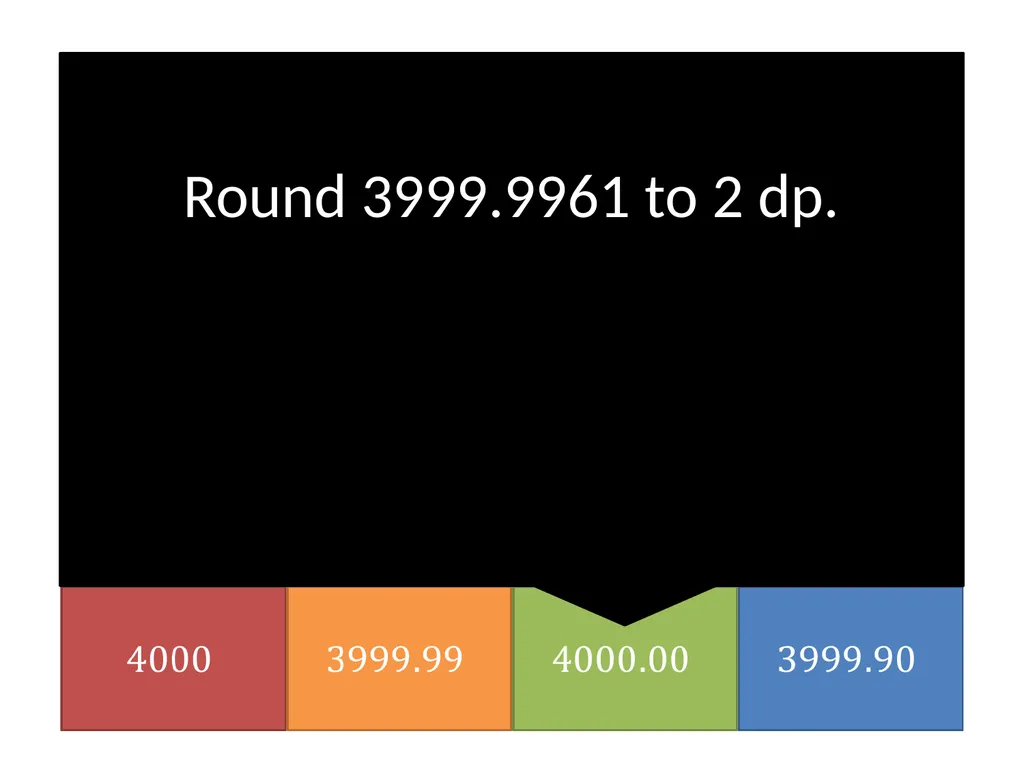
2dp: 49.99 ? ? Step 1: Imagine underlining up to the required accuracy, counting from the decimal point.<br>
05
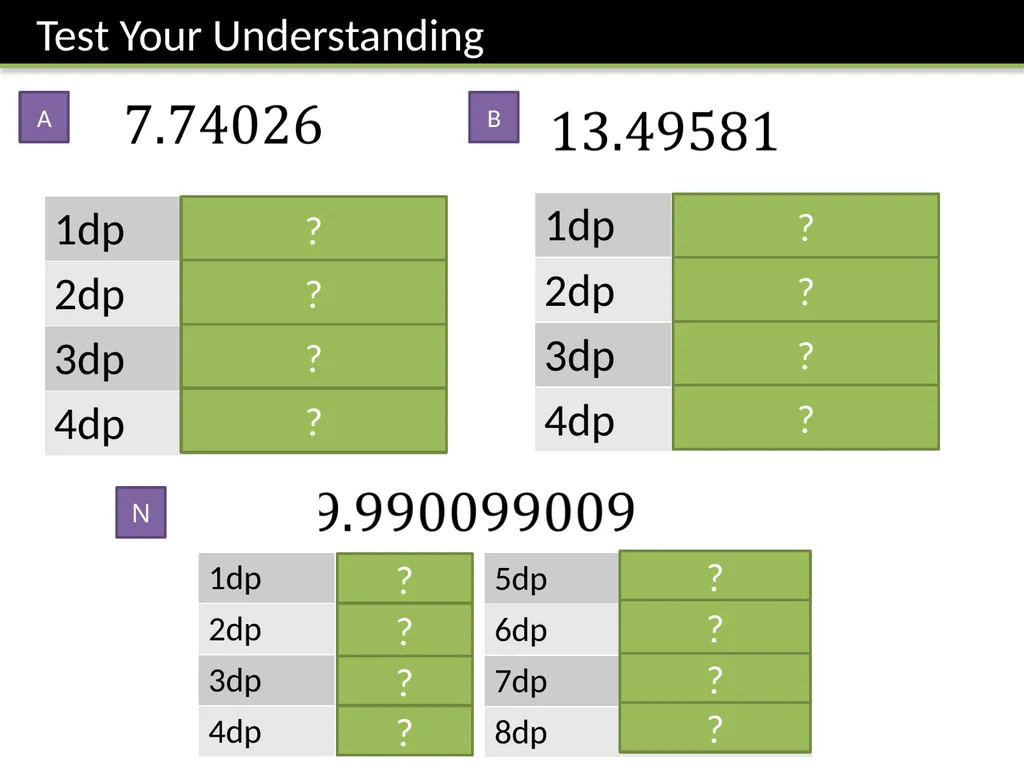
A B N ? ? ? ? ? ? ? ? ? ? ? ? ? ? ? ?<br>
06
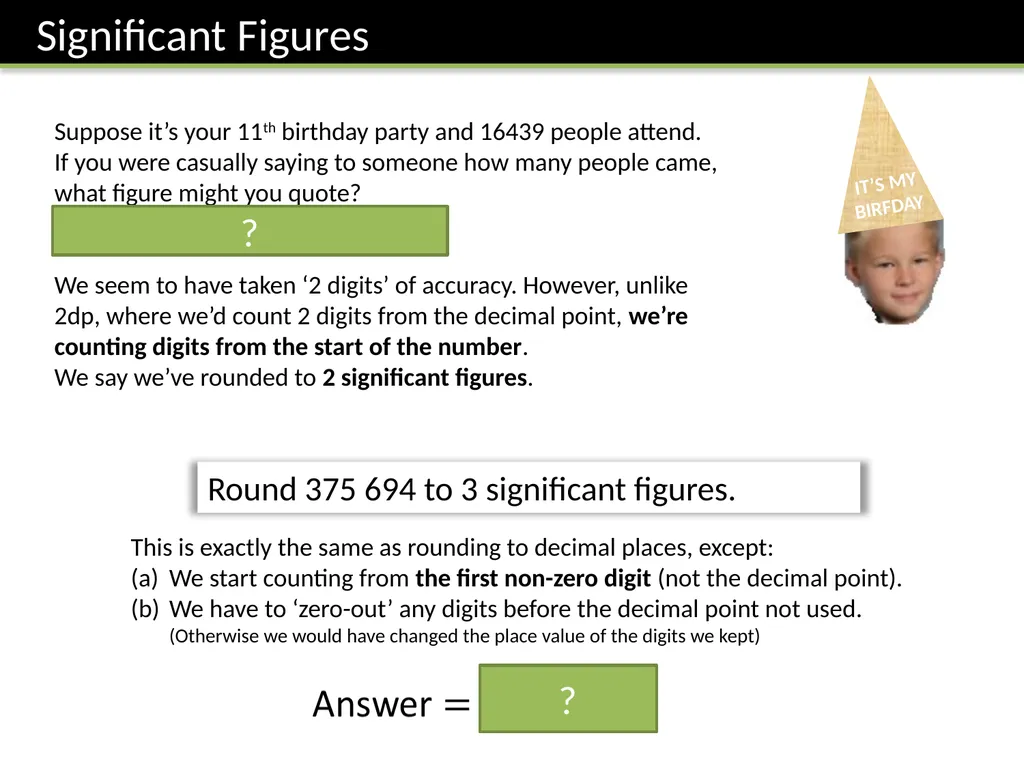
Suppose it’s your 11th birthday party and 16439 people attend.
If you were casually saying to someone how many people came, what figure might you quote?
We might say 16000 people came.
We seem to have taken ‘2 digits’ of accuracy. However, unlike 2dp, where we’d count 2 digits from the decimal point, we’re counting digits from the start of the number.
We say we’ve rounded to 2 significant figures. IT’S MY
BIRFDAY Round 375 694 to 3 significant figures. This is exactly the same as rounding to decimal places, except:
We start counting from the first non-zero digit (not the decimal point).
We have to ‘zero-out’ any digits before the decimal point not used. (Otherwise we would have changed the place value of the digits we kept) ? ?<br>
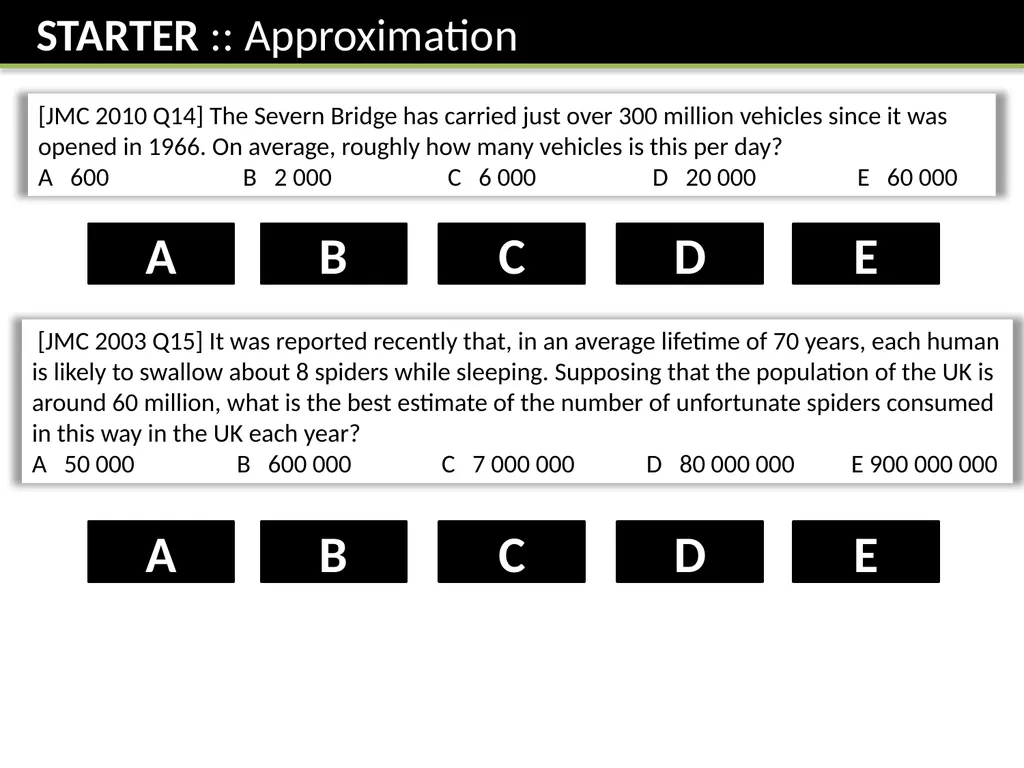
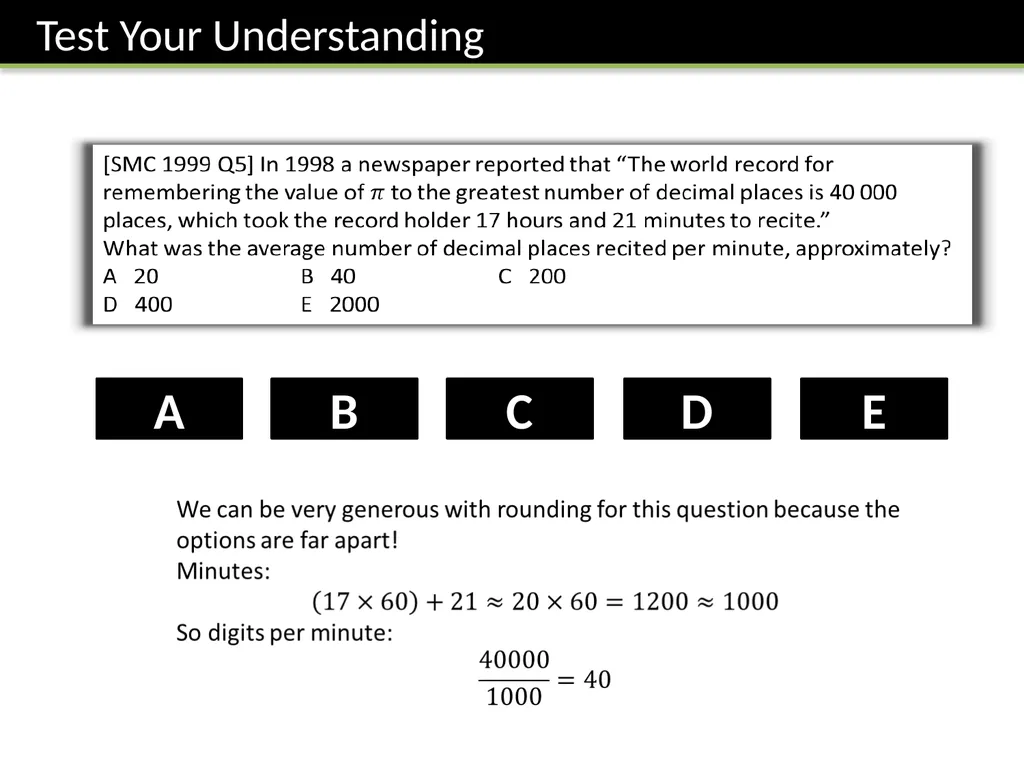
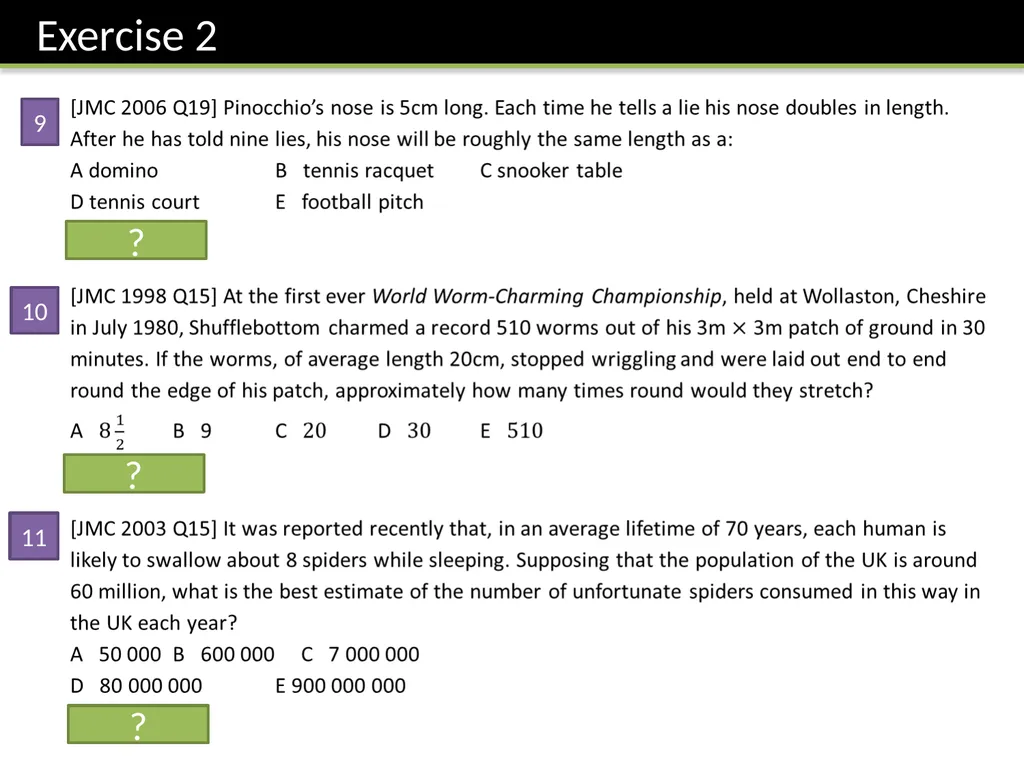
[JMC 2010 Q14] The Severn Bridge has carried just over 300 million vehicles since it was opened in 1966. On average, roughly how many vehicles is this per day? A 600 B 2 000 C 6 000 D 20 000 E 60 000 D B C A E [JMC 2003 Q15] It was reported recently that, in an average lifetime of 70 years, each human is likely to swallow about 8 spiders while sleeping. Supposing that the population of the UK is around 60 million, what is the best estimate of the number of unfortunate spiders consumed in this way in the UK each year? A 50 000 B 600 000 C 7 000 000 D 80 000 000 E 900 000 000 C B D A E<br>
18
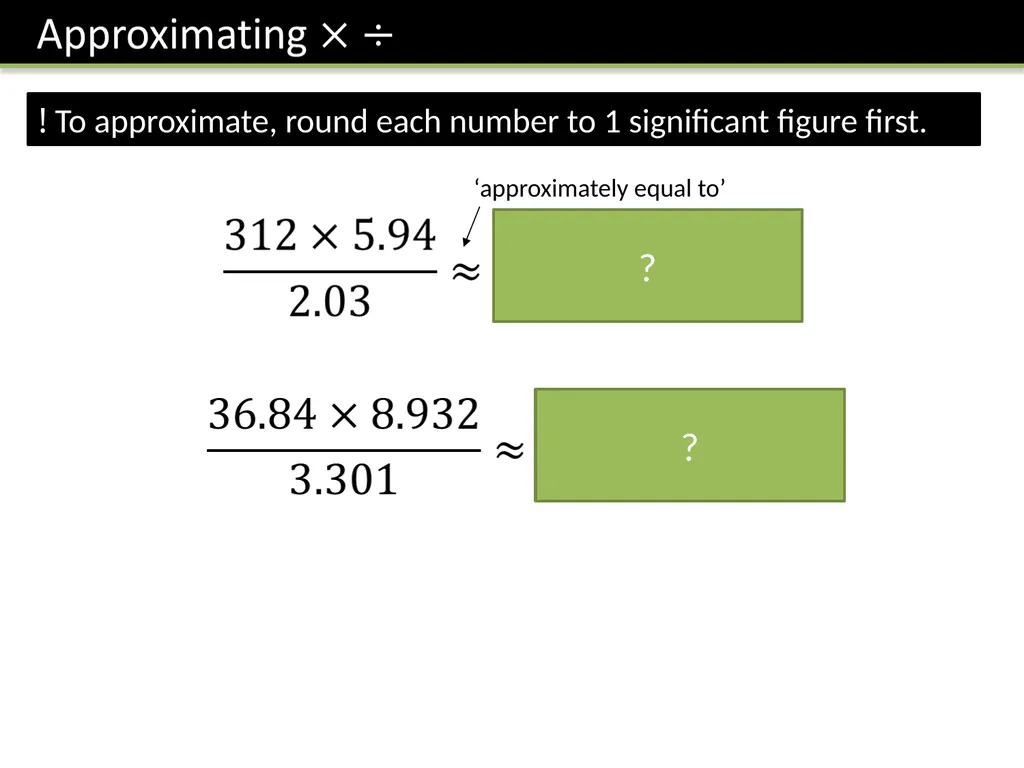
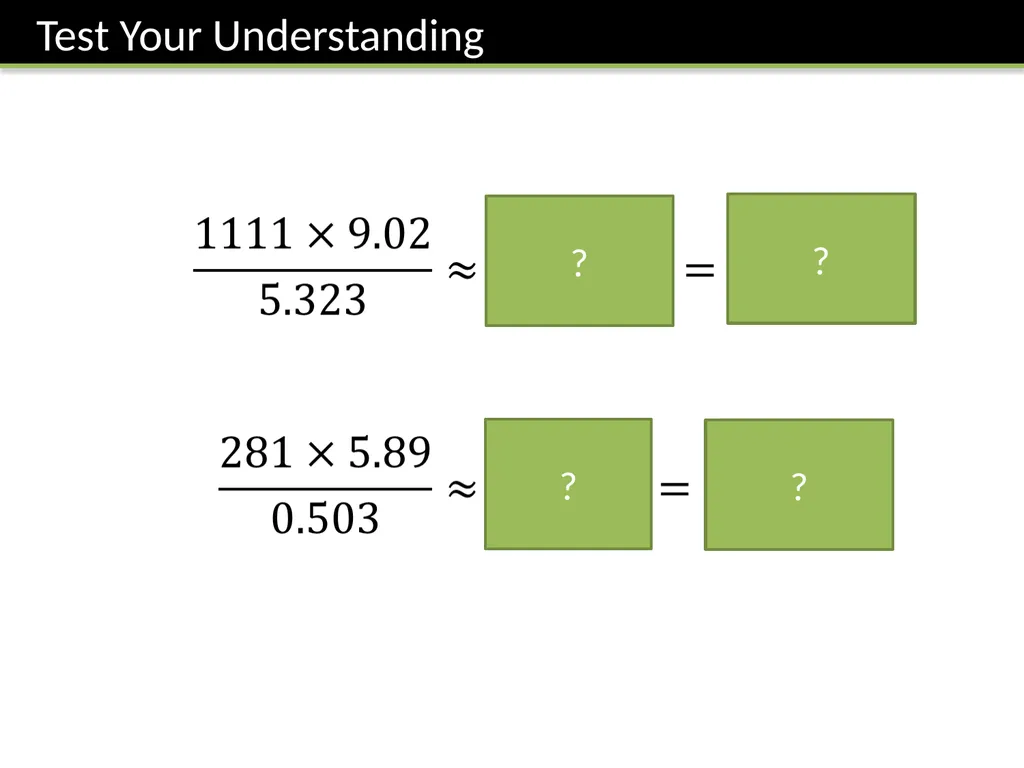
! To approximate, round each number to 1 significant figure first. ‘approximately equal to’ ? ?<br>
19
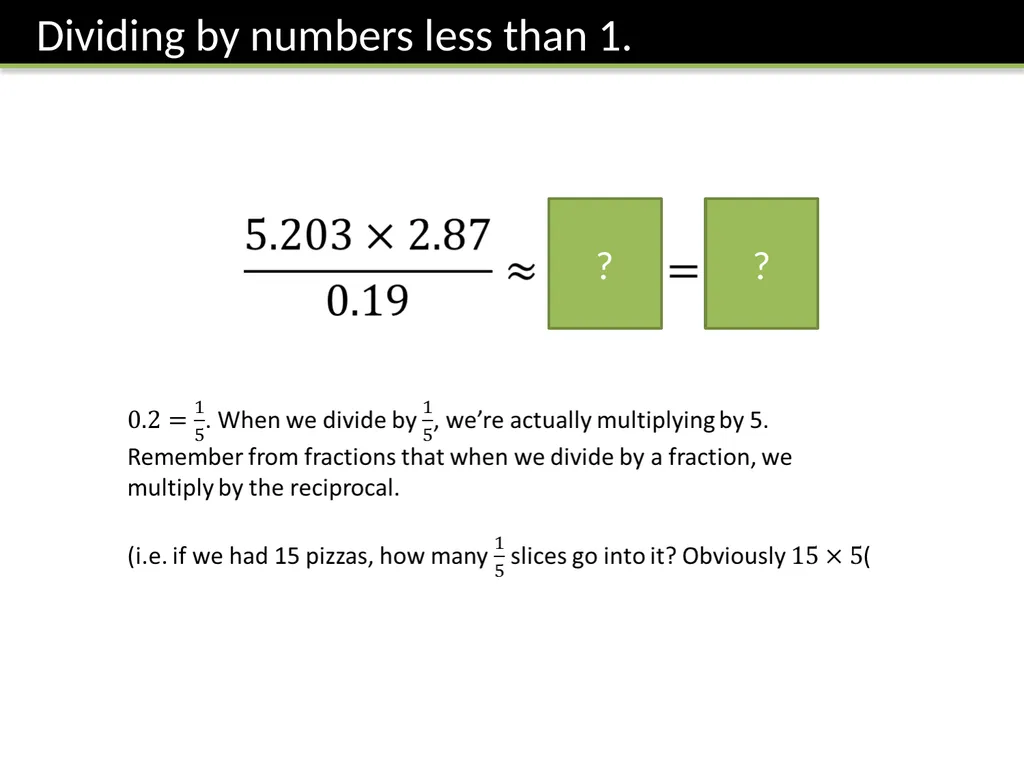
? ?<br>
20
? ? ? ?<br>
21
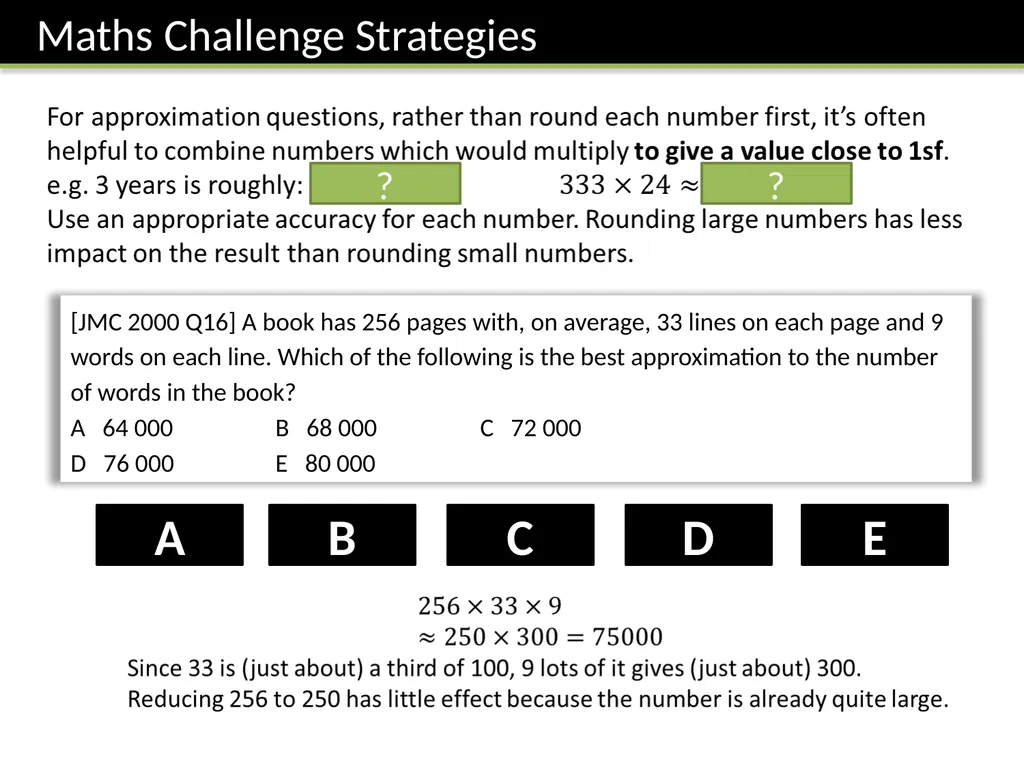
? [JMC 2000 Q16] A book has 256 pages with, on average, 33 lines on each page and 9 words on each line. Which of the following is the best approximation to the number of words in the book? A 64 000 B 68 000 C 72 000 D 76 000 E 80 000 D B C A E ?<br>
22
B D C A E<br>
23
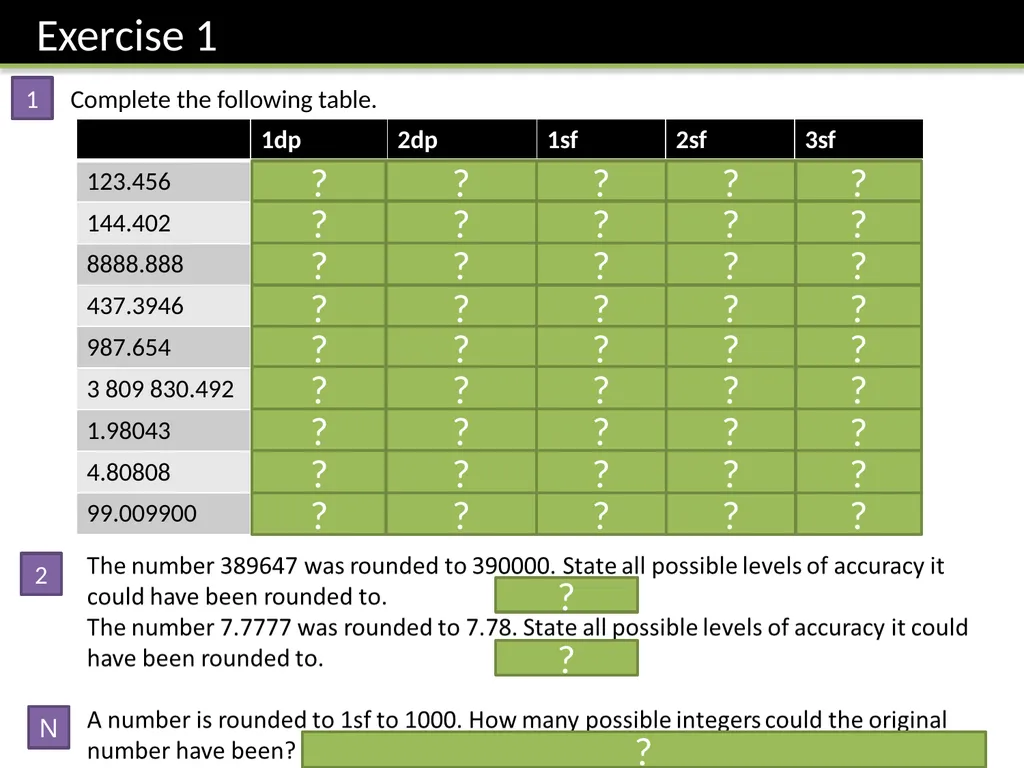
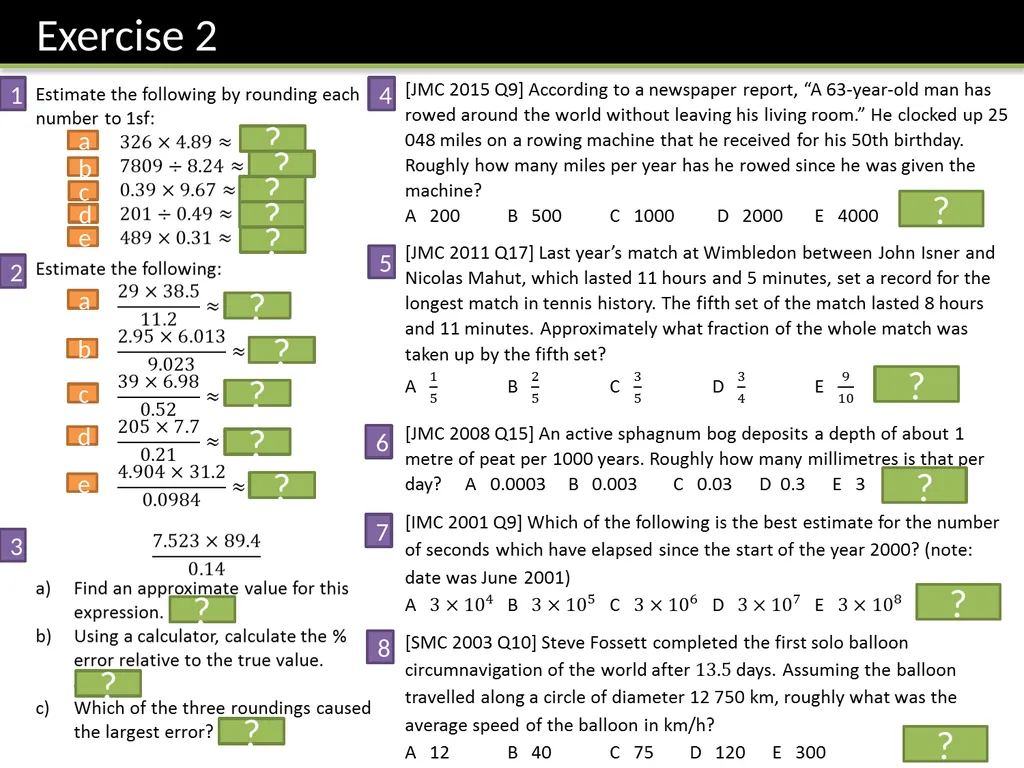
1 2 3 a b c d e a b c d e 4 5 6 7 8 ? ? ? ? ? ? ? ? ? ? ? ? ? ? ? ? ? ?<br>