Your Major and Your Future Some Startling Facts Degrees Awarded: 2004-2005 compared to 2014-2015 The three fields of study in which the most bachelors degrees were conferredbusiness, health professions and related programs, and social
Related Topics
Share
Embed code
Download this presentation From Below
"Your Major and Your Future Some Startling Facts" is the property of its rightful owner. Permission is granted to
download and print the materials on this website for personal, non-commercial use only, and to display it
on your personal computer provided you do not modify the materials and that you retain all copyright
notices contained in the materials. By downloading content from our website, you accept the terms of this
agreement.
Presentation Transcript
01
Your Major and Your Future Some Startling Facts<br>
02
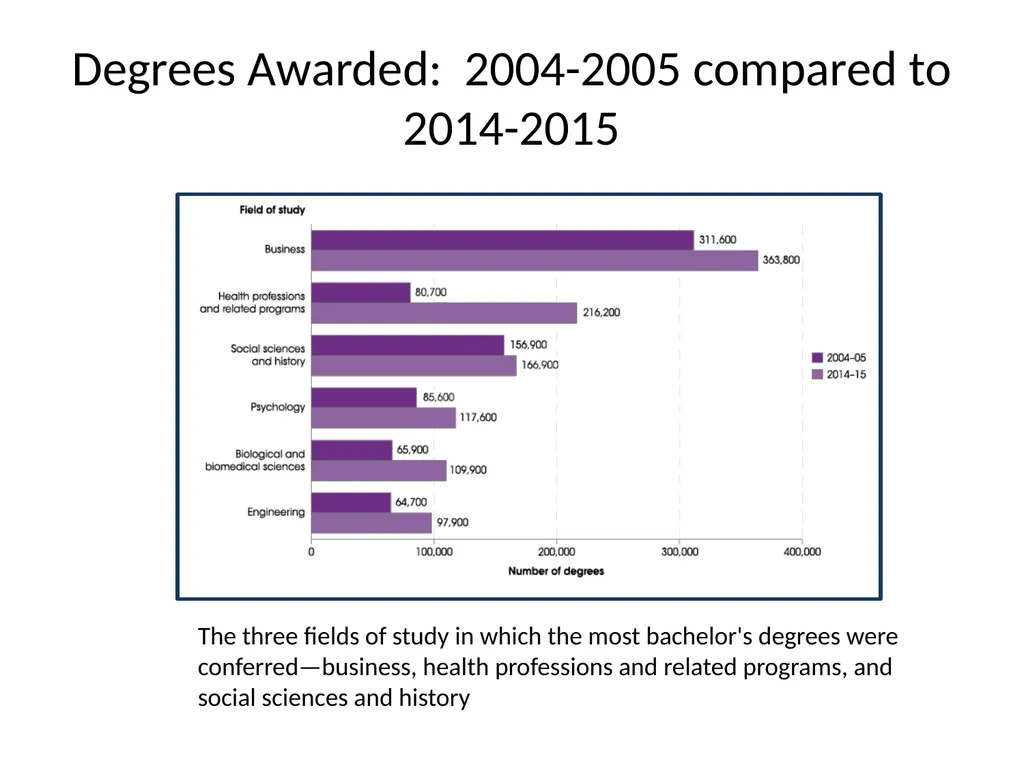
Degrees Awarded: 2004-2005 compared to 2014-2015 The three fields of study in which the most bachelor's degrees were conferred—business, health professions and related programs, and social sciences and history<br>
03
“The individuals who dedicate their undergrad years to their field of choice (business, medicine, law) don’t necessarily end up achieving greater success in the field than those who arrived there with a completely unrelated major. For example, history majors who pursued careers in business ended up earning as much as business majors, according to one study. You don’t have to study English to be a writer, you don’t have to study business to be a consultant, and you don’t have to study political science to go into government. The real world doesn’t care about your degree as much as your work ethic and attitude.” Ashley Stahl https://www.forbes.com/sites/ashleystahl/2015/08/12/six-reasons-why-your-college-major-doesnt-matter/#20f1fd0935a0 Your Major Leads to More than One Career<br>
04
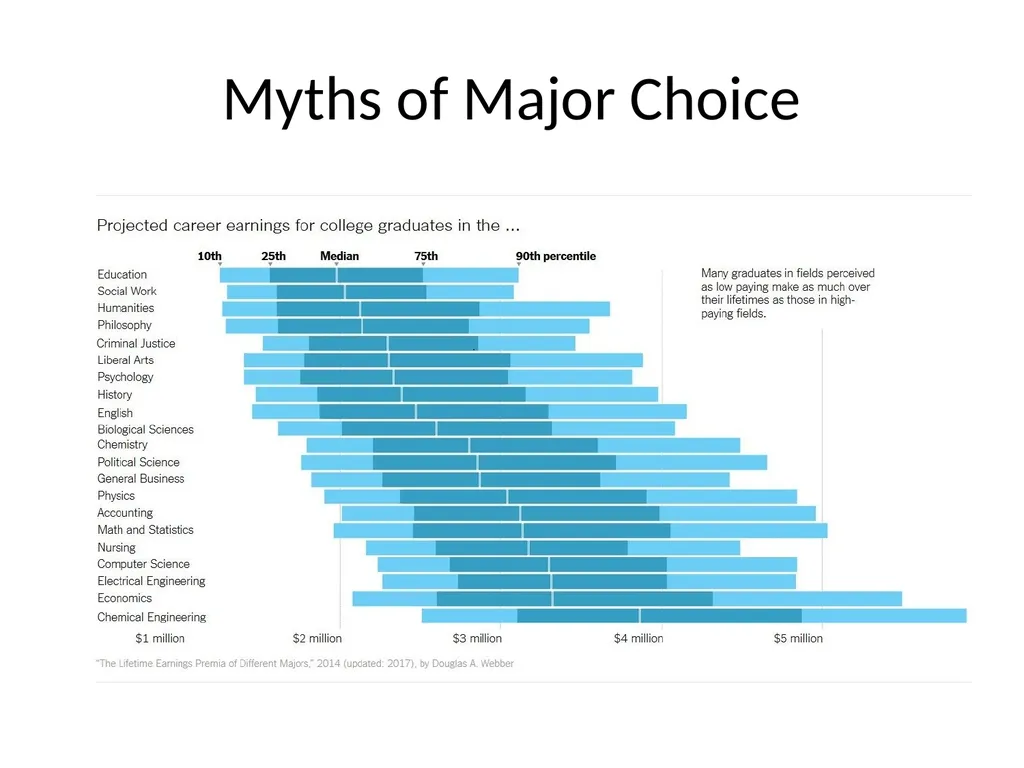
Myths of Major Choice<br>
05
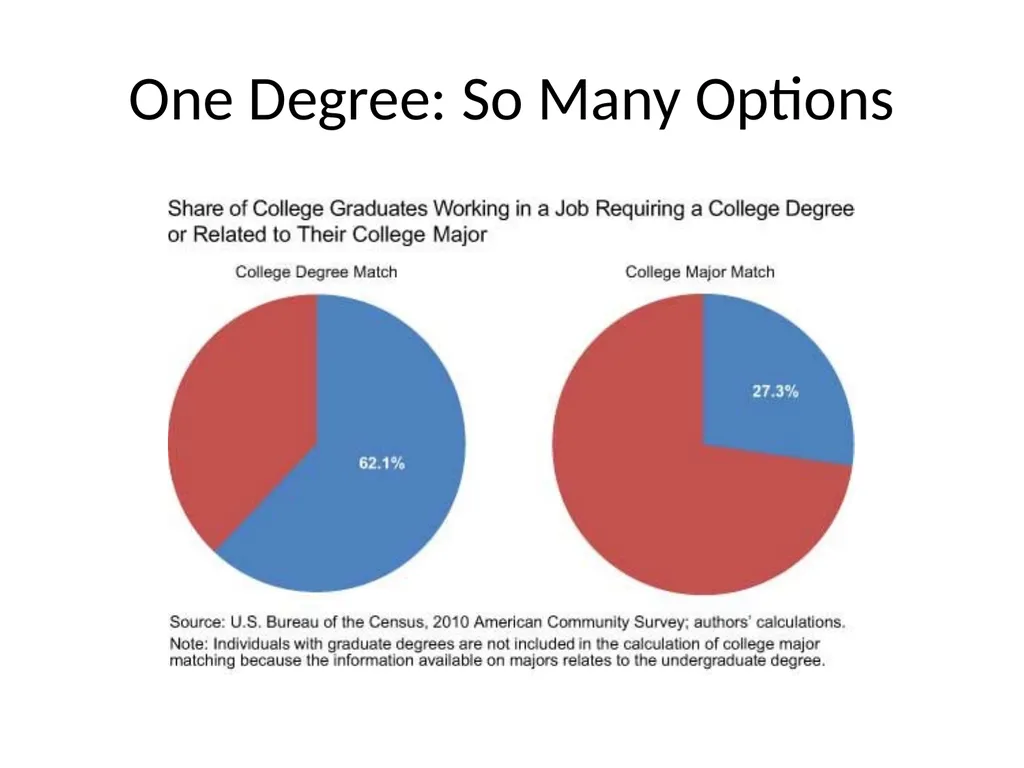
One Degree: So Many Options<br>
06
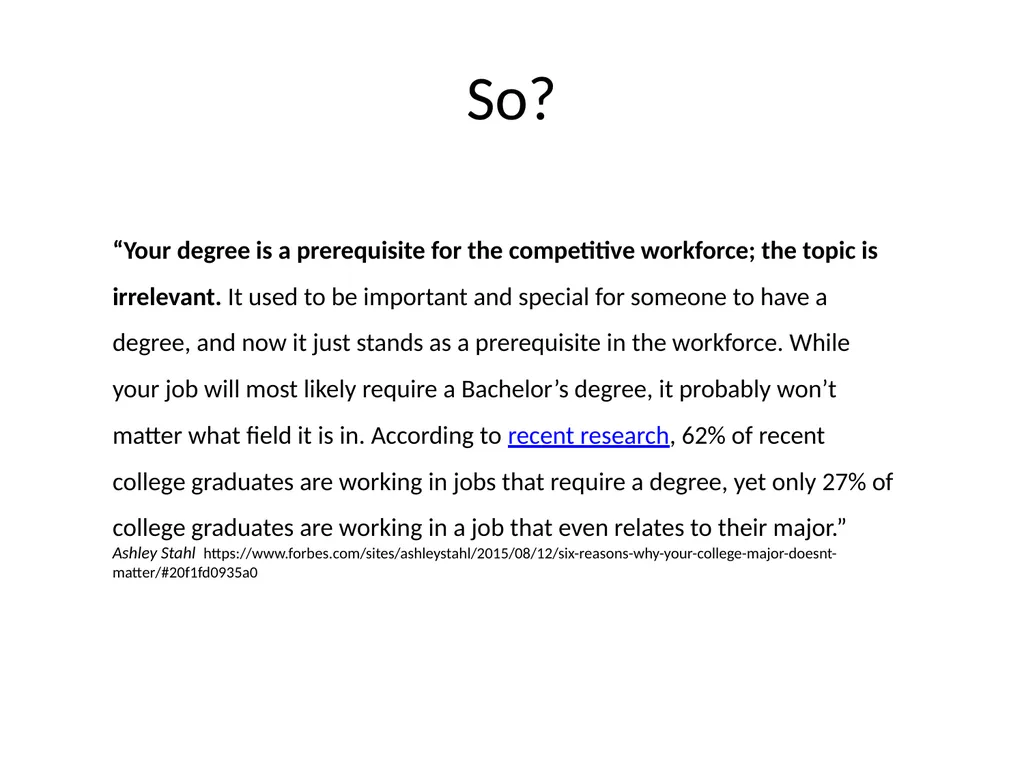
So? “Your degree is a prerequisite for the competitive workforce; the topic is irrelevant. It used to be important and special for someone to have a degree, and now it just stands as a prerequisite in the workforce. While your job will most likely require a Bachelor’s degree, it probably won’t matter what field it is in. According to recent research, 62% of recent college graduates are working in jobs that require a degree, yet only 27% of college graduates are working in a job that even relates to their major.”
Ashley Stahl https://www.forbes.com/sites/ashleystahl/2015/08/12/six-reasons-why-your-college-major-doesnt-matter/#20f1fd0935a0<br>
07
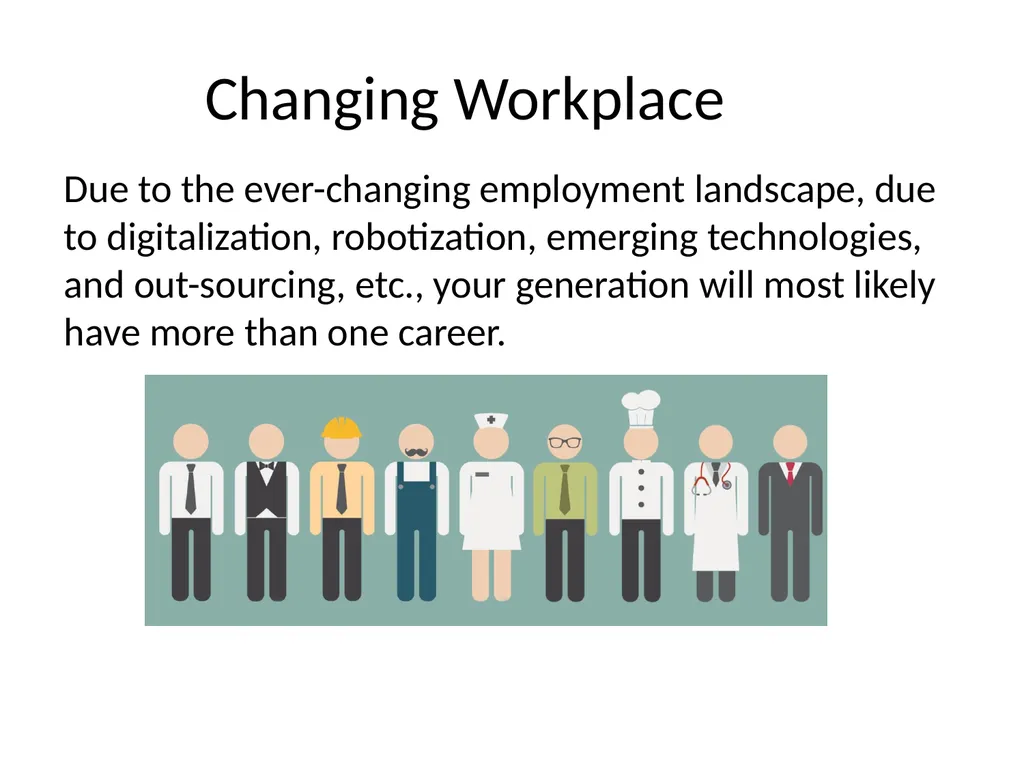
Changing Workplace Due to the ever-changing employment landscape, due to digitalization, robotization, emerging technologies, and out-sourcing, etc., your generation will most likely have more than one career.<br>
08
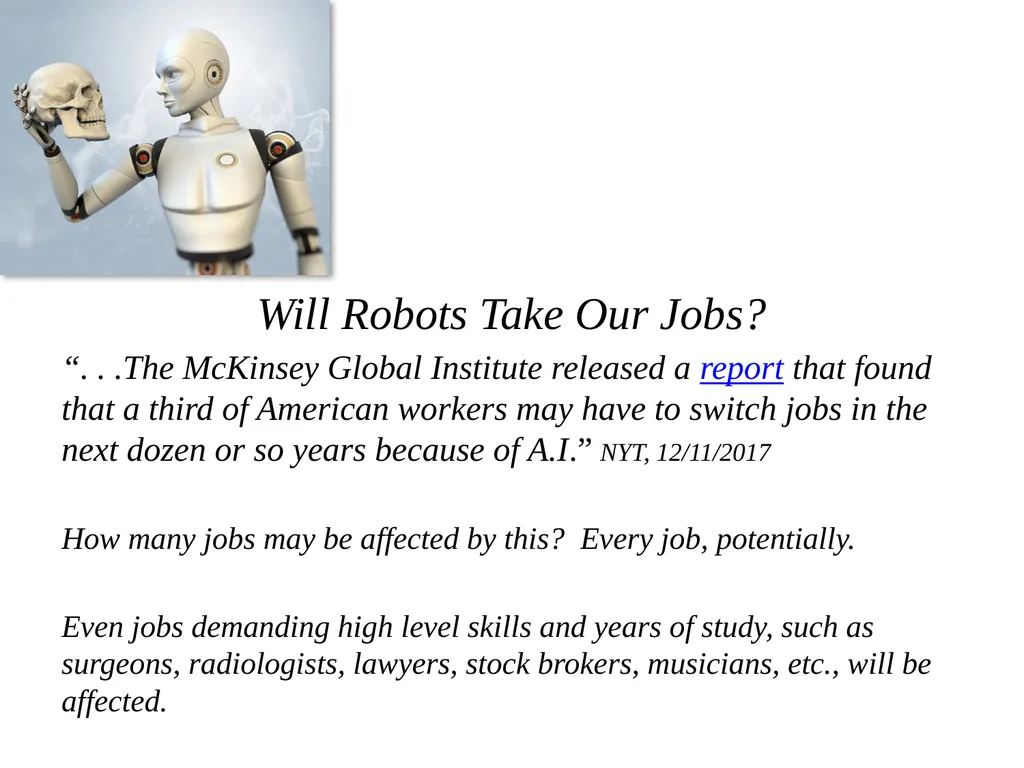
Will Robots Take Our Jobs?
“. . .The McKinsey Global Institute released a report that found that a third of American workers may have to switch jobs in the next dozen or so years because of A.I.” NYT, 12/11/2017
How many jobs may be affected by this? Every job, potentially.
Even jobs demanding high level skills and years of study, such as surgeons, radiologists, lawyers, stock brokers, musicians, etc., will be affected.<br>
09
Changing Job Landscape However, new jobs will also be created.
You must be primed—ready—to take these opportunities.<br>
10
There are . . . Psych majors working in Public Relations
English Majors who became doctors
Music majors who became math teachers
Anthropology majors who became software developers<br>
11
Strategies for Career Success Excellent Writing Skills
Effective Speaking/Communication
Diversification
Lifelong Learning<br>