
1-4 Measuring Angles When naming angle using three
Description: 1-4 Measuring Angles When naming angle using three points, the vertex must go in the middle. Problem 1: Naming Angles Types of Angles Problem 2: Measuring and Classifying Angles What at the measures of LKN, JKL, and JKN? Classify each
Related Topics
Download Presentation
"1-4 Measuring Angles When naming angle using three" is the property of its rightful owner. Permission is granted to download and print the materials on this website for personal, non-commercial use only, and to display it on your personal computer provided you do not modify the materials and that you retain all copyright notices contained in the materials. By downloading content from our website, you accept the terms of this agreement.
Presentation Transcript
slide1. 1-4
Measuring Angles<br>
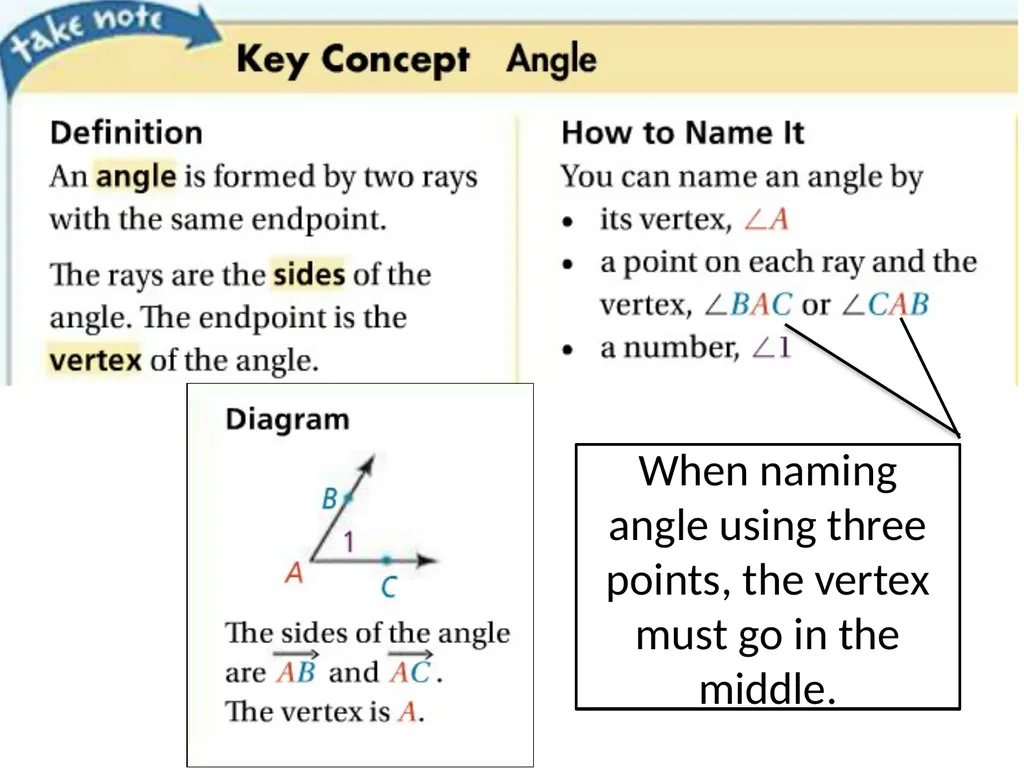
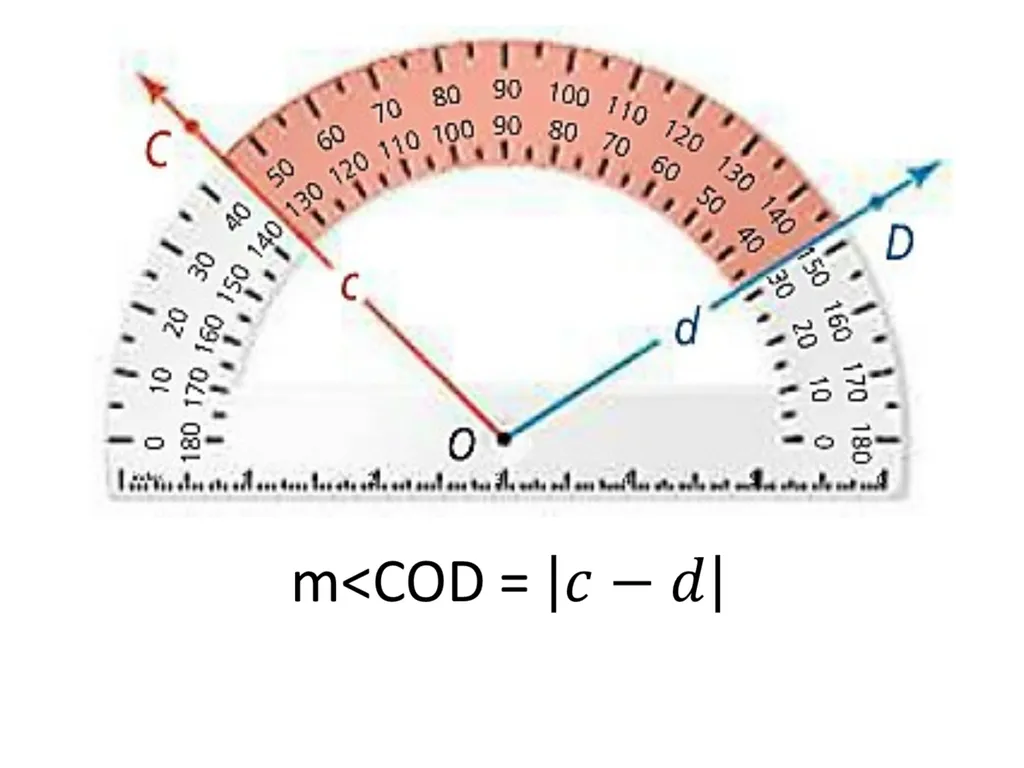
slide2. When naming angle using three points, the vertex must go in the middle.<br>
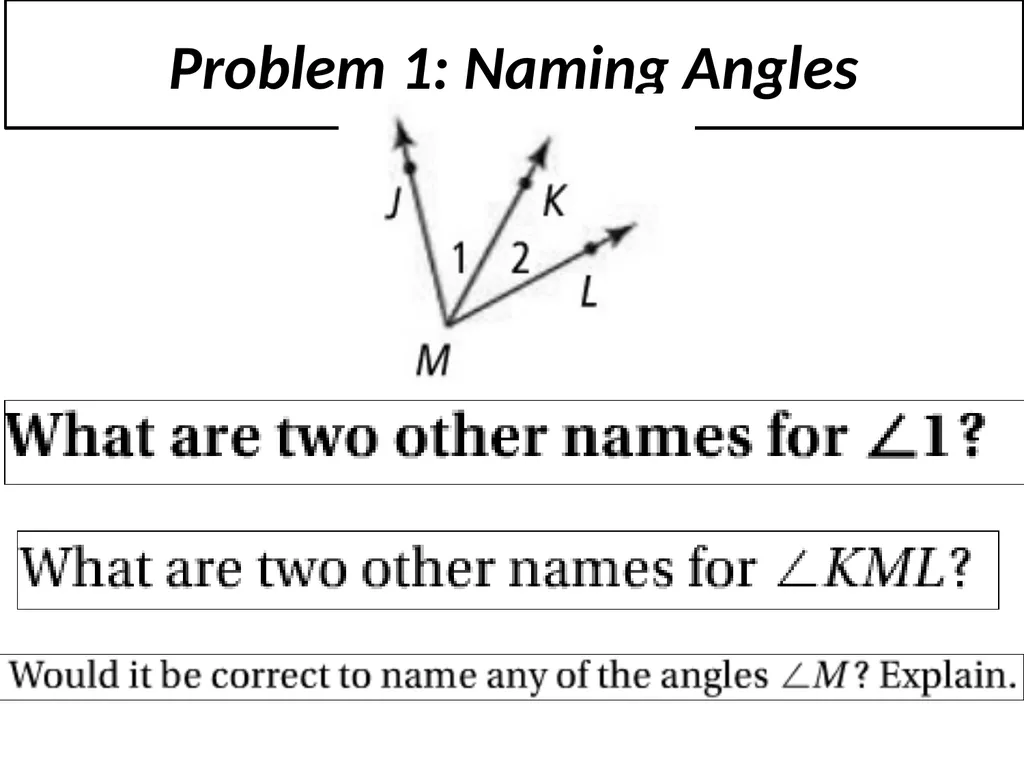
slide3. Problem 1: Naming Angles<br>
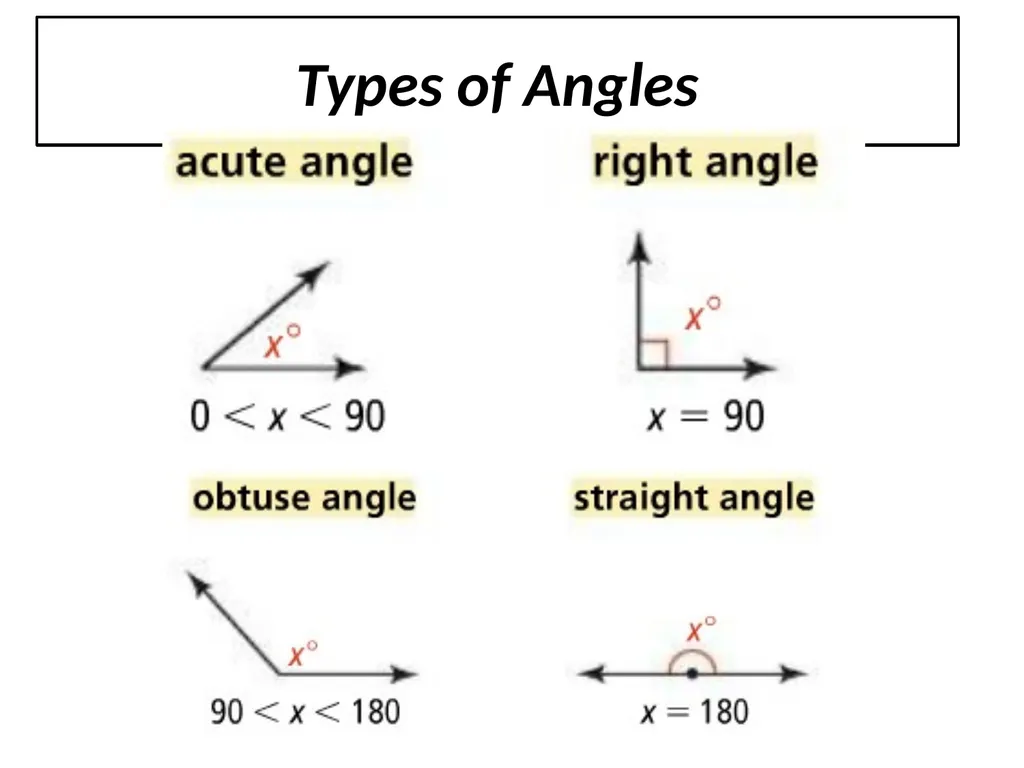
slide5. Types of Angles<br>
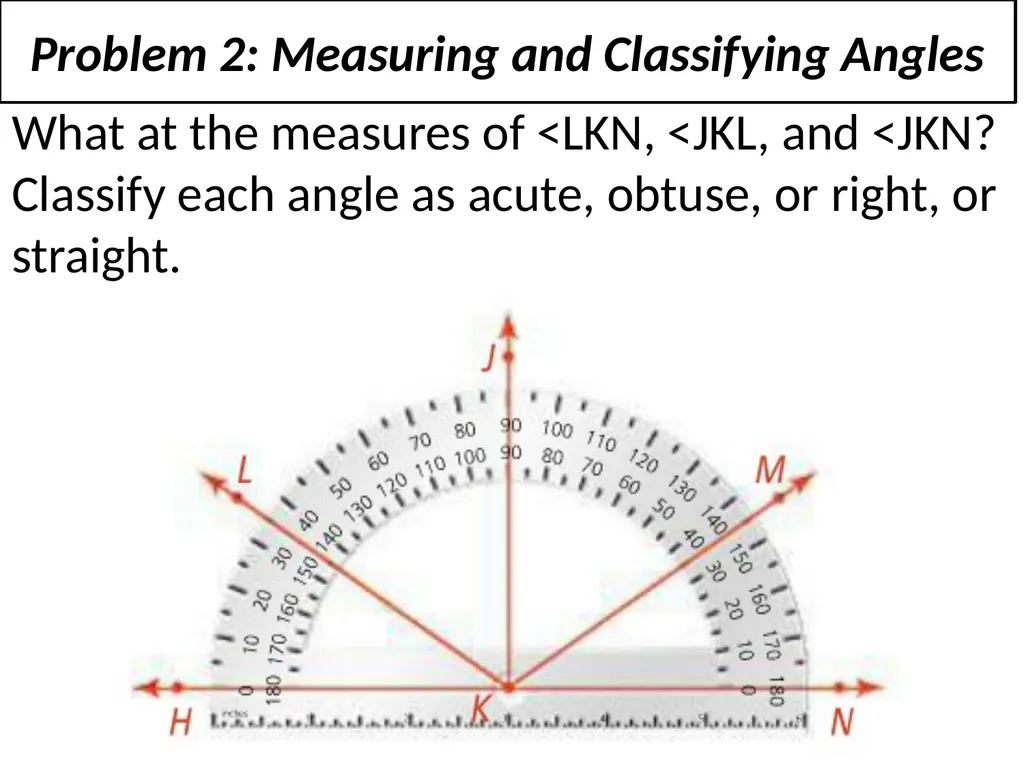
slide6. Problem 2: Measuring and Classifying Angles What at the measures of <LKN, <JKL, and <JKN? Classify each angle as acute, obtuse, or right, or straight.<br>
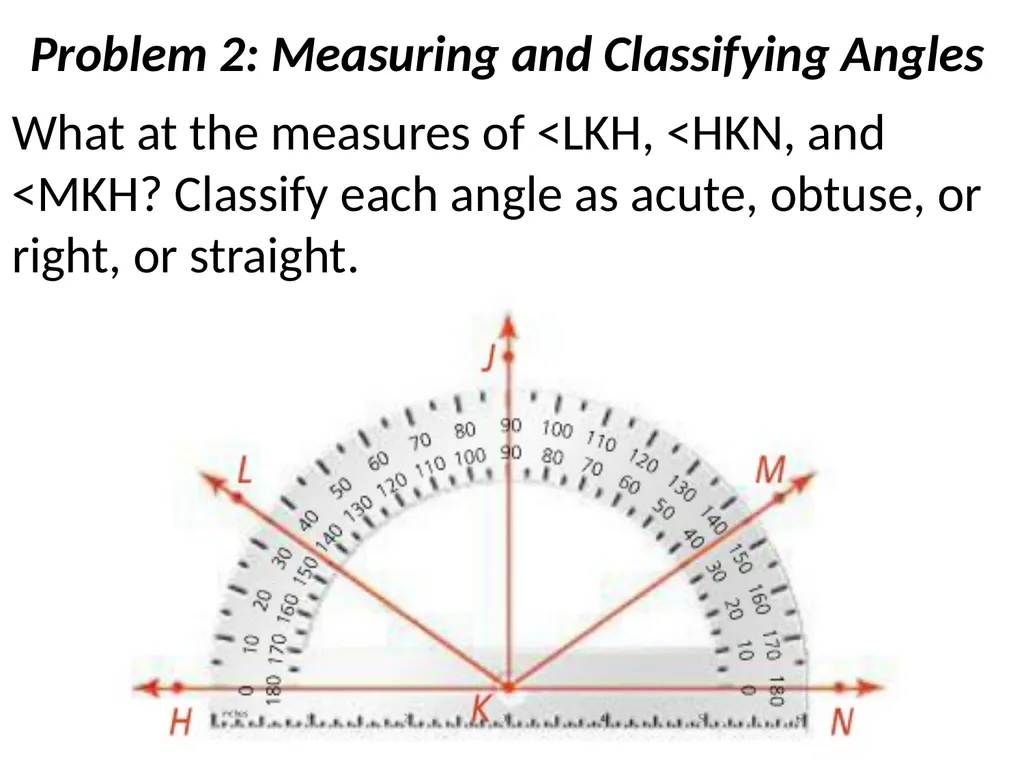
slide7. Problem 2: Measuring and Classifying Angles What at the measures of <LKH, <HKN, and <MKH? Classify each angle as acute, obtuse, or right, or straight.<br>
slide9. Problem 3:
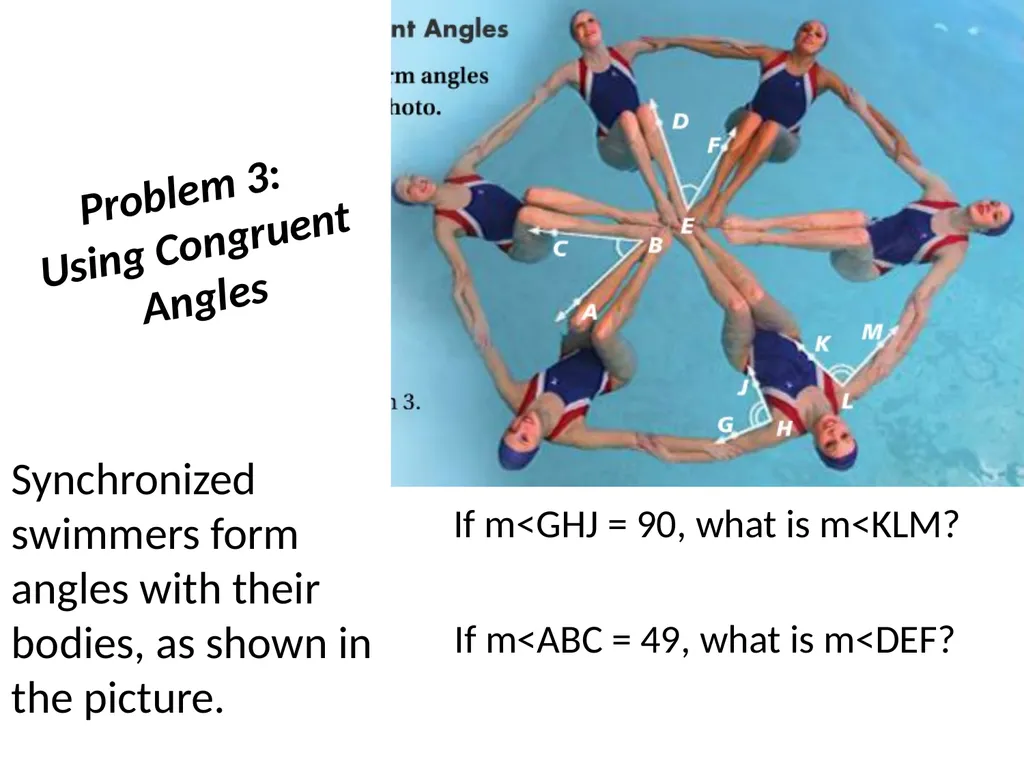
Using Congruent Angles Synchronized swimmers form angles with their bodies, as shown in the picture. If m<ABC = 49, what is m<DEF? If m<GHJ = 90, what is m<KLM?<br>
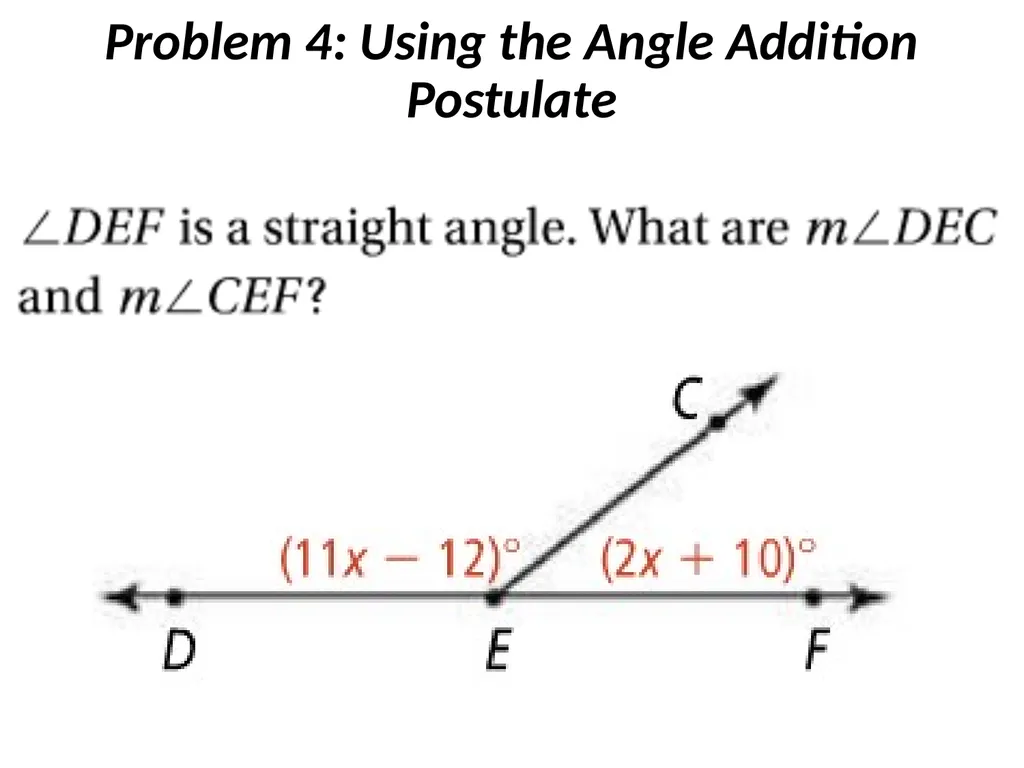
slide11. Problem 4: Using the Angle Addition Postulate<br>
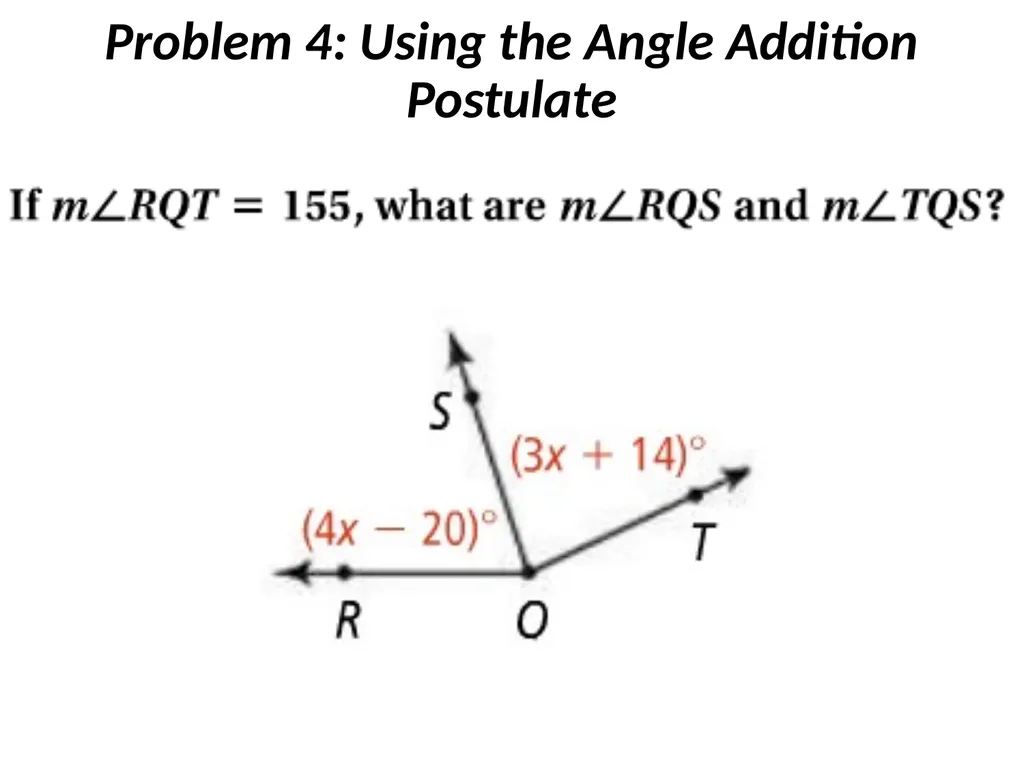
slide12. Problem 4: Using the Angle Addition Postulate<br>
slide2. When naming angle using three points, the vertex must go in the middle.<br>
slide3. Problem 1: Naming Angles<br>
slide5. Types of Angles<br>
slide6. Problem 2: Measuring and Classifying Angles What at the measures of <LKN, <JKL, and <JKN? Classify each angle as acute, obtuse, or right, or straight.<br>
slide7. Problem 2: Measuring and Classifying Angles What at the measures of <LKH, <HKN, and <MKH? Classify each angle as acute, obtuse, or right, or straight.<br>
slide9. Problem 3:
Using Congruent Angles Synchronized swimmers form angles with their bodies, as shown in the picture. If m<ABC = 49, what is m<DEF? If m<GHJ = 90, what is m<KLM?<br>
slide11. Problem 4: Using the Angle Addition Postulate<br>
slide12. Problem 4: Using the Angle Addition Postulate<br>