1-6 Basic Constructions Straight edge: a ruler
Description: 1-6 Basic Constructions Straight edge: a ruler with no markings Compass: a geometric tool used to draw circles and parts of circles called archs Construction: a geometric figure drawn using a straightedge and a compass Problem 1:
Related Topics
Download Presentation
"1-6 Basic Constructions Straight edge: a ruler" is the property of its rightful owner. Permission is granted to download and print the materials on this website for personal, non-commercial use only, and to display it on your personal computer provided you do not modify the materials and that you retain all copyright notices contained in the materials. By downloading content from our website, you accept the terms of this agreement.
Presentation Transcript
slide1. 1-6 Basic Constructions<br>
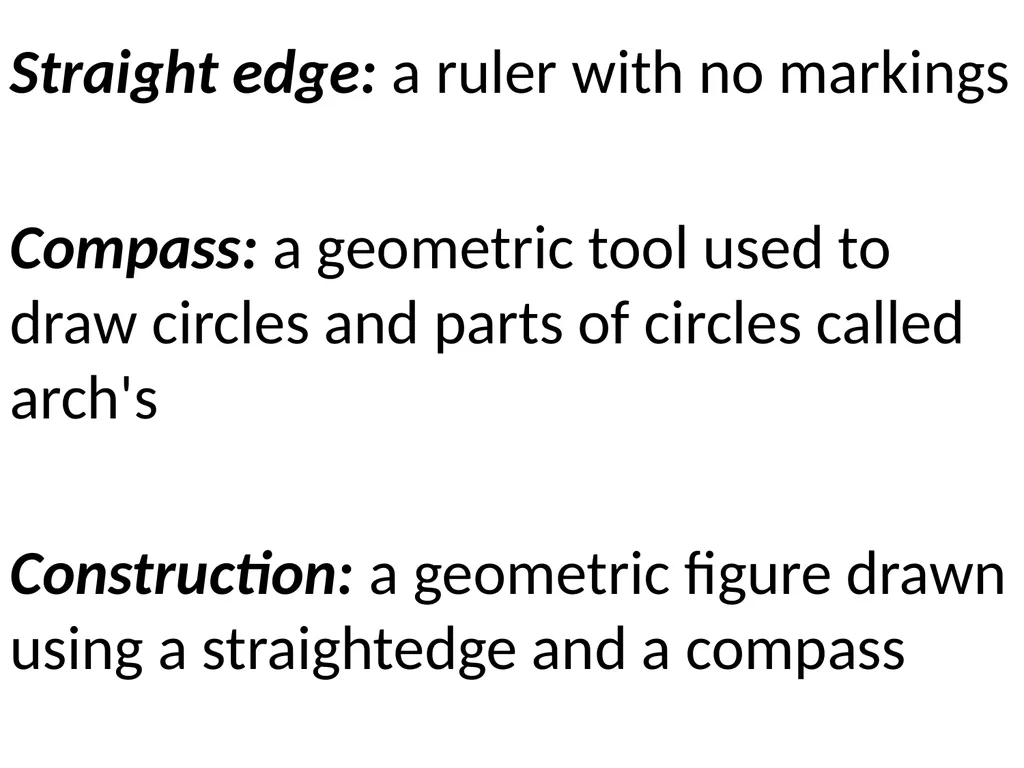
slide2. Straight edge: a ruler with no markings
Compass: a geometric tool used to draw circles and parts of circles called arch's
Construction: a geometric figure drawn using a straightedge and a compass<br>
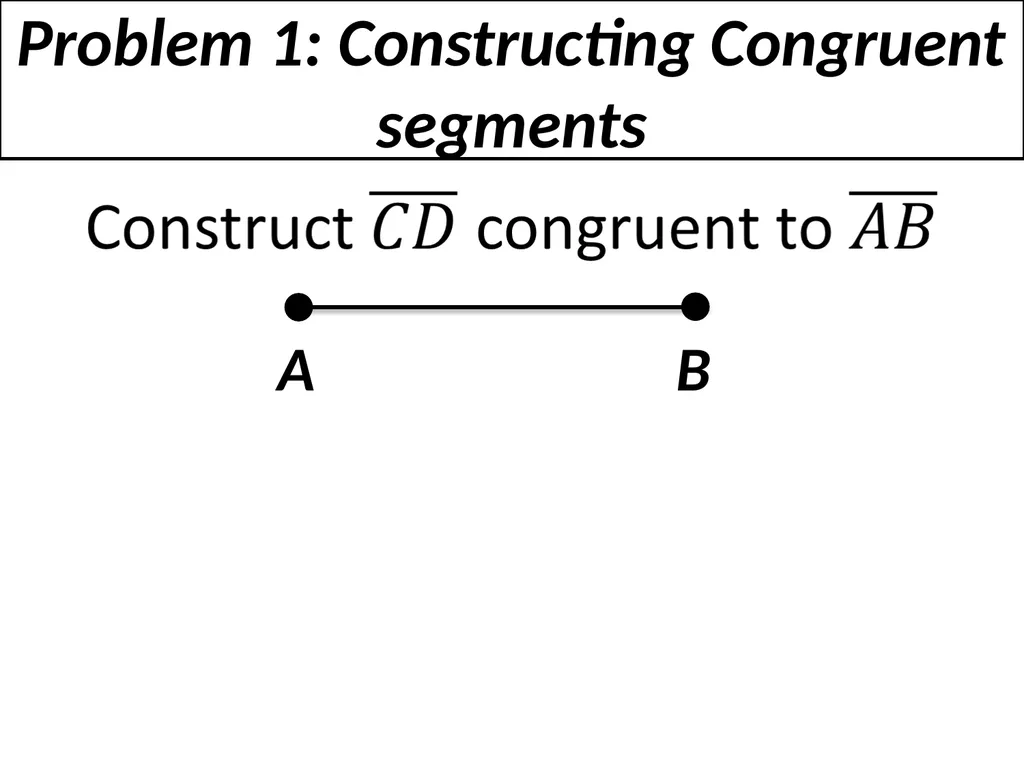
slide3. Problem 1: Constructing Congruent segments A B<br>
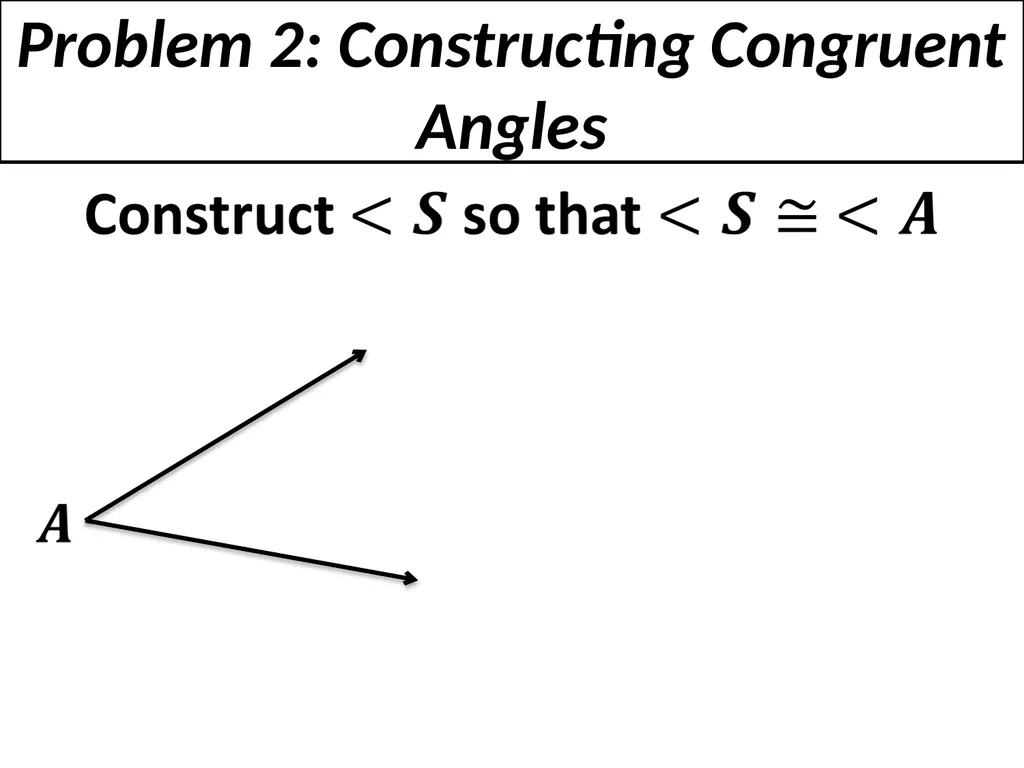
slide5. Problem 2: Constructing Congruent Angles<br>
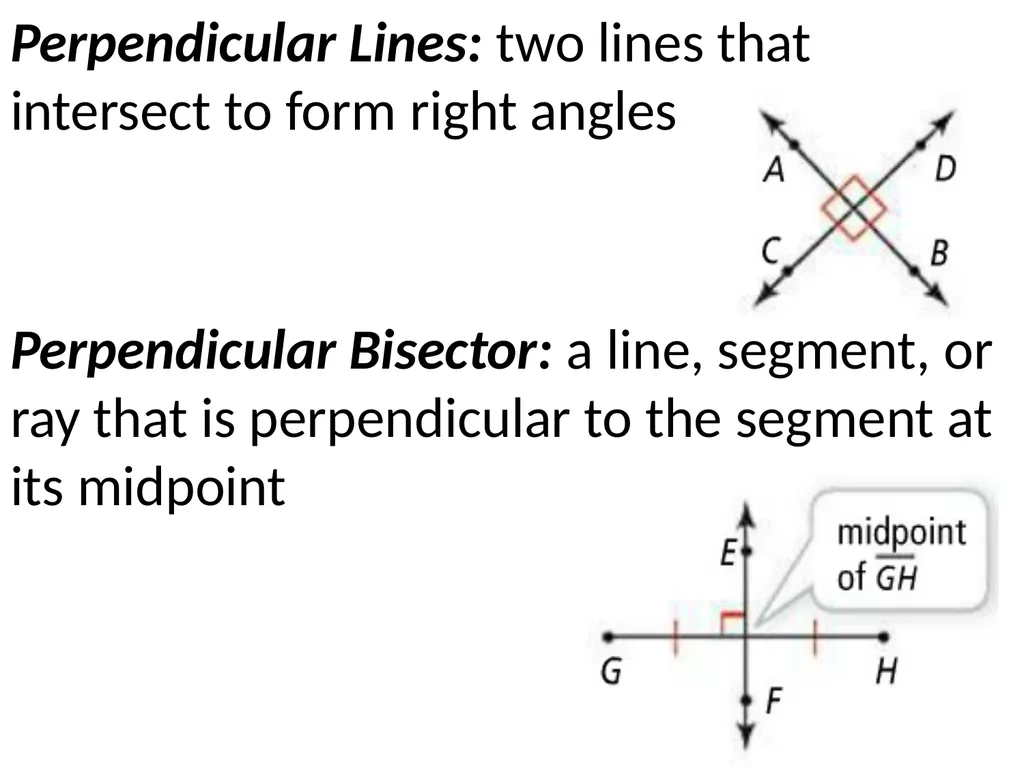
slide7. Perpendicular Lines: two lines that intersect to form right angles
Perpendicular Bisector: a line, segment, or ray that is perpendicular to the segment at its midpoint<br>
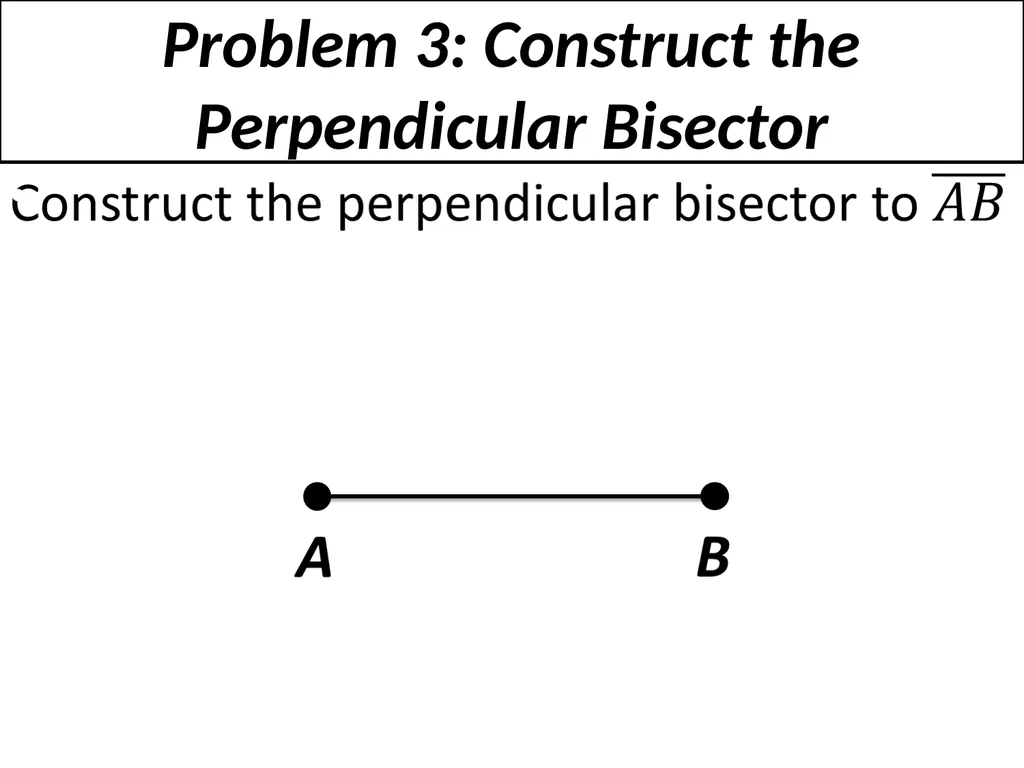
slide8. Problem 3: Construct the Perpendicular Bisector<br>
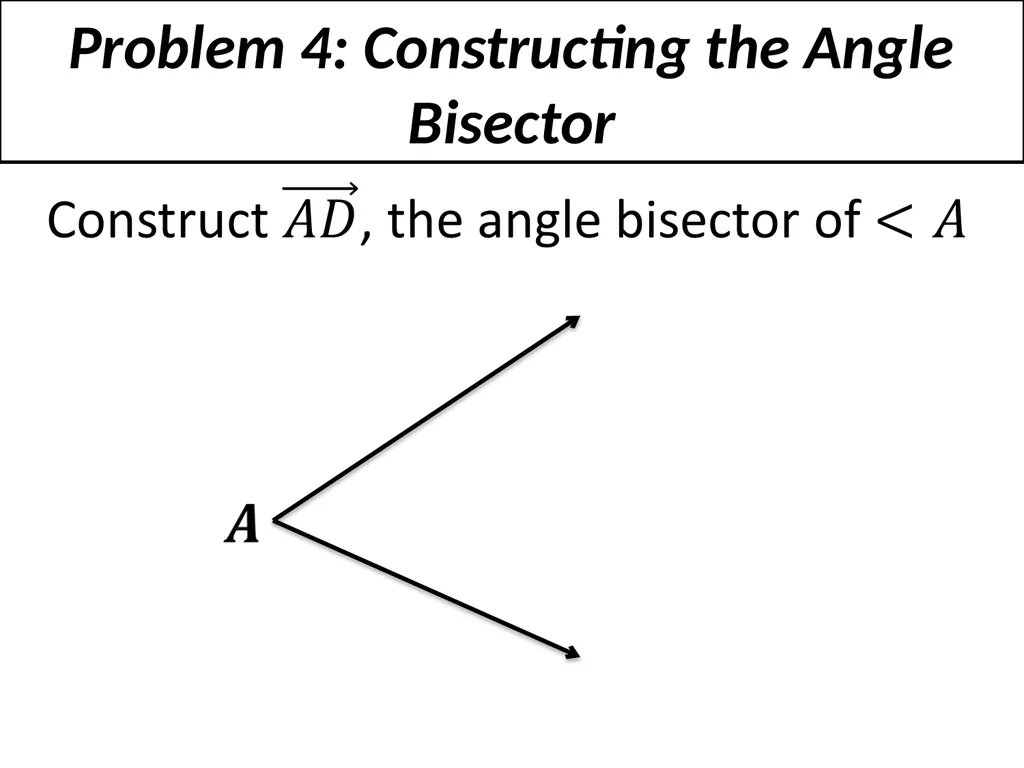
slide9. Problem 4: Constructing the Angle Bisector<br>
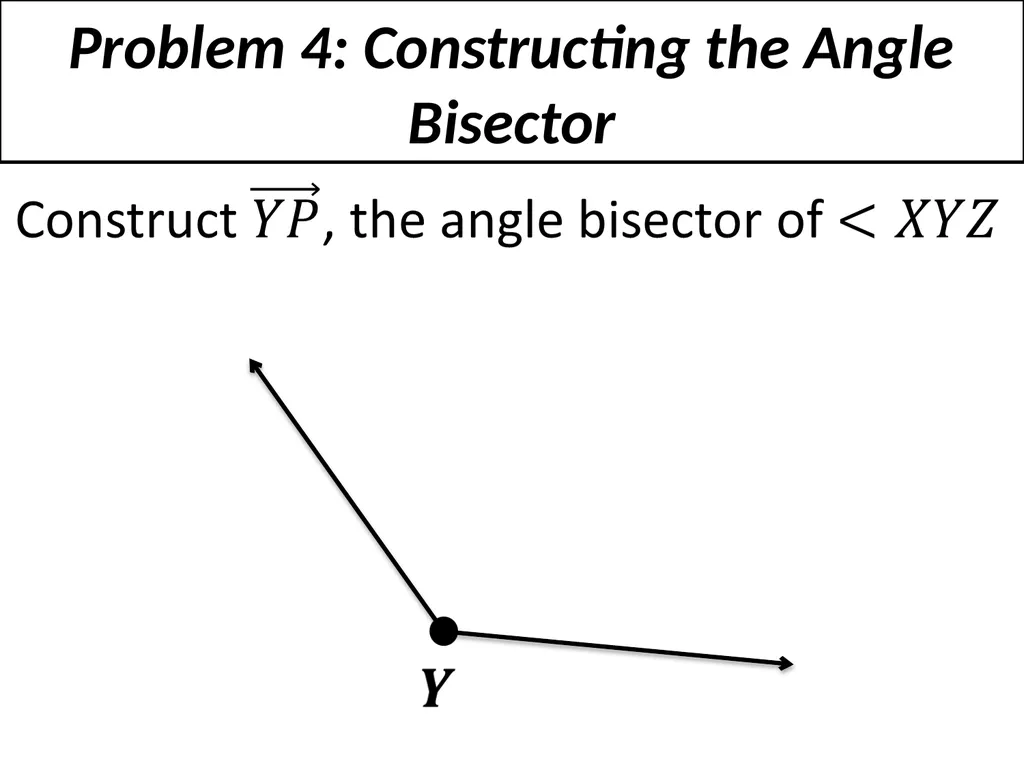
slide10. Problem 4: Constructing the Angle Bisector<br>
slide2. Straight edge: a ruler with no markings
Compass: a geometric tool used to draw circles and parts of circles called arch's
Construction: a geometric figure drawn using a straightedge and a compass<br>
slide3. Problem 1: Constructing Congruent segments A B<br>
slide5. Problem 2: Constructing Congruent Angles<br>
slide7. Perpendicular Lines: two lines that intersect to form right angles
Perpendicular Bisector: a line, segment, or ray that is perpendicular to the segment at its midpoint<br>
slide8. Problem 3: Construct the Perpendicular Bisector<br>
slide9. Problem 4: Constructing the Angle Bisector<br>
slide10. Problem 4: Constructing the Angle Bisector<br>