
1 Achieving stakeholder involvement Ade Sawyerr –

Description: 1 Achieving stakeholder involvement Ade Sawyerr Management Consultant Ubele Associate Fundraising support 2 Stakeholder involvement Identifying your stakeholders Exploring different levels of engagement Involving them into a sustainable
Related Topics
Download Presentation
"1 Achieving stakeholder involvement Ade Sawyerr –" is the property of its rightful owner. Permission is granted to download and print the materials on this website for personal, non-commercial use only, and to display it on your personal computer provided you do not modify the materials and that you retain all copyright notices contained in the materials. By downloading content from our website, you accept the terms of this agreement.
Presentation Transcript
slide1. 1<br>
slide2. Achieving stakeholder involvement Ade Sawyerr – Management Consultant
Ubele Associate
Fundraising support 2<br>
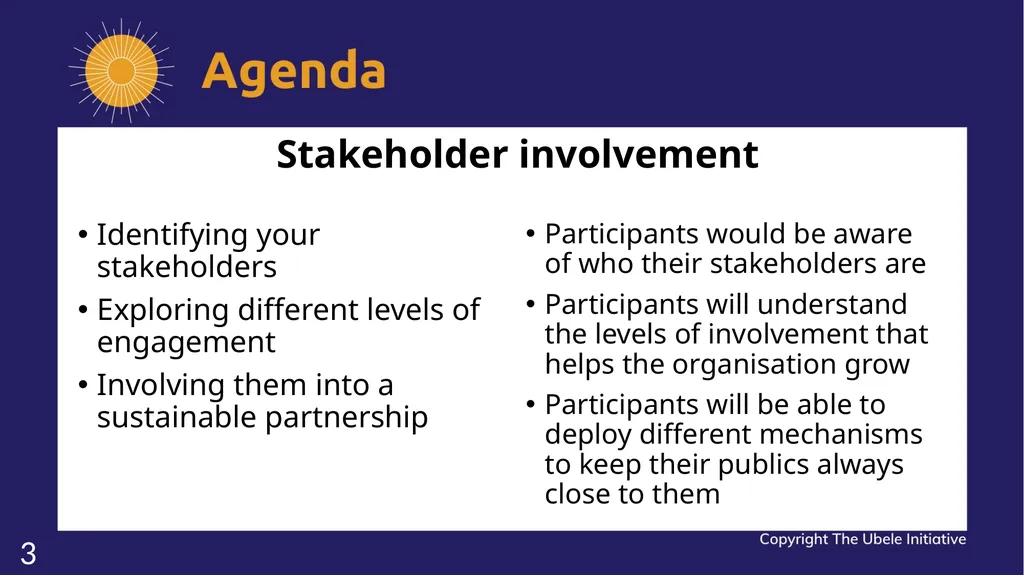
slide3. Stakeholder involvement Identifying your stakeholders
Exploring different levels of engagement
Involving them into a sustainable partnership Participants would be aware of who their stakeholders are
Participants will understand the levels of involvement that helps the organisation grow
Participants will be able to deploy different mechanisms to keep their publics always close to them 3<br>
slide4. What is stakeholder involvement Clear statement of values, policies and arrangements for involving stakeholders
Effective mechanism to understand impact on stakeholders
Standards of service provision
communicated to all stakeholders
Monitoring to ensure consistency and inclusion
Work with stakeholder led organisations to improve quality
Open door complements and complaints policy with external arbitration 4<br>
slide5. Who are your stakeholders and why? 5<br>
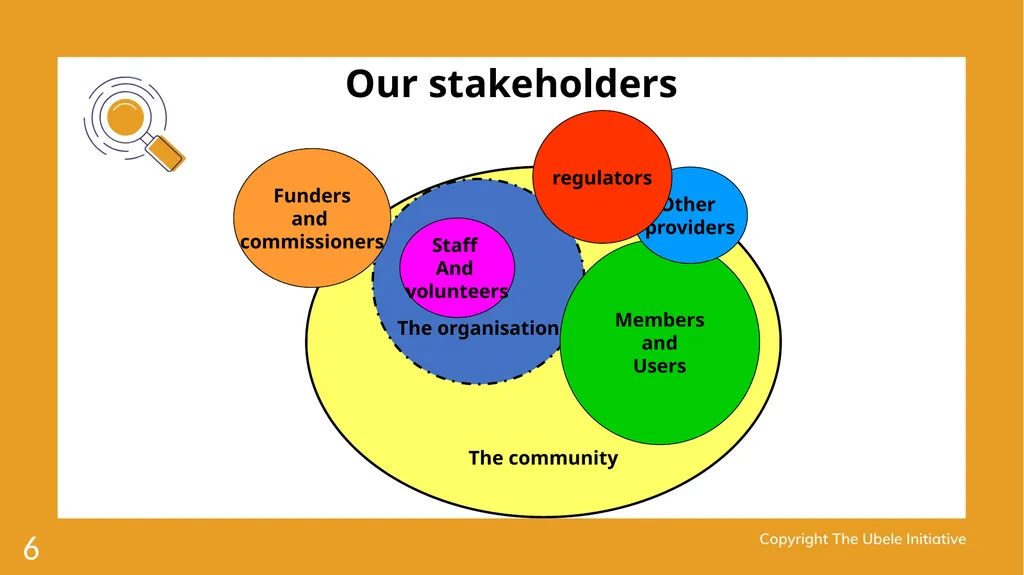
slide6. Our stakeholders The community The organisation Members
and
Users Staff
And
volunteers Other
providers Funders
and
commissioners regulators 6<br>
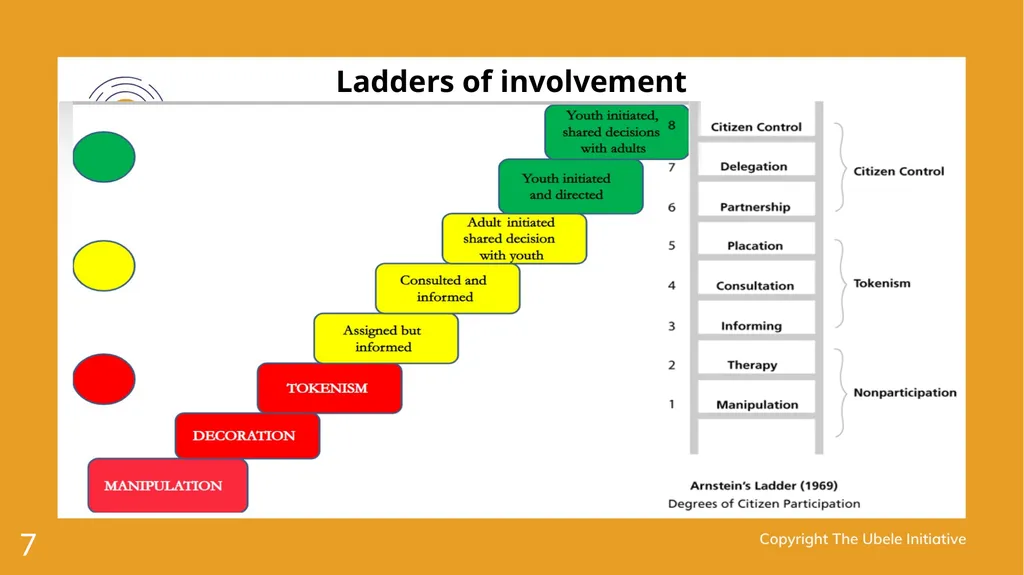
slide7. Ladders of involvement 7<br>
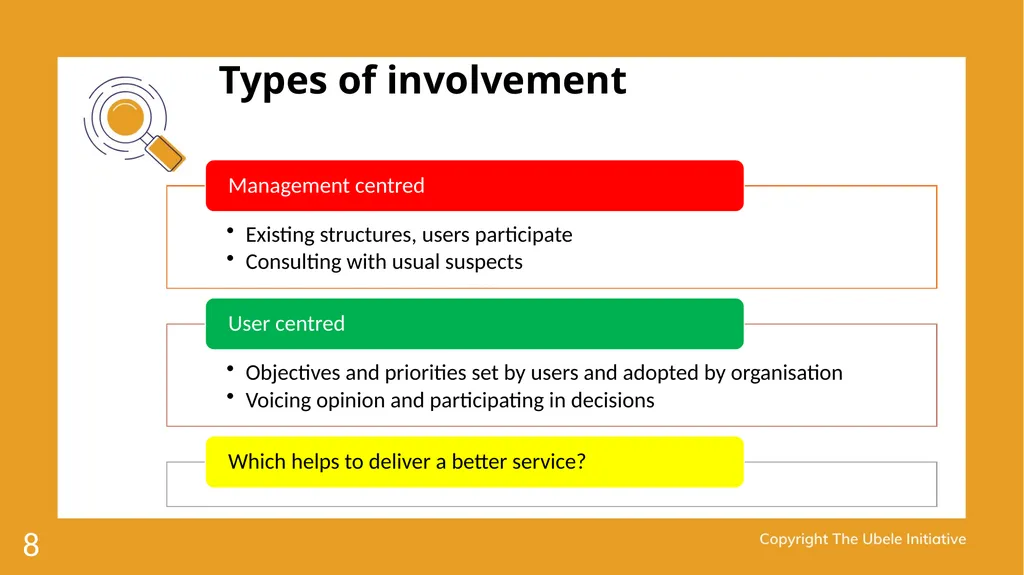
slide8. Types of involvement 8<br>
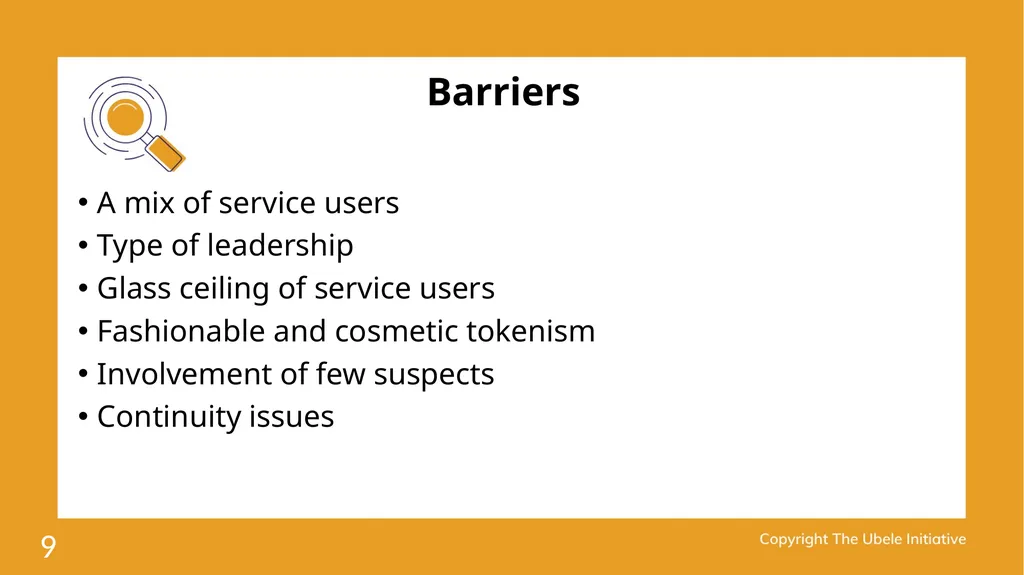
slide9. Barriers A mix of service users
Type of leadership
Glass ceiling of service users
Fashionable and cosmetic tokenism
Involvement of few suspects
Continuity issues 9<br>
slide10. Why is stakeholder involvement important? 10<br>
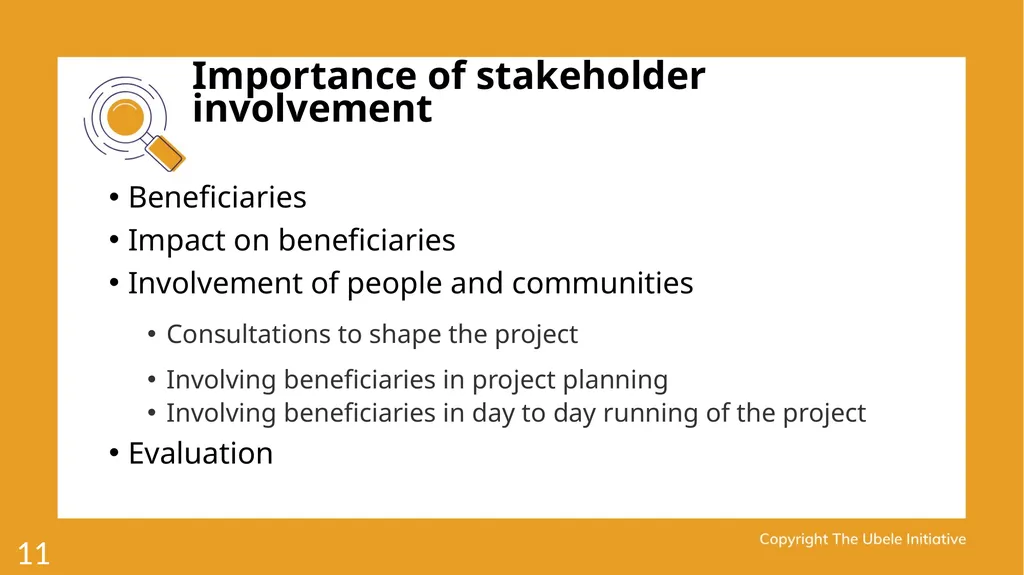
slide11. Importance of stakeholder involvement Beneficiaries
Impact on beneficiaries
Involvement of people and communities
Consultations to shape the project
Involving beneficiaries in project planning
Involving beneficiaries in day to day running of the project
Evaluation 11<br>
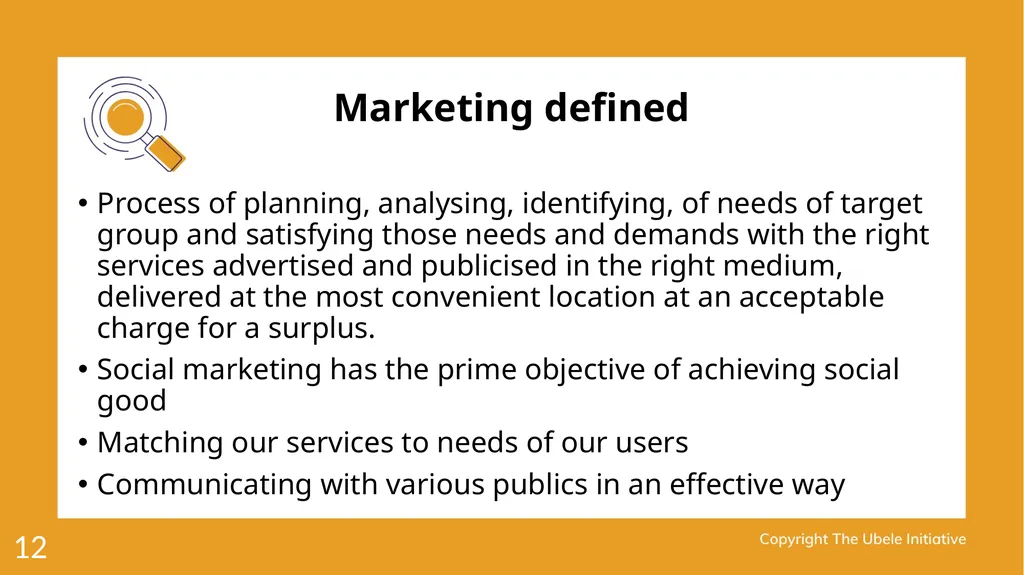
slide12. Marketing defined Process of planning, analysing, identifying, of needs of target group and satisfying those needs and demands with the right services advertised and publicised in the right medium, delivered at the most convenient location at an acceptable charge for a surplus.
Social marketing has the prime objective of achieving social good
Matching our services to needs of our users
Communicating with various publics in an effective way 12<br>
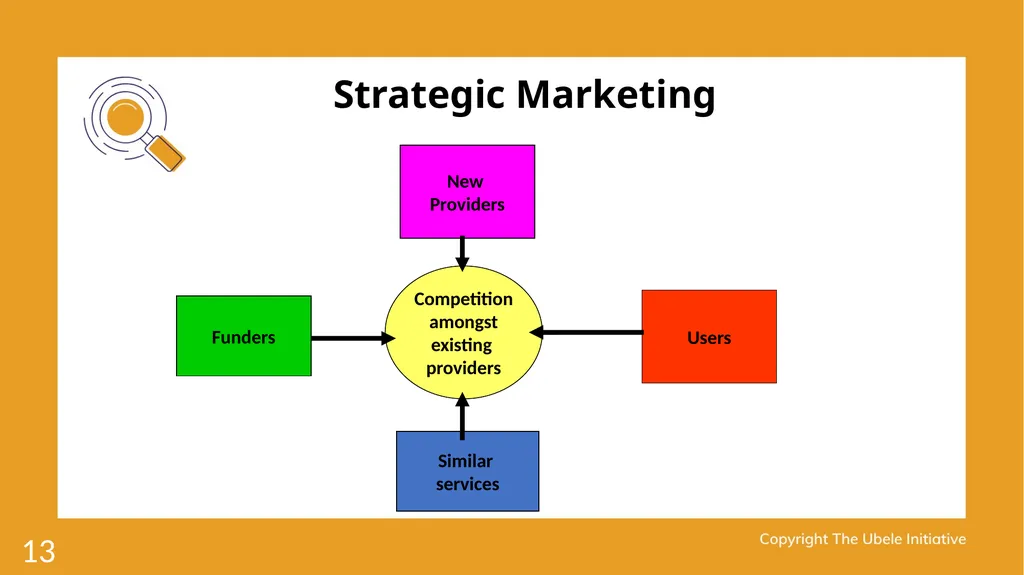
slide13. Strategic Marketing Competition
amongst
existing
providers Similar
services Users Funders New
Providers 13<br>
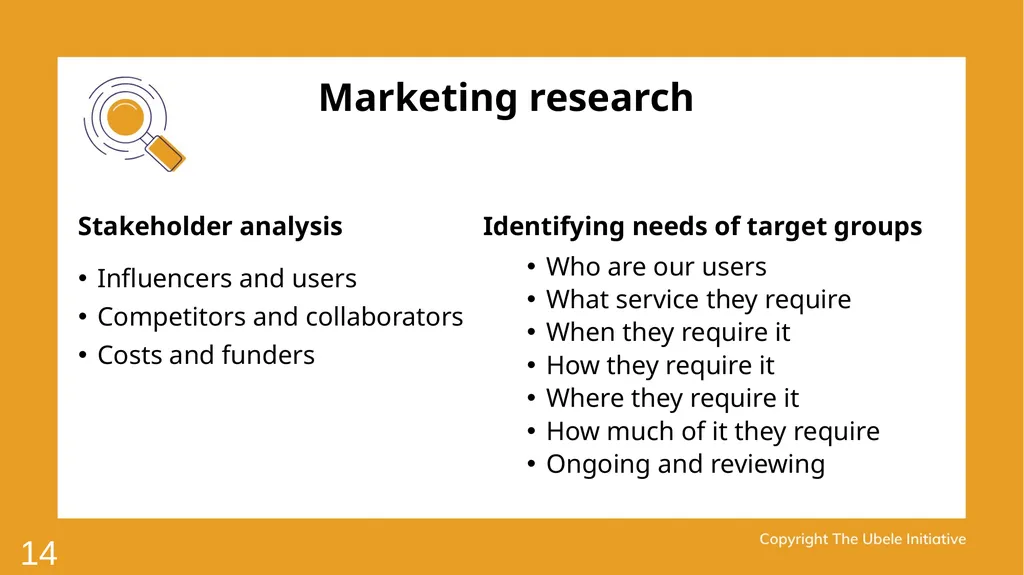
slide14. Marketing research Stakeholder analysis Influencers and users
Competitors and collaborators
Costs and funders Identifying needs of target groups Who are our users
What service they require
When they require it
How they require it
Where they require it
How much of it they require
Ongoing and reviewing 14<br>
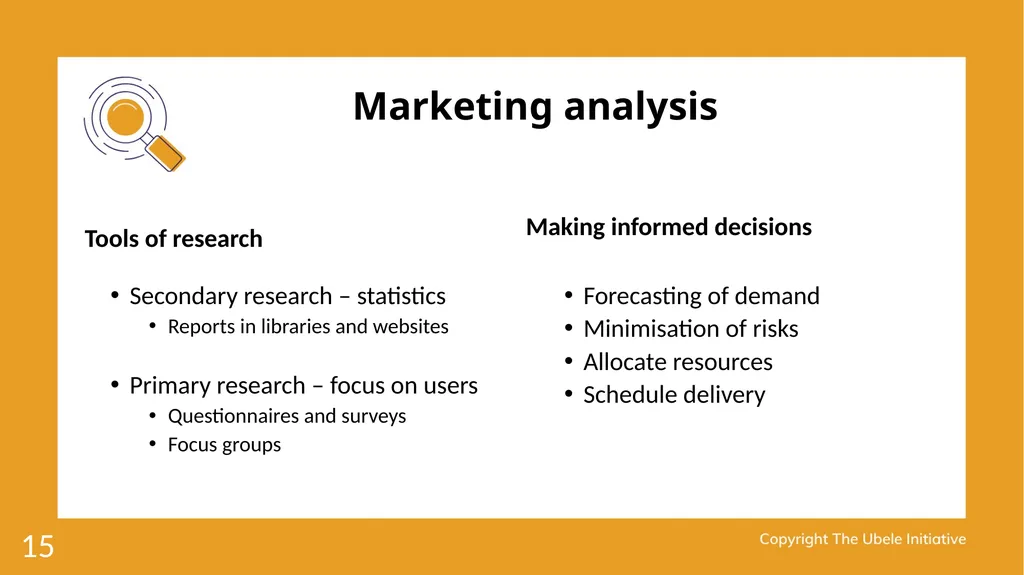
slide15. Marketing analysis Tools of research Secondary research – statistics
Reports in libraries and websites
Primary research – focus on users
Questionnaires and surveys
Focus groups Making informed decisions Forecasting of demand
Minimisation of risks
Allocate resources
Schedule delivery 15<br>
slide16. Traditional elements of marketing Products and services
Who will use our services
What must we provide
Placement and distribution
Where do we provide
Accessibility and outreach
Promotion and advertising
what do we say and where
Pricing and costing
How much does it cost
Who pays for it 16<br>
slide17. Segmenting and targeting the service Formal service What is the core service
Packaging
Branding
quality Augmented service Different users want different things from us
Geographical, age, class, gender, ethnicity
Severity of need
Special features
image 17 Need to continue to develop the service to match the changing needs of the users
Standardised service against specialist service<br>
slide18. Placing the service Location factors
Physical environment
Channels of referrals
Accessibility issues
Convenience of users
Disability issues
Subcontracting relationships 18<br>
slide19. Pricing the service The concept of primary and secondary users
Who takes the purchasing decision
Purchasers and influences
Best value issues
Full cost recovery issues
Set up costs
Direct costs
Overhead costs
Management costs
Membership and usage fees
Affordability
Making payment easier
Premium product and service 19<br>
slide20. Promotion and Publicity Image and target client group
The purpose
Awareness
Interest
Desire
Action
The communication mix
The content
The medium
The process 20<br>
slide21. The Content Who we are and what we do
Who we serve, where and when
How to contact us
Example of what we do
Testimony and endorsement
Benefits
Next steps 21<br>
slide22. The Message Service delivery and information to users
Publicity is not paid for
Advertising is paid for
Staff and volunteer recruitment
Message to sponsors and funders
Message to members
Message to general public
Proposals to funders 22<br>
slide23. The Media Television? Radio?
Press
National, local, ethnic, trade or sector
Publicity or advertising
Articles
Directories
Exhibitions and fairs
Open days
Newsletters
Poster and brochures
Social Media
Email and mailing lists
Website
Reports 23<br>
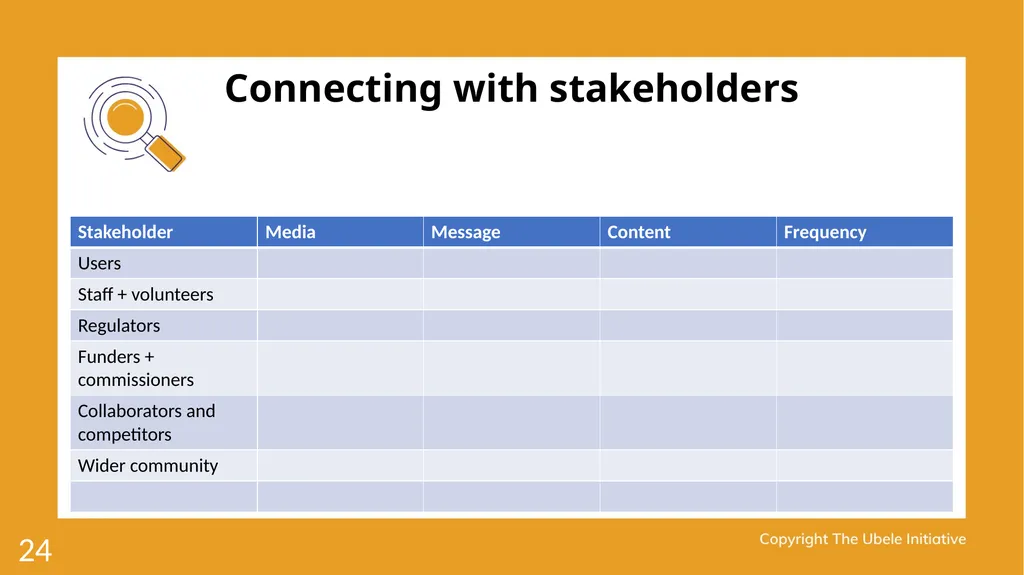
slide24. Connecting with stakeholders 24<br>
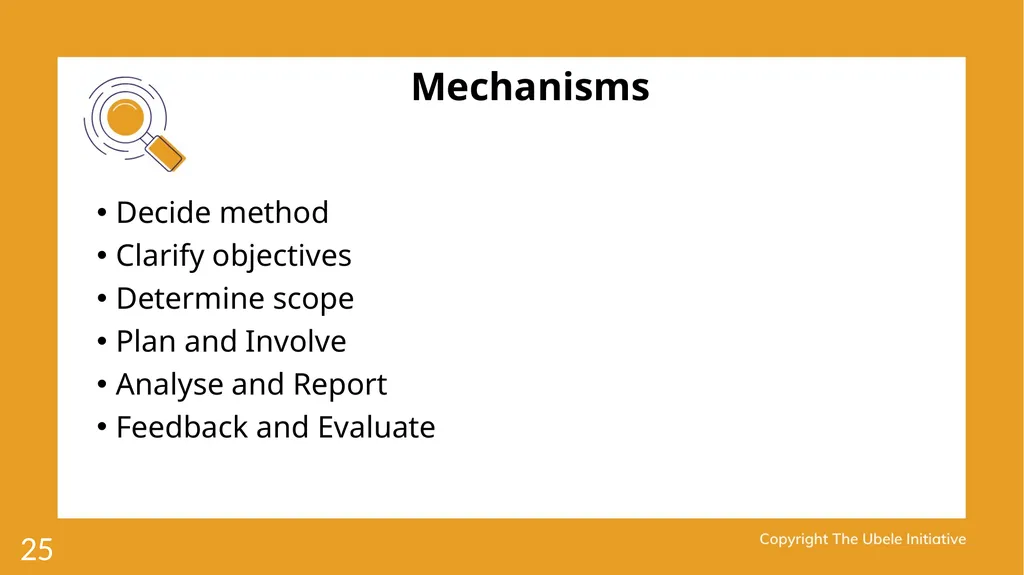
slide25. Mechanisms Decide method
Clarify objectives
Determine scope
Plan and Involve
Analyse and Report
Feedback and Evaluate 25<br>
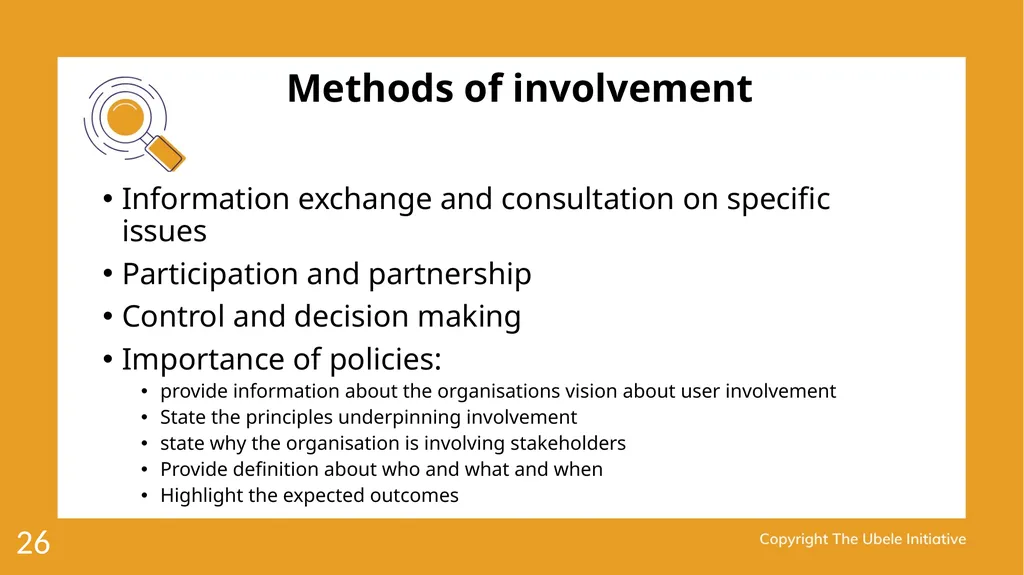
slide26. Methods of involvement Information exchange and consultation on specific issues
Participation and partnership
Control and decision making
Importance of policies:
provide information about the organisations vision about user involvement
State the principles underpinning involvement
state why the organisation is involving stakeholders
Provide definition about who and what and when
Highlight the expected outcomes 26<br>
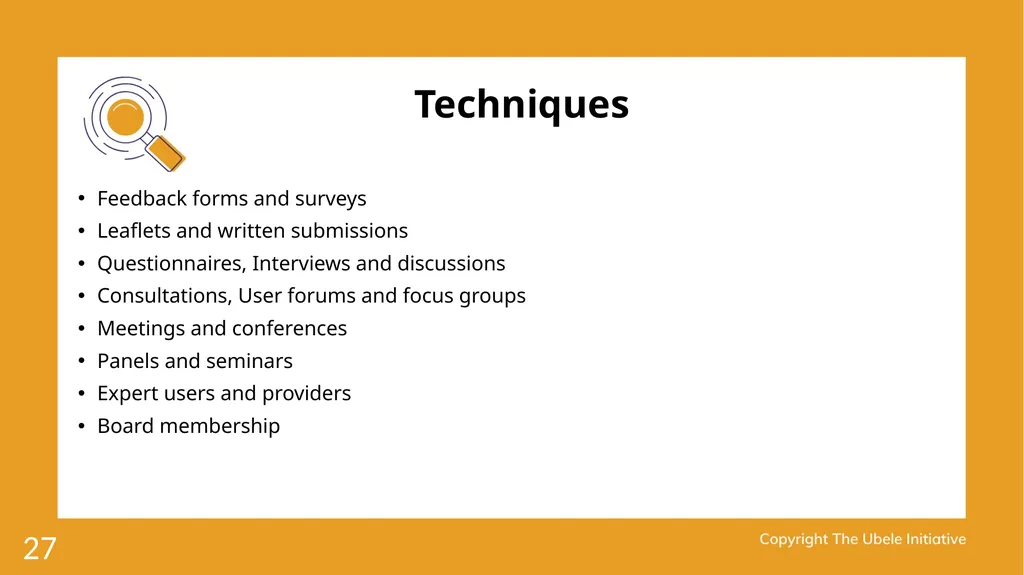
slide27. Techniques Feedback forms and surveys
Leaflets and written submissions
Questionnaires, Interviews and discussions
Consultations, User forums and focus groups
Meetings and conferences
Panels and seminars
Expert users and providers
Board membership 27<br>
slide28. Marketing oriented – user focused Know your service
Know your markets and users
Know who else provides a similar service
Ask your users what they want
Tell the funders and commissioners what the users want
Ensure that you can reach your users all the time
Find out how to improve service delivery
Make it easier for your users to approach you
Marketing is the only way you satisfy your stakeholders
Marketing is the only way you achieve sustainability 28<br>
slide29. Who are the users Who are the purchasers and commissioners?
Recognition that users are generally the best judge of their own needs does not sit comfortably with the concepts of 'charity', 'philanthropy' and 'benevolence' and the sector has been criticised for being remote and paternalistic. Although the process can be difficult and time-consuming, organisations should ensure further progress is made towards user empowerment.
Direct experience of services
Are there other beneficiaries
Are there secondary users and influencers
move towards democratic control 29<br>
slide30. Role of users Development and Testing
Researching needs
Consultations and discussions
Focus and user groups
Commenting on services and activities
Deciding on most effective range
Commenting on type of services
Commenting on delivery modes and methods Service Delivery
Self help providers
User volunteers
Expert users and advisers
Empowered providers 30<br>
slide31. Staff involvement Quality standards
clear statement of purpose required
requirement to involve all groups
anti-discriminatory approach
Involve hard to reach groups
extent of influence should be clear
Feedback for all involvement exercises
support, preparation and training for all
clarity about resources and finances Monitoring
Comments and suggestions
Views on the service
Focus groups
Communicating complaints and compliments
Case studies
Reviews 31<br>
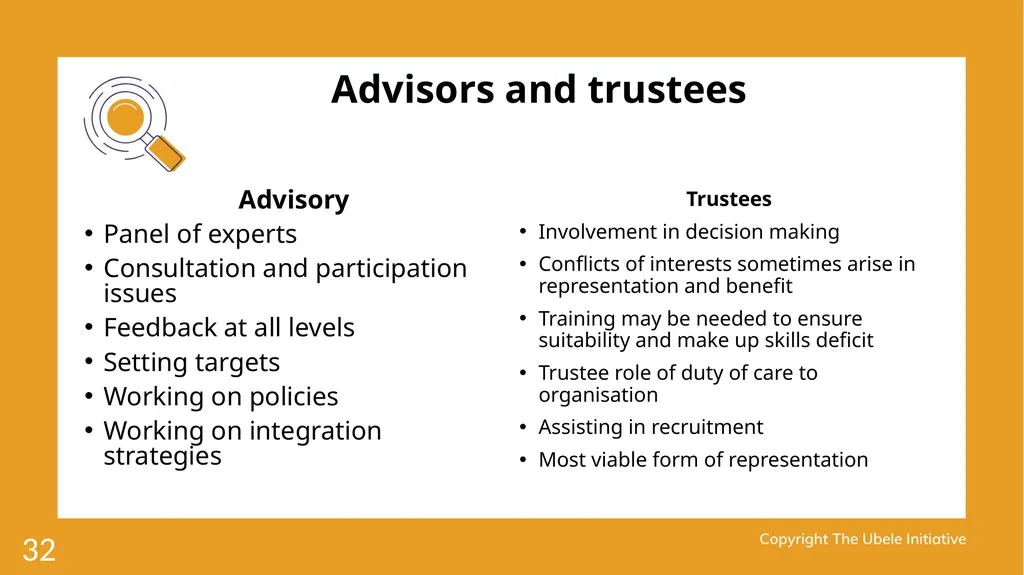
slide32. Advisors and trustees Advisory
Panel of experts
Consultation and participation issues
Feedback at all levels
Setting targets
Working on policies
Working on integration strategies Trustees
Involvement in decision making
Conflicts of interests sometimes arise in representation and benefit
Training may be needed to ensure suitability and make up skills deficit
Trustee role of duty of care to organisation
Assisting in recruitment
Most viable form of representation 32<br>
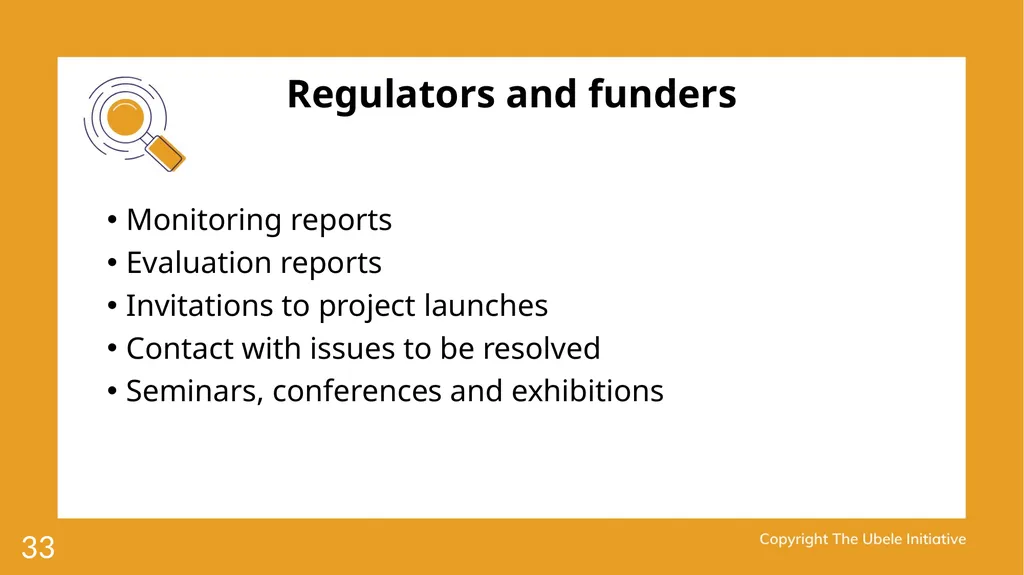
slide33. Regulators and funders Monitoring reports
Evaluation reports
Invitations to project launches
Contact with issues to be resolved
Seminars, conferences and exhibitions 33<br>
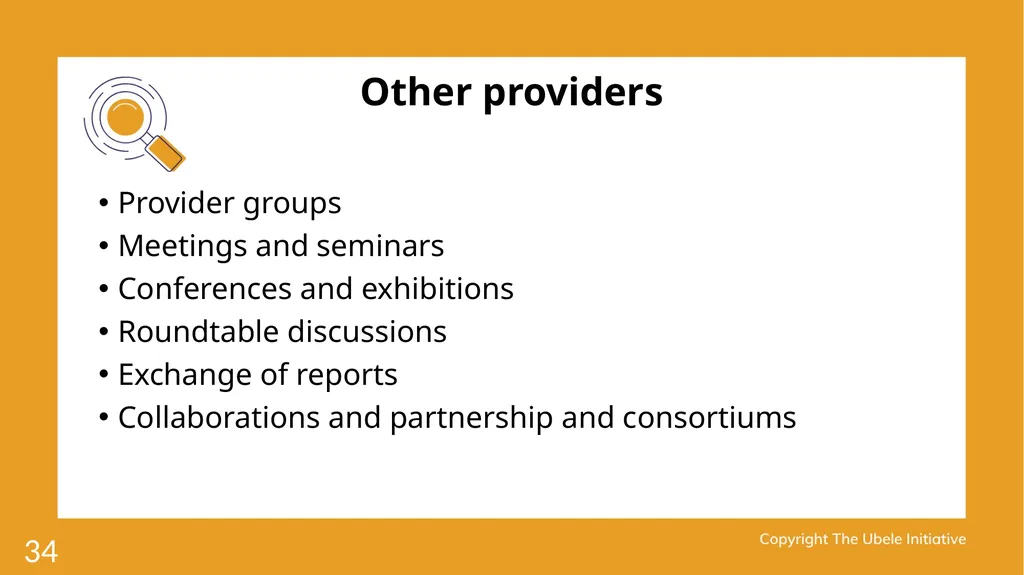
slide34. Other providers Provider groups
Meetings and seminars
Conferences and exhibitions
Roundtable discussions
Exchange of reports
Collaborations and partnership and consortiums 34<br>
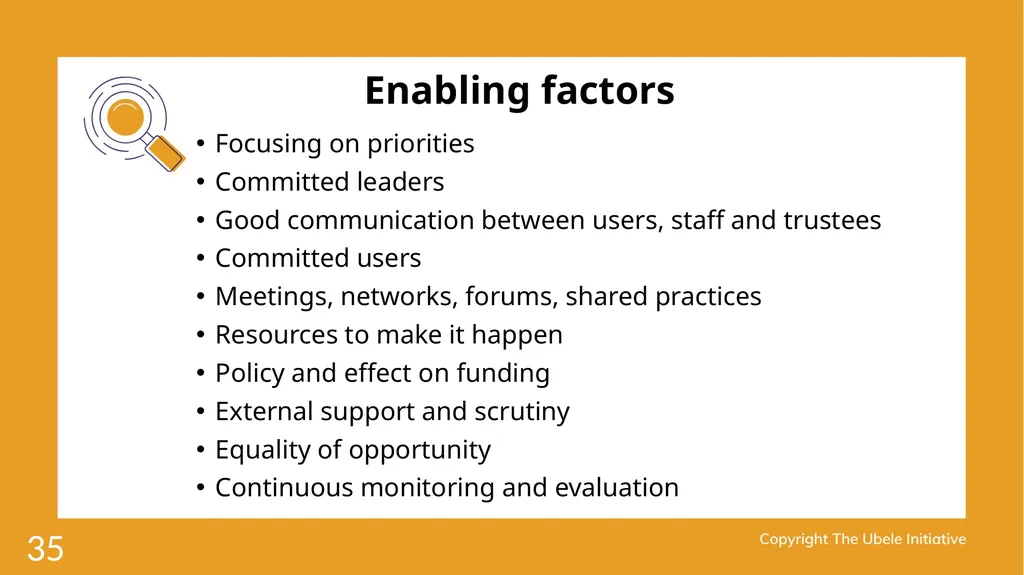
slide35. Enabling factors Focusing on priorities
Committed leaders
Good communication between users, staff and trustees
Committed users
Meetings, networks, forums, shared practices
Resources to make it happen
Policy and effect on funding
External support and scrutiny
Equality of opportunity
Continuous monitoring and evaluation 35<br>
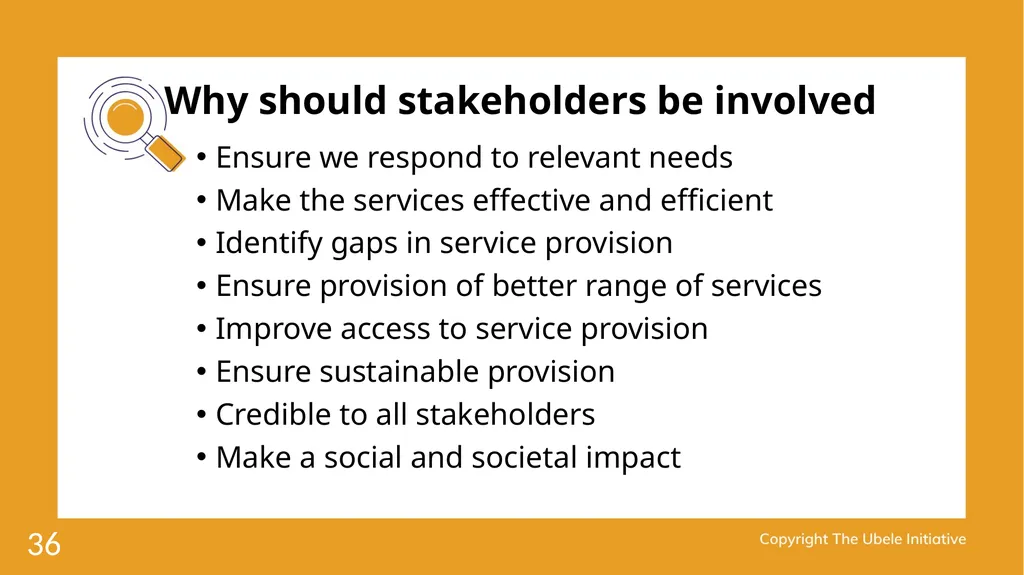
slide36. Why should stakeholders be involved Ensure we respond to relevant needs
Make the services effective and efficient
Identify gaps in service provision
Ensure provision of better range of services
Improve access to service provision
Ensure sustainable provision
Credible to all stakeholders
Make a social and societal impact 36<br>
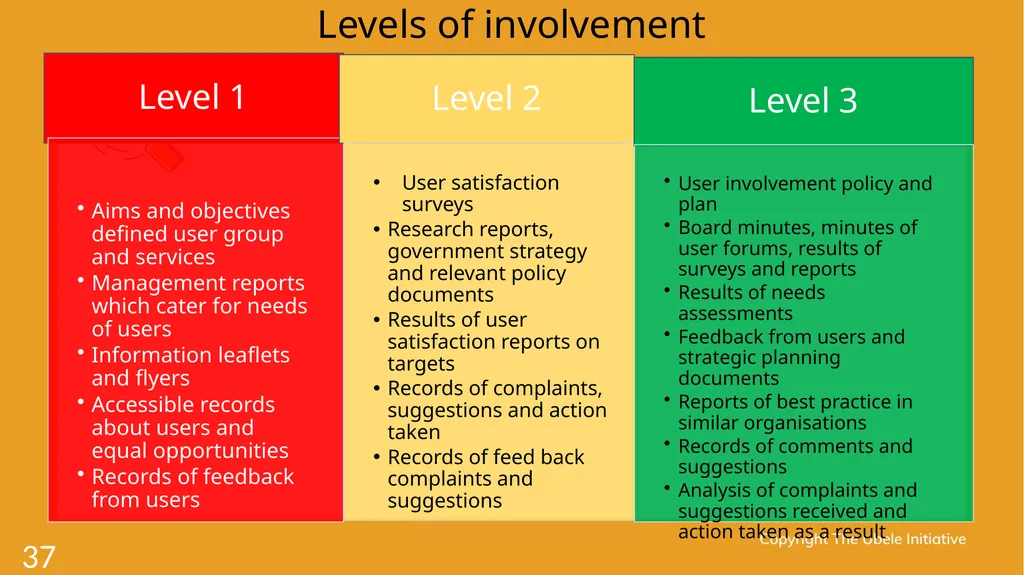
slide37. Levels of involvement 37<br>
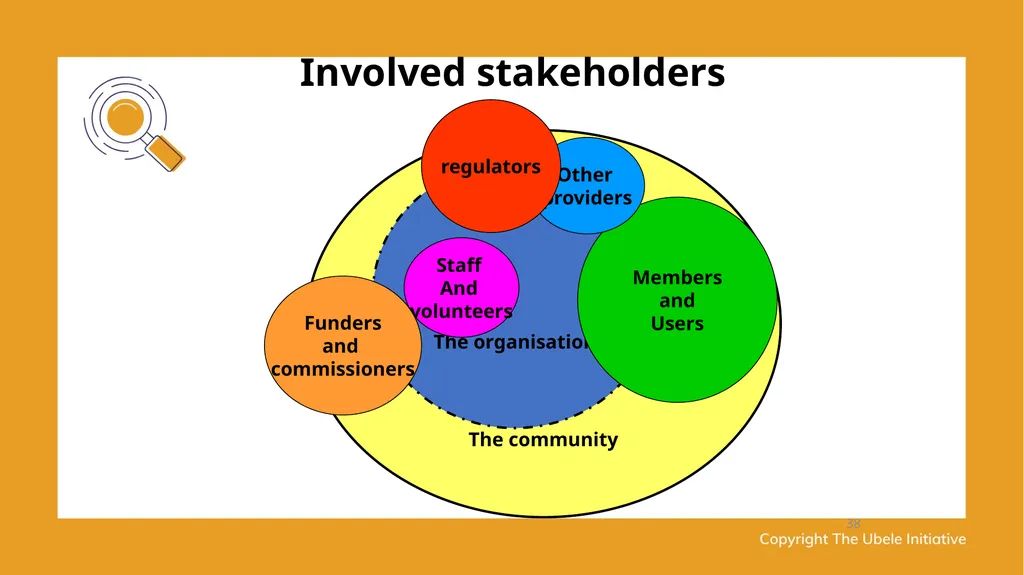
slide38. Involved stakeholders 38 The community The organisation Members
and
Users Staff
And
volunteers Other
providers Funders
and
commissioners regulators<br>
slide39. Q&A 39<br>
slide40. 40<br>
slide2. Achieving stakeholder involvement Ade Sawyerr – Management Consultant
Ubele Associate
Fundraising support 2<br>
slide3. Stakeholder involvement Identifying your stakeholders
Exploring different levels of engagement
Involving them into a sustainable partnership Participants would be aware of who their stakeholders are
Participants will understand the levels of involvement that helps the organisation grow
Participants will be able to deploy different mechanisms to keep their publics always close to them 3<br>
slide4. What is stakeholder involvement Clear statement of values, policies and arrangements for involving stakeholders
Effective mechanism to understand impact on stakeholders
Standards of service provision
communicated to all stakeholders
Monitoring to ensure consistency and inclusion
Work with stakeholder led organisations to improve quality
Open door complements and complaints policy with external arbitration 4<br>
slide5. Who are your stakeholders and why? 5<br>
slide6. Our stakeholders The community The organisation Members
and
Users Staff
And
volunteers Other
providers Funders
and
commissioners regulators 6<br>
slide7. Ladders of involvement 7<br>
slide8. Types of involvement 8<br>
slide9. Barriers A mix of service users
Type of leadership
Glass ceiling of service users
Fashionable and cosmetic tokenism
Involvement of few suspects
Continuity issues 9<br>
slide10. Why is stakeholder involvement important? 10<br>
slide11. Importance of stakeholder involvement Beneficiaries
Impact on beneficiaries
Involvement of people and communities
Consultations to shape the project
Involving beneficiaries in project planning
Involving beneficiaries in day to day running of the project
Evaluation 11<br>
slide12. Marketing defined Process of planning, analysing, identifying, of needs of target group and satisfying those needs and demands with the right services advertised and publicised in the right medium, delivered at the most convenient location at an acceptable charge for a surplus.
Social marketing has the prime objective of achieving social good
Matching our services to needs of our users
Communicating with various publics in an effective way 12<br>
slide13. Strategic Marketing Competition
amongst
existing
providers Similar
services Users Funders New
Providers 13<br>
slide14. Marketing research Stakeholder analysis Influencers and users
Competitors and collaborators
Costs and funders Identifying needs of target groups Who are our users
What service they require
When they require it
How they require it
Where they require it
How much of it they require
Ongoing and reviewing 14<br>
slide15. Marketing analysis Tools of research Secondary research – statistics
Reports in libraries and websites
Primary research – focus on users
Questionnaires and surveys
Focus groups Making informed decisions Forecasting of demand
Minimisation of risks
Allocate resources
Schedule delivery 15<br>
slide16. Traditional elements of marketing Products and services
Who will use our services
What must we provide
Placement and distribution
Where do we provide
Accessibility and outreach
Promotion and advertising
what do we say and where
Pricing and costing
How much does it cost
Who pays for it 16<br>
slide17. Segmenting and targeting the service Formal service What is the core service
Packaging
Branding
quality Augmented service Different users want different things from us
Geographical, age, class, gender, ethnicity
Severity of need
Special features
image 17 Need to continue to develop the service to match the changing needs of the users
Standardised service against specialist service<br>
slide18. Placing the service Location factors
Physical environment
Channels of referrals
Accessibility issues
Convenience of users
Disability issues
Subcontracting relationships 18<br>
slide19. Pricing the service The concept of primary and secondary users
Who takes the purchasing decision
Purchasers and influences
Best value issues
Full cost recovery issues
Set up costs
Direct costs
Overhead costs
Management costs
Membership and usage fees
Affordability
Making payment easier
Premium product and service 19<br>
slide20. Promotion and Publicity Image and target client group
The purpose
Awareness
Interest
Desire
Action
The communication mix
The content
The medium
The process 20<br>
slide21. The Content Who we are and what we do
Who we serve, where and when
How to contact us
Example of what we do
Testimony and endorsement
Benefits
Next steps 21<br>
slide22. The Message Service delivery and information to users
Publicity is not paid for
Advertising is paid for
Staff and volunteer recruitment
Message to sponsors and funders
Message to members
Message to general public
Proposals to funders 22<br>
slide23. The Media Television? Radio?
Press
National, local, ethnic, trade or sector
Publicity or advertising
Articles
Directories
Exhibitions and fairs
Open days
Newsletters
Poster and brochures
Social Media
Email and mailing lists
Website
Reports 23<br>
slide24. Connecting with stakeholders 24<br>
slide25. Mechanisms Decide method
Clarify objectives
Determine scope
Plan and Involve
Analyse and Report
Feedback and Evaluate 25<br>
slide26. Methods of involvement Information exchange and consultation on specific issues
Participation and partnership
Control and decision making
Importance of policies:
provide information about the organisations vision about user involvement
State the principles underpinning involvement
state why the organisation is involving stakeholders
Provide definition about who and what and when
Highlight the expected outcomes 26<br>
slide27. Techniques Feedback forms and surveys
Leaflets and written submissions
Questionnaires, Interviews and discussions
Consultations, User forums and focus groups
Meetings and conferences
Panels and seminars
Expert users and providers
Board membership 27<br>
slide28. Marketing oriented – user focused Know your service
Know your markets and users
Know who else provides a similar service
Ask your users what they want
Tell the funders and commissioners what the users want
Ensure that you can reach your users all the time
Find out how to improve service delivery
Make it easier for your users to approach you
Marketing is the only way you satisfy your stakeholders
Marketing is the only way you achieve sustainability 28<br>
slide29. Who are the users Who are the purchasers and commissioners?
Recognition that users are generally the best judge of their own needs does not sit comfortably with the concepts of 'charity', 'philanthropy' and 'benevolence' and the sector has been criticised for being remote and paternalistic. Although the process can be difficult and time-consuming, organisations should ensure further progress is made towards user empowerment.
Direct experience of services
Are there other beneficiaries
Are there secondary users and influencers
move towards democratic control 29<br>
slide30. Role of users Development and Testing
Researching needs
Consultations and discussions
Focus and user groups
Commenting on services and activities
Deciding on most effective range
Commenting on type of services
Commenting on delivery modes and methods Service Delivery
Self help providers
User volunteers
Expert users and advisers
Empowered providers 30<br>
slide31. Staff involvement Quality standards
clear statement of purpose required
requirement to involve all groups
anti-discriminatory approach
Involve hard to reach groups
extent of influence should be clear
Feedback for all involvement exercises
support, preparation and training for all
clarity about resources and finances Monitoring
Comments and suggestions
Views on the service
Focus groups
Communicating complaints and compliments
Case studies
Reviews 31<br>
slide32. Advisors and trustees Advisory
Panel of experts
Consultation and participation issues
Feedback at all levels
Setting targets
Working on policies
Working on integration strategies Trustees
Involvement in decision making
Conflicts of interests sometimes arise in representation and benefit
Training may be needed to ensure suitability and make up skills deficit
Trustee role of duty of care to organisation
Assisting in recruitment
Most viable form of representation 32<br>
slide33. Regulators and funders Monitoring reports
Evaluation reports
Invitations to project launches
Contact with issues to be resolved
Seminars, conferences and exhibitions 33<br>
slide34. Other providers Provider groups
Meetings and seminars
Conferences and exhibitions
Roundtable discussions
Exchange of reports
Collaborations and partnership and consortiums 34<br>
slide35. Enabling factors Focusing on priorities
Committed leaders
Good communication between users, staff and trustees
Committed users
Meetings, networks, forums, shared practices
Resources to make it happen
Policy and effect on funding
External support and scrutiny
Equality of opportunity
Continuous monitoring and evaluation 35<br>
slide36. Why should stakeholders be involved Ensure we respond to relevant needs
Make the services effective and efficient
Identify gaps in service provision
Ensure provision of better range of services
Improve access to service provision
Ensure sustainable provision
Credible to all stakeholders
Make a social and societal impact 36<br>
slide37. Levels of involvement 37<br>
slide38. Involved stakeholders 38 The community The organisation Members
and
Users Staff
And
volunteers Other
providers Funders
and
commissioners regulators<br>
slide39. Q&A 39<br>
slide40. 40<br>