1 Engaging with Faculty and Academic Staff on Retirement Retirement isnt what it used to be. For Individuals: Since 1994 academic retirement in U.S. is less structured and predictable. Complex process placing more responsibility on the
Related Topics
Share
Embed code
Download this presentation From Below
"1 Engaging with Faculty and Academic Staff on" is the property of its rightful owner. Permission is granted to
download and print the materials on this website for personal, non-commercial use only, and to display it
on your personal computer provided you do not modify the materials and that you retain all copyright
notices contained in the materials. By downloading content from our website, you accept the terms of this
agreement.
Presentation Transcript
01
1 Engaging with Faculty and Academic Staff on Retirement<br>
02
Retirement isn’t what it used to be. For Individuals: Since 1994 academic retirement in U.S. is less structured and predictable.
Complex process placing more responsibility on the individual
When to retire?
How to retire: All at once or gradually?
What to do after retirement?
Concern about marginalization
Retirement is sometimes a “taboo” topic: Difficult conversation to begin and manage 2<br>
03
Retirement isn’t what it used to be: For Institutions, chairs, and supervisors Since 1994, retirement is also more challenging for institutions, chairs, and supervisors
How to maintain a steady flow of professional talent without a fixed retirement age?
Predictability of staffing changes/Succession planning
Continued access to valuable resources when faculty and staff retire
Hence, need to be more intentional about designing retirement options & plans 3<br>
04
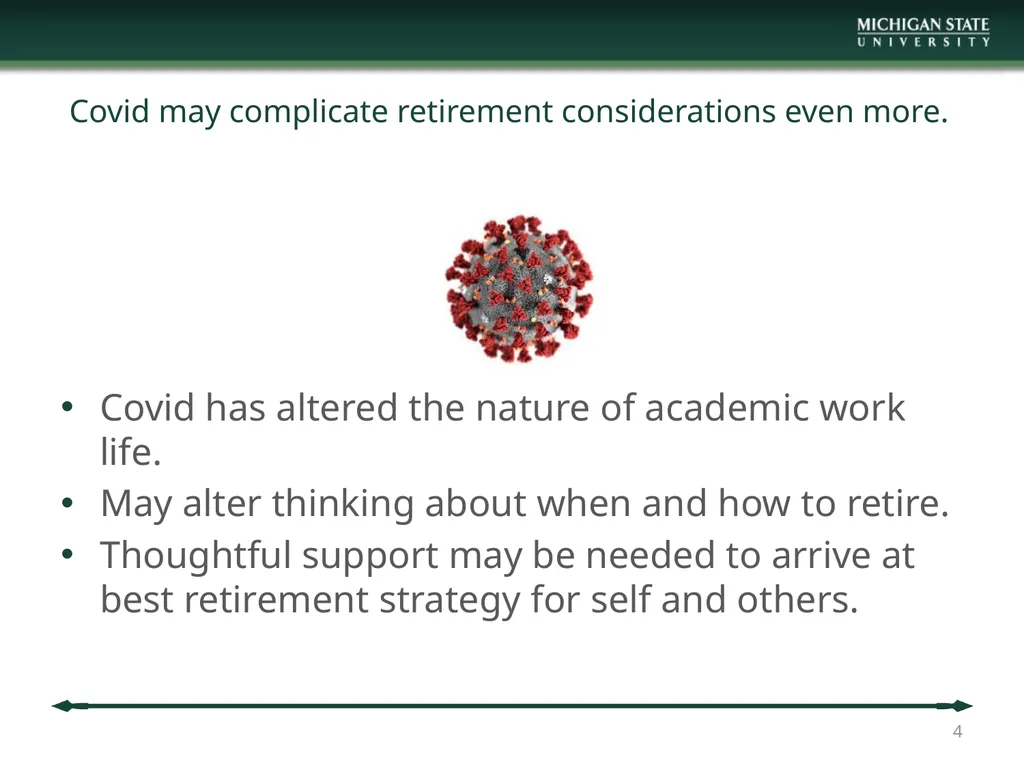
Covid may complicate retirement considerations even more. Covid has altered the nature of academic work life.
May alter thinking about when and how to retire.
Thoughtful support may be needed to arrive at best retirement strategy for self and others. 4<br>
05
Chairs & supervisors are on the front lines: Starting and managing the retirement conversation is challenging for chairs, supervisors
Legal issues
Financial and resource issues
Professional identity issues (Questions of value, purpose, direction)
Many chairs and supervisors don’t feel well prepared to navigate this terrain 5<br>
06
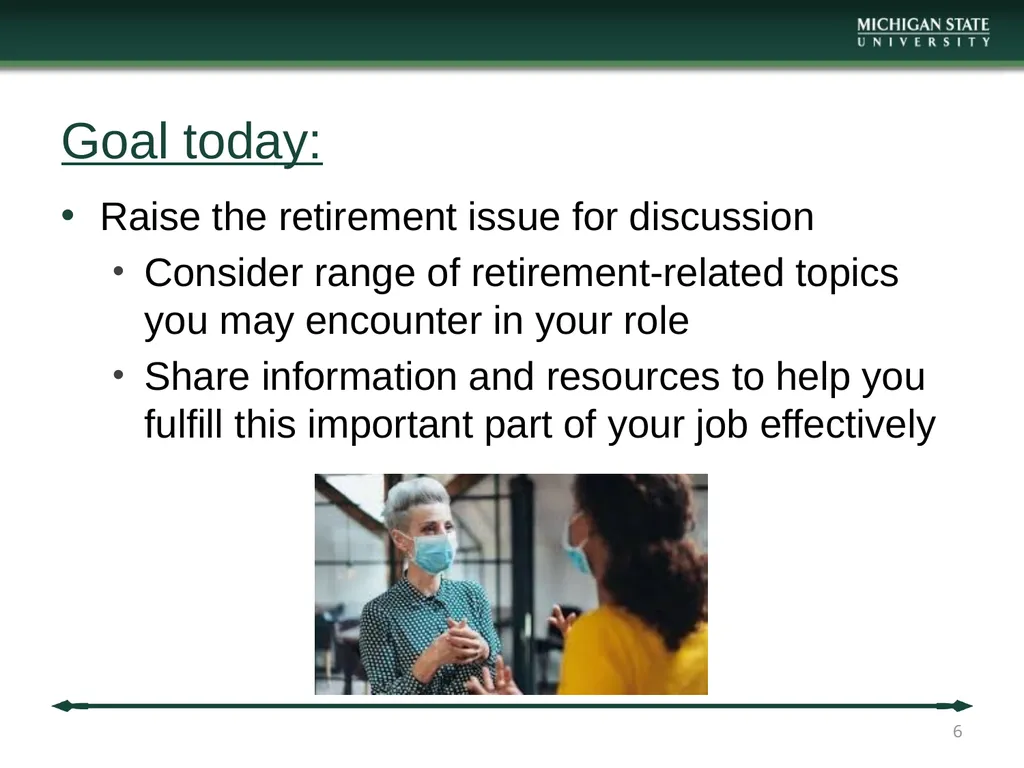
Goal today: Raise the retirement issue for discussion
Consider range of retirement-related topics you may encounter in your role
Share information and resources to help you fulfill this important part of your job effectively 6<br>
07
Your role in successful retirement is critical! Can help make retirement a safe topic for discussion
Encourage colleagues to think strategically about retirement and plan well in advance
Your role is key to making the retirement transition smooth, orderly, and a step academics take with enthusiasm and a clear sense of direction and purpose. 7<br>
08
ENVISIONING RETIREMENT PATHWAYS Theodore H. Curry II
Professor, School of Human Resources and Labor Relations<br>
09
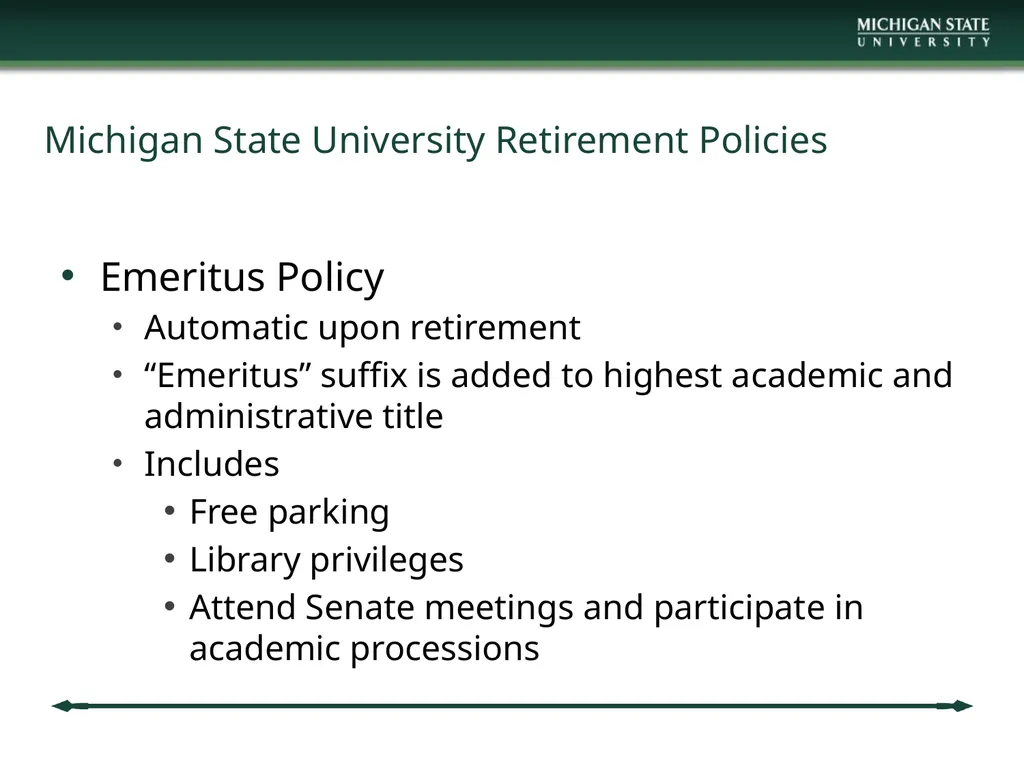
Michigan State University Retirement Policies Emeritus Policy
Automatic upon retirement
“Emeritus” suffix is added to highest academic and administrative title
Includes
Free parking
Library privileges
Attend Senate meetings and participate in academic processions<br>
10
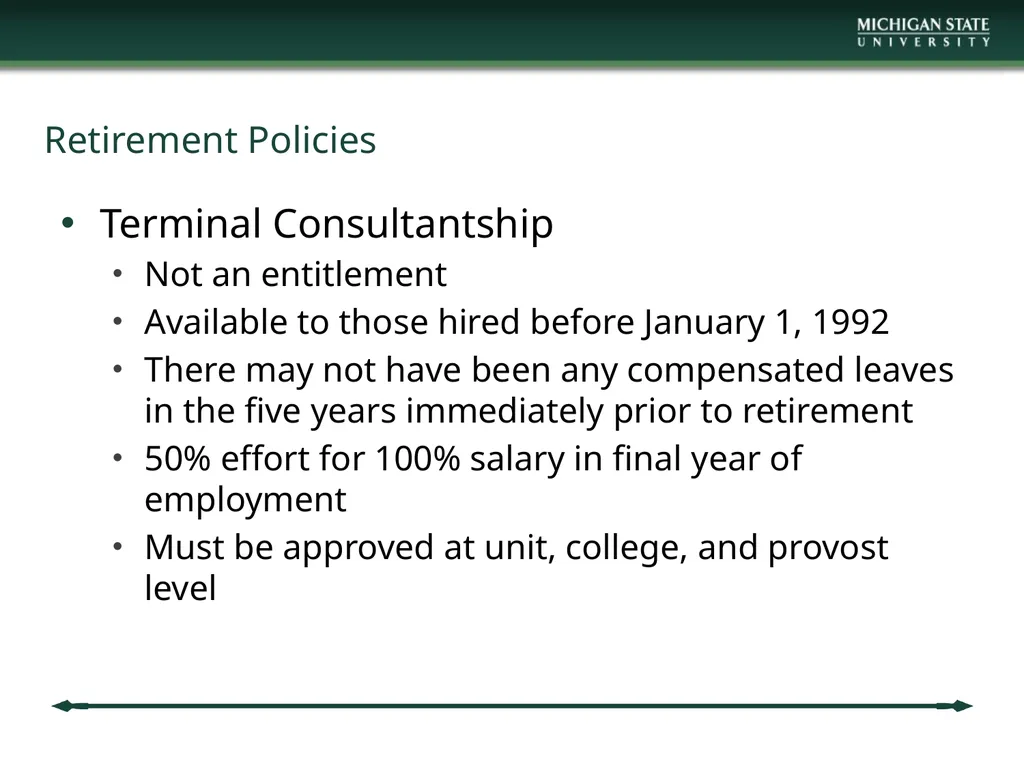
Retirement Policies Terminal Consultantship
Not an entitlement
Available to those hired before January 1, 1992
There may not have been any compensated leaves in the five years immediately prior to retirement
50% effort for 100% salary in final year of employment
Must be approved at unit, college, and provost level<br>
11
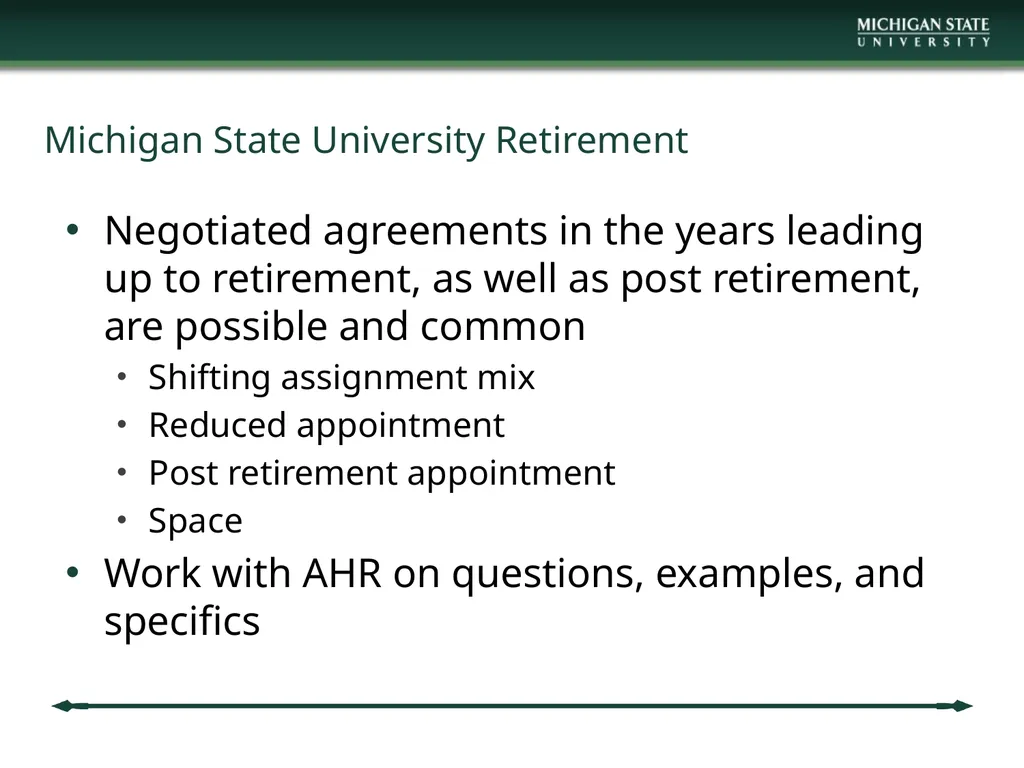
Michigan State University Retirement Negotiated agreements in the years leading up to retirement, as well as post retirement, are possible and common
Shifting assignment mix
Reduced appointment
Post retirement appointment
Space
Work with AHR on questions, examples, and specifics<br>
12
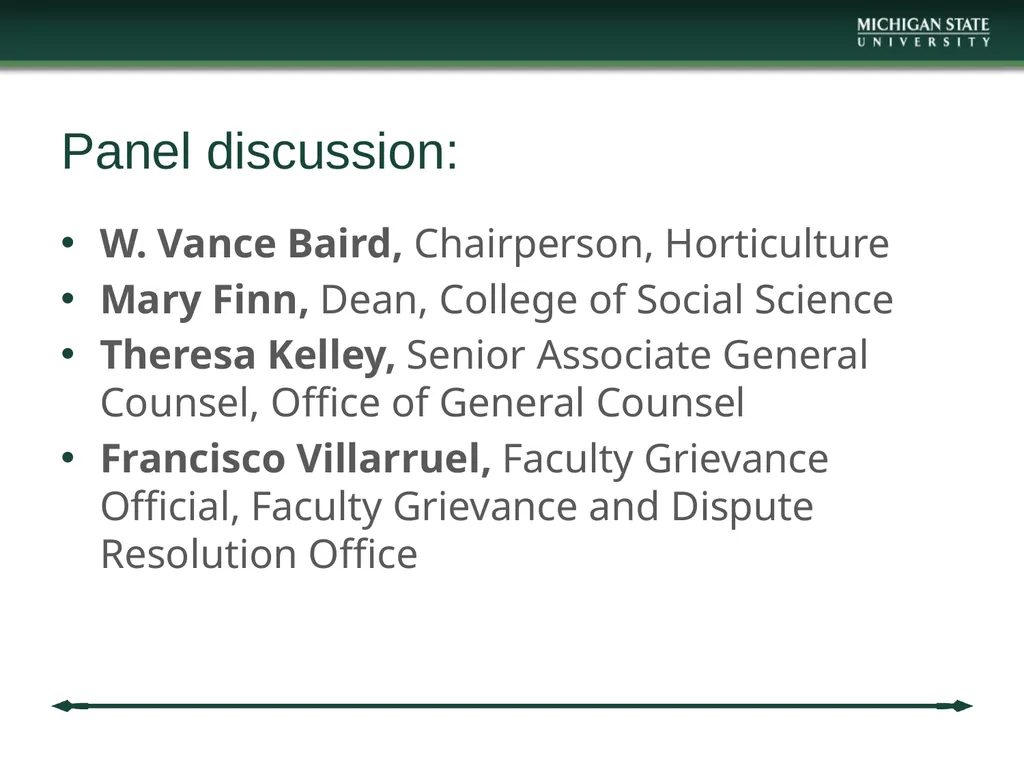
Panel discussion: W. Vance Baird, Chairperson, Horticulture
Mary Finn, Dean, College of Social Science
Theresa Kelley, Senior Associate General Counsel, Office of General Counsel
Francisco Villarruel, Faculty Grievance Official, Faculty Grievance and Dispute Resolution Office<br>
The ultimate objective: Make retirement discussions and planning:
Normal and routine
Beneficial for all stakeholders (individual academics, students, colleagues, administration)
Wise strategy for every academic, not an indication of trouble or inadequate performance
Chairs/Supervisors are essential players in successful retirement transitions. 14<br>