1 Hydrogen Sulfide (H2S) Emergency Response &
Description: 1 Hydrogen Sulfide (H2S) Emergency Response Rescue Purpose of Contingency Planning Emergency Response Procedures Objectives: What is a Contingency Plan? ContingencyEmergency Response Plan Emergency Procedures: Employee responsibilities
Related Topics
Download Presentation
"1 Hydrogen Sulfide (H2S) Emergency Response &" is the property of its rightful owner. Permission is granted to download and print the materials on this website for personal, non-commercial use only, and to display it on your personal computer provided you do not modify the materials and that you retain all copyright notices contained in the materials. By downloading content from our website, you accept the terms of this agreement.
Presentation Transcript
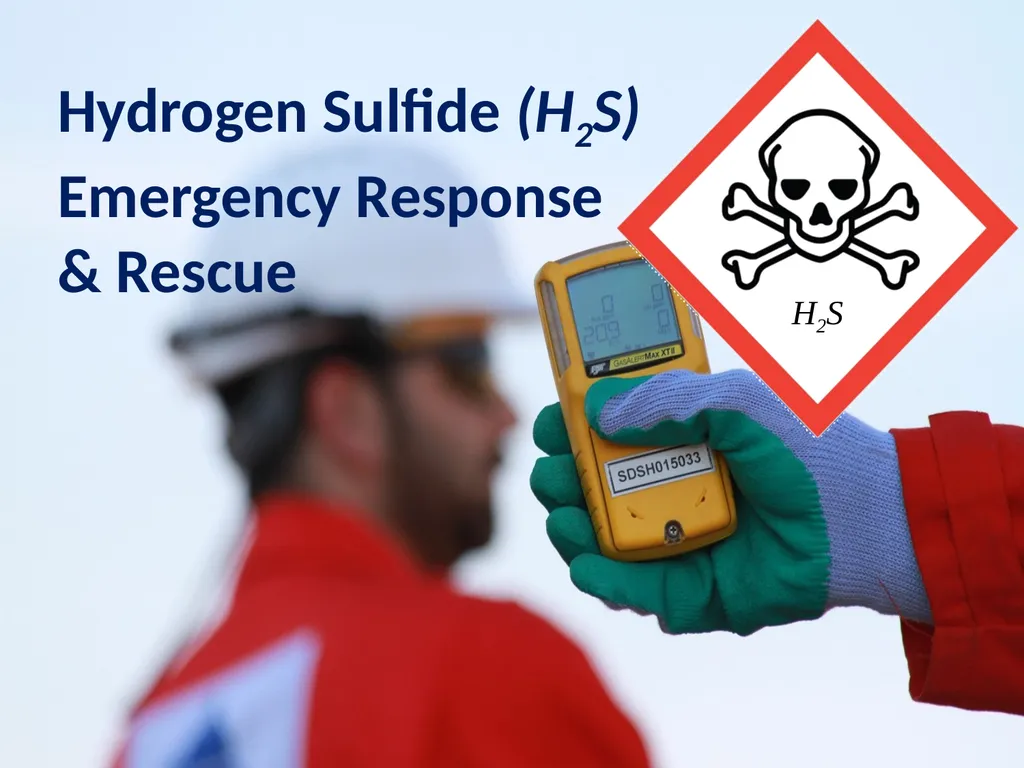
slide1. 1 Hydrogen Sulfide (H2S) Emergency Response
& Rescue<br>
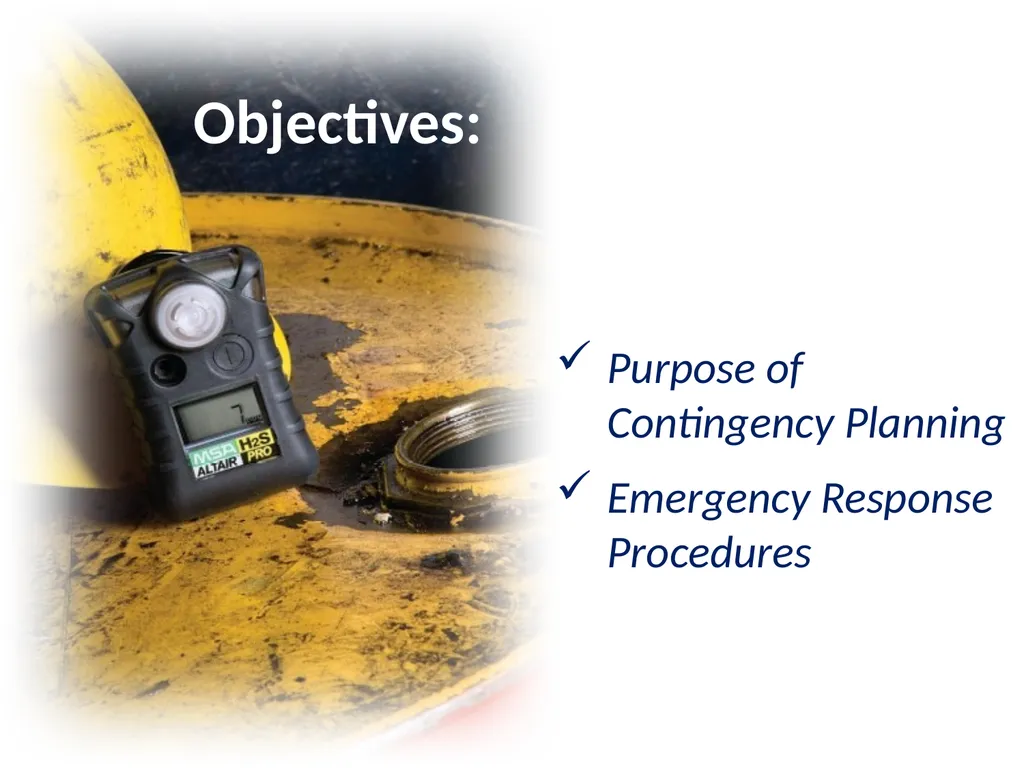
slide2. Purpose of Contingency Planning
Emergency Response Procedures Objectives:<br>
slide3. What is a Contingency Plan?<br>
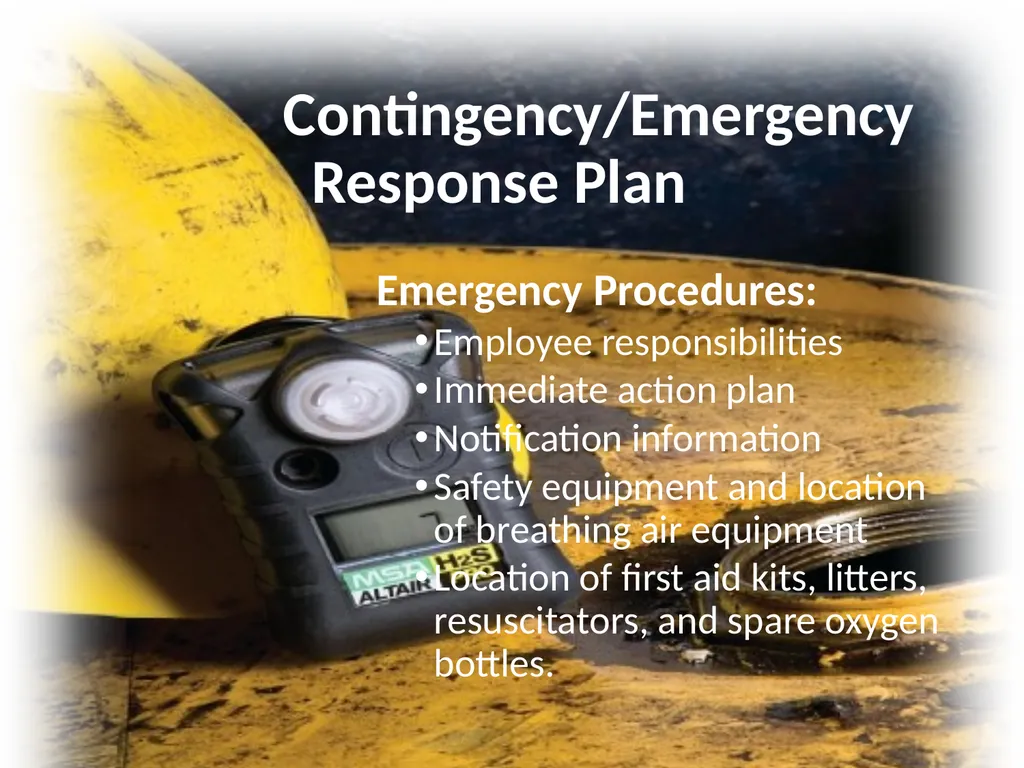
slide4. Contingency/Emergency Response Plan Emergency Procedures:
Employee responsibilities
Immediate action plan
Notification information
Safety equipment and location of breathing air equipment
Location of first aid kits, litters, resuscitators, and spare oxygen bottles.<br>
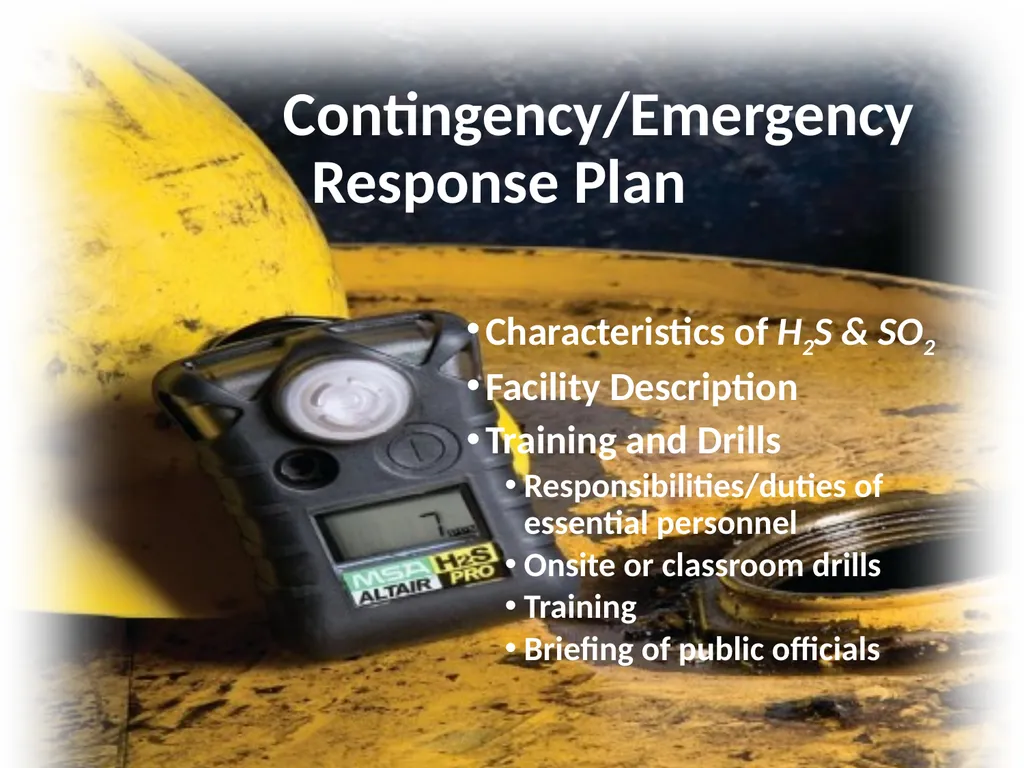
slide5. Contingency/Emergency Response Plan Characteristics of H2S & SO2
Facility Description
Training and Drills
Responsibilities/duties of essential personnel
Onsite or classroom drills
Training
Briefing of public officials<br>
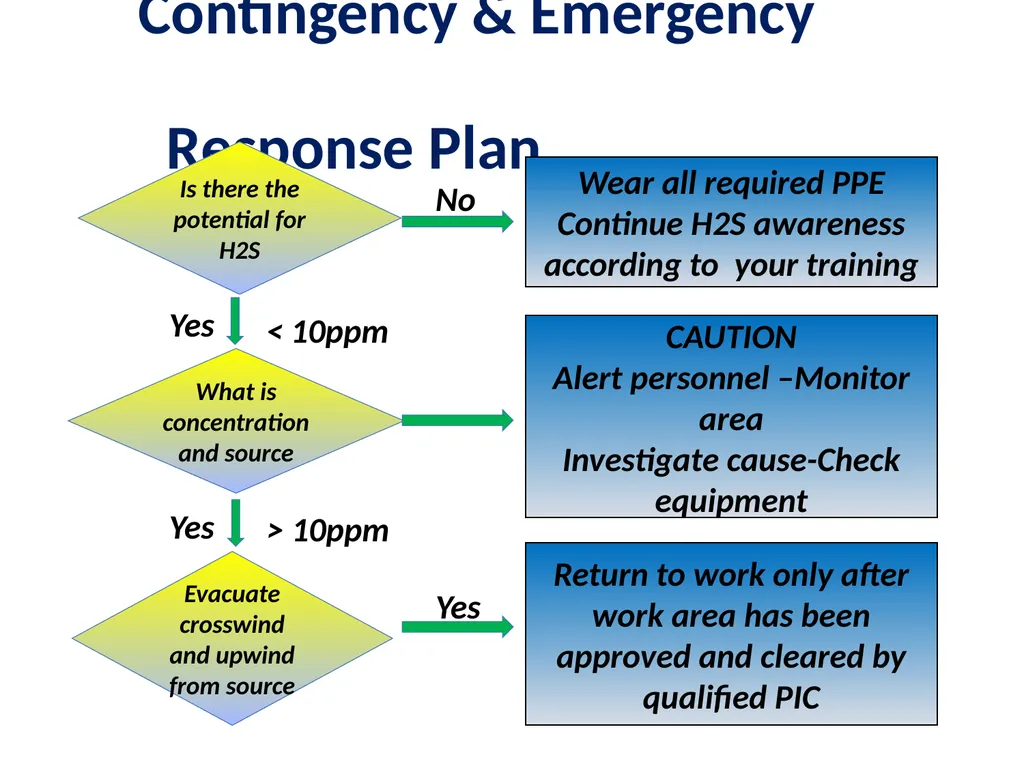
slide6. Contingency & Emergency Response Plan Is there the potential for H2S What is concentration and source Evacuate crosswind and upwind from source Wear all required PPE
Continue H2S awareness according to your training No Yes Yes CAUTION
Alert personnel –Monitor area
Investigate cause-Check equipment Return to work only after work area has been approved and cleared by qualified PIC < 10ppm > 10ppm Yes<br>
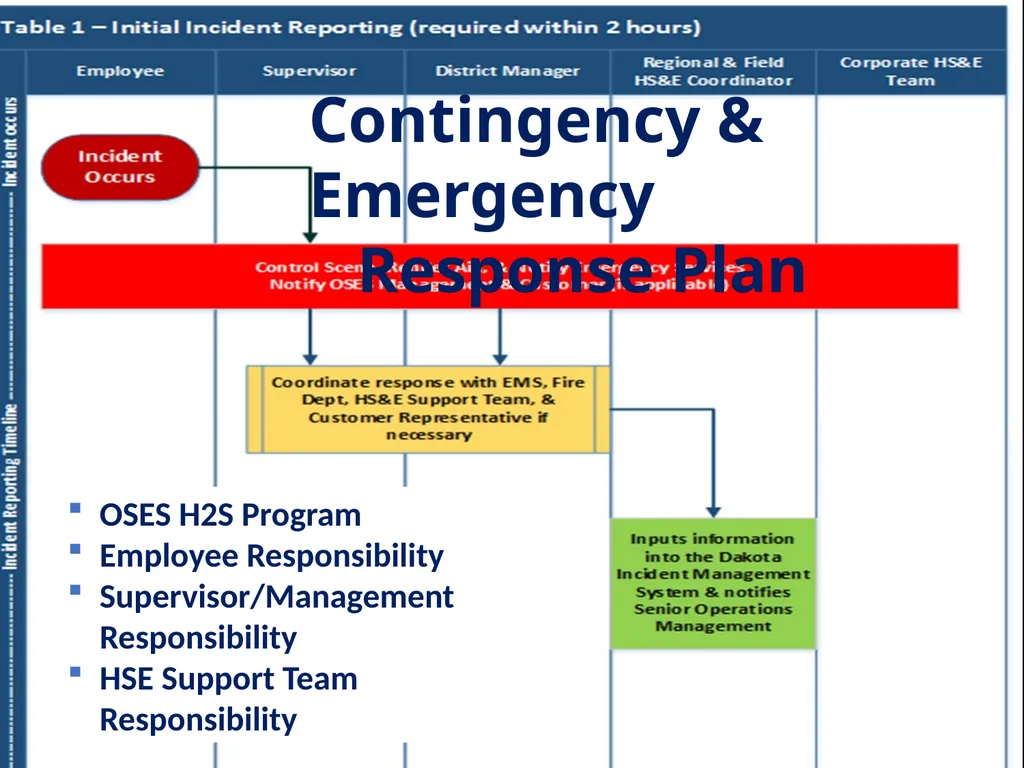
slide7. 7 OSES H2S Program
Employee Responsibility
Supervisor/Management Responsibility
HSE Support Team Responsibility Contingency & Emergency
Response Plan<br>
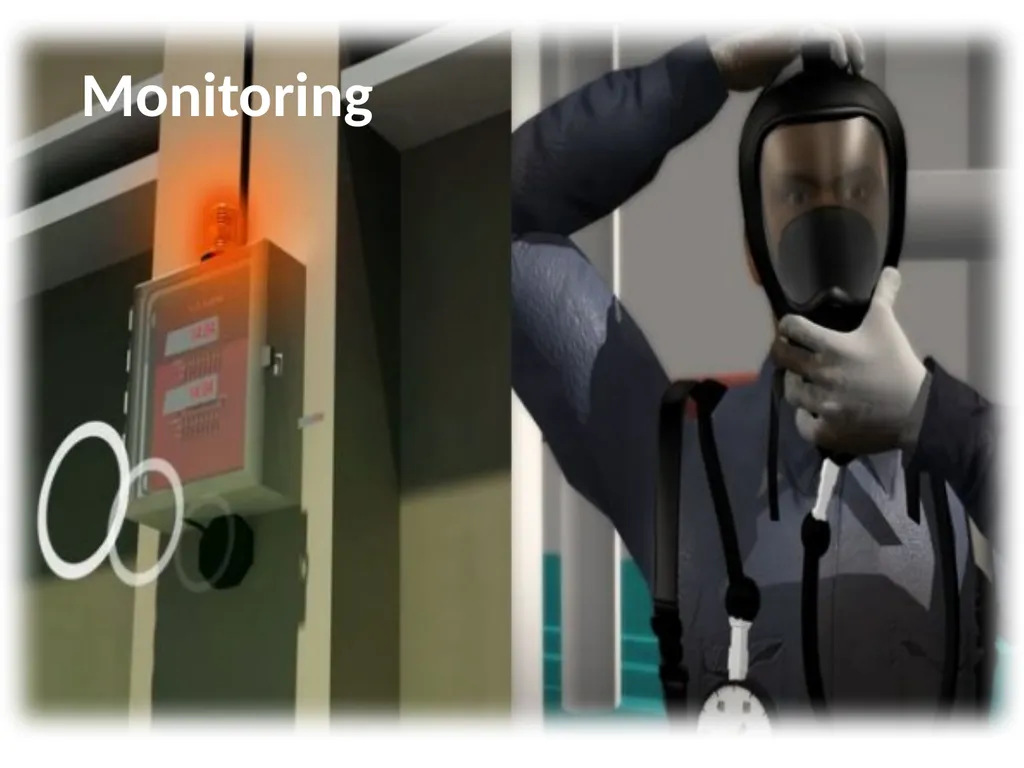
slide8. Monitoring<br>
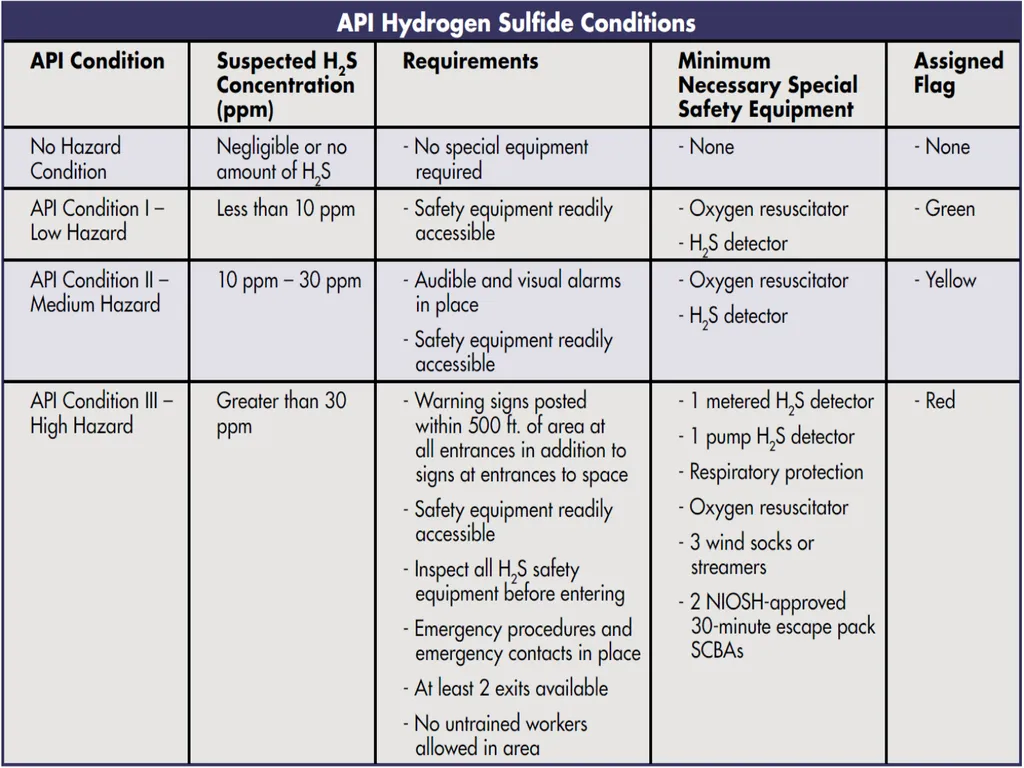
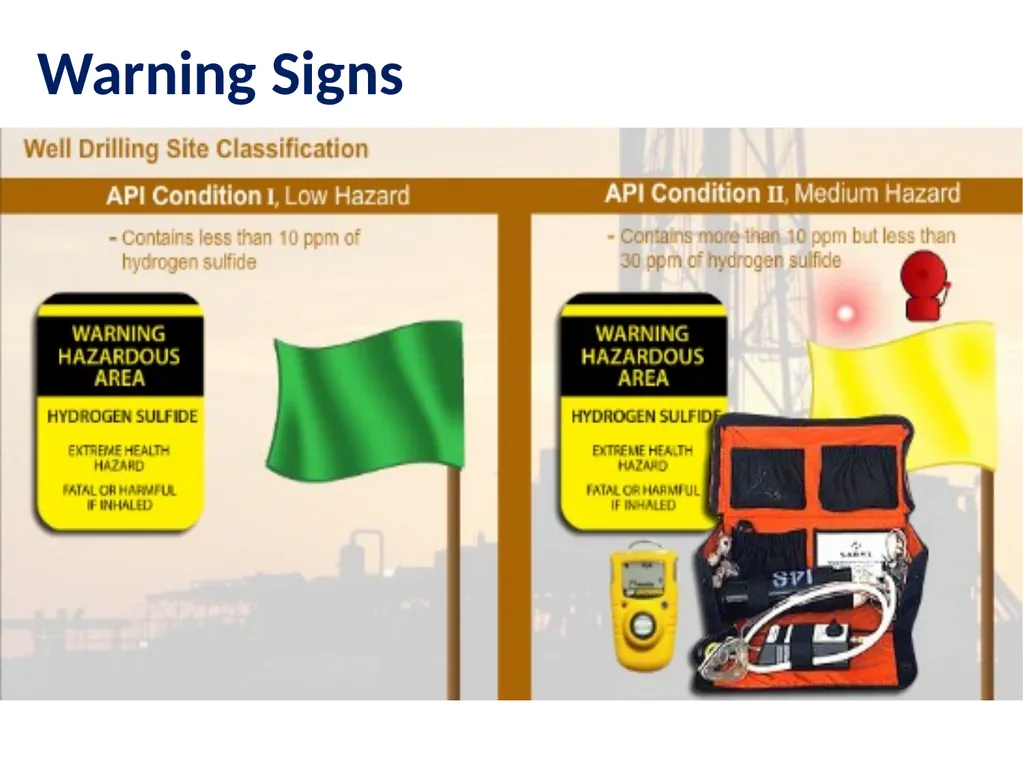
slide10. Warning Signs<br>
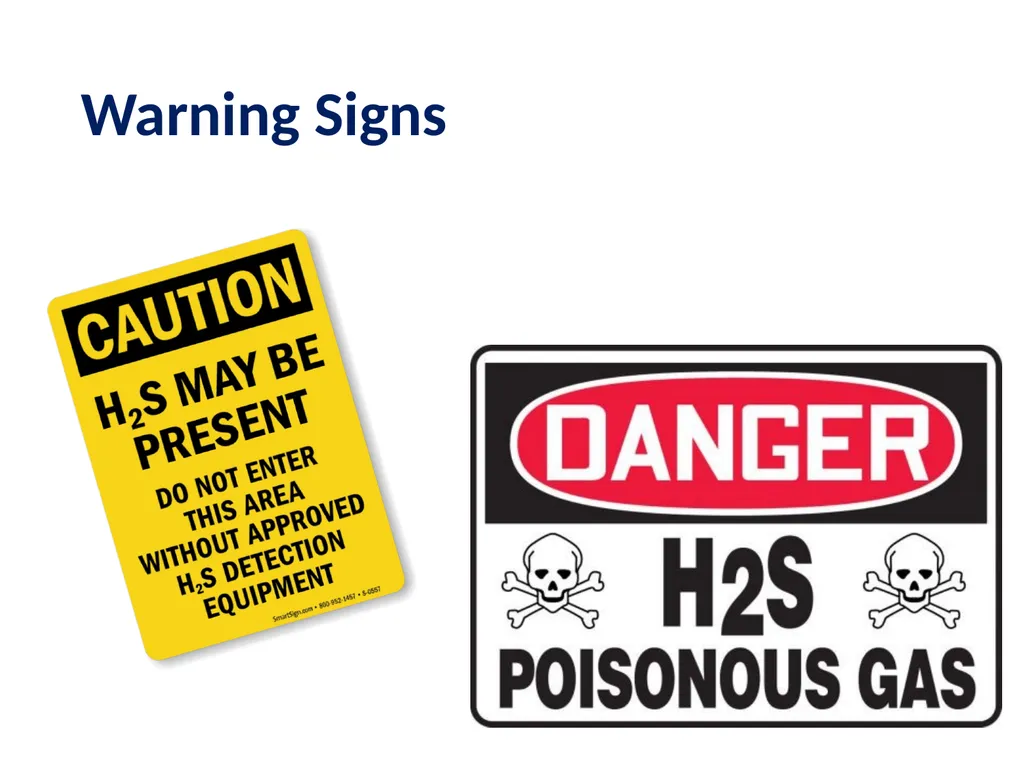
slide11. Warning Signs<br>
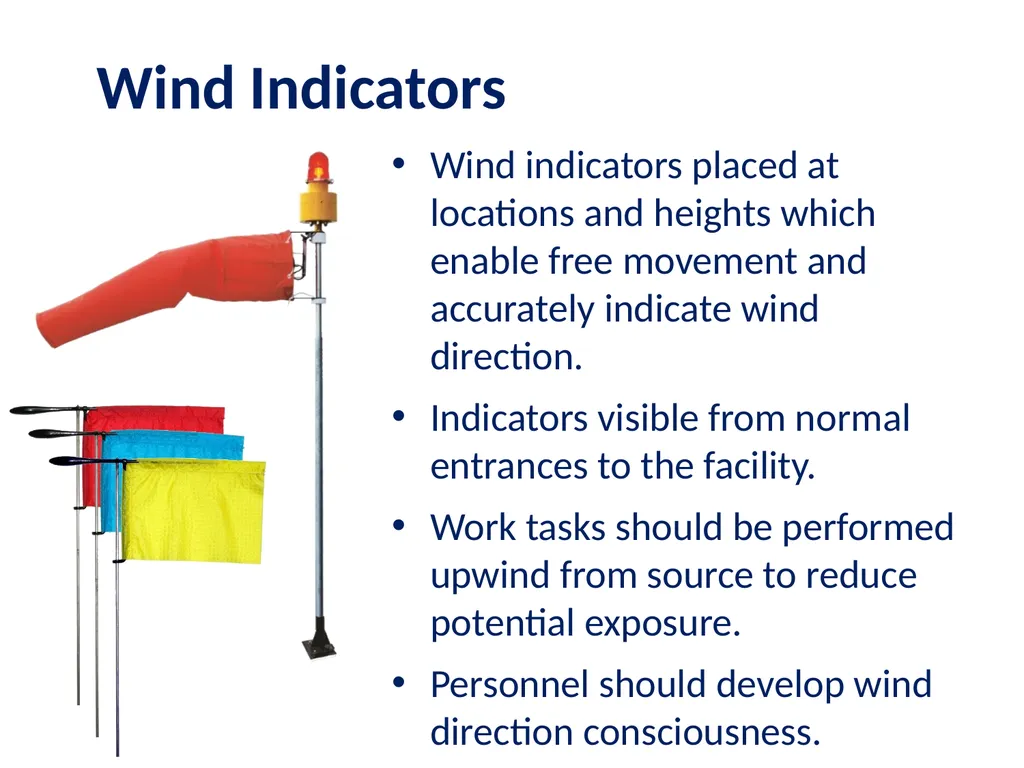
slide12. Wind Indicators Wind indicators placed at locations and heights which enable free movement and accurately indicate wind direction.
Indicators visible from normal entrances to the facility.
Work tasks should be performed upwind from source to reduce potential exposure.
Personnel should develop wind direction consciousness.<br>
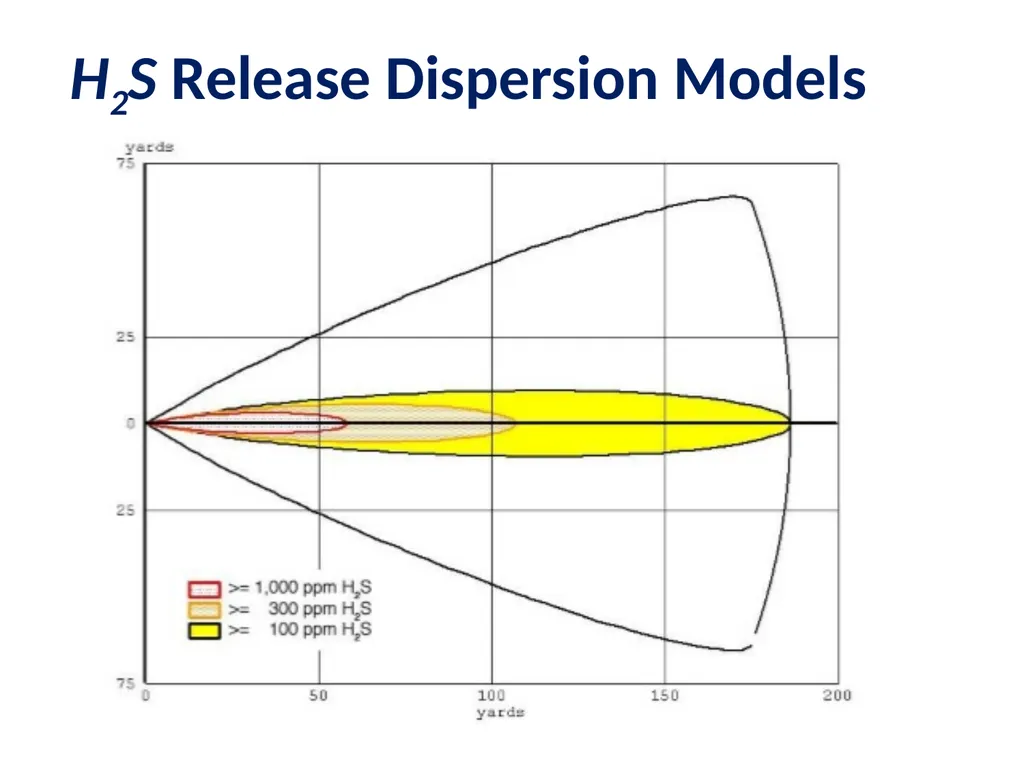
slide13. 13 H2S Release Dispersion Models<br>
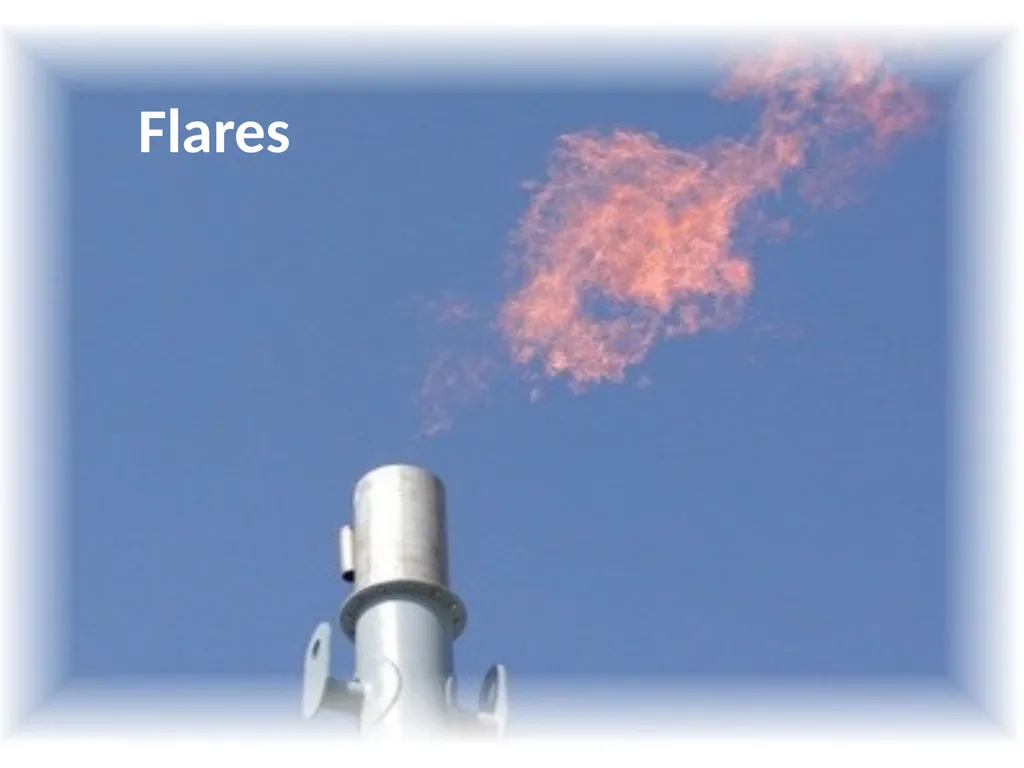
slide14. Flares<br>
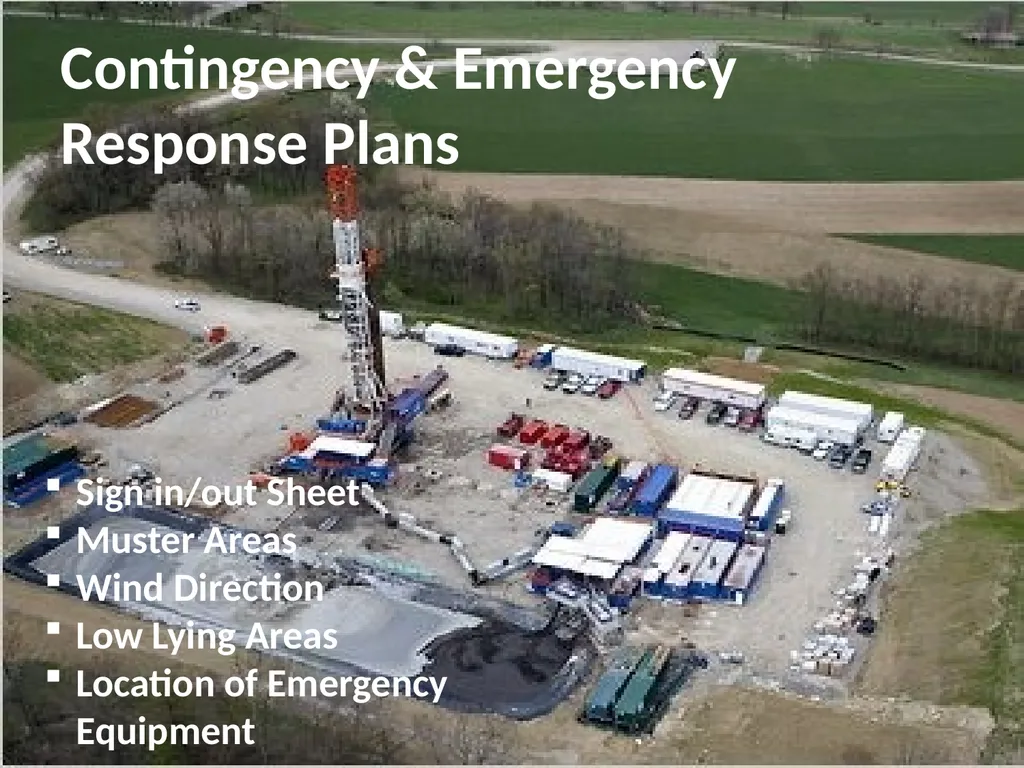
slide15. 15 Sign in/out Sheet
Muster Areas
Wind Direction
Low Lying Areas
Location of Emergency Equipment Contingency & Emergency Response Plans<br>
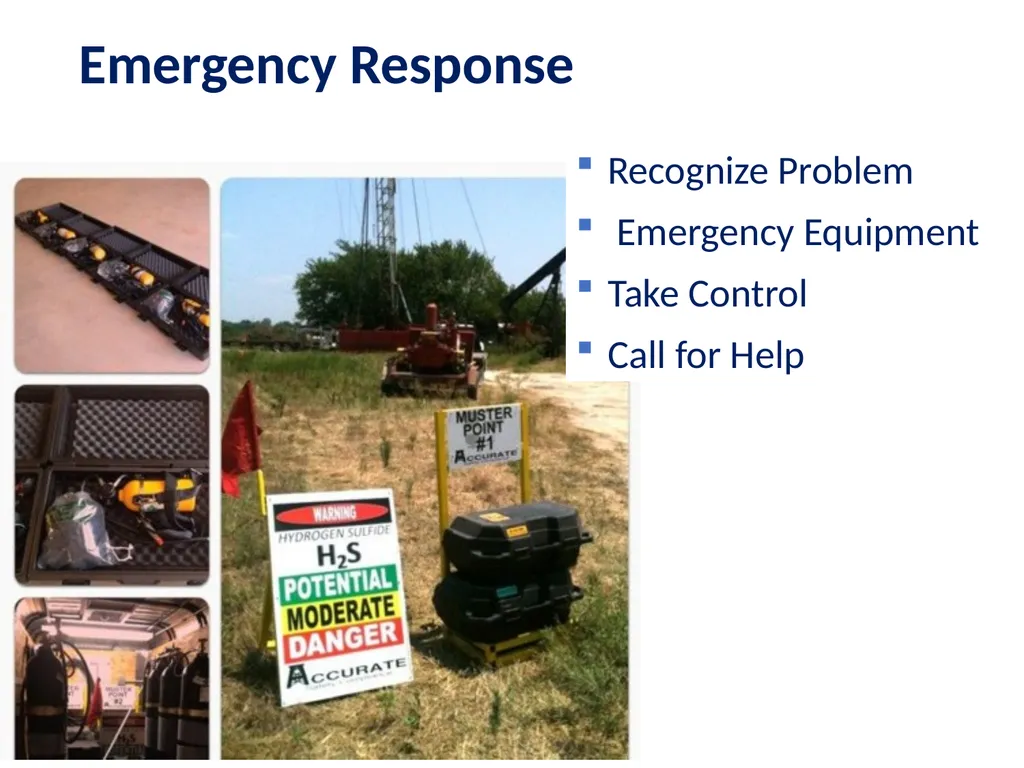
slide16. Emergency Response 16 Recognize Problem
Emergency Equipment
Take Control
Call for Help<br>
slide17. 17 Emergency Contacts
Location Directions<br>
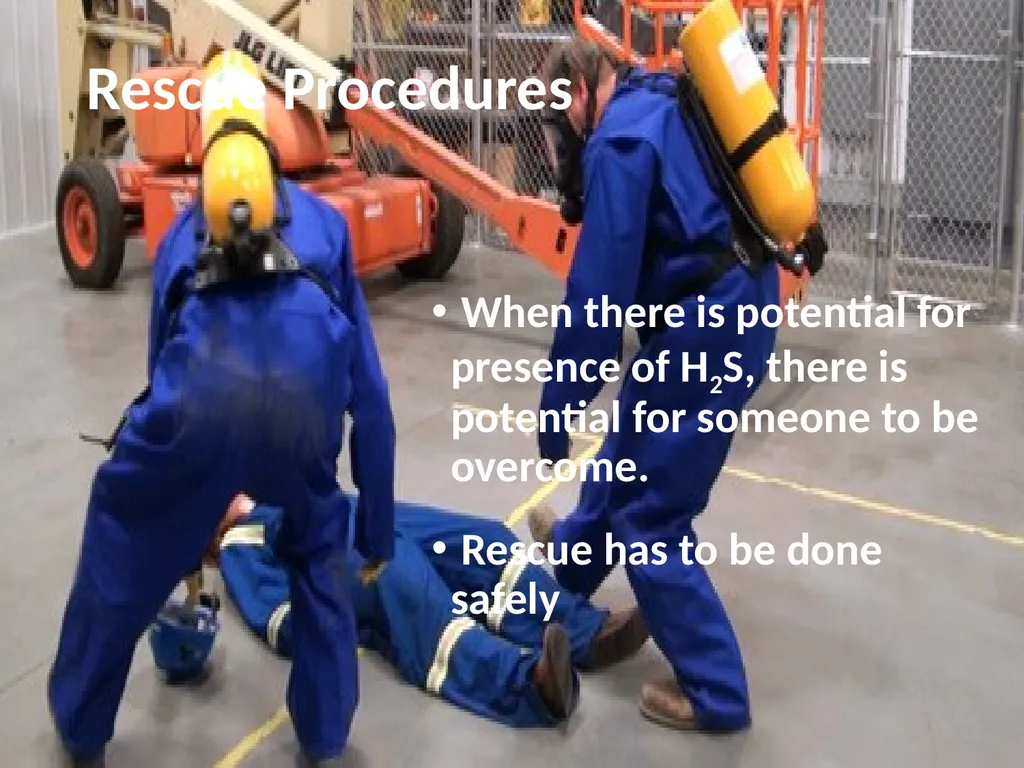
slide18. Rescue Procedures When there is potential for presence of H2S, there is potential for someone to be overcome.
Rescue has to be done safely<br>
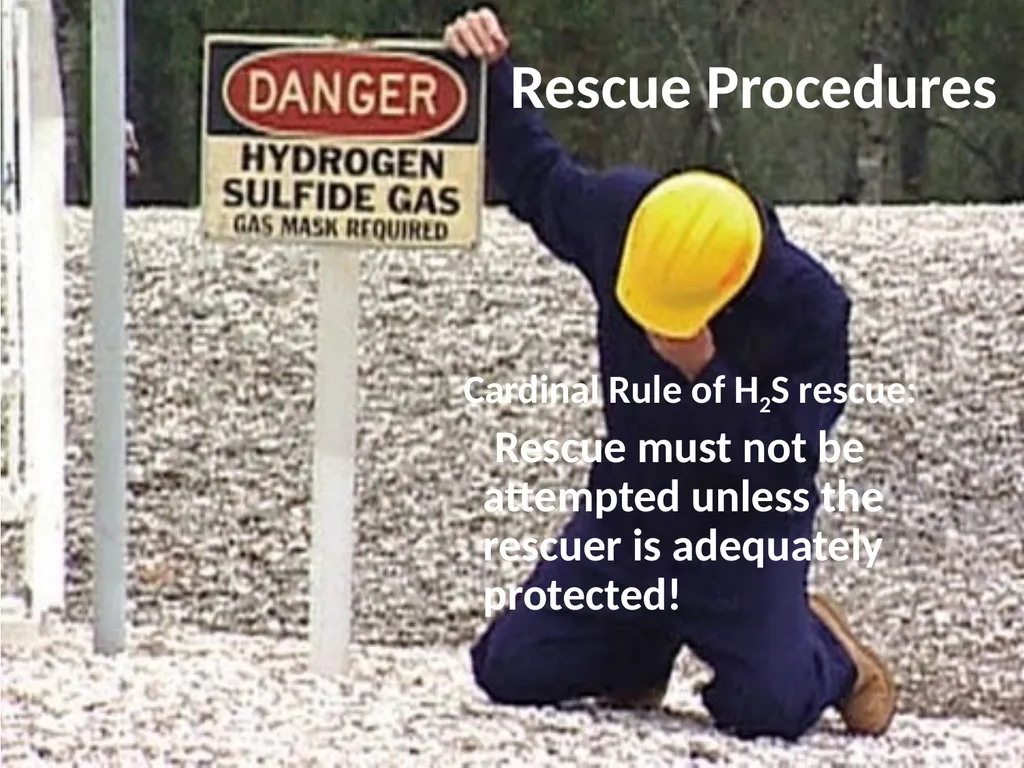
slide19. Rescue Procedures Cardinal Rule of H2S rescue:
Rescue must not be attempted unless the rescuer is adequately protected!<br>
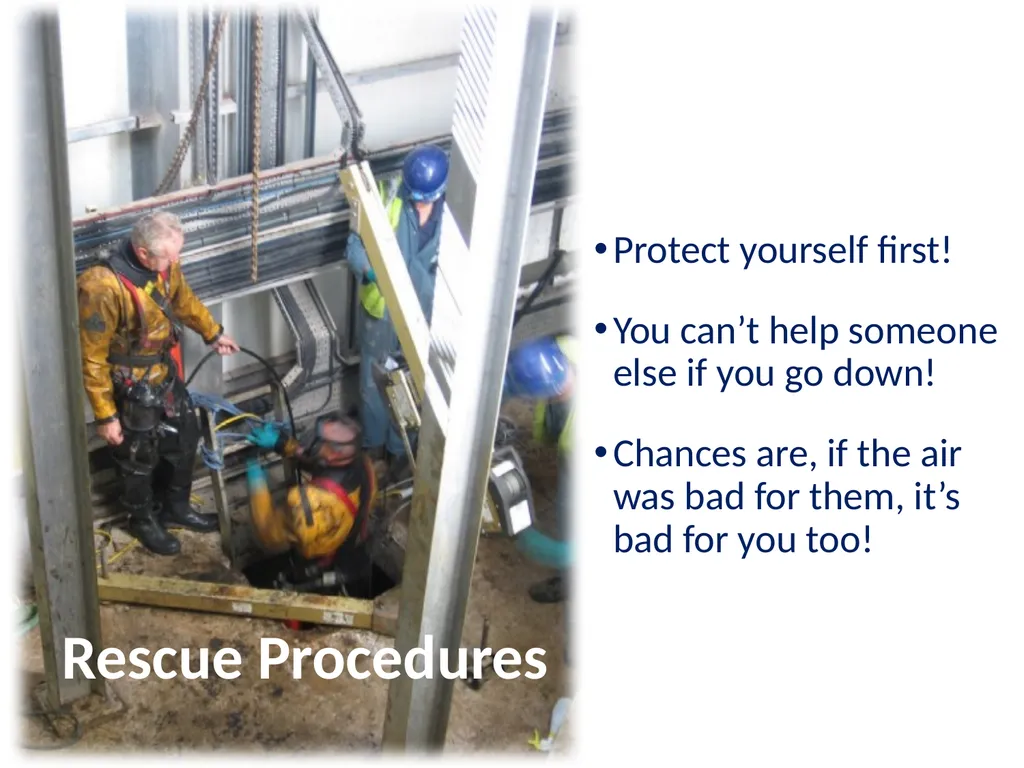
slide20. Rescue Procedures Protect yourself first!
You can’t help someone else if you go down!
Chances are, if the air was bad for them, it’s bad for you too!<br>
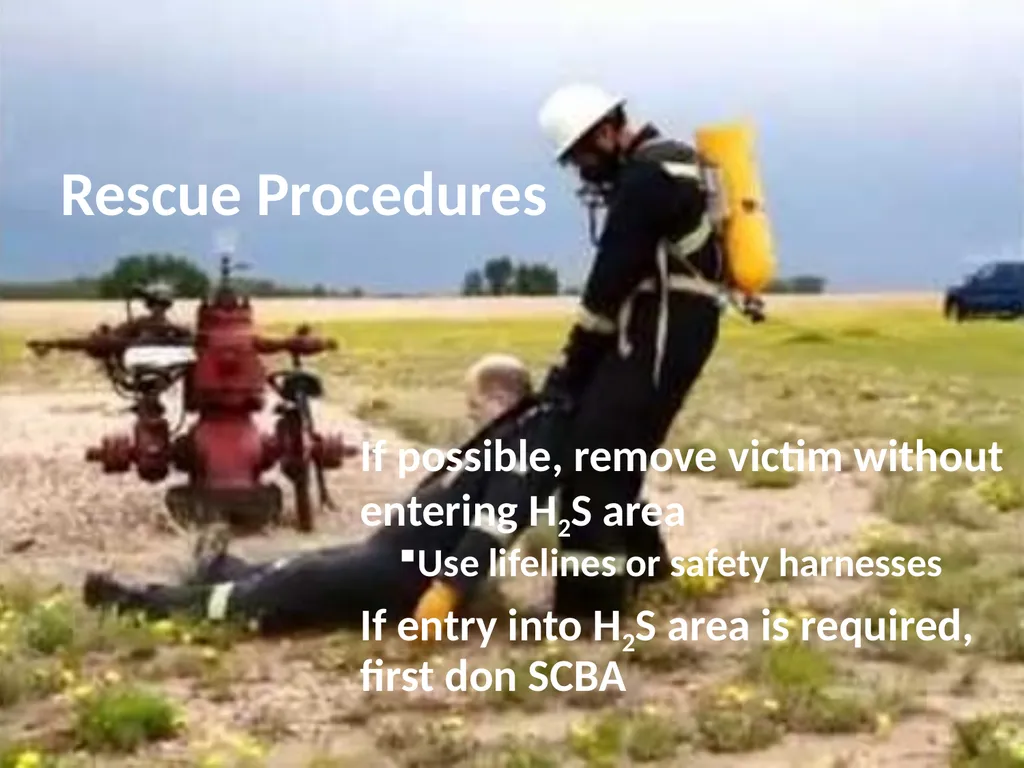
slide21. Rescue Procedures If possible, remove victim without entering H2S area
Use lifelines or safety harnesses
If entry into H2S area is required, first don SCBA<br>
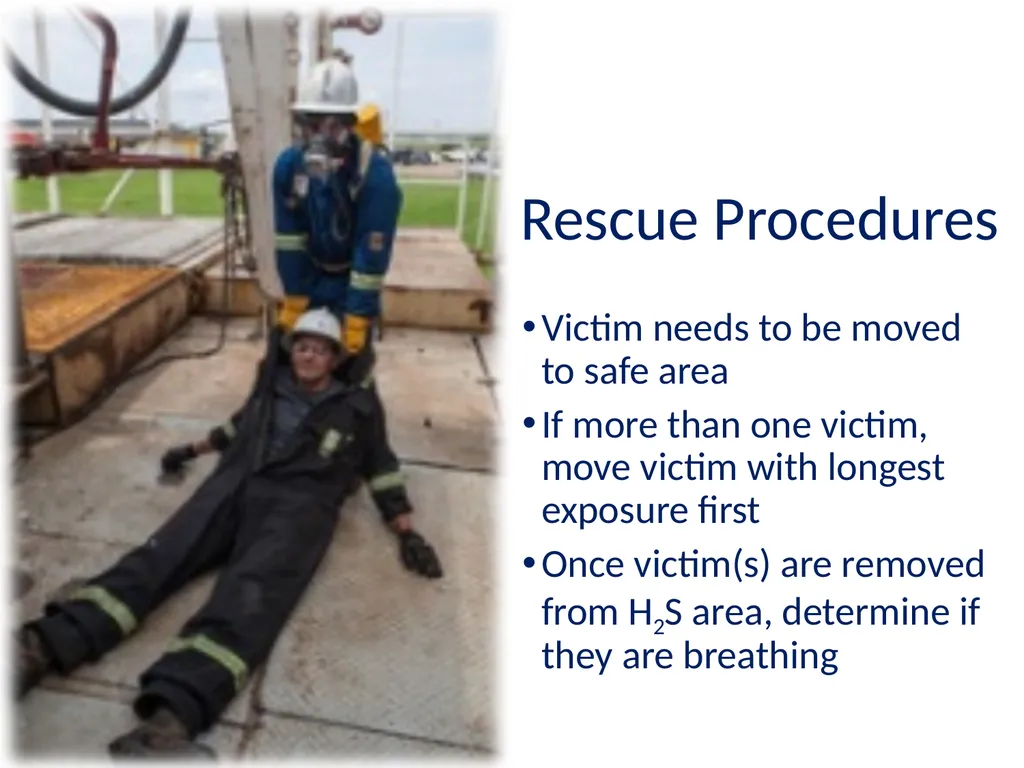
slide22. Rescue Procedures Victim needs to be moved to safe area
If more than one victim, move victim with longest exposure first
Once victim(s) are removed from H2S area, determine if they are breathing<br>
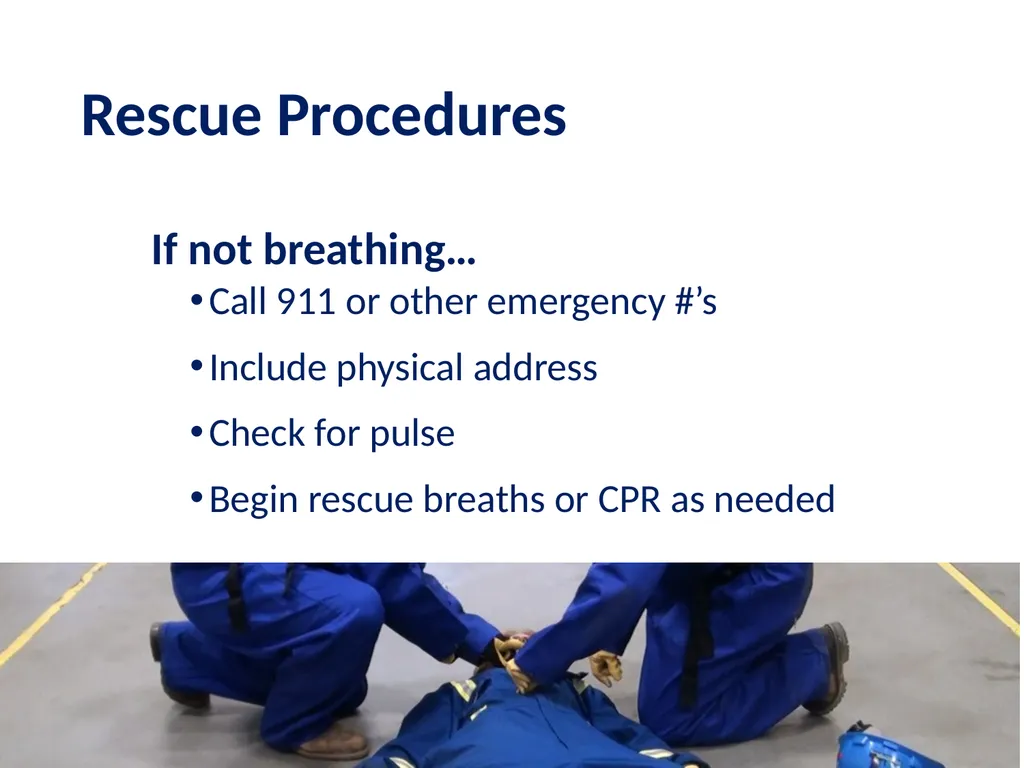
slide23. Rescue Procedures If not breathing…
Call 911 or other emergency #’s
Include physical address
Check for pulse
Begin rescue breaths or CPR as needed<br>
slide24. Follow-up Procedures Anyone who has been overcome by H2S should seek medical attention
Should have medical clearance prior to returning to work
H2S does not cumulate in body, however, there may be lingering effects:
Pulmonary edema
Dizziness
Photophobia
Nausea<br>
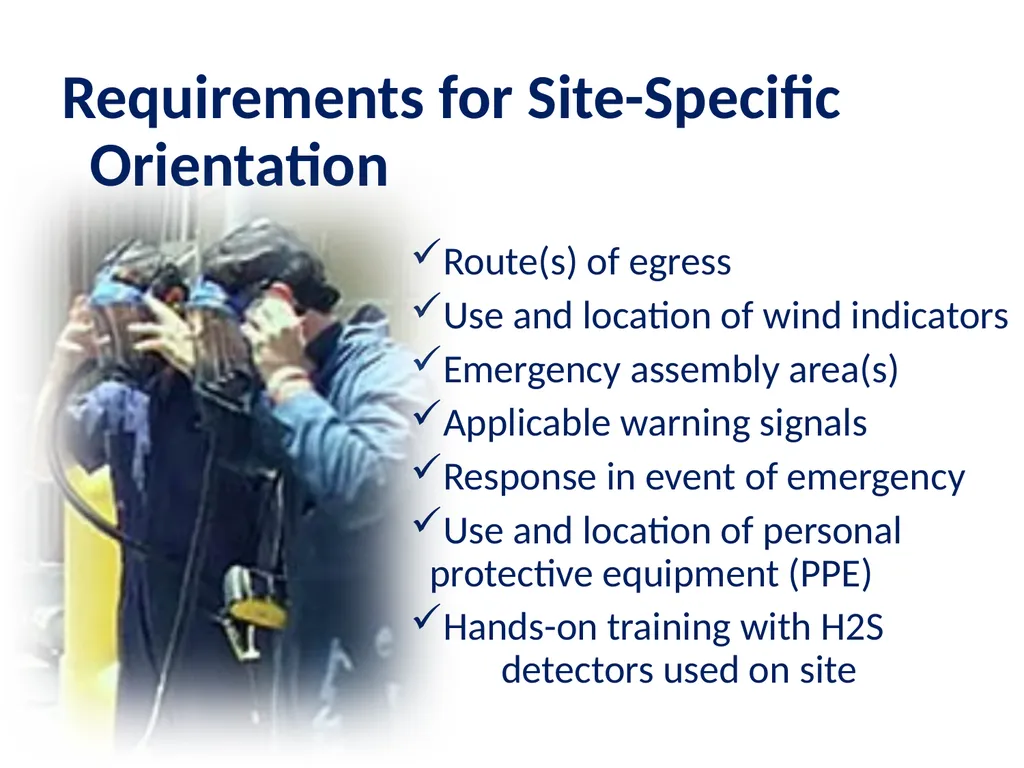
slide25. Requirements for Site-Specific Orientation Route(s) of egress
Use and location of wind indicators
Emergency assembly area(s)
Applicable warning signals
Response in event of emergency
Use and location of personal protective equipment (PPE)
Hands-on training with H2S detectors used on site<br>

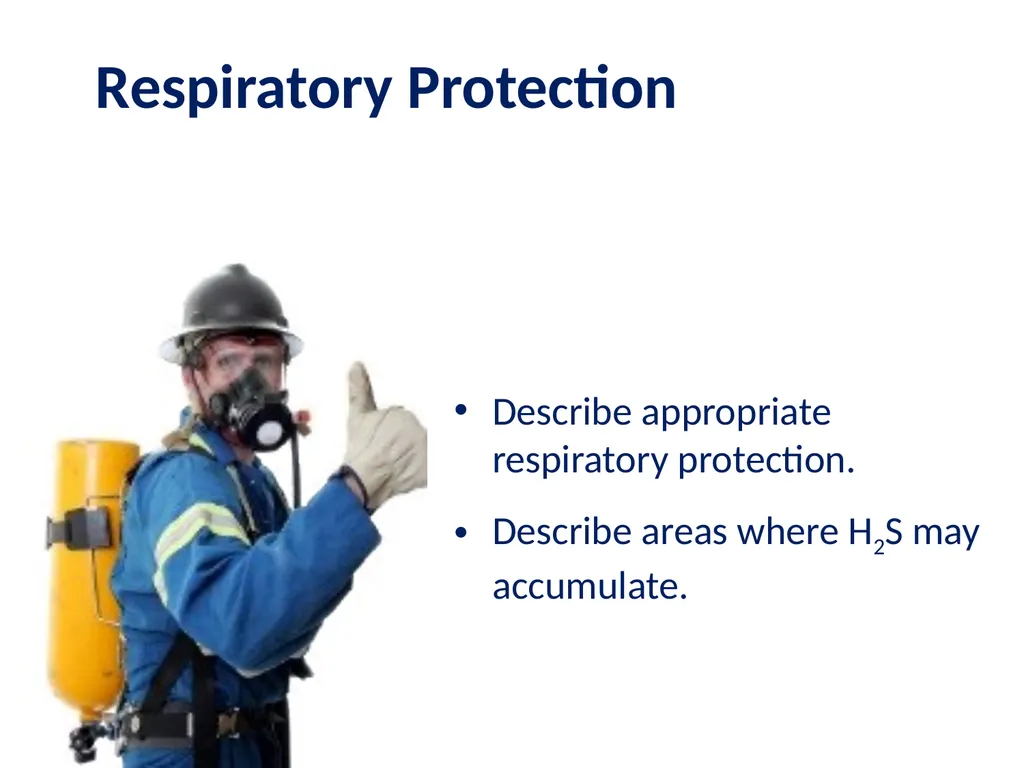
slide26. Respiratory Protection Describe appropriate respiratory protection.
Describe areas where H2S may accumulate.<br>
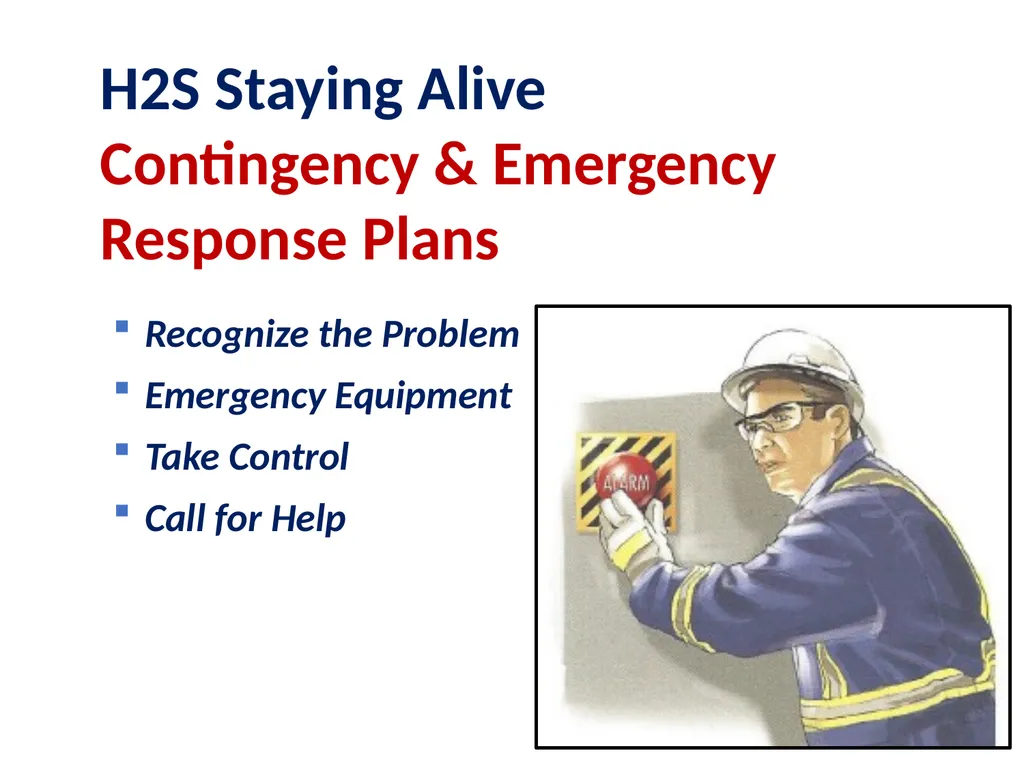
slide27. 27 Recognize the Problem
Emergency Equipment
Take Control
Call for Help H2S Staying Alive
Contingency & Emergency Response Plans<br>
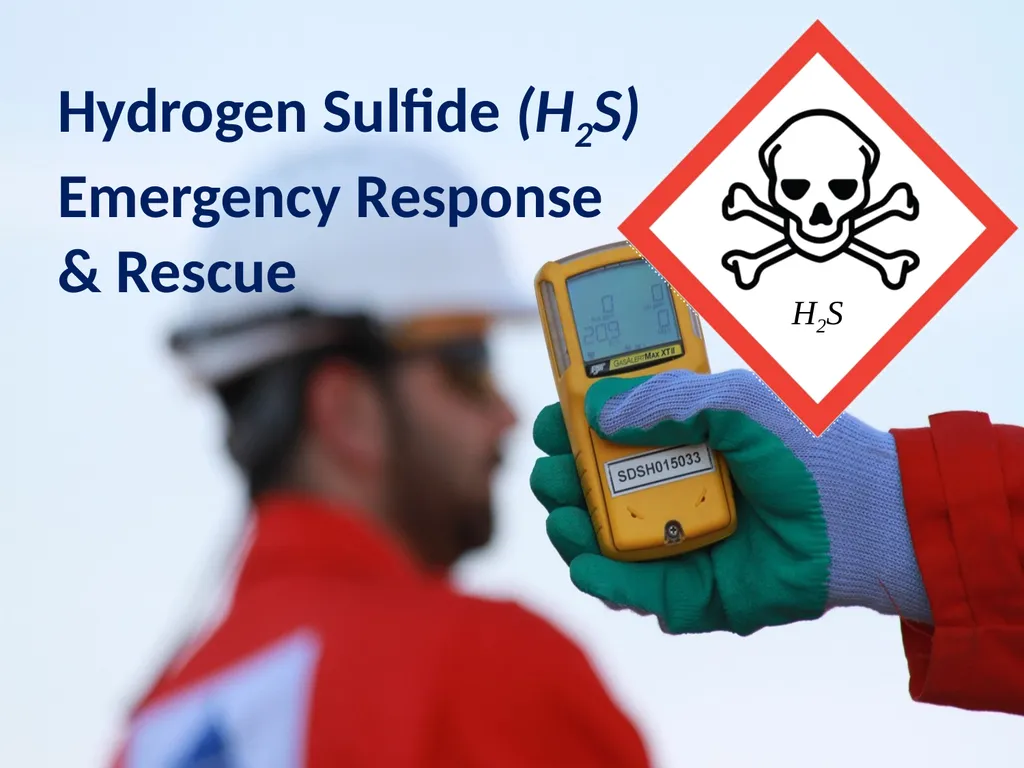
slide28. 28 Hydrogen Sulfide (H2S) Emergency Response
& Rescue<br>
& Rescue<br>
slide2. Purpose of Contingency Planning
Emergency Response Procedures Objectives:<br>
slide3. What is a Contingency Plan?<br>
slide4. Contingency/Emergency Response Plan Emergency Procedures:
Employee responsibilities
Immediate action plan
Notification information
Safety equipment and location of breathing air equipment
Location of first aid kits, litters, resuscitators, and spare oxygen bottles.<br>
slide5. Contingency/Emergency Response Plan Characteristics of H2S & SO2
Facility Description
Training and Drills
Responsibilities/duties of essential personnel
Onsite or classroom drills
Training
Briefing of public officials<br>
slide6. Contingency & Emergency Response Plan Is there the potential for H2S What is concentration and source Evacuate crosswind and upwind from source Wear all required PPE
Continue H2S awareness according to your training No Yes Yes CAUTION
Alert personnel –Monitor area
Investigate cause-Check equipment Return to work only after work area has been approved and cleared by qualified PIC < 10ppm > 10ppm Yes<br>
slide7. 7 OSES H2S Program
Employee Responsibility
Supervisor/Management Responsibility
HSE Support Team Responsibility Contingency & Emergency
Response Plan<br>
slide8. Monitoring<br>
slide10. Warning Signs<br>
slide11. Warning Signs<br>
slide12. Wind Indicators Wind indicators placed at locations and heights which enable free movement and accurately indicate wind direction.
Indicators visible from normal entrances to the facility.
Work tasks should be performed upwind from source to reduce potential exposure.
Personnel should develop wind direction consciousness.<br>
slide13. 13 H2S Release Dispersion Models<br>
slide14. Flares<br>
slide15. 15 Sign in/out Sheet
Muster Areas
Wind Direction
Low Lying Areas
Location of Emergency Equipment Contingency & Emergency Response Plans<br>
slide16. Emergency Response 16 Recognize Problem
Emergency Equipment
Take Control
Call for Help<br>
slide17. 17 Emergency Contacts
Location Directions<br>
slide18. Rescue Procedures When there is potential for presence of H2S, there is potential for someone to be overcome.
Rescue has to be done safely<br>
slide19. Rescue Procedures Cardinal Rule of H2S rescue:
Rescue must not be attempted unless the rescuer is adequately protected!<br>
slide20. Rescue Procedures Protect yourself first!
You can’t help someone else if you go down!
Chances are, if the air was bad for them, it’s bad for you too!<br>
slide21. Rescue Procedures If possible, remove victim without entering H2S area
Use lifelines or safety harnesses
If entry into H2S area is required, first don SCBA<br>
slide22. Rescue Procedures Victim needs to be moved to safe area
If more than one victim, move victim with longest exposure first
Once victim(s) are removed from H2S area, determine if they are breathing<br>
slide23. Rescue Procedures If not breathing…
Call 911 or other emergency #’s
Include physical address
Check for pulse
Begin rescue breaths or CPR as needed<br>
slide24. Follow-up Procedures Anyone who has been overcome by H2S should seek medical attention
Should have medical clearance prior to returning to work
H2S does not cumulate in body, however, there may be lingering effects:
Pulmonary edema
Dizziness
Photophobia
Nausea<br>
slide25. Requirements for Site-Specific Orientation Route(s) of egress
Use and location of wind indicators
Emergency assembly area(s)
Applicable warning signals
Response in event of emergency
Use and location of personal protective equipment (PPE)
Hands-on training with H2S detectors used on site<br>
slide26. Respiratory Protection Describe appropriate respiratory protection.
Describe areas where H2S may accumulate.<br>
slide27. 27 Recognize the Problem
Emergency Equipment
Take Control
Call for Help H2S Staying Alive
Contingency & Emergency Response Plans<br>
slide28. 28 Hydrogen Sulfide (H2S) Emergency Response
& Rescue<br>