
1 Maintaining Maternal & Neonatal Tetanus
Description: 1 Maintaining Maternal Neonatal Tetanus Elimination in Country X Post-validation Assessment Country X, XX Month 20XX Overview MNTE post-validation monitoring Data sets reviewed Field assessment and findings Conclusion Recommendations 2
Related Topics
Download Presentation
"1 Maintaining Maternal & Neonatal Tetanus" is the property of its rightful owner. Permission is granted to download and print the materials on this website for personal, non-commercial use only, and to display it on your personal computer provided you do not modify the materials and that you retain all copyright notices contained in the materials. By downloading content from our website, you accept the terms of this agreement.
Presentation Transcript
slide1. 1 Maintaining Maternal & Neonatal Tetanus Elimination in Country X Post-validation Assessment Country X, XX Month 20XX<br>
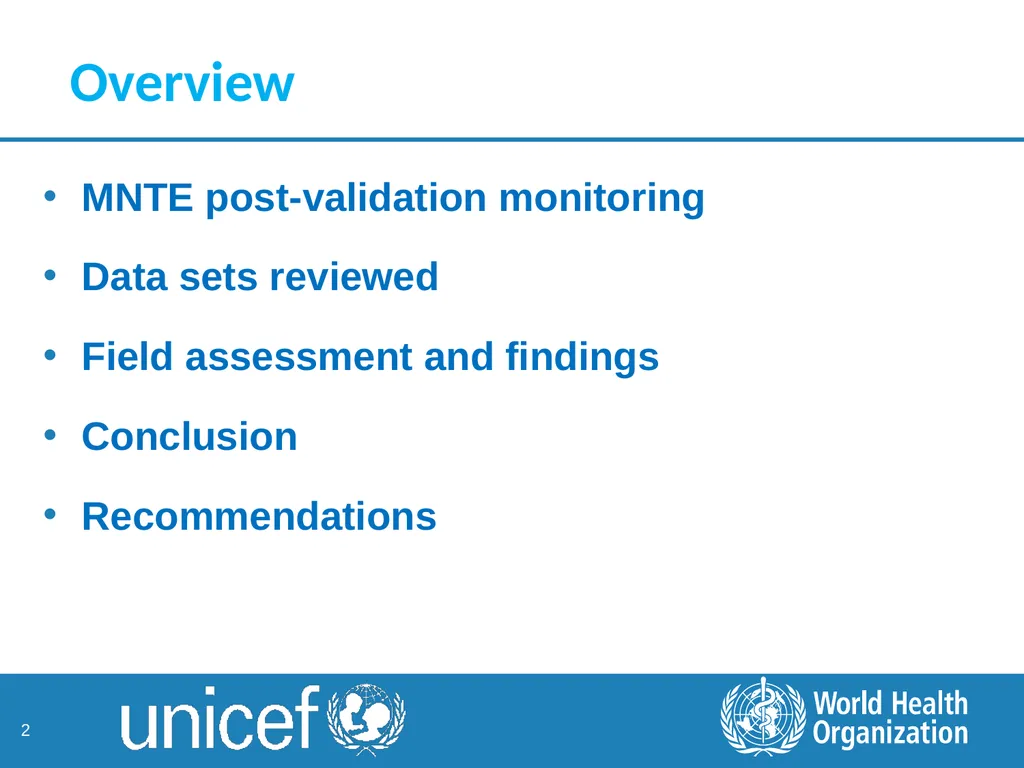
slide2. Overview MNTE post-validation monitoring
Data sets reviewed
Field assessment and findings
Conclusion
Recommendations 2<br>
slide3. Assessment teams 3<br>
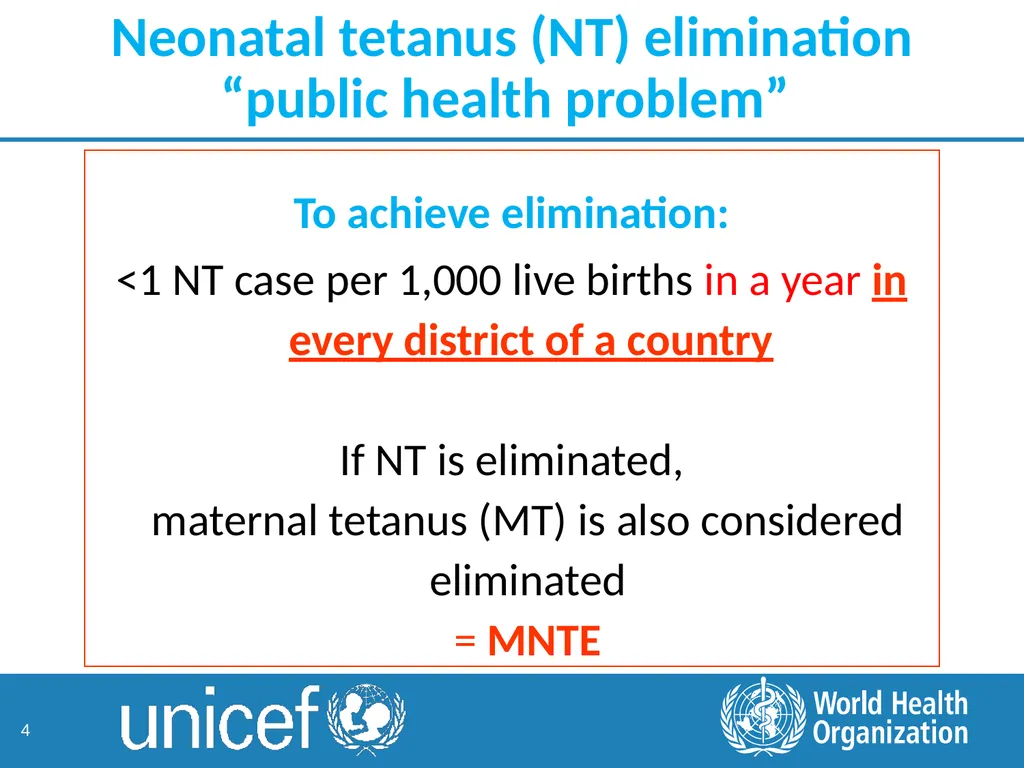
slide4. To achieve elimination:
<1 NT case per 1,000 live births in a year in every district of a country
If NT is eliminated,
maternal tetanus (MT) is also considered eliminated
= MNTE Neonatal tetanus (NT) elimination
“public health problem” 4<br>
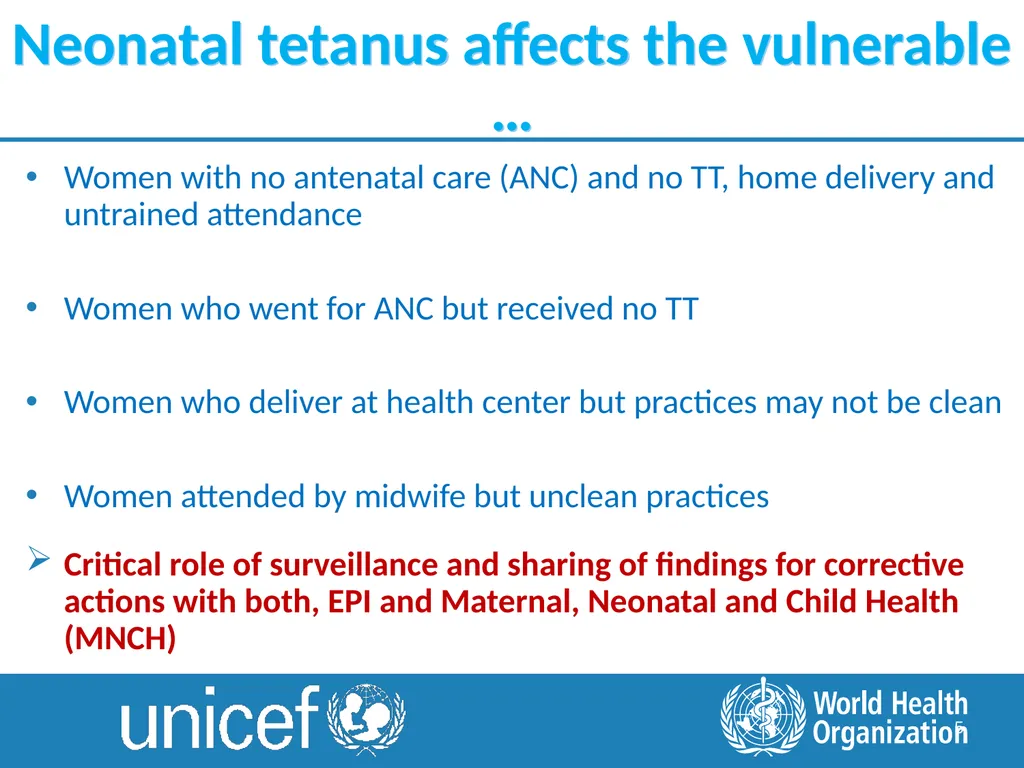
slide5. 5 Neonatal tetanus affects the vulnerable … Women with no antenatal care (ANC) and no TT, home delivery and untrained attendance
Women who went for ANC but received no TT
Women who deliver at health center but practices may not be clean
Women attended by midwife but unclean practices
Critical role of surveillance and sharing of findings for corrective actions with both, EPI and Maternal, Neonatal and Child Health (MNCH)<br>
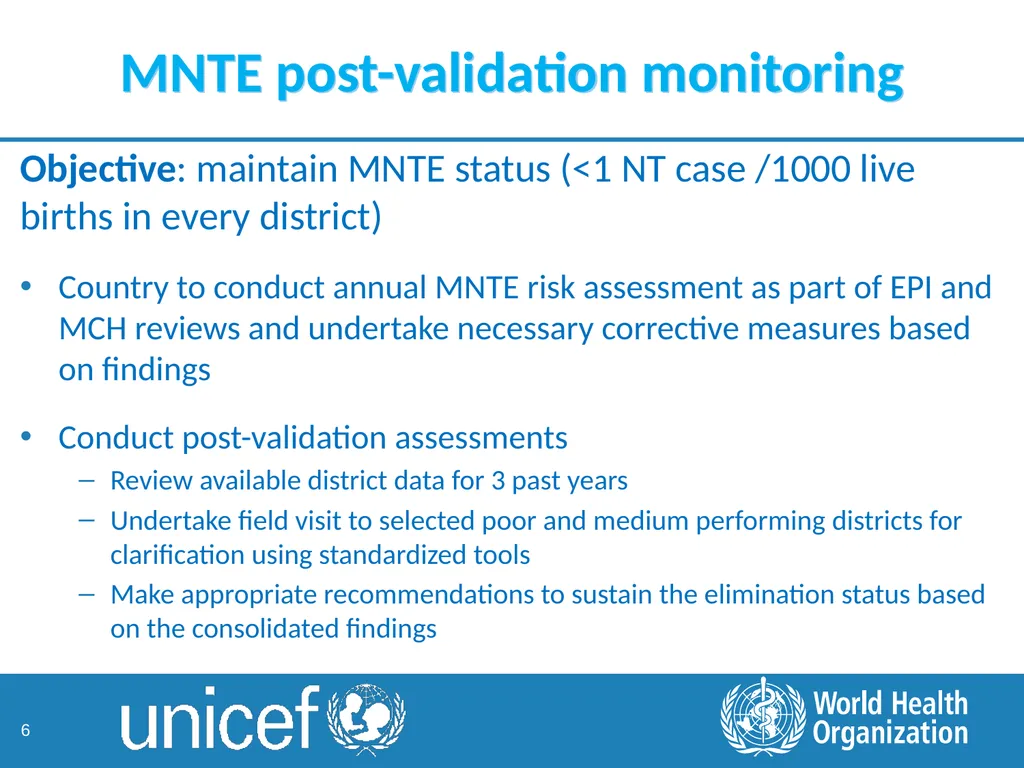
slide6. MNTE post-validation monitoring Objective: maintain MNTE status (<1 NT case /1000 live births in every district)
Country to conduct annual MNTE risk assessment as part of EPI and MCH reviews and undertake necessary corrective measures based on findings
Conduct post-validation assessments
Review available district data for 3 past years
Undertake field visit to selected poor and medium performing districts for clarification using standardized tools
Make appropriate recommendations to sustain the elimination status based on the consolidated findings 6<br>
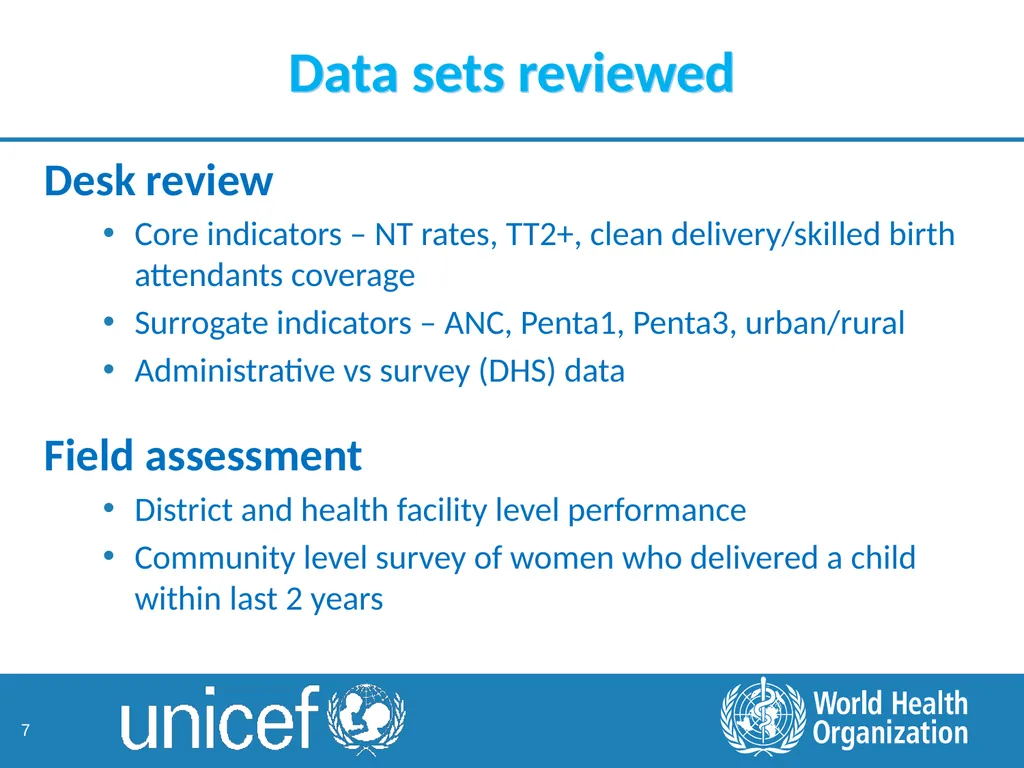
slide7. Data sets reviewed Desk review
Core indicators – NT rates, TT2+, clean delivery/skilled birth attendants coverage
Surrogate indicators – ANC, Penta1, Penta3, urban/rural
Administrative vs survey (DHS) data
Field assessment
District and health facility level performance
Community level survey of women who delivered a child within last 2 years 7<br>
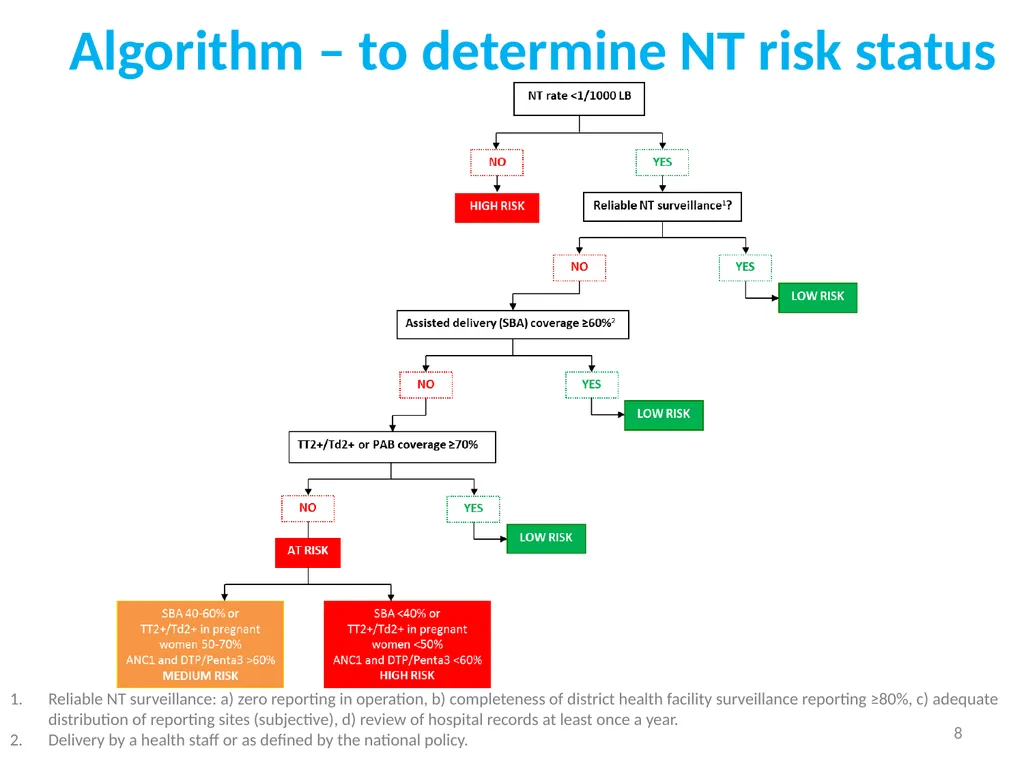
slide8. 8 Algorithm – to determine NT risk status Reliable NT surveillance: a) zero reporting in operation, b) completeness of district health facility surveillance reporting ≥80%, c) adequate distribution of reporting sites (subjective), d) review of hospital records at least once a year.
Delivery by a health staff or as defined by the national policy.<br>
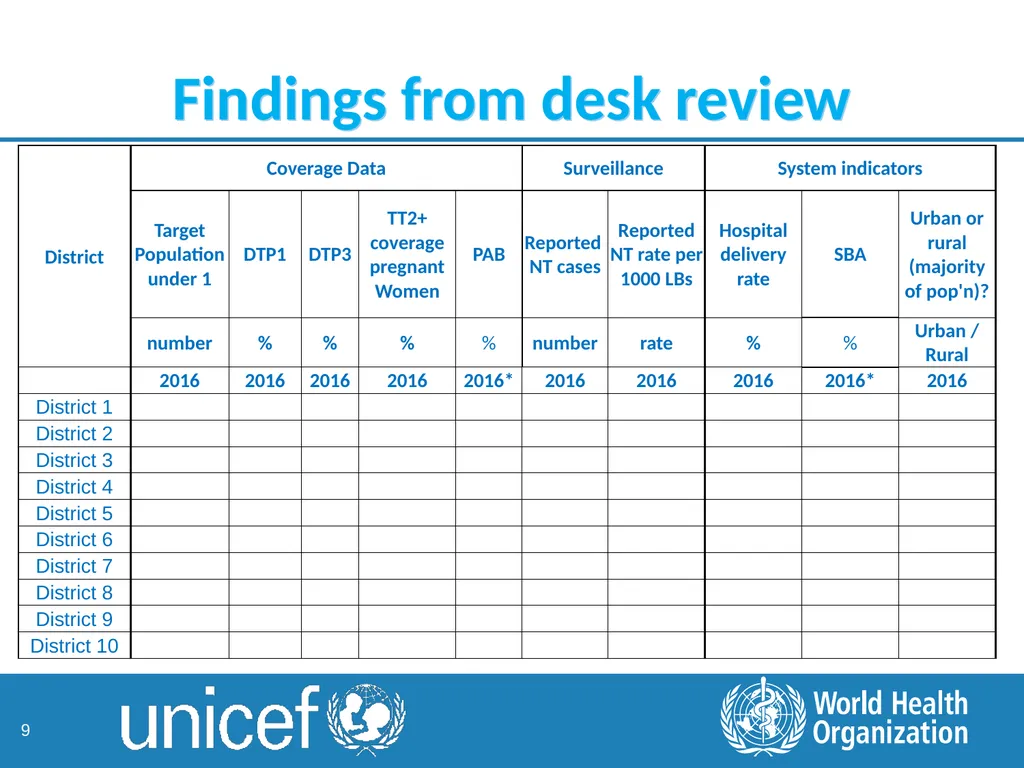
slide9. 9 Findings from desk review<br>
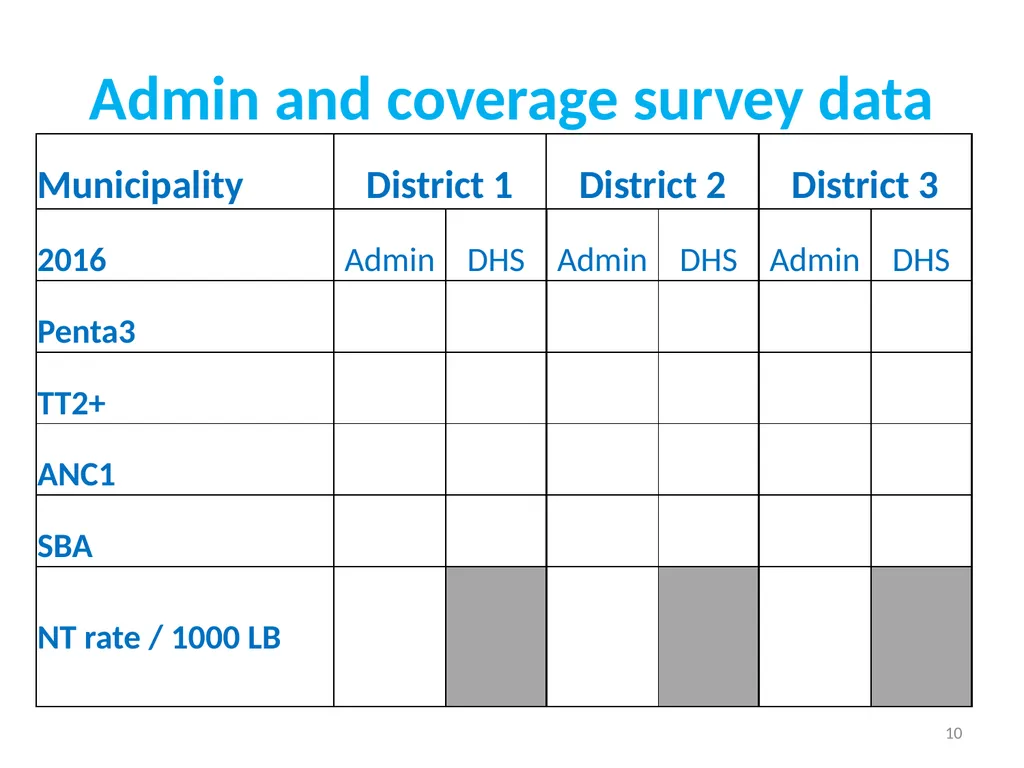
slide10. Admin and coverage survey data 10<br>
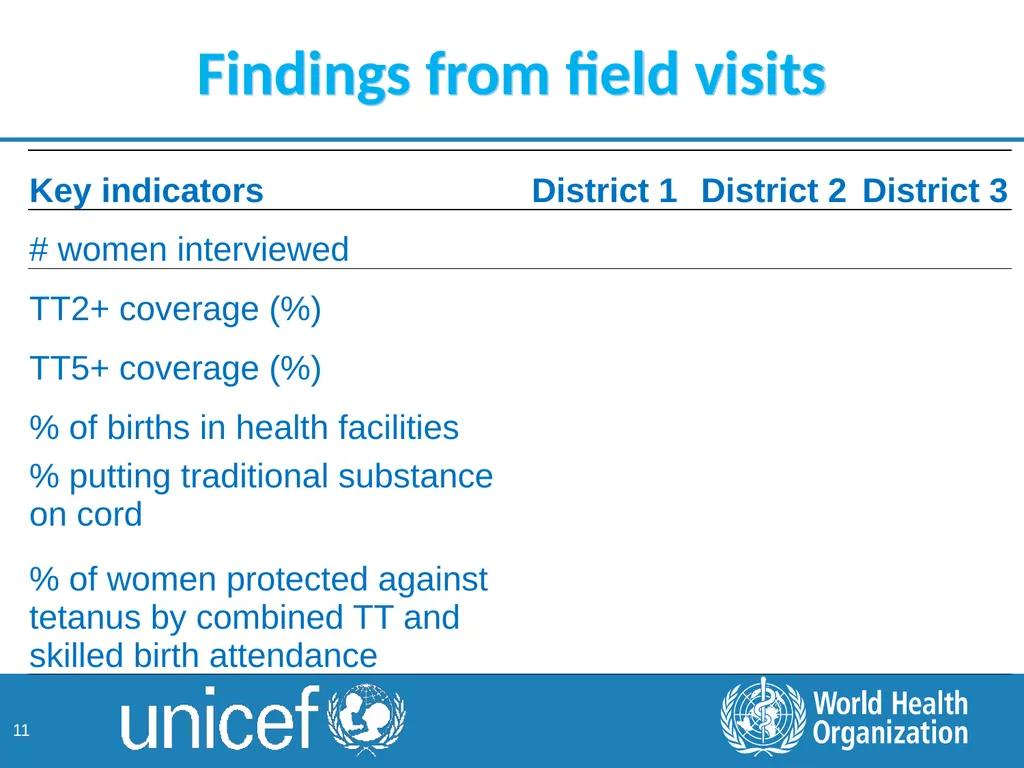
slide11. Findings from field visits 11<br>
slide12. Findings from field visits 12<br>
slide13. Findings from field visits 13<br>
slide14. Findings from field visits 14<br>
slide15. Findings from field visits 15<br>
slide16. Findings from field visits 16<br>
slide17. Findings from field visits 17<br>
slide18. Conclusions 18<br>
slide19. Recommendations 19<br>
slide2. Overview MNTE post-validation monitoring
Data sets reviewed
Field assessment and findings
Conclusion
Recommendations 2<br>
slide3. Assessment teams 3<br>
slide4. To achieve elimination:
<1 NT case per 1,000 live births in a year in every district of a country
If NT is eliminated,
maternal tetanus (MT) is also considered eliminated
= MNTE Neonatal tetanus (NT) elimination
“public health problem” 4<br>
slide5. 5 Neonatal tetanus affects the vulnerable … Women with no antenatal care (ANC) and no TT, home delivery and untrained attendance
Women who went for ANC but received no TT
Women who deliver at health center but practices may not be clean
Women attended by midwife but unclean practices
Critical role of surveillance and sharing of findings for corrective actions with both, EPI and Maternal, Neonatal and Child Health (MNCH)<br>
slide6. MNTE post-validation monitoring Objective: maintain MNTE status (<1 NT case /1000 live births in every district)
Country to conduct annual MNTE risk assessment as part of EPI and MCH reviews and undertake necessary corrective measures based on findings
Conduct post-validation assessments
Review available district data for 3 past years
Undertake field visit to selected poor and medium performing districts for clarification using standardized tools
Make appropriate recommendations to sustain the elimination status based on the consolidated findings 6<br>
slide7. Data sets reviewed Desk review
Core indicators – NT rates, TT2+, clean delivery/skilled birth attendants coverage
Surrogate indicators – ANC, Penta1, Penta3, urban/rural
Administrative vs survey (DHS) data
Field assessment
District and health facility level performance
Community level survey of women who delivered a child within last 2 years 7<br>
slide8. 8 Algorithm – to determine NT risk status Reliable NT surveillance: a) zero reporting in operation, b) completeness of district health facility surveillance reporting ≥80%, c) adequate distribution of reporting sites (subjective), d) review of hospital records at least once a year.
Delivery by a health staff or as defined by the national policy.<br>
slide9. 9 Findings from desk review<br>
slide10. Admin and coverage survey data 10<br>
slide11. Findings from field visits 11<br>
slide12. Findings from field visits 12<br>
slide13. Findings from field visits 13<br>
slide14. Findings from field visits 14<br>
slide15. Findings from field visits 15<br>
slide16. Findings from field visits 16<br>
slide17. Findings from field visits 17<br>
slide18. Conclusions 18<br>
slide19. Recommendations 19<br>