
1 Presentation to the Portfolio Committee on
KB
Published · 42 slides · 0 views

1 / 1

Description
1 Presentation to the Portfolio Committee on Cooperative Governance and Traditional Affairs 201516 Annual Report 2 Delegation: Ms MJJ Thupana - Chairperson: Municipal Demarcation Board Mr MM Wildebees - Board member Prof IE Konyn - Board
Related Topics
Share
Embed code
Download this presentation From Below
"1 Presentation to the Portfolio Committee on" is the property of its rightful owner. Permission is granted to download and print the materials on this website for personal, non-commercial use only, and to display it on your personal computer provided you do not modify the materials and that you retain all copyright notices contained in the materials. By downloading content from our website, you accept the terms of this agreement.
Presentation Transcript
01
1<br>
02
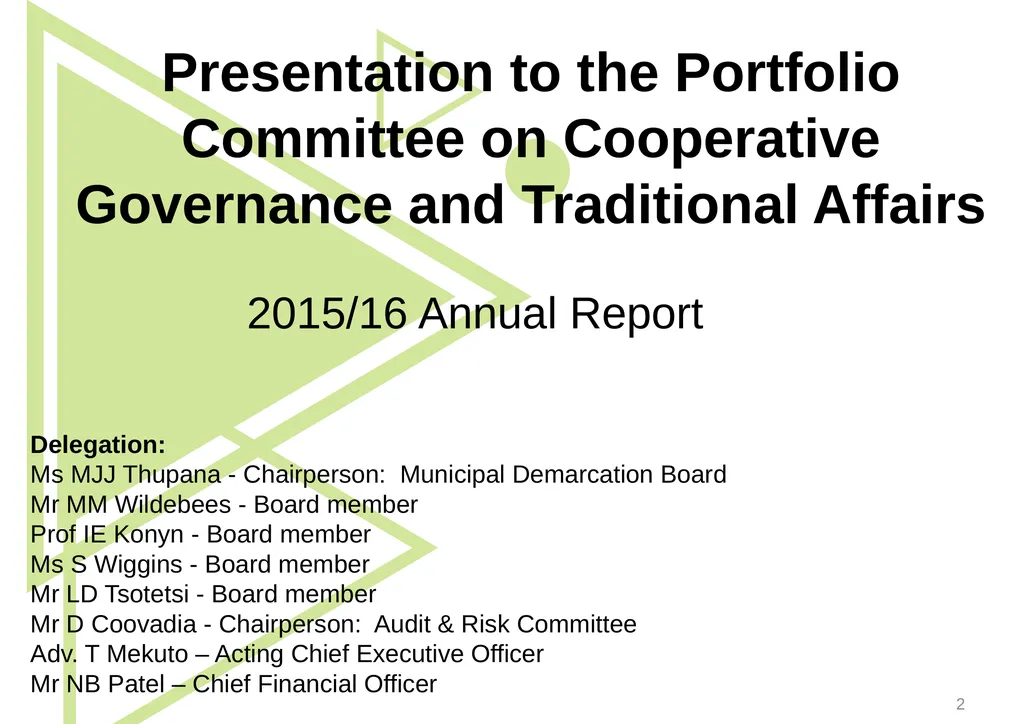
Presentation to the Portfolio Committee on Cooperative Governance and Traditional Affairs 2015/16 Annual Report 2 Delegation:
Ms MJJ Thupana - Chairperson: Municipal Demarcation Board
Mr MM Wildebees - Board member
Prof IE Konyn - Board member
Ms S Wiggins - Board member
Mr LD Tsotetsi - Board member
Mr D Coovadia - Chairperson: Audit & Risk Committee
Adv. T Mekuto – Acting Chief Executive Officer
Mr NB Patel – Chief Financial Officer<br>
Ms MJJ Thupana - Chairperson: Municipal Demarcation Board
Mr MM Wildebees - Board member
Prof IE Konyn - Board member
Ms S Wiggins - Board member
Mr LD Tsotetsi - Board member
Mr D Coovadia - Chairperson: Audit & Risk Committee
Adv. T Mekuto – Acting Chief Executive Officer
Mr NB Patel – Chief Financial Officer<br>
03
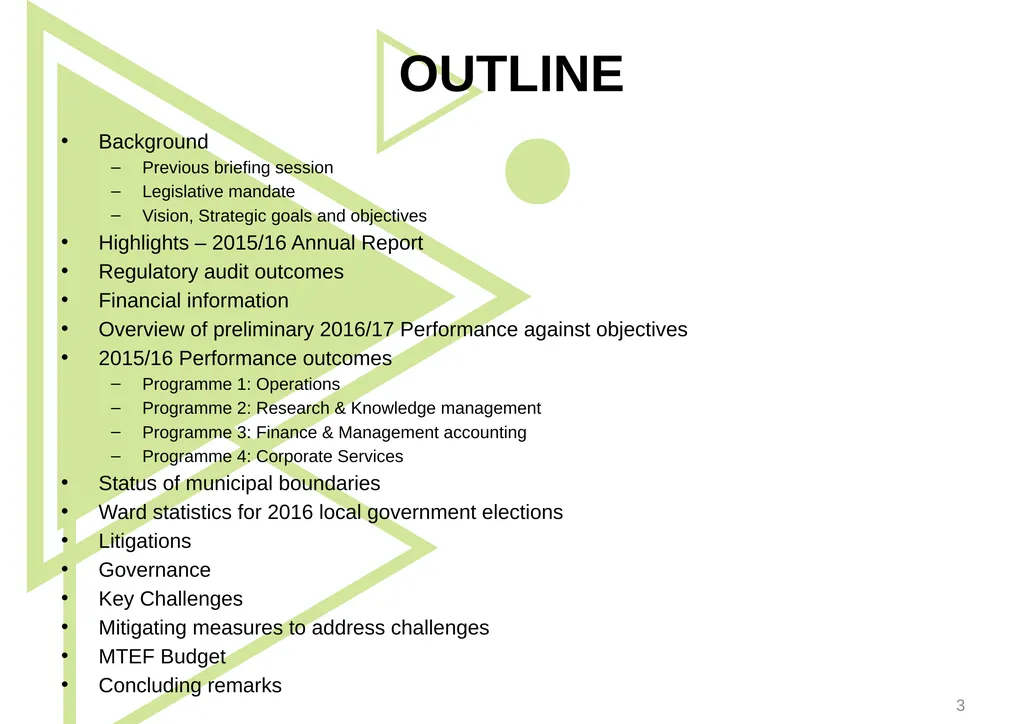
OUTLINE Background
Previous briefing session
Legislative mandate
Vision, Strategic goals and objectives
Highlights – 2015/16 Annual Report
Regulatory audit outcomes
Financial information
Overview of preliminary 2016/17 Performance against objectives
2015/16 Performance outcomes
Programme 1: Operations
Programme 2: Research & Knowledge management
Programme 3: Finance & Management accounting
Programme 4: Corporate Services
Status of municipal boundaries
Ward statistics for 2016 local government elections
Litigations
Governance
Key Challenges
Mitigating measures to address challenges
MTEF Budget
Concluding remarks 3<br>
Previous briefing session
Legislative mandate
Vision, Strategic goals and objectives
Highlights – 2015/16 Annual Report
Regulatory audit outcomes
Financial information
Overview of preliminary 2016/17 Performance against objectives
2015/16 Performance outcomes
Programme 1: Operations
Programme 2: Research & Knowledge management
Programme 3: Finance & Management accounting
Programme 4: Corporate Services
Status of municipal boundaries
Ward statistics for 2016 local government elections
Litigations
Governance
Key Challenges
Mitigating measures to address challenges
MTEF Budget
Concluding remarks 3<br>
04
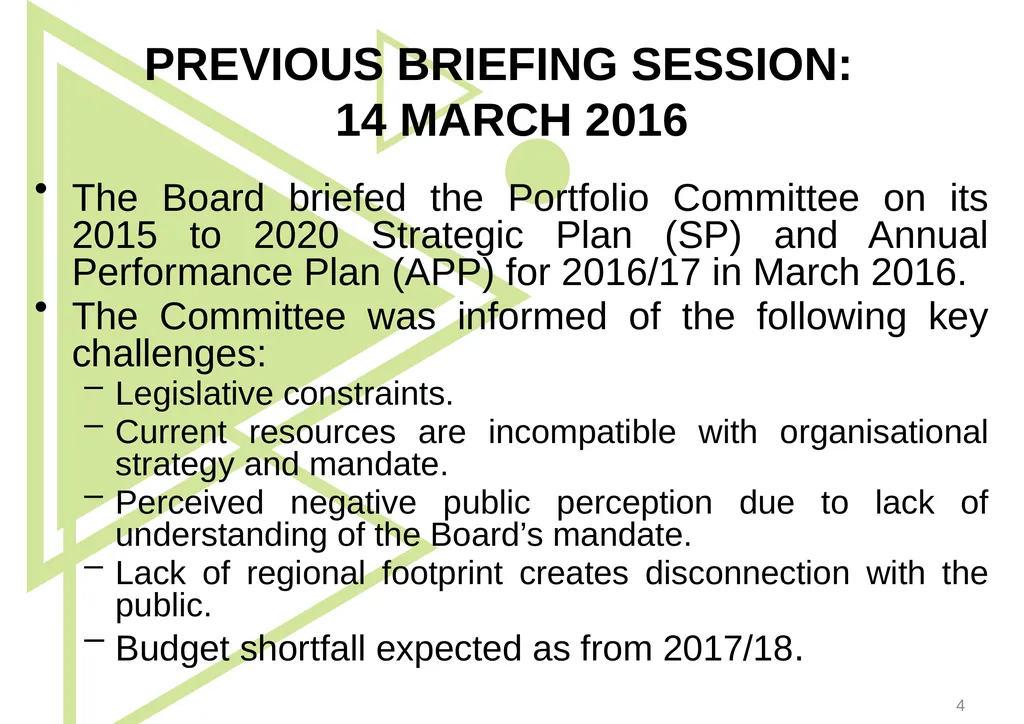
PREVIOUS BRIEFING SESSION:
14 MARCH 2016 The Board briefed the Portfolio Committee on its 2015 to 2020 Strategic Plan (SP) and Annual Performance Plan (APP) for 2016/17 in March 2016.
The Committee was informed of the following key challenges:
Legislative constraints.
Current resources are incompatible with organisational strategy and mandate.
Perceived negative public perception due to lack of understanding of the Board’s mandate.
Lack of regional footprint creates disconnection with the public.
Budget shortfall expected as from 2017/18. 4<br>
The Committee was informed of the following key challenges:
Legislative constraints.
Current resources are incompatible with organisational strategy and mandate.
Perceived negative public perception due to lack of understanding of the Board’s mandate.
Lack of regional footprint creates disconnection with the public.
Budget shortfall expected as from 2017/18. 4<br>
05
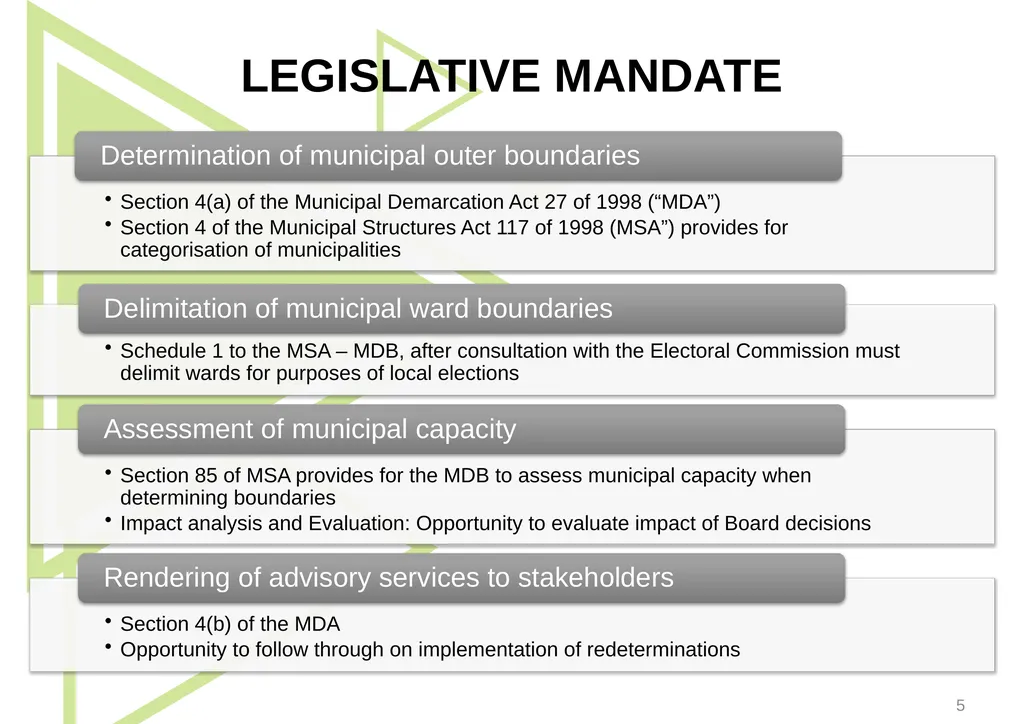
LEGISLATIVE MANDATE 5<br>
06
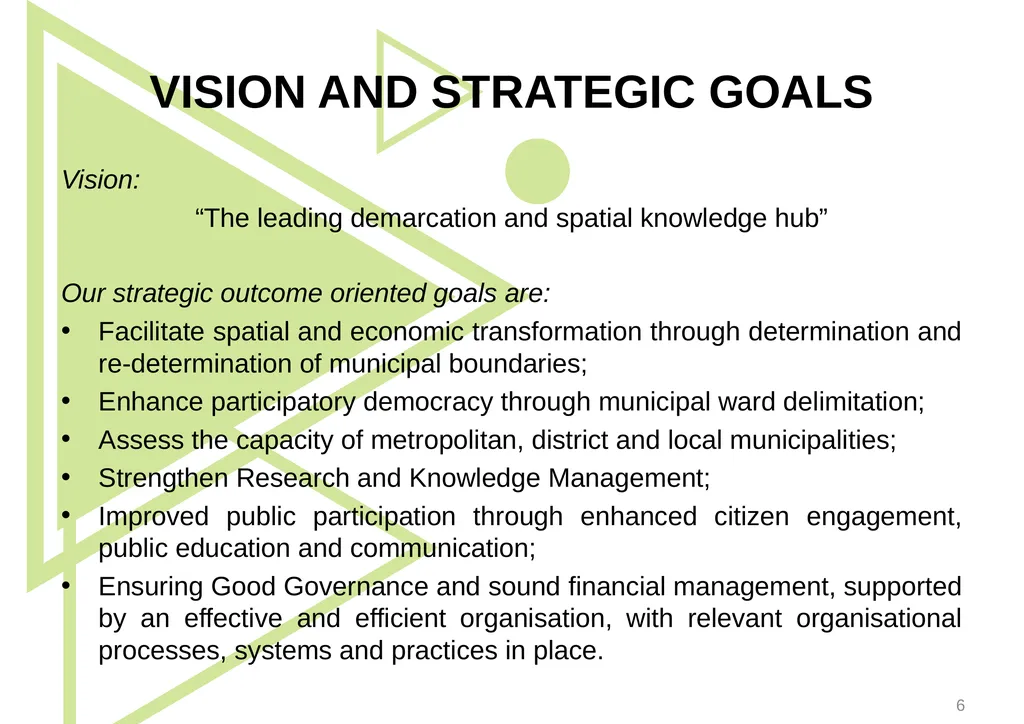
VISION AND STRATEGIC GOALS Vision:
“The leading demarcation and spatial knowledge hub”
Our strategic outcome oriented goals are:
Facilitate spatial and economic transformation through determination and re-determination of municipal boundaries;
Enhance participatory democracy through municipal ward delimitation;
Assess the capacity of metropolitan, district and local municipalities;
Strengthen Research and Knowledge Management;
Improved public participation through enhanced citizen engagement, public education and communication;
Ensuring Good Governance and sound financial management, supported by an effective and efficient organisation, with relevant organisational processes, systems and practices in place. 6<br>
“The leading demarcation and spatial knowledge hub”
Our strategic outcome oriented goals are:
Facilitate spatial and economic transformation through determination and re-determination of municipal boundaries;
Enhance participatory democracy through municipal ward delimitation;
Assess the capacity of metropolitan, district and local municipalities;
Strengthen Research and Knowledge Management;
Improved public participation through enhanced citizen engagement, public education and communication;
Ensuring Good Governance and sound financial management, supported by an effective and efficient organisation, with relevant organisational processes, systems and practices in place. 6<br>
07
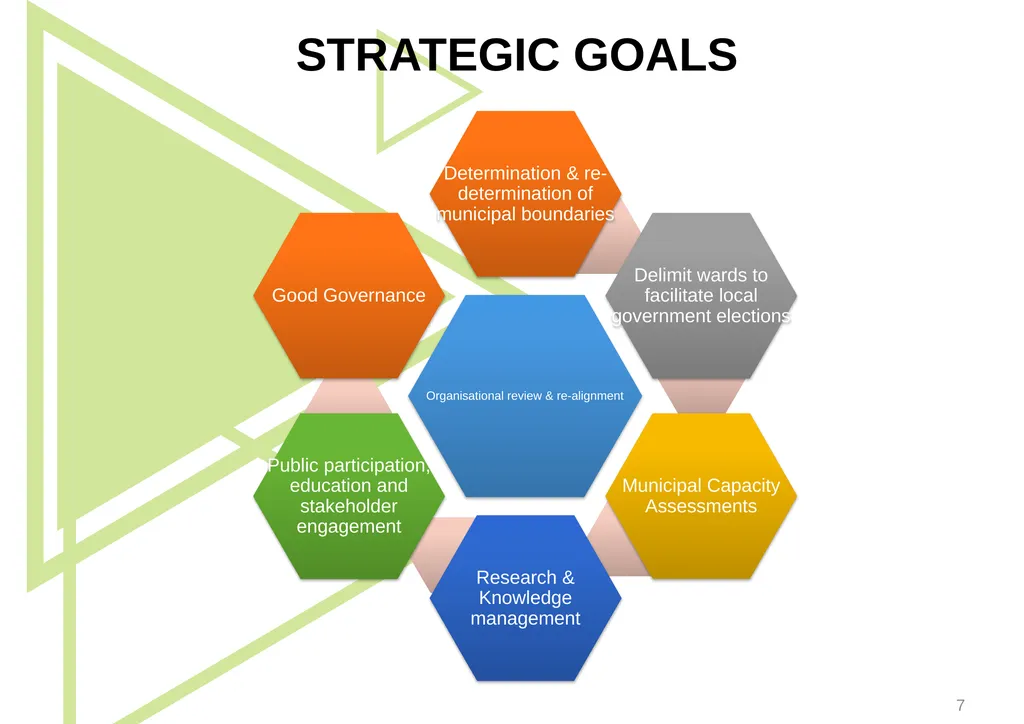
STRATEGIC GOALS 7<br>
08
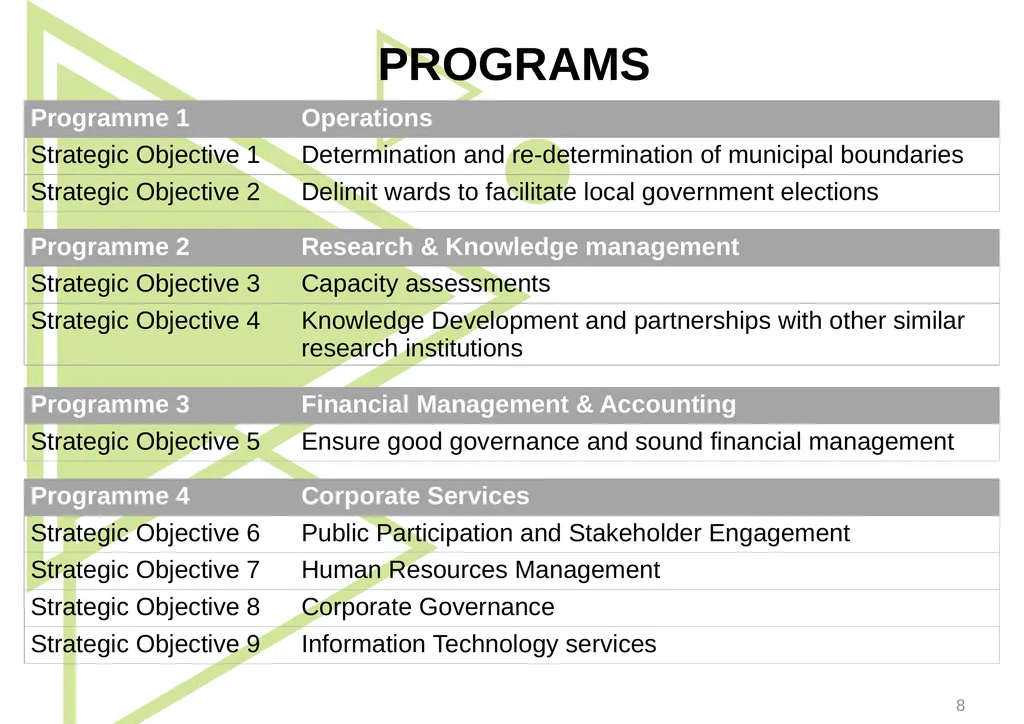
PROGRAMS 8<br>
09
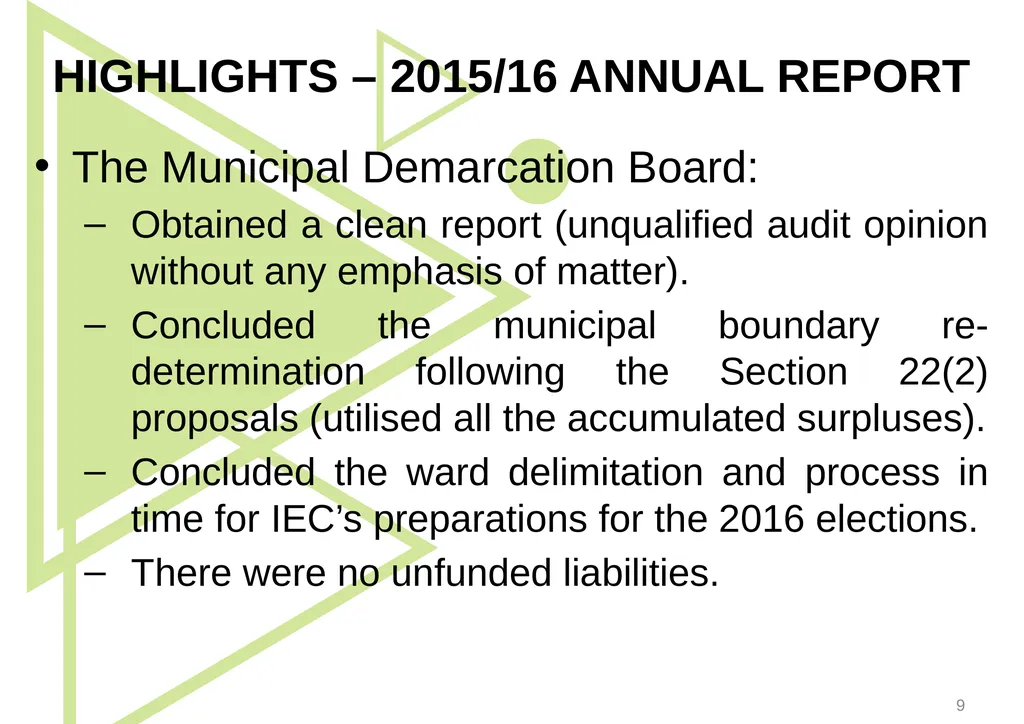
HIGHLIGHTS – 2015/16 ANNUAL REPORT The Municipal Demarcation Board:
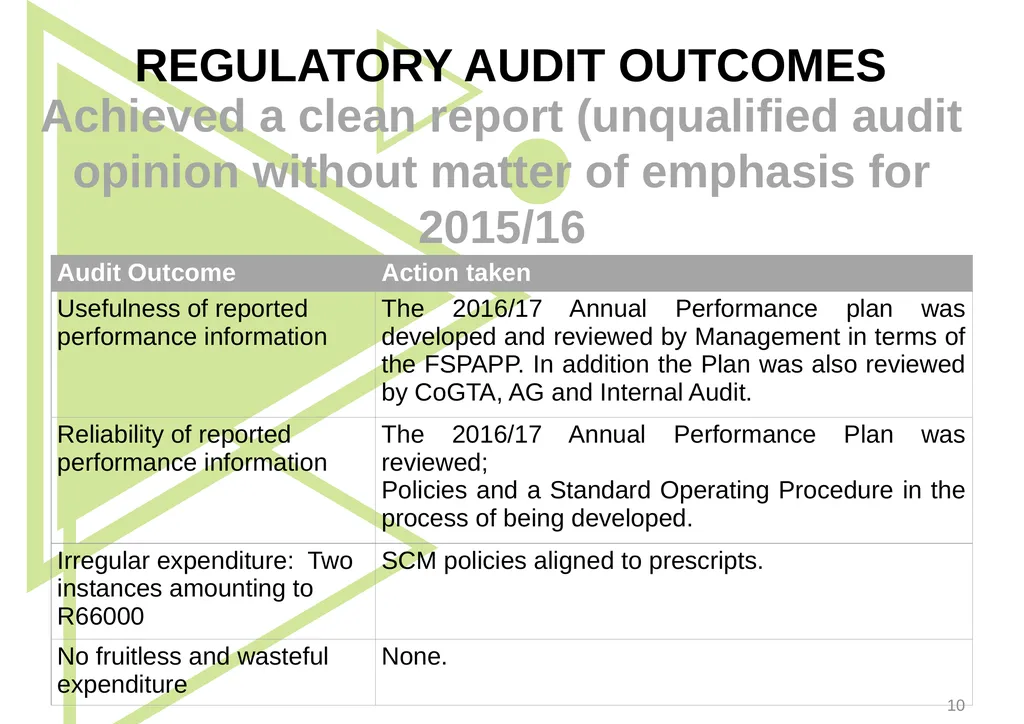
Obtained a clean report (unqualified audit opinion without any emphasis of matter).
Concluded the municipal boundary re-determination following the Section 22(2) proposals (utilised all the accumulated surpluses).
Concluded the ward delimitation and process in time for IEC’s preparations for the 2016 elections.
There were no unfunded liabilities. 9<br>
Obtained a clean report (unqualified audit opinion without any emphasis of matter).
Concluded the municipal boundary re-determination following the Section 22(2) proposals (utilised all the accumulated surpluses).
Concluded the ward delimitation and process in time for IEC’s preparations for the 2016 elections.
There were no unfunded liabilities. 9<br>
10
REGULATORY AUDIT OUTCOMES 10 Achieved a clean report (unqualified audit opinion without matter of emphasis for 2015/16<br>
11
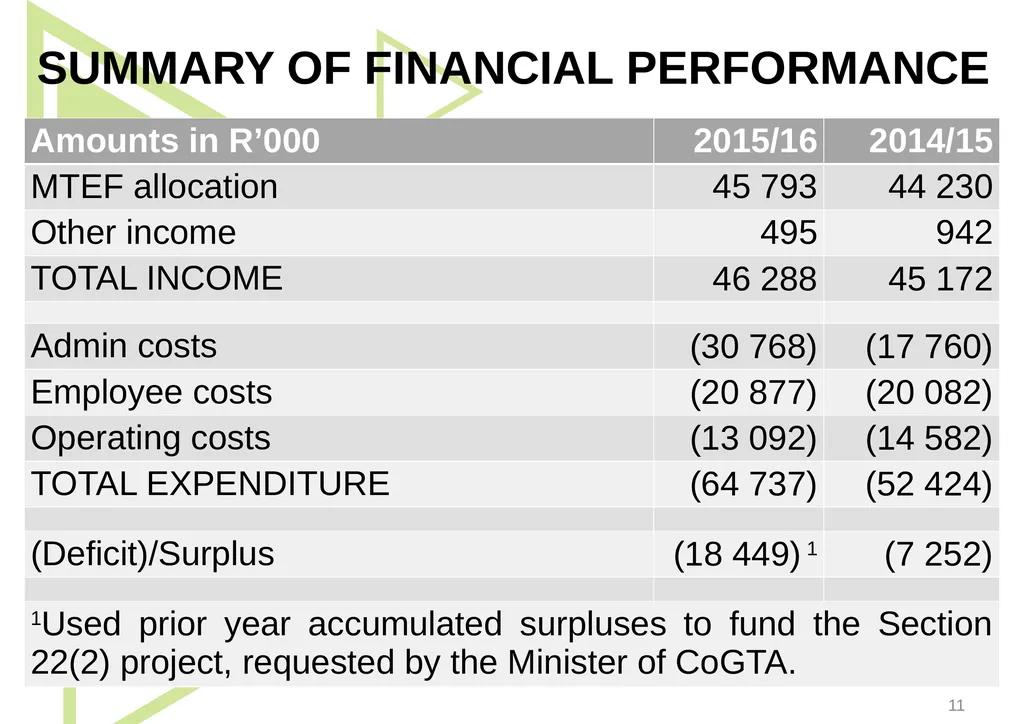
SUMMARY OF FINANCIAL PERFORMANCE Total expenditure for the period – R44.7 million
Resulting in deficit of R1.6 million 11<br>
Resulting in deficit of R1.6 million 11<br>
12
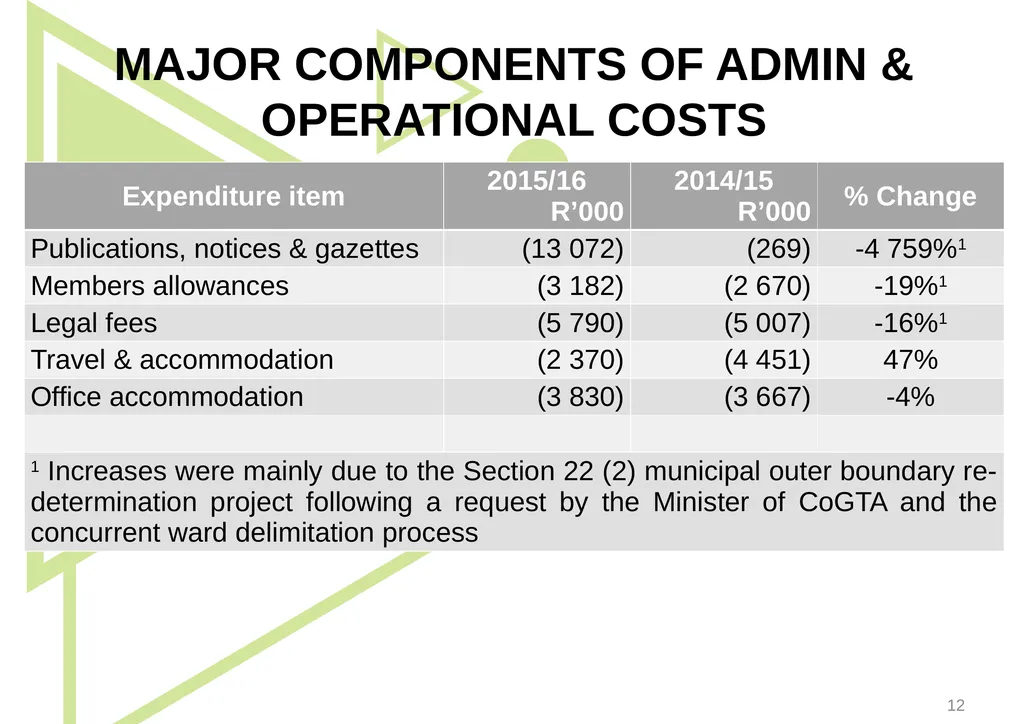
MAJOR COMPONENTS OF ADMIN & OPERATIONAL COSTS 12<br>
13
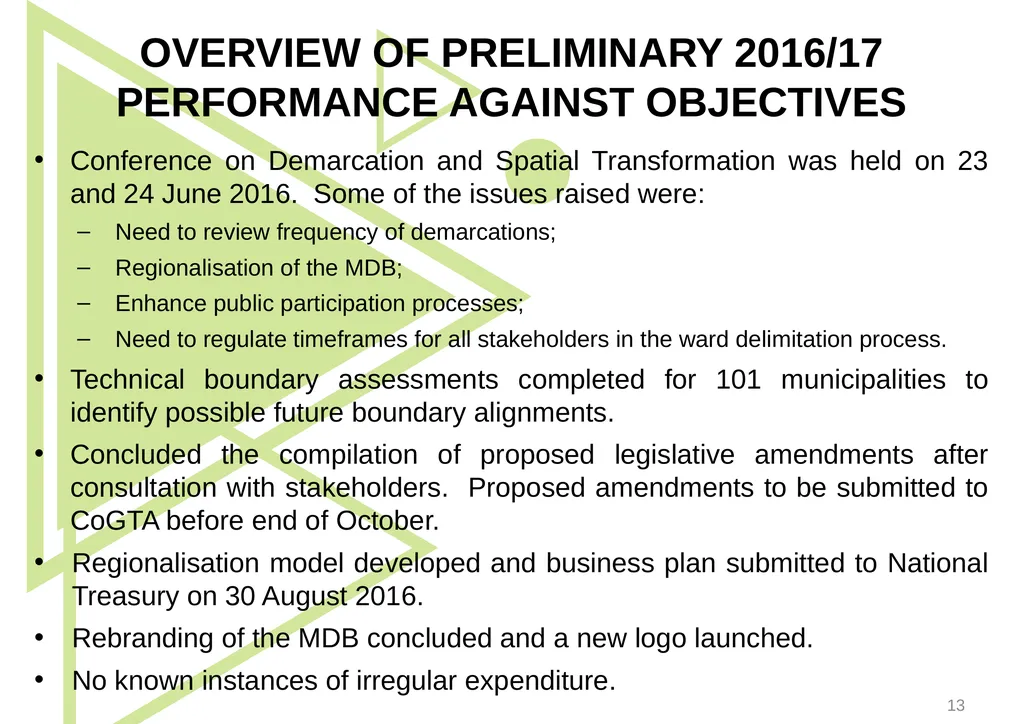
OVERVIEW OF PRELIMINARY 2016/17 PERFORMANCE AGAINST OBJECTIVES 13 Conference on Demarcation and Spatial Transformation was held on 23 and 24 June 2016. Some of the issues raised were:
Need to review frequency of demarcations;
Regionalisation of the MDB;
Enhance public participation processes;
Need to regulate timeframes for all stakeholders in the ward delimitation process.
Technical boundary assessments completed for 101 municipalities to identify possible future boundary alignments.
Concluded the compilation of proposed legislative amendments after consultation with stakeholders. Proposed amendments to be submitted to CoGTA before end of October.
Regionalisation model developed and business plan submitted to National Treasury on 30 August 2016.
Rebranding of the MDB concluded and a new logo launched.
No known instances of irregular expenditure.<br>
Need to review frequency of demarcations;
Regionalisation of the MDB;
Enhance public participation processes;
Need to regulate timeframes for all stakeholders in the ward delimitation process.
Technical boundary assessments completed for 101 municipalities to identify possible future boundary alignments.
Concluded the compilation of proposed legislative amendments after consultation with stakeholders. Proposed amendments to be submitted to CoGTA before end of October.
Regionalisation model developed and business plan submitted to National Treasury on 30 August 2016.
Rebranding of the MDB concluded and a new logo launched.
No known instances of irregular expenditure.<br>
14
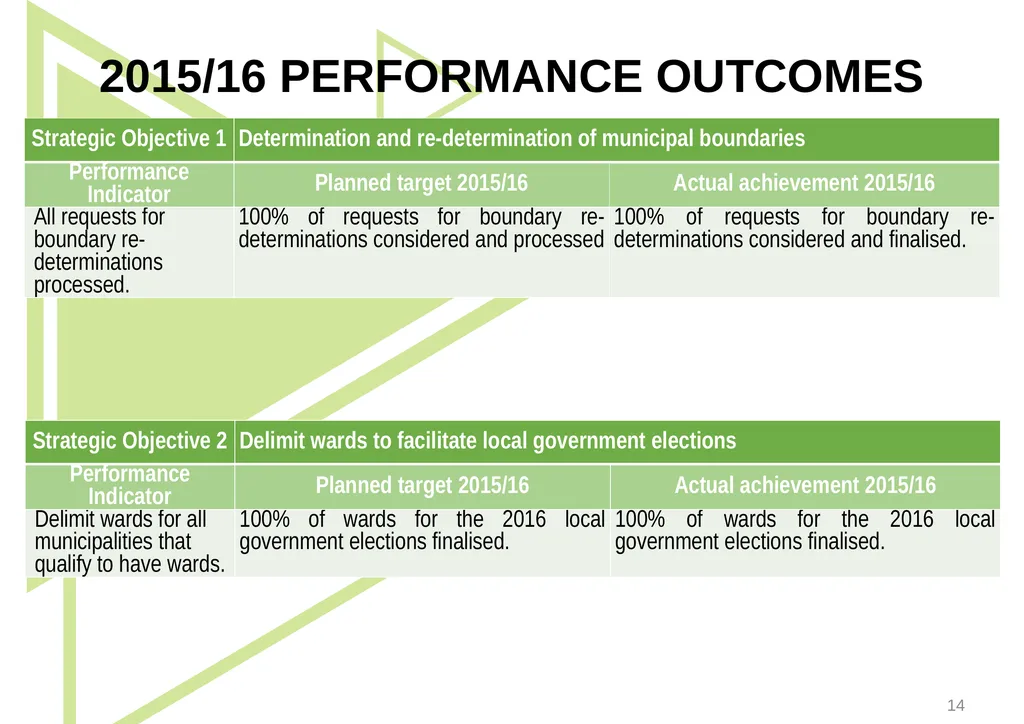
2015/16 PERFORMANCE OUTCOMES 14<br>
15
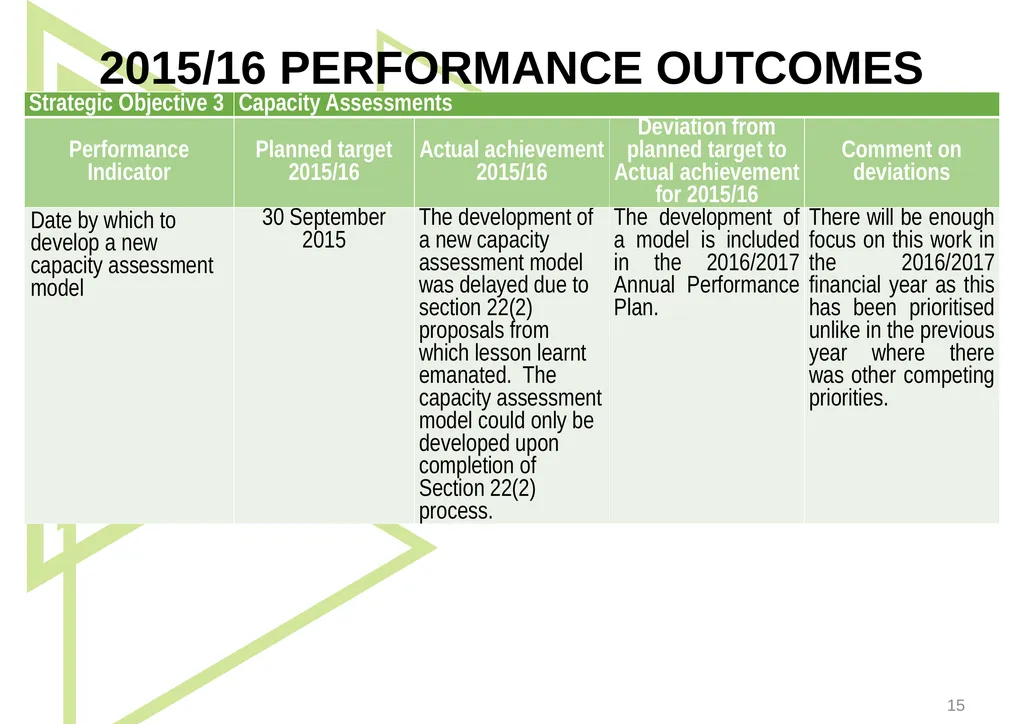
2015/16 PERFORMANCE OUTCOMES 15<br>
16
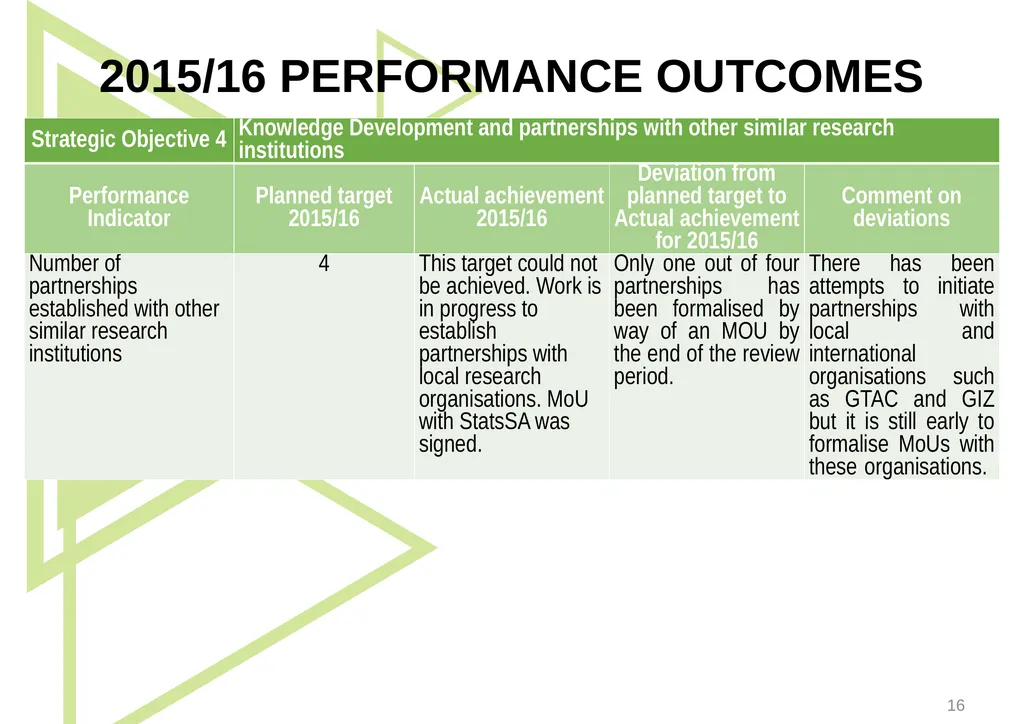
2015/16 PERFORMANCE OUTCOMES 16<br>
17
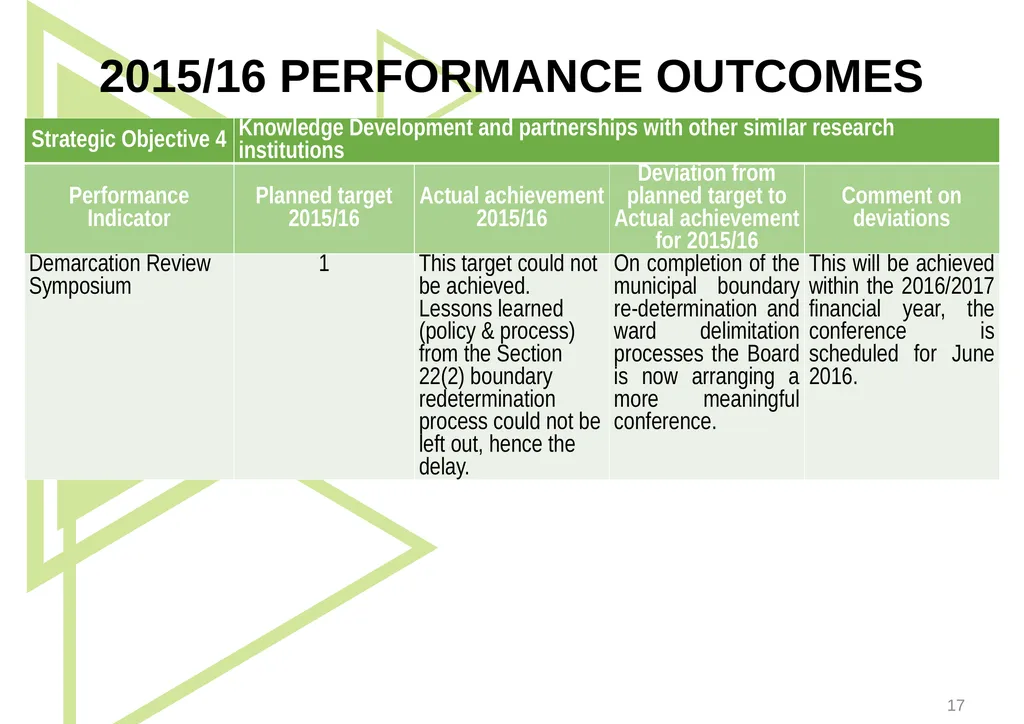
2015/16 PERFORMANCE OUTCOMES 17<br>
18
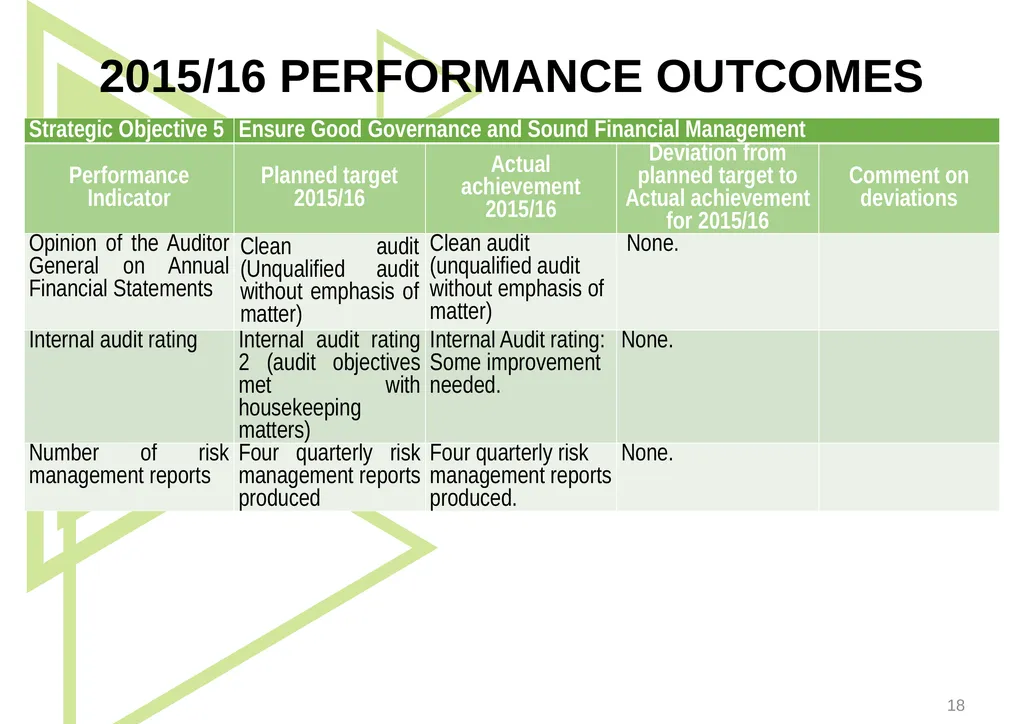
2015/16 PERFORMANCE OUTCOMES 18<br>
19
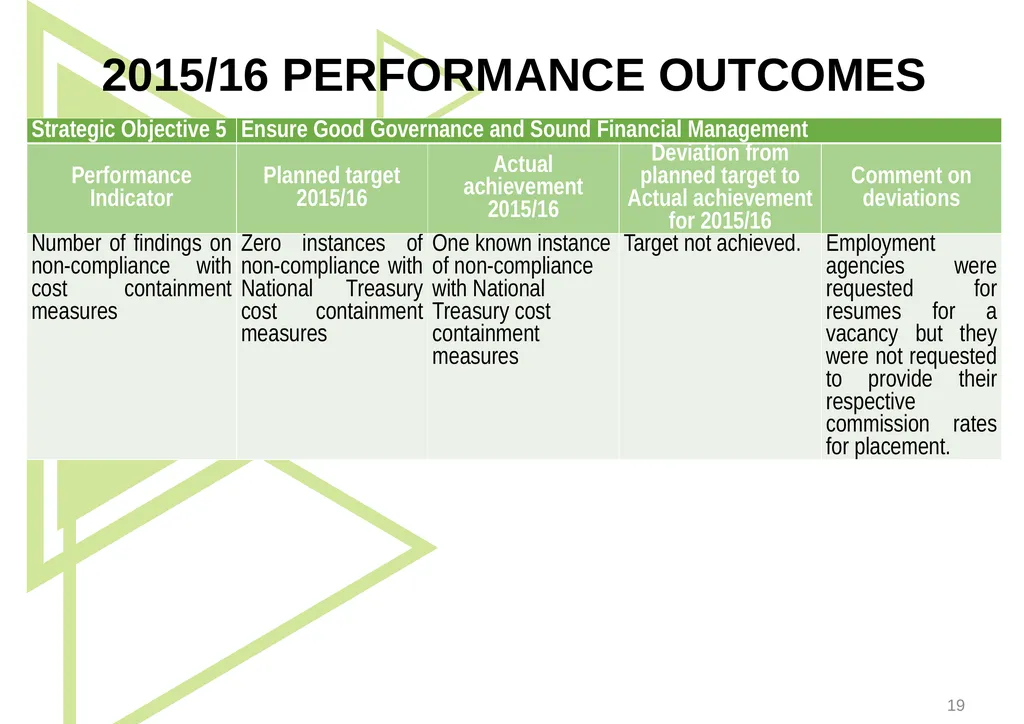
2015/16 PERFORMANCE OUTCOMES 19<br>
20
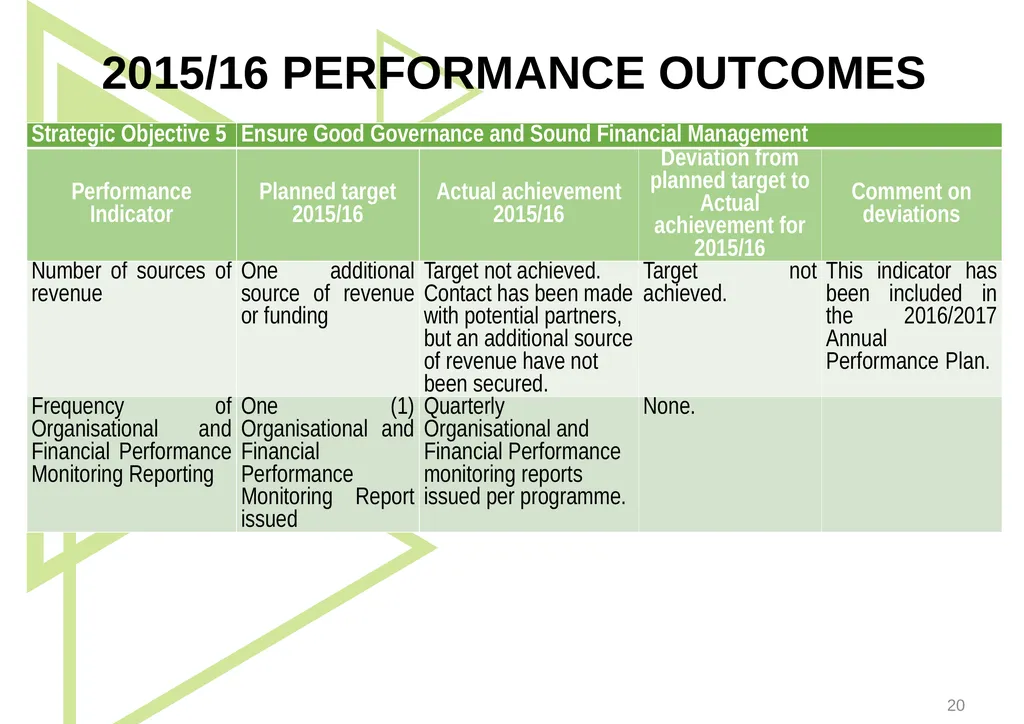
2015/16 PERFORMANCE OUTCOMES 20<br>
21
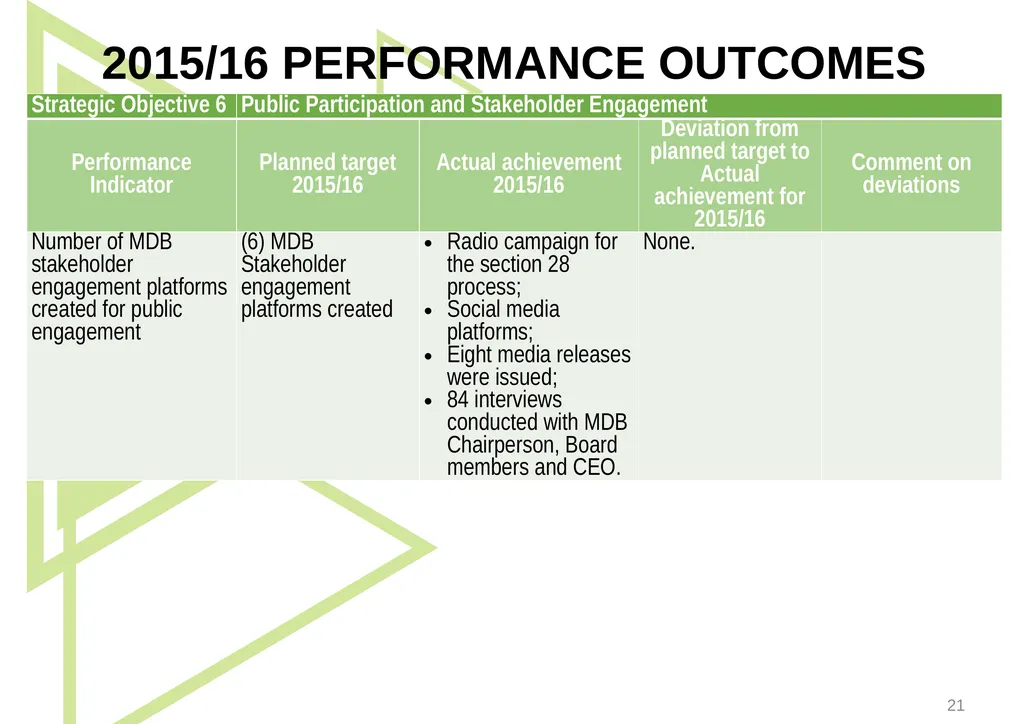
2015/16 PERFORMANCE OUTCOMES 21<br>
22
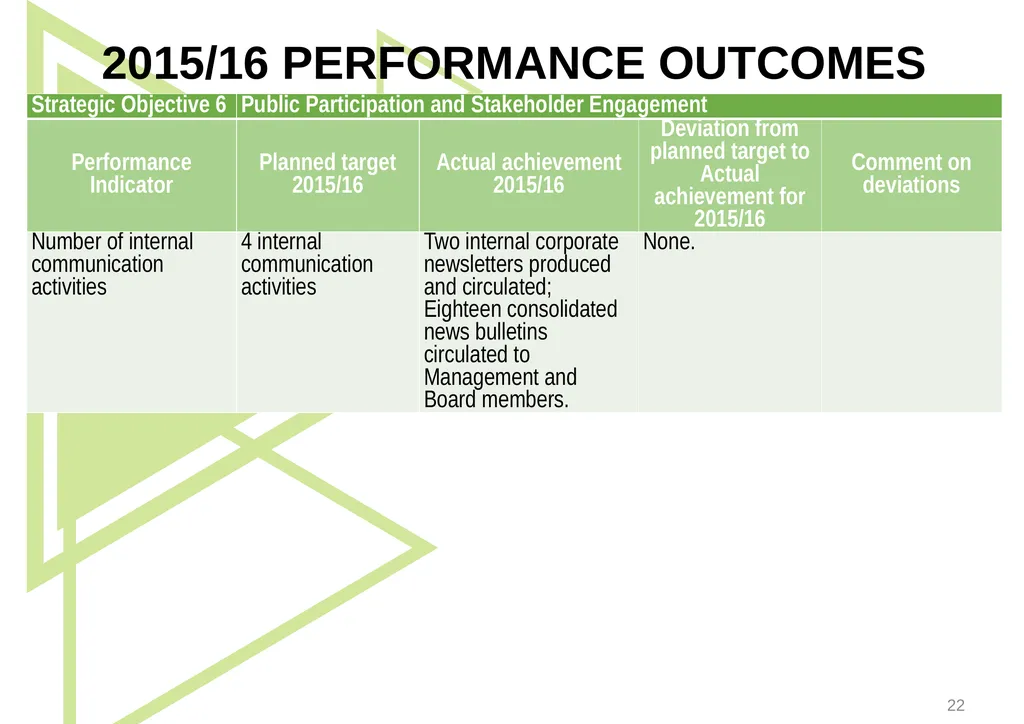
2015/16 PERFORMANCE OUTCOMES 22<br>
23
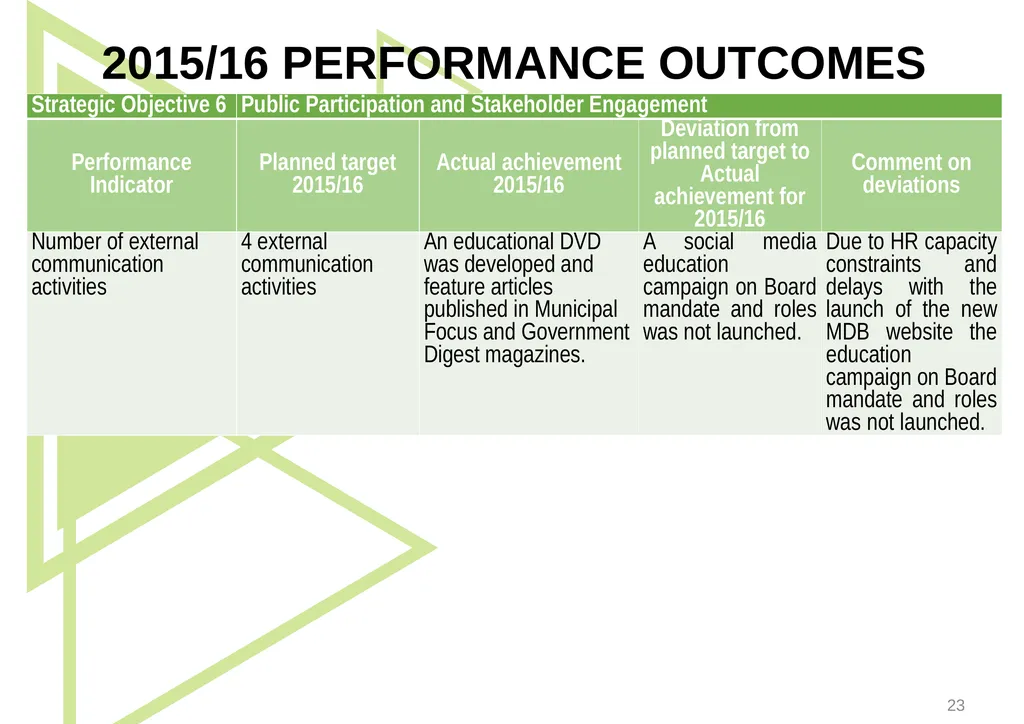
2015/16 PERFORMANCE OUTCOMES 23<br>
24
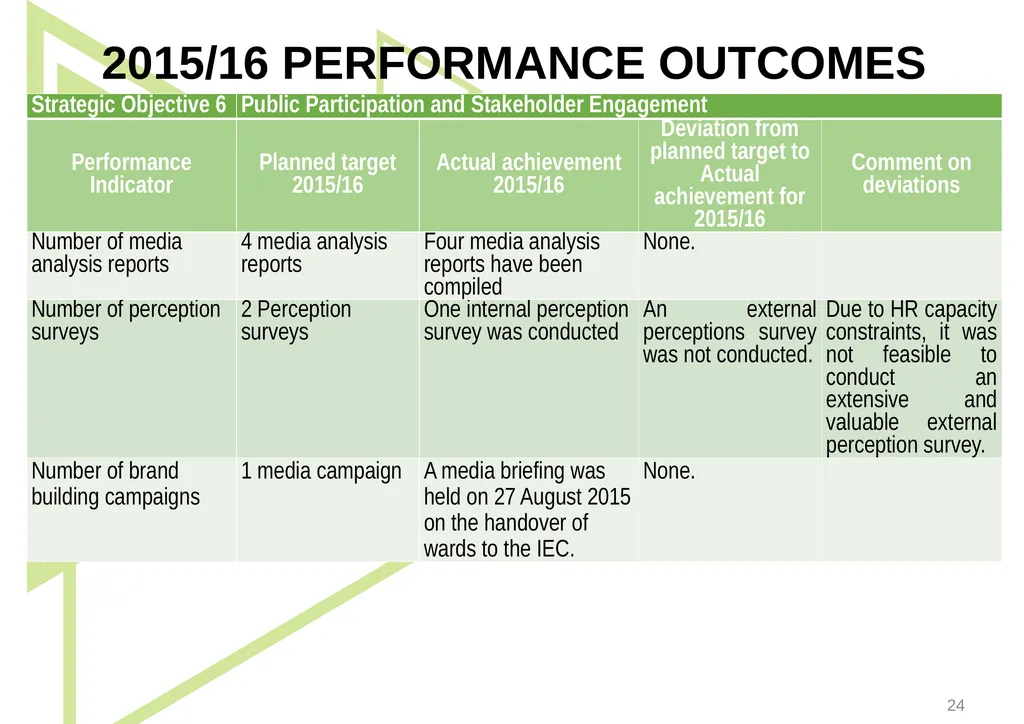
2015/16 PERFORMANCE OUTCOMES 24<br>
25
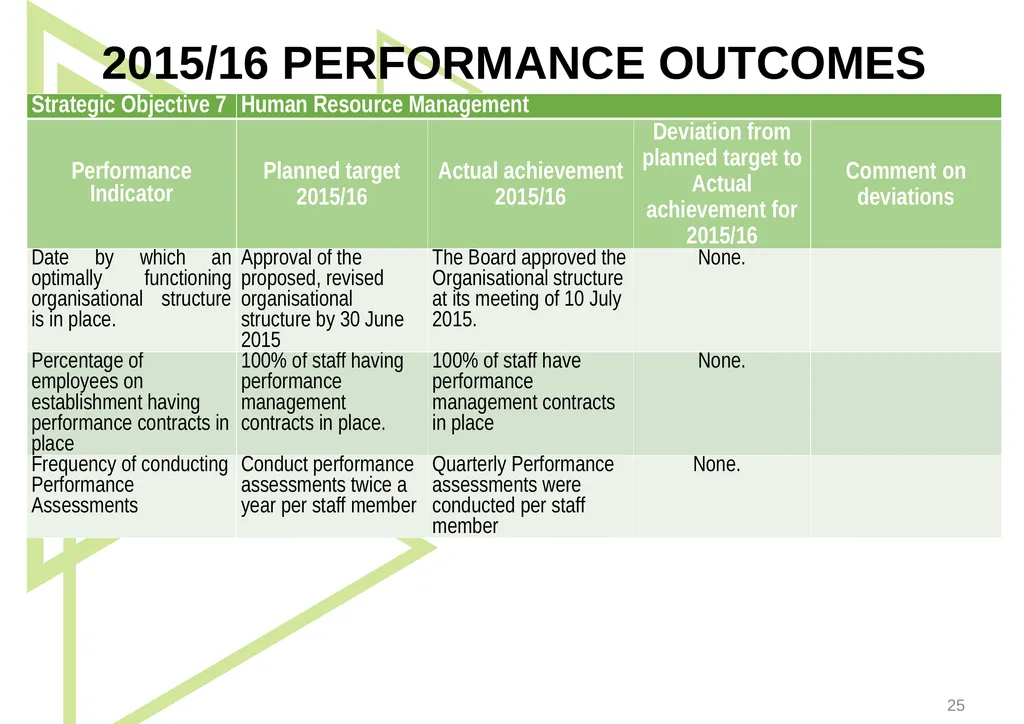
2015/16 PERFORMANCE OUTCOMES 25<br>
26
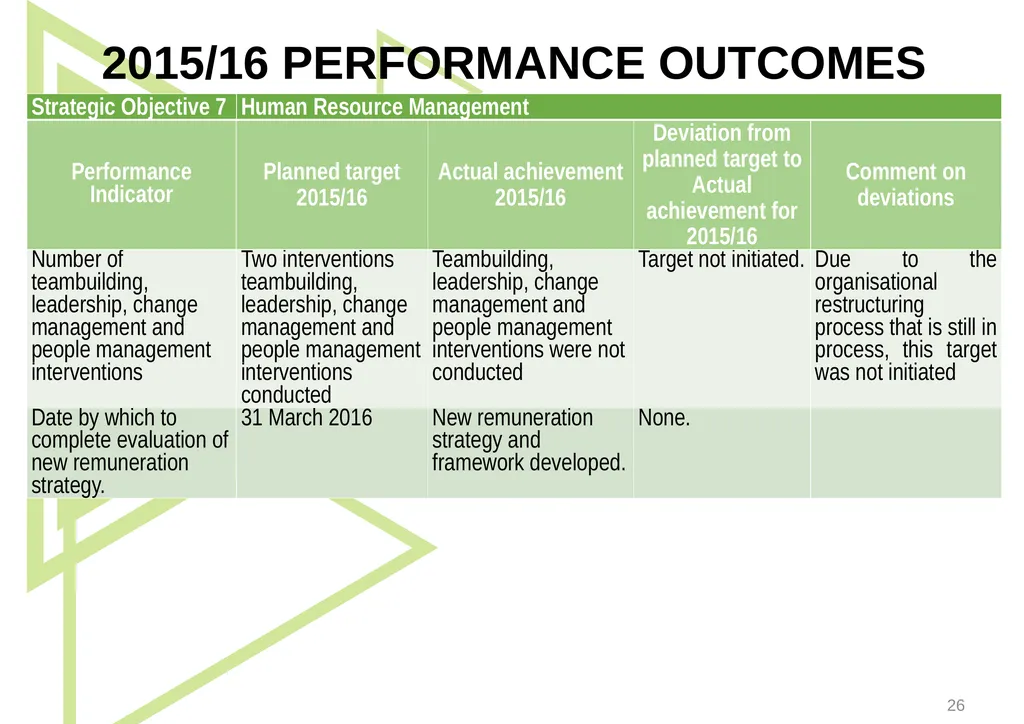
2015/16 PERFORMANCE OUTCOMES 26<br>
27
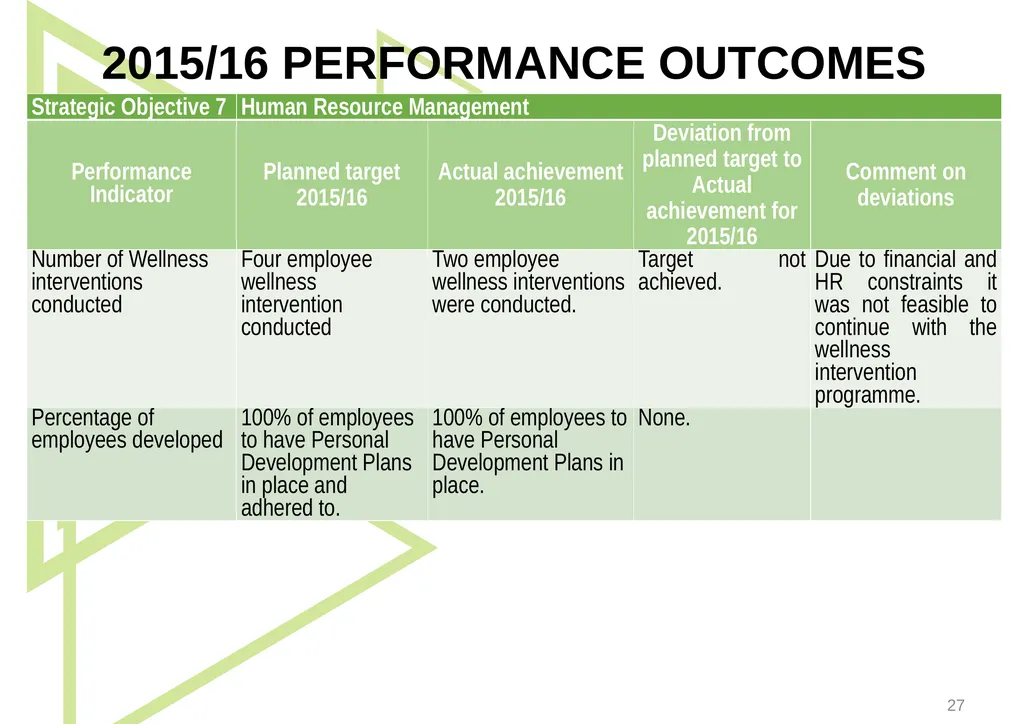
2015/16 PERFORMANCE OUTCOMES 27<br>
28
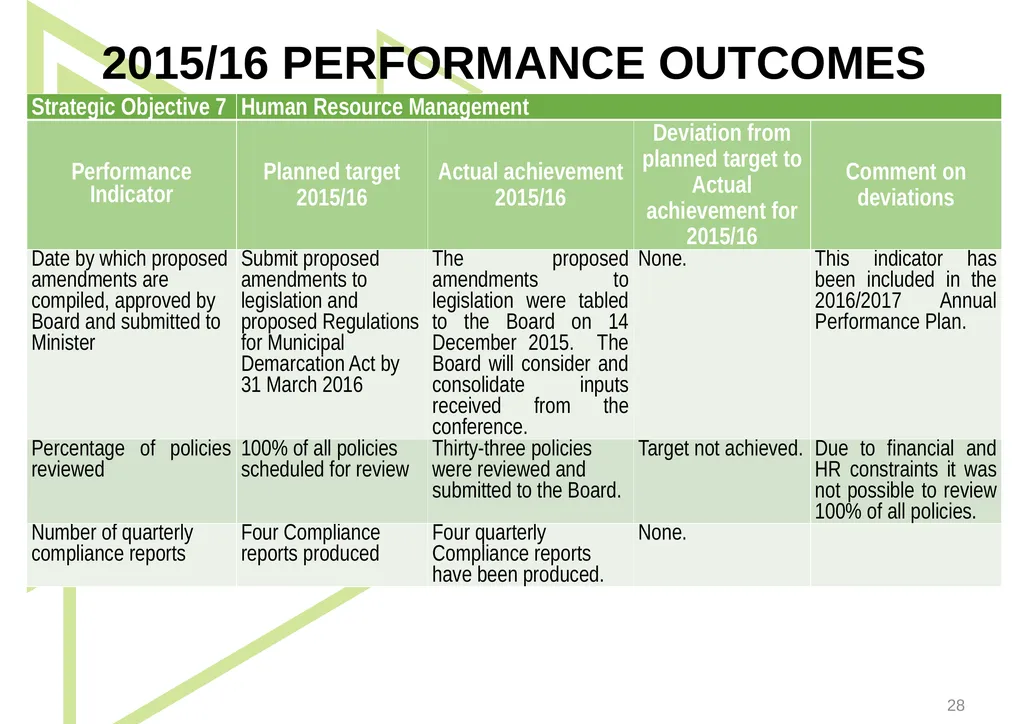
2015/16 PERFORMANCE OUTCOMES 28<br>
29
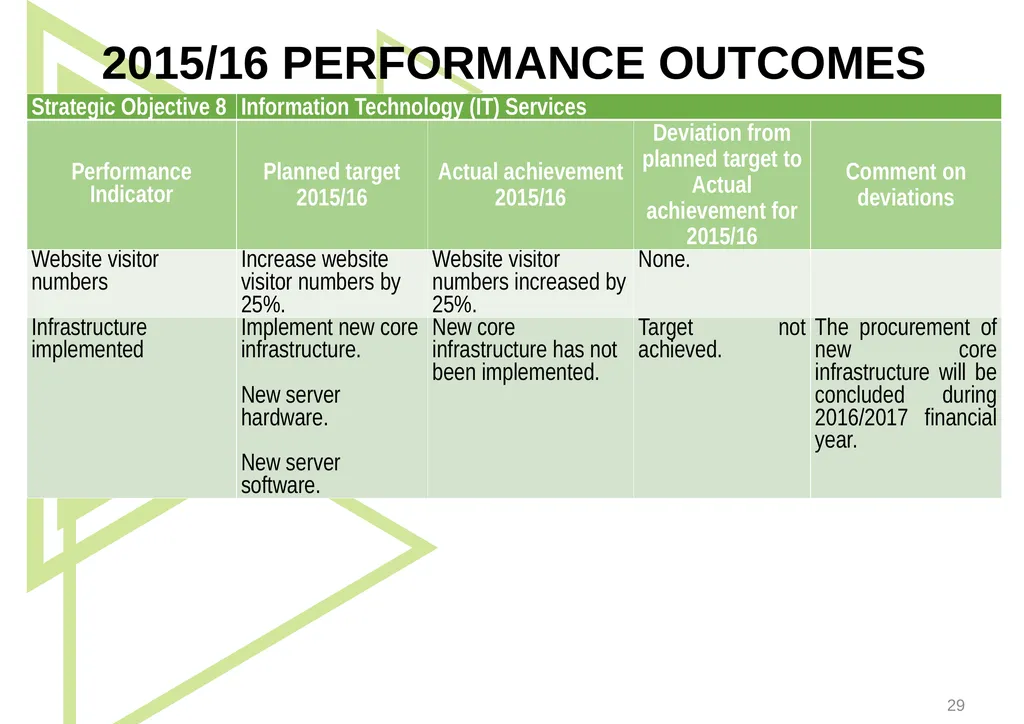
2015/16 PERFORMANCE OUTCOMES 29<br>
30
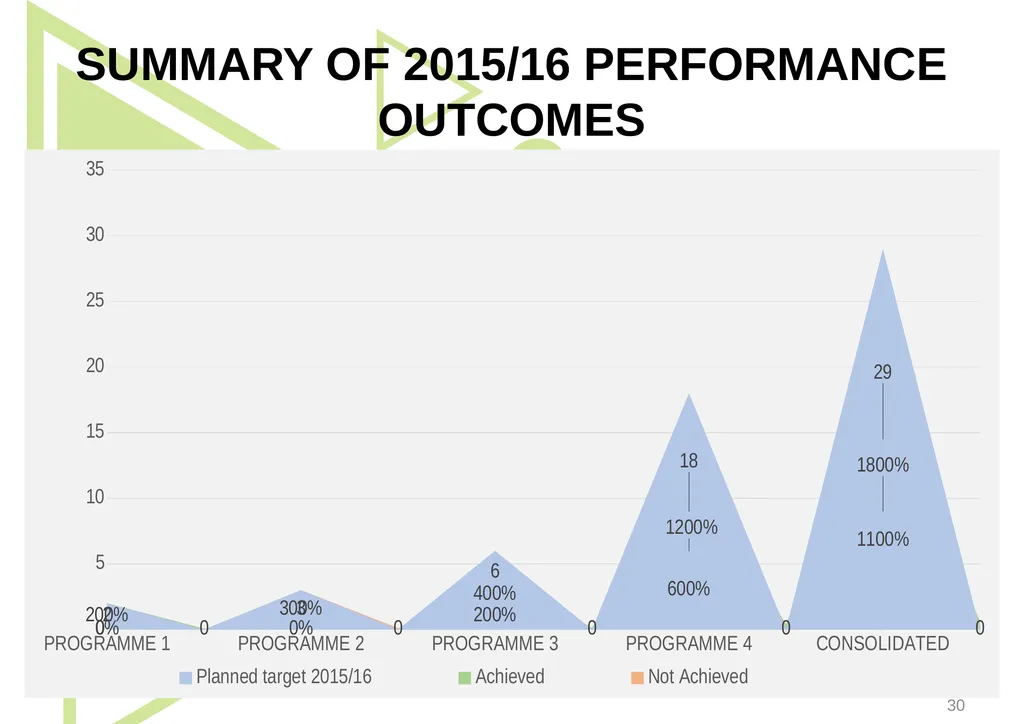
SUMMARY OF 2015/16 PERFORMANCE OUTCOMES 30<br>
31
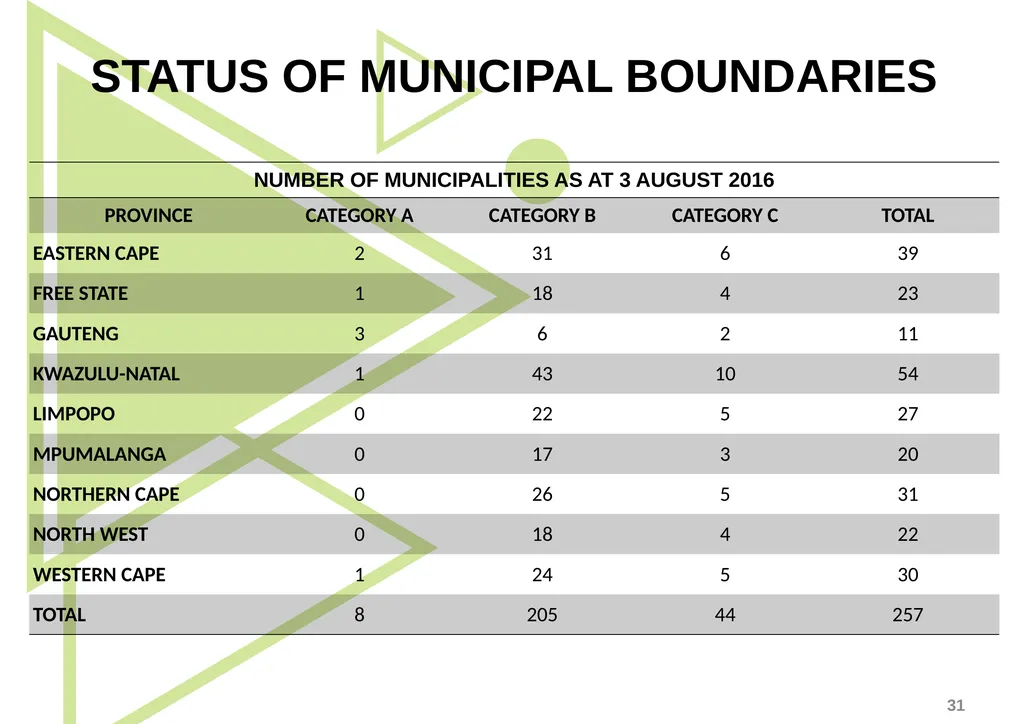
STATUS OF MUNICIPAL BOUNDARIES 31<br>
32
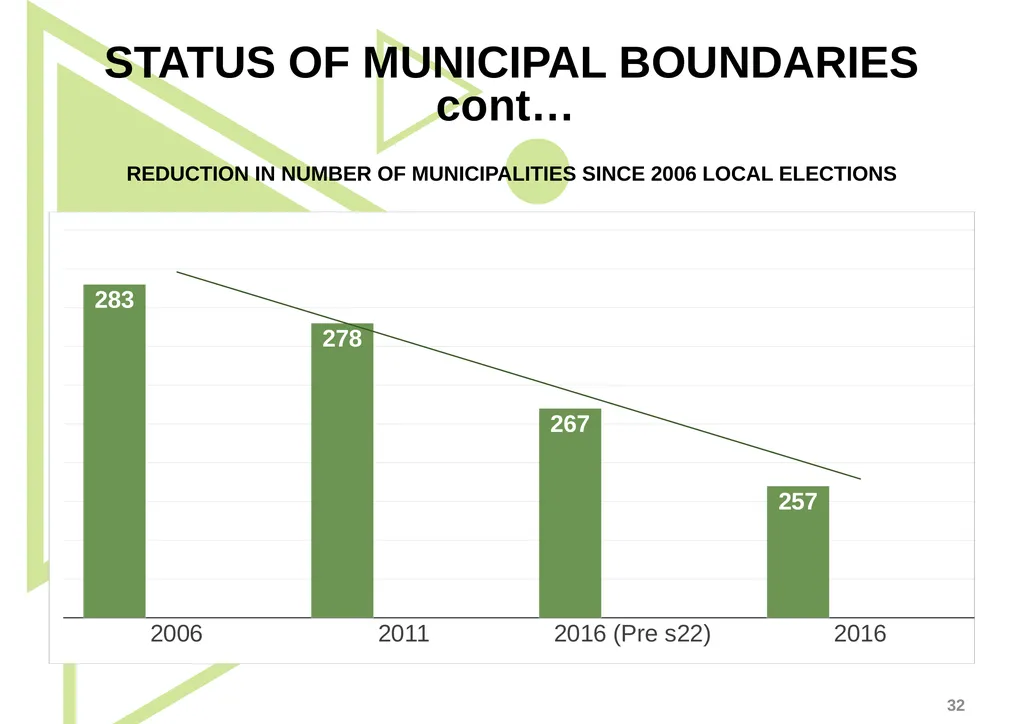
STATUS OF MUNICIPAL BOUNDARIES cont… 32 REDUCTION IN NUMBER OF MUNICIPALITIES SINCE 2006 LOCAL ELECTIONS<br>
33
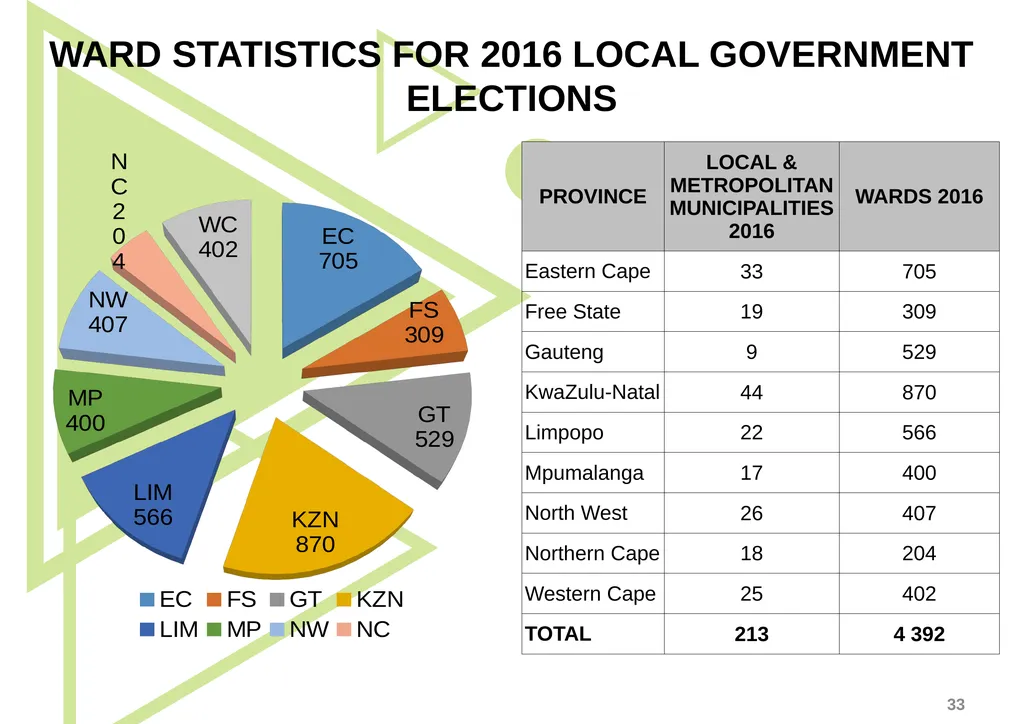
33 WARD STATISTICS FOR 2016 LOCAL GOVERNMENT ELECTIONS<br>
34
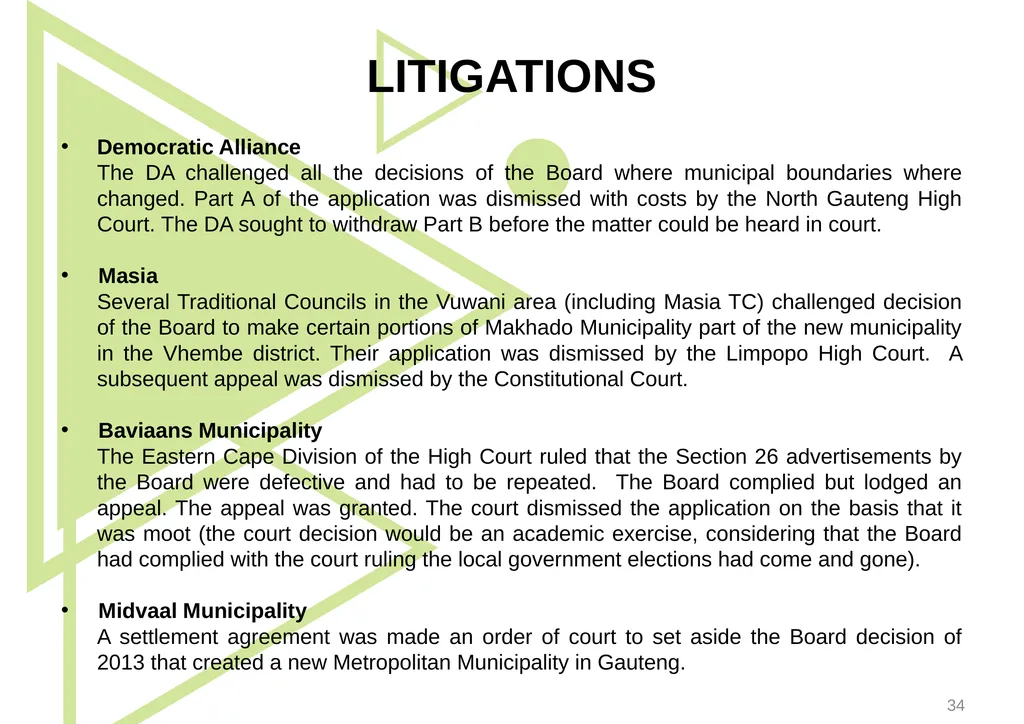
LITIGATIONS Democratic Alliance
The DA challenged all the decisions of the Board where municipal boundaries where changed. Part A of the application was dismissed with costs by the North Gauteng High Court. The DA sought to withdraw Part B before the matter could be heard in court.
Masia
Several Traditional Councils in the Vuwani area (including Masia TC) challenged decision of the Board to make certain portions of Makhado Municipality part of the new municipality in the Vhembe district. Their application was dismissed by the Limpopo High Court. A subsequent appeal was dismissed by the Constitutional Court.
Baviaans Municipality
The Eastern Cape Division of the High Court ruled that the Section 26 advertisements by the Board were defective and had to be repeated. The Board complied but lodged an appeal. The appeal was granted. The court dismissed the application on the basis that it was moot (the court decision would be an academic exercise, considering that the Board had complied with the court ruling the local government elections had come and gone).
Midvaal Municipality
A settlement agreement was made an order of court to set aside the Board decision of 2013 that created a new Metropolitan Municipality in Gauteng. 34<br>
The DA challenged all the decisions of the Board where municipal boundaries where changed. Part A of the application was dismissed with costs by the North Gauteng High Court. The DA sought to withdraw Part B before the matter could be heard in court.
Masia
Several Traditional Councils in the Vuwani area (including Masia TC) challenged decision of the Board to make certain portions of Makhado Municipality part of the new municipality in the Vhembe district. Their application was dismissed by the Limpopo High Court. A subsequent appeal was dismissed by the Constitutional Court.
Baviaans Municipality
The Eastern Cape Division of the High Court ruled that the Section 26 advertisements by the Board were defective and had to be repeated. The Board complied but lodged an appeal. The appeal was granted. The court dismissed the application on the basis that it was moot (the court decision would be an academic exercise, considering that the Board had complied with the court ruling the local government elections had come and gone).
Midvaal Municipality
A settlement agreement was made an order of court to set aside the Board decision of 2013 that created a new Metropolitan Municipality in Gauteng. 34<br>
35
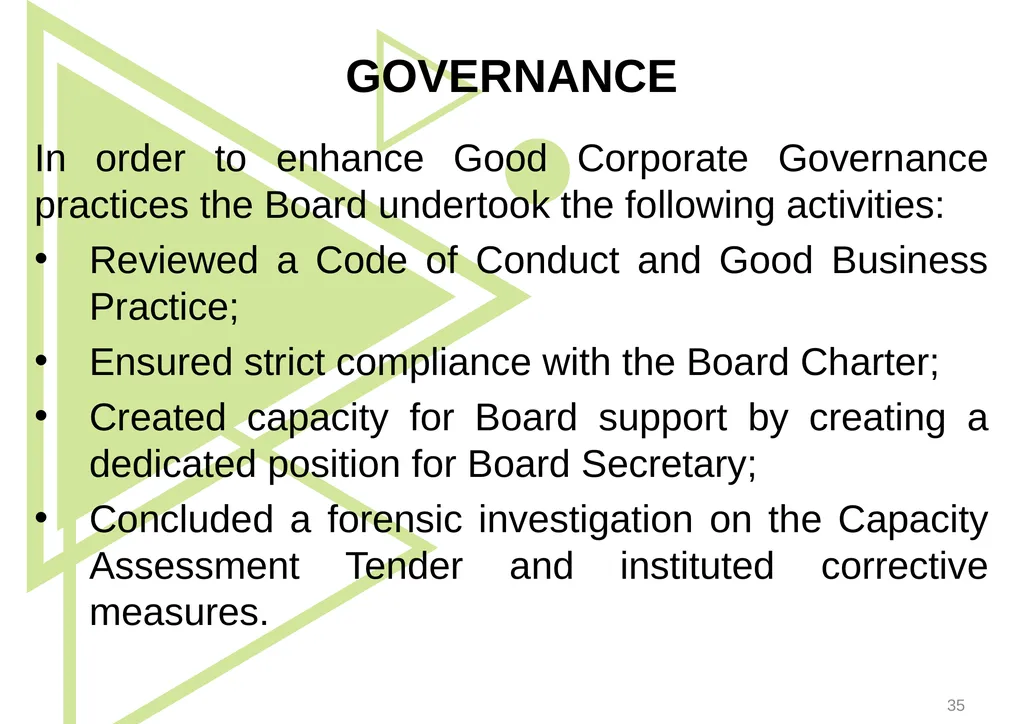
GOVERNANCE In order to enhance Good Corporate Governance practices the Board undertook the following activities:
Reviewed a Code of Conduct and Good Business Practice;
Ensured strict compliance with the Board Charter;
Created capacity for Board support by creating a dedicated position for Board Secretary;
Concluded a forensic investigation on the Capacity Assessment Tender and instituted corrective measures. 35<br>
Reviewed a Code of Conduct and Good Business Practice;
Ensured strict compliance with the Board Charter;
Created capacity for Board support by creating a dedicated position for Board Secretary;
Concluded a forensic investigation on the Capacity Assessment Tender and instituted corrective measures. 35<br>
36
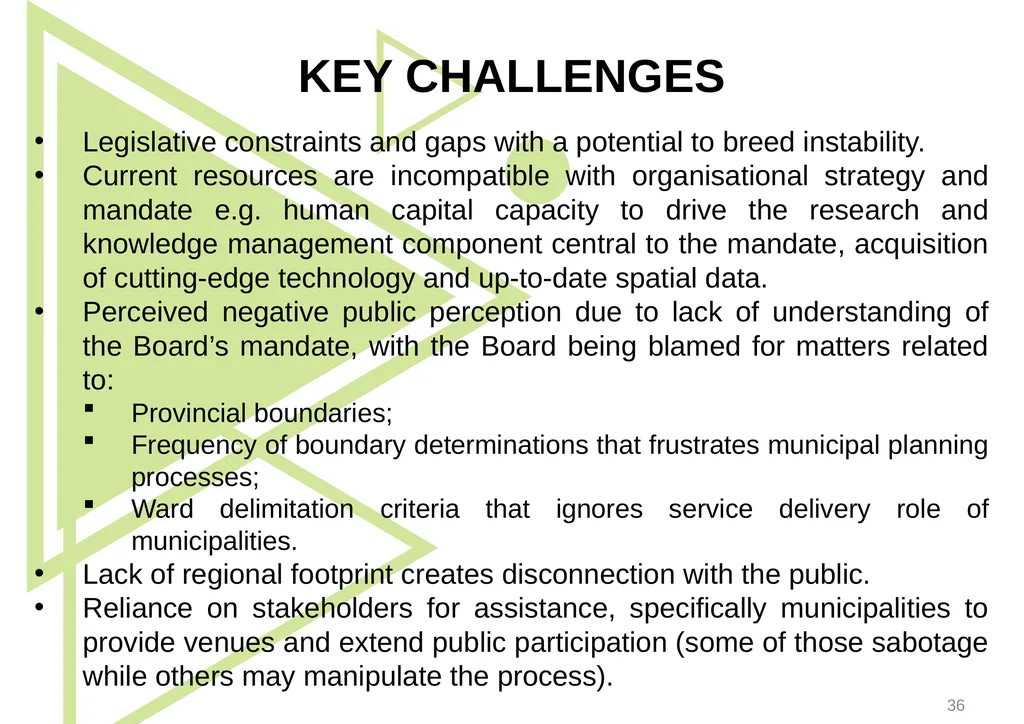
KEY CHALLENGES Legislative constraints and gaps with a potential to breed instability.
Current resources are incompatible with organisational strategy and mandate e.g. human capital capacity to drive the research and knowledge management component central to the mandate, acquisition of cutting-edge technology and up-to-date spatial data.
Perceived negative public perception due to lack of understanding of the Board’s mandate, with the Board being blamed for matters related to:
Provincial boundaries;
Frequency of boundary determinations that frustrates municipal planning processes;
Ward delimitation criteria that ignores service delivery role of municipalities.
Lack of regional footprint creates disconnection with the public.
Reliance on stakeholders for assistance, specifically municipalities to provide venues and extend public participation (some of those sabotage while others may manipulate the process). 36<br>
Current resources are incompatible with organisational strategy and mandate e.g. human capital capacity to drive the research and knowledge management component central to the mandate, acquisition of cutting-edge technology and up-to-date spatial data.
Perceived negative public perception due to lack of understanding of the Board’s mandate, with the Board being blamed for matters related to:
Provincial boundaries;
Frequency of boundary determinations that frustrates municipal planning processes;
Ward delimitation criteria that ignores service delivery role of municipalities.
Lack of regional footprint creates disconnection with the public.
Reliance on stakeholders for assistance, specifically municipalities to provide venues and extend public participation (some of those sabotage while others may manipulate the process). 36<br>
37
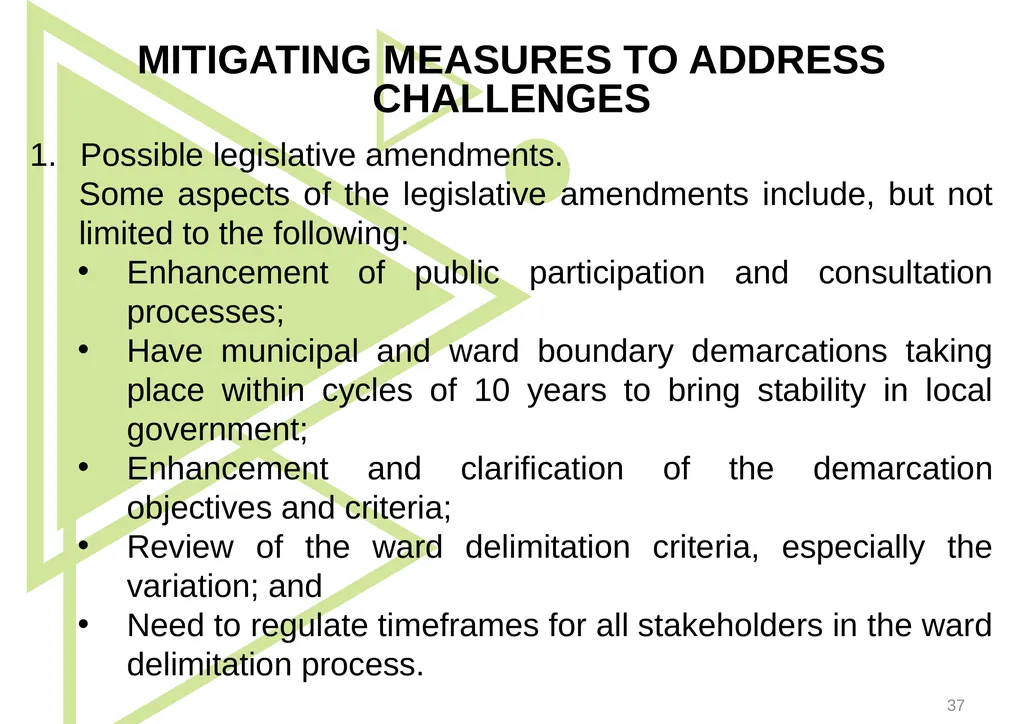
MITIGATING MEASURES TO ADDRESS CHALLENGES 37 Possible legislative amendments.
Some aspects of the legislative amendments include, but not limited to the following:
Enhancement of public participation and consultation processes;
Have municipal and ward boundary demarcations taking place within cycles of 10 years to bring stability in local government;
Enhancement and clarification of the demarcation objectives and criteria;
Review of the ward delimitation criteria, especially the variation; and
Need to regulate timeframes for all stakeholders in the ward delimitation process.<br>
Some aspects of the legislative amendments include, but not limited to the following:
Enhancement of public participation and consultation processes;
Have municipal and ward boundary demarcations taking place within cycles of 10 years to bring stability in local government;
Enhancement and clarification of the demarcation objectives and criteria;
Review of the ward delimitation criteria, especially the variation; and
Need to regulate timeframes for all stakeholders in the ward delimitation process.<br>
38
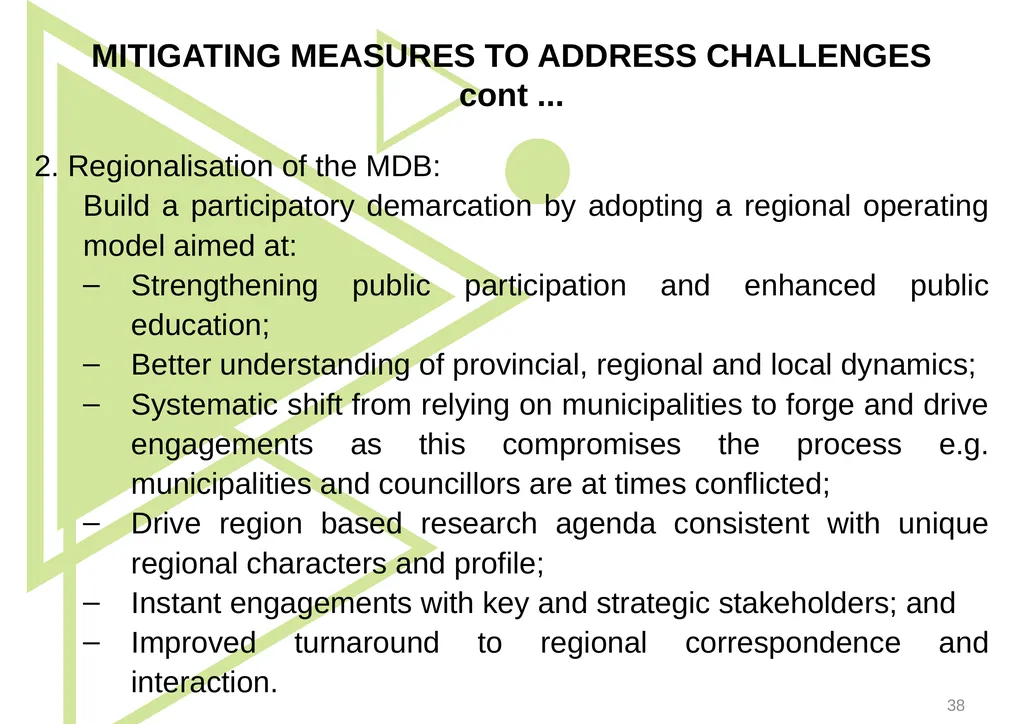
MITIGATING MEASURES TO ADDRESS CHALLENGES cont ... 2. Regionalisation of the MDB:
Build a participatory demarcation by adopting a regional operating model aimed at:
Strengthening public participation and enhanced public education;
Better understanding of provincial, regional and local dynamics;
Systematic shift from relying on municipalities to forge and drive engagements as this compromises the process e.g. municipalities and councillors are at times conflicted;
Drive region based research agenda consistent with unique regional characters and profile;
Instant engagements with key and strategic stakeholders; and
Improved turnaround to regional correspondence and interaction. 38<br>
Build a participatory demarcation by adopting a regional operating model aimed at:
Strengthening public participation and enhanced public education;
Better understanding of provincial, regional and local dynamics;
Systematic shift from relying on municipalities to forge and drive engagements as this compromises the process e.g. municipalities and councillors are at times conflicted;
Drive region based research agenda consistent with unique regional characters and profile;
Instant engagements with key and strategic stakeholders; and
Improved turnaround to regional correspondence and interaction. 38<br>
39
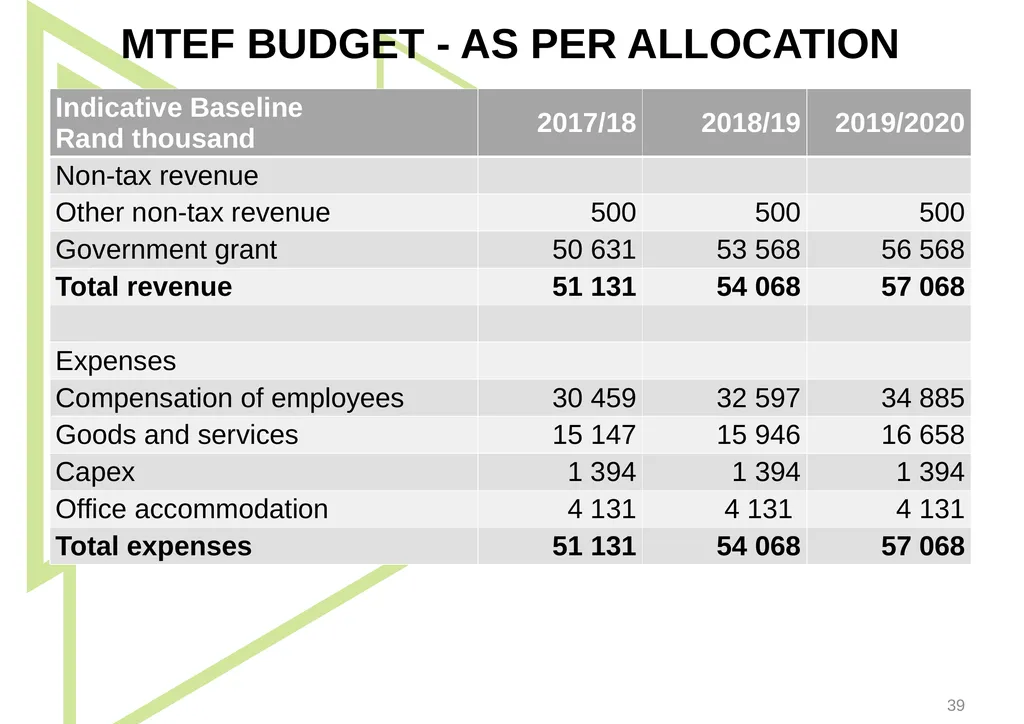
MTEF BUDGET - AS PER ALLOCATION 39<br>
40
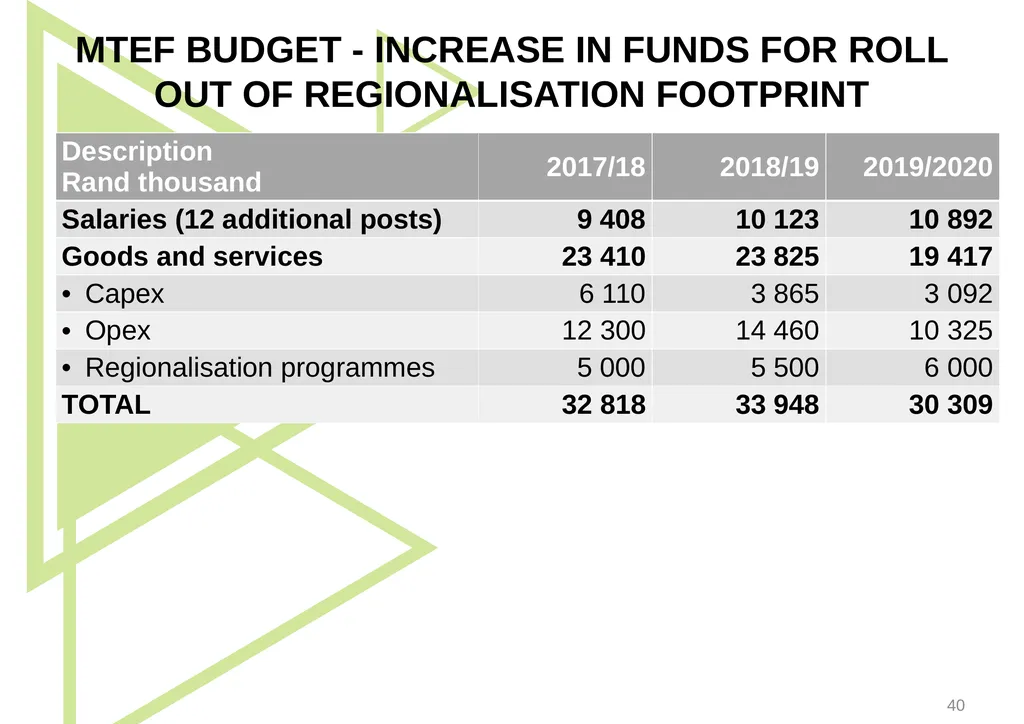
MTEF BUDGET - INCREASE IN FUNDS FOR ROLL OUT OF REGIONALISATION FOOTPRINT 40<br>
41
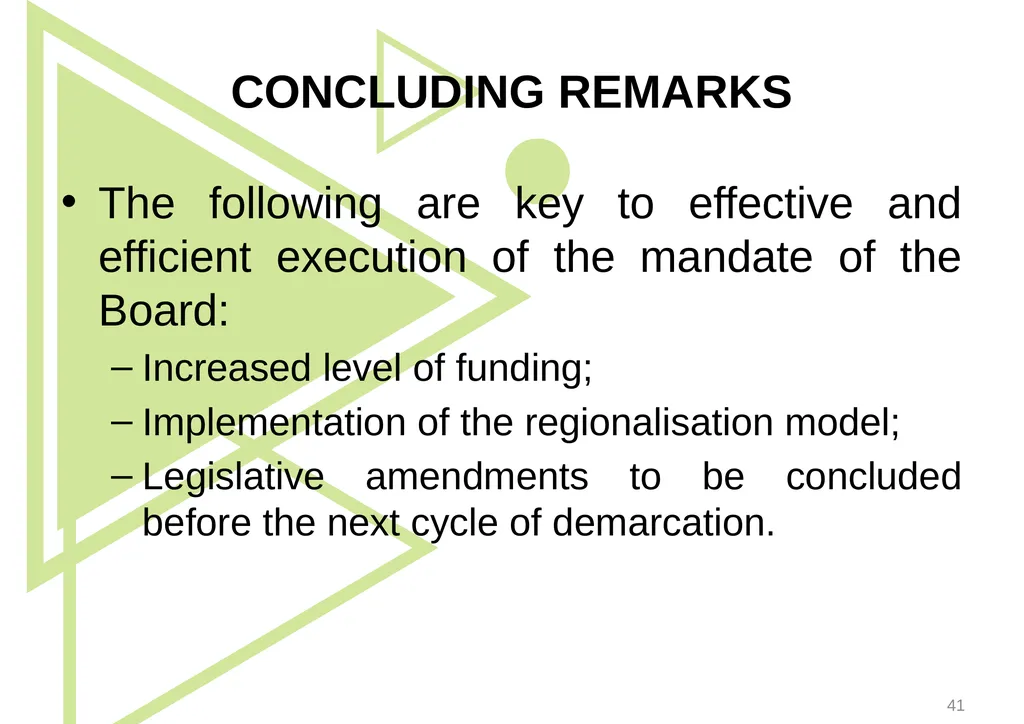
CONCLUDING REMARKS The following are key to effective and efficient execution of the mandate of the Board:
Increased level of funding;
Implementation of the regionalisation model;
Legislative amendments to be concluded before the next cycle of demarcation. 41<br>
Increased level of funding;
Implementation of the regionalisation model;
Legislative amendments to be concluded before the next cycle of demarcation. 41<br>
42
42 QUESTIONS AND INTERACTIONS Thank you.<br>