1 Towards a Skilled Capable Public Service through Preferred Strategic Partnerships Presentation Outline Mission Priority Arears Discretionary Grant 20172018 Policy, Criteria Guidelines Key Development Imperatives 3 Mission: Leading in
"1 Towards a Skilled & Capable Public Service" is the property of its rightful owner. Permission is granted to
download and print the materials on this website for personal, non-commercial use only, and to display it
on your personal computer provided you do not modify the materials and that you retain all copyright
notices contained in the materials. By downloading content from our website, you accept the terms of this
agreement.
Presentation Transcript
01
1 Towards a Skilled & Capable Public Service
through Preferred Strategic Partnerships<br>
02
Presentation Outline Mission
Priority Arears
Discretionary Grant 2017/2018
Policy, Criteria & Guidelines
Key Development Imperatives<br>
03
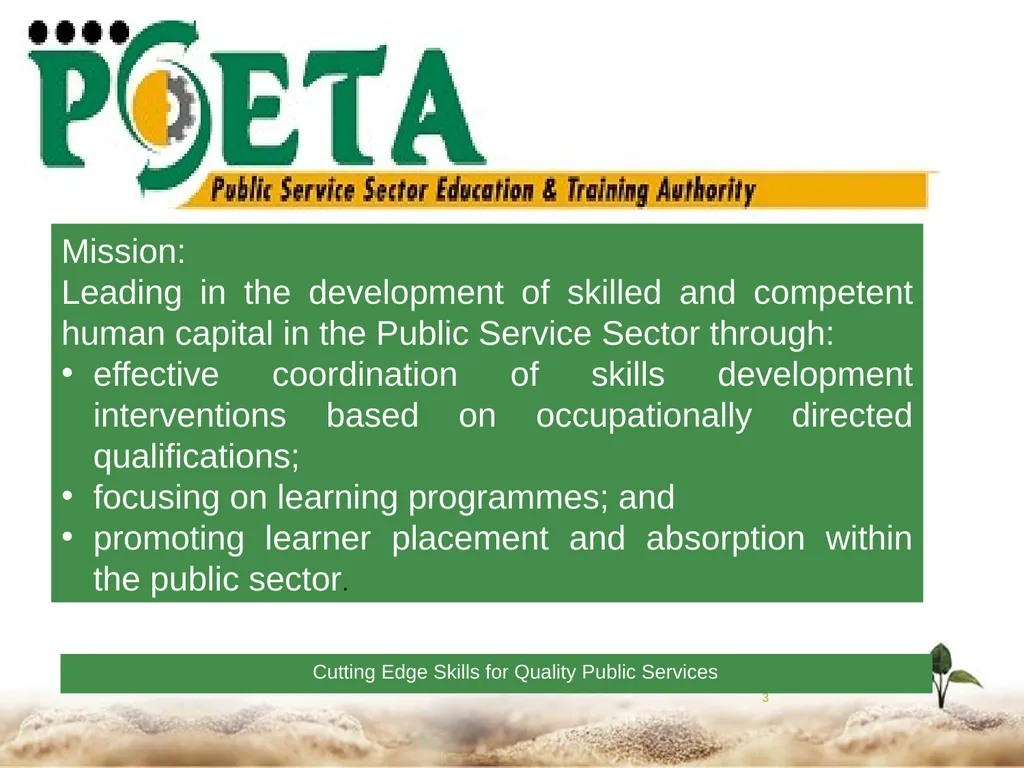
3 Mission:
Leading in the development of skilled and competent human capital in the Public Service Sector through:
effective coordination of skills development interventions based on occupationally directed qualifications;
focusing on learning programmes; and
promoting learner placement and absorption within the public sector.<br>
04
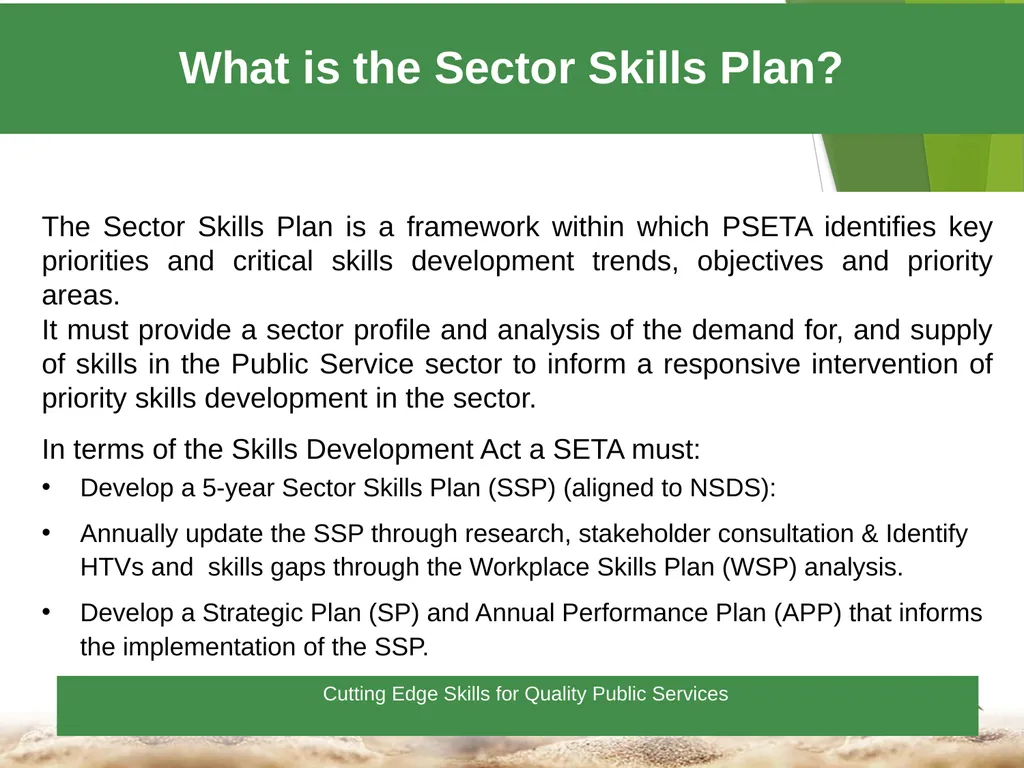
What is the Sector Skills Plan? The Sector Skills Plan is a framework within which PSETA identifies key priorities and critical skills development trends, objectives and priority areas.
It must provide a sector profile and analysis of the demand for, and supply of skills in the Public Service sector to inform a responsive intervention of priority skills development in the sector.
In terms of the Skills Development Act a SETA must:
Develop a 5-year Sector Skills Plan (SSP) (aligned to NSDS):
Annually update the SSP through research, stakeholder consultation & Identify HTVs and skills gaps through the Workplace Skills Plan (WSP) analysis.
Develop a Strategic Plan (SP) and Annual Performance Plan (APP) that informs the implementation of the SSP.<br>
05
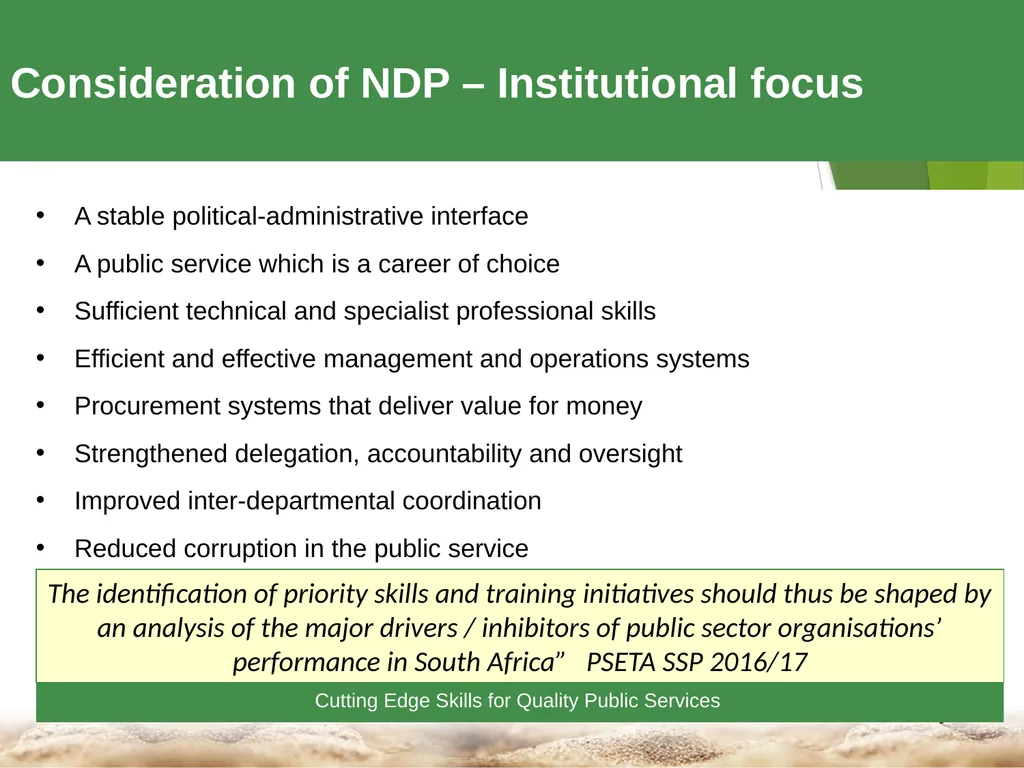
Consideration of NDP – Institutional focus A stable political-administrative interface
A public service which is a career of choice
Sufficient technical and specialist professional skills
Efficient and effective management and operations systems
Procurement systems that deliver value for money
Strengthened delegation, accountability and oversight
Improved inter-departmental coordination
Reduced corruption in the public service The identification of priority skills and training initiatives should thus be shaped by an analysis of the major drivers / inhibitors of public sector organisations’ performance in South Africa” PSETA SSP 2016/17<br>
06
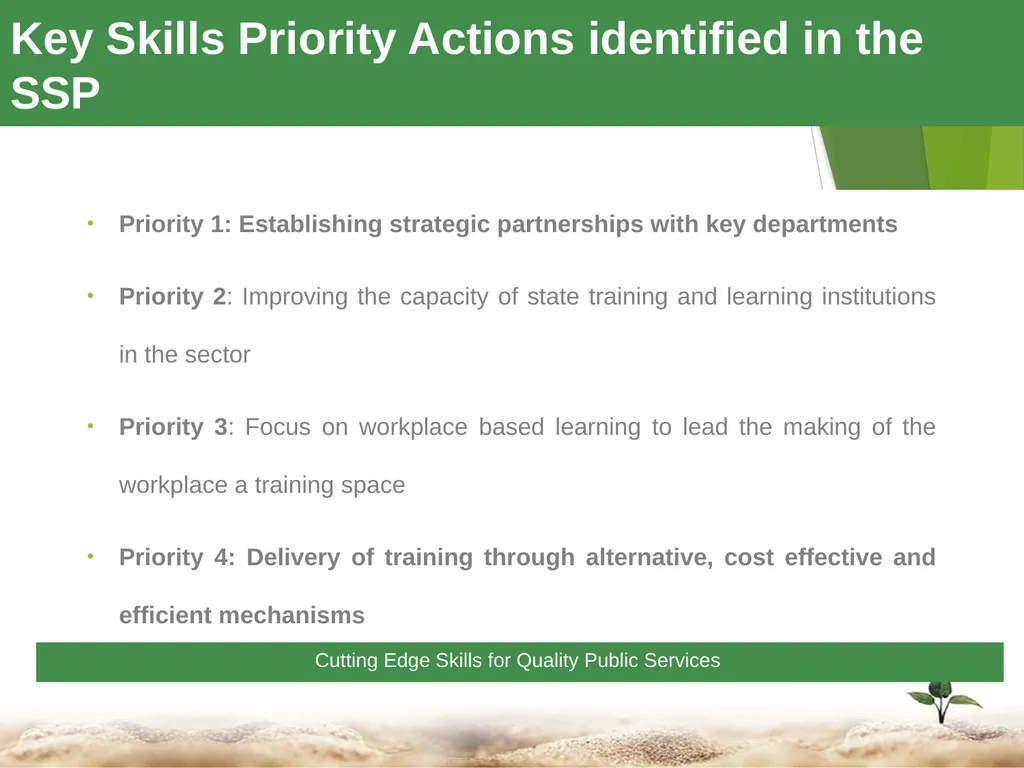
Key Skills Priority Actions identified in the SSP Priority 1: Establishing strategic partnerships with key departments
Priority 2: Improving the capacity of state training and learning institutions in the sector
Priority 3: Focus on workplace based learning to lead the making of the workplace a training space
Priority 4: Delivery of training through alternative, cost effective and efficient mechanisms<br>
07
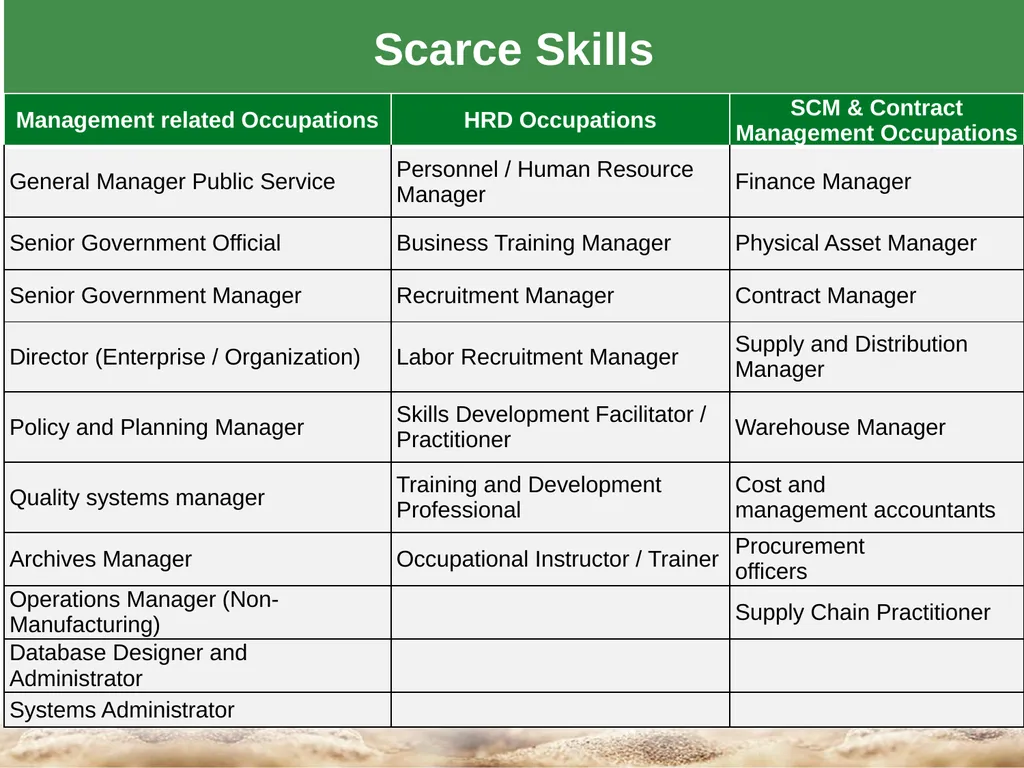
Scarce Skills HRD Occupations<br>
08
Discretionary Grant Disbursement
2017/18<br>
09
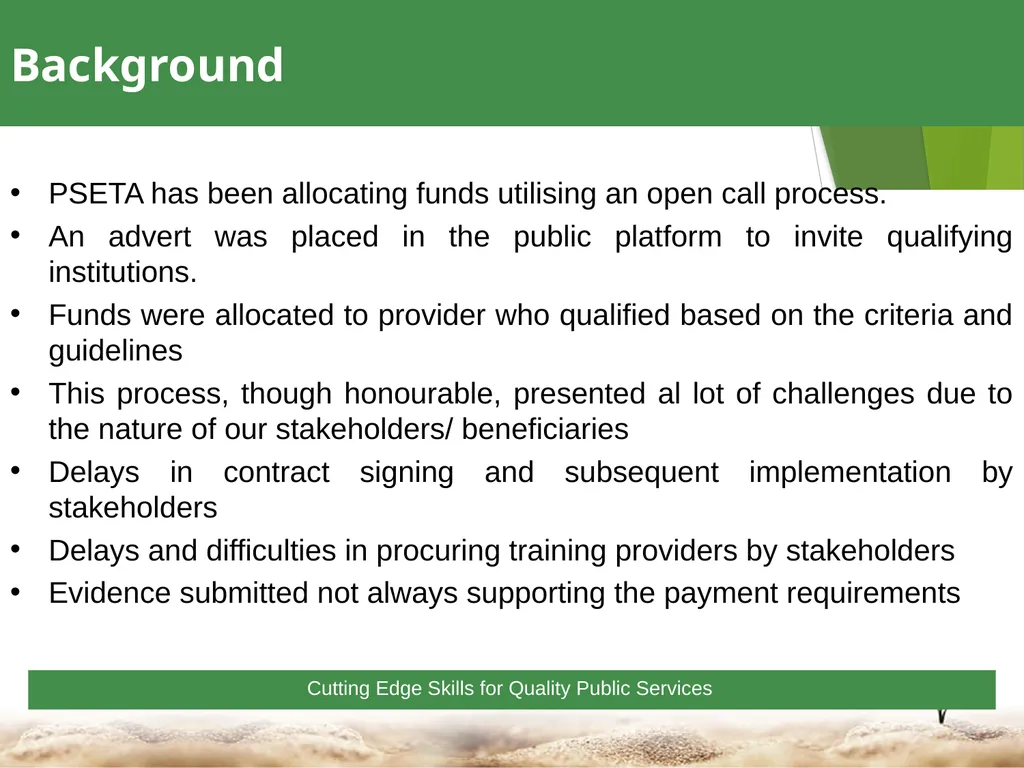
Background PSETA has been allocating funds utilising an open call process.
An advert was placed in the public platform to invite qualifying institutions.
Funds were allocated to provider who qualified based on the criteria and guidelines
This process, though honourable, presented al lot of challenges due to the nature of our stakeholders/ beneficiaries
Delays in contract signing and subsequent implementation by stakeholders
Delays and difficulties in procuring training providers by stakeholders
Evidence submitted not always supporting the payment requirements<br>
10
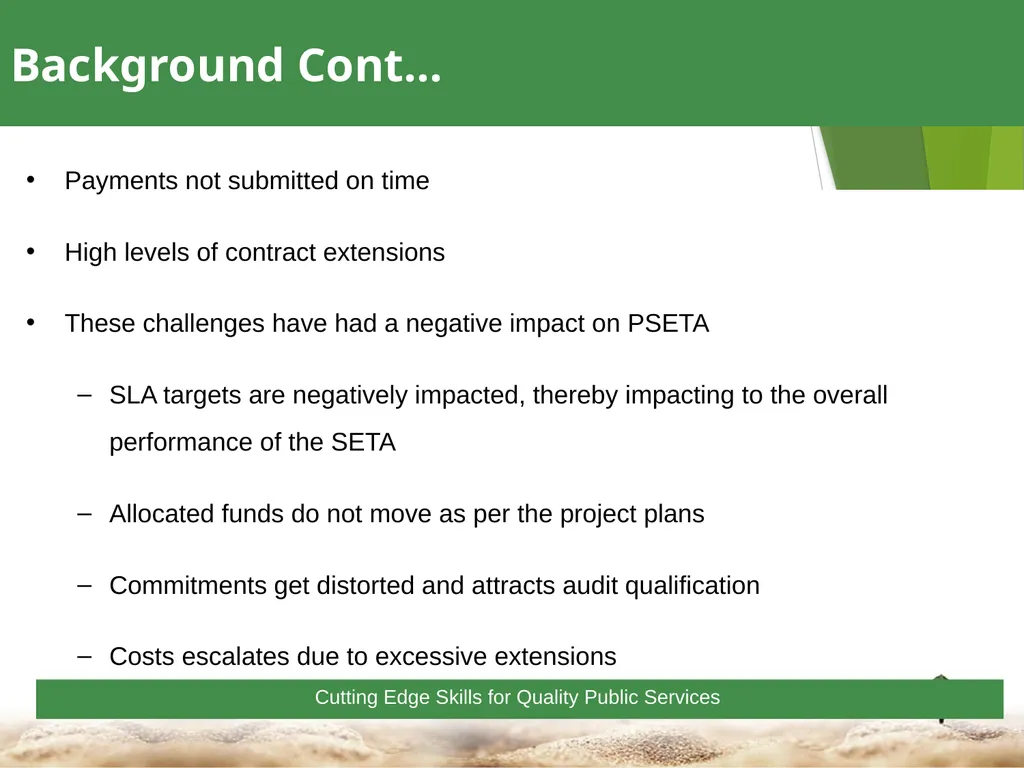
Background Cont… Payments not submitted on time
High levels of contract extensions
These challenges have had a negative impact on PSETA
SLA targets are negatively impacted, thereby impacting to the overall performance of the SETA
Allocated funds do not move as per the project plans
Commitments get distorted and attracts audit qualification
Costs escalates due to excessive extensions<br>
11
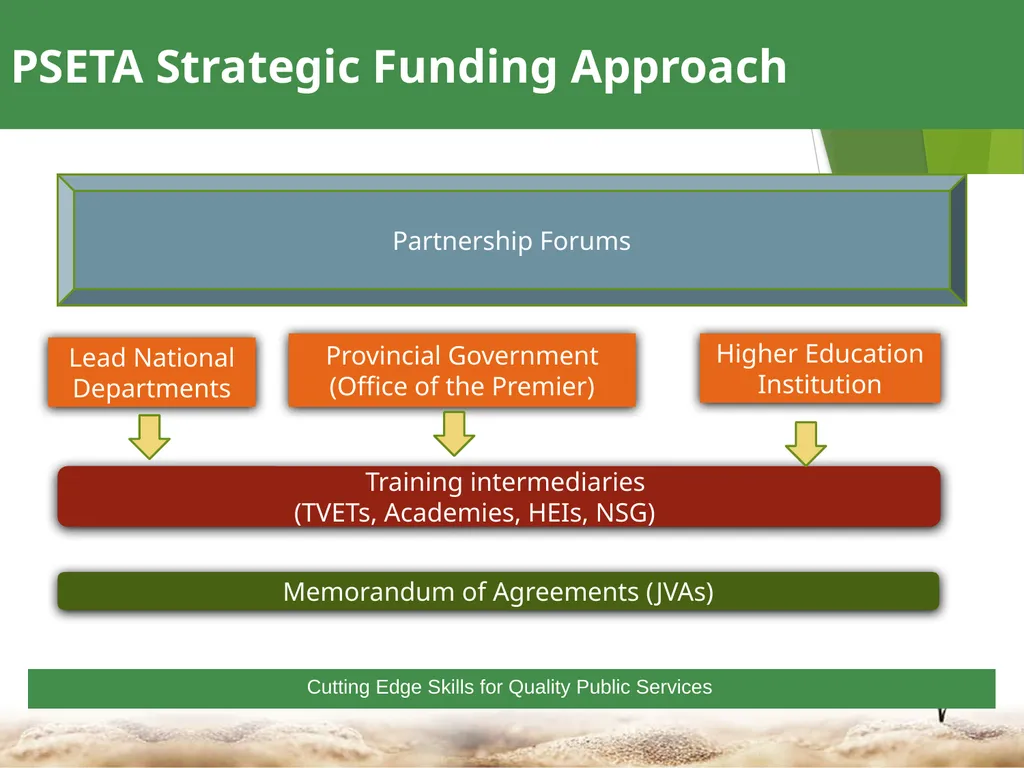
PSETA Strategic Funding Approach<br>
12
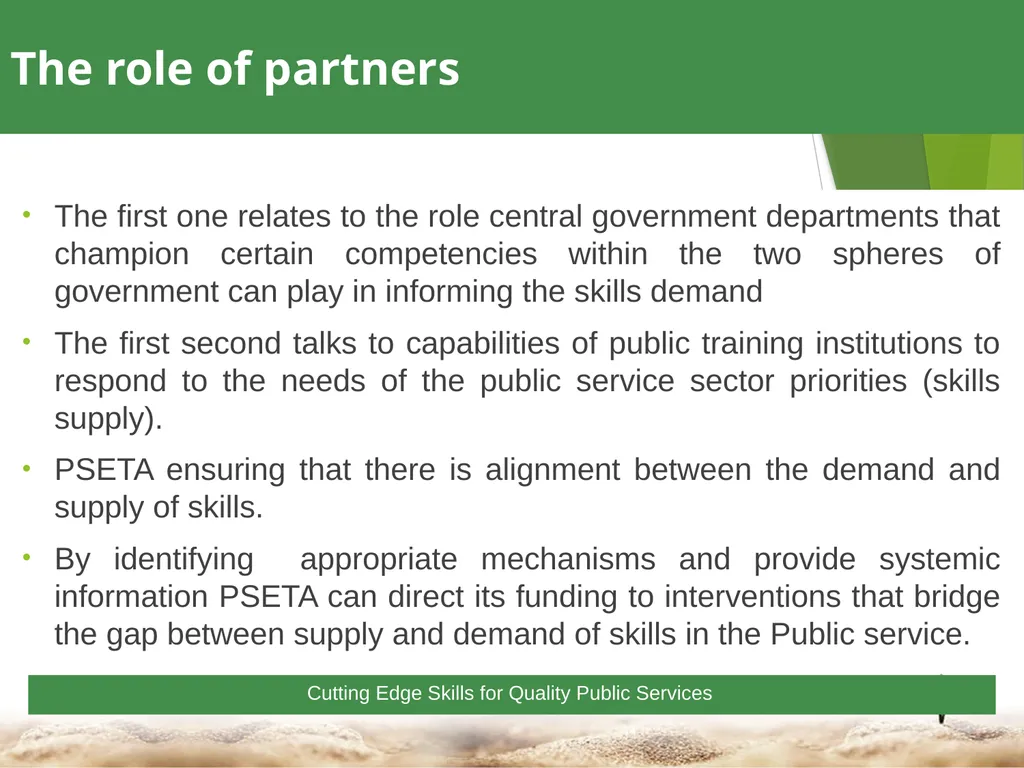
The role of partners The first one relates to the role central government departments that champion certain competencies within the two spheres of government can play in informing the skills demand
The first second talks to capabilities of public training institutions to respond to the needs of the public service sector priorities (skills supply).
PSETA ensuring that there is alignment between the demand and supply of skills.
By identifying appropriate mechanisms and provide systemic information PSETA can direct its funding to interventions that bridge the gap between supply and demand of skills in the Public service.<br>
13
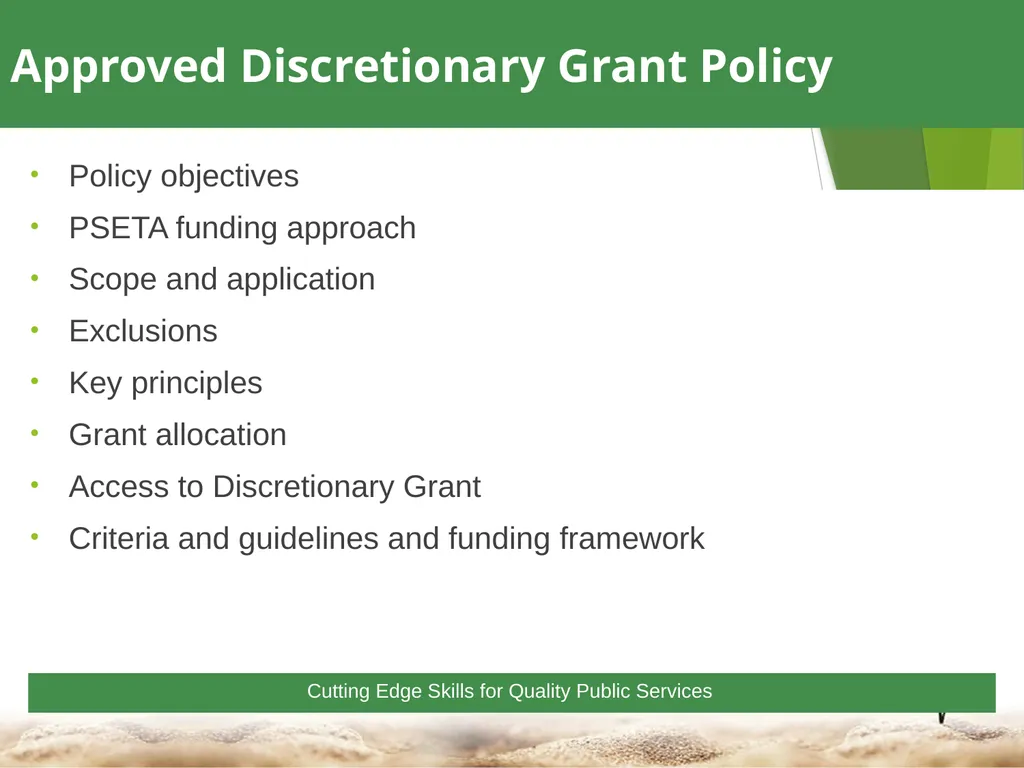
Approved Discretionary Grant Policy Policy objectives
PSETA funding approach
Scope and application
Exclusions
Key principles
Grant allocation
Access to Discretionary Grant
Criteria and guidelines and funding framework<br>
14
Approved Discretionary Grant Policy Policy objectives
PSETA funding approach
Scope and application
Exclusions
Key principles
Grant allocation
Access to Discretionary Grant
Criteria and guidelines and funding framework<br>
15
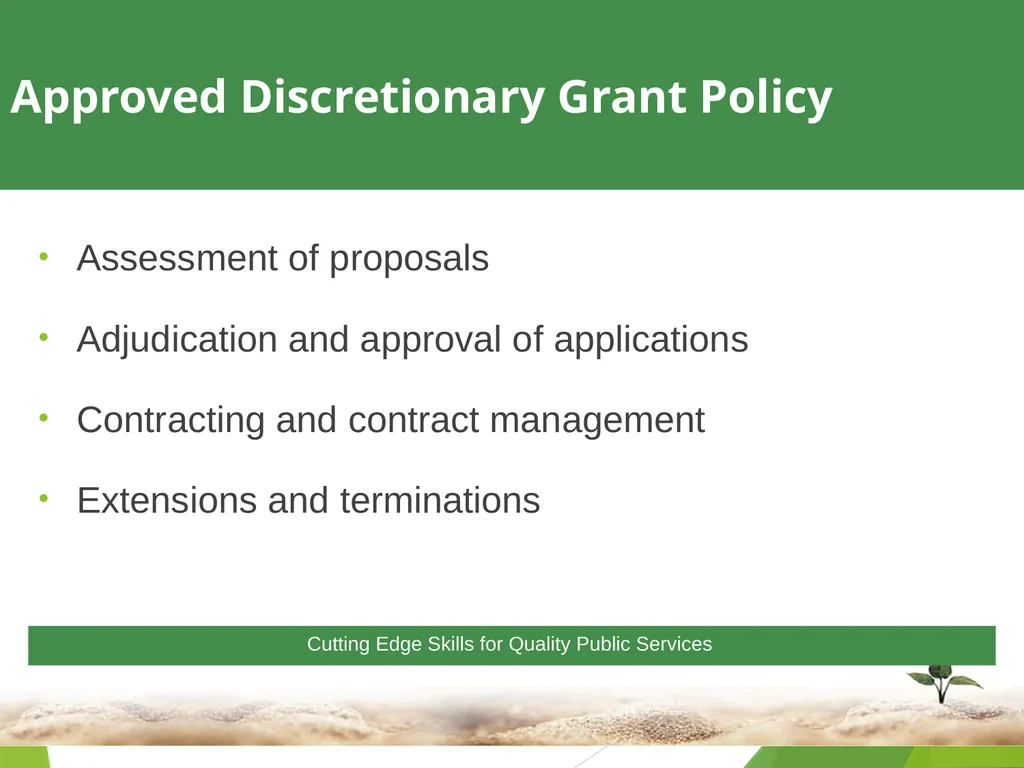
Approved Discretionary Grant Policy Assessment of proposals
Adjudication and approval of applications
Contracting and contract management
Extensions and terminations<br>
16
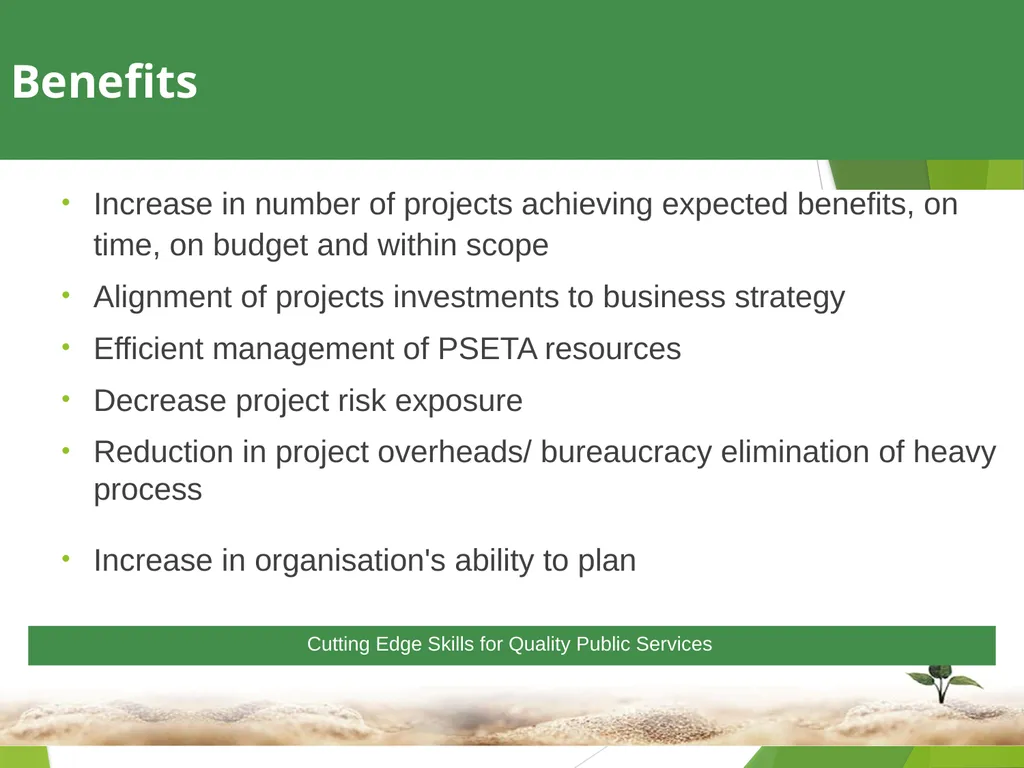
Benefits Increase in number of projects achieving expected benefits, on time, on budget and within scope
Alignment of projects investments to business strategy
Efficient management of PSETA resources
Decrease project risk exposure
Reduction in project overheads/ bureaucracy elimination of heavy process
Increase in organisation's ability to plan<br>
17
2017/2018 Programme Funding
AND
Preferred Strategic Partners<br>
18
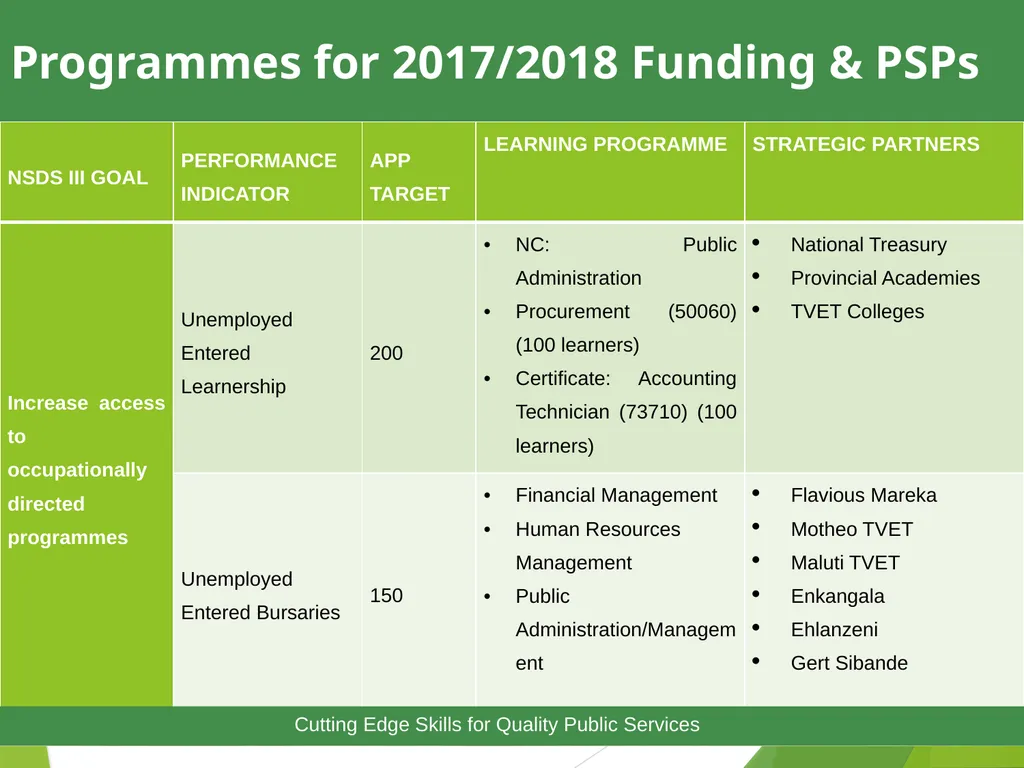
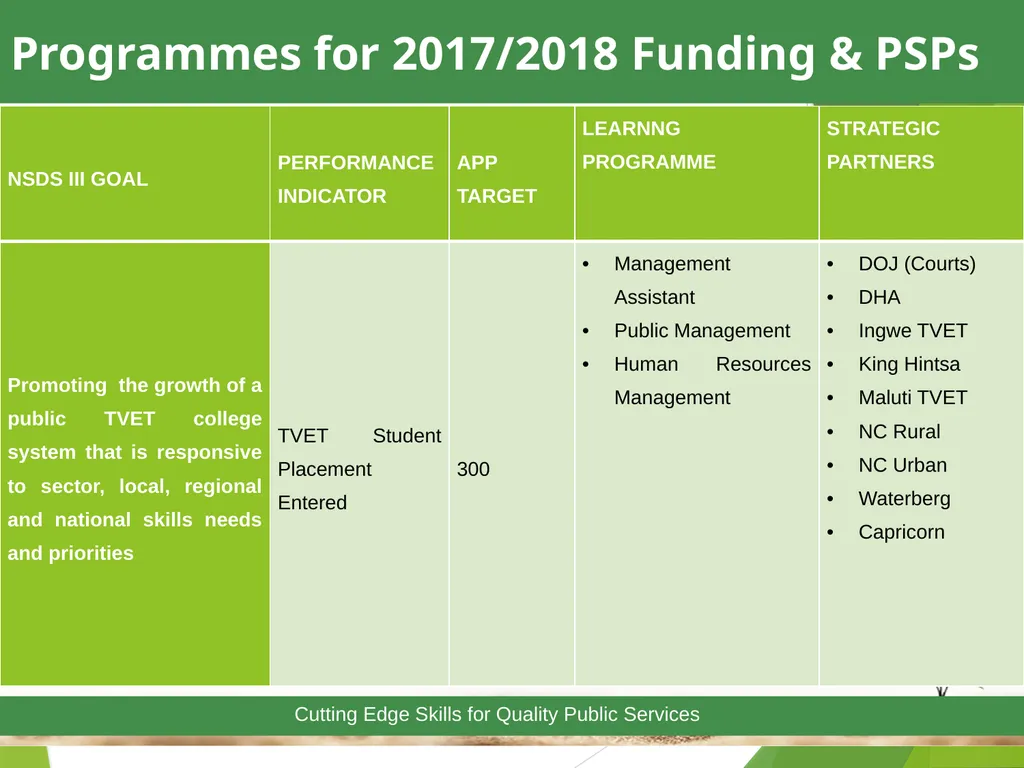
Programmes for 2017/2018 Funding & PSPs<br>
19
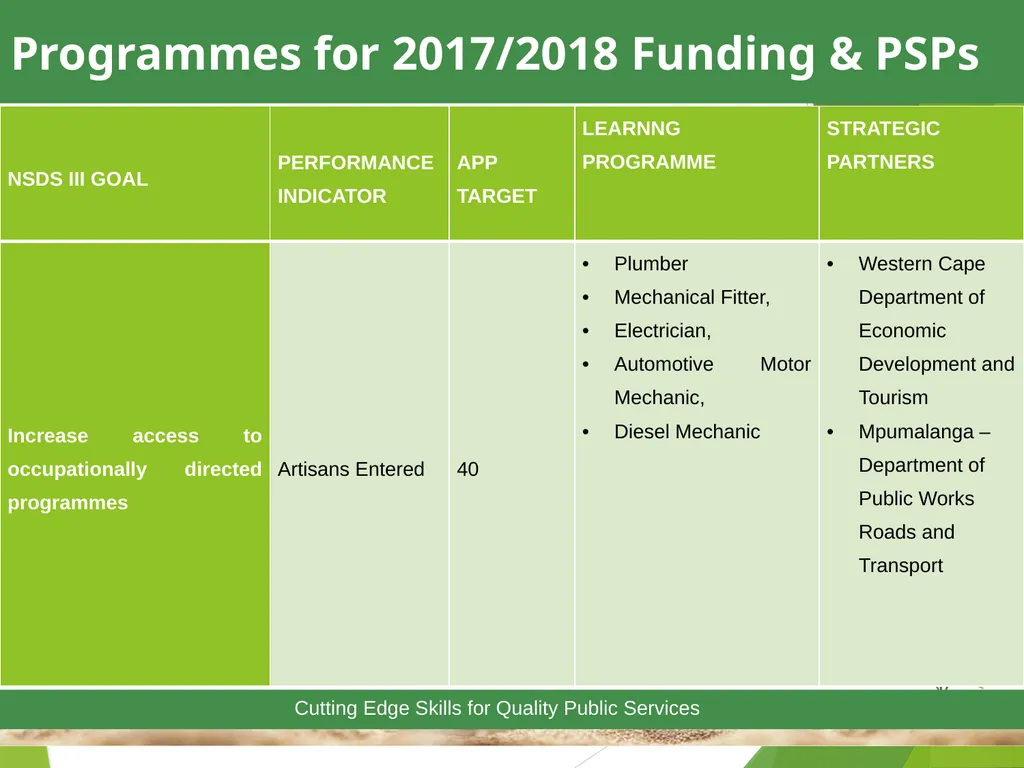
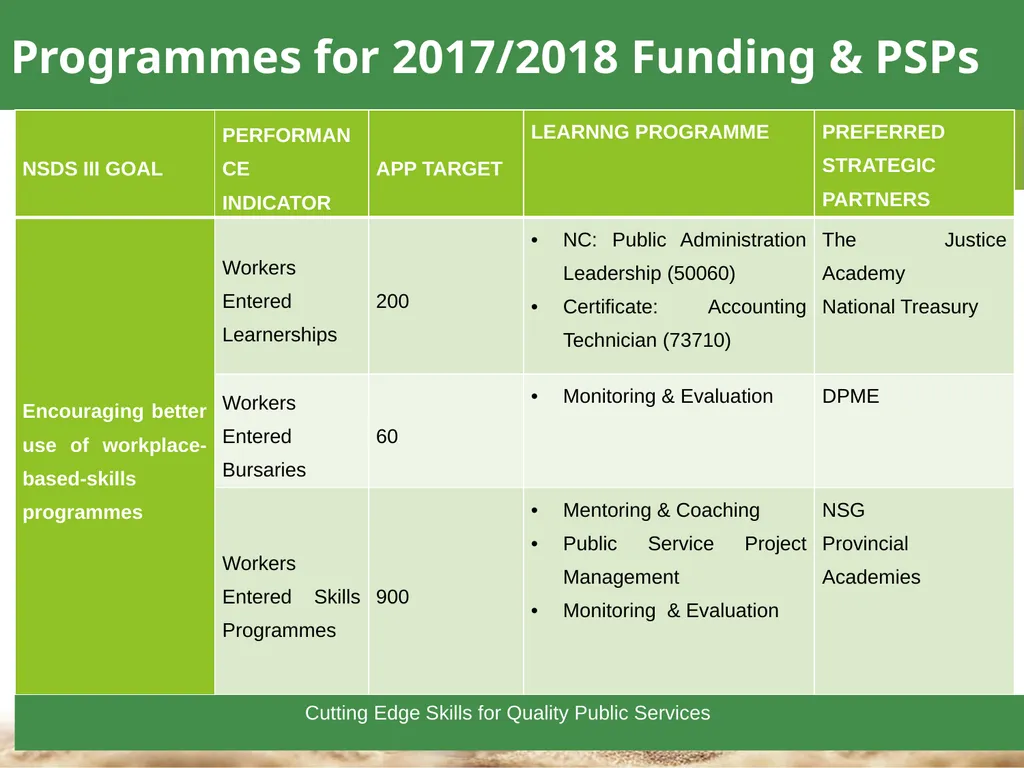
Programmes for 2017/2018 Funding & PSPs<br>
20
Programmes for 2017/2018 Funding & PSPs<br>
21
Programmes for 2017/2018 Funding & PSPs<br>
22
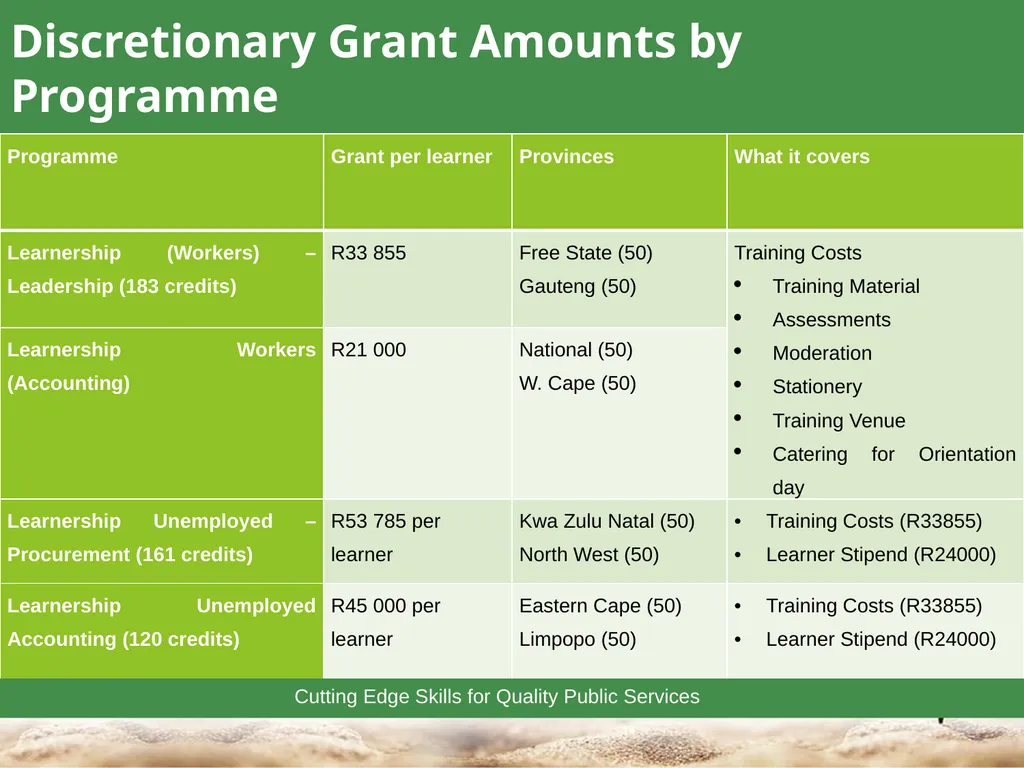
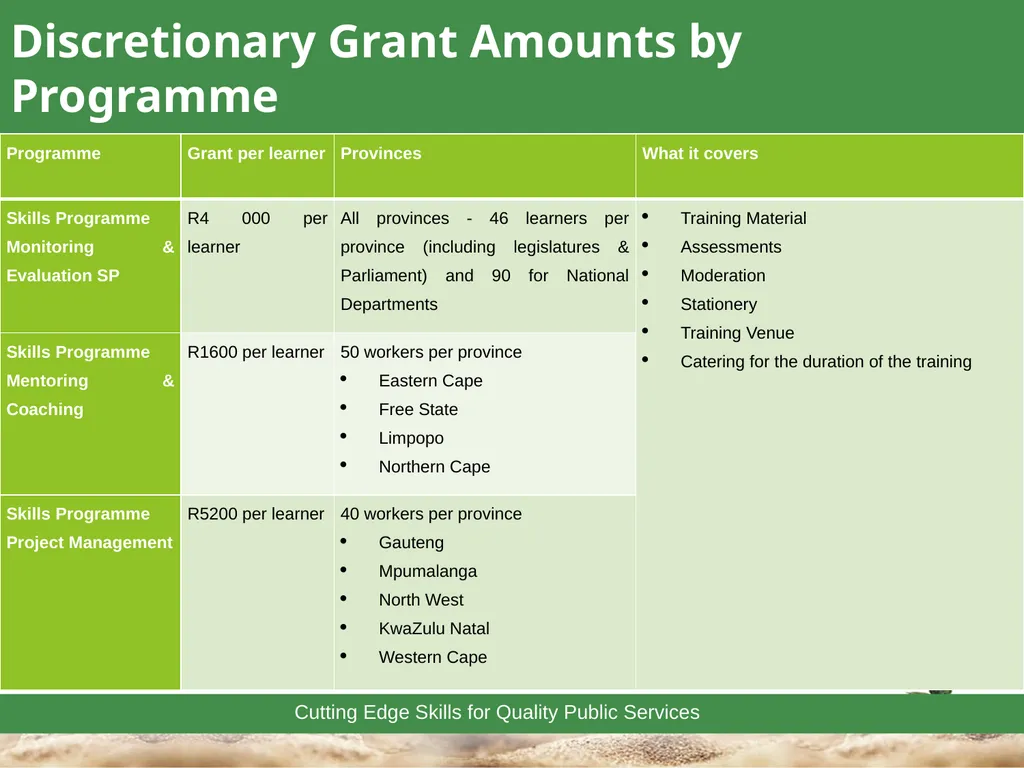
Discretionary Grant Amounts by Programme<br>
23
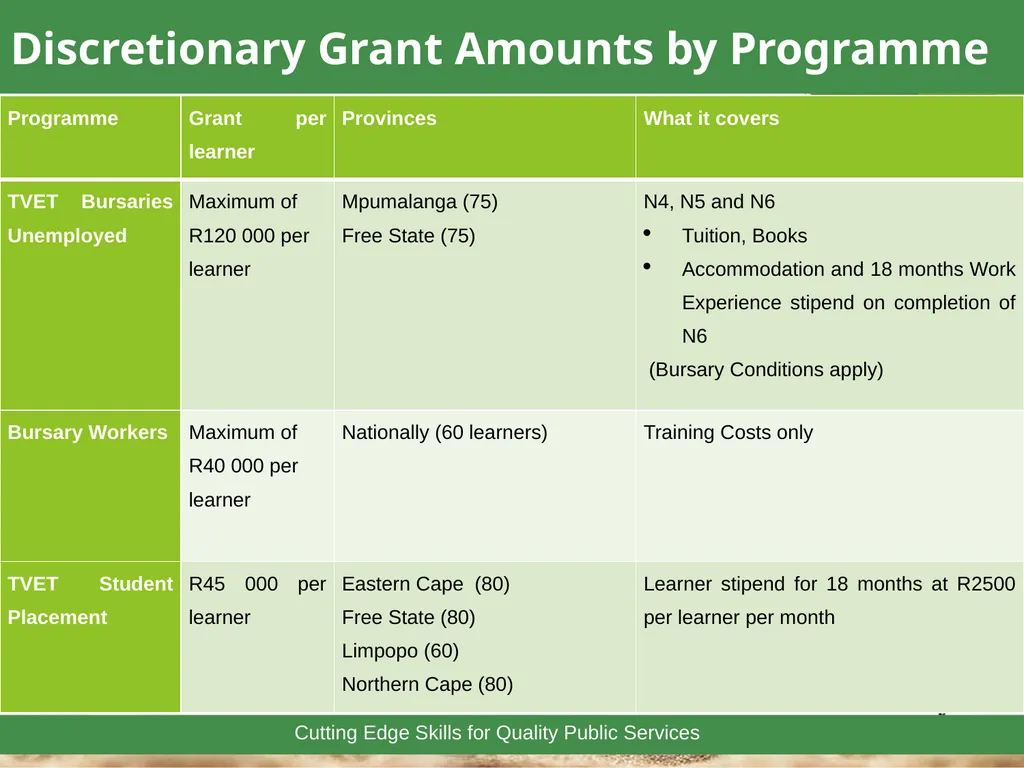
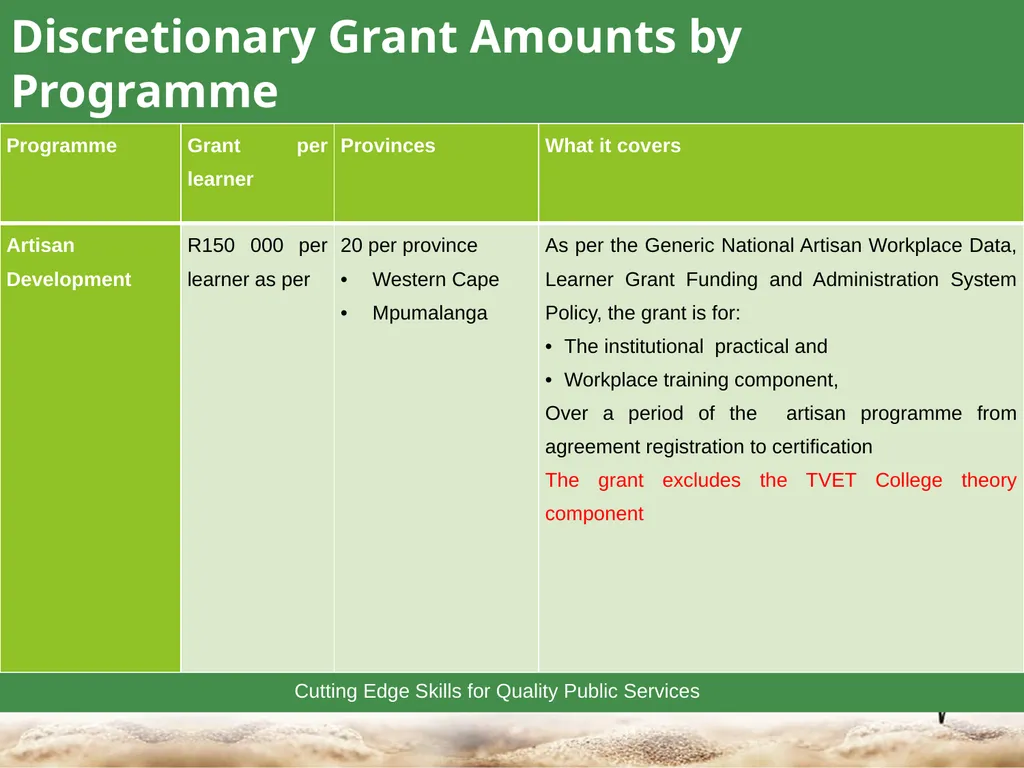
Discretionary Grant Amounts by Programme<br>
24
Discretionary Grant Amounts by Programme<br>
25
Discretionary Grant Amounts by Programme<br>
26
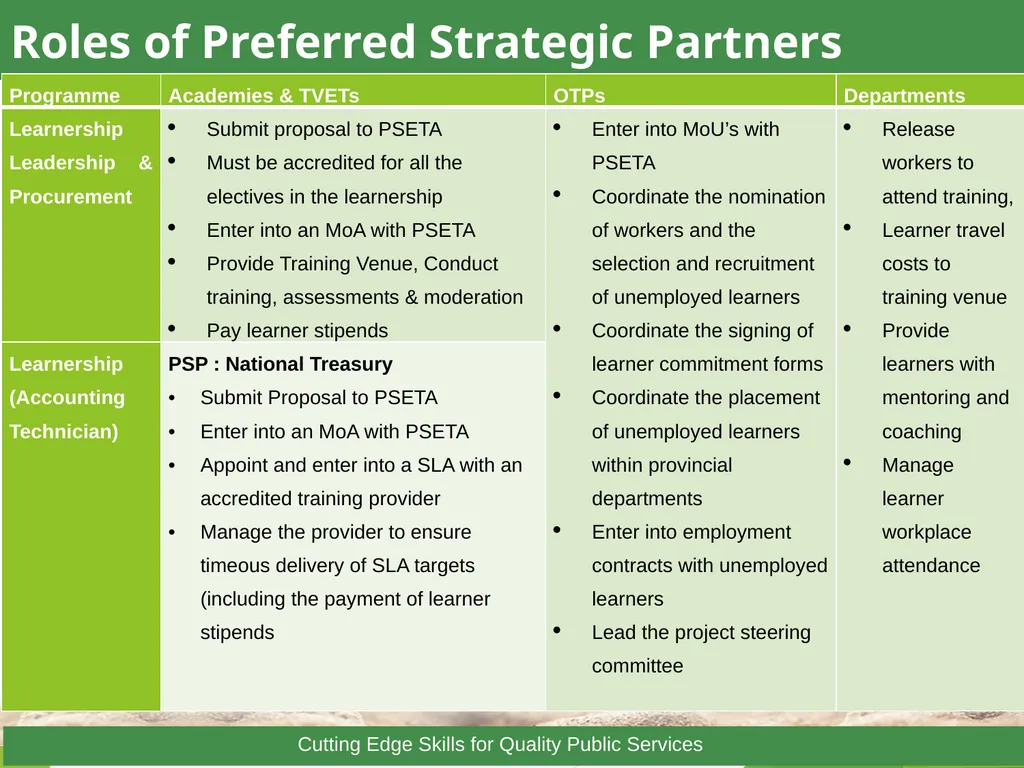
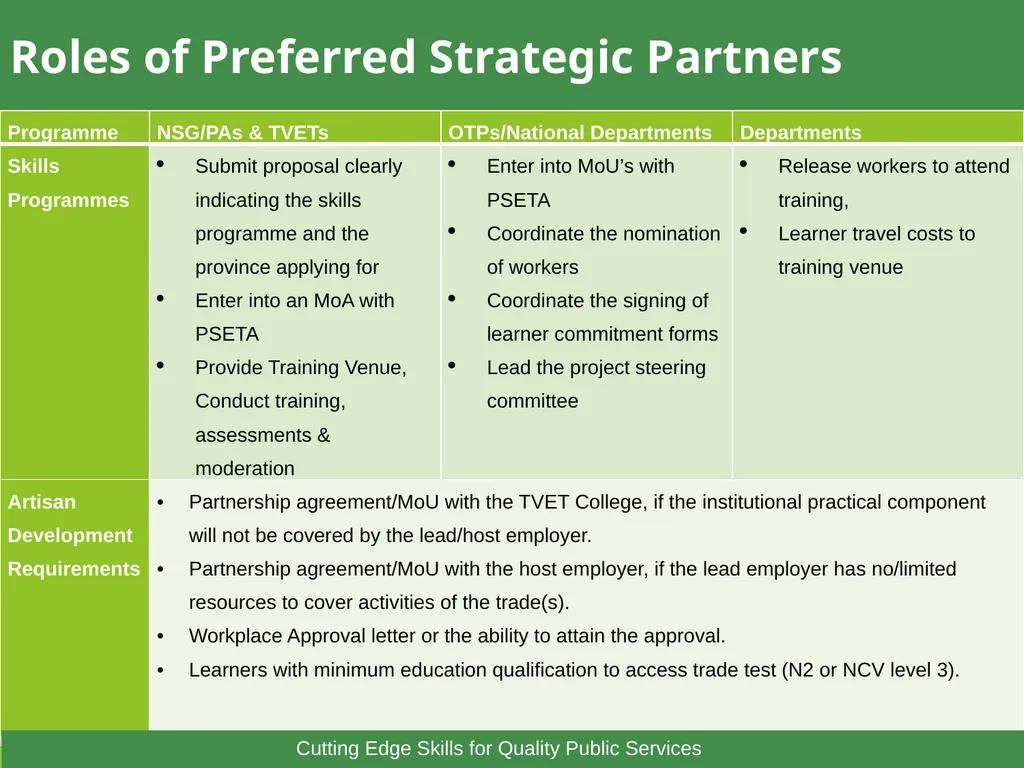
Roles of Preferred Strategic Partners<br>
27
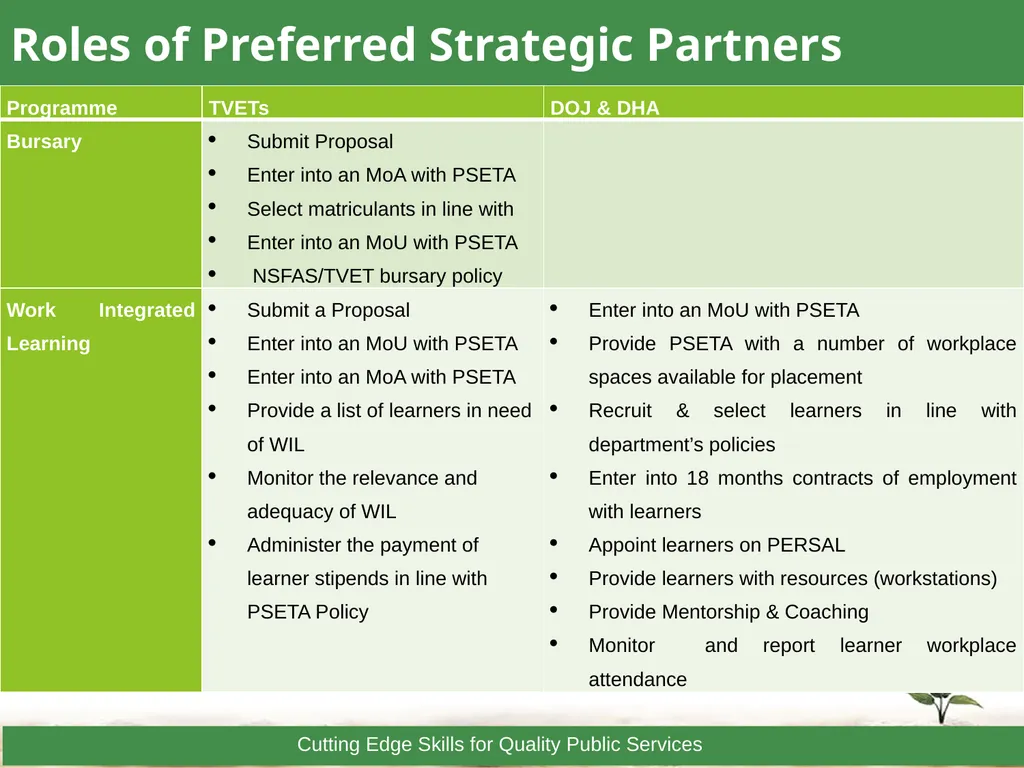
Roles of Preferred Strategic Partners<br>
28
Roles of Preferred Strategic Partners<br>
29
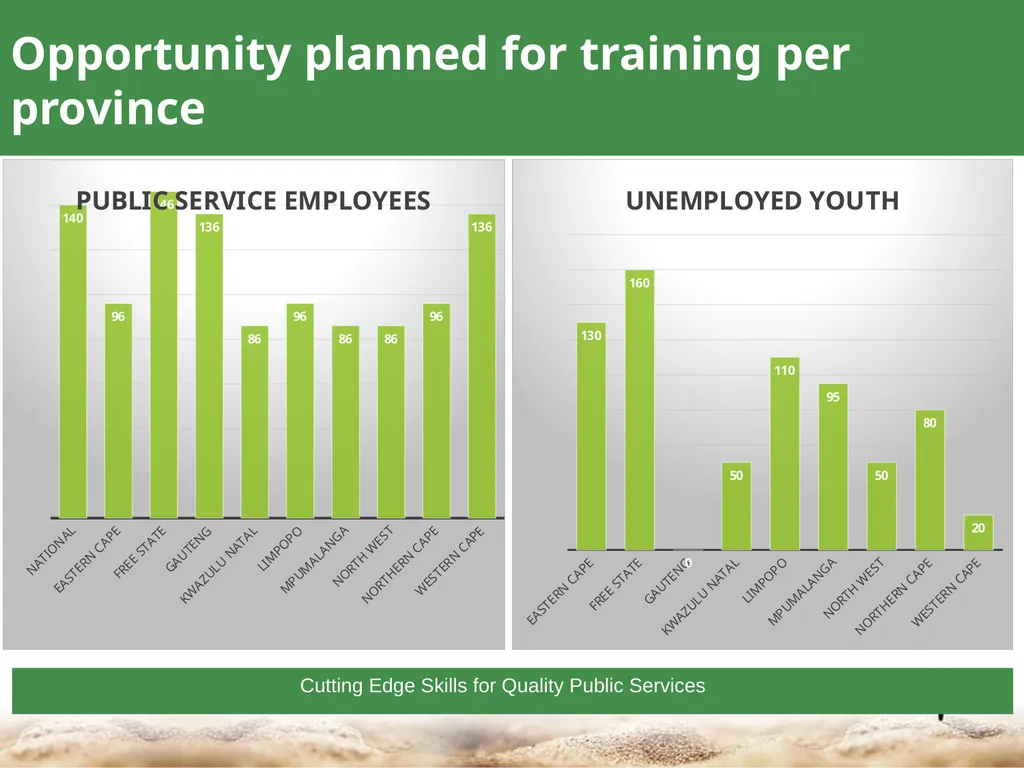
Opportunity planned for training per province<br>
30
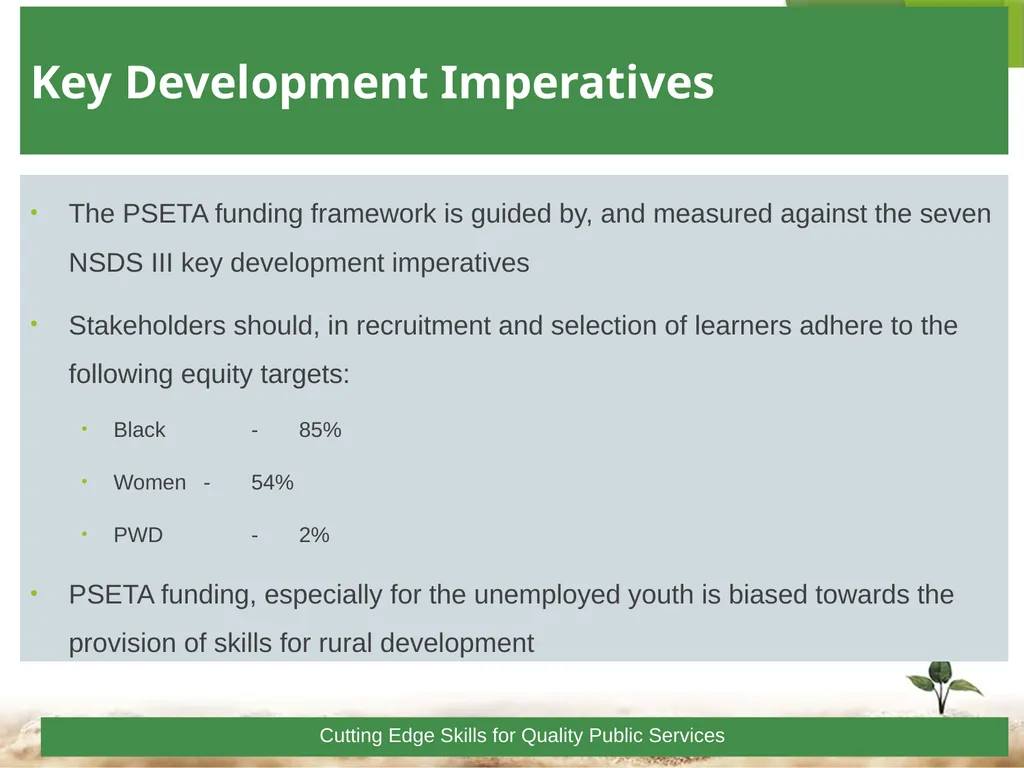
Key Development Imperatives The PSETA funding framework is guided by, and measured against the seven NSDS III key development imperatives
Stakeholders should, in recruitment and selection of learners adhere to the following equity targets:
Black - 85%
Women - 54%
PWD - 2%
PSETA funding, especially for the unemployed youth is biased towards the provision of skills for rural development<br>
31
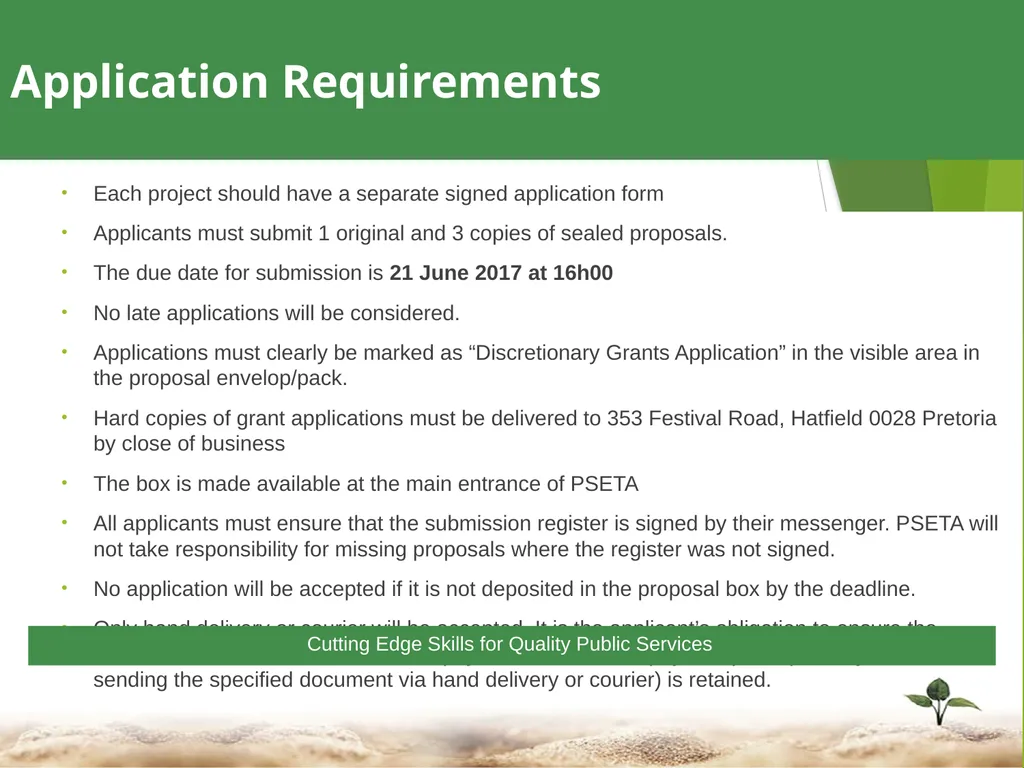
Application Requirements Each project should have a separate signed application form
Applicants must submit 1 original and 3 copies of sealed proposals.
The due date for submission is 21 June 2017 at 16h00
No late applications will be considered.
Applications must clearly be marked as “Discretionary Grants Application” in the visible area in the proposal envelop/pack.
Hard copies of grant applications must be delivered to 353 Festival Road, Hatfield 0028 Pretoria by close of business
The box is made available at the main entrance of PSETA
All applicants must ensure that the submission register is signed by their messenger. PSETA will not take responsibility for missing proposals where the register was not signed.
No application will be accepted if it is not deposited in the proposal box by the deadline.
Only hand delivery or courier will be accepted. It is the applicant’s obligation to ensure the document is submitted to the correct physical address and physical proof (delivery note of sending the specified document via hand delivery or courier) is retained.<br>