10.7 Reproductive Hormones Learning Goals To understand the functions of GnRH, FSH, and LH in both males and females To know the various organs in the male and female reproductive systems To understand the processes of oogenesis and
"10.7 Reproductive Hormones Learning Goals To" is the property of its rightful owner. Permission is granted to
download and print the materials on this website for personal, non-commercial use only, and to display it
on your personal computer provided you do not modify the materials and that you retain all copyright
notices contained in the materials. By downloading content from our website, you accept the terms of this
agreement.
Presentation Transcript
01
10.7 Reproductive Hormones<br>
02
Learning Goals To understand the functions of GnRH, FSH, and LH in both males and females
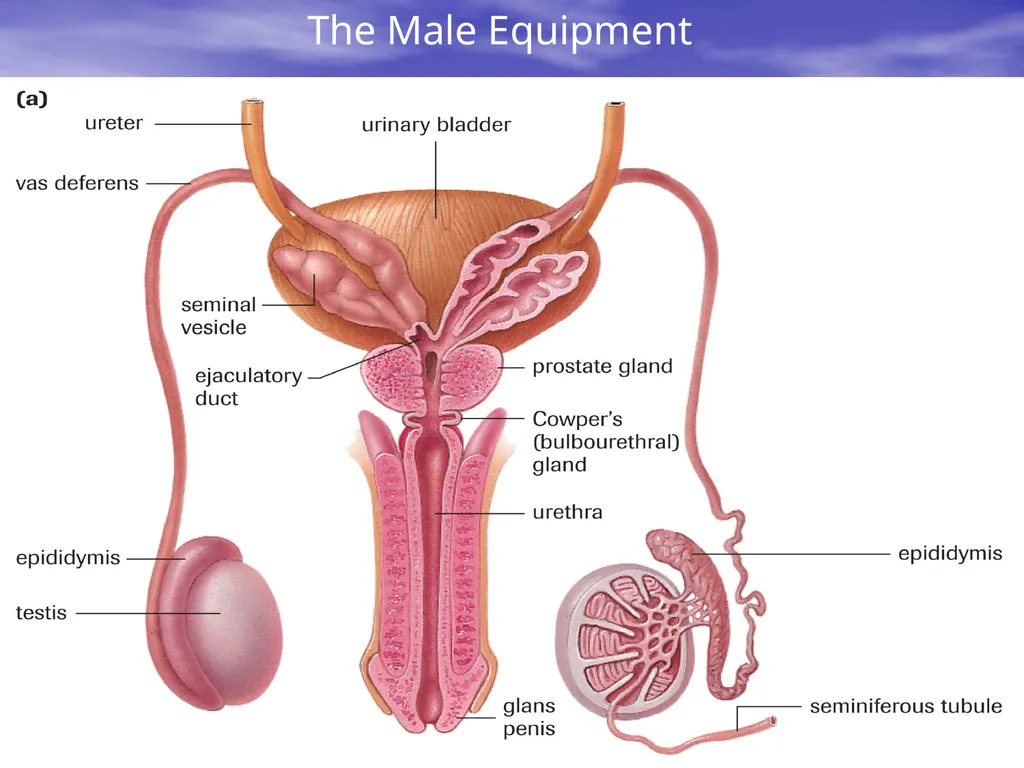
To know the various organs in the male and female reproductive systems
To understand the processes of oogenesis and spermatogenesis
Textbook pg 393-399<br>
03
Reproductive Hormones Separate systems in male and female vertebrates
Gonads (testes/ovaries) are primary source of sex hormones
Androgens, estrogens, progestins
Males and females produce all 3, but in different amounts<br>
04
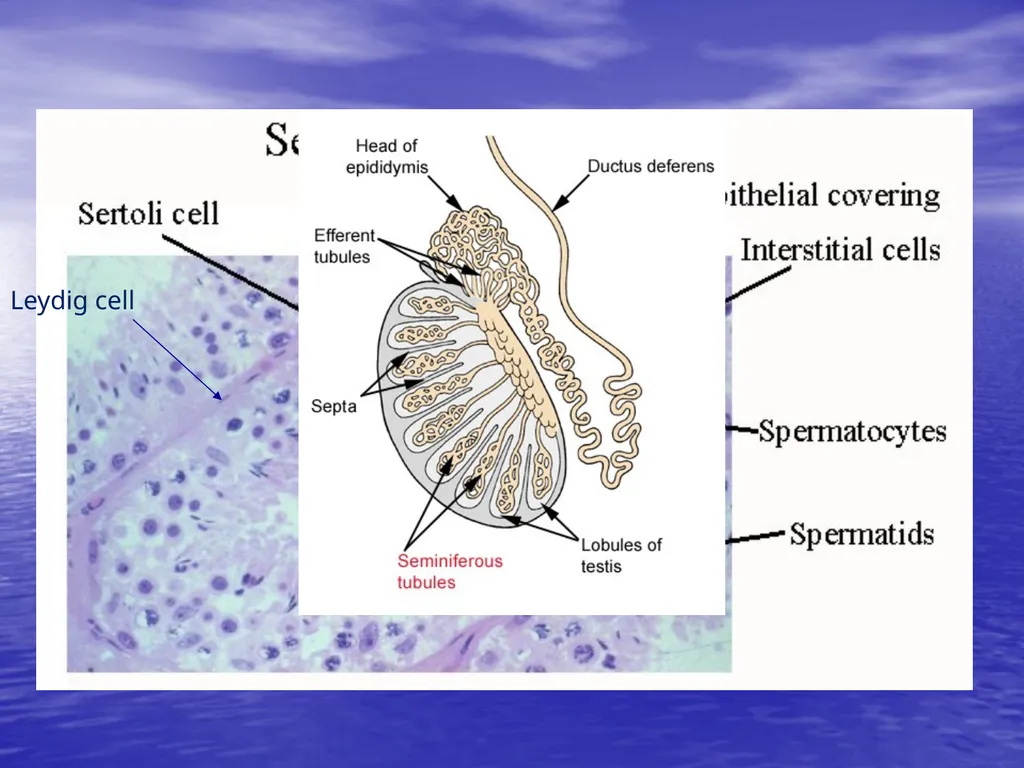
Male Reproductive System The male sex hormone testosterone is produced in the interstitial Leydig cells of the testes
At puberty, a spike in testosterone stimulates:
Spermatogenesis
Development of secondary male sexual characteristics (deepening voice, facial hair, etc.)<br>
05
The Male Equipment<br>
06
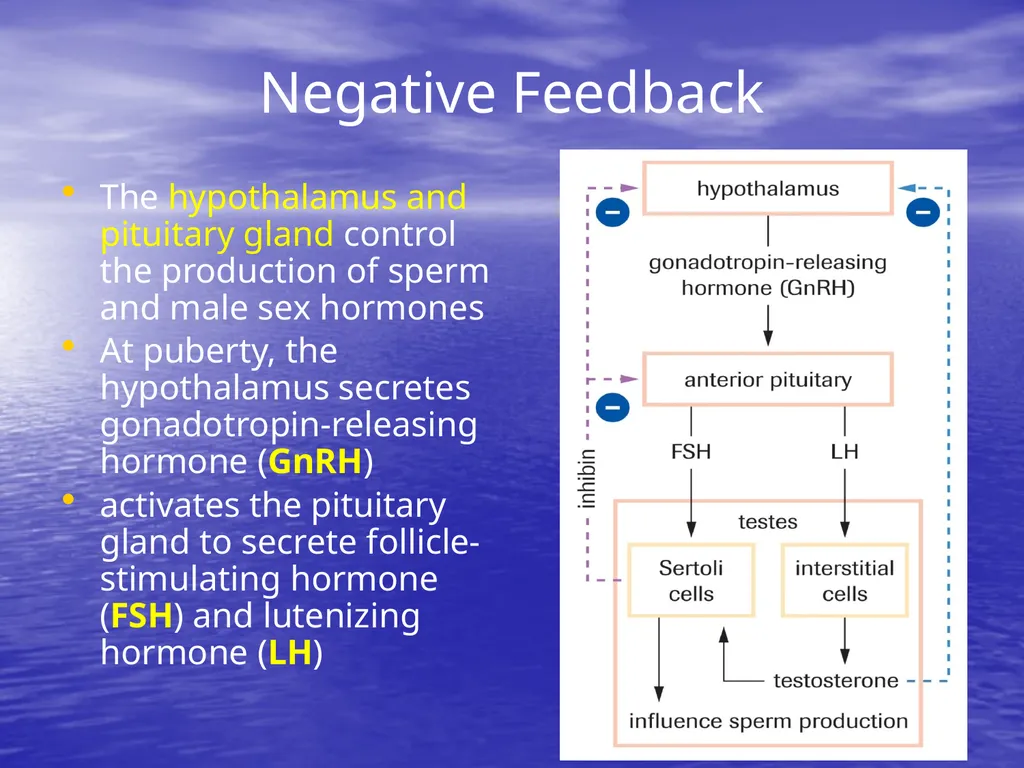
Negative Feedback The hypothalamus and pituitary gland control the production of sperm and male sex hormones
At puberty, the hypothalamus secretes gonadotropin-releasing hormone (GnRH)
activates the pituitary gland to secrete follicle-stimulating hormone (FSH) and lutenizing hormone (LH)<br>
07
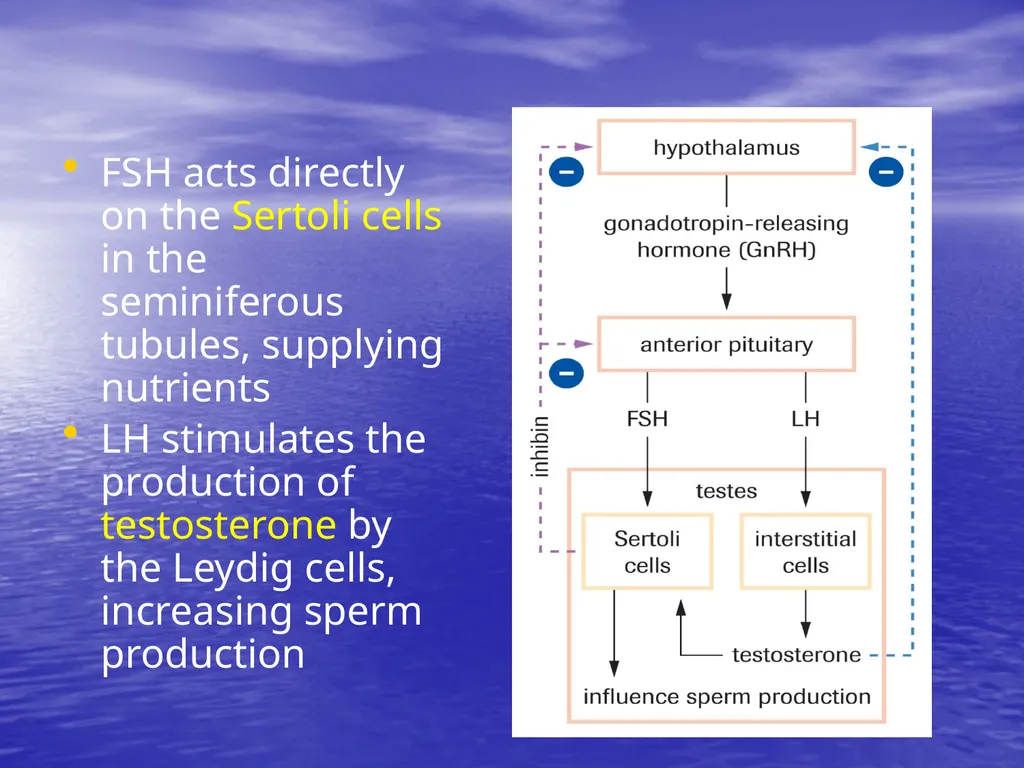
FSH acts directly on the Sertoli cells in the seminiferous tubules, supplying nutrients
LH stimulates the production of testosterone by the Leydig cells, increasing sperm production<br>
08
Leydig cell<br>
09
Female Reproductive System The female reproductive system is far more complicated than that of the male
While males produce sperm cells at a relatively constant rate (130 million per day!!), females follow a complicated sexual cycle in which one egg matures every month<br>
10
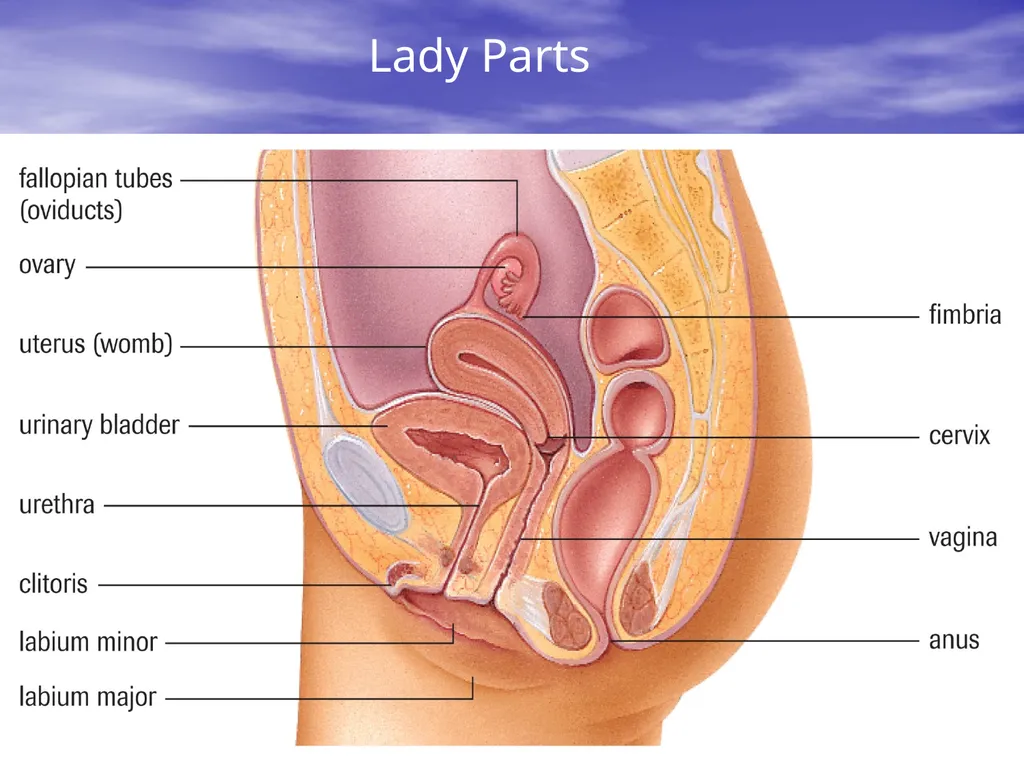
Lady Parts<br>
11
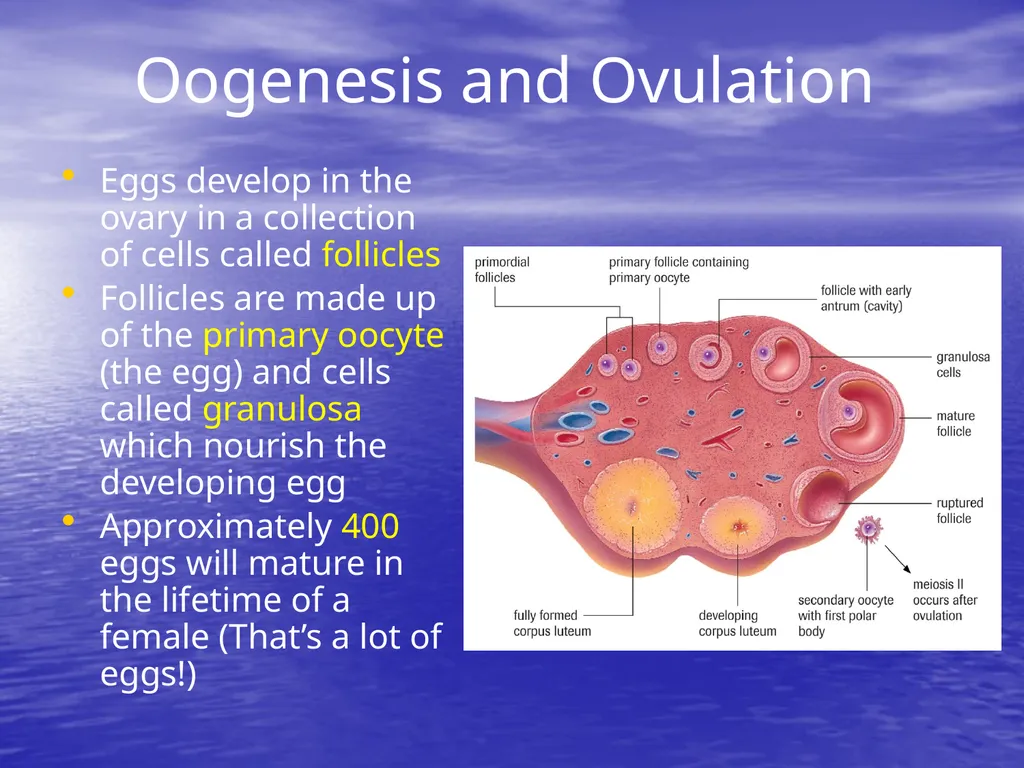
Oogenesis and Ovulation Eggs develop in the ovary in a collection of cells called follicles
Follicles are made up of the primary oocyte (the egg) and cells called granulosa which nourish the developing egg
Approximately 400 eggs will mature in the lifetime of a female (That’s a lot of eggs!)<br>
12
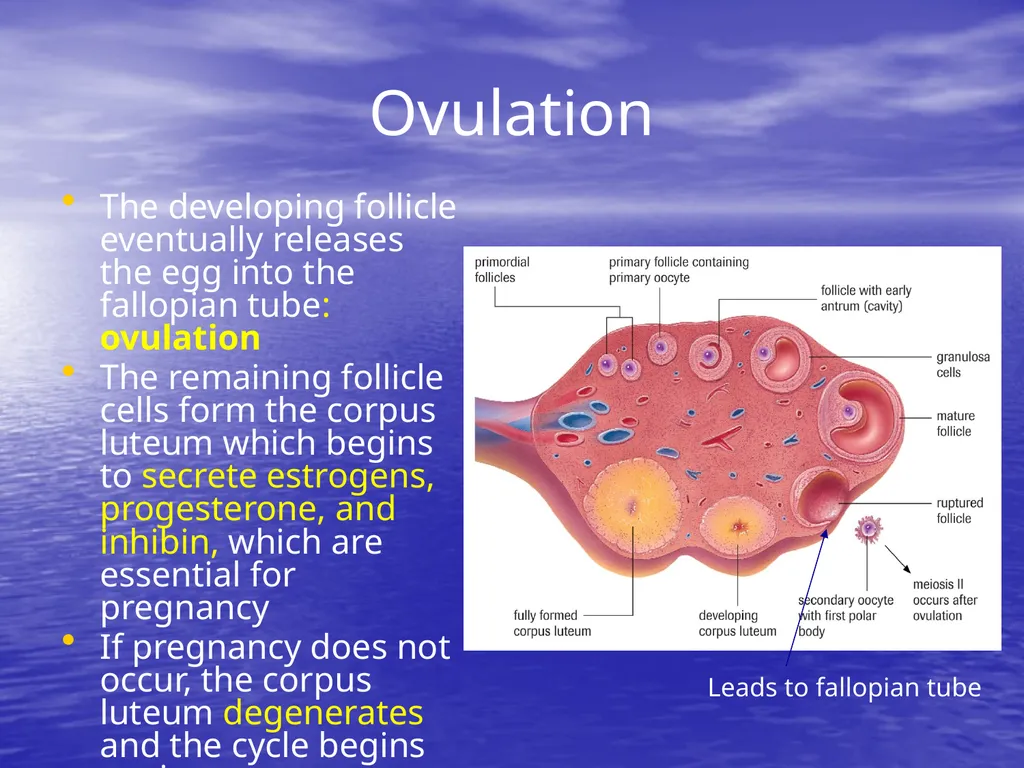
Ovulation The developing follicle eventually releases the egg into the fallopian tube: ovulation
The remaining follicle cells form the corpus luteum which begins to secrete estrogens, progesterone, and inhibin, which are essential for pregnancy
If pregnancy does not occur, the corpus luteum degenerates and the cycle begins again Leads to fallopian tube<br>
13
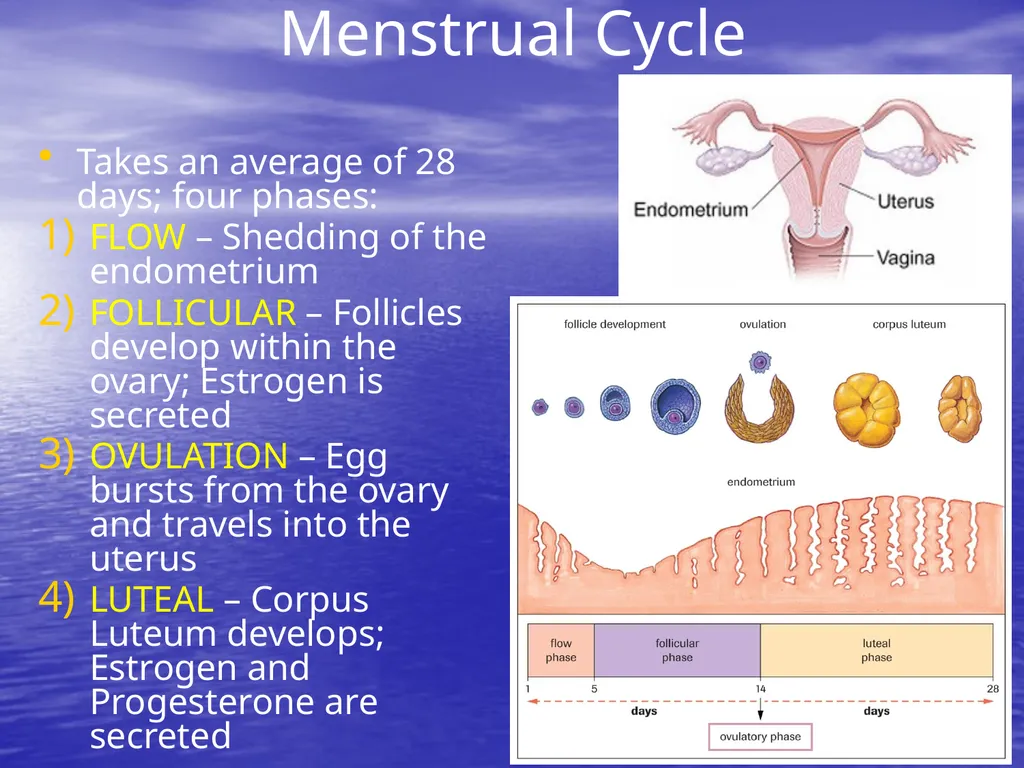
Menstrual Cycle Takes an average of 28 days; four phases:
FLOW – Shedding of the endometrium
FOLLICULAR – Follicles develop within the ovary; Estrogen is secreted
OVULATION – Egg bursts from the ovary and travels into the uterus
LUTEAL – Corpus Luteum develops; Estrogen and Progesterone are secreted<br>
14
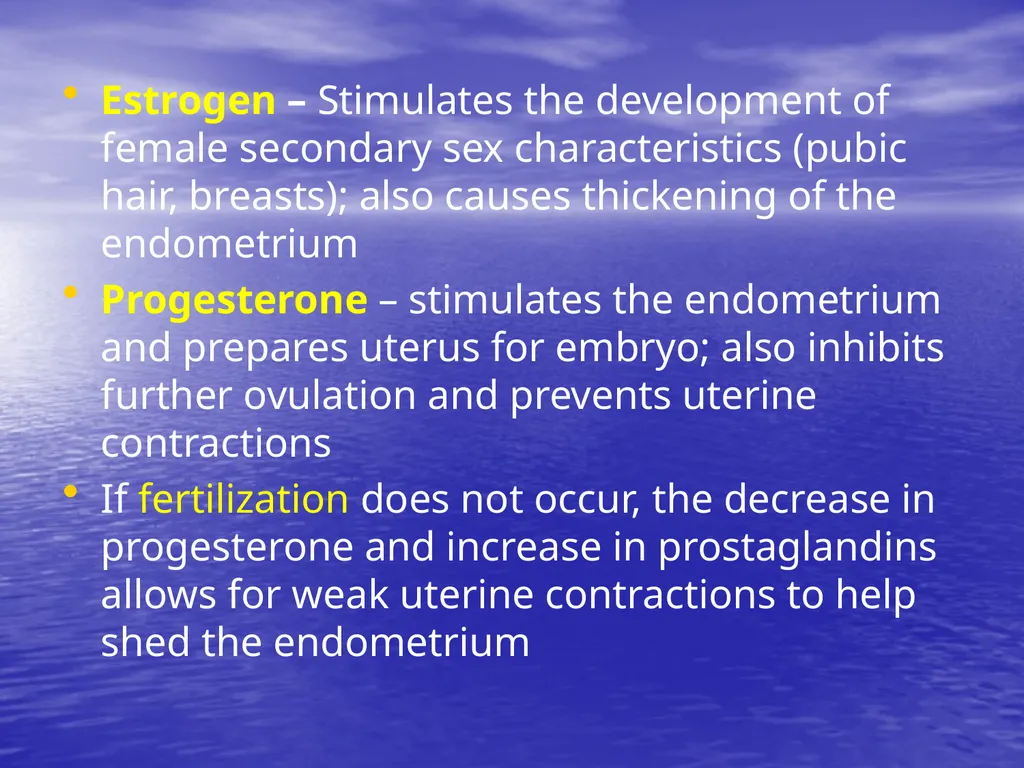
Estrogen – Stimulates the development of female secondary sex characteristics (pubic hair, breasts); also causes thickening of the endometrium
Progesterone – stimulates the endometrium and prepares uterus for embryo; also inhibits further ovulation and prevents uterine contractions
If fertilization does not occur, the decrease in progesterone and increase in prostaglandins allows for weak uterine contractions to help shed the endometrium<br>
15
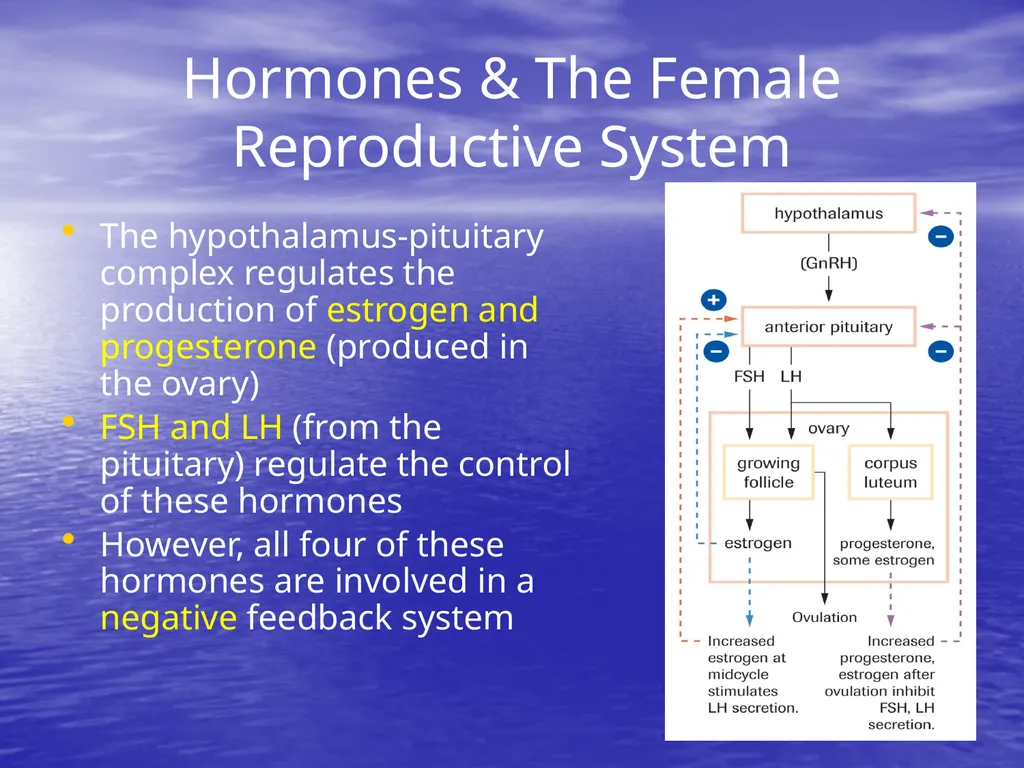
Hormones & The Female Reproductive System The hypothalamus-pituitary complex regulates the production of estrogen and progesterone (produced in the ovary)
FSH and LH (from the pituitary) regulate the control of these hormones
However, all four of these hormones are involved in a negative feedback system<br>
16
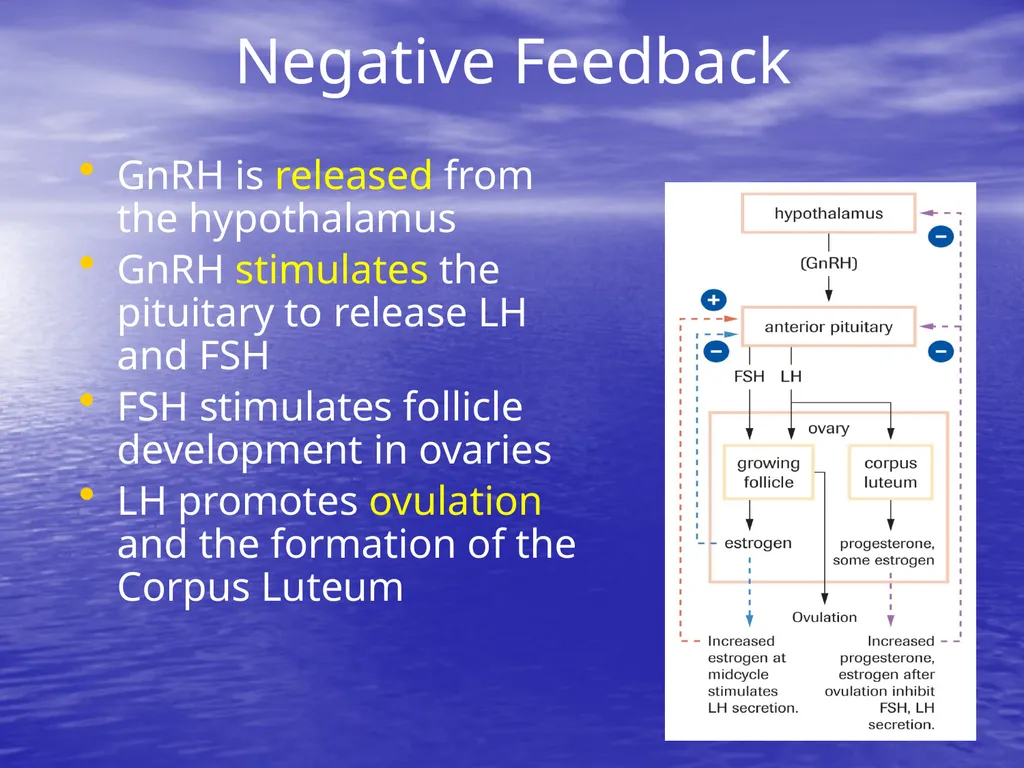
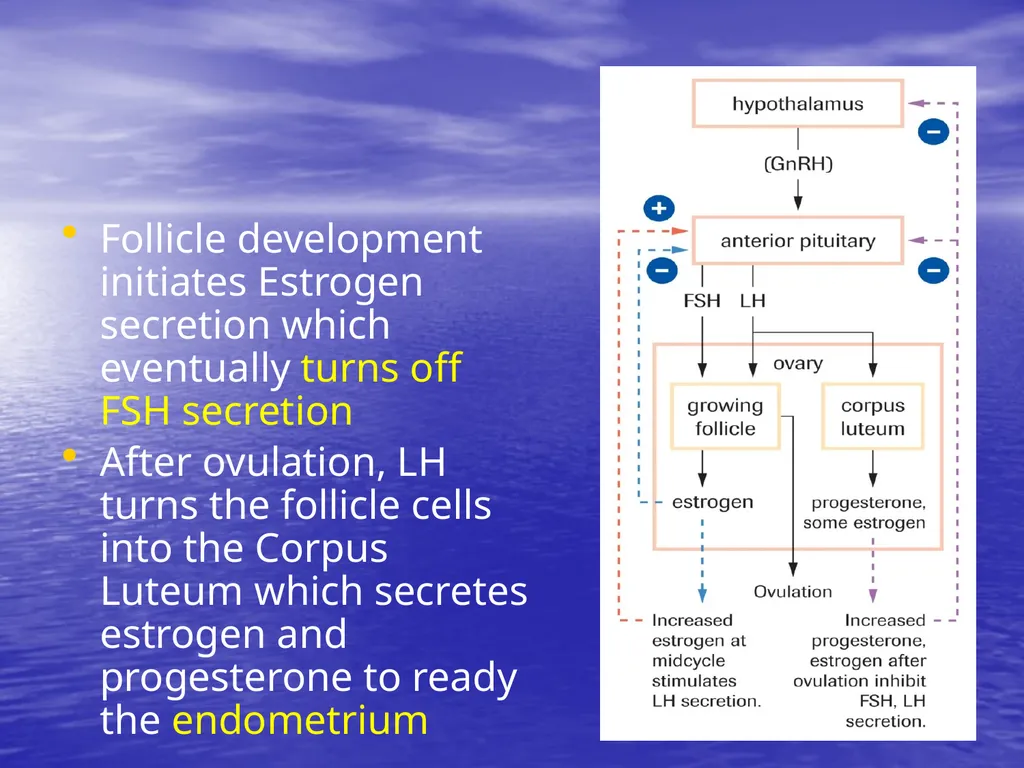
Negative Feedback GnRH is released from the hypothalamus
GnRH stimulates the pituitary to release LH and FSH
FSH stimulates follicle development in ovaries
LH promotes ovulation and the formation of the Corpus Luteum<br>
17
Follicle development initiates Estrogen secretion which eventually turns off FSH secretion
After ovulation, LH turns the follicle cells into the Corpus Luteum which secretes estrogen and progesterone to ready the endometrium<br>
18
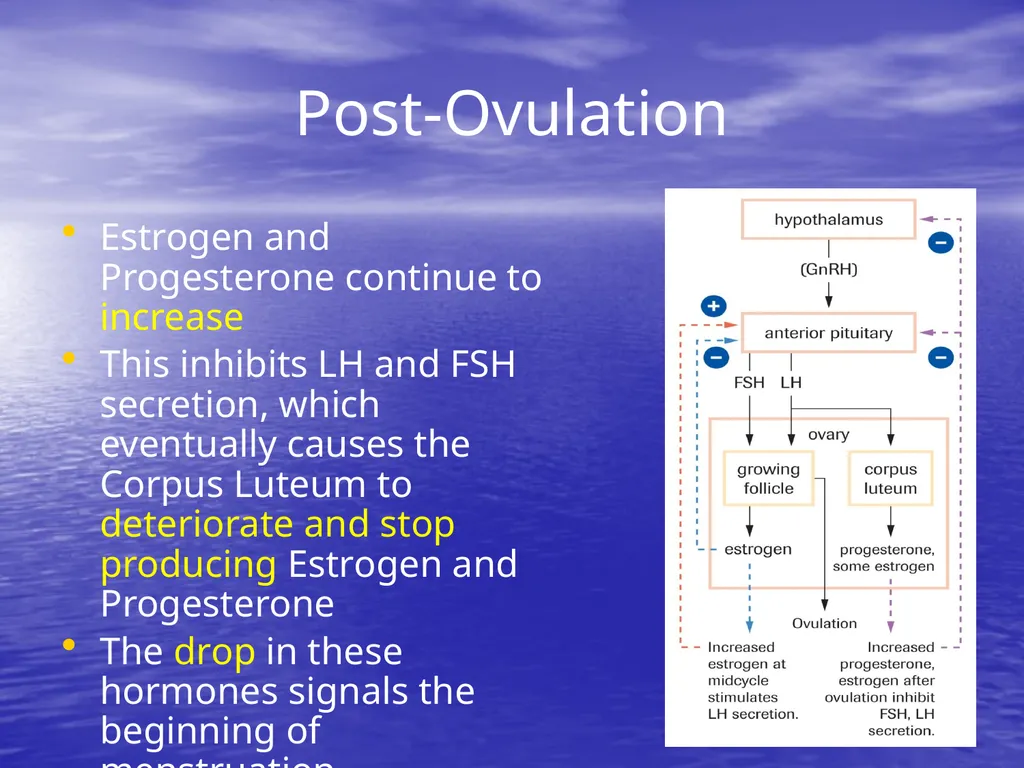
Post-Ovulation Estrogen and Progesterone continue to increase
This inhibits LH and FSH secretion, which eventually causes the Corpus Luteum to deteriorate and stop producing Estrogen and Progesterone
The drop in these hormones signals the beginning of menstruation<br>
19
Animation http://www.sumanasinc.com/webcontent/animations/content/ovarianuterine.html
Look at the narrated videos<br>
20
Learning Goals To understand the functions of GnRH, FSH, and LH in both males and females
To know the various organs in the male and female reproductive systems
To understand the processes of oogenesis and spermatogenesis<br>
21
Your Task: Get into groups of 5-6
You will hand in one package per group with all your group members name
HINT: hand out one page of the case study to each person<br>