10 Chapter 10: Applied Arithmetic Solve money problems involving: Mark up (profit as a of cost price) Margin (profit as a of selling price) Compound interest Income tax and net pay (including other deductions) Review: Revision of
"10 Chapter 10: Applied Arithmetic Solve money" is the property of its rightful owner. Permission is granted to
download and print the materials on this website for personal, non-commercial use only, and to display it
on your personal computer provided you do not modify the materials and that you retain all copyright
notices contained in the materials. By downloading content from our website, you accept the terms of this
agreement.
Presentation Transcript
01
10 Chapter 10: Applied Arithmetic Solve money problems involving:
Mark up (profit as a % of cost price)
Margin (profit as a % of selling price)
Compound interest
Income tax and net pay (including other deductions)<br>
02
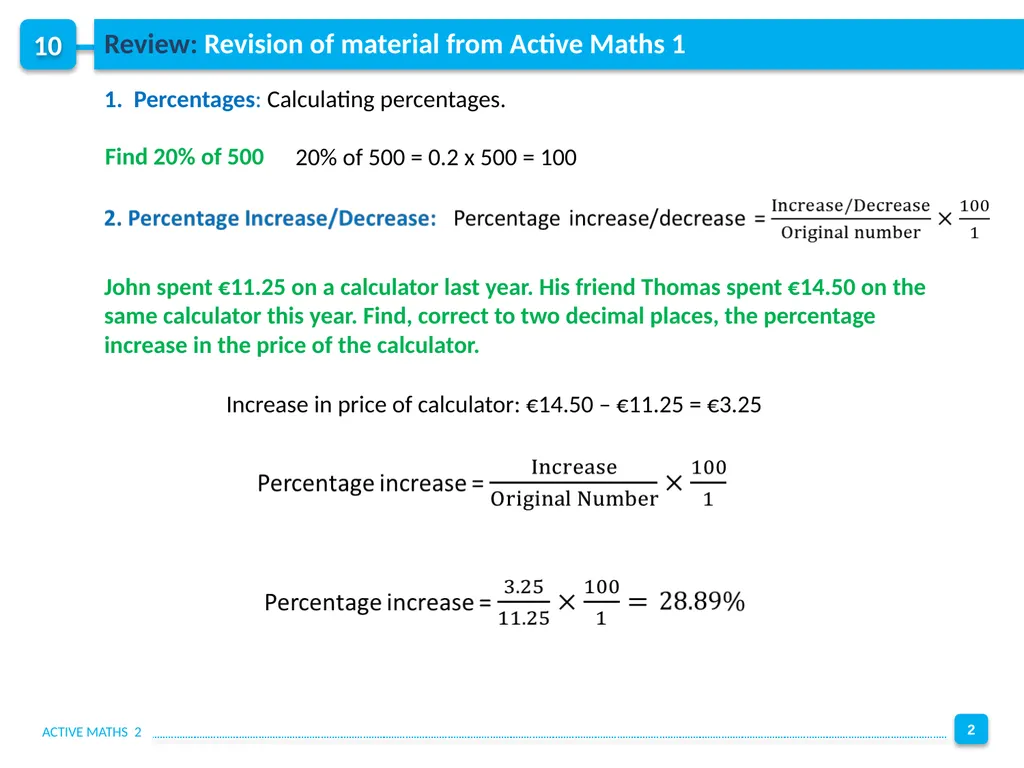
Review: Revision of material from Active Maths 1 1. Percentages: Calculating percentages. Find 20% of 500 20% of 500 = 0.2 x 500 = 100 John spent €11.25 on a calculator last year. His friend Thomas spent €14.50 on the same calculator this year. Find, correct to two decimal places, the percentage increase in the price of the calculator. Increase in price of calculator: €14.50 – €11.25 = €3.25<br>
03
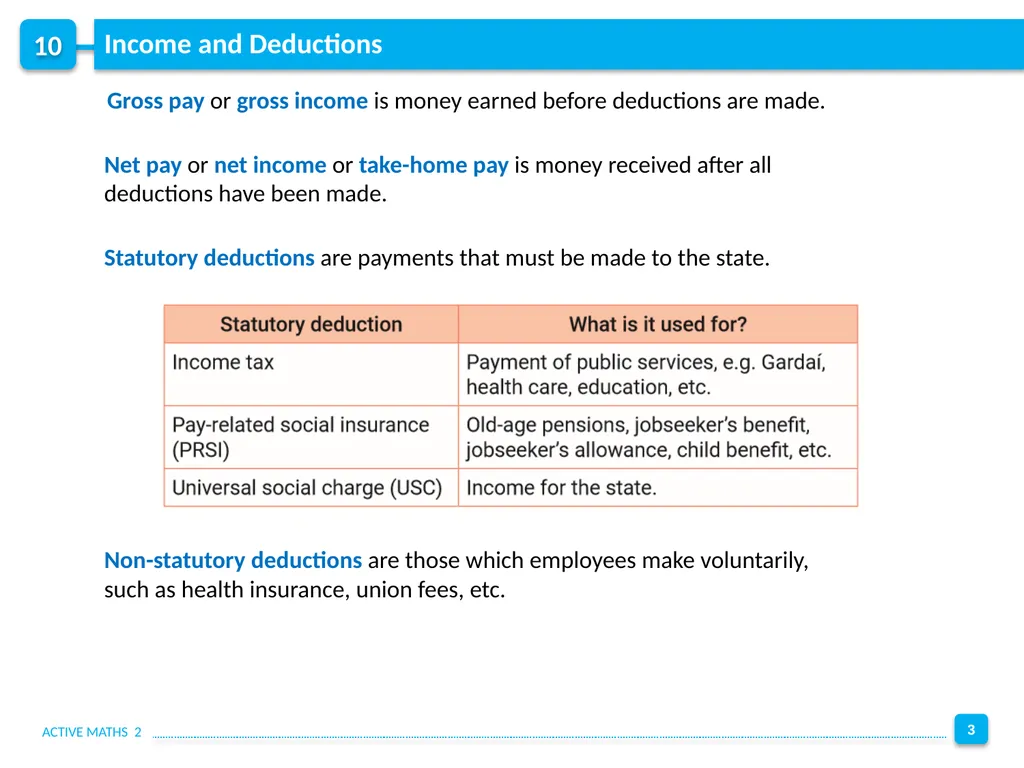
Income and Deductions Gross pay or gross income is money earned before deductions are made. Net pay or net income or take-home pay is money received after all deductions have been made. Statutory deductions are payments that must be made to the state. Non-statutory deductions are those which employees make voluntarily, such as health insurance, union fees, etc.<br>
04
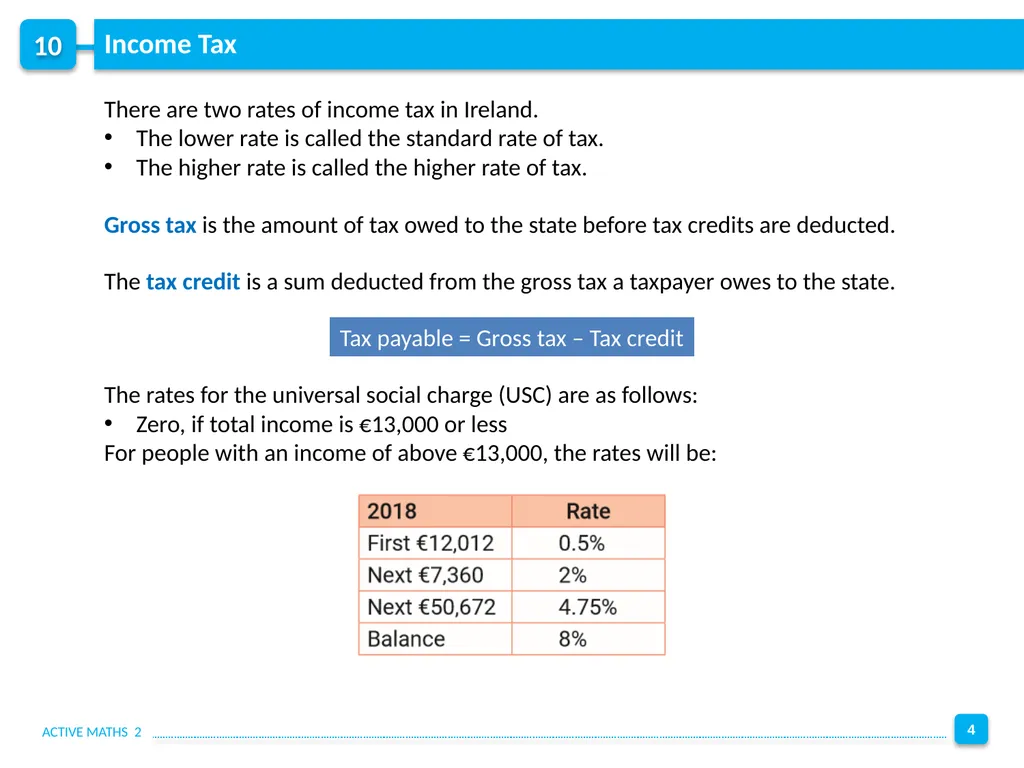
Income Tax There are two rates of income tax in Ireland.
The lower rate is called the standard rate of tax.
The higher rate is called the higher rate of tax. Gross tax is the amount of tax owed to the state before tax credits are deducted. The tax credit is a sum deducted from the gross tax a taxpayer owes to the state. Tax payable = Gross tax – Tax credit The rates for the universal social charge (USC) are as follows:
Zero, if total income is €13,000 or less
For people with an income of above €13,000, the rates will be:<br>
05
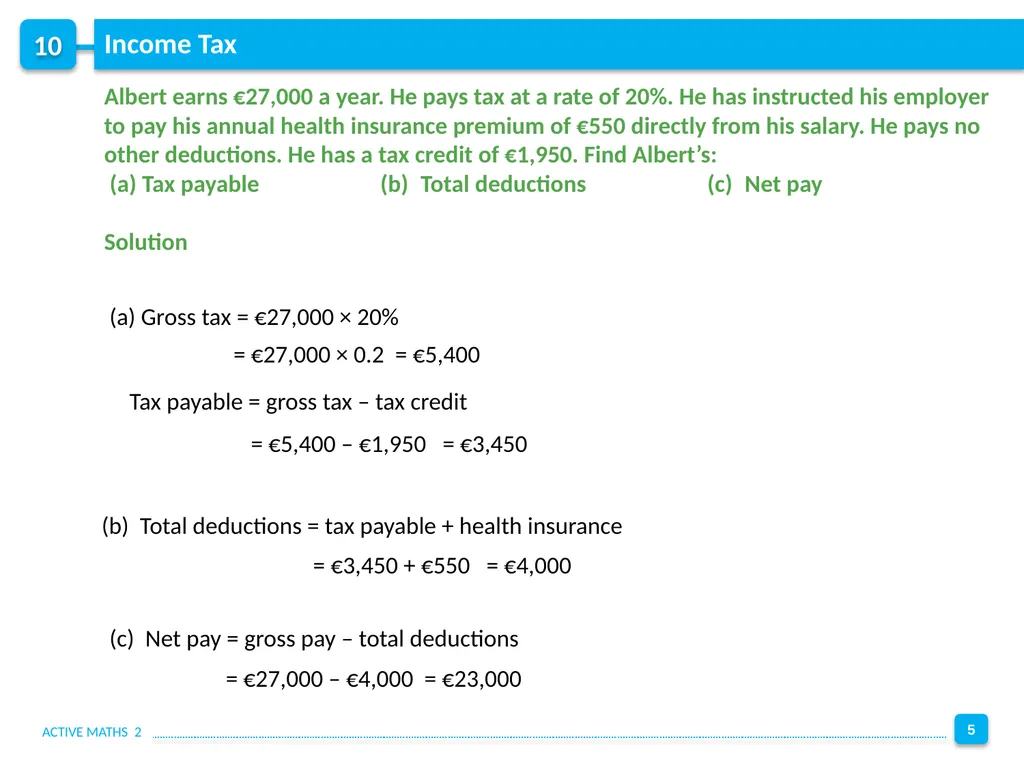
Income Tax = €27,000 – €4,000 = €23,000 Albert earns €27,000 a year. He pays tax at a rate of 20%. He has instructed his employer to pay his annual health insurance premium of €550 directly from his salary. He pays no other deductions. He has a tax credit of €1,950. Find Albert’s:
(a) Tax payable (b) Total deductions (c) Net pay
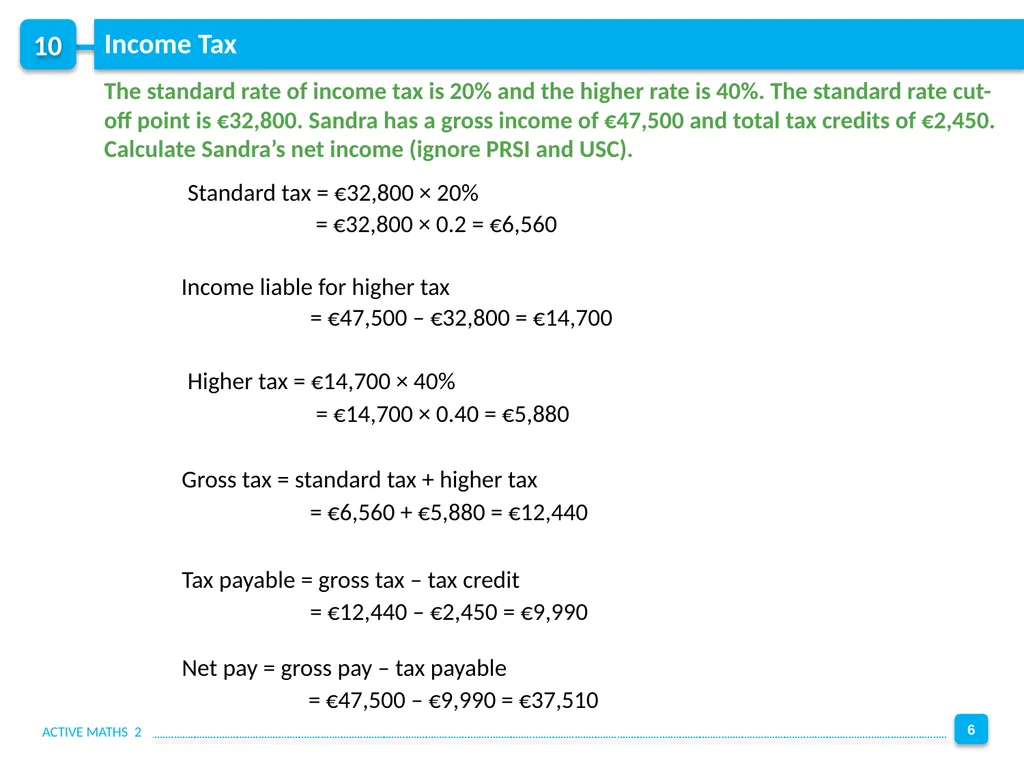
Income Tax The standard rate of income tax is 20% and the higher rate is 40%. The standard rate cut-off point is €32,800. Sandra has a gross income of €47,500 and total tax credits of €2,450. Calculate Sandra’s net income (ignore PRSI and USC). = €47,500 – €9,990 = €37,510 Standard tax = €32,800 × 20% = €32,800 × 0.2 = €6,560 Income liable for higher tax = €47,500 – €32,800 = €14,700 Higher tax = €14,700 × 40% = €14,700 × 0.40 = €5,880 Gross tax = standard tax + higher tax = €6,560 + €5,880 = €12,440 Tax payable = gross tax – tax credit = €12,440 – €2,450 = €9,990 Net pay = gross pay – tax payable<br>
07
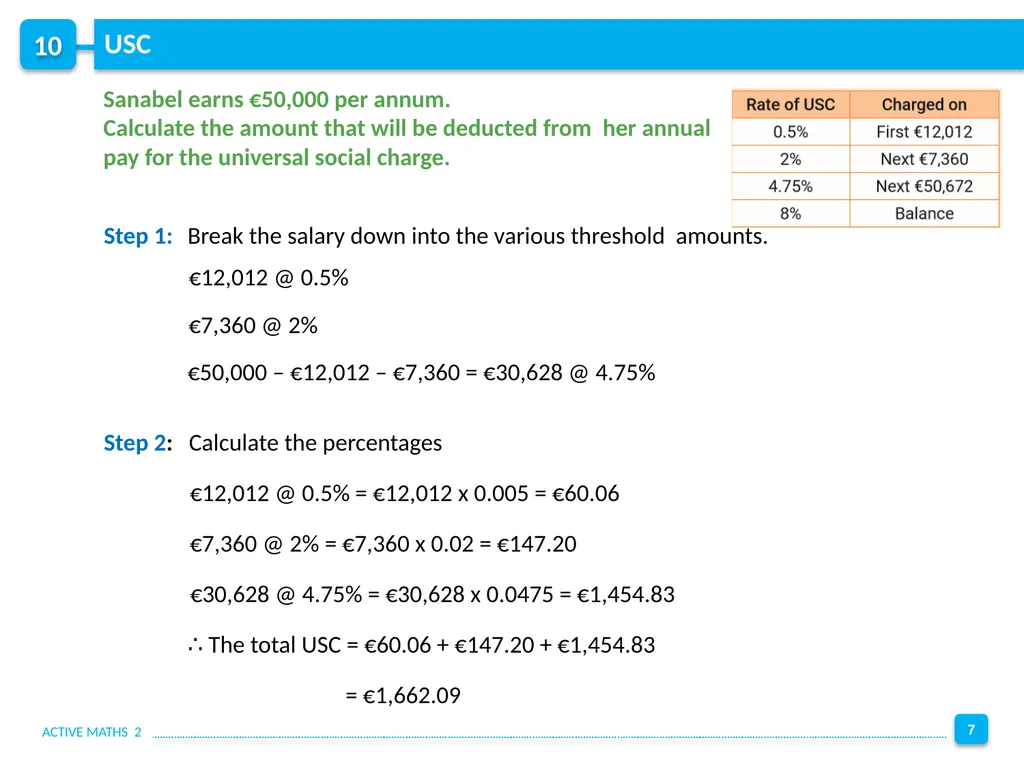
USC Break the salary down into the various threshold amounts. €50,000 – €12,012 – €7,360 = €30,628 @ 4.75% €12,012 @ 0.5% €7,360 @ 2% Step 1: Step 2: Calculate the percentages €12,012 @ 0.5% = €12,012 x 0.005 = €60.06 €7,360 @ 2% = €7,360 x 0.02 = €147.20 €30,628 @ 4.75% = €30,628 x 0.0475 = €1,454.83 ∴ The total USC = €60.06 + €147.20 + €1,454.83 = €1,662.09<br>
08
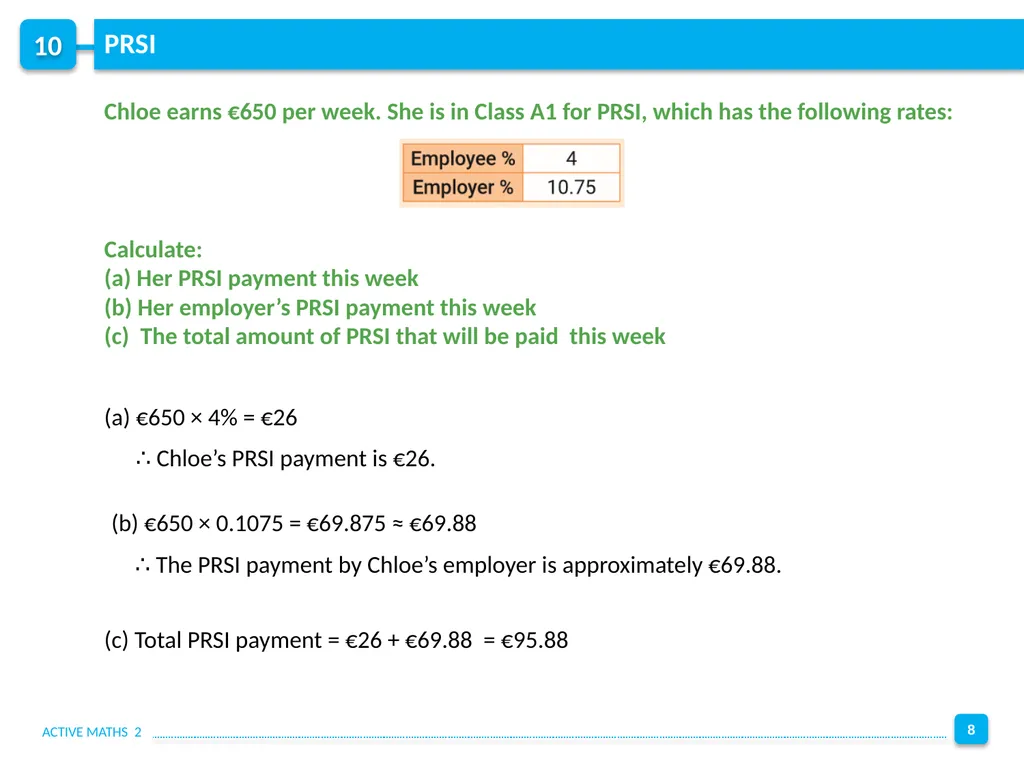
PRSI (c) Total PRSI payment = €26 + €69.88 = €95.88 (a) €650 × 4% = €26 ∴ Chloe’s PRSI payment is €26. ∴ The PRSI payment by Chloe’s employer is approximately €69.88. (b) €650 × 0.1075 = €69.875 ≈ €69.88<br>
09
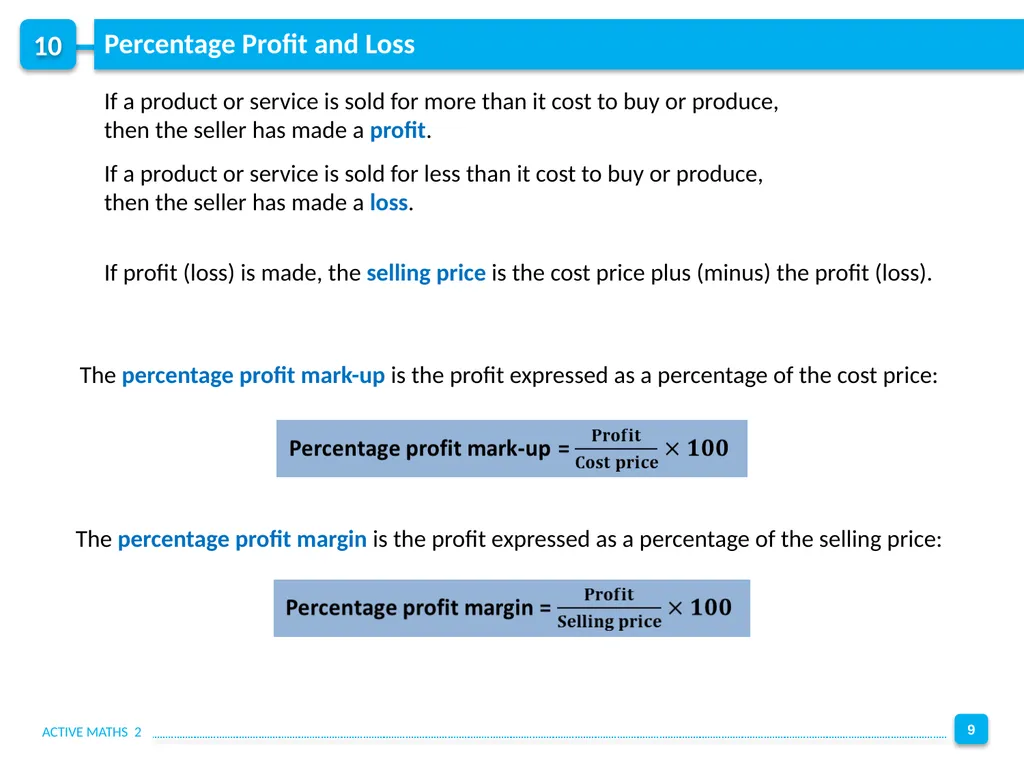
Percentage Profit and Loss If a product or service is sold for more than it cost to buy or produce, then the seller has made a profit. If a product or service is sold for less than it cost to buy or produce, then the seller has made a loss. If profit (loss) is made, the selling price is the cost price plus (minus) the profit (loss). The percentage profit mark-up is the profit expressed as a percentage of the cost price: The percentage profit margin is the profit expressed as a percentage of the selling price:<br>
10
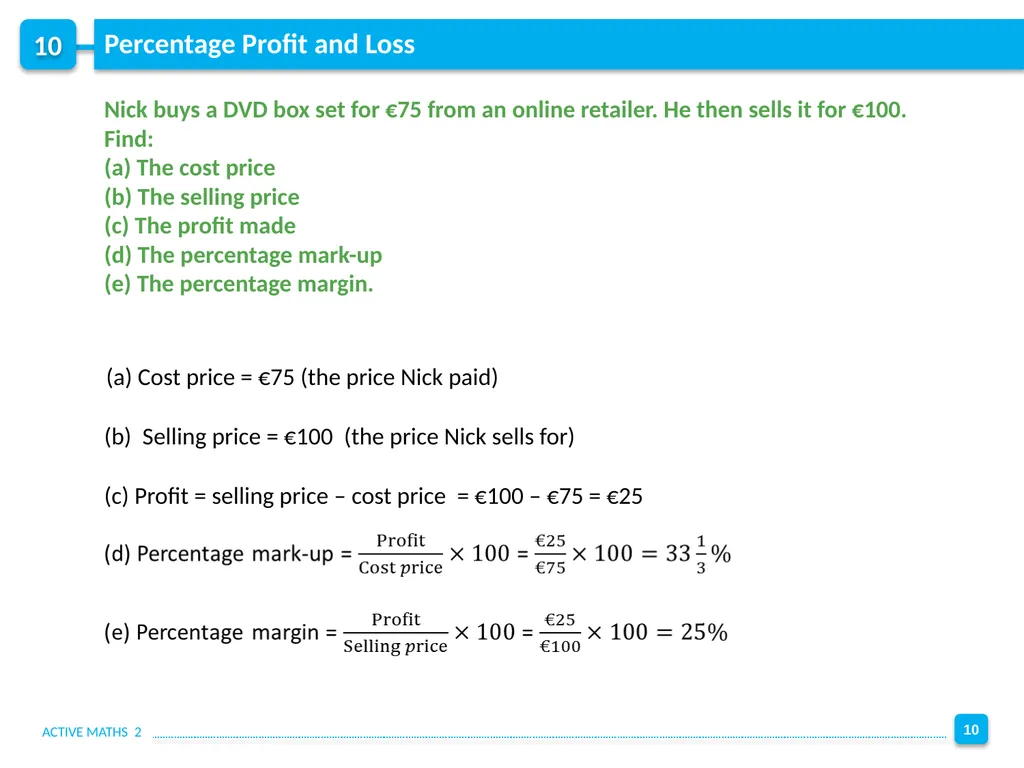
Percentage Profit and Loss Nick buys a DVD box set for €75 from an online retailer. He then sells it for €100. Find: (a) The cost price (b) The selling price (c) The profit made (d) The percentage mark-up (e) The percentage margin. (a) Cost price = €75 (the price Nick paid) (b) Selling price = €100 (the price Nick sells for) (c) Profit = selling price – cost price = €100 – €75 = €25<br>
11
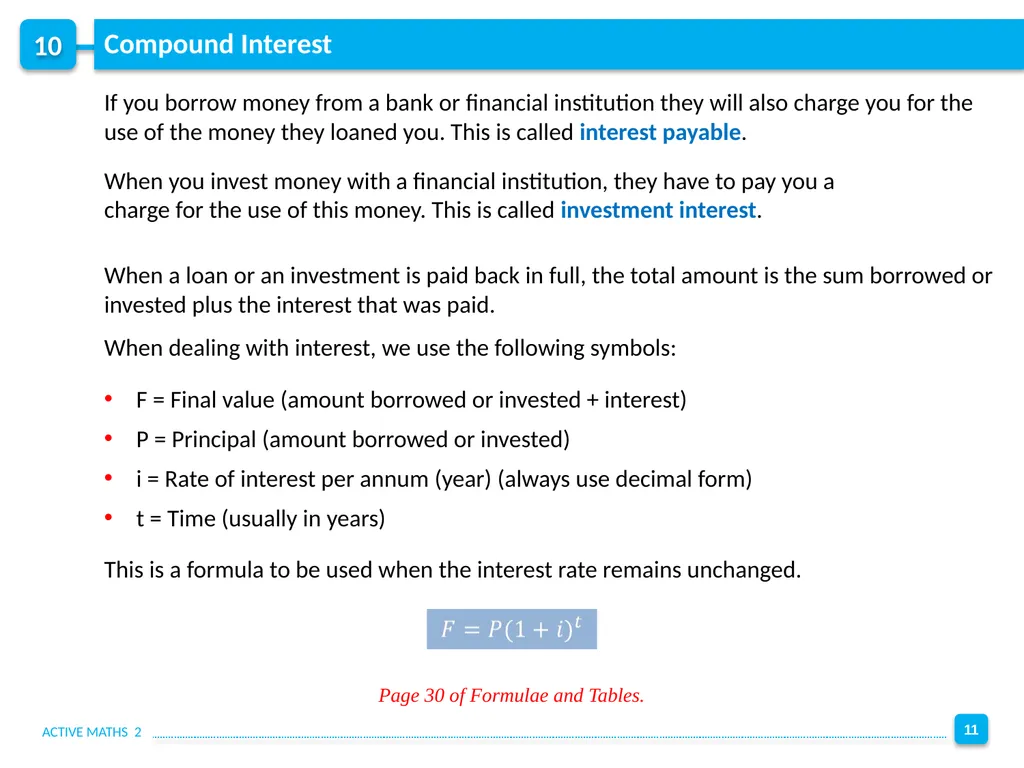
Compound Interest When a loan or an investment is paid back in full, the total amount is the sum borrowed or invested plus the interest that was paid. t = Time (usually in years) F = Final value (amount borrowed or invested + interest) When dealing with interest, we use the following symbols: P = Principal (amount borrowed or invested) i = Rate of interest per annum (year) (always use decimal form) This is a formula to be used when the interest rate remains unchanged. Page 30 of Formulae and Tables. If you borrow money from a bank or financial institution they will also charge you for the use of the money they loaned you. This is called interest payable. When you invest money with a financial institution, they have to pay you a charge for the use of this money. This is called investment interest.<br>
12
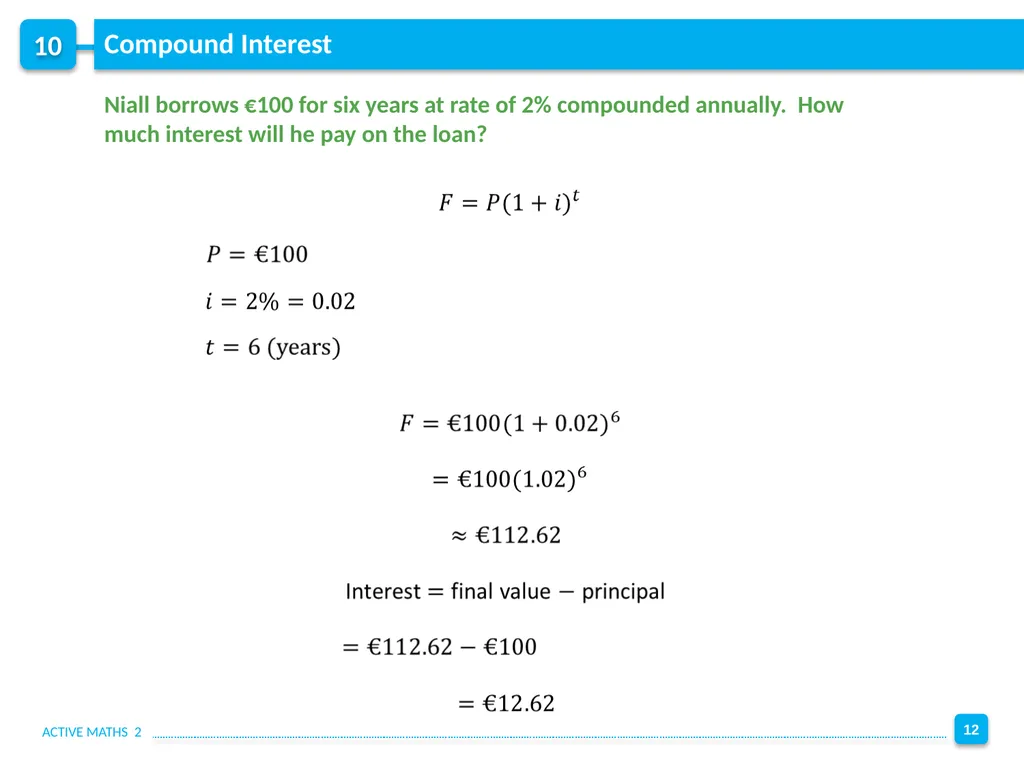
Compound Interest Niall borrows €100 for six years at rate of 2% compounded annually. How much interest will he pay on the loan?<br>