
2022 CISE IUSE: Computing in Undergraduate
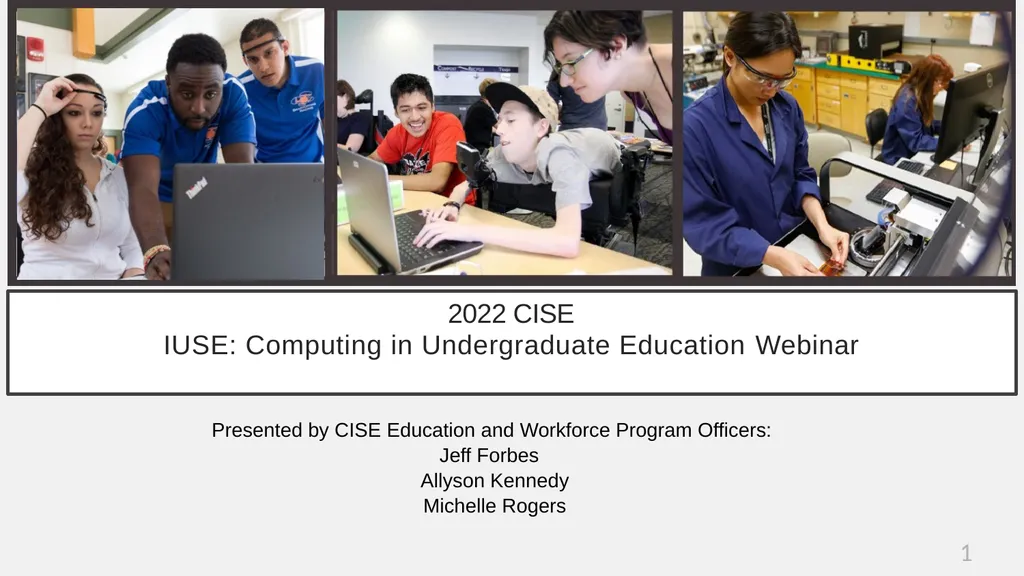

Description: 2022 CISE IUSE: Computing in Undergraduate Education Webinar Presented by CISE Education and Workforce Program Officers: Jeff Forbes Allyson Kennedy Michelle Rogers 1 MOTIVATION: TO INCREASE NUMBER AND DIVERSITY OF DOMESTIC STUDENTS
Related Topics
Download Presentation
"2022 CISE IUSE: Computing in Undergraduate" is the property of its rightful owner. Permission is granted to download and print the materials on this website for personal, non-commercial use only, and to display it on your personal computer provided you do not modify the materials and that you retain all copyright notices contained in the materials. By downloading content from our website, you accept the terms of this agreement.
Presentation Transcript
slide1. 2022 CISE
IUSE: Computing in Undergraduate Education Webinar Presented by CISE Education and Workforce Program Officers:
Jeff Forbes
Allyson Kennedy
Michelle Rogers 1<br>
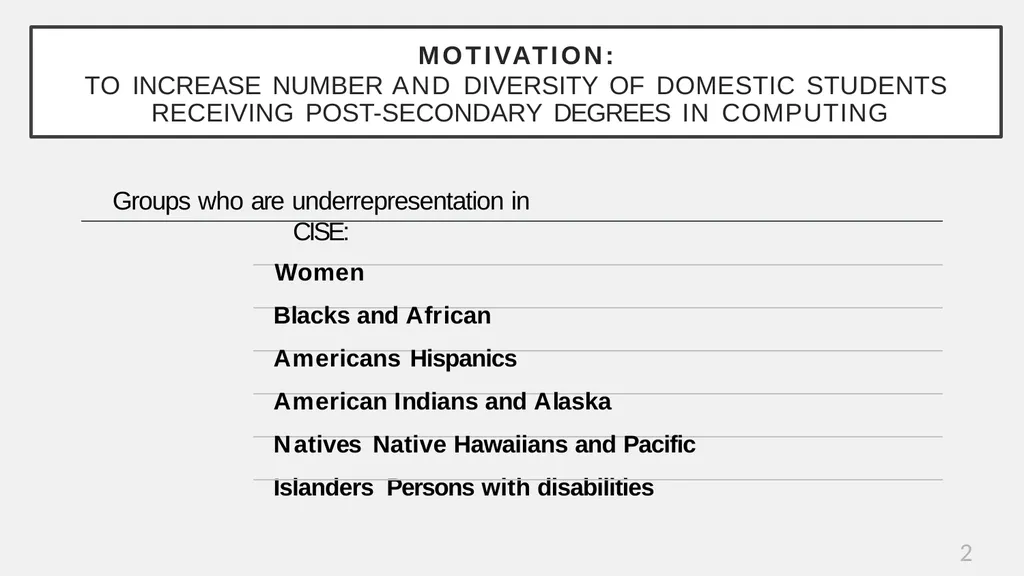
slide2. MOTIVATION:
TO INCREASE NUMBER AND DIVERSITY OF DOMESTIC STUDENTS RECEIVING POST-SECONDARY DEGREES IN COMPUTING Groups who are underrepresentation in CISE:
Women
Blacks and African Americans Hispanics
American Indians and Alaska Natives Native Hawaiians and Pacific Islanders Persons with disabilities 2<br>
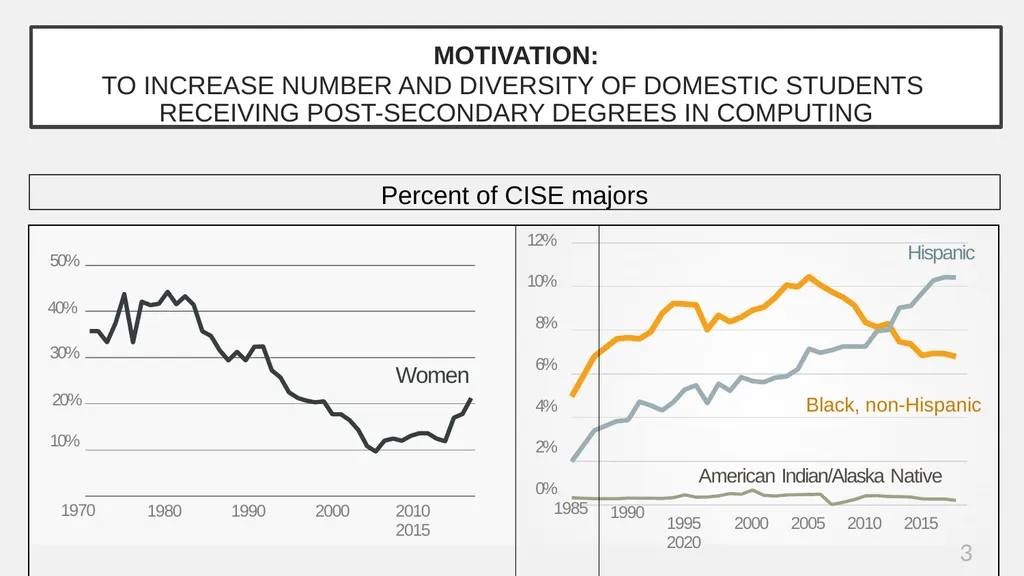
slide3. MOTIVATION:
TO INCREASE NUMBER AND DIVERSITY OF DOMESTIC STUDENTS RECEIVING POST-SECONDARY DEGREES IN COMPUTING MOTIVATION: TO INCREASE NUMBER AND DIVERSITY OF DOMESTIC STUDENTS RECEIVING POST-SECONDARY DEGREES IN COMPUTING Percent of CISE majors 3<br>
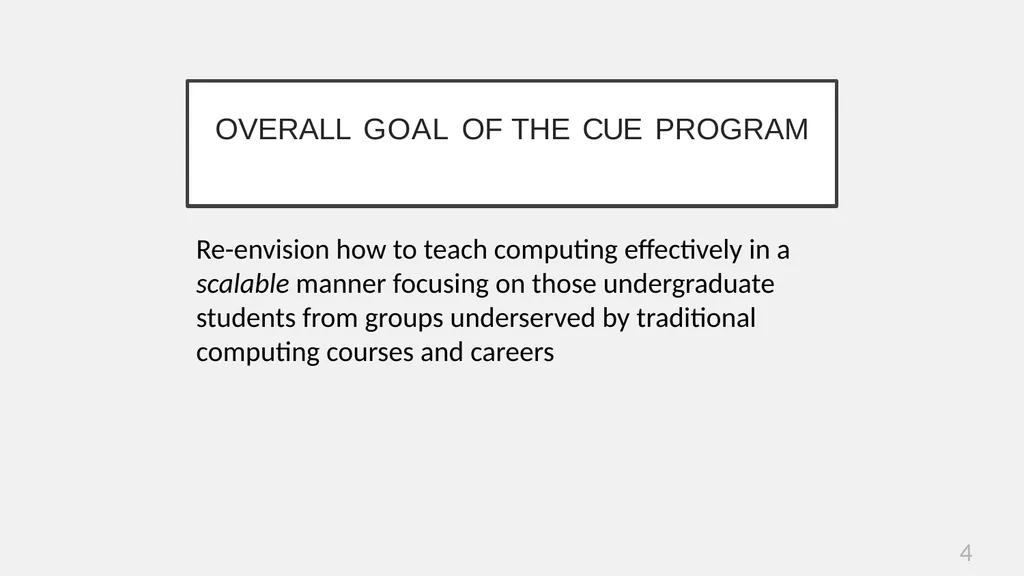
slide4. OVERALL GOAL OF THE CUE PROGRAM Re-envision how to teach computing effectively in a scalable manner focusing on those undergraduate students from groups underserved by traditional computing courses and careers 4<br>
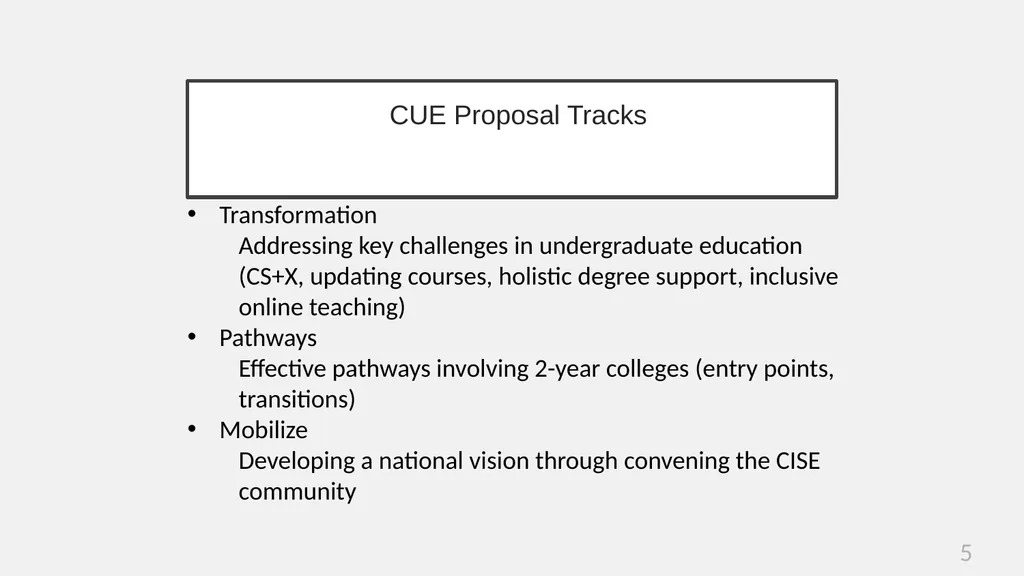
slide5. CUE Proposal Tracks Transformation
Addressing key challenges in undergraduate education (CS+X, updating courses, holistic degree support, inclusive online teaching)
Pathways
Effective pathways involving 2-year colleges (entry points, transitions)
Mobilize
Developing a national vision through convening the CISE community 5<br>
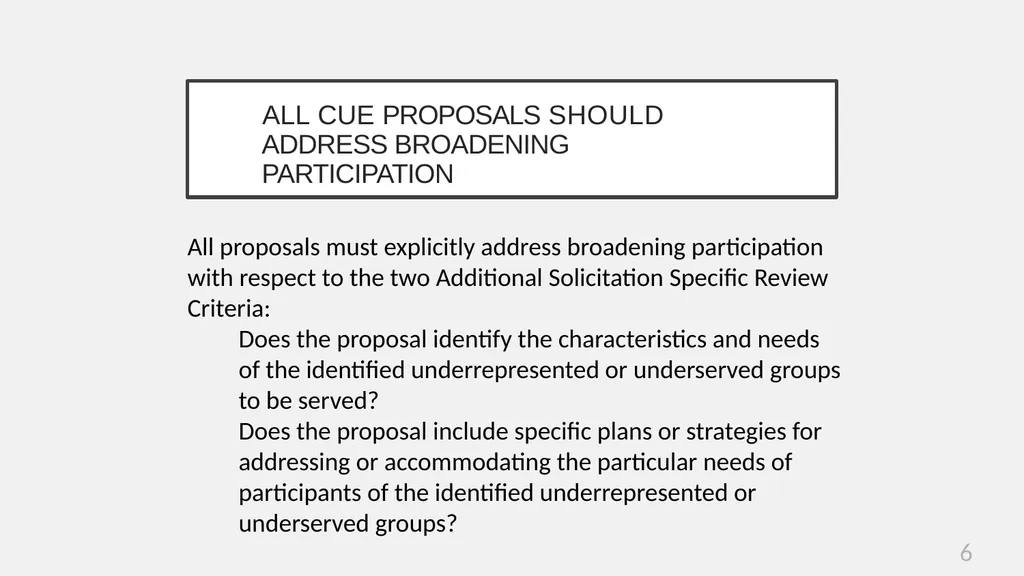
slide6. ALL CUE PROPOSALS SHOULD ADDRESS BROADENING PARTICIPATION All proposals must explicitly address broadening participation with respect to the two Additional Solicitation Specific Review Criteria:
Does the proposal identify the characteristics and needs of the identified underrepresented or underserved groups to be served?
Does the proposal include specific plans or strategies for addressing or accommodating the particular needs of participants of the identified underrepresented or underserved groups? 6<br>
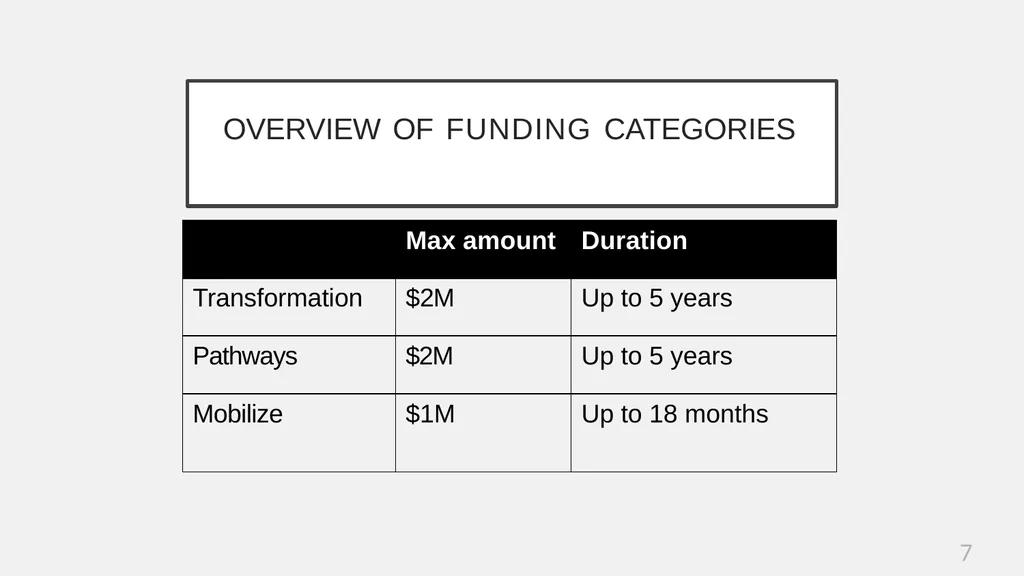
slide7. OVERVIEW OF FUNDING CATEGORIES 7<br>
slide8. TRANSFORMATION 8<br>
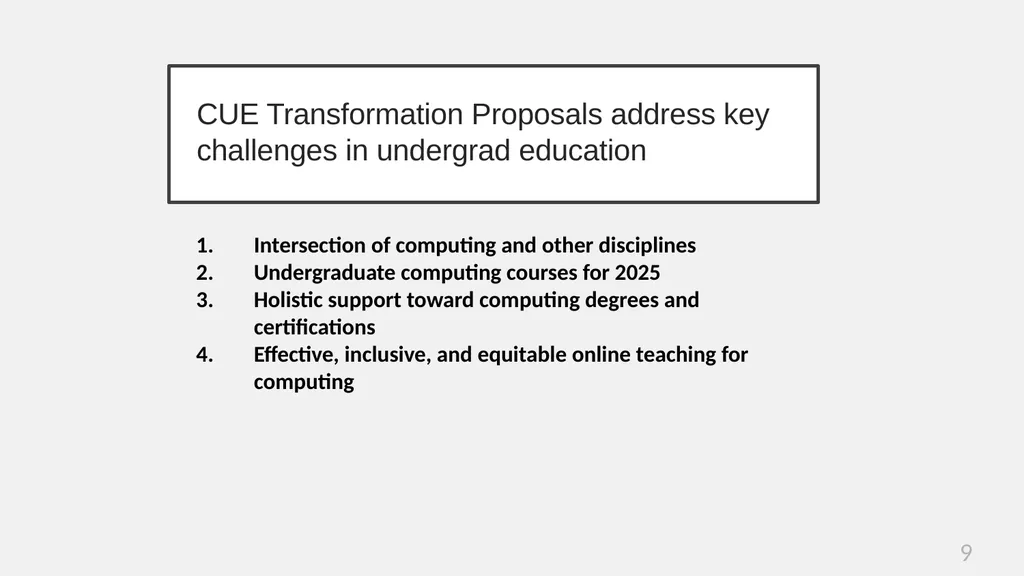
slide9. CUE Transformation Proposals address key challenges in undergrad education Intersection of computing and other disciplines
Undergraduate computing courses for 2025
Holistic support toward computing degrees and certifications
Effective, inclusive, and equitable online teaching for computing 9<br>
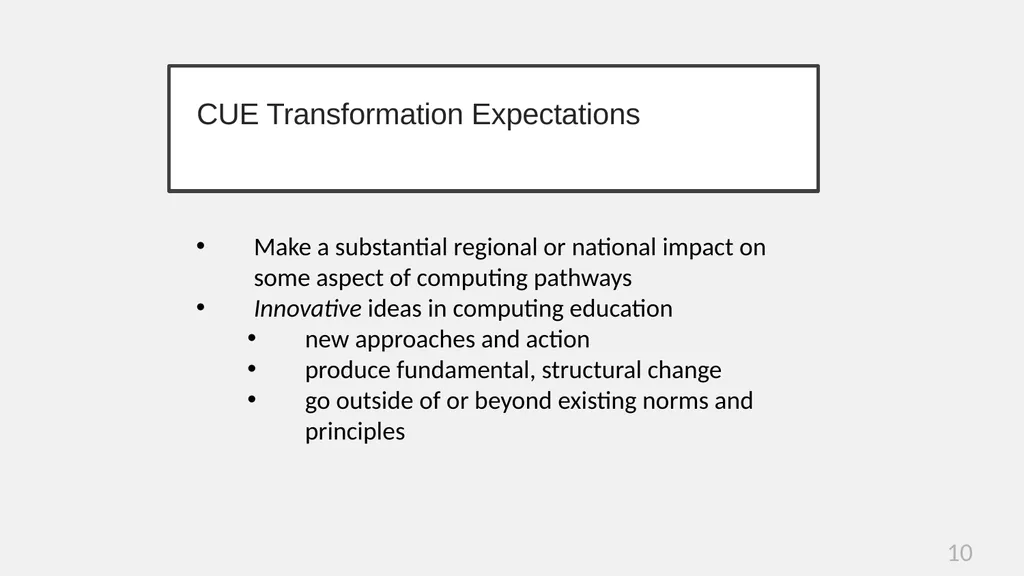
slide10. CUE Transformation Expectations Make a substantial regional or national impact on some aspect of computing pathways
Innovative ideas in computing education
new approaches and action
produce fundamental, structural change
go outside of or beyond existing norms and principles 10<br>
slide11. PATHWAYS 11<br>
slide12. CUE Pathways Proposals support and explore effective pathways to computing degrees and careers involving two-year colleges Entry points into two-year colleges
The two-year college to four-year college transition
**Encourage synergistic partnerships with industry 12<br>
slide13. Who can apply? Institutions of Higher Education, Non-profit, non-academic organizations, For-profit organizations,
Transformation and Pathways proposals must be comprised of a multi-institutional partnership, with a lead IHE and at least two other IHEs or other organizations.
Pathways proposals must include a two-year college as part of the partnership. 13<br>
slide14. KEY COMPONENTS OF CUE PROPOSALS Knowledge Base
Work is grounded in relevant literature and prior work Evaluation Plan
Independent evaluator
Description of expertise and relation to project goals/objectives
Reporting and use of results 14<br>
slide15. KEY COMPONENTS OF CUE PROPOSALS Relevant Research Questions
Aligned with research plan, project activities, and expected outcomes
Answerable through data generated by activities Dissemination Plan
Identify appropriate channels of dissemination
Must use Creative Commons licensing for new materials 15<br>
slide16. KEY COMPONENTS OF CUE PROPOSALS Sustainability
Consider sustainability of activities after funding
Design of hardware/software 16<br>
slide17. Collaboration Plan Must include:
Description of partnership, relevant characteristics of members, and specific roles
Initial statement of common goals and examples of possible common metrics
Plans for communication and convenings of members
Descriptions of any management and administrative structures
Methods that will be used in assessing/evaluating the success of the collaboration
Specific references to the budget line items that support collaboration and coordination mechanisms 17<br>
slide18. MOBILIZE 18<br>
slide19. CUE Mobilize proposals will develop a shared national vision around innovation and inclusion in undergraduate computing education Curricular supports in key areas
Transformation across institutions
Development of a common, scalable educational infrastructure 19<br>
slide20. IMPORTANT INFO Full CUE Solicitation (NSF 22-588):
https://www.nsf.gov/pubs/2022/nsf22588/nsf22588.htm
Proposals due: September 19, 2022: Contact cognizant program officers or email questions to: iuse-cue@nsf.gov 20<br>
slide21. QUESTIONS 21<br>
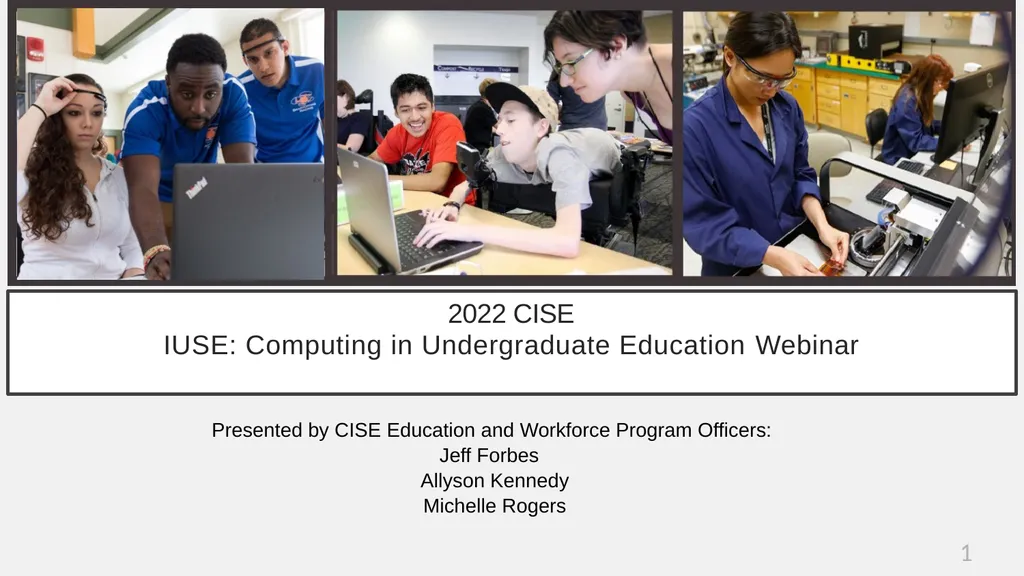
IUSE: Computing in Undergraduate Education Webinar Presented by CISE Education and Workforce Program Officers:
Jeff Forbes
Allyson Kennedy
Michelle Rogers 1<br>
slide2. MOTIVATION:
TO INCREASE NUMBER AND DIVERSITY OF DOMESTIC STUDENTS RECEIVING POST-SECONDARY DEGREES IN COMPUTING Groups who are underrepresentation in CISE:
Women
Blacks and African Americans Hispanics
American Indians and Alaska Natives Native Hawaiians and Pacific Islanders Persons with disabilities 2<br>
slide3. MOTIVATION:
TO INCREASE NUMBER AND DIVERSITY OF DOMESTIC STUDENTS RECEIVING POST-SECONDARY DEGREES IN COMPUTING MOTIVATION: TO INCREASE NUMBER AND DIVERSITY OF DOMESTIC STUDENTS RECEIVING POST-SECONDARY DEGREES IN COMPUTING Percent of CISE majors 3<br>
slide4. OVERALL GOAL OF THE CUE PROGRAM Re-envision how to teach computing effectively in a scalable manner focusing on those undergraduate students from groups underserved by traditional computing courses and careers 4<br>
slide5. CUE Proposal Tracks Transformation
Addressing key challenges in undergraduate education (CS+X, updating courses, holistic degree support, inclusive online teaching)
Pathways
Effective pathways involving 2-year colleges (entry points, transitions)
Mobilize
Developing a national vision through convening the CISE community 5<br>
slide6. ALL CUE PROPOSALS SHOULD ADDRESS BROADENING PARTICIPATION All proposals must explicitly address broadening participation with respect to the two Additional Solicitation Specific Review Criteria:
Does the proposal identify the characteristics and needs of the identified underrepresented or underserved groups to be served?
Does the proposal include specific plans or strategies for addressing or accommodating the particular needs of participants of the identified underrepresented or underserved groups? 6<br>
slide7. OVERVIEW OF FUNDING CATEGORIES 7<br>
slide8. TRANSFORMATION 8<br>
slide9. CUE Transformation Proposals address key challenges in undergrad education Intersection of computing and other disciplines
Undergraduate computing courses for 2025
Holistic support toward computing degrees and certifications
Effective, inclusive, and equitable online teaching for computing 9<br>
slide10. CUE Transformation Expectations Make a substantial regional or national impact on some aspect of computing pathways
Innovative ideas in computing education
new approaches and action
produce fundamental, structural change
go outside of or beyond existing norms and principles 10<br>
slide11. PATHWAYS 11<br>
slide12. CUE Pathways Proposals support and explore effective pathways to computing degrees and careers involving two-year colleges Entry points into two-year colleges
The two-year college to four-year college transition
**Encourage synergistic partnerships with industry 12<br>
slide13. Who can apply? Institutions of Higher Education, Non-profit, non-academic organizations, For-profit organizations,
Transformation and Pathways proposals must be comprised of a multi-institutional partnership, with a lead IHE and at least two other IHEs or other organizations.
Pathways proposals must include a two-year college as part of the partnership. 13<br>
slide14. KEY COMPONENTS OF CUE PROPOSALS Knowledge Base
Work is grounded in relevant literature and prior work Evaluation Plan
Independent evaluator
Description of expertise and relation to project goals/objectives
Reporting and use of results 14<br>
slide15. KEY COMPONENTS OF CUE PROPOSALS Relevant Research Questions
Aligned with research plan, project activities, and expected outcomes
Answerable through data generated by activities Dissemination Plan
Identify appropriate channels of dissemination
Must use Creative Commons licensing for new materials 15<br>
slide16. KEY COMPONENTS OF CUE PROPOSALS Sustainability
Consider sustainability of activities after funding
Design of hardware/software 16<br>
slide17. Collaboration Plan Must include:
Description of partnership, relevant characteristics of members, and specific roles
Initial statement of common goals and examples of possible common metrics
Plans for communication and convenings of members
Descriptions of any management and administrative structures
Methods that will be used in assessing/evaluating the success of the collaboration
Specific references to the budget line items that support collaboration and coordination mechanisms 17<br>
slide18. MOBILIZE 18<br>
slide19. CUE Mobilize proposals will develop a shared national vision around innovation and inclusion in undergraduate computing education Curricular supports in key areas
Transformation across institutions
Development of a common, scalable educational infrastructure 19<br>
slide20. IMPORTANT INFO Full CUE Solicitation (NSF 22-588):
https://www.nsf.gov/pubs/2022/nsf22588/nsf22588.htm
Proposals due: September 19, 2022: Contact cognizant program officers or email questions to: iuse-cue@nsf.gov 20<br>
slide21. QUESTIONS 21<br>