2022 MODULE 4: INTRODUCTION TO VACCINES What is a Vaccine? IAVI VACCINE LITERACY LIBRARY MODULE 4 A vaccine is a biological product that is introduced into the body to trigger an immune response to prevent infection or to control a
"2022 MODULE 4: INTRODUCTION TO VACCINES What is a" is the property of its rightful owner. Permission is granted to
download and print the materials on this website for personal, non-commercial use only, and to display it
on your personal computer provided you do not modify the materials and that you retain all copyright
notices contained in the materials. By downloading content from our website, you accept the terms of this
agreement.
Presentation Transcript
01
2022<br>
02
MODULE 4: INTRODUCTION
TO VACCINES<br>
03
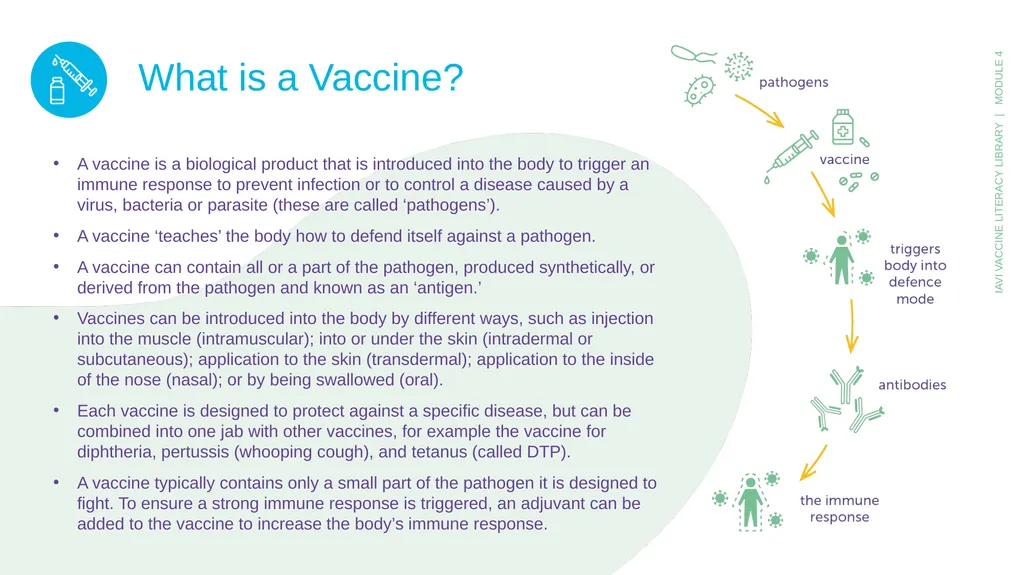
What is a Vaccine? IAVI VACCINE LITERACY LIBRARY | MODULE 4 A vaccine is a biological product that is introduced into the body to trigger an immune response to prevent infection or to control a disease caused by a virus, bacteria or parasite (these are called ‘pathogens’).
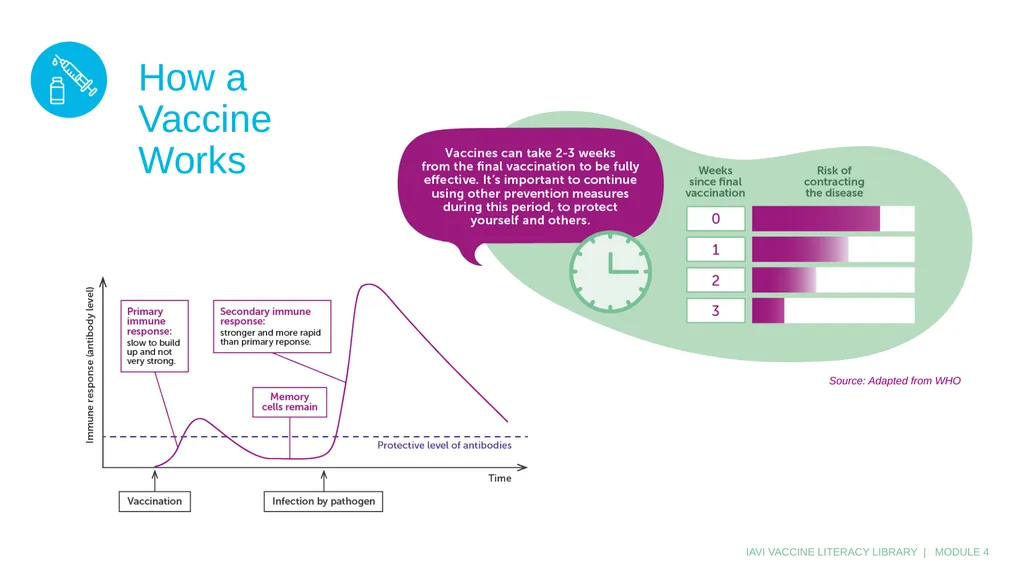
A vaccine ‘teaches’ the body how to defend itself against a pathogen.
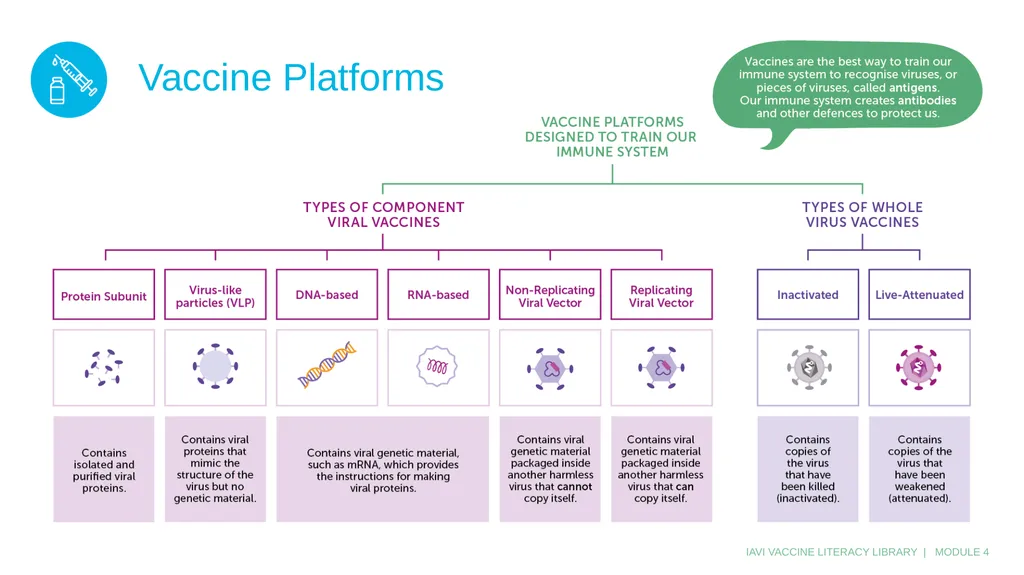
A vaccine can contain all or a part of the pathogen, produced synthetically, or derived from the pathogen and known as an ‘antigen.’
Vaccines can be introduced into the body by different ways, such as injection into the muscle (intramuscular); into or under the skin (intradermal or subcutaneous); application to the skin (transdermal); application to the inside of the nose (nasal); or by being swallowed (oral).
Each vaccine is designed to protect against a specific disease, but can be combined into one jab with other vaccines, for example the vaccine for diphtheria, pertussis (whooping cough), and tetanus (called DTP).
A vaccine typically contains only a small part of the pathogen it is designed to fight. To ensure a strong immune response is triggered, an adjuvant can be added to the vaccine to increase the body’s immune response.<br>
04
How a Vaccine Works IAVI VACCINE LITERACY LIBRARY | MODULE 4 Source: Adapted from WHO<br>
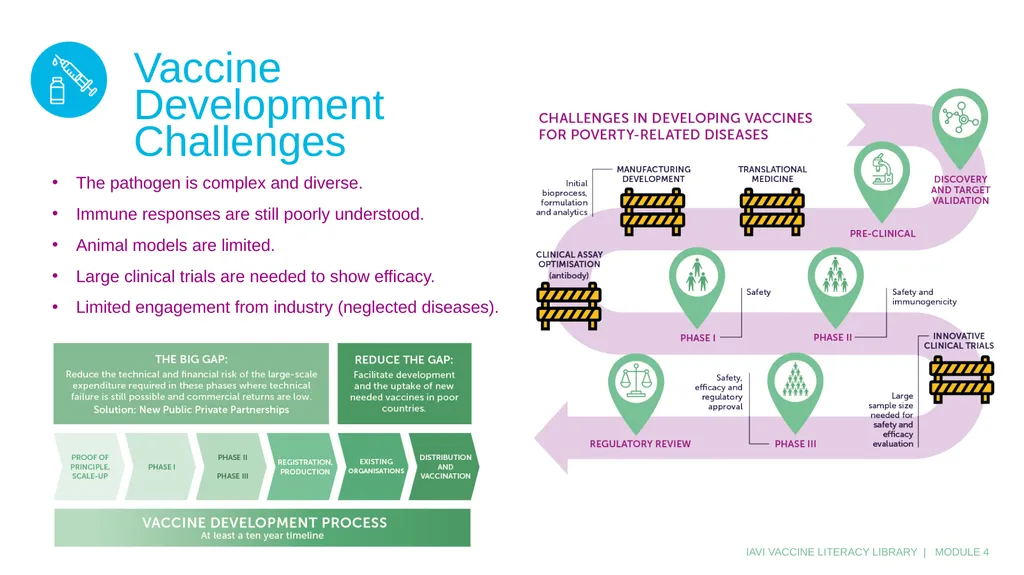
Vaccine Development Challenges The pathogen is complex and diverse.
Immune responses are still poorly understood.
Animal models are limited.
Large clinical trials are needed to show efficacy.
Limited engagement from industry (neglected diseases). IAVI VACCINE LITERACY LIBRARY | MODULE 4<br>
08
TB Vaccine Research and Development BCG, developed in 1921 and the only licensed vaccine for the prevention of TB.
Different vaccines being researched to address different aspects of TB.
In 2019, M72/AS01 candidate vaccine showed 49.7% protective efficacy against pulmonary TB in HIV negative adults with latent TB infection living in high TB burden countries. IAVI VACCINE LITERACY LIBRARY | MODULE 4<br>
09
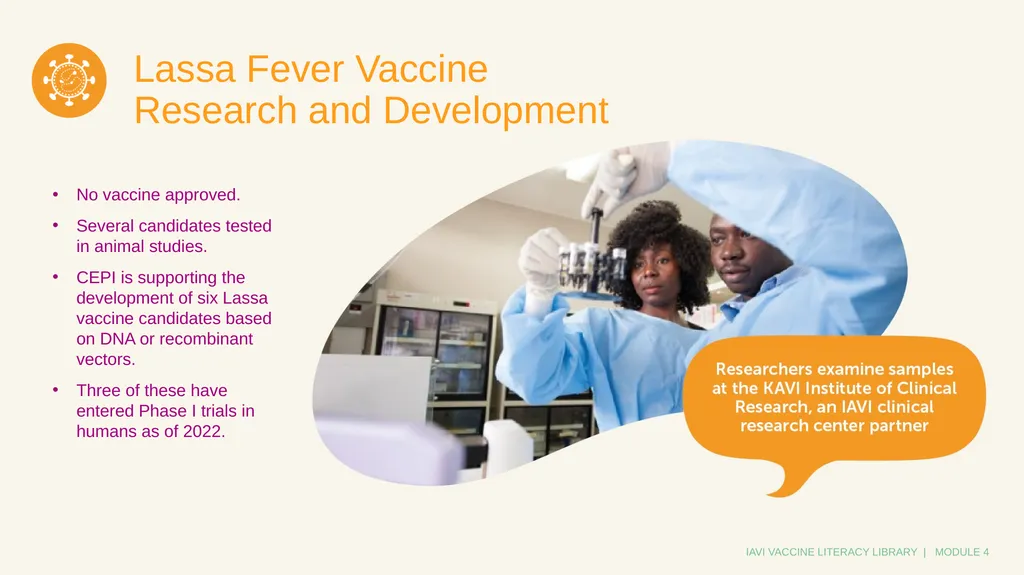
No vaccine approved.
Several candidates tested in animal studies.
CEPI is supporting the development of six Lassa vaccine candidates based on DNA or recombinant vectors.
Three of these have entered Phase I trials in humans as of 2022. Lassa Fever Vaccine Research and Development IAVI VACCINE LITERACY LIBRARY | MODULE 4<br>
10
HIV Vaccine Research and Development A preventive HIV vaccine could work in one of two ways:
Blocking infection, so the vaccinated person does not become infected with HIV in the future.
Modifying the course of HIV infection so that even if it were not successful in preventing HIV infection, the vaccinated person would have a mild course of disease and AIDS would develop more slowly or not at all. IAVI VACCINE LITERACY LIBRARY | MODULE 4<br>
11
Vaccines work and save lives.
Vaccines ‘teach’ the immune system how to defend itself against a disease-causing agent, known as a pathogen.
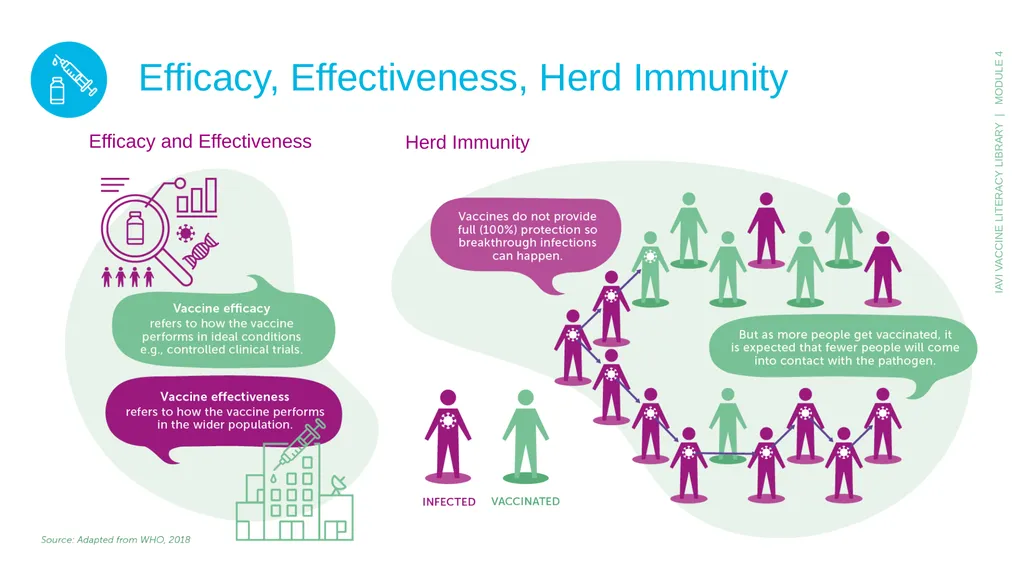
Vaccine efficacy refers to how well it protects against disease or infection when it is tested in a large trial in humans; vaccine effectiveness refers to how well it reduces the risk of infection once it is used in the overall population.
No existing vaccine works on all people 100% of the time. It is possible for a vaccine to be less than 100% effective and therefore it will not eliminate the risk of infection. However, this vaccine may still be beneficial in reducing the burden of an epidemic at population level.
Traditionally, vaccines are used to prevent illness, but therapeutic vaccines are also being developed that can fight disease after infection has taken hold. Key Messages IAVI VACCINE LITERACY LIBRARY | MODULE 4<br>