
2026 Safety Focus Areas Airplane Analysis is based


Description: 2026 Safety Focus Areas Airplane Analysis is based on FY25 Safety Occurrence Reports (SSOs), including narrative details. Trends reflect both operational factors and increased reporting discipline. Growth in some categories is partially
Related Topics
Download Presentation
"2026 Safety Focus Areas Airplane Analysis is based" is the property of its rightful owner. Permission is granted to download and print the materials on this website for personal, non-commercial use only, and to display it on your personal computer provided you do not modify the materials and that you retain all copyright notices contained in the materials. By downloading content from our website, you accept the terms of this agreement.
Presentation Transcript
slide1. 2026 Safety Focus Areas
Airplane<br>
slide2. Analysis is based on FY25 Safety Occurrence Reports (SSOs), including narrative details.
Trends reflect both operational factors and increased reporting discipline.
Growth in some categories is partially attributable to higher reporting rates, not solely increased events.
Improved narrative quality strengthened the accuracy of trend identification. Data Source & Reporting Context<br>
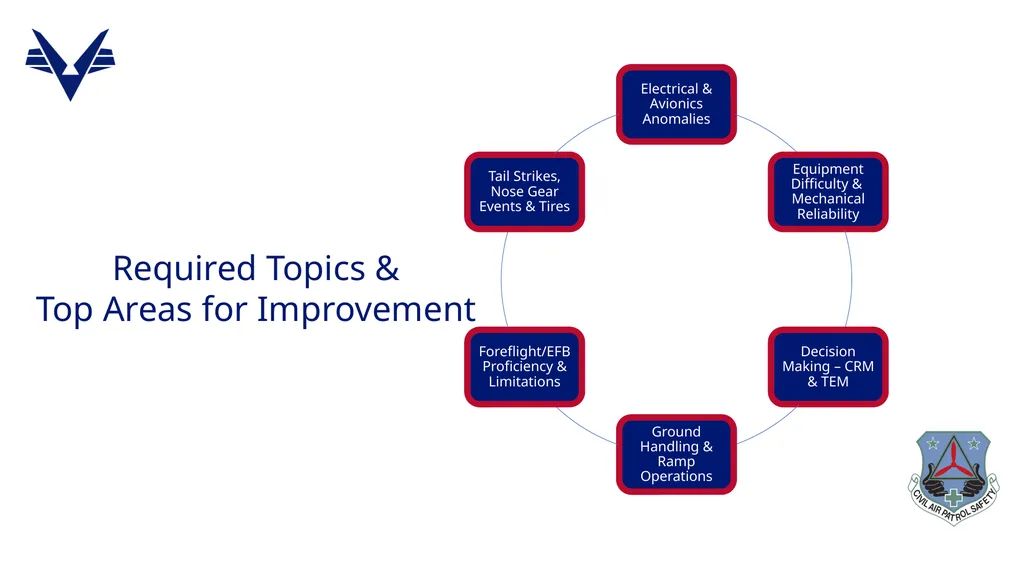
slide3. Required Topics &
Top Areas for Improvement<br>
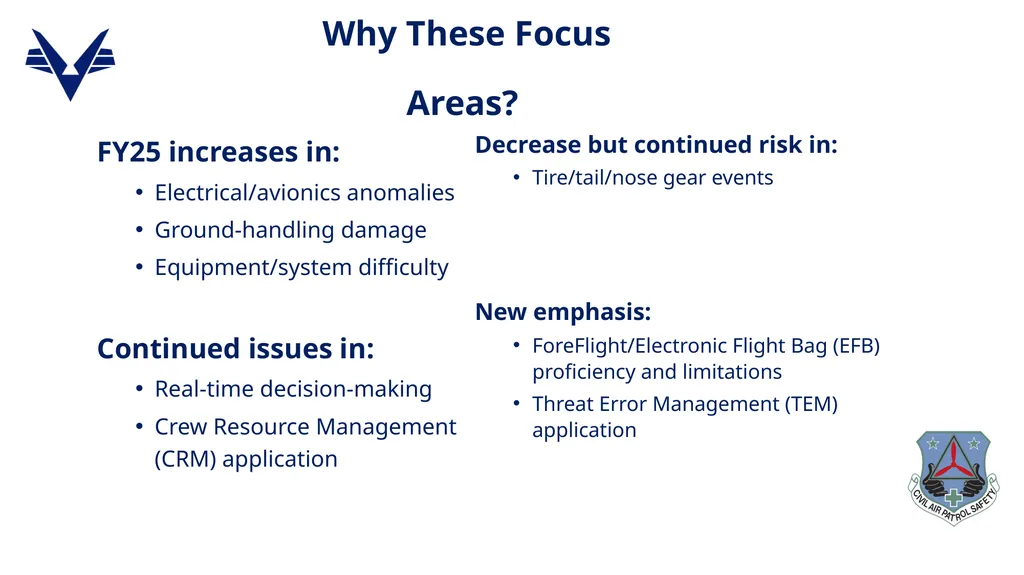
slide4. FY25 increases in:
Electrical/avionics anomalies
Ground-handling damage
Equipment/system difficulty
Continued issues in:
Real-time decision-making
Crew Resource Management (CRM) application Why These Focus Areas? Decrease but continued risk in:
Tire/tail/nose gear events
New emphasis:
ForeFlight/Electronic Flight Bag (EFB) proficiency and limitations
Threat Error Management (TEM) application<br>
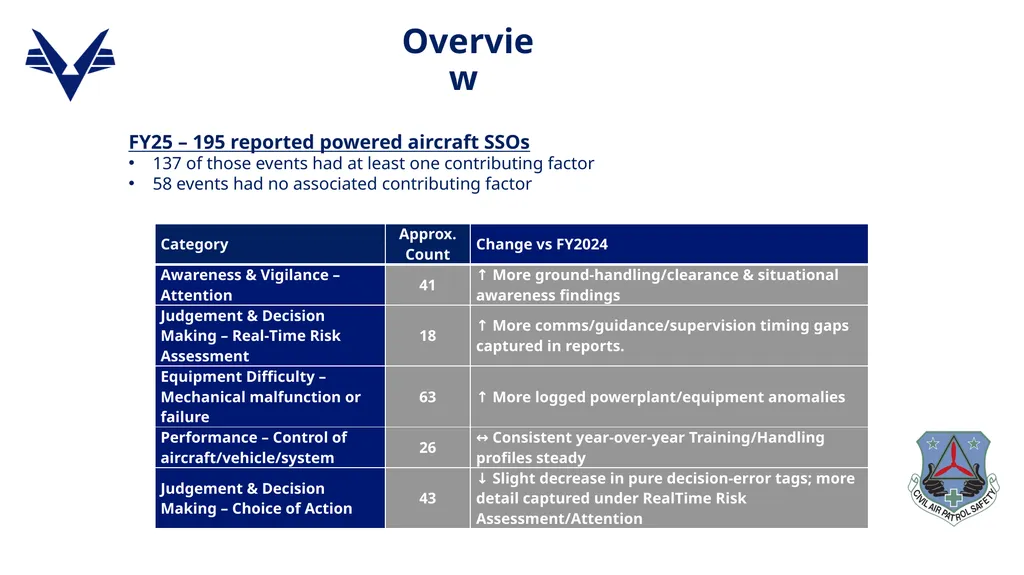
slide5. Overview FY25 – 195 reported powered aircraft SSOs
137 of those events had at least one contributing factor
58 events had no associated contributing factor<br>
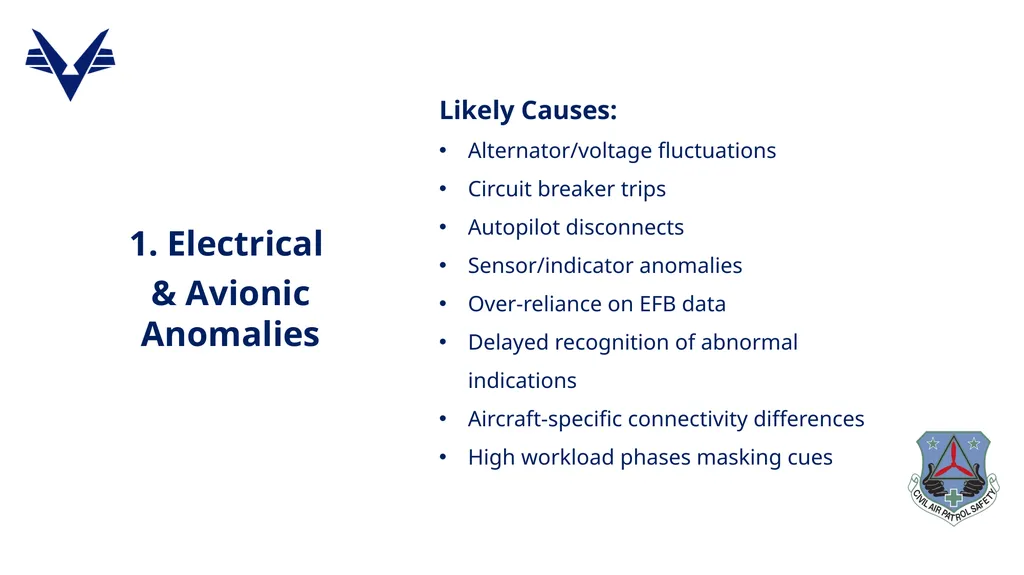
slide6. 1. Electrical
& Avionic Anomalies Likely Causes:
Alternator/voltage fluctuations
Circuit breaker trips
Autopilot disconnects
Sensor/indicator anomalies
Over‑reliance on EFB data
Delayed recognition of abnormal indications
Aircraft‑specific connectivity differences
High workload phases masking cues<br>
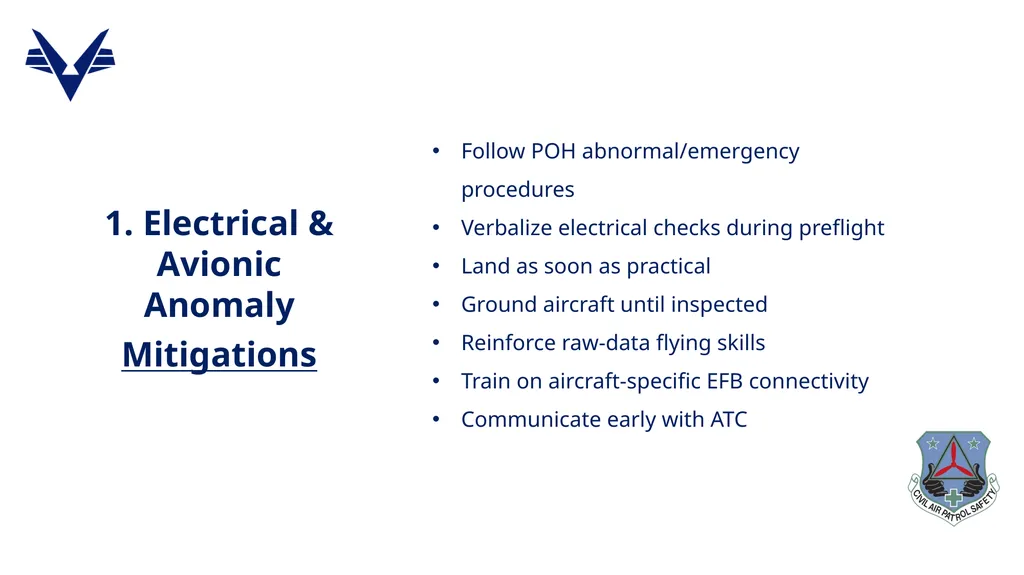
slide7. 1. Electrical & Avionic Anomaly
Mitigations 7 Follow POH abnormal/emergency procedures
Verbalize electrical checks during preflight
Land as soon as practical
Ground aircraft until inspected
Reinforce raw‑data flying skills
Train on aircraft‑specific EFB connectivity
Communicate early with ATC<br>
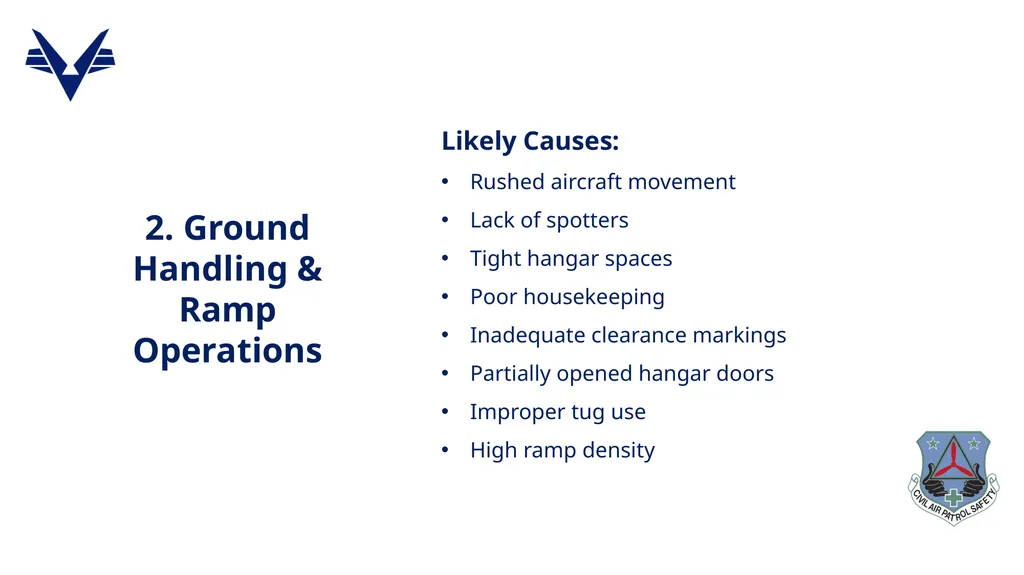
slide8. 2. Ground Handling & Ramp Operations Likely Causes:
Rushed aircraft movement
Lack of spotters
Tight hangar spaces
Poor housekeeping
Inadequate clearance markings
Partially opened hangar doors
Improper tug use
High ramp density<br>
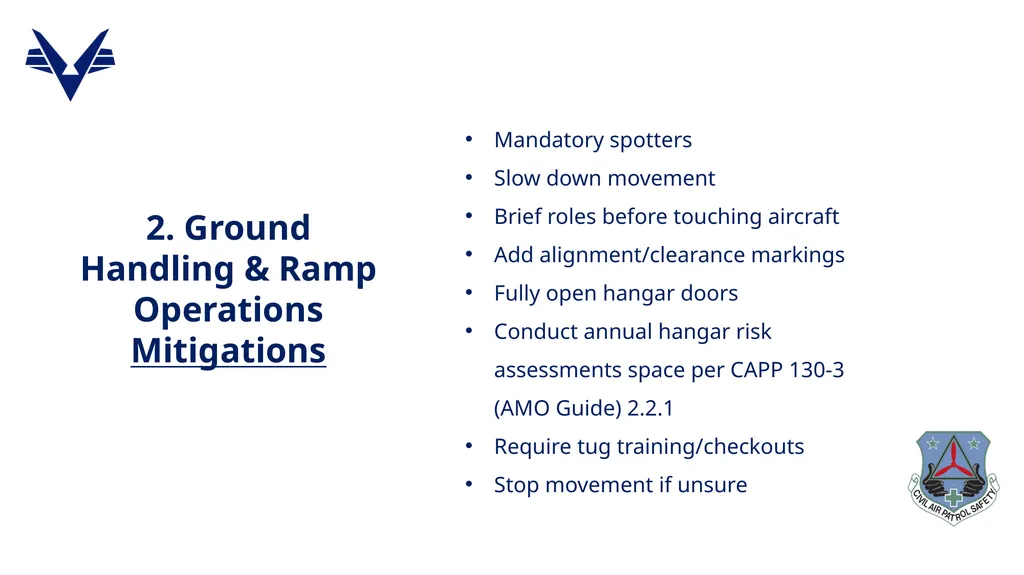
slide9. 9 Mandatory spotters
Slow down movement
Brief roles before touching aircraft
Add alignment/clearance markings
Fully open hangar doors
Conduct annual hangar risk assessments space per CAPP 130-3 (AMO Guide) 2.2.1
Require tug training/checkouts
Stop movement if unsure 2. Ground Handling & Ramp Operations
Mitigations<br>
slide10. 3. Equipment Difficulty & Mechanical
Reliability Likely Causes:
Powerplant anomalies
Electrical system faults
Avionics malfunctions
Rushed preflight/postflight
Under‑reporting discrepancies
Environmental factors
Inconsistent G1000 use
Delayed grounding decisions<br>
slide11. Reinforce thorough preflight/postflight
Reporting of all anomalies
Encourage early grounding
Promote proper engine management
Improve pilot–maintenance communication
Emphasize airworthiness requirements
Require logbook entries before return to service 3. Equipment Difficulty & Mechanical Reliability
Mitigations<br>
slide12. 4. Decision-Making, Crew Resource Management (CRM)
& Threat Error Management (TEM) Likely Causes:
Delayed go-arounds
Unstable approaches
Crosswind misjudgment
Poor cockpit communication
Missed cues during anomalies
Instructor hesitation
Over‑reliance on automation/EFB
Failure to identify threats (TEM)<br>
slide13. 4. Decision-Making CRM & TEM Mitigations Reinforce “Go Around Early, Go Around Often”
Require stabilized approach criteria
Standardize callouts
Apply TEM during preflight
Encourage open cockpit communication
Instructors intervene early
Use scenario-based training
Debrief CRM/TEM after each flight<br>
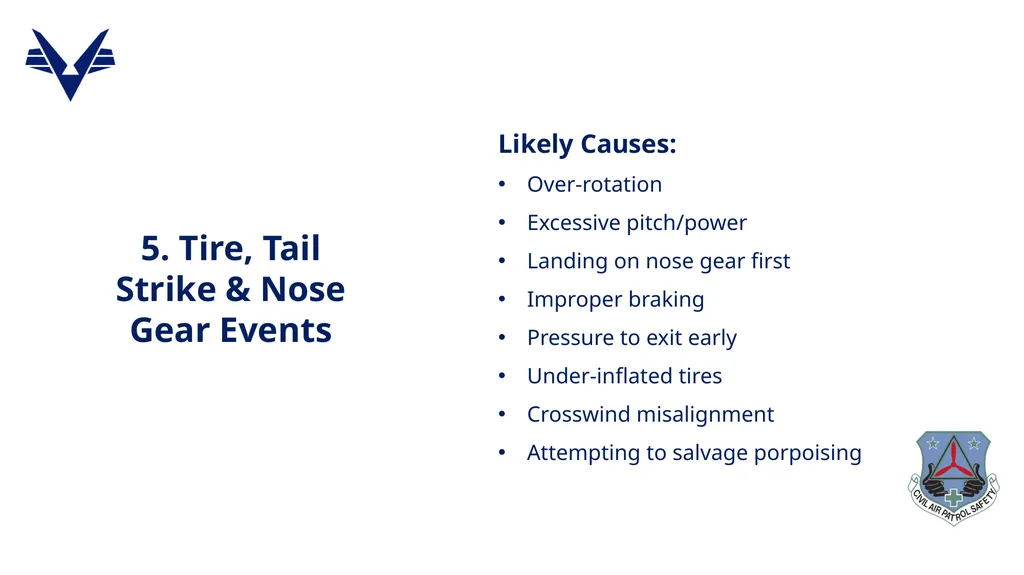
slide14. 5. Tire, Tail Strike & Nose Gear Events Likely Causes:
Over‑rotation
Excessive pitch/power
Landing on nose gear first
Improper braking
Pressure to exit early
Under‑inflated tires
Crosswind misalignment
Attempting to salvage porpoising<br>
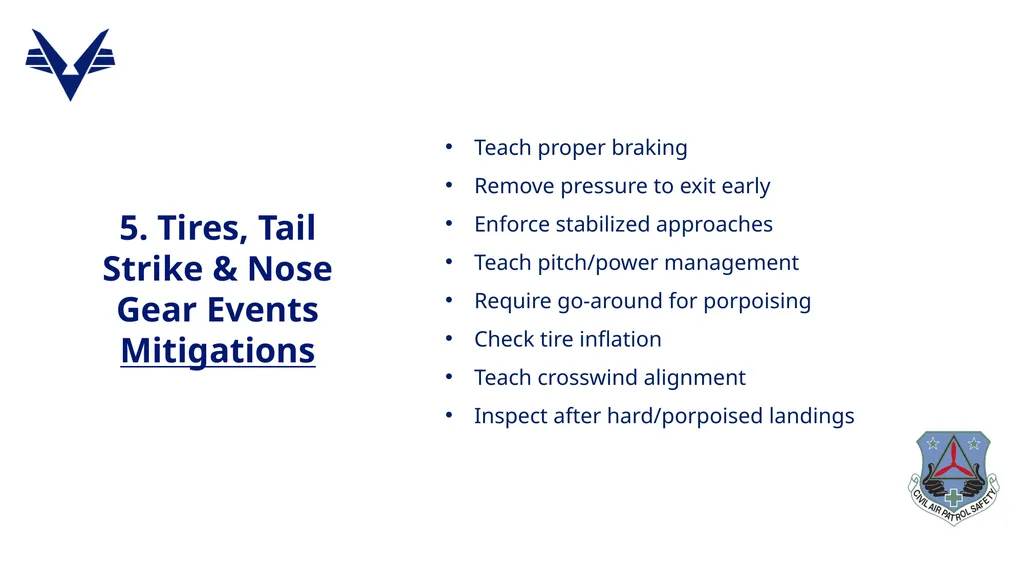
slide15. 15 Teach proper braking
Remove pressure to exit early
Enforce stabilized approaches
Teach pitch/power management
Require go-around for porpoising
Check tire inflation
Teach crosswind alignment
Inspect after hard/porpoised landings 5. Tires, Tail Strike & Nose Gear Events
Mitigations<br>
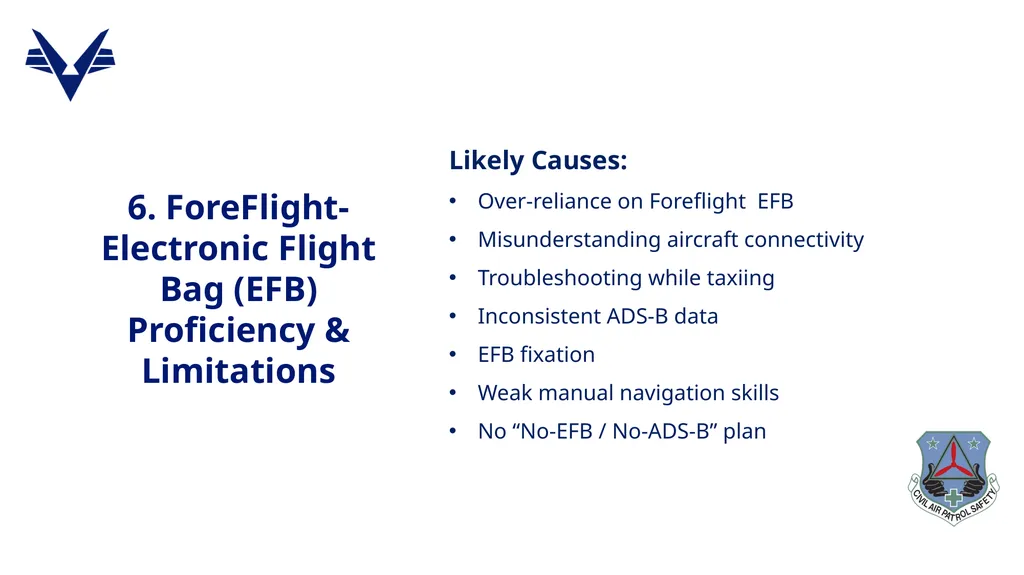
slide16. 6. ForeFlight-
Electronic Flight Bag (EFB) Proficiency & Limitations 16 Likely Causes:
Over‑reliance on Foreflight EFB
Misunderstanding aircraft connectivity
Troubleshooting while taxiing
Inconsistent ADS‑B data
EFB fixation
Weak manual navigation skills
No “No‑EFB / No‑ADS‑B” plan<br>
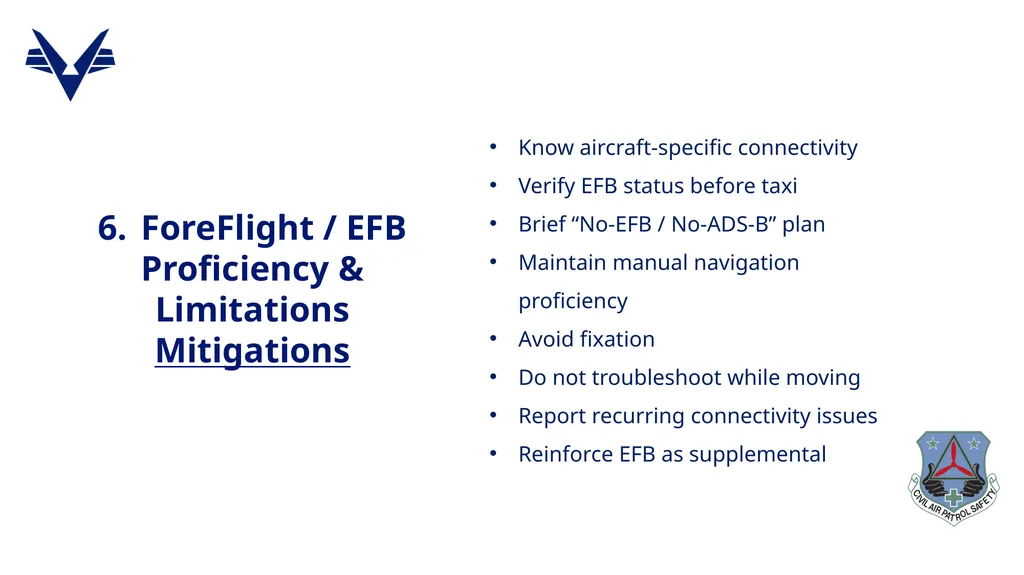
slide17. 17 ForeFlight / EFB
Proficiency & Limitations
Mitigations Know aircraft‑specific connectivity
Verify EFB status before taxi
Brief “No‑EFB / No‑ADS‑B” plan
Maintain manual navigation proficiency
Avoid fixation
Do not troubleshoot while moving
Report recurring connectivity issues
Reinforce EFB as supplemental<br>
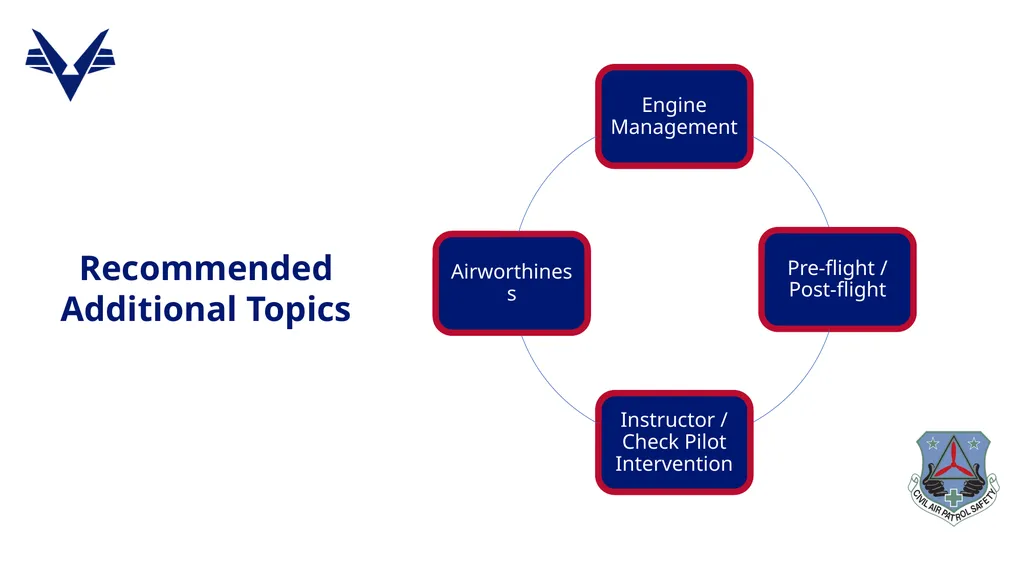
slide18. Recommended Additional Topics<br>
slide19. Engine Management
Follow POH mixture leaning recommendations
Avoid “lean-of-peak” leaning
Manage cowl flaps per checklist/POH, when applicable
Report any engine issues as discrepancies and ground the aircraft; noted anomalies to be inspected for fuel/cylinder issues 19<br>
slide20. Preflight and Postflight
A thorough preflight assures that people and equipment are at their best capability for a safe outcome.
A good postflight assessment assures that the equipment is in good working order for the next mission.
Don’t leave out these critical steps! Report issues immediately! 20<br>
slide21. Instructor / Check Pilot Intervention
As an instructor pilot, check pilot, or check pilot examiner, be prepared to intervene at any time during a flight, and don’t wait for things to go too far before taking action.
Ensure pilots can operate CAP aircraft safely in crosswinds, gusty conditions.
All approaches must be stable approaches (on speed, glidepath, descent rate, etc.); otherwise, command a go around.
As an IP, CP, or CPE YOU are a critical layer of safety assurance
that pilots can operate CAP’s aircraft safely.<br>
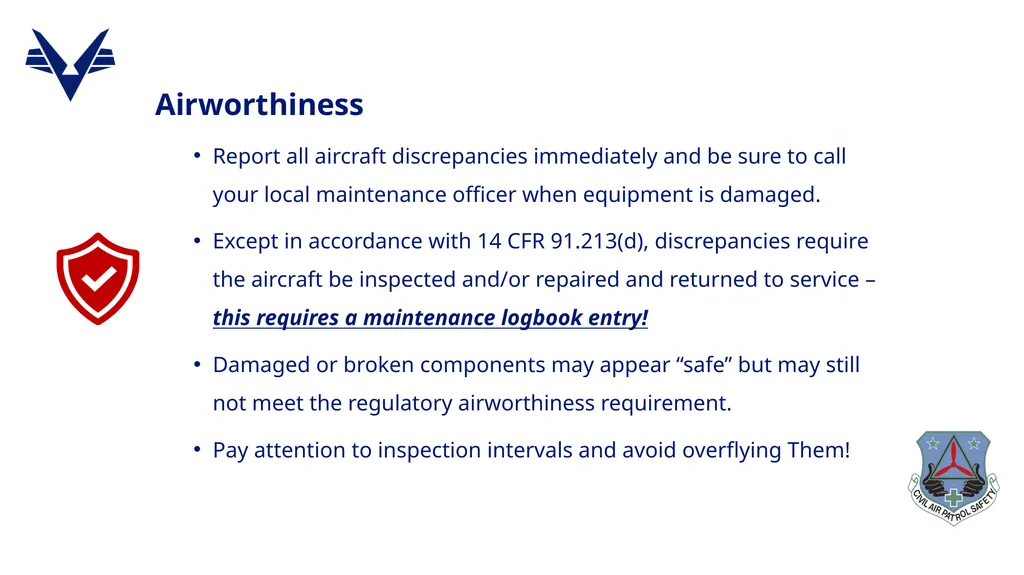
slide22. Airworthiness
Report all aircraft discrepancies immediately and be sure to call your local maintenance officer when equipment is damaged.
Except in accordance with 14 CFR 91.213(d), discrepancies require the aircraft be inspected and/or repaired and returned to service – this requires a maintenance logbook entry!
Damaged or broken components may appear “safe” but may still not meet the regulatory airworthiness requirement.
Pay attention to inspection intervals and avoid overflying Them!<br>
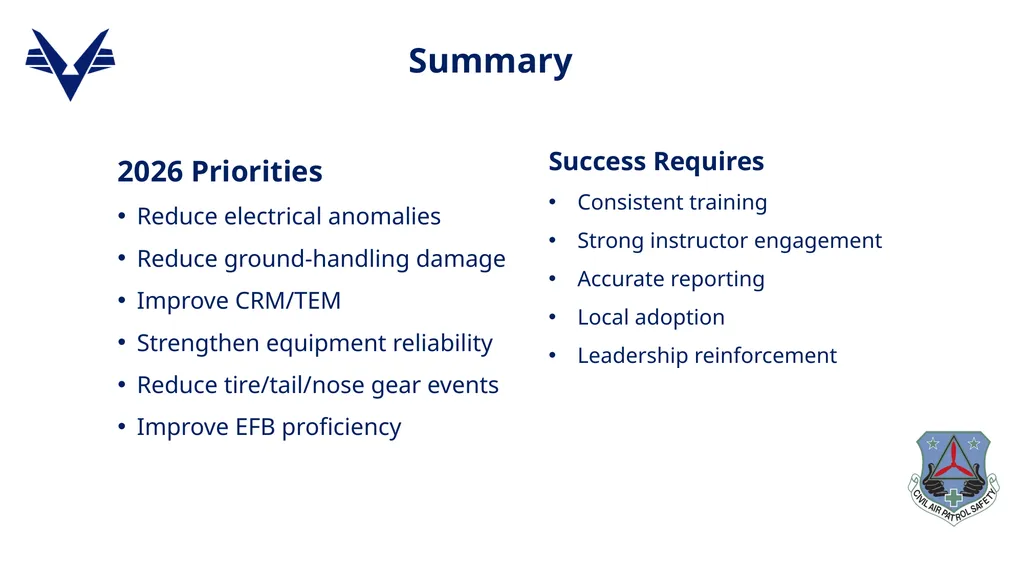
slide23. 2026 Priorities
Reduce electrical anomalies
Reduce ground-handling damage
Improve CRM/TEM
Strengthen equipment reliability
Reduce tire/tail/nose gear events
Improve EFB proficiency Summary Success Requires
Consistent training
Strong instructor engagement
Accurate reporting
Local adoption
Leadership reinforcement<br>
slide2. Analysis is based on FY25 Safety Occurrence Reports (SSOs), including narrative details.
Trends reflect both operational factors and increased reporting discipline.
Growth in some categories is partially attributable to higher reporting rates, not solely increased events.
Improved narrative quality strengthened the accuracy of trend identification. Data Source & Reporting Context<br>
slide3. Required Topics &
Top Areas for Improvement<br>
slide4. FY25 increases in:
Electrical/avionics anomalies
Ground-handling damage
Equipment/system difficulty
Continued issues in:
Real-time decision-making
Crew Resource Management (CRM) application Why These Focus Areas? Decrease but continued risk in:
Tire/tail/nose gear events
New emphasis:
ForeFlight/Electronic Flight Bag (EFB) proficiency and limitations
Threat Error Management (TEM) application<br>
slide5. Overview FY25 – 195 reported powered aircraft SSOs
137 of those events had at least one contributing factor
58 events had no associated contributing factor<br>
slide6. 1. Electrical
& Avionic Anomalies Likely Causes:
Alternator/voltage fluctuations
Circuit breaker trips
Autopilot disconnects
Sensor/indicator anomalies
Over‑reliance on EFB data
Delayed recognition of abnormal indications
Aircraft‑specific connectivity differences
High workload phases masking cues<br>
slide7. 1. Electrical & Avionic Anomaly
Mitigations 7 Follow POH abnormal/emergency procedures
Verbalize electrical checks during preflight
Land as soon as practical
Ground aircraft until inspected
Reinforce raw‑data flying skills
Train on aircraft‑specific EFB connectivity
Communicate early with ATC<br>
slide8. 2. Ground Handling & Ramp Operations Likely Causes:
Rushed aircraft movement
Lack of spotters
Tight hangar spaces
Poor housekeeping
Inadequate clearance markings
Partially opened hangar doors
Improper tug use
High ramp density<br>
slide9. 9 Mandatory spotters
Slow down movement
Brief roles before touching aircraft
Add alignment/clearance markings
Fully open hangar doors
Conduct annual hangar risk assessments space per CAPP 130-3 (AMO Guide) 2.2.1
Require tug training/checkouts
Stop movement if unsure 2. Ground Handling & Ramp Operations
Mitigations<br>
slide10. 3. Equipment Difficulty & Mechanical
Reliability Likely Causes:
Powerplant anomalies
Electrical system faults
Avionics malfunctions
Rushed preflight/postflight
Under‑reporting discrepancies
Environmental factors
Inconsistent G1000 use
Delayed grounding decisions<br>
slide11. Reinforce thorough preflight/postflight
Reporting of all anomalies
Encourage early grounding
Promote proper engine management
Improve pilot–maintenance communication
Emphasize airworthiness requirements
Require logbook entries before return to service 3. Equipment Difficulty & Mechanical Reliability
Mitigations<br>
slide12. 4. Decision-Making, Crew Resource Management (CRM)
& Threat Error Management (TEM) Likely Causes:
Delayed go-arounds
Unstable approaches
Crosswind misjudgment
Poor cockpit communication
Missed cues during anomalies
Instructor hesitation
Over‑reliance on automation/EFB
Failure to identify threats (TEM)<br>
slide13. 4. Decision-Making CRM & TEM Mitigations Reinforce “Go Around Early, Go Around Often”
Require stabilized approach criteria
Standardize callouts
Apply TEM during preflight
Encourage open cockpit communication
Instructors intervene early
Use scenario-based training
Debrief CRM/TEM after each flight<br>
slide14. 5. Tire, Tail Strike & Nose Gear Events Likely Causes:
Over‑rotation
Excessive pitch/power
Landing on nose gear first
Improper braking
Pressure to exit early
Under‑inflated tires
Crosswind misalignment
Attempting to salvage porpoising<br>
slide15. 15 Teach proper braking
Remove pressure to exit early
Enforce stabilized approaches
Teach pitch/power management
Require go-around for porpoising
Check tire inflation
Teach crosswind alignment
Inspect after hard/porpoised landings 5. Tires, Tail Strike & Nose Gear Events
Mitigations<br>
slide16. 6. ForeFlight-
Electronic Flight Bag (EFB) Proficiency & Limitations 16 Likely Causes:
Over‑reliance on Foreflight EFB
Misunderstanding aircraft connectivity
Troubleshooting while taxiing
Inconsistent ADS‑B data
EFB fixation
Weak manual navigation skills
No “No‑EFB / No‑ADS‑B” plan<br>
slide17. 17 ForeFlight / EFB
Proficiency & Limitations
Mitigations Know aircraft‑specific connectivity
Verify EFB status before taxi
Brief “No‑EFB / No‑ADS‑B” plan
Maintain manual navigation proficiency
Avoid fixation
Do not troubleshoot while moving
Report recurring connectivity issues
Reinforce EFB as supplemental<br>
slide18. Recommended Additional Topics<br>
slide19. Engine Management
Follow POH mixture leaning recommendations
Avoid “lean-of-peak” leaning
Manage cowl flaps per checklist/POH, when applicable
Report any engine issues as discrepancies and ground the aircraft; noted anomalies to be inspected for fuel/cylinder issues 19<br>
slide20. Preflight and Postflight
A thorough preflight assures that people and equipment are at their best capability for a safe outcome.
A good postflight assessment assures that the equipment is in good working order for the next mission.
Don’t leave out these critical steps! Report issues immediately! 20<br>
slide21. Instructor / Check Pilot Intervention
As an instructor pilot, check pilot, or check pilot examiner, be prepared to intervene at any time during a flight, and don’t wait for things to go too far before taking action.
Ensure pilots can operate CAP aircraft safely in crosswinds, gusty conditions.
All approaches must be stable approaches (on speed, glidepath, descent rate, etc.); otherwise, command a go around.
As an IP, CP, or CPE YOU are a critical layer of safety assurance
that pilots can operate CAP’s aircraft safely.<br>
slide22. Airworthiness
Report all aircraft discrepancies immediately and be sure to call your local maintenance officer when equipment is damaged.
Except in accordance with 14 CFR 91.213(d), discrepancies require the aircraft be inspected and/or repaired and returned to service – this requires a maintenance logbook entry!
Damaged or broken components may appear “safe” but may still not meet the regulatory airworthiness requirement.
Pay attention to inspection intervals and avoid overflying Them!<br>
slide23. 2026 Priorities
Reduce electrical anomalies
Reduce ground-handling damage
Improve CRM/TEM
Strengthen equipment reliability
Reduce tire/tail/nose gear events
Improve EFB proficiency Summary Success Requires
Consistent training
Strong instructor engagement
Accurate reporting
Local adoption
Leadership reinforcement<br>