
(4 marks) Points of Inflection Maximum and minimum

Published  . 0 views
↓ Download
(4 marks) Points of Inflection Maximum and minimum
1 / 1
(4 marks) Points of Inflection Maximum and minimum - slide 1 of 14 (4 marks) Points of Inflection Maximum and minimum - slide 2 of 14 (4 marks) Points of Inflection Maximum and minimum - slide 3 of 14 (4 marks) Points of Inflection Maximum and minimum - slide 4 of 14 (4 marks) Points of Inflection Maximum and minimum - slide 5 of 14 (4 marks) Points of Inflection Maximum and minimum - slide 6 of 14 (4 marks) Points of Inflection Maximum and minimum - slide 7 of 14 (4 marks) Points of Inflection Maximum and minimum - slide 8 of 14 (4 marks) Points of Inflection Maximum and minimum - slide 9 of 14 (4 marks) Points of Inflection Maximum and minimum - slide 10 of 14 (4 marks) Points of Inflection Maximum and minimum - slide 11 of 14 (4 marks) Points of Inflection Maximum and minimum - slide 12 of 14 (4 marks) Points of Inflection Maximum and minimum - slide 13 of 14 (4 marks) Points of Inflection Maximum and minimum - slide 14 of 14
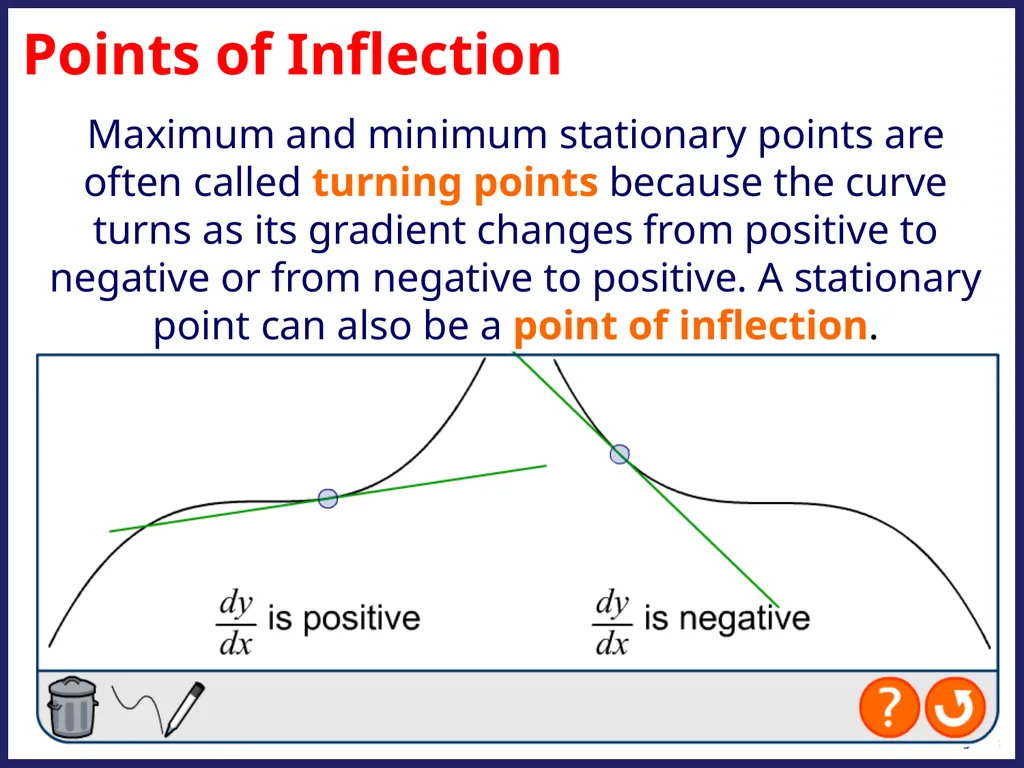
Description: (4 marks) Points of Inflection Maximum and minimum stationary points are often called turning points because the curve turns as its gradient changes from positive to negative or from negative to positive. A stationary point can also be a

Related Topics

Download Presentation

"(4 marks) Points of Inflection Maximum and minimum" is the property of its rightful owner. Permission is granted to download and print the materials on this website for personal, non-commercial use only, and to display it on your personal computer provided you do not modify the materials and that you retain all copyright notices contained in the materials. By downloading content from our website, you accept the terms of this agreement.

Presentation Transcript

slide1. (4 marks)<br>
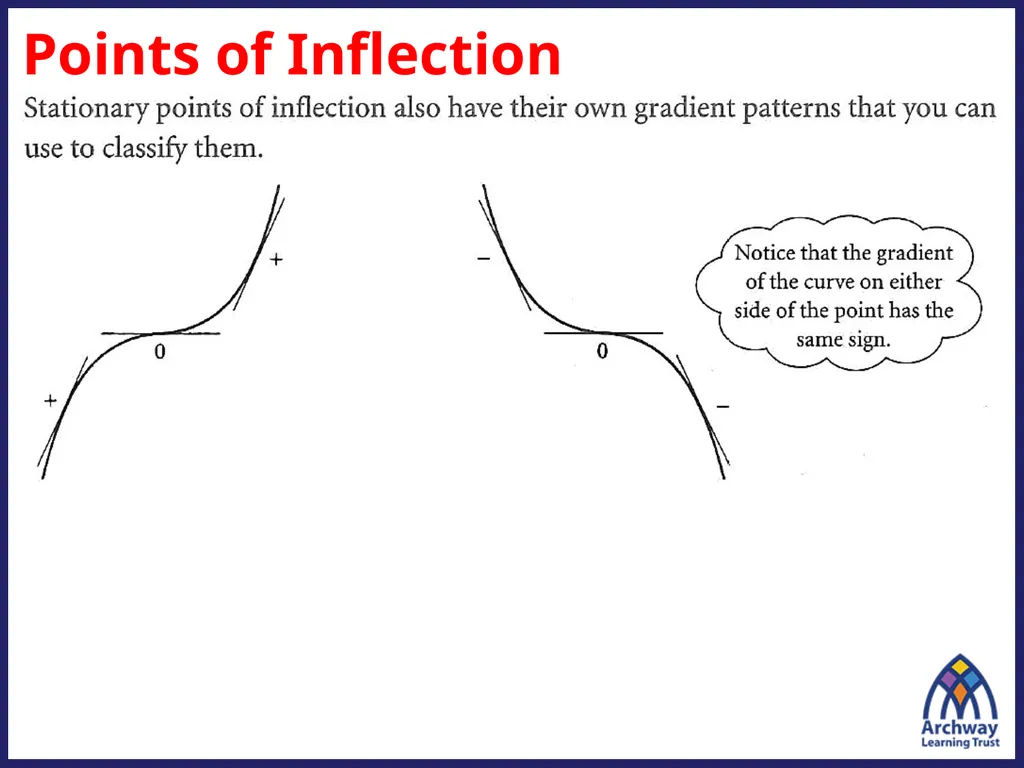
slide3. Points of Inflection Maximum and minimum stationary points are often called turning points because the curve turns as its gradient changes from positive to negative or from negative to positive. A stationary point can also be a point of inflection.<br>
slide4. Points of Inflection<br>
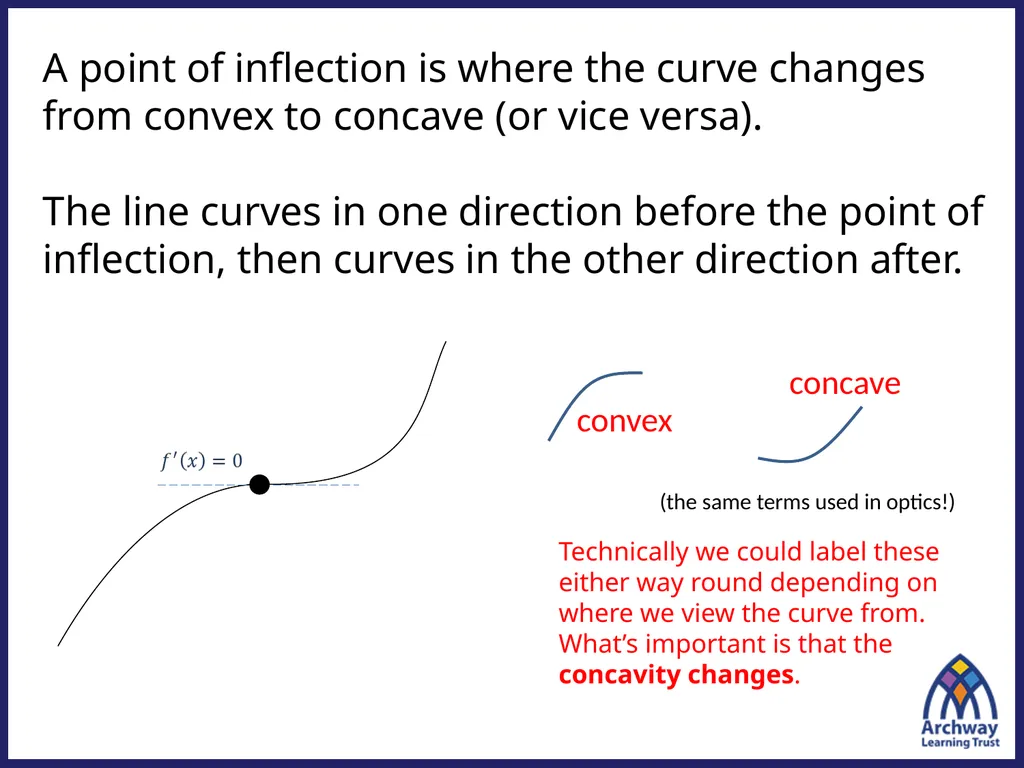
slide5. A point of inflection is where the curve changes from convex to concave (or vice versa).

The line curves in one direction before the point of inflection, then curves in the other direction after. convex concave (the same terms used in optics!) Technically we could label these either way round depending on where we view the curve from. What’s important is that the concavity changes.<br>
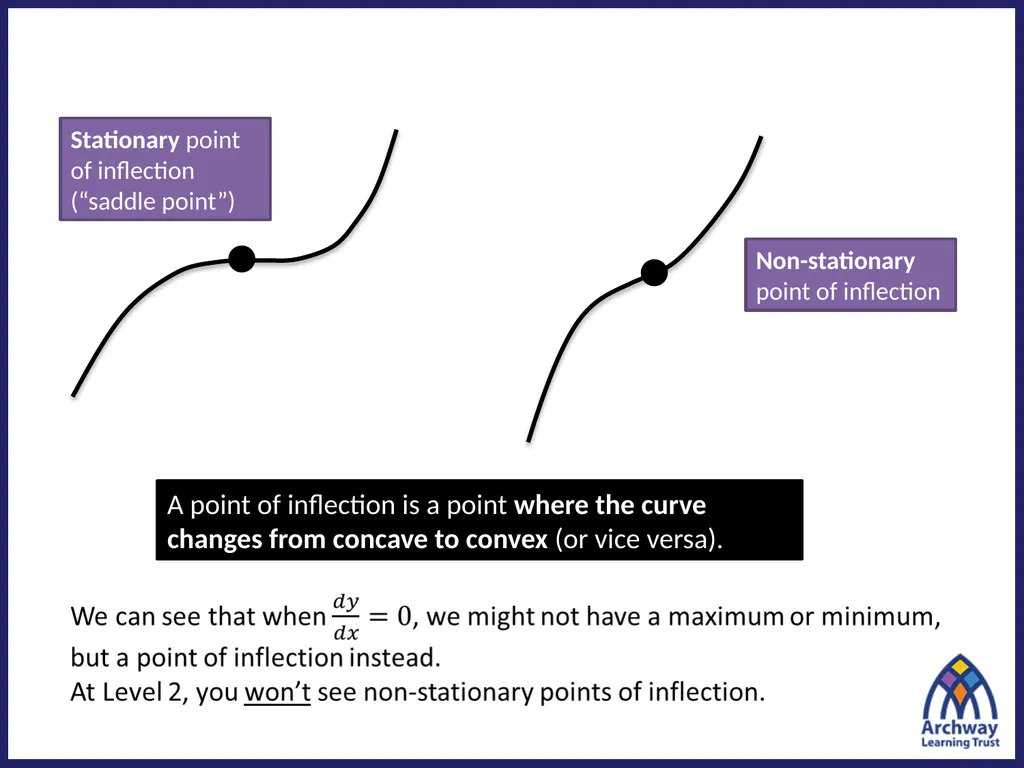
slide6. A stationary point can be a point of inflection but a point of inflection is not always a stationary point.

When a point of inflection is stationary it is called a stationary (or horizontal) point of inflection or saddle point.

A point of inflection is not a turning point because the gradient doesn’t change sign as we move from one side of the point to the other.<br>
slide7. A point of inflection is a point where the curve changes from concave to convex (or vice versa). Stationary point of inflection (“saddle point”) Non-stationary point of inflection<br>
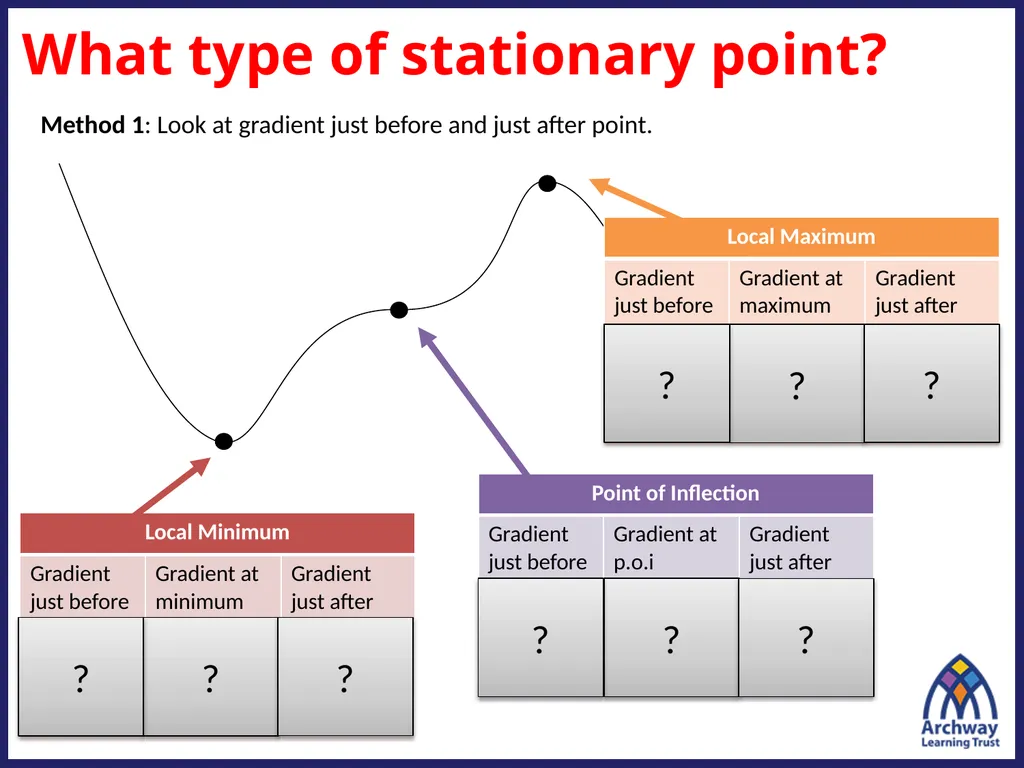
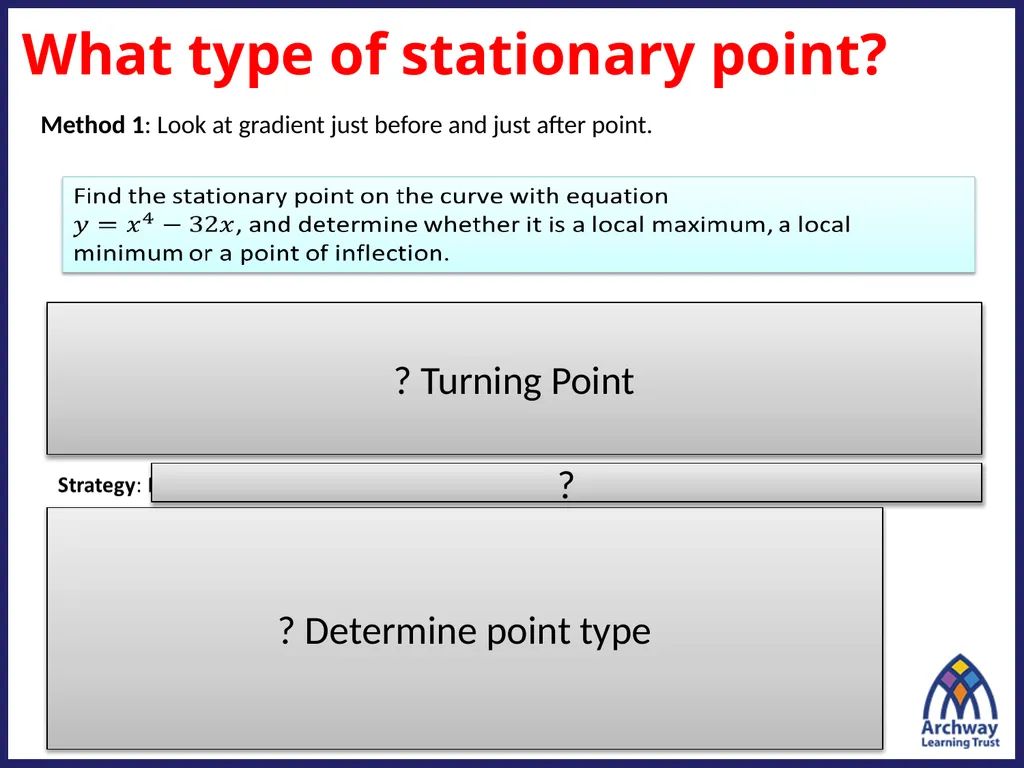
slide8. What type of stationary point? ? ? ? ? ? ? ? ? ? Method 1: Look at gradient just before and just after point.<br>
slide9. What type of stationary point? Method 1: Look at gradient just before and just after point. ? Turning Point ? Determine point type ?<br>
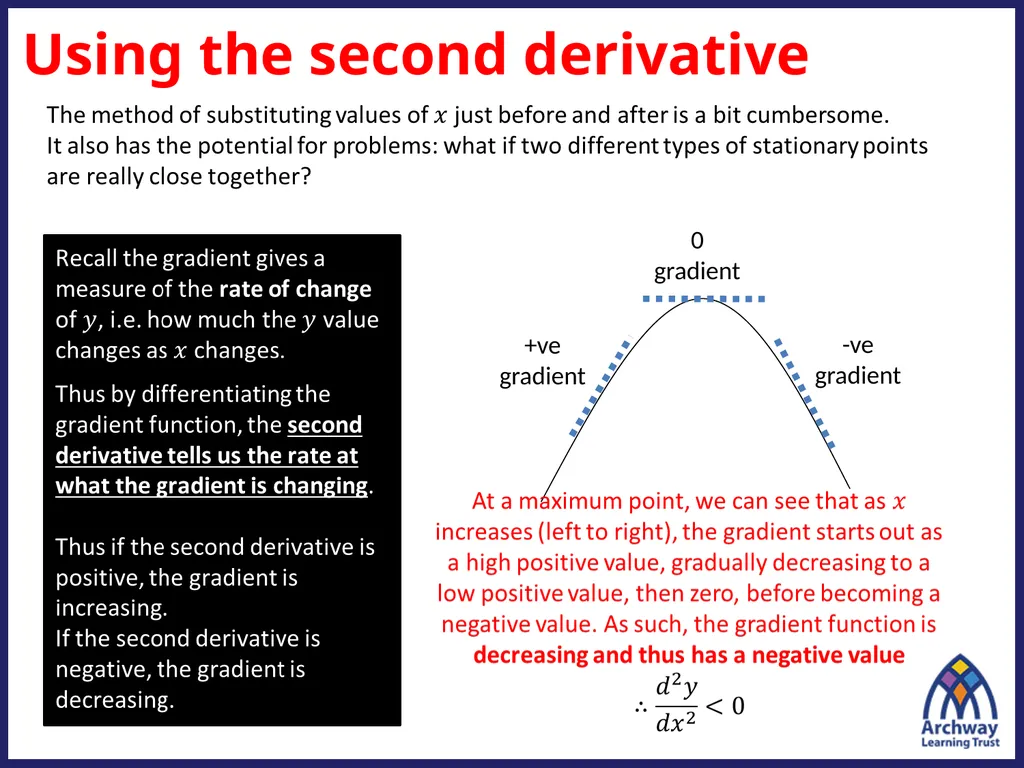
slide10. Using the second derivative +ve
gradient 0
gradient -ve
gradient<br>
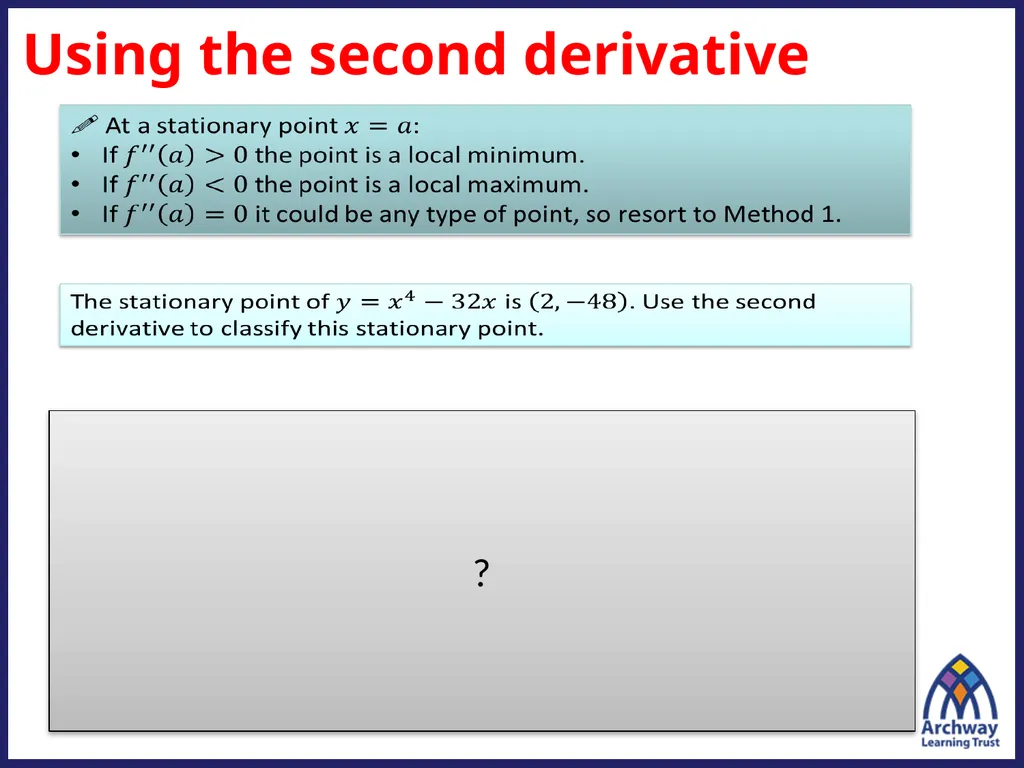
slide11. Using the second derivative ?<br>
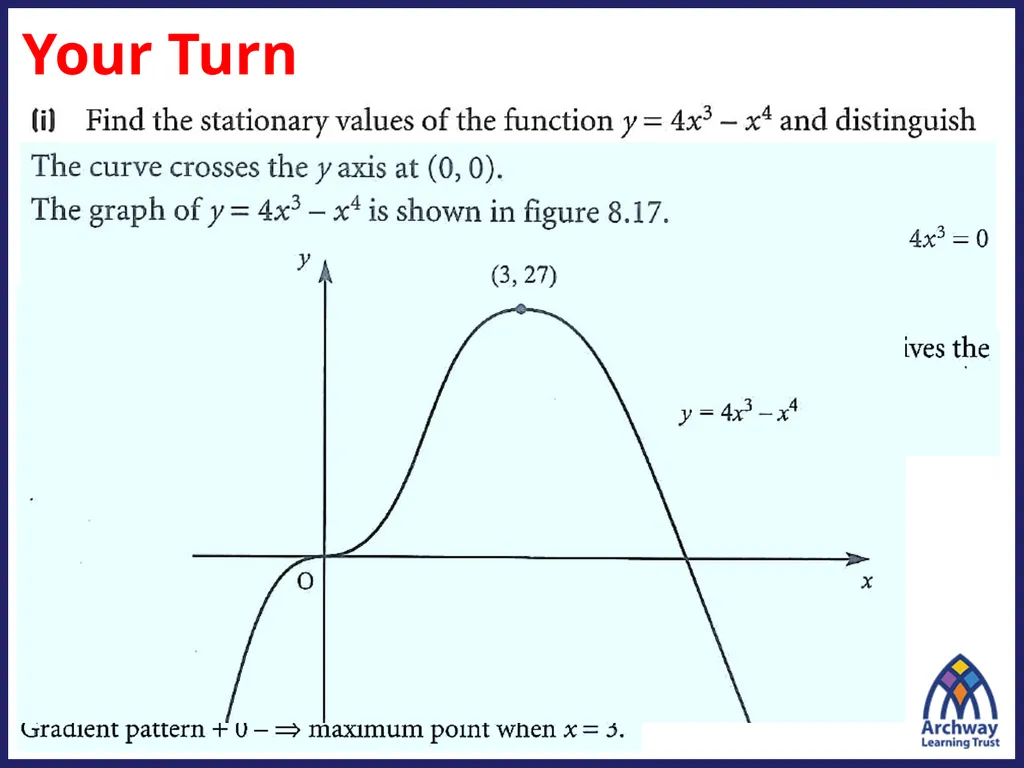
slide12. Your Turn<br>
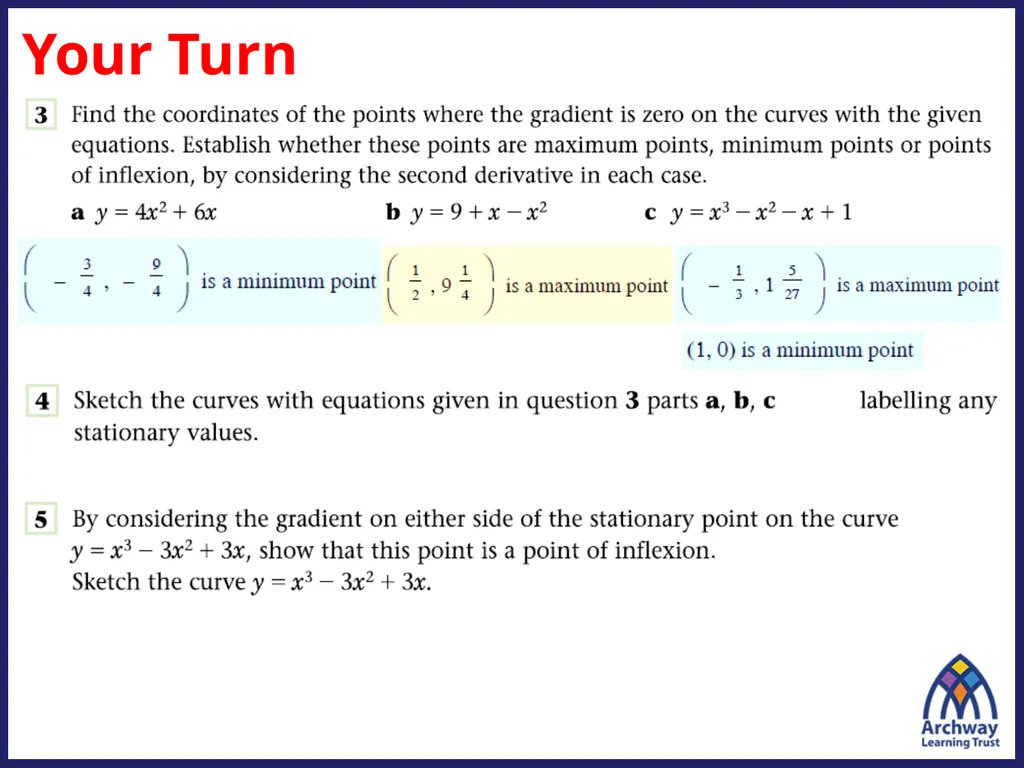
slide13. Your Turn<br>
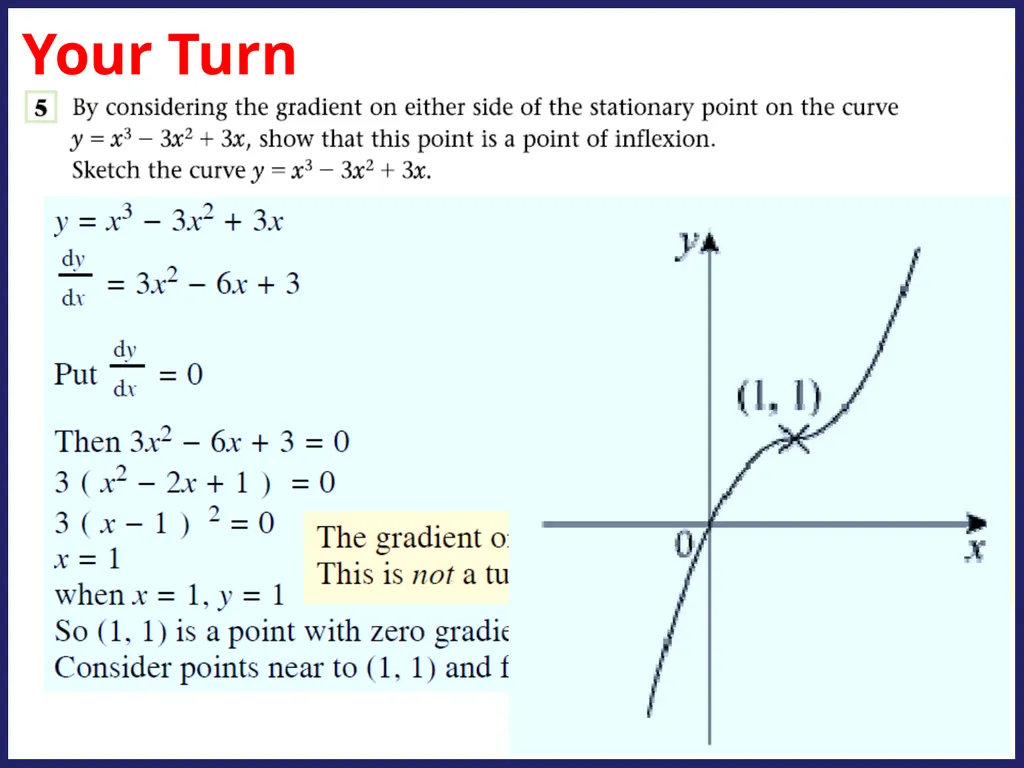
slide14. Your Turn<br>