A Corporate Accounting and Reporting Standard Training Curriculum Lesson Modules Lesson 2 GHG Accounting and Reporting Principles In this lesson, you will learn: The 5 principles that guide the Corporate Standard How the principles were
"A Corporate Accounting and Reporting Standard" is the property of its rightful owner. Permission is granted to
download and print the materials on this website for personal, non-commercial use only, and to display it
on your personal computer provided you do not modify the materials and that you retain all copyright
notices contained in the materials. By downloading content from our website, you accept the terms of this
agreement.
Presentation Transcript
01
A Corporate Accounting and Reporting Standard Training Curriculum<br>
02
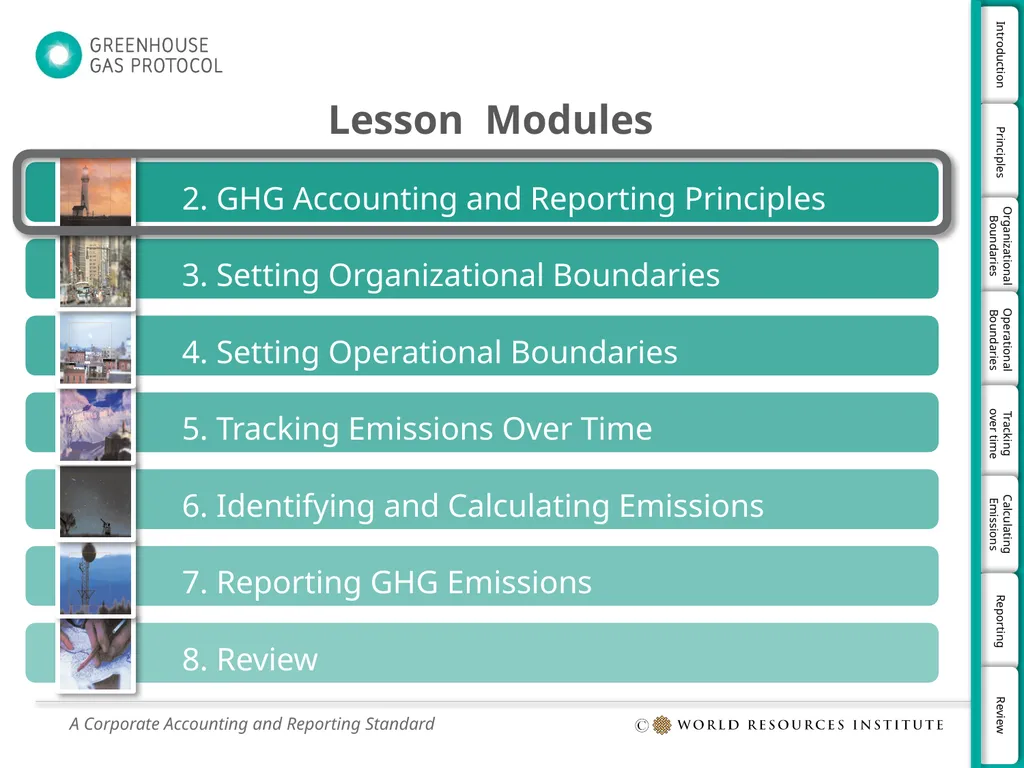
Lesson Modules<br>
03
Lesson 2 GHG Accounting and Reporting Principles<br>
04
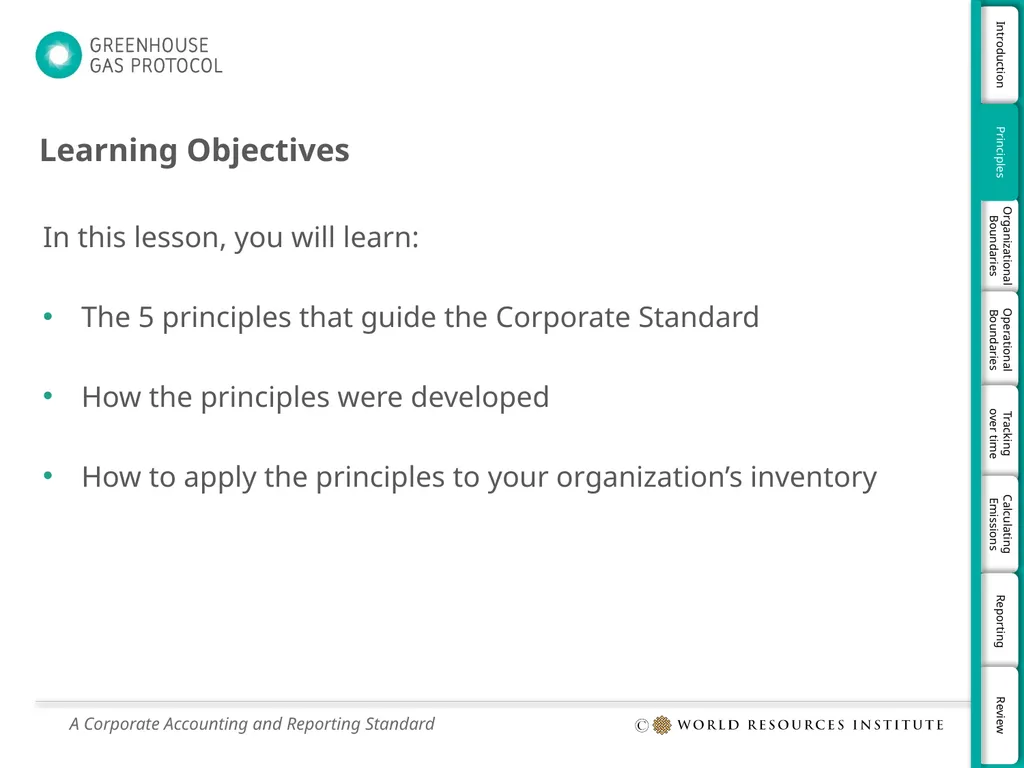
In this lesson, you will learn:
The 5 principles that guide the Corporate Standard
How the principles were developed
How to apply the principles to your organization’s inventory Learning Objectives<br>
05
Guide GHG accounting and reporting to ensure that inventory represents a faithful, true and fair account of a company’s emissions
Derived largely from financial accounting and reporting principles
Developed through multi-stakeholder process Principles: Use and Development<br>
GHG inventories must contain information that internal and external users need for decision making
Inventory boundary should consider:
Company characteristics
Stakeholder needs
Organizational structures
Business context and relationships 1. Relevance<br>
08
Make a good faith effort to provide a complete, accurate, and consistent accounting of emissions
Account for all emissions within inventory boundary
If some emissions estimated insufficiently, document and justify
Do not exclude emissions from small sources (de minimis) 2. Completeness<br>
09
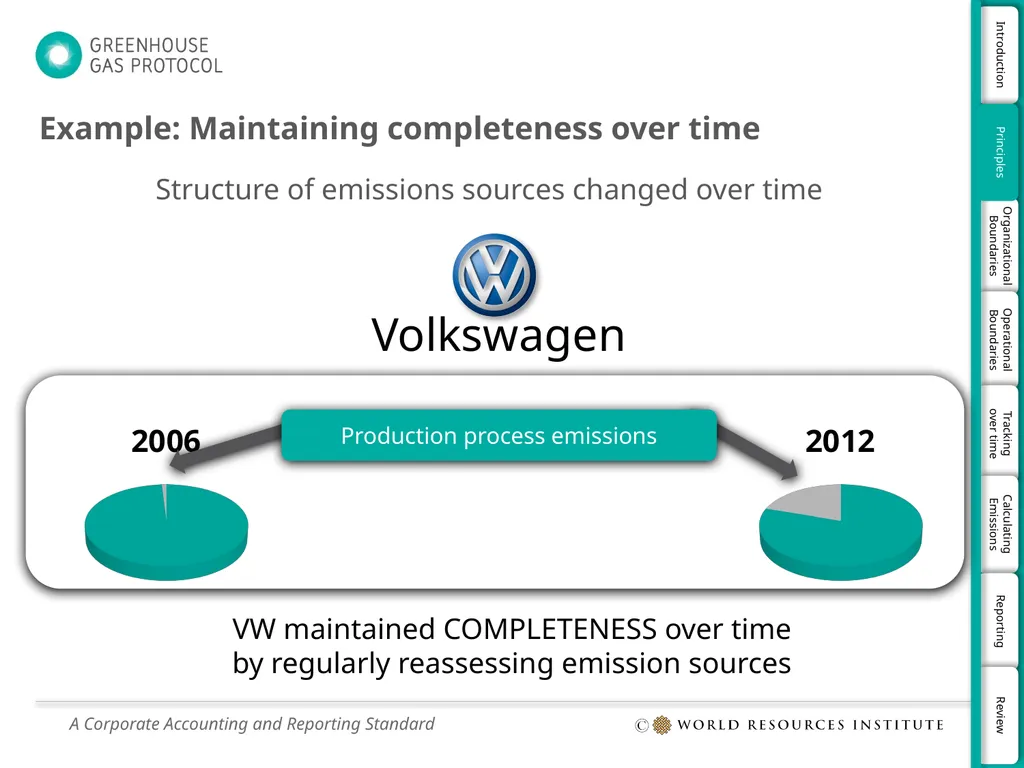
Structure of emissions sources changed over time Example: Maintaining completeness over time VW maintained COMPLETENESS over time
by regularly reassessing emission sources Volkswagen Production process emissions<br>
10
Comparable data needed to track emissions over time
Document and justify any changes to above 3. Consistency<br>
11
Disclose emissions info clearly, factually and neutrally
Maintain clear documentation and archives (audit trail)
Disclose and justify exclusions
Provide references for methodologies and data sources
Independent external verification can help ensure transparency 4. Transparency<br>
12
Data should be credible enough to use in decision making
Calculations should be systematically neither over nor under actual values
Uncertainties should be reduced as far as practicable 5. Accuracy<br>
13
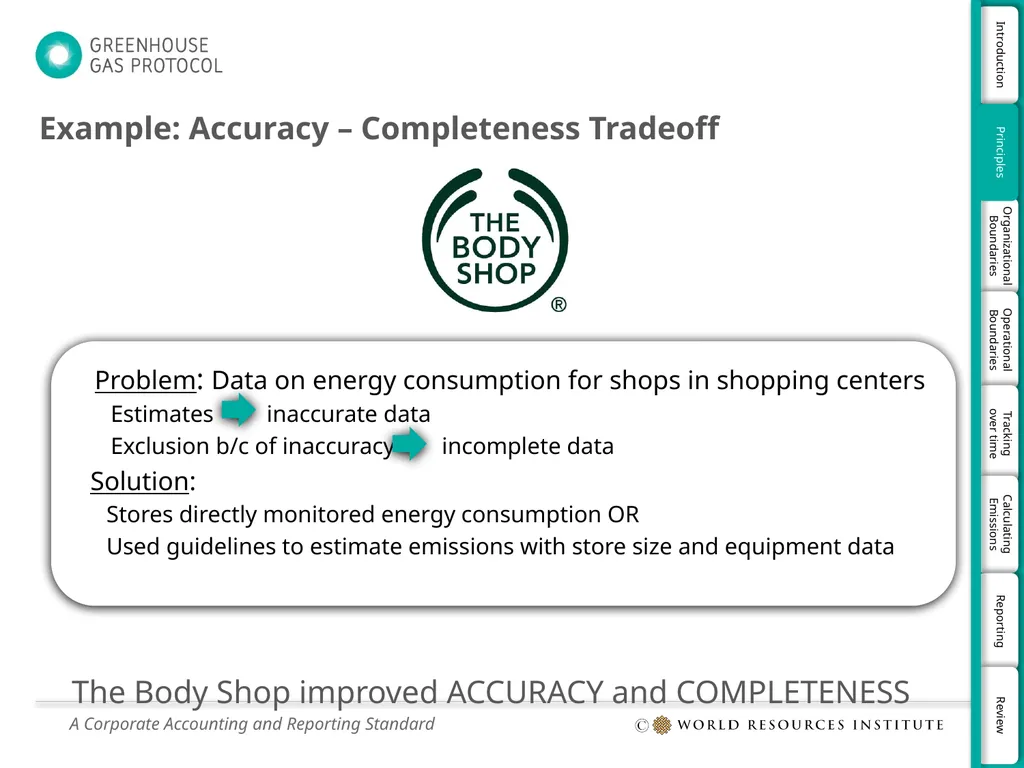
Problem: Data on energy consumption for shops in shopping centers
Estimates inaccurate data
Exclusion b/c of inaccuracy incomplete data The Body Shop improved ACCURACY and COMPLETENESS Example: Accuracy – Completeness Tradeoff Solution:
Stores directly monitored energy consumption OR
Used guidelines to estimate emissions with store size and equipment data<br>
14
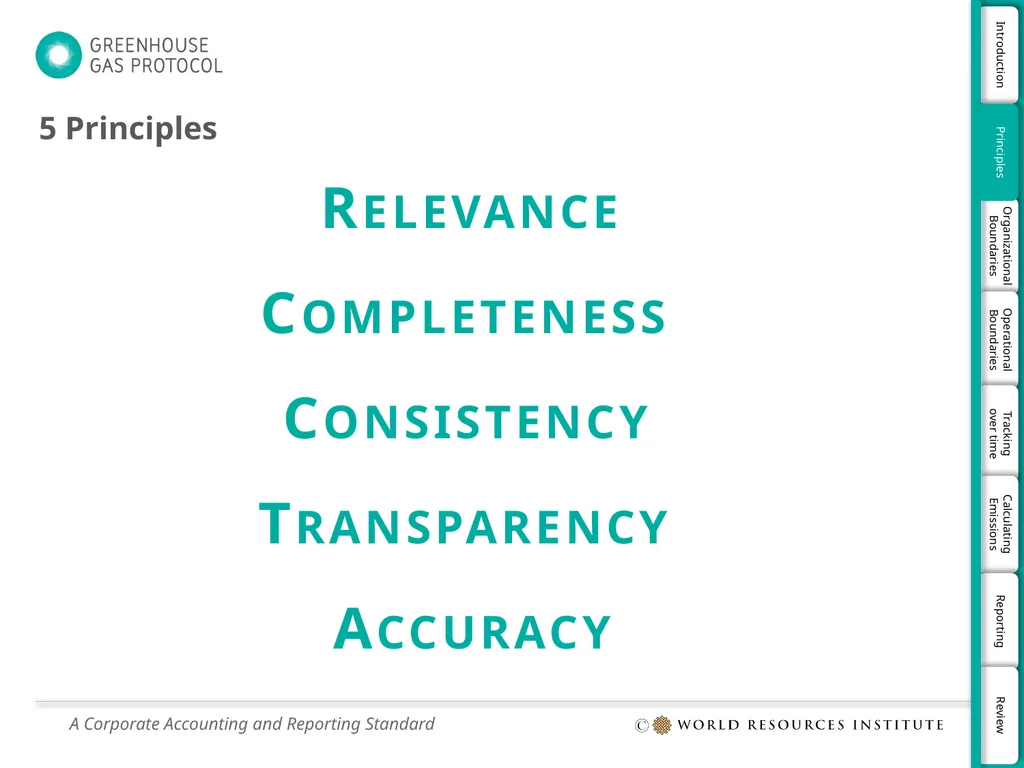
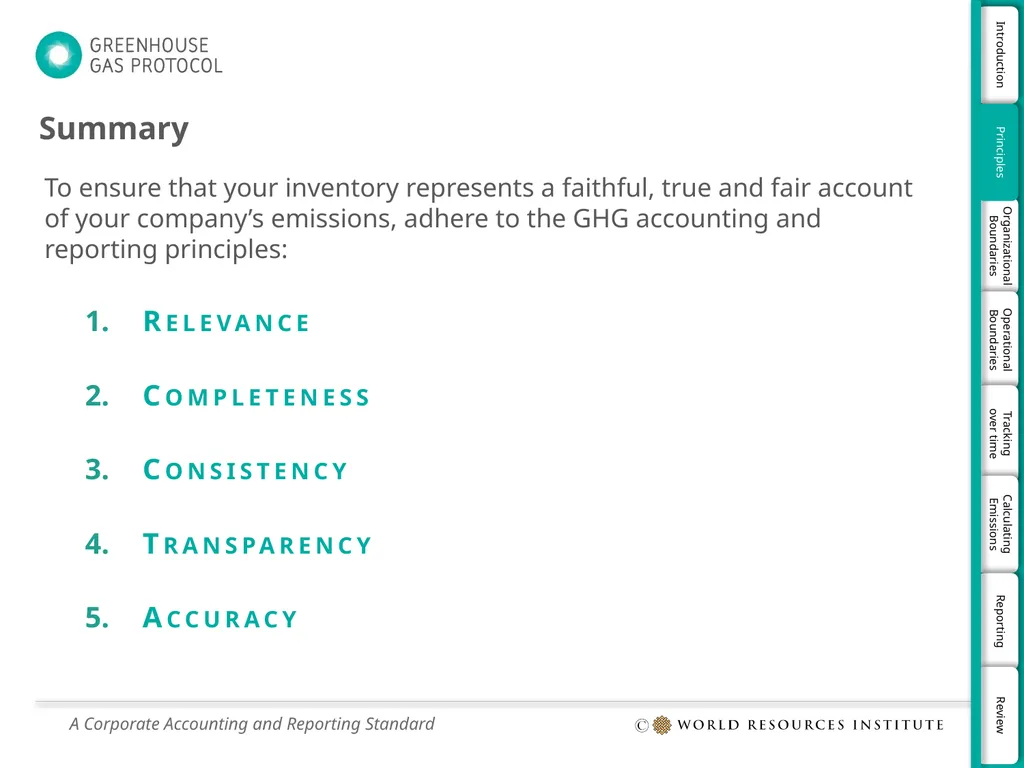
To ensure that your inventory represents a faithful, true and fair account of your company’s emissions, adhere to the GHG accounting and reporting principles:
Relevance
Completeness
Consistency
Transparency
Accuracy Summary<br>
15
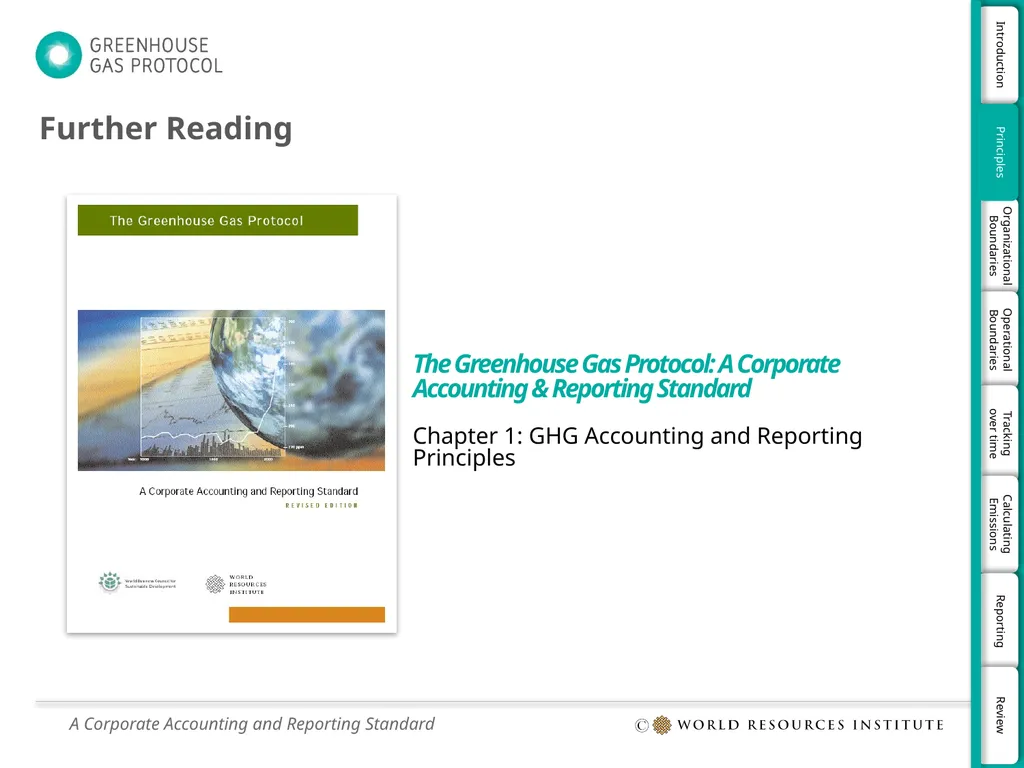
Further Reading The Greenhouse Gas Protocol: A Corporate Accounting & Reporting Standard
Chapter 1: GHG Accounting and Reporting Principles<br>
16
Has your organization implemented any measures to ensure the above principles in its financial accounting or other record keeping/reporting?
Can you think of a possible scenario in which there may be a tradeoff between two principles? Discussion Relevance
Completeness
Consistency
Transparency
Accuracy<br>