ABO Blood Rh Grouping system Lab 3 BCH 471 practical Objectives: - To determine the blood group according to the ABO system. - To test for the availability of the Rh factor (D-antigen). -The term blood group, refers to the entire blood
"ABO Blood & Rh Grouping system Lab# 3 BCH 471" is the property of its rightful owner. Permission is granted to
download and print the materials on this website for personal, non-commercial use only, and to display it
on your personal computer provided you do not modify the materials and that you retain all copyright
notices contained in the materials. By downloading content from our website, you accept the terms of this
agreement.
Objectives: - To determine the blood group according to the ABO system.
- To test for the availability of the Rh factor (D-antigen).<br>
03
-The term “blood group”, refers to the entire blood group system comprising red blood cell (RBC) antigens.
-“Blood type”, refers to a specific pattern of reaction to testing antisera within a given system.
-International Society of Blood Transfusion has recently recognized 33 blood group systems. Apart from ABO and Rhesus system, many other types of antigens have been noticed on the red cell membranes.<br>
04
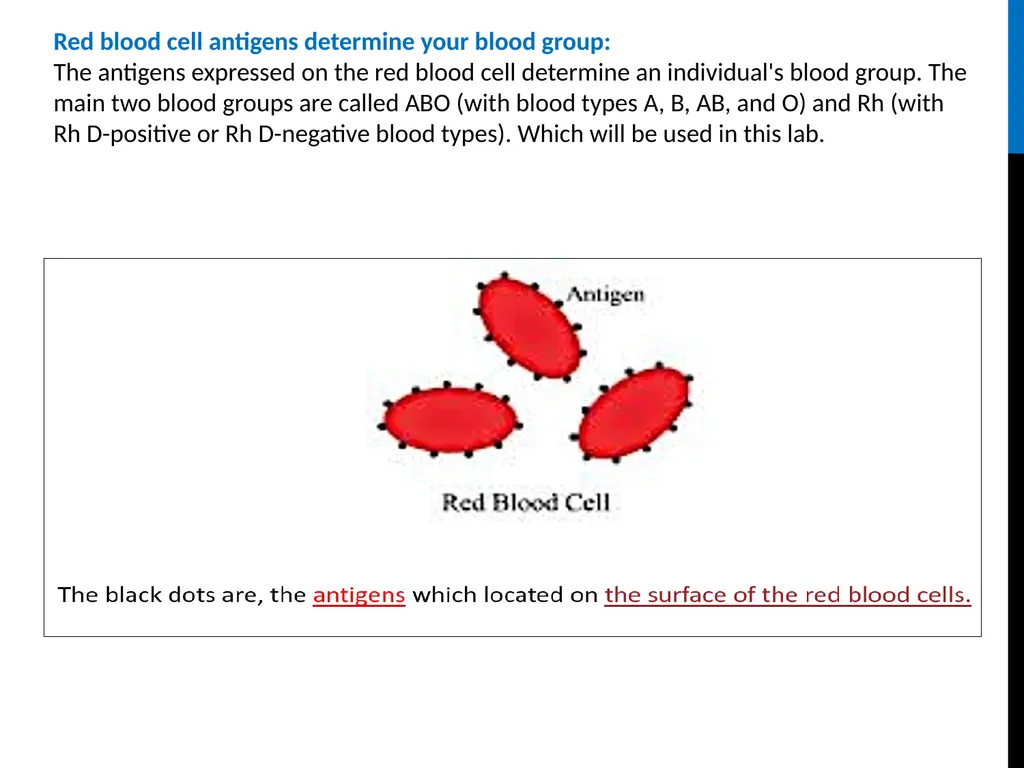
Red blood cell antigens determine your blood group:
The antigens expressed on the red blood cell determine an individual's blood group. The main two blood groups are called ABO (with blood types A, B, AB, and O) and Rh (with Rh D-positive or Rh D-negative blood types). Which will be used in this lab.<br>
05
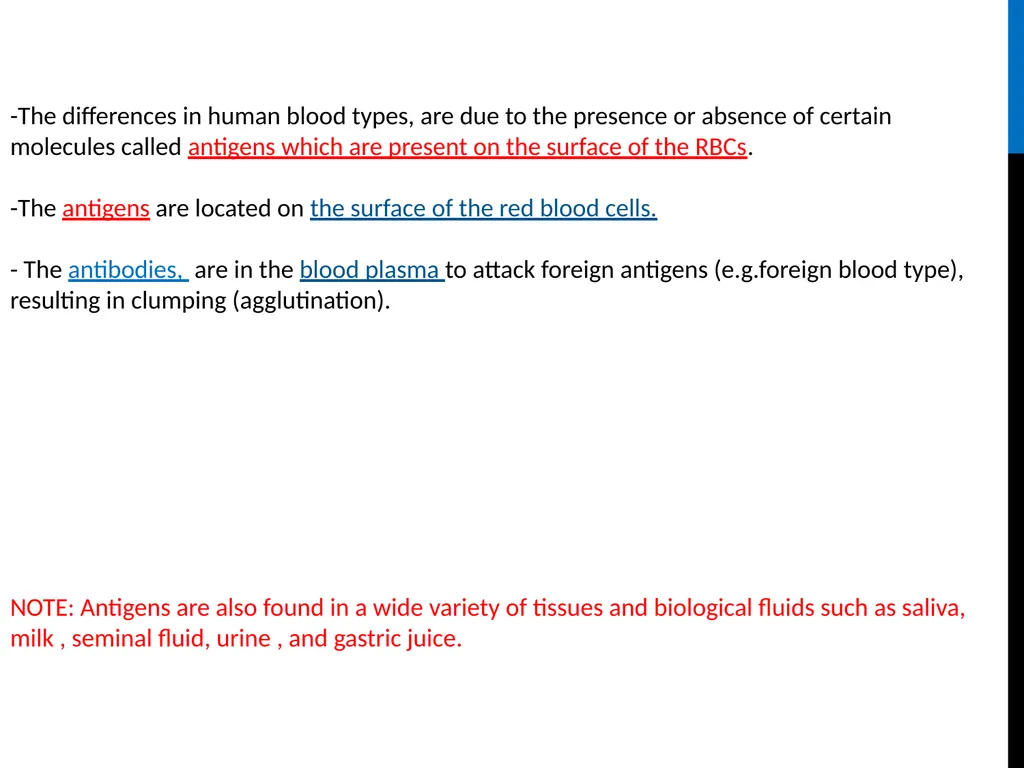
-The differences in human blood types, are due to the presence or absence of certain molecules called antigens which are present on the surface of the RBCs.
-The antigens are located on the surface of the red blood cells.
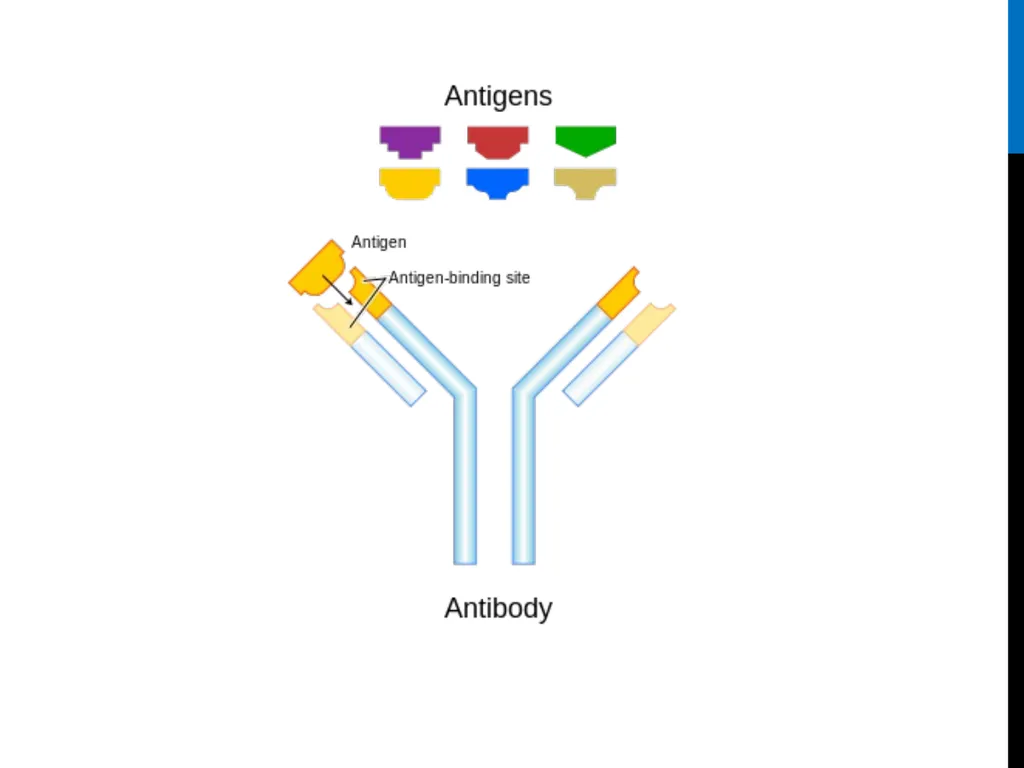
- The antibodies, are in the blood plasma to attack foreign antigens (e.g.foreign blood type), resulting in clumping (agglutination).
NOTE: Antigens are also found in a wide variety of tissues and biological fluids such as saliva, milk , seminal fluid, urine , and gastric juice.<br>
06
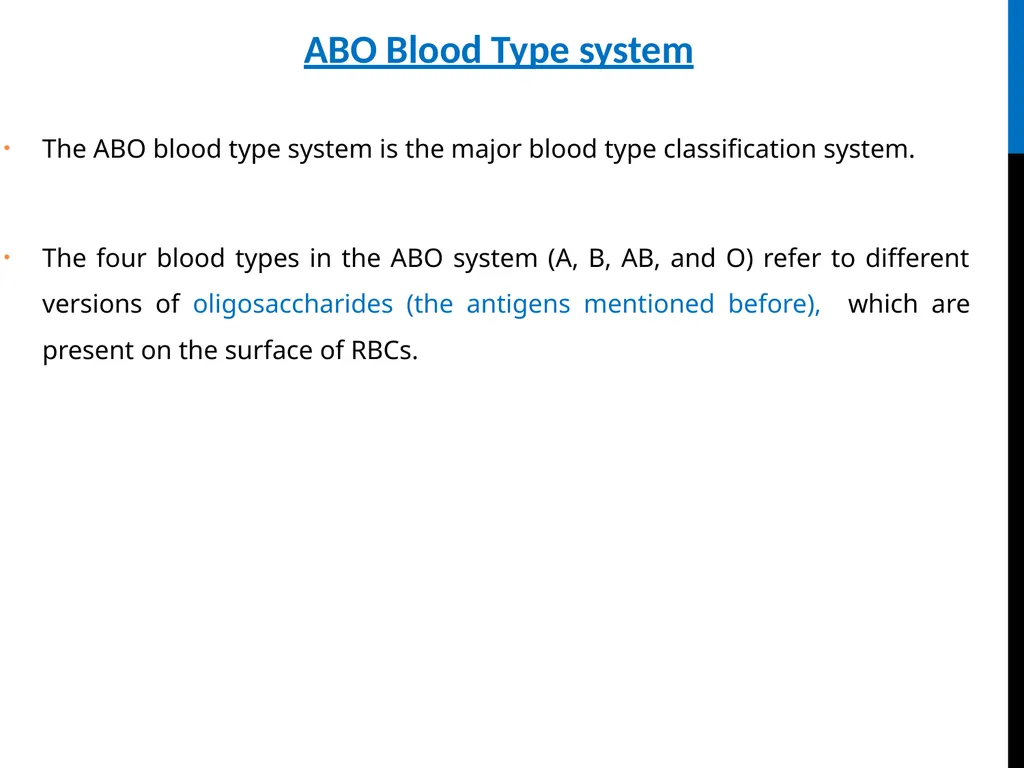
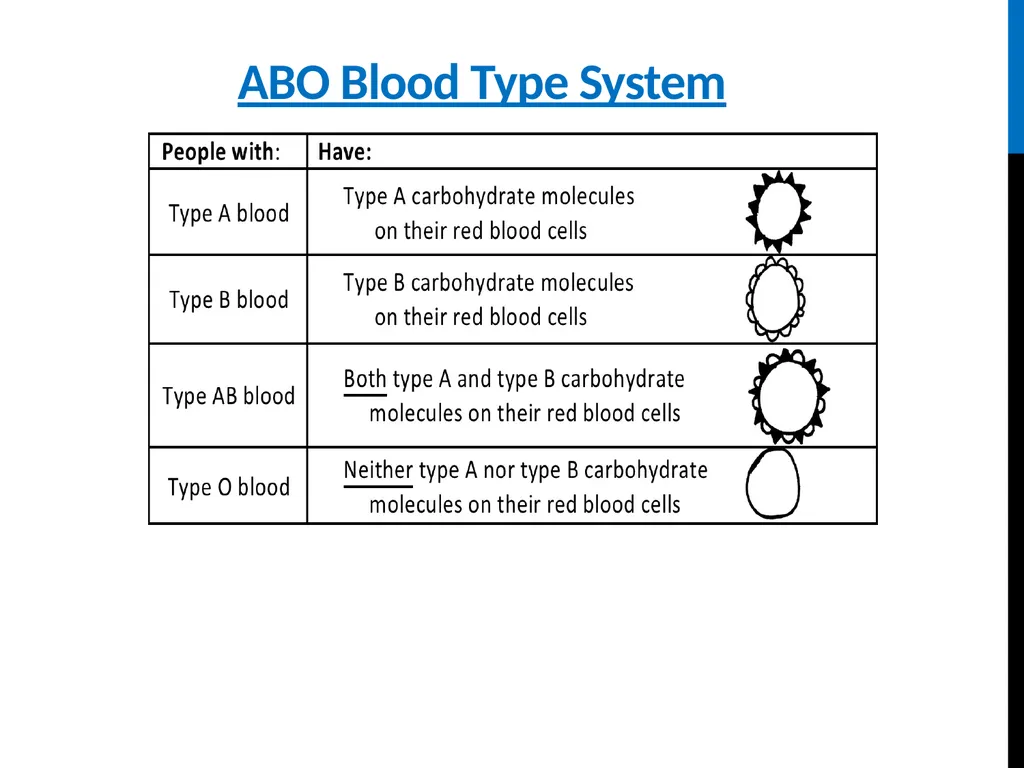
ABO Blood Type system The ABO blood type system is the major blood type classification system.
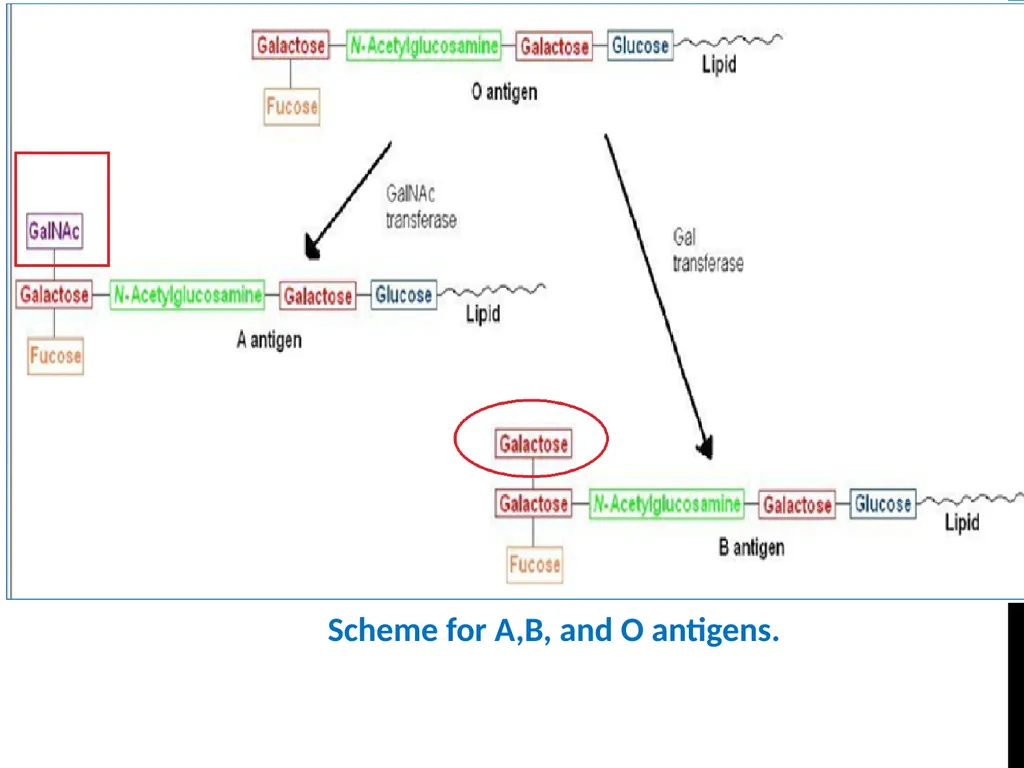
The four blood types in the ABO system (A, B, AB, and O) refer to different versions of oligosaccharides (the antigens mentioned before), which are present on the surface of RBCs.<br>
07
Scheme for A,B, and O antigens.<br>
08
ABO Blood Type System<br>
09
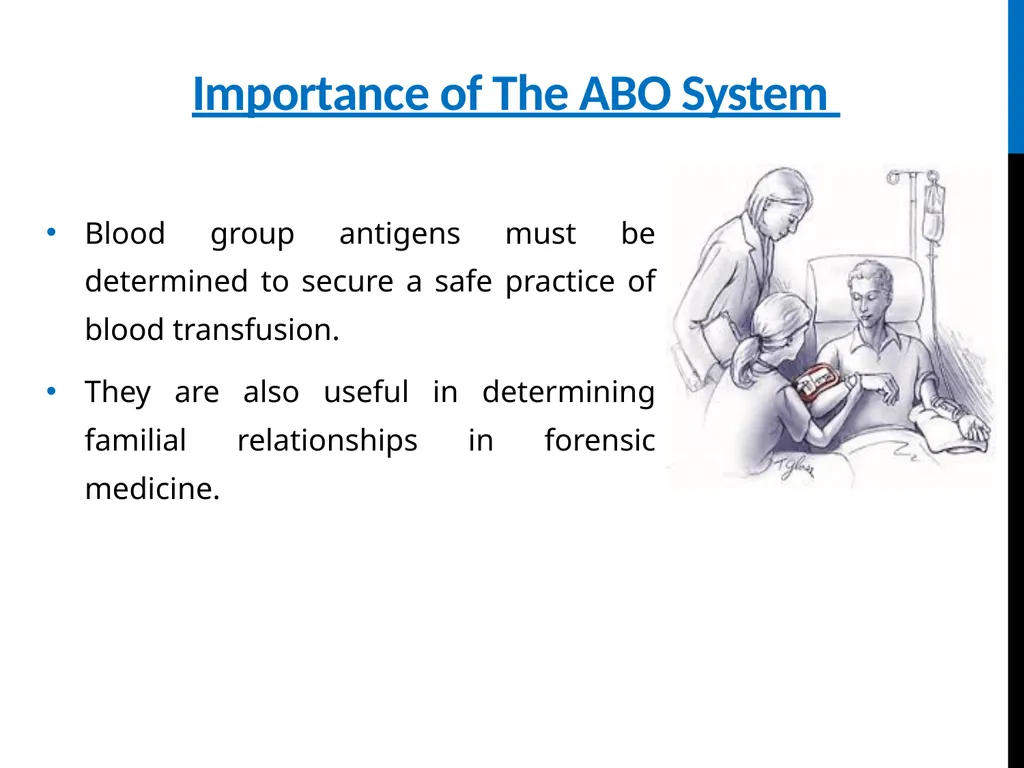
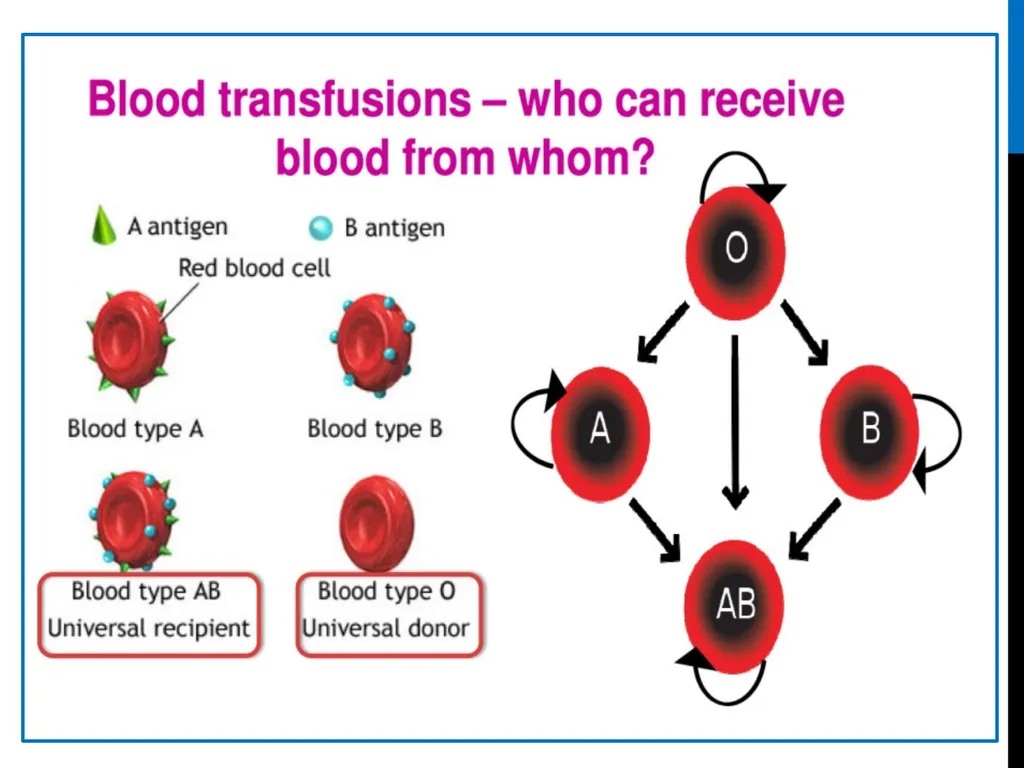
Importance of The ABO System Blood group antigens must be determined to secure a safe practice of blood transfusion.
They are also useful in determining familial relationships in forensic medicine.<br>
10
Rhesus Blood Group Is the second most significant blood group system in human transfusion.
The D antigen (RhD), is the most important.
Rh(D) status of an individual, is normally described with a positive or negative suffix after the ABO type. If The D antigen is present, or absent on RBCs’ surface respectively.
So, for example, some people in group A will have the D-antigen, and will therefore be classed as A+ (or A positive), while the ones that don't, are A- (or A negative). And so it goes for groups B, AB and O.<br>
11
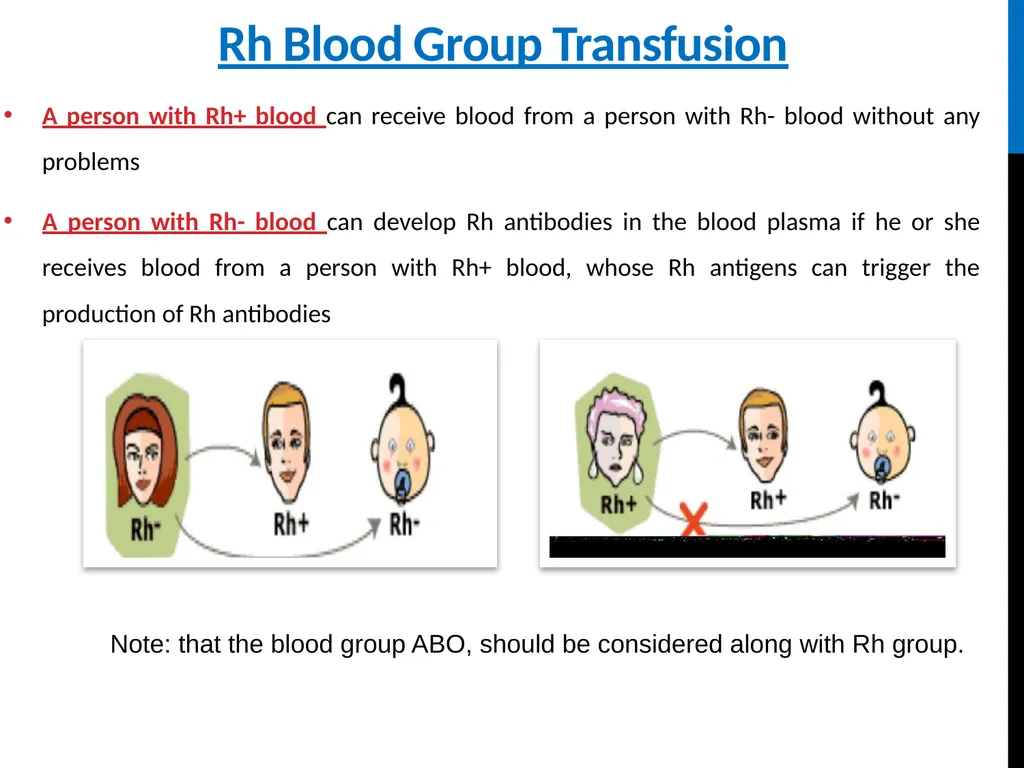
Rh Blood Group Transfusion A person with Rh+ blood can receive blood from a person with Rh- blood without any problems
A person with Rh- blood can develop Rh antibodies in the blood plasma if he or she receives blood from a person with Rh+ blood, whose Rh antigens can trigger the production of Rh antibodies Note: that the blood group ABO, should be considered along with Rh group.<br>
12
Hemolytic Disease of The Newborn (HDN) Also called, Erythroblastosis Fetalis
Mother is Blood type Rh-, Father and fetus are Rh+
First pregnancy = sensitization at delivery due to hemorrhage
Second pregnancy = Mother produce anti-Rh IgG antibodies that cross placenta to attack fetal RBCs leading to hemolysis<br>
13
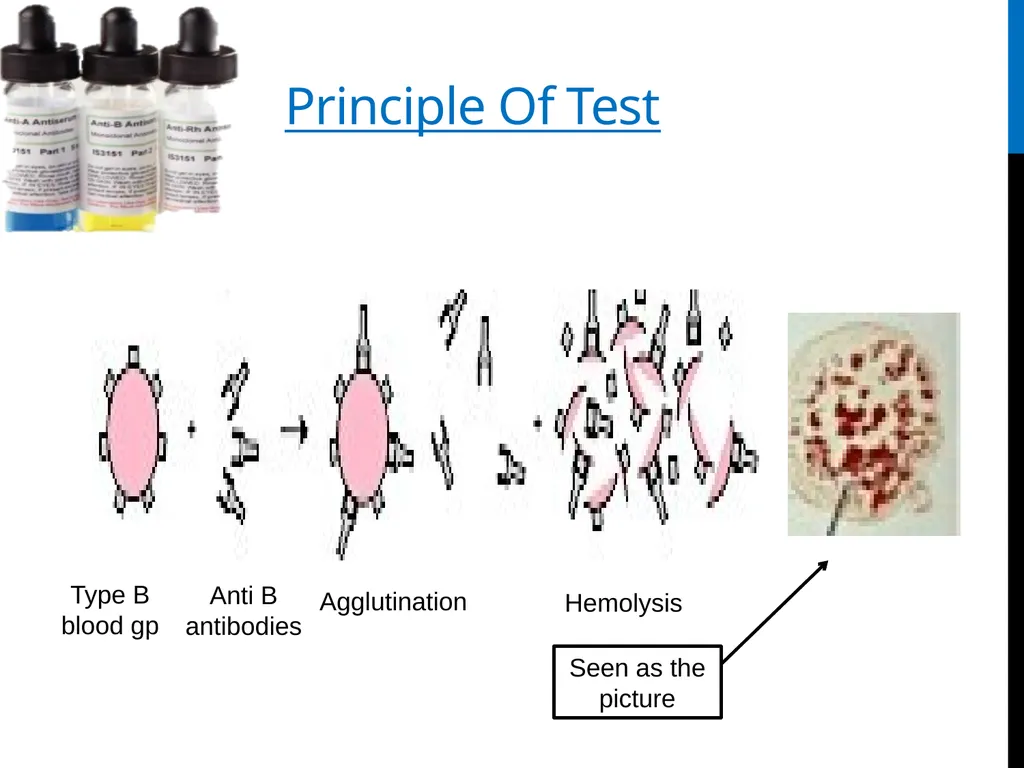
Principle Of Test Seen as the picture Type B blood gp Anti B antibodies Agglutination Hemolysis<br>