
Action Planning for Transformation to an E1st





Description: Action Planning for Transformation to an E1st Agency Genni Sasnett National EFSLMP Subject Matter Expert Friday 81817 Maryland provider webinar WE KNOW WHERE WE NEED TO GO So How do we get there? 2 Conduct self assessment and review along
Related Topics
Download Presentation
"Action Planning for Transformation to an E1st" is the property of its rightful owner. Permission is granted to download and print the materials on this website for personal, non-commercial use only, and to display it on your personal computer provided you do not modify the materials and that you retain all copyright notices contained in the materials. By downloading content from our website, you accept the terms of this agreement.
Presentation Transcript
slide1. Action Planning
for Transformation to an E1st Agency Genni Sasnett
National EFSLMP Subject Matter Expert
Friday 8/18/17
Maryland provider webinar<br>
slide2. WE KNOW WHERE WE NEED TO GO So How do we get there? 2<br>
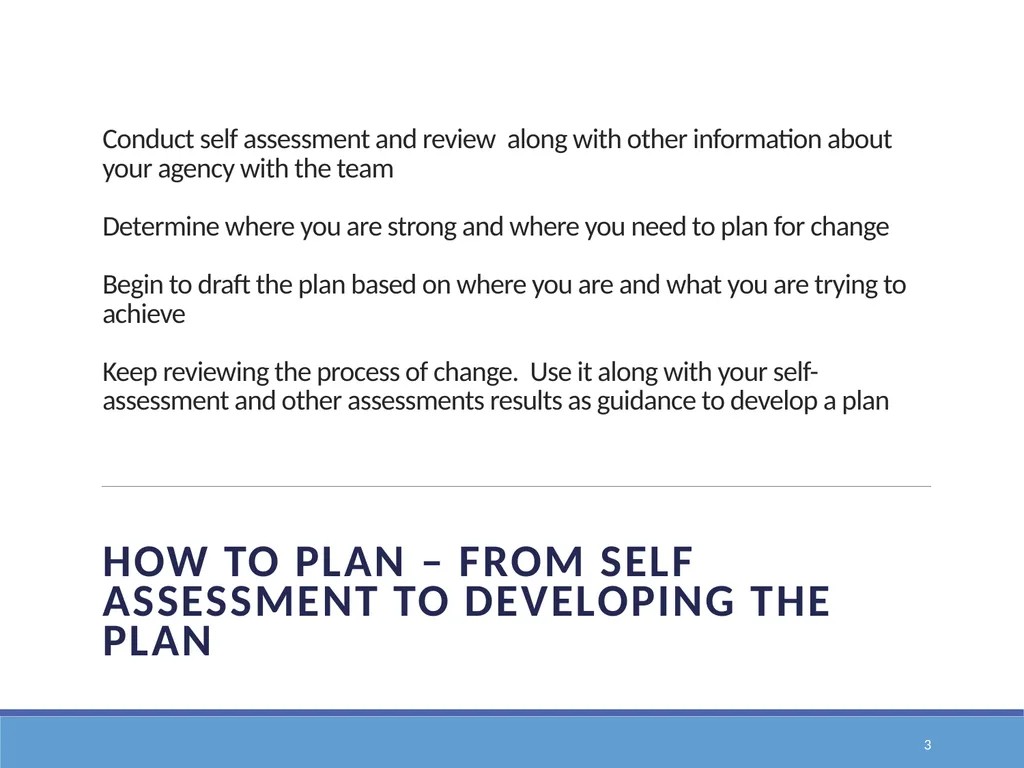
slide3. Conduct self assessment and review along with other information about your agency with the team Determine where you are strong and where you need to plan for change Begin to draft the plan based on where you are and what you are trying to achieve Keep reviewing the process of change. Use it along with your self-assessment and other assessments results as guidance to develop a plan How to Plan – from self assessment to developing the plan 3<br>
slide4. Note areas of strength Note areas to be strengthened Create lists of each to be addressed in the findings Identify additional materials to be reviewed (financials, tables of organization, etc.) Reviewing the assessments 4<br>
slide5. Develop a report to include: Overview of the agency - #s people served, funding sources, etc. Positive findings Items to be addressed based on assessment Developing the findings 5<br>
slide6. Share results and discuss with staff and board Arrange meetings with staff management direct support Arrange meeting with Board of Directors brief Chair first Discussions with staff/board 6<br>
slide7. Identify the Change Management Team within the agency Establish purpose and composition Determine meeting schedule Identify meeting locations, etc. Creating the team 7<br>
slide8. Determine plan format Review the findings and begin to formulate outcomes to be achieved Breakdown outcomes into goals and objectives, identify responsible parties, timeframes, etc. Begin the plan 8<br>
slide9. The Process of Planning 9<br>
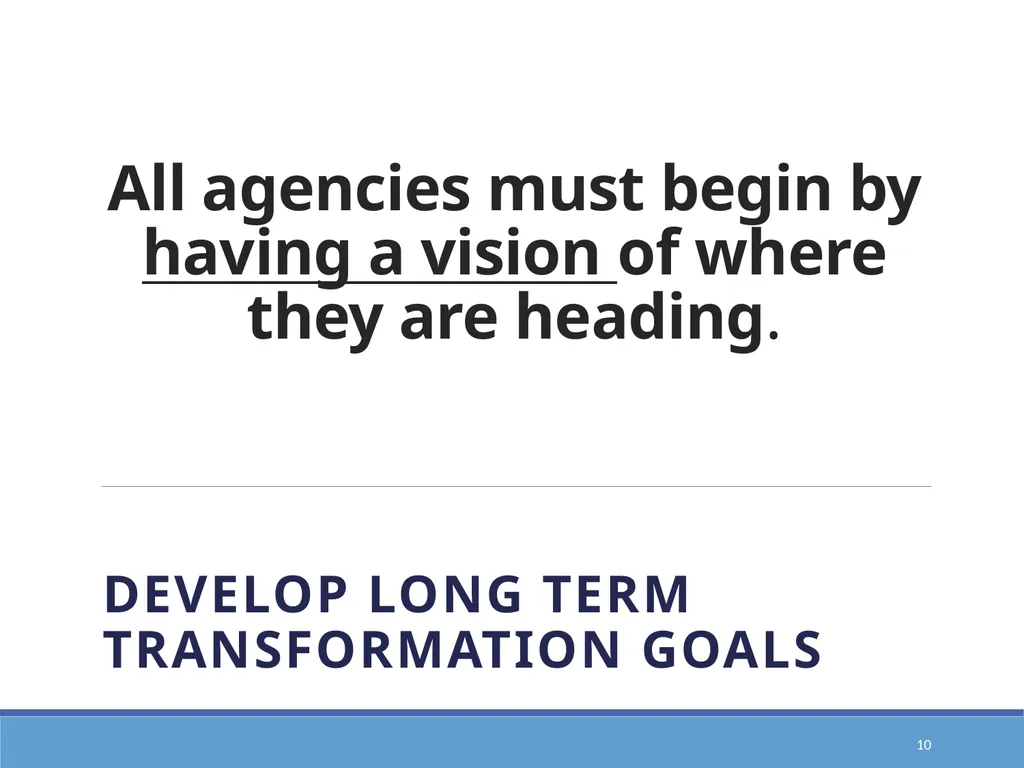
slide10. All agencies must begin by having a vision of where they are heading. develop long term transformation goals 10<br>
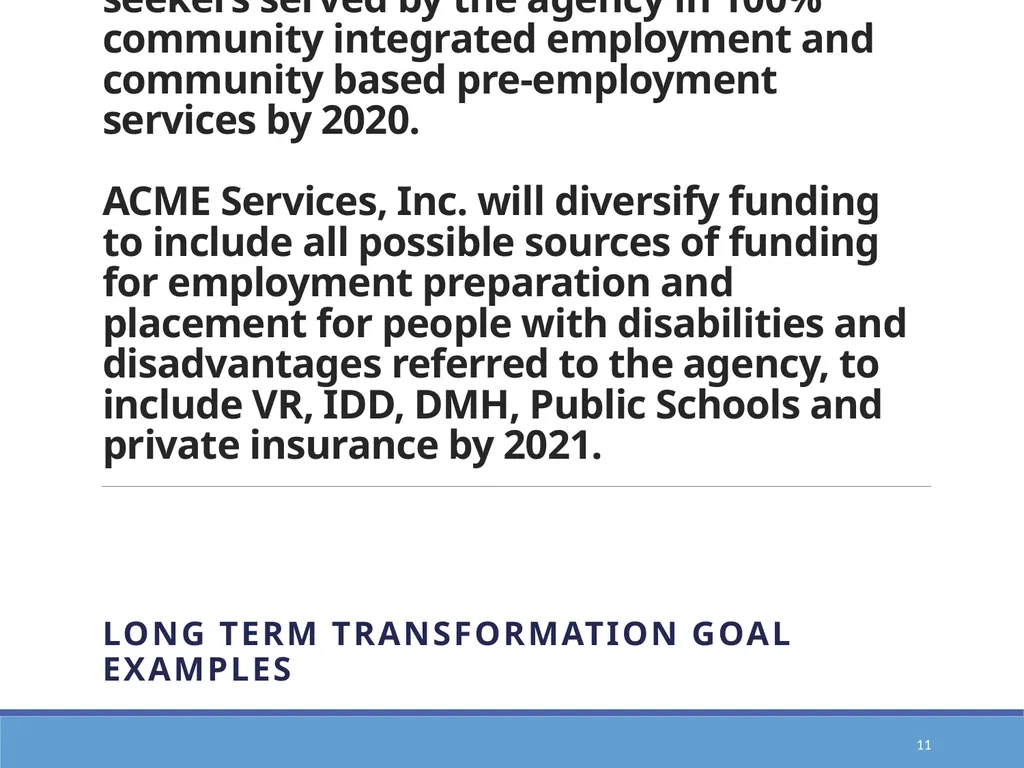
slide11. ACME Services, Inc. will support all job seekers served by the agency in 100% community integrated employment and community based pre-employment services by 2020. ACME Services, Inc. will diversify funding to include all possible sources of funding for employment preparation and placement for people with disabilities and disadvantages referred to the agency, to include VR, IDD, DMH, Public Schools and private insurance by 2021. Long Term transformation goal Examples 11<br>
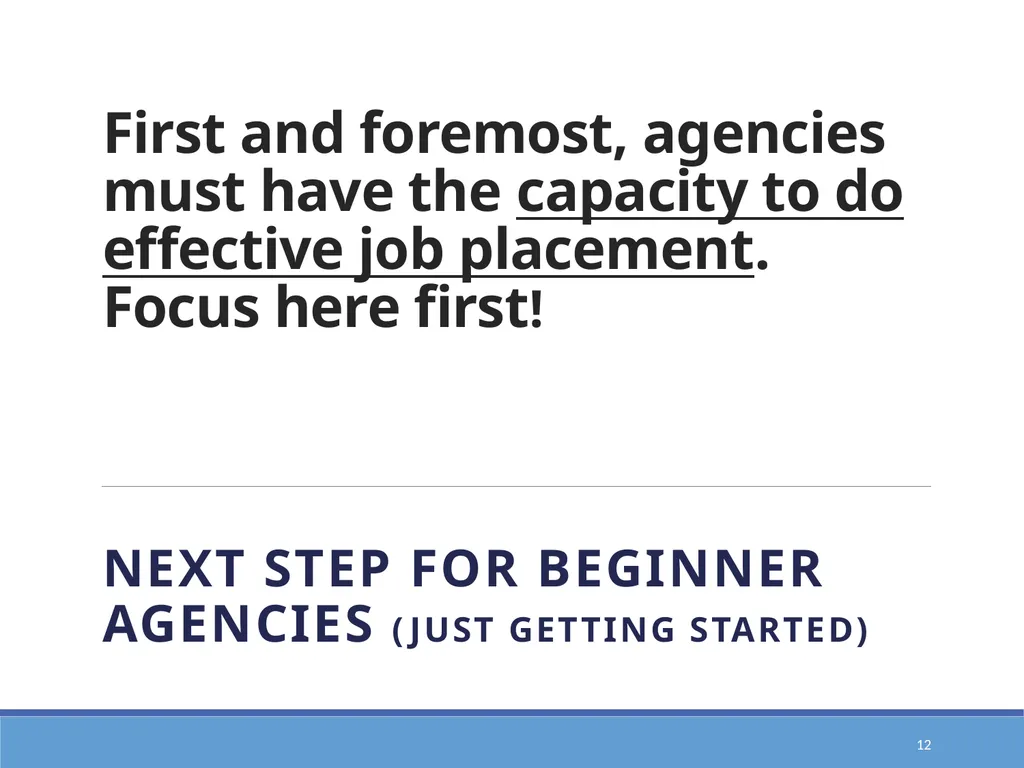
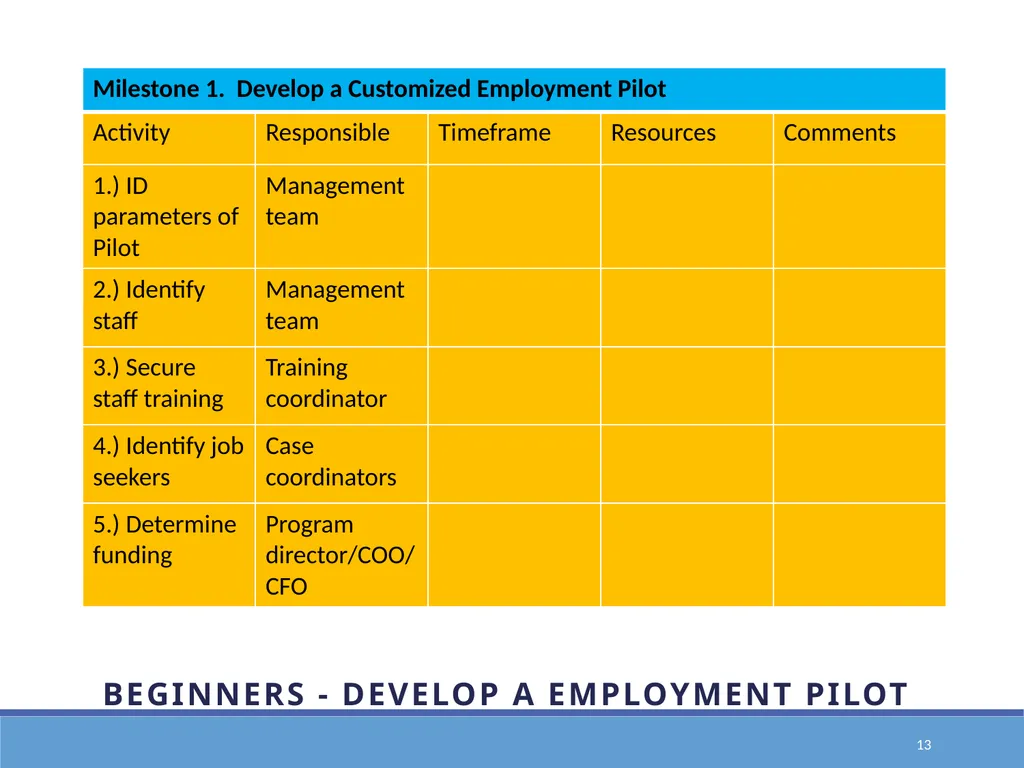
slide12. First and foremost, agencies must have the capacity to do effective job placement. Focus here first! Next step for beginner Agencies (Just getting started) 12<br>
slide13. Beginners - Develop a Employment pilot 13<br>
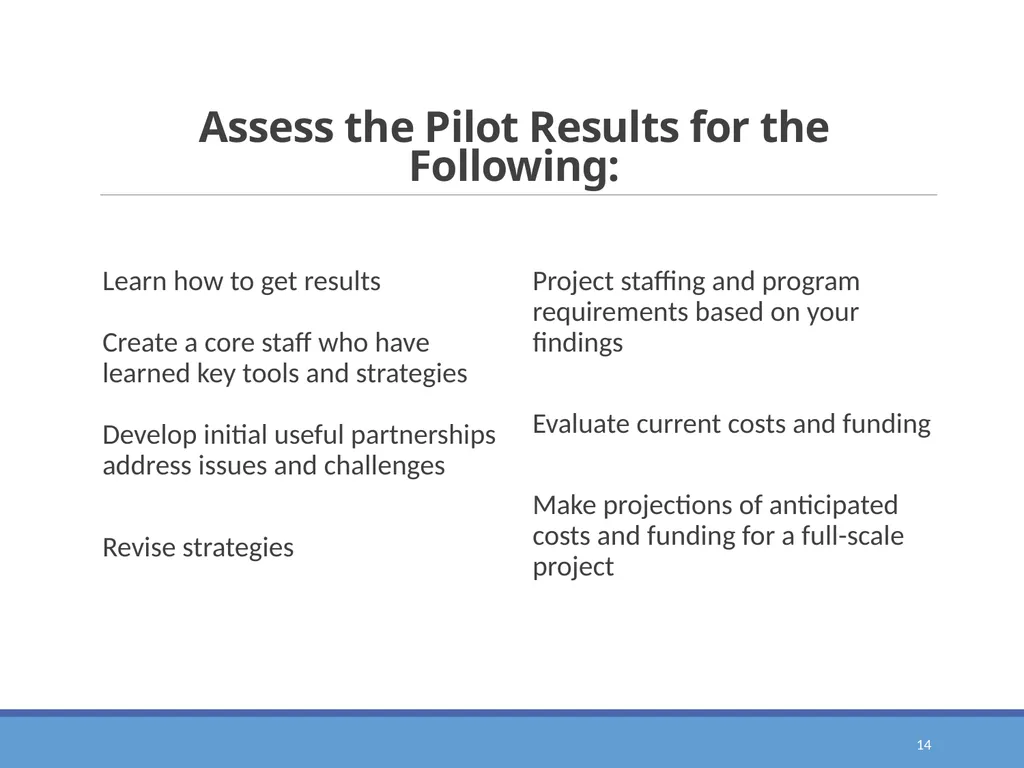
slide14. Assess the Pilot Results for the Following: Learn how to get results Create a core staff who have learned key tools and strategies Develop initial useful partnerships address issues and challenges
Revise strategies Project staffing and program requirements based on your findings
Evaluate current costs and funding
Make projections of anticipated costs and funding for a full-scale project 14<br>
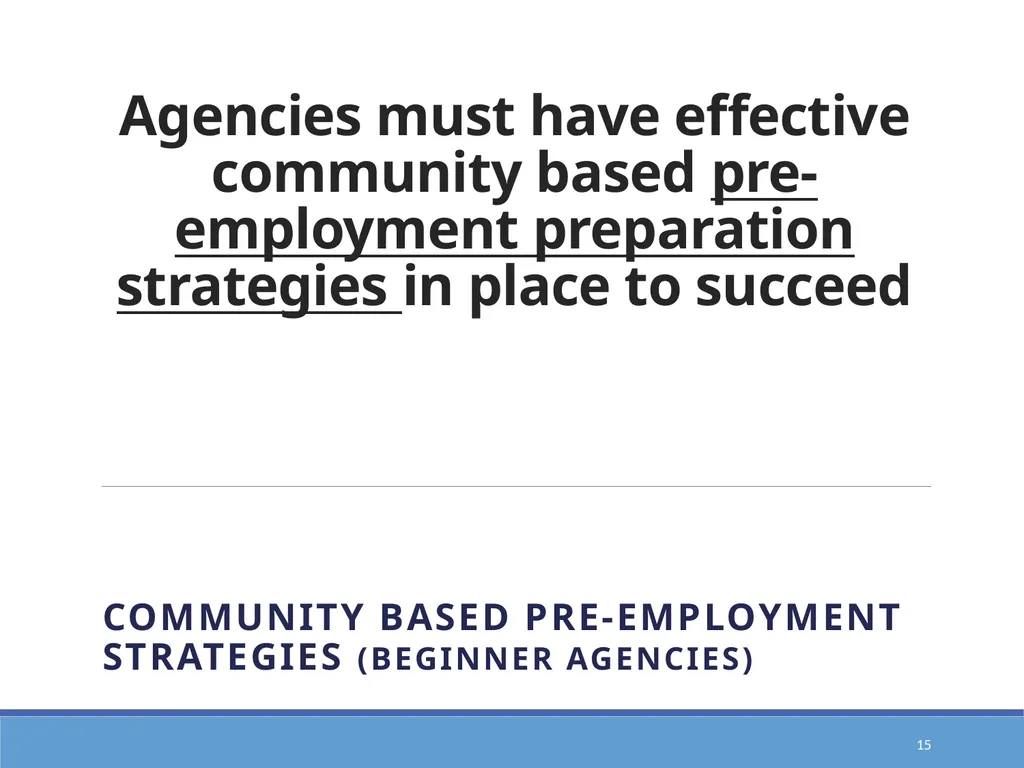
slide15. Agencies must have effective community based pre-employment preparation strategies in place to succeed Community based pre-employment strategies (beginner agencies) 15<br>
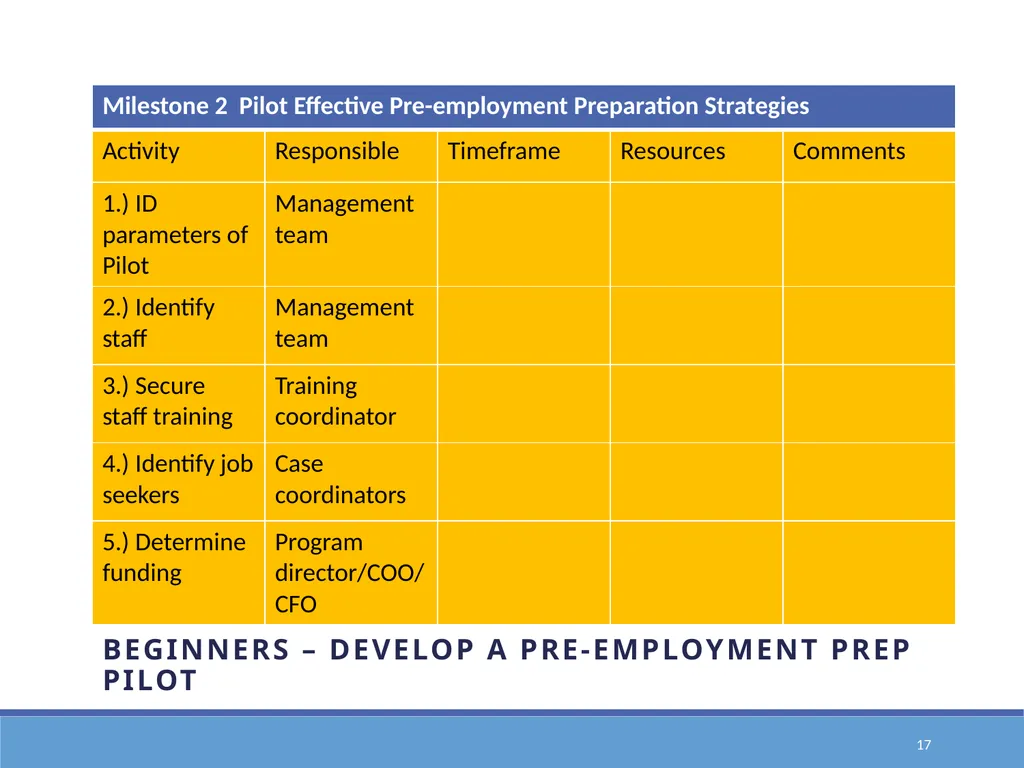
slide16. People show the best employment outcomes when they have had community-based work experiences, especially paid ones. Work experiences that don’t have the same requirements and expectations as “typical” workplaces may reinforce incorrect messages WIOA makes clear that preparation should not include training in segregated settings with individuals earning sub-minimum wages Our future customers will be educated under IDEA and under WIOA requirements with expectations of CIE Community based pre-employment preparation 16<br>
slide17. Beginners – develop a pre-employment prep pilot 17<br>
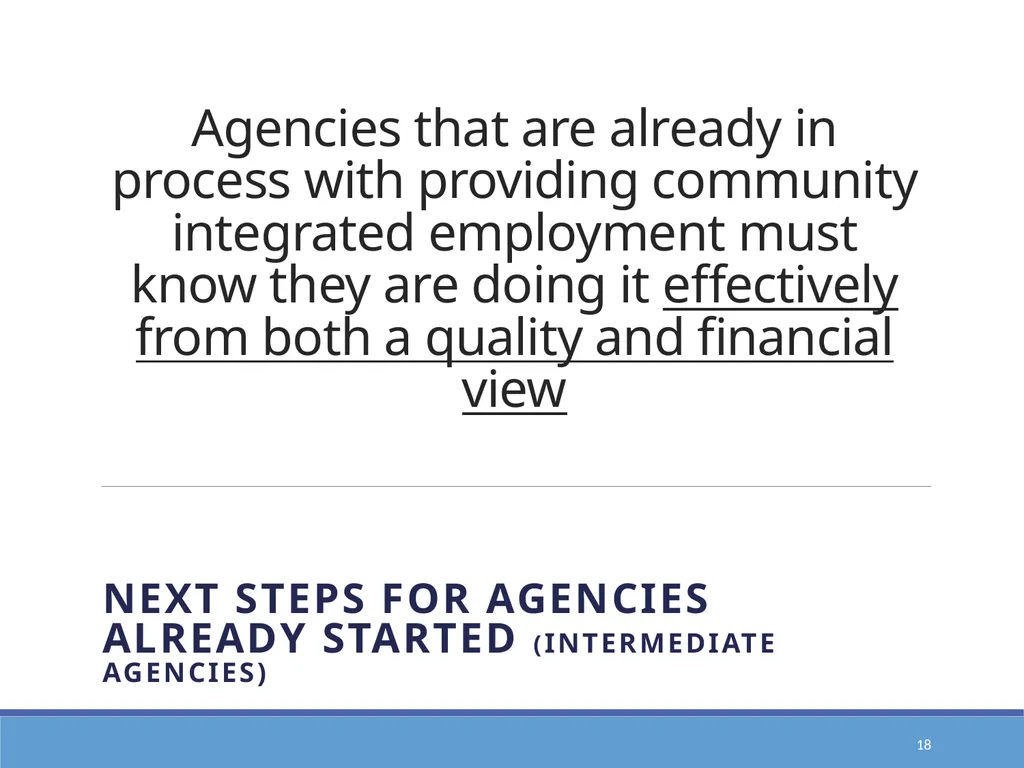
slide18. Agencies that are already in process with providing community integrated employment must know they are doing it effectively from both a quality and financial view Next steps for agencies already started (intermediate agencies) 18<br>
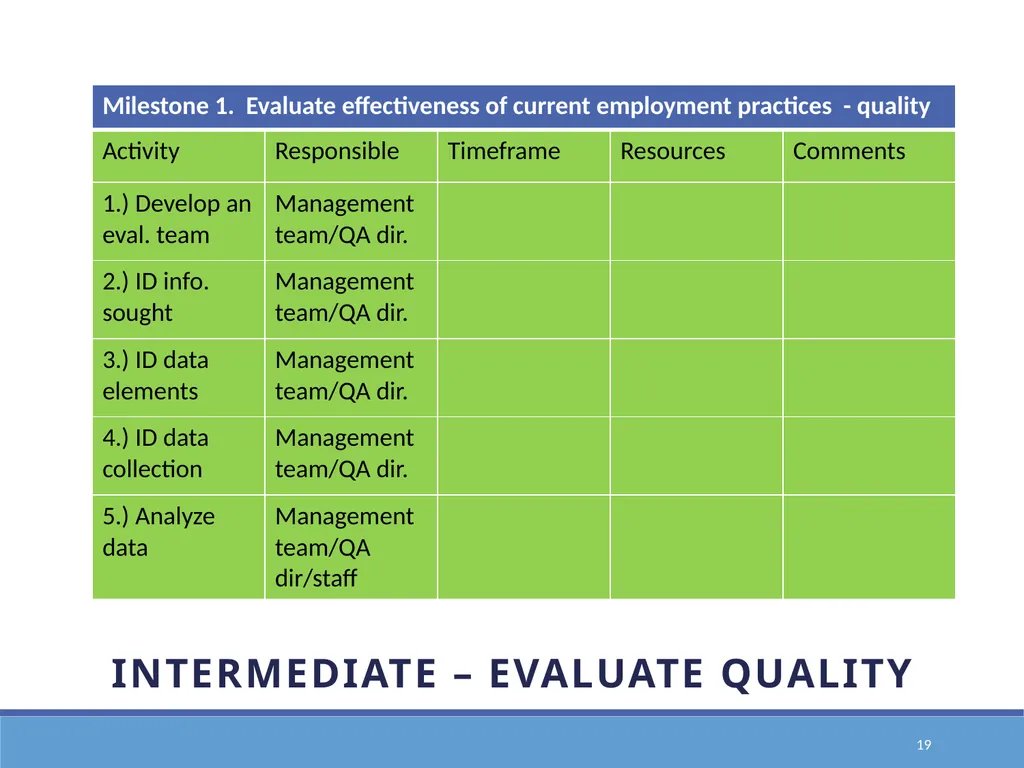
slide19. intermediate – evaluate quality 19<br>
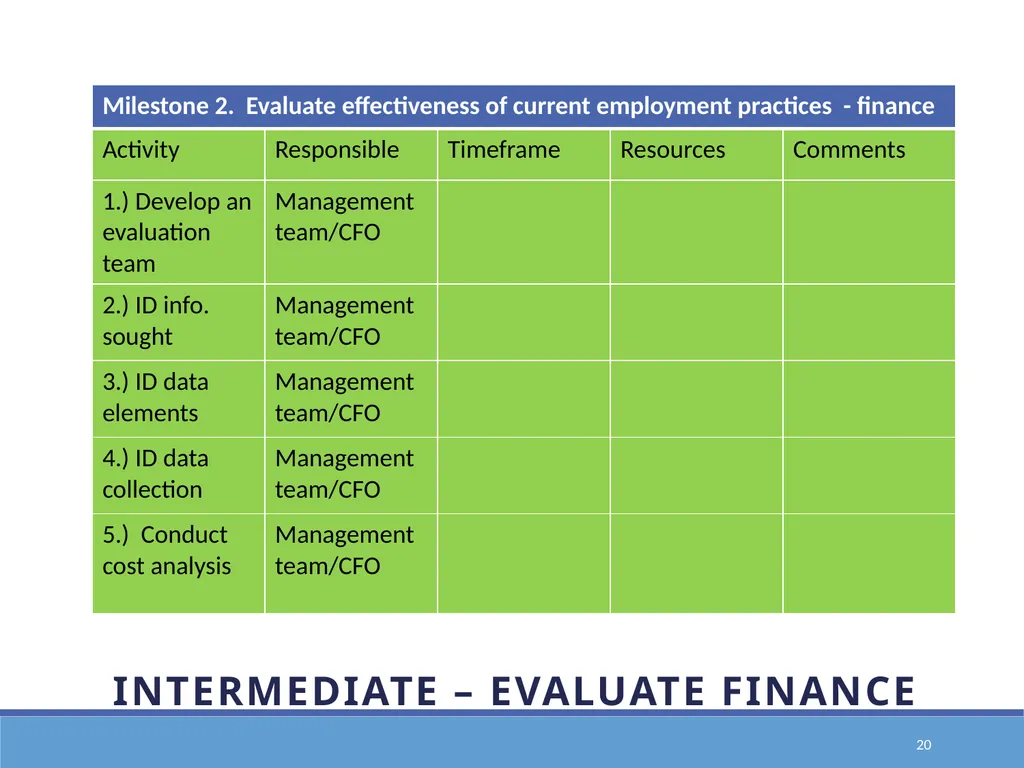
slide20. intermediate – evaluate finance 20<br>
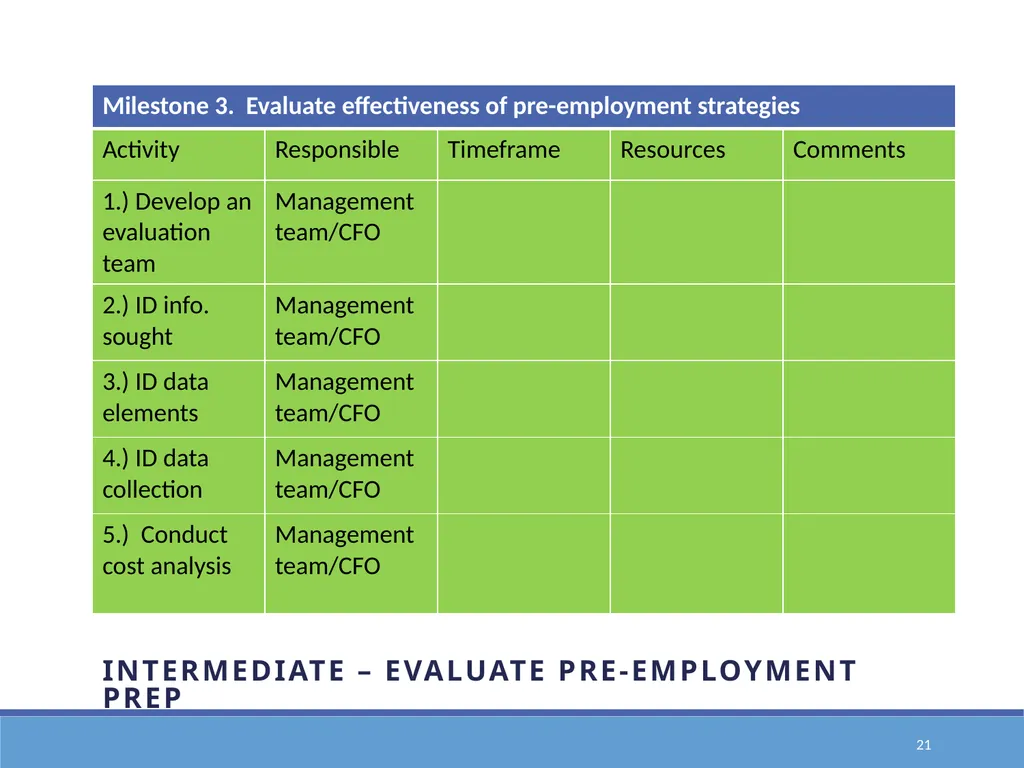
slide21. Intermediate – evaluate pre-employment prep 21<br>
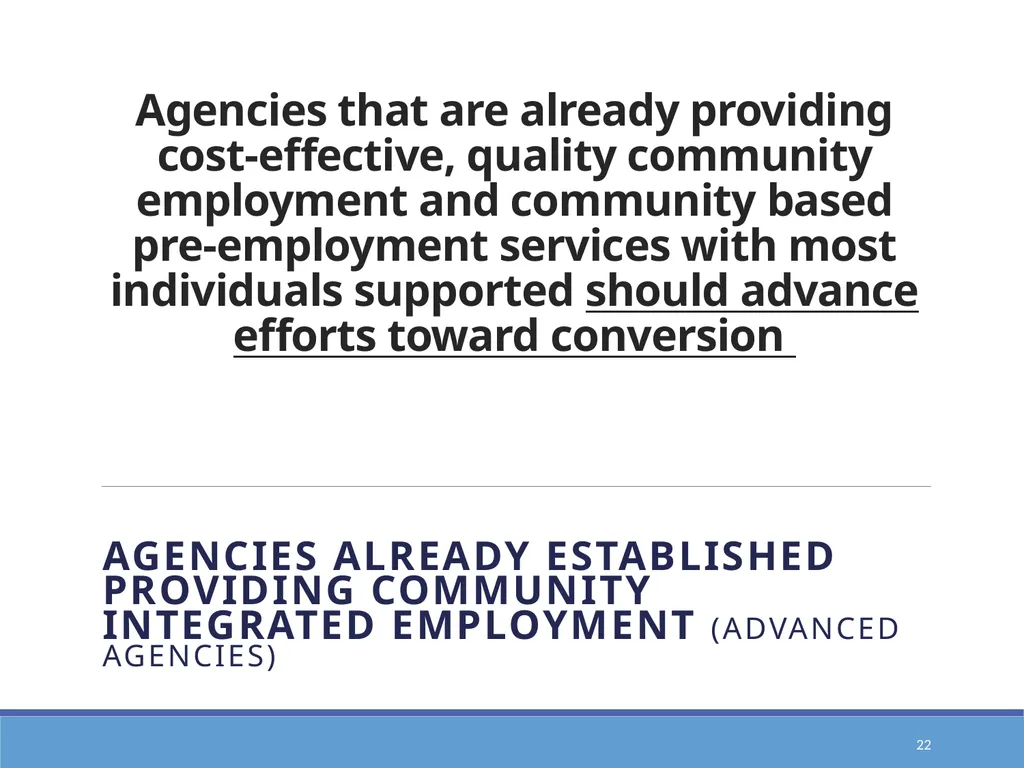
slide22. Agencies that are already providing cost-effective, quality community employment and community based pre-employment services with most individuals supported should advance efforts toward conversion Agencies already established Providing community integrated employment (Advanced agencies) 22<br>
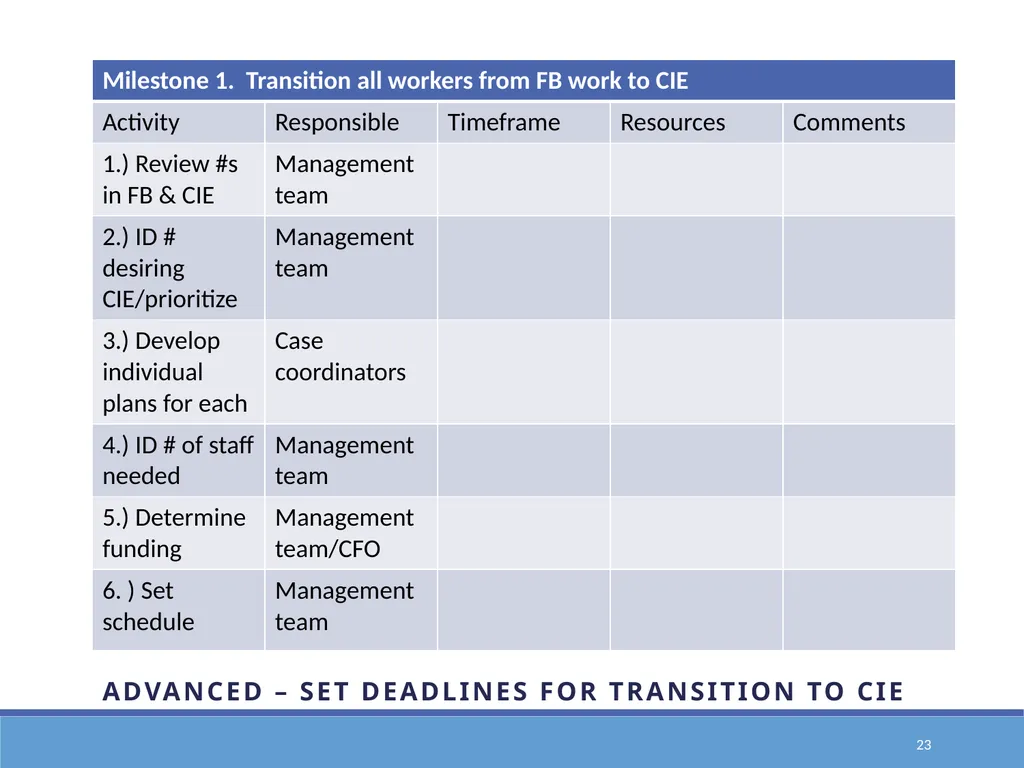
slide23. Advanced – set deadlines for transition to cie 23<br>
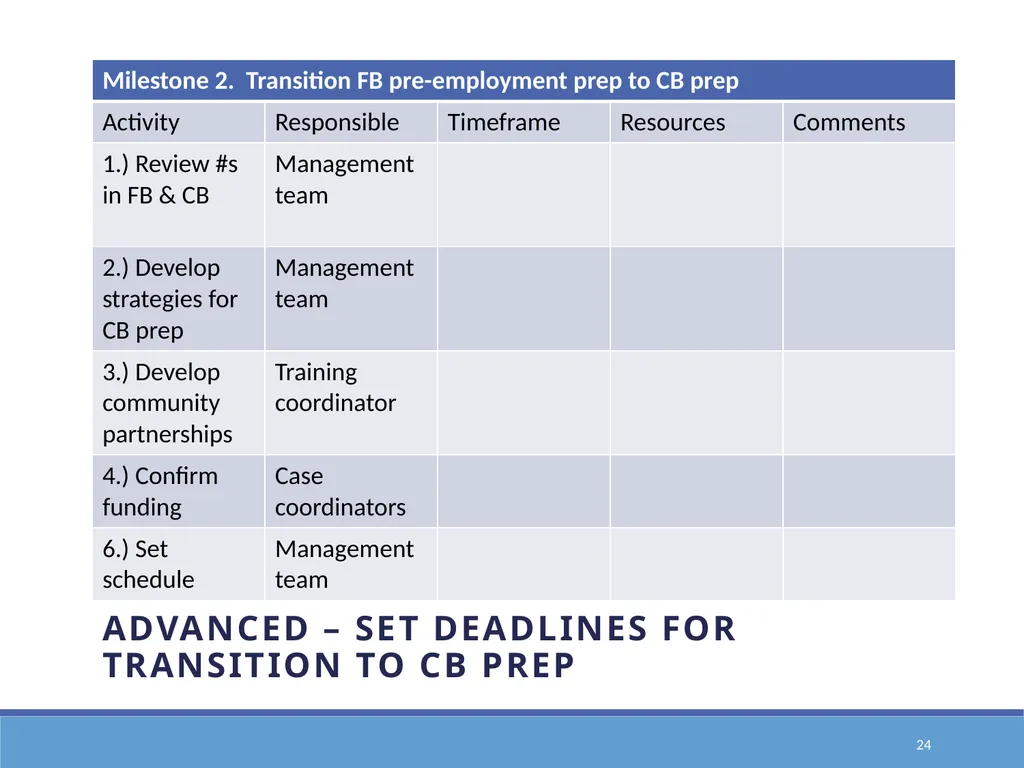
slide24. Advanced – set deadlines for transition to CB prep 24<br>
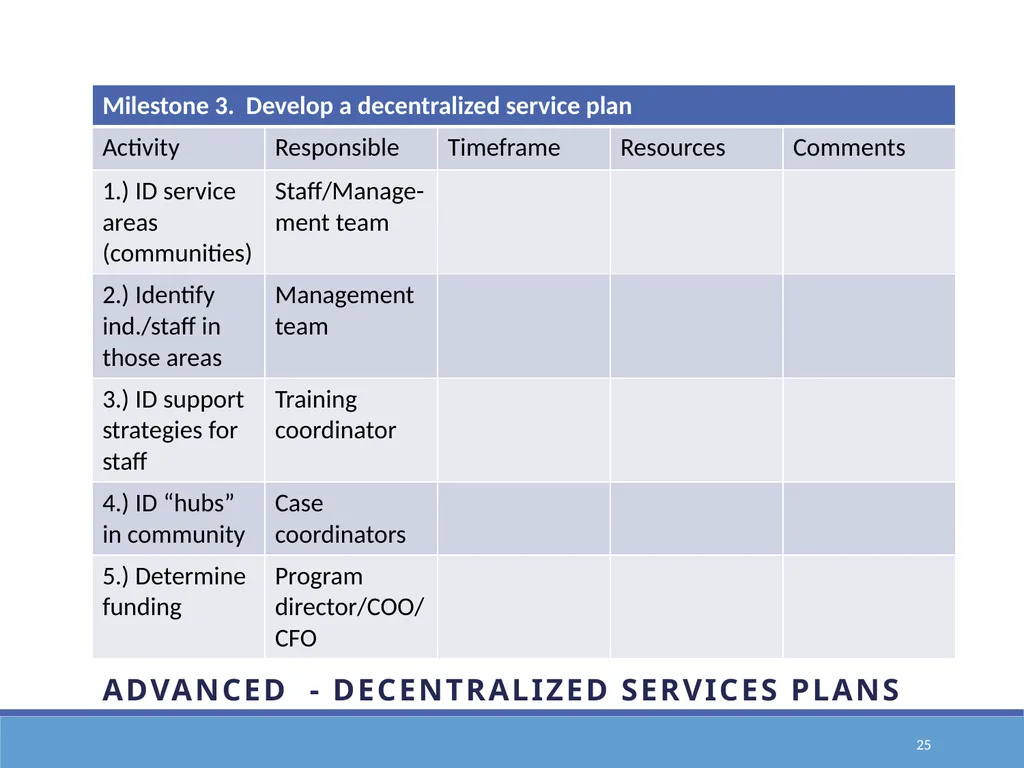
slide25. advanced - decentralized services plans 25<br>
slide26. Important Areas of Focus for Planning 26<br>
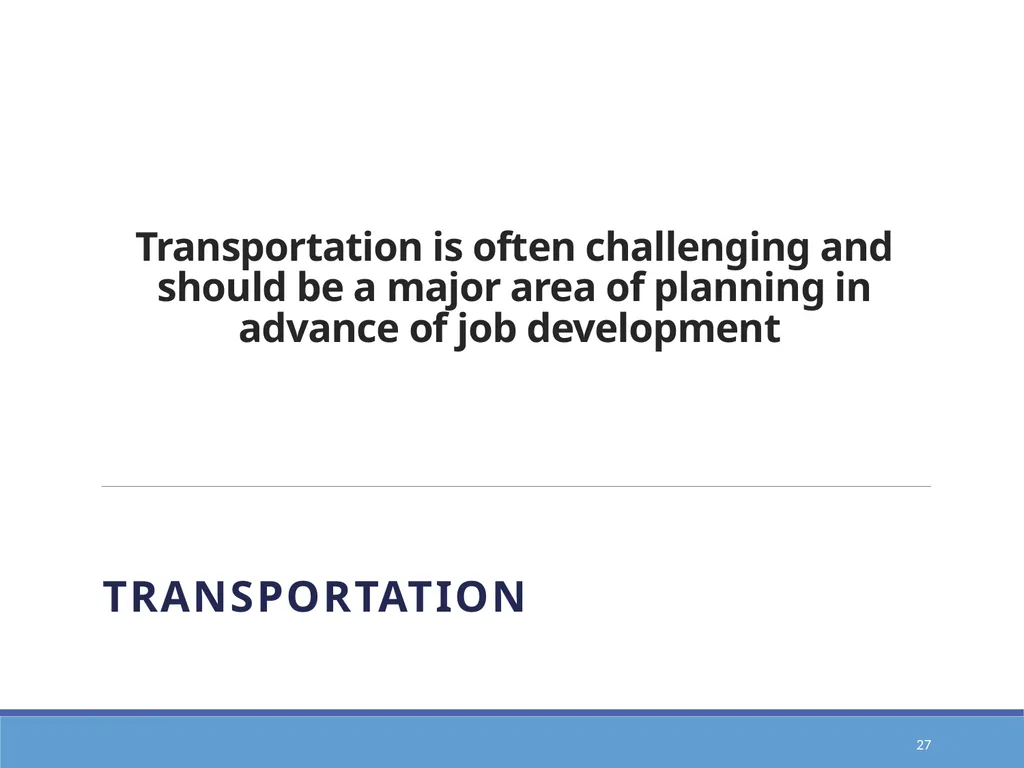
slide27. Transportation is often challenging and should be a major area of planning in advance of job development transportation 27<br>
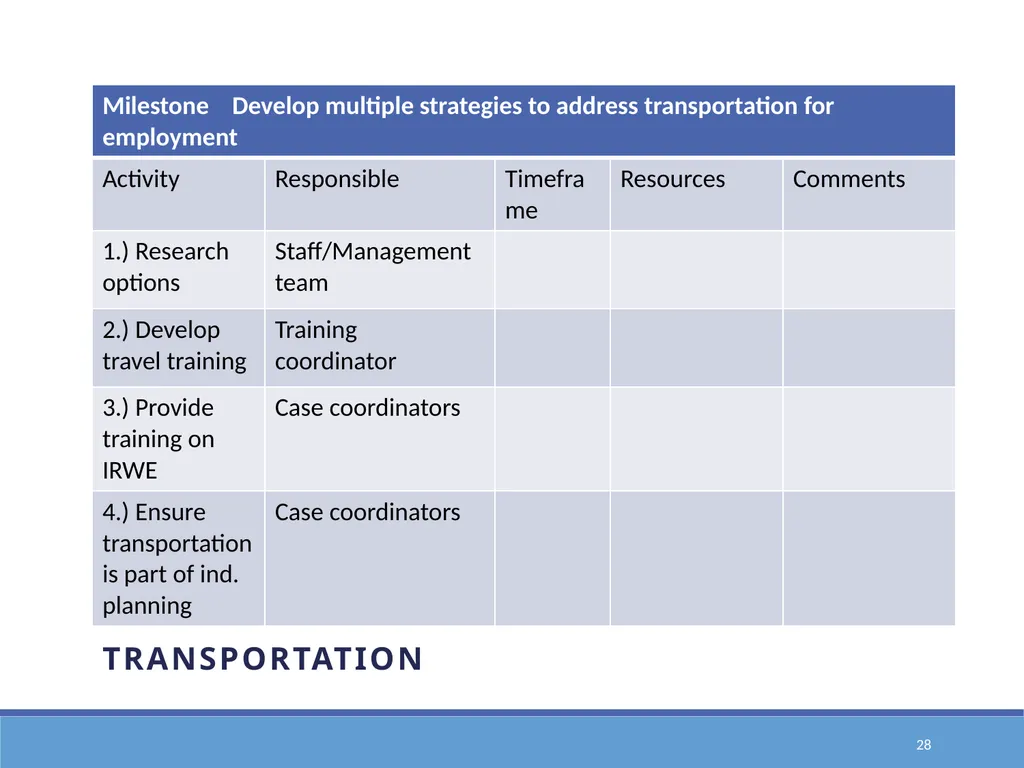
slide28. Transportation 28<br>
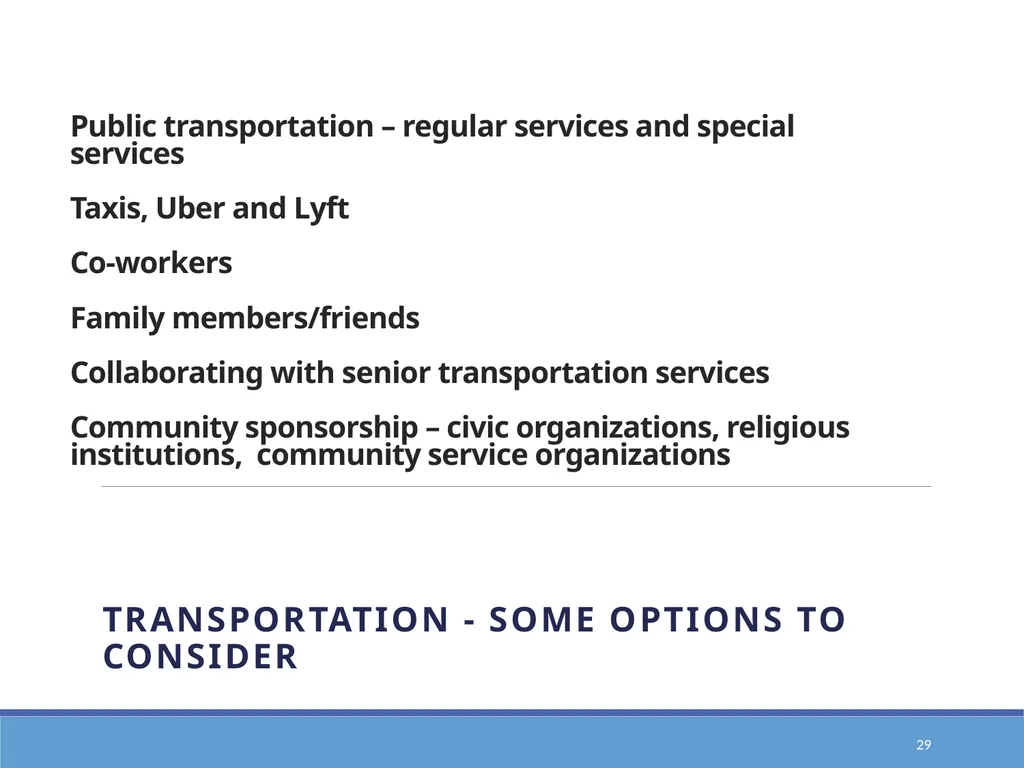
slide29. Public transportation – regular services and special services Taxis, Uber and Lyft Co-workers Family members/friends Collaborating with senior transportation services Community sponsorship – civic organizations, religious institutions, community service organizations Transportation - Some options To Consider 29<br>
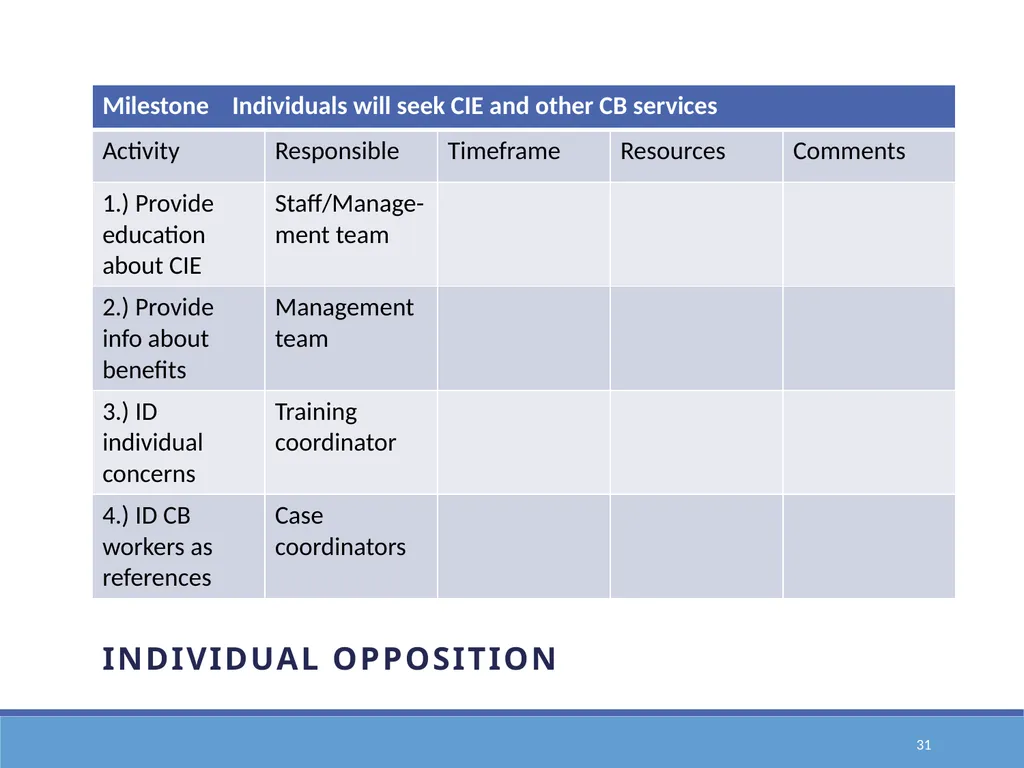
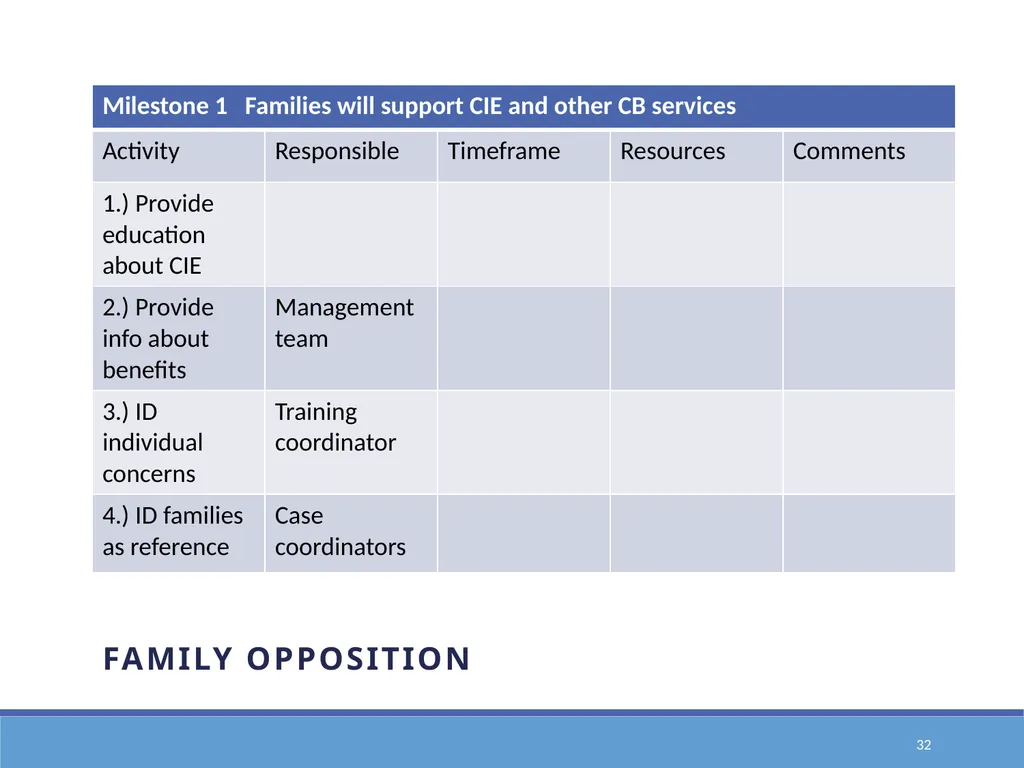
slide30. Individuals and families have grown accustomed to services being provided in the traditional manner and change can be very unsettling for them. Agencies must anticipate these feelings and have proactive plans to address their discomfort Individual and Family opposition 30<br>
slide31. individual opposition 31<br>
slide32. Family opposition 32<br>
slide33. Individuals and families may not have the info you have Older individuals and their families have been told FB services were the best option for years Benefits, especially Medicaid, mean a great deal to families though they may not say so Individuals and their families trust other individuals and families who have been successful in transition. They are your best supporters Individual & Family opposition – some things to consider 33<br>
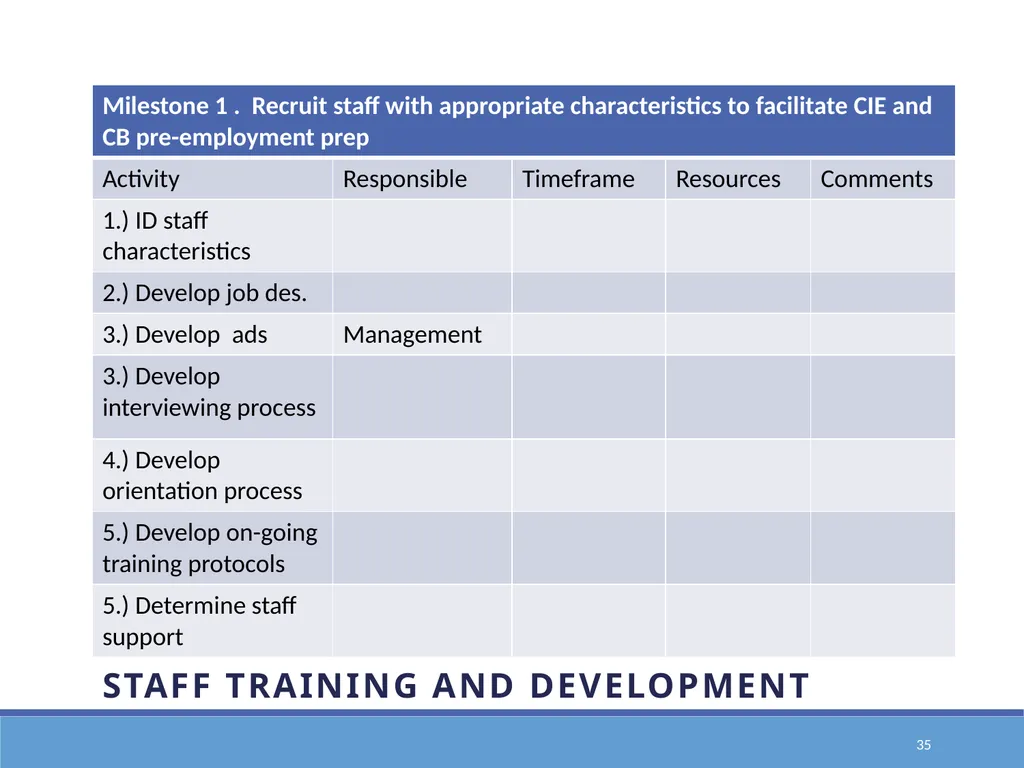
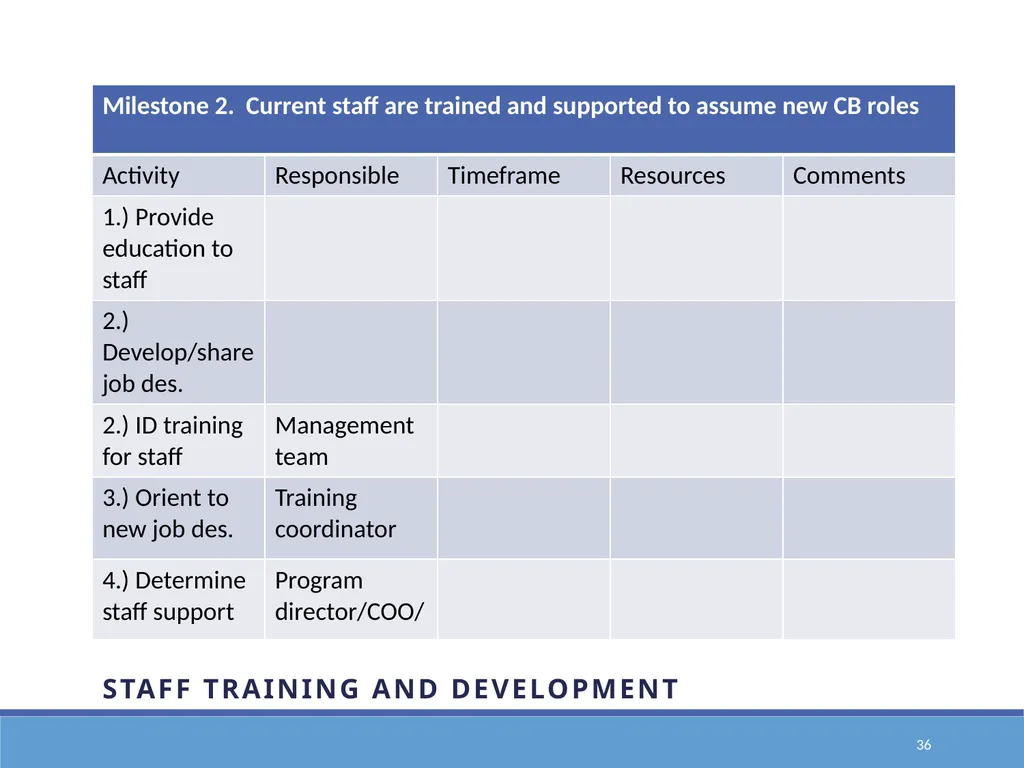
slide34. Agencies cannot move forward without staff who are committed and well trained. Plans must be made for recruitment, hiring, orientation and support for new staff as well as training and supporting transition to new roles. Staff training and development 34<br>
slide35. Staff training and development 35<br>
slide36. Staff training and development 36<br>
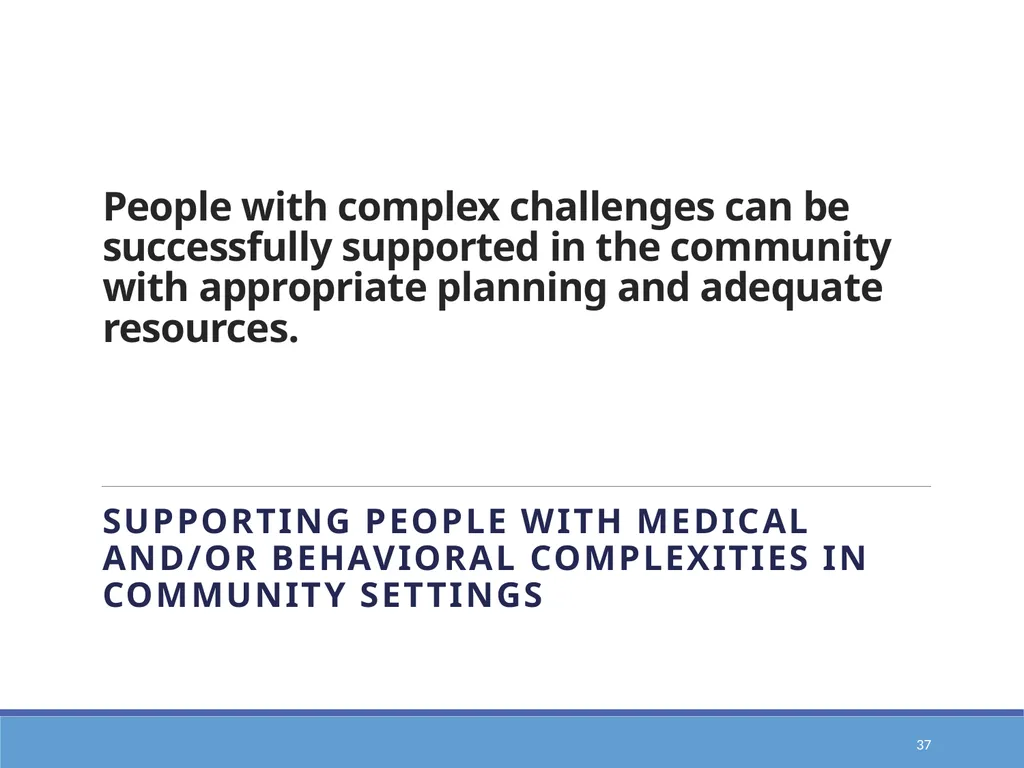
slide37. People with complex challenges can be successfully supported in the community with appropriate planning and adequate resources. supporting people with medical and/or behavioral complexities in community settings 37<br>
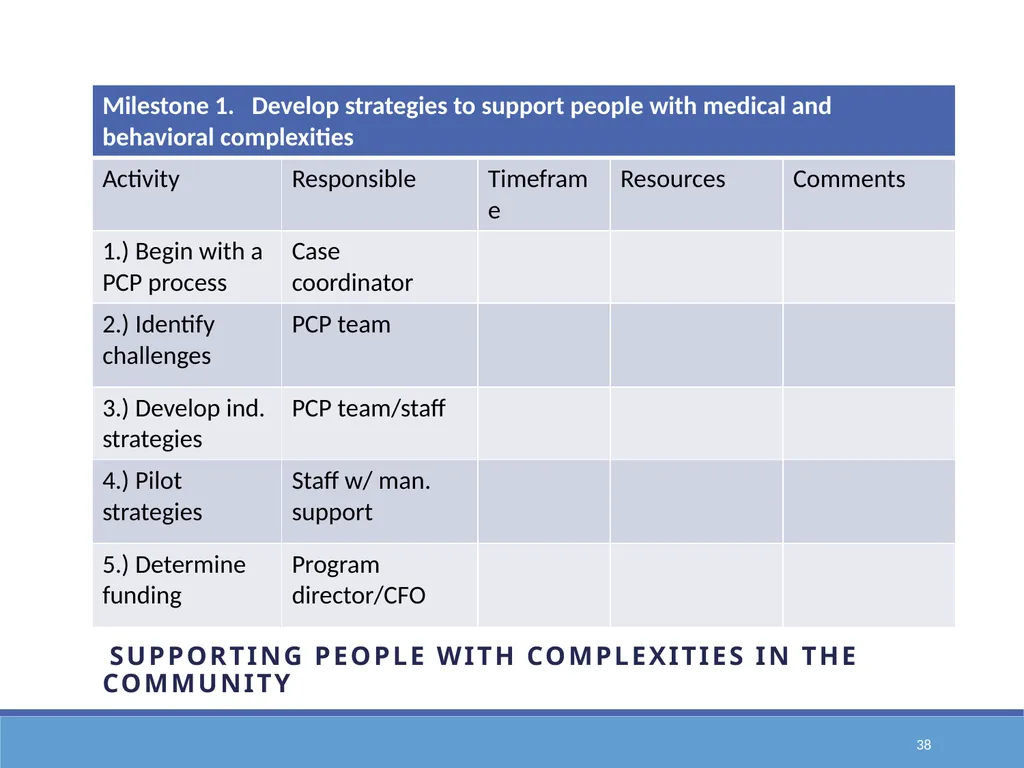
slide38. supporting people with complexities in the community 38<br>
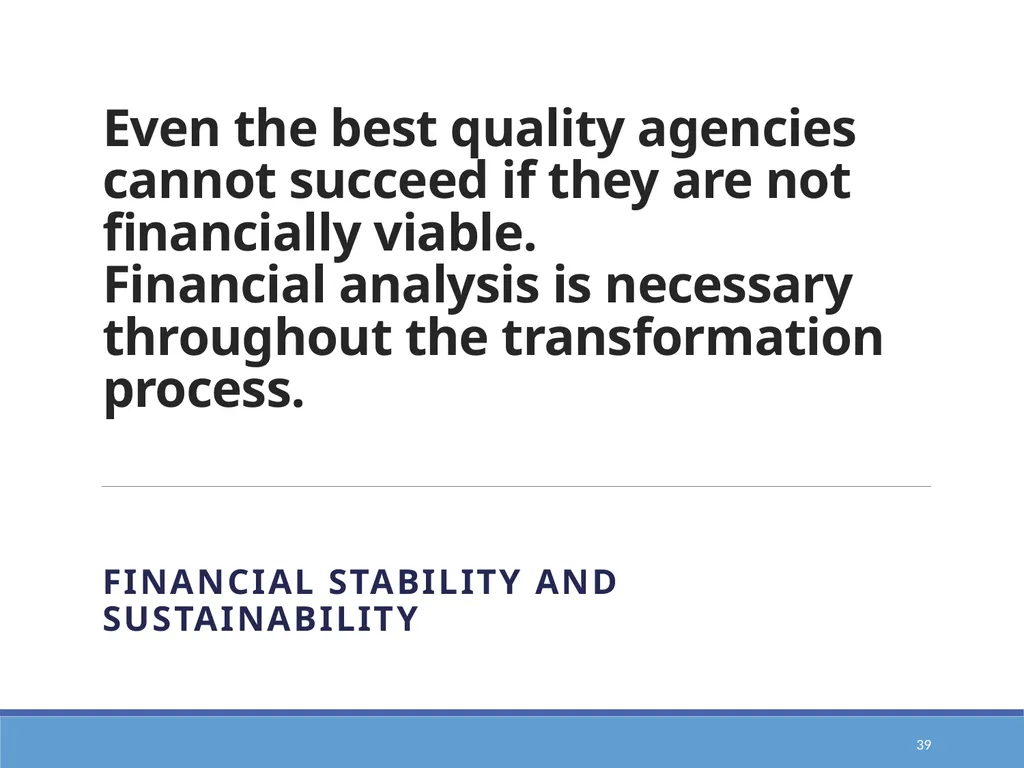
slide39. Even the best quality agencies cannot succeed if they are not financially viable. Financial analysis is necessary throughout the transformation process. Financial stability and sustainability 39<br>
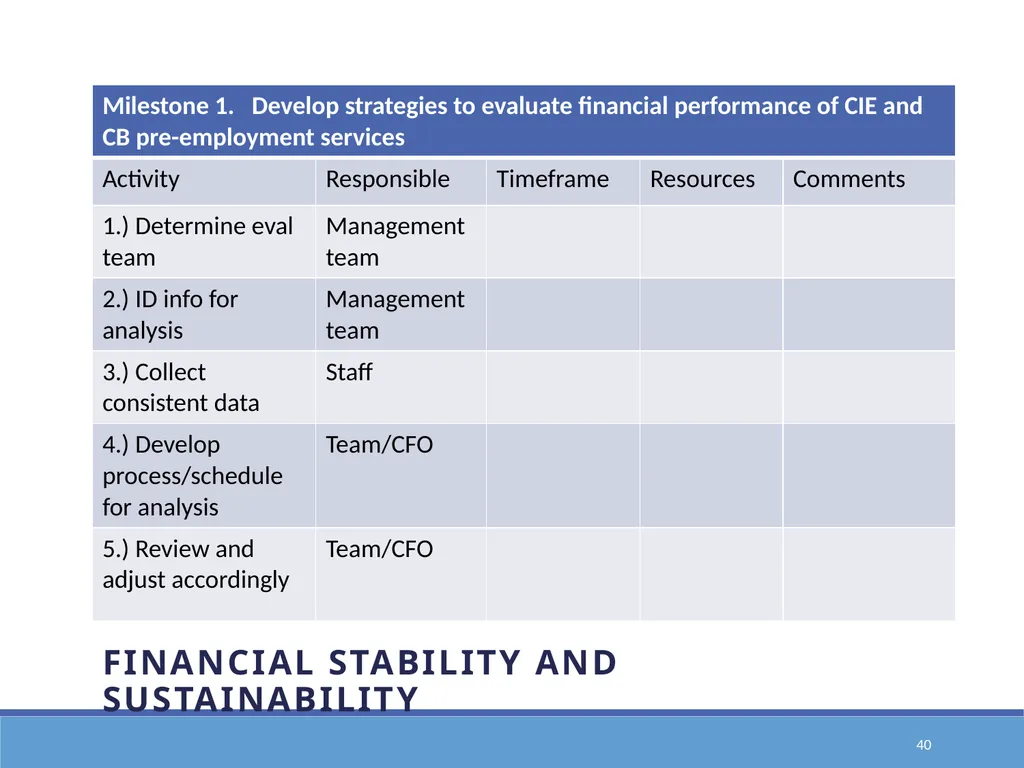
slide40. Financial stability and sustainability 40<br>
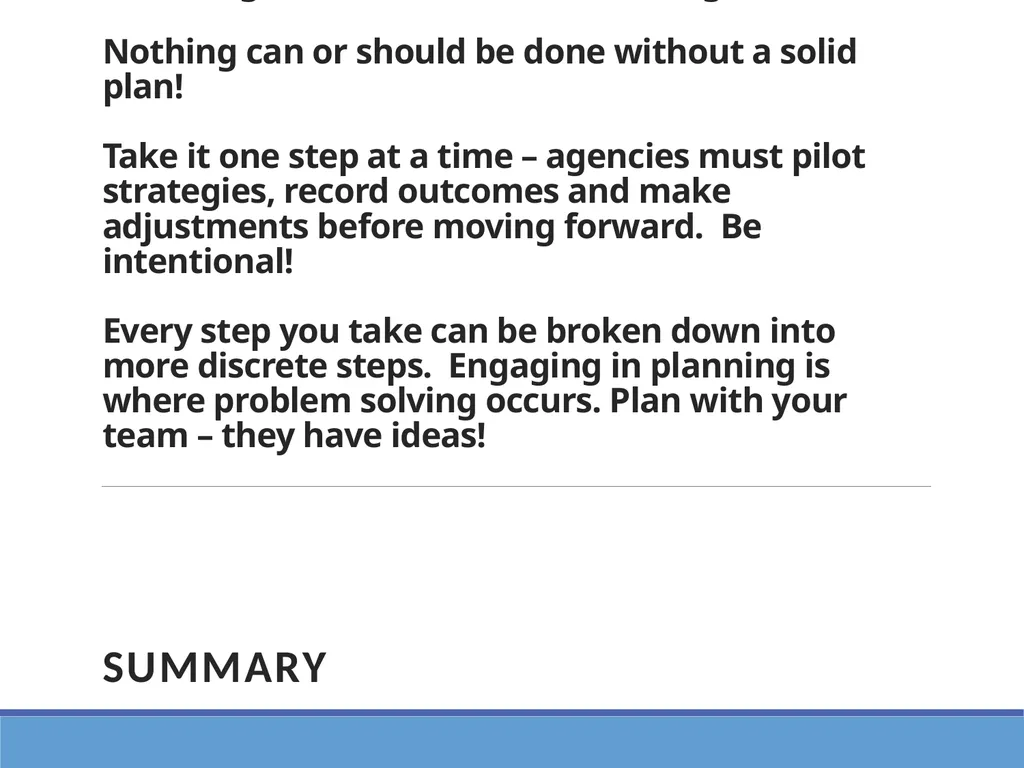
slide41. There are a great many things to take into consideration when agency transformation is occurring and it can be overwhelming Nothing can or should be done without a solid plan! Take it one step at a time – agencies must pilot strategies, record outcomes and make adjustments before moving forward. Be intentional! Every step you take can be broken down into more discrete steps. Engaging in planning is where problem solving occurs. Plan with your team – they have ideas! Summary<br>
slide42. Questions? Comments? Discussion? 42<br>
slide43. Contact Information Genni Sasnett
ODEP EFSLMP National Subject Matter Expert
202 812 4504
sasnettsara@outlook.com 43<br>
National EFSLMP Subject Matter Expert
Friday 8/18/17
Maryland provider webinar<br>
slide2. WE KNOW WHERE WE NEED TO GO So How do we get there? 2<br>
slide3. Conduct self assessment and review along with other information about your agency with the team Determine where you are strong and where you need to plan for change Begin to draft the plan based on where you are and what you are trying to achieve Keep reviewing the process of change. Use it along with your self-assessment and other assessments results as guidance to develop a plan How to Plan – from self assessment to developing the plan 3<br>
slide4. Note areas of strength Note areas to be strengthened Create lists of each to be addressed in the findings Identify additional materials to be reviewed (financials, tables of organization, etc.) Reviewing the assessments 4<br>
slide5. Develop a report to include: Overview of the agency - #s people served, funding sources, etc. Positive findings Items to be addressed based on assessment Developing the findings 5<br>
slide6. Share results and discuss with staff and board Arrange meetings with staff management direct support Arrange meeting with Board of Directors brief Chair first Discussions with staff/board 6<br>
slide7. Identify the Change Management Team within the agency Establish purpose and composition Determine meeting schedule Identify meeting locations, etc. Creating the team 7<br>
slide8. Determine plan format Review the findings and begin to formulate outcomes to be achieved Breakdown outcomes into goals and objectives, identify responsible parties, timeframes, etc. Begin the plan 8<br>
slide9. The Process of Planning 9<br>
slide10. All agencies must begin by having a vision of where they are heading. develop long term transformation goals 10<br>
slide11. ACME Services, Inc. will support all job seekers served by the agency in 100% community integrated employment and community based pre-employment services by 2020. ACME Services, Inc. will diversify funding to include all possible sources of funding for employment preparation and placement for people with disabilities and disadvantages referred to the agency, to include VR, IDD, DMH, Public Schools and private insurance by 2021. Long Term transformation goal Examples 11<br>
slide12. First and foremost, agencies must have the capacity to do effective job placement. Focus here first! Next step for beginner Agencies (Just getting started) 12<br>
slide13. Beginners - Develop a Employment pilot 13<br>
slide14. Assess the Pilot Results for the Following: Learn how to get results Create a core staff who have learned key tools and strategies Develop initial useful partnerships address issues and challenges
Revise strategies Project staffing and program requirements based on your findings
Evaluate current costs and funding
Make projections of anticipated costs and funding for a full-scale project 14<br>
slide15. Agencies must have effective community based pre-employment preparation strategies in place to succeed Community based pre-employment strategies (beginner agencies) 15<br>
slide16. People show the best employment outcomes when they have had community-based work experiences, especially paid ones. Work experiences that don’t have the same requirements and expectations as “typical” workplaces may reinforce incorrect messages WIOA makes clear that preparation should not include training in segregated settings with individuals earning sub-minimum wages Our future customers will be educated under IDEA and under WIOA requirements with expectations of CIE Community based pre-employment preparation 16<br>
slide17. Beginners – develop a pre-employment prep pilot 17<br>
slide18. Agencies that are already in process with providing community integrated employment must know they are doing it effectively from both a quality and financial view Next steps for agencies already started (intermediate agencies) 18<br>
slide19. intermediate – evaluate quality 19<br>
slide20. intermediate – evaluate finance 20<br>
slide21. Intermediate – evaluate pre-employment prep 21<br>
slide22. Agencies that are already providing cost-effective, quality community employment and community based pre-employment services with most individuals supported should advance efforts toward conversion Agencies already established Providing community integrated employment (Advanced agencies) 22<br>
slide23. Advanced – set deadlines for transition to cie 23<br>
slide24. Advanced – set deadlines for transition to CB prep 24<br>
slide25. advanced - decentralized services plans 25<br>
slide26. Important Areas of Focus for Planning 26<br>
slide27. Transportation is often challenging and should be a major area of planning in advance of job development transportation 27<br>
slide28. Transportation 28<br>
slide29. Public transportation – regular services and special services Taxis, Uber and Lyft Co-workers Family members/friends Collaborating with senior transportation services Community sponsorship – civic organizations, religious institutions, community service organizations Transportation - Some options To Consider 29<br>
slide30. Individuals and families have grown accustomed to services being provided in the traditional manner and change can be very unsettling for them. Agencies must anticipate these feelings and have proactive plans to address their discomfort Individual and Family opposition 30<br>
slide31. individual opposition 31<br>
slide32. Family opposition 32<br>
slide33. Individuals and families may not have the info you have Older individuals and their families have been told FB services were the best option for years Benefits, especially Medicaid, mean a great deal to families though they may not say so Individuals and their families trust other individuals and families who have been successful in transition. They are your best supporters Individual & Family opposition – some things to consider 33<br>
slide34. Agencies cannot move forward without staff who are committed and well trained. Plans must be made for recruitment, hiring, orientation and support for new staff as well as training and supporting transition to new roles. Staff training and development 34<br>
slide35. Staff training and development 35<br>
slide36. Staff training and development 36<br>
slide37. People with complex challenges can be successfully supported in the community with appropriate planning and adequate resources. supporting people with medical and/or behavioral complexities in community settings 37<br>
slide38. supporting people with complexities in the community 38<br>
slide39. Even the best quality agencies cannot succeed if they are not financially viable. Financial analysis is necessary throughout the transformation process. Financial stability and sustainability 39<br>
slide40. Financial stability and sustainability 40<br>
slide41. There are a great many things to take into consideration when agency transformation is occurring and it can be overwhelming Nothing can or should be done without a solid plan! Take it one step at a time – agencies must pilot strategies, record outcomes and make adjustments before moving forward. Be intentional! Every step you take can be broken down into more discrete steps. Engaging in planning is where problem solving occurs. Plan with your team – they have ideas! Summary<br>
slide42. Questions? Comments? Discussion? 42<br>
slide43. Contact Information Genni Sasnett
ODEP EFSLMP National Subject Matter Expert
202 812 4504
sasnettsara@outlook.com 43<br>