
Adaptation in Climate Change and Infrastructure
Description: Adaptation in Climate Change and Infrastructure Antonio L. Fernandez, D. Eng. Outline Conceptualizing infrastructurecritical infrastructure lifelines Characteristics of infrasructure OptionsActions Prerequisites Prioritization Going
Related Topics
Download Presentation
"Adaptation in Climate Change and Infrastructure" is the property of its rightful owner. Permission is granted to download and print the materials on this website for personal, non-commercial use only, and to display it on your personal computer provided you do not modify the materials and that you retain all copyright notices contained in the materials. By downloading content from our website, you accept the terms of this agreement.
Presentation Transcript
slide1. Adaptation in Climate Change and Infrastructure Antonio L. Fernandez, D. Eng.<br>
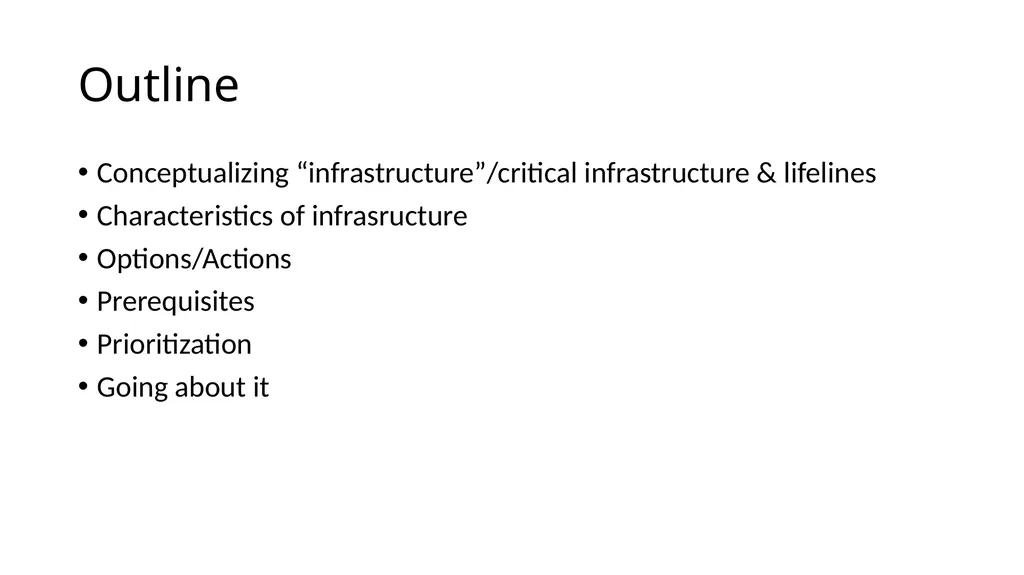
slide2. Outline Conceptualizing “infrastructure”/critical infrastructure & lifelines
Characteristics of infrasructure
Options/Actions
Prerequisites
Prioritization
Going about it<br>
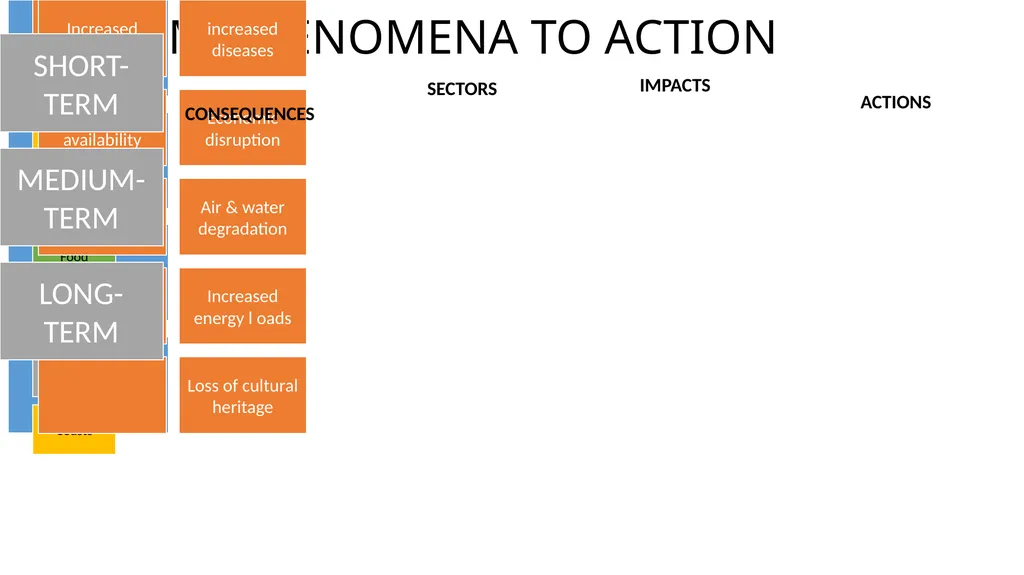
slide3. FROM PHENOMENA TO ACTION INCREASE IN GHG & WARMING SECTORS IMPACTS CONSEQUENCES ACTIONS<br>
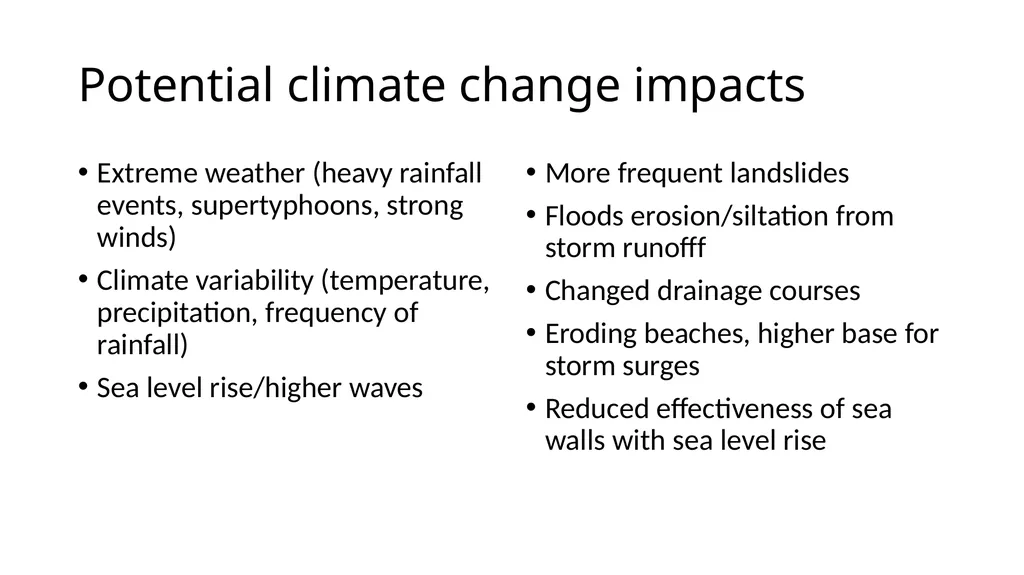
slide4. Potential climate change impacts Extreme weather (heavy rainfall events, supertyphoons, strong winds)
Climate variability (temperature, precipitation, frequency of rainfall)
Sea level rise/higher waves More frequent landslides
Floods erosion/siltation from storm runofff
Changed drainage courses
Eroding beaches, higher base for storm surges
Reduced effectiveness of sea walls with sea level rise<br>
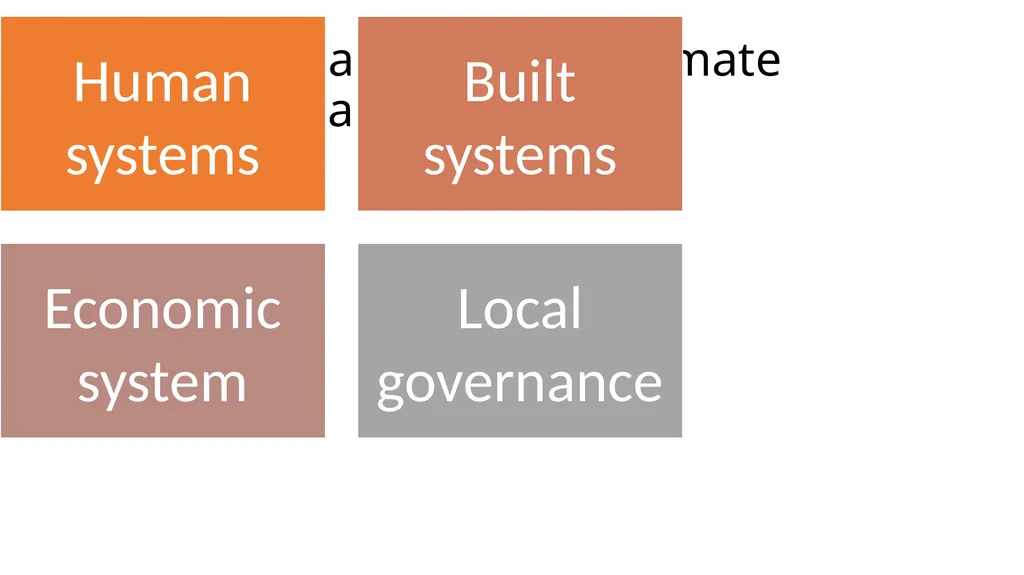
slide5. Framing adaptation and climate change: local context<br>
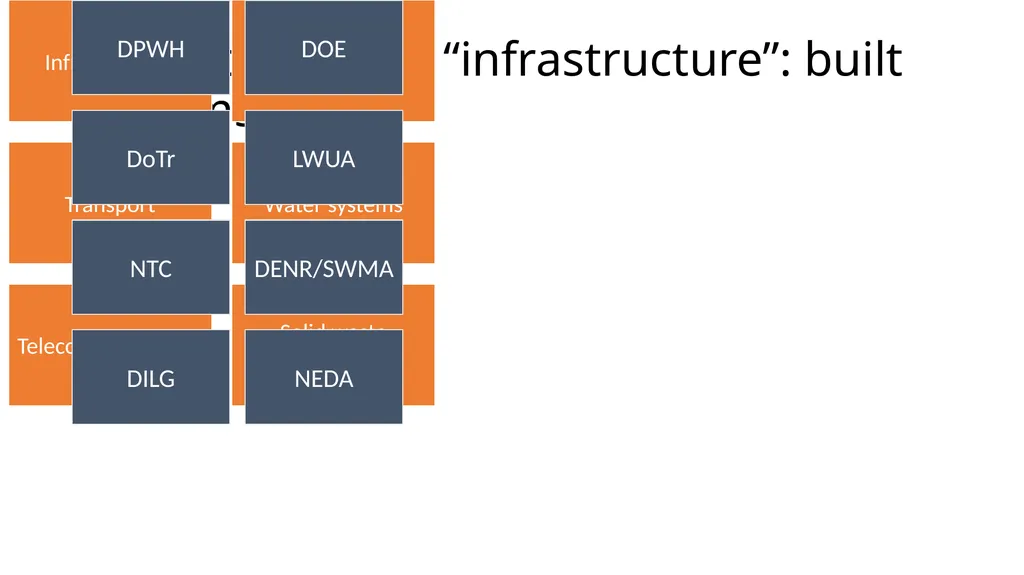
slide6. Conceptualizing “infrastructure”: built systems<br>
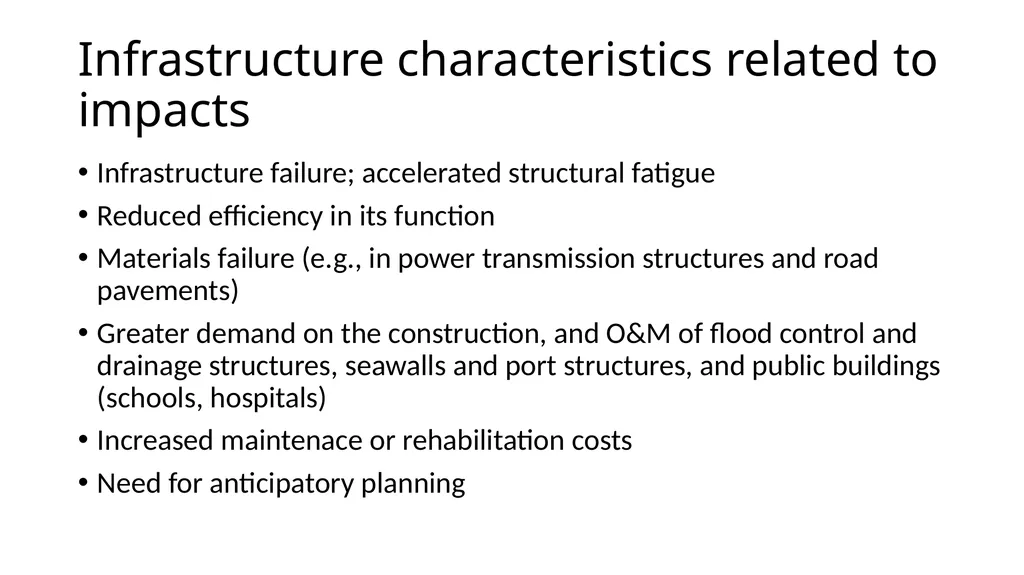
slide7. Infrastructure characteristics related to impacts Infrastructure failure; accelerated structural fatigue
Reduced efficiency in its function
Materials failure (e.g., in power transmission structures and road pavements)
Greater demand on the construction, and O&M of flood control and drainage structures, seawalls and port structures, and public buildings (schools, hospitals)
Increased maintenace or rehabilitation costs
Need for anticipatory planning<br>
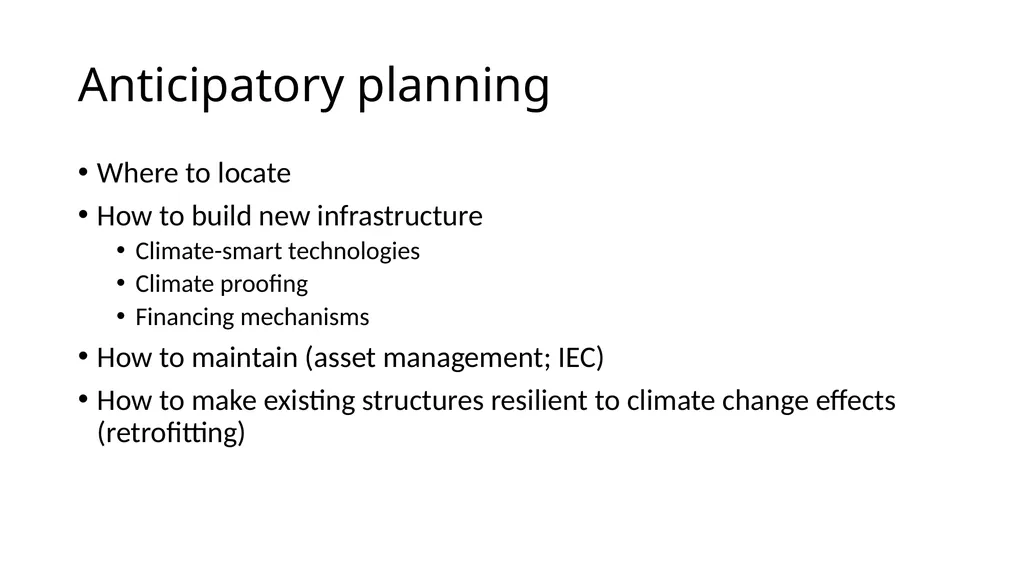
slide8. Anticipatory planning Where to locate
How to build new infrastructure
Climate-smart technologies
Climate proofing
Financing mechanisms
How to maintain (asset management; IEC)
How to make existing structures resilient to climate change effects (retrofitting)<br>
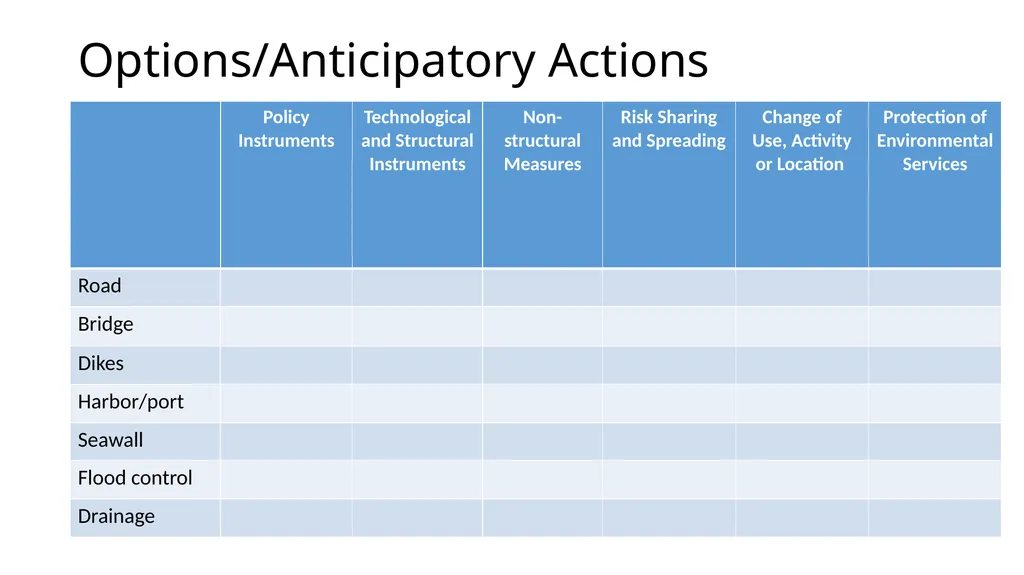
slide9. Options/Anticipatory Actions<br>
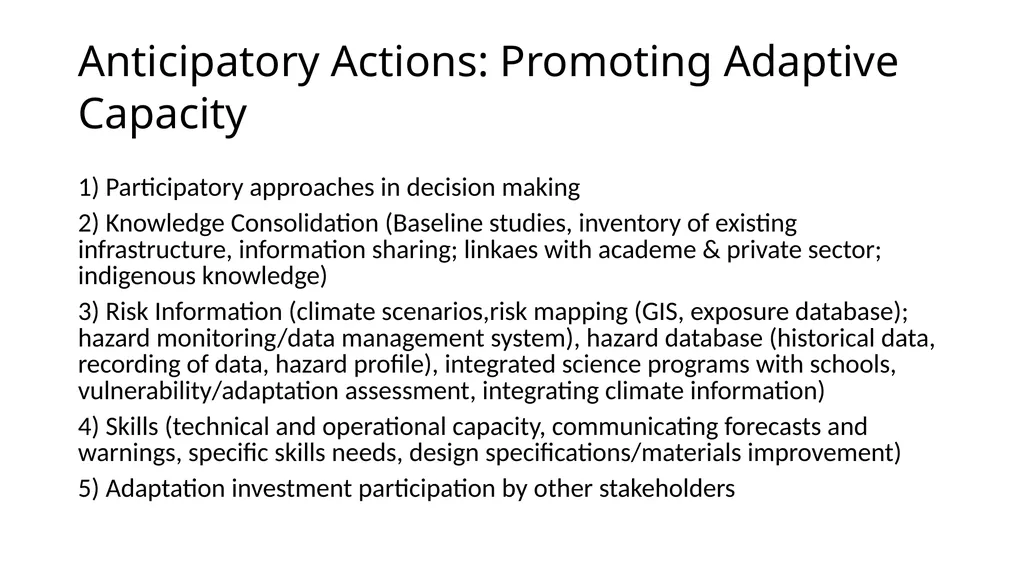
slide10. Anticipatory Actions: Promoting Adaptive Capacity 1) Participatory approaches in decision making
2) Knowledge Consolidation (Baseline studies, inventory of existing infrastructure, information sharing; linkaes with academe & private sector; indigenous knowledge)
3) Risk Information (climate scenarios,risk mapping (GIS, exposure database); hazard monitoring/data management system), hazard database (historical data, recording of data, hazard profile), integrated science programs with schools, vulnerability/adaptation assessment, integrating climate information)
4) Skills (technical and operational capacity, communicating forecasts and warnings, specific skills needs, design specifications/materials improvement)
5) Adaptation investment participation by other stakeholders<br>
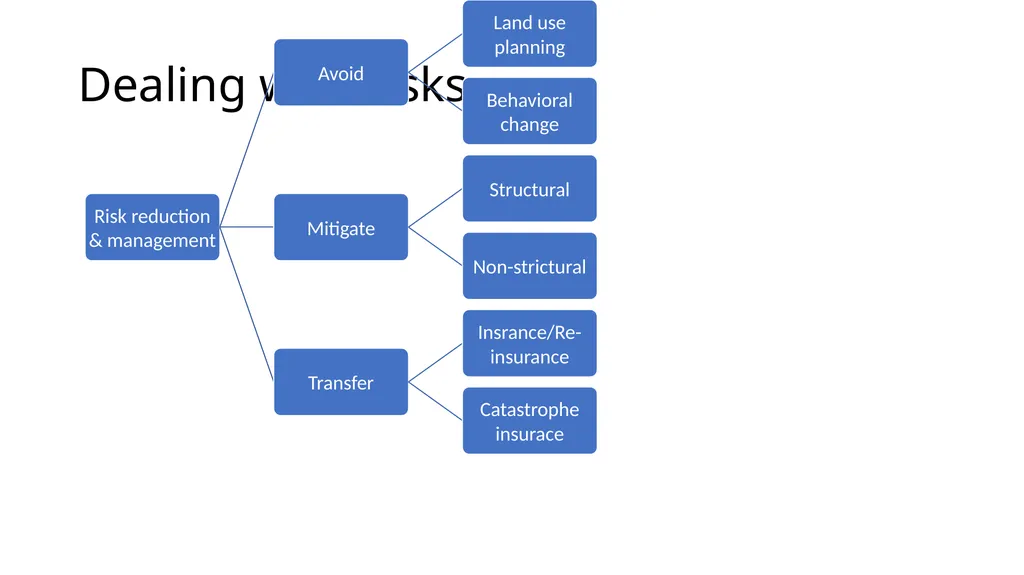
slide11. Dealing with risks<br>
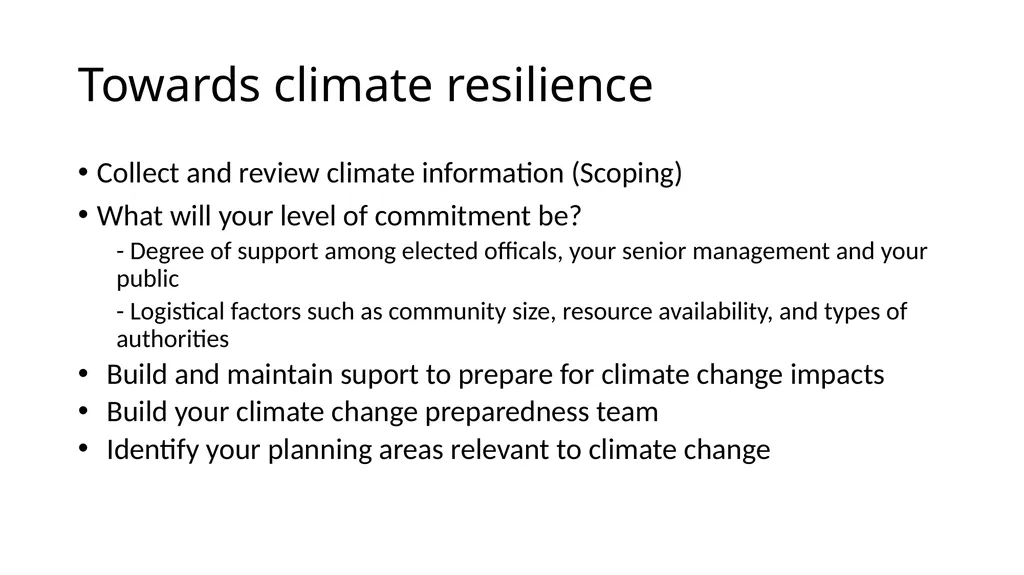
slide12. Towards climate resilience Collect and review climate information (Scoping)
What will your level of commitment be?
- Degree of support among elected officals, your senior management and your public
- Logistical factors such as community size, resource availability, and types of authorities
Build and maintain suport to prepare for climate change impacts
Build your climate change preparedness team
Identify your planning areas relevant to climate change<br>
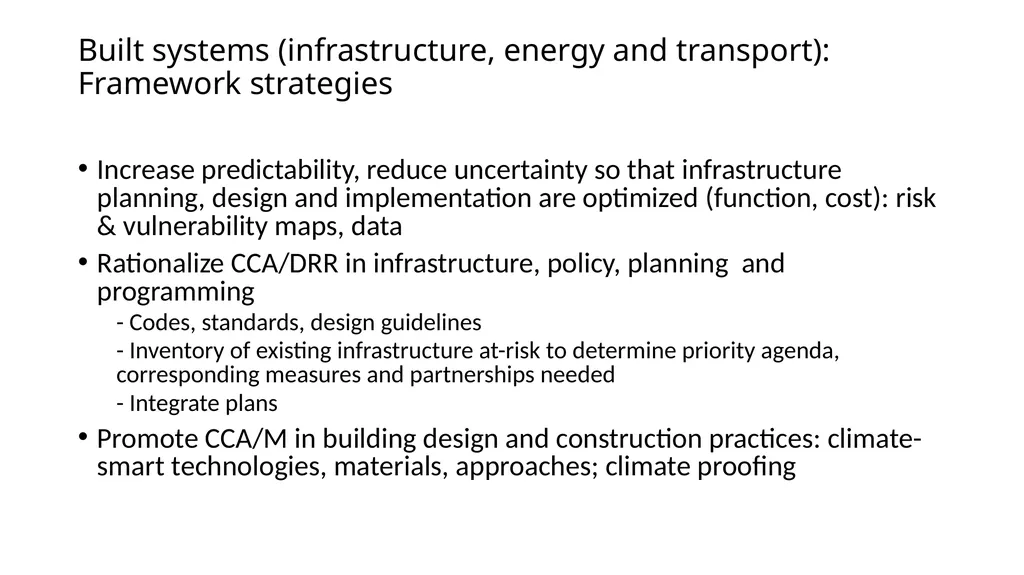
slide13. Built systems (infrastructure, energy and transport): Framework strategies Increase predictability, reduce uncertainty so that infrastructure planning, design and implementation are optimized (function, cost): risk & vulnerability maps, data
Rationalize CCA/DRR in infrastructure, policy, planning and programming
- Codes, standards, design guidelines
- Inventory of existing infrastructure at-risk to determine priority agenda, corresponding measures and partnerships needed
- Integrate plans
Promote CCA/M in building design and construction practices: climate-smart technologies, materials, approaches; climate proofing<br>
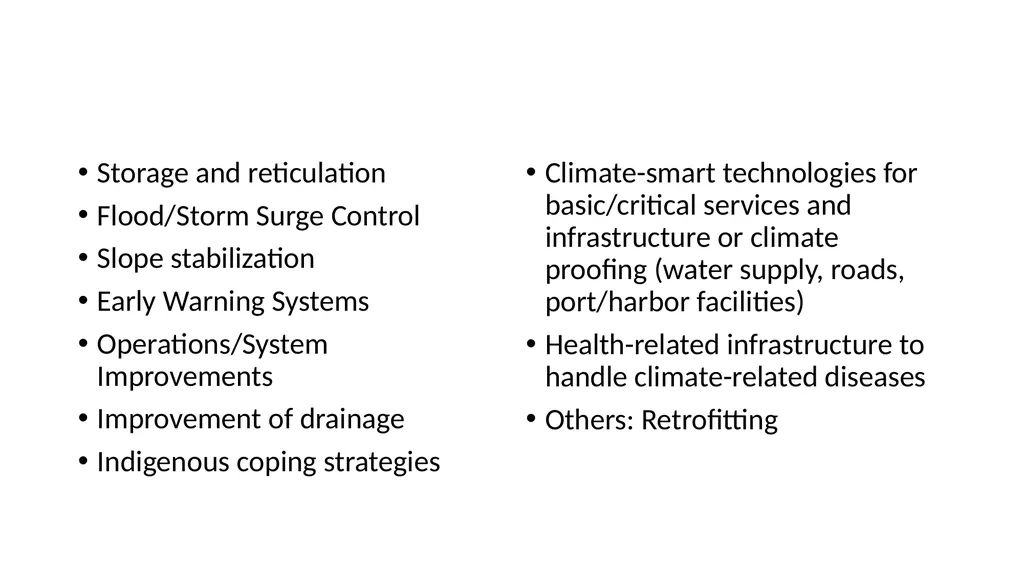
slide14. Storage and reticulation
Flood/Storm Surge Control
Slope stabilization
Early Warning Systems
Operations/System Improvements
Improvement of drainage
Indigenous coping strategies Climate-smart technologies for basic/critical services and infrastructure or climate proofing (water supply, roads, port/harbor facilities)
Health-related infrastructure to handle climate-related diseases
Others: Retrofitting<br>
slide2. Outline Conceptualizing “infrastructure”/critical infrastructure & lifelines
Characteristics of infrasructure
Options/Actions
Prerequisites
Prioritization
Going about it<br>
slide3. FROM PHENOMENA TO ACTION INCREASE IN GHG & WARMING SECTORS IMPACTS CONSEQUENCES ACTIONS<br>
slide4. Potential climate change impacts Extreme weather (heavy rainfall events, supertyphoons, strong winds)
Climate variability (temperature, precipitation, frequency of rainfall)
Sea level rise/higher waves More frequent landslides
Floods erosion/siltation from storm runofff
Changed drainage courses
Eroding beaches, higher base for storm surges
Reduced effectiveness of sea walls with sea level rise<br>
slide5. Framing adaptation and climate change: local context<br>
slide6. Conceptualizing “infrastructure”: built systems<br>
slide7. Infrastructure characteristics related to impacts Infrastructure failure; accelerated structural fatigue
Reduced efficiency in its function
Materials failure (e.g., in power transmission structures and road pavements)
Greater demand on the construction, and O&M of flood control and drainage structures, seawalls and port structures, and public buildings (schools, hospitals)
Increased maintenace or rehabilitation costs
Need for anticipatory planning<br>
slide8. Anticipatory planning Where to locate
How to build new infrastructure
Climate-smart technologies
Climate proofing
Financing mechanisms
How to maintain (asset management; IEC)
How to make existing structures resilient to climate change effects (retrofitting)<br>
slide9. Options/Anticipatory Actions<br>
slide10. Anticipatory Actions: Promoting Adaptive Capacity 1) Participatory approaches in decision making
2) Knowledge Consolidation (Baseline studies, inventory of existing infrastructure, information sharing; linkaes with academe & private sector; indigenous knowledge)
3) Risk Information (climate scenarios,risk mapping (GIS, exposure database); hazard monitoring/data management system), hazard database (historical data, recording of data, hazard profile), integrated science programs with schools, vulnerability/adaptation assessment, integrating climate information)
4) Skills (technical and operational capacity, communicating forecasts and warnings, specific skills needs, design specifications/materials improvement)
5) Adaptation investment participation by other stakeholders<br>
slide11. Dealing with risks<br>
slide12. Towards climate resilience Collect and review climate information (Scoping)
What will your level of commitment be?
- Degree of support among elected officals, your senior management and your public
- Logistical factors such as community size, resource availability, and types of authorities
Build and maintain suport to prepare for climate change impacts
Build your climate change preparedness team
Identify your planning areas relevant to climate change<br>
slide13. Built systems (infrastructure, energy and transport): Framework strategies Increase predictability, reduce uncertainty so that infrastructure planning, design and implementation are optimized (function, cost): risk & vulnerability maps, data
Rationalize CCA/DRR in infrastructure, policy, planning and programming
- Codes, standards, design guidelines
- Inventory of existing infrastructure at-risk to determine priority agenda, corresponding measures and partnerships needed
- Integrate plans
Promote CCA/M in building design and construction practices: climate-smart technologies, materials, approaches; climate proofing<br>
slide14. Storage and reticulation
Flood/Storm Surge Control
Slope stabilization
Early Warning Systems
Operations/System Improvements
Improvement of drainage
Indigenous coping strategies Climate-smart technologies for basic/critical services and infrastructure or climate proofing (water supply, roads, port/harbor facilities)
Health-related infrastructure to handle climate-related diseases
Others: Retrofitting<br>