04
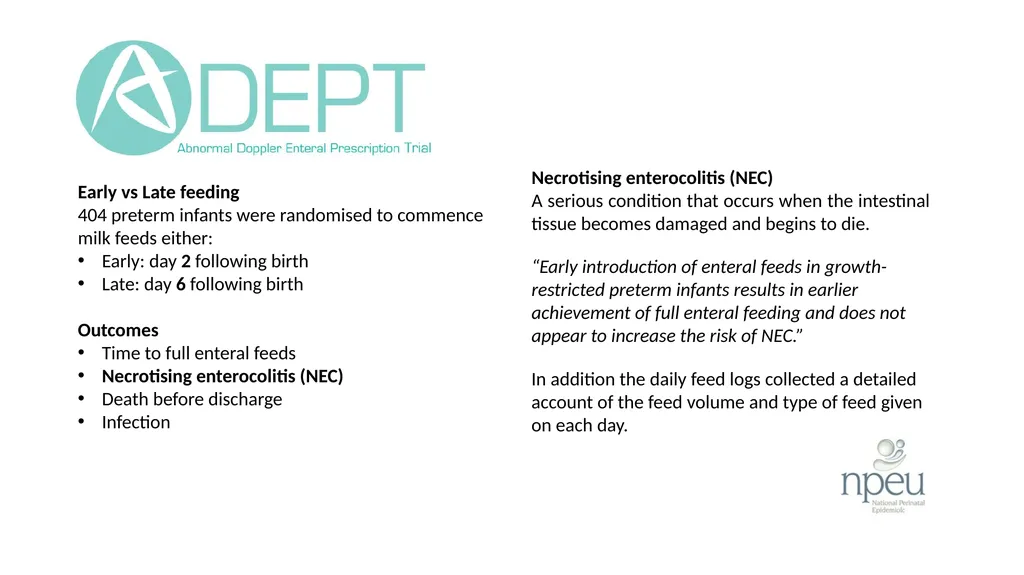
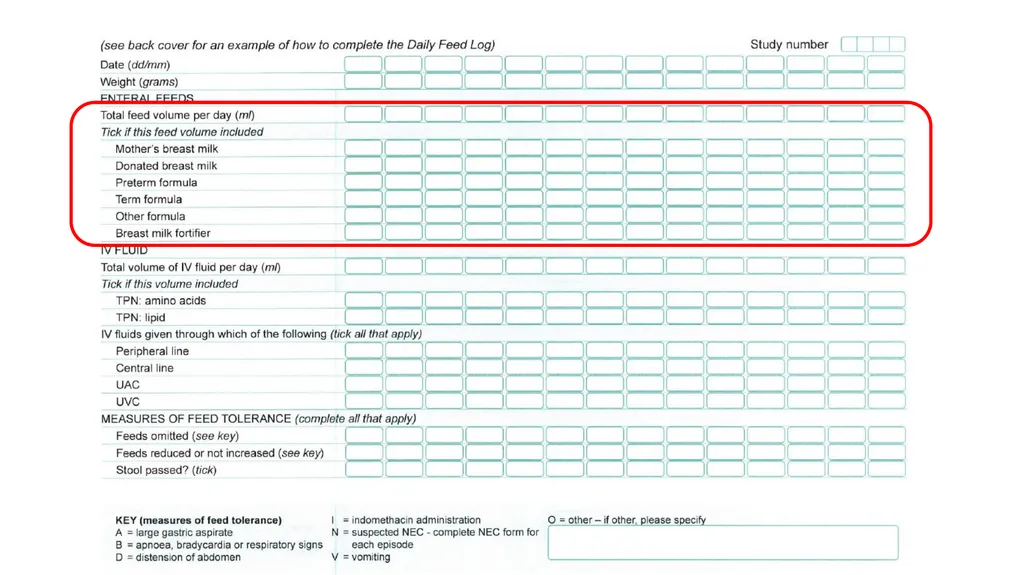
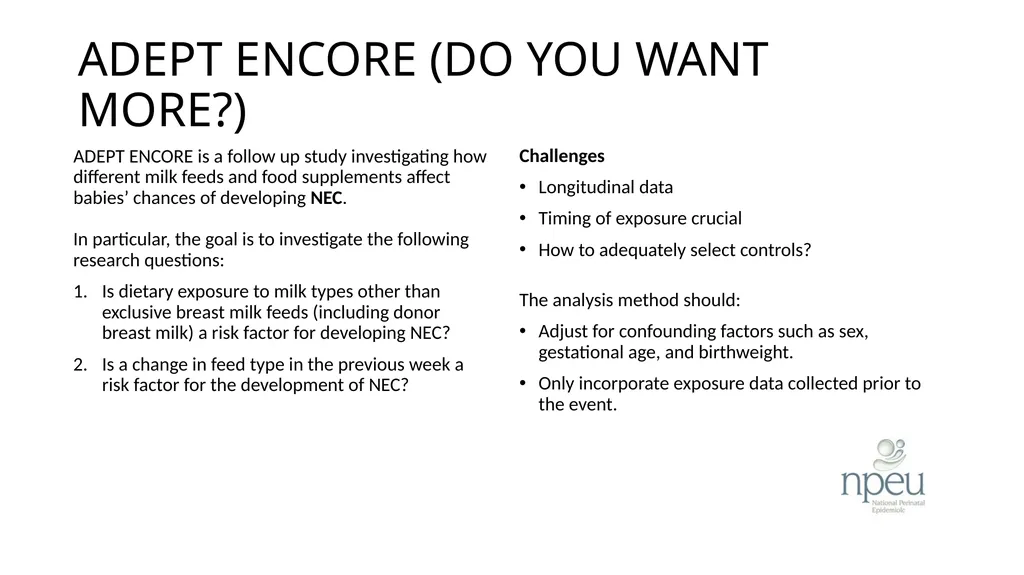
ADEPT ENCORE (DO YOU WANT MORE?) ADEPT ENCORE is a follow up study investigating how different milk feeds and food supplements affect babies’ chances of developing NEC. The analysis method should:
Adjust for confounding factors such as sex, gestational age, and birthweight.
Only incorporate exposure data collected prior to the event. Challenges
Longitudinal data
Timing of exposure crucial
How to adequately select controls? In particular, the goal is to investigate the following research questions:
Is dietary exposure to milk types other than exclusive breast milk feeds (including donor breast milk) a risk factor for developing NEC?
Is a change in feed type in the previous week a risk factor for the development of NEC?<br>
05
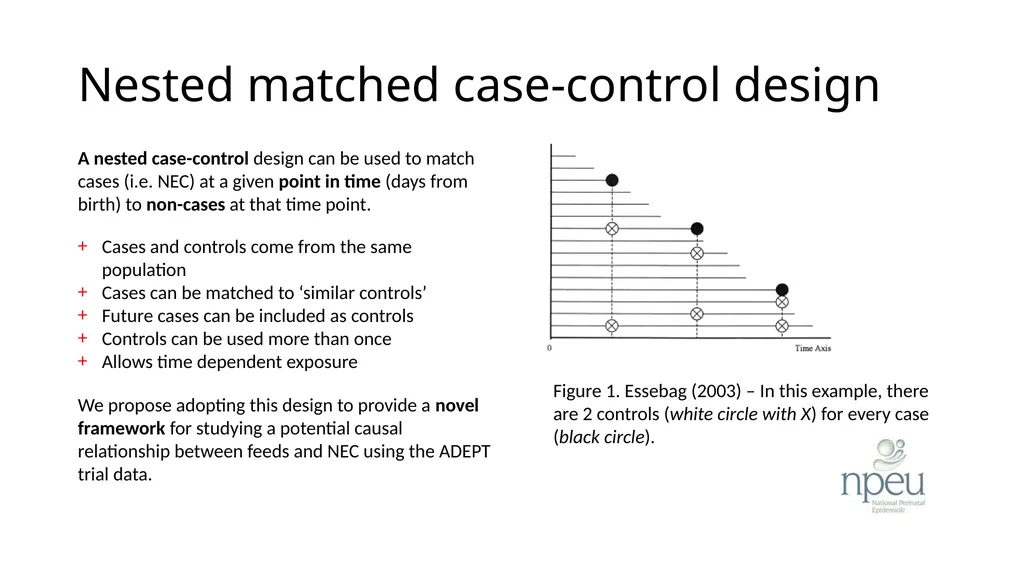
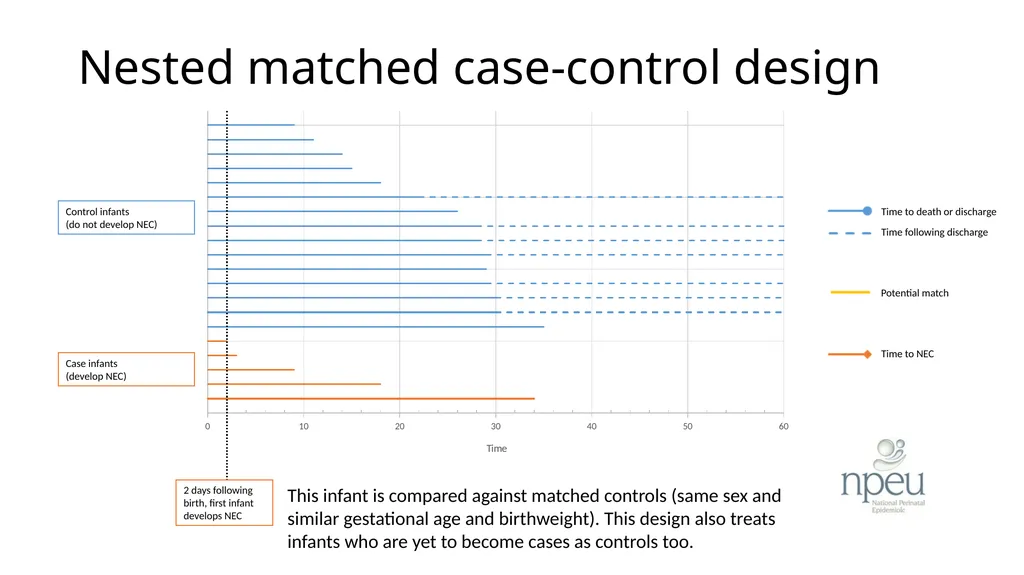
Nested matched case-control design Cases and controls come from the same population
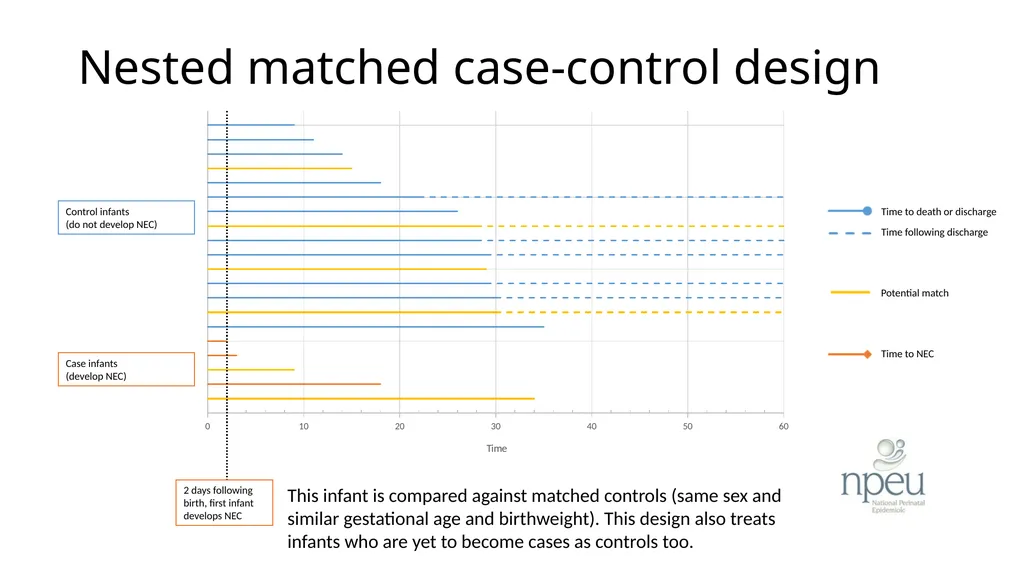
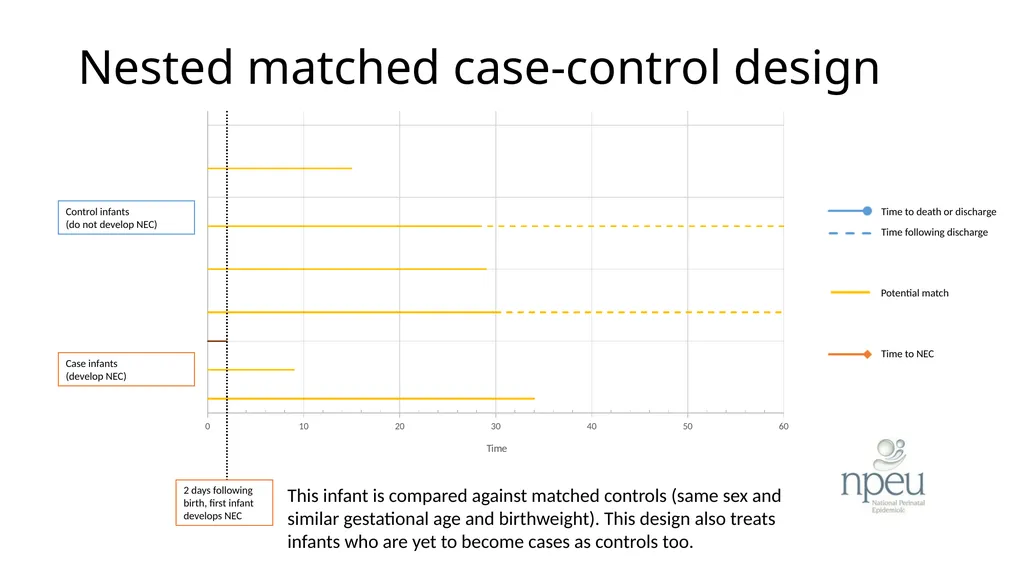
Cases can be matched to ‘similar controls’
Future cases can be included as controls
Controls can be used more than once
Allows time dependent exposure We propose adopting this design to provide a novel framework for studying a potential causal relationship between feeds and NEC using the ADEPT trial data. A nested case-control design can be used to match cases (i.e. NEC) at a given point in time (days from birth) to non-cases at that time point. Figure 1. Essebag (2003) – In this example, there are 2 controls (white circle with X) for every case (black circle).<br>
06
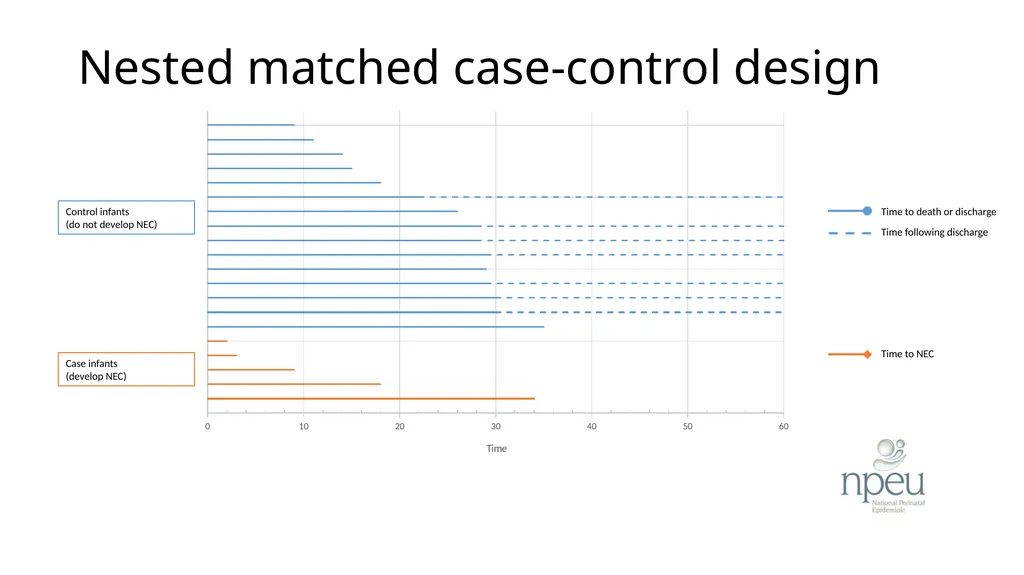
Time to death or discharge Time following discharge Nested matched case-control design Control infants �(do not develop NEC) Case infants
(develop NEC) Time to NEC<br>
07
Time to death or discharge Time to NEC Nested matched case-control design This infant is compared against matched controls (same sex and similar gestational age and birthweight). This design also treats infants who are yet to become cases as controls too. 2 days following birth, first infant develops NEC Time following discharge Control infants �(do not develop NEC) Case infants
(develop NEC) Potential match<br>
08
Time to death or discharge Time to NEC Nested matched case-control design This infant is compared against matched controls (same sex and similar gestational age and birthweight). This design also treats infants who are yet to become cases as controls too. 2 days following birth, first infant develops NEC Time following discharge Control infants �(do not develop NEC) Case infants
(develop NEC) Potential match<br>
09
Time to death or discharge Time to NEC Nested matched case-control design This infant is compared against matched controls (same sex and similar gestational age and birthweight). This design also treats infants who are yet to become cases as controls too. 2 days following birth, first infant develops NEC Time following discharge Control infants �(do not develop NEC) Case infants
(develop NEC) Potential match<br>
10
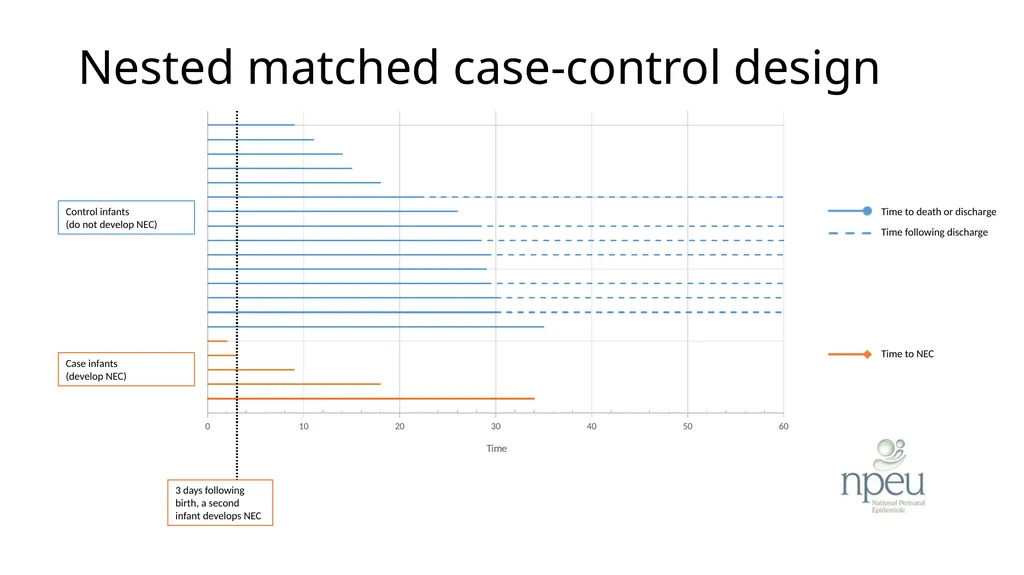
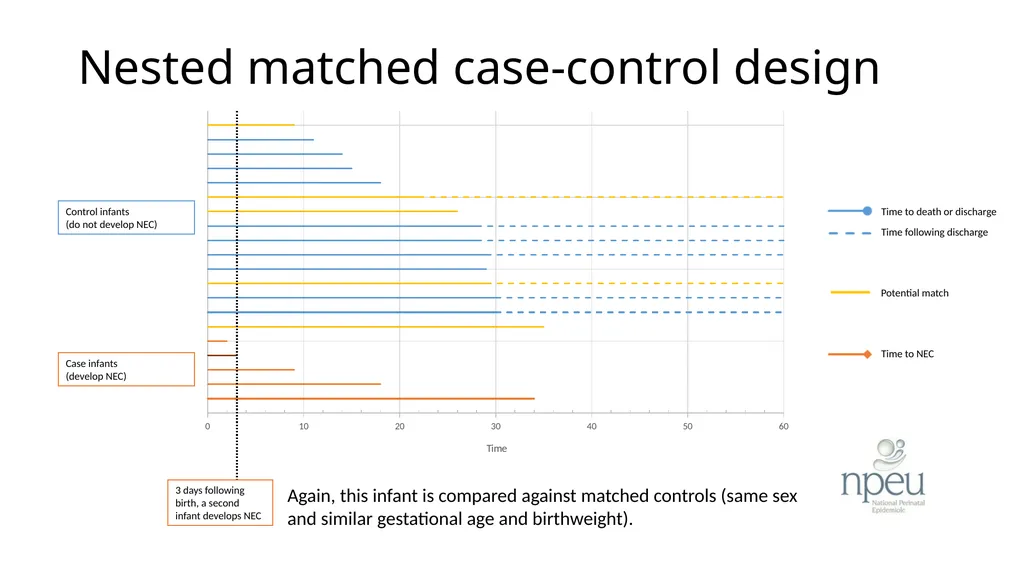
Time to death or discharge Time to NEC Nested matched case-control design 3 days following birth, a second infant develops NEC Time following discharge Control infants �(do not develop NEC) Case infants
(develop NEC)<br>
11
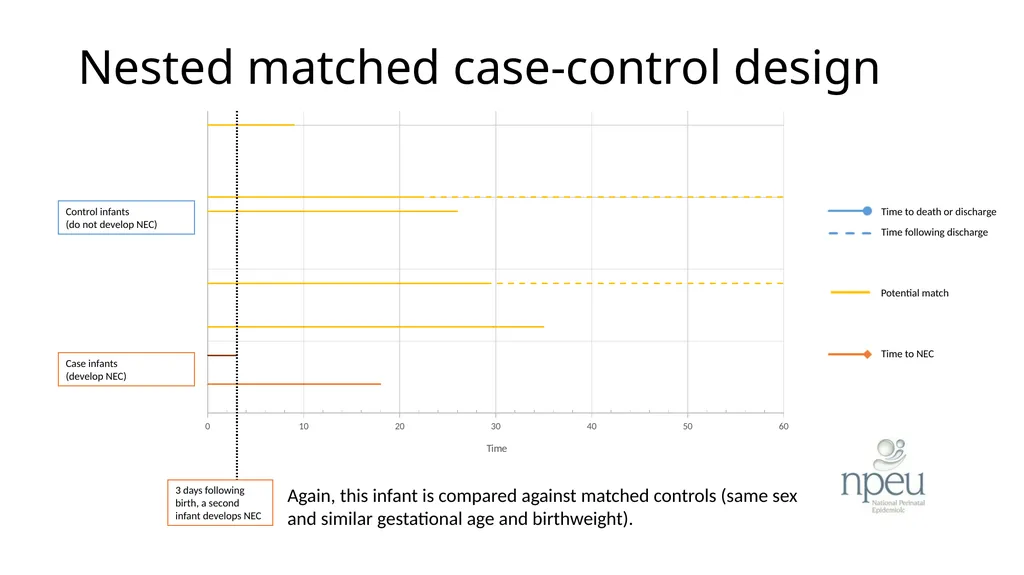
Time to death or discharge Time to NEC Nested matched case-control design Again, this infant is compared against matched controls (same sex and similar gestational age and birthweight). 3 days following birth, a second infant develops NEC Time following discharge Control infants �(do not develop NEC) Case infants
(develop NEC) Potential match<br>
12
Time to death or discharge Time to NEC Nested matched case-control design Again, this infant is compared against matched controls (same sex and similar gestational age and birthweight). 3 days following birth, a second infant develops NEC Time following discharge Control infants �(do not develop NEC) Case infants
(develop NEC) Potential match<br>
13
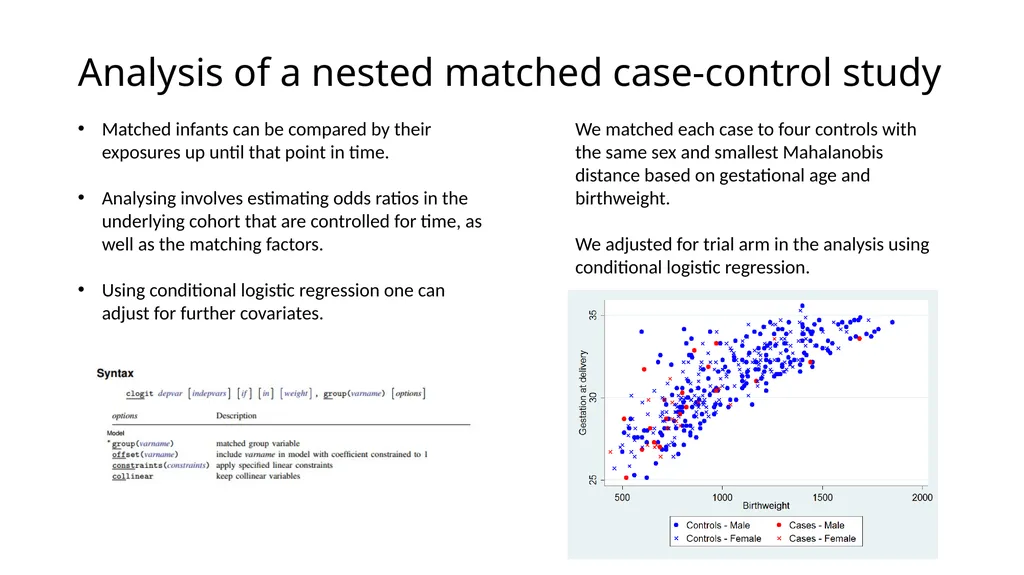
Analysis of a nested matched case-control study Matched infants can be compared by their exposures up until that point in time.
Analysing involves estimating odds ratios in the underlying cohort that are controlled for time, as well as the matching factors.
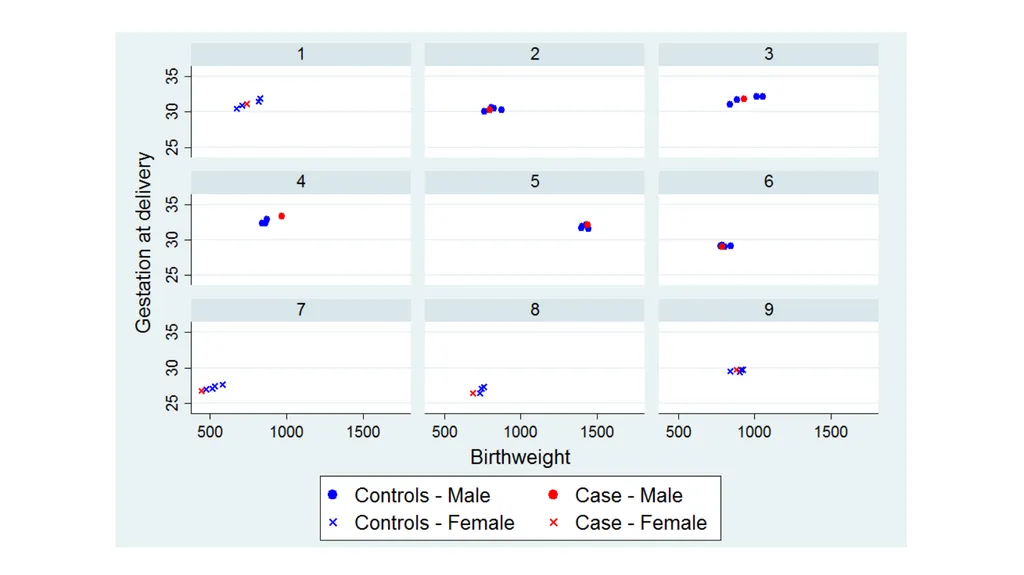
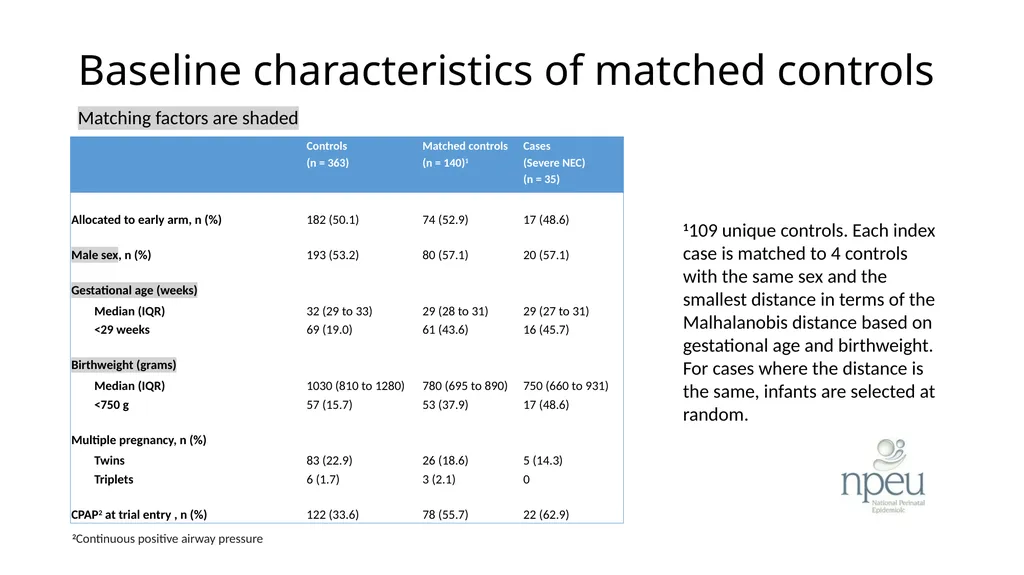
Using conditional logistic regression one can adjust for further covariates. We matched each case to four controls with the same sex and smallest Mahalanobis distance based on gestational age and birthweight.
We adjusted for trial arm in the analysis using conditional logistic regression.<br>
14
1109 unique controls. Each index case is matched to 4 controls with the same sex and the smallest distance in terms of the Malhalanobis distance based on gestational age and birthweight. For cases where the distance is the same, infants are selected at random. 2Continuous positive airway pressure Baseline characteristics of matched controls Matching factors are shaded<br>
15
Discussion points Selecting the appropriate number of controls
Implication of including future cases as controls
The dilemma of matching/adjusting for allocation<br>
16
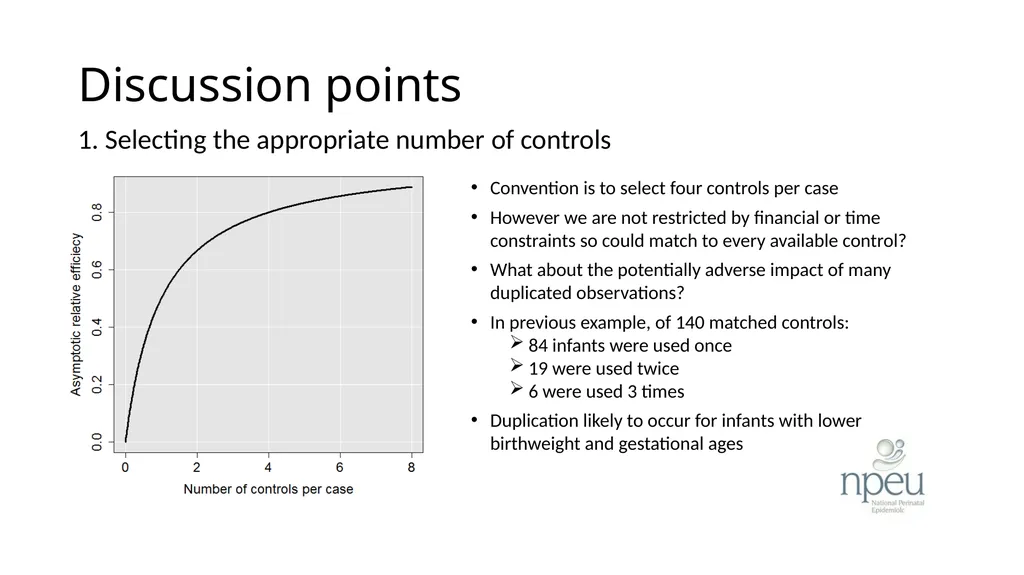
Discussion points Convention is to select four controls per case
However we are not restricted by financial or time constraints so could match to every available control?
What about the potentially adverse impact of many duplicated observations?
In previous example, of 140 matched controls:
84 infants were used once
19 were used twice
6 were used 3 times
Duplication likely to occur for infants with lower birthweight and gestational ages 1. Selecting the appropriate number of controls<br>
17
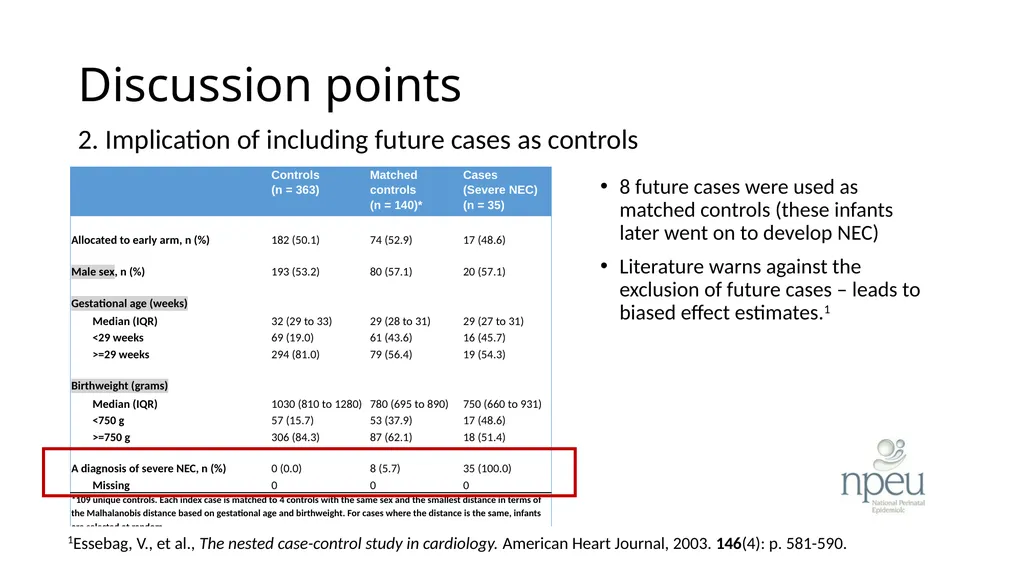
Discussion points 2. Implication of including future cases as controls 8 future cases were used as matched controls (these infants later went on to develop NEC)
Literature warns against the exclusion of future cases – leads to biased effect estimates.1 1Essebag, V., et al., The nested case-control study in cardiology. American Heart Journal, 2003. 146(4): p. 581-590.<br>
18
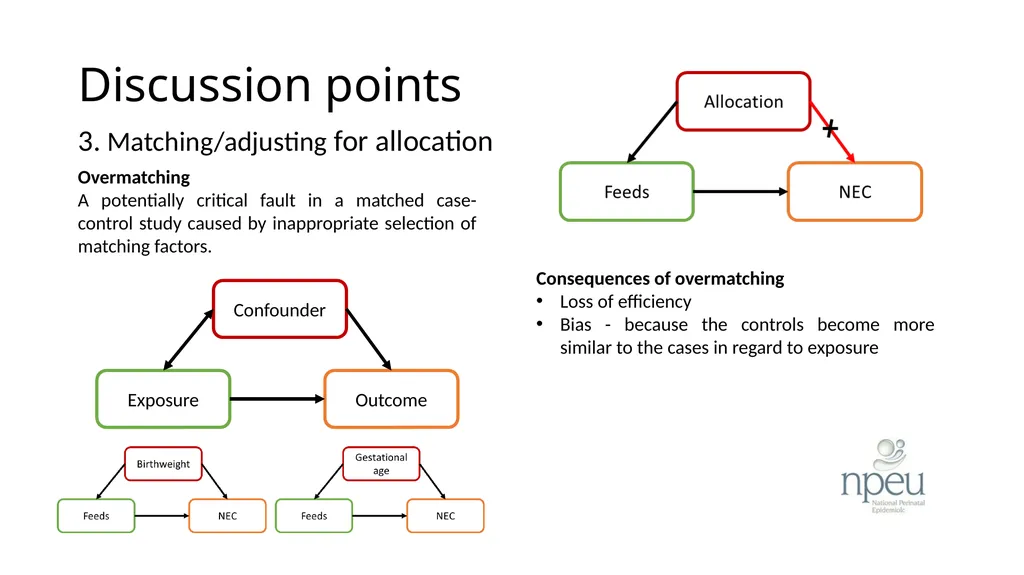
Discussion points 3. Matching/adjusting for allocation Overmatching
A potentially critical fault in a matched case-control study caused by inappropriate selection of matching factors. Consequences of overmatching
Loss of efficiency
Bias - because the controls become more similar to the cases in regard to exposure<br>
19
References Leaf, A., et al., Early or Delayed Enteral Feeding for Preterm Growth-Restricted Infants: A Randomized Trial. Pediatrics, 2012. 129(5): p. e1260-e1268.
Walsh, M.C. and R.M. Kliegman, Necrotizing enterocolitis: treatment based on staging criteria. Pediatr Clin North Am, 1986. 33.
Ernster, V.L., Nested Case-Control Studies. Preventive Medicine, 1994. 23(5): p. 587-590.
Essebag, V., et al., The nested case-control study in cardiology. American Heart Journal, 2003. 146(4): p. 581-590.
Essebag, V., et al., Comparison of nested case-control and survival analysis methodologies for analysis of time-dependent exposure. BMC Medical Research Methodology, 2005. 5(1): p. 5.
Graham, D.J., et al., Risk of acute myocardial infarction and sudden cardiac death in patients treated with cyclo-oxygenase 2 selective and non-selective non-steroidal anti-inflammatory drugs: nested case-control study. The Lancet, 2005. 365(9458): p. 475-481.<br>