
Adriana Alberti Chief, Capacity Development Unit
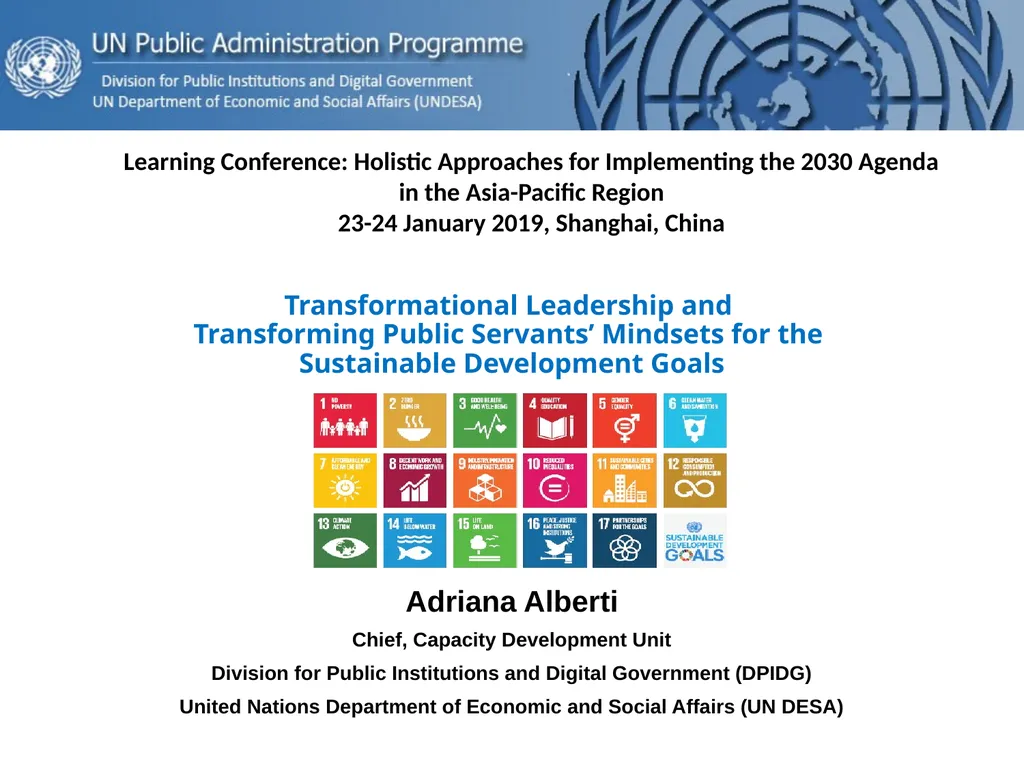

Description: Adriana Alberti Chief, Capacity Development Unit Division for Public Institutions and Digital Government (DPIDG) United Nations Department of Economic and Social Affairs (UN DESA) Transformational Leadership and Transforming Public
Related Topics
Download Presentation
"Adriana Alberti Chief, Capacity Development Unit" is the property of its rightful owner. Permission is granted to download and print the materials on this website for personal, non-commercial use only, and to display it on your personal computer provided you do not modify the materials and that you retain all copyright notices contained in the materials. By downloading content from our website, you accept the terms of this agreement.
Presentation Transcript
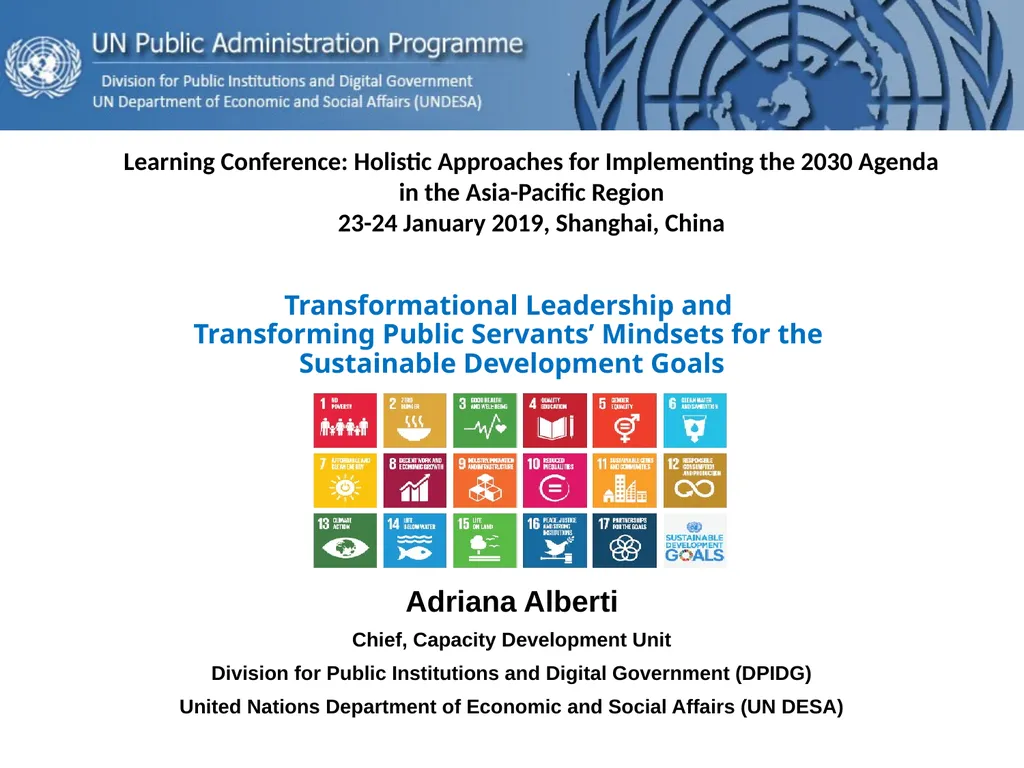
slide1. Adriana Alberti
Chief, Capacity Development Unit
Division for Public Institutions and Digital Government (DPIDG)
United Nations Department of Economic and Social Affairs (UN DESA) Transformational Leadership and Transforming Public Servants’ Mindsets for the Sustainable Development Goals Learning Conference: Holistic Approaches for Implementing the 2030 Agenda
in the Asia-Pacific Region
23-24 January 2019, Shanghai, China<br>
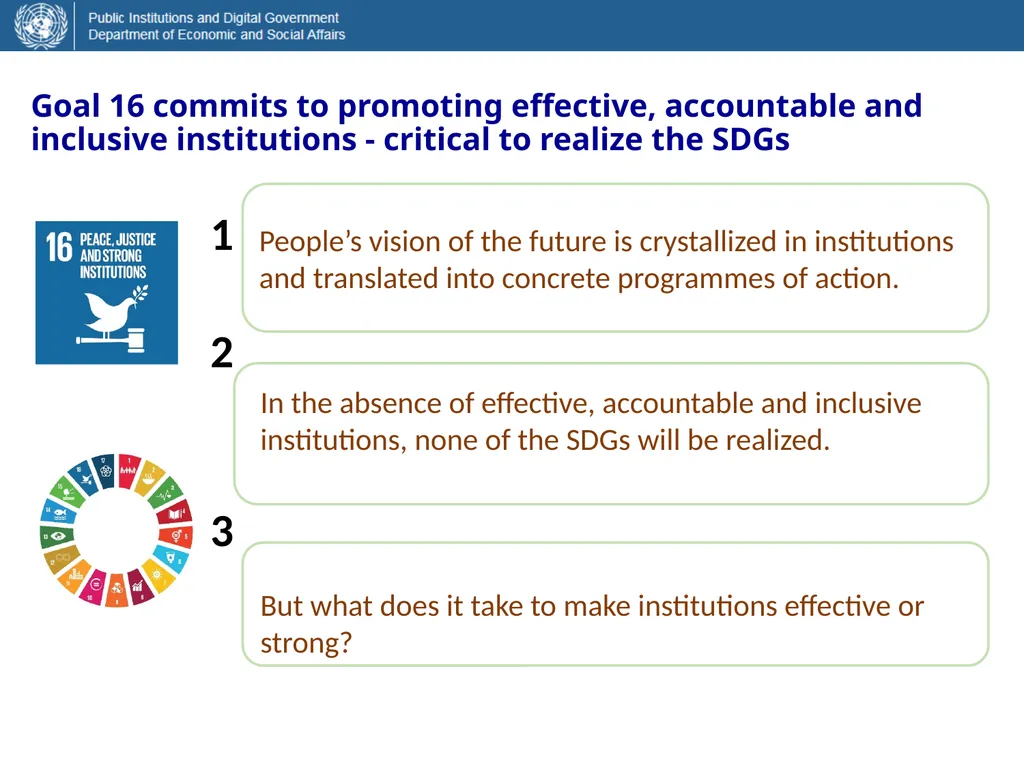
slide2. Goal 16 commits to promoting effective, accountable and inclusive institutions - critical to realize the SDGs In the absence of effective, accountable and inclusive institutions, none of the SDGs will be realized. But what does it take to make institutions effective or strong?<br>
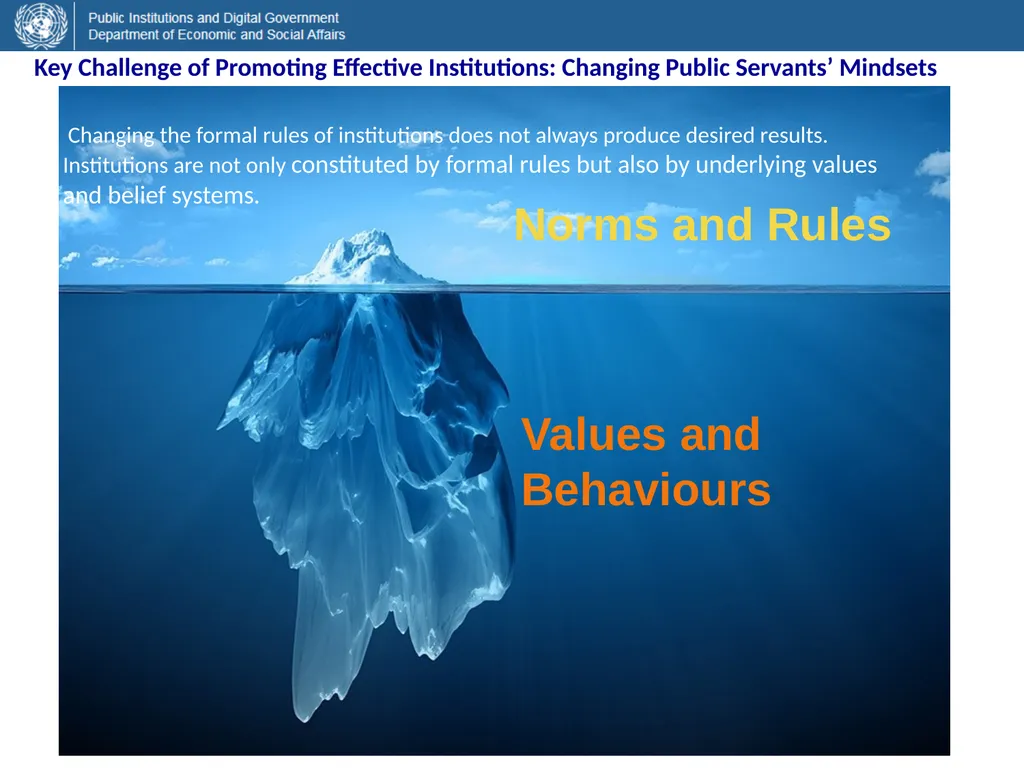
slide3. Norms and Rules Values and
Behaviours Changing the formal rules of institutions does not always produce desired results. Institutions are not only constituted by formal rules but also by underlying values and belief systems. Key Challenge of Promoting Effective Institutions: Changing Public Servants’ Mindsets<br>
slide4. Key Challenge of Promoting Effective Institutions: Changing Public Servants’ Mindsets So, it is important to design or redesign the formal rules of institutional architectures.
But it is even more important to transform mindsets.
To achieve the SDGs and the principle of leave no one behind, public servants must change their beliefs, attitudes and behaviors to align them with the new and/or revisited institutions being set up.<br>
slide5. New capacities needed to implement the SDGs 5 Inclusive institutions and integrated approaches – strengthening whole-of-government approaches and mechanisms that support inclusive and integrated policies and public service delivery.
Policy coherence – strengthening national analytical and quantitative capacities to conduct cross-sectoral analyses and identify policy options that help achieve national goals.
Social inclusion – providing visibility to disadvantaged groups to give them a voice in national policymaking and implementation.
Evidence-based policy – modernizing statistical systems to increase national production and access to quality and disaggregated data for policy formulation
Means of implementation – strengthening capacities of national systems to mobilize resources for sustainable development.<br>
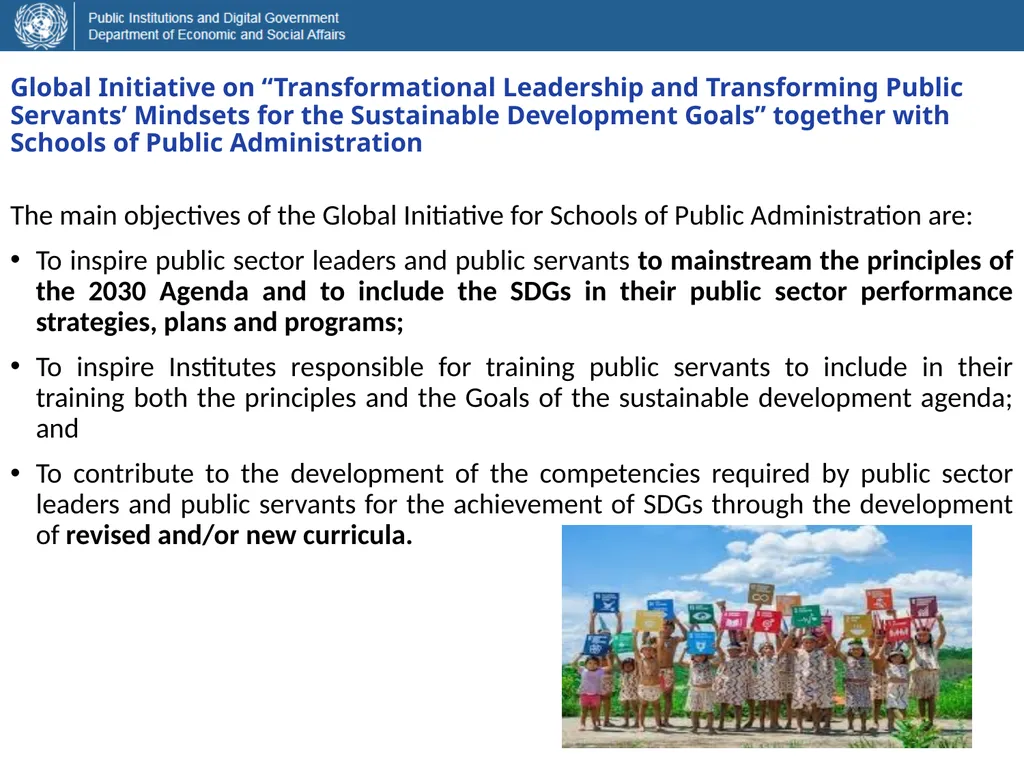
slide6. Global Initiative on “Transformational Leadership and Transforming Public Servants’ Mindsets for the Sustainable Development Goals” together with Schools of Public Administration The main objectives of the Global Initiative for Schools of Public Administration are:
To inspire public sector leaders and public servants to mainstream the principles of the 2030 Agenda and to include the SDGs in their public sector performance strategies, plans and programs;
To inspire Institutes responsible for training public servants to include in their training both the principles and the Goals of the sustainable development agenda; and
To contribute to the development of the competencies required by public sector leaders and public servants for the achievement of SDGs through the development of revised and/or new curricula.<br>
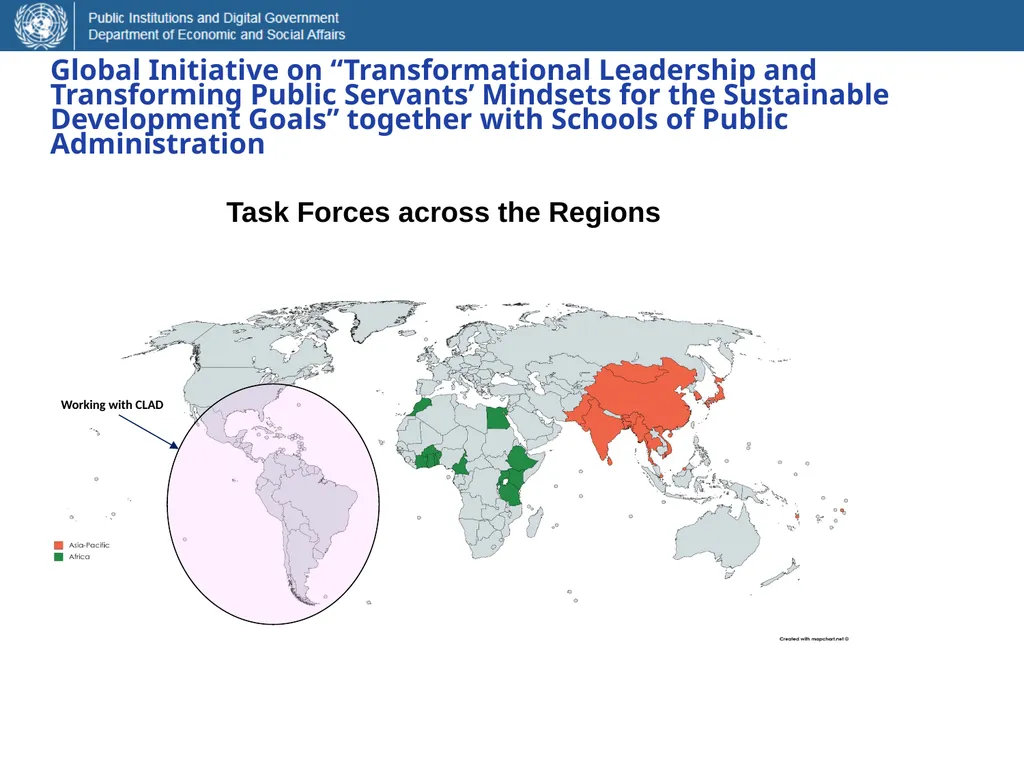
slide7. Task Forces across the Regions Working with CLAD Global Initiative on “Transformational Leadership and Transforming Public Servants’ Mindsets for the Sustainable Development Goals” together with Schools of Public Administration<br>
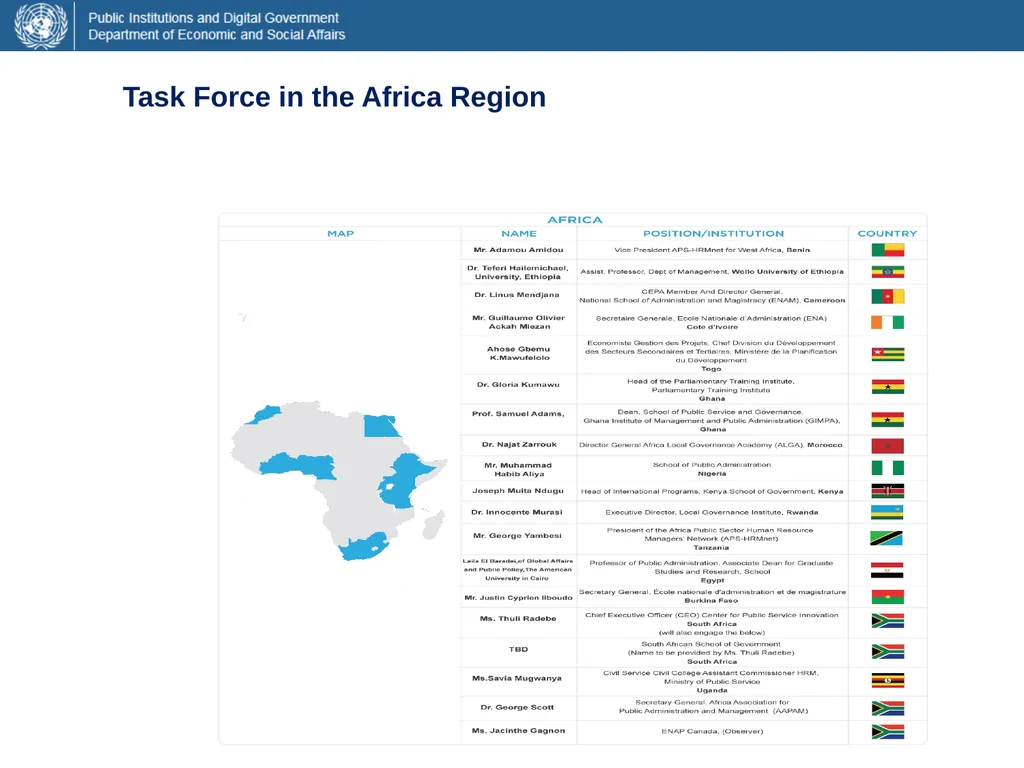
slide8. Task Force in the Africa Region<br>
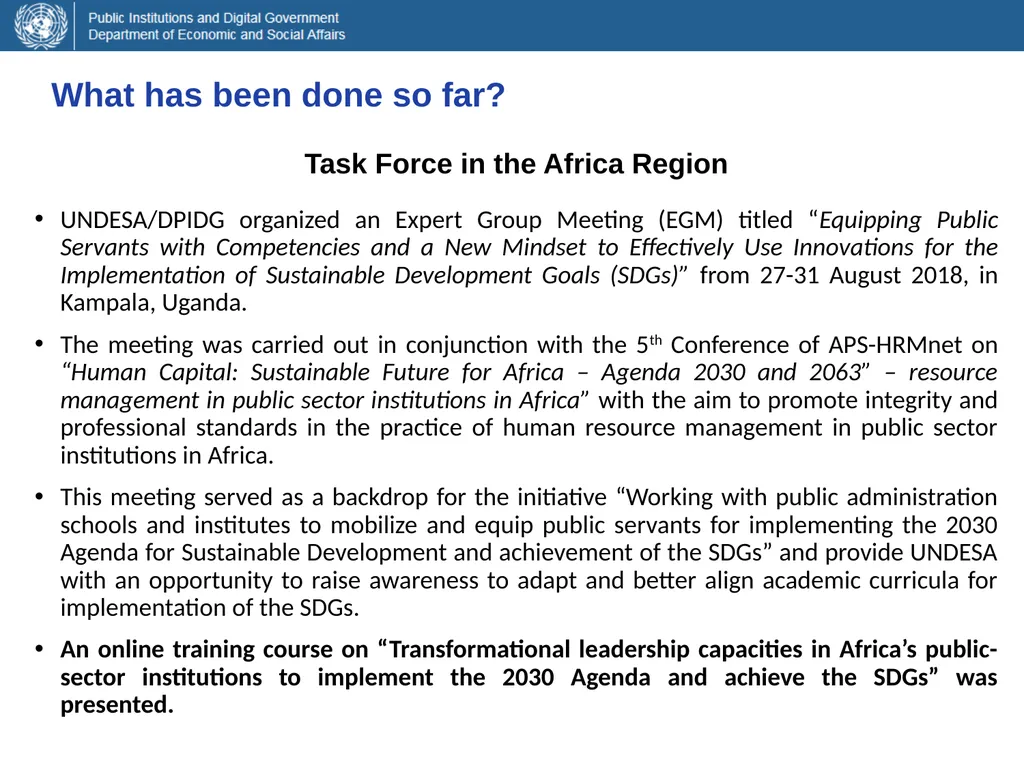
slide9. UNDESA/DPIDG organized an Expert Group Meeting (EGM) titled “Equipping Public Servants with Competencies and a New Mindset to Effectively Use Innovations for the Implementation of Sustainable Development Goals (SDGs)” from 27-31 August 2018, in Kampala, Uganda.
The meeting was carried out in conjunction with the 5th Conference of APS-HRMnet on “Human Capital: Sustainable Future for Africa – Agenda 2030 and 2063” – resource management in public sector institutions in Africa” with the aim to promote integrity and professional standards in the practice of human resource management in public sector institutions in Africa.
This meeting served as a backdrop for the initiative “Working with public administration schools and institutes to mobilize and equip public servants for implementing the 2030 Agenda for Sustainable Development and achievement of the SDGs” and provide UNDESA with an opportunity to raise awareness to adapt and better align academic curricula for implementation of the SDGs.
An online training course on “Transformational leadership capacities in Africa’s public-sector institutions to implement the 2030 Agenda and achieve the SDGs” was presented. What has been done so far? Task Force in the Africa Region<br>
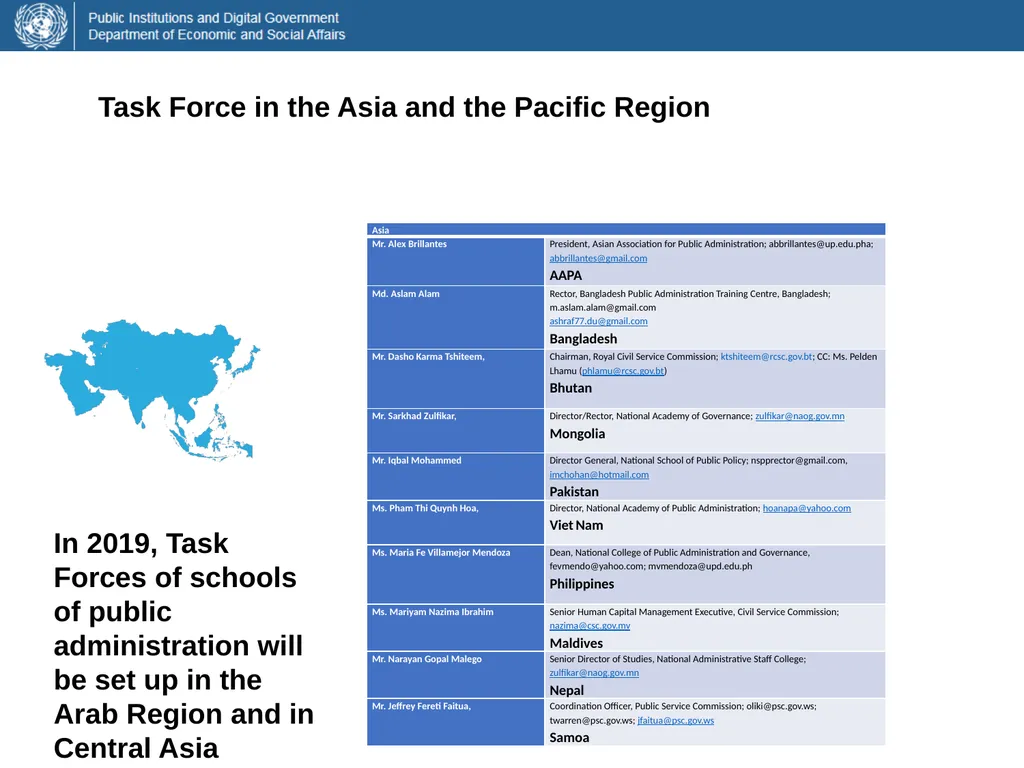
slide10. Task Force in the Asia and the Pacific Region In 2019, Task Forces of schools of public administration will be set up in the Arab Region and in Central Asia<br>
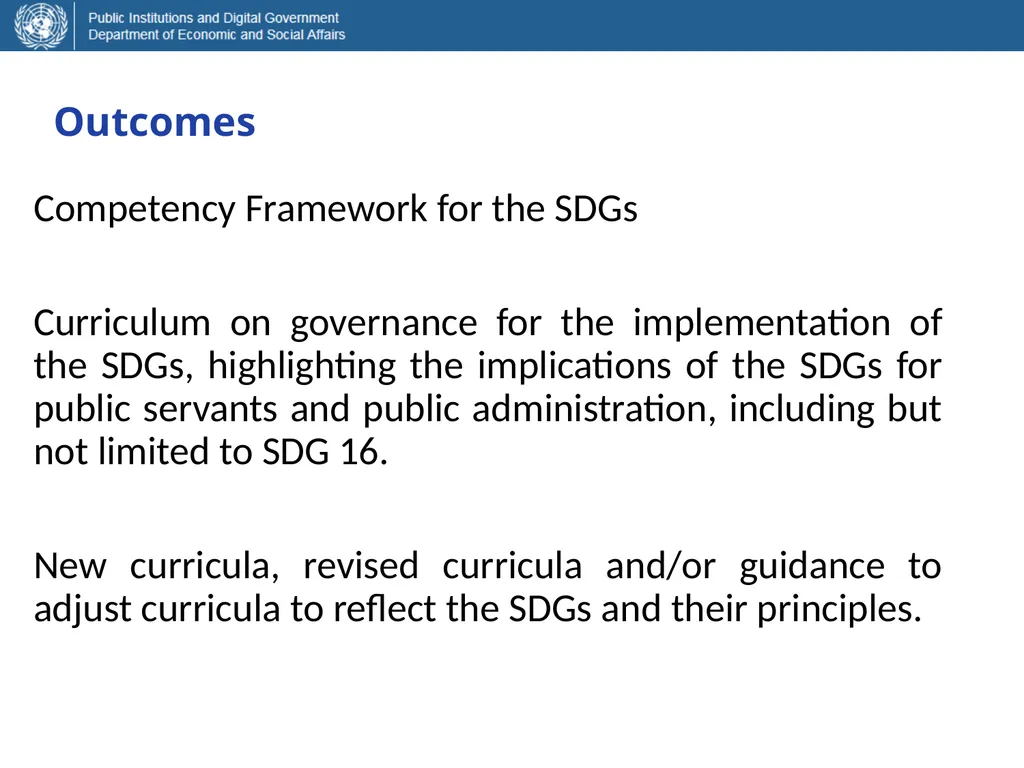
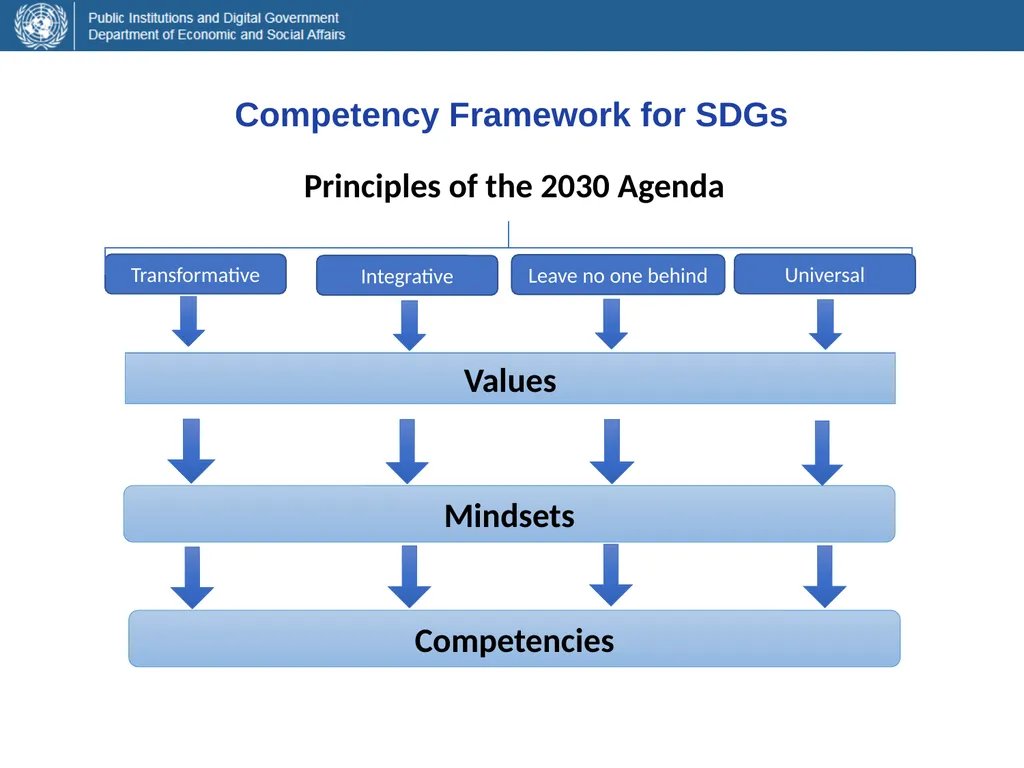
slide11. Competency Framework for the SDGs
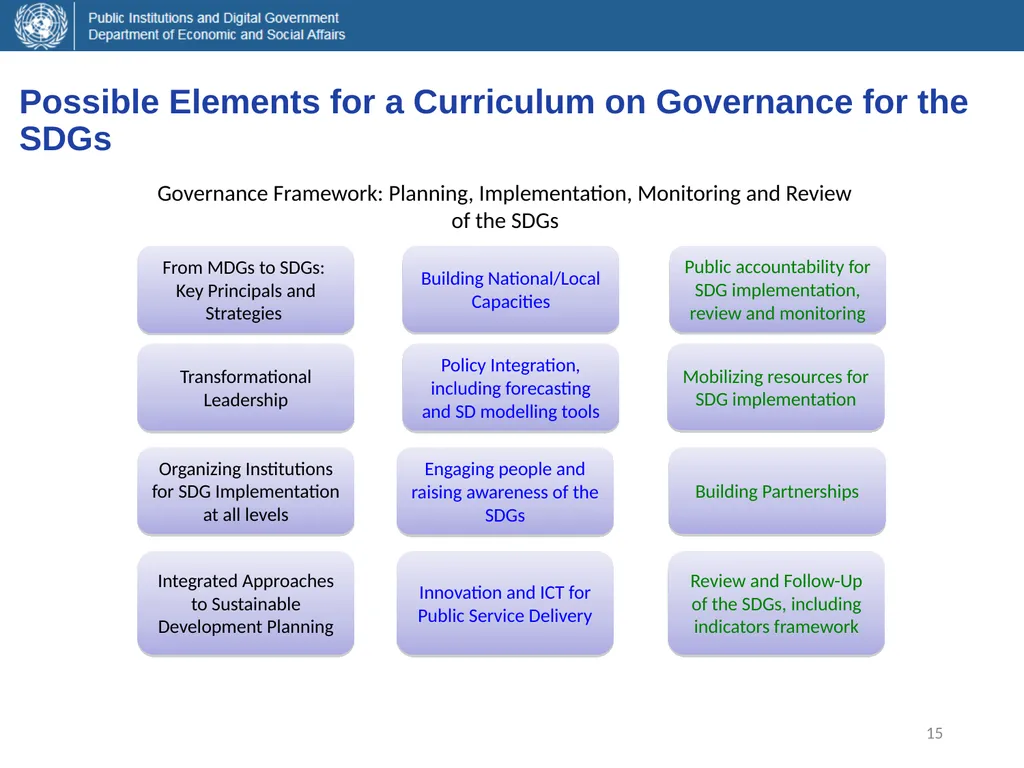
Curriculum on governance for the implementation of the SDGs, highlighting the implications of the SDGs for public servants and public administration, including but not limited to SDG 16.
New curricula, revised curricula and/or guidance to adjust curricula to reflect the SDGs and their principles. Outcomes<br>
slide12. Competency Framework for SDGs Transformative Universal Integrative Leave no one behind Values Mindsets Principles of the 2030 Agenda Competencies<br>
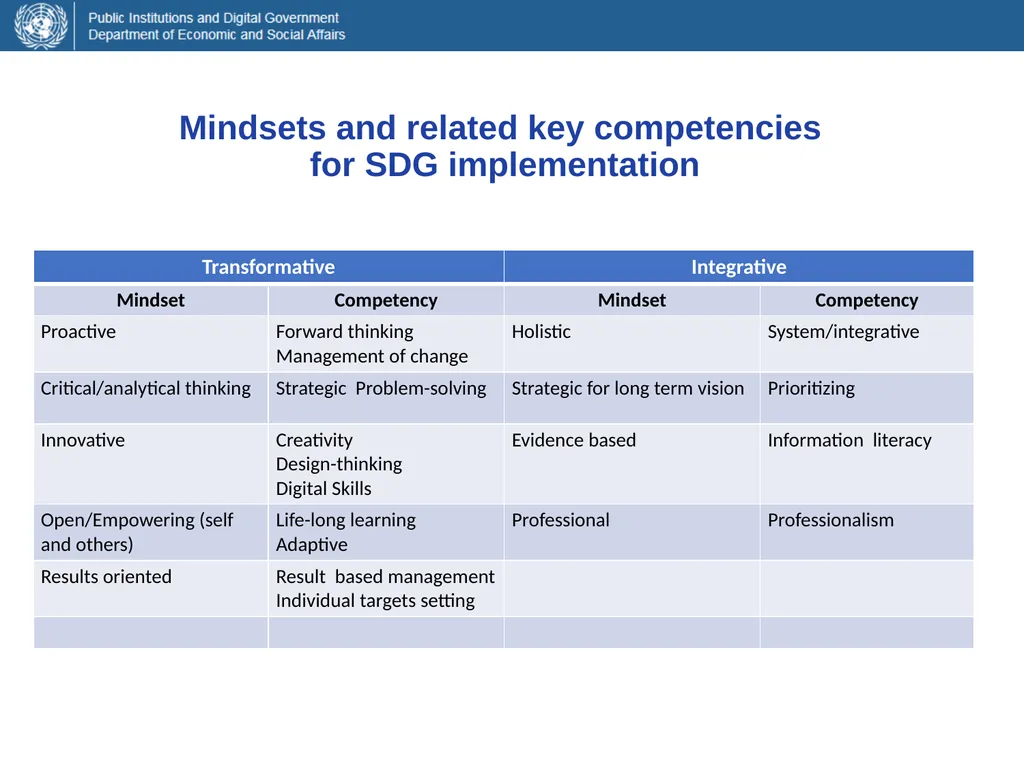
slide13. Mindsets and related key competencies for SDG implementation<br>
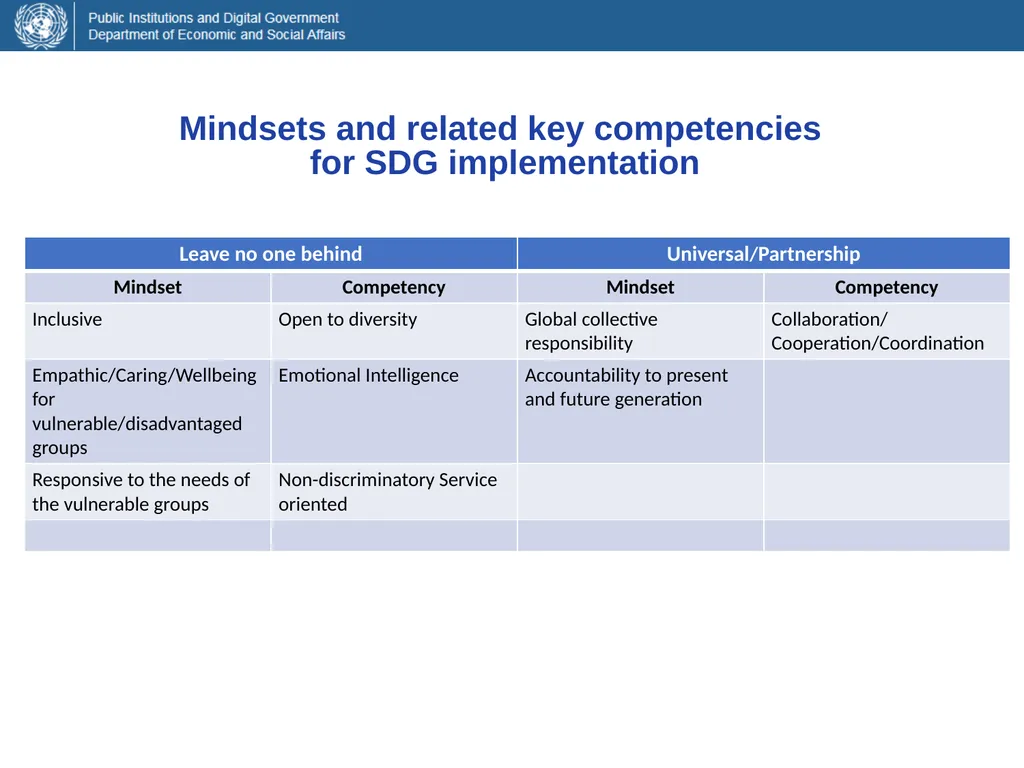
slide14. Mindsets and related key competencies for SDG implementation<br>
slide15. 15 From MDGs to SDGs:
Key Principals and Strategies Building National/Local Capacities Transformational Leadership Organizing Institutions for SDG Implementation at all levels Innovation and ICT for Public Service Delivery Integrated Approaches to Sustainable Development Planning Policy Integration, including forecasting and SD modelling tools Engaging people and raising awareness of the SDGs Mobilizing resources for SDG implementation Public accountability for SDG implementation, review and monitoring Review and Follow-Up of the SDGs, including indicators framework Building Partnerships Possible Elements for a Curriculum on Governance for the SDGs Governance Framework: Planning, Implementation, Monitoring and Review of the SDGs<br>
slide16. Global initiative on capacity building in support of Goal 16, with a focus on effective, accountable and inclusive institutions Institutional Coordination Engagement of civil
society + private sector Appropriate digital and technological options Accountability for people-centric services<br>
slide17. Thank you
alberti@un.org
http://publicadministration.un.org<br>
Chief, Capacity Development Unit
Division for Public Institutions and Digital Government (DPIDG)
United Nations Department of Economic and Social Affairs (UN DESA) Transformational Leadership and Transforming Public Servants’ Mindsets for the Sustainable Development Goals Learning Conference: Holistic Approaches for Implementing the 2030 Agenda
in the Asia-Pacific Region
23-24 January 2019, Shanghai, China<br>
slide2. Goal 16 commits to promoting effective, accountable and inclusive institutions - critical to realize the SDGs In the absence of effective, accountable and inclusive institutions, none of the SDGs will be realized. But what does it take to make institutions effective or strong?<br>
slide3. Norms and Rules Values and
Behaviours Changing the formal rules of institutions does not always produce desired results. Institutions are not only constituted by formal rules but also by underlying values and belief systems. Key Challenge of Promoting Effective Institutions: Changing Public Servants’ Mindsets<br>
slide4. Key Challenge of Promoting Effective Institutions: Changing Public Servants’ Mindsets So, it is important to design or redesign the formal rules of institutional architectures.
But it is even more important to transform mindsets.
To achieve the SDGs and the principle of leave no one behind, public servants must change their beliefs, attitudes and behaviors to align them with the new and/or revisited institutions being set up.<br>
slide5. New capacities needed to implement the SDGs 5 Inclusive institutions and integrated approaches – strengthening whole-of-government approaches and mechanisms that support inclusive and integrated policies and public service delivery.
Policy coherence – strengthening national analytical and quantitative capacities to conduct cross-sectoral analyses and identify policy options that help achieve national goals.
Social inclusion – providing visibility to disadvantaged groups to give them a voice in national policymaking and implementation.
Evidence-based policy – modernizing statistical systems to increase national production and access to quality and disaggregated data for policy formulation
Means of implementation – strengthening capacities of national systems to mobilize resources for sustainable development.<br>
slide6. Global Initiative on “Transformational Leadership and Transforming Public Servants’ Mindsets for the Sustainable Development Goals” together with Schools of Public Administration The main objectives of the Global Initiative for Schools of Public Administration are:
To inspire public sector leaders and public servants to mainstream the principles of the 2030 Agenda and to include the SDGs in their public sector performance strategies, plans and programs;
To inspire Institutes responsible for training public servants to include in their training both the principles and the Goals of the sustainable development agenda; and
To contribute to the development of the competencies required by public sector leaders and public servants for the achievement of SDGs through the development of revised and/or new curricula.<br>
slide7. Task Forces across the Regions Working with CLAD Global Initiative on “Transformational Leadership and Transforming Public Servants’ Mindsets for the Sustainable Development Goals” together with Schools of Public Administration<br>
slide8. Task Force in the Africa Region<br>
slide9. UNDESA/DPIDG organized an Expert Group Meeting (EGM) titled “Equipping Public Servants with Competencies and a New Mindset to Effectively Use Innovations for the Implementation of Sustainable Development Goals (SDGs)” from 27-31 August 2018, in Kampala, Uganda.
The meeting was carried out in conjunction with the 5th Conference of APS-HRMnet on “Human Capital: Sustainable Future for Africa – Agenda 2030 and 2063” – resource management in public sector institutions in Africa” with the aim to promote integrity and professional standards in the practice of human resource management in public sector institutions in Africa.
This meeting served as a backdrop for the initiative “Working with public administration schools and institutes to mobilize and equip public servants for implementing the 2030 Agenda for Sustainable Development and achievement of the SDGs” and provide UNDESA with an opportunity to raise awareness to adapt and better align academic curricula for implementation of the SDGs.
An online training course on “Transformational leadership capacities in Africa’s public-sector institutions to implement the 2030 Agenda and achieve the SDGs” was presented. What has been done so far? Task Force in the Africa Region<br>
slide10. Task Force in the Asia and the Pacific Region In 2019, Task Forces of schools of public administration will be set up in the Arab Region and in Central Asia<br>
slide11. Competency Framework for the SDGs
Curriculum on governance for the implementation of the SDGs, highlighting the implications of the SDGs for public servants and public administration, including but not limited to SDG 16.
New curricula, revised curricula and/or guidance to adjust curricula to reflect the SDGs and their principles. Outcomes<br>
slide12. Competency Framework for SDGs Transformative Universal Integrative Leave no one behind Values Mindsets Principles of the 2030 Agenda Competencies<br>
slide13. Mindsets and related key competencies for SDG implementation<br>
slide14. Mindsets and related key competencies for SDG implementation<br>
slide15. 15 From MDGs to SDGs:
Key Principals and Strategies Building National/Local Capacities Transformational Leadership Organizing Institutions for SDG Implementation at all levels Innovation and ICT for Public Service Delivery Integrated Approaches to Sustainable Development Planning Policy Integration, including forecasting and SD modelling tools Engaging people and raising awareness of the SDGs Mobilizing resources for SDG implementation Public accountability for SDG implementation, review and monitoring Review and Follow-Up of the SDGs, including indicators framework Building Partnerships Possible Elements for a Curriculum on Governance for the SDGs Governance Framework: Planning, Implementation, Monitoring and Review of the SDGs<br>
slide16. Global initiative on capacity building in support of Goal 16, with a focus on effective, accountable and inclusive institutions Institutional Coordination Engagement of civil
society + private sector Appropriate digital and technological options Accountability for people-centric services<br>
slide17. Thank you
alberti@un.org
http://publicadministration.un.org<br>