04
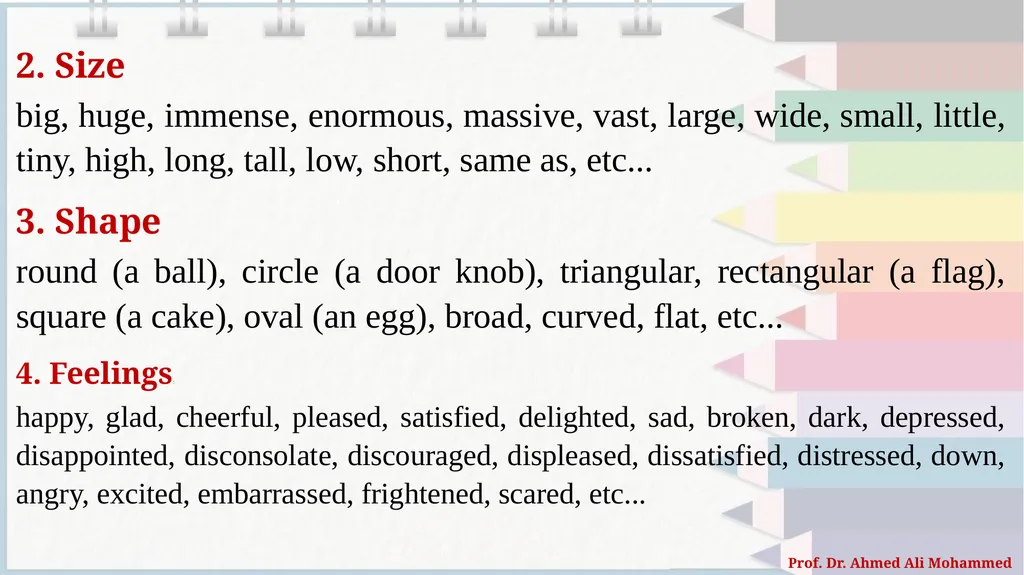
2. Size
big, huge, immense, enormous, massive, vast, large, wide, small, little, tiny, high, long, tall, low, short, same as, etc...
3. Shape
round (a ball), circle (a door knob), triangular, rectangular (a flag), square (a cake), oval (an egg), broad, curved, flat, etc...
4. Feelings:
happy, glad, cheerful, pleased, satisfied, delighted, sad, broken, dark, depressed, disappointed, disconsolate, discouraged, displeased, dissatisfied, distressed, down, angry, excited, embarrassed, frightened, scared, etc...<br>
05
5. Quantity
one, two, three, ...
first, second, third, ...
abundant, empty, heavy, light, numerous, significant, insignificant etc...
6. Qualities and appearance:
good, excellent, brilliant, fantastic, bad, terrible, awesome, awful, nice, beautiful, pretty, gorgeous, cute, glamorous, elegant, good-looking, handsome, ugly, right, wrong, funny, amusing, entertaining, light, heavy, fat, thin, slim, clean, dirty, filthy, straight, noisy, quiet, still, calm, powerful, nutritious, adorable, adventurous,<br>
06
aggressive, attractive, bloody, blushing, colorful, exciting, graceful, dull, homely, plain, precious, sparkling, fragile, weak, strong, doubtful, confused, puzzled, cautious, careful, concerned, innocent, guilty, crazy, silly, stupid, foolish, clumsy, intelligent, clever, shy, rich, poor, wild, courageous, brave, helpful, helpless, unhelpful, etc...
7. Condition
important, principal, famous, notorious, fictitious, real, true, false, imaginary, alive, dead, odd, weird, unusual, strange, outstanding, impossible, improbable, easy, difficult, closed, open, etc...<br>
07
8. Weather and temperature
cold, warm, hot, cool, rainy, windy, snowy, foggy, sunny, cloudy, stormy, frozen, etc...
9. Time:
late, early, delayed, premature, modern, traditional, old-fashioned, young, old, new, slow, swift, quick, rapid, brief, short, long, etc...
10. Age
old, ancient, aged, elderly, ageless, overage, young, juvenile, adolescent, teenage, underage, youthful, etc...
11. Nationality and Origin
American, Mexican, British, French, German, African, Asian, etc...<br>
08
12. Material
wooden, woollen, cottony, fibrous, metallic, bronze, etc...
13. Purpose
(These adjectives usually end with “ing”)
drying machine, cooling system, evaporating system, separating technique, time-saving, sleeping bag, frying pan, driving licence, etc...
14. Sound
loud, noisy, quiet, screeching, silent, soft, voiceless, etc...
If you have a collection of them arrange them as:
OSASH.COM
Opinion, Size, Age, Shape, Color, Origin, Material<br>
09
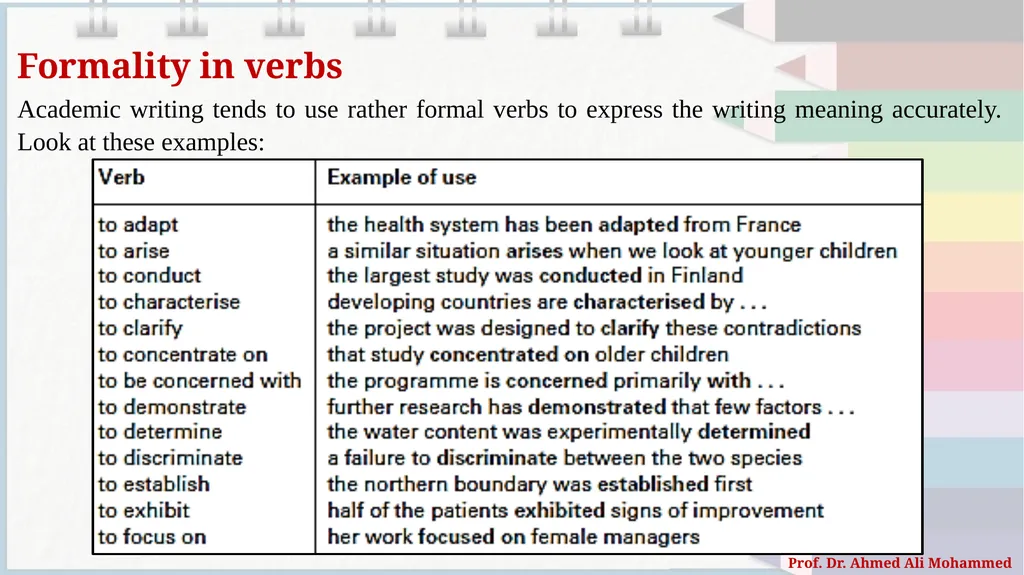
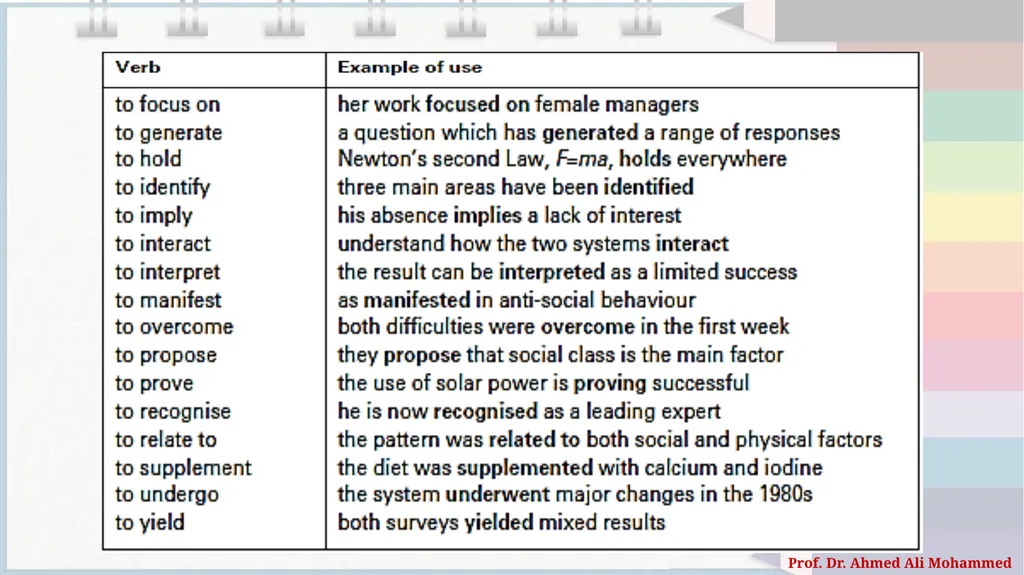
Formality in verbs
Academic writing tends to use rather formal verbs to express the writing meaning accurately. Look at these examples:<br>
10
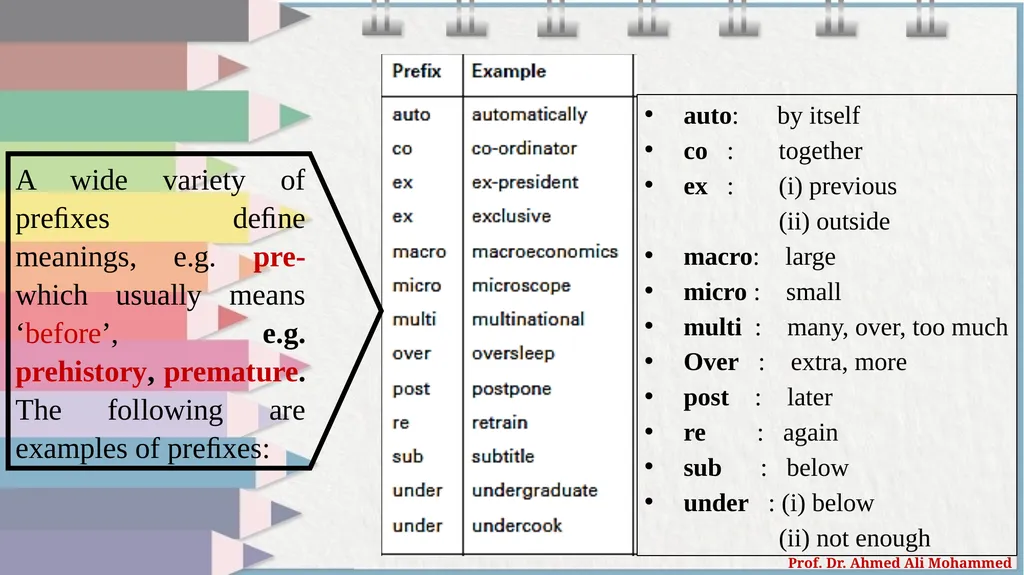
Prefixes and suffixes
Prefixes change or give the meaning.
Suffixes show the meaning or the word class (e.g. noun, verb).
Ex: “Unsustainable”, is an example of a word containing a prefix and suffix. Negative prefixes such as un-/ in-/ mis- and dis- often give adjectives and verbs a negative meaning: unclear, incapable, misunderstanding, disagree…etc.<br>
11
Suffixes
Some suffixes like -ion/ -ive or -ly help the reader find the word class, e.g. noun, verb or adjective.
Other suffixes add to meaning, e.g. -ful or -less after an adjective have a positive or negative effect. Ex: thoughtful/ careless.<br>
12
Thank You For
Your Listening<br>
13
See You
Next Lecture<br>