
Advancing Knowledge Translation Research in







Description: Advancing Knowledge Translation Research in Rehabilitation: a Quebec Strategic Initiative Co-leads: D Kairy, PhD, PT A Thomas, PhD, OT Team members: S Ahmed, PhD, PT D Anaby, PhD, OT A Bussières, PhD, DC C Gagnon, PhD, OT ME Lamontagne,
Related Topics
Download Presentation
"Advancing Knowledge Translation Research in" is the property of its rightful owner. Permission is granted to download and print the materials on this website for personal, non-commercial use only, and to display it on your personal computer provided you do not modify the materials and that you retain all copyright notices contained in the materials. By downloading content from our website, you accept the terms of this agreement.
Presentation Transcript
slide1. Advancing Knowledge Translation Research in Rehabilitation:
a Quebec Strategic Initiative Co-leads: D Kairy, PhD, PT & A Thomas, PhD, OT
Team members:
S Ahmed, PhD, PT
D Anaby, PhD, OT
A Bussières, PhD, DC
C Gagnon, PhD, OT
ME Lamontagne, PhD, OT
A Rochette, PhD, OT
K Shikako-Thomas PhD, OT
Supported by: K Montpetit-Tourangeau, MC Hallé<br>
slide2. KT-SIRQ Financial support provided by the Quebec Rehabilitation Research Network (REPAR)<br>
slide3. Rationale for a strategic initiative in KT research in rehabilitation in Quebec Sub-optimal research use in rehabilitation clinical practice despite growing body of research in rehabilitation (e.g Di Rezze 2012, Duncan 2002, Law 2004)
Various patient populations (eg. MSK, neuro)
Across the lifespan (eg. Pediatrics, older adults)
Advances in the field of KT research, including in rehabilitation
Need to organize KT research specifically in the field of rehabilitation:
Knowledge Translation Strategic Initiative in Rehabilitation in Quebec (KT-SIRQ)<br>
slide4. KT-SIRQ - Who are we? 4 universities
McGill University
Université de Montréal
Université Laval
Université de Sherbrooke
3 research centers
CRIR
CIRRIS
GRIMN
Range of patient populations, target audiences and stakeholders
Pediatric to older adults
Neurology, orthopedic
Clinical, academic, community, patients, caregivers, government and policy makers<br>
slide5. Mission of the KT-SIRQ Build capacity and promote collaborative KT research in rehabilitation to improve the delivery of services and ultimately the health and wellbeing of individuals with physical disabilities<br>
slide6. Specific objectives for 1st year (2014-2015) To develop a mission statement for the KT-SIRQ
To conduct an environmental scan of KT research activities taking place in rehabilitation in Quebec
Develop a 5-year strategic plan for KT rehabilitation research in Quebec<br>
slide7. Methods used to date Mixed-methods approach
Iterative consultation process among team members for mission, vision and goals of KT-SIRQ
Environmental scan of current rehabilitation KT research activities in Quebec
University and funding agency websites, or direct contact to funding agencies
Consensus retreat session and Delphi consensus method for priority setting for the strategic plan
Expert validation<br>
slide8. Outcomes to date – 12 month Vision, mission, and goals<br>
slide9. Vision: To enhance the health of individuals with physical disabilities in Quebec by advancing KT research in rehabilitation science.
Mission: To build capacity and promote collaborative KT research in rehabilitation to improve the delivery of services and ultimately the health and wellbeing of individuals with physical disabilities.
The goals are to:
Build capacity in KT research in and implementation in rehabilitation and promote networking
Identify and engage relevant stakeholders (e.g., consumers of rehabilitation services, service providers, organizations, decision makers) to support the mission of the Quebec KT Rehabilitation Strategic Initiative
Be a catalyst for the creation, application and evaluation of innovative and effective KT strategies for individuals with physical disabilities
Advance KT research in rehabilitation<br>
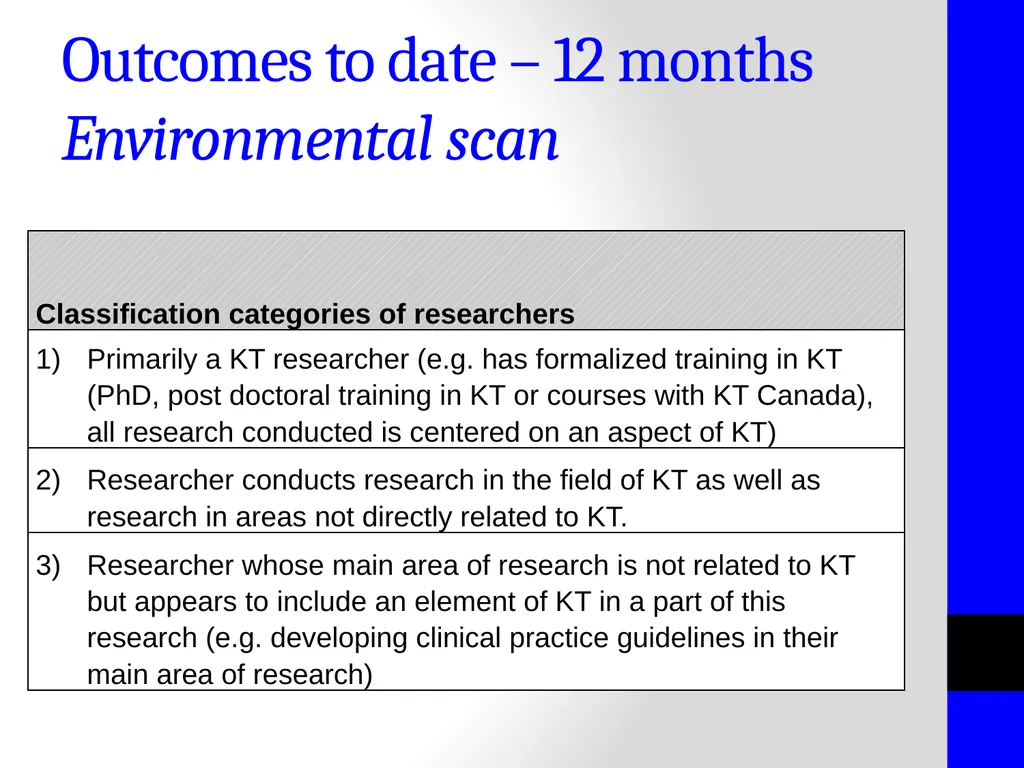
slide10. Outcomes to date – 12 months Environmental scan<br>
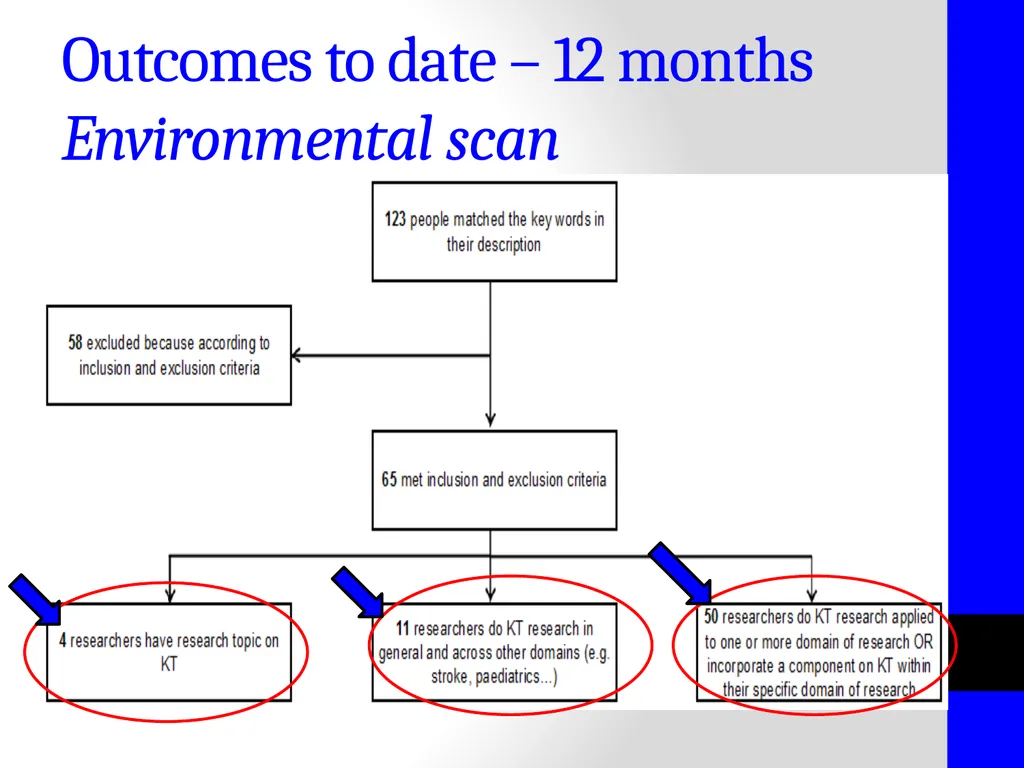
slide11. Outcomes to date – 12 months Environmental scan<br>
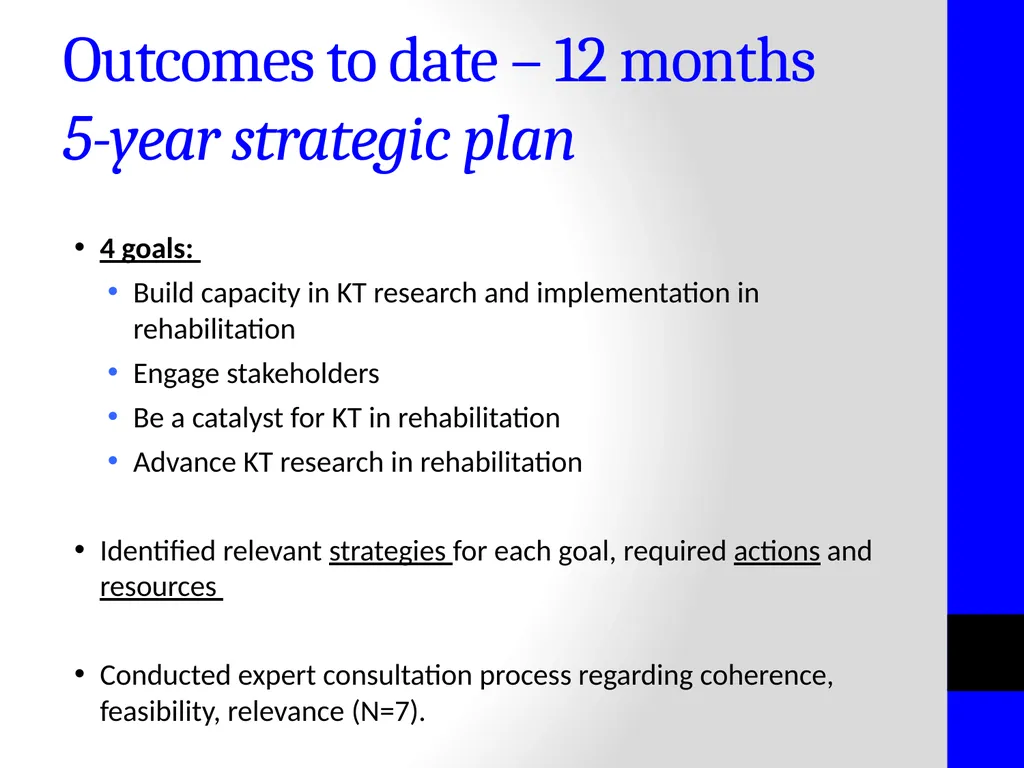
slide12. Outcomes to date – 12 months 5-year strategic plan 4 goals:
Build capacity in KT research and implementation in rehabilitation
Engage stakeholders
Be a catalyst for KT in rehabilitation
Advance KT research in rehabilitation
Identified relevant strategies for each goal, required actions and resources
Conducted expert consultation process regarding coherence, feasibility, relevance (N=7).<br>
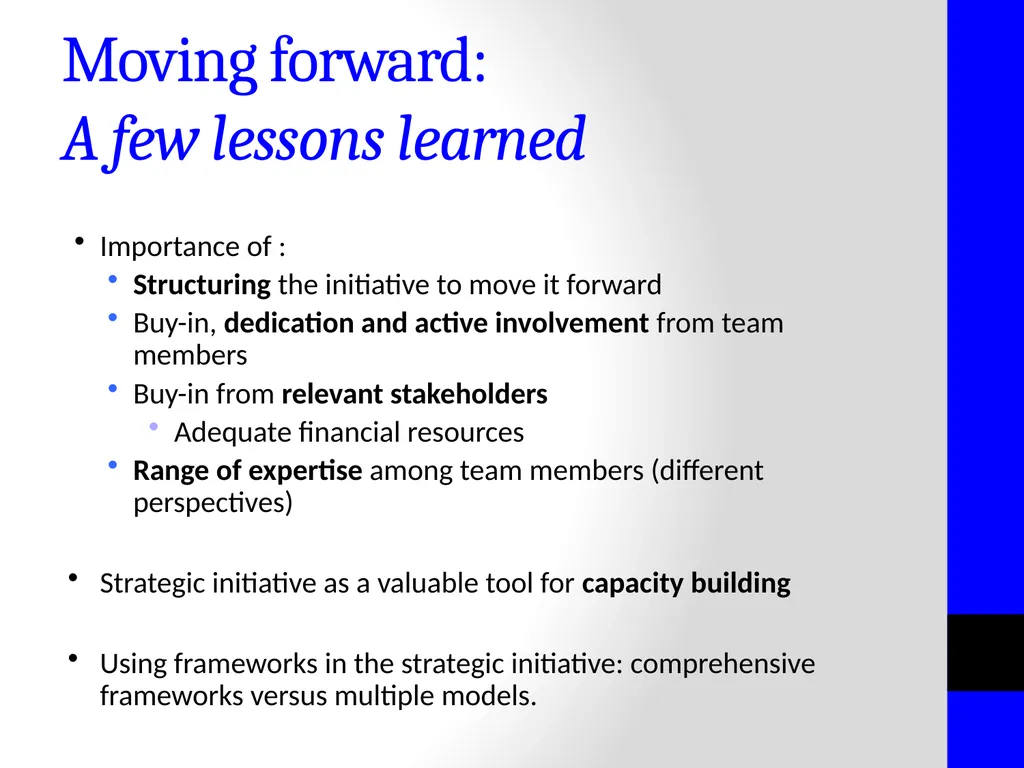
slide13. Moving forward: A few lessons learned Importance of :
Structuring the initiative to move it forward
Buy-in, dedication and active involvement from team members
Buy-in from relevant stakeholders
Adequate financial resources
Range of expertise among team members (different perspectives)
Strategic initiative as a valuable tool for capacity building
Using frameworks in the strategic initiative: comprehensive frameworks versus multiple models.<br>
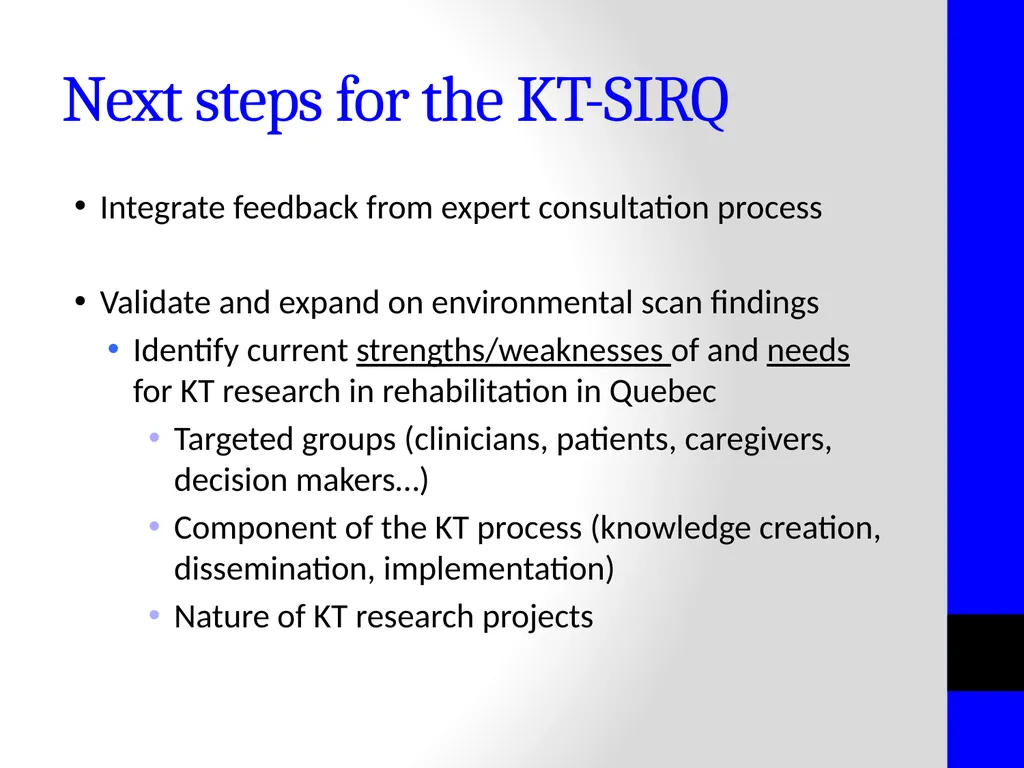
slide14. Next steps for the KT-SIRQ Integrate feedback from expert consultation process
Validate and expand on environmental scan findings
Identify current strengths/weaknesses of and needs for KT research in rehabilitation in Quebec
Targeted groups (clinicians, patients, caregivers, decision makers…)
Component of the KT process (knowledge creation, dissemination, implementation)
Nature of KT research projects<br>
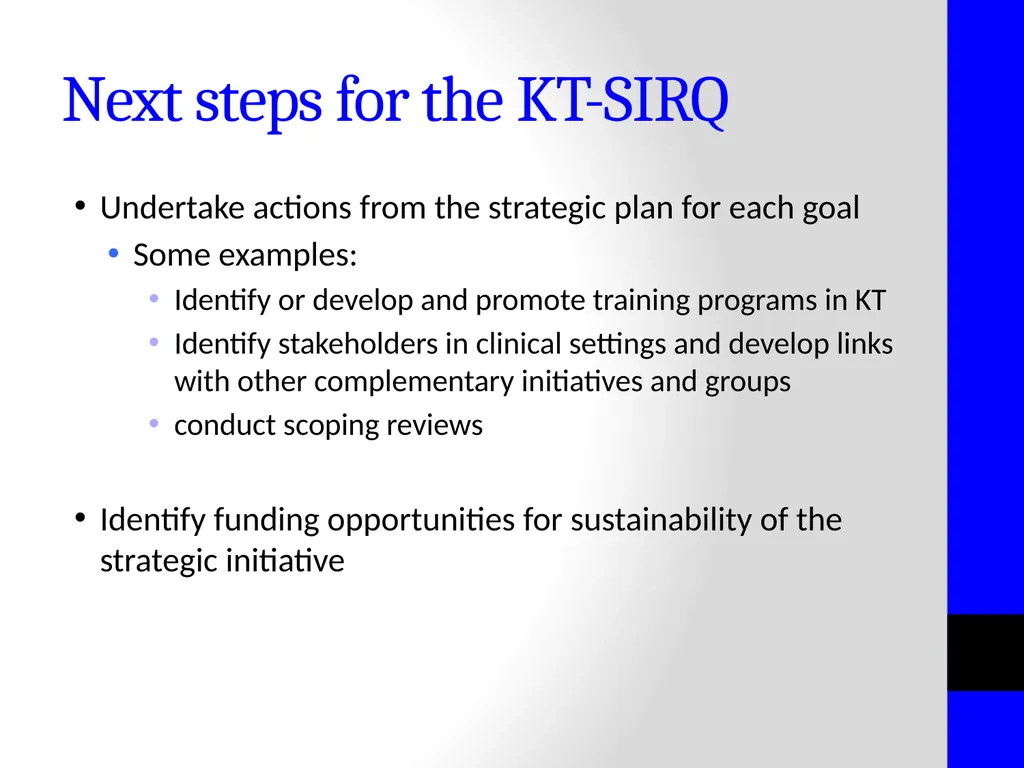
slide15. Undertake actions from the strategic plan for each goal
Some examples:
Identify or develop and promote training programs in KT
Identify stakeholders in clinical settings and develop links with other complementary initiatives and groups
conduct scoping reviews
Identify funding opportunities for sustainability of the strategic initiative Next steps for the KT-SIRQ<br>
slide16. Conclusion Over 60 researchers in rehabilitation in Quebec addressing KT in some area of their research
Timing is good to put in place structure and resources, as well as identify relevant partnerships and collaborations to help advance the field of KT research in rehabilitation
More to come…<br>
slide17. Acknowledgments Strategic initiative funded by the REPAR (2014-2015, 2015-2016)
Dr. Bonnie Swaine and Dr. Eva Kehayia, CRIR co-directors
Katherine Montpetit-Tourangeau (PhD candidate and team coordinator)
Marie-Christine Hallé (post-doctoral fellow)
Experts consulted during strategic plan validation process<br>
Team members:
S Ahmed, PhD, PT
D Anaby, PhD, OT
A Bussières, PhD, DC
C Gagnon, PhD, OT
ME Lamontagne, PhD, OT
A Rochette, PhD, OT
K Shikako-Thomas PhD, OT
Supported by: K Montpetit-Tourangeau, MC Hallé<br>
slide2. KT-SIRQ Financial support provided by the Quebec Rehabilitation Research Network (REPAR)<br>
slide3. Rationale for a strategic initiative in KT research in rehabilitation in Quebec Sub-optimal research use in rehabilitation clinical practice despite growing body of research in rehabilitation (e.g Di Rezze 2012, Duncan 2002, Law 2004)
Various patient populations (eg. MSK, neuro)
Across the lifespan (eg. Pediatrics, older adults)
Advances in the field of KT research, including in rehabilitation
Need to organize KT research specifically in the field of rehabilitation:
Knowledge Translation Strategic Initiative in Rehabilitation in Quebec (KT-SIRQ)<br>
slide4. KT-SIRQ - Who are we? 4 universities
McGill University
Université de Montréal
Université Laval
Université de Sherbrooke
3 research centers
CRIR
CIRRIS
GRIMN
Range of patient populations, target audiences and stakeholders
Pediatric to older adults
Neurology, orthopedic
Clinical, academic, community, patients, caregivers, government and policy makers<br>
slide5. Mission of the KT-SIRQ Build capacity and promote collaborative KT research in rehabilitation to improve the delivery of services and ultimately the health and wellbeing of individuals with physical disabilities<br>
slide6. Specific objectives for 1st year (2014-2015) To develop a mission statement for the KT-SIRQ
To conduct an environmental scan of KT research activities taking place in rehabilitation in Quebec
Develop a 5-year strategic plan for KT rehabilitation research in Quebec<br>
slide7. Methods used to date Mixed-methods approach
Iterative consultation process among team members for mission, vision and goals of KT-SIRQ
Environmental scan of current rehabilitation KT research activities in Quebec
University and funding agency websites, or direct contact to funding agencies
Consensus retreat session and Delphi consensus method for priority setting for the strategic plan
Expert validation<br>
slide8. Outcomes to date – 12 month Vision, mission, and goals<br>
slide9. Vision: To enhance the health of individuals with physical disabilities in Quebec by advancing KT research in rehabilitation science.
Mission: To build capacity and promote collaborative KT research in rehabilitation to improve the delivery of services and ultimately the health and wellbeing of individuals with physical disabilities.
The goals are to:
Build capacity in KT research in and implementation in rehabilitation and promote networking
Identify and engage relevant stakeholders (e.g., consumers of rehabilitation services, service providers, organizations, decision makers) to support the mission of the Quebec KT Rehabilitation Strategic Initiative
Be a catalyst for the creation, application and evaluation of innovative and effective KT strategies for individuals with physical disabilities
Advance KT research in rehabilitation<br>
slide10. Outcomes to date – 12 months Environmental scan<br>
slide11. Outcomes to date – 12 months Environmental scan<br>
slide12. Outcomes to date – 12 months 5-year strategic plan 4 goals:
Build capacity in KT research and implementation in rehabilitation
Engage stakeholders
Be a catalyst for KT in rehabilitation
Advance KT research in rehabilitation
Identified relevant strategies for each goal, required actions and resources
Conducted expert consultation process regarding coherence, feasibility, relevance (N=7).<br>
slide13. Moving forward: A few lessons learned Importance of :
Structuring the initiative to move it forward
Buy-in, dedication and active involvement from team members
Buy-in from relevant stakeholders
Adequate financial resources
Range of expertise among team members (different perspectives)
Strategic initiative as a valuable tool for capacity building
Using frameworks in the strategic initiative: comprehensive frameworks versus multiple models.<br>
slide14. Next steps for the KT-SIRQ Integrate feedback from expert consultation process
Validate and expand on environmental scan findings
Identify current strengths/weaknesses of and needs for KT research in rehabilitation in Quebec
Targeted groups (clinicians, patients, caregivers, decision makers…)
Component of the KT process (knowledge creation, dissemination, implementation)
Nature of KT research projects<br>
slide15. Undertake actions from the strategic plan for each goal
Some examples:
Identify or develop and promote training programs in KT
Identify stakeholders in clinical settings and develop links with other complementary initiatives and groups
conduct scoping reviews
Identify funding opportunities for sustainability of the strategic initiative Next steps for the KT-SIRQ<br>
slide16. Conclusion Over 60 researchers in rehabilitation in Quebec addressing KT in some area of their research
Timing is good to put in place structure and resources, as well as identify relevant partnerships and collaborations to help advance the field of KT research in rehabilitation
More to come…<br>
slide17. Acknowledgments Strategic initiative funded by the REPAR (2014-2015, 2015-2016)
Dr. Bonnie Swaine and Dr. Eva Kehayia, CRIR co-directors
Katherine Montpetit-Tourangeau (PhD candidate and team coordinator)
Marie-Christine Hallé (post-doctoral fellow)
Experts consulted during strategic plan validation process<br>