Agents of Bioterrorism Brucella species: Brucellosis Brucella spp. Biosafety Alert Brucellosis has been the most commonly reported laboratory-associated bacterial infection, aerosols are highly infectious. Infective dose 10 -100 organisms
"Agents of Bioterrorism Brucella species:" is the property of its rightful owner. Permission is granted to
download and print the materials on this website for personal, non-commercial use only, and to display it
on your personal computer provided you do not modify the materials and that you retain all copyright
notices contained in the materials. By downloading content from our website, you accept the terms of this
agreement.
Presentation Transcript
01
Agents of Bioterrorism Brucella species: Brucellosis<br>
02
Brucella spp. Biosafety Alert Brucellosis has been the most commonly reported laboratory-associated bacterial infection, aerosols are highly infectious. Infective dose = 10 -100 organisms
Laboratory workers can also acquire the disease from direct exposure to cultures of the organism
Cases have occurred in clinical laboratory settings by “sniffing” cultures, direct skin contact with cultures, and aerosol generating procedures.<br>
03
CLINICAL SIGNIFICANCE AND BIOTERRORISM B. melitensis; (goats, sheep, camels) most severe and more acute
B. abortus; (cattle) more chronic
B. suis; (pigs) severe, associated with osteomyelitis
B. canis; (dogs) very rare in humans
B. melitensis and B. suis: BT agents of concern
most easily aerosolized
studied as biological weapons agents
causes high morbidity<br>
04
BRUCELLOSIS: TRANSMISSION Ingestion-Unpasteurized dairy products
The most common mode of transmission
Direct skin contact
Occupational hazard for farmers, butchers, veterinarians, hunters, and laboratory personnel
Aerosols
Highly infectious; easily aerosolized<br>
05
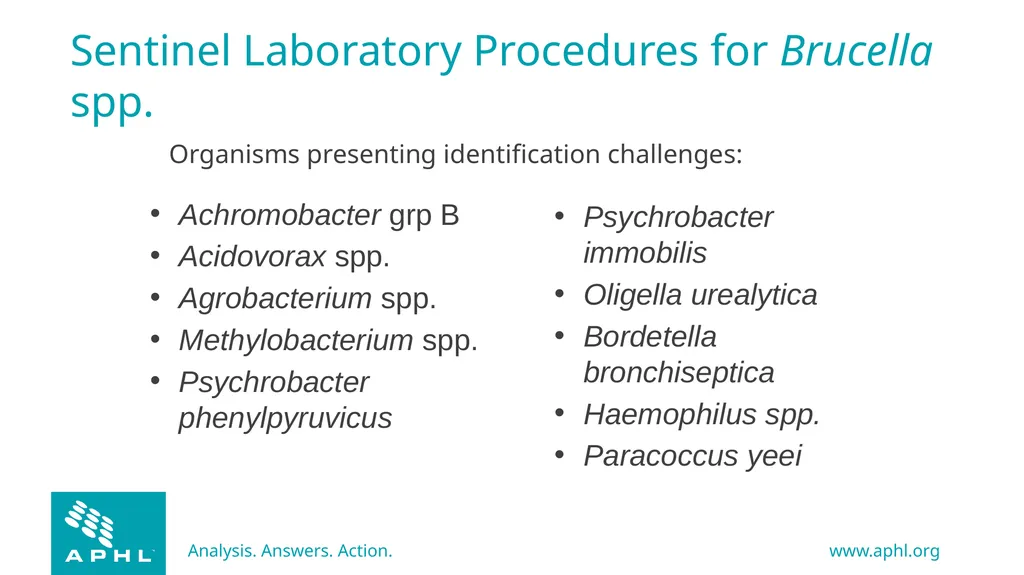
Sentinel Laboratory Procedures for Brucella spp. In a Sentinel Laboratory, you could encounter this
organism in:
Bone Marrow or whole blood
Joint or abdominal fluid
Spleen, liver abscesses
Rarely sputum
Serum used for antibody titers<br>
06
Sentinel Laboratory Procedures for Brucella spp. Serum—not for culture!
If brucellosis is suspected, the diagnoses is often made by serology. Collect acute and convalescent serum samples 14 to 28 days apart:
Collect at least 1 ml without anticoagulant for serologic diagnosis
Store at 4°C until testing is performed.
Acute specimen is collected as soon as possible after onset of disease
Convalescent-phase should be collected >14 days after the acute specimen.<br>
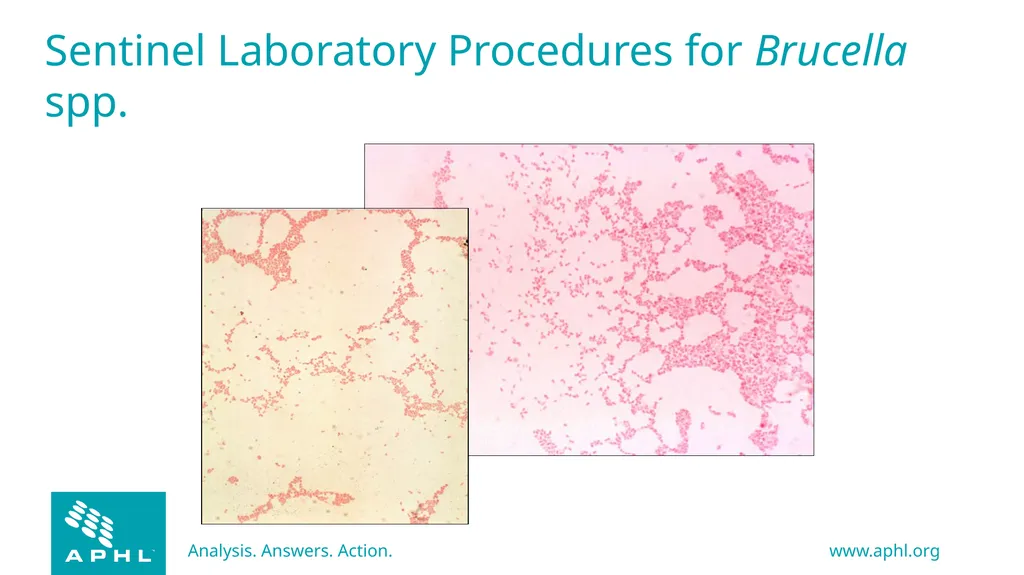
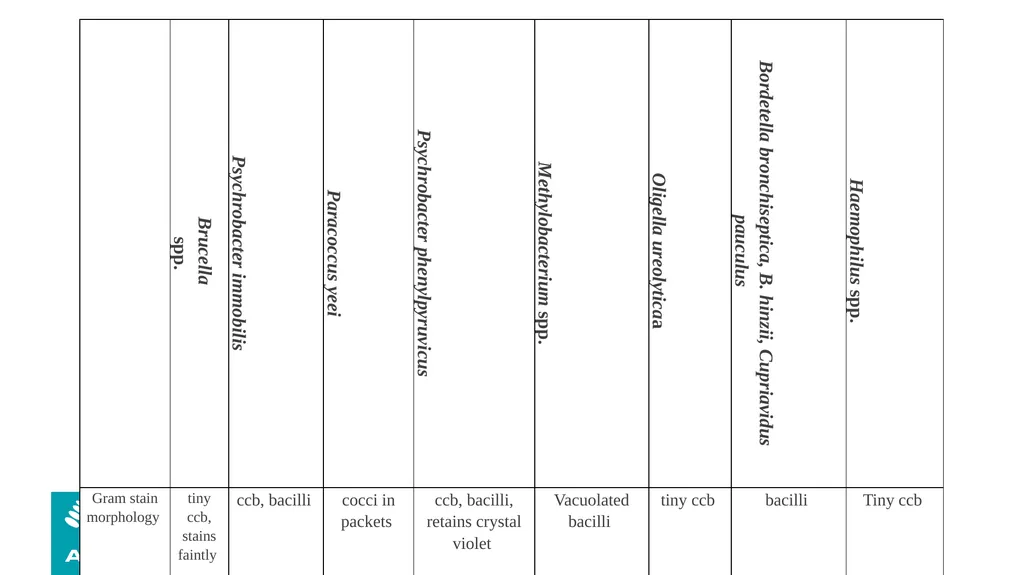
Sentinel Laboratory Procedures for Brucella spp. Gram stain morphology
Very small, faintly staining, Gram negative coccobacilli; may be slow to decolorize
Larger than F. tularensis--discrete organisms evident<br>
09
Sentinel Laboratory Procedures for Brucella spp.<br>
10
Sentinel Laboratory Procedures for Brucella spp. Culture characteristics
Grows slowly on BAP and CHOC, not on MAC/EMB (except, in some cases, after 7 days incubation)
Grows in routine blood culture systems, but may require extended incubation
Some strains benefit from an incubation atmosphere enriched with CO2<br>
11
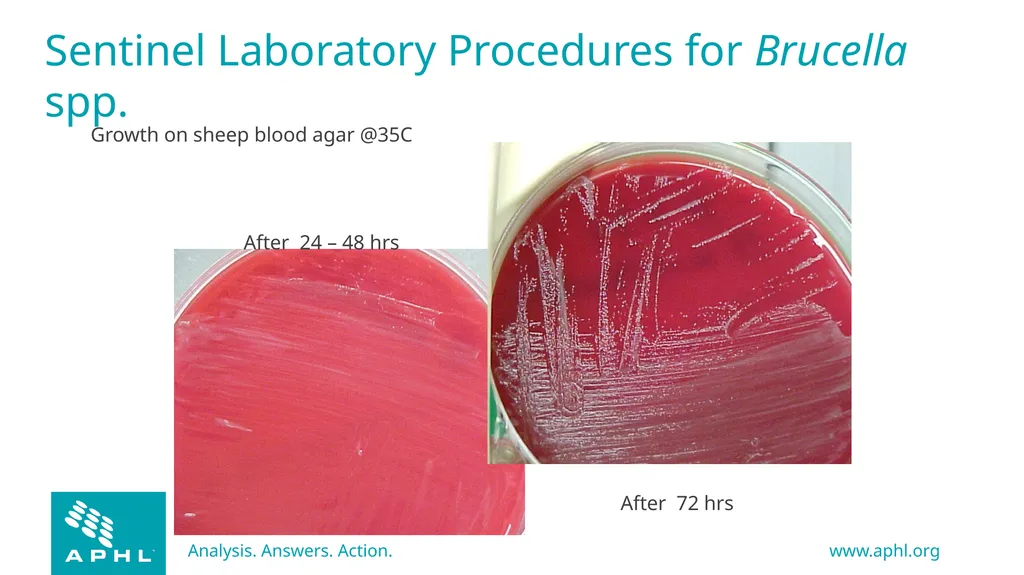
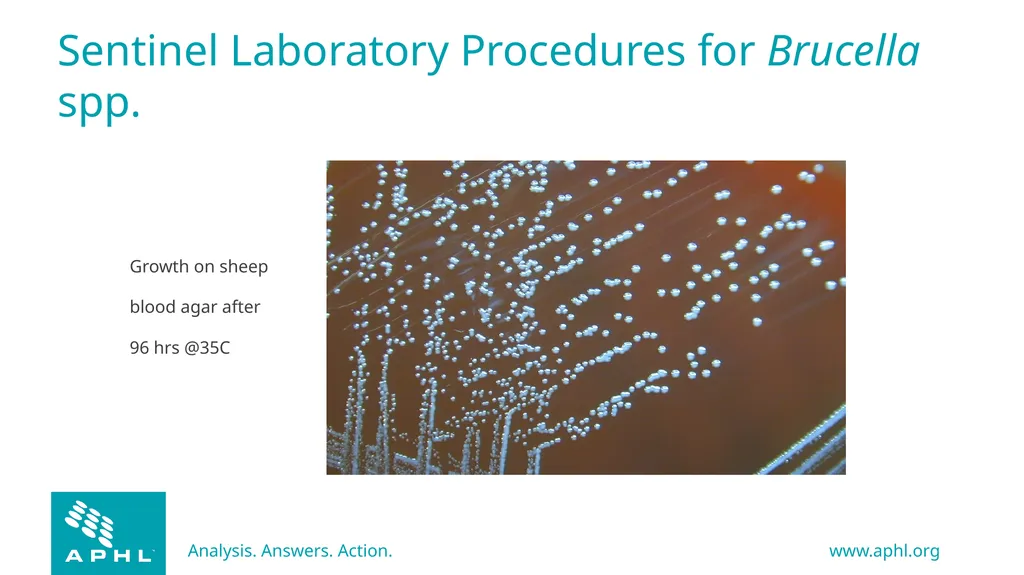
Sentinel Laboratory Procedures for Brucella spp. Colony on BAP at 35°C
Small (0.5-1.0mm), convex, glistening
non-hemolytic and non-pigmented
Visible growth may take 48 - 72 hrs<br>
12
Sentinel Laboratory Procedures for Brucella spp. After 24 – 48 hrs After 72 hrs Growth on sheep blood agar @35C<br>
13
Sentinel Laboratory Procedures for Brucella spp. Growth on sheep blood agar after 96 hrs @35C<br>
14
Sentinel Laboratory Procedures for Brucella spp. Screening Tests
Oxidase
Catalase
Urease
Satellite phenomenon*
*Can do test for X & V on TSA.<br>
15
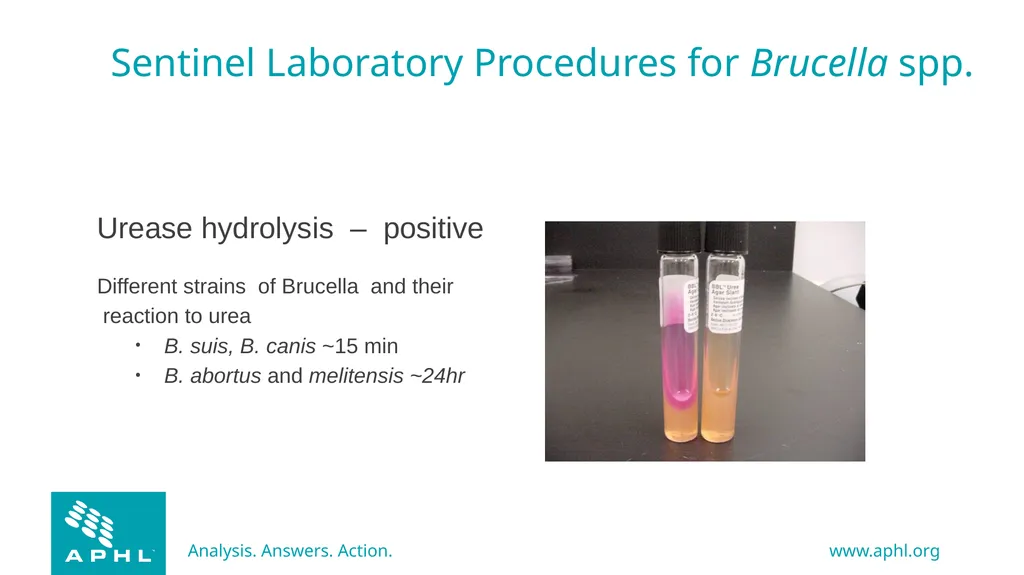
Sentinel Laboratory Procedures for Brucella spp. Urease hydrolysis – positive
Different strains of Brucella and their
reaction to urea
B. suis, B. canis ~15 min
B. abortus and melitensis ~24hr<br>
16
Sentinel Laboratory Procedures for Brucella spp. Screening Tests Results
Oxidase - positive
Catalase - positive
Urease - positive
Satellite phenomenon – growth on BAP without need to satellite around S. aureus<br>
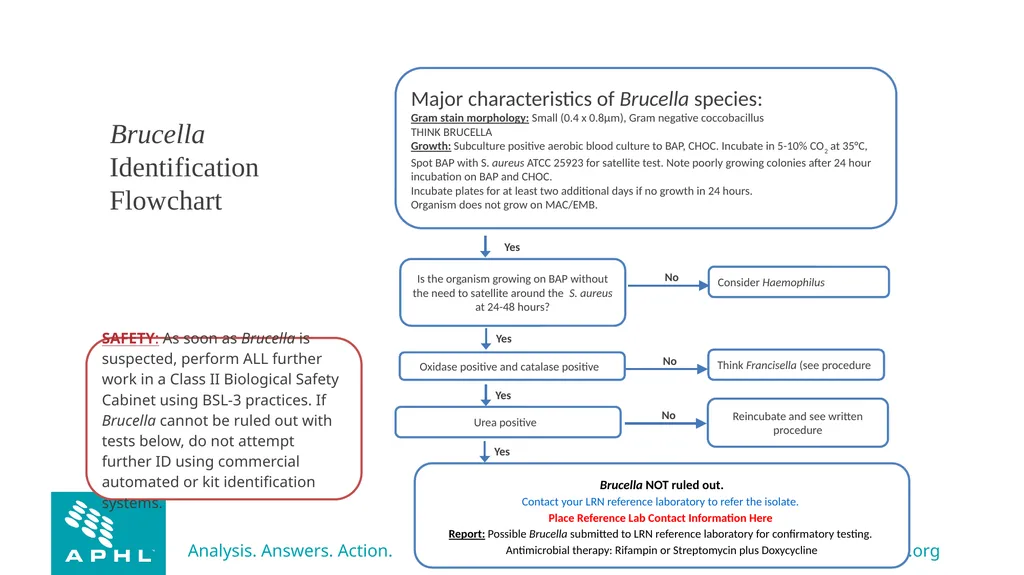
Major characteristics of Brucella species:
Gram stain morphology: Small (0.4 x 0.8µm), Gram negative coccobacillus
THINK BRUCELLA
Growth: Subculture positive aerobic blood culture to BAP, CHOC. Incubate in 5-10% CO2 at 35°C, Spot BAP with S. aureus ATCC 25923 for satellite test. Note poorly growing colonies after 24 hour incubation on BAP and CHOC.
Incubate plates for at least two additional days if no growth in 24 hours.
Organism does not grow on MAC/EMB. Is the organism growing on BAP without the need to satellite around the S. aureus at 24-48 hours? Oxidase positive and catalase positive? Urea positive? Consider Haemophilus Think Francisella (see procedure) Reincubate and see written procedure SAFETY: As soon as Brucella is suspected, perform ALL further work in a Class II Biological Safety Cabinet using BSL-3 practices. If Brucella cannot be ruled out with tests below, do not attempt further ID using commercial automated or kit identification systems. Brucella
Identification
Flowchart Yes Brucella NOT ruled out.
Contact your LRN reference laboratory to refer the isolate.
Place Reference Lab Contact Information Here
Report: Possible Brucella submitted to LRN reference laboratory for confirmatory testing.
Antimicrobial therapy: Rifampin or Streptomycin plus Doxycycline<br>
19
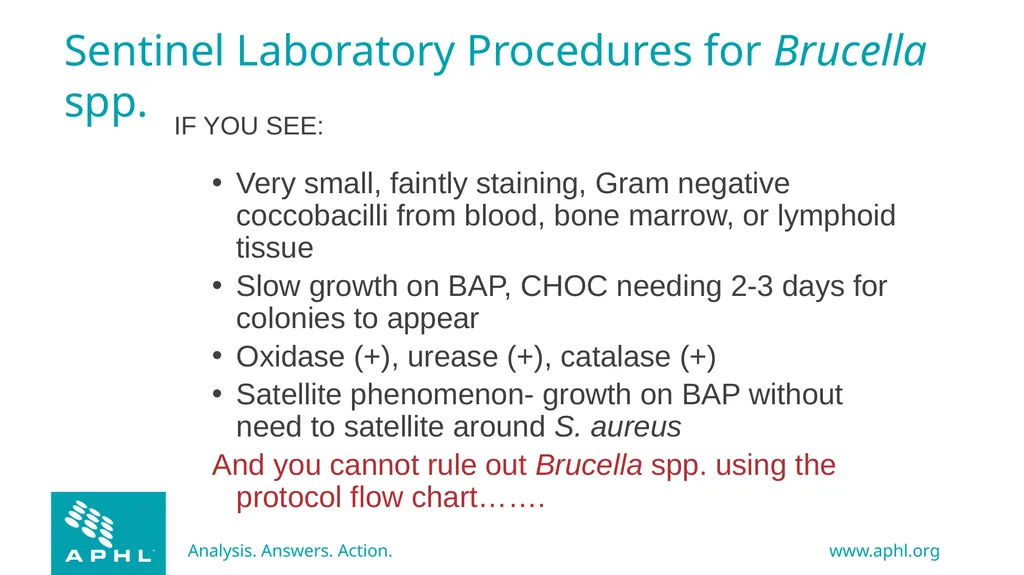
Sentinel Laboratory Procedures for Brucella spp. IF YOU SEE:
Very small, faintly staining, Gram negative coccobacilli from blood, bone marrow, or lymphoid tissue
Slow growth on BAP, CHOC needing 2-3 days for colonies to appear
Oxidase (+), urease (+), catalase (+)
Satellite phenomenon- growth on BAP without need to satellite around S. aureus
And you cannot rule out Brucella spp. using the protocol flow chart…….<br>