"AGRI 3364 Equine Science Matt McMillan, Ph.D." is the property of its rightful owner. Permission is granted to
download and print the materials on this website for personal, non-commercial use only, and to display it
on your personal computer provided you do not modify the materials and that you retain all copyright
notices contained in the materials. By downloading content from our website, you accept the terms of this
agreement.
Presentation Transcript
01
AGRI 3364 Equine Science Matt McMillan, Ph.D. Assistant Professor<br>
02
Matt McMillan, Ph.D., PAS Background Born: San Angelo, TX
Graduated High School: Allen, TX
B.S. Animal Science TTU 1997
M.S. Animal Science ASU 2000
Ph.D. Animal Nutrition TTU 2004
Hi-Pro Feeds 2005
SHSU 2006 - Present<br>
03
Evolution of the Horse Did not occur in a straight line
Many horse like animals branched off
Now one genus is the only surviving branch of a once large evolutionary bush
Equus<br>
04
History and Evolution Kingdom: Animalia
Phylum: Chordata
Class: Mammalia
Order: Perissodactyla
Family: Equidae
Genus: Equus
Specie: several<br>
05
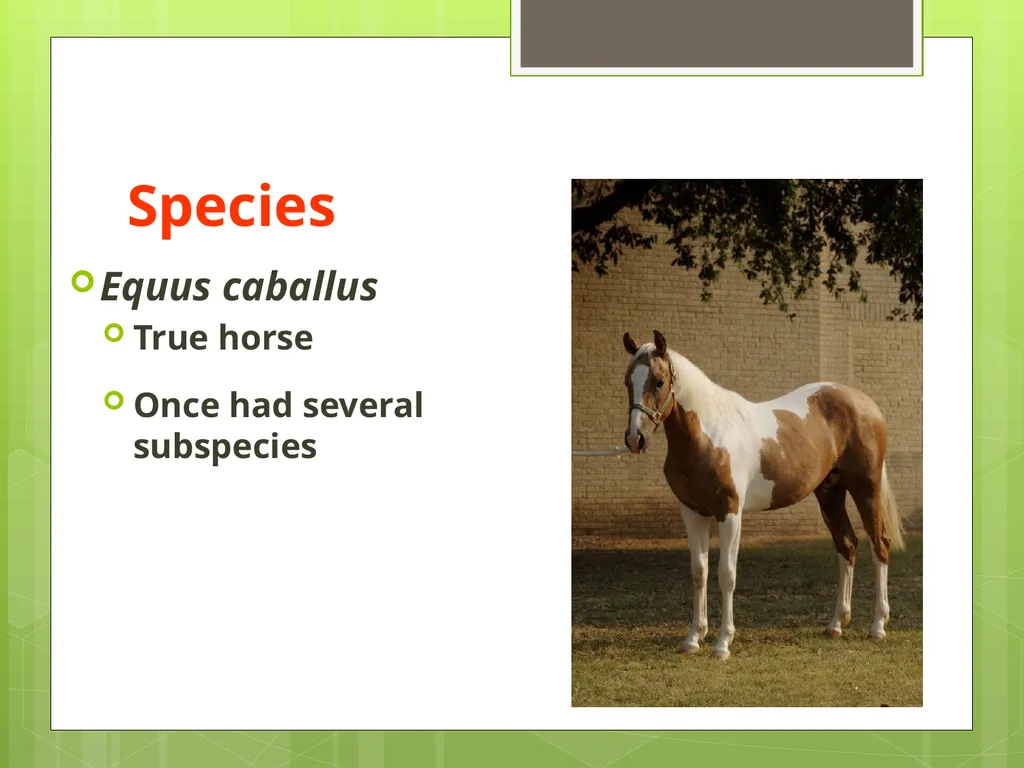
Species Equus caballus
True horse
Once had several subspecies<br>
06
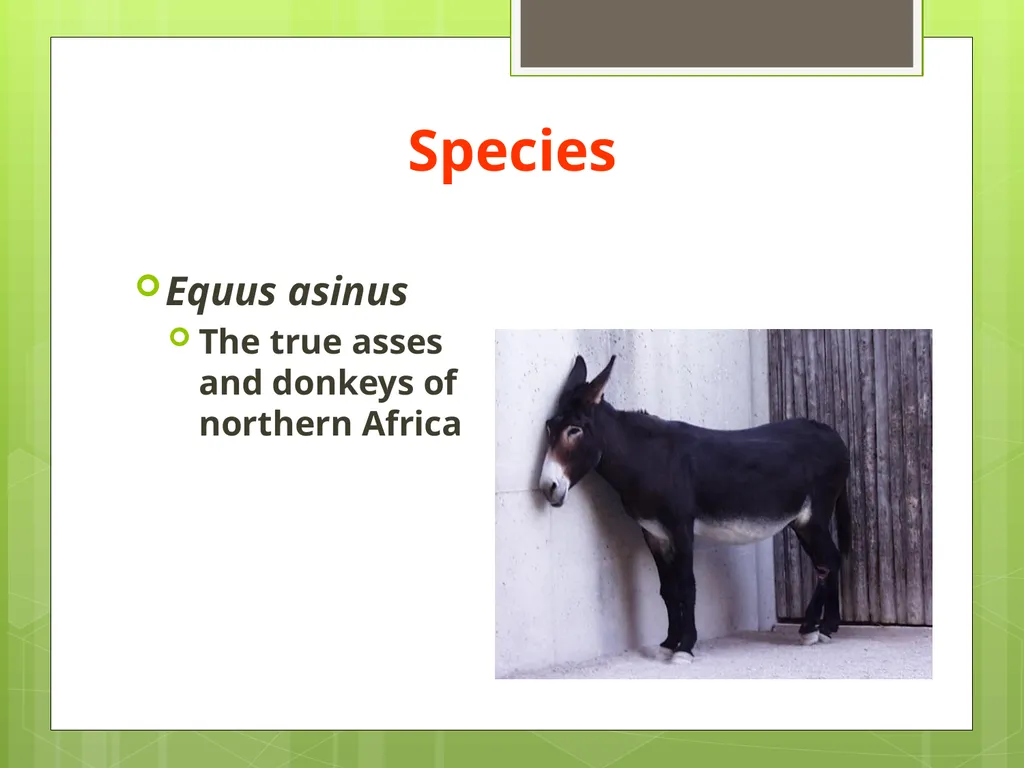
Species Equus asinus
The true asses and donkeys of northern Africa<br>
07
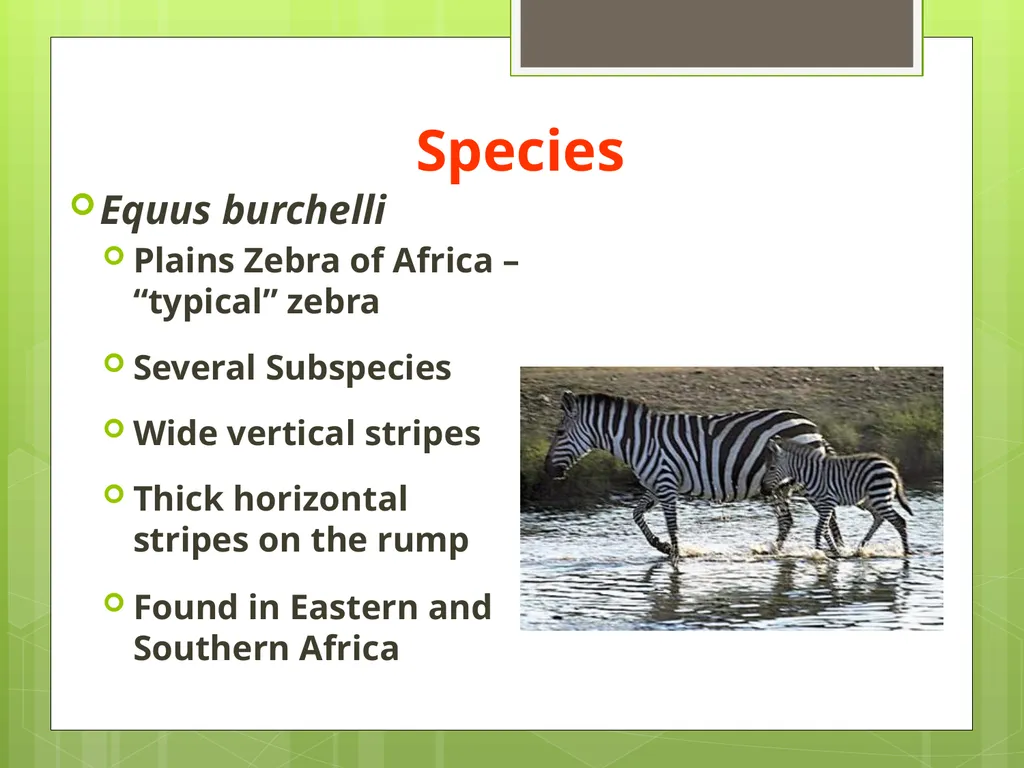
Species Equus burchelli
Plains Zebra of Africa – “typical” zebra
Several Subspecies
Wide vertical stripes
Thick horizontal stripes on the rump
Found in Eastern and Southern Africa<br>
08
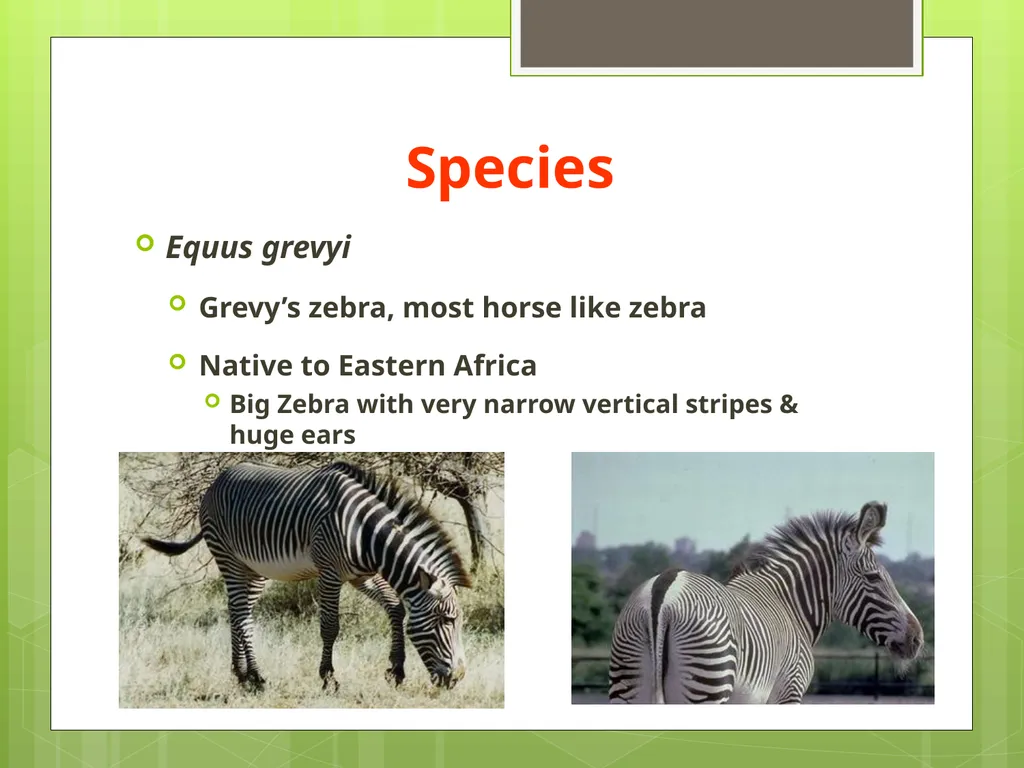
Species Equus grevyi
Grevy’s zebra, most horse like zebra
Native to Eastern Africa
Big Zebra with very narrow vertical stripes & huge ears<br>
09
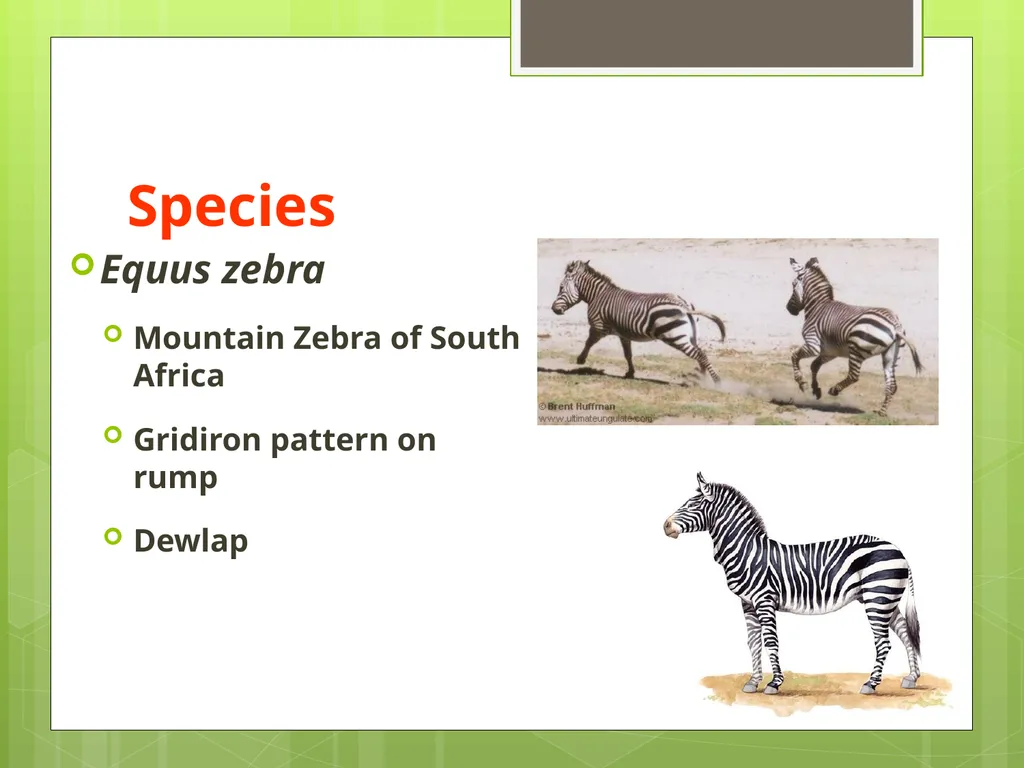
Species Equus zebra
Mountain Zebra of South Africa
Gridiron pattern on rump
Dewlap<br>
10
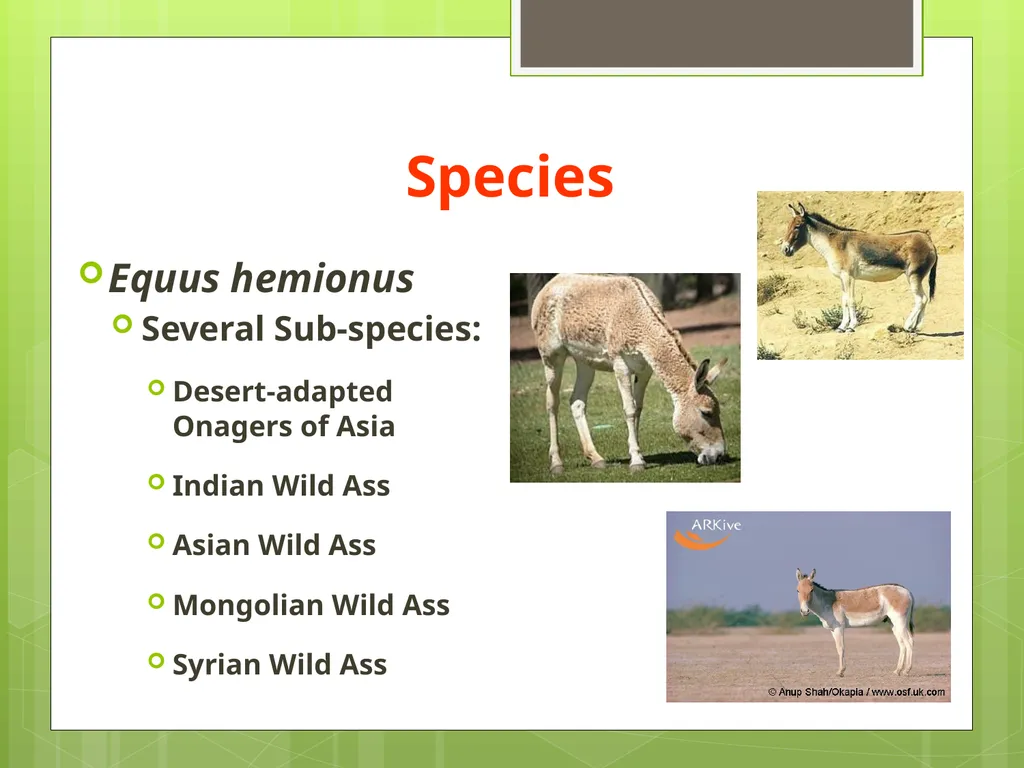
Species Equus hemionus
Several Sub-species:
Desert-adapted Onagers of Asia
Indian Wild Ass
Asian Wild Ass
Mongolian Wild Ass
Syrian Wild Ass<br>
11
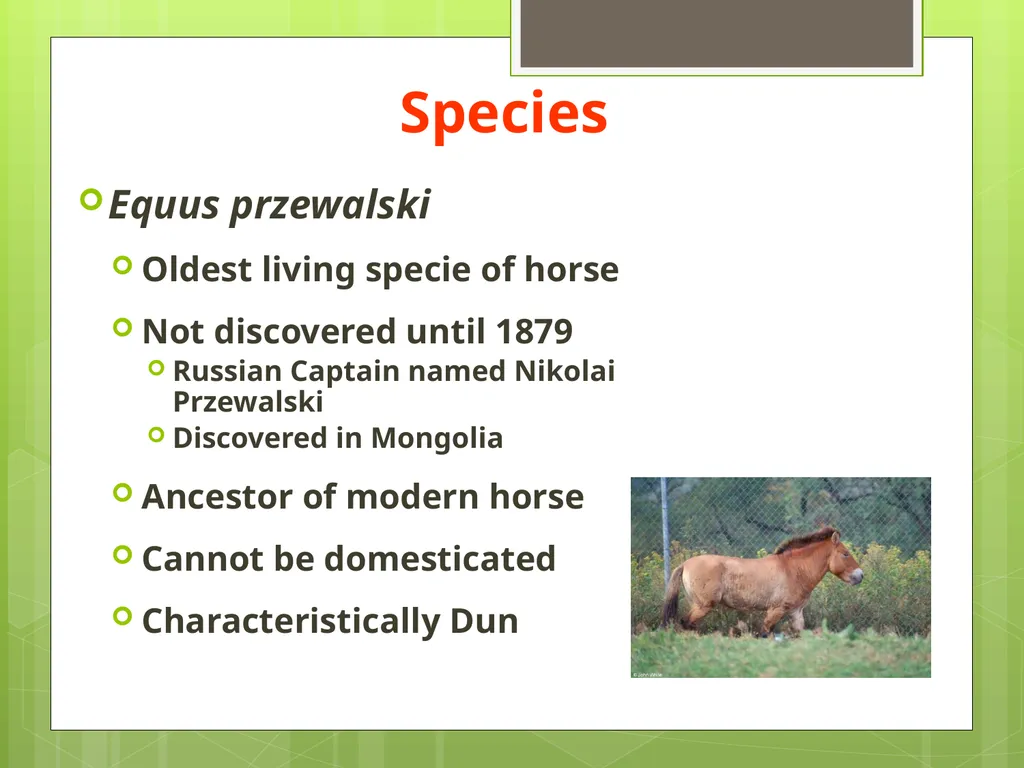
Species Equus przewalski
Oldest living specie of horse
Not discovered until 1879
Russian Captain named Nikolai Przewalski
Discovered in Mongolia
Ancestor of modern horse
Cannot be domesticated
Characteristically Dun<br>
12
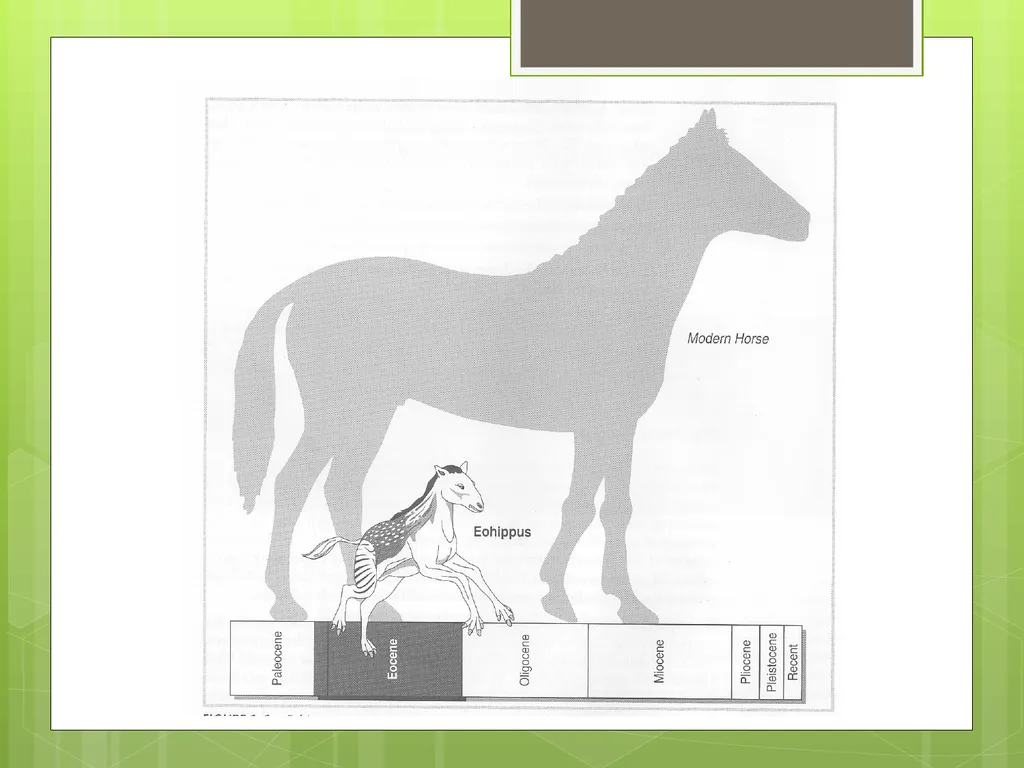
Evolution of the Horse What is the earliest known ancestor of the horse?
Eohippus
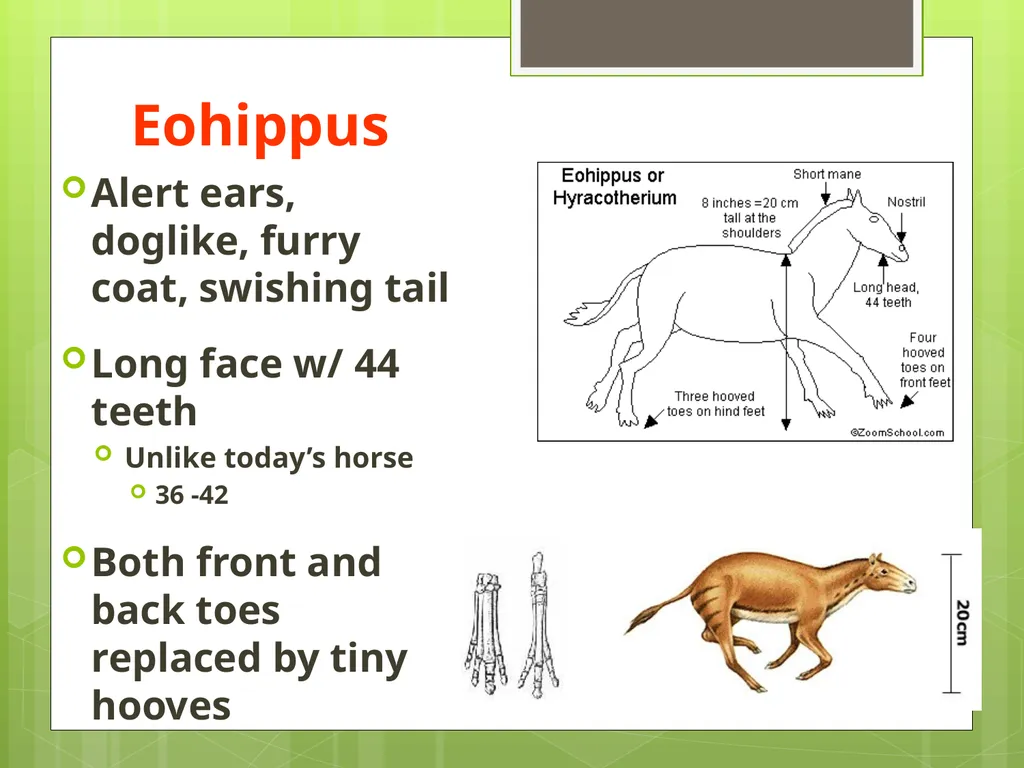
a.k.a. Hyracotherium or dawn horse
~ the size of a fox (8 -18” at shoulder)
Four functional toes on each front foot
Three toes on hind feet<br>
13
Eohippus Structure of teeth suggest
Browser
Earliest remains found in
North America
Thought to have lived
~54 million years ago
Remains also found in
Europe dating 50 million years old<br>