
AHE 605 (ANIMAL HUSBANDRY PROGRAMME PLANNING AND

Description: AHE 605 (ANIMAL HUSBANDRY PROGRAMME PLANNING AND EVALUATION) Department of Veterinary Animal Husbandry Extension Education, BVC Topics covered Importance of programme planning in veterinary and animal husbandry extension. Objectives,
Related Topics
Download Presentation
"AHE 605 (ANIMAL HUSBANDRY PROGRAMME PLANNING AND" is the property of its rightful owner. Permission is granted to download and print the materials on this website for personal, non-commercial use only, and to display it on your personal computer provided you do not modify the materials and that you retain all copyright notices contained in the materials. By downloading content from our website, you accept the terms of this agreement.
Presentation Transcript
slide1. AHE 605 (ANIMAL HUSBANDRY PROGRAMME PLANNING AND EVALUATION)
Department of Veterinary & Animal Husbandry Extension Education, BVC<br>
slide2. Topics covered Importance of programme planning in veterinary and animal husbandry extension. Objectives, principles and steps in programme planning process. Role of animal husbandry extension agencies, local leaders, livestock owners and institutions in planning and implementation of need-based veterinary extension programmes.<br>
slide3. Concept, Objectives and Principles of Programme Planning
Programme planning is a procedure of working with the people in an effort to recognise unsatisfactory situations or problems and to determine possible solutions or objectives and goals.
Programme: An extension programme is a statement of situation, objectives, problems and solutions (Kelsey and Hearne, 1949).
Planning: Planning is designing a course of action to achieve ends.
Programme planning: Programme planning is the process whereby the people in the country through their leaders plans their extension programme, country and state professional extension staff member assist in this process (Lawrence,1962).<br>
slide4. Objectives of programme The general objective of having an extension programme is to influence people to make changes in their way of life and making a living.
According to Kelsey and Hearne (1967), the following are reasons for having a programme:
To ensure careful consideration of what is to be done and why.
To furnish a guide against which to judge all new proposals.
To establish objectives toward which progress can be measured and evaluated.
To have a means of choosing the important (deep rooted) from incidental (less important) problems; and the permanent from the temporary changes.
To develop a common understanding about the means and ends between functionaries and organizations.
To ensure continuity during changes of personnel.
To help develop leadership.
To avoid wastage of time & money and promote efficiency.
To justify expenditure and to ensure flow of funds.
To have a statement in written form for public use.<br>
slide5. Extension programmes should be based on an analysis of the past experiences, present situation and future needs.
Extension programmes should have clear and significant objectives which could satisfy important needs of the people.
Extension programmes should fix up priority on the basis of available resources and time.
Extension programmes should clearly indicate the availability and utilization of resources.
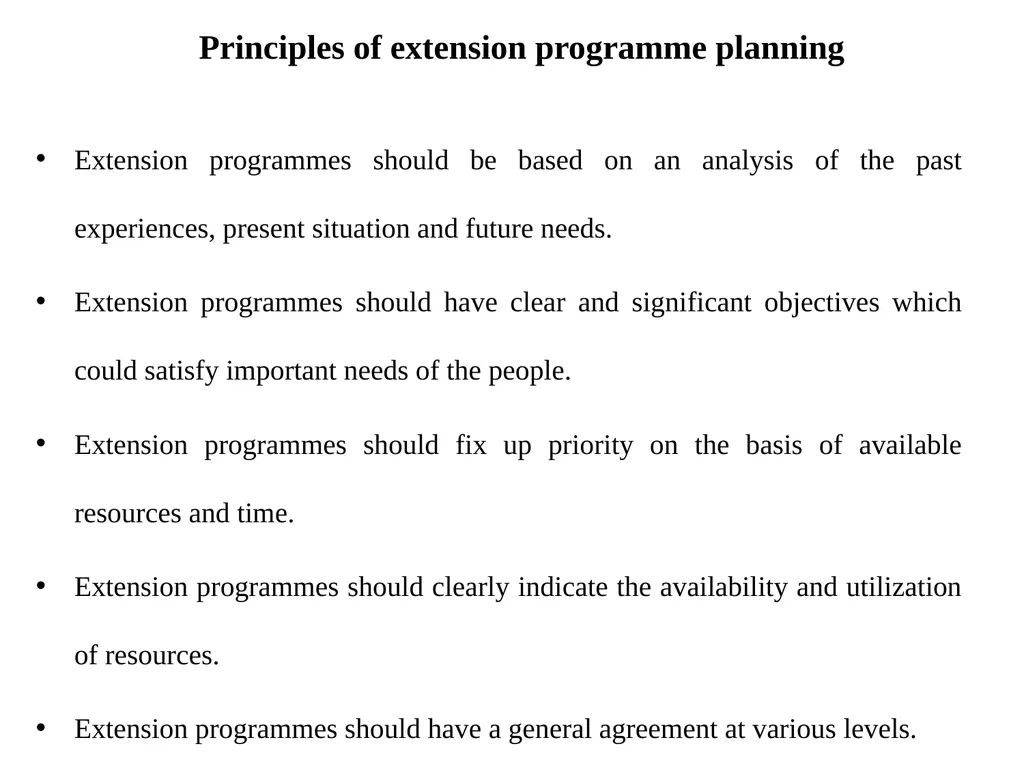
Extension programmes should have a general agreement at various levels. Principles of extension programme planning<br>
slide6. Extension programmes should involve people at the local level.
Extension programmes should involve relevant institutions and organization.
Extension programme should have definite plan of work.
Extension programme should provide for evaluation of results and reconsideration of the programme.
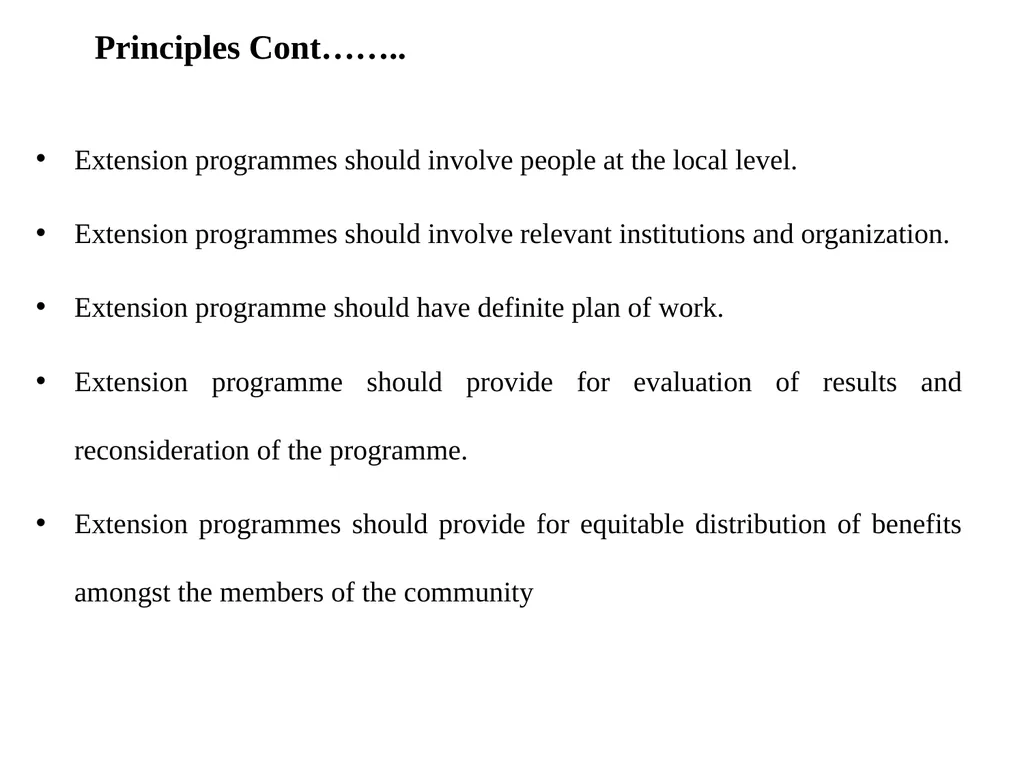
Extension programmes should provide for equitable distribution of benefits amongst the members of the community Principles Cont……..<br>
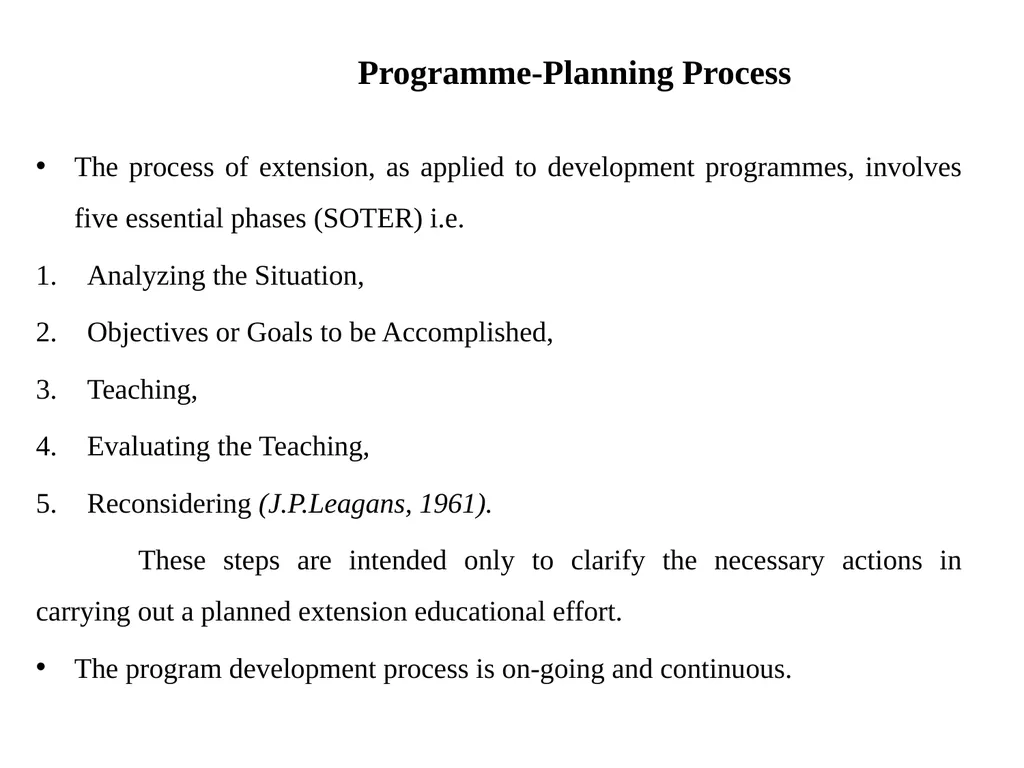
slide7. The process of extension, as applied to development programmes, involves five essential phases (SOTER) i.e.
Analyzing the Situation,
Objectives or Goals to be Accomplished,
Teaching,
Evaluating the Teaching,
Reconsidering (J.P.Leagans, 1961).
These steps are intended only to clarify the necessary actions in carrying out a planned extension educational effort.
The program development process is on-going and continuous. Programme-Planning Process<br>
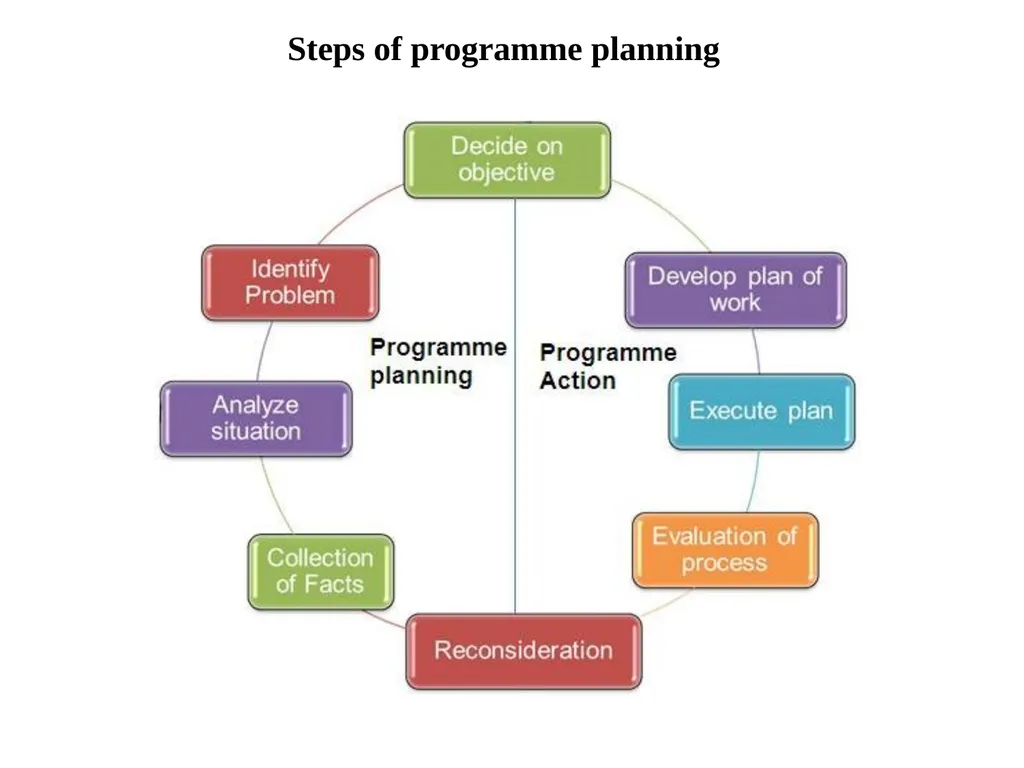
slide8. Steps of programme planning<br>
Department of Veterinary & Animal Husbandry Extension Education, BVC<br>
slide2. Topics covered Importance of programme planning in veterinary and animal husbandry extension. Objectives, principles and steps in programme planning process. Role of animal husbandry extension agencies, local leaders, livestock owners and institutions in planning and implementation of need-based veterinary extension programmes.<br>
slide3. Concept, Objectives and Principles of Programme Planning
Programme planning is a procedure of working with the people in an effort to recognise unsatisfactory situations or problems and to determine possible solutions or objectives and goals.
Programme: An extension programme is a statement of situation, objectives, problems and solutions (Kelsey and Hearne, 1949).
Planning: Planning is designing a course of action to achieve ends.
Programme planning: Programme planning is the process whereby the people in the country through their leaders plans their extension programme, country and state professional extension staff member assist in this process (Lawrence,1962).<br>
slide4. Objectives of programme The general objective of having an extension programme is to influence people to make changes in their way of life and making a living.
According to Kelsey and Hearne (1967), the following are reasons for having a programme:
To ensure careful consideration of what is to be done and why.
To furnish a guide against which to judge all new proposals.
To establish objectives toward which progress can be measured and evaluated.
To have a means of choosing the important (deep rooted) from incidental (less important) problems; and the permanent from the temporary changes.
To develop a common understanding about the means and ends between functionaries and organizations.
To ensure continuity during changes of personnel.
To help develop leadership.
To avoid wastage of time & money and promote efficiency.
To justify expenditure and to ensure flow of funds.
To have a statement in written form for public use.<br>
slide5. Extension programmes should be based on an analysis of the past experiences, present situation and future needs.
Extension programmes should have clear and significant objectives which could satisfy important needs of the people.
Extension programmes should fix up priority on the basis of available resources and time.
Extension programmes should clearly indicate the availability and utilization of resources.
Extension programmes should have a general agreement at various levels. Principles of extension programme planning<br>
slide6. Extension programmes should involve people at the local level.
Extension programmes should involve relevant institutions and organization.
Extension programme should have definite plan of work.
Extension programme should provide for evaluation of results and reconsideration of the programme.
Extension programmes should provide for equitable distribution of benefits amongst the members of the community Principles Cont……..<br>
slide7. The process of extension, as applied to development programmes, involves five essential phases (SOTER) i.e.
Analyzing the Situation,
Objectives or Goals to be Accomplished,
Teaching,
Evaluating the Teaching,
Reconsidering (J.P.Leagans, 1961).
These steps are intended only to clarify the necessary actions in carrying out a planned extension educational effort.
The program development process is on-going and continuous. Programme-Planning Process<br>
slide8. Steps of programme planning<br>