
Aims: Learn about hedgerows and monocultures from


Description: Aims: Learn about hedgerows and monocultures from a presentation Consolidate and add to this knowledge by making a summary sheet (using your green booklets as well) Find out how how much you have learned by doing a mini-test MONOCULTURE
Related Topics
Download Presentation
"Aims: Learn about hedgerows and monocultures from" is the property of its rightful owner. Permission is granted to download and print the materials on this website for personal, non-commercial use only, and to display it on your personal computer provided you do not modify the materials and that you retain all copyright notices contained in the materials. By downloading content from our website, you accept the terms of this agreement.
Presentation Transcript
slide1. Aims:
Learn about hedgerows and monocultures from a presentation
Consolidate and add to this knowledge by making a summary sheet (using your green booklets as well)
Find out how how much you have learned by doing a mini-test<br>
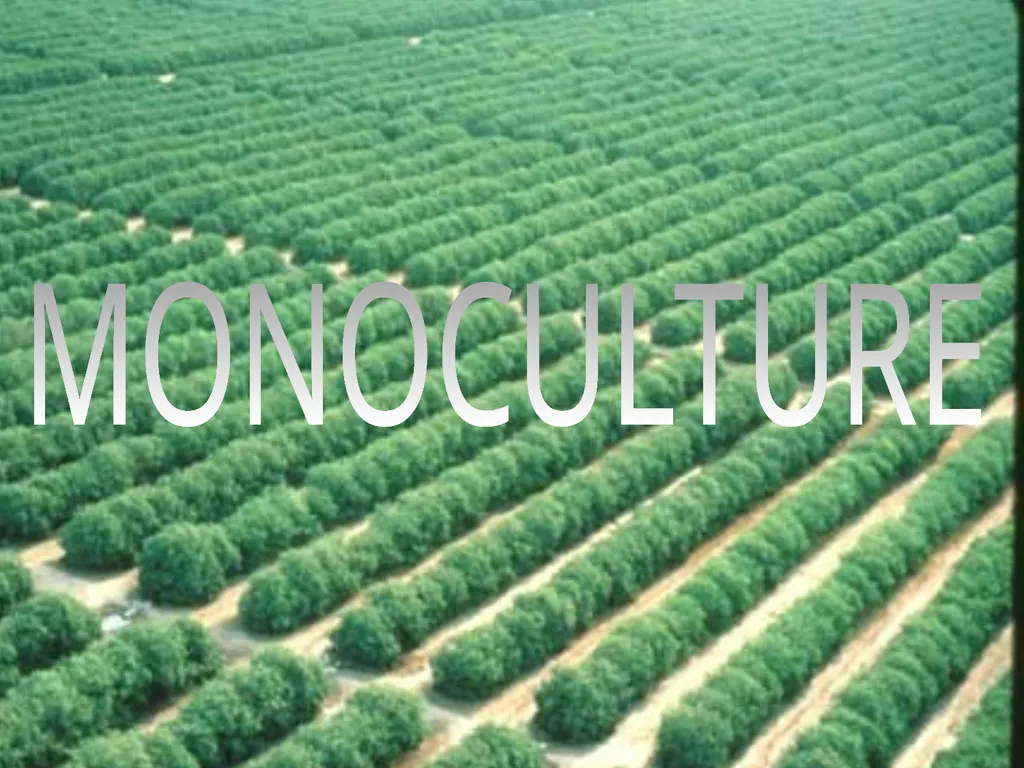
slide2. MONOCULTURE<br>
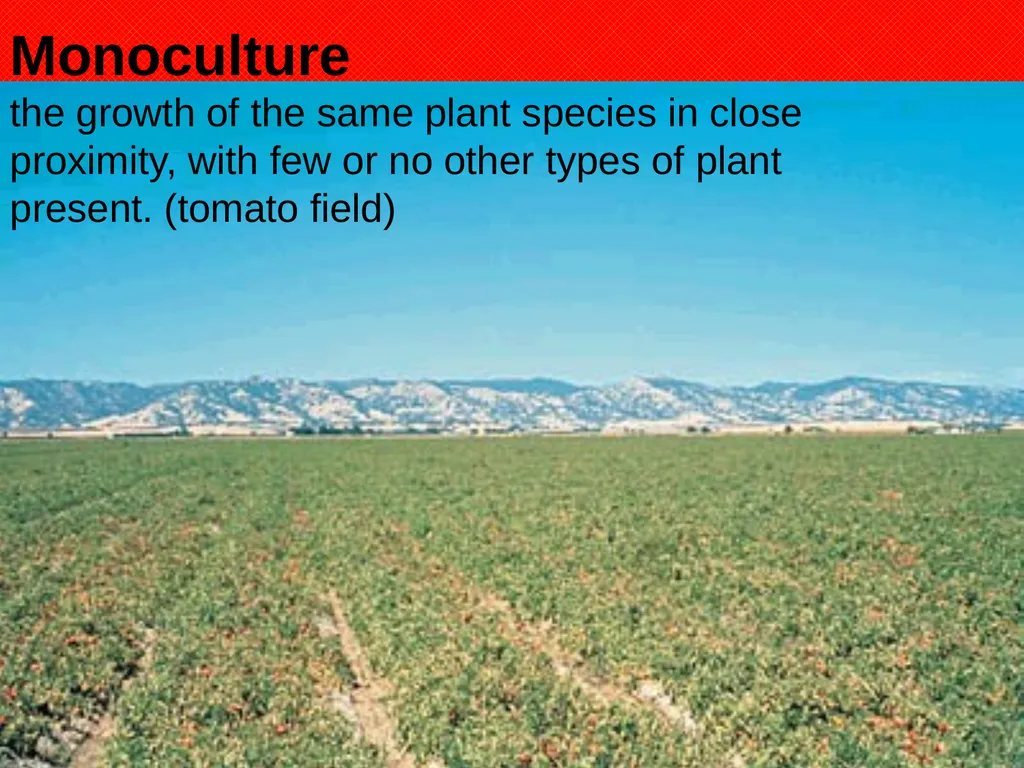
slide3. Monoculture the growth of the same plant species in close proximity, with few or no other types of plant present. (tomato field)<br>
slide4. Monoculture:
Increases the productivity of farmland by growing only the best variety of crop.
Allows more than one crop per year.
Simplifies sowing and harvesting of the crop.
Reduces labour costs.<br>
slide5. Monoculture has a major impact on the environment:
· Reduces genetic diversity and renders all crops in a region susceptible to disease.
· Fertilisers required to maintain soil fertility.
· Pesticides are required to keep crops healthy.
· Monoculture reduces species diversity.
· Less attractive countryside.<br>
slide6. E.g of pests and monoculture.
The boll weevil eats the cotton plant. It wiped out much of the cotton crop in the affected states in the USA between 1895 and 1910. Severe economic consequences ensued, because cotton was the main crop, and only one strain of cotton was grown.<br>
slide7. Traditional crop rotations, where different crops are grown in a field each year:
Breaks the life cycles of pests (since their host is changing)
Improves soil texture (since different crops have different root structures and methods of cultivation)
Can increase soil nitrogen (by planting nitrogen-fixing legumes).<br>
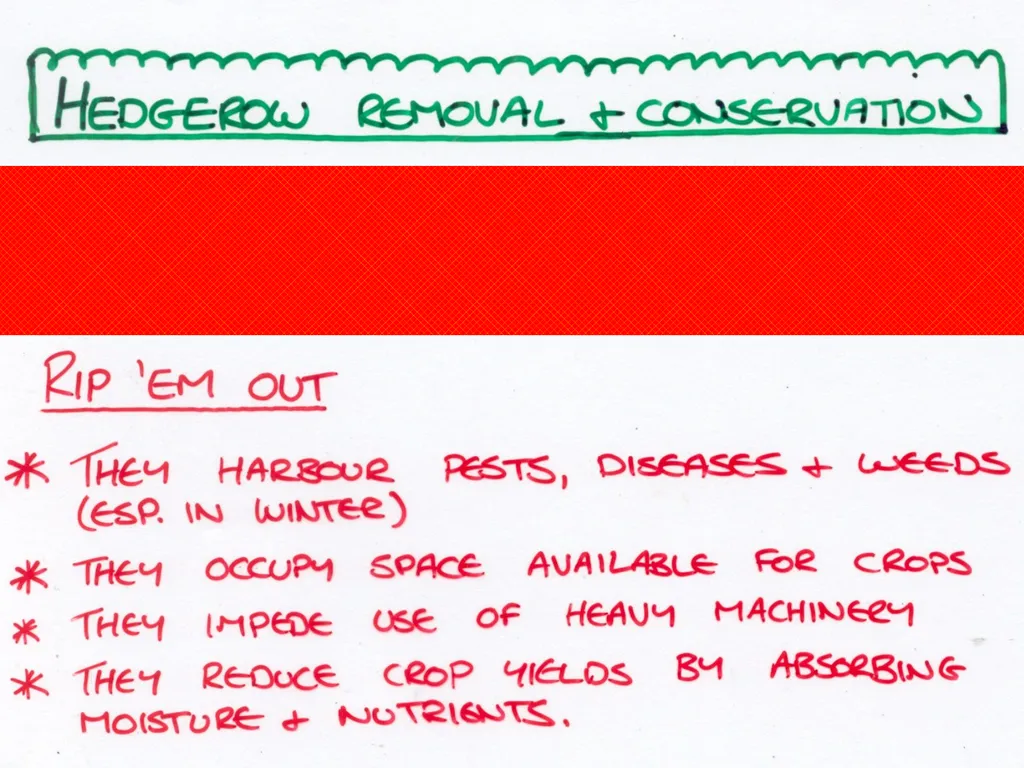
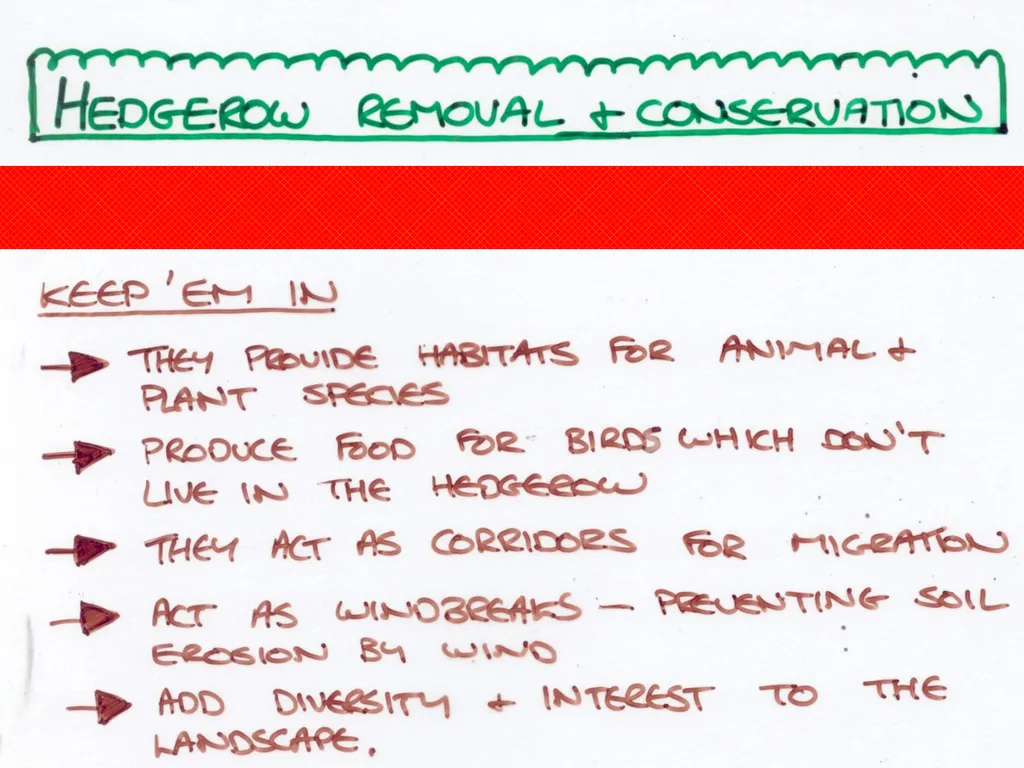
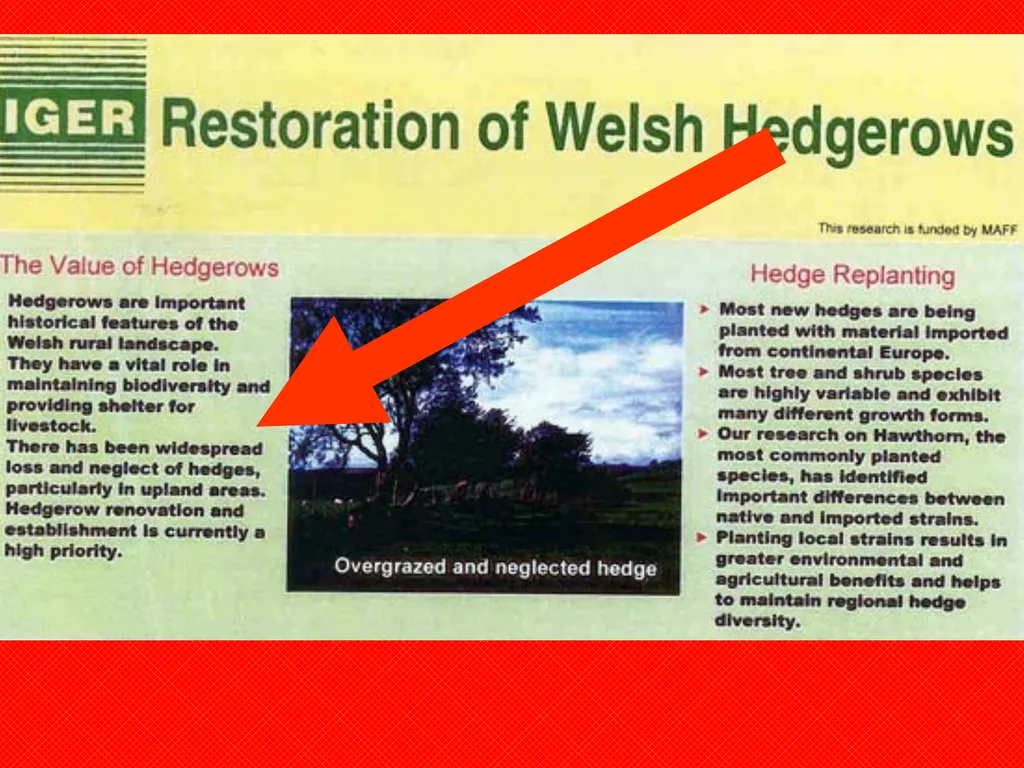
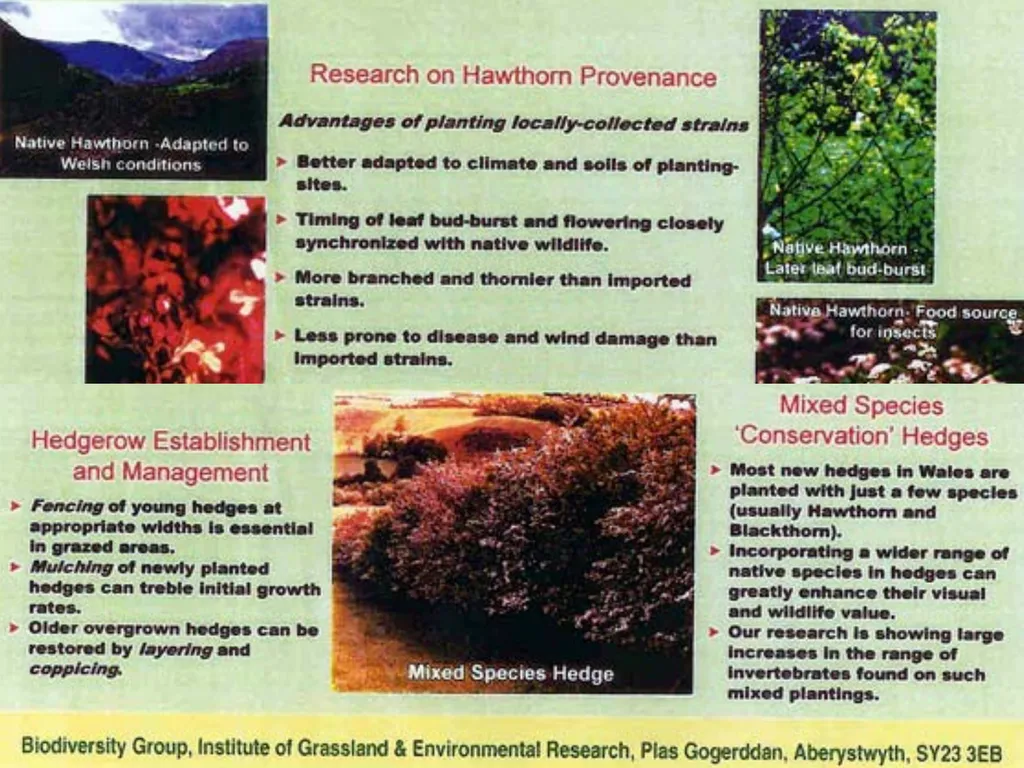
slide8. HEDGEROWS<br>
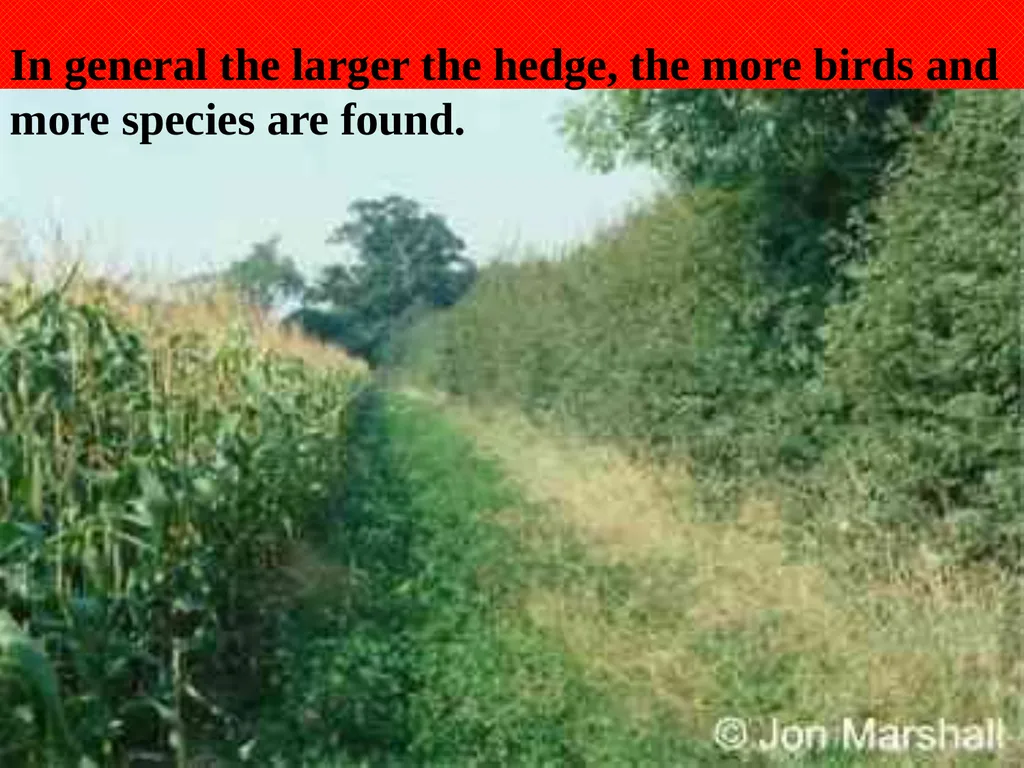
slide13. In general the larger the hedge, the more birds and more species are found.<br>
slide14. This powerpoint was kindly donated to www.worldofteaching.com
http://www.worldofteaching.com is home to over a thousand powerpoints submitted by teachers. This is a completely free site and requires no registration. Please visit and I hope it will help in your teaching.<br>
Learn about hedgerows and monocultures from a presentation
Consolidate and add to this knowledge by making a summary sheet (using your green booklets as well)
Find out how how much you have learned by doing a mini-test<br>
slide2. MONOCULTURE<br>
slide3. Monoculture the growth of the same plant species in close proximity, with few or no other types of plant present. (tomato field)<br>
slide4. Monoculture:
Increases the productivity of farmland by growing only the best variety of crop.
Allows more than one crop per year.
Simplifies sowing and harvesting of the crop.
Reduces labour costs.<br>
slide5. Monoculture has a major impact on the environment:
· Reduces genetic diversity and renders all crops in a region susceptible to disease.
· Fertilisers required to maintain soil fertility.
· Pesticides are required to keep crops healthy.
· Monoculture reduces species diversity.
· Less attractive countryside.<br>
slide6. E.g of pests and monoculture.
The boll weevil eats the cotton plant. It wiped out much of the cotton crop in the affected states in the USA between 1895 and 1910. Severe economic consequences ensued, because cotton was the main crop, and only one strain of cotton was grown.<br>
slide7. Traditional crop rotations, where different crops are grown in a field each year:
Breaks the life cycles of pests (since their host is changing)
Improves soil texture (since different crops have different root structures and methods of cultivation)
Can increase soil nitrogen (by planting nitrogen-fixing legumes).<br>
slide8. HEDGEROWS<br>
slide13. In general the larger the hedge, the more birds and more species are found.<br>
slide14. This powerpoint was kindly donated to www.worldofteaching.com
http://www.worldofteaching.com is home to over a thousand powerpoints submitted by teachers. This is a completely free site and requires no registration. Please visit and I hope it will help in your teaching.<br>