
AML Tuesday’s Session #15 on: Conducting a

Description: AML Tuesdays Session 15 on: Conducting a Business Risk Assessment 16 May 2023 Agenda Financial Transparency Advisors BRA Overview Financial Transparency Advisors Business Risk Assessment Financial Transparency Advisors Why FIs need
Related Topics
Download Presentation
"AML Tuesday’s Session #15 on: Conducting a" is the property of its rightful owner. Permission is granted to download and print the materials on this website for personal, non-commercial use only, and to display it on your personal computer provided you do not modify the materials and that you retain all copyright notices contained in the materials. By downloading content from our website, you accept the terms of this agreement.
Presentation Transcript
slide1. AML Tuesday’s Session #15 on: Conducting a Business Risk Assessment
16 May 2023<br>
slide2. Agenda © Financial Transparency Advisors<br>
slide3. BRA Overview © Financial Transparency Advisors<br>
slide4. Business Risk Assessment © Financial Transparency Advisors<br>
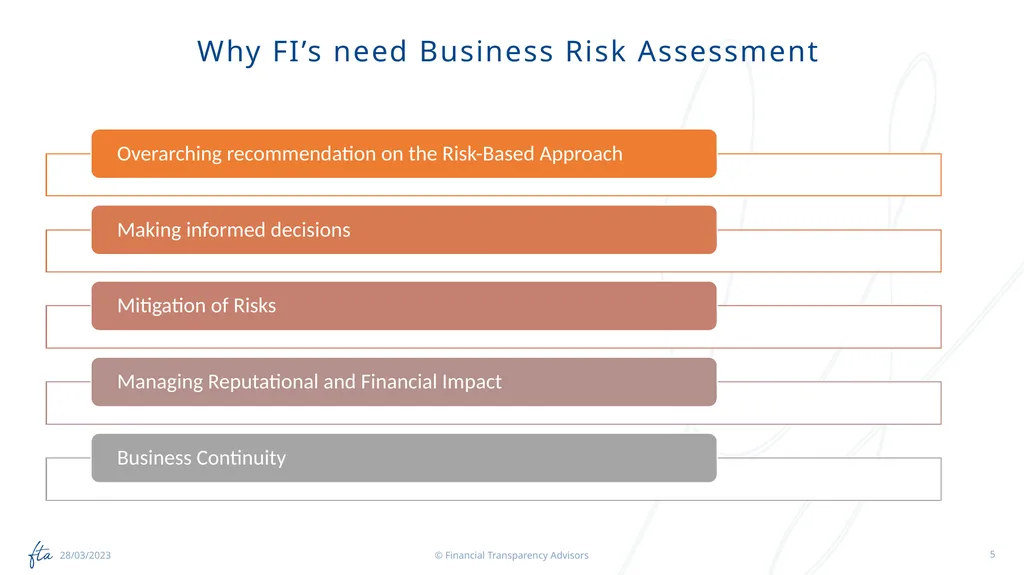
slide5. Why FI’s need Business Risk Assessment © Financial Transparency Advisors<br>
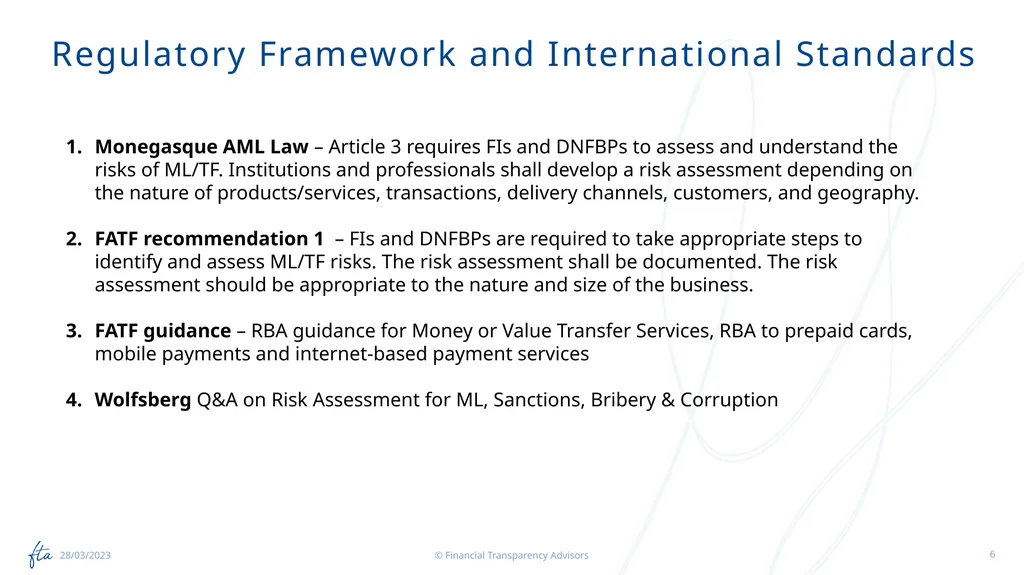
slide6. Regulatory Framework and International Standards © Financial Transparency Advisors Monegasque AML Law – Article 3 requires FIs and DNFBPs to assess and understand the risks of ML/TF. Institutions and professionals shall develop a risk assessment depending on the nature of products/services, transactions, delivery channels, customers, and geography.
FATF recommendation 1 – FIs and DNFBPs are required to take appropriate steps to identify and assess ML/TF risks. The risk assessment shall be documented. The risk assessment should be appropriate to the nature and size of the business.
FATF guidance – RBA guidance for Money or Value Transfer Services, RBA to prepaid cards, mobile payments and internet-based payment services
Wolfsberg Q&A on Risk Assessment for ML, Sanctions, Bribery & Corruption<br>
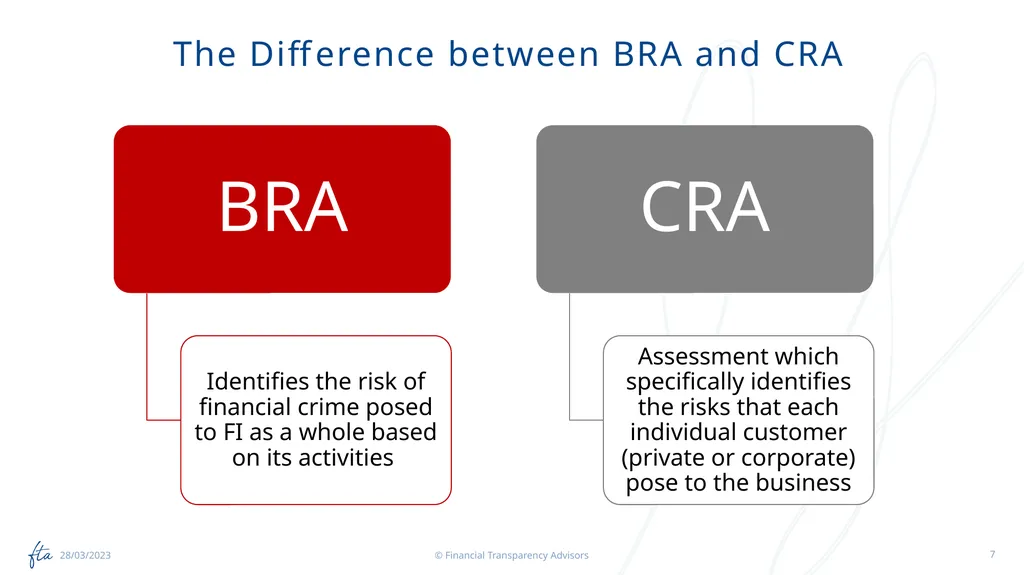
slide7. The Difference between BRA and CRA © Financial Transparency Advisors<br>
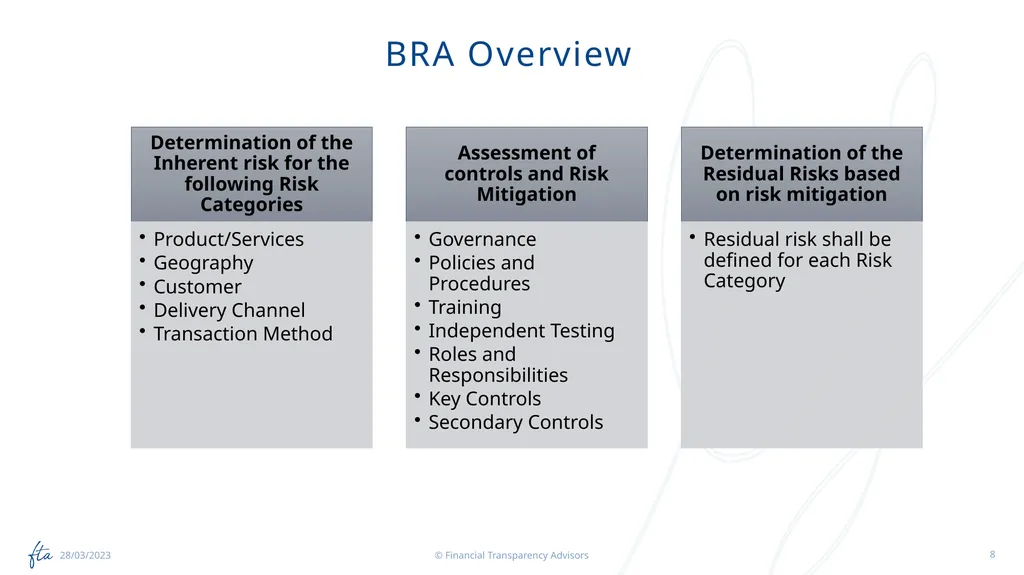
slide8. BRA Overview © Financial Transparency Advisors<br>
slide9. BRA Overview (Cont.) © Financial Transparency Advisors BRA Document Shall describe
Overall risks and introduction of the Institution (NRA, Governance products and Services offered by the Institution, general overview)
The Methodology for Inherent risk determination
The Methodology for Control Assessment and residual risk calculation
Description of Inherent Risk including Quantitative and Qualitative Data
Description of Controls and Risk Mitigation
Action Plan Defined to Mitigate Risks<br>
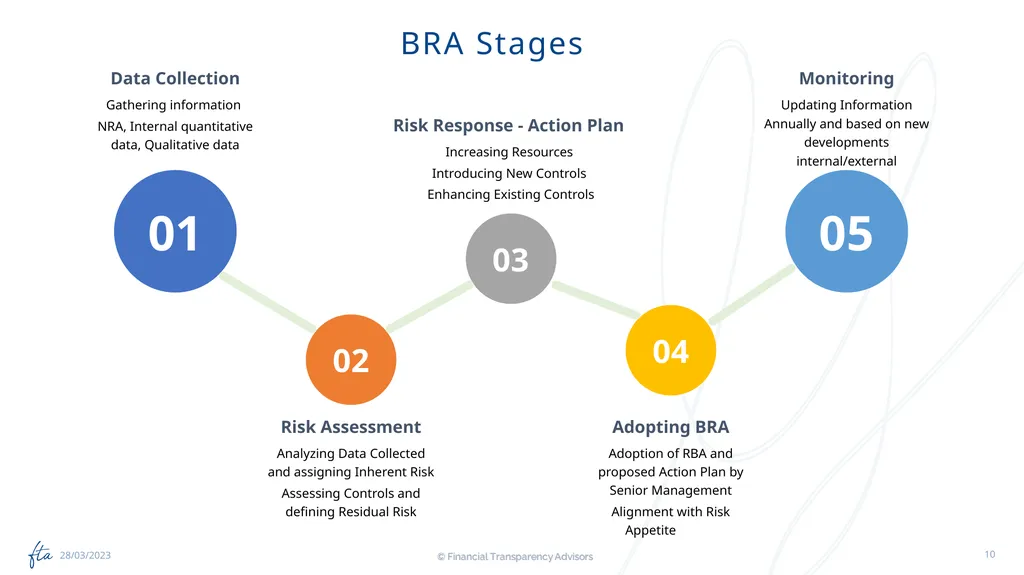
slide10. BRA Stages 01 02 04 03 05 Gathering information
NRA, Internal quantitative data, Qualitative data Data Collection Analyzing Data Collected and assigning Inherent Risk
Assessing Controls and defining Residual Risk Risk Assessment Increasing Resources
Introducing New Controls
Enhancing Existing Controls Risk Response - Action Plan Adoption of RBA and proposed Action Plan by Senior Management
Alignment with Risk Appetite Adopting BRA Updating Information Annually and based on new developments internal/external Monitoring<br>
slide11. BRA Data Sources © Financial Transparency Advisors<br>
slide12. BRA Data Sources © Financial Transparency Advisors High Level Risks
International organization Guidance on risks, typologies, Mutual Evaluations
NRA
Sectorial Risk Assessments
Individual Risks Related to Each Risk Category
Number of Customers, Volume of Transactions per risk category
STR
Correspondent Requests
Court requests
FIU Requests<br>
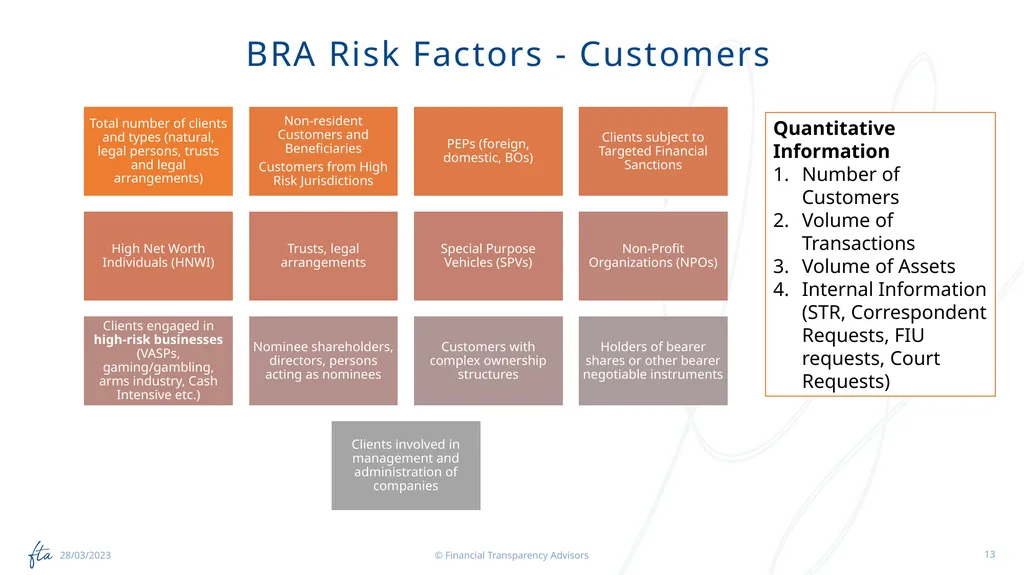
slide13. BRA Risk Factors - Customers © Financial Transparency Advisors Quantitative Information
Number of Customers
Volume of Transactions
Volume of Assets
Internal Information (STR, Correspondent Requests, FIU requests, Court Requests)<br>
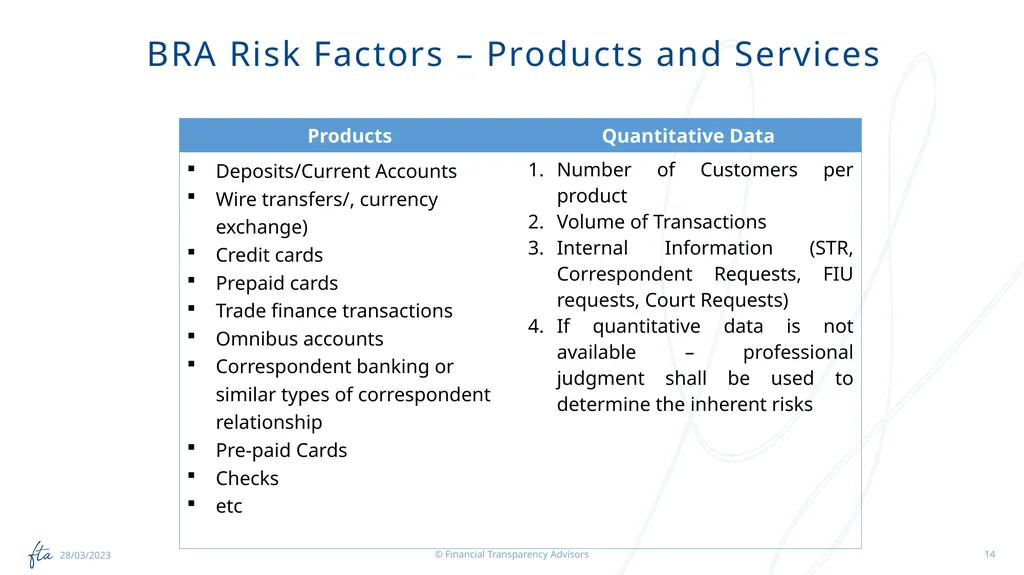
slide14. BRA Risk Factors – Products and Services © Financial Transparency Advisors<br>
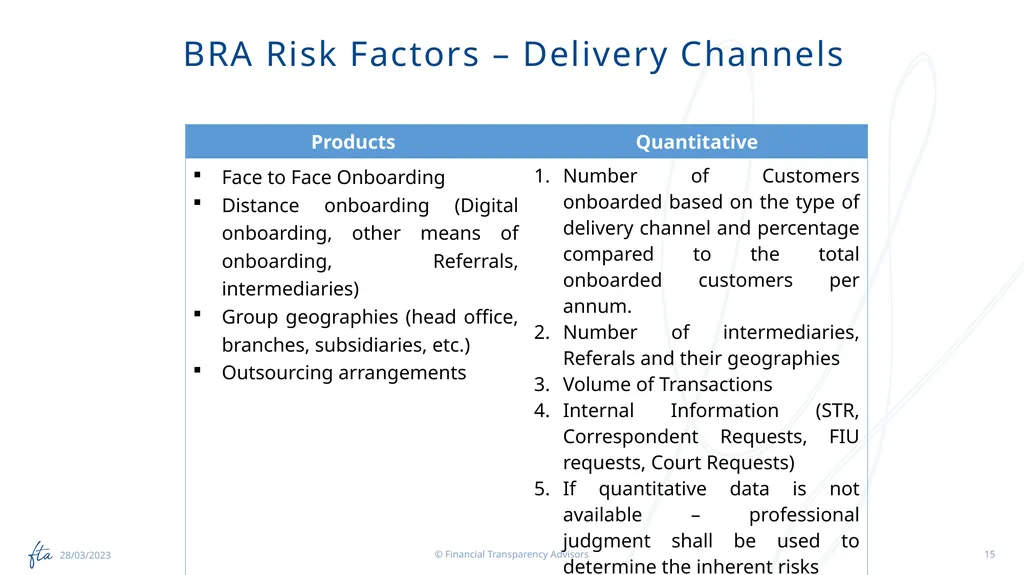
slide15. BRA Risk Factors – Delivery Channels © Financial Transparency Advisors<br>
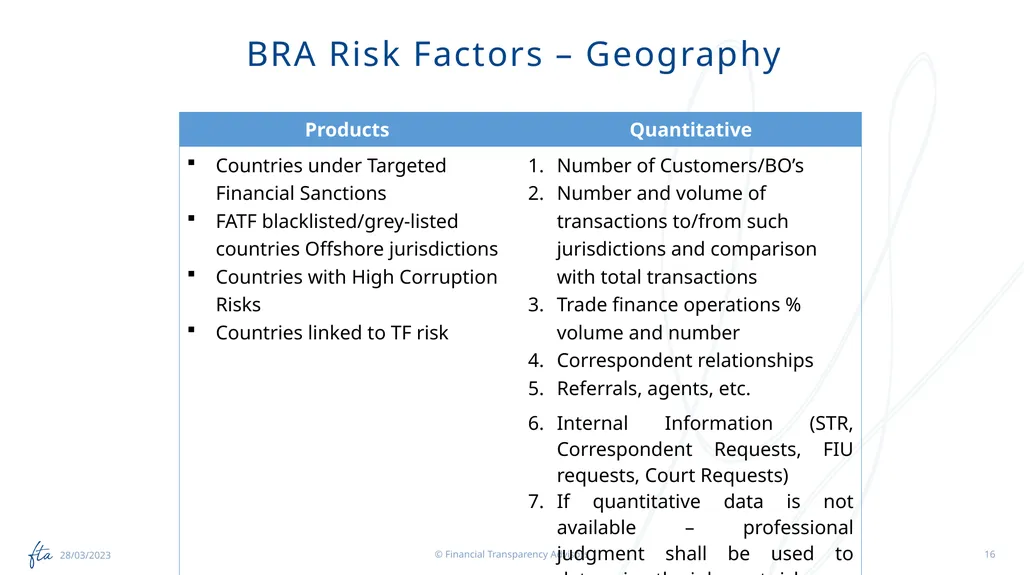
slide16. BRA Risk Factors – Geography © Financial Transparency Advisors<br>
slide17. BRA Design and Risk Response © Financial Transparency Advisors<br>
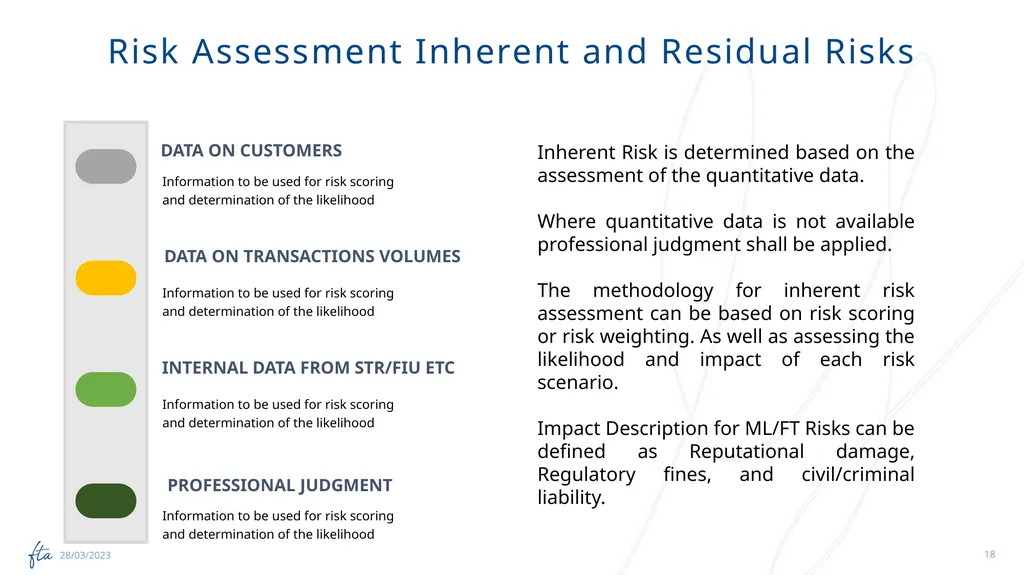
slide18. DATA ON CUSTOMERS Information to be used for risk scoring and determination of the likelihood DATA ON TRANSACTIONS VOLUMES Information to be used for risk scoring and determination of the likelihood INTERNAL DATA FROM STR/FIU ETC Information to be used for risk scoring and determination of the likelihood PROFESSIONAL JUDGMENT Information to be used for risk scoring and determination of the likelihood Risk Assessment Inherent and Residual Risks Inherent Risk is determined based on the assessment of the quantitative data.
Where quantitative data is not available professional judgment shall be applied.
The methodology for inherent risk assessment can be based on risk scoring or risk weighting. As well as assessing the likelihood and impact of each risk scenario.
Impact Description for ML/FT Risks can be defined as Reputational damage, Regulatory fines, and civil/criminal liability.<br>
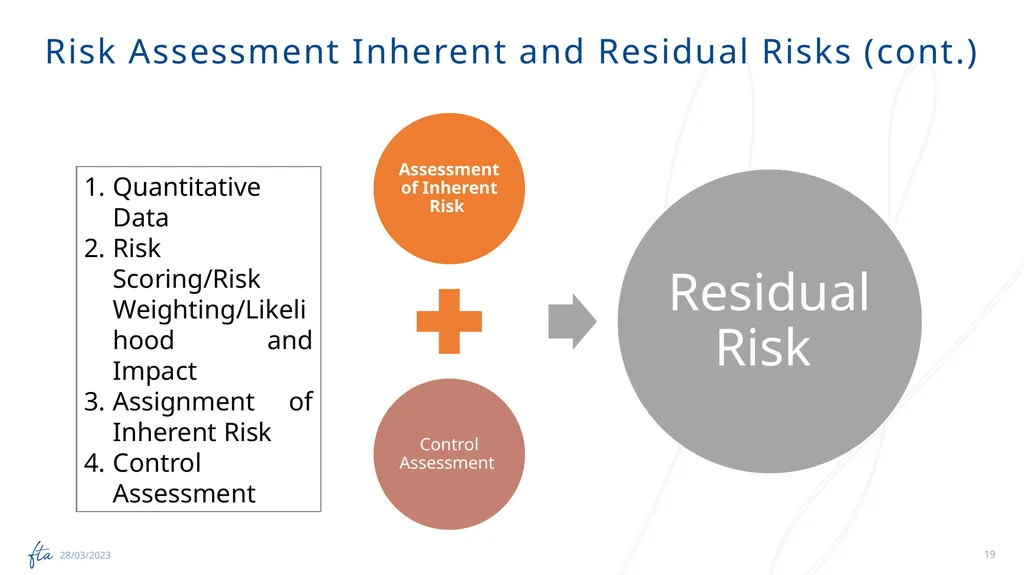
slide19. Risk Assessment Inherent and Residual Risks (cont.) Quantitative Data
Risk Scoring/Risk Weighting/Likelihood and Impact
Assignment of Inherent Risk
Control Assessment<br>
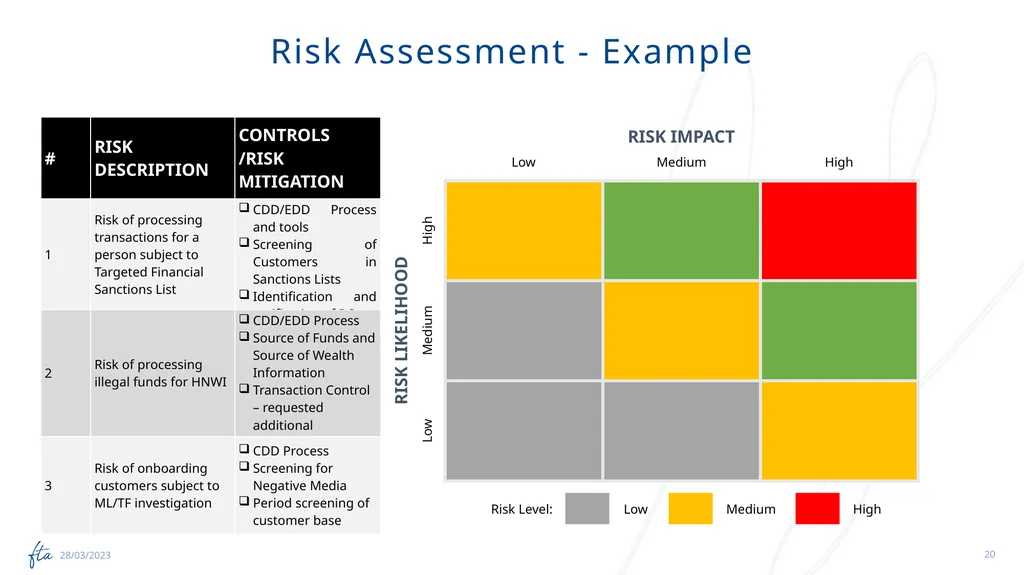
slide20. Risk Assessment - Example Low Medium High Medium Low High RISK IMPACT RISK LIKELIHOOD Risk Level: Low Medium High<br>
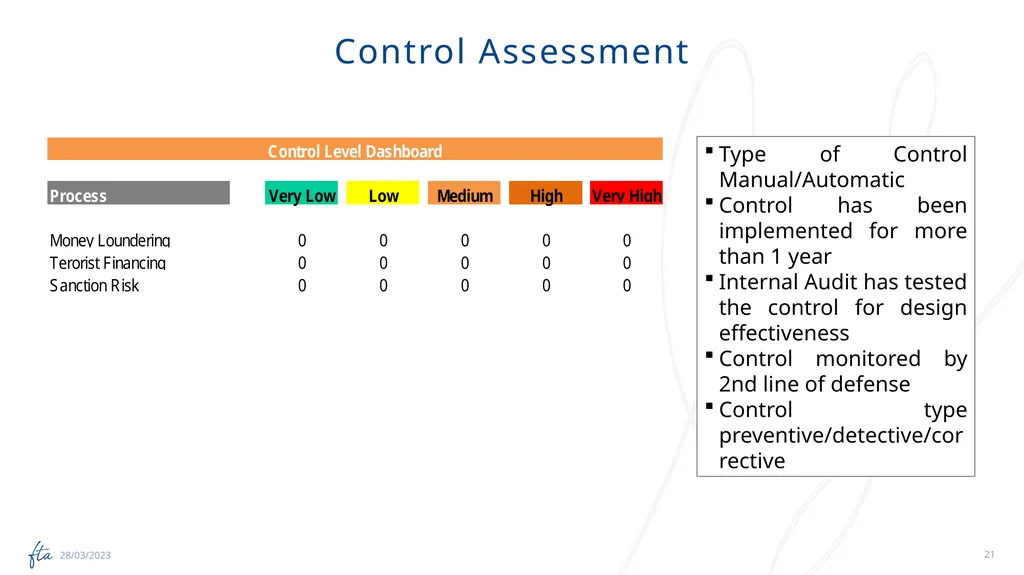
slide21. Type of Control Manual/Automatic
Control has been implemented for more than 1 year
Internal Audit has tested the control for design effectiveness
Control monitored by 2nd line of defense
Control type preventive/detective/corrective Control Assessment<br>
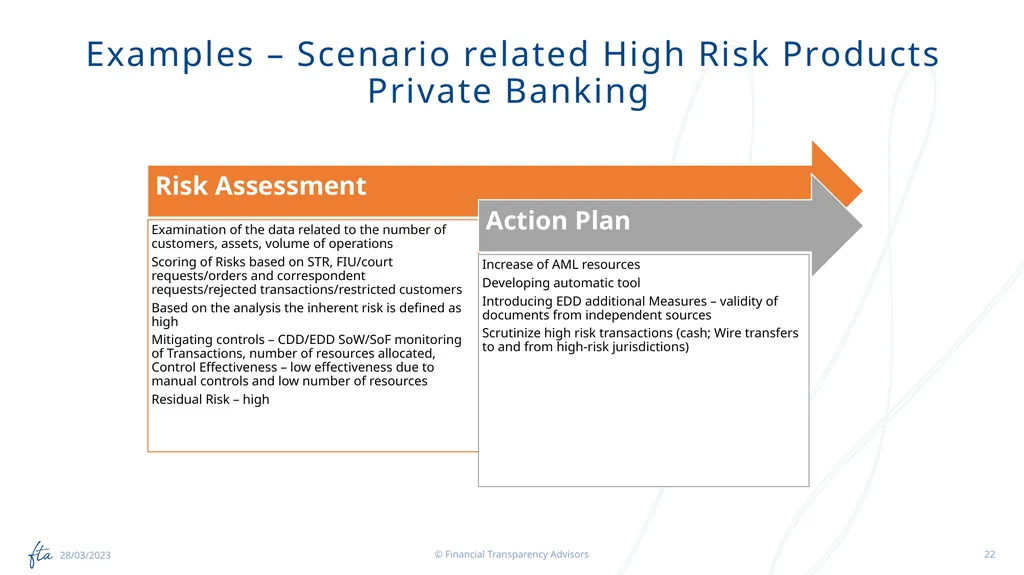
slide22. Examples – Scenario related High Risk Products Private Banking © Financial Transparency Advisors<br>
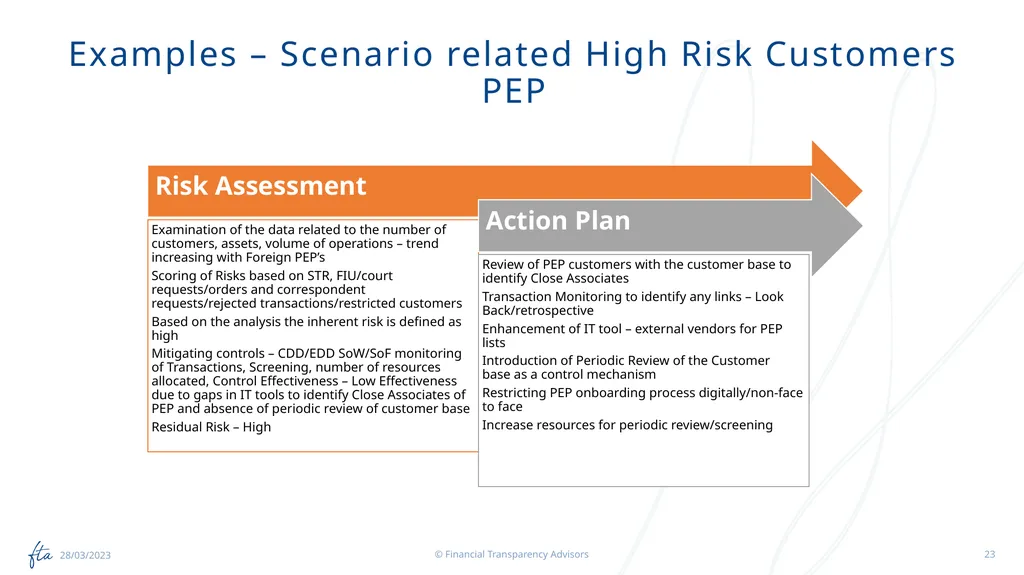
slide23. Examples – Scenario related High Risk Customers PEP © Financial Transparency Advisors<br>
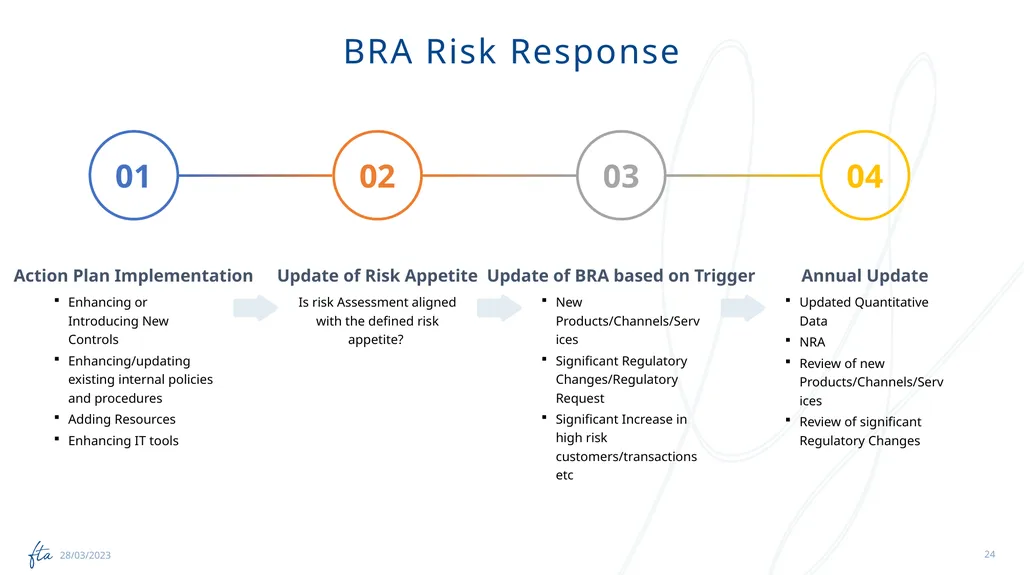
slide24. BRA Risk Response Enhancing or Introducing New Controls
Enhancing/updating existing internal policies and procedures
Adding Resources
Enhancing IT tools Action Plan Implementation 01 Is risk Assessment aligned with the defined risk appetite? Update of Risk Appetite 02 New Products/Channels/Services
Significant Regulatory Changes/Regulatory Request
Significant Increase in high risk customers/transactions etc Update of BRA based on Trigger 03 Updated Quantitative Data
NRA
Review of new Products/Channels/Services
Review of significant Regulatory Changes Annual Update 04<br>
slide25. Conclusion © Financial Transparency Advisors<br>
slide26. Today’s Host: Jan Bellenghi
Today’s Presenter: Tamar Goderdzishvili Next Session:
30.05.2023
Topic: Instructions and Guidance on completing the RBO Thank you for your time<br>
16 May 2023<br>
slide2. Agenda © Financial Transparency Advisors<br>
slide3. BRA Overview © Financial Transparency Advisors<br>
slide4. Business Risk Assessment © Financial Transparency Advisors<br>
slide5. Why FI’s need Business Risk Assessment © Financial Transparency Advisors<br>
slide6. Regulatory Framework and International Standards © Financial Transparency Advisors Monegasque AML Law – Article 3 requires FIs and DNFBPs to assess and understand the risks of ML/TF. Institutions and professionals shall develop a risk assessment depending on the nature of products/services, transactions, delivery channels, customers, and geography.
FATF recommendation 1 – FIs and DNFBPs are required to take appropriate steps to identify and assess ML/TF risks. The risk assessment shall be documented. The risk assessment should be appropriate to the nature and size of the business.
FATF guidance – RBA guidance for Money or Value Transfer Services, RBA to prepaid cards, mobile payments and internet-based payment services
Wolfsberg Q&A on Risk Assessment for ML, Sanctions, Bribery & Corruption<br>
slide7. The Difference between BRA and CRA © Financial Transparency Advisors<br>
slide8. BRA Overview © Financial Transparency Advisors<br>
slide9. BRA Overview (Cont.) © Financial Transparency Advisors BRA Document Shall describe
Overall risks and introduction of the Institution (NRA, Governance products and Services offered by the Institution, general overview)
The Methodology for Inherent risk determination
The Methodology for Control Assessment and residual risk calculation
Description of Inherent Risk including Quantitative and Qualitative Data
Description of Controls and Risk Mitigation
Action Plan Defined to Mitigate Risks<br>
slide10. BRA Stages 01 02 04 03 05 Gathering information
NRA, Internal quantitative data, Qualitative data Data Collection Analyzing Data Collected and assigning Inherent Risk
Assessing Controls and defining Residual Risk Risk Assessment Increasing Resources
Introducing New Controls
Enhancing Existing Controls Risk Response - Action Plan Adoption of RBA and proposed Action Plan by Senior Management
Alignment with Risk Appetite Adopting BRA Updating Information Annually and based on new developments internal/external Monitoring<br>
slide11. BRA Data Sources © Financial Transparency Advisors<br>
slide12. BRA Data Sources © Financial Transparency Advisors High Level Risks
International organization Guidance on risks, typologies, Mutual Evaluations
NRA
Sectorial Risk Assessments
Individual Risks Related to Each Risk Category
Number of Customers, Volume of Transactions per risk category
STR
Correspondent Requests
Court requests
FIU Requests<br>
slide13. BRA Risk Factors - Customers © Financial Transparency Advisors Quantitative Information
Number of Customers
Volume of Transactions
Volume of Assets
Internal Information (STR, Correspondent Requests, FIU requests, Court Requests)<br>
slide14. BRA Risk Factors – Products and Services © Financial Transparency Advisors<br>
slide15. BRA Risk Factors – Delivery Channels © Financial Transparency Advisors<br>
slide16. BRA Risk Factors – Geography © Financial Transparency Advisors<br>
slide17. BRA Design and Risk Response © Financial Transparency Advisors<br>
slide18. DATA ON CUSTOMERS Information to be used for risk scoring and determination of the likelihood DATA ON TRANSACTIONS VOLUMES Information to be used for risk scoring and determination of the likelihood INTERNAL DATA FROM STR/FIU ETC Information to be used for risk scoring and determination of the likelihood PROFESSIONAL JUDGMENT Information to be used for risk scoring and determination of the likelihood Risk Assessment Inherent and Residual Risks Inherent Risk is determined based on the assessment of the quantitative data.
Where quantitative data is not available professional judgment shall be applied.
The methodology for inherent risk assessment can be based on risk scoring or risk weighting. As well as assessing the likelihood and impact of each risk scenario.
Impact Description for ML/FT Risks can be defined as Reputational damage, Regulatory fines, and civil/criminal liability.<br>
slide19. Risk Assessment Inherent and Residual Risks (cont.) Quantitative Data
Risk Scoring/Risk Weighting/Likelihood and Impact
Assignment of Inherent Risk
Control Assessment<br>
slide20. Risk Assessment - Example Low Medium High Medium Low High RISK IMPACT RISK LIKELIHOOD Risk Level: Low Medium High<br>
slide21. Type of Control Manual/Automatic
Control has been implemented for more than 1 year
Internal Audit has tested the control for design effectiveness
Control monitored by 2nd line of defense
Control type preventive/detective/corrective Control Assessment<br>
slide22. Examples – Scenario related High Risk Products Private Banking © Financial Transparency Advisors<br>
slide23. Examples – Scenario related High Risk Customers PEP © Financial Transparency Advisors<br>
slide24. BRA Risk Response Enhancing or Introducing New Controls
Enhancing/updating existing internal policies and procedures
Adding Resources
Enhancing IT tools Action Plan Implementation 01 Is risk Assessment aligned with the defined risk appetite? Update of Risk Appetite 02 New Products/Channels/Services
Significant Regulatory Changes/Regulatory Request
Significant Increase in high risk customers/transactions etc Update of BRA based on Trigger 03 Updated Quantitative Data
NRA
Review of new Products/Channels/Services
Review of significant Regulatory Changes Annual Update 04<br>
slide25. Conclusion © Financial Transparency Advisors<br>
slide26. Today’s Host: Jan Bellenghi
Today’s Presenter: Tamar Goderdzishvili Next Session:
30.05.2023
Topic: Instructions and Guidance on completing the RBO Thank you for your time<br>