An In-Depth Look at JFR in GraalVM Native Image Robert Toyonaga Todays Topics Section 1: High-level JFR Native Image A quick JFR refresher GraalVMNative Image Intro How (and why) is Native Image JFR different than OpenJDK? Current state
"An In-Depth Look at JFR in GraalVM Native Image" is the property of its rightful owner. Permission is granted to
download and print the materials on this website for personal, non-commercial use only, and to display it
on your personal computer provided you do not modify the materials and that you retain all copyright
notices contained in the materials. By downloading content from our website, you accept the terms of this
agreement.
Presentation Transcript
01
An In-Depth Look at JFR in GraalVM Native Image Robert Toyonaga<br>
02
Today’s Topics Section 1: High-level JFR Native Image
A quick JFR refresher
GraalVM/Native Image Intro
How (and why) is Native Image JFR different than OpenJDK?
Current state of support for JFR in GraalVM Native Image
Section 2: Low-level JFR Native Image
Events
Chunk files
In-flight buffers
Constant pools
Chunk rotations<br>
03
JDK Flight Recorder (JFR) Refresher A monitoring/profiling tool built into the JVM
Event-based
Low overhead
Gain insight into threads, monitors, CPU profiling, allocations, GC …<br>
04
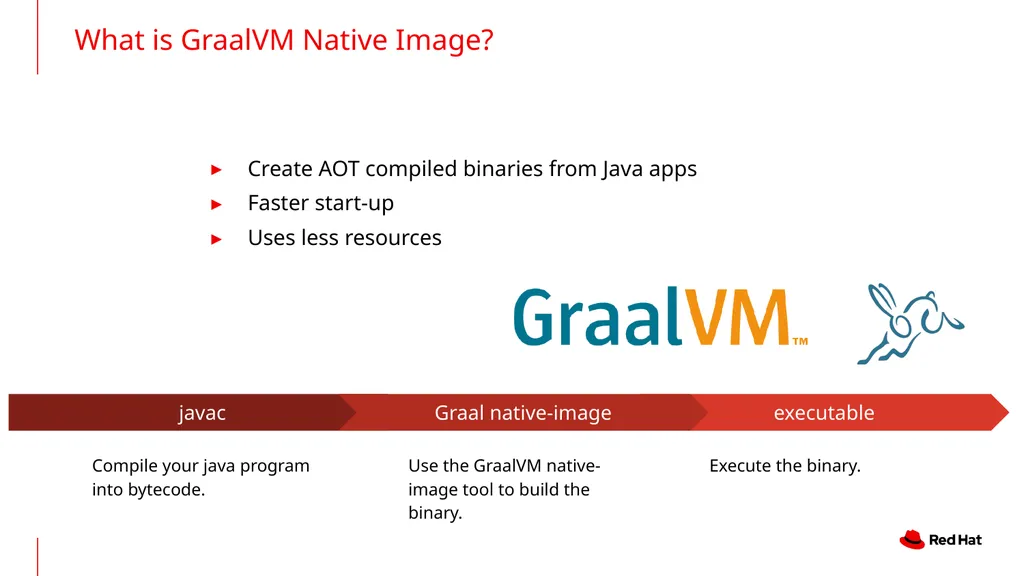
What is GraalVM Native Image? Create AOT compiled binaries from Java apps
Faster start-up
Uses less resources<br>
05
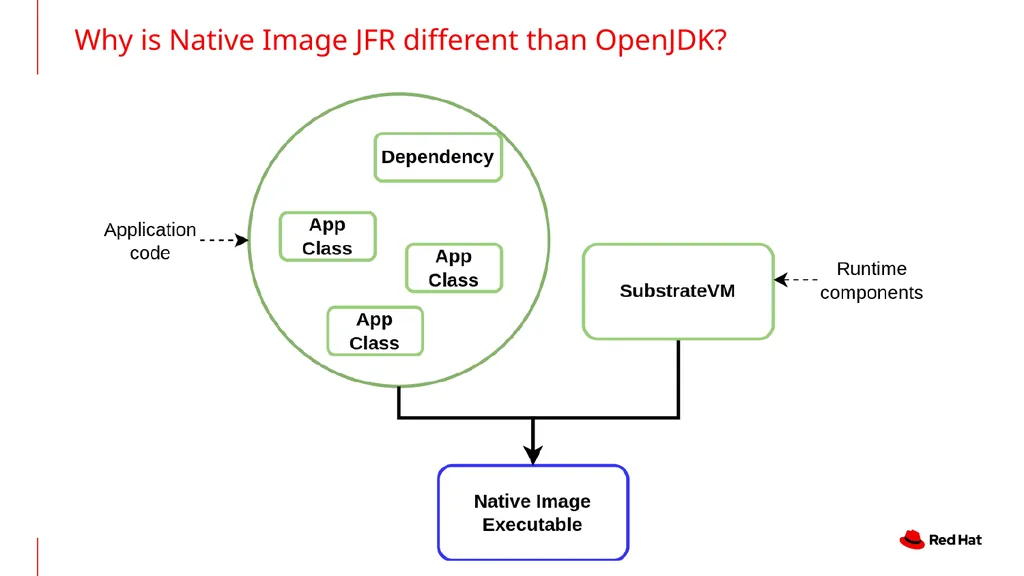
Why is Native Image JFR different than OpenJDK?<br>
06
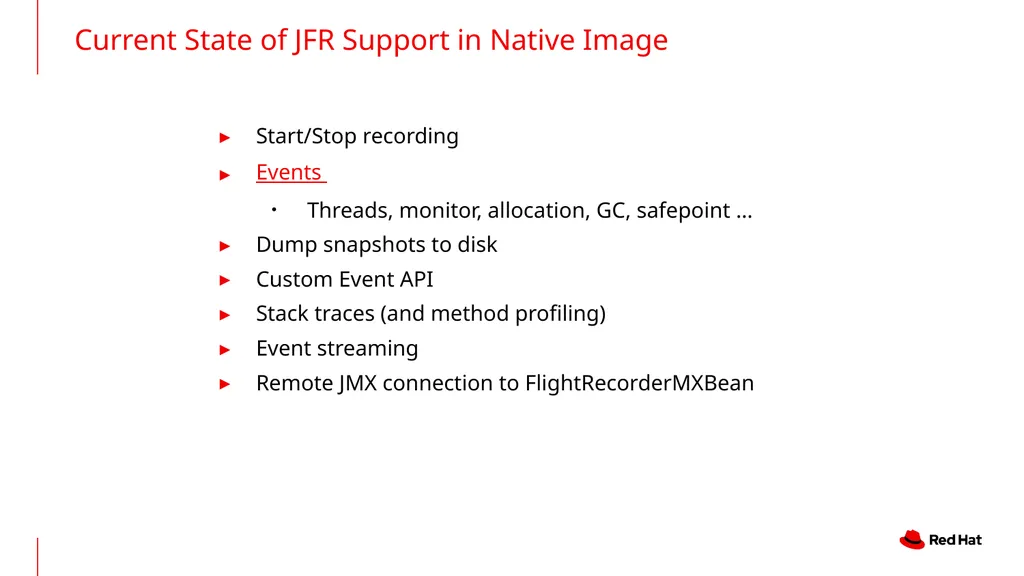
Current State of JFR Support in Native Image Start/Stop recording
Events
Threads, monitor, allocation, GC, safepoint …
Dump snapshots to disk
Custom Event API
Stack traces (and method profiling)
Event streaming
Remote JMX connection to FlightRecorderMXBean<br>
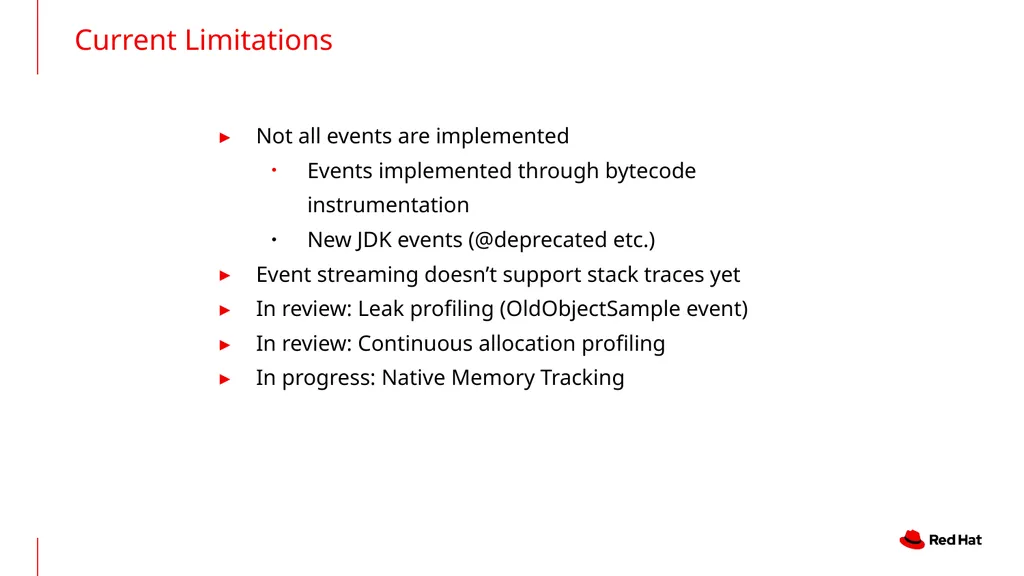
Current Limitations Not all events are implemented
Events implemented through bytecode instrumentation
New JDK events (@deprecated etc.)
Event streaming doesn’t support stack traces yet
In review: Leak profiling (OldObjectSample event)
In review: Continuous allocation profiling
In progress: Native Memory Tracking<br>
09
Section 2: Deep Dive Into JFR Events
Chunk files
In-flight buffers
Constant pools
Chunk rotations<br>
10
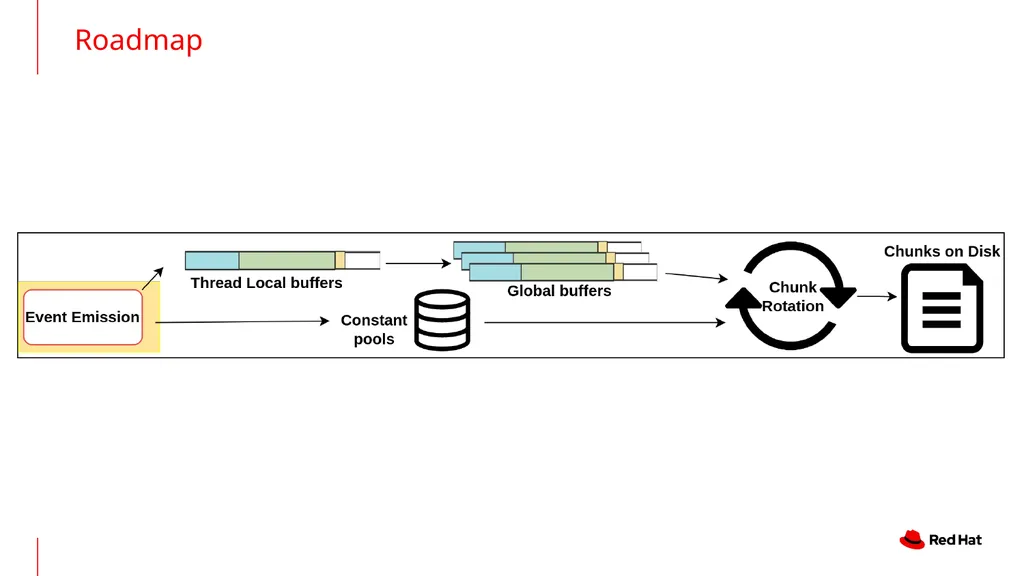
Roadmap<br>
11
Roadmap<br>
12
Roadmap<br>
13
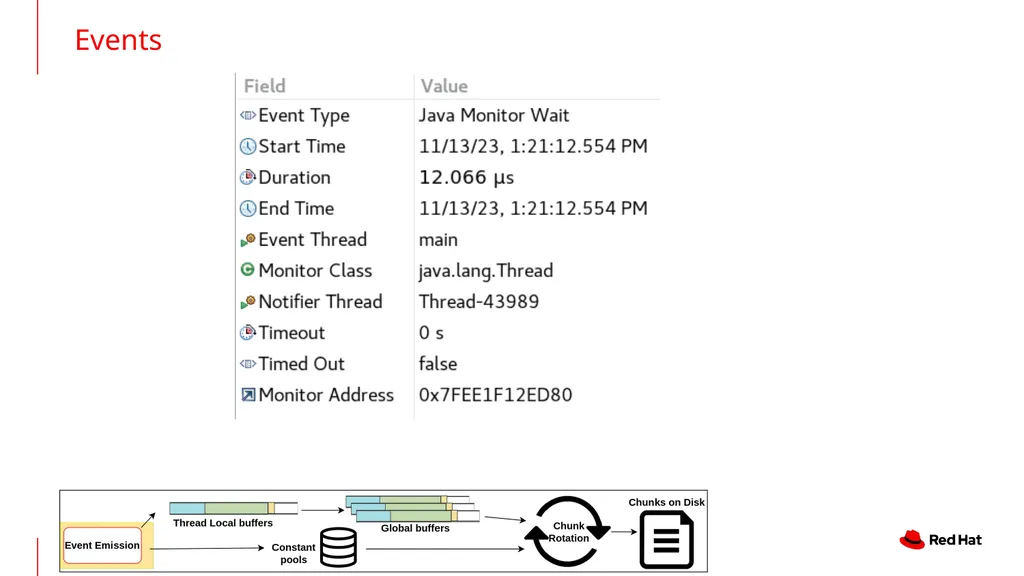
Events<br>
14
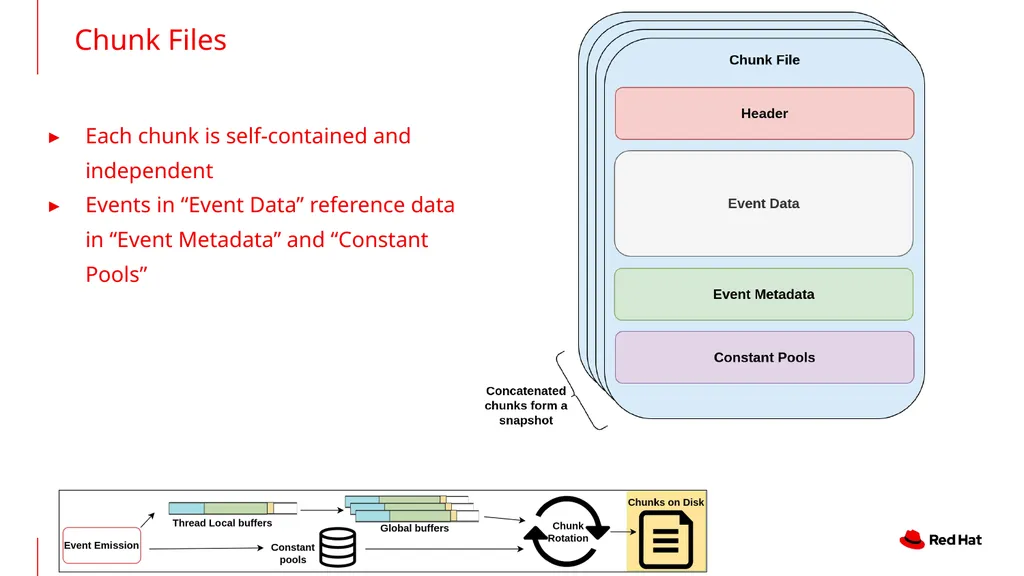
Chunk Files Each chunk is self-contained and independent
Events in “Event Data” reference data in “Event Metadata” and “Constant Pools”<br>
15
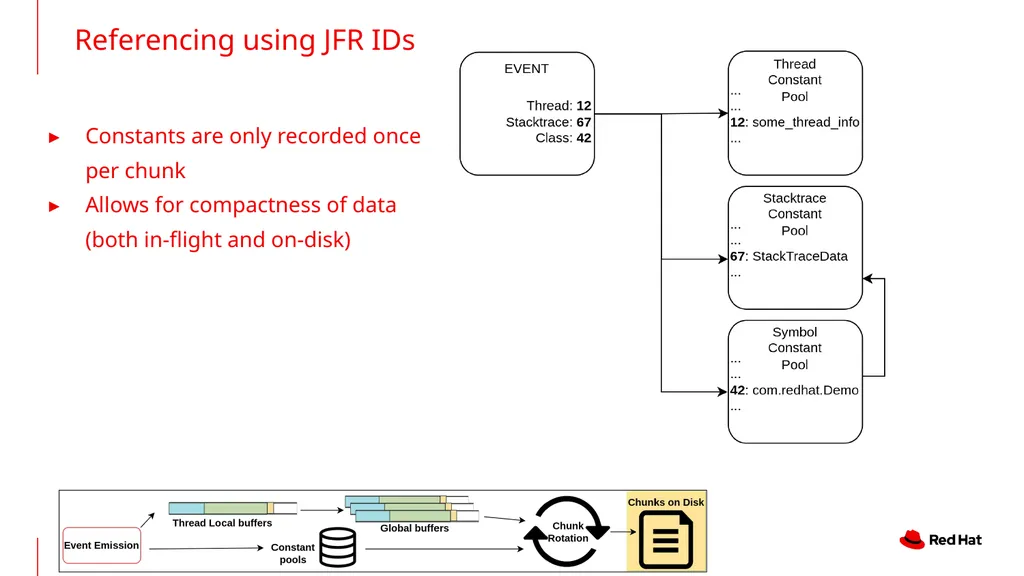
Referencing using JFR IDs Constants are only recorded once per chunk
Allows for compactness of data (both in-flight and on-disk)<br>
16
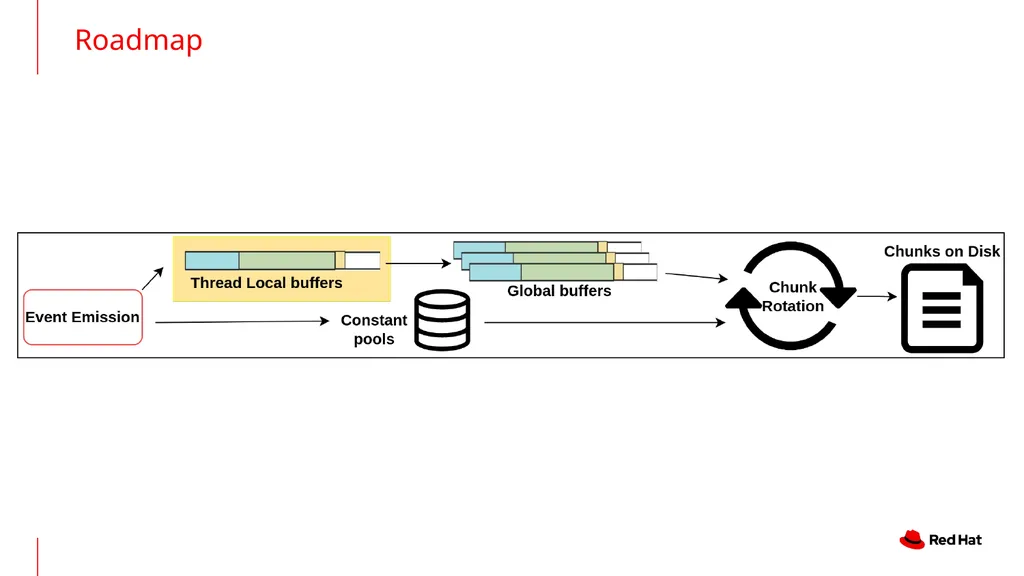
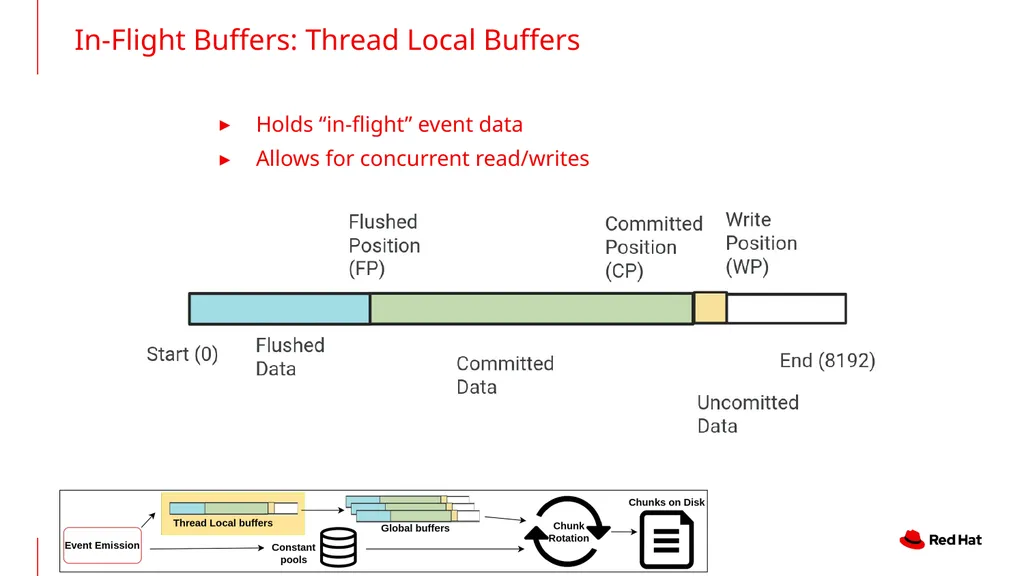
In-Flight Buffers: Thread Local Buffers Holds “in-flight” event data
Allows for concurrent read/writes<br>
17
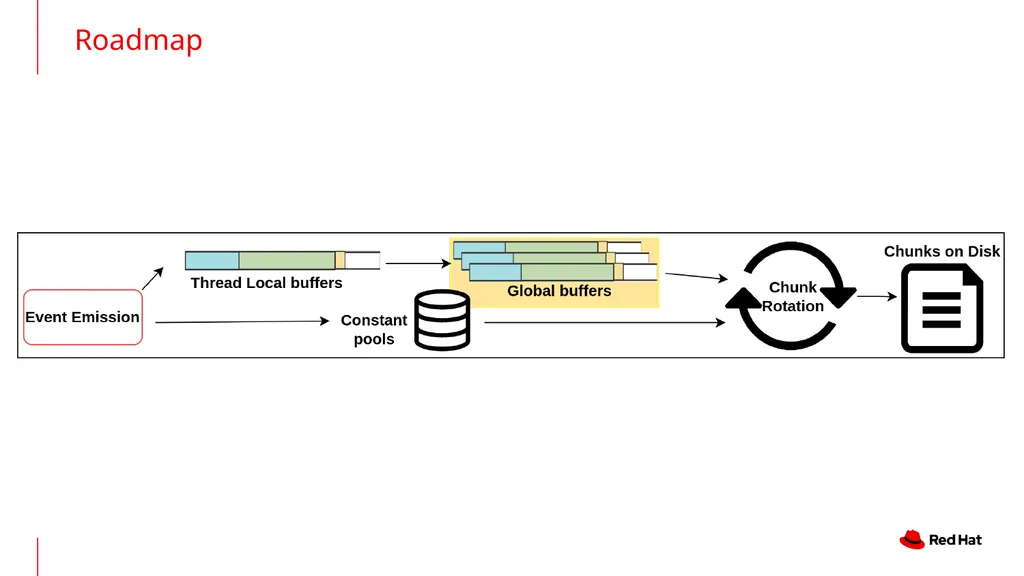
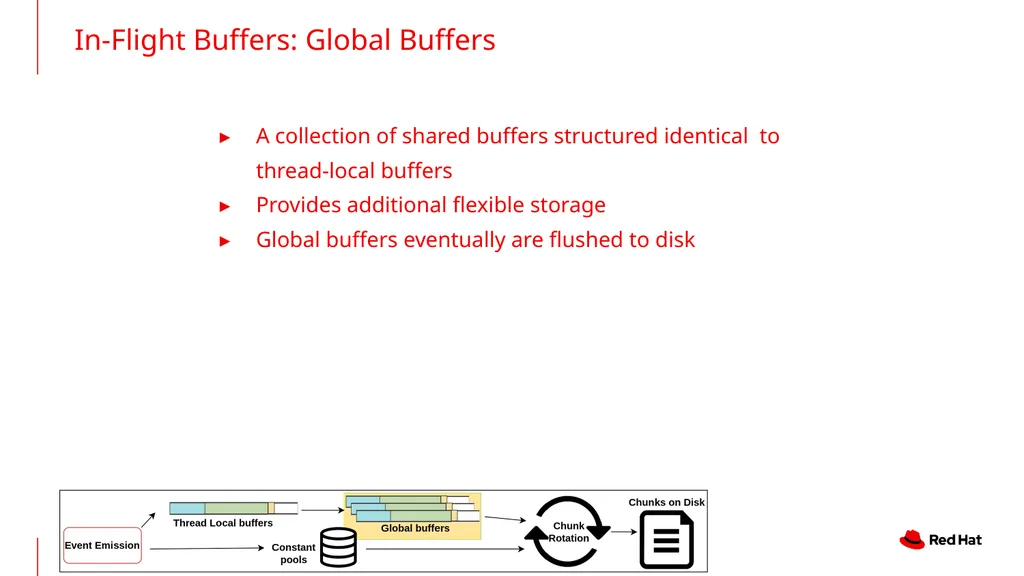
In-Flight Buffers: Global Buffers A collection of shared buffers structured identical to thread-local buffers
Provides additional flexible storage
Global buffers eventually are flushed to disk<br>
18
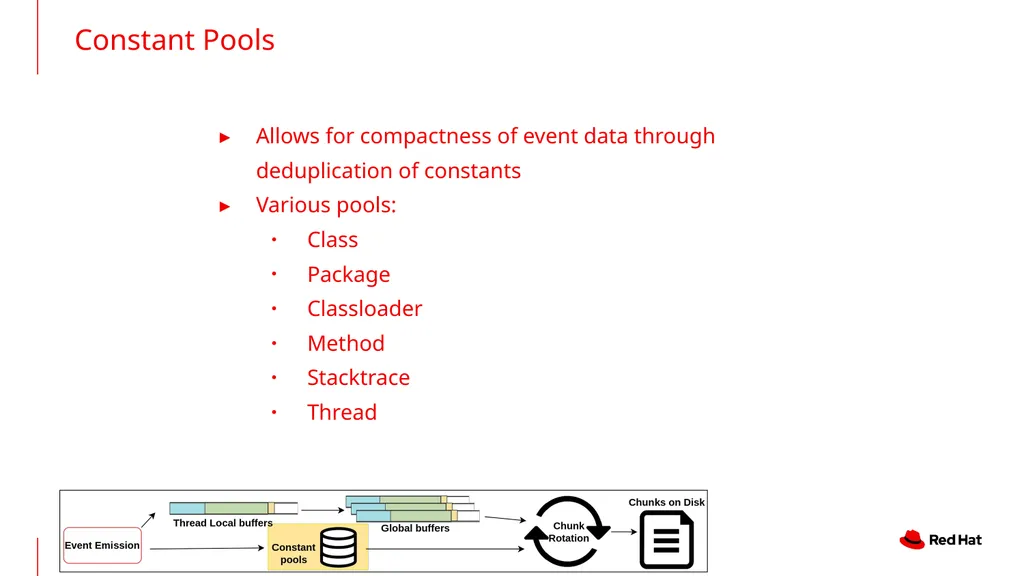
Constant Pools Allows for compactness of event data through deduplication of constants
Various pools:
Class
Package
Classloader
Method
Stacktrace
Thread<br>
19
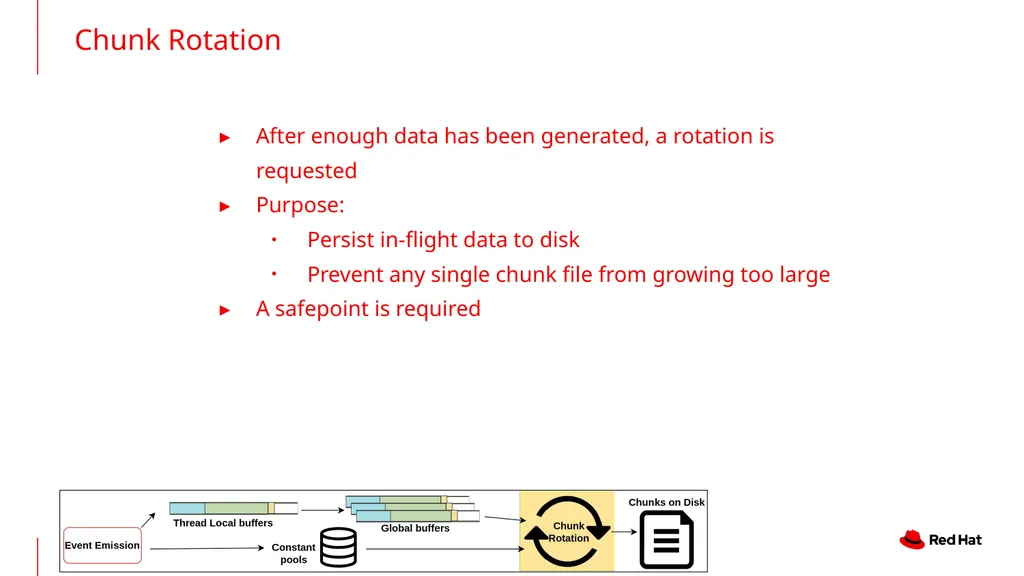
Chunk Rotation After enough data has been generated, a rotation is requested
Purpose:
Persist in-flight data to disk
Prevent any single chunk file from growing too large
A safepoint is required<br>
20
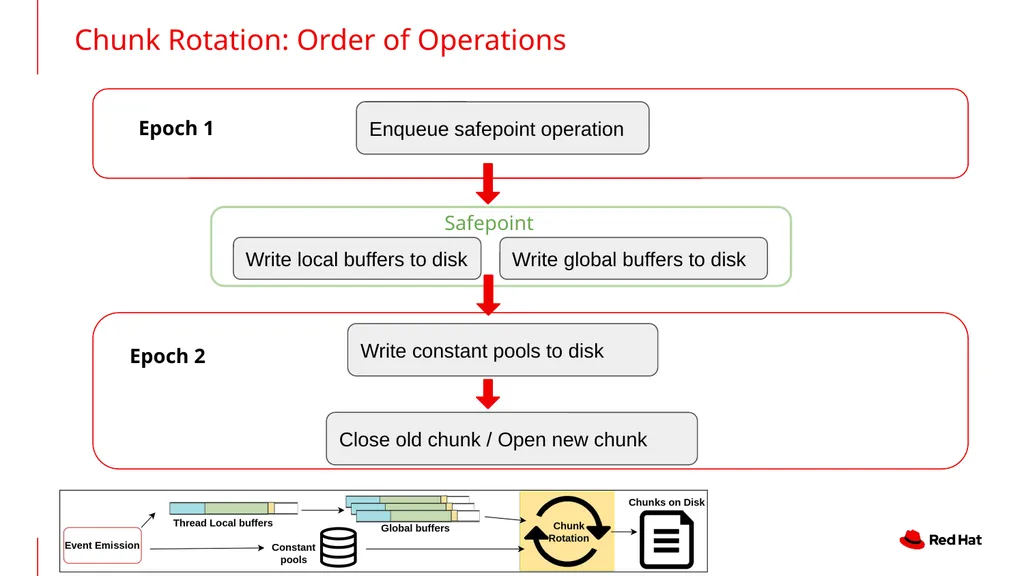
Chunk Rotation: Order of Operations Enqueue safepoint operation Write local buffers to disk Write global buffers to disk Write constant pools to disk Safepoint Epoch 1 Epoch 2 Close old chunk / Open new chunk<br>
21
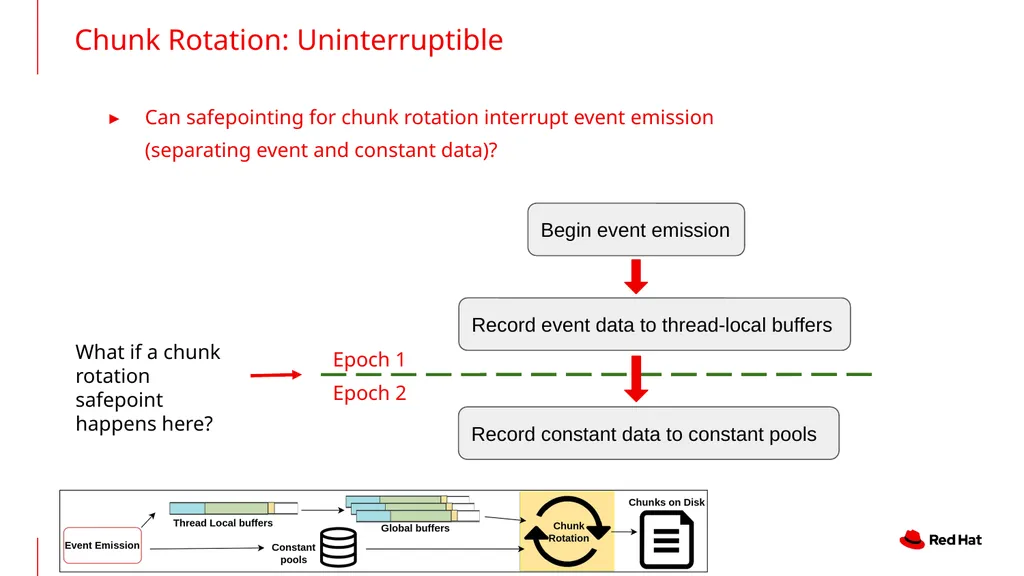
Chunk Rotation: Uninterruptible Can safepointing for chunk rotation interrupt event emission (separating event and constant data)? Record event data to thread-local buffers Record constant data to constant pools What if a chunk rotation safepoint happens here? Begin event emission Epoch 1 Epoch 2<br>
22
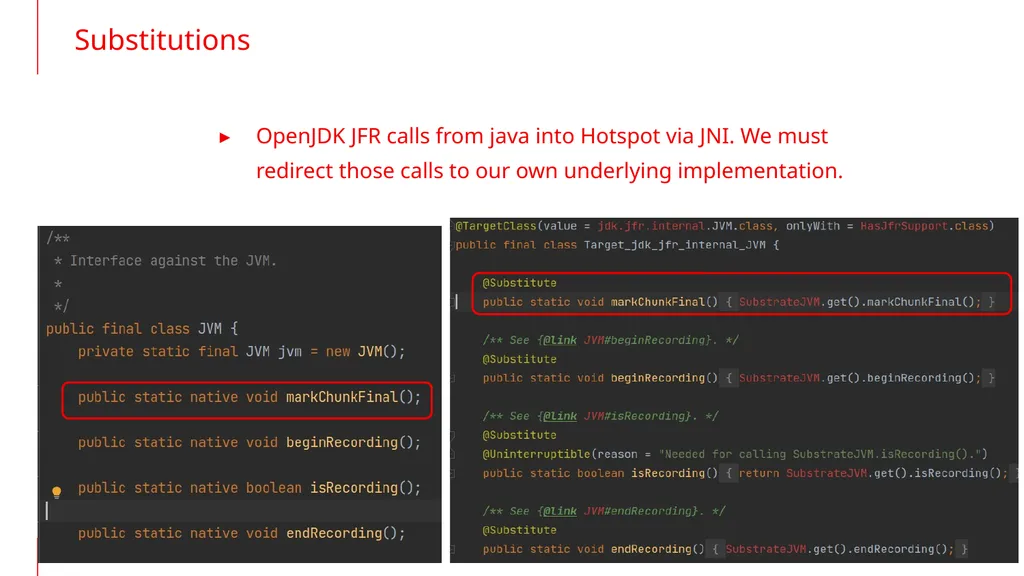
Substitutions OpenJDK JFR calls from java into Hotspot via JNI. We must redirect those calls to our own underlying implementation.<br>
23
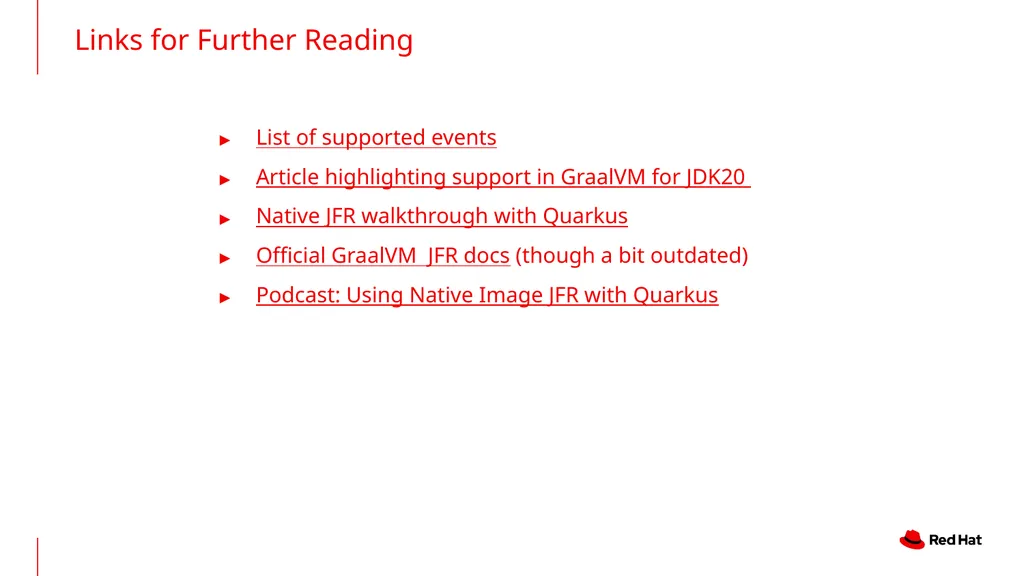
Links for Further Reading List of supported events
Article highlighting support in GraalVM for JDK20
Native JFR walkthrough with Quarkus
Official GraalVM JFR docs (though a bit outdated)
Podcast: Using Native Image JFR with Quarkus<br>