
An Introduction to Model Organisms Krishanpal


Description: An Introduction to Model Organisms Krishanpal Karmodiya Template: SlideShare-Adhweat Gupta krishiiserpune.ac.in http:www.iiserpune.ac.inkrish A model organism is a non-human species that is extensively studied to understand particular
Related Topics
Download Presentation
"An Introduction to Model Organisms Krishanpal" is the property of its rightful owner. Permission is granted to download and print the materials on this website for personal, non-commercial use only, and to display it on your personal computer provided you do not modify the materials and that you retain all copyright notices contained in the materials. By downloading content from our website, you accept the terms of this agreement.
Presentation Transcript
slide1. An Introduction to Model Organisms Krishanpal Karmodiya Template: SlideShare-Adhweat Gupta krish@iiserpune.ac.in
http://www.iiserpune.ac.in/~krish/<br>
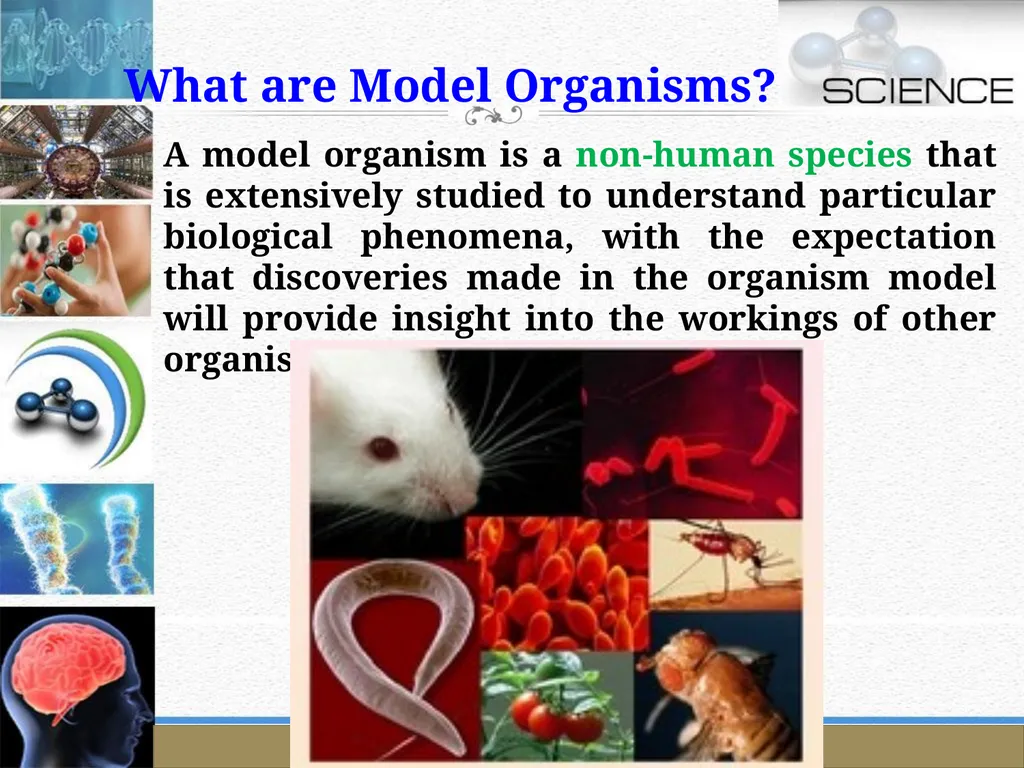
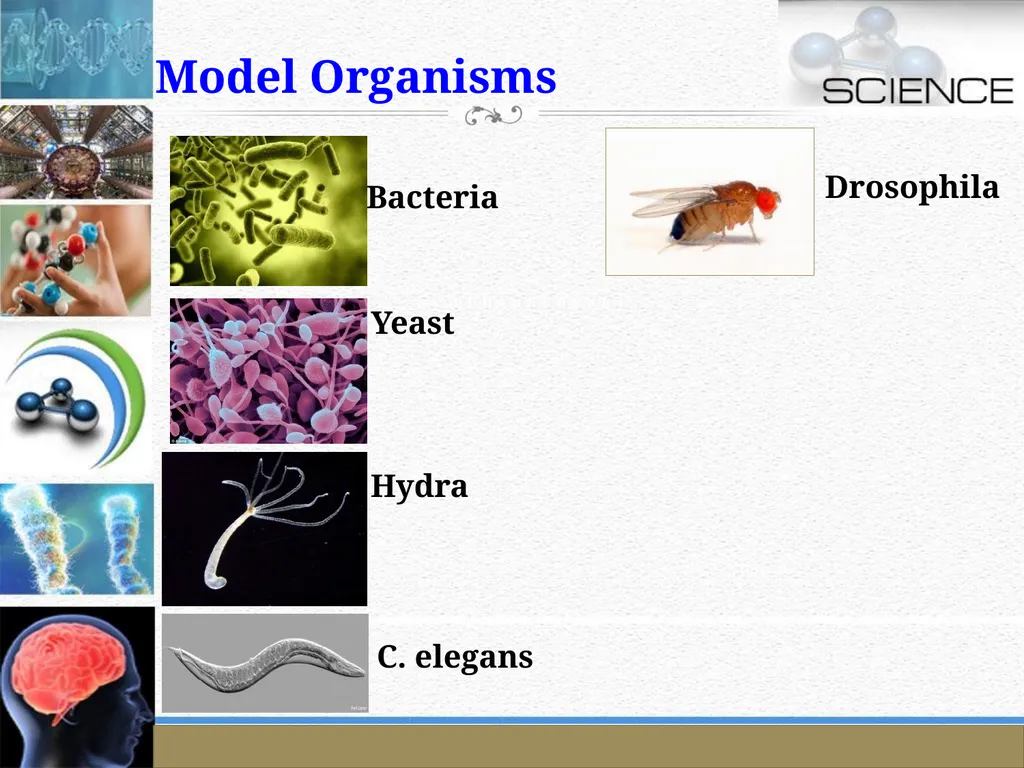
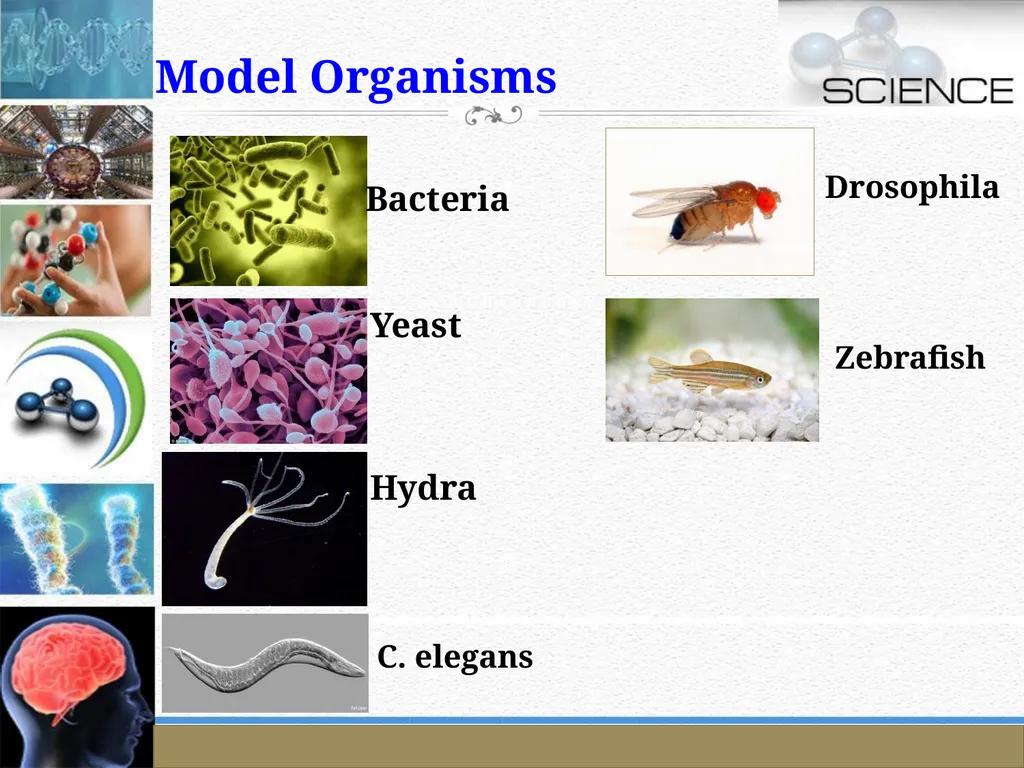
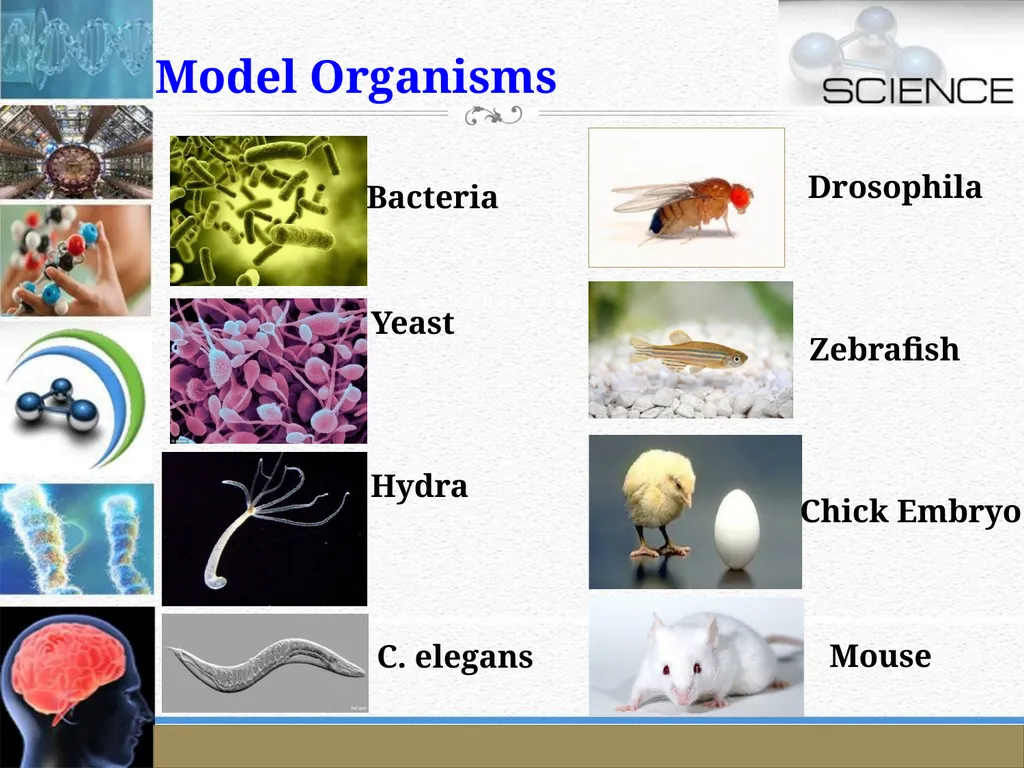
slide3. A model organism is a non-human species that is extensively studied to understand particular biological phenomena, with the expectation that discoveries made in the organism model will provide insight into the workings of other organisms. What are Model Organisms?<br>
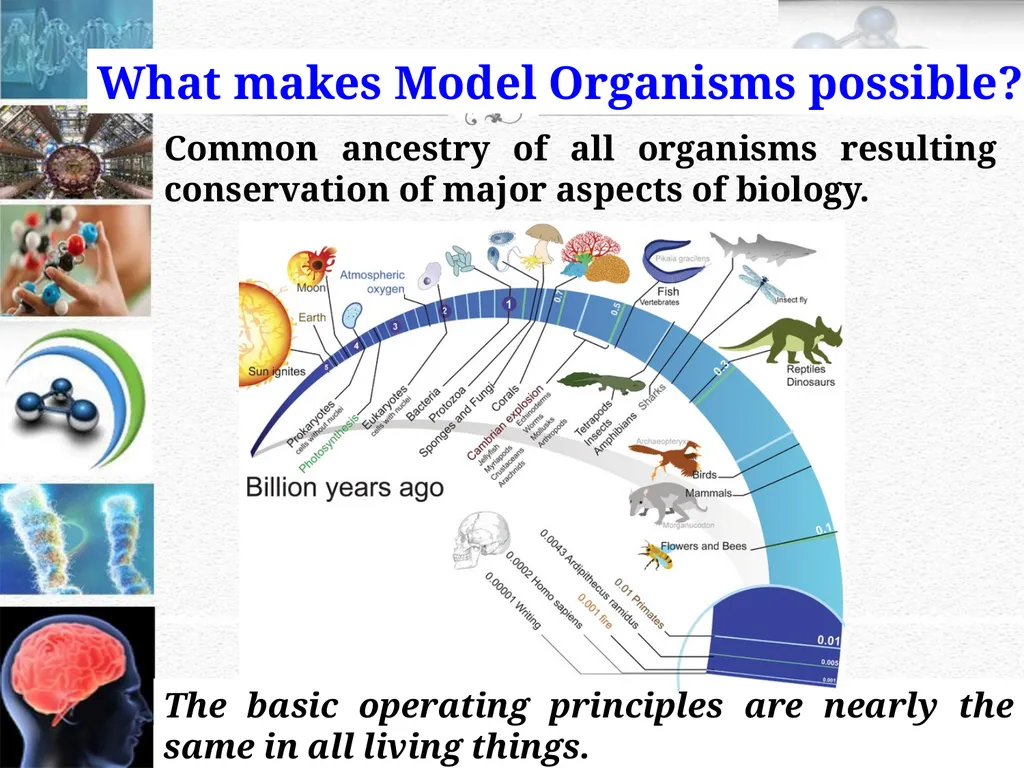
slide4. Common ancestry of all organisms resulting conservation of major aspects of biology. What makes Model Organisms possible? The basic operating principles are nearly the same in all living things.<br>
slide5. Typical considerations while selecting Model Organisms Rapid development with short life cycles
Small adult size
Ready availability and inexpensive maintenance and breeding
Tractability to experimental methodology
Biology being studied have relevance to humans<br>
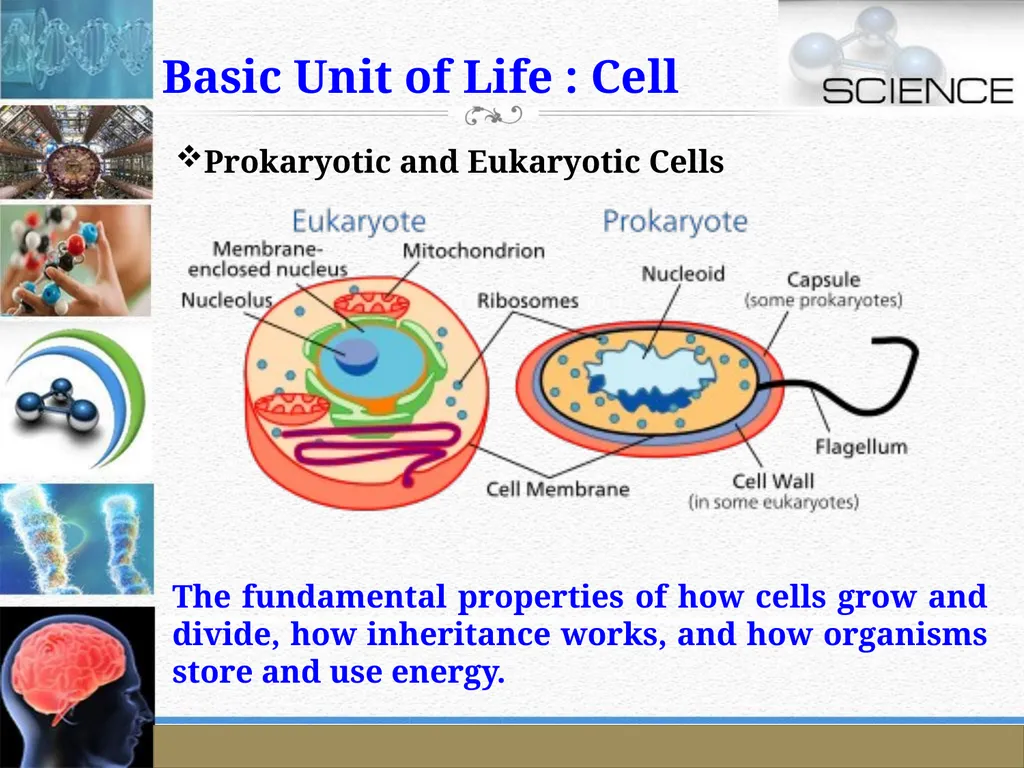
slide6. Basic Unit of Life : Cell Prokaryotic and Eukaryotic Cells The fundamental properties of how cells grow and divide, how inheritance works, and how organisms store and use energy.<br>
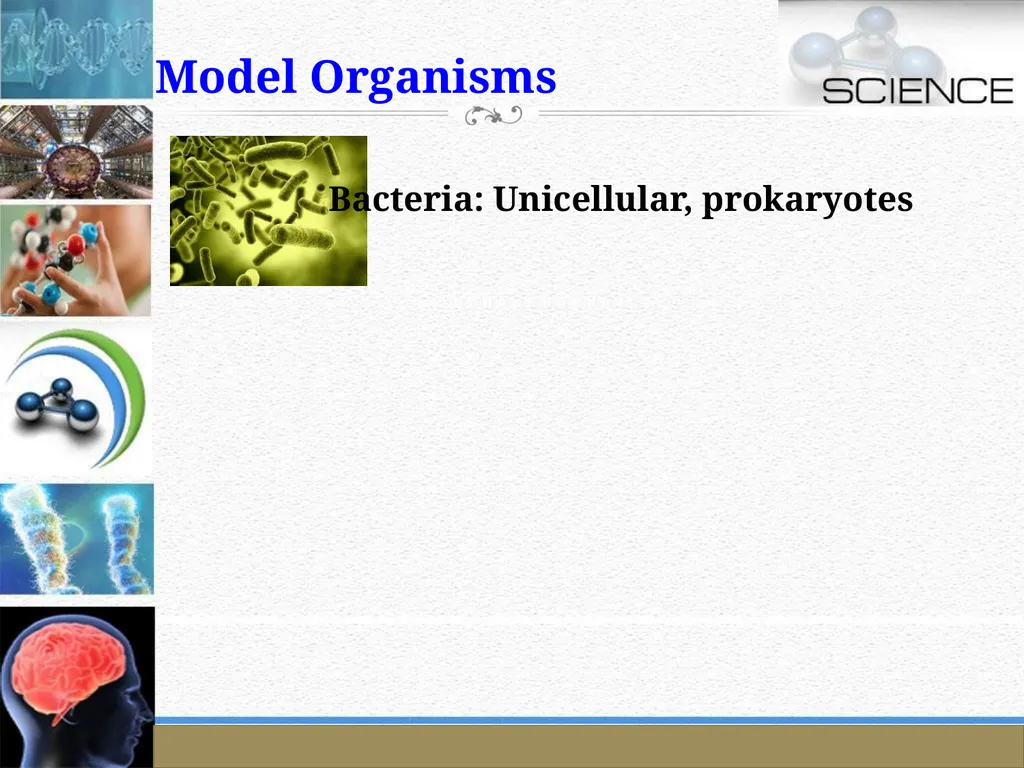
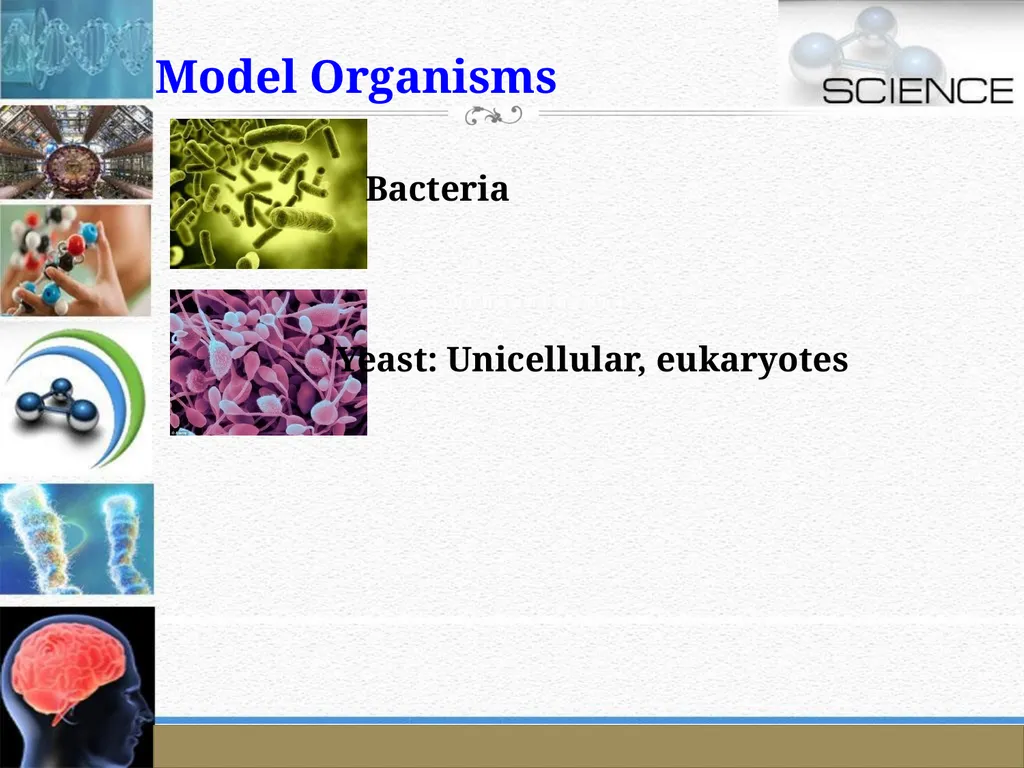
slide7. Bacteria: Unicellular, prokaryotes Model Organisms<br>
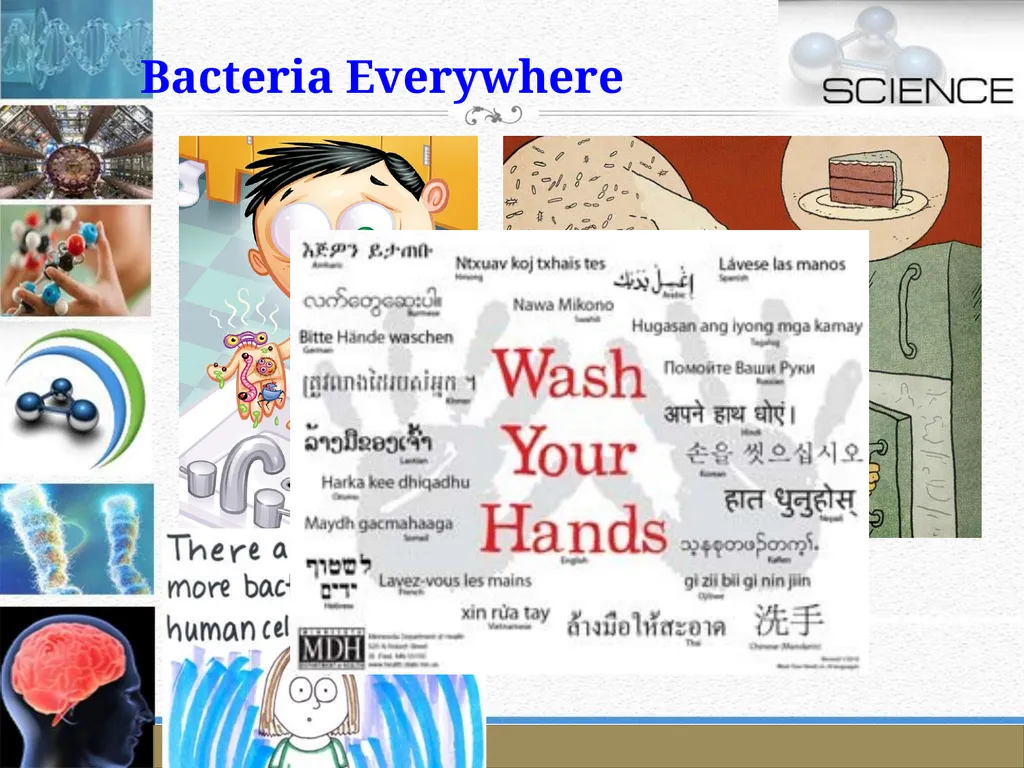
slide8. Bacteria Everywhere<br>
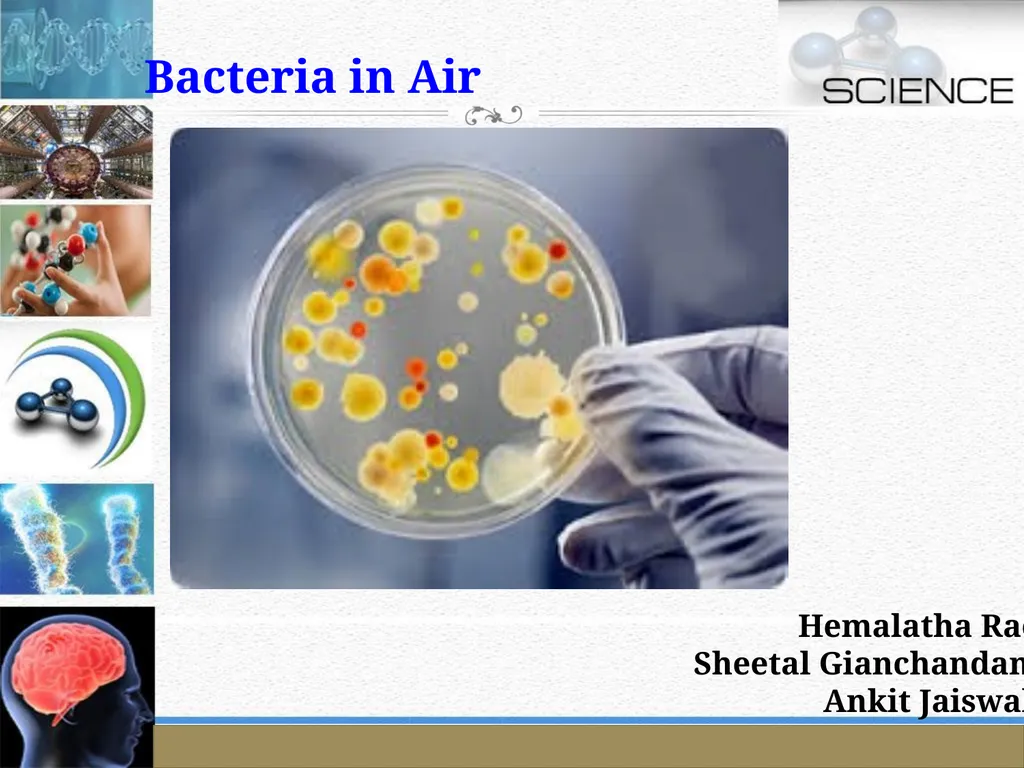
slide9. Bacteria in Air Hemalatha Rao
Sheetal Gianchandani
Ankit Jaiswal<br>
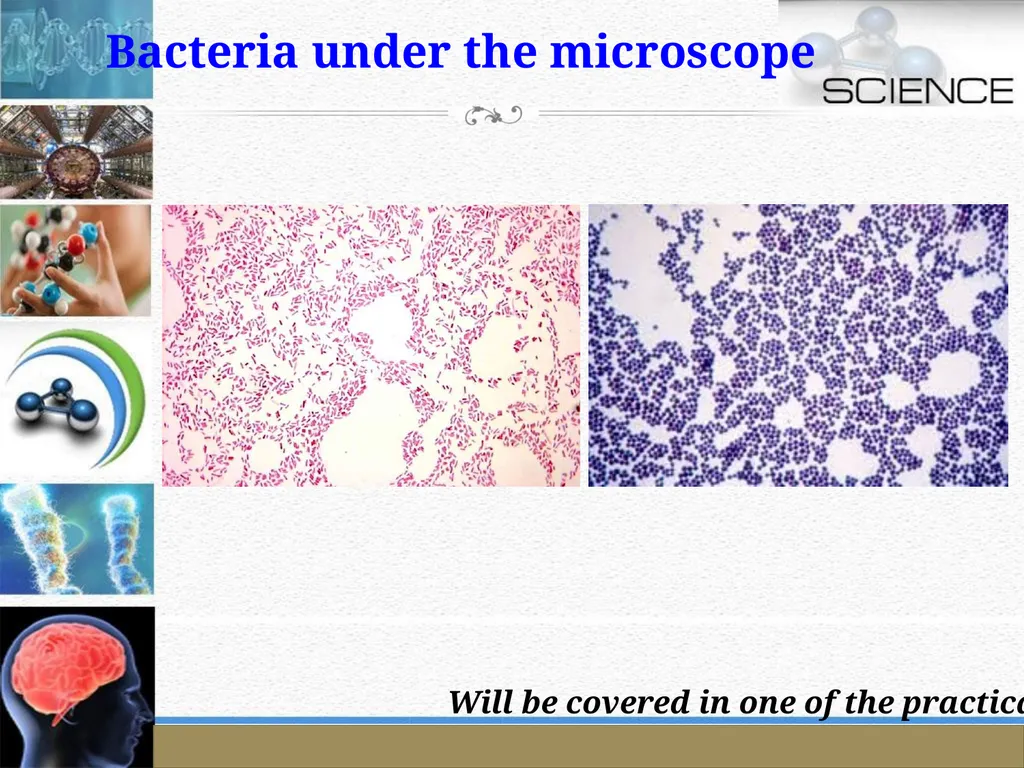
slide10. Bacteria under the microscope Will be covered in one of the practicals<br>
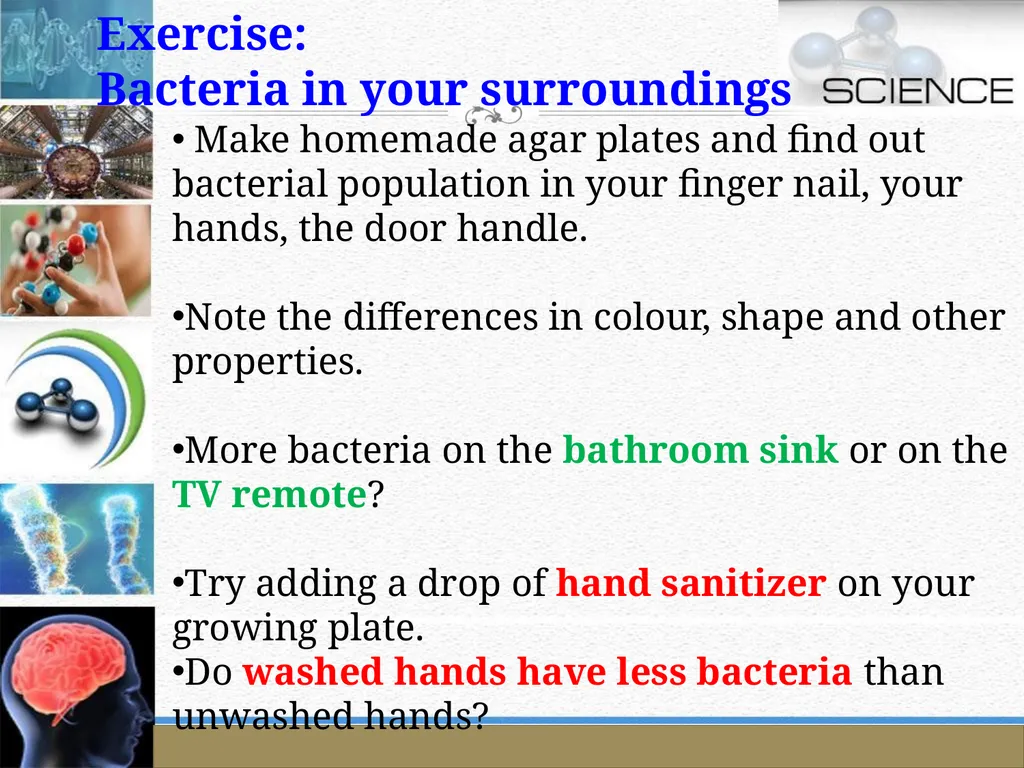
slide11. Exercise:
Bacteria in your surroundings Make homemade agar plates and find out bacterial population in your finger nail, your hands, the door handle.
Note the differences in colour, shape and other properties.
More bacteria on the bathroom sink or on the TV remote?
Try adding a drop of hand sanitizer on your growing plate.
Do washed hands have less bacteria than unwashed hands?<br>
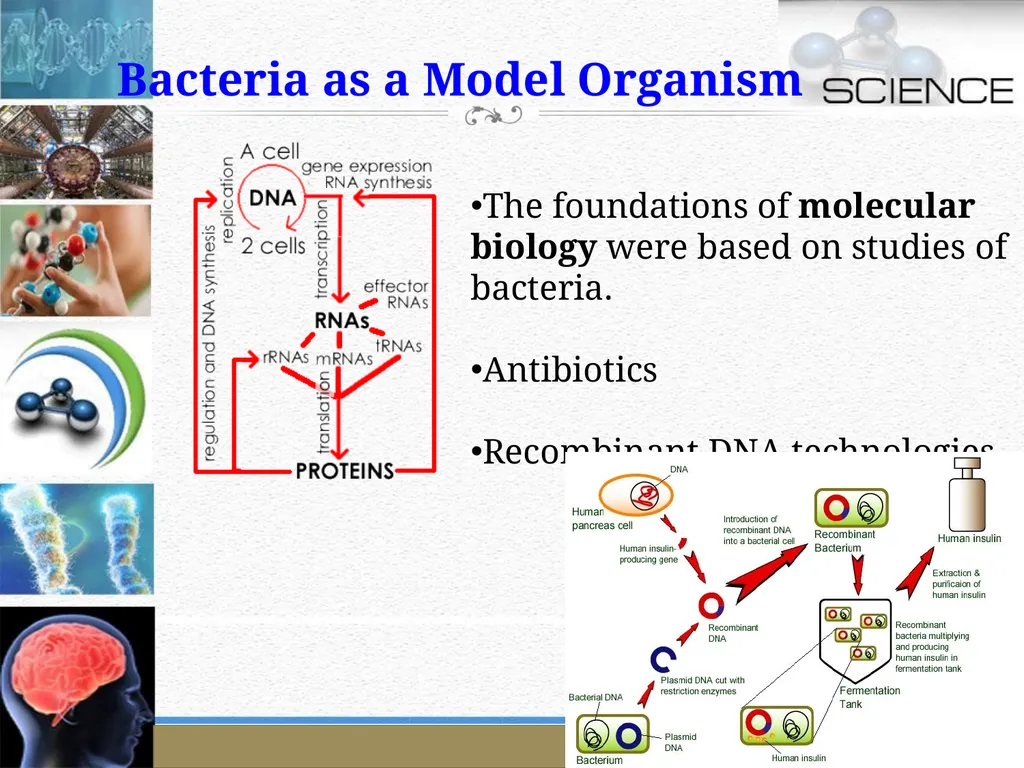
slide12. Bacteria as a Model Organism The foundations of molecular biology were based on studies of bacteria.
Antibiotics
Recombinant DNA technologies<br>
slide13. Bacteria Yeast: Unicellular, eukaryotes Model Organisms<br>
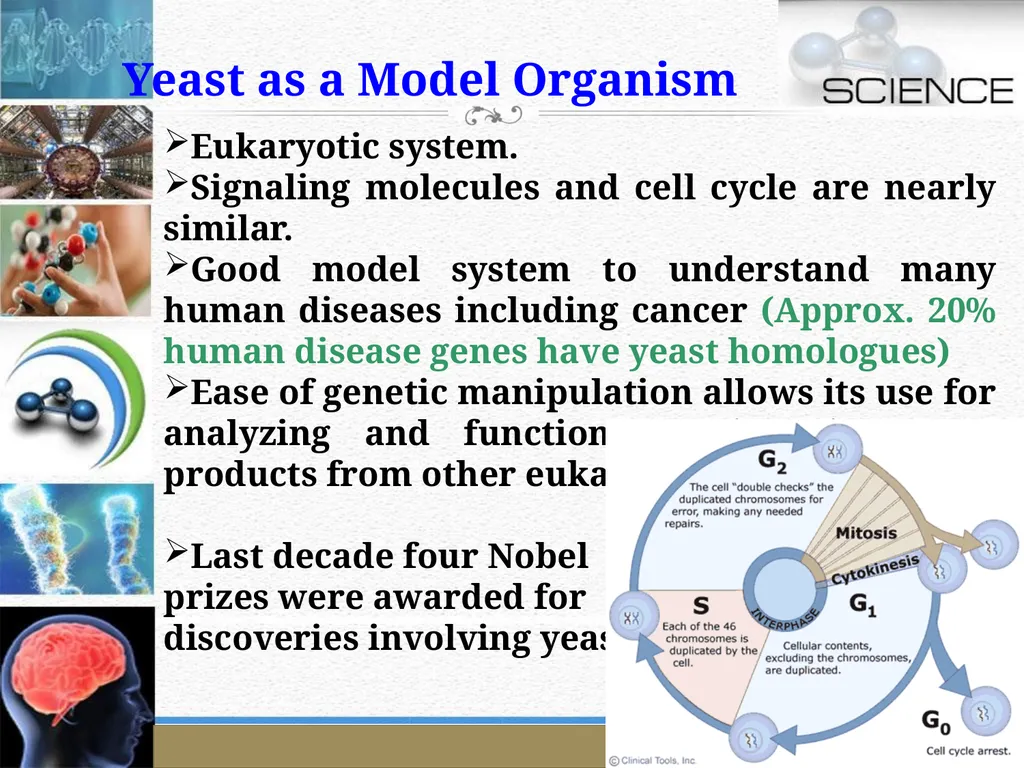
slide14. Yeast as a Model Organism Eukaryotic system.
Signaling molecules and cell cycle are nearly similar.
Good model system to understand many human diseases including cancer (Approx. 20% human disease genes have yeast homologues)
Ease of genetic manipulation allows its use for analyzing and functionally dissecting gene products from other eukaryotes.
Last decade four Nobel
prizes were awarded for
discoveries involving yeast.<br>
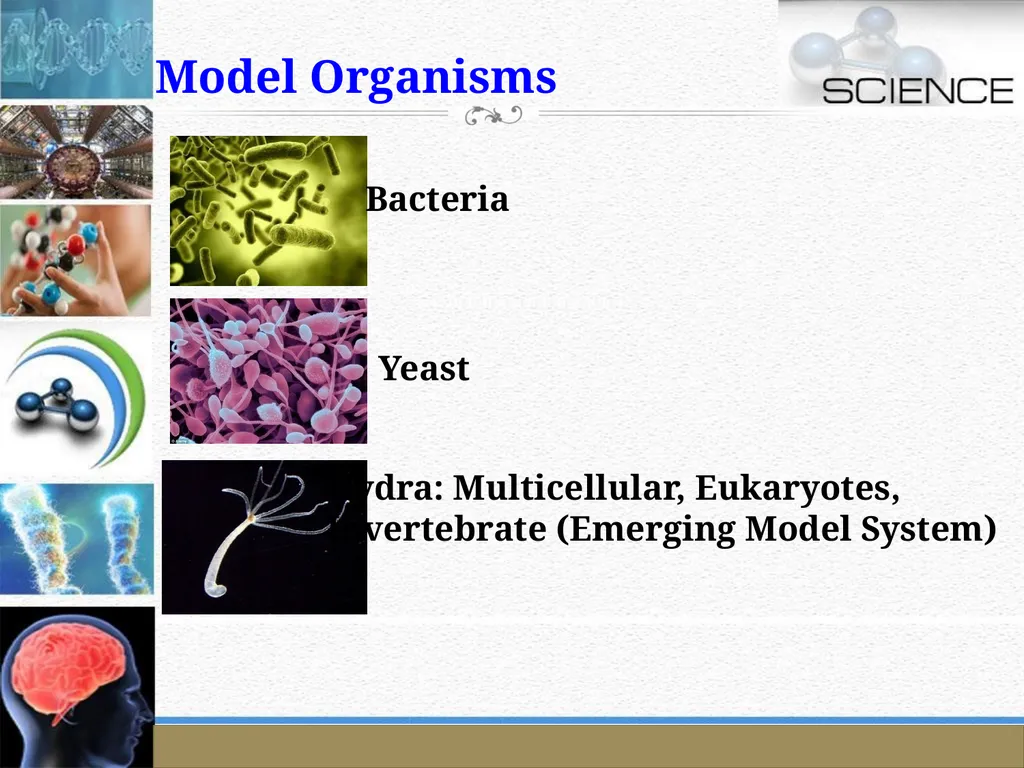
slide15. Bacteria Yeast Hydra: Multicellular, Eukaryotes,
Invertebrate (Emerging Model System) Model Organisms<br>
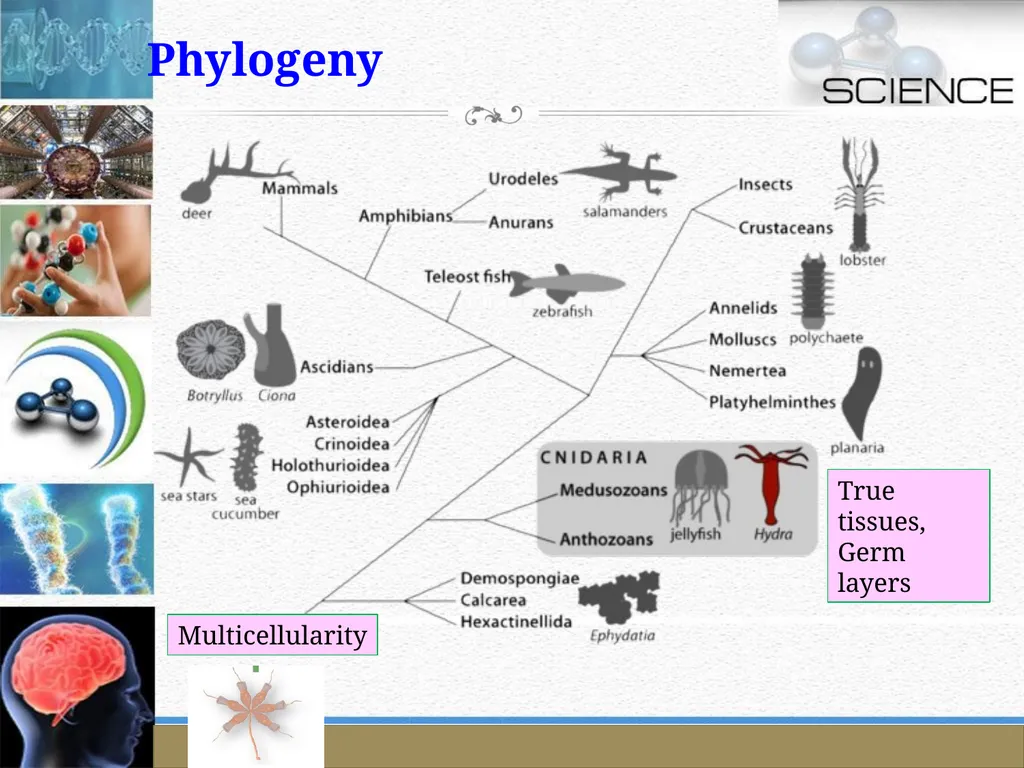
slide16. Phylogeny Multicellularity True tissues,
Germ layers<br>
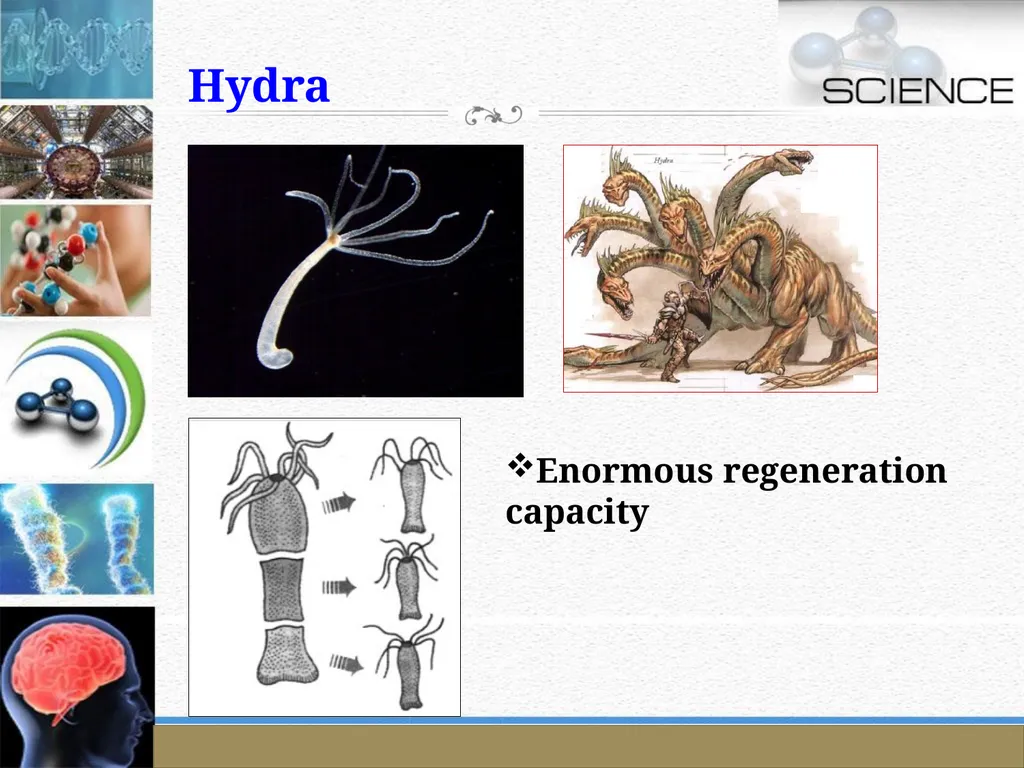
slide17. Hydra Enormous regeneration capacity<br>
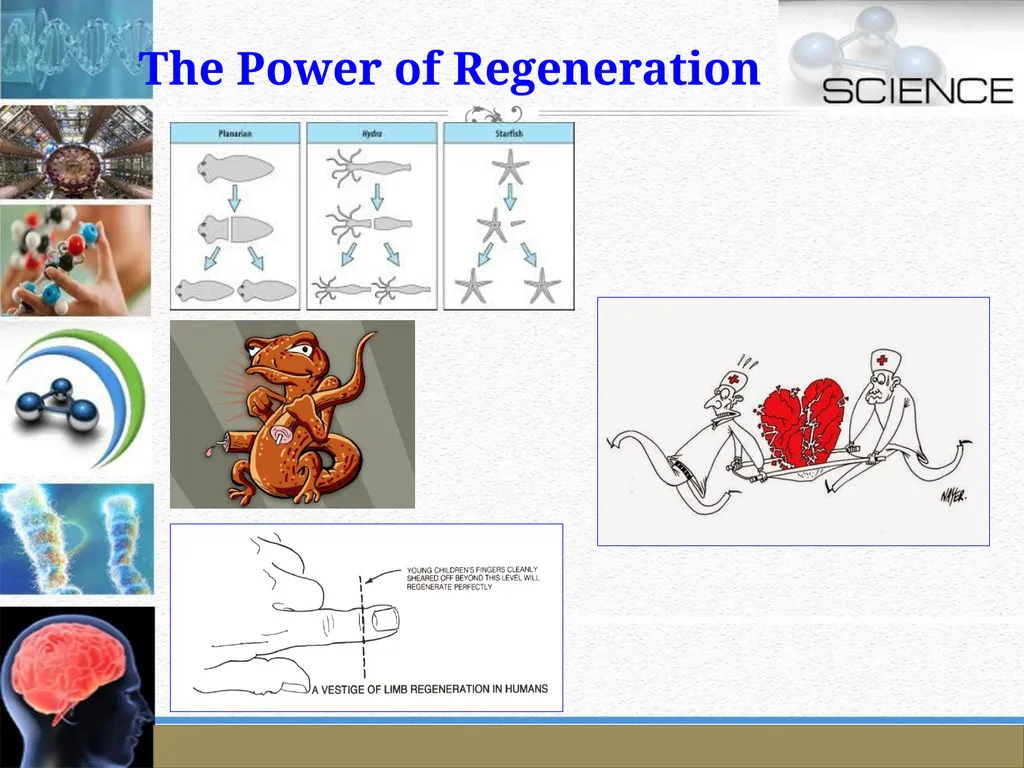
slide18. The Power of Regeneration<br>
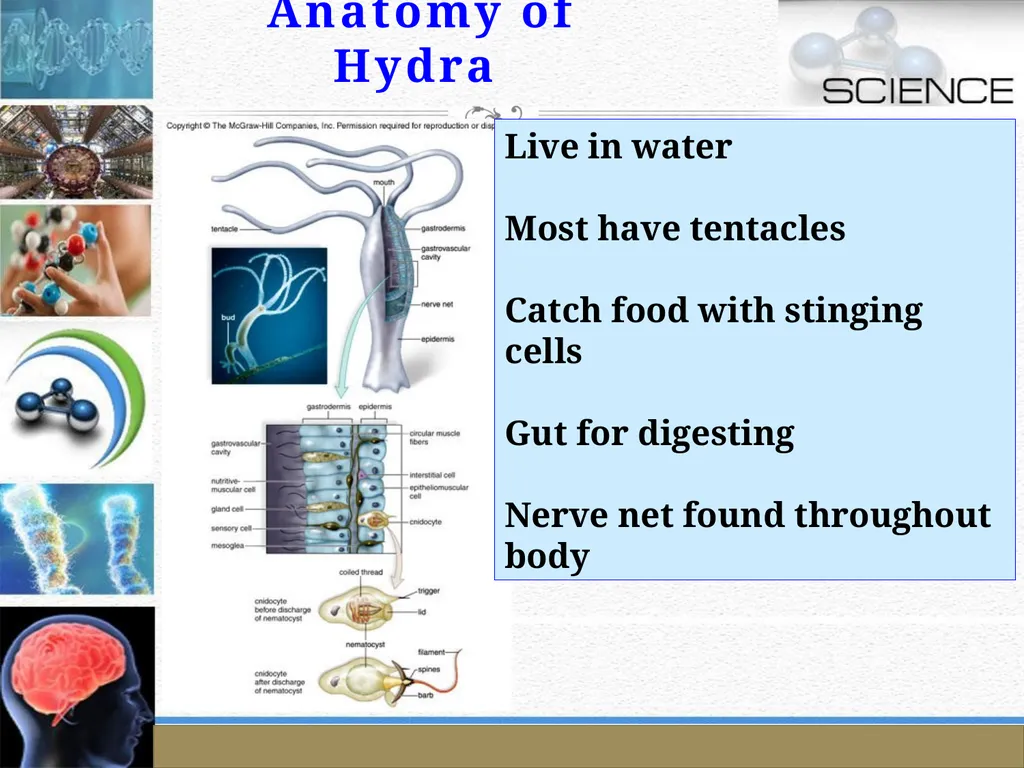
slide19. Anatomy of Hydra Live in water
Most have tentacles
Catch food with stinging cells
Gut for digesting
Nerve net found throughout body<br>
slide20. Phylogeny (At the base of metazoan phyla)
Evolutionary transition (body axis, germ layers, gonads, cell types)
Pattern formation (peculiar tissue dynamics make hydra a perpetual embryo)
Regeneration, stem cells<br>
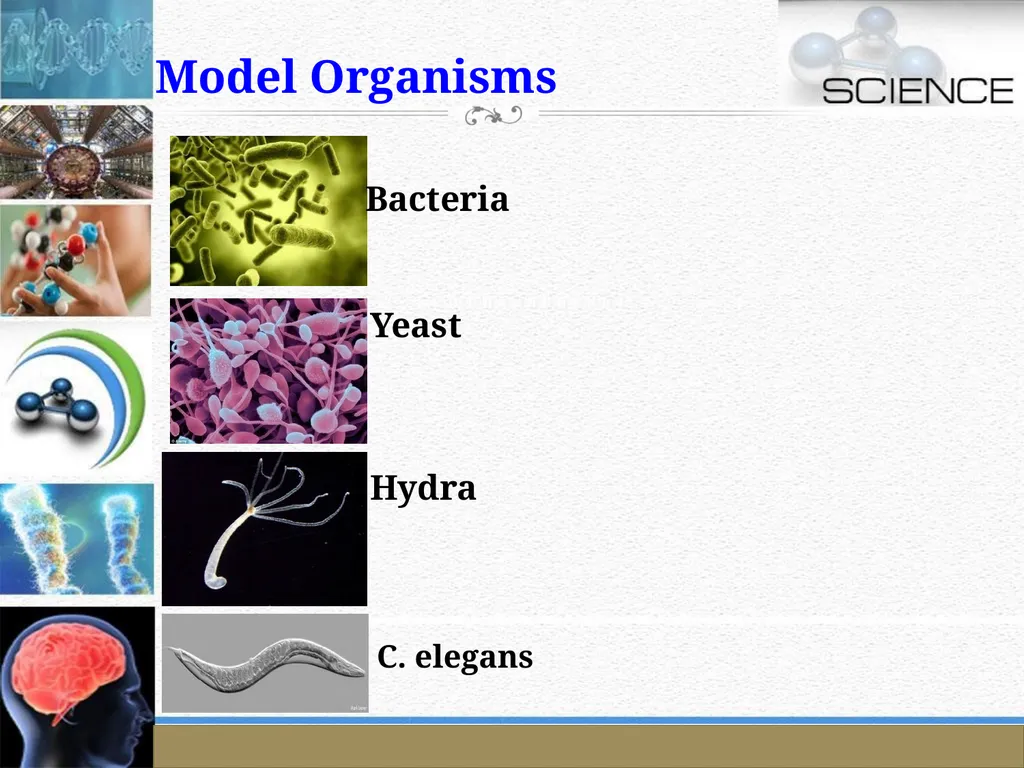
slide21. Bacteria Yeast Hydra Model Organisms C. elegans<br>
slide22. C. elegans Caenorhabditis elegans
(nematode round worm) One of the best characterized multicellular animal at the level of genomics, genetics, embryology
Its genome is fully sequenced
C. elegans is unique in that it can be grown and genetically manipulated with the speed and ease of a micro-organism while offering the features of a real animal
C. elegans has a full set of organ systems, has complex sensory systems, shows coordinated behavior, and it is possible to trace the lineage of every one of its approximately 1000 constituent cells
RNAi and miRNA are discovered in worms. First use of GFP in animals.<br>
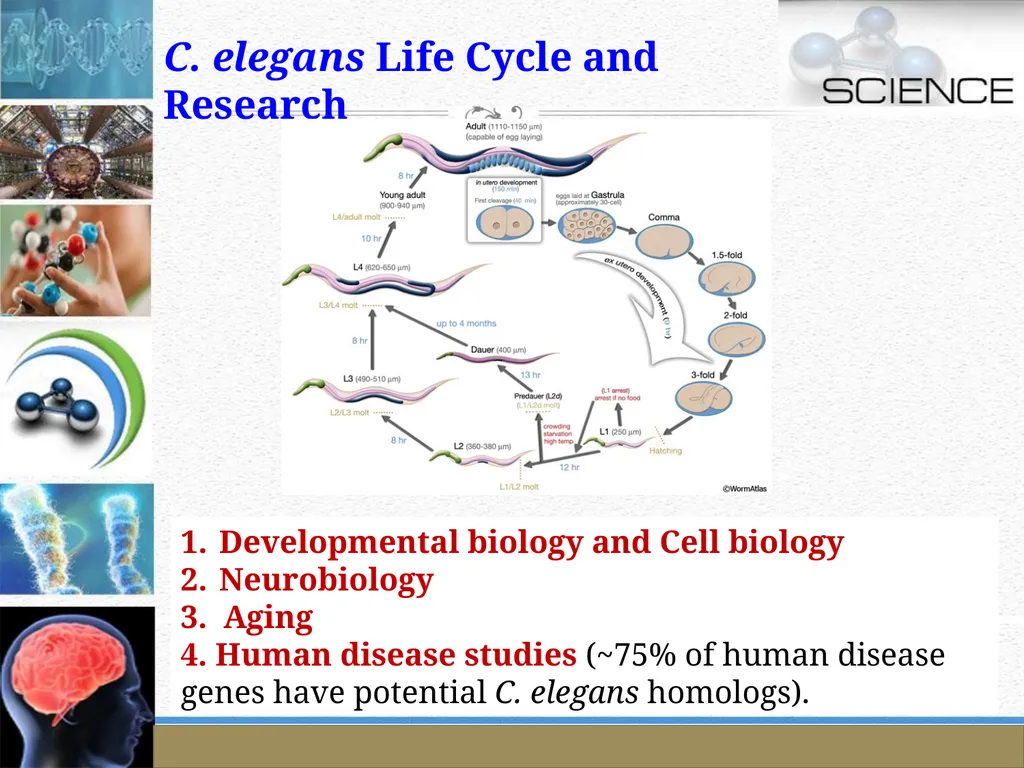
slide23. C. elegans Life Cycle and Research Developmental biology and Cell biology
Neurobiology
3. Aging
4. Human disease studies (~75% of human disease genes have potential C. elegans homologs).<br>
slide24. Bacteria Yeast Hydra Model Organisms C. elegans Drosophila<br>
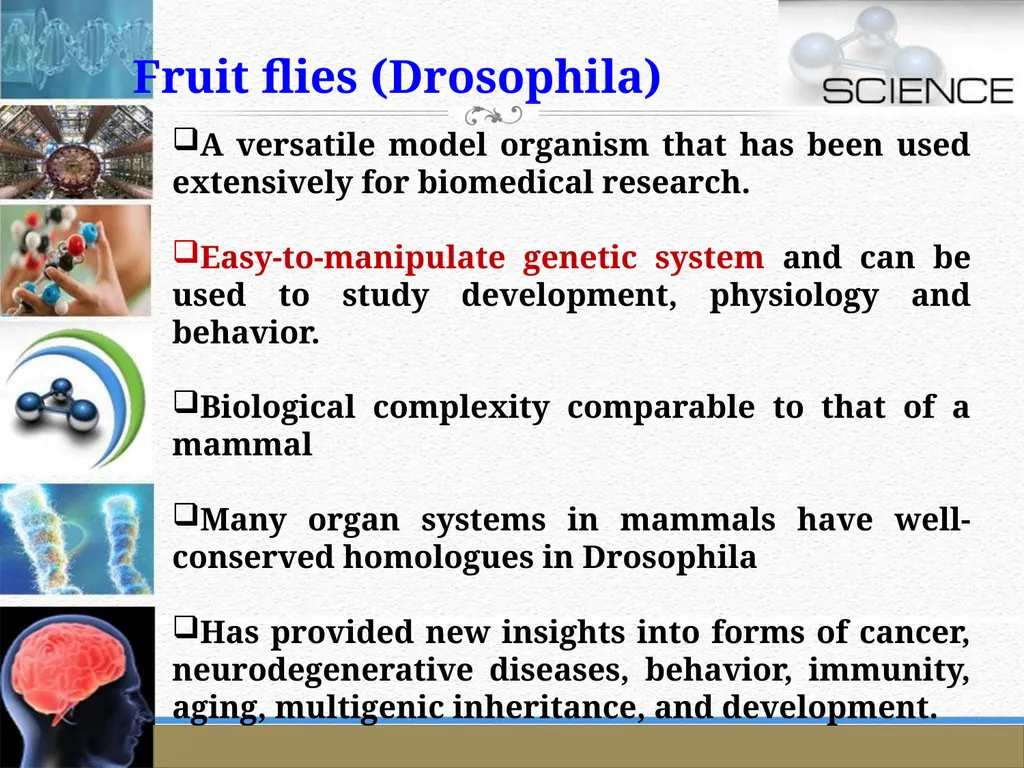
slide25. Fruit flies (Drosophila) A versatile model organism that has been used extensively for biomedical research.
Easy-to-manipulate genetic system and can be used to study development, physiology and behavior.
Biological complexity comparable to that of a mammal
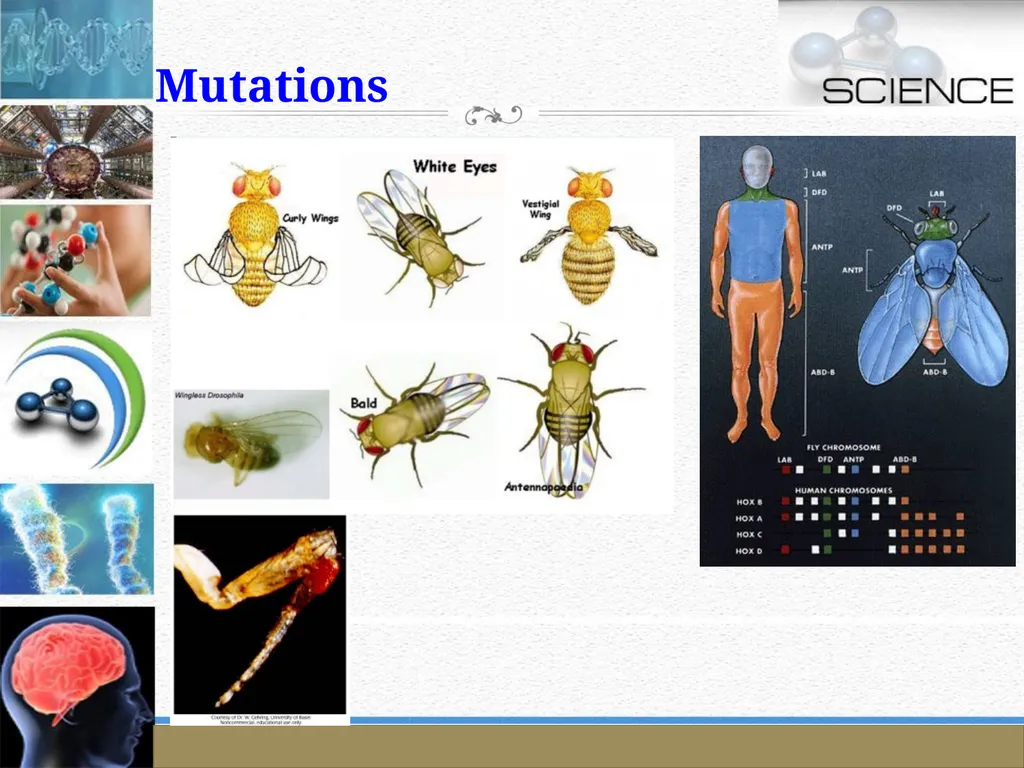
Many organ systems in mammals have well-conserved homologues in Drosophila
Has provided new insights into forms of cancer, neurodegenerative diseases, behavior, immunity, aging, multigenic inheritance, and development.<br>
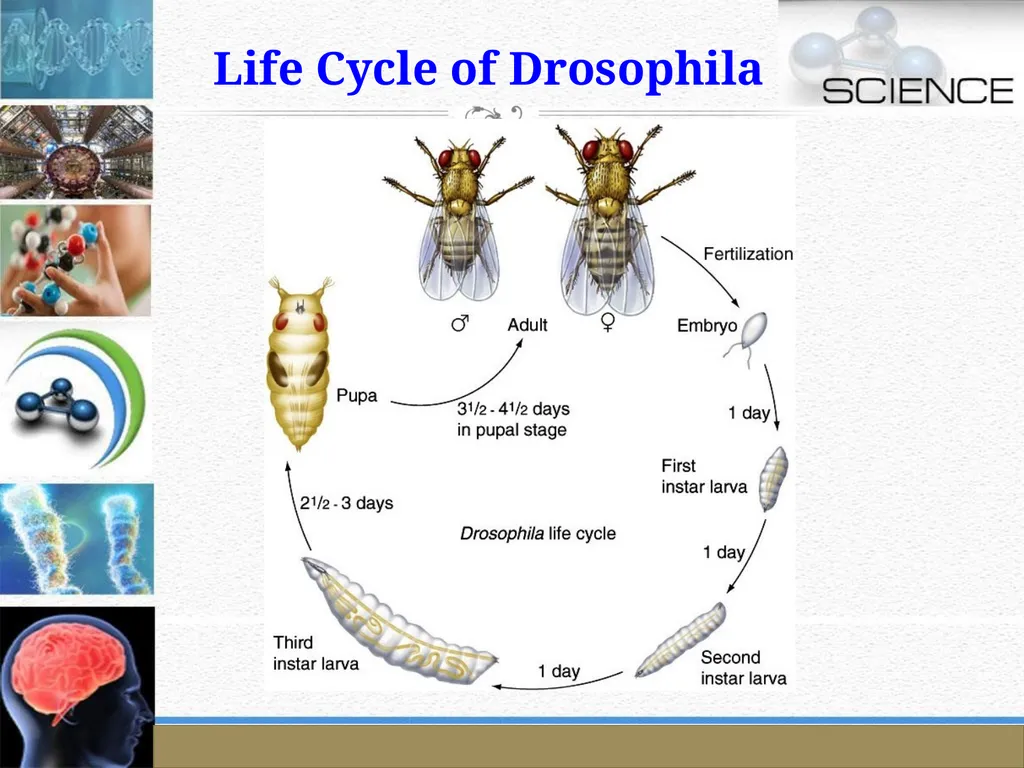
slide26. Life Cycle of Drosophila<br>
slide27. Mutations<br>
slide28. Bacteria Yeast Hydra Model Organisms C. elegans Drosophila Zebrafish<br>
slide29. Danio rerio (zebrafish) Small size, short life cycle, ease of culture, and ability to readily produce mutations relevant to human health and disease
The embryonic development can be seen through its transparent egg and closely resembles that of higher vertebrates
Other shared features with humans include blood, kidney, and optical systems
In addition, its genome is half the size of the mouse and human genomes, which is valuable in identification of key vertebrate genes.<br>
slide30. Development in ex vivo.
Entire initial development is transparent.
48hrs is enough for the development of most of the organ systems. Danio rerio (zebrafish)<br>
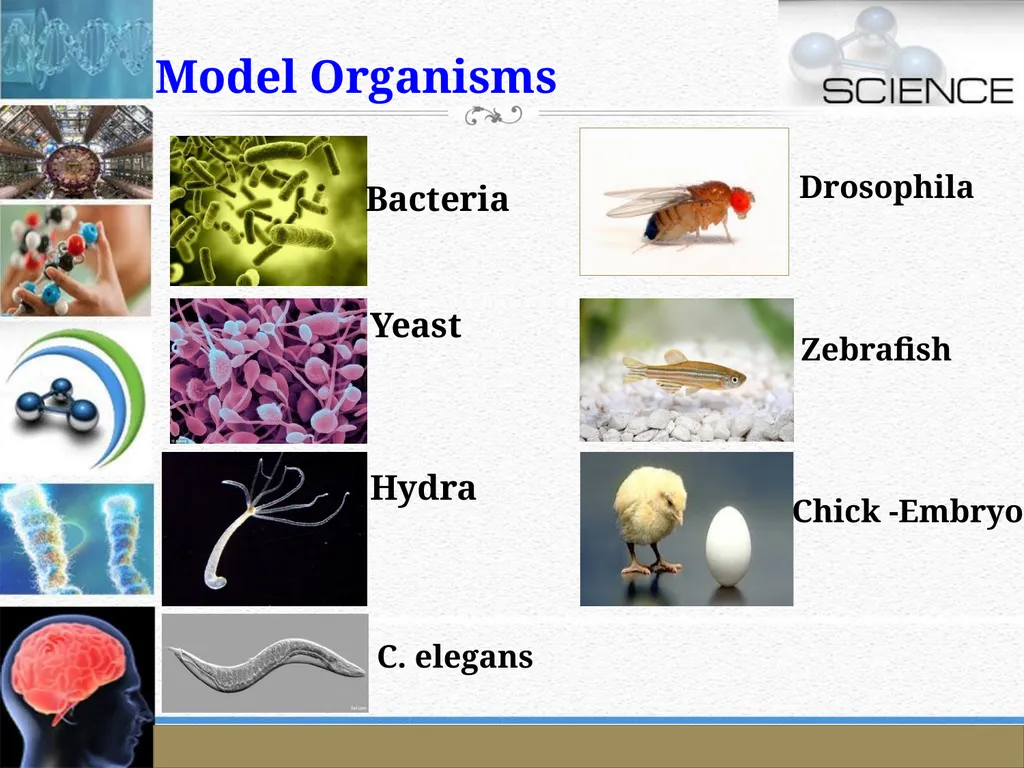
slide31. Bacteria Yeast Hydra Model Organisms C. elegans Drosophila Zebrafish Chick -Embryo<br>
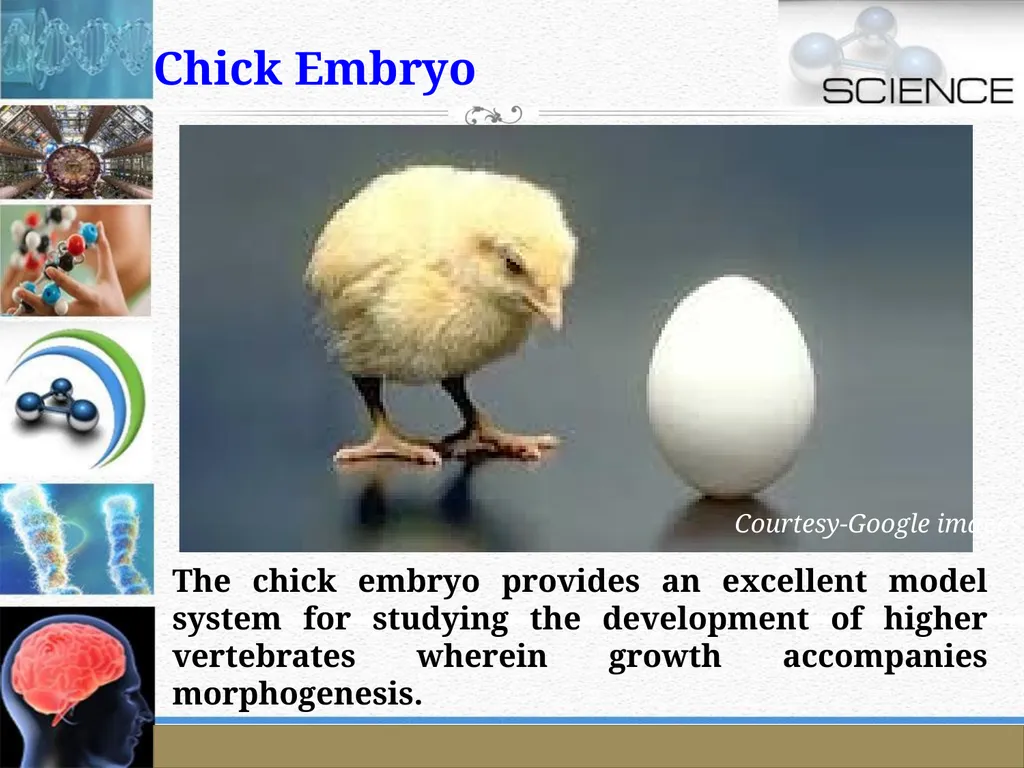
slide32. Chick Embryo The chick embryo provides an excellent model system for studying the development of higher vertebrates wherein growth accompanies morphogenesis. Courtesy-Google images<br>
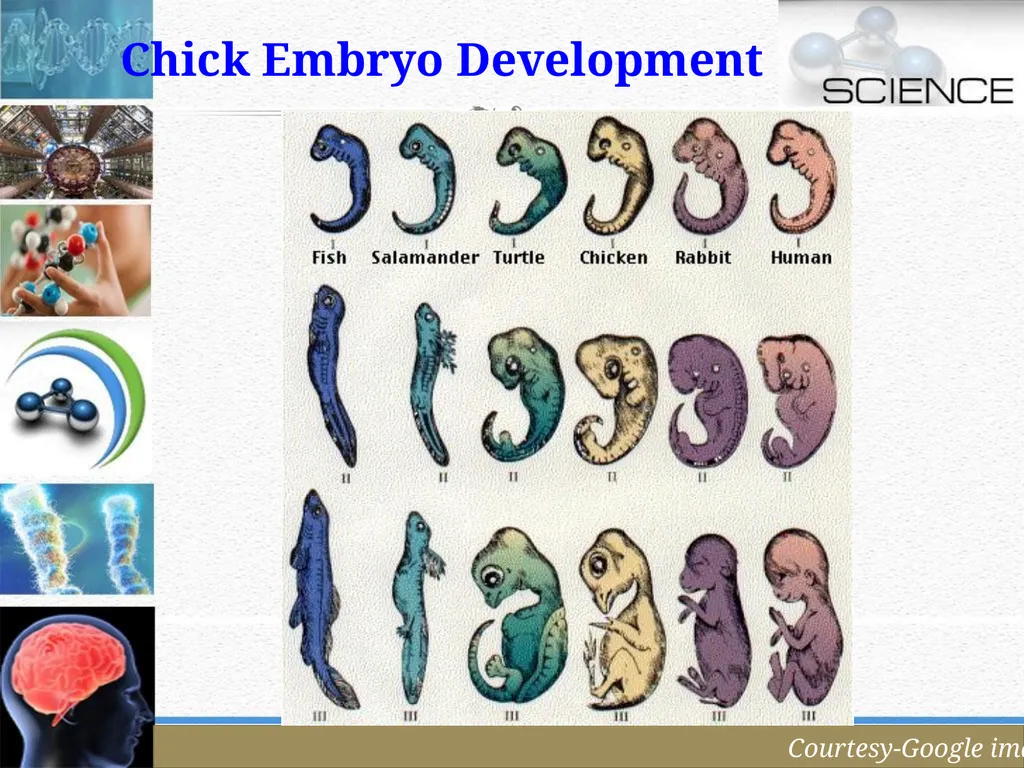
slide33. Chick Embryo Development Courtesy-Google images<br>
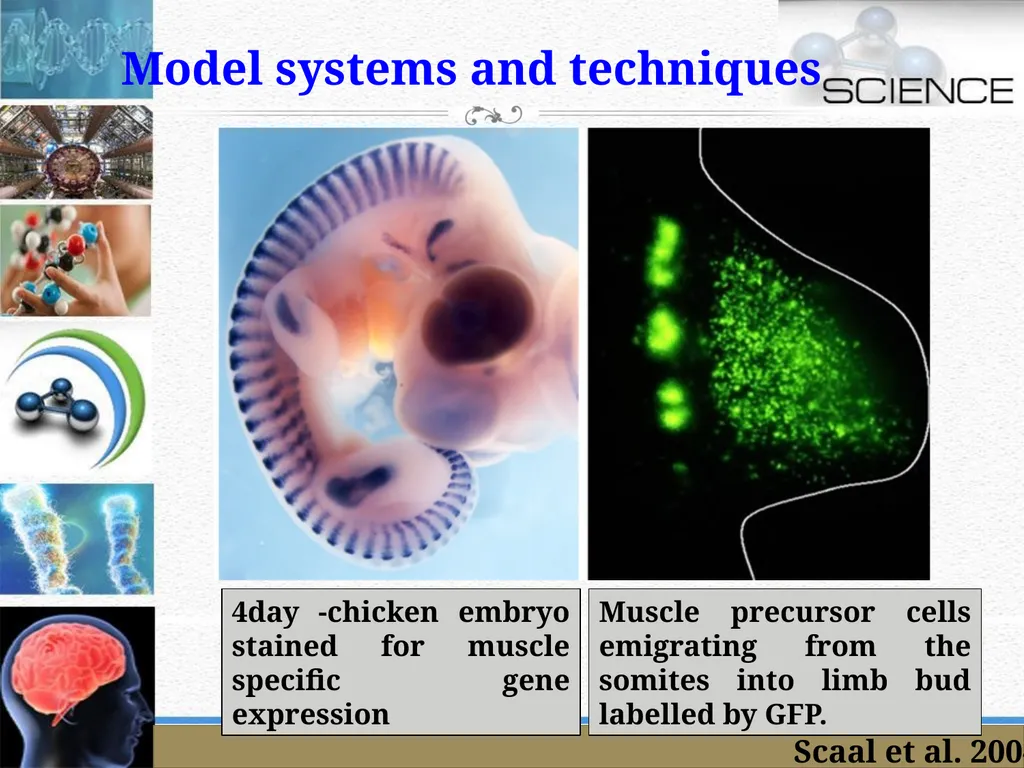
slide34. Model systems and techniques 4day -chicken embryo stained for muscle specific gene expression Muscle precursor cells emigrating from the somites into limb bud labelled by GFP. Scaal et al. 2004<br>
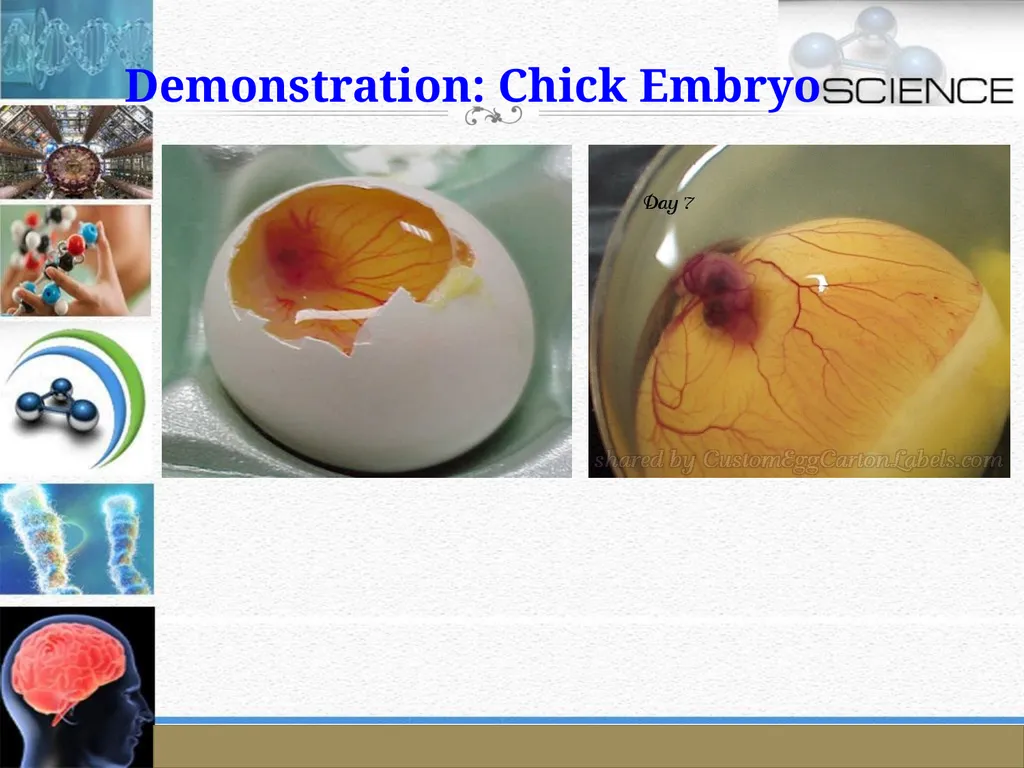
slide35. Demonstration: Chick Embryo<br>
slide36. Bacteria Yeast Hydra Model Organisms C. elegans Drosophila Zebrafish Chick Embryo Mouse<br>
slide37. Closest mammalian model organism to humans
Genes that code for proteins responsible for carrying out vital biological processes in both the human and the mouse share a high degree of similarity.
Therefore, the mouse has already proven extremely useful in development, genetic, and immunology studies
Transgenics and KO’s possible
A great system for studying and understanding human disease, as well as a mechanism for investigating new treatment strategies in ways that cannot be done in humans Mus musculus (mouse)<br>
slide38. Arabidopsis thaliana
(thale cress) Model Organisms<br>
slide39. Arabidopsis thaliana
(thale cress) Small flowering plant
Has a small genome relative to other plants and is easily grown under laboratory conditions
Amenable to some genetics particularly generation of transgenics
Allows insight into numerous features of plant biology, including those of significant value to agriculture, energy, environment, and human health<br>
slide40. In any biological study, the choice of organism is critical – which organism we study will be determined primarily by the questions we want to answer. Take Home Message<br>
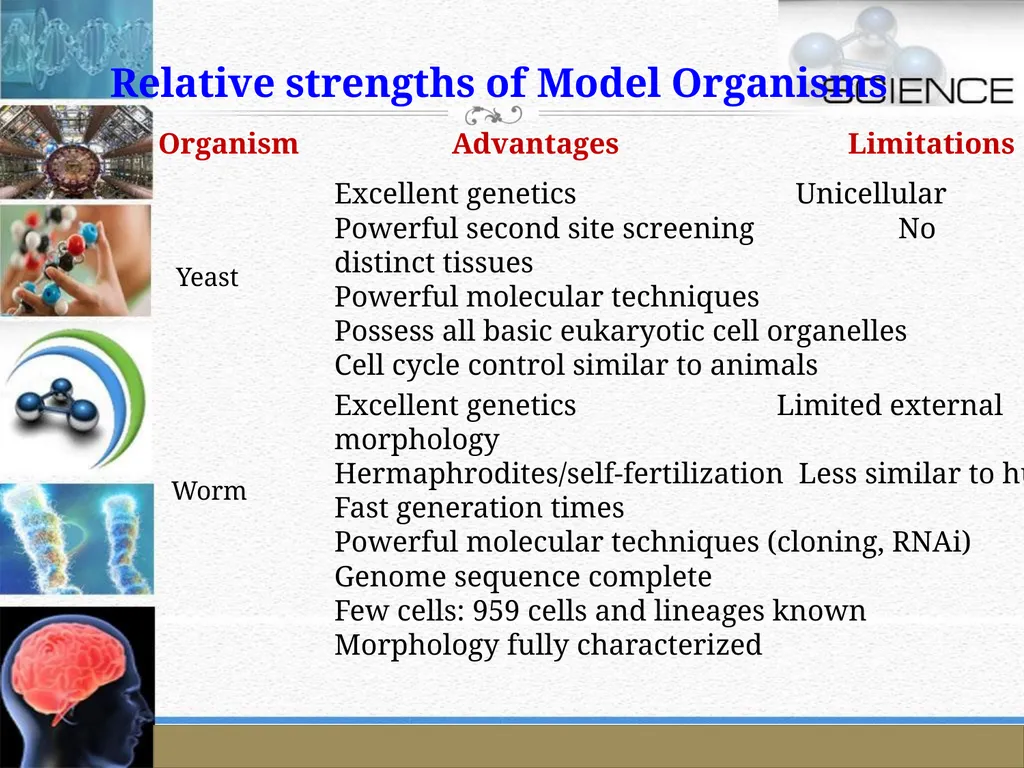
slide41. Relative strengths of Model Organisms Organism Advantages Limitations Excellent genetics Unicellular
Powerful second site screening No distinct tissues
Powerful molecular techniques
Possess all basic eukaryotic cell organelles
Cell cycle control similar to animals Yeast Excellent genetics Limited external morphology
Hermaphrodites/self-fertilization Less similar to human
Fast generation times
Powerful molecular techniques (cloning, RNAi)
Genome sequence complete
Few cells: 959 cells and lineages known
Morphology fully characterized Worm<br>
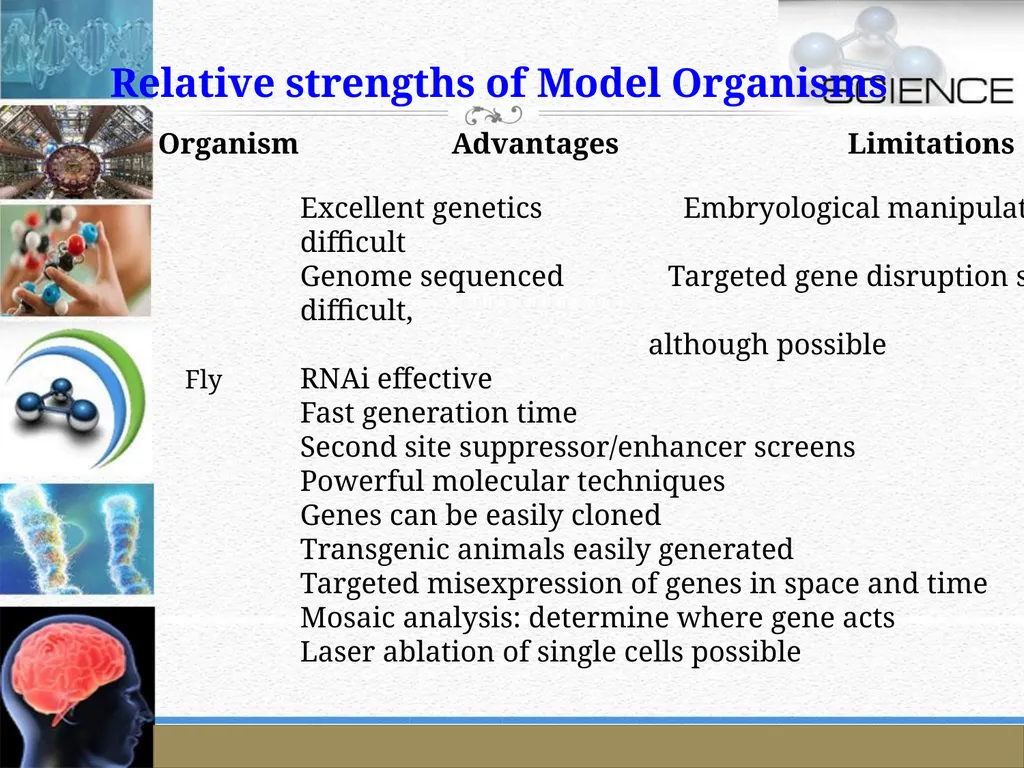
slide42. Organism Advantages Limitations Fly Excellent genetics Embryological manipulations difficult
Genome sequenced Targeted gene disruption still difficult,
although possible
RNAi effective
Fast generation time
Second site suppressor/enhancer screens
Powerful molecular techniques
Genes can be easily cloned
Transgenic animals easily generated
Targeted misexpression of genes in space and time
Mosaic analysis: determine where gene acts
Laser ablation of single cells possible Relative strengths of Model Organisms<br>
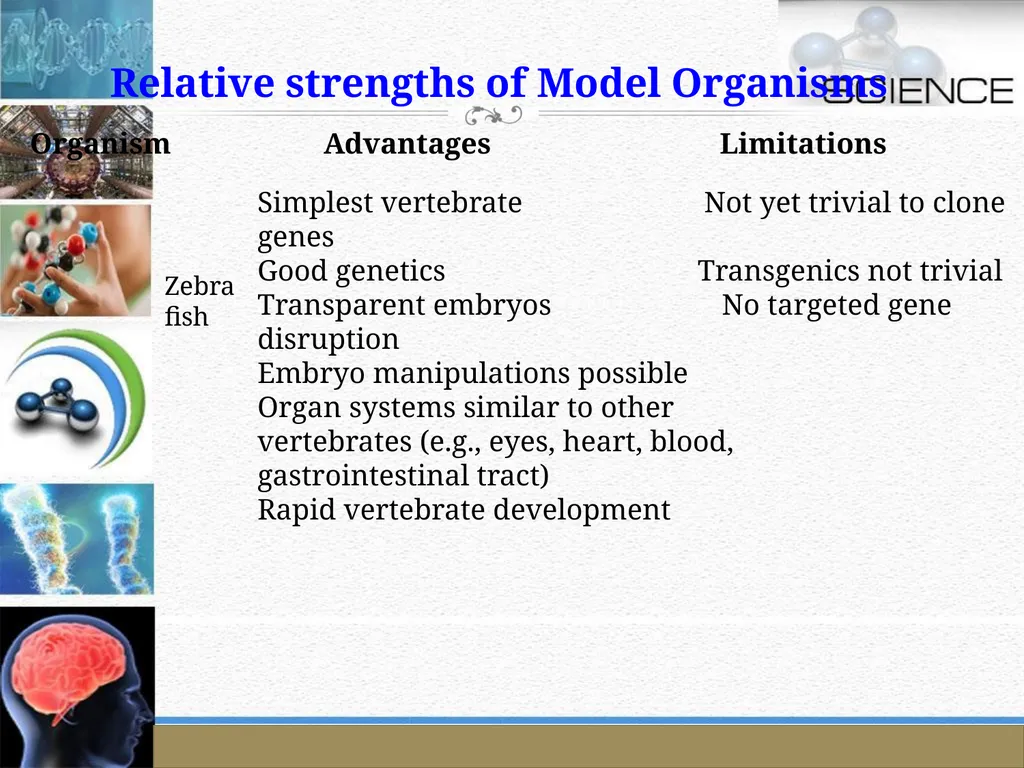
slide43. Organism Advantages Limitations Zebra
fish Simplest vertebrate Not yet trivial to clone genes
Good genetics Transgenics not trivial
Transparent embryos No targeted gene disruption
Embryo manipulations possible
Organ systems similar to other
vertebrates (e.g., eyes, heart, blood,
gastrointestinal tract)
Rapid vertebrate development Relative strengths of Model Organisms<br>
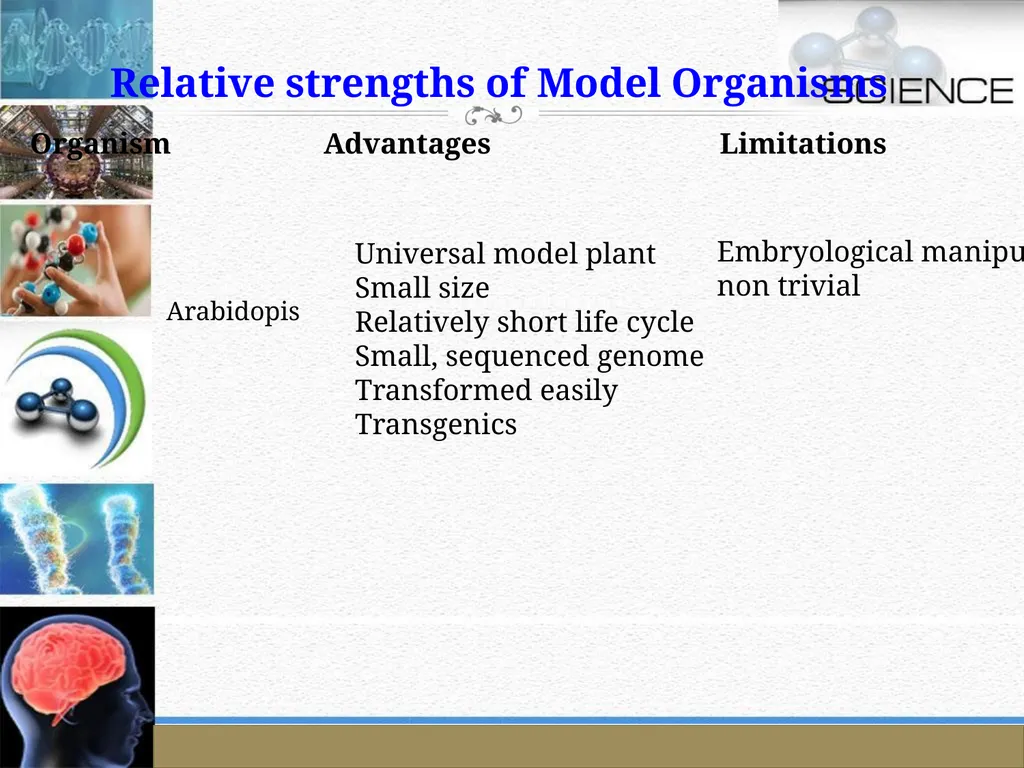
slide44. Organism Advantages Limitations Arabidopis Universal model plant
Small size
Relatively short life cycle
Small, sequenced genome
Transformed easily
Transgenics Embryological manipulations
non trivial Relative strengths of Model Organisms<br>
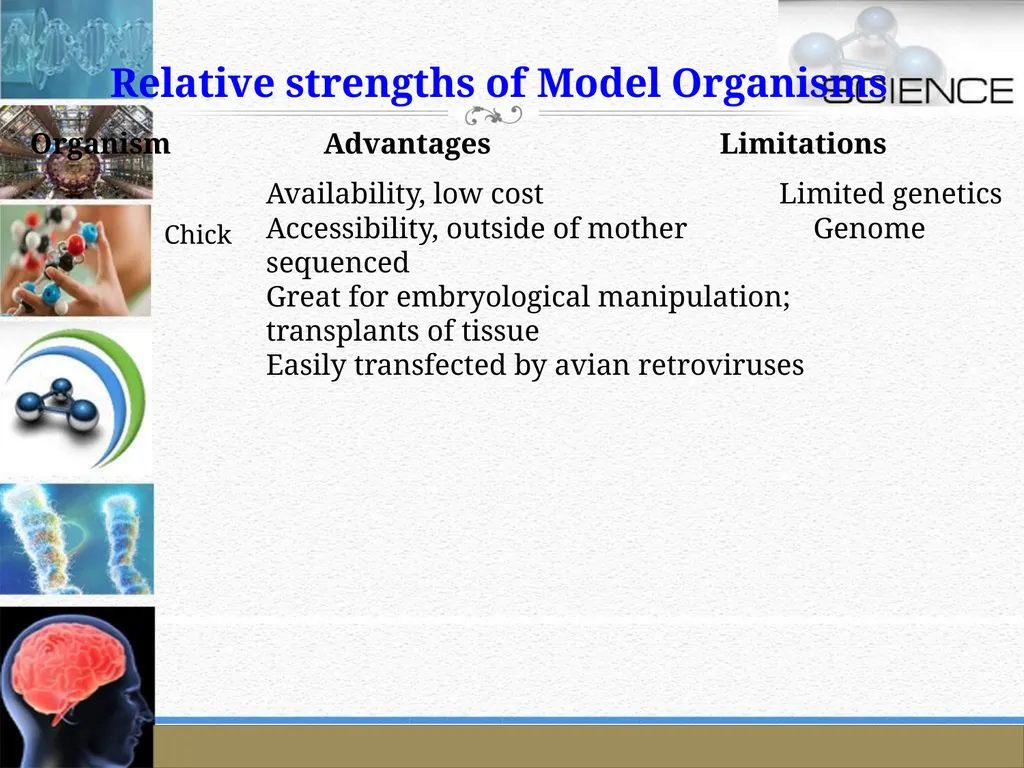
slide45. Organism Advantages Limitations Chick Availability, low cost Limited genetics
Accessibility, outside of mother Genome sequenced
Great for embryological manipulation;
transplants of tissue
Easily transfected by avian retroviruses Relative strengths of Model Organisms<br>
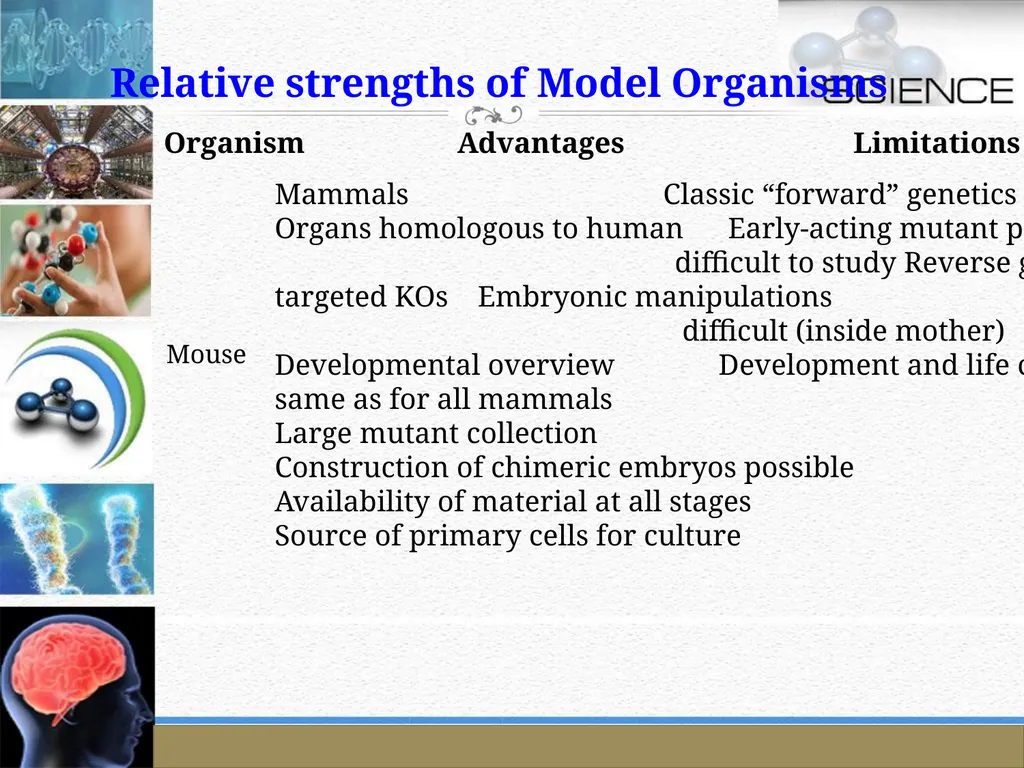
slide46. Organism Advantages Limitations Relative strengths of Model Organisms Mouse Mammals Classic “forward” genetics difficult
Organs homologous to human Early-acting mutant phenotypes
difficult to study Reverse genetics: targeted KOs Embryonic manipulations
difficult (inside mother)
Developmental overview Development and life cycle slow
same as for all mammals
Large mutant collection
Construction of chimeric embryos possible
Availability of material at all stages
Source of primary cells for culture<br>
http://www.iiserpune.ac.in/~krish/<br>
slide3. A model organism is a non-human species that is extensively studied to understand particular biological phenomena, with the expectation that discoveries made in the organism model will provide insight into the workings of other organisms. What are Model Organisms?<br>
slide4. Common ancestry of all organisms resulting conservation of major aspects of biology. What makes Model Organisms possible? The basic operating principles are nearly the same in all living things.<br>
slide5. Typical considerations while selecting Model Organisms Rapid development with short life cycles
Small adult size
Ready availability and inexpensive maintenance and breeding
Tractability to experimental methodology
Biology being studied have relevance to humans<br>
slide6. Basic Unit of Life : Cell Prokaryotic and Eukaryotic Cells The fundamental properties of how cells grow and divide, how inheritance works, and how organisms store and use energy.<br>
slide7. Bacteria: Unicellular, prokaryotes Model Organisms<br>
slide8. Bacteria Everywhere<br>
slide9. Bacteria in Air Hemalatha Rao
Sheetal Gianchandani
Ankit Jaiswal<br>
slide10. Bacteria under the microscope Will be covered in one of the practicals<br>
slide11. Exercise:
Bacteria in your surroundings Make homemade agar plates and find out bacterial population in your finger nail, your hands, the door handle.
Note the differences in colour, shape and other properties.
More bacteria on the bathroom sink or on the TV remote?
Try adding a drop of hand sanitizer on your growing plate.
Do washed hands have less bacteria than unwashed hands?<br>
slide12. Bacteria as a Model Organism The foundations of molecular biology were based on studies of bacteria.
Antibiotics
Recombinant DNA technologies<br>
slide13. Bacteria Yeast: Unicellular, eukaryotes Model Organisms<br>
slide14. Yeast as a Model Organism Eukaryotic system.
Signaling molecules and cell cycle are nearly similar.
Good model system to understand many human diseases including cancer (Approx. 20% human disease genes have yeast homologues)
Ease of genetic manipulation allows its use for analyzing and functionally dissecting gene products from other eukaryotes.
Last decade four Nobel
prizes were awarded for
discoveries involving yeast.<br>
slide15. Bacteria Yeast Hydra: Multicellular, Eukaryotes,
Invertebrate (Emerging Model System) Model Organisms<br>
slide16. Phylogeny Multicellularity True tissues,
Germ layers<br>
slide17. Hydra Enormous regeneration capacity<br>
slide18. The Power of Regeneration<br>
slide19. Anatomy of Hydra Live in water
Most have tentacles
Catch food with stinging cells
Gut for digesting
Nerve net found throughout body<br>
slide20. Phylogeny (At the base of metazoan phyla)
Evolutionary transition (body axis, germ layers, gonads, cell types)
Pattern formation (peculiar tissue dynamics make hydra a perpetual embryo)
Regeneration, stem cells<br>
slide21. Bacteria Yeast Hydra Model Organisms C. elegans<br>
slide22. C. elegans Caenorhabditis elegans
(nematode round worm) One of the best characterized multicellular animal at the level of genomics, genetics, embryology
Its genome is fully sequenced
C. elegans is unique in that it can be grown and genetically manipulated with the speed and ease of a micro-organism while offering the features of a real animal
C. elegans has a full set of organ systems, has complex sensory systems, shows coordinated behavior, and it is possible to trace the lineage of every one of its approximately 1000 constituent cells
RNAi and miRNA are discovered in worms. First use of GFP in animals.<br>
slide23. C. elegans Life Cycle and Research Developmental biology and Cell biology
Neurobiology
3. Aging
4. Human disease studies (~75% of human disease genes have potential C. elegans homologs).<br>
slide24. Bacteria Yeast Hydra Model Organisms C. elegans Drosophila<br>
slide25. Fruit flies (Drosophila) A versatile model organism that has been used extensively for biomedical research.
Easy-to-manipulate genetic system and can be used to study development, physiology and behavior.
Biological complexity comparable to that of a mammal
Many organ systems in mammals have well-conserved homologues in Drosophila
Has provided new insights into forms of cancer, neurodegenerative diseases, behavior, immunity, aging, multigenic inheritance, and development.<br>
slide26. Life Cycle of Drosophila<br>
slide27. Mutations<br>
slide28. Bacteria Yeast Hydra Model Organisms C. elegans Drosophila Zebrafish<br>
slide29. Danio rerio (zebrafish) Small size, short life cycle, ease of culture, and ability to readily produce mutations relevant to human health and disease
The embryonic development can be seen through its transparent egg and closely resembles that of higher vertebrates
Other shared features with humans include blood, kidney, and optical systems
In addition, its genome is half the size of the mouse and human genomes, which is valuable in identification of key vertebrate genes.<br>
slide30. Development in ex vivo.
Entire initial development is transparent.
48hrs is enough for the development of most of the organ systems. Danio rerio (zebrafish)<br>
slide31. Bacteria Yeast Hydra Model Organisms C. elegans Drosophila Zebrafish Chick -Embryo<br>
slide32. Chick Embryo The chick embryo provides an excellent model system for studying the development of higher vertebrates wherein growth accompanies morphogenesis. Courtesy-Google images<br>
slide33. Chick Embryo Development Courtesy-Google images<br>
slide34. Model systems and techniques 4day -chicken embryo stained for muscle specific gene expression Muscle precursor cells emigrating from the somites into limb bud labelled by GFP. Scaal et al. 2004<br>
slide35. Demonstration: Chick Embryo<br>
slide36. Bacteria Yeast Hydra Model Organisms C. elegans Drosophila Zebrafish Chick Embryo Mouse<br>
slide37. Closest mammalian model organism to humans
Genes that code for proteins responsible for carrying out vital biological processes in both the human and the mouse share a high degree of similarity.
Therefore, the mouse has already proven extremely useful in development, genetic, and immunology studies
Transgenics and KO’s possible
A great system for studying and understanding human disease, as well as a mechanism for investigating new treatment strategies in ways that cannot be done in humans Mus musculus (mouse)<br>
slide38. Arabidopsis thaliana
(thale cress) Model Organisms<br>
slide39. Arabidopsis thaliana
(thale cress) Small flowering plant
Has a small genome relative to other plants and is easily grown under laboratory conditions
Amenable to some genetics particularly generation of transgenics
Allows insight into numerous features of plant biology, including those of significant value to agriculture, energy, environment, and human health<br>
slide40. In any biological study, the choice of organism is critical – which organism we study will be determined primarily by the questions we want to answer. Take Home Message<br>
slide41. Relative strengths of Model Organisms Organism Advantages Limitations Excellent genetics Unicellular
Powerful second site screening No distinct tissues
Powerful molecular techniques
Possess all basic eukaryotic cell organelles
Cell cycle control similar to animals Yeast Excellent genetics Limited external morphology
Hermaphrodites/self-fertilization Less similar to human
Fast generation times
Powerful molecular techniques (cloning, RNAi)
Genome sequence complete
Few cells: 959 cells and lineages known
Morphology fully characterized Worm<br>
slide42. Organism Advantages Limitations Fly Excellent genetics Embryological manipulations difficult
Genome sequenced Targeted gene disruption still difficult,
although possible
RNAi effective
Fast generation time
Second site suppressor/enhancer screens
Powerful molecular techniques
Genes can be easily cloned
Transgenic animals easily generated
Targeted misexpression of genes in space and time
Mosaic analysis: determine where gene acts
Laser ablation of single cells possible Relative strengths of Model Organisms<br>
slide43. Organism Advantages Limitations Zebra
fish Simplest vertebrate Not yet trivial to clone genes
Good genetics Transgenics not trivial
Transparent embryos No targeted gene disruption
Embryo manipulations possible
Organ systems similar to other
vertebrates (e.g., eyes, heart, blood,
gastrointestinal tract)
Rapid vertebrate development Relative strengths of Model Organisms<br>
slide44. Organism Advantages Limitations Arabidopis Universal model plant
Small size
Relatively short life cycle
Small, sequenced genome
Transformed easily
Transgenics Embryological manipulations
non trivial Relative strengths of Model Organisms<br>
slide45. Organism Advantages Limitations Chick Availability, low cost Limited genetics
Accessibility, outside of mother Genome sequenced
Great for embryological manipulation;
transplants of tissue
Easily transfected by avian retroviruses Relative strengths of Model Organisms<br>
slide46. Organism Advantages Limitations Relative strengths of Model Organisms Mouse Mammals Classic “forward” genetics difficult
Organs homologous to human Early-acting mutant phenotypes
difficult to study Reverse genetics: targeted KOs Embryonic manipulations
difficult (inside mother)
Developmental overview Development and life cycle slow
same as for all mammals
Large mutant collection
Construction of chimeric embryos possible
Availability of material at all stages
Source of primary cells for culture<br>