04
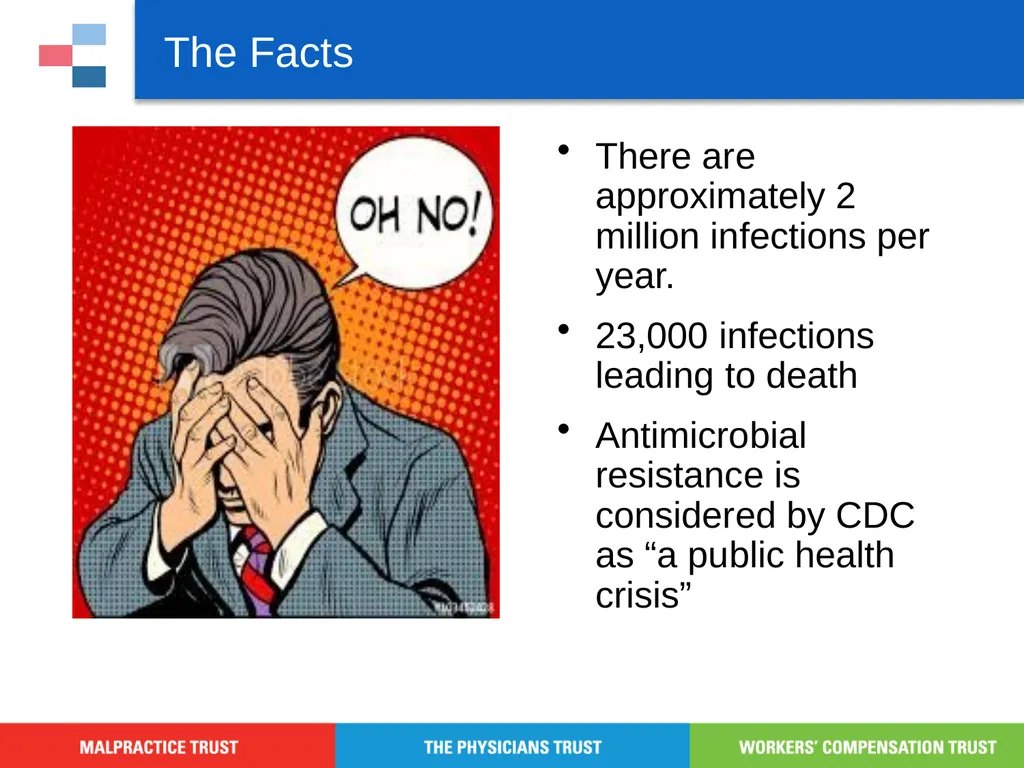
The Facts There are approximately 2 million infections per year.
23,000 infections leading to death
Antimicrobial resistance is considered by CDC as “a public health crisis”<br>
05
Antimicrobial Stewardship Antibiotic stewardship refers to a set of coordinated strategies to improve the use of antimicrobial medications with the goal of enhancing patient health outcomes, reducing resistance to antibiotics, and decreasing unnecessary costs.
- Society of Healthcare Epidemiology of America<br>
06
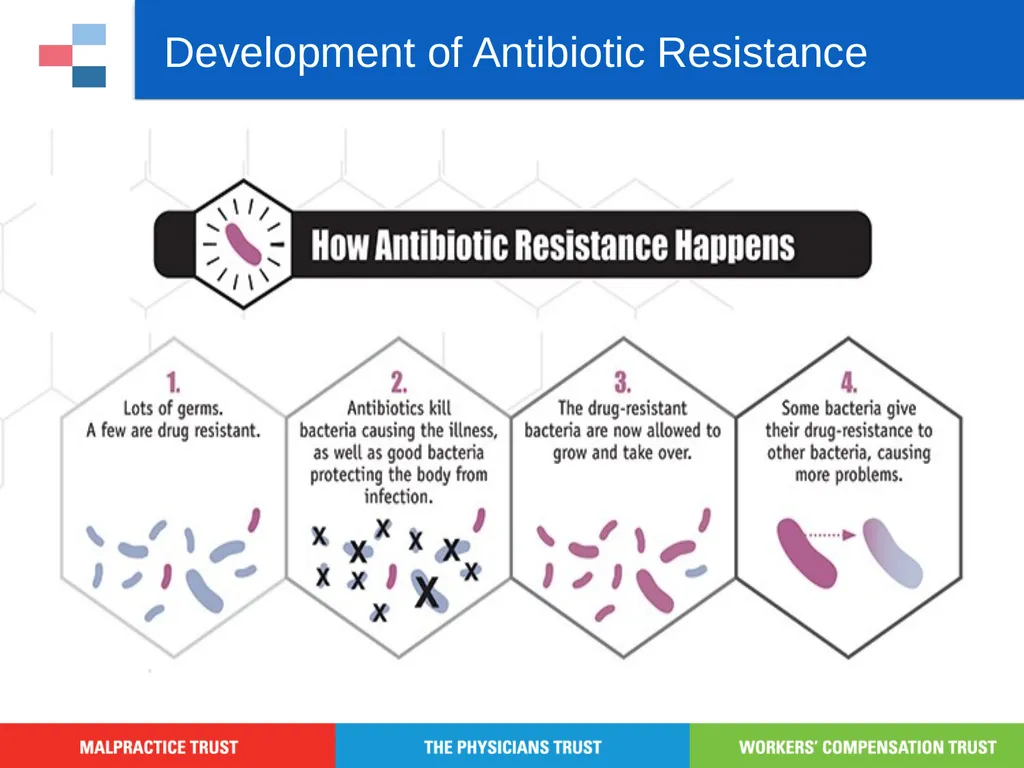
Development of Antibiotic Resistance<br>
07
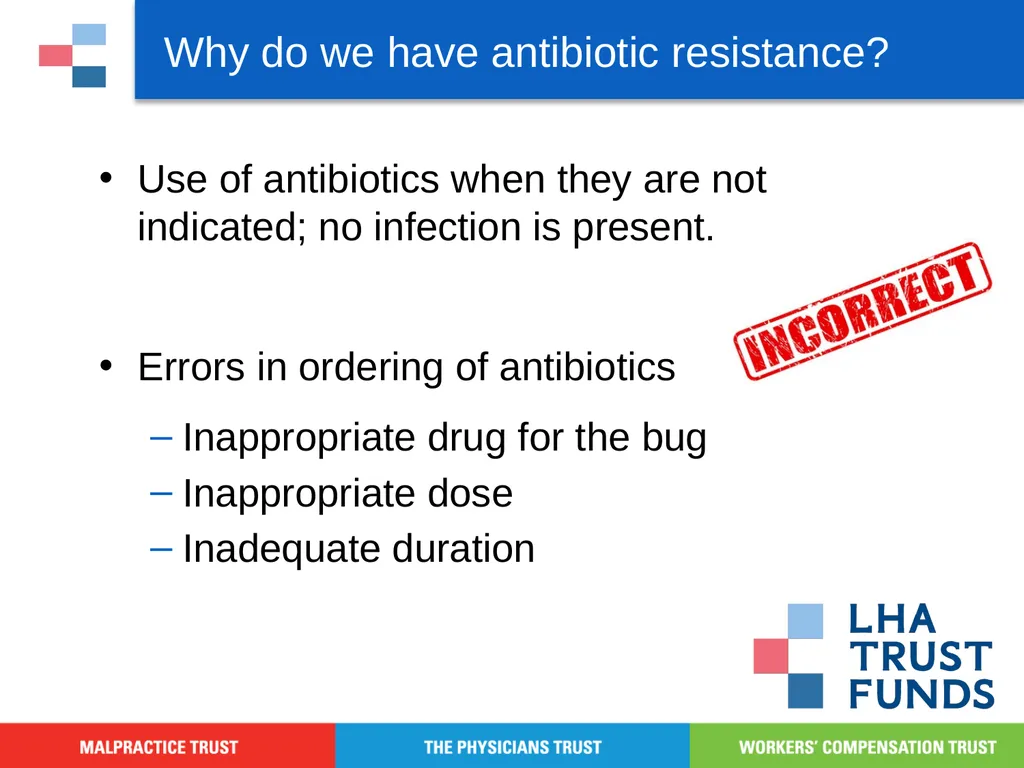
Why do we have antibiotic resistance? Use of antibiotics when they are not indicated; no infection is present.
Errors in ordering of antibiotics
Inappropriate drug for the bug
Inappropriate dose
Inadequate duration<br>
08
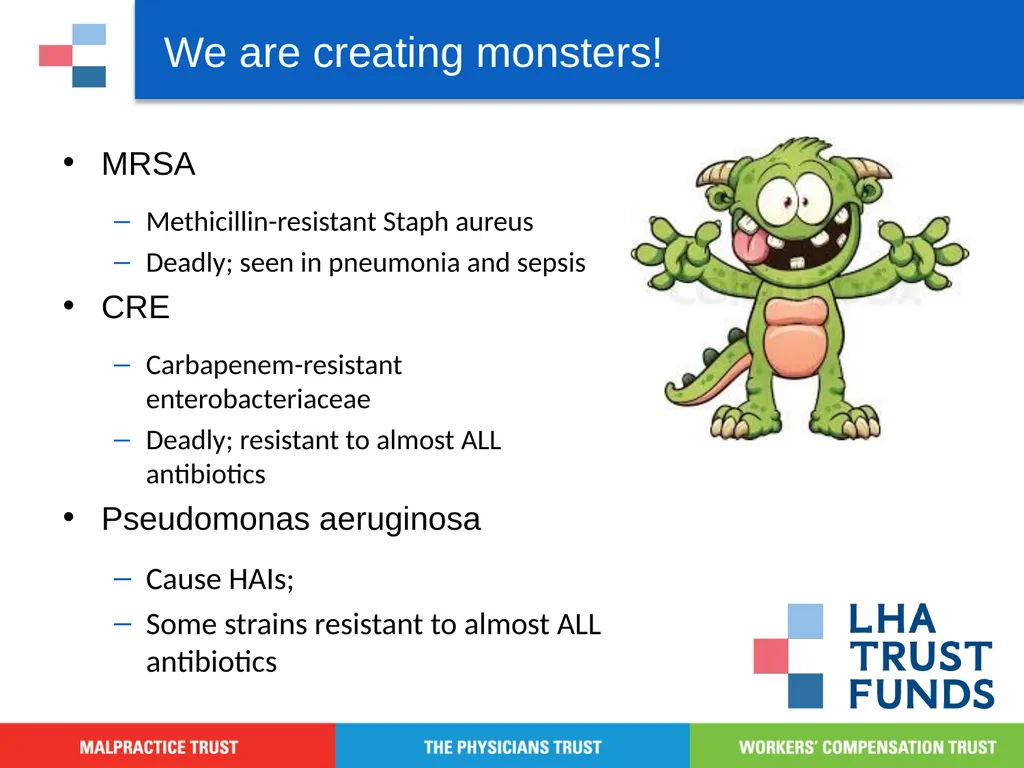
We are creating monsters! MRSA
Methicillin-resistant Staph aureus
Deadly; seen in pneumonia and sepsis
CRE
Carbapenem-resistant enterobacteriaceae
Deadly; resistant to almost ALL antibiotics
Pseudomonas aeruginosa
Cause HAIs;
Some strains resistant to almost ALL antibiotics<br>
09
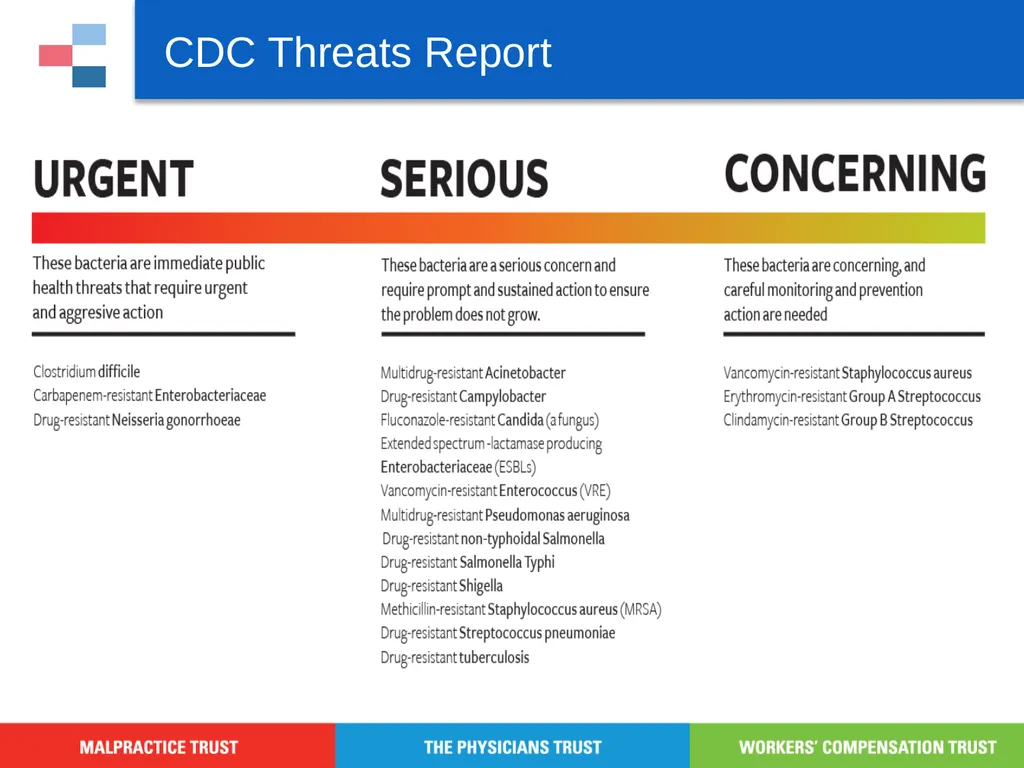
CDC Threats Report<br>
10
Antibiotics Use Human use began in the 1940’s.
Alexander Fleming discovered the first antibiotic, Penicillin, and won the Nobel Prize for it in 1945.
Fleming predicted antibiotic resistance.<br>
11
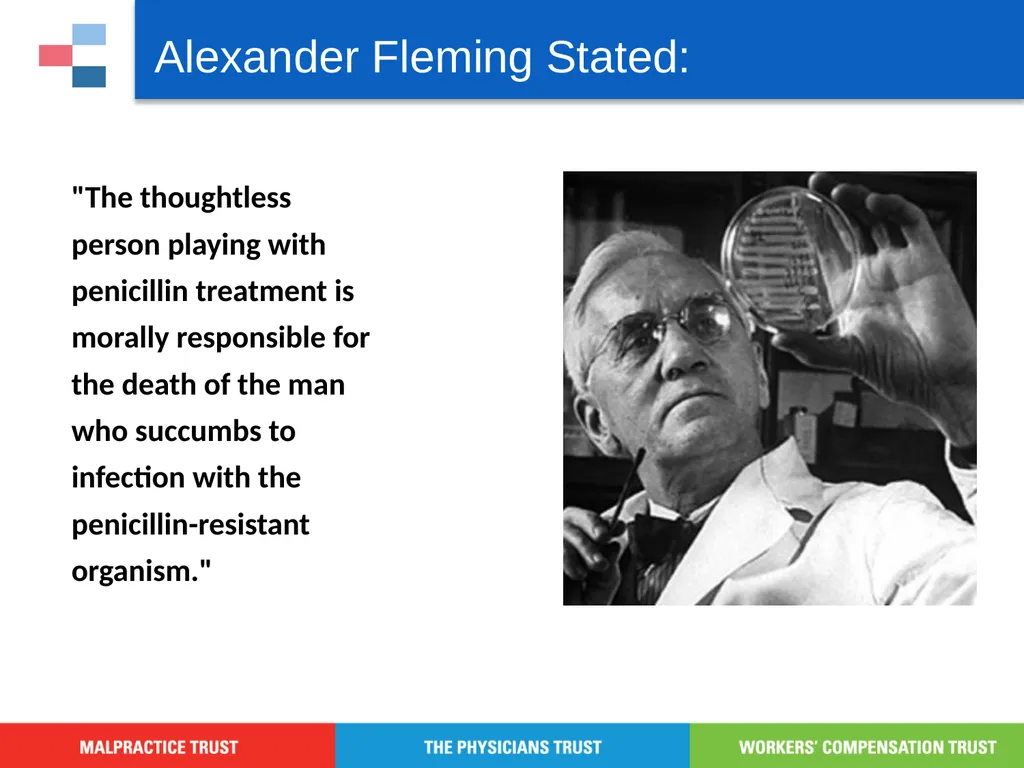
"The thoughtless
person playing with
penicillin treatment is
morally responsible for
the death of the man
who succumbs to
infection with the
penicillin-resistant
organism." Alexander Fleming Stated:<br>
12
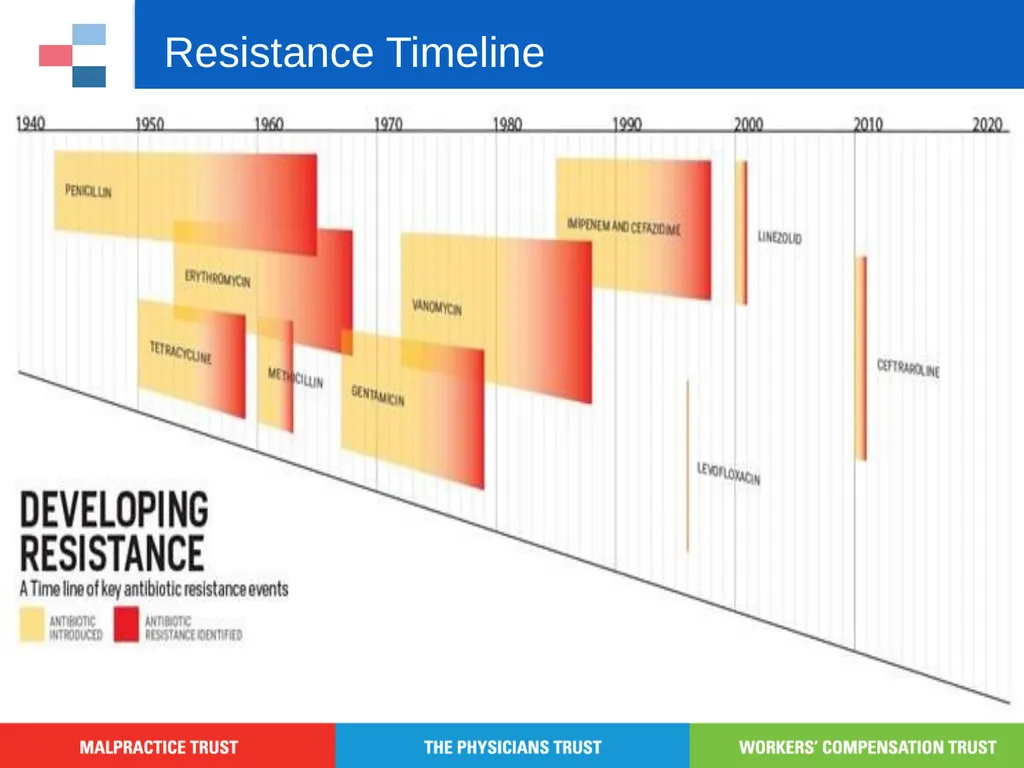
Development to Resistance Timeline Since the 1940’s, the timeframe between when an antibiotic is developed to the time when resistance occurs has shortened at an alarming rate.<br>
13
Resistance Timeline<br>
14
If we allow antibiotic resistance to continue… Simple infections - which are easily cured now - will become very difficult or impossible to treat.
Infection which were once eradicated will emerge again.
Superbugs will continue to develop and increase.<br>
15
What if we didn’t have antibiotics?<br>
16
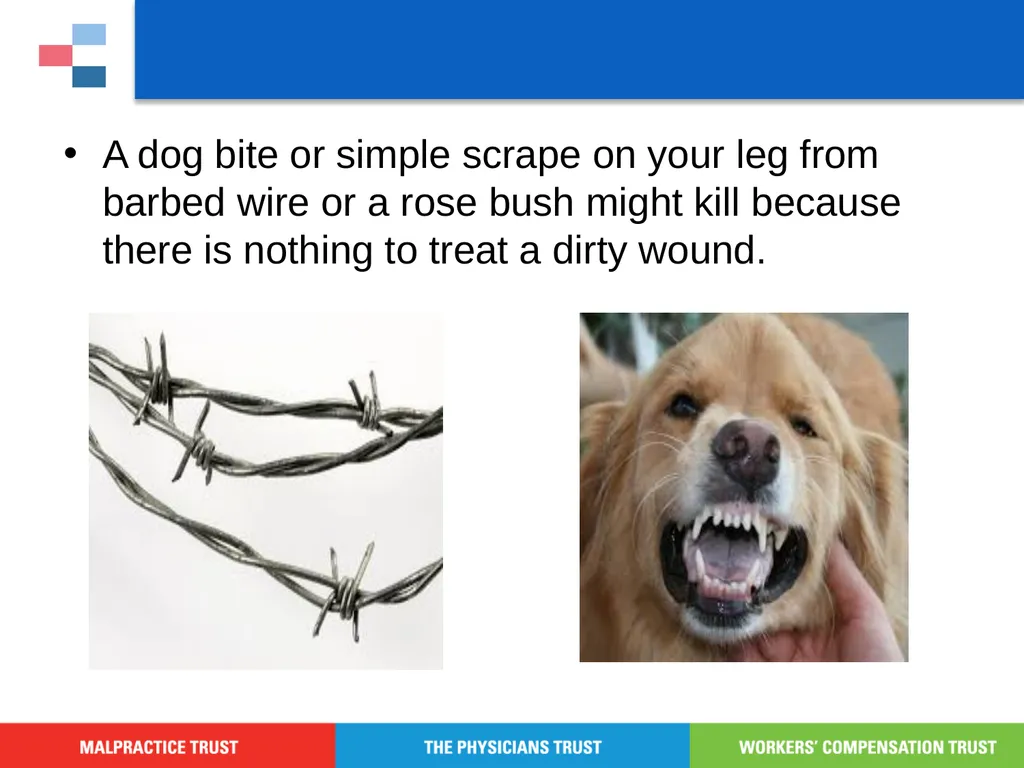
A dog bite or simple scrape on your leg from barbed wire or a rose bush might kill because there is nothing to treat a dirty wound.<br>
17
Prior to antibiotics in 1940’s… One out of nine people who got a skin infection died from things as simple as a scrape or an insect bite.
Three out of ten people who contracted pneumonia died. Ear infections caused deafness; sore throats were followed by heart failure.<br>
18
Without antibiotics, how will we: Help immunocompromised patients who acquire an infection such as:
Those on chemotherapy
Burn patients
Transplant patients<br>
19
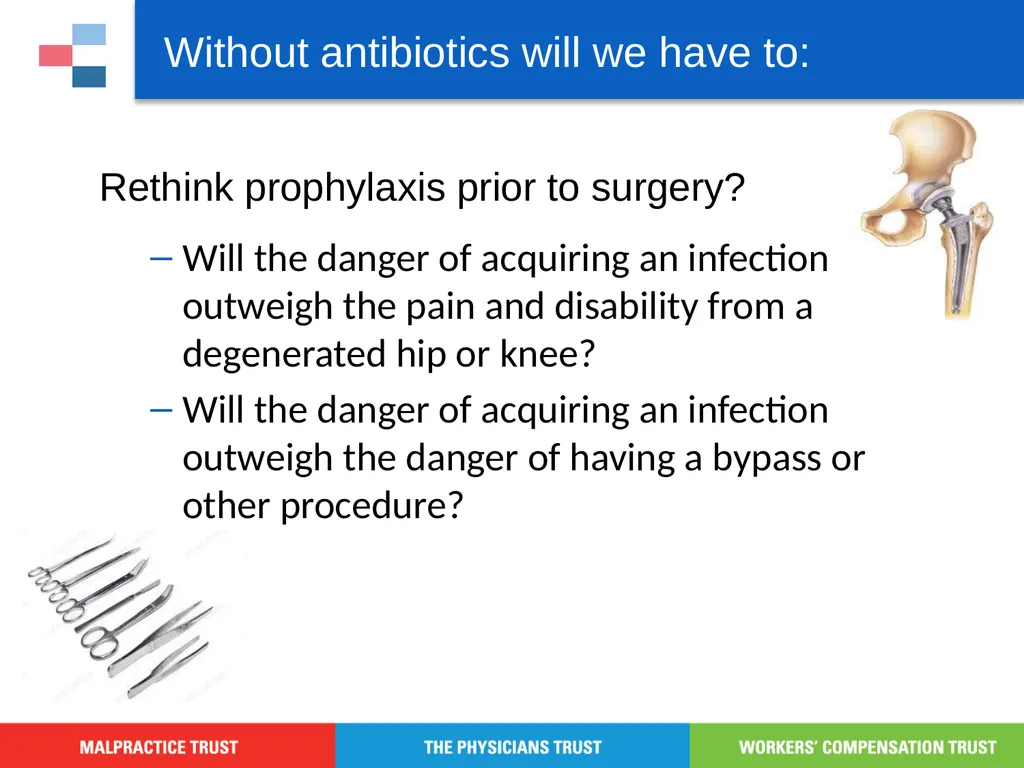
Without antibiotics will we have to: Rethink prophylaxis prior to surgery?
Will the danger of acquiring an infection outweigh the pain and disability from a degenerated hip or knee?
Will the danger of acquiring an infection outweigh the danger of having a bypass or other procedure?<br>
20
What can you do to help?<br>
21
Be Antibiotics Aware Campaign This campaign by the CDC is committed to:
“Helping healthcare professionals improve the way they prescribe antibiotics, and improving the way we take antibiotics, helps keep us healthy now, helps fight antibiotic resistance, and ensures that these life-saving drugs will be available for future generations.”<br>
22
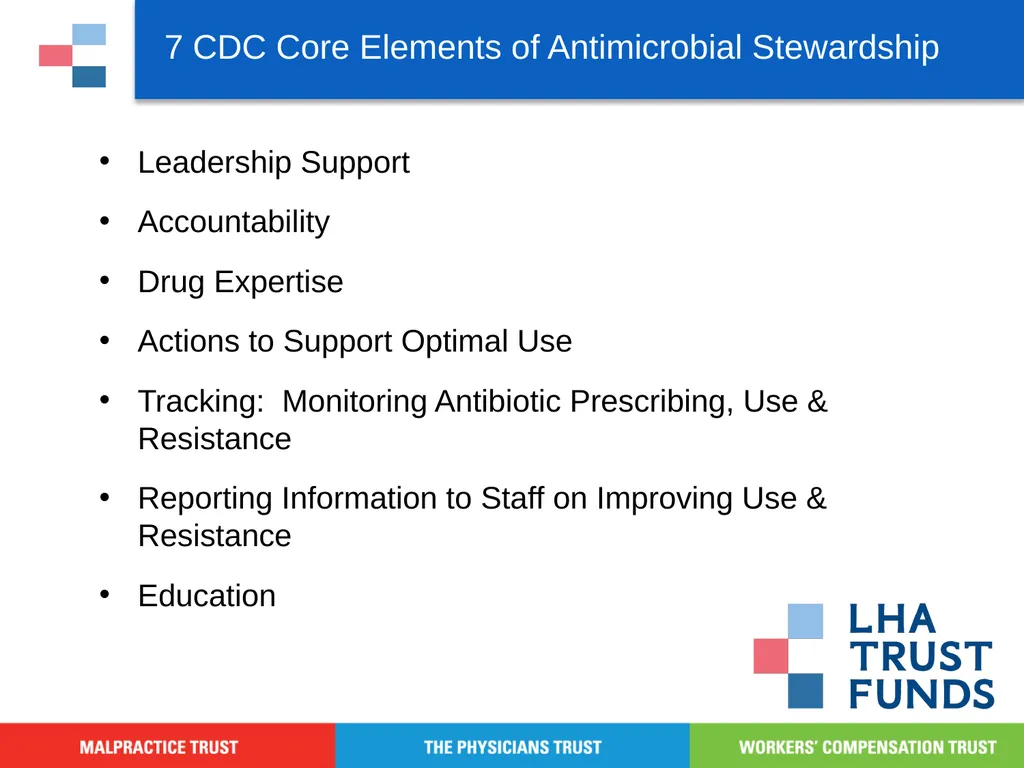
7 CDC Core Elements of Antimicrobial Stewardship Leadership Support
Accountability
Drug Expertise
Actions to Support Optimal Use
Tracking: Monitoring Antibiotic Prescribing, Use & Resistance
Reporting Information to Staff on Improving Use & Resistance
Education<br>
23
The CDC 7 Core Elements… Serve as a framework for successful hospital antibiotic stewardship programs.
Success is dependent upon defined leadership commitment and a coordinated multidisciplinary approach.<br>
24
The Goal of Antibiotic Stewardship To maximize the benefit of antibiotic treatment while minimizing harm both to individual persons and to communities.<br>
25
Be Part of the Team<br>
26
Educate Yourself and Be Aware As part of the TEAM, be aware of the best practices, even if you are not a prescriber.
It is important to understand appropriate use of antibiotics in order to educate and be an advocate for your patients.<br>
27
Know WHY You Are Administering the Drug Know WHY the antibiotic is being given - what condition it is being used to treat.
Antibiotic orders should be written with a DOSE, DURATION, and an INDICATION. If they are not, find out the plan for the medication.
Nurses who understand WHY are in a better position to inquire about changing or discontinuing therapy that might be inappropriate.<br>
28
Encourage Re-evaluation of Antibiotic Therapy Antibiotics are usually initiated prior to a clear clinical picture being known.
Antibiotic therapy should be re-evaluated every 2-3 days.<br>
29
TIME-OUT Take a “time-out” when the microbiology result are in to ask yourself:
Can we change to drug with a more narrow spectrum?
Can we change from parenteral to oral?
Do we need to discontinue antibiotics if an infection is not present?<br>
30
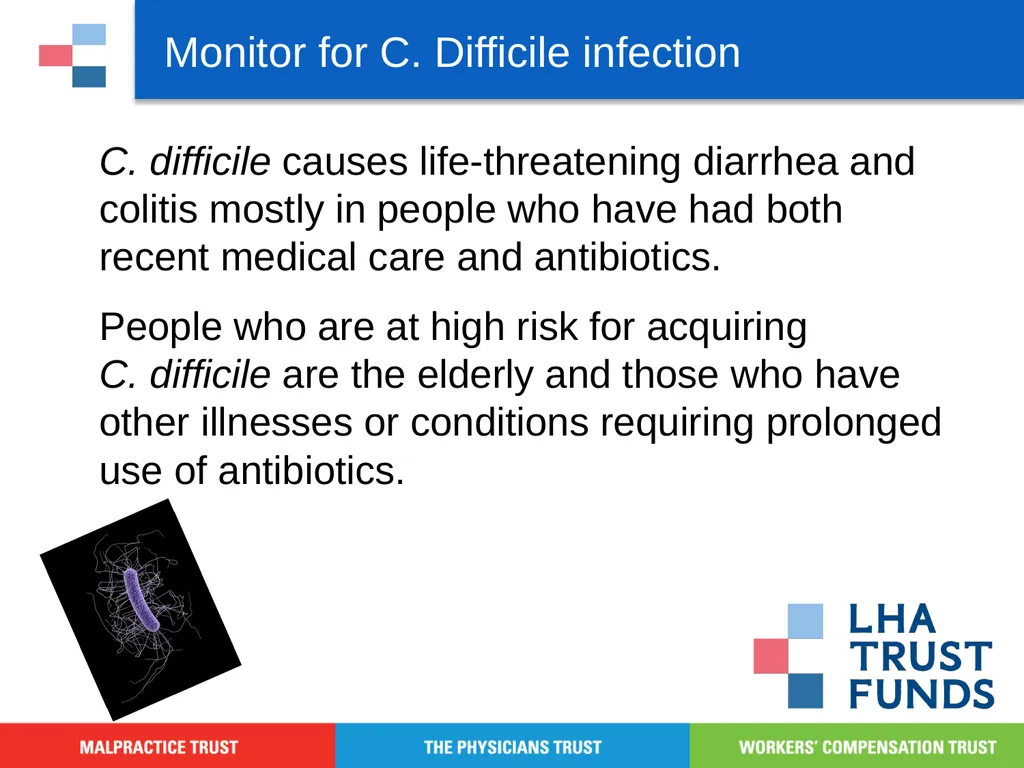
Monitor for C. Difficile infection C. difficile causes life-threatening diarrhea and colitis mostly in people who have had both recent medical care and antibiotics.
People who are at high risk for acquiring C. difficile are the elderly and those who have other illnesses or conditions requiring prolonged use of antibiotics.<br>
31
Report S/S of C. difficile to Physicians Symptoms include:
Watery diarrhea (at least three bowel movements per day for two or more days)
Fever
Loss of appetite
Nausea
Abdominal pain/tenderness<br>
32
Reconcile antibiotics across continuum of care Upon reconciling medications, when a change in the level of care occurs, reconcile the antibiotics to ensure that they are still necessary and appropriate.<br>
33
Nurses and Antibiotic Stewardship Active engagement from front line nursing staff is crucial to a successful antibiotic stewardship program. Your facility needs you to be involved.<br>
34
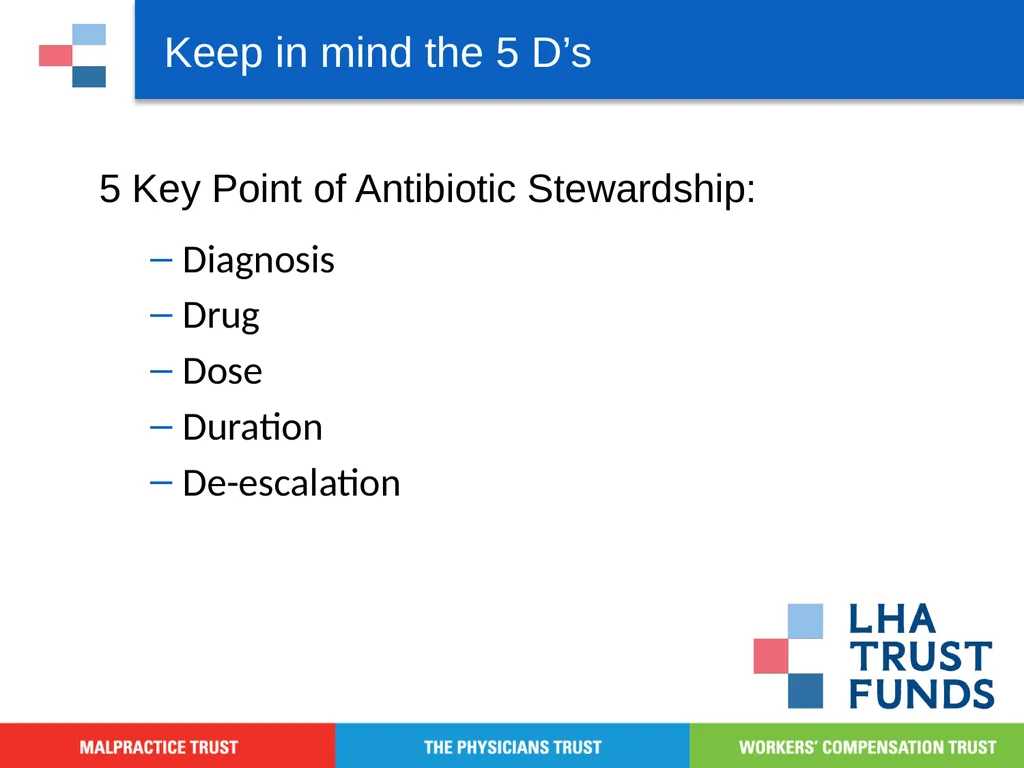
Keep in mind the 5 D’s 5 Key Point of Antibiotic Stewardship:
Diagnosis
Drug
Dose
Duration
De-escalation<br>
35
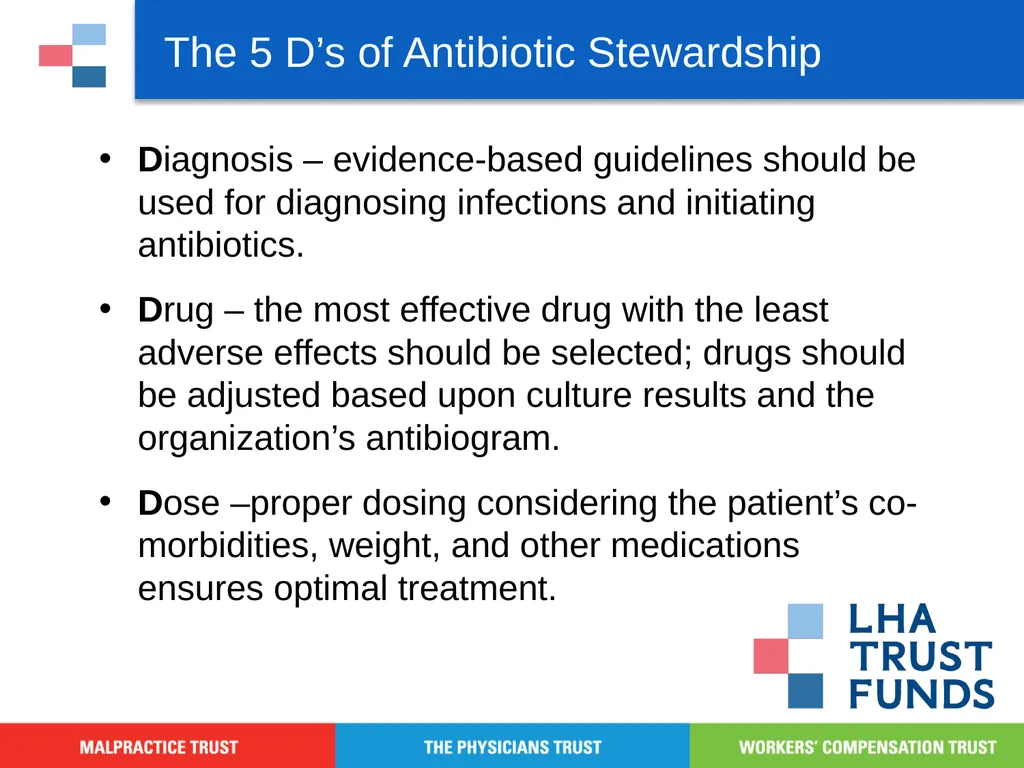
The 5 D’s of Antibiotic Stewardship Diagnosis – evidence-based guidelines should be used for diagnosing infections and initiating antibiotics.
Drug – the most effective drug with the least adverse effects should be selected; drugs should be adjusted based upon culture results and the organization’s antibiogram.
Dose –proper dosing considering the patient’s co-morbidities, weight, and other medications ensures optimal treatment.<br>
36
The 5 D’s of Antibiotic Stewardship Duration – time on an antibiotic should be based upon the current evidence-based guidelines for treatment of the infection.
De-escalation – the narrowest spectrum drug with clinical efficacy should be used; drug therapy and patient response should be reviewed every 48 hours.<br>
37
Patient Education Should Be Consistent Communicate with your leaders and know what message to send to patients.
Everyone needs to be conveying and reinforcing the same message regarding antibiotics.<br>
38
Points for Patient Education Antibiotics are not always the right answer.
Antibiotics are for bacterial infections not viral infections and will not alleviate viral symptoms.
Some infections might improve without antibiotics.
The reason an antibiotics is being use and how to properly take it to ensure the drug has the best opportunity to cure the infection.<br>
39
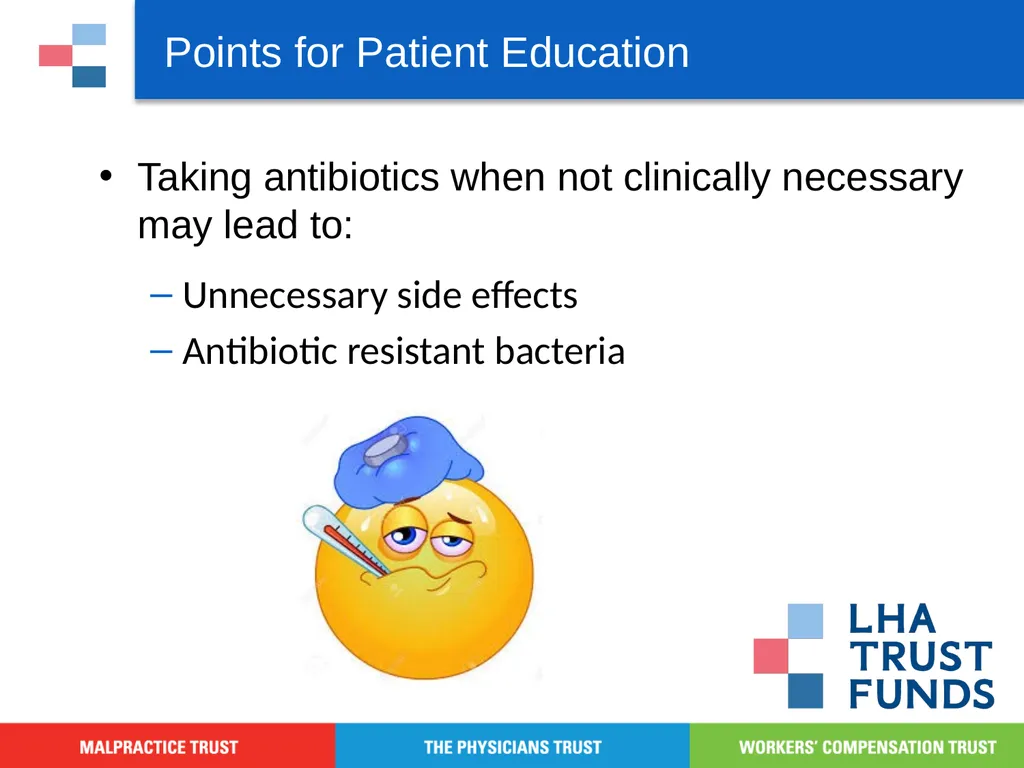
Points for Patient Education Taking antibiotics when not clinically necessary may lead to:
Unnecessary side effects
Antibiotic resistant bacteria<br>
40
Points for Patient Education Signs and symptoms of possible adverse reaction. (Include s/s of C. difficile)
What to do if they suspect they are having an adverse reaction from an antibiotic.<br>