Anticipating failure in order to prevent it Pre-mortem The Optimism Bias 80 of people over-estimate the amount of good that will happen to them and under-estimate the amount of bad things that will happen to them. Fact 1 : Human beings
"Anticipating failure in order to prevent it" is the property of its rightful owner. Permission is granted to
download and print the materials on this website for personal, non-commercial use only, and to display it
on your personal computer provided you do not modify the materials and that you retain all copyright
notices contained in the materials. By downloading content from our website, you accept the terms of this
agreement.
Presentation Transcript
01
Anticipating failure in order to prevent it Pre-mortem<br>
02
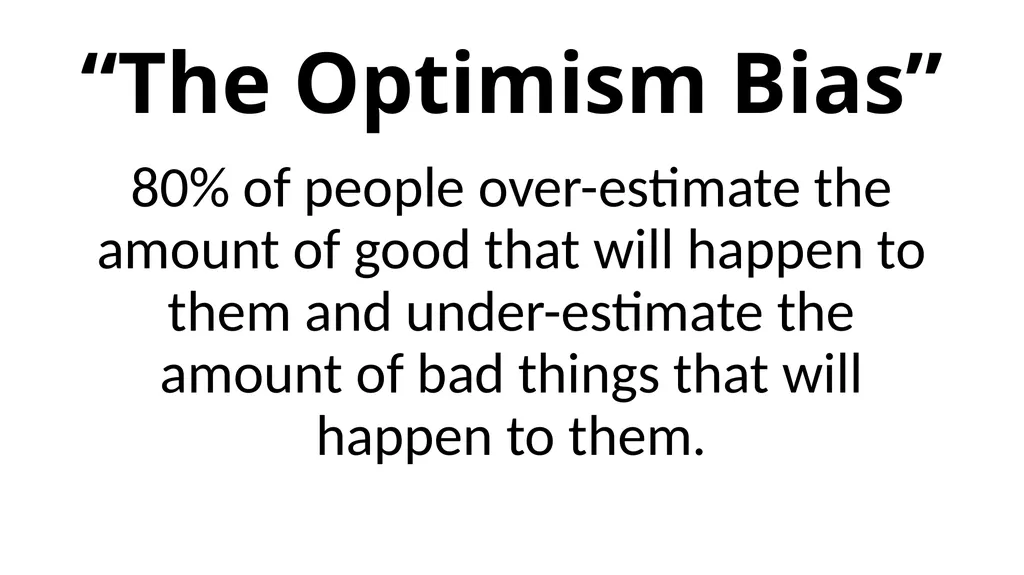
“The Optimism Bias” 80% of people over-estimate the amount of good that will happen to them and under-estimate the amount of bad things that will happen to them.<br>
03
Fact 1 : Human beings love to predict the future. Fact 2: Human beings are not very good at predicting the future. Reason for bad prediction – Dogmatism (the tendency to lay down principles as undeniably true, without consideration of evidence or the opinions of others).
Reason for good predictions – Capacity for self-criticism and willingness to ask “What would it take to convince me that I’m wrong”<br>
04
“Every battle is won before it’s ever fought” Sun Tzu<br>
05
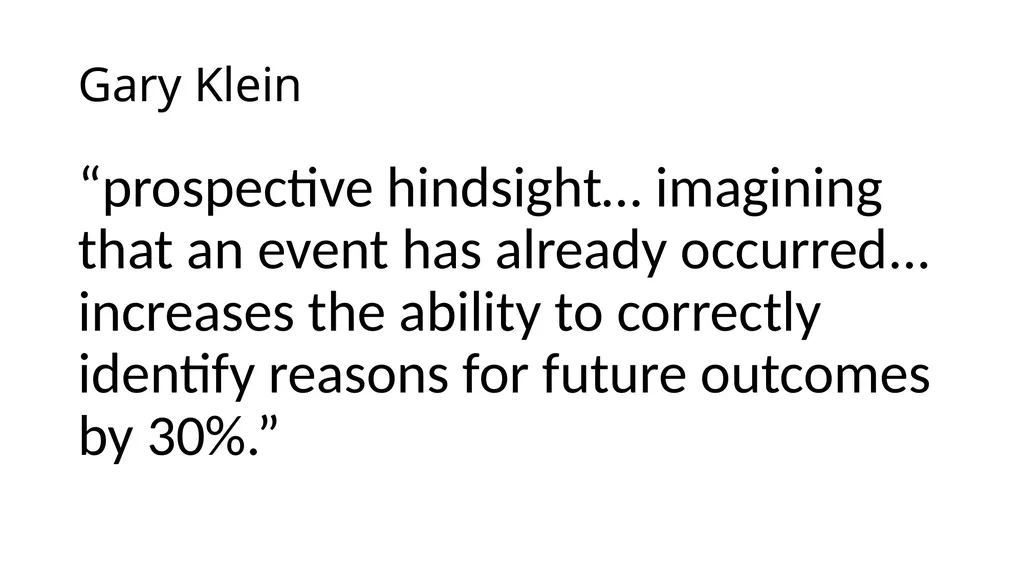
Gary Klein “prospective hindsight… imagining that an event has already occurred... increases the ability to correctly identify reasons for future outcomes by 30%.”<br>
06
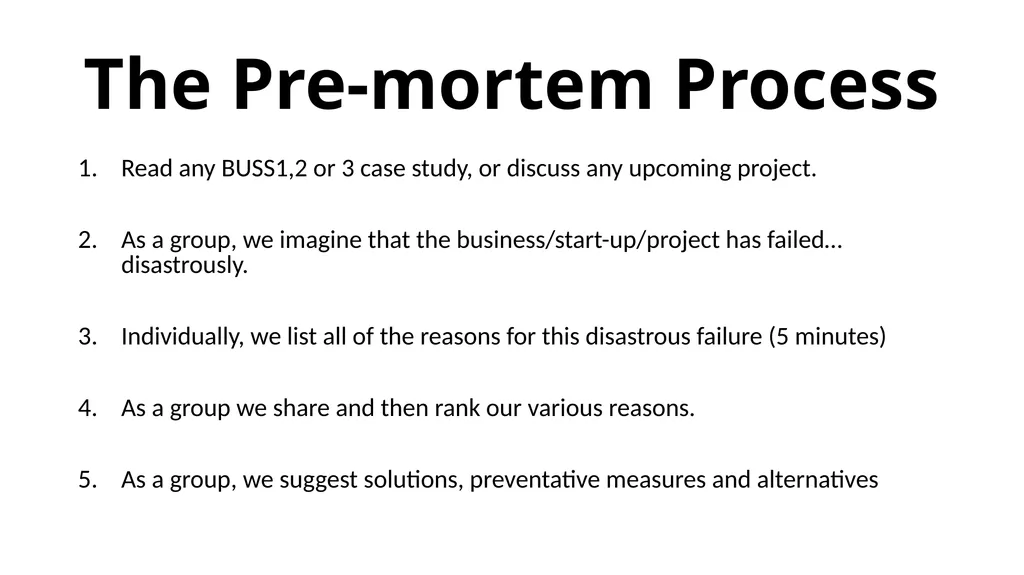
The Pre-mortem Process Read any BUSS1,2 or 3 case study, or discuss any upcoming project.
As a group, we imagine that the business/start-up/project has failed… disastrously.
Individually, we list all of the reasons for this disastrous failure (5 minutes)
As a group we share and then rank our various reasons.
As a group, we suggest solutions, preventative measures and alternatives<br>
07
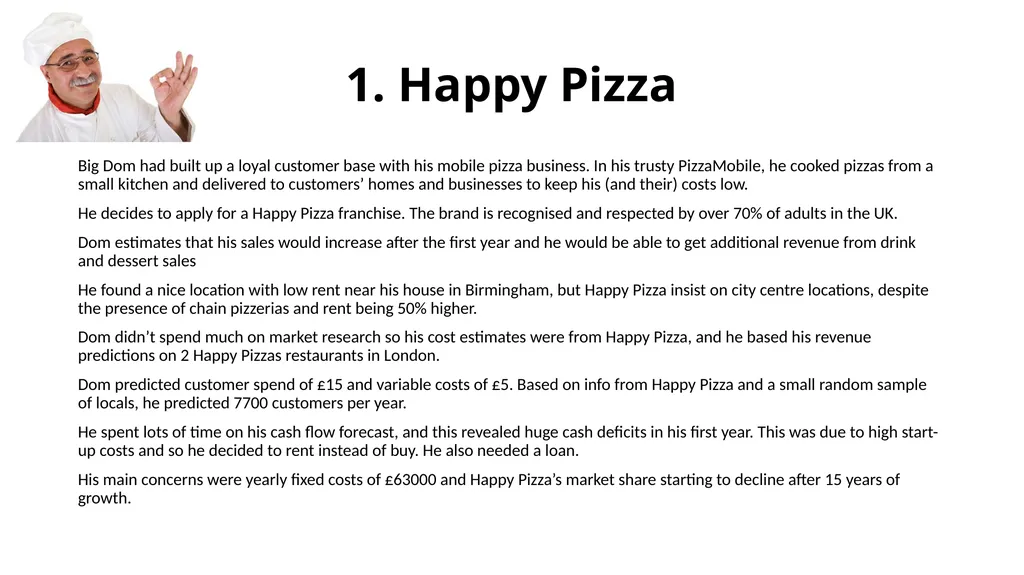
1. Happy Pizza Big Dom had built up a loyal customer base with his mobile pizza business. In his trusty PizzaMobile, he cooked pizzas from a small kitchen and delivered to customers’ homes and businesses to keep his (and their) costs low.
He decides to apply for a Happy Pizza franchise. The brand is recognised and respected by over 70% of adults in the UK.
Dom estimates that his sales would increase after the first year and he would be able to get additional revenue from drink and dessert sales
He found a nice location with low rent near his house in Birmingham, but Happy Pizza insist on city centre locations, despite the presence of chain pizzerias and rent being 50% higher.
Dom didn’t spend much on market research so his cost estimates were from Happy Pizza, and he based his revenue predictions on 2 Happy Pizzas restaurants in London.
Dom predicted customer spend of £15 and variable costs of £5. Based on info from Happy Pizza and a small random sample of locals, he predicted 7700 customers per year.
He spent lots of time on his cash flow forecast, and this revealed huge cash deficits in his first year. This was due to high start-up costs and so he decided to rent instead of buy. He also needed a loan.
His main concerns were yearly fixed costs of £63000 and Happy Pizza’s market share starting to decline after 15 years of growth.<br>
08
2. Look into the future and imagine that the business has failed disastrously. What are the reasons for this?<br>
09
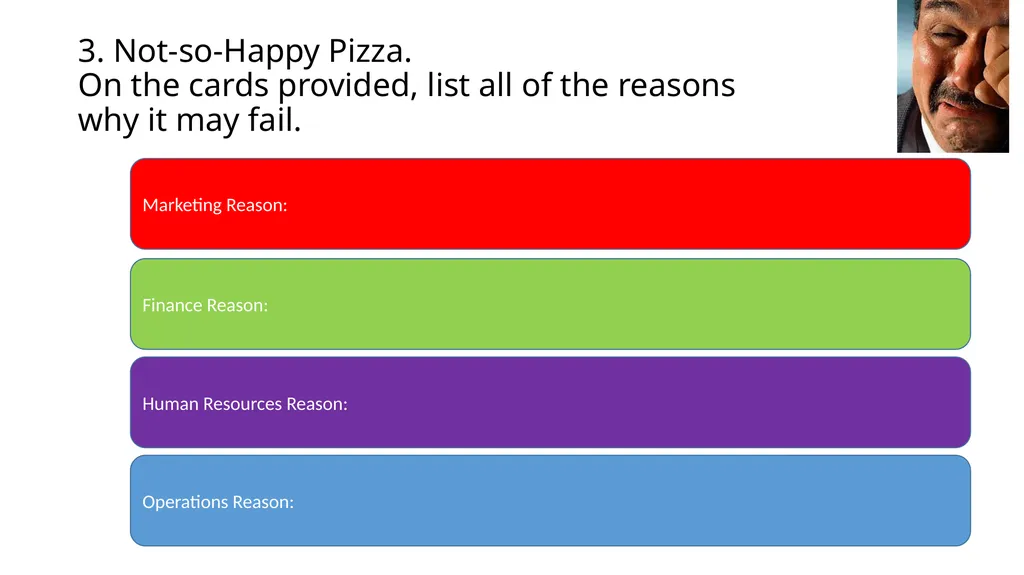
3. Not-so-Happy Pizza. On the cards provided, list all of the reasons why it may fail. Marketing Reason: Finance Reason: Human Resources Reason: Operations Reason:<br>
10
4. Do your reasons match with Mr (who ever is delivering the lesson)’s? 1 mark for each Which are the most important from each functional area? Marketing
Loyal customer didn’t frequent the city centre restaurant?
Little market research
“Respected by 70% of adults” according to who?
Happy Pizza market share continued to decline
Strong competition from big chains
Due to decline market share, less demand for Dom’s restaurant Human Resources
There is no mentioned of Dom ever having employed or managed anyone before
Dom doesn’t seem to have budgeted for training costs Operations
Quality of staff and food may not have been up to standard
Over predicted demand therefore low capacity utilisation
Customers not happy with the service and switch to competitors Finance
Lots of “estimates”
Why does he estimate that revenue will increase?
High rents
Revenue estimates based on London restaurants
Break even of 6300 customers, prediction too optimistic
Cash deficit
Interest rates on loans<br>
11
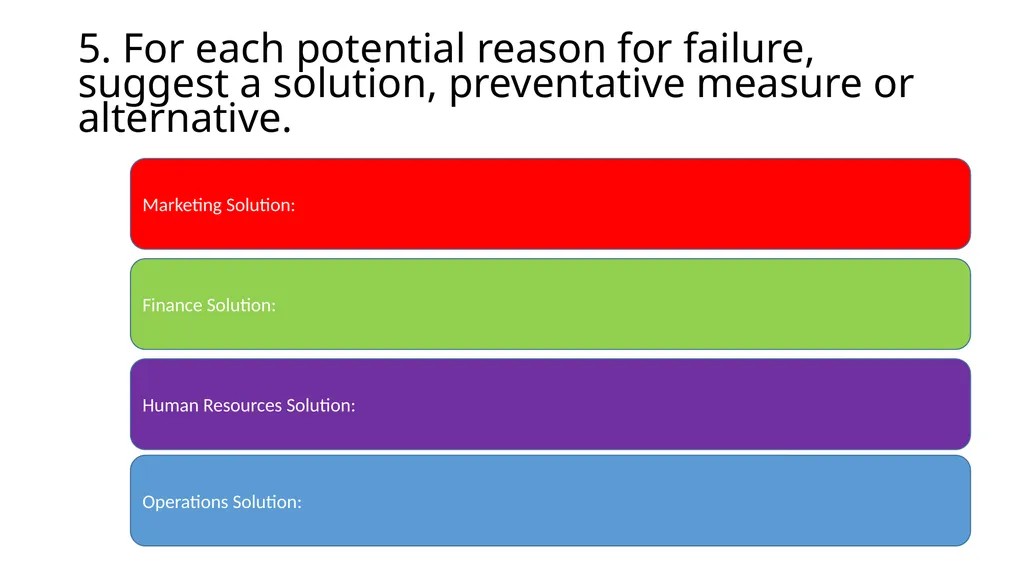
5. For each potential reason for failure, suggest a solution, preventative measure or alternative. Marketing Solution: Finance Solution: Human Resources Solution: Operations Solution:<br>
12
What are the priorities for Dom? What should he do first and why?<br>