04
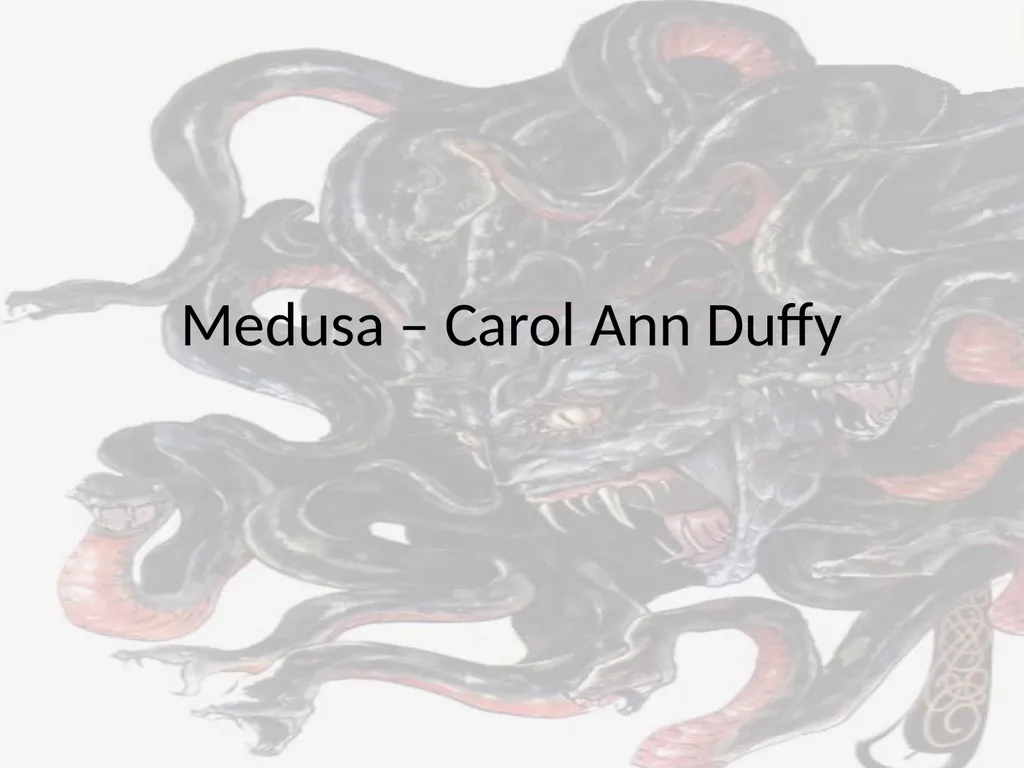
Medusa
A suspicion, a doubt, a jealousy
grew in my mind,
which turned the hairs on my head to filthy snakes,
as though my thoughts
hissed and spat on my scalp.
My bride’s breath soured, stank
in the grey bags of my lungs.
I’m foul mouthed now, foul tongued,
yellow fanged.
There are bullet tears in my eyes.
Are you terrified?
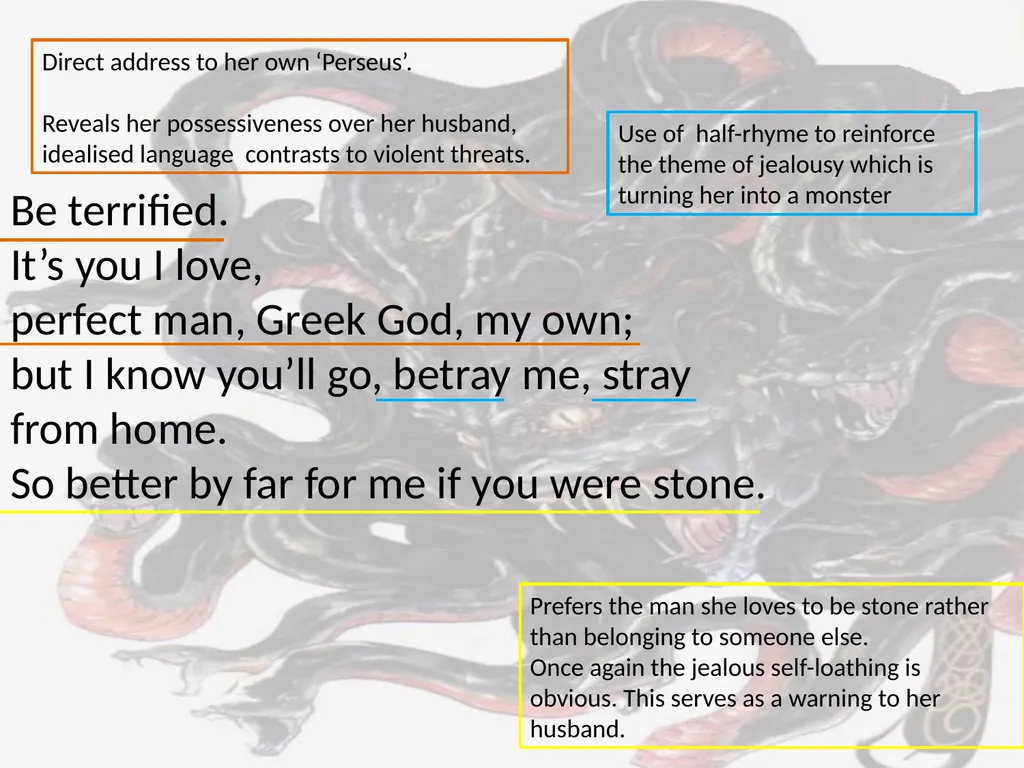
Be terrified.
It’s you I love,
perfect man, Greek God, my own;
but I know you’ll go, betray me, stray
from home.
So better by far for me if you were stone.
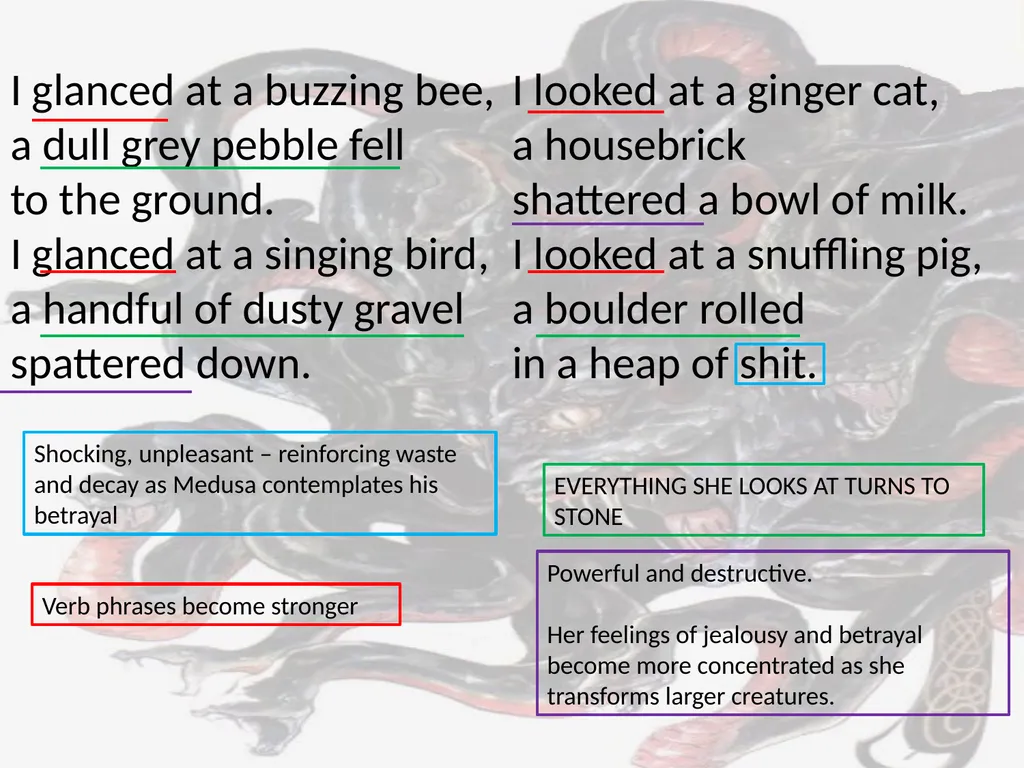
I glanced at a buzzing bee,
a dull grey pebble fell
to the ground.
I glanced at a singing bird,
a handful of dusty gravel
spattered down.
I looked at a ginger cat,
a housebrick
shattered a bowl of milk.
I looked at a snuffling pig,
a boulder rolled
in a heap of shit.
I stared in the mirror.
Love gone bad
showed me a Gorgon.
I stared at a dragon.
Fire spewed
from the mouth of a mountain.
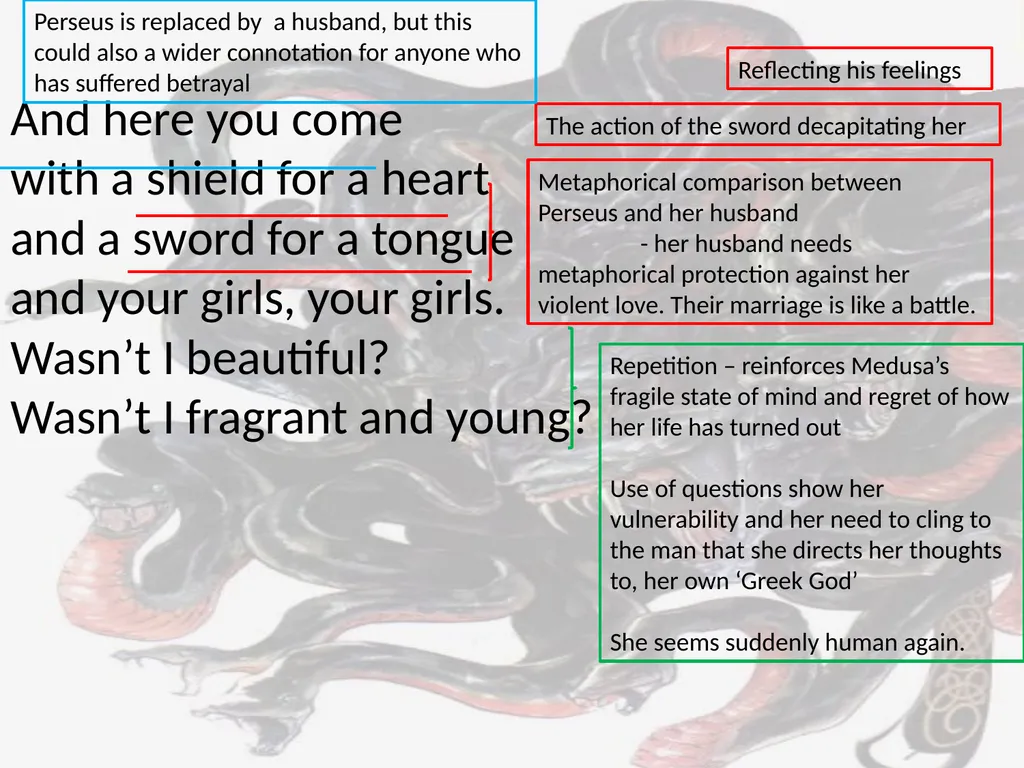
And here you come
with a shield for a heart
and a sword for a tongue
and your girls, your girls.
Wasn’t I beautiful?
Wasn’t I fragrant and young?
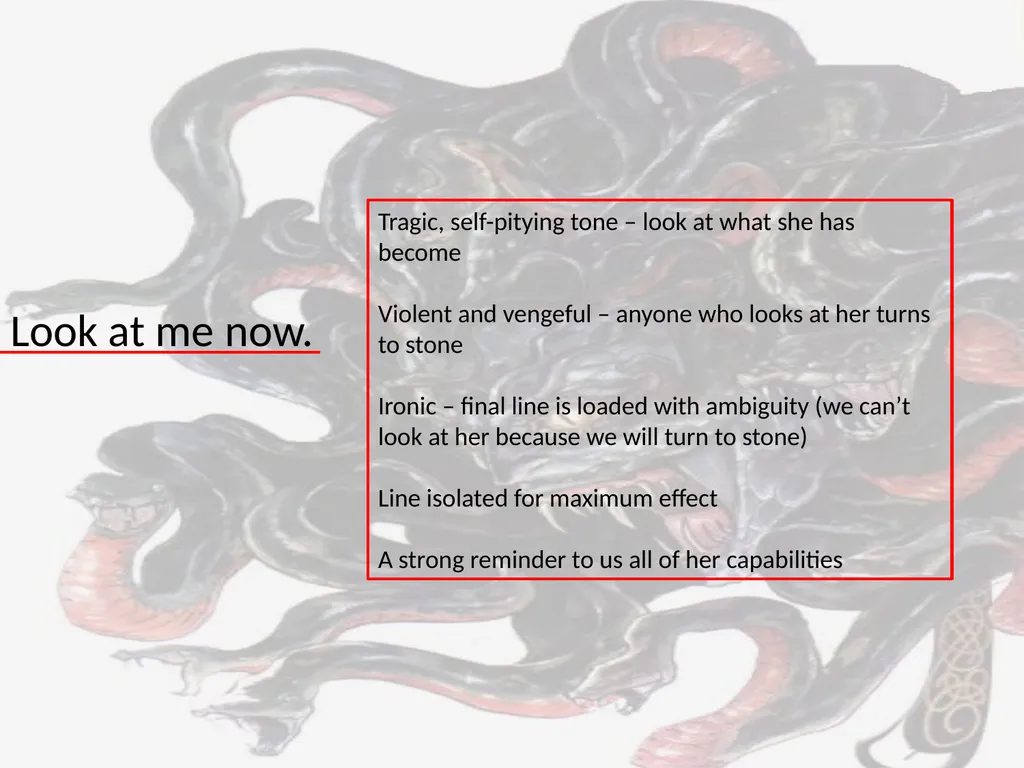
Look at me now.
CAROL ANN DUFFY<br>
05
Recapping the Poem In Duffy’s poem, the character, our modern day Medusa, is scared that her husband will betray her. As a result of how she feels, Medusa develops the power to turn any living thing she looks at into stone.<br>
06
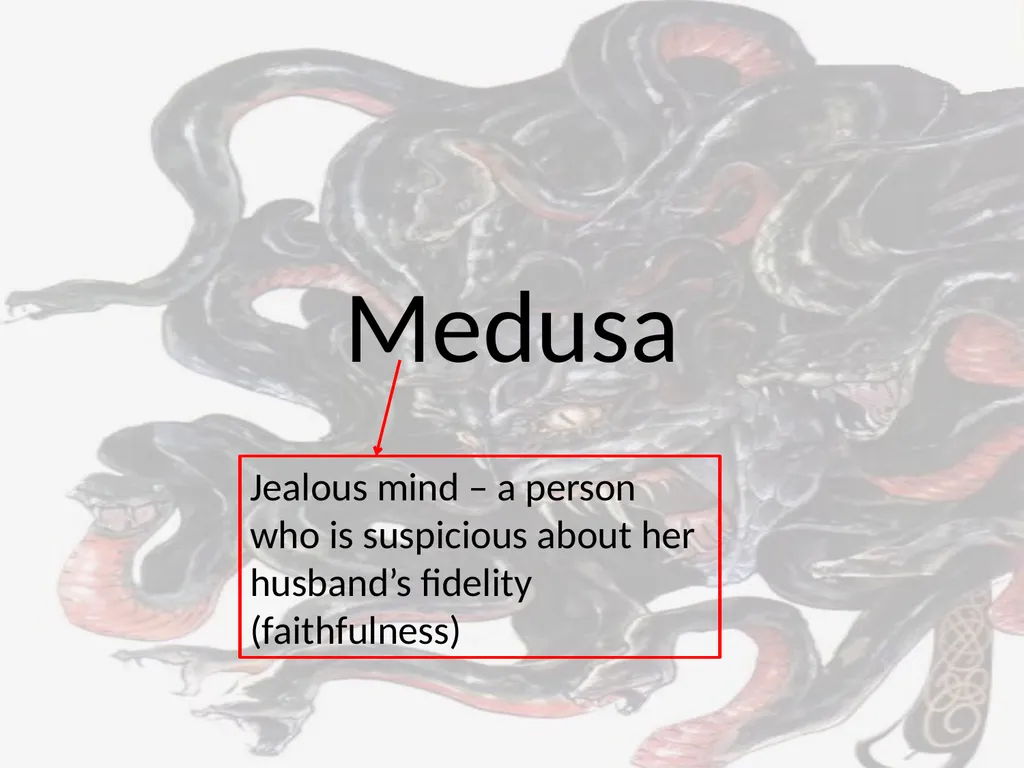
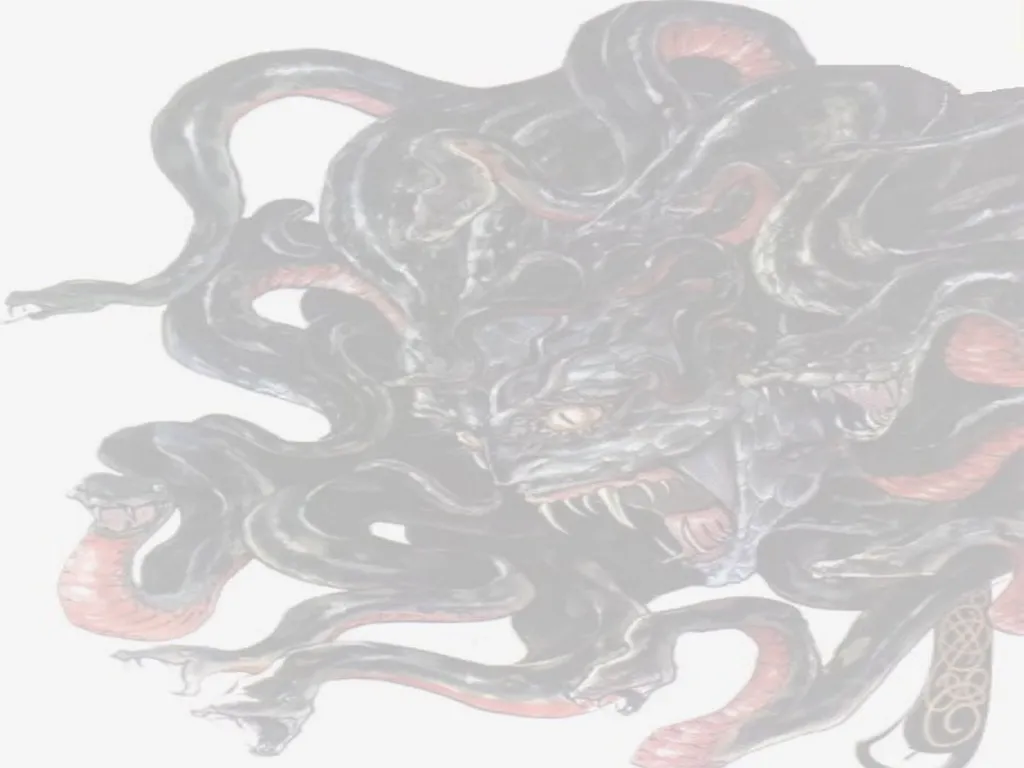
The dramatic monologue offers an unusual perspective on the Gorgon Medusa, who is typified for the terror she causes through her ugliness and her foetid breath (sickening smell).
Duffy’s poem allows her, Medusa, a chance to tell her story.
Duffy wants us to consider a different view, to see her as a woman who fearing betrayal (lead astray, deceive a person’s trust) has developed the terrible physical characteristics of the mythological Greek character ‘Medusa’.<br>
07
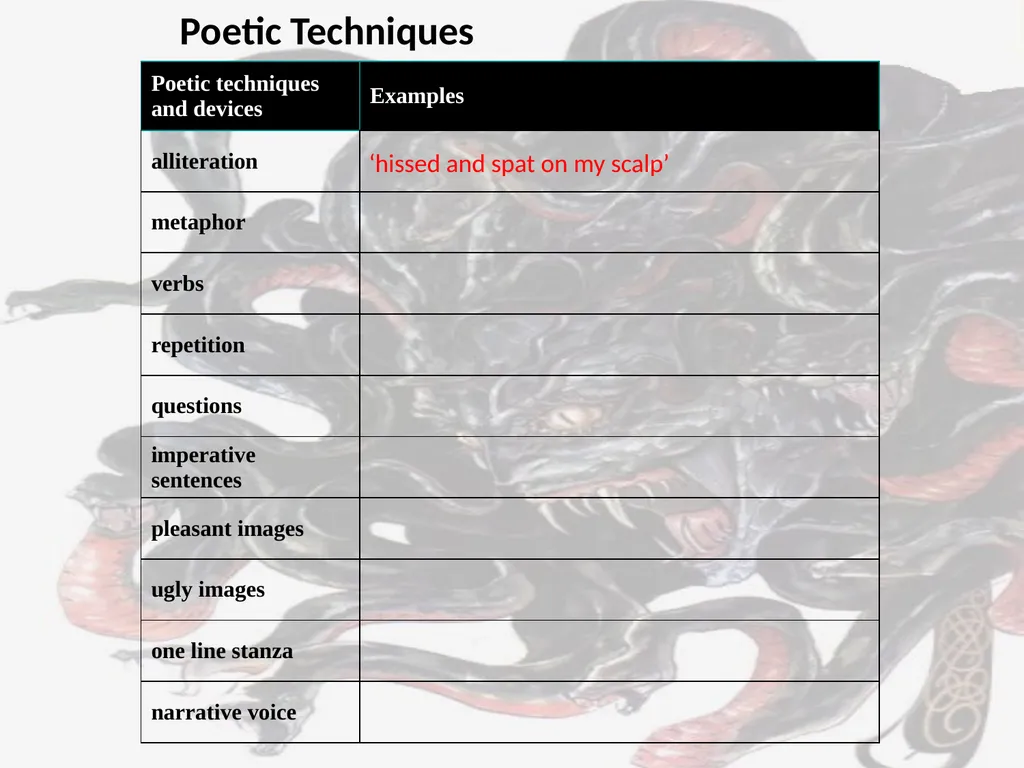
Poetic Techniques ‘hissed and spat on my scalp’<br>
08
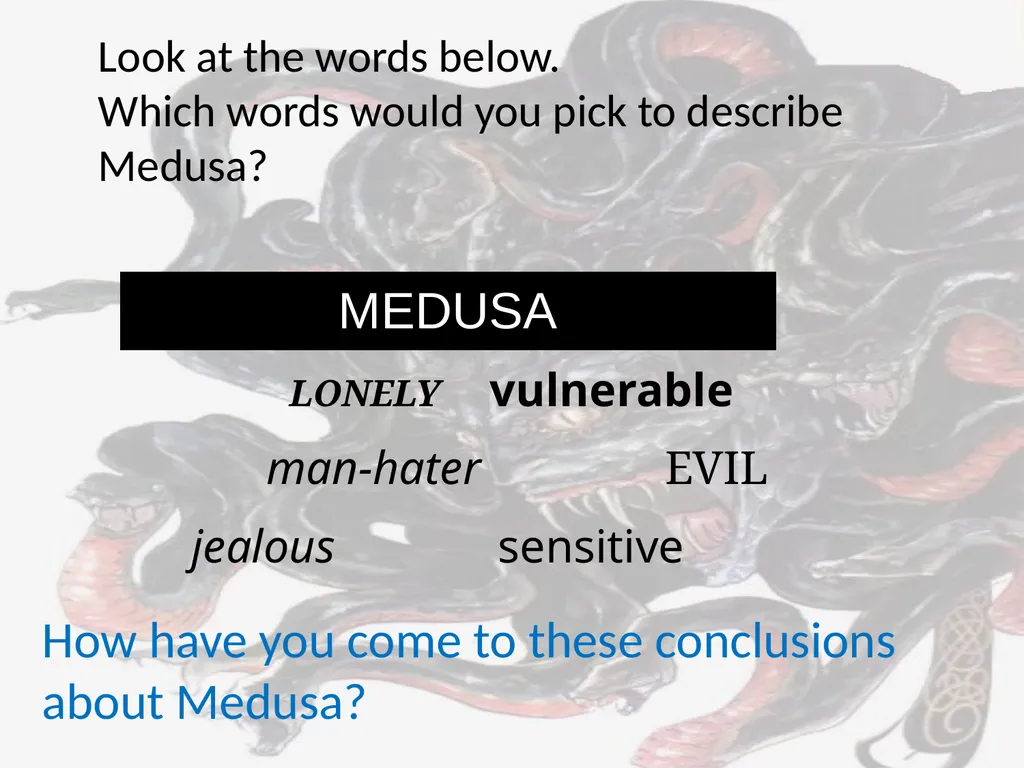
Look at the words below.
Which words would you pick to describe Medusa? How have you come to these conclusions about Medusa?<br>
09
Task In small groups work through the series of questions to help your understanding and interpretation of Duffy’s poem ‘Medusa’?<br>
11
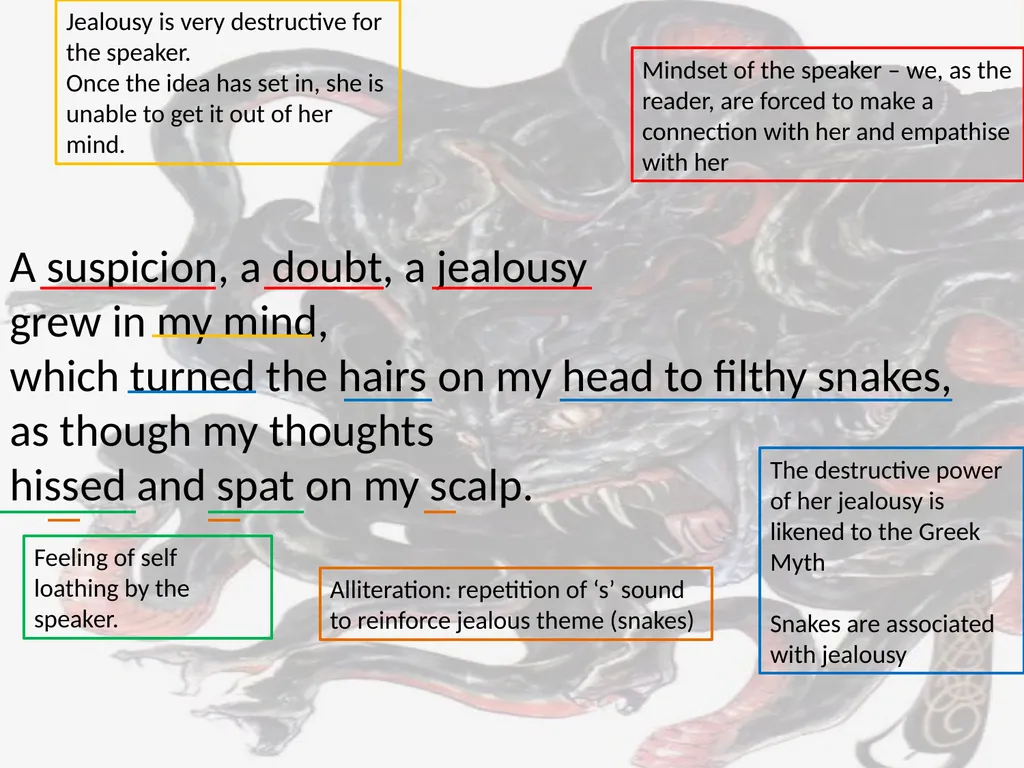
A suspicion, a doubt, a jealousy
grew in my mind,
which turned the hairs on my head to filthy snakes,
as though my thoughts
hissed and spat on my scalp.<br>
12
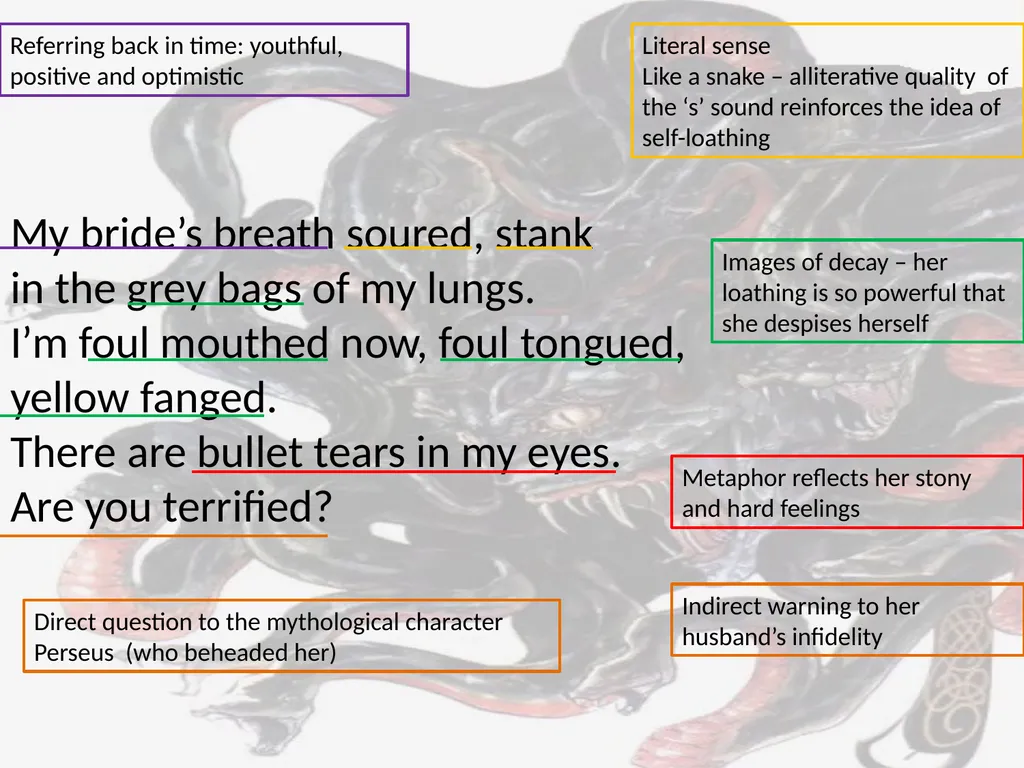
My bride’s breath soured, stank�in the grey bags of my lungs.�I’m foul mouthed now, foul tongued,�yellow fanged.�There are bullet tears in my eyes.�Are you terrified? Indirect warning to her husband’s infidelity<br>
13
Be terrified.�It’s you I love,�perfect man, Greek God, my own;�but I know you’ll go, betray me, stray�from home.�So better by far for me if you were stone.<br>
14
I glanced at a buzzing bee,�a dull grey pebble fell�to the ground.�I glanced at a singing bird,�a handful of dusty gravel�spattered down.� �����I looked at a ginger cat,�a housebrick�shattered a bowl of milk.�I looked at a snuffling pig,�a boulder rolled�in a heap of shit.<br>
15
I stared in the mirror.�Love gone bad�showed me a Gorgon.�I stared at a dragon.�Fire spewed�from the mouth of a mountain. She is the only one who can endure her gaze<br>
16
And here you come�with a shield for a heart�and a sword for a tongue�and your girls, your girls.�Wasn’t I beautiful?�Wasn’t I fragrant and young?<br>
18
Structure Form: The poem is a dramatic monologue from the point of view of the jealous wife.
Structure: The narrator’s anger builds up throughout the poem as a result of the extended metaphor of Medusa’s violent killings.
Free verse structure and use of enjambment to reinforce the dramatic monologue form of Medusa’s fragile state of mind, revealing the voice of a rambling unselfconscious Medusa.
The tone changes in the final stanza as the narrator seems suddenly insecure, perhaps because she wants her husband to choose her over the other woman.<br>
19
Language Violent Imagery: The narrator seems to take pleasure in imagining violence in the poem. This highlights her anger and seems shocking because it is expressed in such an extreme, destructive way.
Language of Vision: The ambiguous language of a young romance and the concept of lovers staring into each other’s eyes is contrasted with the destructive power of jealousy presented as Medusa’s stare.
Language is a colloquial(everyday) conversational tone.<br>
20
What is your overall impression of the poem?
Do you feel sympathy for Medusa? Why or why not?
Do you think men go through the same feelings of rejection when they grow older? Why or why not? What do you think Duffy’s overall message is? The Final Word…<br>
21
Explore how Carol Ann Duffy presents a character with strong emotional feelings.<br>
22
Comparing poems
AO3: Make comparisons and explain links between texts, evaluating writers’ different ways of expressing meaning and achieving effects<br>
23
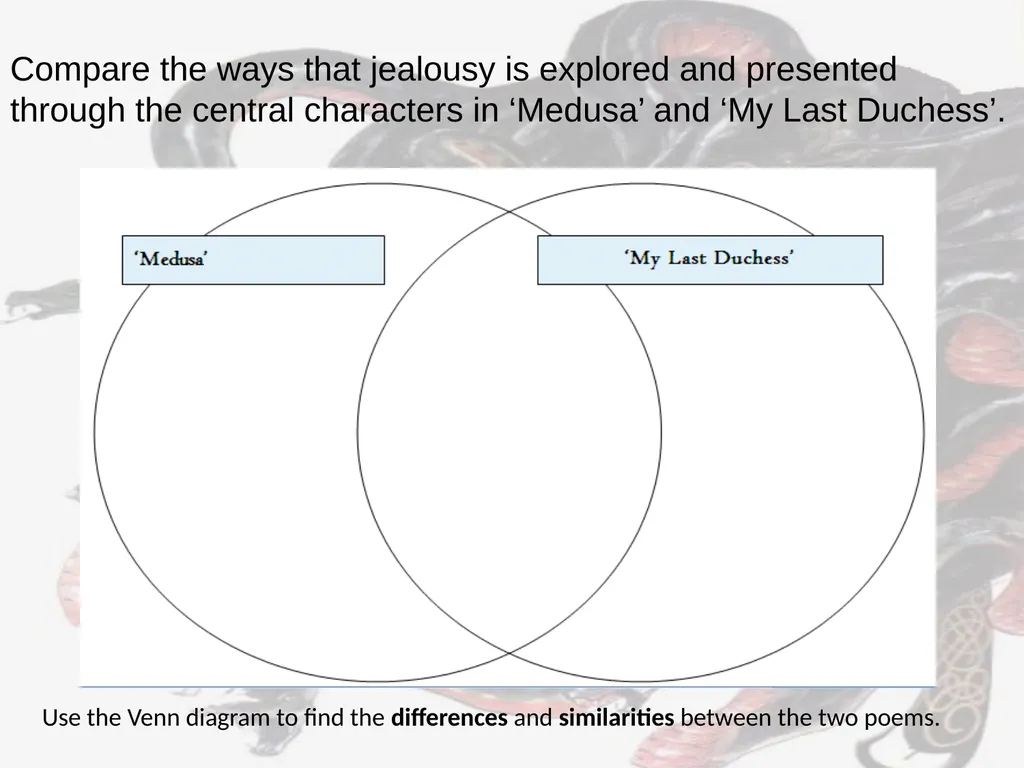
Compare the ways that jealousy is explored and presented through the central characters in ‘Medusa’ and ‘My Last Duchess’. Use the Venn diagram to find the differences and similarities between the two poems.<br>
24
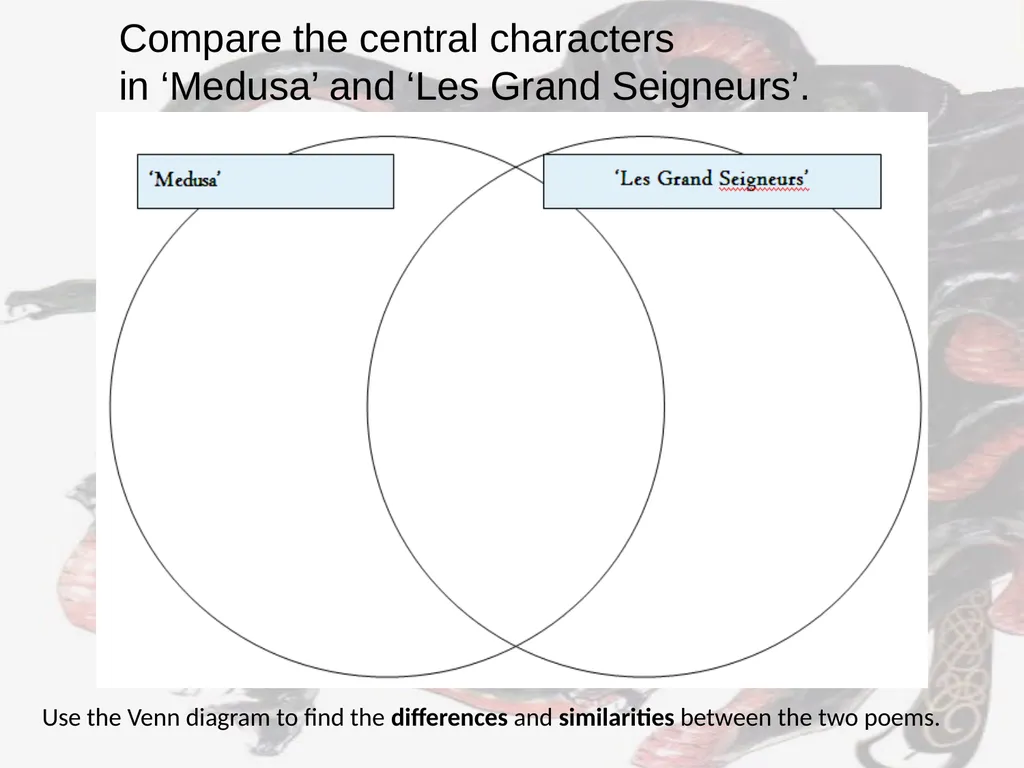
Compare the central characters
in ‘Medusa’ and ‘Les Grand Seigneurs’. Use the Venn diagram to find the differences and similarities between the two poems.<br>