
Application of Antibiotics Discs Assisst.Prof.



Description: Application of Antibiotics Discs Assisst.Prof. Asmaa Hamoody Lecturer Dr.Roua Jassium Fast facts on antibiotics Alexander Fleming discovered penicillin, the first .natural antibiotic, in 1928 .Antibiotics cannot fight viral infections
Related Topics
Download Presentation
"Application of Antibiotics Discs Assisst.Prof." is the property of its rightful owner. Permission is granted to download and print the materials on this website for personal, non-commercial use only, and to display it on your personal computer provided you do not modify the materials and that you retain all copyright notices contained in the materials. By downloading content from our website, you accept the terms of this agreement.
Presentation Transcript
slide1. Application of Antibiotics Discs Assisst.Prof. Asmaa Hamoody
Lecturer Dr.Roua Jassium<br>
slide2. Fast facts on antibiotics Alexander Fleming discovered penicillin, the first .natural antibiotic, in 1928 .Antibiotics cannot fight viral infections Fleming predicted the rise of antibiotic .resistance Antibiotics either kill or slow the growth of bacteria.<br>
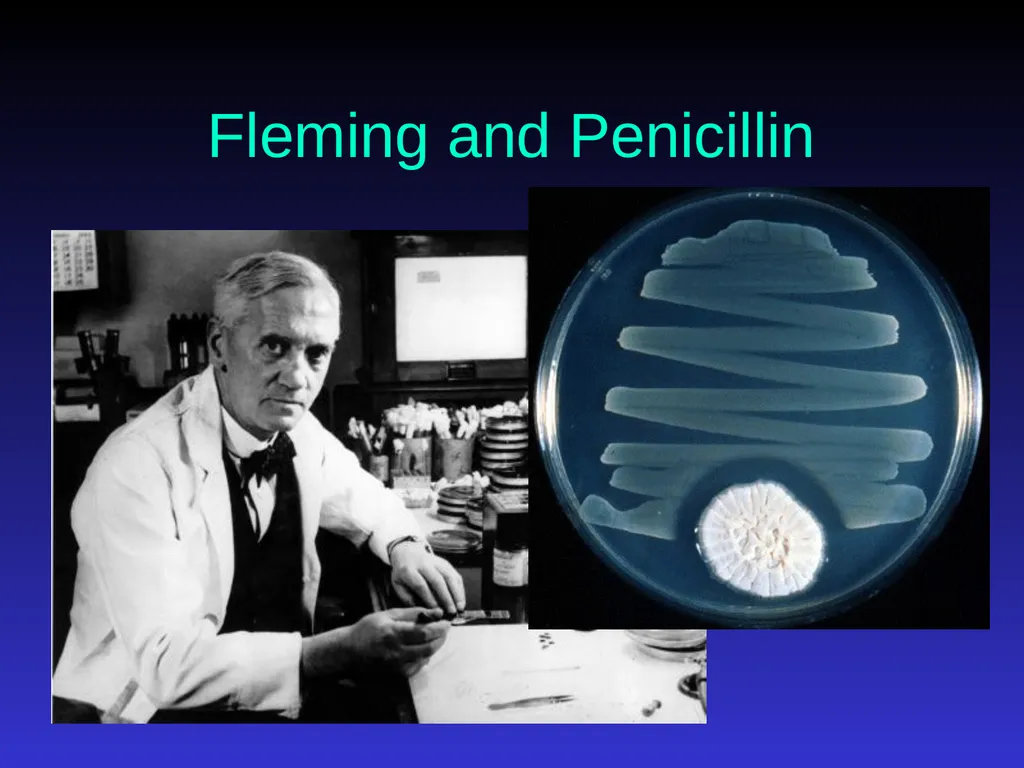
slide3. Fleming and Penicillin<br>
slide4. The first antibiotic was penicillin. Penicillin-based antibiotics, such as ampicillin, amoxicillin, and penicillin G, are still available to treat a variety of infections and have been around for a long time.<br>
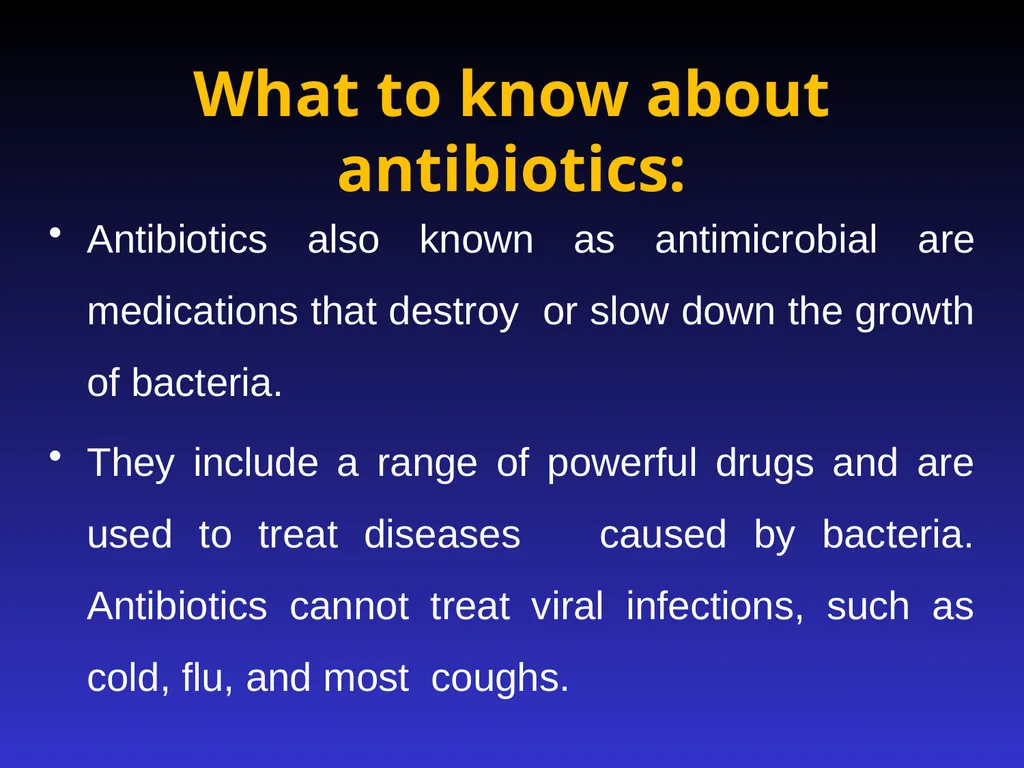
slide5. What to know about antibiotics: Antibiotics also known as antimicrobial are medications that destroy or slow down the growth of bacteria.
They include a range of powerful drugs and are used to treat diseases caused by bacteria. Antibiotics cannot treat viral infections, such as cold, flu, and most coughs.<br>
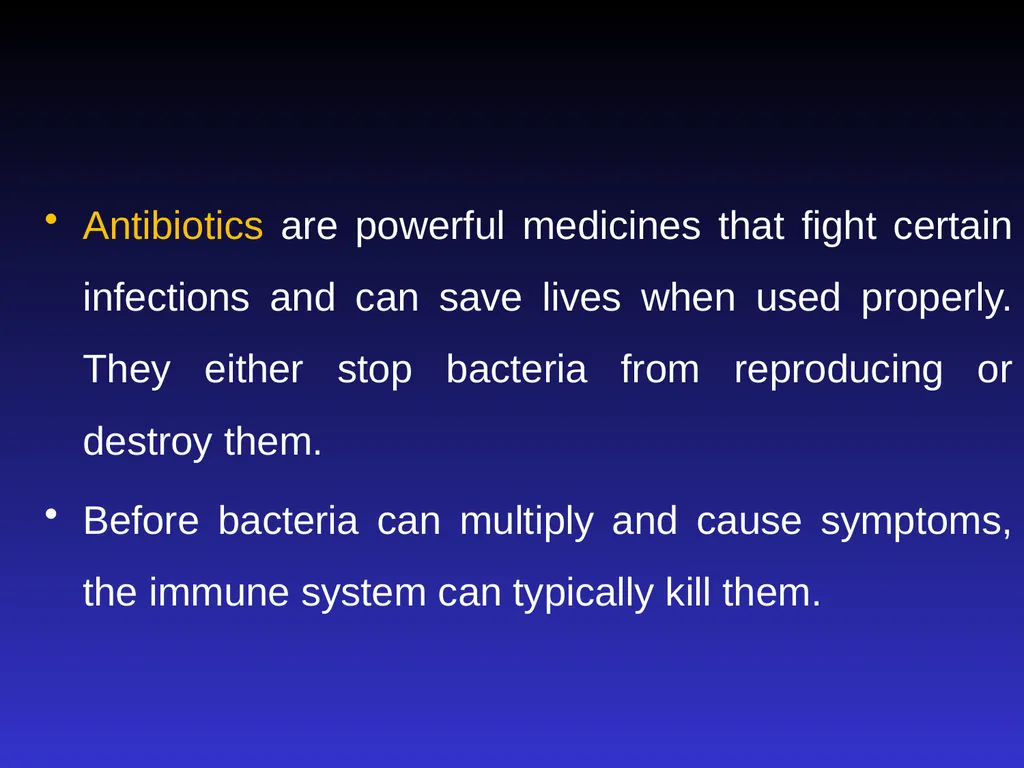
slide6. Antibiotics are powerful medicines that fight certain infections and can save lives when used properly. They either stop bacteria from reproducing or destroy them.
Before bacteria can multiply and cause symptoms, the immune system can typically kill them.<br>
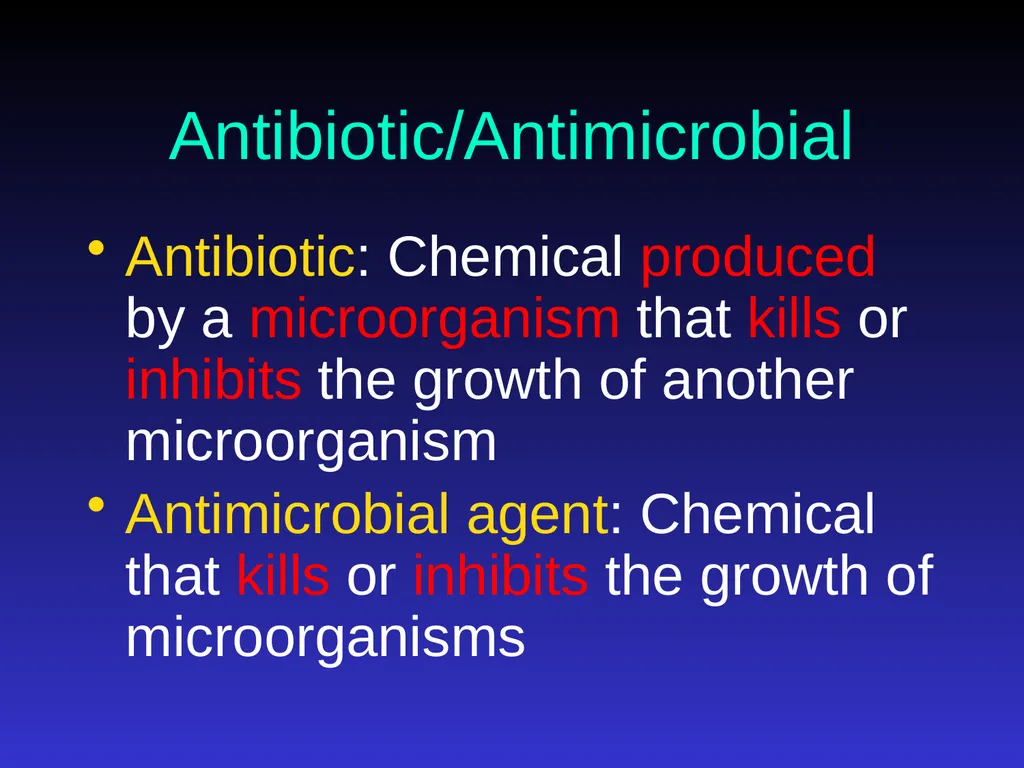
slide7. Antibiotic/Antimicrobial Antibiotic: Chemical produced by a microorganism that kills or inhibits the growth of another microorganism
Antimicrobial agent: Chemical that kills or inhibits the growth of microorganisms<br>
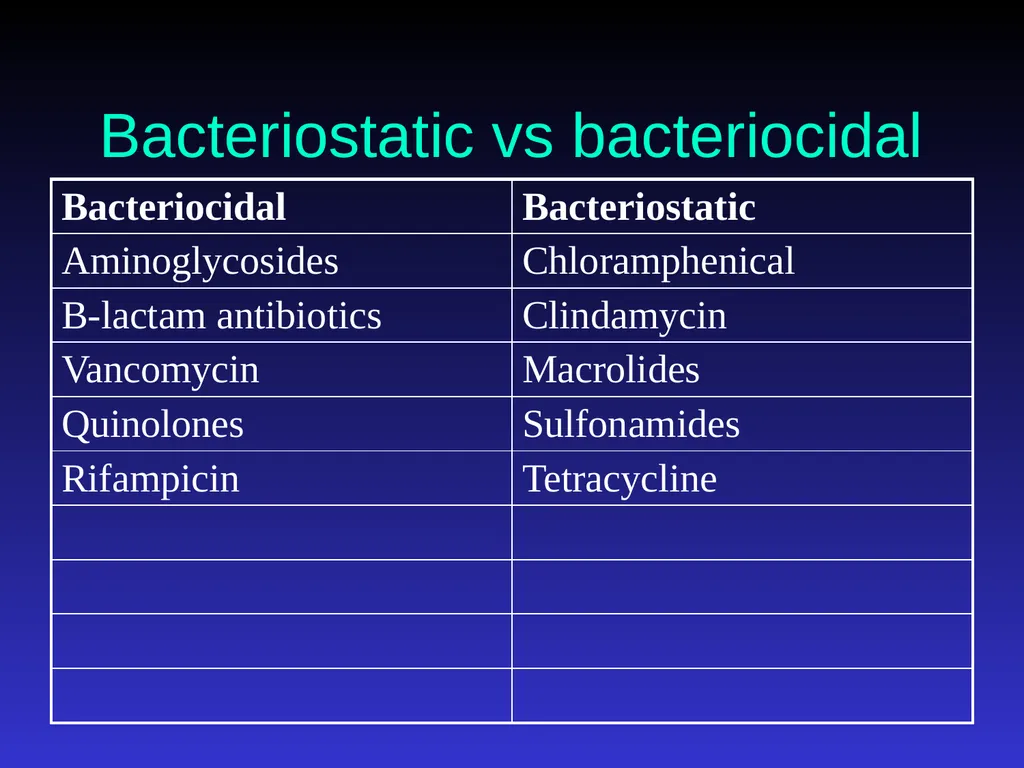
slide8. Bacteriostatic vs bacteriocidal<br>
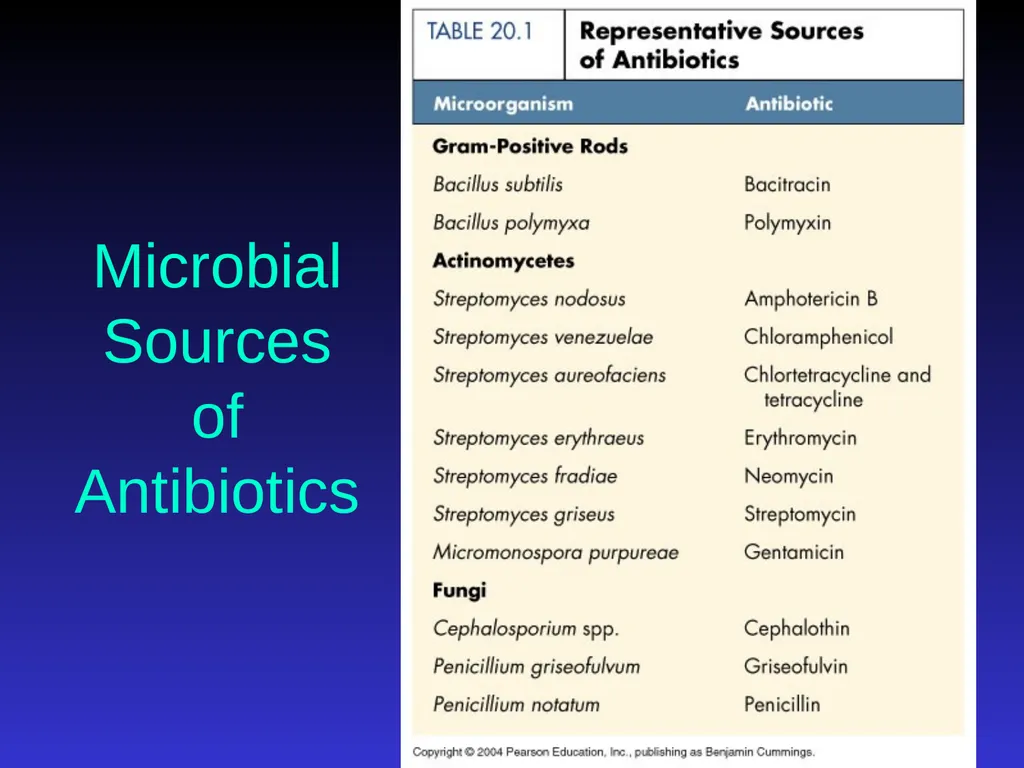
slide9. Microbial Sources of Antibiotics<br>
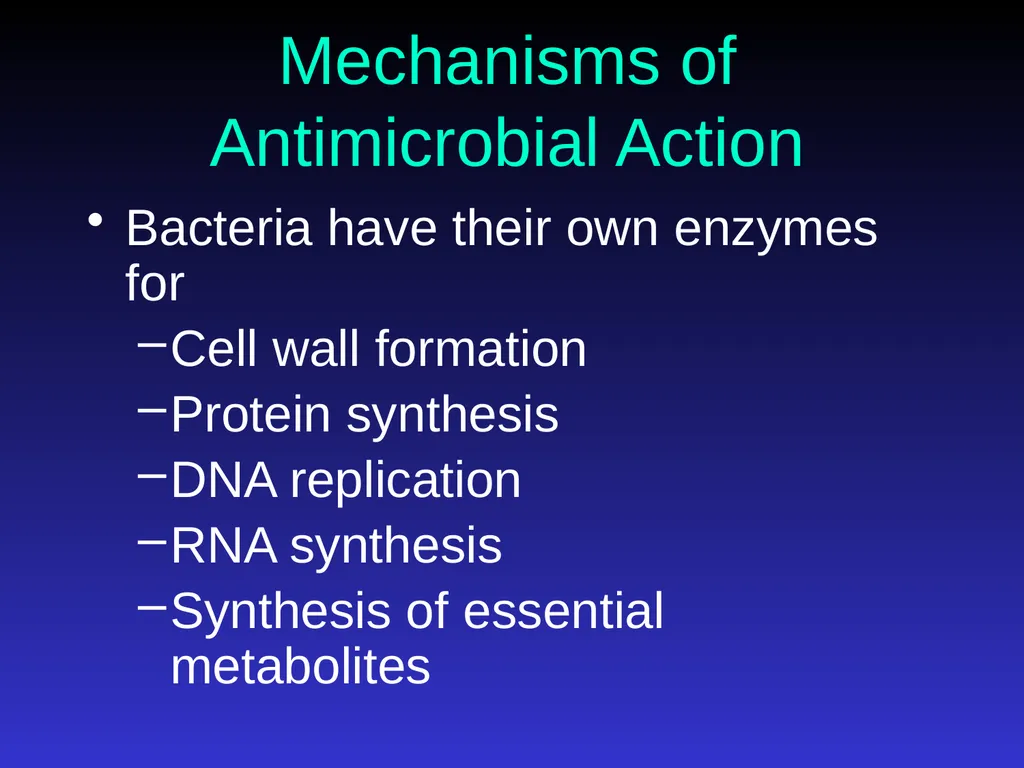
slide10. Mechanisms of Antimicrobial Action Bacteria have their own enzymes for
Cell wall formation
Protein synthesis
DNA replication
RNA synthesis
Synthesis of essential metabolites<br>
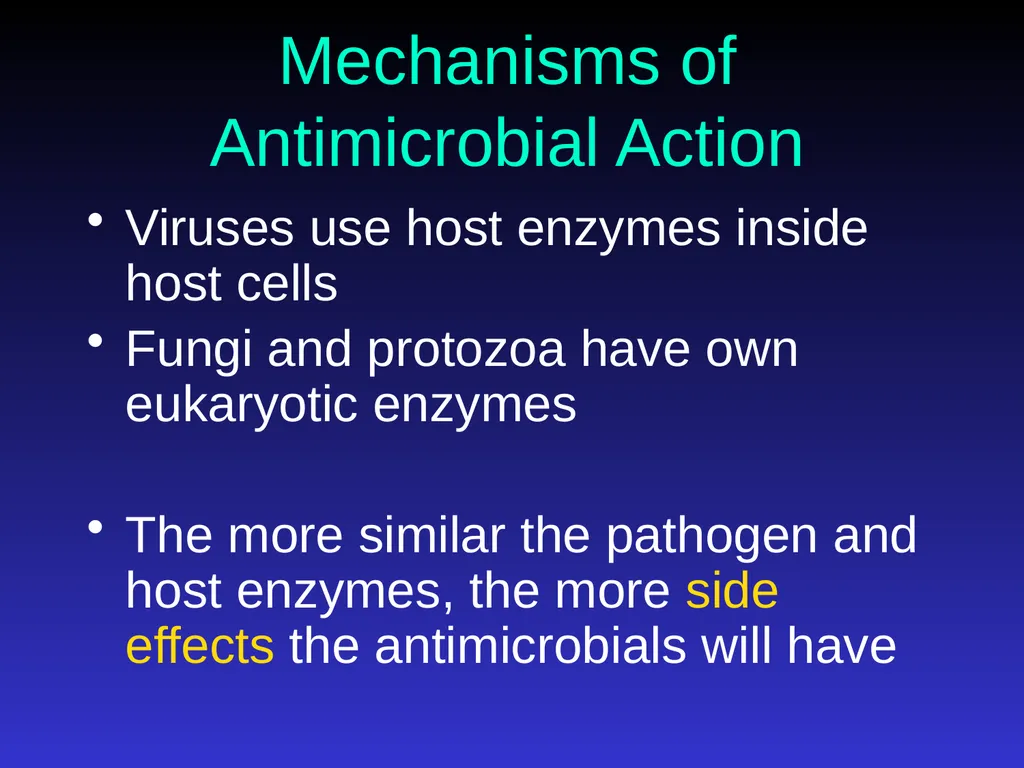
slide11. Mechanisms of Antimicrobial Action Viruses use host enzymes inside host cells
Fungi and protozoa have own eukaryotic enzymes
The more similar the pathogen and host enzymes, the more side effects the antimicrobials will have<br>
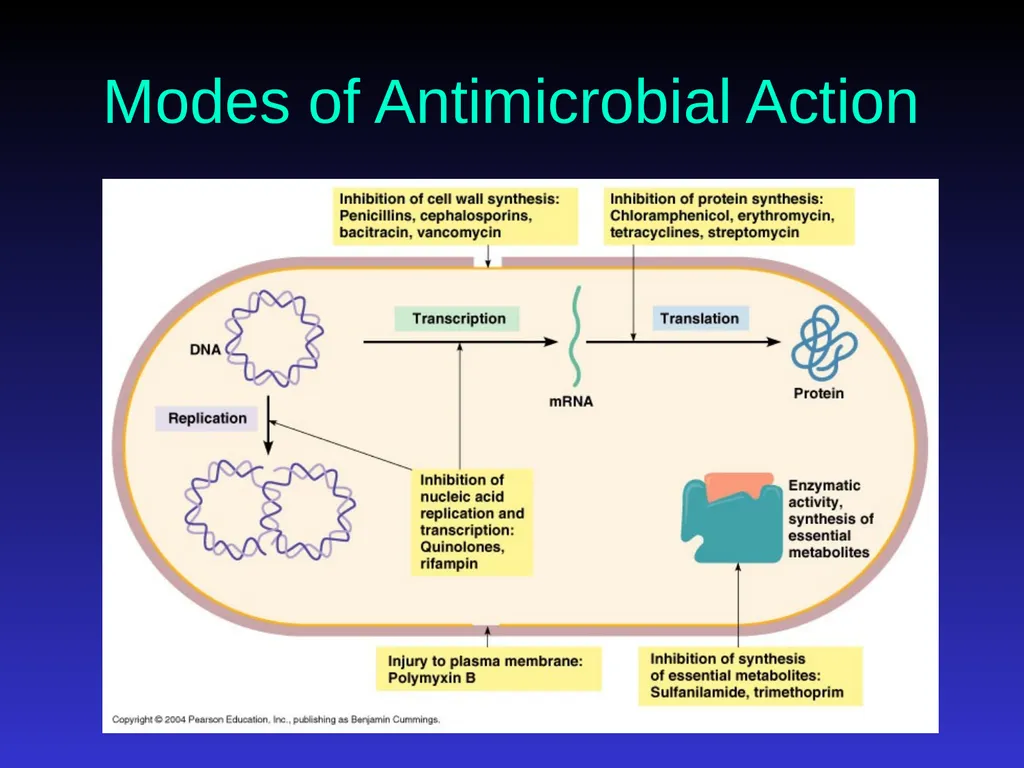
slide12. Modes of Antimicrobial Action<br>
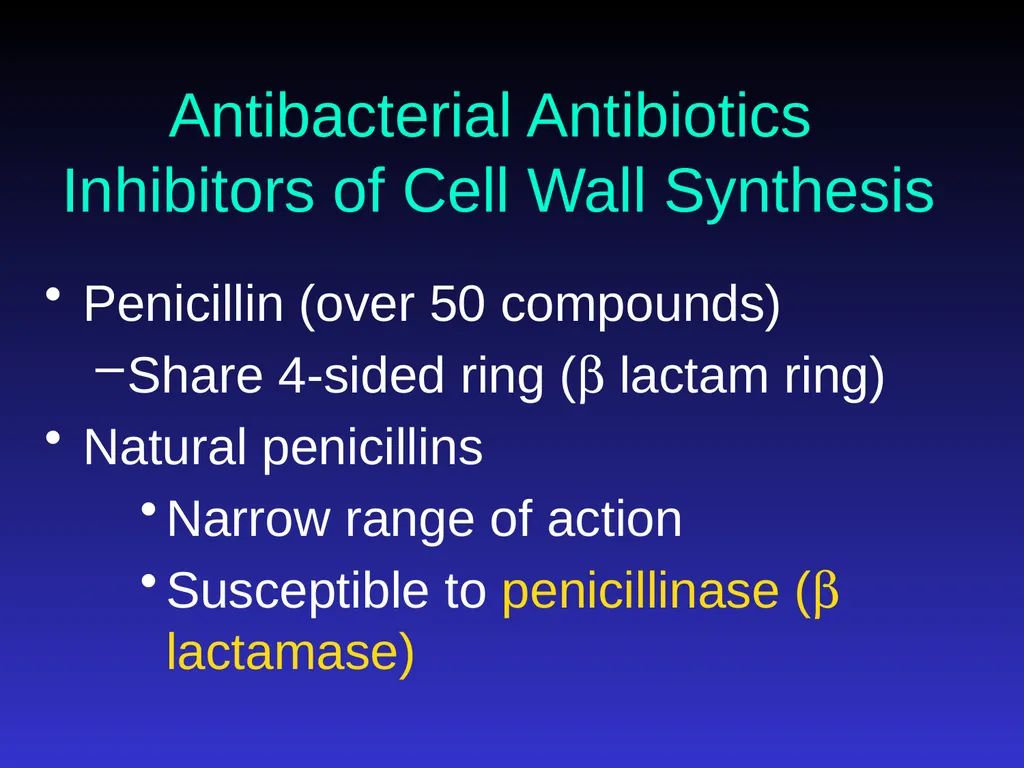
slide13. Penicillin (over 50 compounds)
Share 4-sided ring (b lactam ring)
Natural penicillins
Narrow range of action
Susceptible to penicillinase (b lactamase) Antibacterial Antibiotics Inhibitors of Cell Wall Synthesis<br>
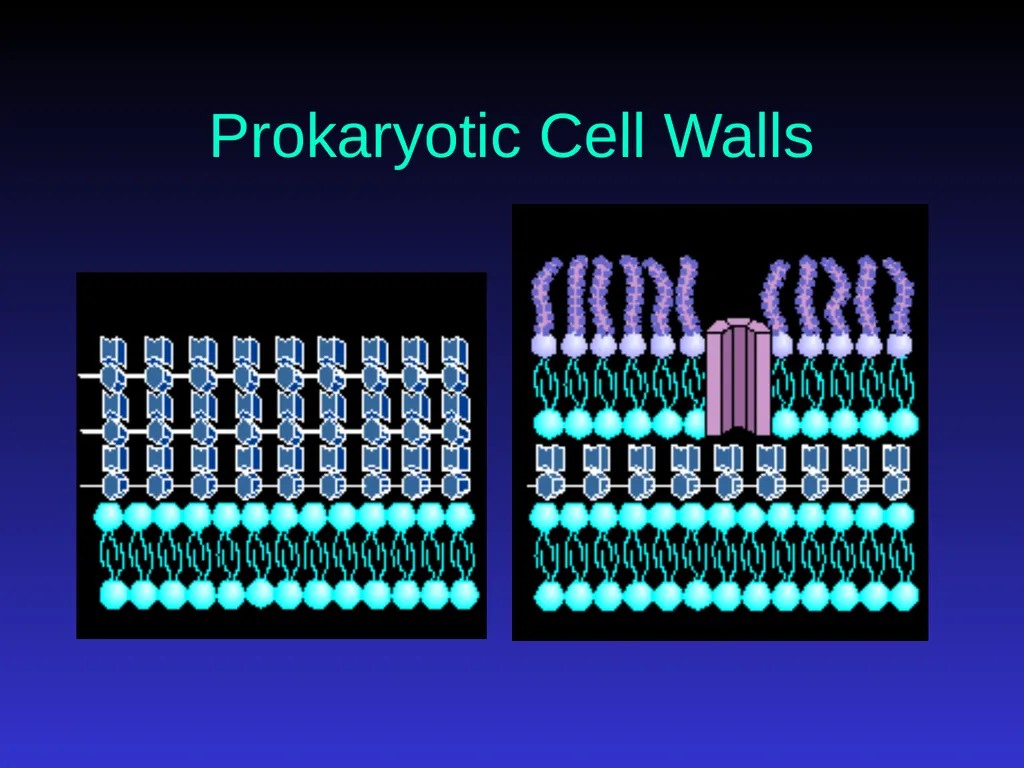
slide14. Prokaryotic Cell Walls<br>
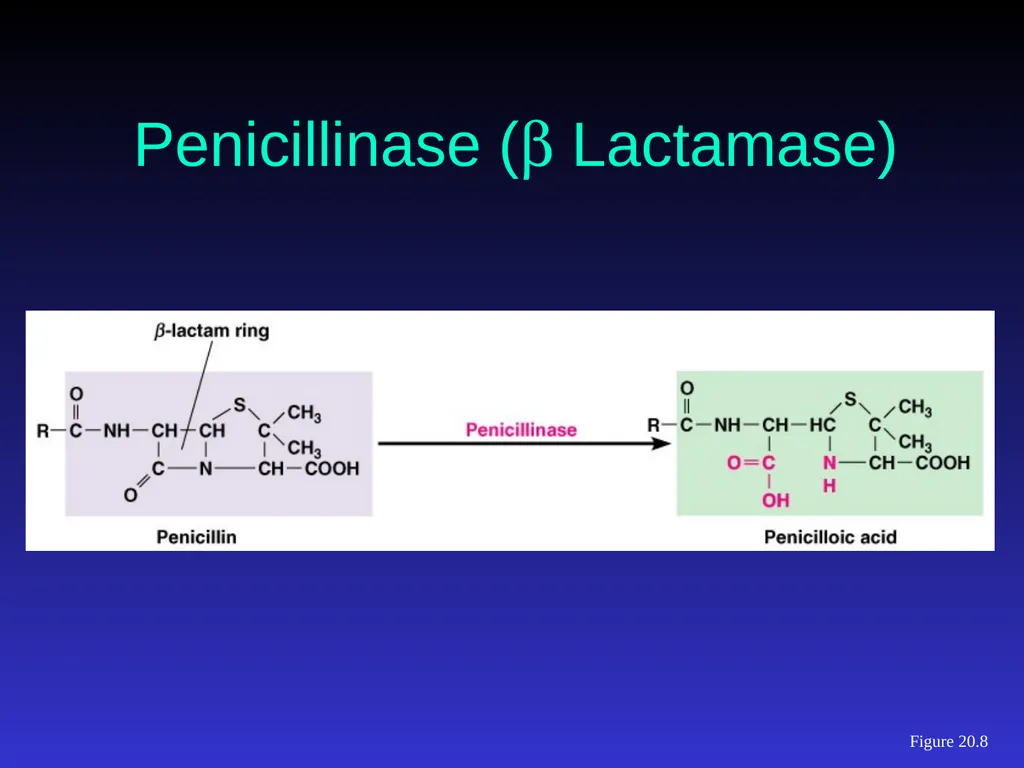
slide15. Penicillinase (b Lactamase) Figure 20.8<br>
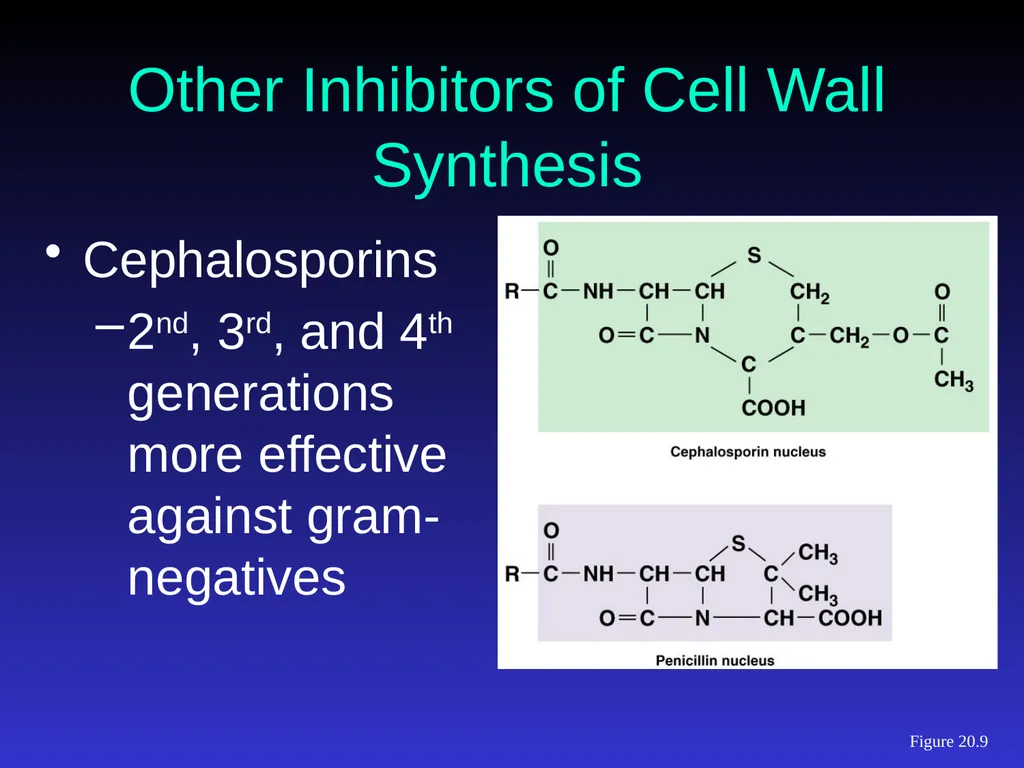
slide16. Cephalosporins
2nd, 3rd, and 4th generations more effective against gram-negatives Other Inhibitors of Cell Wall Synthesis Figure 20.9<br>
slide17. Polypeptide antibiotics
Bacitracin
Topical application
Against gram-positives
Vancomycin
Glycopeptide
Important "last line" against antibiotic resistant S. aureus Other Inhibitors of Cell Wall Synthesis<br>
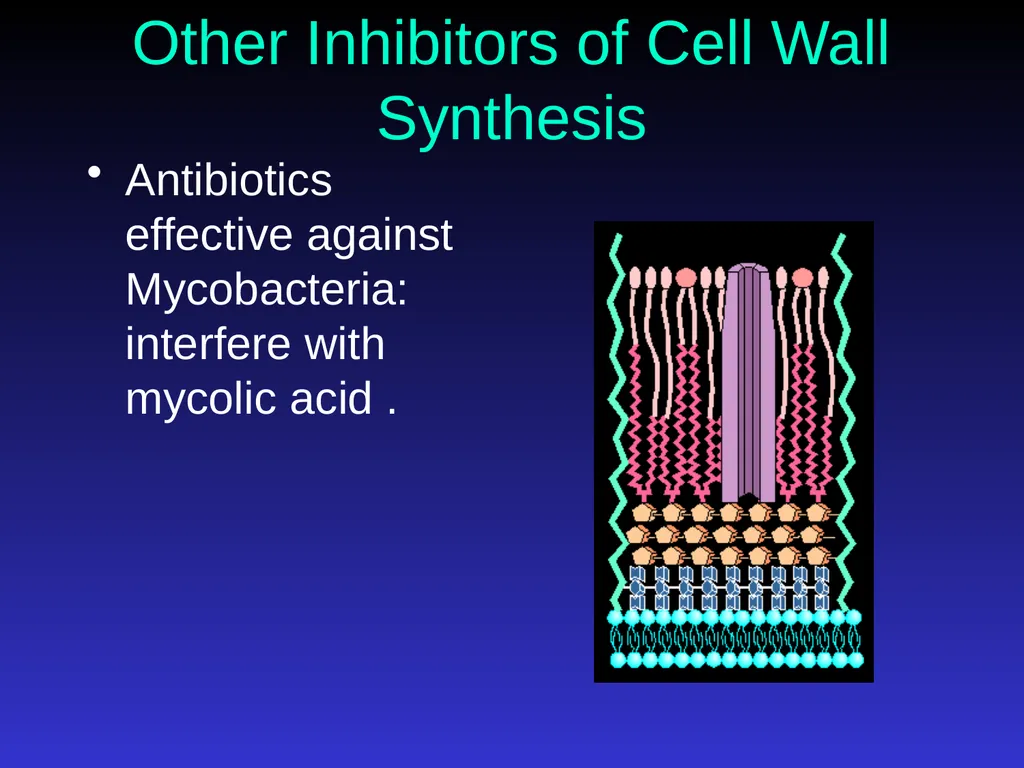
slide18. Other Inhibitors of Cell Wall Synthesis Antibiotics effective against Mycobacteria: interfere with mycolic acid .<br>
slide19. Broad spectrum, toxicity problems
Examples
Chloramphenicol (bone marrow)
Aminoglycosides: Streptomycin, neomycin, gentamycin (hearing, kidneys)
Tetracyclines (Rickettsias & Chlamydia; GI tract)
Macrolides: Erythromycin (gram +, used in children) Inhibitors of Protein Synthesis<br>
slide20. Rifamycin
Inhibits RNA synthesis
Antituberculosis
Ciprofloxacin
Inhibits DNA
Urinary tract infections Inhibitors of Nucleic Acid Synthesis<br>
slide21. Sulfonamides (Sulfa drugs)
Inhibit folic acid synthesis
Broad spectrum Competitive Inhibitors Figure 5.7<br>
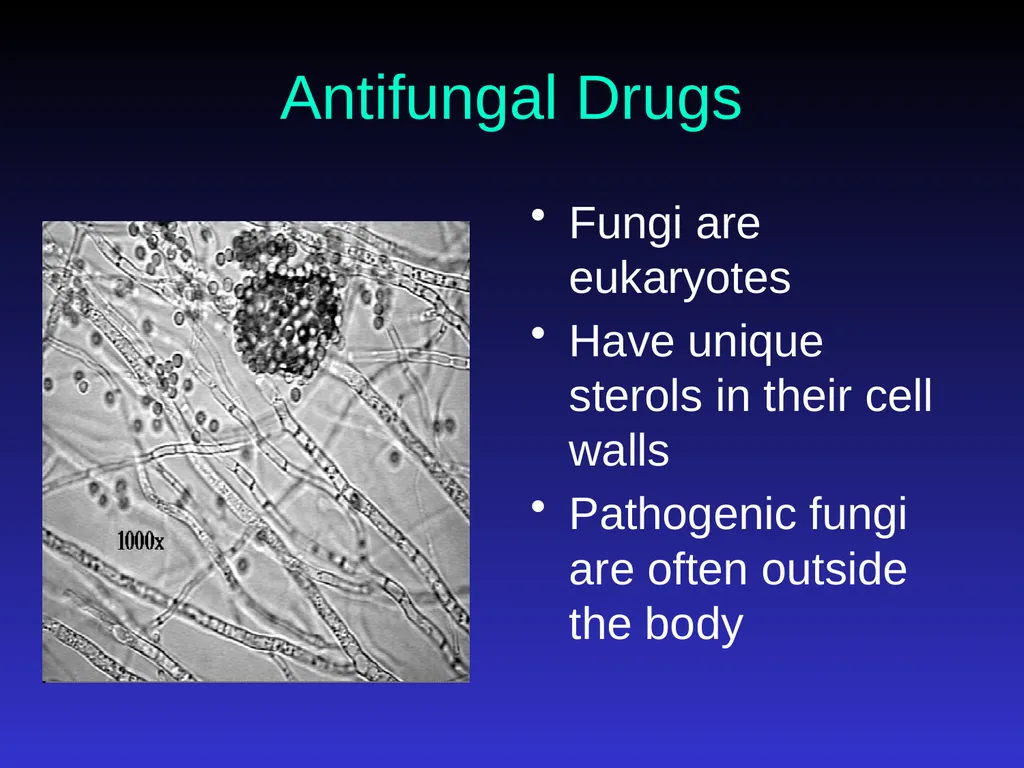
slide22. Antifungal Drugs Fungi are eukaryotes
Have unique sterols in their cell walls
Pathogenic fungi are often outside the body<br>
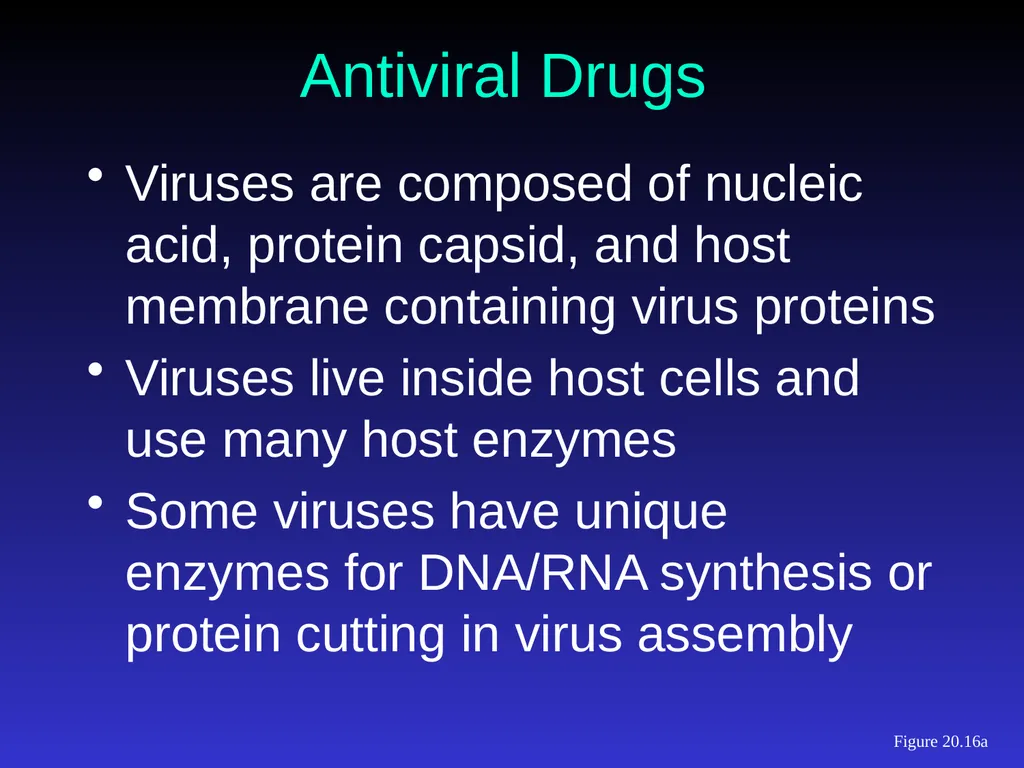
slide23. Antiviral Drugs Viruses are composed of nucleic acid, protein capsid, and host membrane containing virus proteins
Viruses live inside host cells and use many host enzymes
Some viruses have unique enzymes for DNA/RNA synthesis or protein cutting in virus assembly Figure 20.16a<br>
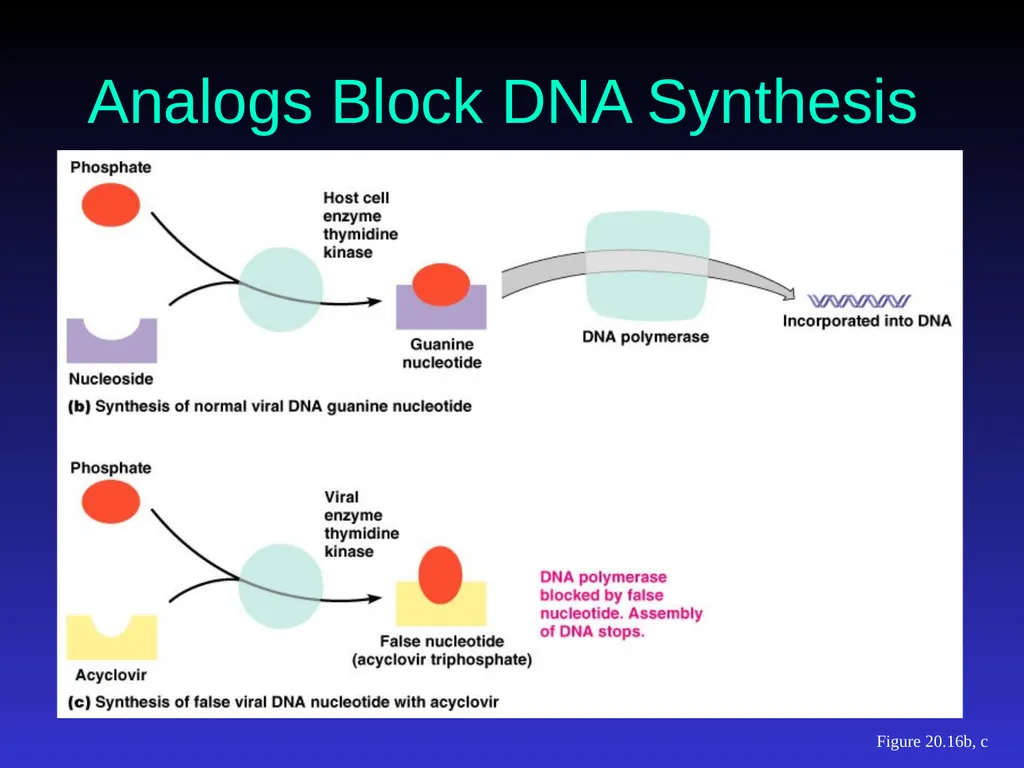
slide24. Figure 20.16b, c Analogs Block DNA Synthesis<br>
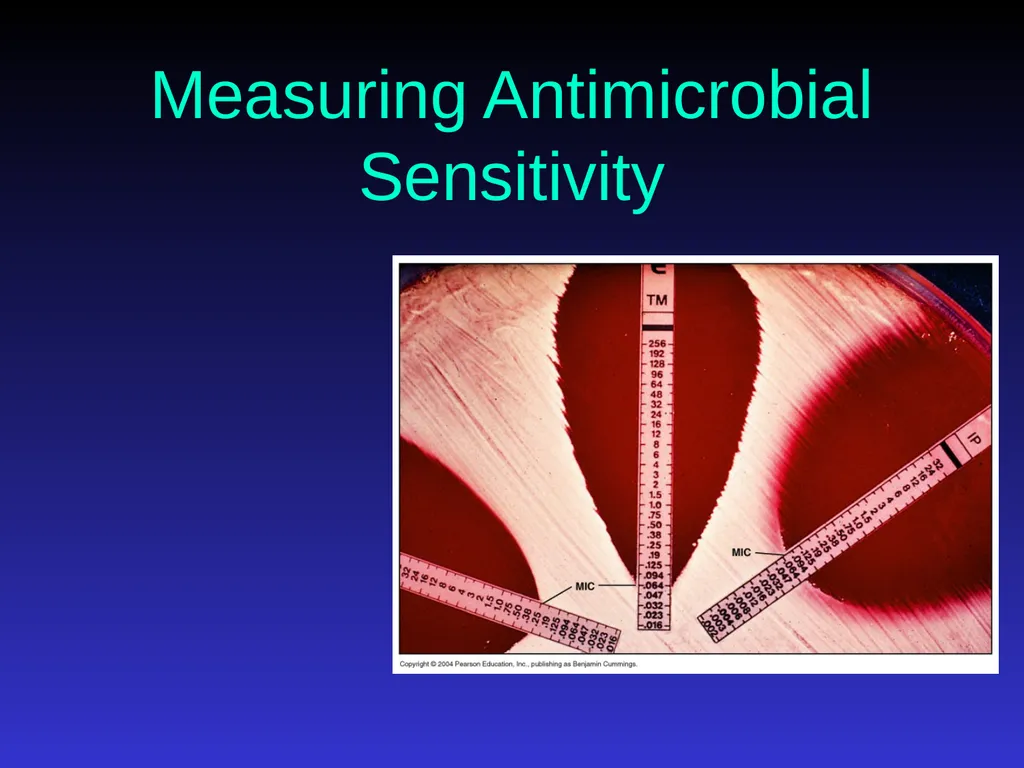
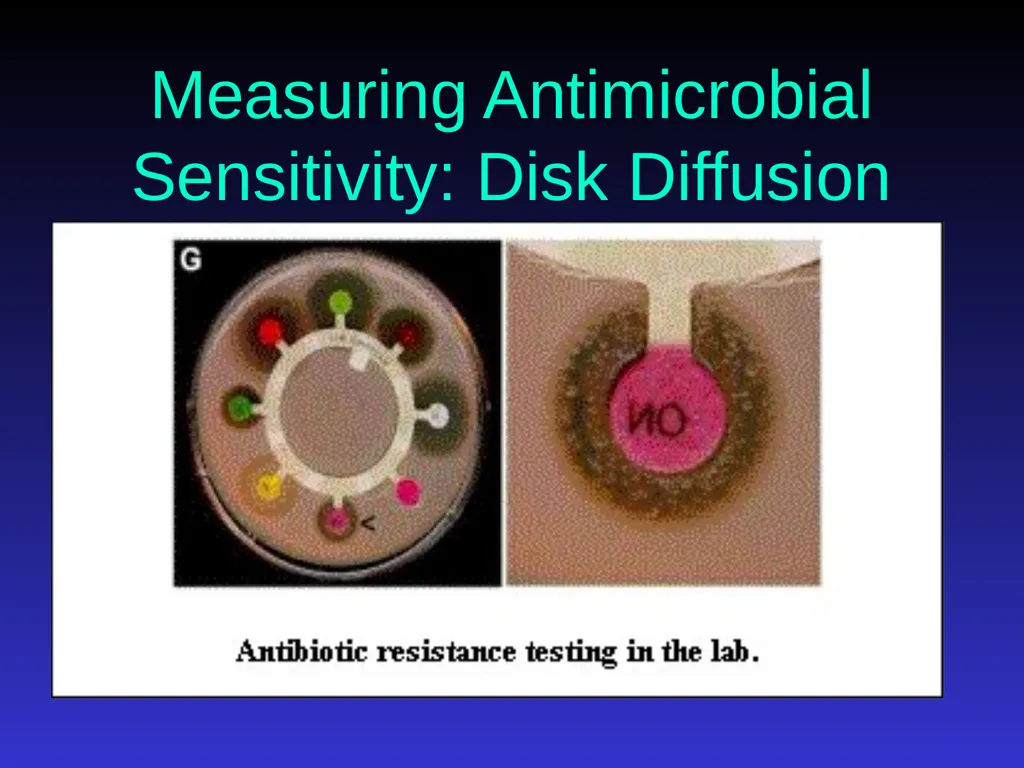
slide25. Measuring Antimicrobial Sensitivity<br>
slide26. Measuring Antimicrobial Sensitivity: Disk Diffusion<br>
slide27. Antimicrobial Resistance Relative or complete lack of effect of antimicrobial against a susceptible microbe
Increase in MIC<br>
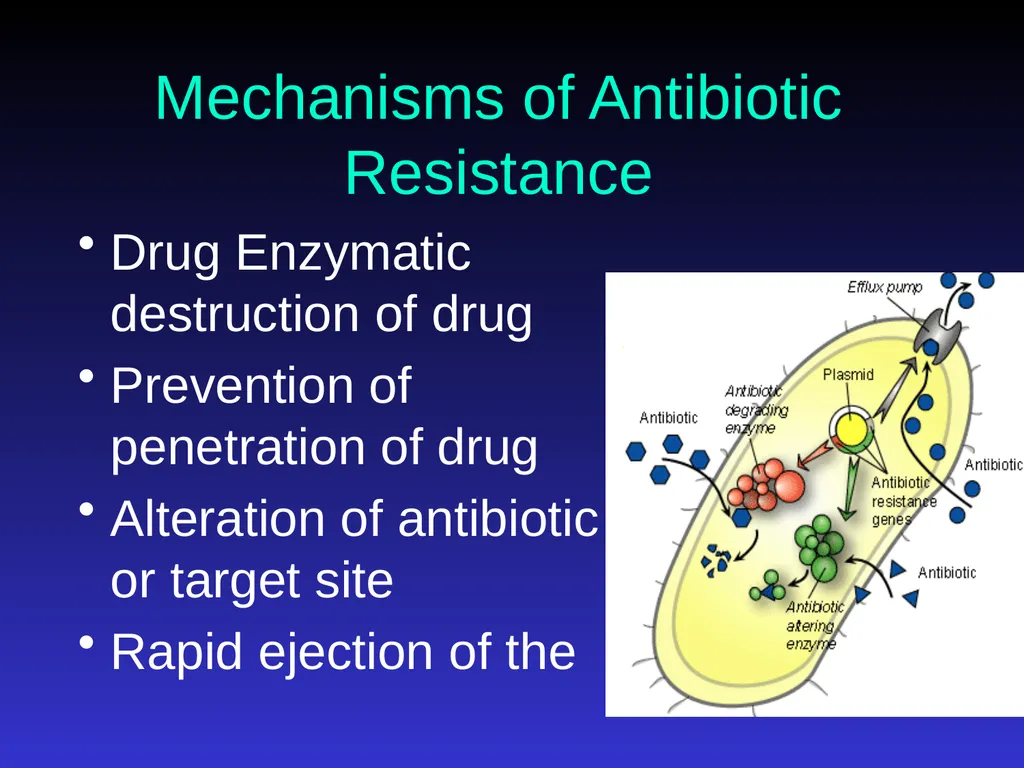
slide28. Drug Enzymatic destruction of drug
Prevention of penetration of drug
Alteration of antibiotic or target site
Rapid ejection of the Mechanisms of Antibiotic Resistance<br>
slide29. What Factors Promote Antimicrobial Resistance? Exposure to sub-optimal levels of antimicrobial
Exposure to microbes carrying resistance genes<br>
slide30. Consequences of Antimicrobial Resistance Infections resistant to available antibiotics
Increased cost of treatment<br>
slide31. Proposals to Combat Antimicrobial Resistance Speed development of new antibiotics
Track resistance data nationwide
Restrict antimicrobial use
Direct observed dosing<br>
slide32. Use more narrow spectrum antibiotics
Use antimicrobial cocktails<br>
slide33. Thank you<br>
Lecturer Dr.Roua Jassium<br>
slide2. Fast facts on antibiotics Alexander Fleming discovered penicillin, the first .natural antibiotic, in 1928 .Antibiotics cannot fight viral infections Fleming predicted the rise of antibiotic .resistance Antibiotics either kill or slow the growth of bacteria.<br>
slide3. Fleming and Penicillin<br>
slide4. The first antibiotic was penicillin. Penicillin-based antibiotics, such as ampicillin, amoxicillin, and penicillin G, are still available to treat a variety of infections and have been around for a long time.<br>
slide5. What to know about antibiotics: Antibiotics also known as antimicrobial are medications that destroy or slow down the growth of bacteria.
They include a range of powerful drugs and are used to treat diseases caused by bacteria. Antibiotics cannot treat viral infections, such as cold, flu, and most coughs.<br>
slide6. Antibiotics are powerful medicines that fight certain infections and can save lives when used properly. They either stop bacteria from reproducing or destroy them.
Before bacteria can multiply and cause symptoms, the immune system can typically kill them.<br>
slide7. Antibiotic/Antimicrobial Antibiotic: Chemical produced by a microorganism that kills or inhibits the growth of another microorganism
Antimicrobial agent: Chemical that kills or inhibits the growth of microorganisms<br>
slide8. Bacteriostatic vs bacteriocidal<br>
slide9. Microbial Sources of Antibiotics<br>
slide10. Mechanisms of Antimicrobial Action Bacteria have their own enzymes for
Cell wall formation
Protein synthesis
DNA replication
RNA synthesis
Synthesis of essential metabolites<br>
slide11. Mechanisms of Antimicrobial Action Viruses use host enzymes inside host cells
Fungi and protozoa have own eukaryotic enzymes
The more similar the pathogen and host enzymes, the more side effects the antimicrobials will have<br>
slide12. Modes of Antimicrobial Action<br>
slide13. Penicillin (over 50 compounds)
Share 4-sided ring (b lactam ring)
Natural penicillins
Narrow range of action
Susceptible to penicillinase (b lactamase) Antibacterial Antibiotics Inhibitors of Cell Wall Synthesis<br>
slide14. Prokaryotic Cell Walls<br>
slide15. Penicillinase (b Lactamase) Figure 20.8<br>
slide16. Cephalosporins
2nd, 3rd, and 4th generations more effective against gram-negatives Other Inhibitors of Cell Wall Synthesis Figure 20.9<br>
slide17. Polypeptide antibiotics
Bacitracin
Topical application
Against gram-positives
Vancomycin
Glycopeptide
Important "last line" against antibiotic resistant S. aureus Other Inhibitors of Cell Wall Synthesis<br>
slide18. Other Inhibitors of Cell Wall Synthesis Antibiotics effective against Mycobacteria: interfere with mycolic acid .<br>
slide19. Broad spectrum, toxicity problems
Examples
Chloramphenicol (bone marrow)
Aminoglycosides: Streptomycin, neomycin, gentamycin (hearing, kidneys)
Tetracyclines (Rickettsias & Chlamydia; GI tract)
Macrolides: Erythromycin (gram +, used in children) Inhibitors of Protein Synthesis<br>
slide20. Rifamycin
Inhibits RNA synthesis
Antituberculosis
Ciprofloxacin
Inhibits DNA
Urinary tract infections Inhibitors of Nucleic Acid Synthesis<br>
slide21. Sulfonamides (Sulfa drugs)
Inhibit folic acid synthesis
Broad spectrum Competitive Inhibitors Figure 5.7<br>
slide22. Antifungal Drugs Fungi are eukaryotes
Have unique sterols in their cell walls
Pathogenic fungi are often outside the body<br>
slide23. Antiviral Drugs Viruses are composed of nucleic acid, protein capsid, and host membrane containing virus proteins
Viruses live inside host cells and use many host enzymes
Some viruses have unique enzymes for DNA/RNA synthesis or protein cutting in virus assembly Figure 20.16a<br>
slide24. Figure 20.16b, c Analogs Block DNA Synthesis<br>
slide25. Measuring Antimicrobial Sensitivity<br>
slide26. Measuring Antimicrobial Sensitivity: Disk Diffusion<br>
slide27. Antimicrobial Resistance Relative or complete lack of effect of antimicrobial against a susceptible microbe
Increase in MIC<br>
slide28. Drug Enzymatic destruction of drug
Prevention of penetration of drug
Alteration of antibiotic or target site
Rapid ejection of the Mechanisms of Antibiotic Resistance<br>
slide29. What Factors Promote Antimicrobial Resistance? Exposure to sub-optimal levels of antimicrobial
Exposure to microbes carrying resistance genes<br>
slide30. Consequences of Antimicrobial Resistance Infections resistant to available antibiotics
Increased cost of treatment<br>
slide31. Proposals to Combat Antimicrobial Resistance Speed development of new antibiotics
Track resistance data nationwide
Restrict antimicrobial use
Direct observed dosing<br>
slide32. Use more narrow spectrum antibiotics
Use antimicrobial cocktails<br>
slide33. Thank you<br>