ArtificiaI Intelligence - Care Beyond Boundaries Add facilitators name Artificial intelligence has the potential to revolutionize global health and development by providing powerful tools for predicting and managing diseases,
"ArtificiaI Intelligence - Care Beyond Boundaries" is the property of its rightful owner. Permission is granted to
download and print the materials on this website for personal, non-commercial use only, and to display it
on your personal computer provided you do not modify the materials and that you retain all copyright
notices contained in the materials. By downloading content from our website, you accept the terms of this
agreement.
Presentation Transcript
01
ArtificiaI Intelligence - Care Beyond Boundaries // Add facilitator’s name//<br>
02
Artificial intelligence has the potential to revolutionize global health and development by providing powerful tools for predicting and managing diseases, optimizing resources, and delivering personalized healthcare to the most vulnerable populations.<br>
03
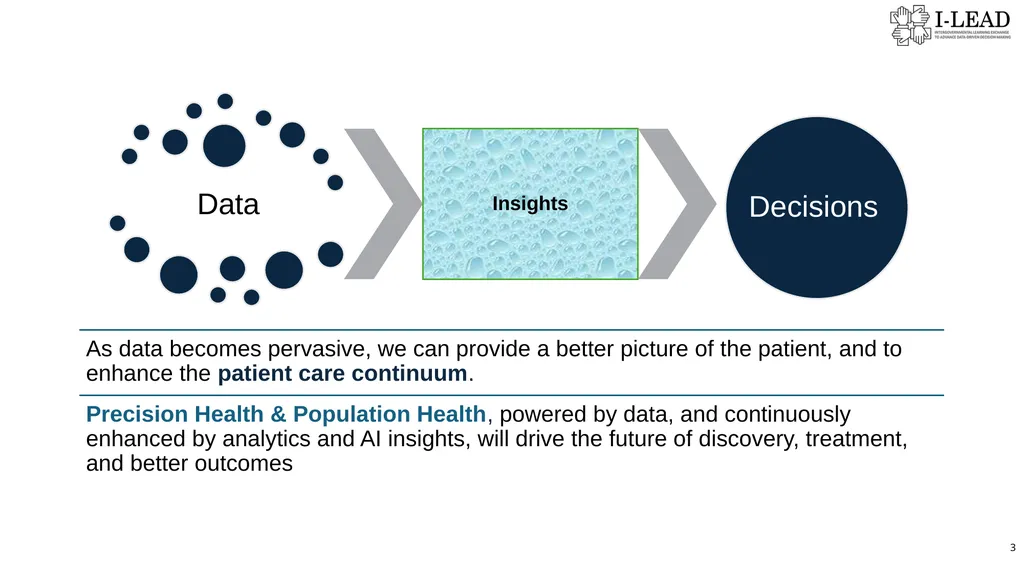
3<br>
04
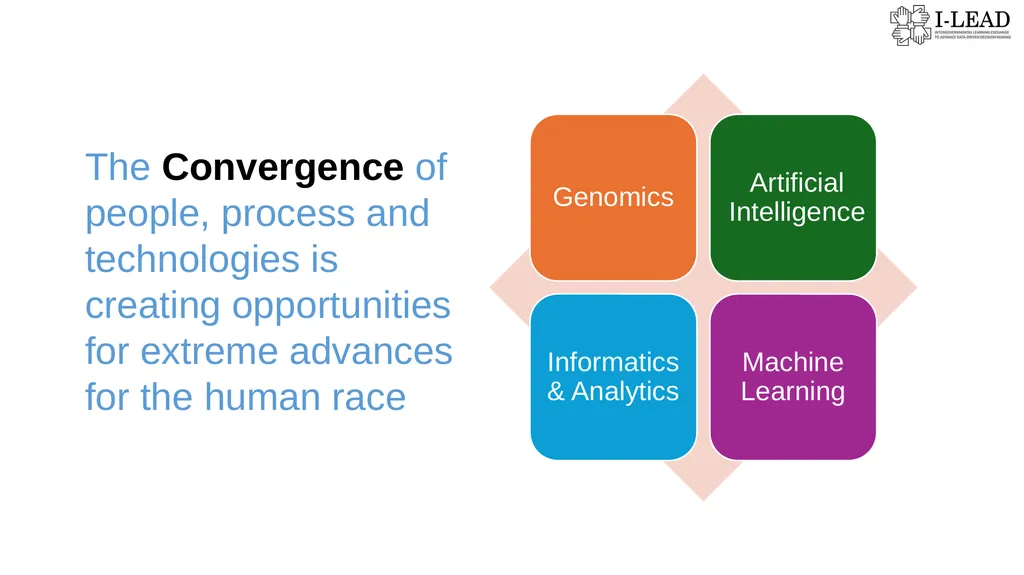
The Convergence of people, process and technologies is creating opportunities for extreme advances for the human race<br>
05
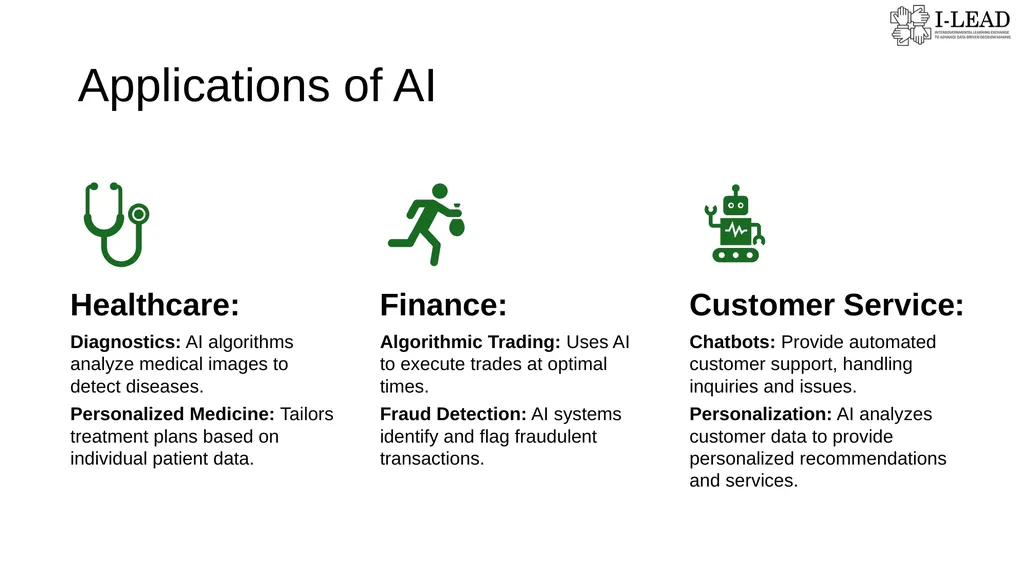
Applications of AI<br>
06
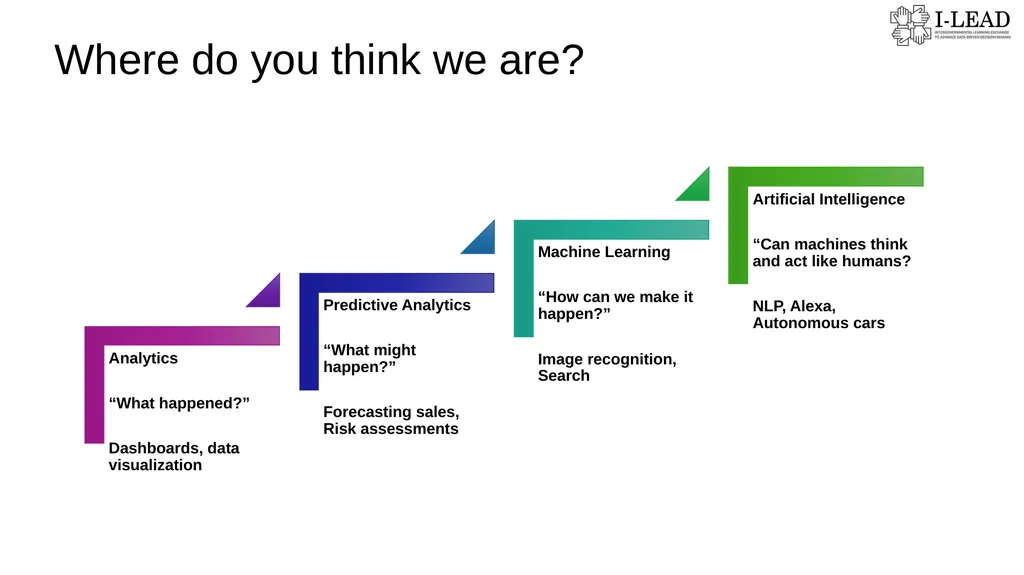
Where do you think we are?<br>
07
Definition and Basics Artificial Intelligence (AI): The simulation of human intelligence processes by machines, especially computer systems.
Key Functions: Includes learning (acquiring information and rules), reasoning (using rules to reach conclusions), and self-correction.
Types of AI:
Narrow AI: Designed for a specific task (e.g., voice assistants like Siri, Alexa).
General AI: A theoretical form of AI that would have the ability to perform any intellectual task that a human can do.<br>
08
AI in Healthcare<br>
09
AI in Healthcare (Continued)<br>
10
AI in Healthcare (Continued)<br>
11
AI in Healthcare (Continued)<br>
12
Future Trends IoT Integration: Combining AI with Internet of Things (IoT) devices for comprehensive health monitoring and real-time data analysis.
Advances in NLP: Improving doctor-patient communication through natural language processing (NLP) technologies.
Mental Health Applications: AI's growing role in mental health for predictive diagnostics and personalized therapy recommendations.<br>
13
The Role of AI in International Development Programs 14<br>
14
Key Opportunities Efficiency and Reach: AI has the potential to significantly enhance the efficiency and reach of development programs by automating routine tasks, improving data analysis, and providing predictive insights.
Personalized Solutions: AI can help tailor solutions to individual needs, making interventions more effective in areas like healthcare, education, and agriculture.
Resource Allocation: AI-driven tools can optimize resource allocation, ensuring that aid and services are delivered where they are needed most.<br>
15
Ethical Challenges Bias and Fairness: AI systems can perpetuate or even exacerbate existing biases if not properly managed, leading to unfair treatment of marginalized communities.
Privacy Concerns: The use of AI often involves the collection and processing of vast amounts of personal data, raising significant privacy concerns.
Accountability and Transparency: There is a need for clear accountability and transparency in AI decision-making processes to build trust and ensure ethical standards are maintained.<br>
16
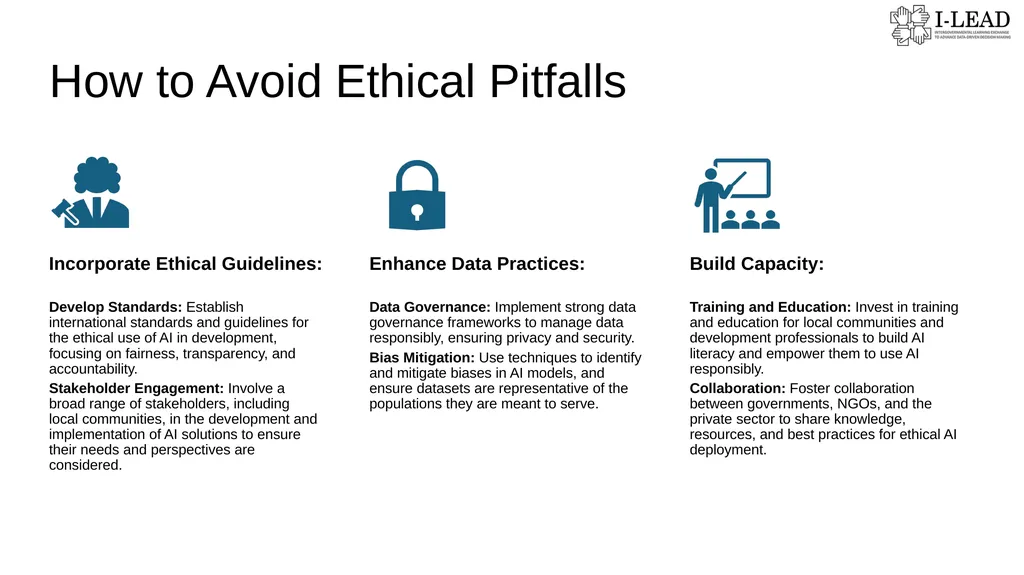
How to Avoid Ethical Pitfalls<br>
17
Opportunities
Improved Diagnosis and Treatment: AI can detect diseases faster and more accurately than humans in some cases, enabling earlier interventions.
Personalized Care: Tailoring treatments based on individual patient data can improve outcomes and reduce unnecessary interventions.
Operational Efficiency: AI can optimize resource allocation, streamline workflows, and support public health planning.<br>
18
Challenges/Risks:
Data Quality and Bias: AI is only as good as the data it’s trained on, and poor or biased data can worsen health inequities.
Ethical and Privacy Concerns: Handling sensitive health information requires strict governance and transparency.
Dependence and Oversight: Overreliance on AI without human oversight could be risky, especially in complex clinical decisions.
AI is a powerful enabler for healthcare, especially in diagnostics, personalized medicine, and population health. However, its success depends on careful implementation, robust data governance, and integration with human expertise.<br>