
Ask a question/ Identify a problem Construct a
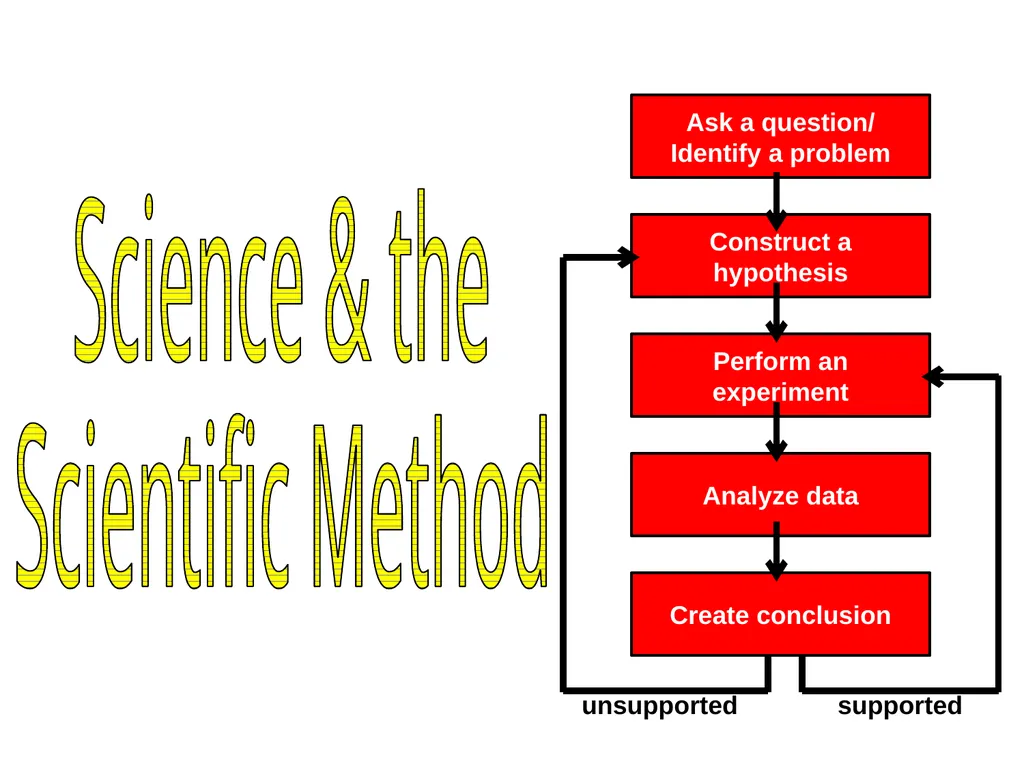
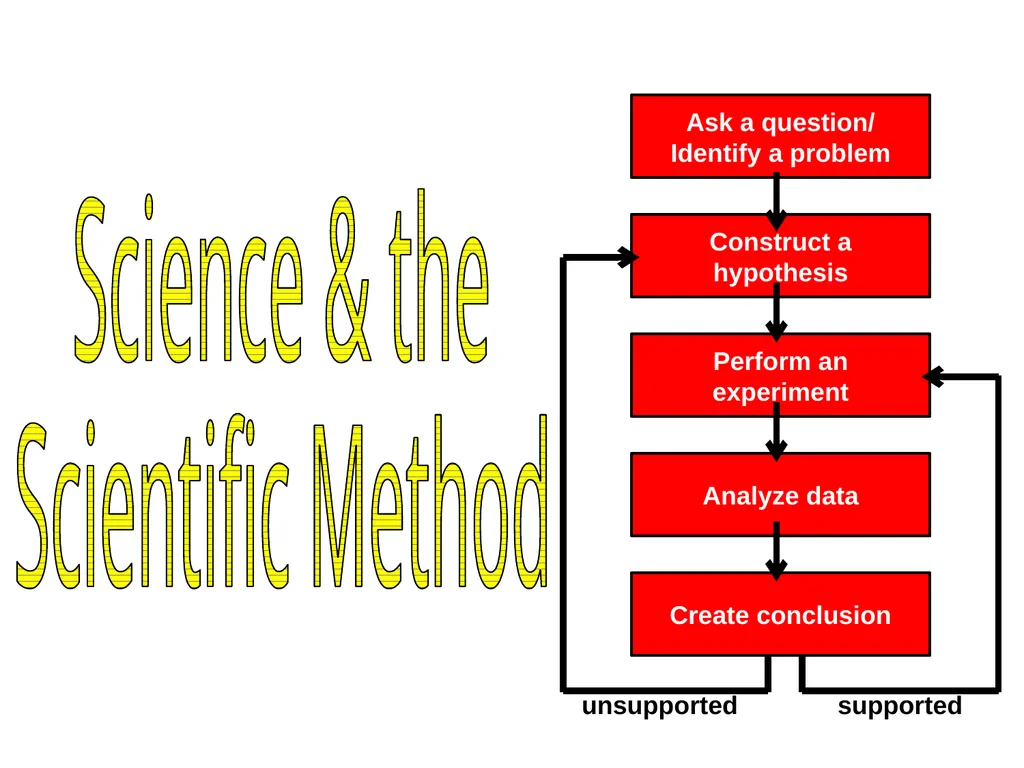



Description: Ask a question Identify a problem Construct a hypothesis Perform an experiment Analyze data Create conclusion supported unsupported Science the Scientific Method What is Science? Science: Process that produces information about natural
Related Topics
Download Presentation
"Ask a question/ Identify a problem Construct a" is the property of its rightful owner. Permission is granted to download and print the materials on this website for personal, non-commercial use only, and to display it on your personal computer provided you do not modify the materials and that you retain all copyright notices contained in the materials. By downloading content from our website, you accept the terms of this agreement.
Presentation Transcript
slide1. Ask a question/
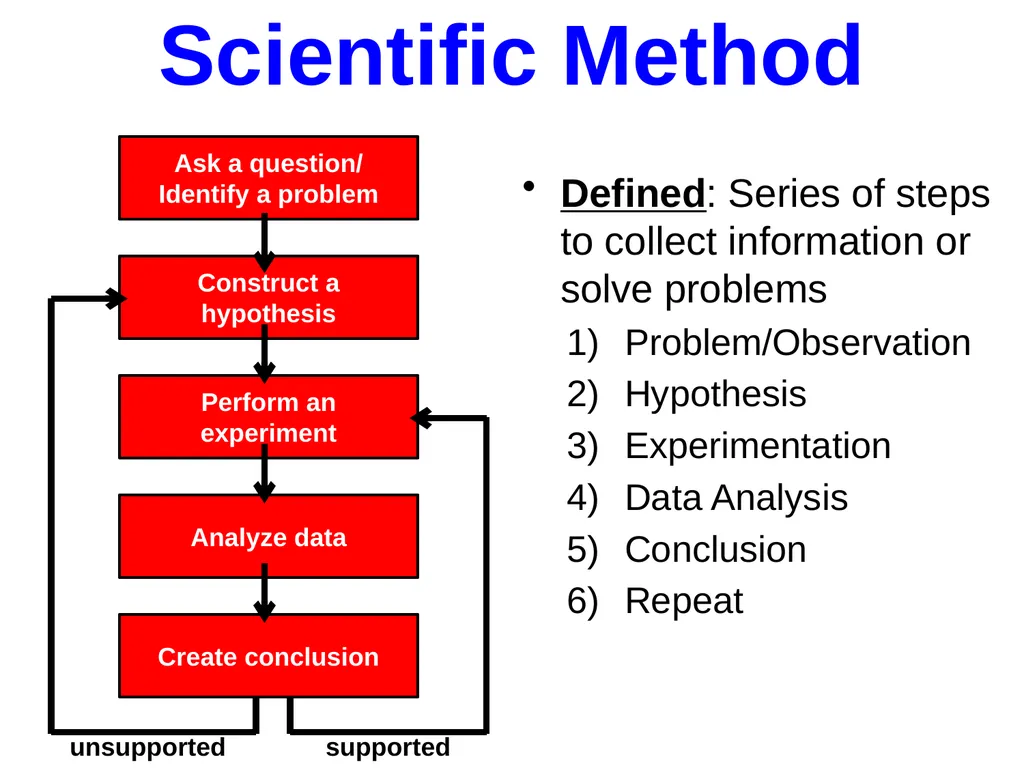
Identify a problem Construct a hypothesis Perform an experiment Analyze data Create conclusion supported unsupported Science & the
Scientific Method<br>
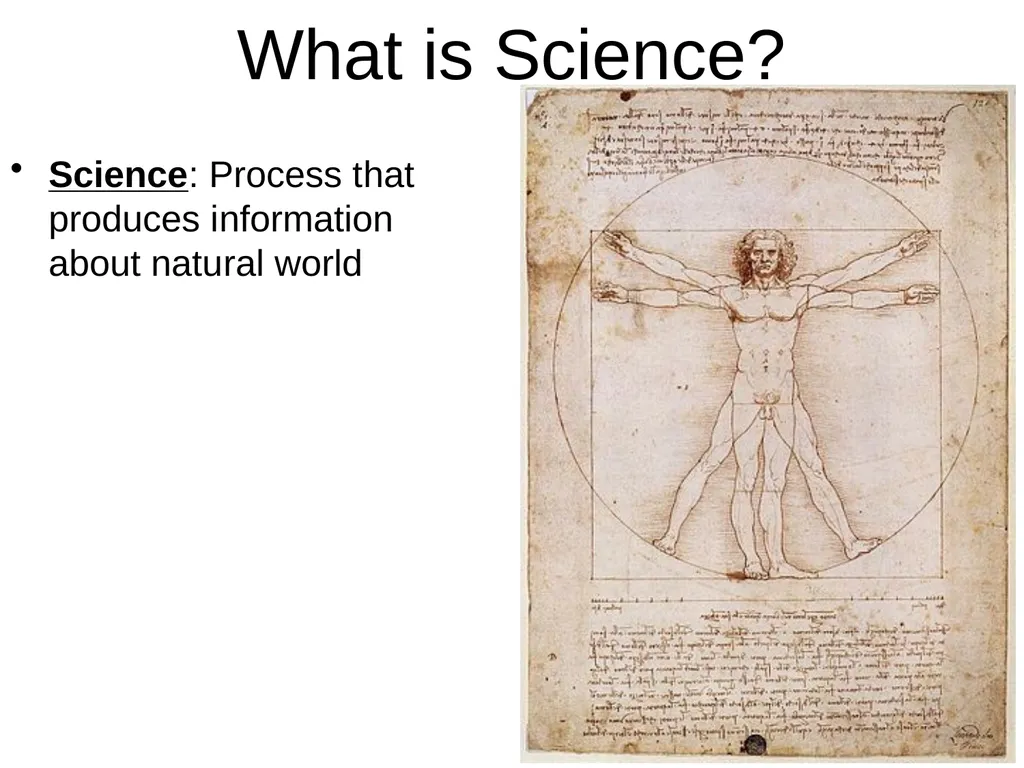
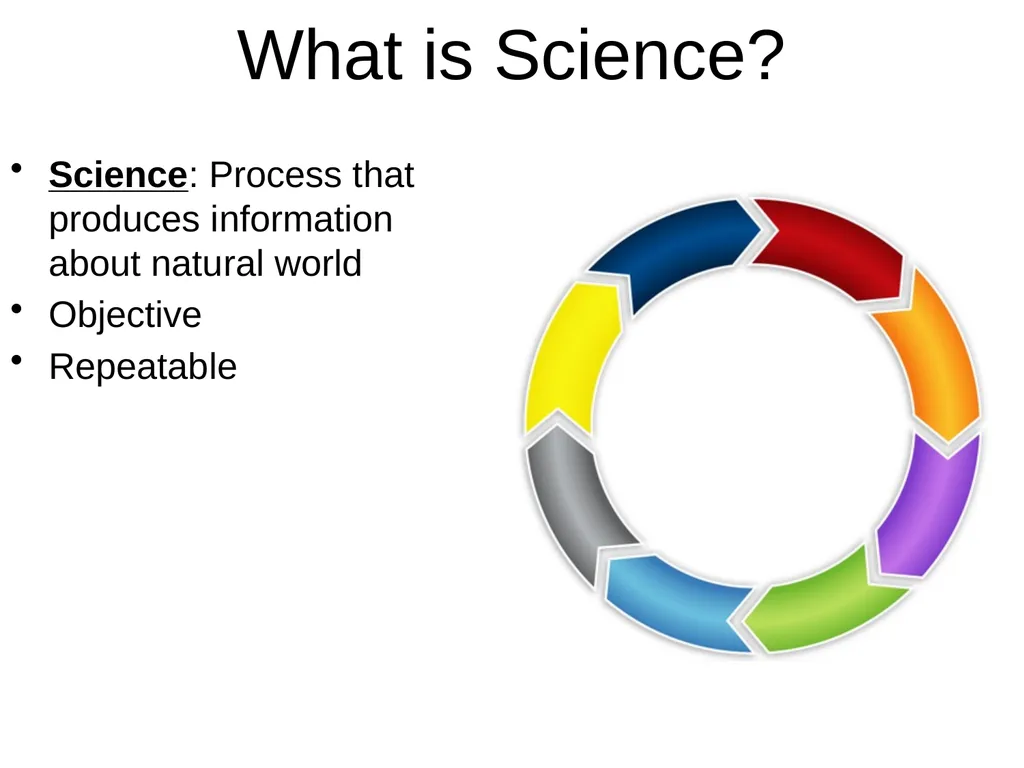
slide2. What is Science? Science: Process that produces information about natural world<br>
slide3. What is Science? Science: Process that produces information about natural world
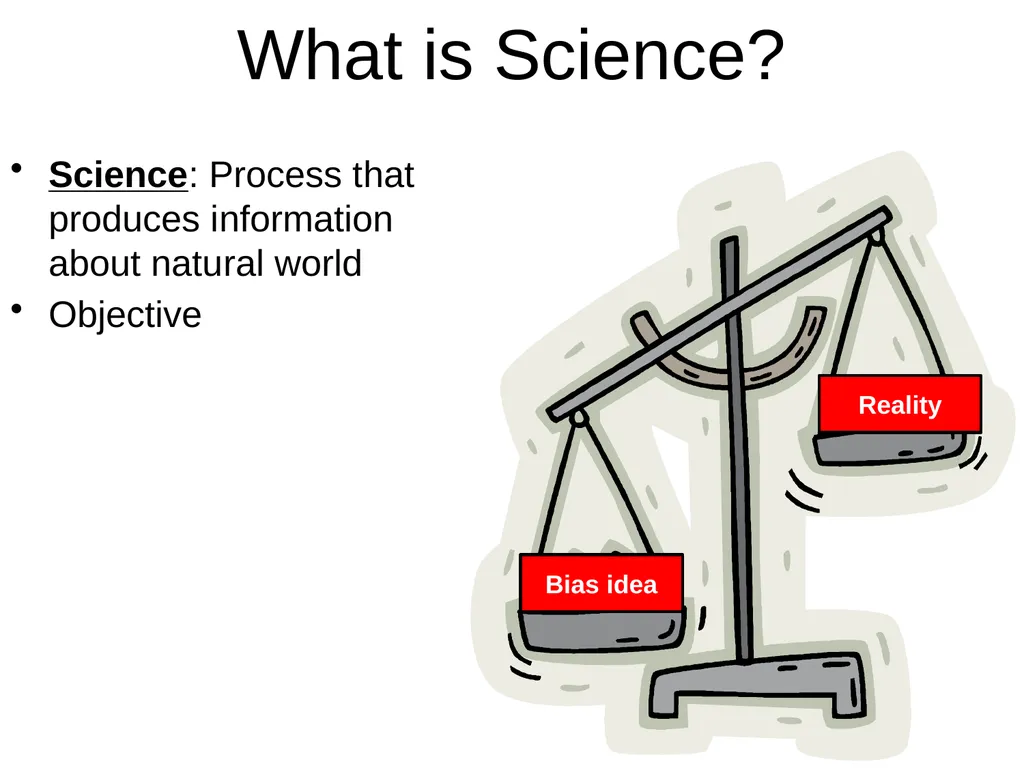
Objective Bias idea Reality<br>
slide4. What is Science? Science: Process that produces information about natural world
Objective
Repeatable<br>
slide5. What is Science? Science: Process that produces information about natural world
Objective
Repeatable
Tools and skills:
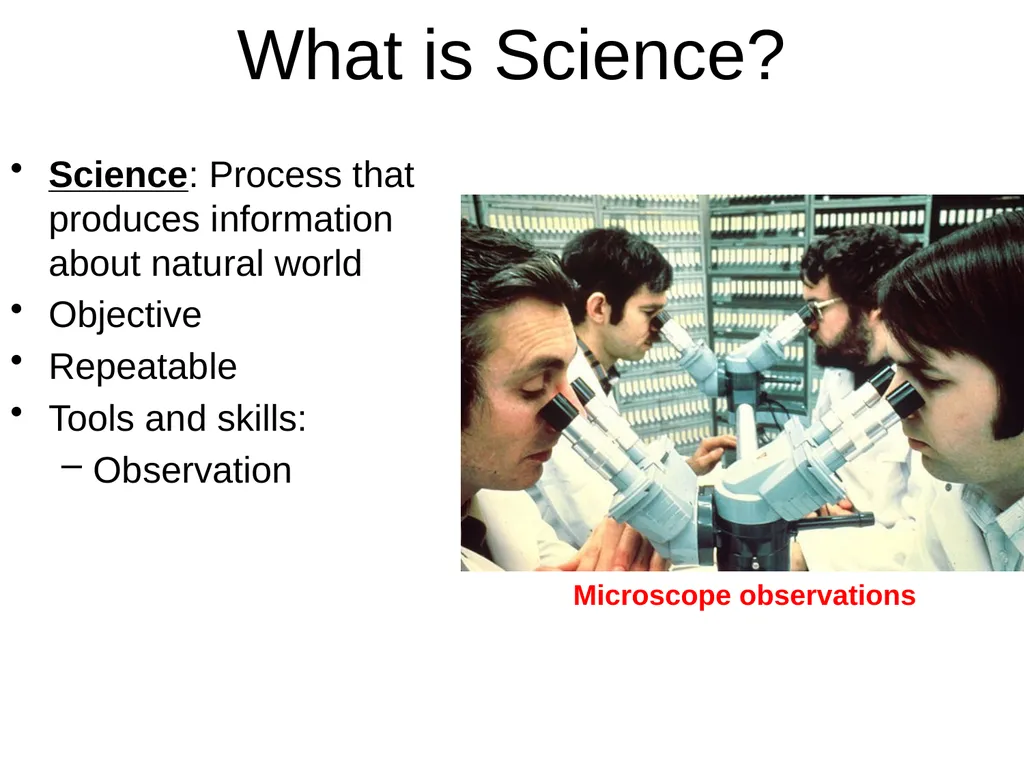
Observation Microscope observations<br>
slide6. What is Science? Science: Process that produces information about natural world
Objective
Repeatable
Tools and skills:
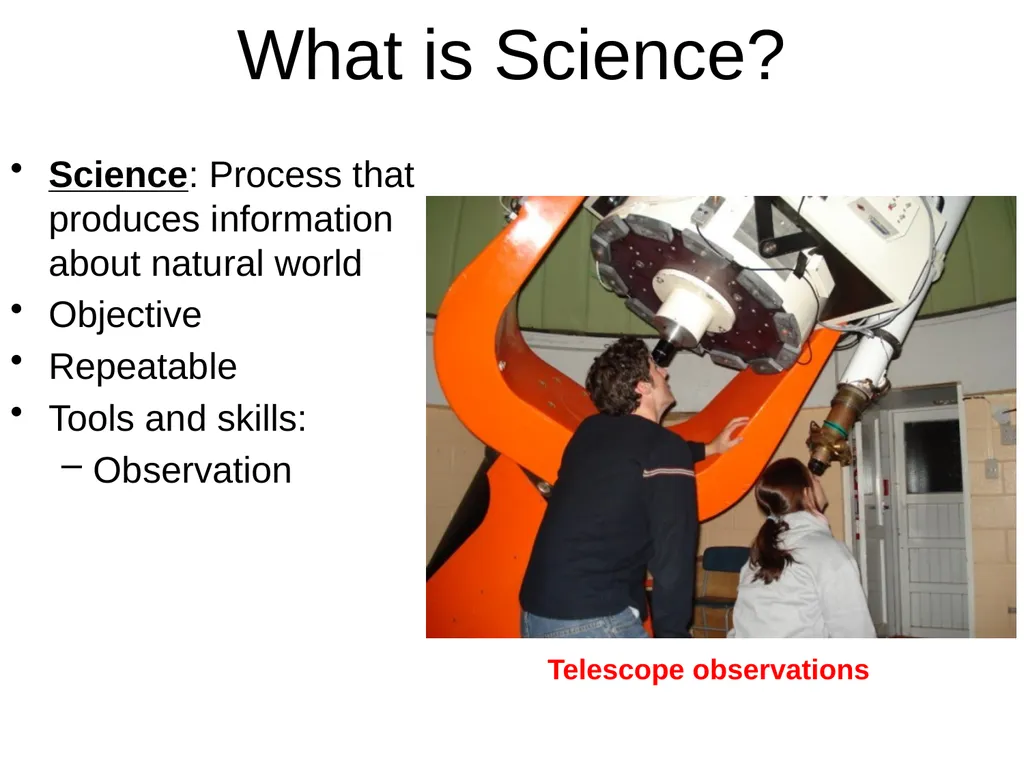
Observation Telescope observations<br>
slide7. What is Science? Science: Process that produces information about natural world
Objective
Repeatable
Tools and skills:
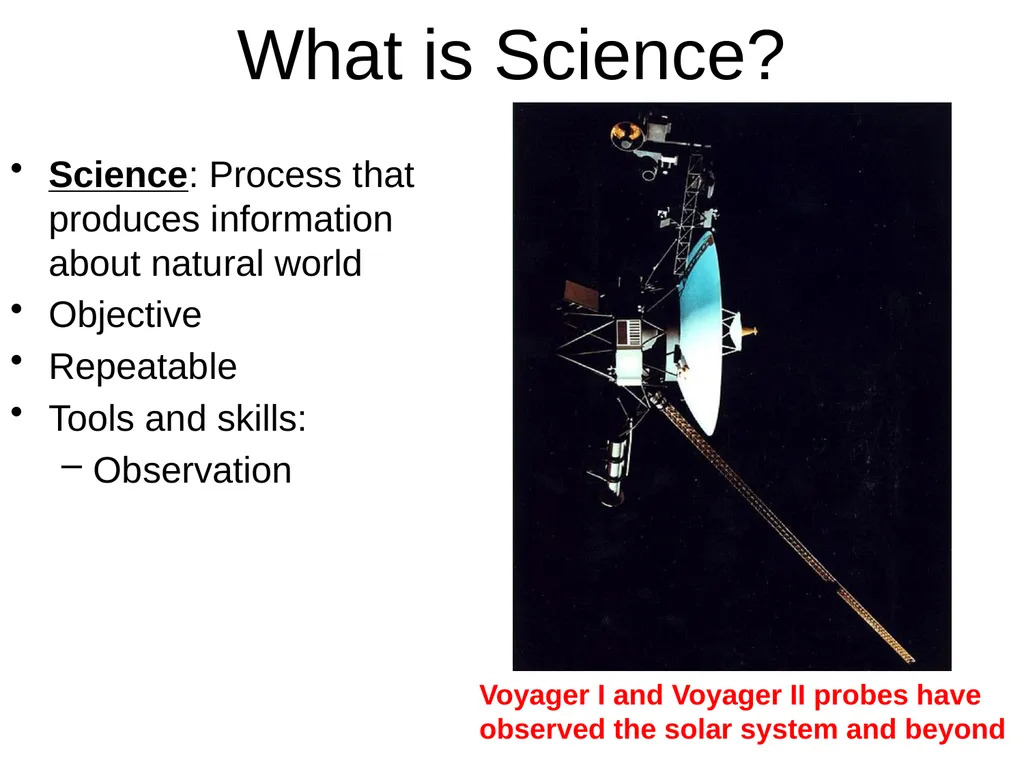
Observation Voyager I and Voyager II probes have observed the solar system and beyond<br>
slide8. What is Science? Science: Process that produces information about natural world
Objective
Repeatable
Tools and skills:
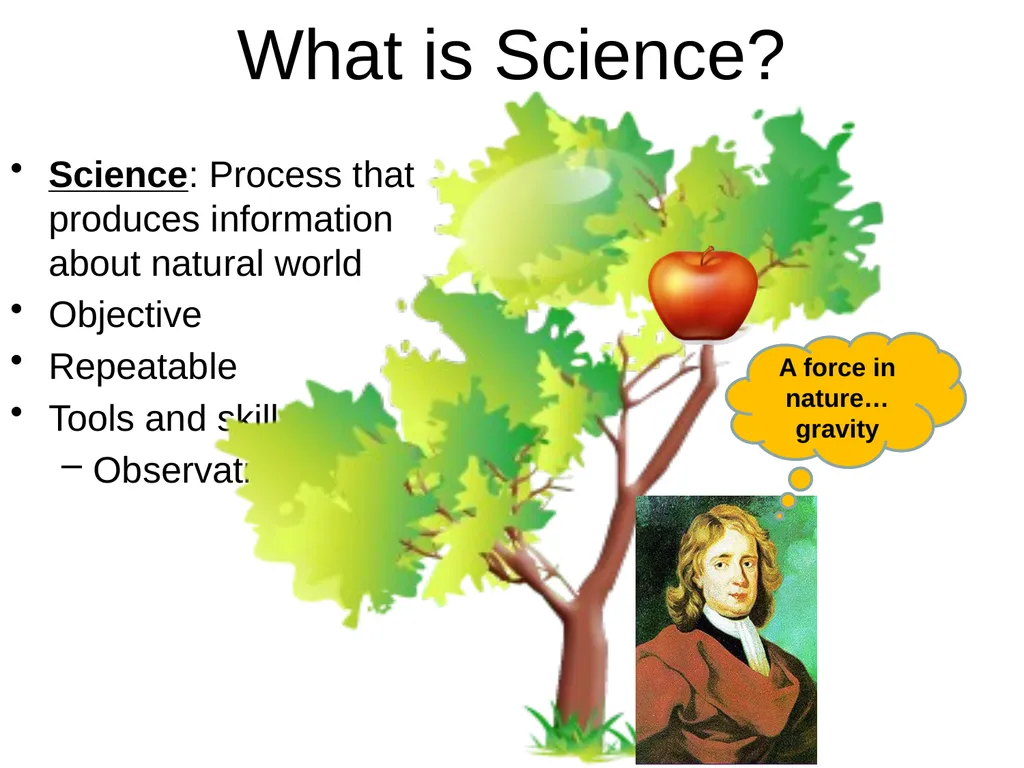
Observation A force in nature… gravity<br>
slide9. What is Science? Science: Process that produces information about natural world
Objective
Repeatable
Tools and skills:
Observation
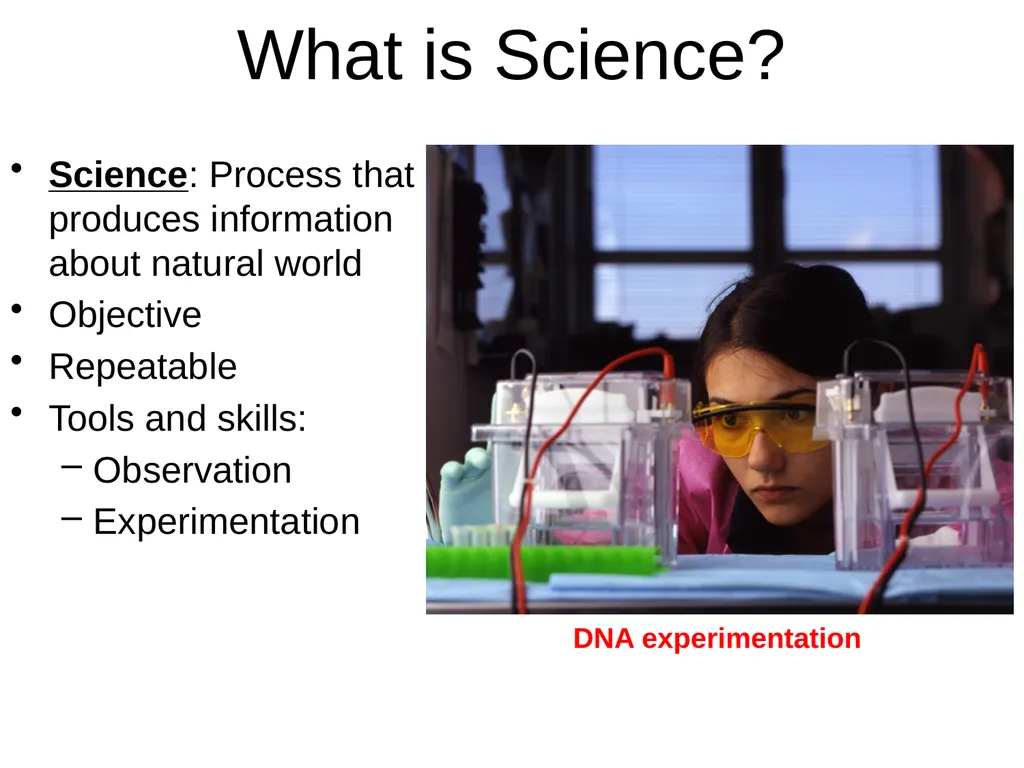
Experimentation DNA experimentation<br>
slide10. What is Science? Science: Process that produces information about natural world
Objective
Repeatable
Tools and skills:
Observation
Experimentation
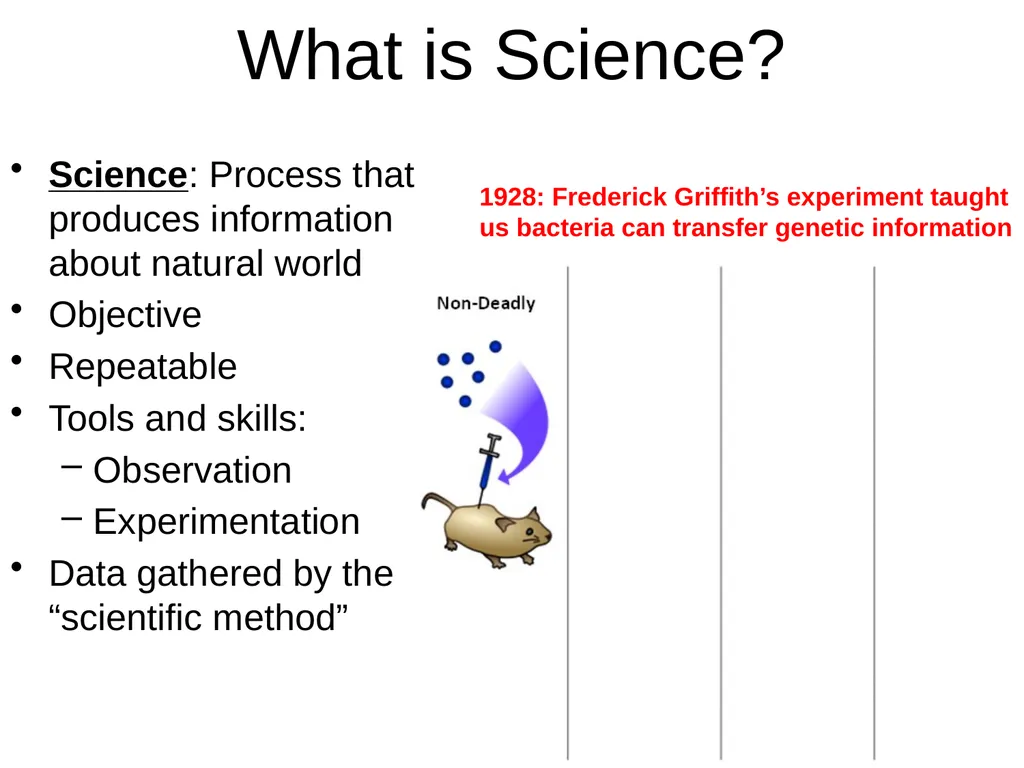
Data gathered by the “scientific method” 1928: Frederick Griffith’s experiment taught us bacteria can transfer genetic information<br>
slide11. Defined: Series of steps to collect information or solve problems
Problem/Observation
Hypothesis
Experimentation
Data Analysis
Conclusion
Repeat Scientific Method Ask a question/
Identify a problem Construct a hypothesis Perform an experiment Analyze data Create conclusion supported unsupported<br>
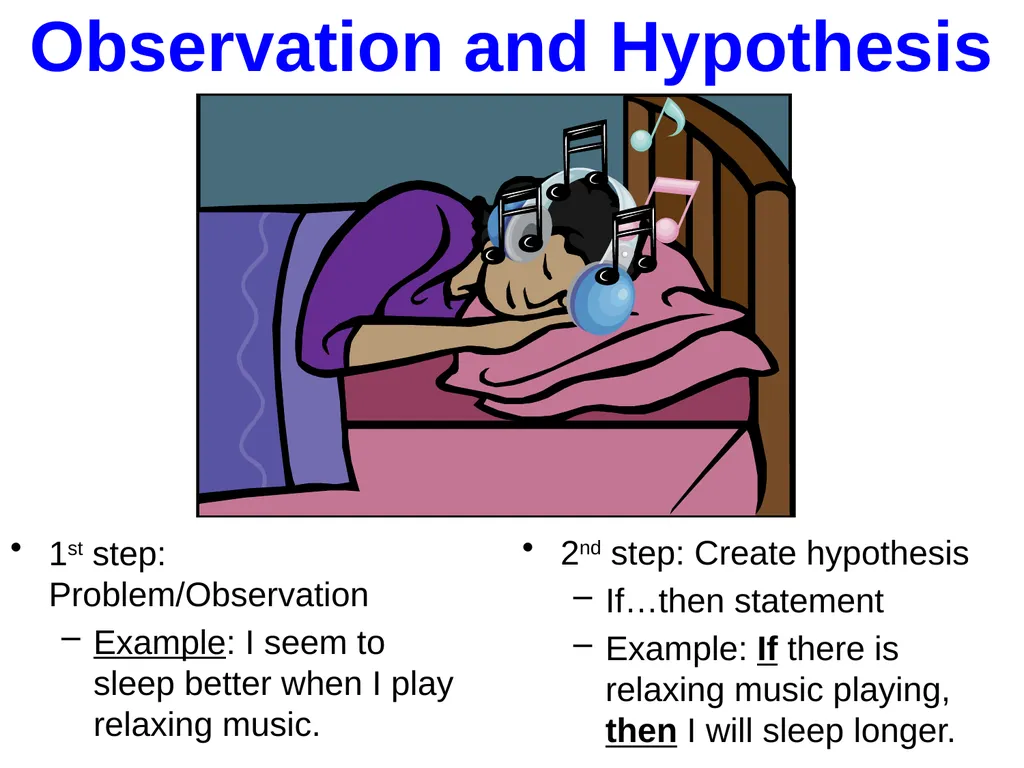
slide12. Observation and Hypothesis 1st step: Problem/Observation
Example: I seem to sleep better when I play relaxing music. 2nd step: Create hypothesis
If…then statement
Example: If there is relaxing music playing, then I will sleep longer.<br>
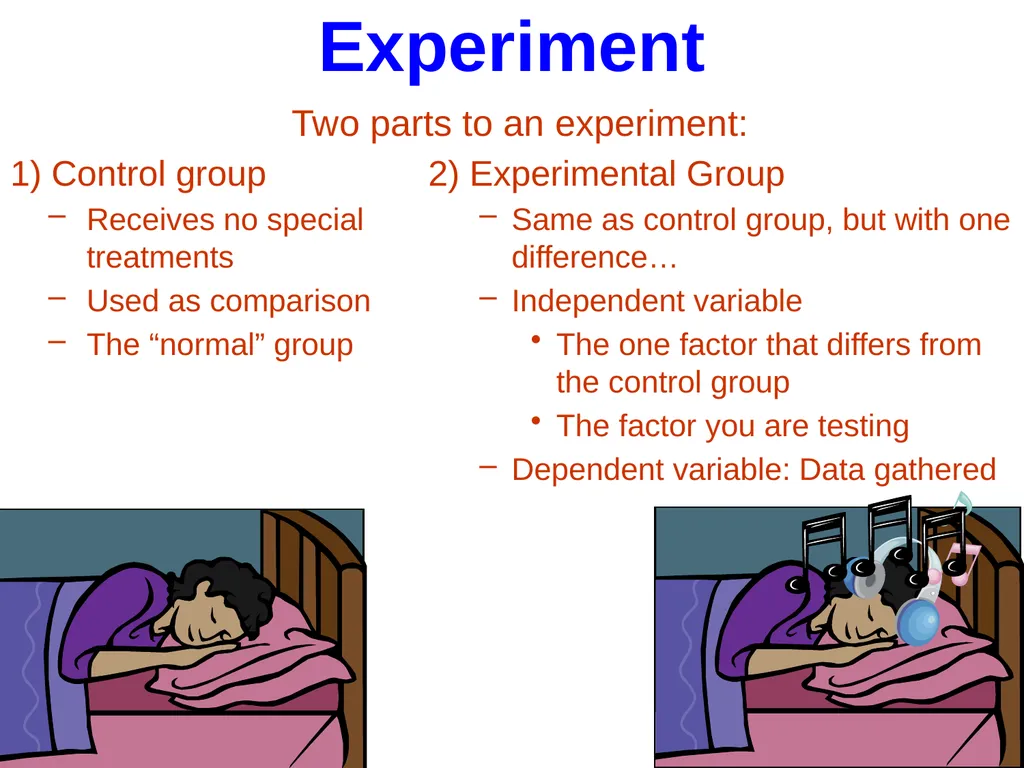
slide13. Experiment 1) Control group
Receives no special treatments
Used as comparison
The “normal” group 2) Experimental Group
Same as control group, but with one difference…
Independent variable
The one factor that differs from the control group
The factor you are testing
Dependent variable: Data gathered Two parts to an experiment:<br>
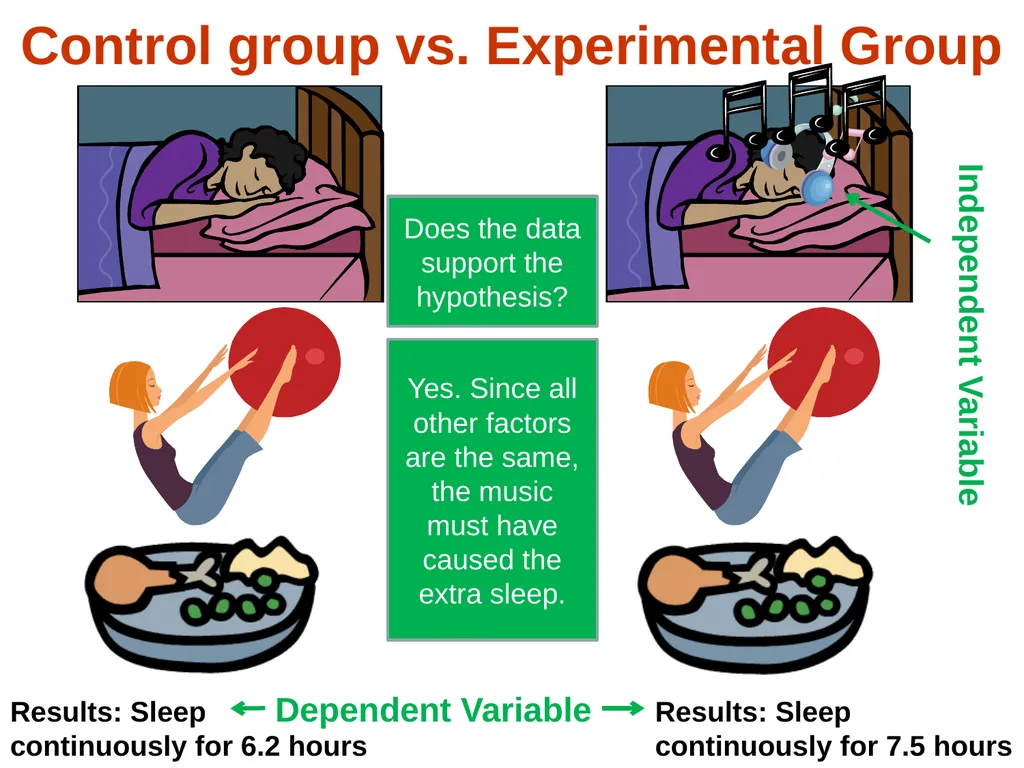
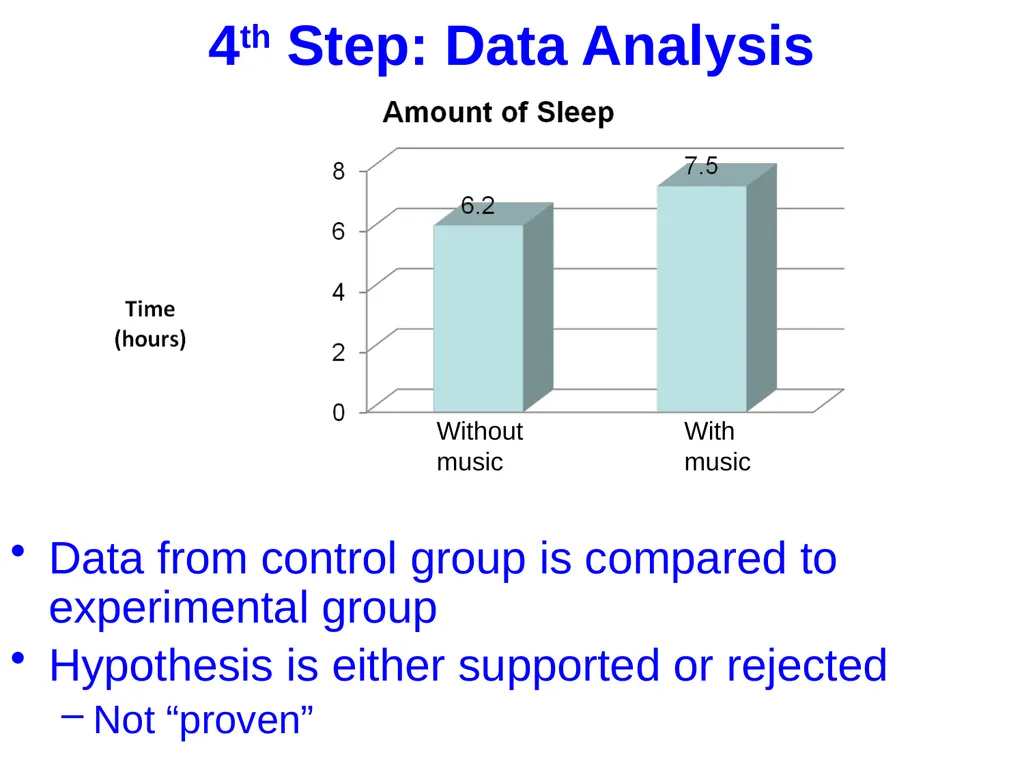
slide14. Control group vs. Experimental Group Results: Sleep continuously for 6.2 hours Results: Sleep continuously for 7.5 hours Does the data support the hypothesis? Yes. Since all other factors are the same, the music must have caused the extra sleep.<br>
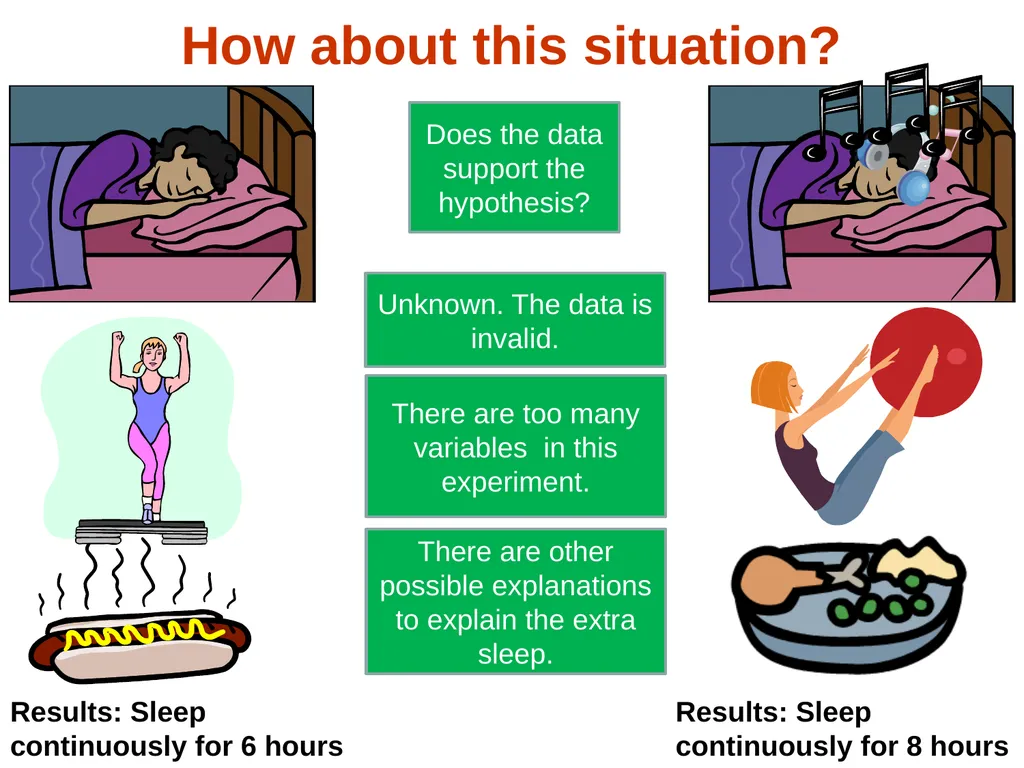
slide15. How about this situation? Results: Sleep continuously for 6 hours Results: Sleep continuously for 8 hours Does the data support the hypothesis? Unknown. The data is invalid. There are too many variables in this experiment. There are other possible explanations to explain the extra sleep.<br>
slide16. The United States military wants to see if soldiers with only 4 hours of sleep can operate at the same level as those who normally get 7 hours of sleep. One hundred solders are allowed to only sleep for 4 hours a night and another hundred are allowed to sleep for 7 hours a night. During the day, the soldiers are tested for marksmanship on the firing range. Name the control group _________________________________________________
Name the experimental group ____________________________________________
Name the independent variable __________________________________________
Name the dependent variable ____________________________________________ Soldiers with 7 hours sleep Soldiers with 4 hours sleep Amount of sleep given Score on the firing range . . .<br>
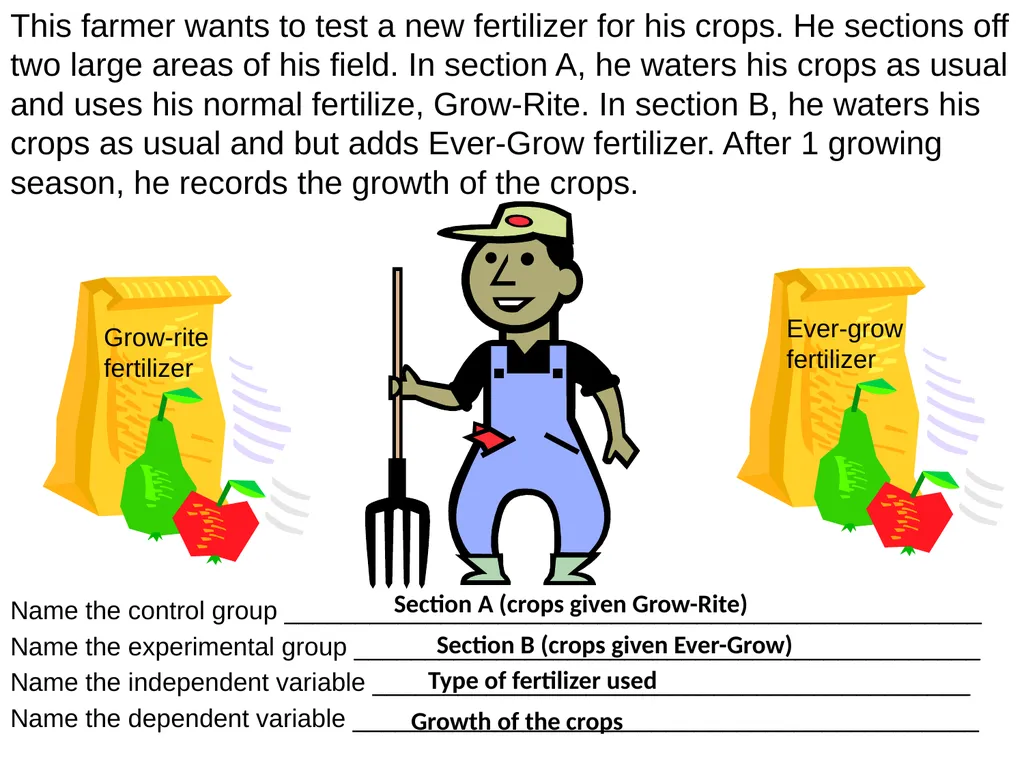
slide17. This farmer wants to test a new fertilizer for his crops. He sections off two large areas of his field. In section A, he waters his crops as usual and uses his normal fertilize, Grow-Rite. In section B, he waters his crops as usual and but adds Ever-Grow fertilizer. After 1 growing season, he records the growth of the crops. Name the control group _________________________________________________
Name the experimental group ____________________________________________
Name the independent variable __________________________________________
Name the dependent variable ____________________________________________ Section A (crops given Grow-Rite) Section B (crops given Ever-Grow) Type of fertilizer used Growth of the crops Grow-rite fertilizer Ever-grow fertilizer<br>
slide18. A student wants to know if his new study method is more successful than his traditional study method. For one month, he studies for his classes using his traditional study method. The next month, he studies for his classes using his new study method. At the end, he compares his grades. Name the control group _________________________________________________
Name the experimental group ____________________________________________
Name the independent variable __________________________________________
Name the dependent variable ____________________________________________ One month of traditional studying One month of experimental studying Study method Grades<br>
slide19. The city of Los Angeles wants to know if there is a connection between physical fitness and air pollution. Fifty volunteers from the mayor’s office agree to be tested. First, they are asked to ride a stationary bike for 1 hour in a pollution-free air chamber. Name the control group _________________________________________________
Name the experimental group ____________________________________________
Name the independent variable __________________________________________
Name the dependent variable ____________________________________________ Volunteers who breathed common polluted air Volunteers who breathed clean air Quality of air Heart rates A week later, the volunteers return and are again asked to ride a stationary bike for 1 hour in a chamber filled with air pollutants common to Los Angeles. Their heart rates are monitored throughout the 1 hour bike rides.<br>
slide20. 4th Step: Data Analysis Data from control group is compared to experimental group
Hypothesis is either supported or rejected
Not “proven” Without
music With
music<br>
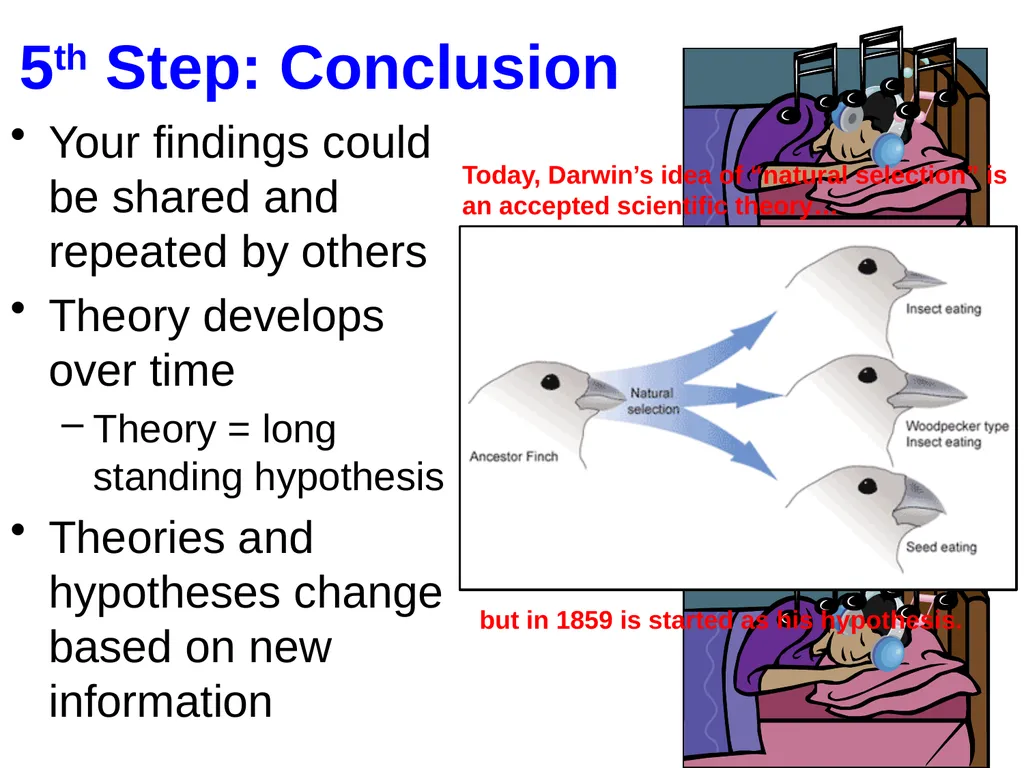
slide21. 5th Step: Conclusion Your findings could be shared and repeated by others
Theory develops over time
Theory = long standing hypothesis
Theories and hypotheses change based on new information Today, Darwin’s idea of “natural selection” is an accepted scientific theory… but in 1859 is started as his hypothesis.<br>
slide22. Review Place the 5 steps of the scientific method in order from start to finish.
Data analysis, Observation, Conclusion, Experimentation, Hypothesis
In which stage of the scientific method are graphs usually created?
In which stage of the scientific method are the two variables identified?
Which variable is the difference between the control and experimental group?
Which group of an experiment is used for comparison and contains no changes?
How many independent variables should exist in a well designed experiment?
What is the data collected from the independent variable called?
Vocabulary: Science, Scientific method, Hypothesis, Control group, Experimental group, Independent variable, Dependent variable, Theory<br>
Identify a problem Construct a hypothesis Perform an experiment Analyze data Create conclusion supported unsupported Science & the
Scientific Method<br>
slide2. What is Science? Science: Process that produces information about natural world<br>
slide3. What is Science? Science: Process that produces information about natural world
Objective Bias idea Reality<br>
slide4. What is Science? Science: Process that produces information about natural world
Objective
Repeatable<br>
slide5. What is Science? Science: Process that produces information about natural world
Objective
Repeatable
Tools and skills:
Observation Microscope observations<br>
slide6. What is Science? Science: Process that produces information about natural world
Objective
Repeatable
Tools and skills:
Observation Telescope observations<br>
slide7. What is Science? Science: Process that produces information about natural world
Objective
Repeatable
Tools and skills:
Observation Voyager I and Voyager II probes have observed the solar system and beyond<br>
slide8. What is Science? Science: Process that produces information about natural world
Objective
Repeatable
Tools and skills:
Observation A force in nature… gravity<br>
slide9. What is Science? Science: Process that produces information about natural world
Objective
Repeatable
Tools and skills:
Observation
Experimentation DNA experimentation<br>
slide10. What is Science? Science: Process that produces information about natural world
Objective
Repeatable
Tools and skills:
Observation
Experimentation
Data gathered by the “scientific method” 1928: Frederick Griffith’s experiment taught us bacteria can transfer genetic information<br>
slide11. Defined: Series of steps to collect information or solve problems
Problem/Observation
Hypothesis
Experimentation
Data Analysis
Conclusion
Repeat Scientific Method Ask a question/
Identify a problem Construct a hypothesis Perform an experiment Analyze data Create conclusion supported unsupported<br>
slide12. Observation and Hypothesis 1st step: Problem/Observation
Example: I seem to sleep better when I play relaxing music. 2nd step: Create hypothesis
If…then statement
Example: If there is relaxing music playing, then I will sleep longer.<br>
slide13. Experiment 1) Control group
Receives no special treatments
Used as comparison
The “normal” group 2) Experimental Group
Same as control group, but with one difference…
Independent variable
The one factor that differs from the control group
The factor you are testing
Dependent variable: Data gathered Two parts to an experiment:<br>
slide14. Control group vs. Experimental Group Results: Sleep continuously for 6.2 hours Results: Sleep continuously for 7.5 hours Does the data support the hypothesis? Yes. Since all other factors are the same, the music must have caused the extra sleep.<br>
slide15. How about this situation? Results: Sleep continuously for 6 hours Results: Sleep continuously for 8 hours Does the data support the hypothesis? Unknown. The data is invalid. There are too many variables in this experiment. There are other possible explanations to explain the extra sleep.<br>
slide16. The United States military wants to see if soldiers with only 4 hours of sleep can operate at the same level as those who normally get 7 hours of sleep. One hundred solders are allowed to only sleep for 4 hours a night and another hundred are allowed to sleep for 7 hours a night. During the day, the soldiers are tested for marksmanship on the firing range. Name the control group _________________________________________________
Name the experimental group ____________________________________________
Name the independent variable __________________________________________
Name the dependent variable ____________________________________________ Soldiers with 7 hours sleep Soldiers with 4 hours sleep Amount of sleep given Score on the firing range . . .<br>
slide17. This farmer wants to test a new fertilizer for his crops. He sections off two large areas of his field. In section A, he waters his crops as usual and uses his normal fertilize, Grow-Rite. In section B, he waters his crops as usual and but adds Ever-Grow fertilizer. After 1 growing season, he records the growth of the crops. Name the control group _________________________________________________
Name the experimental group ____________________________________________
Name the independent variable __________________________________________
Name the dependent variable ____________________________________________ Section A (crops given Grow-Rite) Section B (crops given Ever-Grow) Type of fertilizer used Growth of the crops Grow-rite fertilizer Ever-grow fertilizer<br>
slide18. A student wants to know if his new study method is more successful than his traditional study method. For one month, he studies for his classes using his traditional study method. The next month, he studies for his classes using his new study method. At the end, he compares his grades. Name the control group _________________________________________________
Name the experimental group ____________________________________________
Name the independent variable __________________________________________
Name the dependent variable ____________________________________________ One month of traditional studying One month of experimental studying Study method Grades<br>
slide19. The city of Los Angeles wants to know if there is a connection between physical fitness and air pollution. Fifty volunteers from the mayor’s office agree to be tested. First, they are asked to ride a stationary bike for 1 hour in a pollution-free air chamber. Name the control group _________________________________________________
Name the experimental group ____________________________________________
Name the independent variable __________________________________________
Name the dependent variable ____________________________________________ Volunteers who breathed common polluted air Volunteers who breathed clean air Quality of air Heart rates A week later, the volunteers return and are again asked to ride a stationary bike for 1 hour in a chamber filled with air pollutants common to Los Angeles. Their heart rates are monitored throughout the 1 hour bike rides.<br>
slide20. 4th Step: Data Analysis Data from control group is compared to experimental group
Hypothesis is either supported or rejected
Not “proven” Without
music With
music<br>
slide21. 5th Step: Conclusion Your findings could be shared and repeated by others
Theory develops over time
Theory = long standing hypothesis
Theories and hypotheses change based on new information Today, Darwin’s idea of “natural selection” is an accepted scientific theory… but in 1859 is started as his hypothesis.<br>
slide22. Review Place the 5 steps of the scientific method in order from start to finish.
Data analysis, Observation, Conclusion, Experimentation, Hypothesis
In which stage of the scientific method are graphs usually created?
In which stage of the scientific method are the two variables identified?
Which variable is the difference between the control and experimental group?
Which group of an experiment is used for comparison and contains no changes?
How many independent variables should exist in a well designed experiment?
What is the data collected from the independent variable called?
Vocabulary: Science, Scientific method, Hypothesis, Control group, Experimental group, Independent variable, Dependent variable, Theory<br>